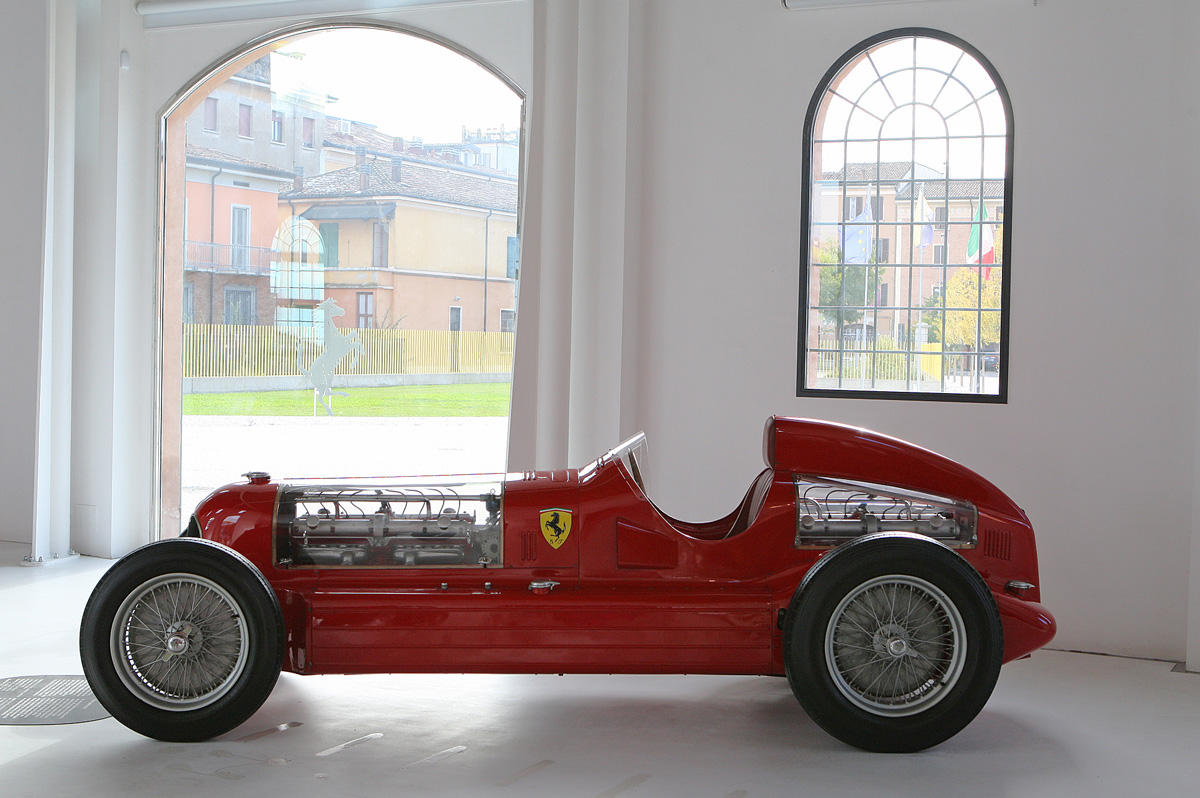
The Alfa Bimotore is on display in a quiet, beautiful, chapel-like setting.
Last week Jonathan Sharp wrote a report on the Maserati 100th anniversary celebration at the Enzo Ferari Museum. But he didn’t forget about the Ferraris, engines, and Alfas also on display, many in the new engine room–plus a replica of Enzo Ferrari’s office. We saved that part of the story for this week.
Story and photos by Jonathan Sharp Clic on pics to enlarge
Nestling, as if being protected, in the curve of the new display hall is the original workshop of Enzo Ferrari’s father Alfredo. A long and narrow building lit by many large arched shaped windows. The building was built during the latter half of the 19th century and would not have benefited from electric lighting hence the many windows. At the far end of the hall, roughly where the “Enzo” is now displayed, was, along with the machine tools that Alfredo used to shape metal, a stable which housed the horses used to draw the sulkies (2 wheeled trotting rig) and carts of the time.
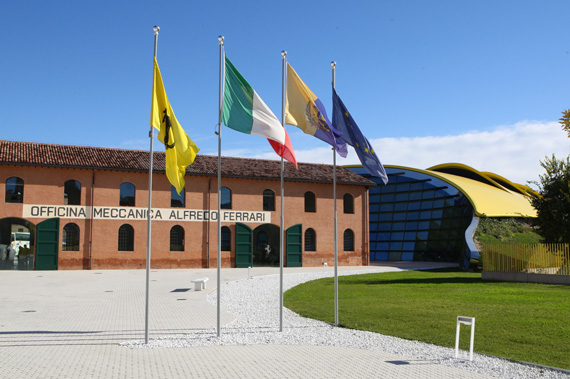
The old factory and new museum are nestled together but work well to present the life of Enzo Ferrari.
Alfredo was one of the first residents in Modena to own a motor car, a De Dion Bouton. During the building’s restoration it was decided, in order to allow the workshop to retain the look and feel of the early days, to leave the windows uncovered. It is these that most contribute to the natural lighting of the artefacts on display. It is the shapes and colors of these which evolve as the light changes throughout the day. The cars on display encapsulate the life of Enzo from the cars he raced and created for Alfa Romeo through to the Enzo which was built as a tribute by Luca Di Montezemolo.
The Maserati display featured last week runs until January 2015. Getting there was very easy. My wife and I flew to Bologna then took the quick and very frequent train service to Modena. If you decide to visit and you do not fancy staying in a main stream hotel may we suggest B&B Quartopiano where Alessandro and Antonio made us more than welcome. The view over the roof tops of the town was beautiful and the food in their restaurant was divine. Grazie Mille
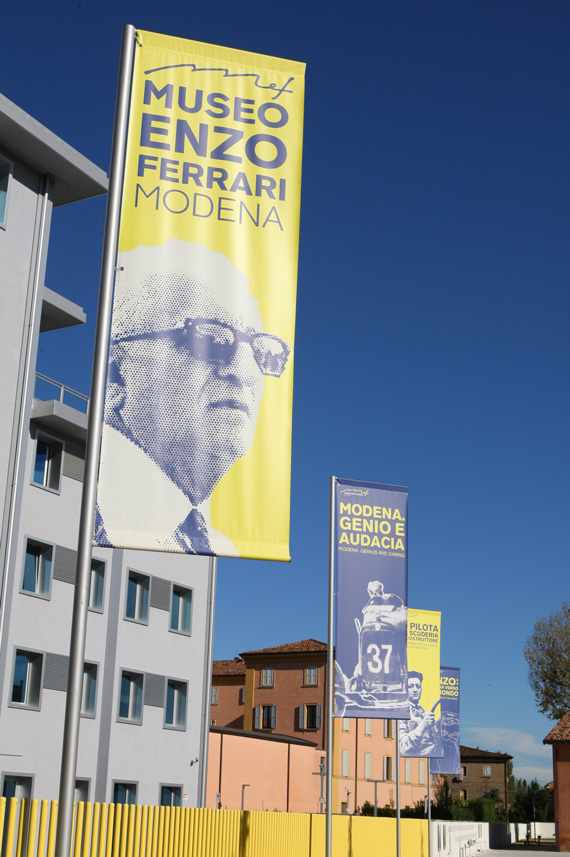
Flags fly high at the Enzo Ferrari Museum
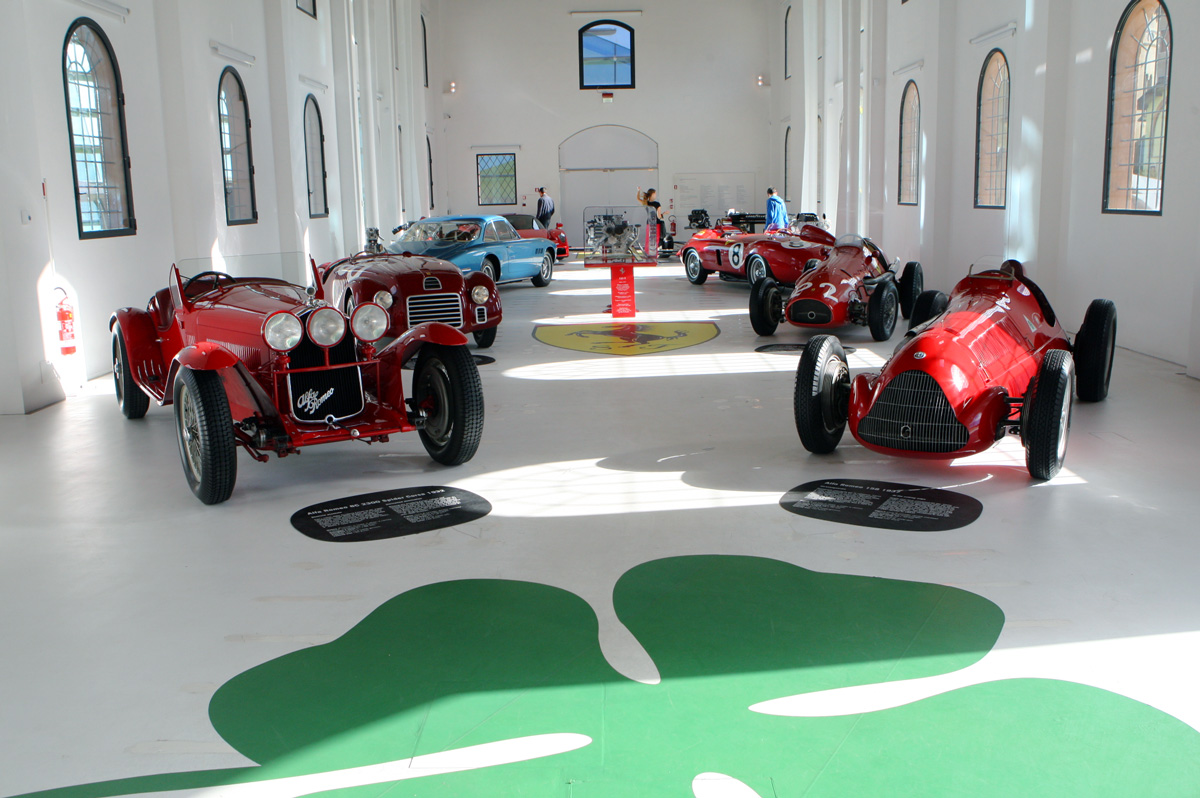
The old workshop now holds old cars...
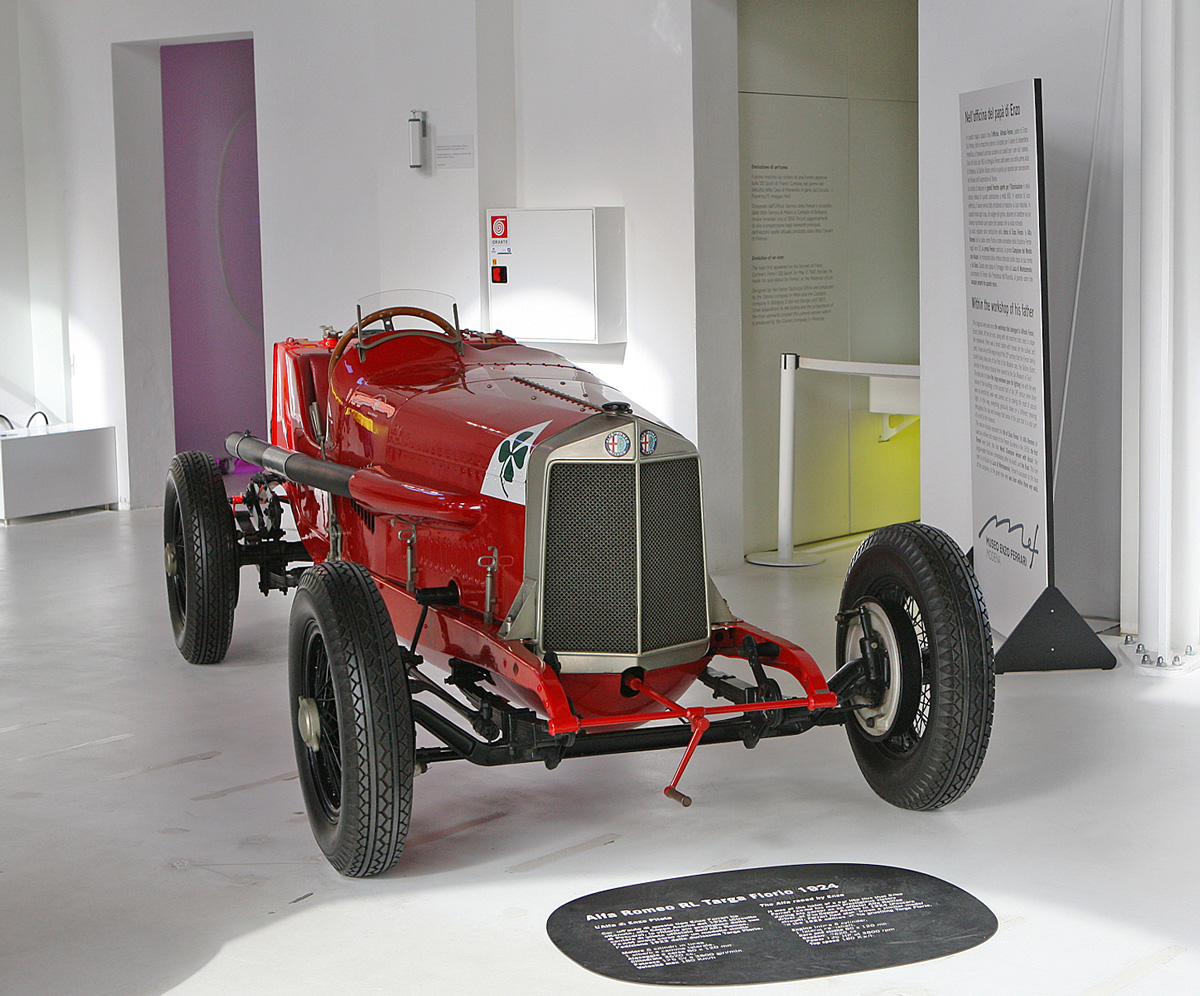
1924 Alfa Romeo RL Targa Florio. Enzo Ferrari most prestigious victory as a works Alfa driver was in the 1924 Coppa Acerbo, which was held on the Pescara Road course. His mount for the race was a car similar to this example.
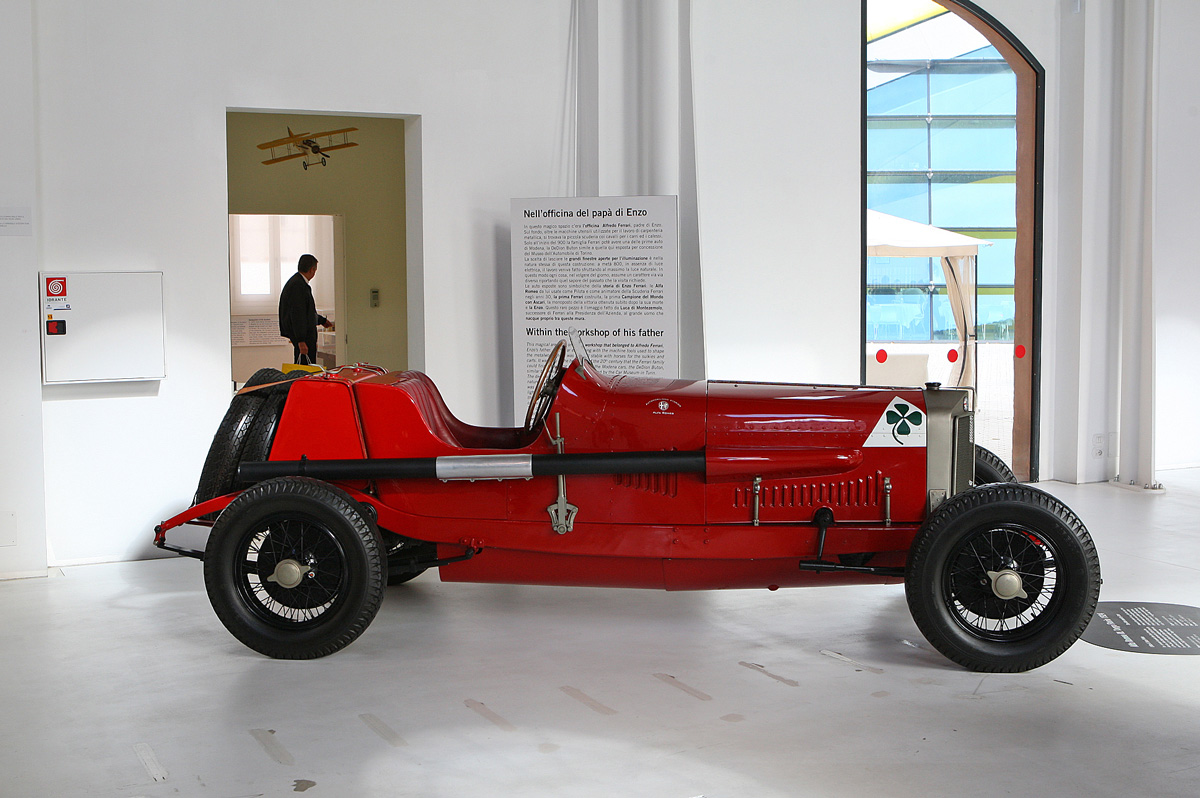
Side view of the RL Alfa.
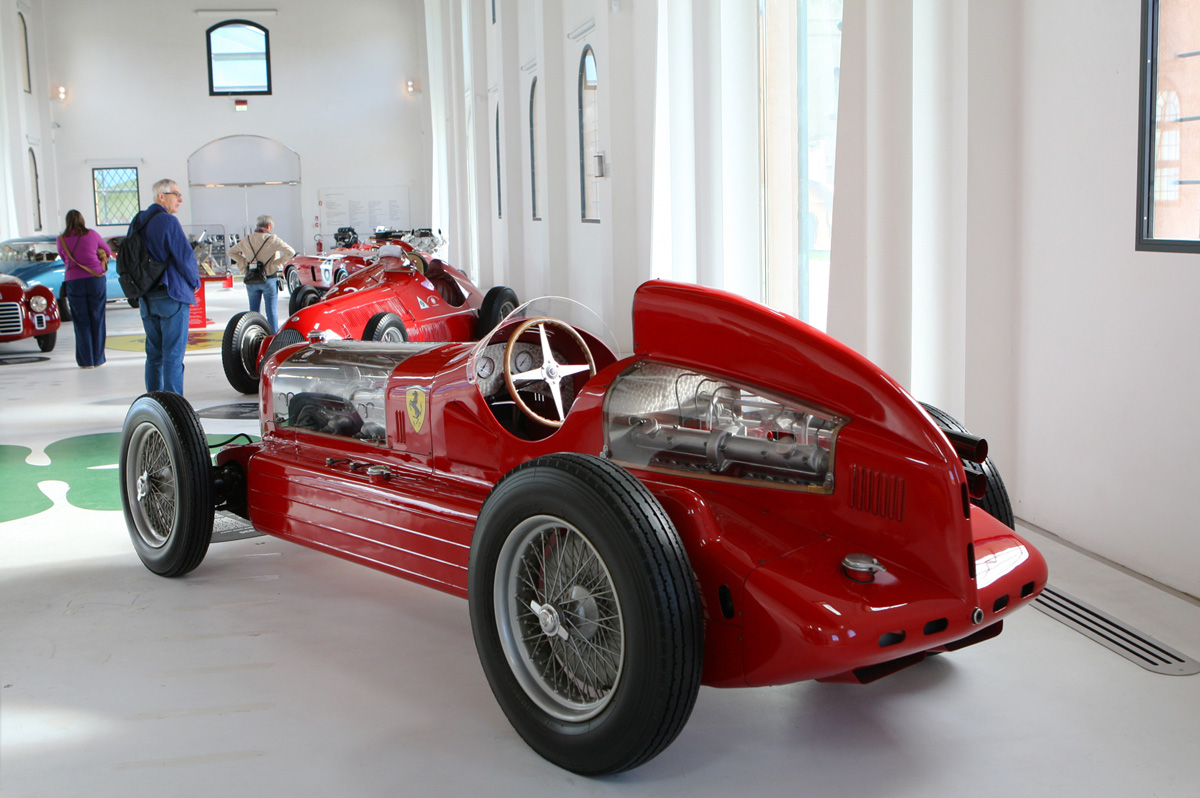
Alfa Bimotore. Conceived in 1935 by Enzo Ferrari and designed by Luigi Bazzi to try to compete with the Silver Arrows. As you can see from the photograph the car is fitted with two 3200cc straight-8 engines to give a combined output of up to 540 BHP.
The Bimotore proved to be too hard on tires and fuel. What it gained on the straights in top speed it lost in the extra pit stops.
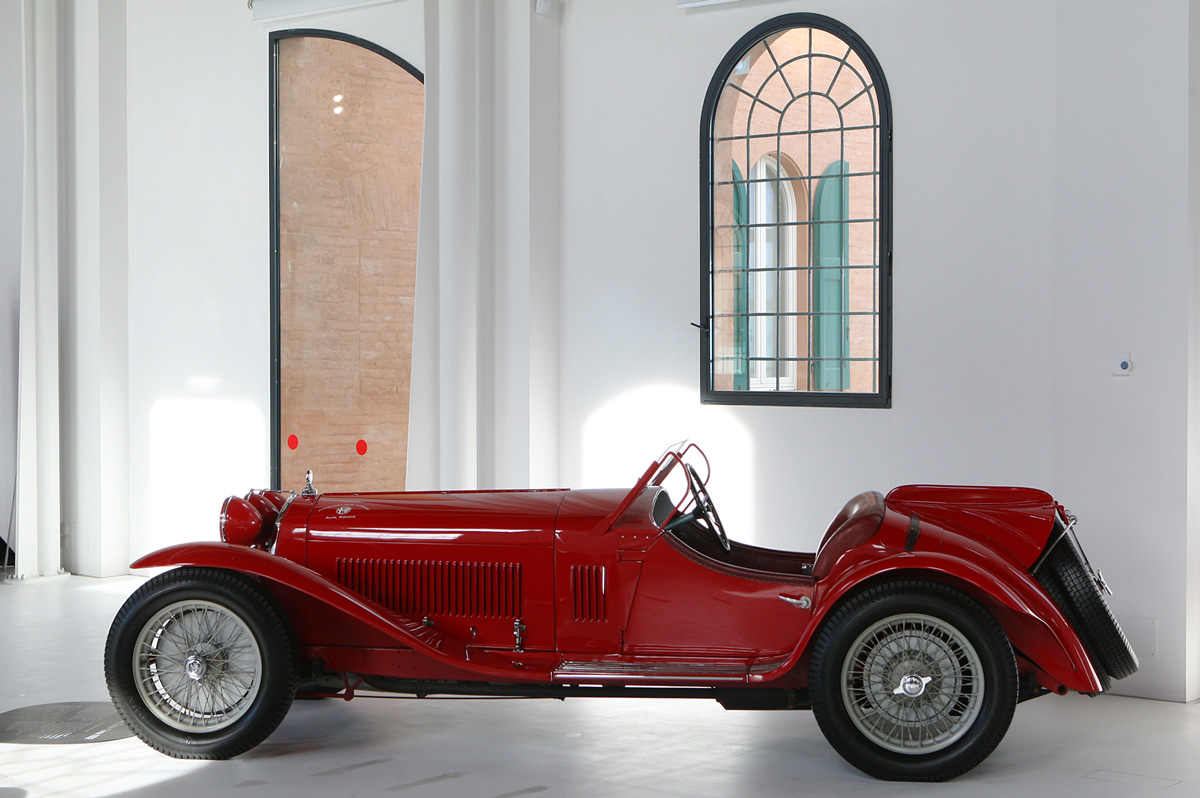
Alfa Romeo 8C 2300 Spider Corsa. Rechristened as the Tipo Mille Miglia in celebration of Alfa’s win in 1932. 8C 2300s would win again in 1933 and 1934. It was in a car similar to this that Enzo Ferrari competed in his last race as an Alfa Romeo works driver, The Giro delle Tre Province on the 9th August 1931. He finished second to Tazio Nuvolari.
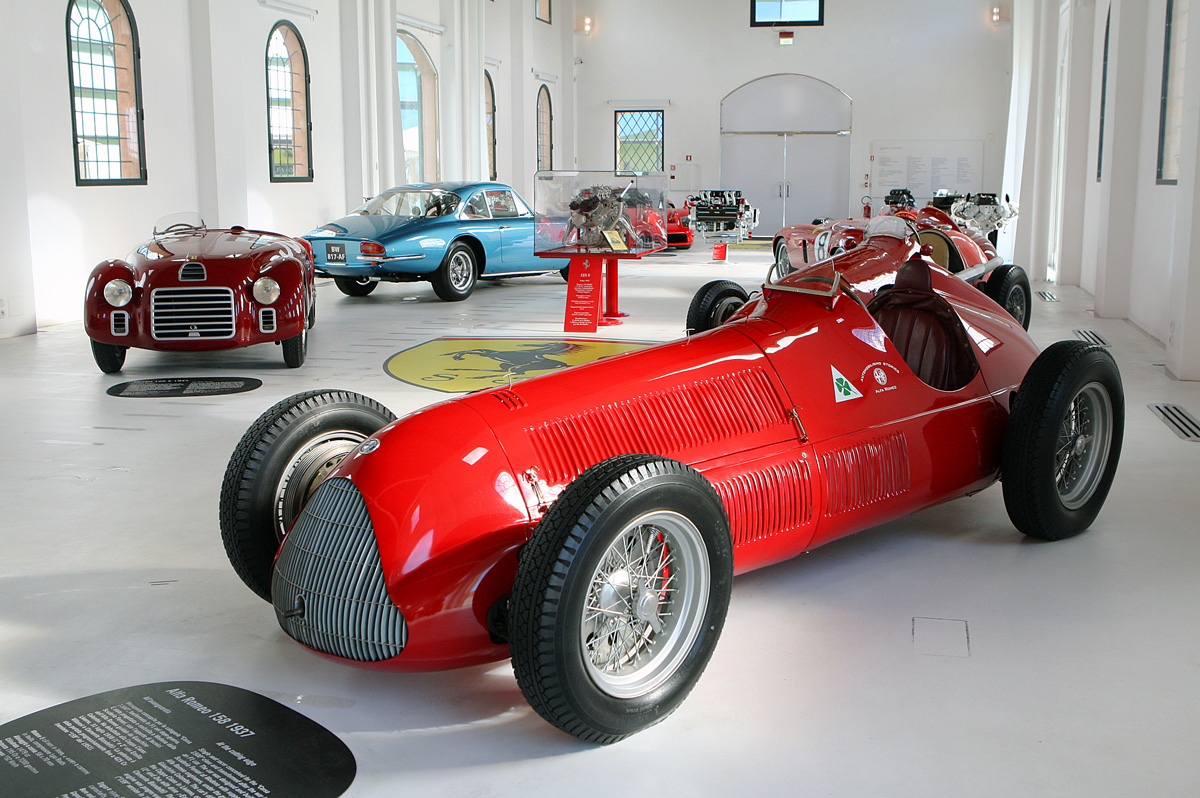
The Museum also displayed the 158/59 Alfetta, the Alfa which was eventually defeated by Ferrari's own GP cars.
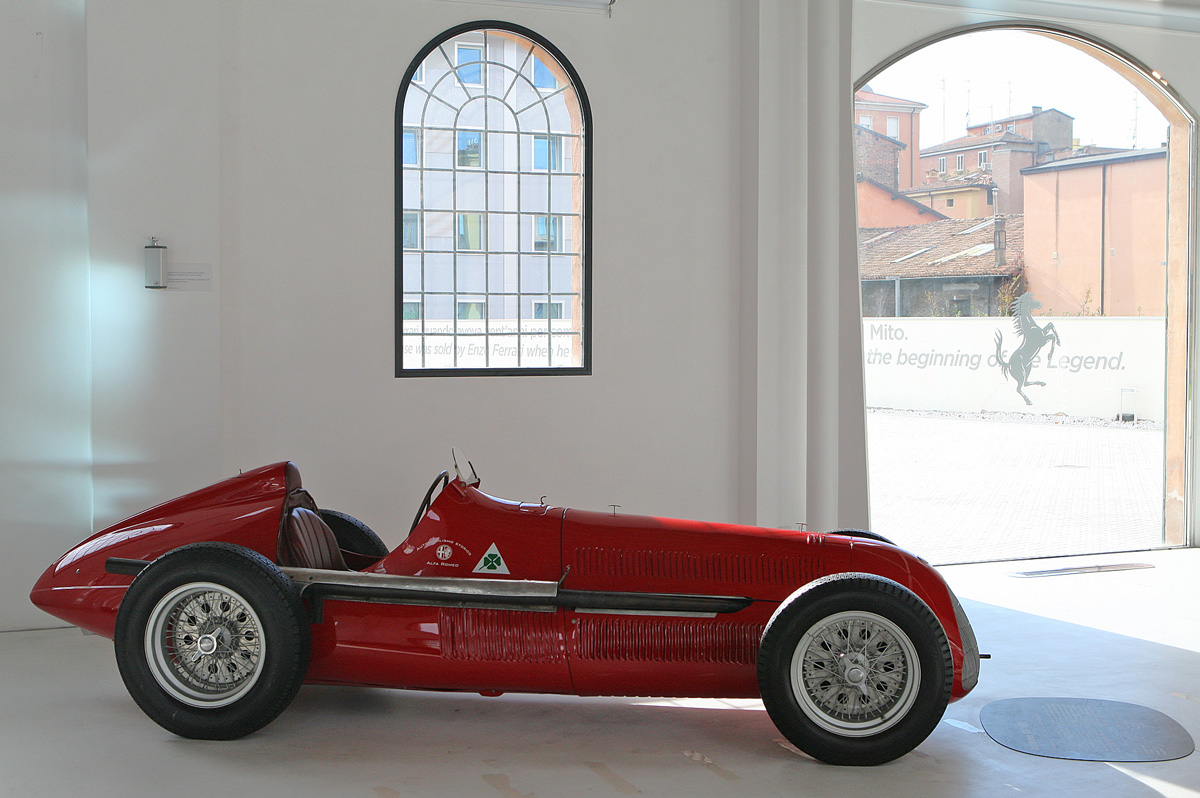
The once noisy workshop now has somewhat of a religious nature...
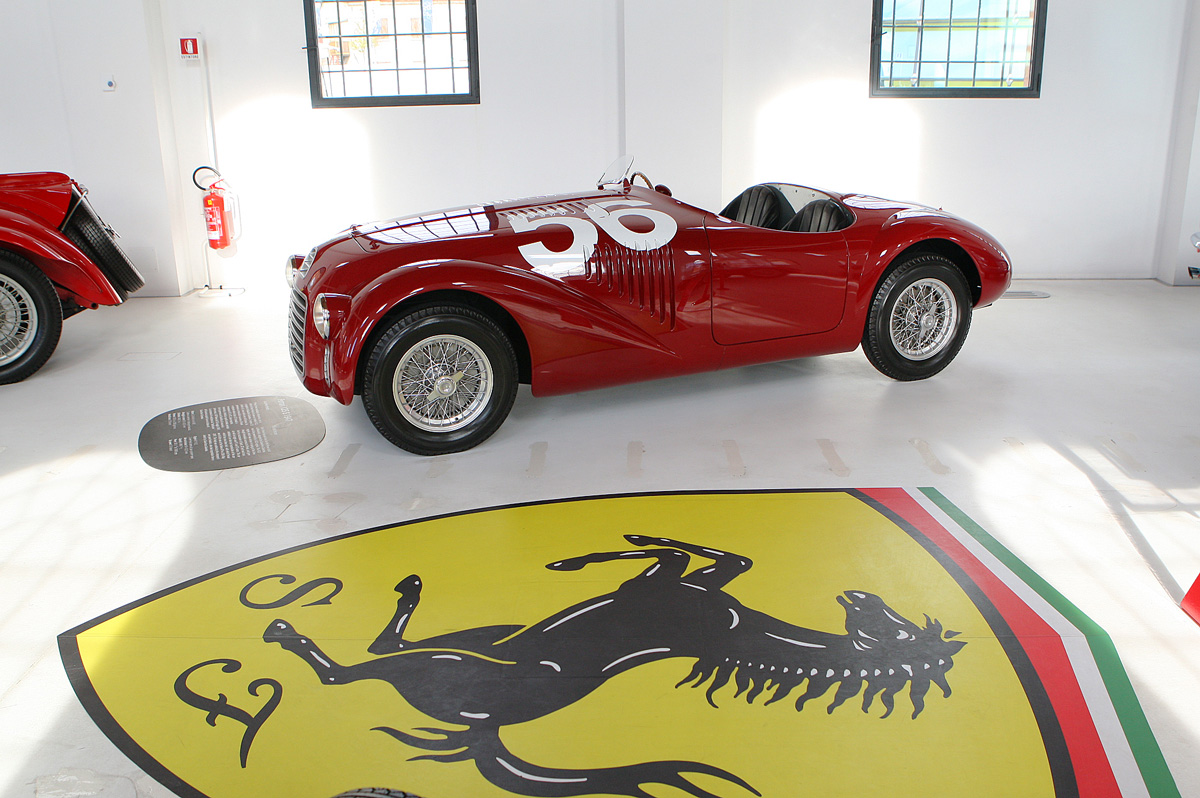
Ferrari 125S. The first Ferrari built at Maranello. V12 of course but only 1500cc. This is an exact replica of the winner of the Rome Grand Prix of 1947, Ferrari's first victory as a constructor.
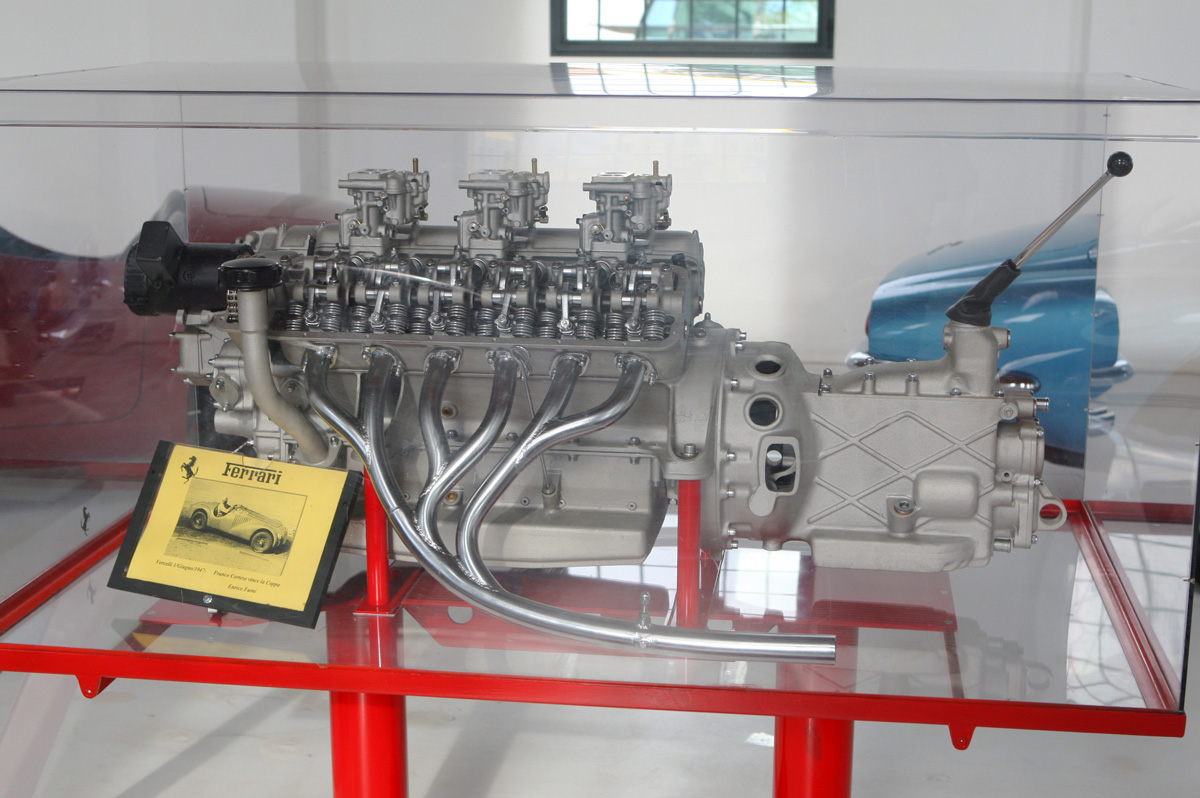
1947 1500cc V12 engine and transmission from the 125.
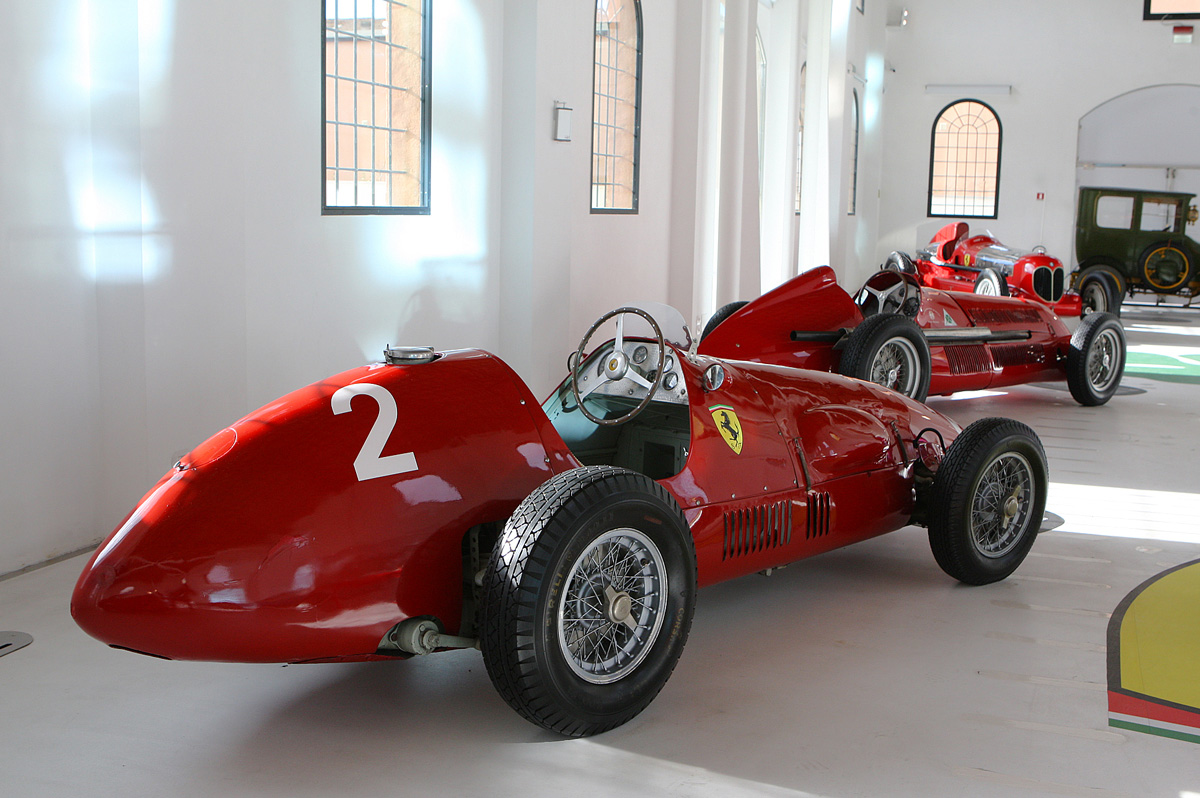
For the 1952 season the Drivers World Championship was run to Formula 2 regulations following the withdrawal of Alfa Romeo and their 159s. Alberto Ascari proceeded to win every race in the championship that he entered. He won the championship again in 1953.
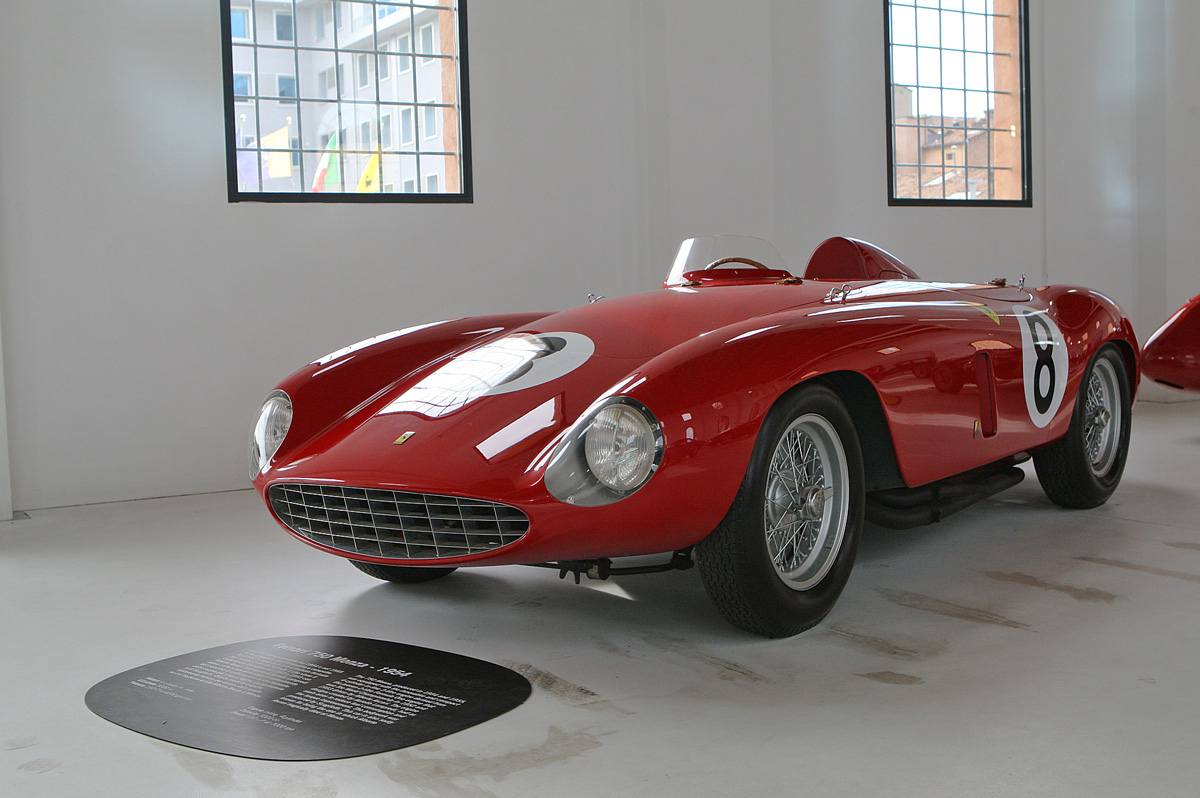
750 Monza. Produced between 1954 and 55 and powered by a 3000cc 4-cylinder engine designed by Aurelio Lampredi with the aim of reducing fuel consumption and increasing torque. The bodywork was the work of Scaglietti.
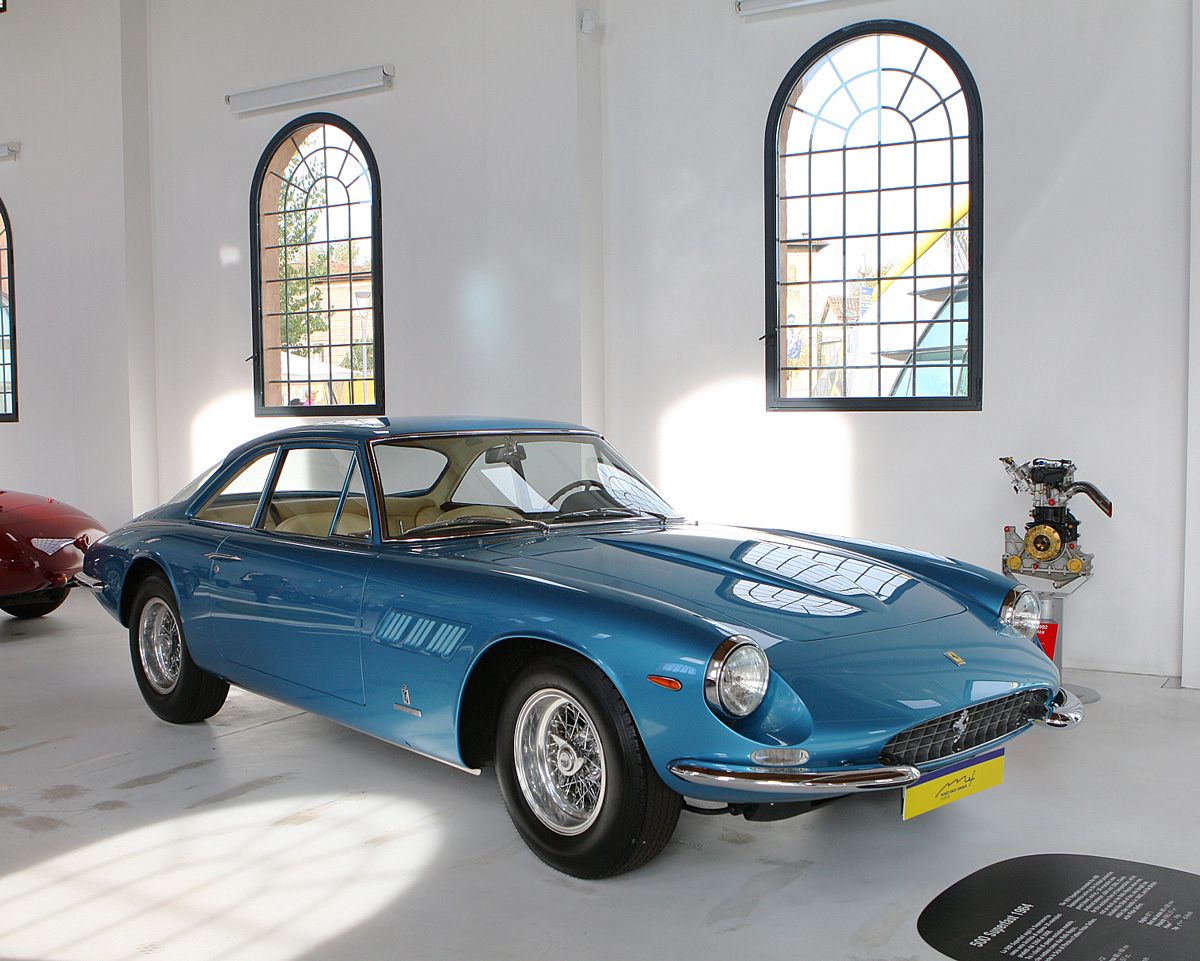
To my mind the most exclusive grand tourer of the 1960s, the 500 Superfast. Costing as much as two Rolls-Royces, only 36 were built between 1964 and 1966. Peter Sellers had one, the Shah of Iran two.
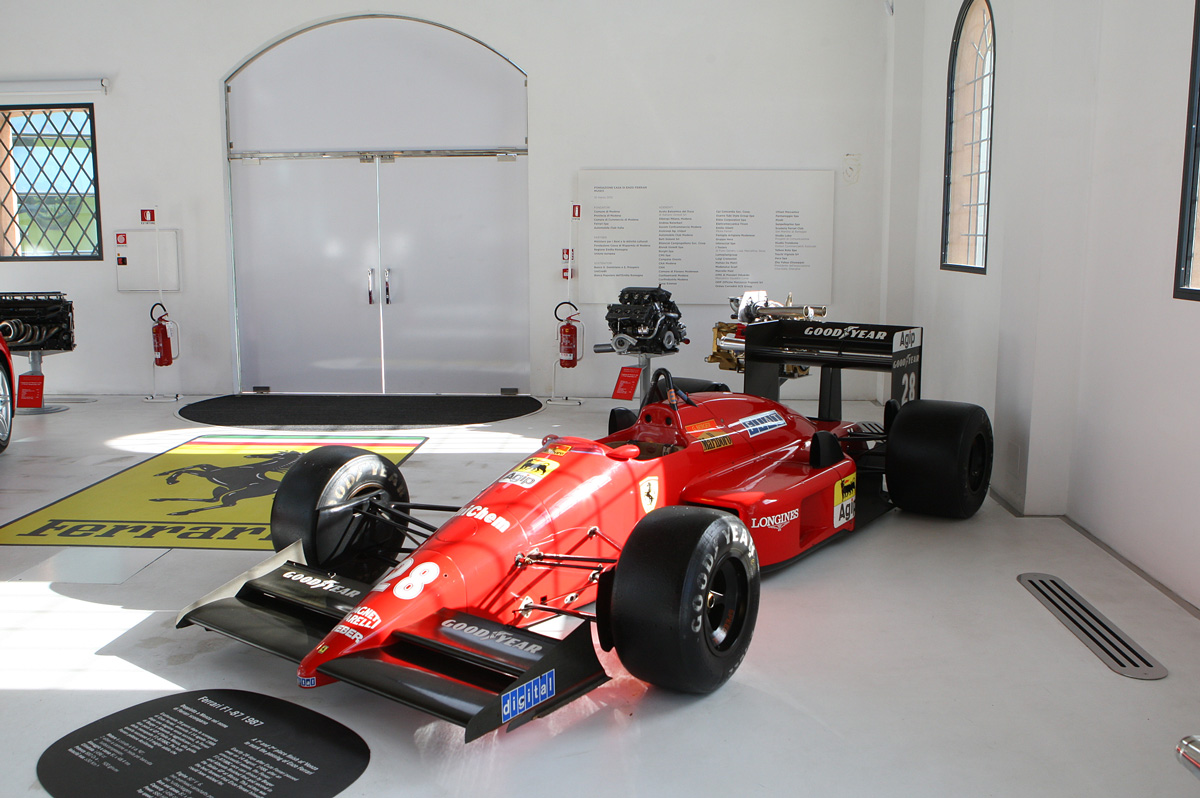
Gerhard Berger's F1 car from 1988
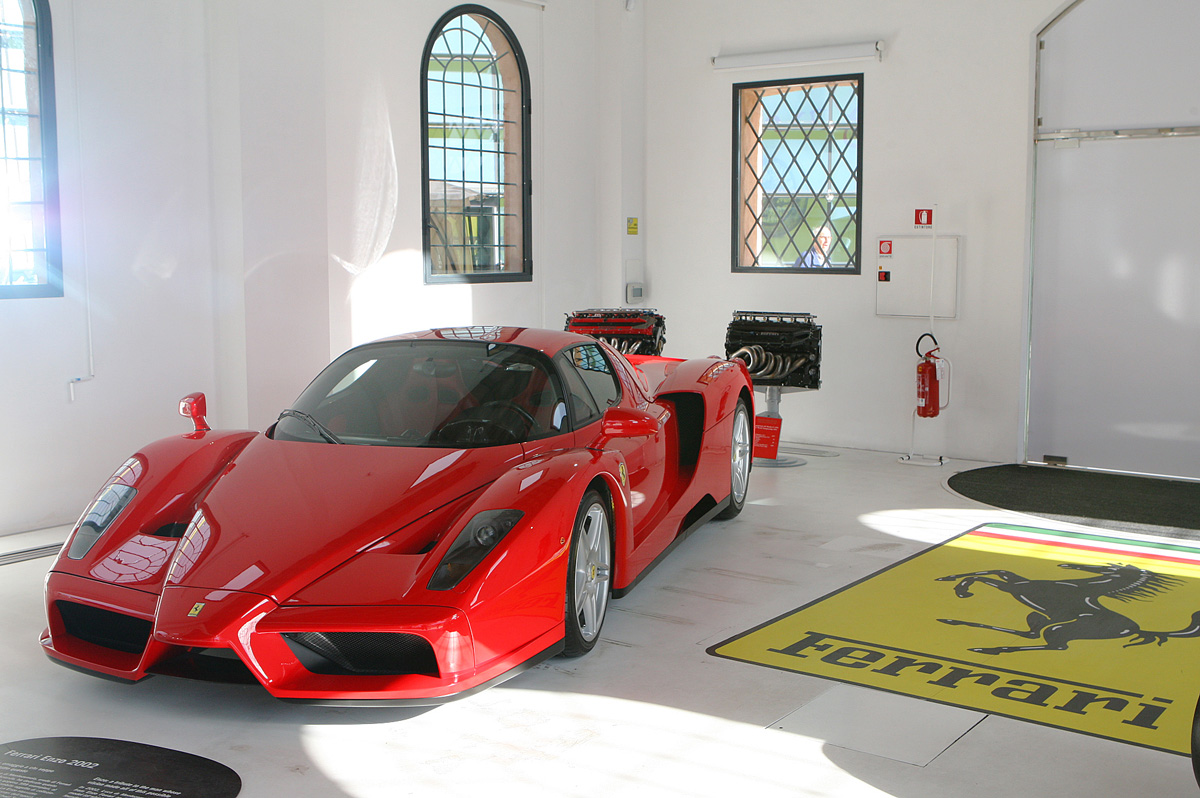
Quite naturally, a Ferrari Enzo in the Enzo Ferrari Museum.
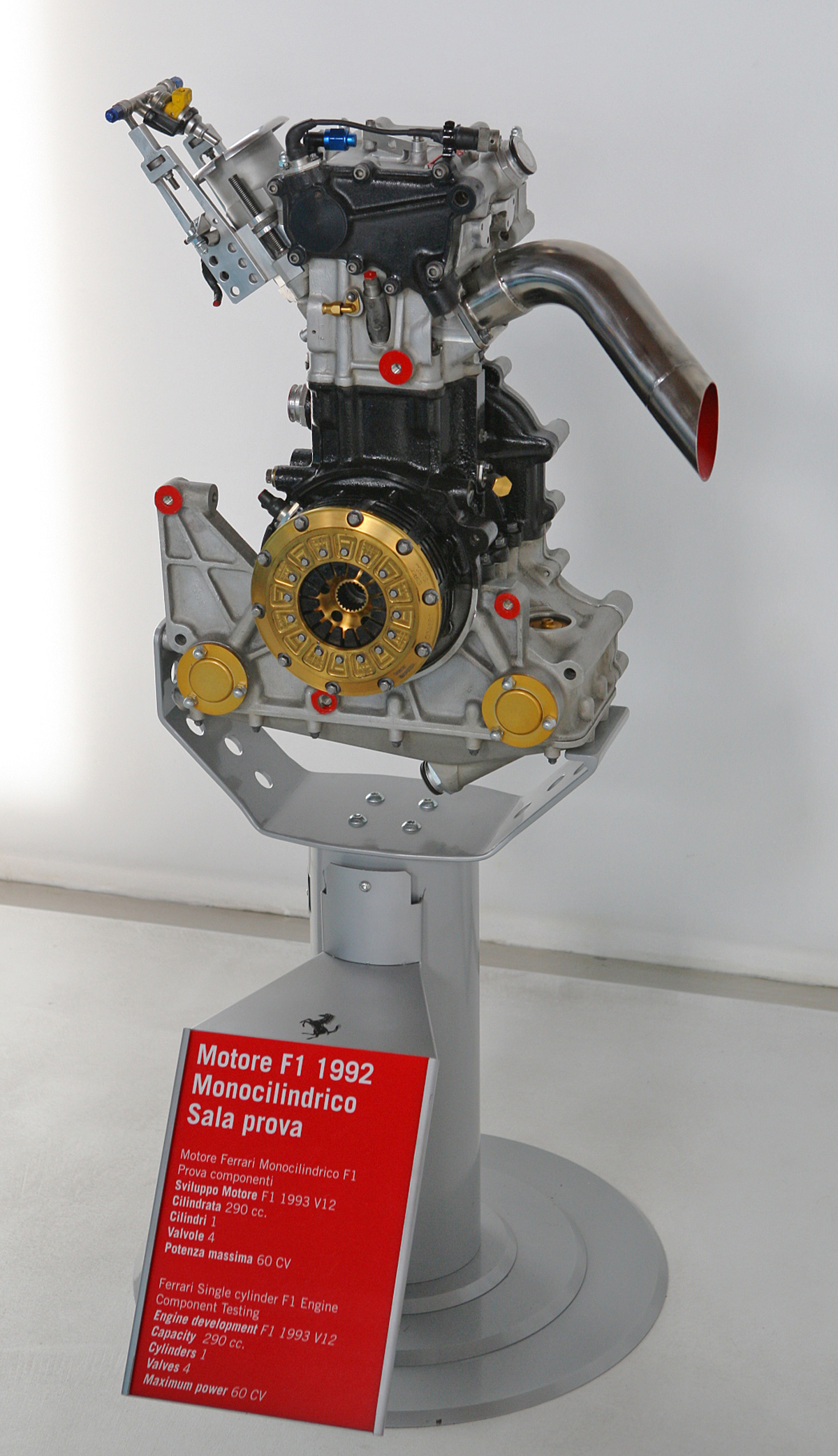
To give it its full title this is the Motore Ferrari FI 1992 Monocilindrico prova componenti, translated as the Ferrari single cylinder F1 component testing. 290cc 4 valves and approximately 60 cv.
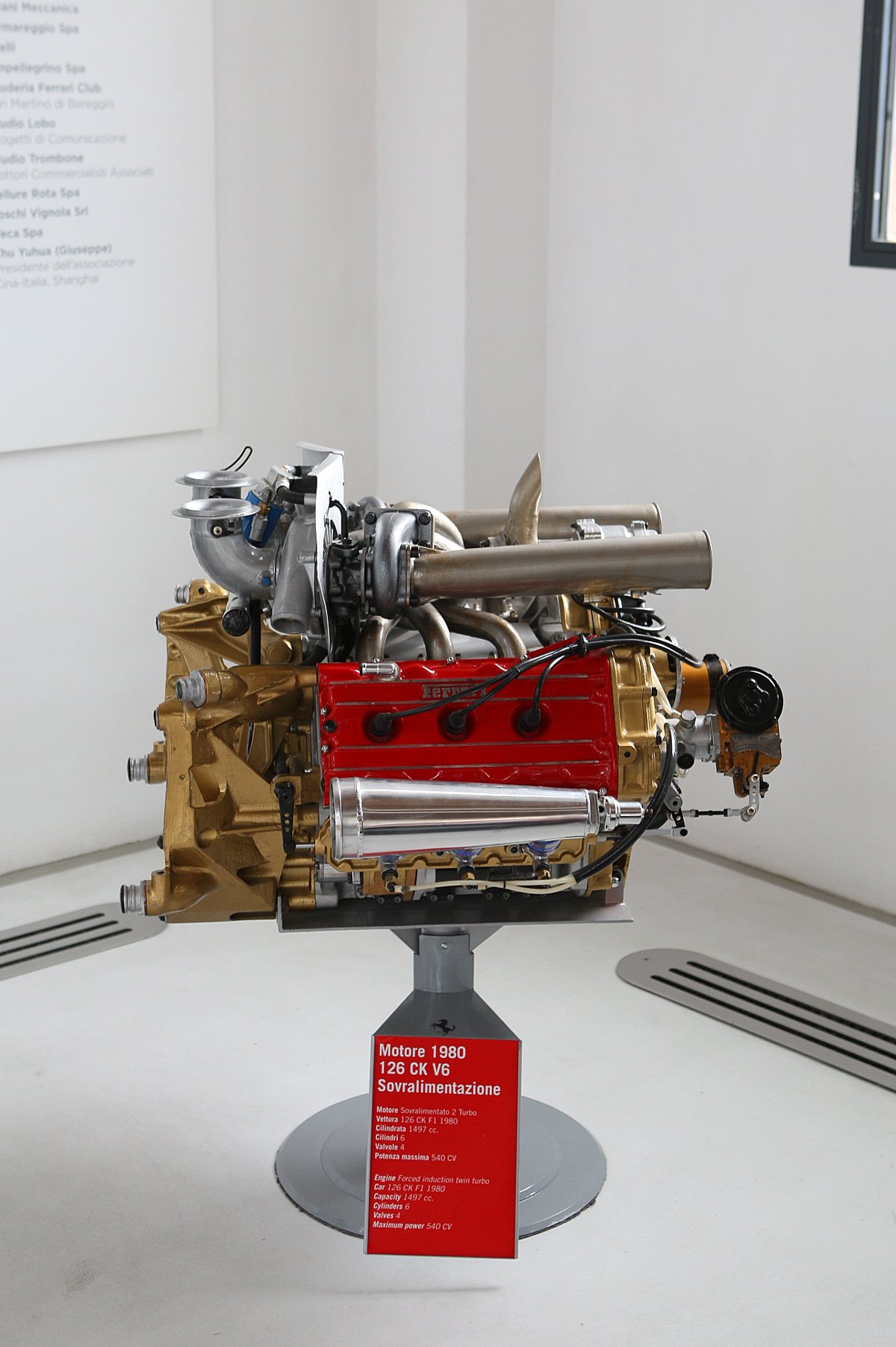
Motore 1980 126 CK V6 Sovralimentazione, Translation: forced induction twin turbo. 1497cc V6 4 valves, 540 CV. An F1 engine of course.
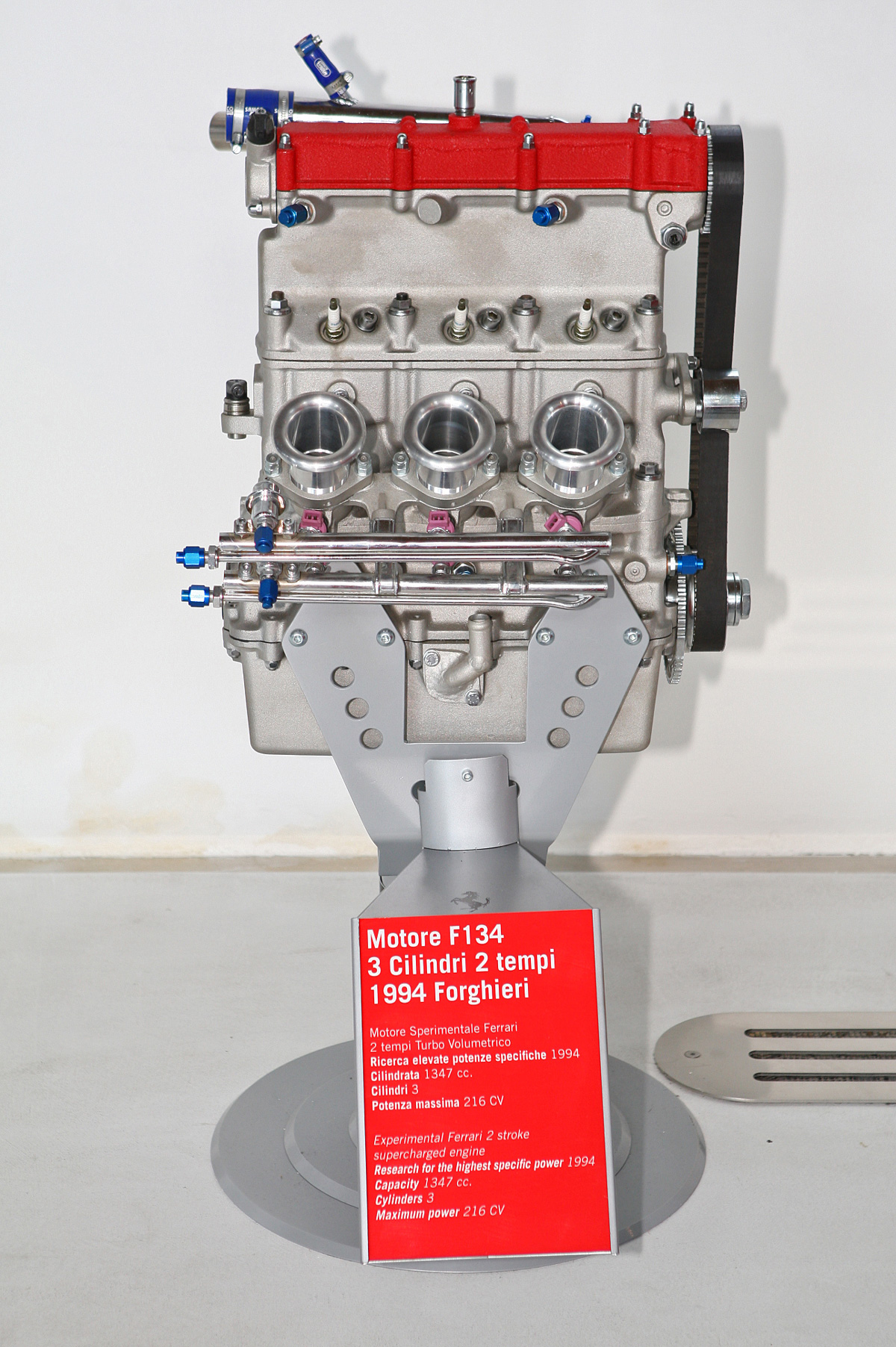
Another experimental engine. This time it is the Motore F134 3 Cilindri 2 Tempi 1994 Forghieri, Motore sperimentale Ferrari 2 Tempi Turbo Volumetrico. What a mouthful. Translated as experimental Ferrari 2 stroke supercharged engine, Research for highest specific power. 1347cc 3 cylinders. 216 CV
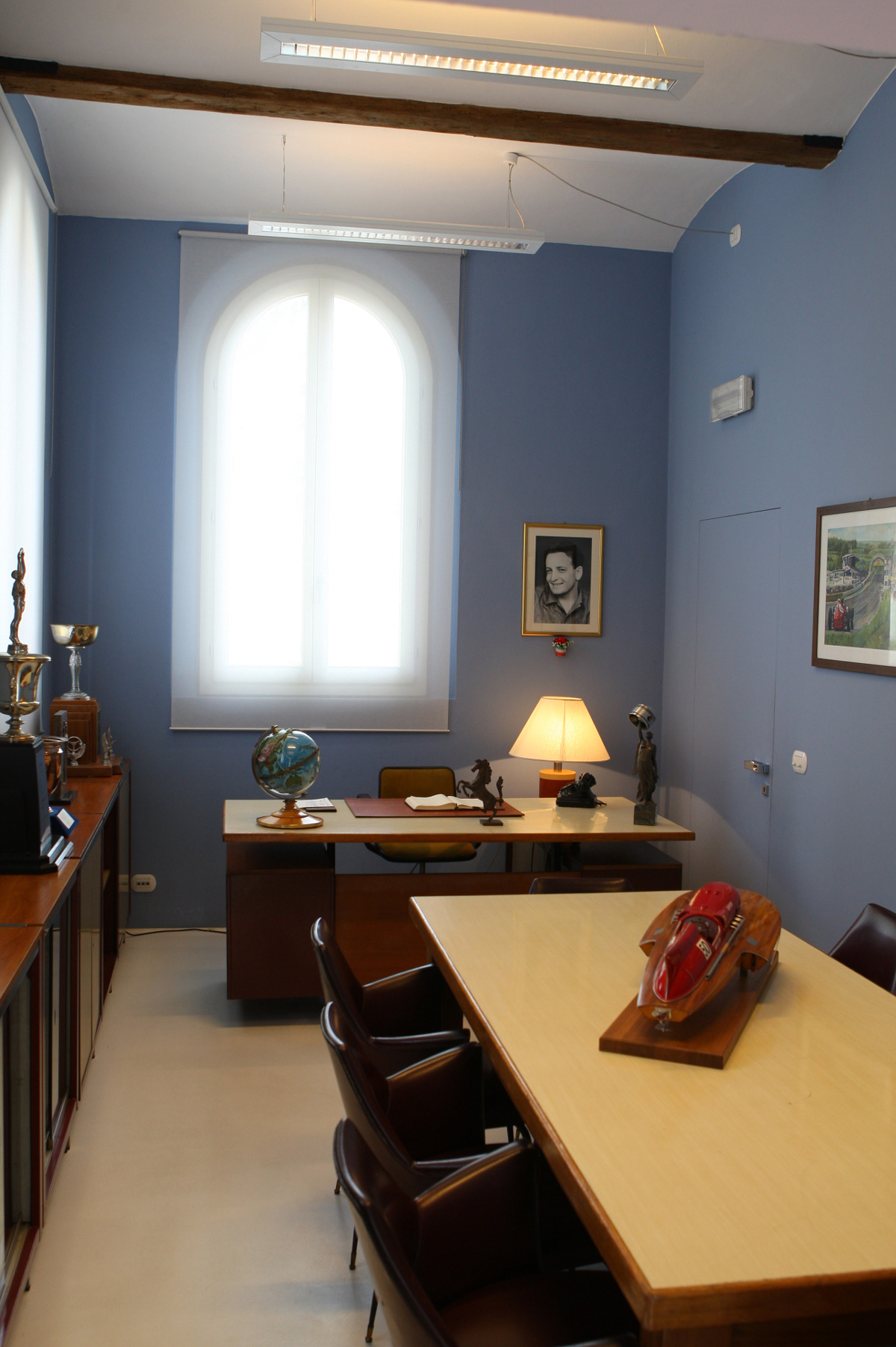
A replica of Enzo's office, displayed within the old work shop of Alfredo Ferrari.

Probably the most famous specs in automotive history even though they are no longer tinted. As you can see these date from 1958. The pen stand, Portapenna da scrivani, is from 1975. Both items are displayed courtesy of the Ferrari family.
This is as near to being in church as you can get without actually going to church! Bravo and avanti! Dave Cummins
Fantastico