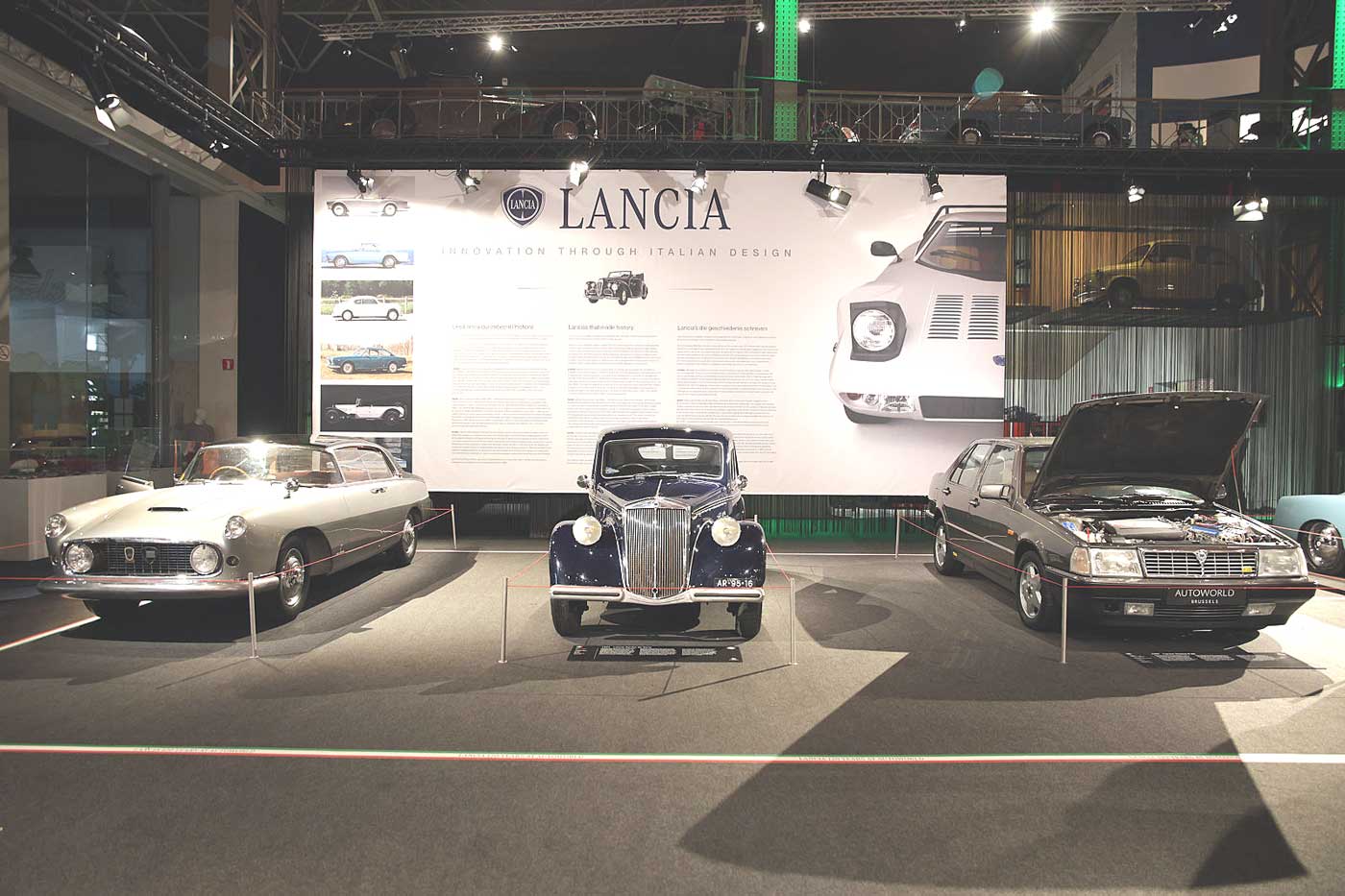
Photos by Hugues Vanhoolandt
The Autoworld Brussels museum is currently presenting an exhibition retracing the epic story of the Lancia brand through a dozen vehicles entitled “Lancia 120 Years – Innovation through Italian Design”.
From the very first models, Lancia cars distinguished themselves by their lightness, functionality and originality of design.
These are the characteristics illustrated by the models displayed here.
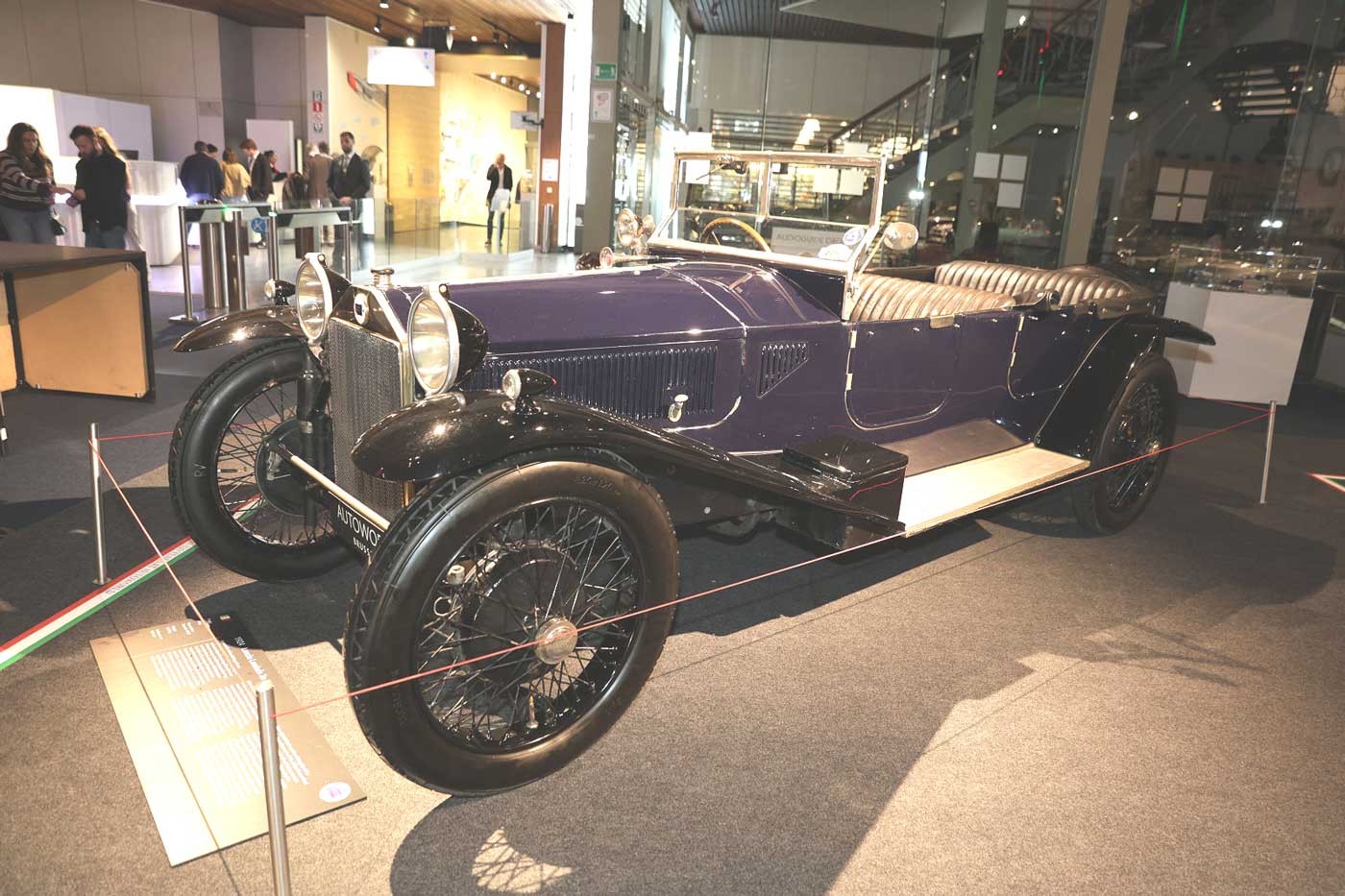
The Lambda, as Vincenzo Lancia’s first technical masterpiece, left a lasting mark on automotive history: a compact and revolutionary V4 engine, independent front suspension, and a lightweight yet rigid unibody structure—a world first in automotive history. Produced from 1922 to 1931, the Lambda went through nine successive series. This particular example is a second series from 1924.
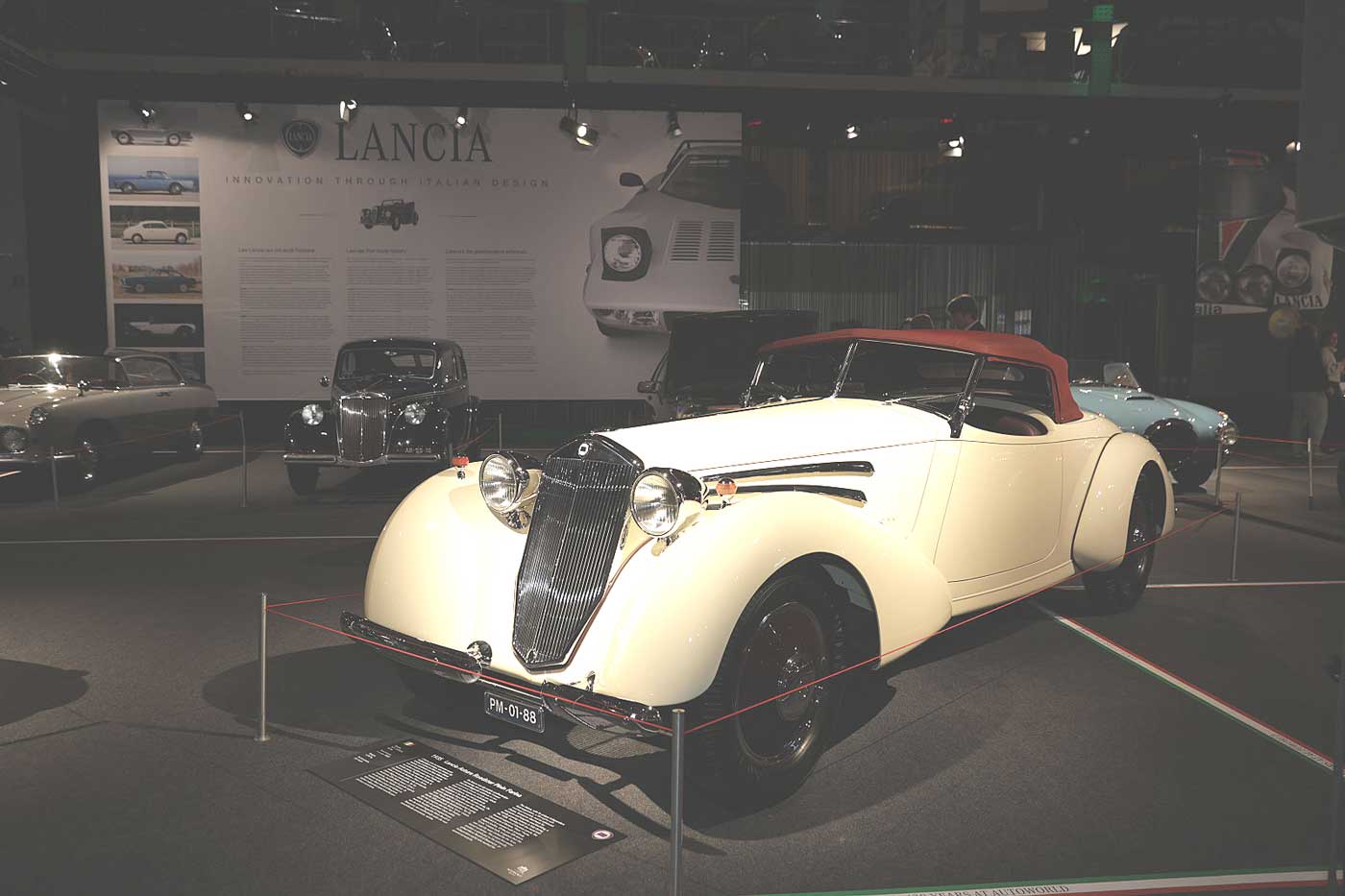
0038 : The Astura, with its independent front suspension, overhead camshaft V8, and advanced chassis, provided an ideal basis for bespoke coachbuilding, a booming sector in the 1930s. This 1935 model is one of only 328 Astura “Corto” chassis built and is bodied by the Carrozzeria de Battista “Pinin” Farina, based on a design attributed to Mario Revelli de Beaumont.
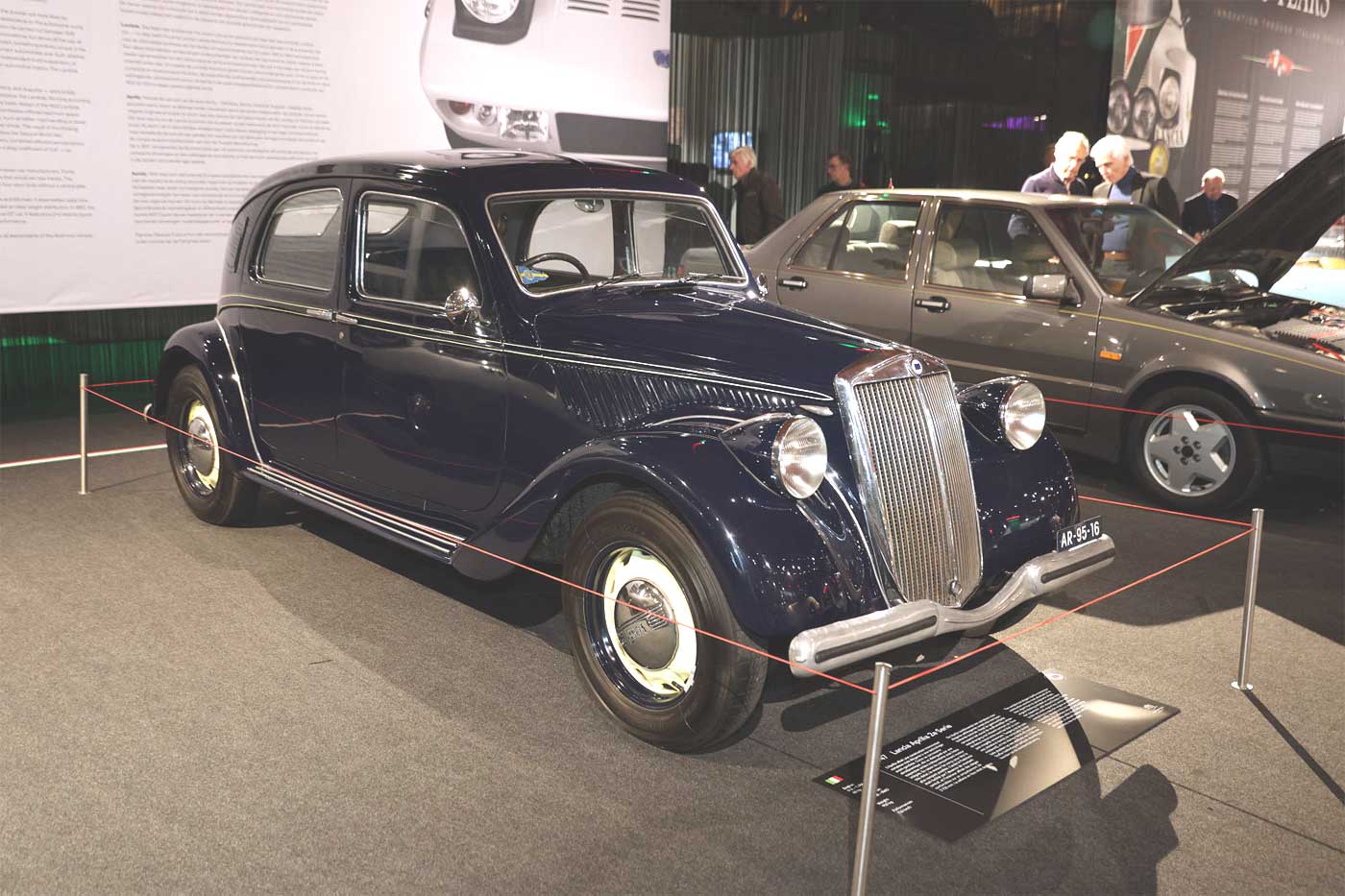
The Aprilia combined monocoque construction with cutting-edge technology. Besides its aerodynamic bodywork, it was distinguished by its independent rear suspension with integrated brakes. This particular model is a second series from 1947.
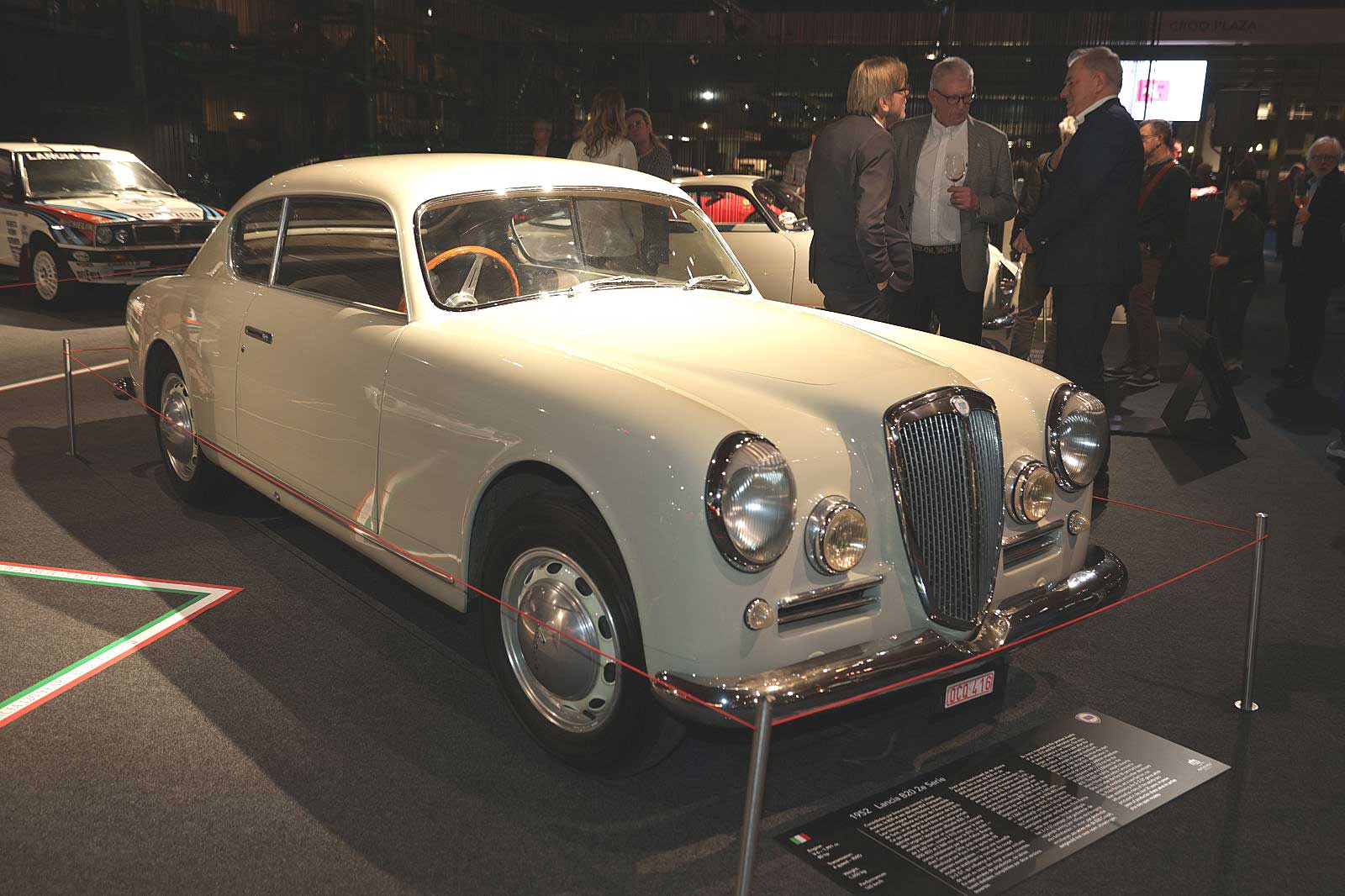
Considered by many to be the ultimate Aurelia, the B20 marked a major turning point in automotive history, establishing the concept of the 2+2 GT coupé, which influenced numerous sports cars over the next twenty years. This example is a Series 2 from 1952. Six series were produced over seven years.
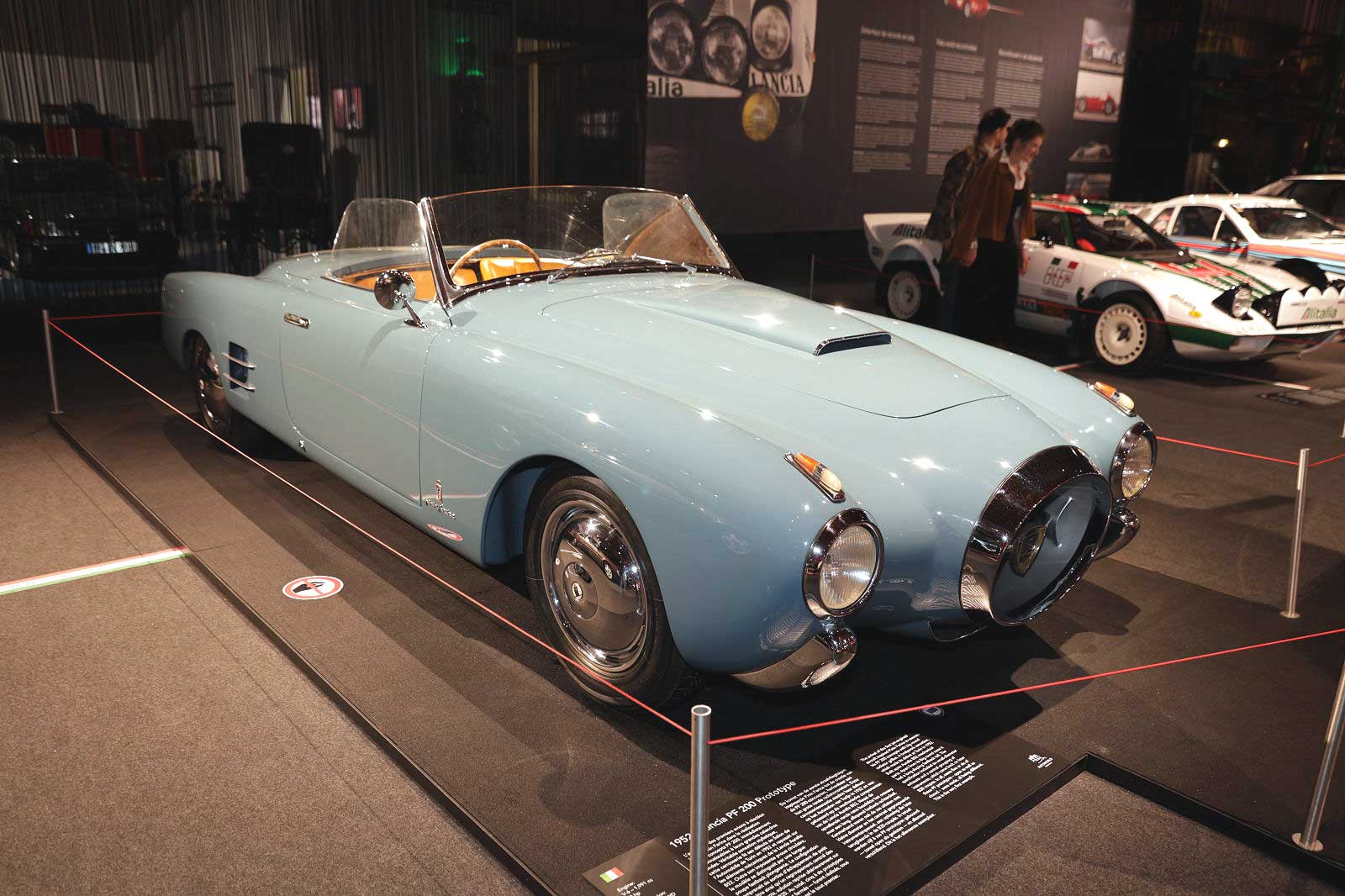
The emergence of the first jet aircraft inspired Pinin Farina in the creation of his PF 200 concepts, recognizable by their large, round grilles. Based on the mechanics of the Aurelia B52, five or six PF prototypes were built, all different. This is the very first.
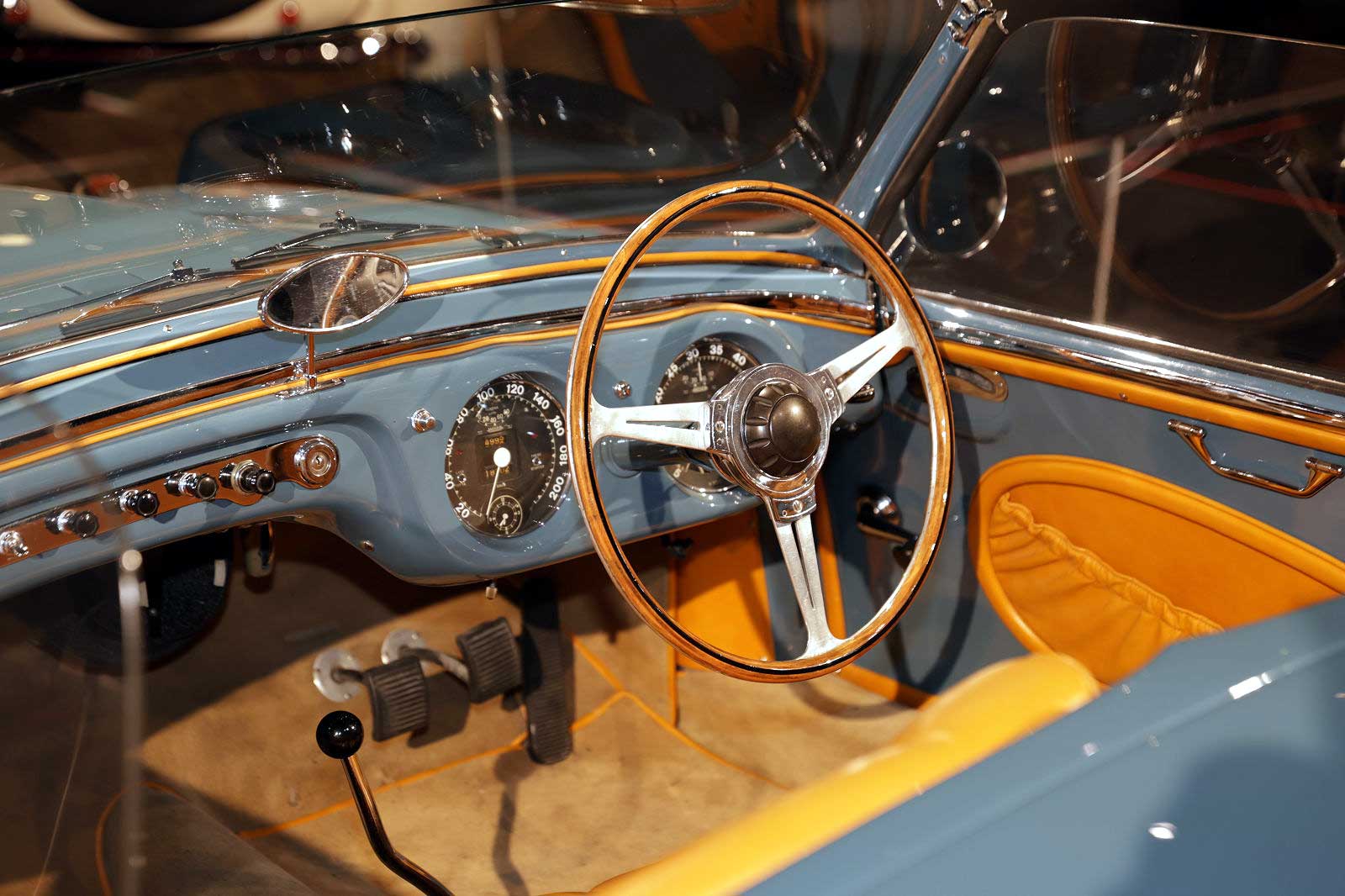
PF prototype dash.
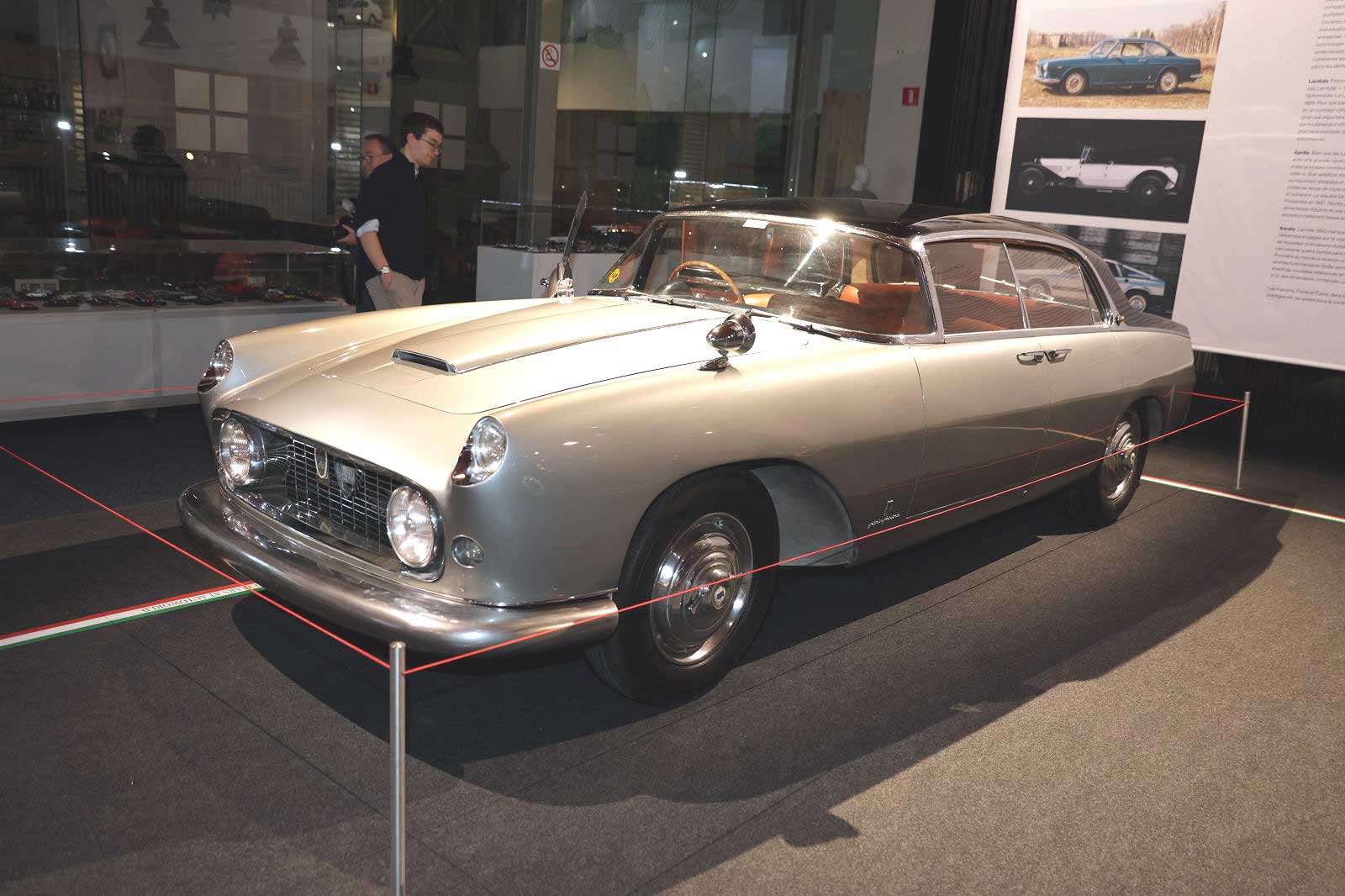
This Florida, based on the Aurelia B56, revolutionized the world of automotive design in 1955 by introducing an entirely new stylistic language. In total, only four examples of the Florida were built: one two-door model, two right-hand drive four-door sedans, and one left-hand drive.
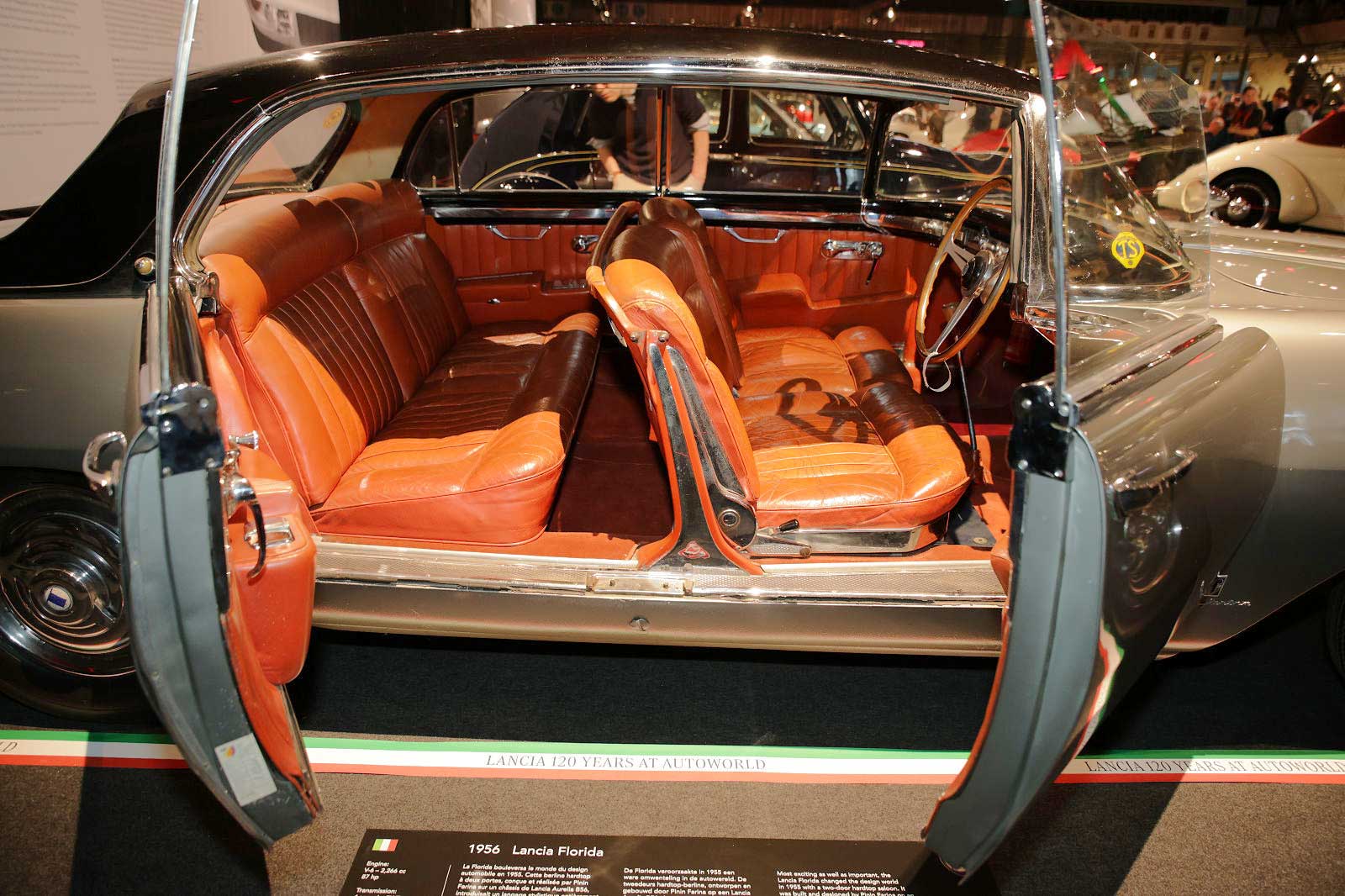
The PF Florida interior.
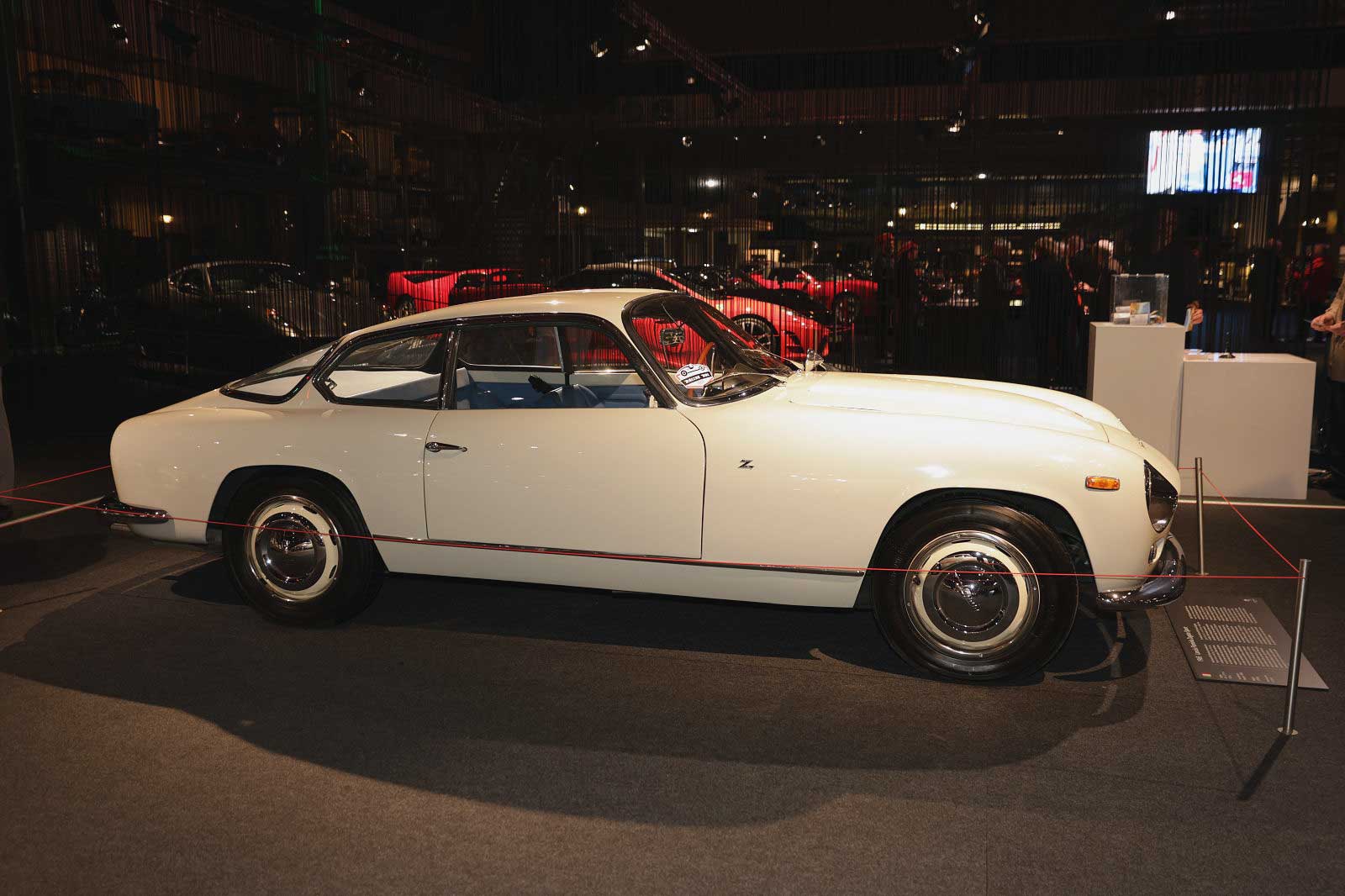
Only 526 Flaminias bodied by Zagato were produced, in various configurations and styles. They nevertheless became one of the most sought-after Lancias of the 1960s, thanks in particular to the spectacular design of Ercole Spada. This model is the 1965 Flaminia Zagato Sport.
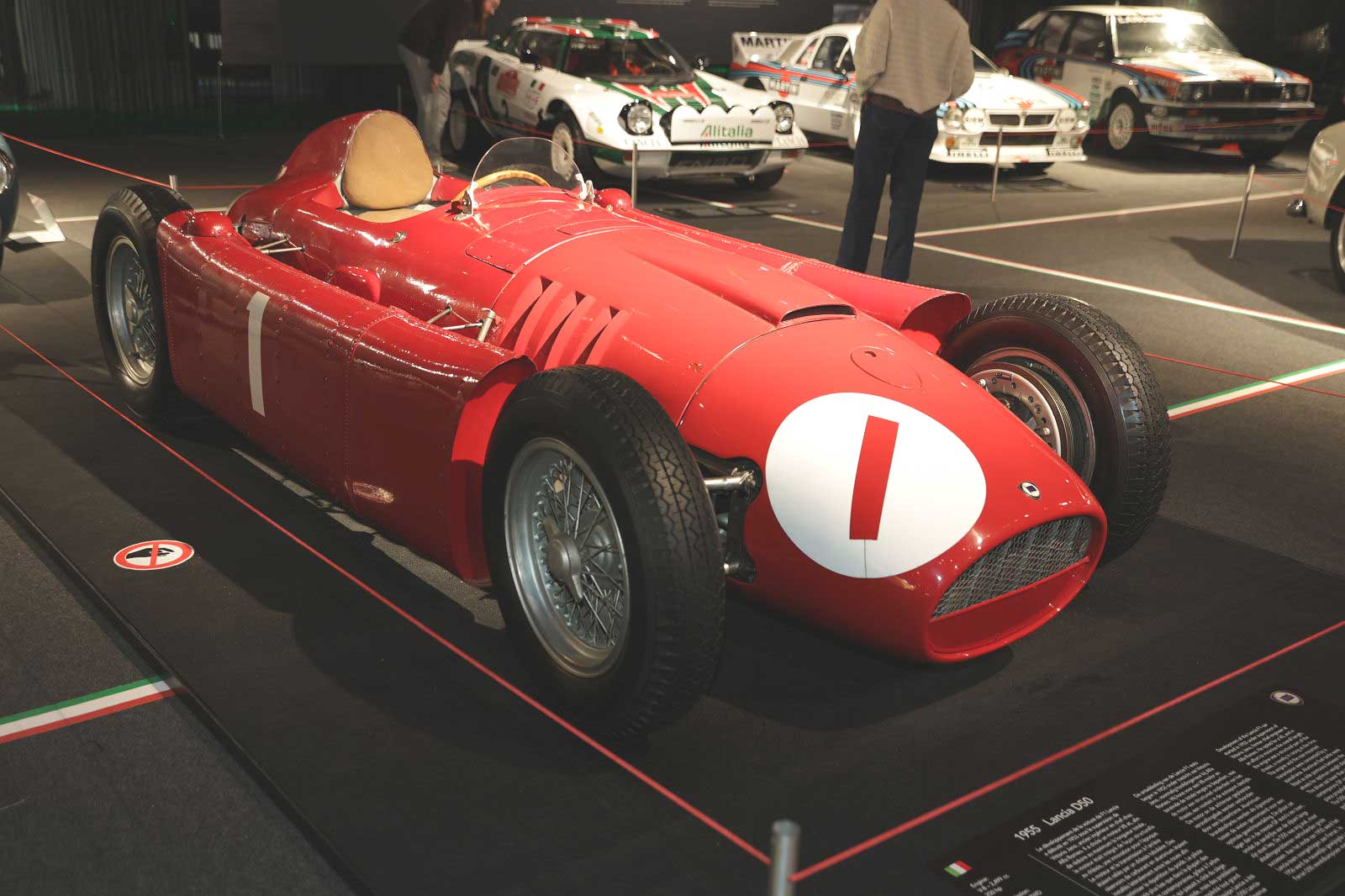
The history of the Lancia brand is, of course, marked by its presence in motorsport. Before tackling rallying a few decades later, Lancia first tried to shine in Formula 1 with the D50, developed from 1953 under the supervision of Vittorio Jano. The D50 was fast, but development problems prevented it from achieving great success, before Lancia withdrew and transferred its cars to Ferrari. In 1956, the slightly modified Lancia-Ferrari D50 became world champion with Fangio at the wheel.
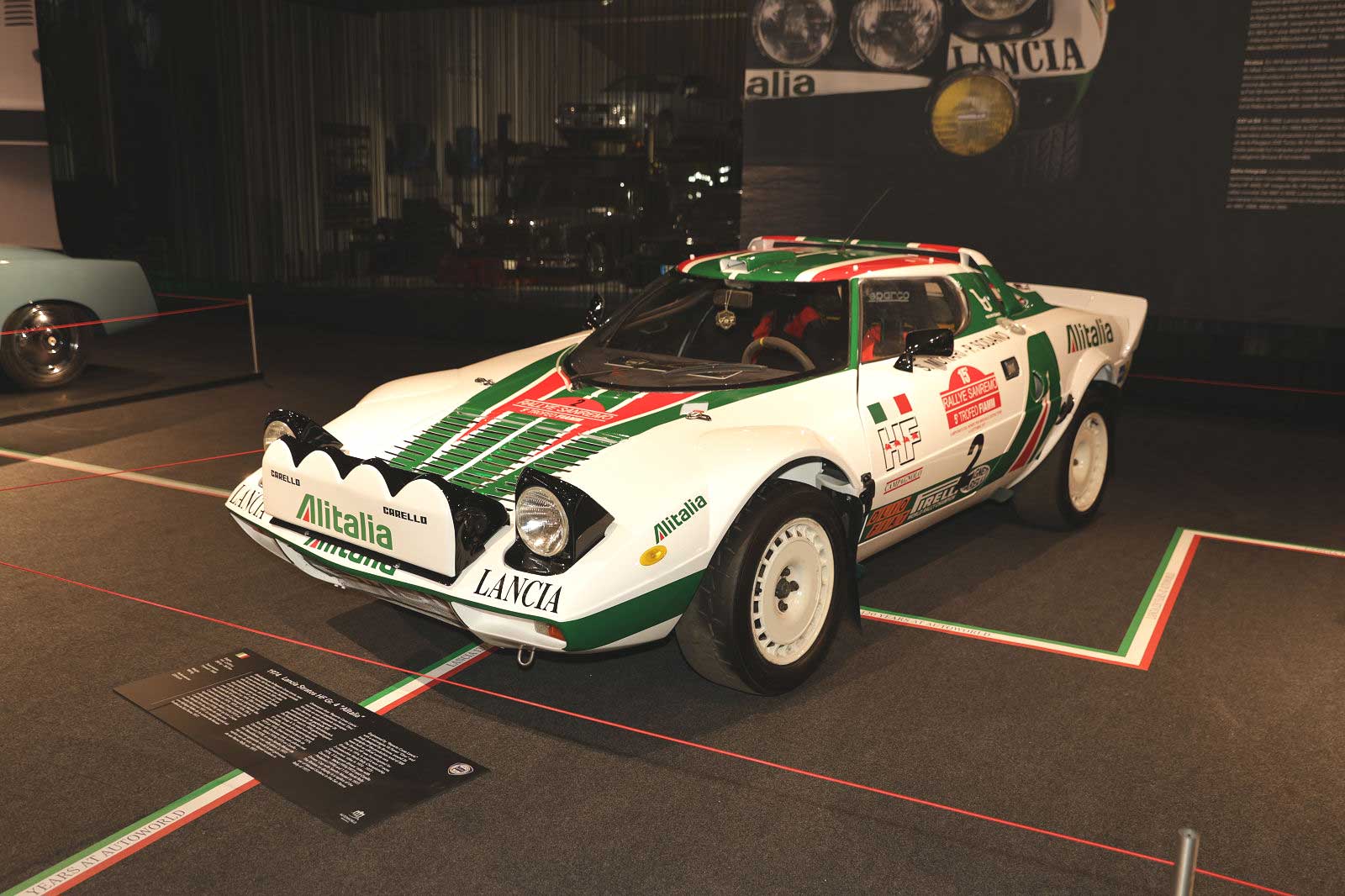
Following the Fulvia’s rally successes, Lancia developed the Stratos for the 1974 season, featuring a mid-mounted Ferrari Dino V6 engine and a Bertone body. With this car, Lancia secured three World Rally Championship Manufacturers’ titles, three European Rally Championship Drivers’ titles, and the 1977 FIA World Rally Championship Drivers’ title with Sandro Munari, who recently passed away.
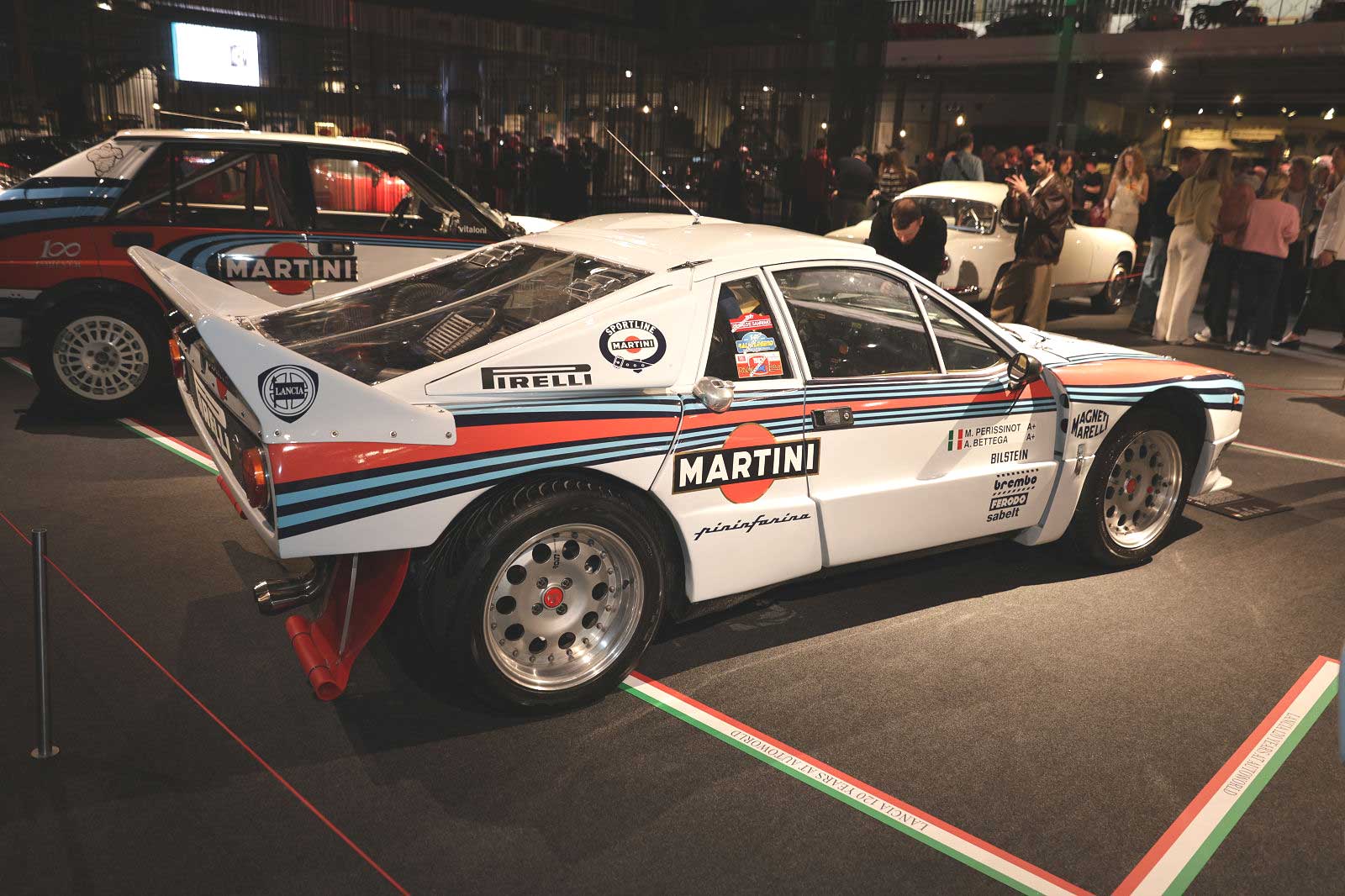
Designed to compete in the World Rally Championship from 1982 to 1985, the Rally 037 was based on the Lancia Monte Carlo. It won the 1983 World Rally Championship for Manufacturers with drivers Röhrl, Alen, and Bettega. It was the last rear-wheel-drive car to win the championship, despite competition from the four-wheel-drive Audi Quattro.
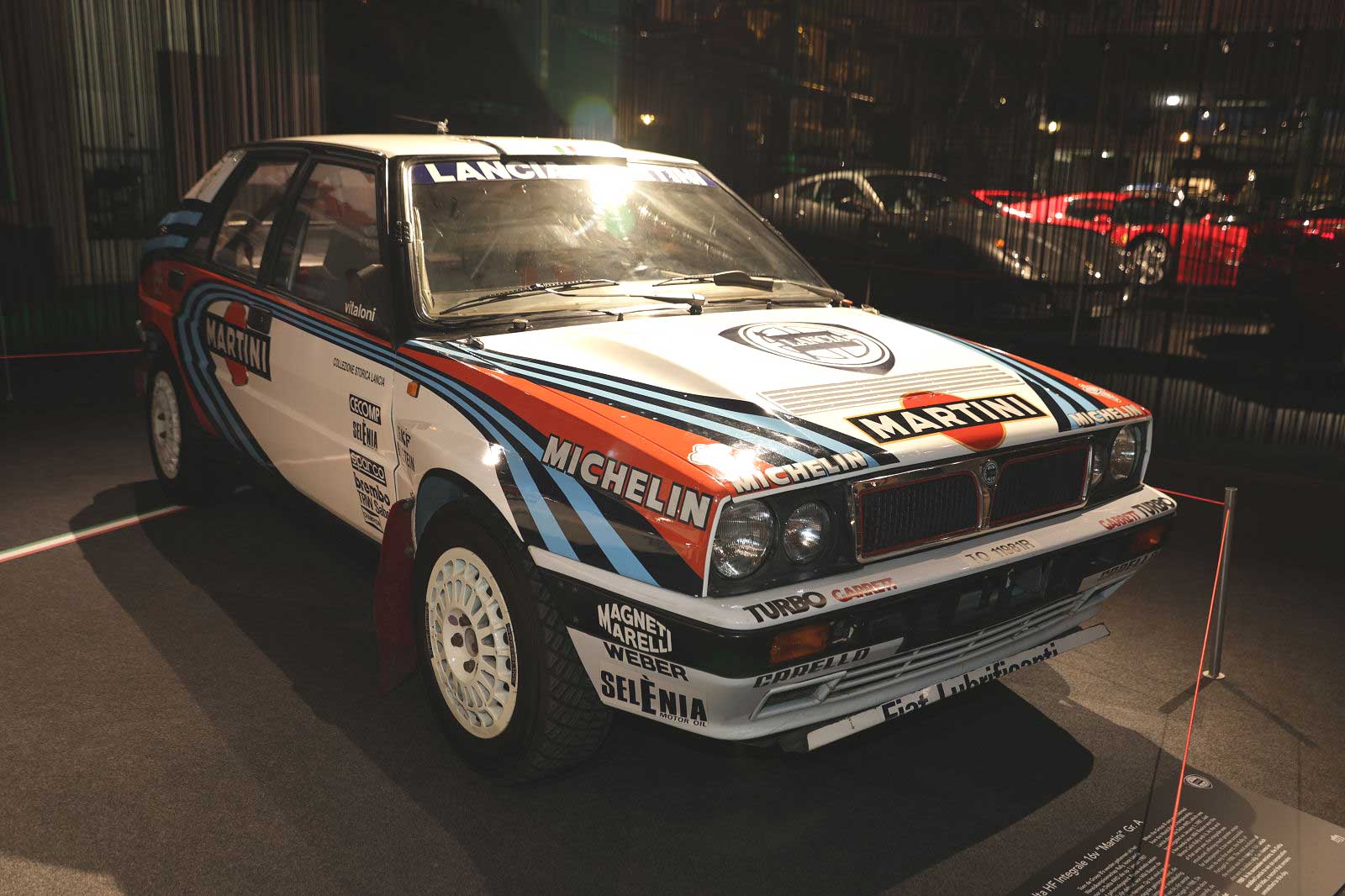
When Group B cars were banned from the World Rally Championship, Lancia opted for the Delta 4WD, which won its first race, the 1987 Monte Carlo Rally. A year later, the Integrale was introduced and it won its first race, the 1988 Portugal Rally. Finally, the Integrale 16v, like this one, also won its debut rally, the 1989 San Remo Rally. In its successive versions, the Delta enabled Lancia to secure six consecutive world titles, a record that remains unmatched to this day.
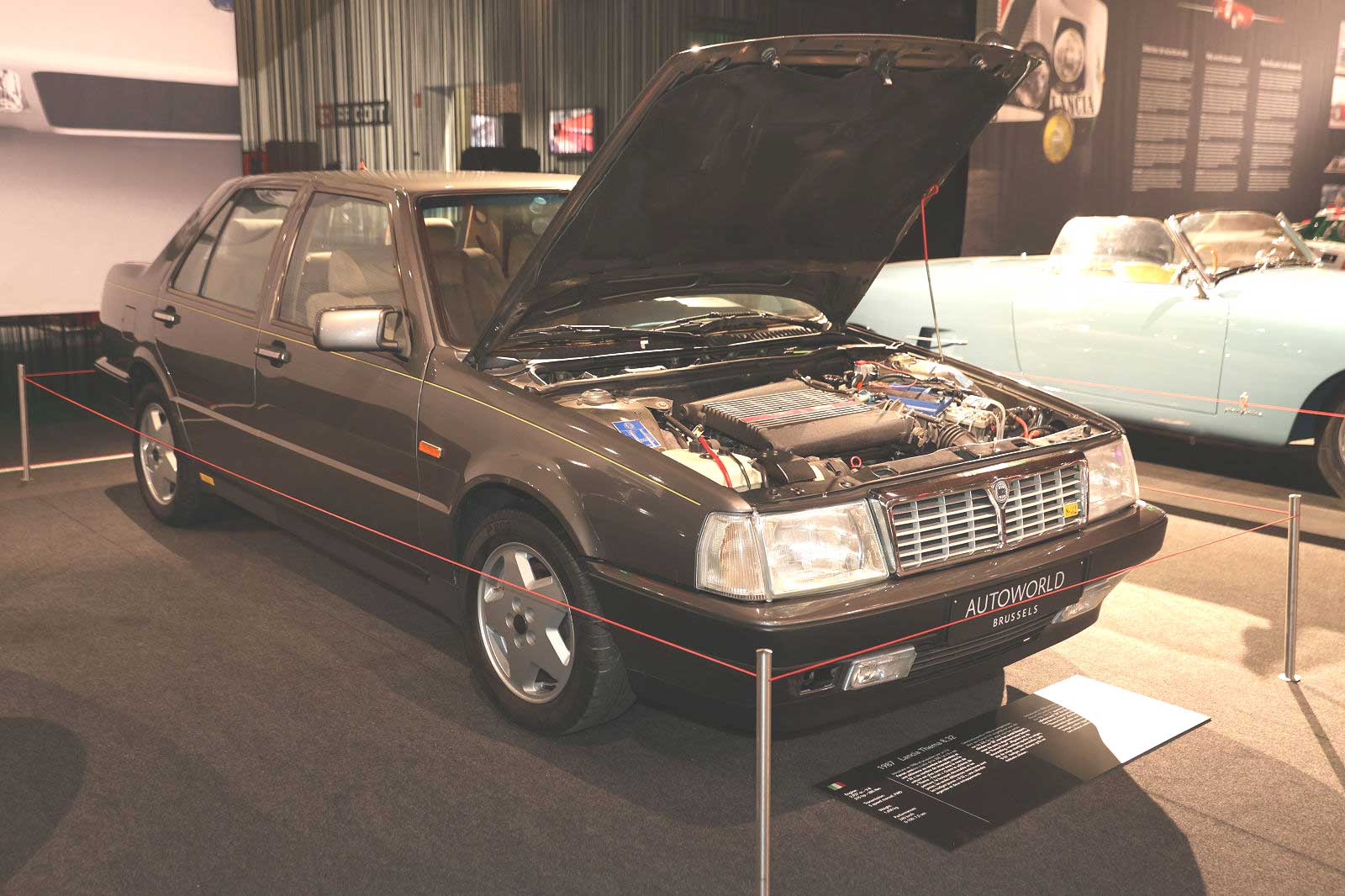
The Lancia Thema 8.32 was introduced in 1986 and is powered by a Ferrari V8 similar to that of the 308, the 8 representing the number of cylinders and the 32 the number of valves. The only exterior differences from the Thema are the paintwork, the retractable spoiler, the wheels, the yellow “8.32” badges, a silver grille, and two exhaust pipes.
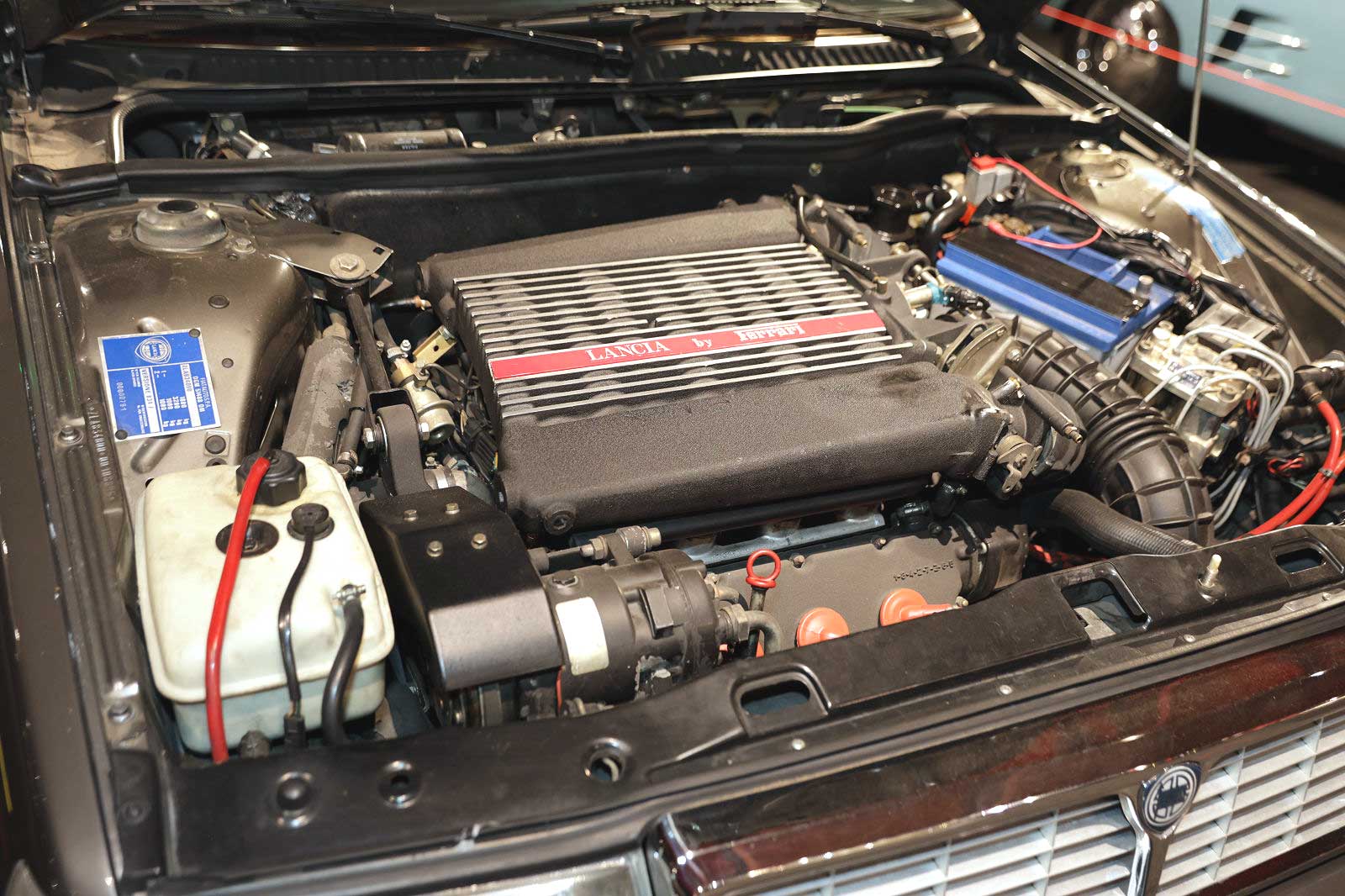
Lancia Ferrari Thema 8.32 engine.
Previous events at Autoworld
Maserati’s 110 Years Exhibition at Autoworld Museum, Brussels
Leave a Reply