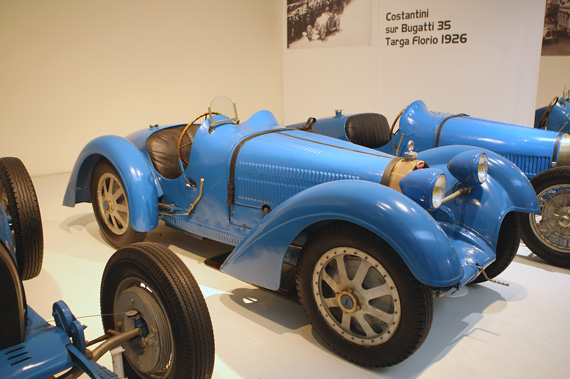
1928 Bugatti Type 35A; 8 cylinders, 1991cm, 95cv, 190 km/h. This car was equipped with mudguards and headlights as a two-seater sport version. It belonged to Elisabeth Junek who raced Bugattis in the Targa Florio.
Photos by Jonathan Sharp
Dear reader,
Last week we brought you Part 1 of cars at the Schlumpf (click here). Below we present just a few of the Bugatti and Gordini race cars at the National Museum at Mulhouse. We have not attempted to identify the Bugattis by chassis number; we have asked for a list of cars and chassis numbers from the Museum but no response yet. Even simple identification is often difficult; for example is the wire wheeled Bugatti below a T35 or T37? We are not sure.
Therefore Mr. Sharp has made use of the placards at the Museum, the official Museum booklet, and the Museum Internet site to try to verify that the identifications in the captions below are as correct as possible. Our staff also checked sources from a variety of Bugatti and Gordini books. In some cases, we are still not sure we are 100% correct. Perhaps readers could help. We would also like to know if readers have had similar experiences.
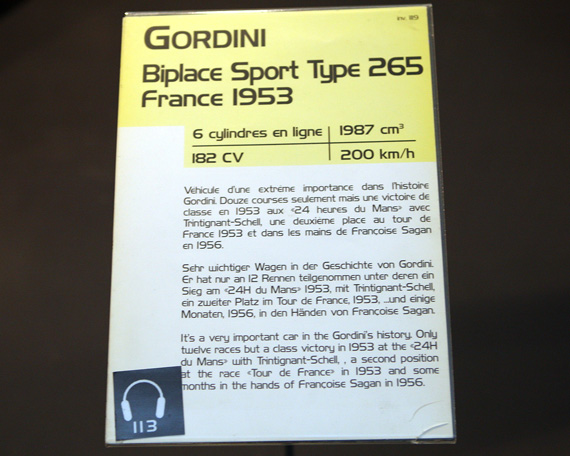
The situation was no better with the Gordinis. Placards were often incorrect. We used Christian Huet’s landmark book, “Gordini” as well as Roy Smith’s recent work “Amédée Gordini-a true racing legend” to identify the cars by chassis number and type – always a difficult matter at best as Smith will attest to. So enjoy; comments welcome as usual!
Bugatti
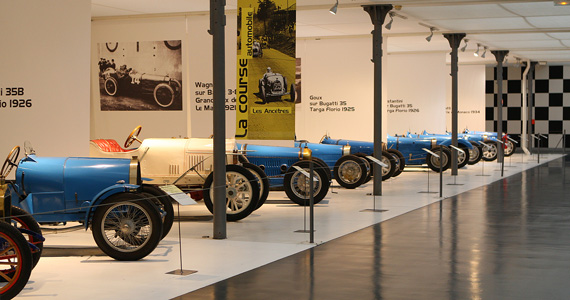
A line-up of just some of the cars at the Museum.
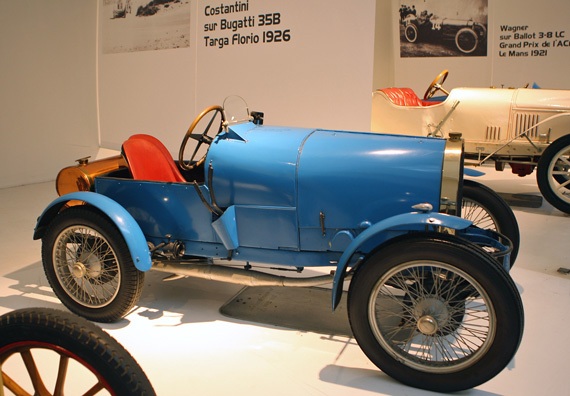
From the placard: 1921 Bugatti Type 13; 4 cylinders, 1453cm, 30cv, 125 km/h.
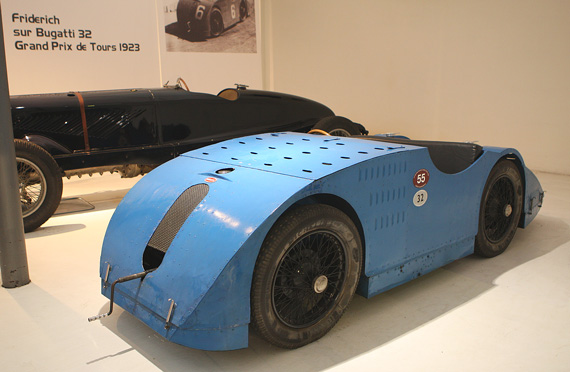
From the placard: 1923 Bugatti Type 32; 8 cylinders, 1991cm 75cv, 190 km/h. This Bugatti with its revolutionary shape took part in the 1923 Tours Grand Prix.
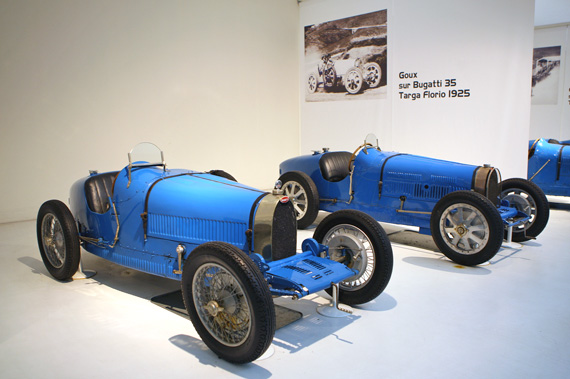
I am assuming the example with wires is a T37, the other a T35. I can only find one placard for the two cars which reads “Biplace course Type 35. 1925 8 cylinders, 1991cm, 95cv, 190 km/h.” However, checking with the book, “The Schlumpf Obsession”, the wire-wheeled car could be a T35 (see page 97).
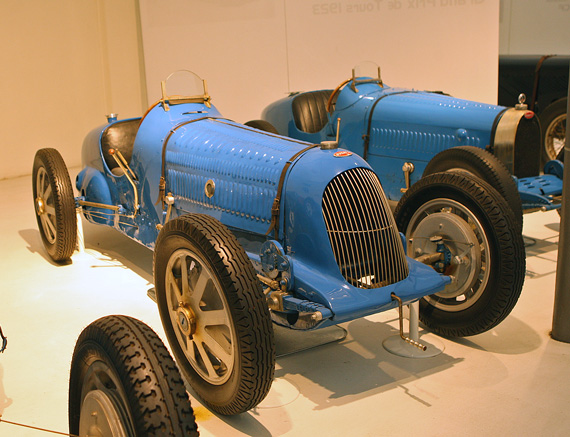
From the placard: 1934 Bugatti GP Type 51A; 8 cylinders, 1500cm, 140cv, 210km/h. After their official career T51s were the delight of amateur drivers. This series was the last of the Grand Prix Bugattis to be sold to private individuals.
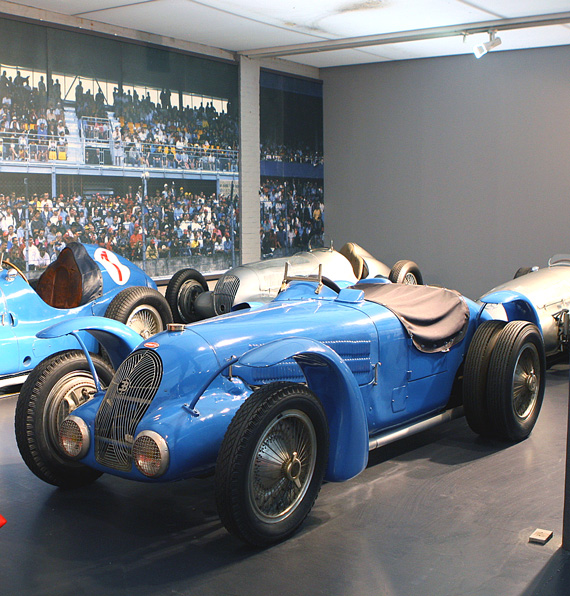
From the placard: 1938 Bugatti T 59/50 B; 8 cylinder, 4741cm, 400cv, 290 km/h. This 59/50 came second in the Comminges Grand Prix driven by Jean Pierre Wimille, one of the greatest French drivers at the time.
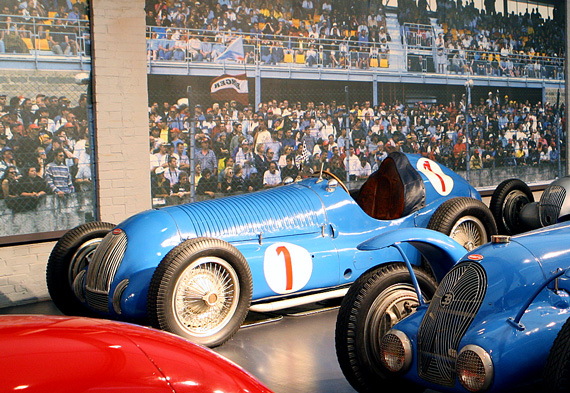
From the placard: Bugatti GP Type 59/50B; 8 cylinders, 4741cm, 400cv, 300 km/h. After World War Two racing started up again and the first race was the Coupes des Prisonniers in September, 1945 which Wimille won with this car.
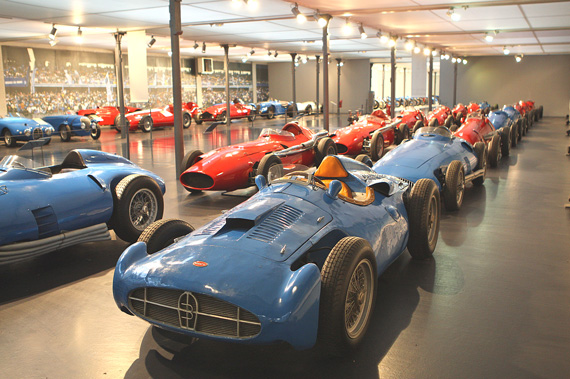
The transverse mid-engined Type 251 in a line up of other Grand Prix cars of the era.
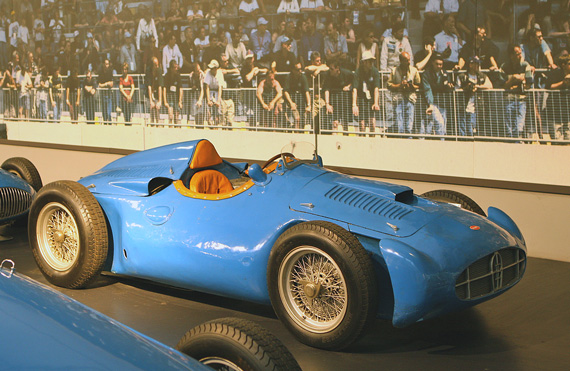
From the placard: 1955 Bugatti GP Type 251; 8 cylinders, 2421cm, 230cv, 260 km/h. The 251 was the last attempt to bring out a Grand Prix car. It was ultimately a failure and the project was abandoned in 1956.
Gordini
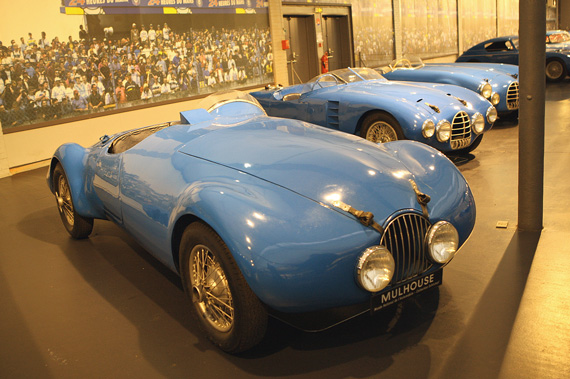
1939 Simca Huit; 4 cylinders, 1220cm, 74cv, 160 km/h. Driven by Gordini and Scaron this Type 8 won the Biennale cup at Le Mans in 1939. Chassis number 81040 per Huet.
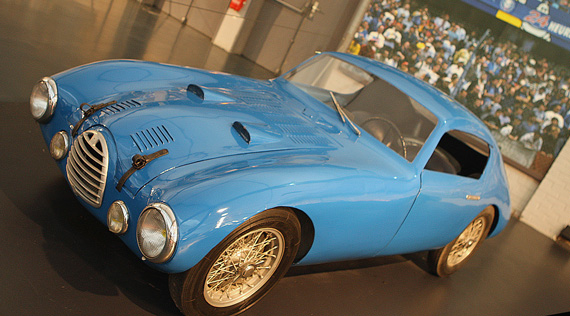
1950 Sima Gordini Coupe 15S; 4 cylinders, 1490cm, 135cv, 200 km/h. This little coupe, driven by Trintignant and Manzon in the 1950 Le Mans 24 hours is one of the rare Gordinis to have a closed body. Two coupes ran that year.
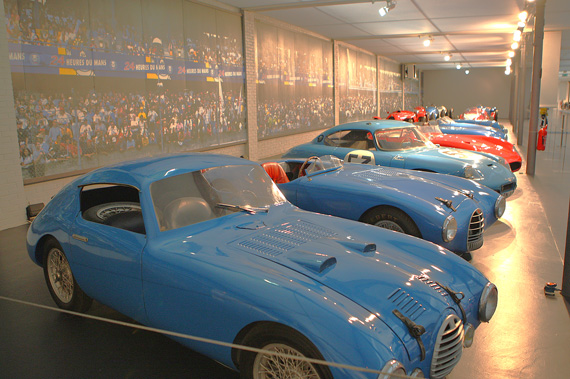
Per Christian Huet this is Chassis 21 S.To aid in the confusion, the placard rightly states that this is 15S. However, 15S is the Gordini Type, while 21 S is the Chassis number.
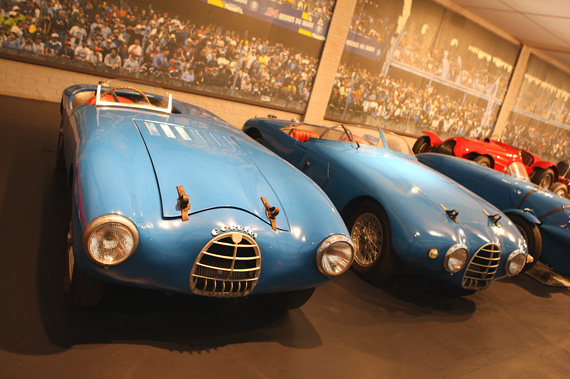
The Gordini on the left: We’ll ignore the placard here, since information from the Museum seems misleading. According to Huet, this is Chassis 18 which began life as 17 GCS. It became a Sport Type 15S, modified in 1953.
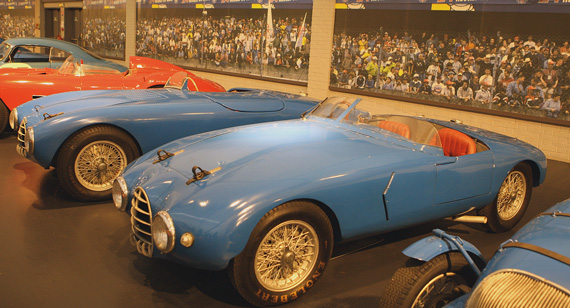
Again we’ll ignore the placard information. According to Huet, this is Chassis 39, which began life as 06 GC. It was owned by Annie Bousquet before being passed onto the Schlumpf brothers in 1968.
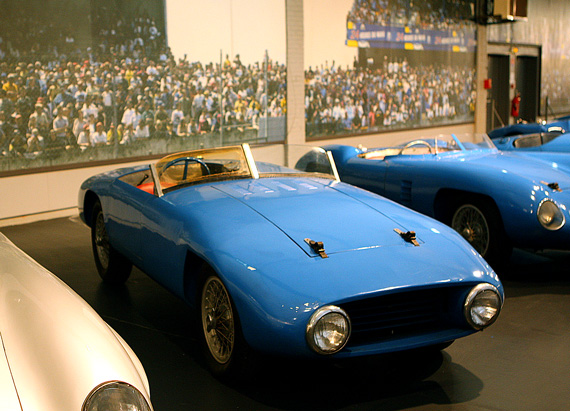
Chassis 38S placed sixth overall at Le Mans in 1953 with Trintignant and Schell. Below is the placard for the car at the Museum. Huet has this as a Type 16 S as of 1953.
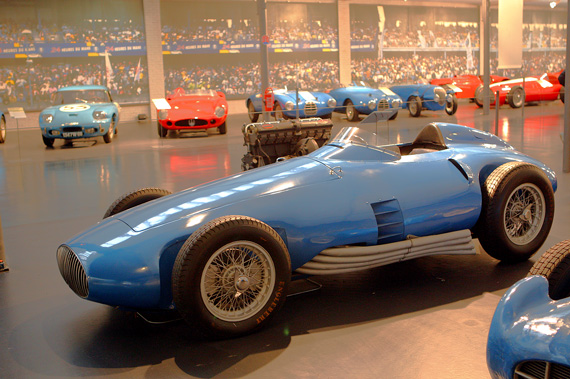
The Museum contains two Gordini Type 32 Grand Prix cars with 8 cylinders, 2473cm, 250cv, 270 km/h, 650kg. One is Chassis 41 and apparently the one in this photo is Chassis 42. They were both purchased by the Schlumpf brothers from the factory in 1964.
too bad that the museum people could not get their act together and have the correct information on the placards!