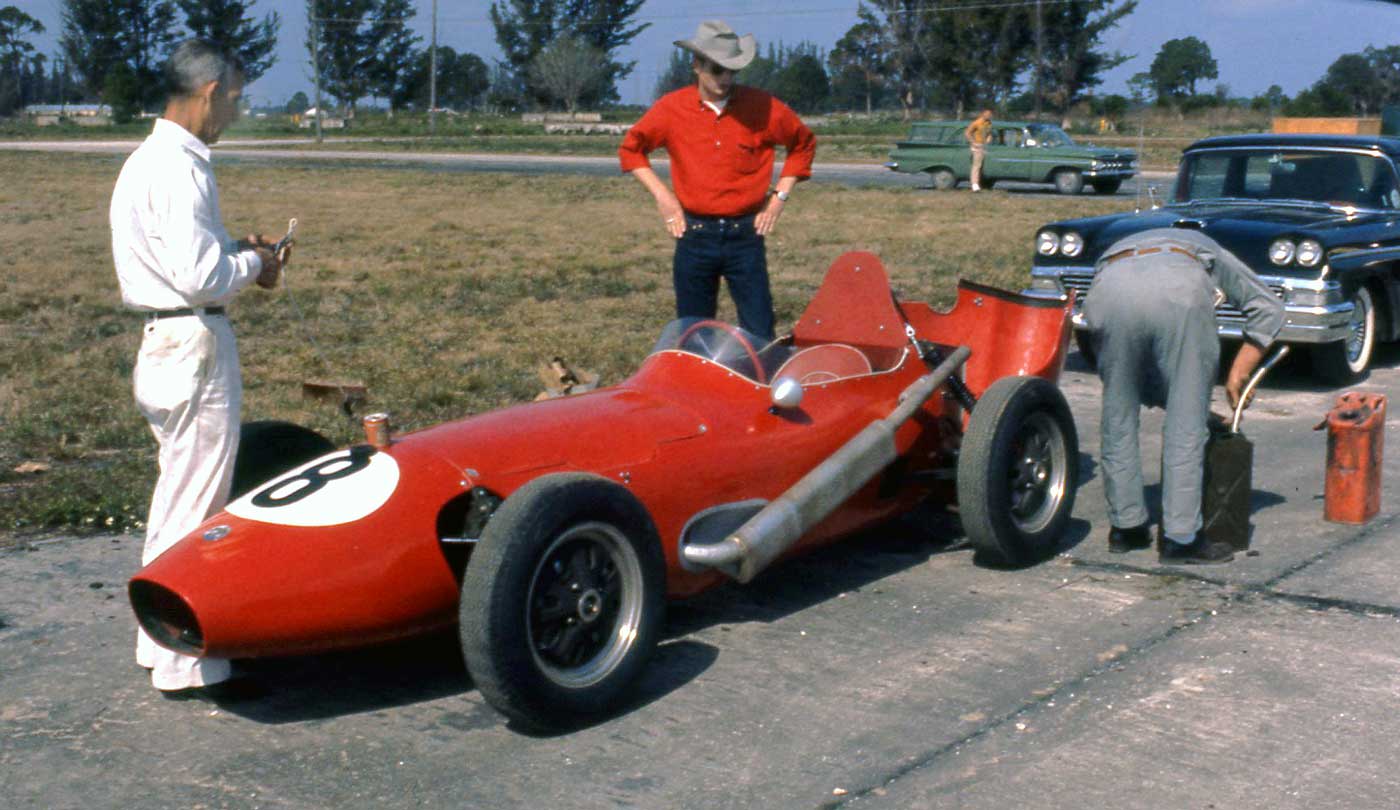
Sebring, leading up to Friday. March 25th. Jim Hall poses next to his DKW-powered Elva FJ. His body man Foy Barrett is on the left, and the fuel man is Chester “Chet” Hines. Chet was Hap Sharp’s aircraft mechanic, often drafted to serve as part-time race mechanic.
By Willem Oosthoek All photos taken by Bob Jackson [Willem Oosthoek Collection]
The 1960 edition of the Sebring 12 Hours was scheduled to start at 10 AM Saturday, March 26. But competition actually began a day earlier. For the first time in its history, the 12-hour event featured two opening races, one for Formula Juniors on Friday morning and a 4-hour event for Under-1-liter GT entries in the afternoon.
Introduced in Italy in 1958, the Formula Junior class was a relatively new one for the U.S. and Sebring brought the first sizeable field of competitors together. The race was restricted to 30 laps over the short course of 2.2 miles. Italian cars came in the form of Stanguellini, OSCA, Moretti, Taraschi, Volpini and Isis. From England [although with U.S. owners] came a Cooper, a Lotus, a Gemini and various Elvas [mostly with two-stroke DKW engines]. Switzerland provided a trio of Peter Monteverdi-designed, DKW-powered MBMs, for Monteverdi Basel Motoren. And then there were some U.S.-built FJ backyard specials. Ever heard of a Jocko Special? Altogether 23 competitors would take the start of the race.
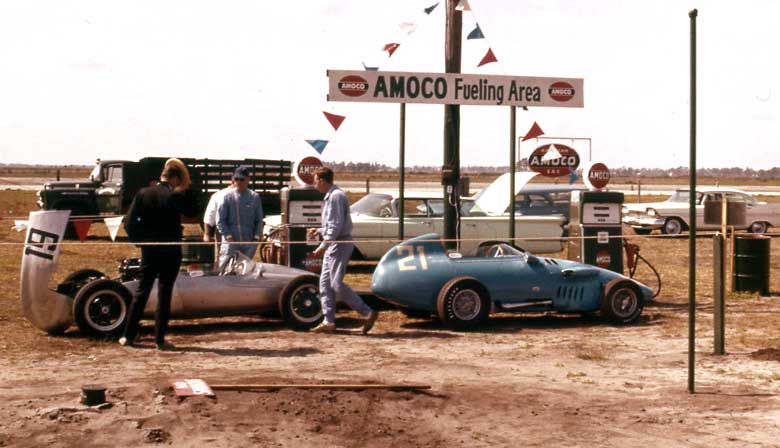
Here two of the three Cunningham entries are being fueled with AMOCO. The silver car is Walt Hansgen’s Cooper FJ, the blue one Eddie Crawford’s Stanguellini FJ. Walt wears the baseball cap; Eddie is seen between the two cars.
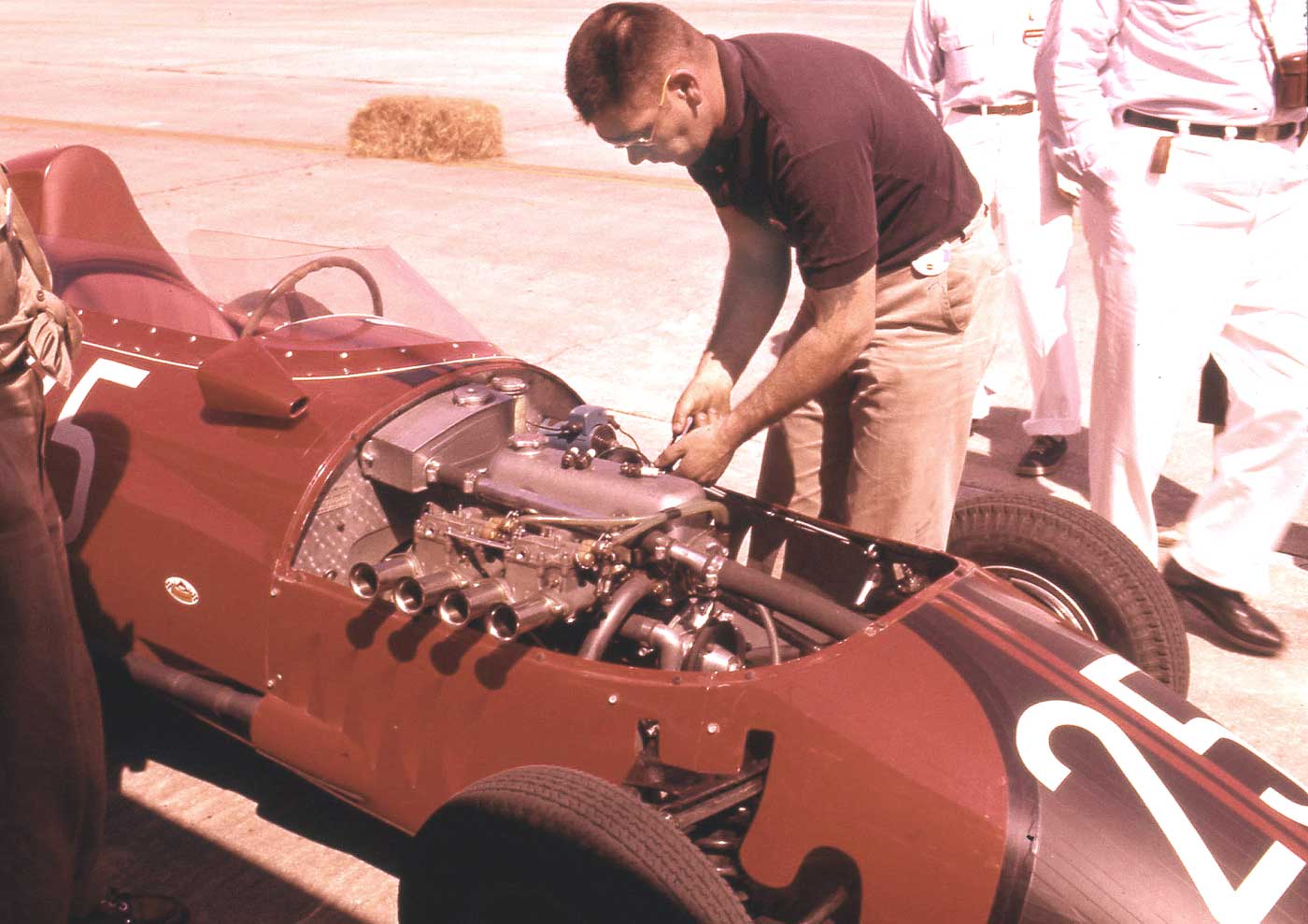
Harry Carter in the process of changing the spark plugs of his Stanguellini.
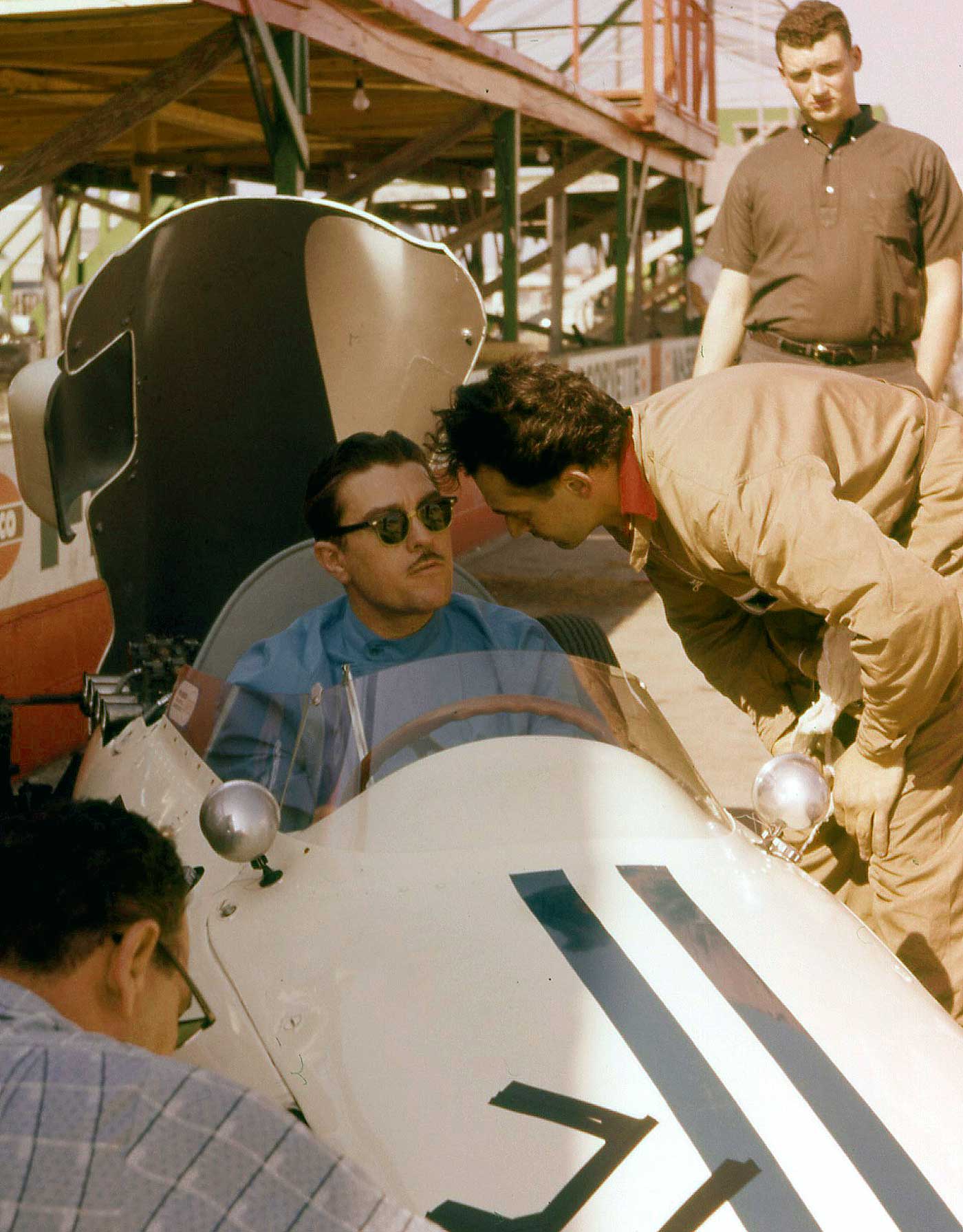
Ed Hugus brought a De Tomaso ISIS and gets advice from the constructor himself.
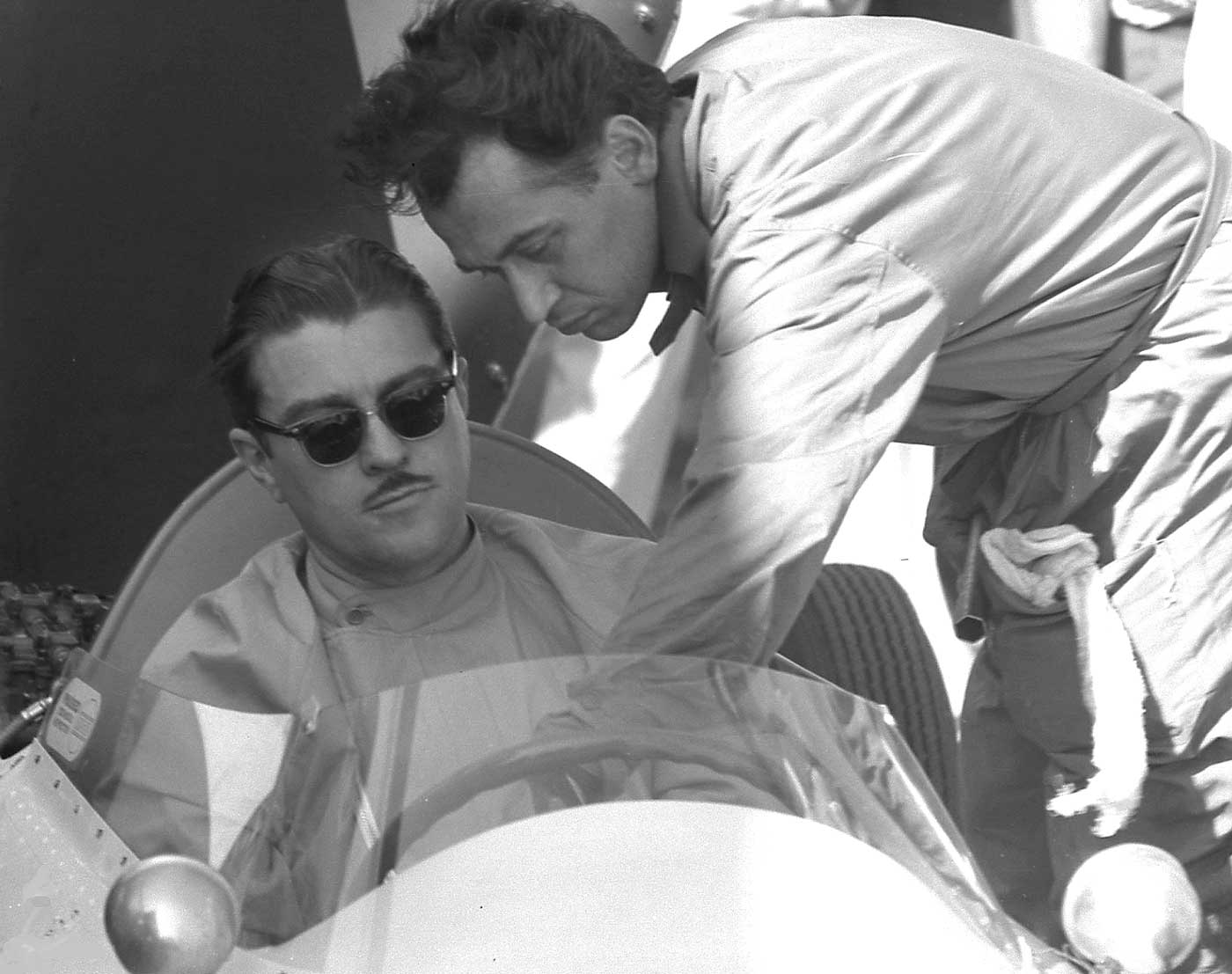
For those of you who did not believe it was actually Alessandro de Tomaso with Ed Hugus, a clearer view.
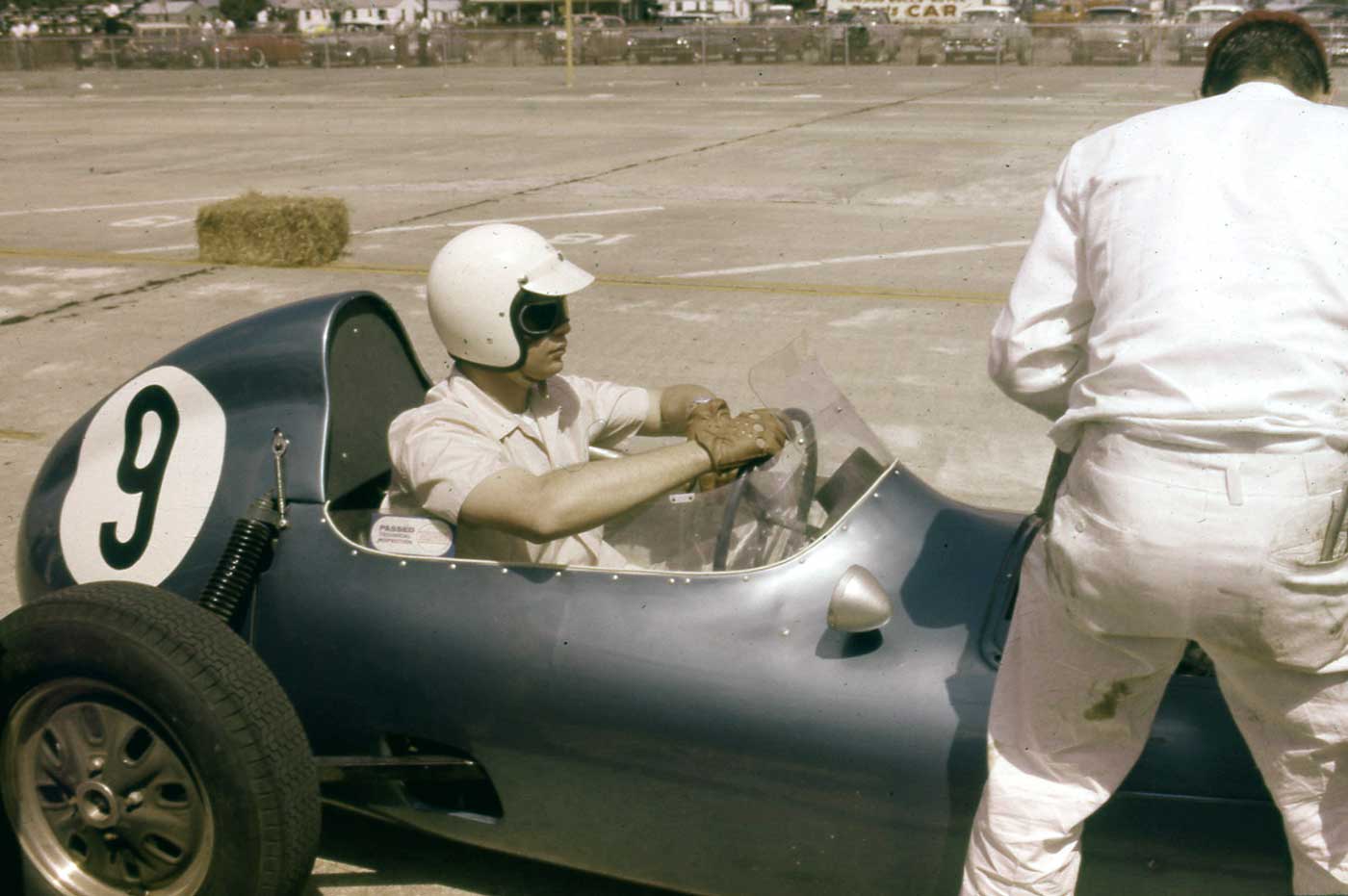
Jim Hall’s younger brother Chuck had just turned 21 and brought his own Elva/DKW as part of the Hall team.
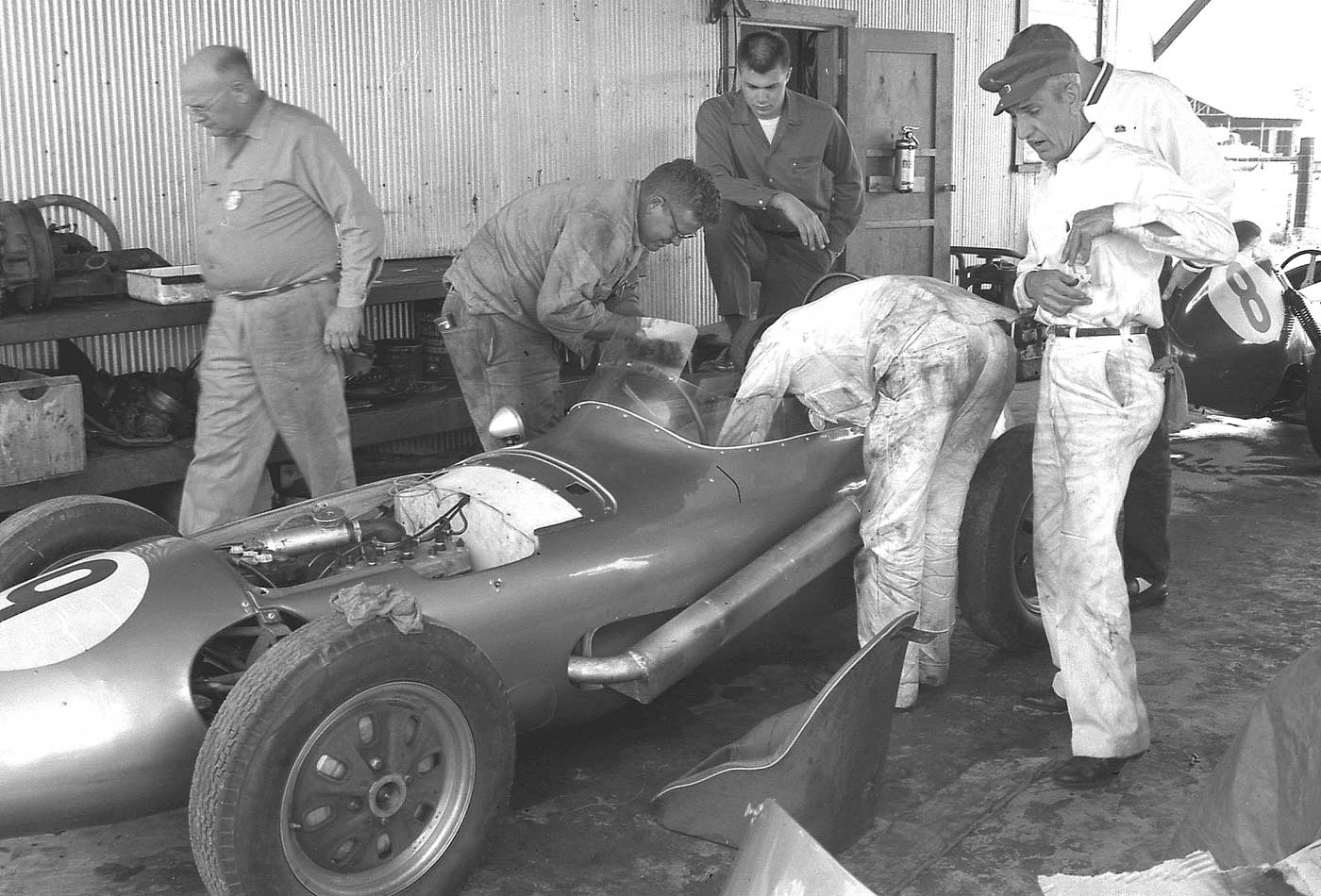
It seemed Chuck Hall’s Elva needed a lot of prepping, although the rookie driver kept his hands clean.
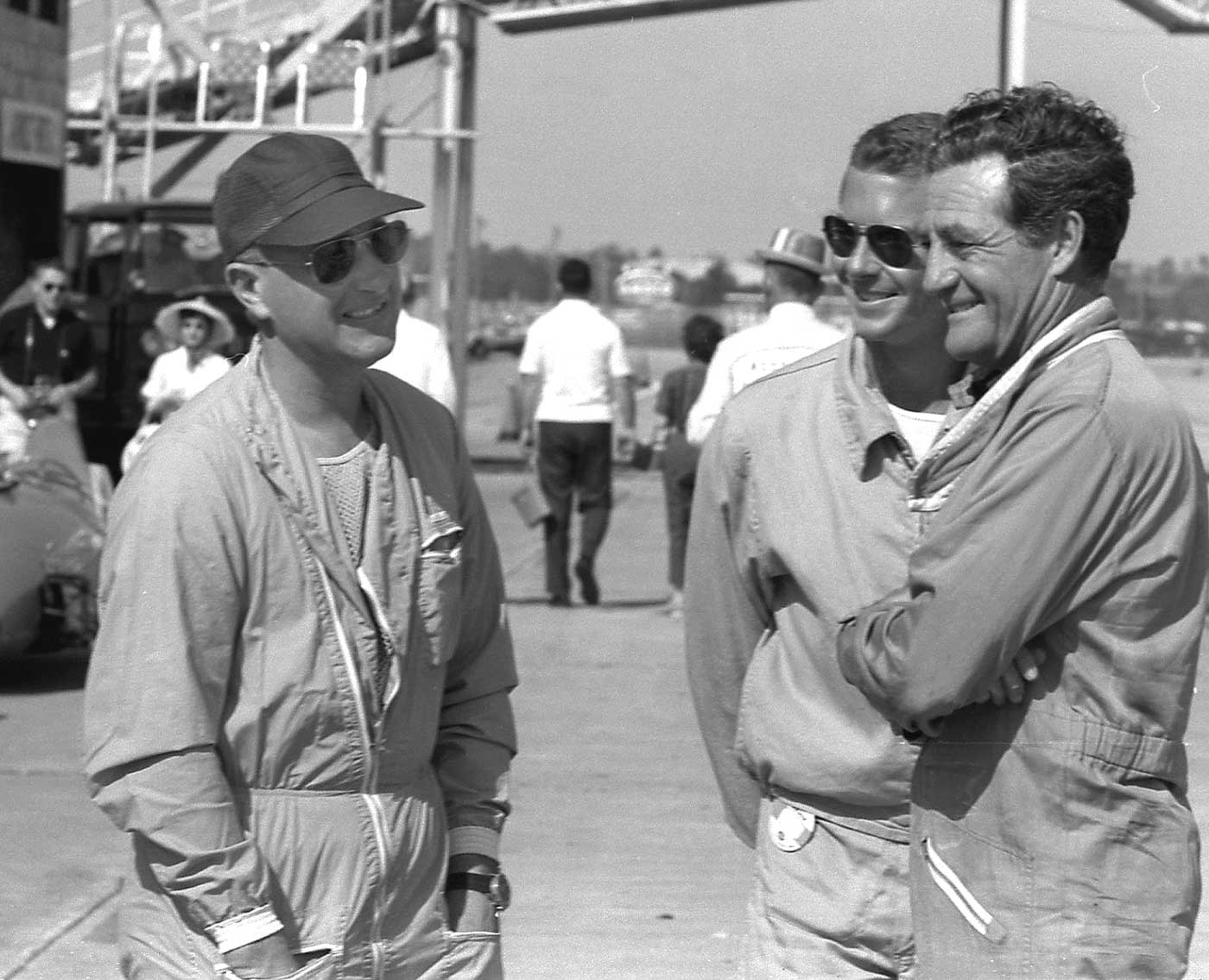
Seen before the start of the race, Briggs Cunningham with his two drivers, Walt Hansgen and Eddie Crawford. Briggs would start the race with a second Stanguellini.
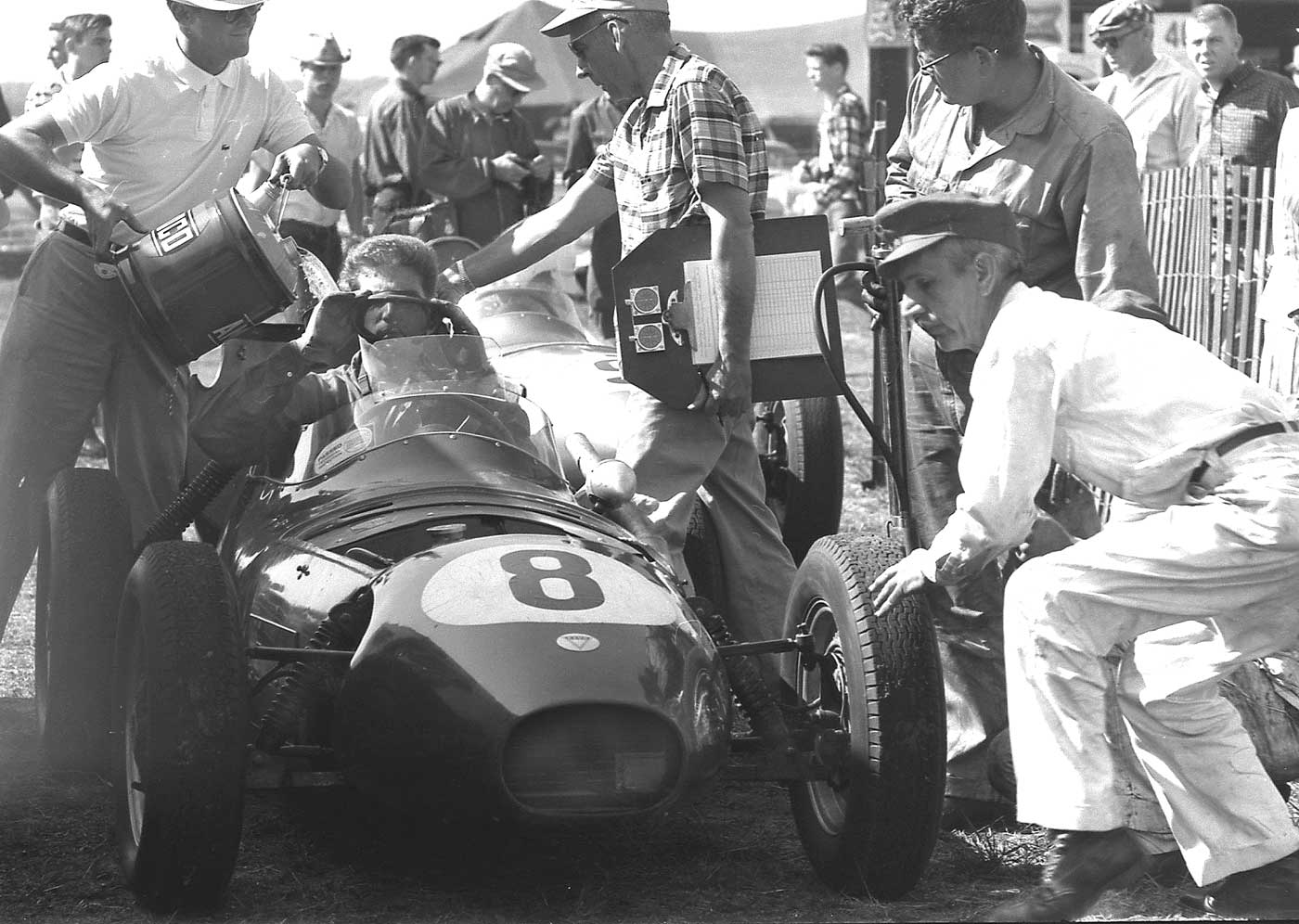
Driving up to the grid, Jim Hall checks his goggles while Foy Barrett seems to investigate the front wheel.
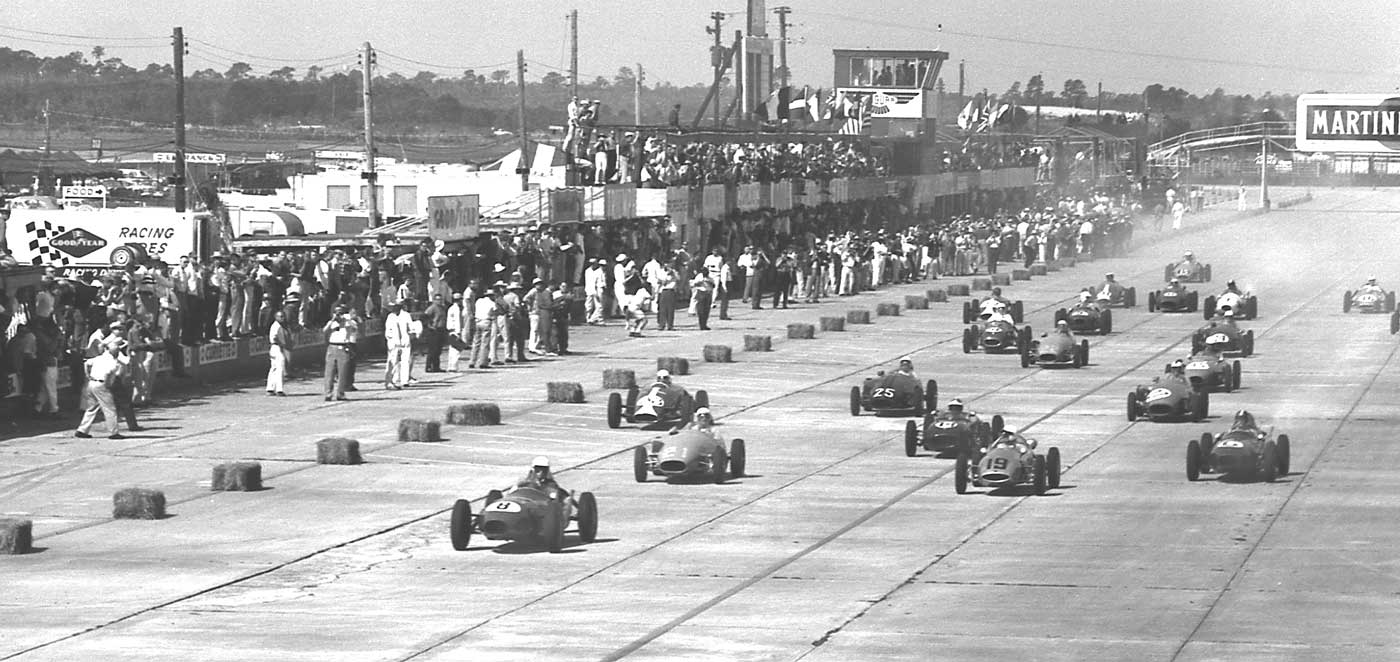
Chief Starter Jesse Coleman has waved them off. Fastest qualifier Walt Hansgen [#19 Cooper/BMC] is slow getting away and Jim Hall briefly takes the lead [#8 Elva/DKW] from him, followed by Eddie Crawford [#21 Stanguellini], Chuck Dietrich [#6 Elva/DKW] and Jay Chamberlain [#14 Lotus 18/Ford].
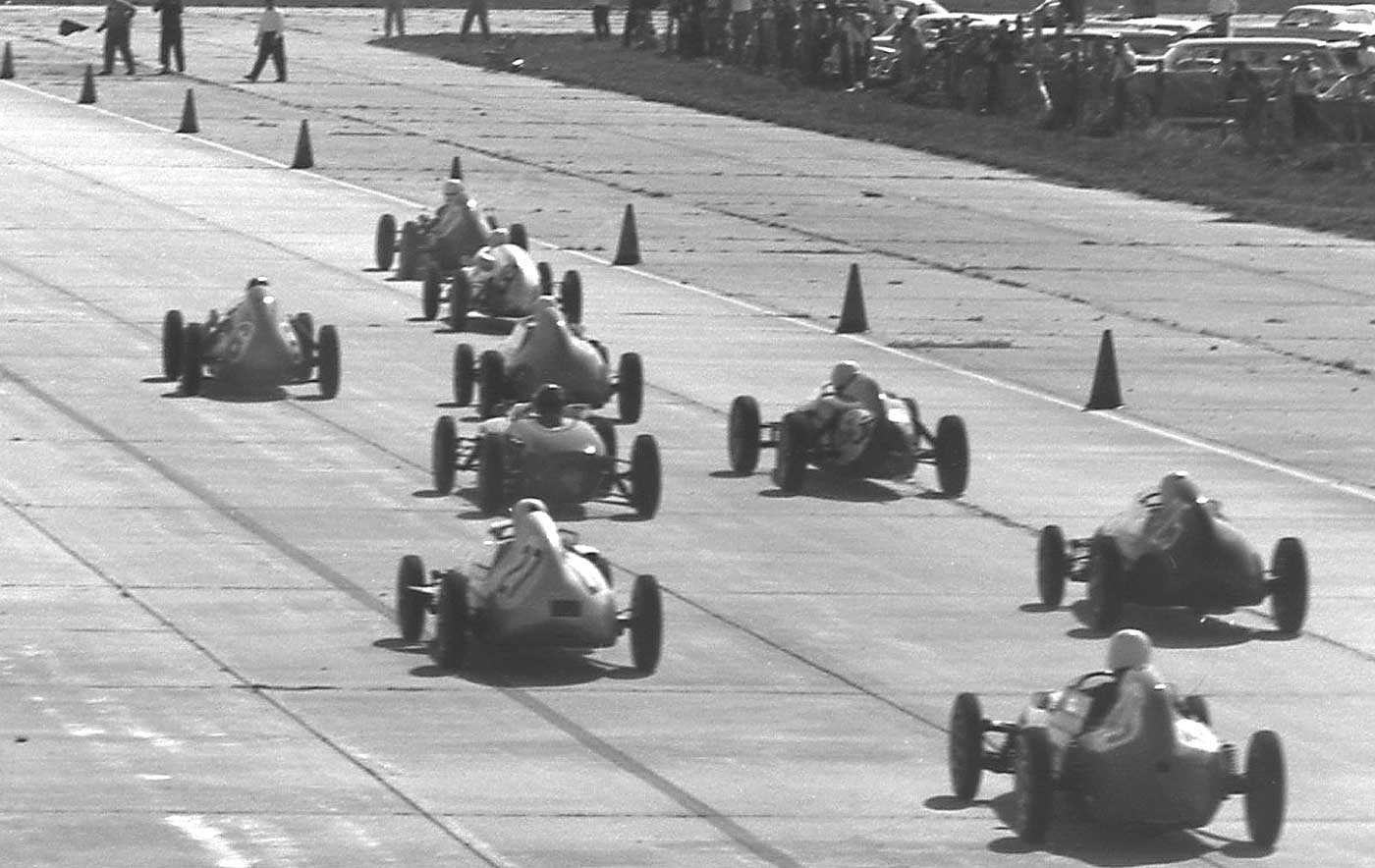
A rear view of the start, with Newton Davis in his #27 Stanguellini.
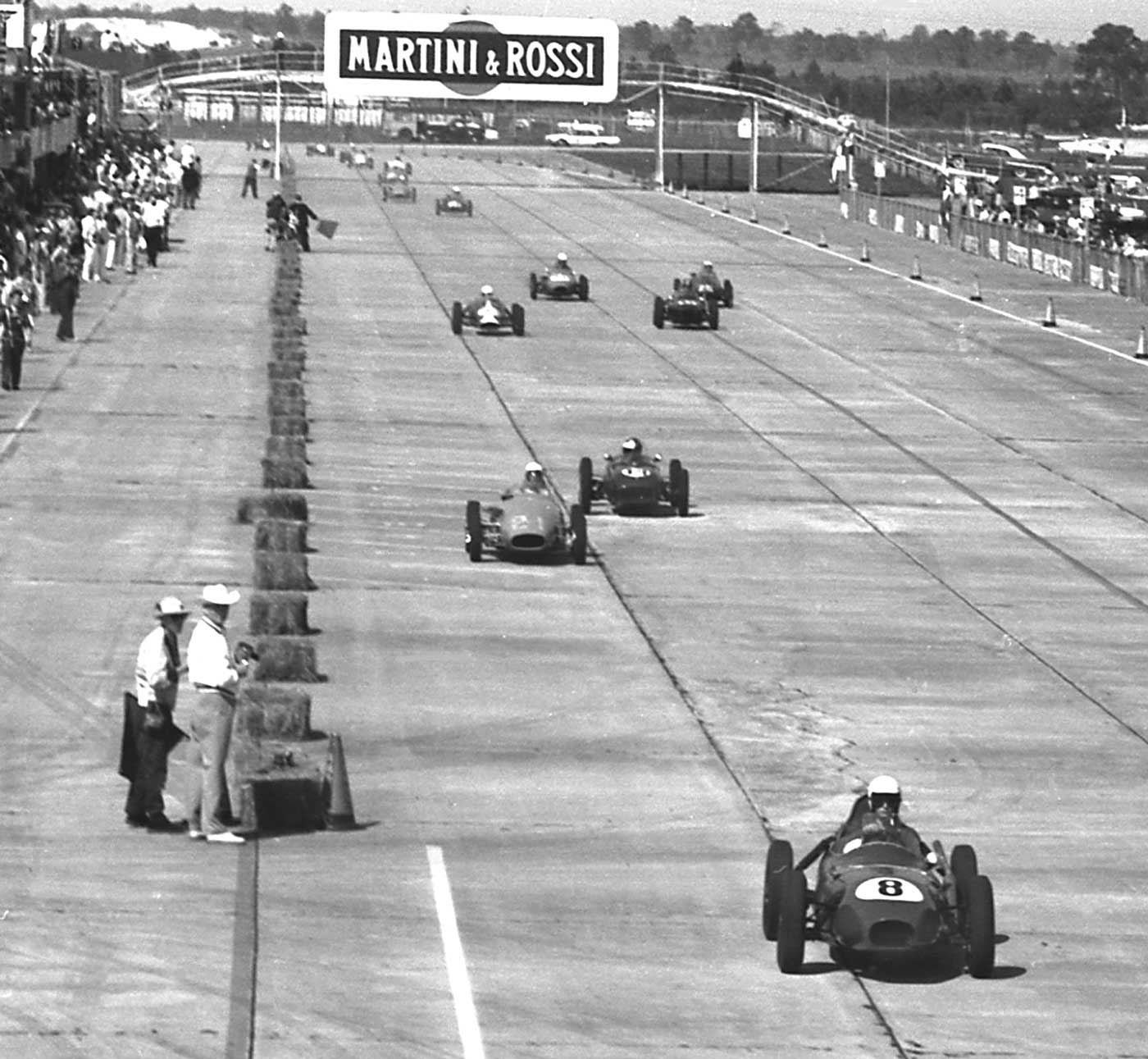
The first pass-through after 2.2 miles. Hansgen has taken the lead from Hall and is already out of camera range. Hall is being pursued by Crawford and Chamberlain.
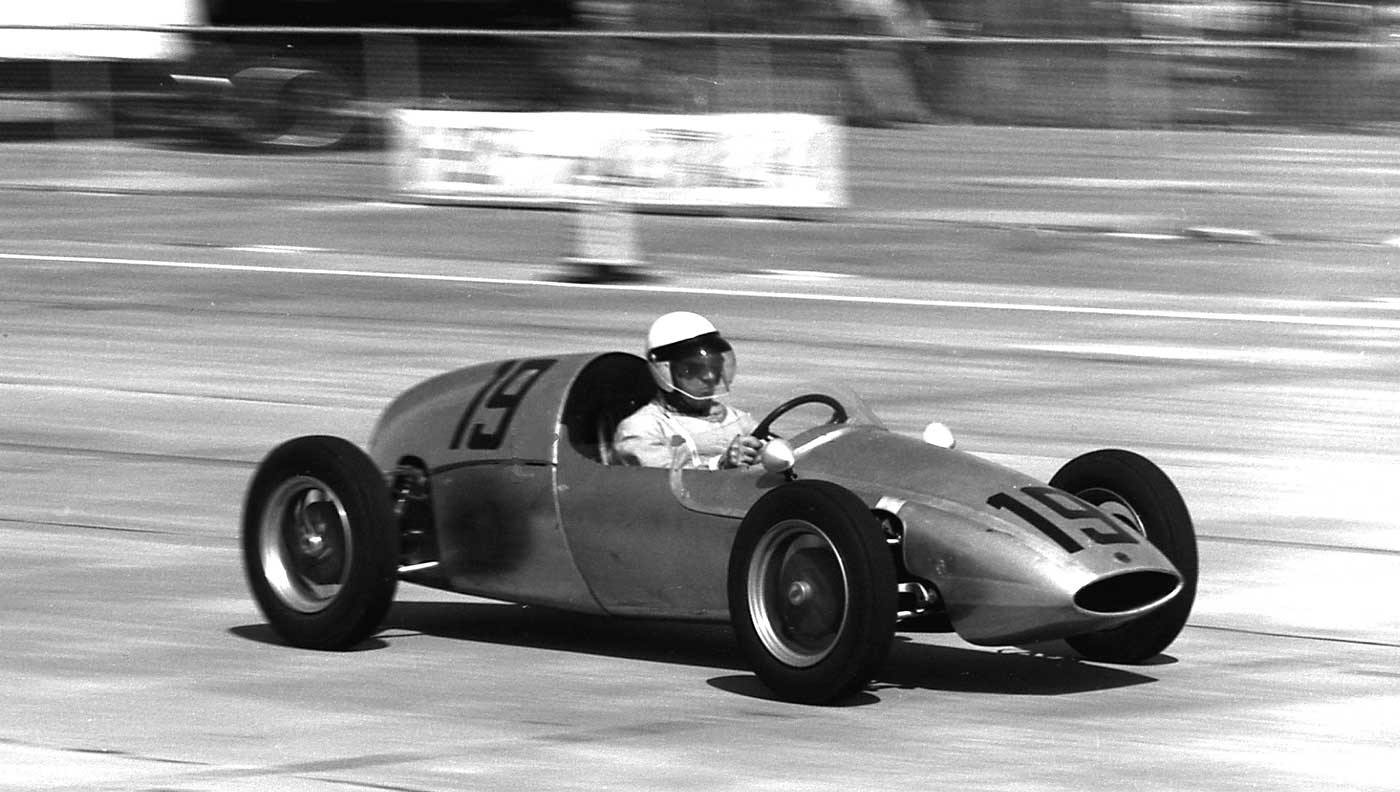
Hansgen’s Cooper easily led the pack until lap 27 of 30, when its 998 cc BMC engine blew. At that moment his lead over Hall was 11 seconds. Now Hall ran first, closely followed by Crawford. With two laps to go the Stanguellini passed the Elva/DKW and Crawford became the new leader. But in another set-back to the Cunningham team, Crawford’s car blew a tire on its final lap, allowing Hall to claim victory. Crawford managed to salvage second overall.
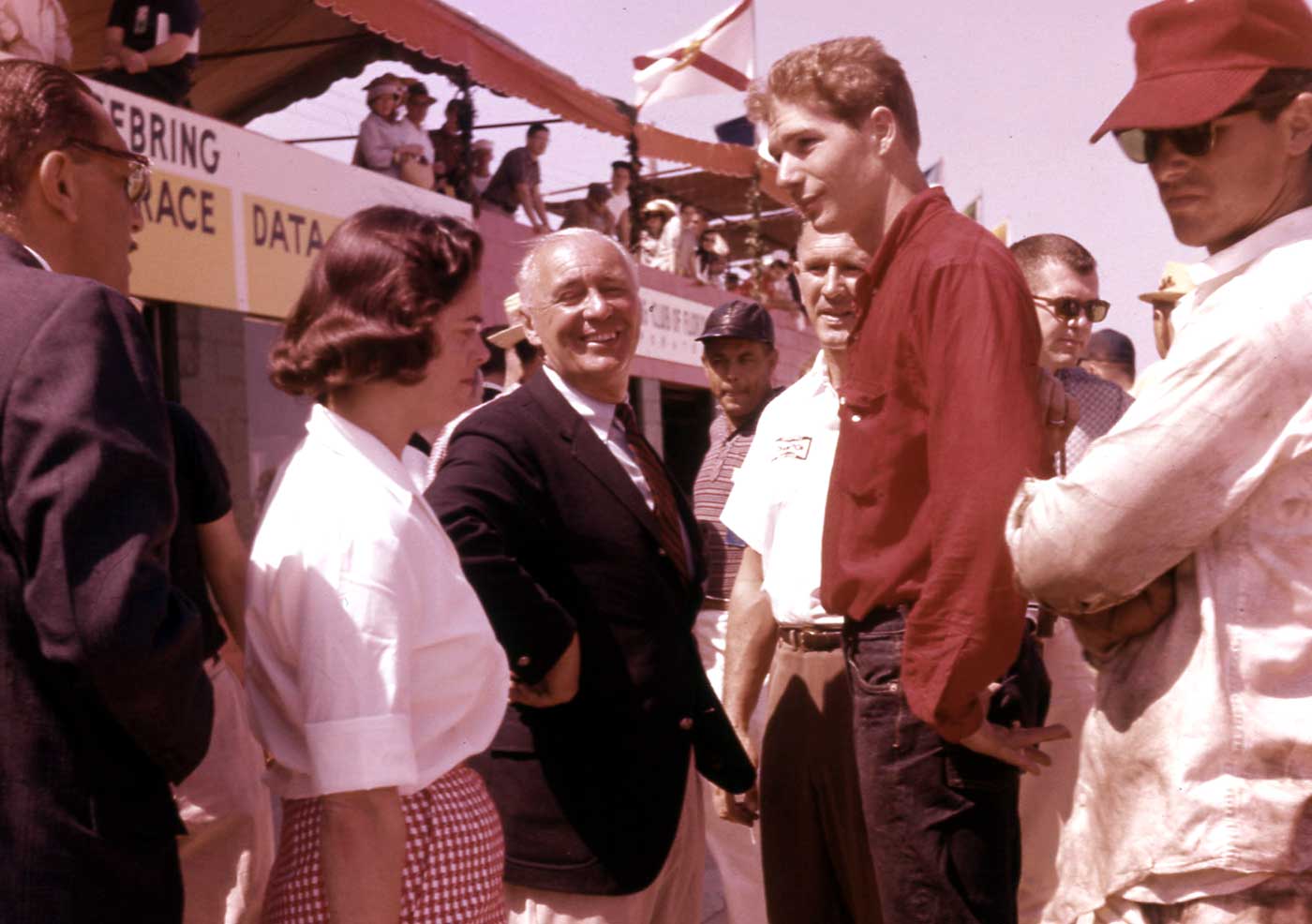
The winner after receiving the checkered flag, with Hap Sharp’s wife Suzie, promotor Alec Ulmann, race official [and former Indy race driver] Duane Carter and mechanic Bill Wriston.
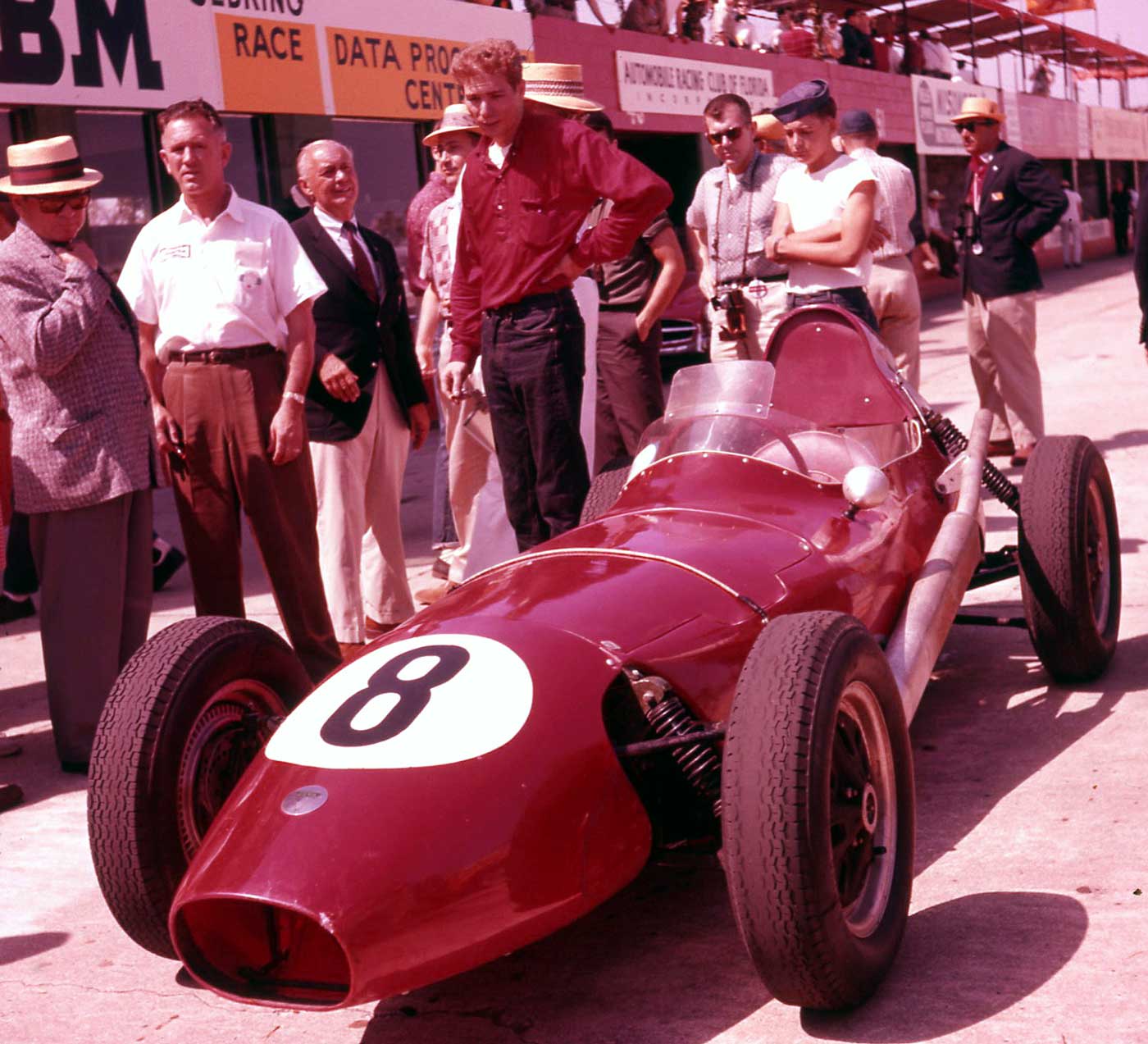
The winning car, Jim Hall’s two-stroke DKW-engined Elva, with Duane Carter and Alec Ulmann in the background. It was the car’s third victory in a row, having already won two races at Mansfield, Louisiana, in March 1960, in the hands of Hall and Hap Sharp.
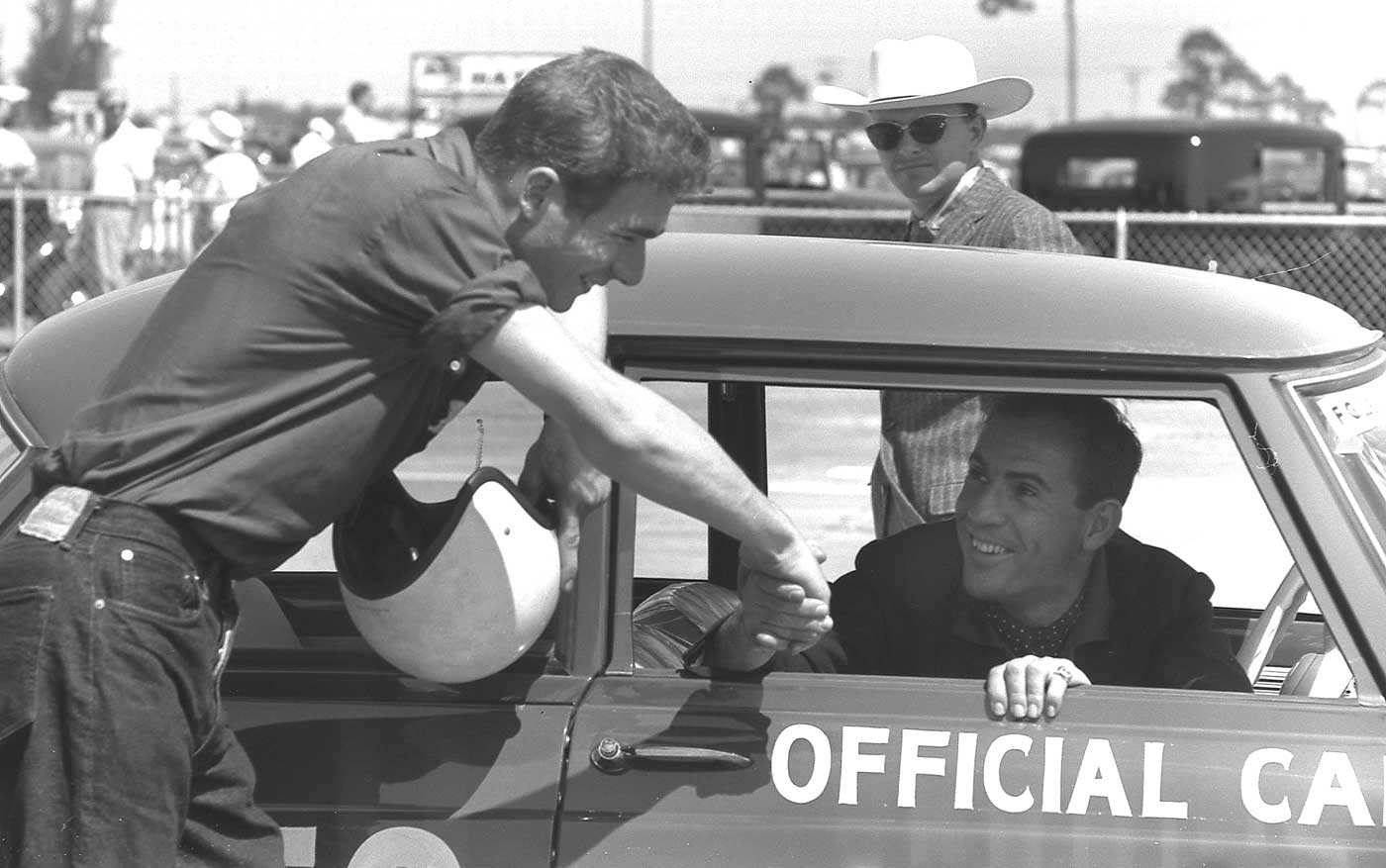
More congratulations from an ARCF official.
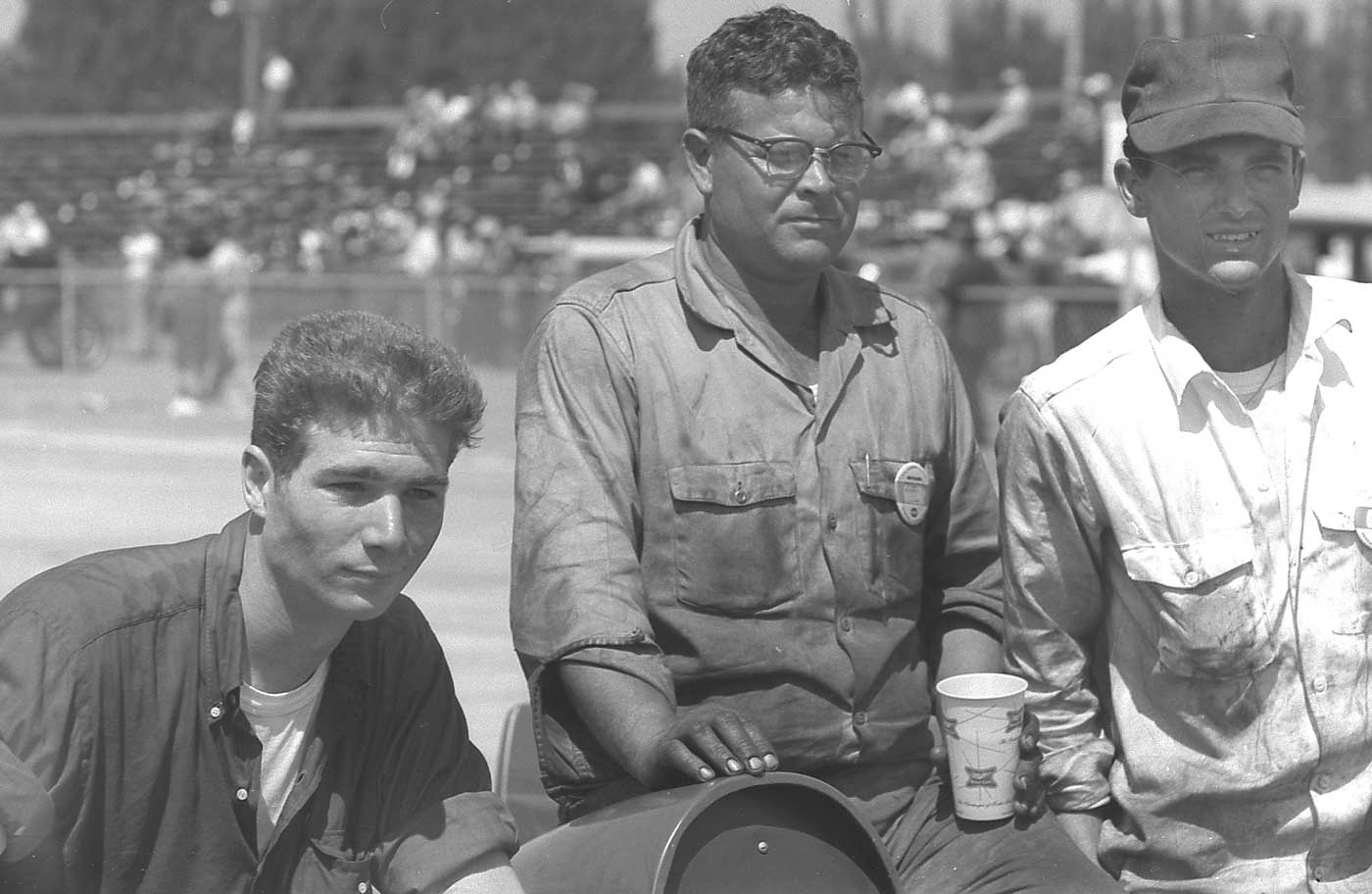
The winning team, including the guys who did the dirty work: Hap Sharp’s aircraft mechanic Chester “Chet” Hines and Ronnie Hissom’s chief mechanic Bill Wriston.
Hall covered the 66 miles in 44 minutes and 60 seconds, an average speed of 88.01 mph. Only ten cars finished the race:
1. Elva/DKW #8 [Jim Hall]
2. Stanguellini #21 [Eddie Crawford]
3. Lotus 18 #14 [Jay Chamberlain]
4. Elva/DKW #6 [Chuck Dietrich]
5. Stanguellini #25 [Harry Carter]
6. De Tomaso Isis #36 [Ed Hugus]
7. Stanguellini #27 [Newt Davis]
8. Stanguellini #22 [Briggs Cunningham], one lap down.
9. Jocko Special #51 [Jim Haynes], three laps down
10. MBM #32 [Alex Ratelle], 14 laps down
Among the retirements was Chuck Hall’s Stanguellini. On lap 23 Walt Hansgen recorded the fastest lap in the Cunningham Cooper #19, going around in 87.86 seconds [90.97 mph].
Terrific article once again, of course, by Willem. Amazing that the under 1 liter engines would survive those races. Willem writes as if he was actually there! Great job !
Interesting Isis images. The car was the Cooper raced by de Tomaso at the 1959 US GP fitted for FJ with a small Fiat engine.
A smart case of recycling. Bob Schroeder told me once that when he visited the De Tomaso “manufacturing shop” with John Mecom in early 1962, it was essentially a two-car garage. Mecom bought three open wheelers and a sportsracer, most of them proved not reliable when raced in the U.S. But that money infusion helped him on his way.