• Skip to primary navigation
  • Skip to main content
  • Skip to primary sidebar

VeloceToday.com

The Online Magazine for Italian and French Classic Car Enthusiasts

  • Home
  • Subscribe
  • About
  • Contact
  • Donate
  • As Found

Peugeot’s Time Machine Museum Part 2, 1945 to present

December 9, 2015 By pete

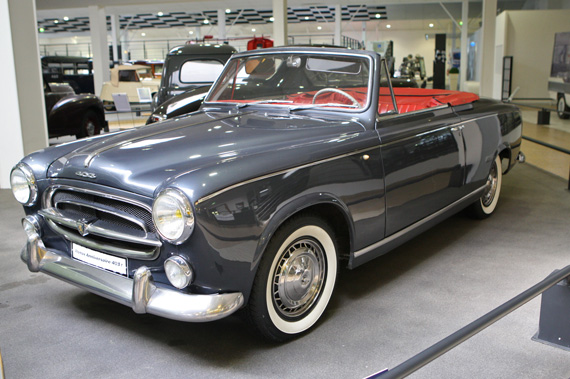
Probably remembered best, especially by me, from watching Peter Falk in Columbo on wet Saturday afternoons, this 403 Cabriolet dates from 1960.   Only 1814 Cabriolets were made.

Probably remembered best (especially by me) as detective Columbo’s means of transportation, this 403 Cabriolet dates from 1960. Only 1814 Cabriolets were made.

Photos by Jonathan Sharp

Read Part 1

Part 2 of Jonathan Sharp’s journey through Peugeot’s time machine museum begins during WII when despite Nazi occupation, Peugeot’s engineers planned the first postwar car, the 203. Peugeot had been building cars for over 50 years by that time and wasn’t going to give up; in fact they survived despite the many changes that eliminated many French manufacturers during the 1950s and 60s, and are now the second largest auto manufacturer in Europe. Sharp’s photos reminded the editor that Peugeot decided to pull out of the American market in 1991, at about the same time as did Alfa and Fiat…and we have not seen any new (and very few old!) Peugeots in the U.S. since then. Peugeot, who now owns Citroen, has stated that they are considering a comeback to the U.S. perhaps by 2018. Time will tell.
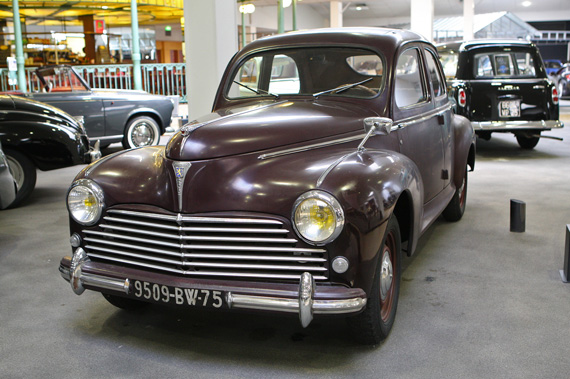
203 Berline  Even with the war raging all around the design department continued to work on future designs and by 1945 was ready to launch the 203. This totally original example represents the model which was first shown at the 1948 Paris Motor show. This was the first Peugeot to have an integral body shell.
203 Berline: Even with the war raging all around the design department continued to work on future designs and by 1945 was ready to launch the 203. This totally original example represents the model which was first shown at the 1948 Paris Motor show. This was the first Peugeot to have an integral body shell.

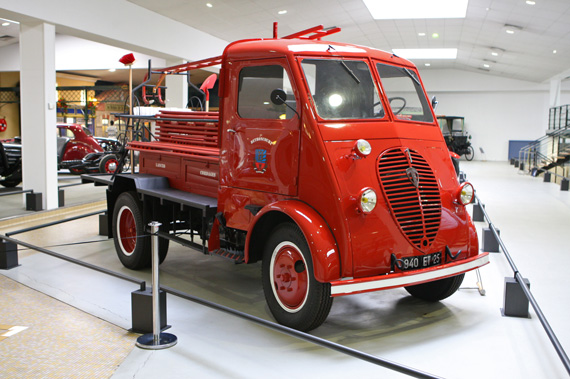
DMAH Camion dates from 1948, the H standing for Hydraulic brake version. Fitted with the engine from the 402 range but also adopted to be able to run on charcoal gas. This example was donated to the museum by the nearby local town of Bethoncourt where it had been adapted to be used by the local fire brigade.Fully restored by the museum but kept as original as possible.  11045 examples were built between 1941 and 1948.

DMAH Camion dates from 1948, the H standing for Hydraulic brake version. Fitted with the engine from the 402 range but also adopted to be able to run on charcoal gas. This example was donated to the museum by the nearby local town of Bethoncourt where it had been adapted to be used by the local fire brigade. Fully restored by the museum but kept as original as possible.
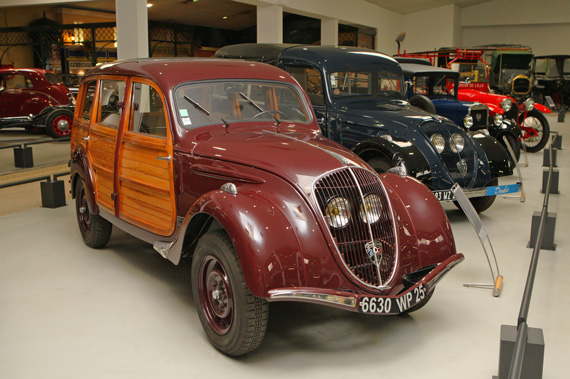
Built between 1947 and 1949 this elegant small commercial vehicle called the 202 uh was designed  to carry four people and 250kg of cargo quickly and comfortably. Due to a lack of steel at the time the exterior panels and some of the interior structure is made from wood.
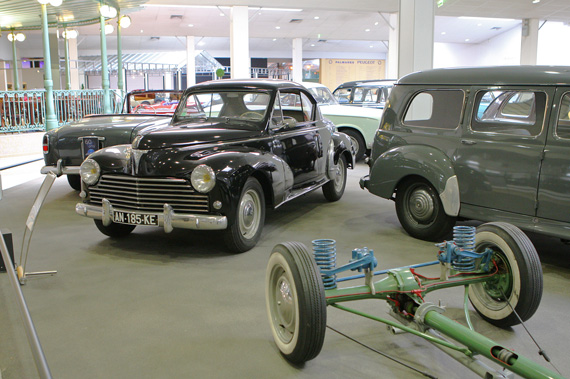
Built between 1947 and 1949 this elegant small commercial vehicle called the 202 uh was designed to carry four people and 250kg of cargo quickly and comfortably. Due to a lack of steel at the time the exterior panels and some of the interior structure is made from wood.

The 203 Coupe was first shown at the 1952 Paris motor show and was only in production for two years.  Of the 685828 203s produced on 955 were Coupe's This example dates from 1953.

The 203 Coupe was first shown at the 1952 Paris motor show and was only in production for two years. Of the 685828 203s produced on 955 were Coupes. This example dates from 1953.
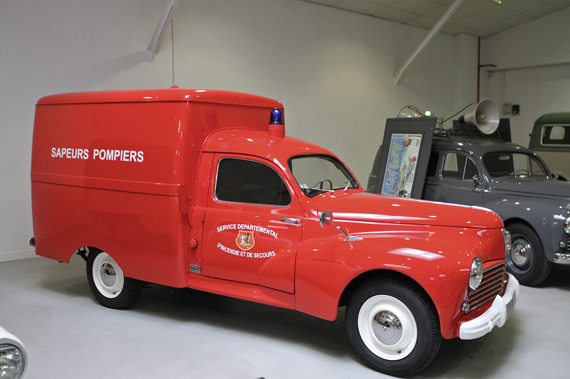
Known as the Tobacco packet as from the rear it resembled a packet of a then popular brand of tobacco, this 203 light utility van was first shown in 1952. A pick up and a normal van version had entered production in 1949.
Known as the ‘tobacco packet’ as from the rear it resembled a packet of a then popular brand of tobacco, this 203 light utility van was first shown in 1952. A pick up and a normal van version had entered production in 1949.

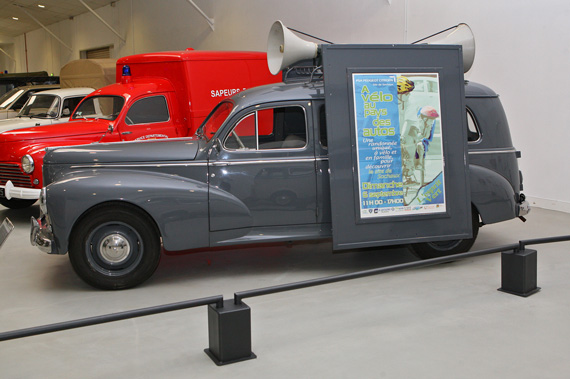
Favored by shop keepers and designed to carry up to 500kg the C5 Limousine Commerciale had an unusually large body with 6 side windows and a rear door. Dating from 1956 this example was converted into an advertising unit with two poster boards and sound broadcasting equipment. It was then loaned to the French TV channel France 3 TV to cover the 2001 and 2002 Tour De France Bicycle race where it covered over 4000kms without fault.
Favored by shop keepers and designed to carry up to 500kg the C5 Limousine Commerciale had an unusually large body with 6 side windows and a rear door. Dating from 1956 this example was converted into an advertising unit with two poster boards and sound broadcasting equipment. It was then loaned to the French TV channel France 3 TV to cover the 2001 and 2002 Tour De France Bicycle race where it covered over 4000kms without fault.

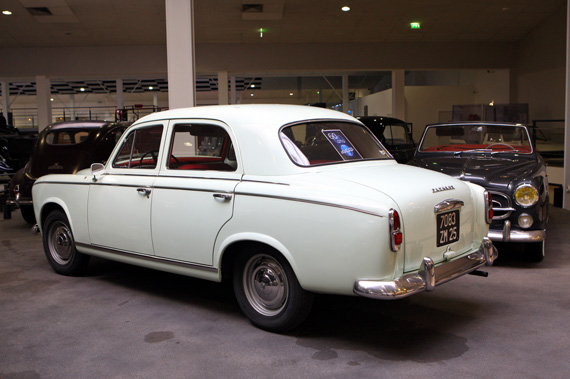
The famous 403 Berline, of which 1.2 million were produced between 1955 and 1960.
The famous 403 Berline, of which 1.2 million were produced between 1955 and 1960.

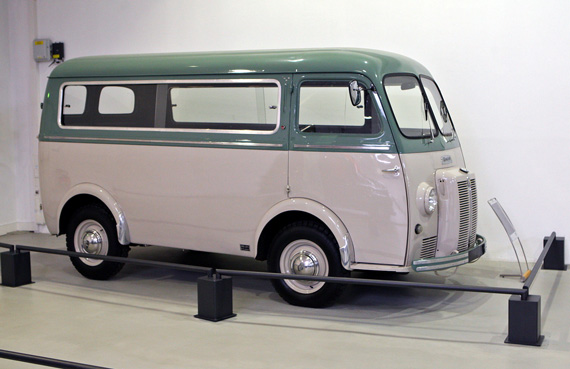
D4A Fourgon Vitre  At the start of the 1950s mid-sized vans started to be developed. Firstly Peugeot supplied Chenard et Walcker with 202 engines and then started its own production as the D3a in 1950 but fitted with the 203 engine. Then in 1955 the D4A was announced. This had a sliding side door and the more powerful 403 engine. Production ran until 1960 with a diesel engine becoming an option in 1959.
D4A Fourgon Vitre At the start of the 1950s mid-sized vans started to be developed. Firstly Peugeot supplied Chenard et Walcker with 202 engines and then started its own production as the D3a in 1950 but fitted with the 203 engine. Then in 1955 the D4A was announced. This had a sliding side door and the more powerful 403 engine. Production ran until 1960 with a diesel engine becoming an option in 1959.

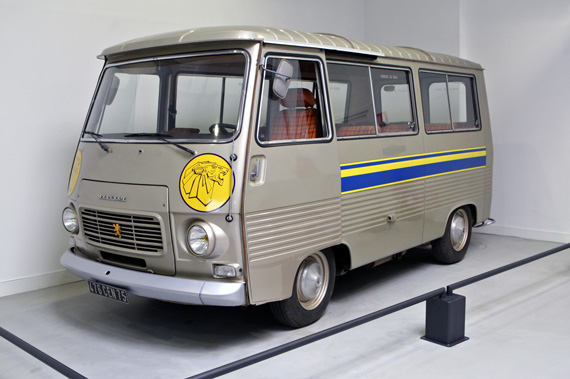
8 J7 Bus: Launched in 1965 and able to carry up to 12 people, or in van form up to 1800Kg, production ended in 1978 after the production of the 332220th example.
8 J7 Bus: Launched in 1965 and able to carry up to 12 people, or in van form up to 1800Kg, production ended in 1978 after the production of the 332220th example.

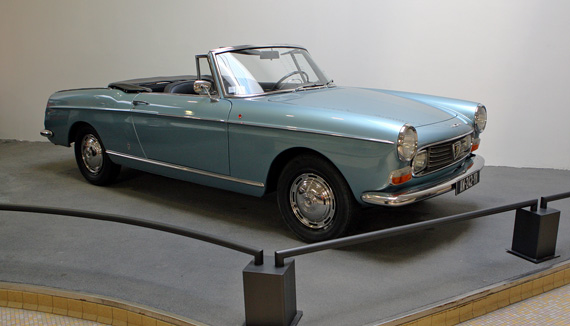
Just like the 404 saloon, the Cabriolet version was designed by Pininfarina who also constructed the body though final assembly was completed at the Sochaux factory. Launched in 1962 production ceased in 1968. Available with either a 76 bhp 1618cc engine, or 96 bhp with fuel injection.
Just like the 404 saloon, the Cabriolet version was designed by Pininfarina who also constructed the body though final assembly was completed at the Sochaux factory. Launched in 1962 production ceased in 1968. Available with either a 76 bhp 1618cc engine, or 96 bhp with fuel injection.

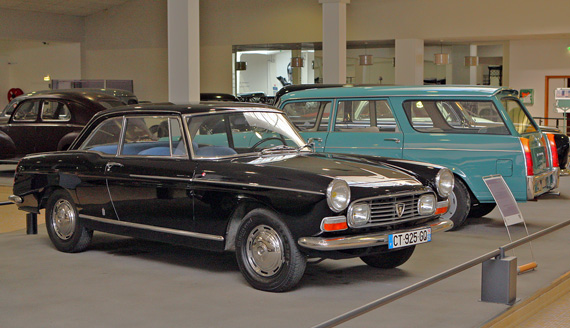
Unmistakably Pininfarina, the 404 Coupe was launched a year after the Cabriolet in 1963. Production ran until 1968 and totaled 6837 examples. This example was constructed in 1967.
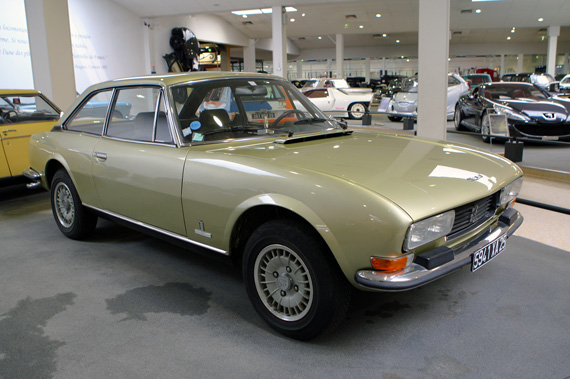
Unmistakably Pininfarina, the 404 Coupe was launched a year after the Cabriolet in 1963. Production ran until 1968 and totaled 6837 examples. This example was constructed in 1967.

504 Coupe.
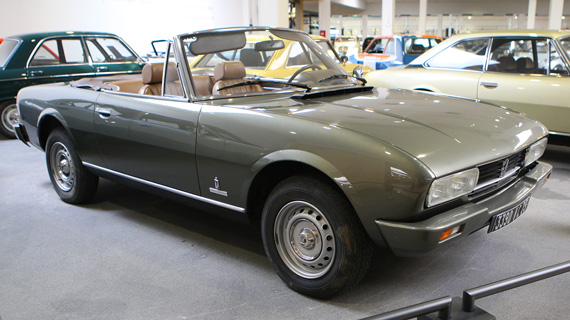
504 Coupe.

Another set of Pininfarina masterpiece's available with, or without a steel roof. Production ran from 1970 right up until 1983. Most models sold with the 4 cylinder (97bhp carburetor, 104 bhp fuel injection) engine but between 1974 and 1977 also available with the 135 bhp V6 option.
Another set of Pininfarina masterpiece’s available with, or without a steel roof. Production ran from 1970 right up until 1983. Most models sold with the 4 cylinder (97bhp carburetor, 104 bhp fuel injection) engine but between 1974 and 1977 also available with the 135 bhp V6 option.

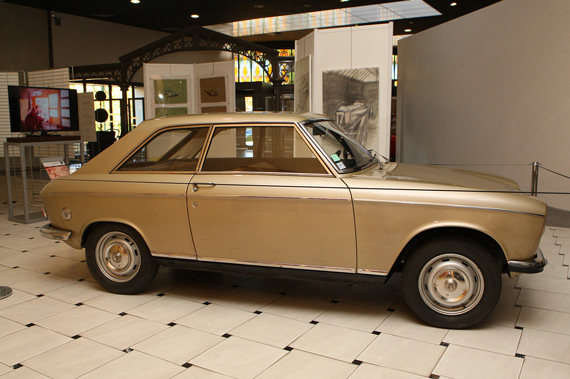
The 204 used a front-wheel drive layout and was launched with a single overhead cam 1130 cc gasoline engine (the maximum allowed for the 6CV 'car tax' class in France). In September 1975, less than a year before production ceased, it received a more modern petrol engine, now of 1127 cc. Claimed maximum output, which at launch had been 53 bhp (39 kW), increased to 59 bhp (43 kW), though there was a marginal reduction in maximum torque. Following the demise of the 204 the new 1127 cc engine found its way into a version of the Peugeot 304 estate: the smaller engine enjoyed in France tax benefits when compared to the 1290 cc engines fitted to most 304s.

The 204 used a front-wheel drive layout and was launched with a single overhead cam 1130 cc gasoline engine. In September 1975, less than a year before production ceased, it received a more modern petrol engine, now of 1127 cc. Following the demise of the 204 the new 1127 cc engine found its way into a version of the Peugeot 304 estate: the smaller engine enjoyed in France tax benefits when compared to the 1290 cc engines fitted to most 304s. (from Wiki)
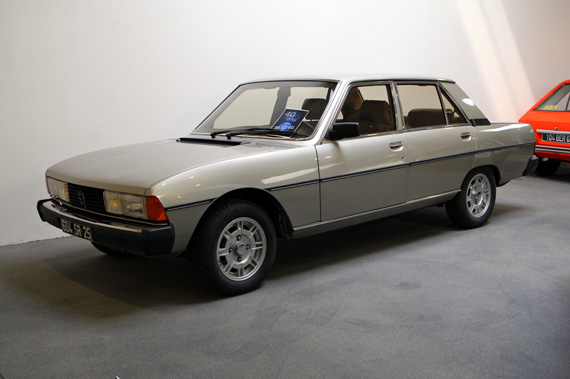
My first car was my Grandfather’s old but immaculate Austin 1300. The owner of the garage that I used to pass each morning on my way to work had a Peugeot 604SL for sale. Oh how I wanted that 604. Maybe it was the leather trim or the electric windows that appealed but as an under-paid 21 year old insurance clerk, the old Austin was the only option. This was once again the work of Pininfarina. In 1975 French Prime Minister Jacques Chirac chose the 604 as the official car of the French state, as did the President Valery Giscard d’Estaing. Production ran for 10 years from 1975-85. This example, a GTi with the 155bhp fuel injection 2.8 V6 dates from the last year of production.
My first car was my Grandfather’s old but immaculate Austin 1300. The owner of the garage that I used to pass each morning on my way to work had a Peugeot 604SL for sale. Oh how I wanted that 604. Maybe it was the leather trim or the electric windows that appealed but as an under-paid 21 year old insurance clerk, the old Austin was the only option. This was once again the work of Pininfarina. In 1975 French Prime Minister Jacques Chirac chose the 604 as the official car of the French state, as did the President Valery Giscard d’Estaing. Production ran for 10 years from 1975-85. This example, a GTi with the 155bhp fuel injection 2.8 V6 dates from the last year of production.

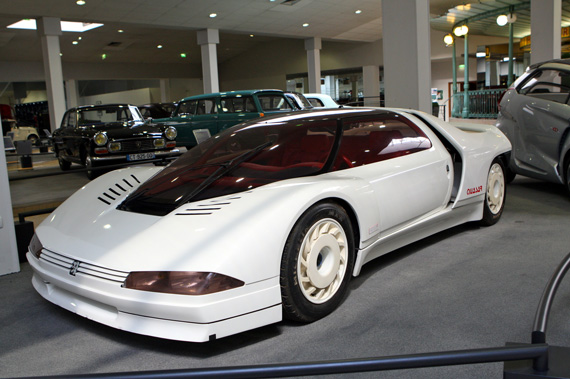
Dating from 1984 the Quasar was the first concept car to be designed by the in-house styling department, designed and built in three months under the leadership of Gerard Welter and Paul Bracq. The power unit was from the 205T 16.
Dating from 1984 the Quasar was the first concept car to be designed by the in-house styling department, designed and built in three months under the leadership of Gerard Welter and Paul Bracq. The power unit was from the 205T 16.

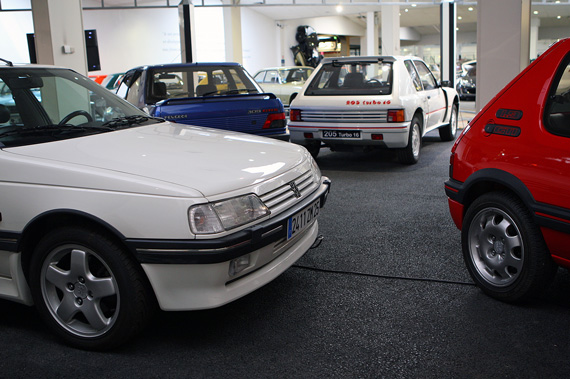
In the late 1980s early 1990s this is what Peugeot did best; performance saloons and hot hatchbacks. Be it the Hot Hatch king the 205 GTi 1.9 (in red), the 309 GTi 16 (Blue) and the 16 valve 405 saloon (White). In the middle of the pack the road version of the 205T16.

In the late 1980s early 1990s this is what Peugeot did best; performance saloons and hot hatchbacks. Be it the Hot Hatch king the 205 GTi 1.9 (in red), the 309 GTi 16 (Blue) and the 16 valve 405 saloon (White). In the middle of the pack is the road version of the 205T16.
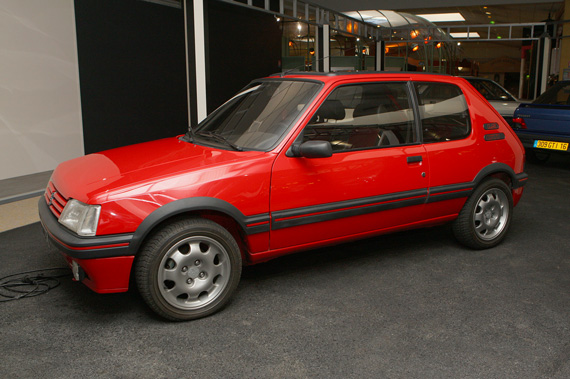
Probably the king of hot hatchbacks, the 205 GTi 1.9. 130 bhp, superb handling and a practical hatchback body courtesy of Pininfarina.

Perhaps the king of hot hatchbacks, the 205 GTi 1.9. 130 bhp, had superb handling and a practical hatchback body courtesy of Pininfarina.
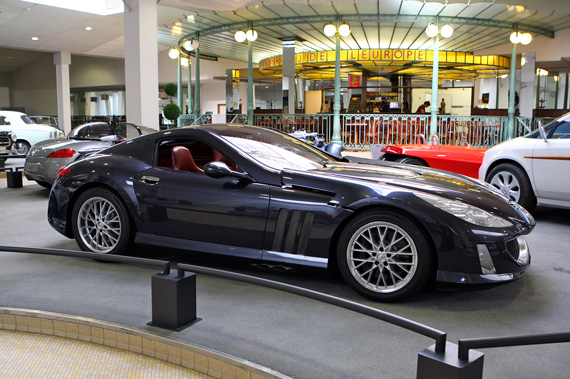
Fitted with a 6.0 liter V12 with 500 bhp this 907 concept car dates from 2004. Created by styling chief Gerard Welter and Designer Jean Christophe Bolle Reddat and first shown at that year’s Paris Motorshow.   The V12 engine is actually two 3.0 V6 engines mated together. Whilst never designed for production the 907 is more than capable of being driven.
Fitted with a 6.0 liter V12 with 500 bhp this 907 concept car dates from 2004. Created by styling chief Gerard Welter and Designer Jean Christophe Bolle Reddat and first shown at that year’s Paris Motorshow. The V12 engine is actually two 3.0 V6 engines mated together. Whilst never designed for production the 907 is more than capable of being driven.

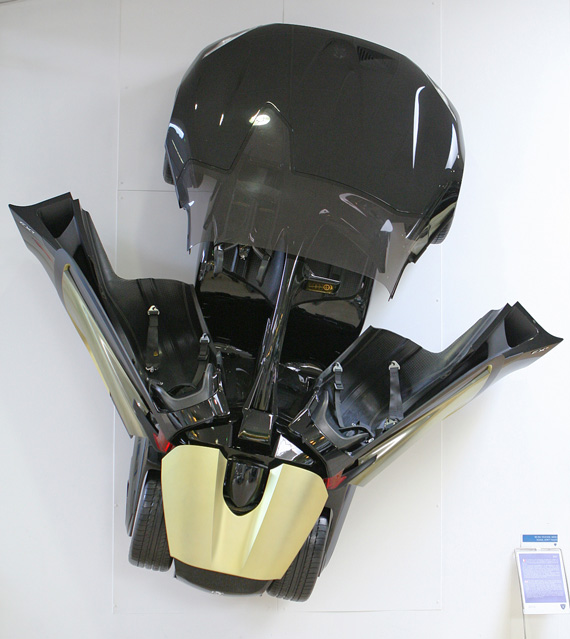
Looking like a rather big bug on the wall the EX1 from 2010 is 100% electric and has set several world records; one in France, at Montlhery, and in five in China in the city of Chengdu.

Looking like a rather big bug on the wall the EX1 from 2010 is 100% electric and has set several world records; one in France, at Montlhery, and in five in China in the city of Chengdu.

Tagged With: peugeot history, Peugeot museum, Peugeot racing, peugeot rally

Reader Interactions

Comments

  1. Don Falk says

    December 9, 2015 at 2:45 pm

    The rear axle assembly shown with the early Peugeot was of a type unique to Peugeot. It used a torque tube type of power transmission from the transmission, plus the reduction gear used a bronze “worm” gear in place of the more common hypoid bevel gears. This allowed a lower drive shaft tunnel in the center of the car floor, and efficient torque transmission. It worked well, and was very durable. – Don

  2. Paul Evans says

    December 10, 2015 at 9:22 am

    I was fortunate to work in Sales & marketing at Peugeot in the UK between 1980 and 1984 – Peugeot’s were always a cut above most other European manufacturers at the time; with superb ride and handling and better built than most, probably due to the companies geographic location on the borders of Switzerland and Germany (actually the area has been under German administration in the dim and distant past). In export markets, post WW2 – particularly in Africa, Asia and parts of South America – if you wanted something more roomy than a Volkswagen but couldn’t quite afford a Mercedes-Benz, a Peugeot was the marque of choice.

    Having visited the Sochaux and Mulhouse plants during my time with the company it is gratifying to see the museum being developed.

    It is also great to see the brand is ‘back in the race’and headed by some proper car people rather than ex-bankers! Long may the brand live.

Primary Sidebar

     SIGN UP BELOW TO RECEIVE VELOCETODAY EVERY WEEK FOR FREE


       EXCLUSIVE ARTICLES ABOUT 

    EXTRAORDINARY AUTOMOBILES

PositiveSSL

Recent Posts

  • VeloceToday for March 10, 2026
  • Repco Adelaide Motorsport Festival, 2026
  • Never Out of Date: Cartier’s Concours from 2025
  • Baby Bugatti by Marshall Buck
  • A Brief History of Disappearing Hardtops
  • Sports Car Racing at Midland, TX 1960-62
  • Smith’s Alfa Vintage Racing Chronicles
  • Squarebacks to Love
  • The Final Word on Squarebacks!
  • Sports Car Racing at Midland, TX, 1959
  • Tripoli 1939: Italian Job That Mis-fired
  • Gauld Checks Out the Ferrari Estate Car
  • Juan Manuel Fangio Tribute
  • Sports Car Racing at Midland, TX, 1958-59
  • Behind the PBS SOCAL Story: My Extra 5 Minutes of Fame
  • Sharp’s Retro Part 4: French Classics
  • Sharp’s Retro Part 5: Interesting Others
  • Sharp’s Retro Part 6: Art and Neat Stuff
  • Sharp’s Retro Part 1: Ferrari
  • Sharp’s Retro Part 2: Alfa and Lancia
  • Sharp’s Retro Part 3: Fiat and Others
  • Amore mio Ardea
  • Bill Warner finds the Don Vitale Nardi
  • Thornley Kelham, the home of the Lancia Bandit
  • The Legends of Bob Gerard
  • Retromobile 2026, First Report
  • Graham Gauld on Nardi
  • Gauld and the Auburn Douze
  • The Races of Life, a Review
  • The Selected Works of Aldo Zana

Copyright © 2026 · VeloceToday.com · Privacy · Sitemap

MENU
  • Home
  • Subscribe
  • About
  • Contact
  • Donate
  • As Found