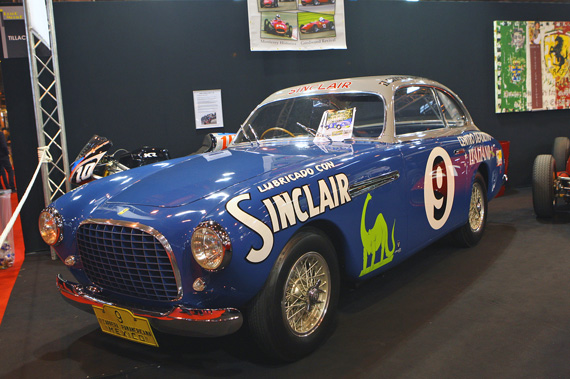
Editor’s Choice: Sold new to former Italian hillclimb champion Franco Cornaccia of Scuderia Guastala in Milan, this 1951 212 Export Berlinetta by Vignale was entered in that year’s Carrera Panamericana II where Alberto Ascari and Luigi Villoresi won second place overall. Then 0161EL was sold to Santiago Ontanon, owner of Industrias 1-2-3. Driven by Paco Ibarra and Vincent Solar, this handsome little Ferrari Berlinetta finished the 1952 Carrera 7th in class and 24th overall.
Story and Photos by Jonathan Sharp
Old car shows are supposed to make you feel nostalgic; perhaps remembering all those good times from your youth. Hmm not sure if it was nostalgia for the good times that I felt but shortly after entering hall one at this year’s Rétromobile show in Paris I was transported straight back to a school trip to France in 1974 that for various reasons I’d rather forget.
But years later it was much more fun. Still, I think I needed to dig a bit deeper to fully enjoy the show. At my first go around the show It felt like I had seen many of the exhibits before but digging a bit deeper, and reading the info placards that proved to not be the case. What appeared to have been familiar was actually different; it is a matter of continued education, experience and delight. Hopefully the crowds of people are also learning as much.
Rétromobile is considered to be one of the best and classiest indoor classic car shows in the world, a show that attracts all the high rollers of the old car hobby. Yet looking at the crowds that attended, (I am told the total was over 110 thousand over the four days) 99.9% were normal vintage car fans both young and old. It is fathers and grandfathers showing their sons and grandsons the cars of their youth or the cars of their dreams, boyfriends showing their girlfriends the Ferrari or Renault that they have always wanted. A show for everybody, and as it is France, everybody stops for lunch whether that be a three course meal with champagne, or a large baguette.
Highlights? Far too many but if pushed to choose then it was probably the Ferrari 512M on the Fisken stand. Time warp down to the original, and now frayed, interior trim and scratched interior sill panels. Or was it was the Rachel Welch 275 Ferrari but perhaps that was more to do with the photo on show behind the car. But let’s get on with it; we have over thirty cars to google over below.
Please Note that most of the information about the cars comes from the dealer’s placard, their website or both.
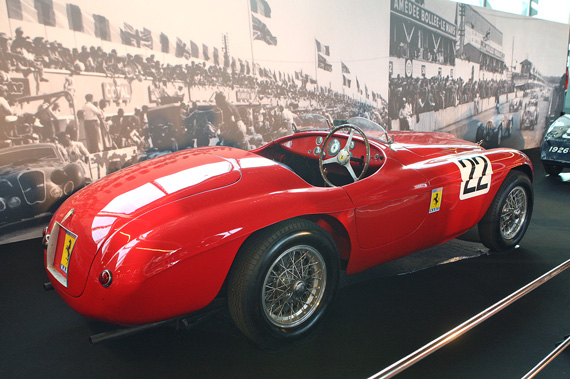
The famous Chinetti Le Mans-winning 166 Ferrari on display.
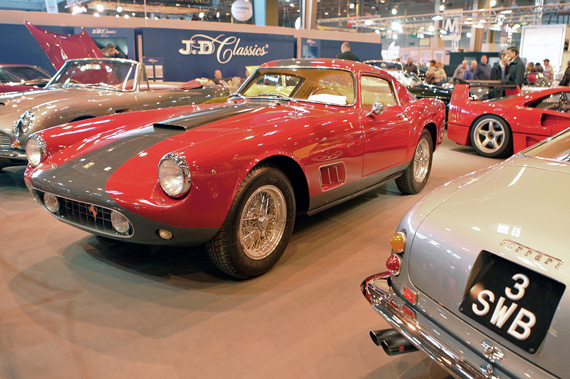
This is 1 of only 9 open-headlight examples with a single louvre ‘Sail panel’, the last incarnation of the Ferrari Tour de France. Original factory competition engine: Borgo Pistons for higher compression, special Tipo 130 camshafts, a six-blade cooling fan and Weber 36 DCL3 carburetors with trompette tips. Raced extensively by 1st owner and gentleman racer Casimiro Toselli during 1959 – 1960 season.
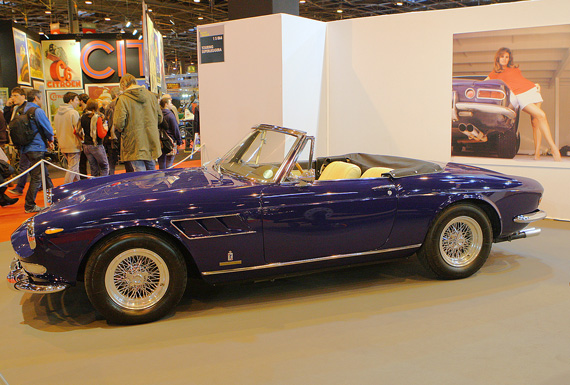
Raquel Welch sat here. This 1965 Ferrari 275 GTS chassis 07359 was once owned by Raquel Welch but you may have already gathered that from the photograph on the wall behind. She and the car had a starring role in the film “Fathom”. I gather she enjoyed driving the car so much during the making of the film that the director Leslie H. Martinson gifted the car to her once the film had wrapped.
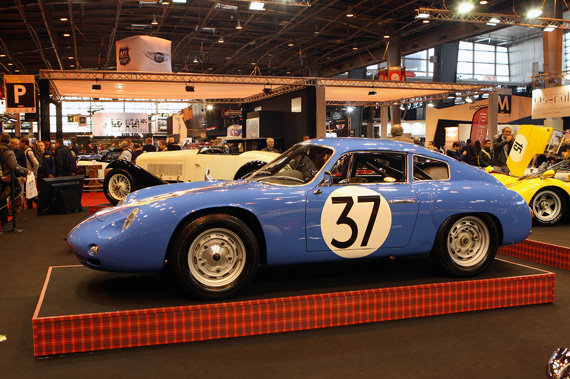
Porsche Carrera Abarth looking fetching in blue.
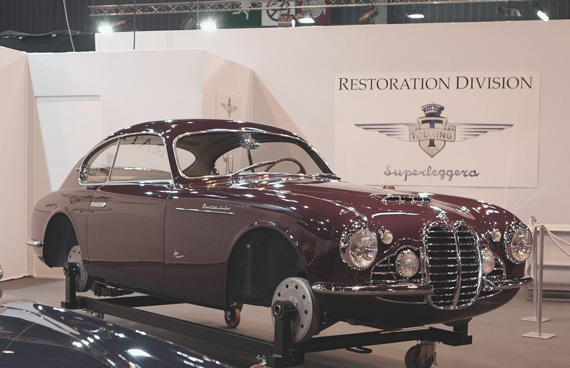
On the Superleggera Touring stand, shown part way through her restoration but beautiful nevertheless, was this 1952 Maserati A6G Grand Sport chassis 2028 with coachwork by Frua which was originally shown at the 1952 Turin Salon.
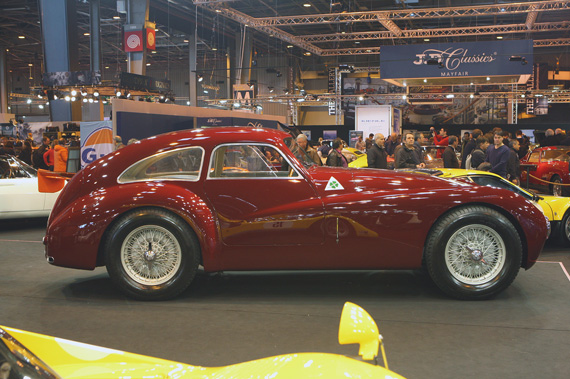
This wonderfully rare Alfa Romeo 6C is one of just three cars of its type built by Alfa Romeo Corse. The first post-war competition model, chassis 920.002 is one of two surviving cars, which, following four years of hugely successful racing, was mothballed and left untouched for a staggering forty years as part of Michel Dovaz’s fabled ‘Sleeping Beauties’ collection. The 2,443cc engine has three Weber side-draft carburetors complete the unit, which produces 145hp; ample to power 002’s lightweight body with gusto. It is fitted with a 5-speed manual transmission but the original 4-speed remains with the car. The interior of 002 has been sympathetically restored based on period styling, with new corduroy, although the instruments are still a pleasant mismatch of period-correct gauges fitted throughout the car’s rich history.
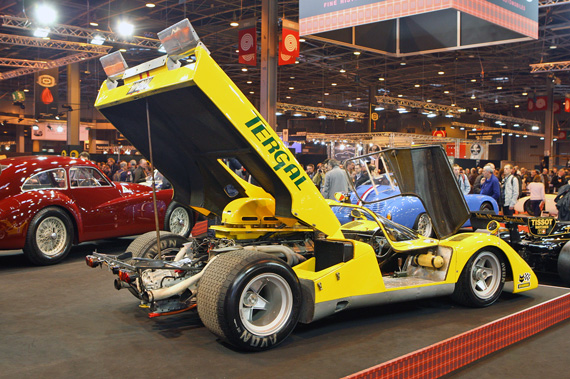
The Ferrari factory sold this 12 cylinder, five litre sports racing machine to the Escuderia Montjuich in April 1970. The Escuderia was founded by four wealthy Catalan gentleman drivers in the mid 1960s; Enrique Coma-Cros (co-author of the book “Ricart – Pegaso” book), Félix Muñoz (known as Pelé), José Juncadella and Juan Fernández. To set chassis 1002 in context, the 512 model was Ferrari’s aggressive response to Porsche’s emerging dominance in sports car racing in the late 1960s. Ferrari scholar, Dominique Pascal explains that ‘the 512s were created in less than nine months to try and counteract the striking superiority of the Porsche 917s. For the 1970 Le Mans, Ferrari lined up no fewer than twelve 512s, official and non-official.
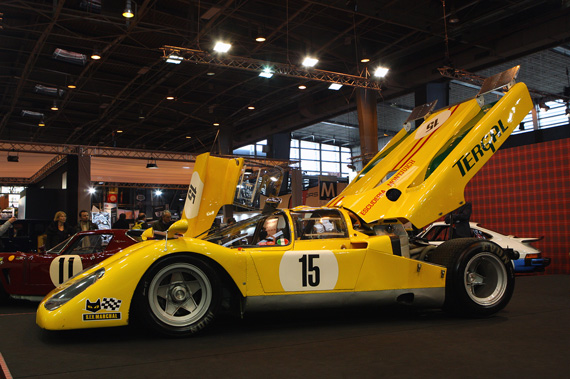
Following its tenure with the Escuderia Montjuich, 1002 eventually found its way directly to new owner Robert Horne in October 1974. Robert acquired 1002 after seeing it during a trip to Mantua, Italy. He sent the 512 to Bob Houghton of Greypaul Motors for remedial works and 1002 has subsequently been prepared and lovingly maintained by Bob to this day. In 1977, 1002 – driven by Robert Horne – was taken to a very credible speed of 192 mph over a flying mile distance to set a record. Thereafter, Horne used 1002 on special occasions, enjoying the Ferrari for a remarkable period of thirty-five years and finally passing it on to the current owner in 2009.
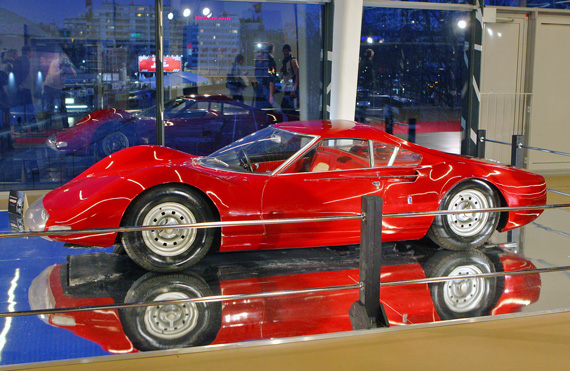
Prototype Dino which appeared at the 1965 Paris Auto Show and designed by Pininfarina’s Aldo Brovarone on the 206S chassis 0834. Now looking a bit rough around the edges but let’s not restore it, eh?
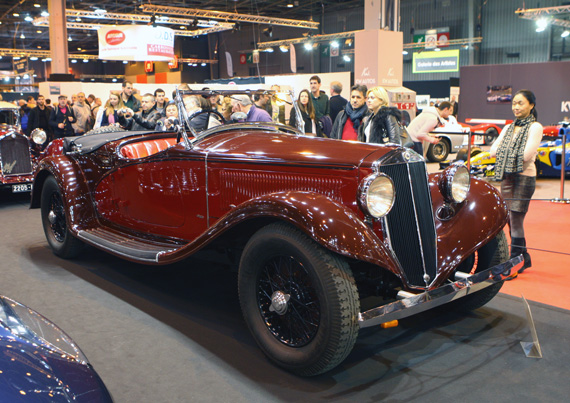
Lukas Huni can always be relied upon to pull together a stunning selection of cars for his display. Unlike most stands his cars are often privately owned and are therefore not for sale. This 1934 Series 111 Lancia Astura 233c (Corto) Short Chassis features coachwork by Viotti. This example Chassis 33-5116 has some unusual features which include two completely separate passenger compartments front and rear and a cabriolet mechanism which disappears completely when in the fully down position. 5116 spent her early years in the USA before spending many years in Holland. Later she became part of Count Vittorio Zano’s collection. In 1995 she joined the Bosio collection in Brescia. She has always been complete and original even down to her original 2972cc V8 engine.
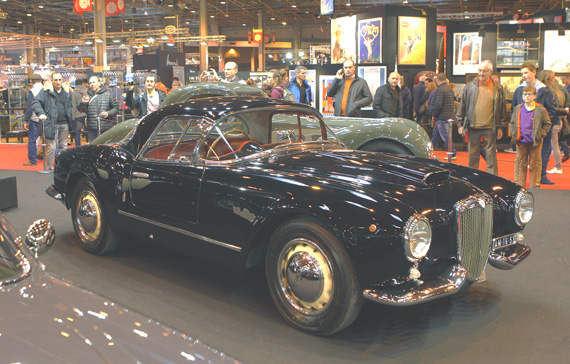
Another stunner on Lukas’s stand was this 1955 Lancia Aurelia B24 Spyder America, chassis B24 1042. This example is one of only 59 right hand drive examples built. Delivered new to Italy on the 8th July 1955 and was originally finished in beige. This example has an unusual hard top by Carrozzeria Fontana and is believed to be one of just three Aurelia hard tops built by them.
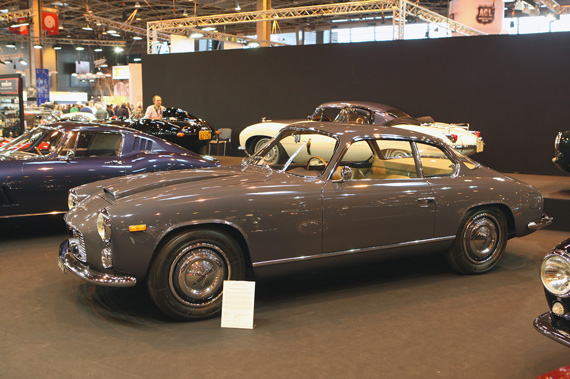
Another Lancia gem on Lukas Huni’s stand was this very desirable 1963 Flaminia Sport Zagato 2500 3C, chassis 824-13-3798. Due to the relatively poor construction of the bodywork by Zagato series corrosion had set in so in 2000 she was entrusted into the care of leading Italian authority Dino Cognolato of Padova for a complete restoration.
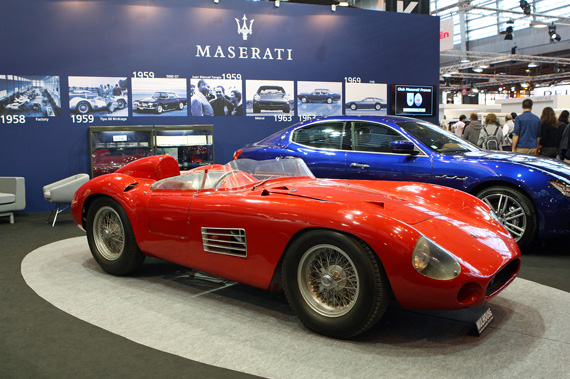
If this Maserati feels familiar that is because it is. We featured it last week in the “Seeing Red at the Schlumpf” piece. She formed the center piece of the Maserati club of France display where unlike the Schlumpf collection she was displayed with an information placard which contained much more information. Whilst speaking to the gentleman on the stand I asked why the information displayed with the car at the museum was lacking, I was told that when the museum staff opened the file on the car contained in the museum archive all it contained was a bill of sale dated 1964. I am told the car has not run since then.
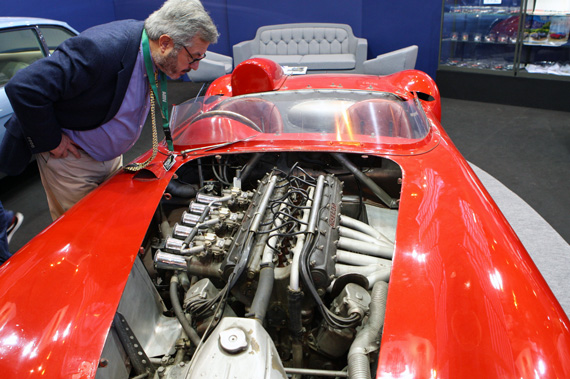
Extremely original engine is great, even if it doesn’t run!
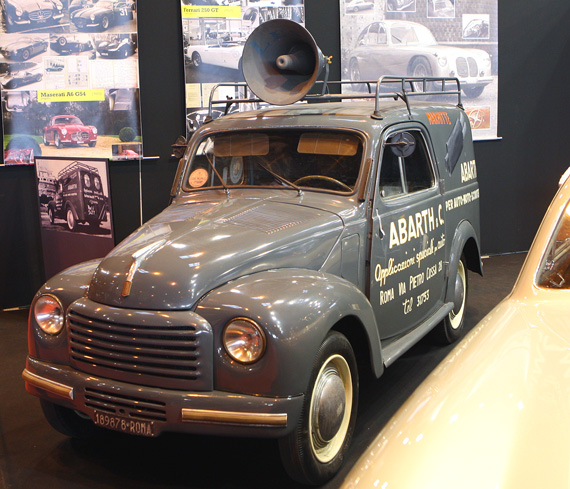
It may have been surrounded by much more exotic machinery but this Fiat Topolino van in Abarth colors still looked quite at home.
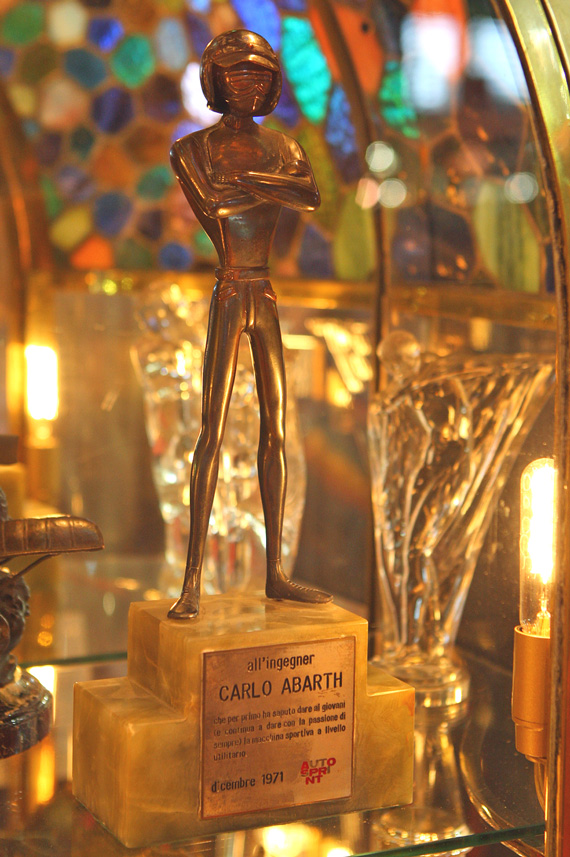
If you cannot afford to buy one of the stunning cars on offer by the various dealers at the show you could perhaps spend your money on some memorabilia like this trophy presented to Carlo Abarth in December 1971 by the Italian magazine “Autosprint”.
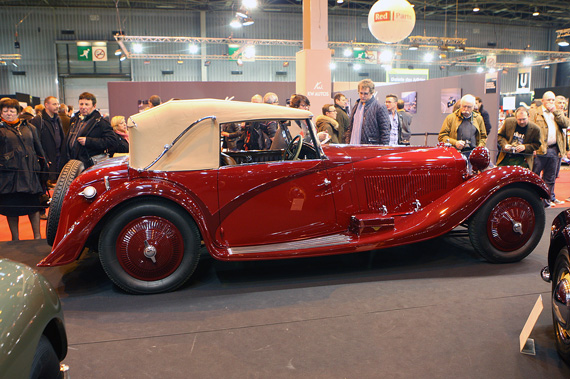
Alfa Romeo 8C 2300 chassis 2311239 shown here on Lukas Huni’s stand was originally sent to Carrossiers Figoni Paris in 1935. Delivered to Chateau Calvayrac for owner Count Raoul de Calvayrac she remarkable survived the Nazi occupation of France buried under a large pile of hay. After WW2 the Count decided to have the car repainted in yellow and brown to give her a new look. In 1950 the artist Hubert Harmon feel in love with the car, and having purchased it and registered her as 933 F6 in Cannes shipped her to New York. It then purchased by Jim Ibold of Cincinnati. Jim kept her from 1951 until 2004 when she was purchased by Ferrari expert Patrick Ottis directly from his friend Jim Ibold. It was Patrick who returned her to her original finish of two shades of red.
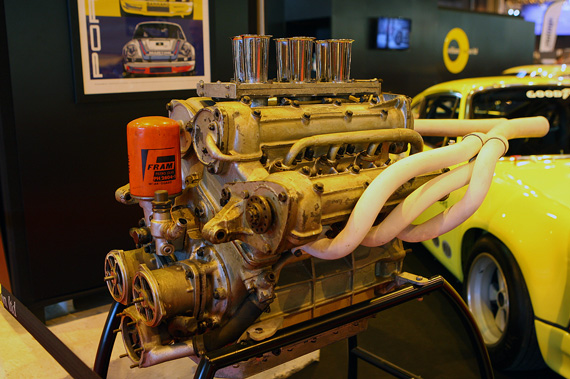
With so many great cars on display it is very easy to miss some smaller yet great items on display, like this, displayed on the William i’Anson stand. The engine was Taken directly out of the back of Ferrari 158 chassis 006 36 years ago whilst in the Seton collection. This Tipo 228 V6 engine number 228 N.1 was originally built to power John Surtees 158 for the 1966 Tasman series. It was later used to great effect by Lorenzo Bandini during the 1966 F1 season.
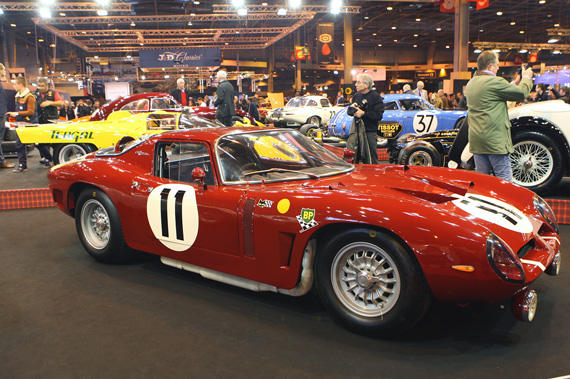
On The Fisken’s display, a stand already groaning under the weight of spectacular machinery was this rather unusual Bizzarrini. Following the bankruptcy of Bizzarrini in 1971 BA4 0106 remained moth-balled for 34 years. Passing into the hands of Dutch enthusiast Peter Hart in 2008 BA4 0106 has raced in historic events with success ever since.
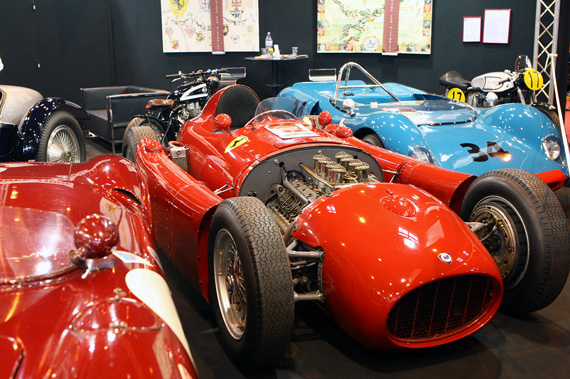
Somewhat squeezed into the Tillack stand, this Lancia D50 recreation was built for the late Tom Wheatcroft by Rosani and Basso using factory blueprints and an original D5o engine and gearbox which had been rebuilt by the Jim Stokes workshop.
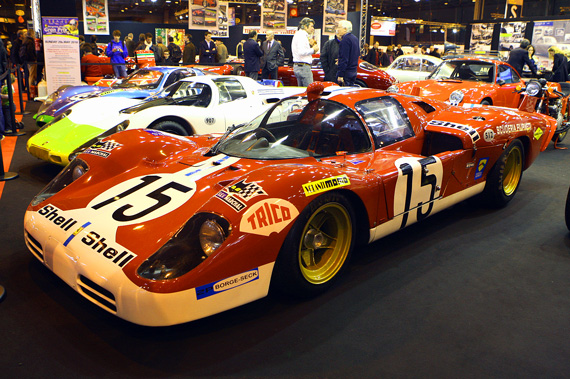
This particular 512 S – chassis #1016 – was piloted to a non-finish by two-time Targa Florio winner Herbert Müller and two-time F1 podium finisher Mike Parkes, who would seal his own place in Le Mans history by crashing into the SpA Ferrari SEFAC-run run 512 S of Derek Bell (who, in all fairness, was pointing the wrong way after a spin in slippery conditions) and finishing his time at La Sarthe on-fire.
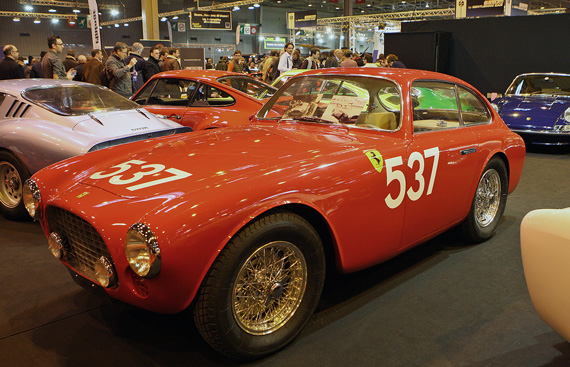
Vignale Ferrari S/N 0152EL placed 9th overall in the 1952 Mille Miglia and 5th in the Grand Prix of Monaco that year.
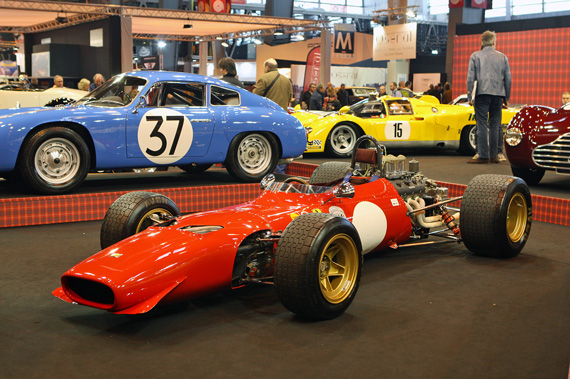
A crowd favorite over the years at the Goodwood Festival of speed and many a hill climb, usually driven with verve by Sally Mason Styron, this 1968 Ferrari 166/246 Tasman/F2 chassis 10 was the car that gave Ferrari its first victory in F2 in the hands of Ernesto Brambrilla at Hockenheim and also Derek Bell’s first win for the factory team. For the 1968 Tasman series chassis 10 was driven to second place in the championship by Chris Amon under the banner of Scuderia Veloce which took the mantle of the factory’s Antipodean racing arm. In the 1969 Tasman series Derek Bell drove chassis 10 to a respectful fourth place. Derek’s first win for the factory team was at Levin in January. The car later passed into the hands of Sir Anthony Bamford and then later into the hands of Dudley and Sally Mason Styron.
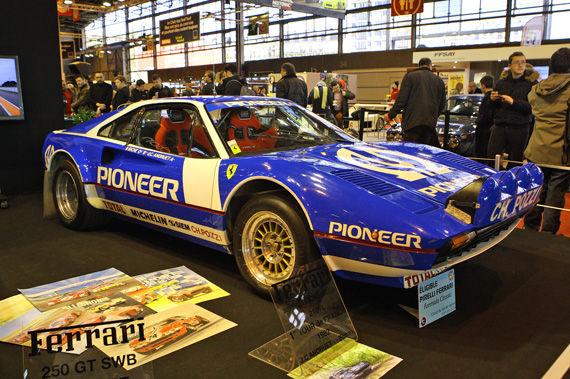
In the hands of Jean Claude Andruet this Michelotto 308GTB chassis 21071 finished first in the 1982 Tour de France.
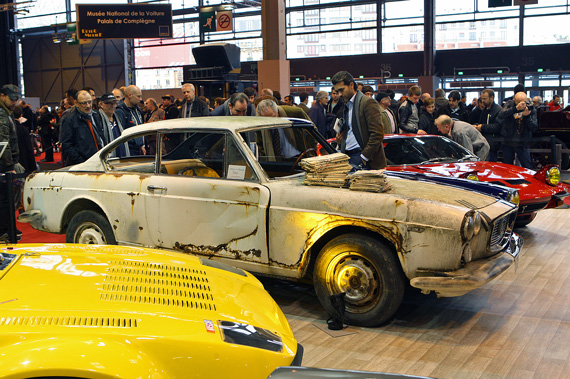
An unusual before and after barn find display this Lancia Flavia had been restored but only on one side. The jury is still out as to the color choice for the restored side, a bright metallic very un-Lancia blue. Note the Ballion Ferrari influence with the pile of newspapers on the bonnet.
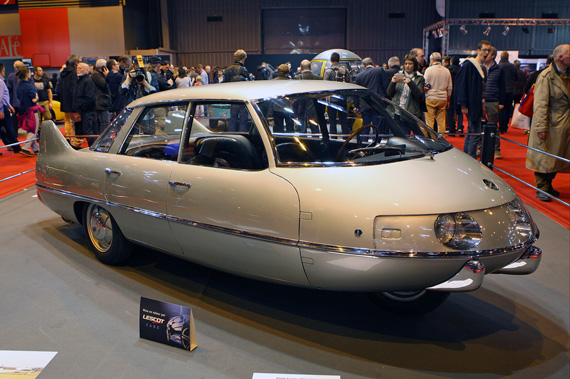
Pinin Farina Experimental concept car, 1960. Imagine turning up at your local classic car pub meet or cars and coffee in this! Perhaps you could because it is for sale. Built by Pinin Farina and displayed at the 1960 Turin and 1961 Brussels motor show, it has a drag co efficiency of 0.23 which is great as there is only a 1089cc Fiat engine to propel it. The car had resided in the company’s museum until 2007.
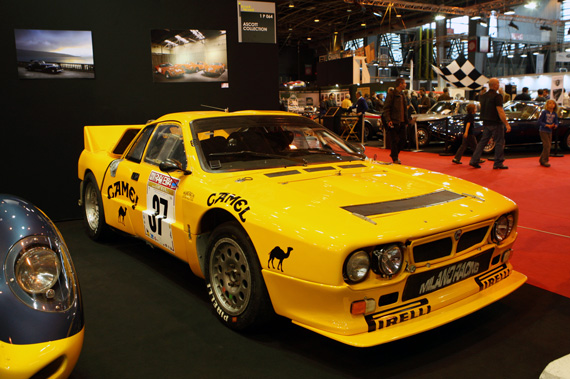
Displayed on the Ascott collection stand this Group 2 Lancia 037 makes refreshing change from the usual Martini striped examples.
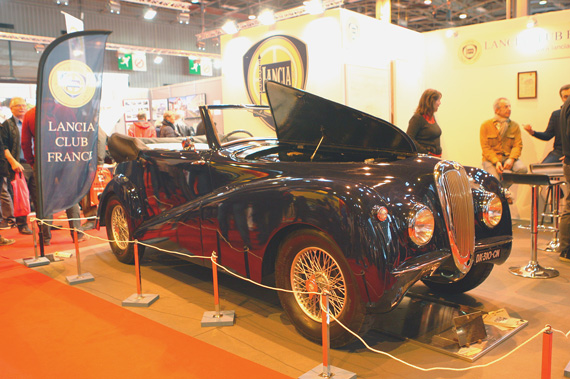
Pride of place on the small Lancia Club of France stand was this unique 1936 Augusta with bodywork by Carrosseria Langenthal.
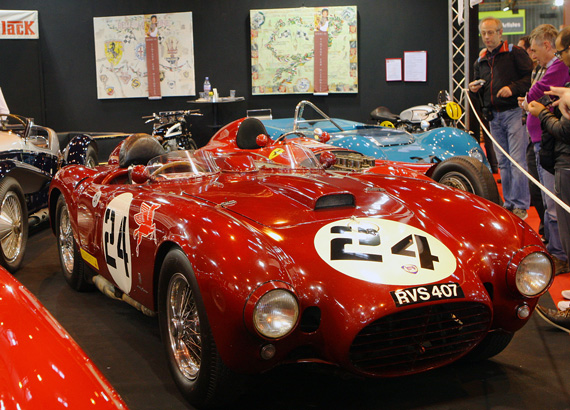
This car is one of four reconstructed in the 1980s by Luciano Basso, the Lancia Museum’s official restorer and by Guido Rosani, a highly regarded engineer whose father was a director of Lancia in the 1950s. Basso and Rosani had the full assistance and support of both Lancia and Pininfarina. To insure absolute accuracy the original drawings were used during the construction of the D24 replicas. Guido Rosani was instrumental in tracking down many of the original components including the sole surviving 3.8 litre engine, numbered D25 0001 which was used in the construction of this car.
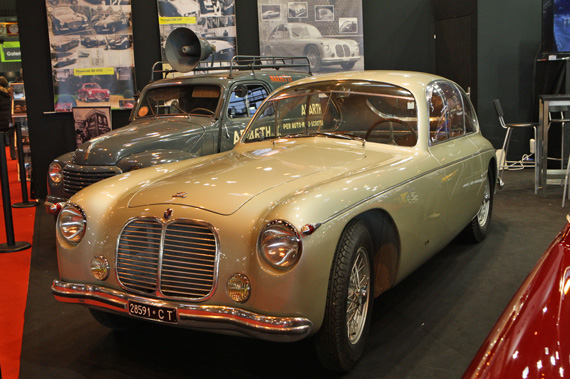
Maserati Zagato A6 S/N 052 which we think we saw at a previous Retro.
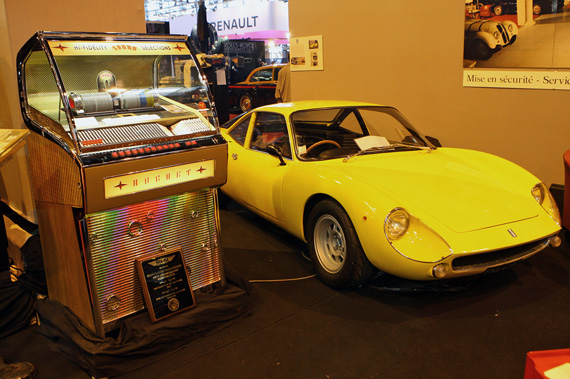
This De Tomaso Vallelunga was on a stand that just seemed to be selling Juke Boxes. Other than it was fitted with a Lotus Twin Cam engine I can offer no more information. It just struck me as a nice combination, very Rock and Roll.
Fantastic site
Makes my Day
Ray
How do I add a picture of Maserati 028 “as found” some 10 years ago before it left California for Belgium?
It was great to see so many historic cars with such racing pedigrees in one place. Some one came in and stole the rims and tyres off the Maserati, though.
I agree with RAY. More than I have ever seen and shows that the Brits and Germans
had some fine competition from the late 50’s for a decade thereafter.I am drooling.
LLEW
If you cannot afford to buy one of the stunning cars on offer by the various dealers at the show you could perhaps spend your money on some memorabilia like this trophy presented to Carlo Abarth in December 1971 by the Italian magazine “Autosprint”
Hello, can everbody say by which Dealer this trophy is for sale??
Nice piece but I think you should look again at the Parkes 512S bit.
At around 18.30 just before White House, Wissell slowed up with oil all over his screen, Regazzoni piled into him as did Parkes, Bell managed to squeeze past but suffered engine failure on the next lap. Add that to an early retirement also due to engine issues of the Vaccarella 512 and Ferrari had the nightmare scenario of three out of four factory cars out after only just 2.5 hours of the race. Then during the night Ickx lost control at the Ford Chicane, hitting a marshal’s post killing one of the volunteers and that is the end of Ferrari’s challenge in 1970.
D24 was the “true” father (and mother) of the shape that Tojero “invented” for AC, and transformed in Cobra later.
Wish I had been there.