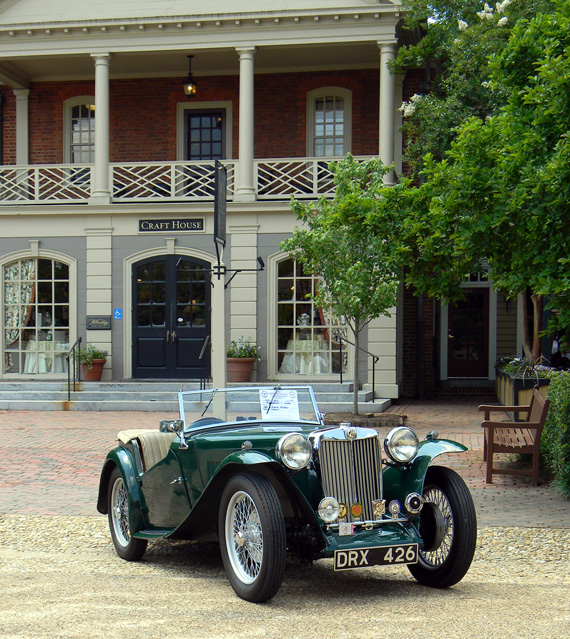
Rocky Von Dullen’s MG TC in front of the old bank building in Merchants Square.
Story and Photos by Pete Vack
The last drag race down historic Williamsburg’s 18th century Duke of Gloucester Street occurred sometime in the mid-1960s; in fact it was also the last time any automobile was allowed to amble down the ancient boulevard, though the exact date seems to be lost to posterity. Despite this ban on the automobile, this weekend the Colony Automobile Enthusiasts Club held its car show in Merchants Square, at the west end of the Duke of Gloucester Street, where normally cars fear to tread.
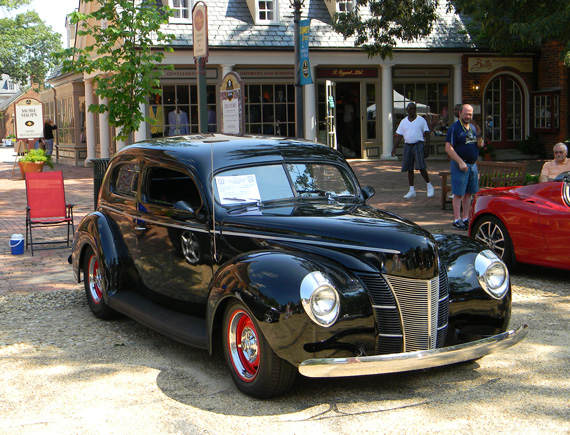
Bill Hybicki’s 1940 Ford was a reminder that cars once raced down the Duke of Gloucester Street.
There, parked with large crowds surrounding it was a 1940 Ford Coupe, chopped and channeled, ready for a quick quarter mile; sitting Le Man- like ready to go, was the phenomenally fast Factory Five Coupe; a barely street legal Lotus Seven near the old bank, and in the middle of all this sudden automotive activity was Dave Rex’s Riley engined Sprint car. Welcome back, automobile, even if in silence.
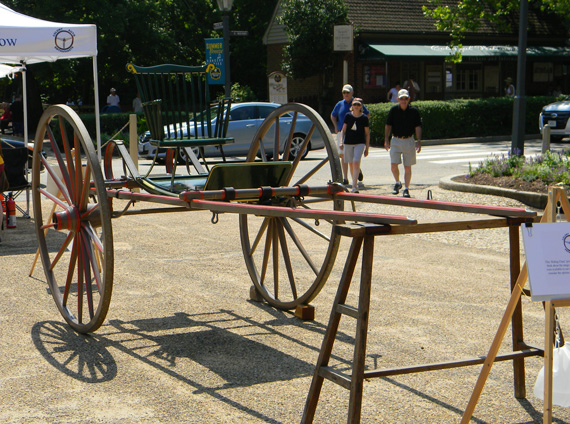
Before the arrival of the smoky, noisy, and no doubt dangerous automobile, one-horse riding chairs were common. According to an ad in the October 1775 edition of the Virginia Gazette, once such riding chair was advertised “To be sold for ready money…a single chair, light and strong, the property of S.Henley of William and Mary College…” This riding chair appeared at the show courtesy of Colonial Williamsburg.
The automobile was once no stranger to what is now called Williamsburg’s “Merchants Square”; locals once called the “Business Block” and it was the center of the community, where people would work, meet, have lunch, share gossip, relax and buy their brand of whiskey (bourbon being the juice of choice) at the ABC store. In those days, cars were allowed to traverse the full length of the Duke of Gloucester Street, from the William and Mary main entrance to the newly reconstructed House of Burgesses, aka Capitol Building, exactly one mile due east of the campus. Officer Ham Smith often parked his Ford police car near the entrance to the College to make sure everyone had a good but peaceful time, once in a while fussing at ducktailed teenagers for dragging their hot rods from the College to the Capital. It was a place where everyone knew everyone else at least by face; strangers and tourists were tolerated, but just.
If you think Mayberry* you probably aren’t too far off the mark.
The handsome and charming buildings that comprise Merchant Square date from the 1930s. During the Williamsburg Restoration, decrepit buildings at the west end of the Duke of Gloucester near College Corner were torn down. It their place, a completely new center was constructed of brick buildings in a style which would fit in a typical 18th century English town (the reason why the Merchants Square reminds some of British and Northern European villages). Local businesses moved in quickly and in a short time the town of Williamsburg had a new and unique “main street”. They were happy days, for not only did they enjoy the attractive new digs, but they were in close proximity to the restored and even more beautiful Colonial Williamsburg. By the 1940s and 50s, a Richmond Dispatch reporter believed that “…the town had now reached its pinnacle, a veritable Camelot for those of us lucky enough to live there.” They had Williamsburg “pretty much to themselves” and though tourism was on the rise, it was not yet disruptive.
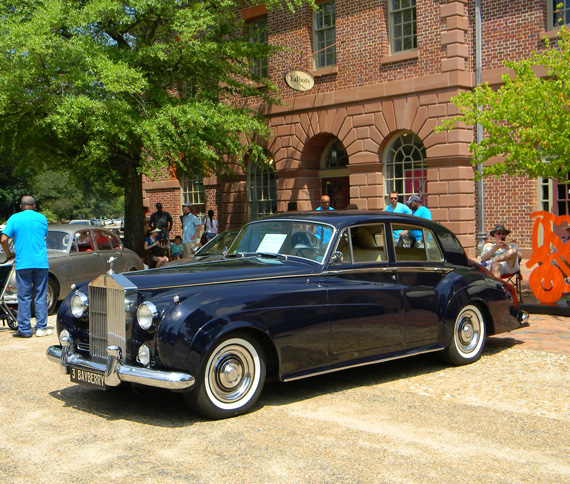
Fred Siegel’s 1962 Rolls-Royce Silver Cloud is a rare single headlamp V8 model.
Then, in the 1950s, with the restoration now completed, Colonial Williamsburg decided to update the town’s “Business Block” which was gradually replaced by a distinguished shopping center designed specifically to cater to the tourists, transformed into “Merchants Square.” It went upscale and the local businesses went elsewhere. Along with the 18th century venue through the old Williamsburg, henceforth no cars were allowed on the main drag. Locals found no need to go to town anymore, for the old town had disappeared, the shops now played to well-heeled retirees, tourists, and the odd writer. Merchants Square instead had concerts, plays, and free events throughout the year, and the occasional car show. But that had to wait until the 21st century to happen. This year was the Seventh Annual Merchant’s Square Colony Car Club Show; may it long prosper. Below are some of the entries.
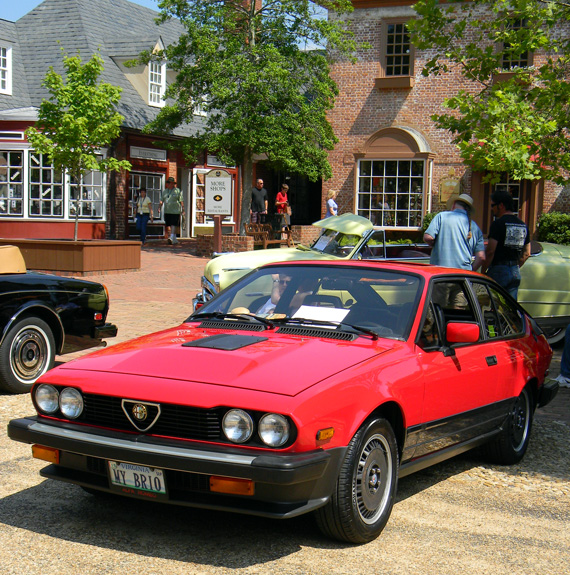
Bill Bean’s tidy Alfa GTV 6 represented the Italian contingent. This is a daily driver for Bill.
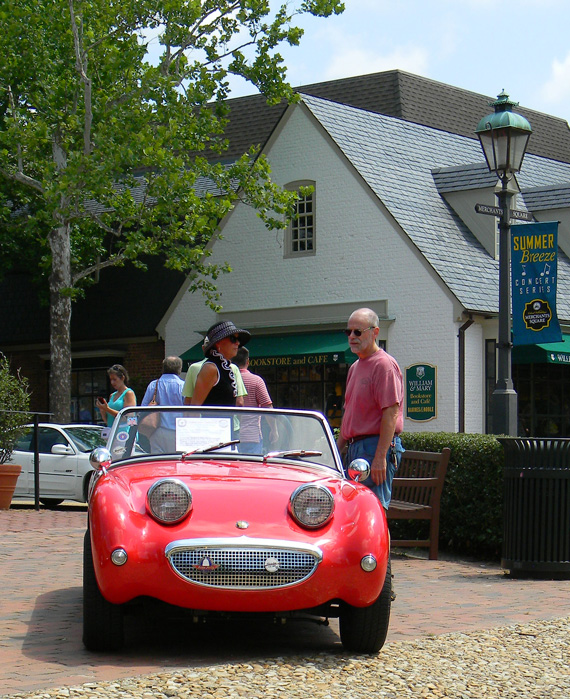
Onlookers may be wondering how an automatic transmission was adapted for use in Missy McKenna’s Sprite.
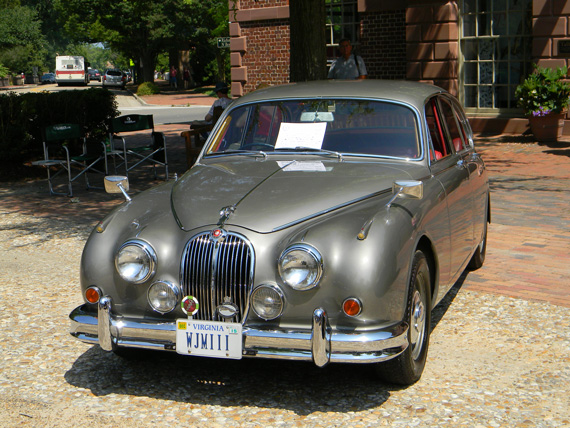
Jag Mk 2 seems to have all the right stuff including the license plate for owner Dr. William Massey.
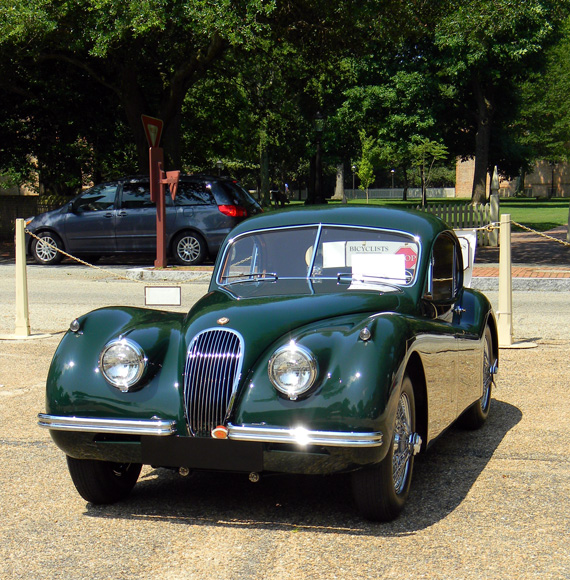
Ron Goertner’s XK120 Coupe sits at the far west end of Merchants Square; behind it is the old main entrance to the College of William and Mary.
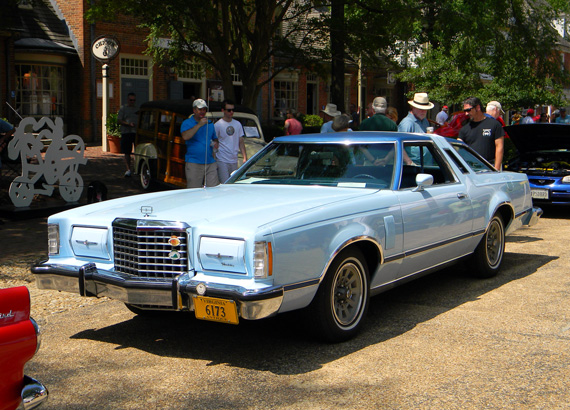
Quite a contrast: Bob Parrish’s 1978 Ford Thunderbird. T-Birds were the featured make for the show but this all original, never restored icon of the 1970s almost overshadowed the many 55-57 T-Birds at the show.
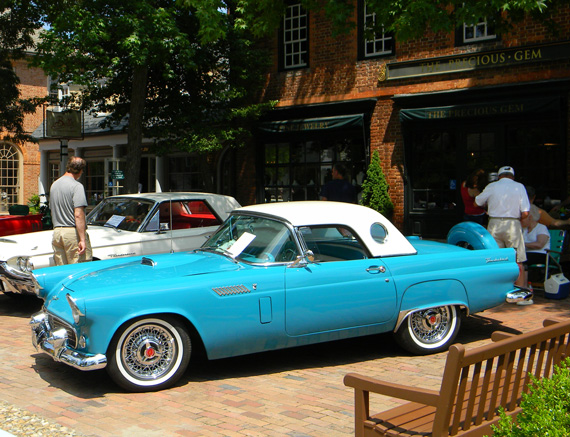
Immaculate 55 T-Bird with portholed hardtop was a crowd pleaser. Owned by Ken Lownes.
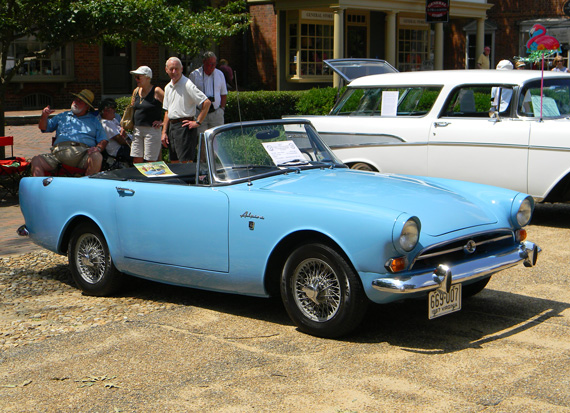
Dan Hodges 1967 Sunbeam Alpine’s placard reminded one of the starring roles the Alpine had in James Bond and Butterfield 8 movies.
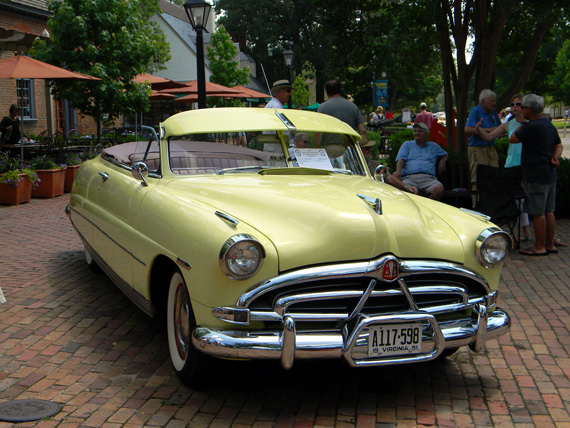
Ernest Berry’s 1951 Hudson convertible offered hi performance for the era.
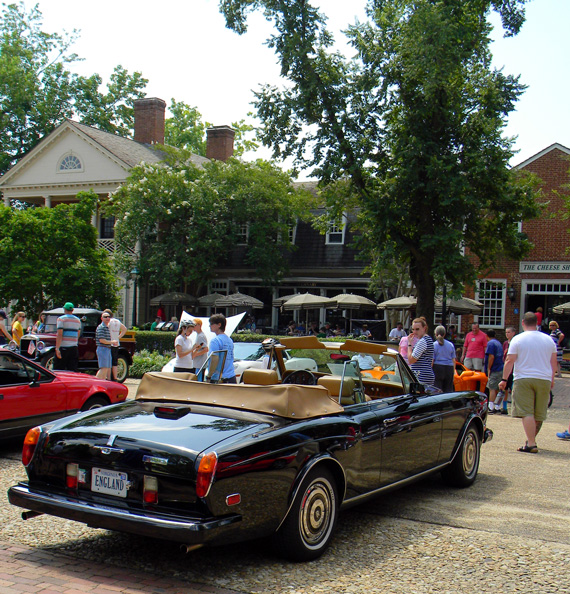
Rolls-Royce Corniche II felt right at home in the upscale Merchants Square shopping area. And very British, too. Owned by Phil & Sue Brooks.
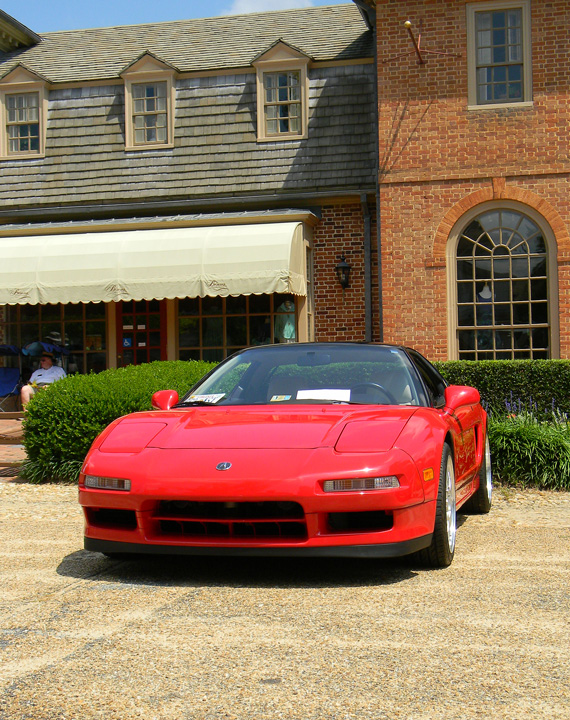
Back in the 1980s, Honda figured it could make a good Ferrari 308 GT clone and do it even better. They did, too, the result being this 1991 Acura NSX, owned by Gary Brown.
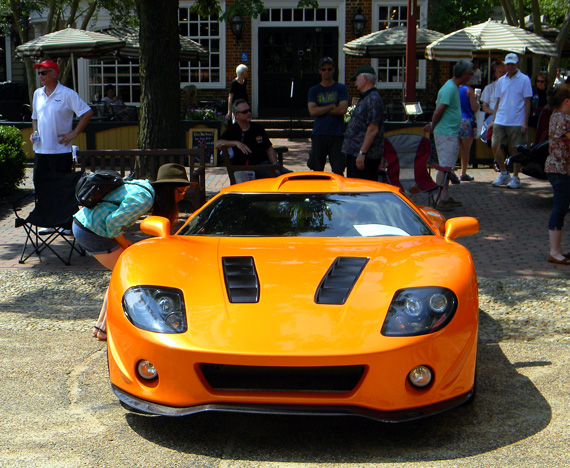
Another supercar in the lineup was this Factory Five coupe owned by David Charette, with a 6.2 aluminum V8. He didn’t dare list the horsepower.
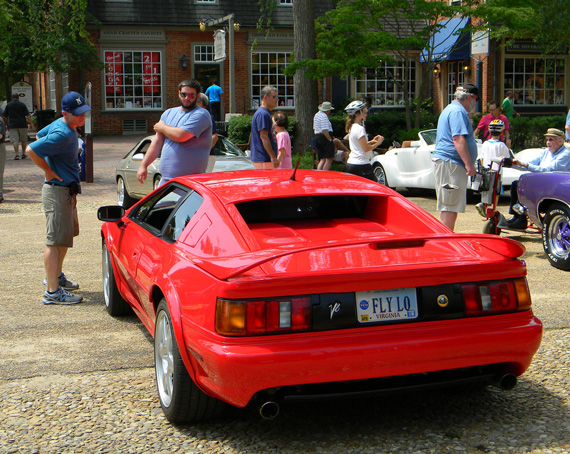
Jim Meyers brought this 1997 Lotus Esprit V8.
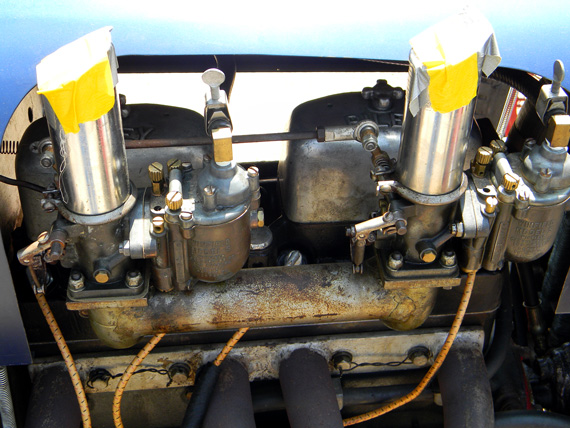
Oh yes, that race car. Dave Rex entered his quintessential Model B Ford based race car with a Riley twin port head, the cat’s meow of the modified set in the thirties.
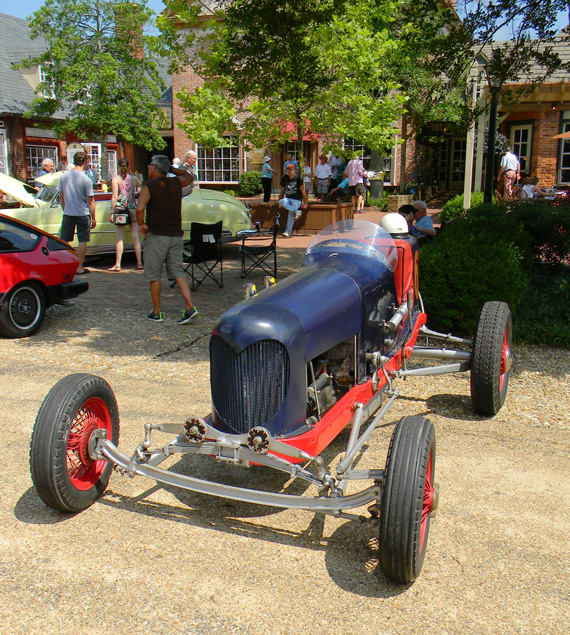
Known mainly as “Gene’s Riley Special” it was raced on the east coast until the 1950s.
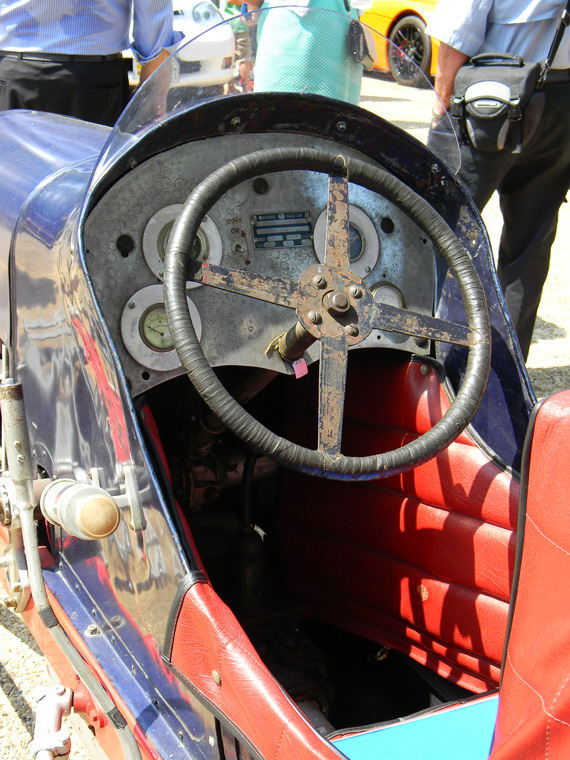
Found in Connecticut in 2007 in its last “as raced” form, Dave will not restore it.
I would be very interested in any particulars re: Missy McKenna’s Sprite, as pictured in the Williamsburg event, with an automatic transmission. I am a left side above the knee amputee which has left me unable to drive a conventional Sprite. Any information, including if the car is for sale, would be very much appreciated.
Don Spaulding
6822245140 (Fort Worth, Texas)