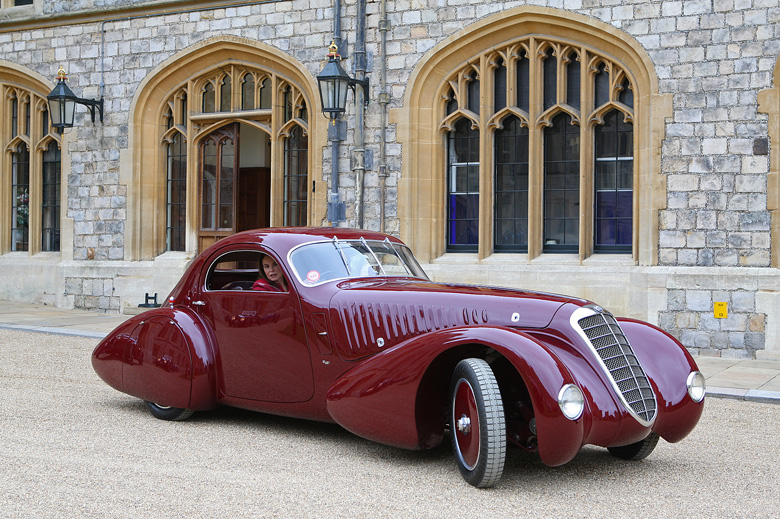
8C2300 Viotti bodied Alfa graces Windsor Castle.
Story and photos by Jonathan Sharp
Note: Most of the below information was taken from the excellent event program. Secondly, the Ferraris are grouped together at the bottom of the story. Ed.
The first Windsor Castle Concours of Elegance occurred on the occasion of Her Majesty Queen Elizabeth the Second’s Diamond Jubilee in 2012. The event is now well established, and this year on September 1-4, a selection of sixty-six classics returned to the world’s most famous castle.
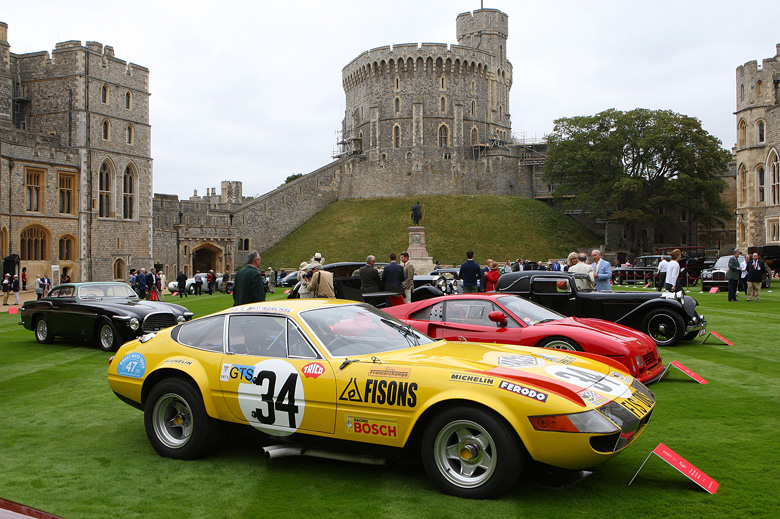
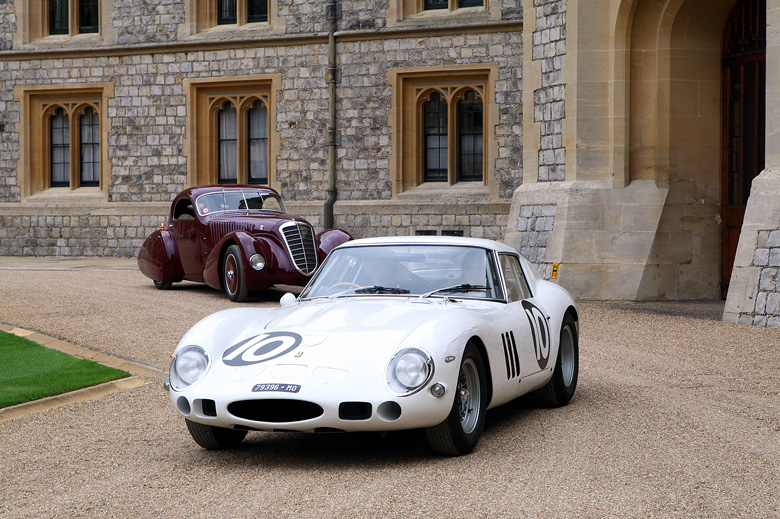
The Daytona Comp with the Round Tower in the background.
The vehicles were displayed on the immaculate carpet-like lawn of the Quadrangle under the shadow of the 12th Century Round tower, surrounded by State and private apartments. Windsor Castle is one of the Queen’s official Royal Residence’s and is the largest and oldest occupied castle in the world. Since Henry I in the 12th century, 39 British monarchs have used the Castle as a Royal Residence. Throughout the day car owners and visitors enjoyed the traditional sight of the Guardsmen, resplendent in their bright red tunics and black bearskin hats, performing their guard drill in front of their sentry boxes. Another tradition that continued unabated throughout the day much as it had for hundreds of years was the changing of the Guard that involves much marching and rifle drill, not something you would see at Pebble Beach.
If you were lucky enough to have been an entrant, your event started with a driving tour from the Cotswolds via the Prescott Hill climb and Sandhurst Military Acadamy, finishing at the Guards Polo Club in Windsor. On the Friday morning, the first day of the event, the owners drove their vehicles from the Guards Polo club through the great park, up the long walk, via the George IV gateway into the upper ward. In the evening, before a black tie dinner, the owners were invited to attend evensong in the St. George’s chapel which dates from the 15th century.
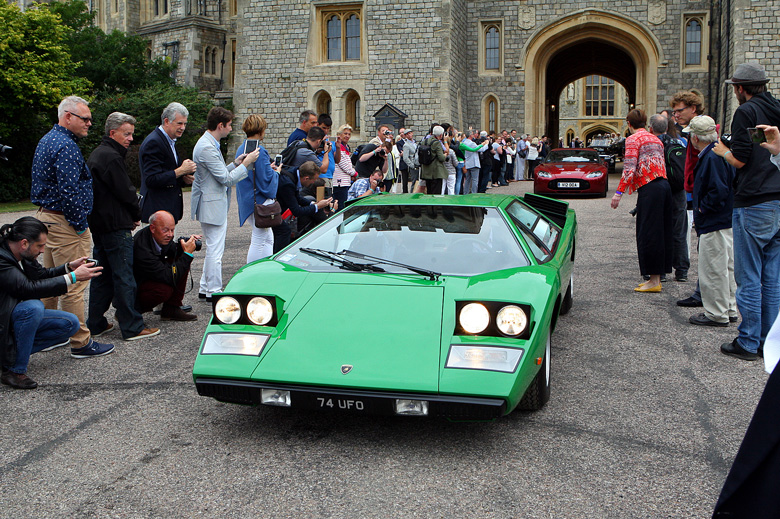
A Countach on the Grand Depart.
A further gala event was held on the Saturday evening. Then at 1645 on the Sunday the owners participated in the Grand Depart, driving the vehicles from the lawn of the quadrangle and then exiting via the Cambridge gate and along the long walk.
So much for the background. Below are the subjects in the foreground. I hope you enjoy my selection which follows
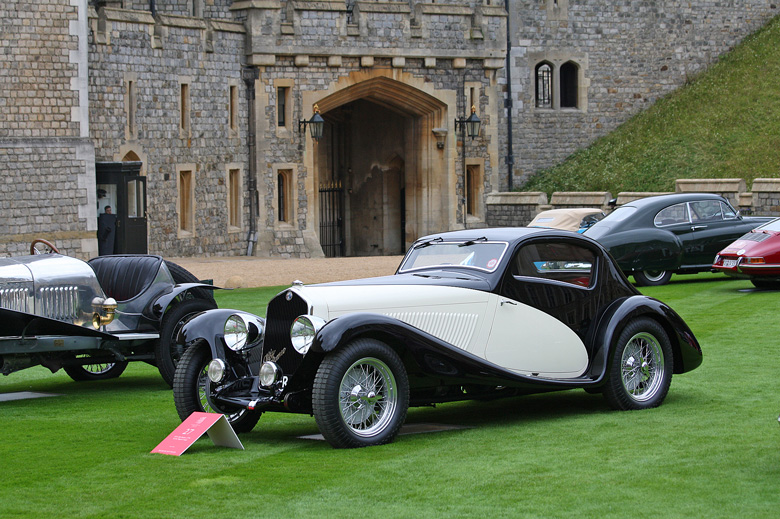
Due to strained diplomatic relations between France and Italy during the 1930s and to reduce import duty, the Parisian arm of Alfa Romeo started to import incomplete cars sans bodywork. As Giuseppe Figoni was their preferred coachbuilder he was asked to produce this stunning 1750 Grand Sport 6C in time for the 1933 Paris Salon. The car went on to win an award at the 1934 Monte Carlo Concours d elegance on the 5th April and then the Prix d’Honour at the Nice Concours one week later. The body was then removed and the chassis clothed in a rudimentary open body and entered in the 1935 Le Mans 24 hours where car finished sixth overall and winning the 2.0 class. The Figoni body was then refitted. Nothing further is known of the cars history until 1946 when the car was sold to a new owner in Montpelier. George Elkin then purchased it and shipped it to Johannesburg in South Africa. David Cohen, the cars current custodian, first admired the car in Johannesburg when he was just 14 years old. David was finally able to acquire the car in 2009.
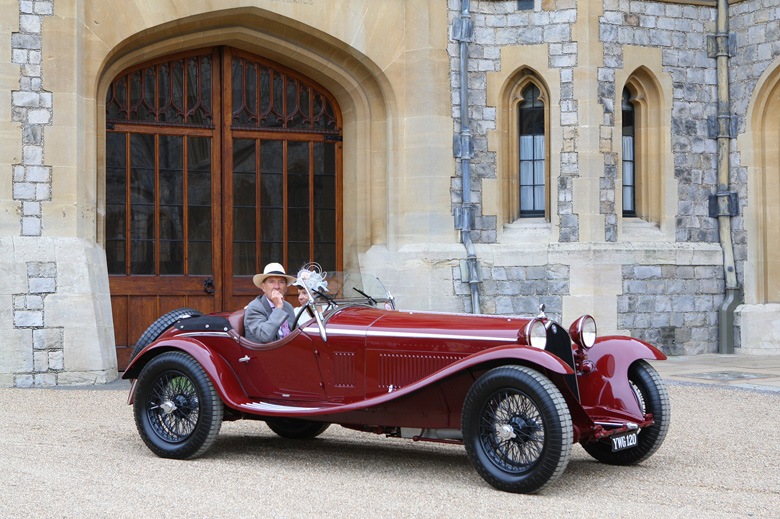
One of just 188 8C2300 s built, this 1932 Zagato bodied Alfa Romeo won the best in show award at the 2015 Villa d’Este.
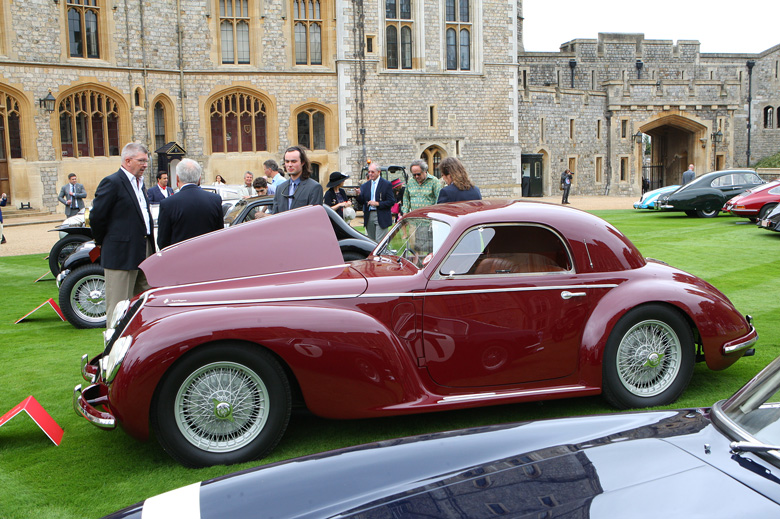
David and Judy Smith’s 1939 Alfa Romeo 6C 2500 Touring Coupe chassis 915014 started life as one of the five Tipo 256 Spider race cars built by Scuderia Ferrari in Modena, but was sold immediately to Gian Maria Cornaggia Medici, a prominent Milan legislator and gentleman racer. Whilst this example did not have a particular stellar racing career, it placed in eight races in 1939. In 1941 the car passed to Giuseppe Guildiri di Petro Giorgio. Seeking more performance, Di Petro Giorgio commissioned a new coupe body, entrusting the job to Touring of Milan, then sold the car in 1942 to Luigi Piotti. Seven more Italian owners followed before she passed into the hands of its current custodian. Unfortunately the Touring bodywork had been subjected to two car accidents and a bad restoration in the 1960s. David decided that she deserved a proper overhaul and she now back in her 1941 Touring specification and still retains all of her original components. At Windsor, Ross Brawn looks on.
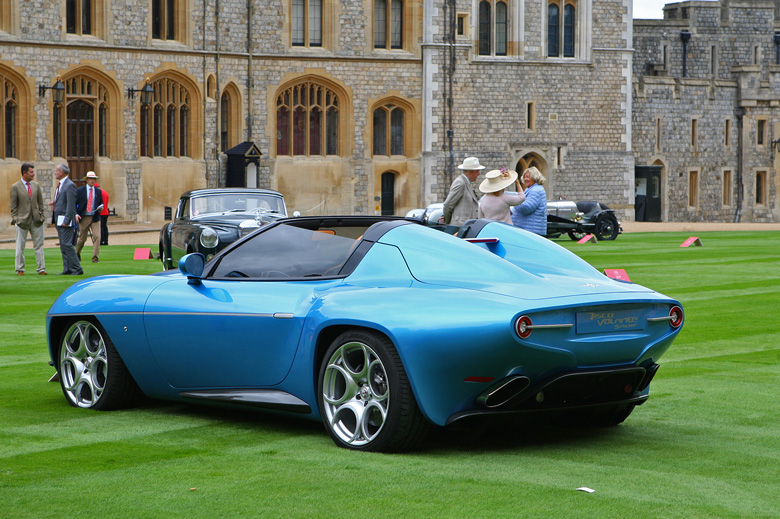
Sharing Clive Beecham’s garage along with his ex-Gianni Agnelli Ferrari 166 Barchetta and the Rob Walker, Stirling Moss Ferrari 250 GT SWB is the 2016 Alfa Romeo Disco Volante.
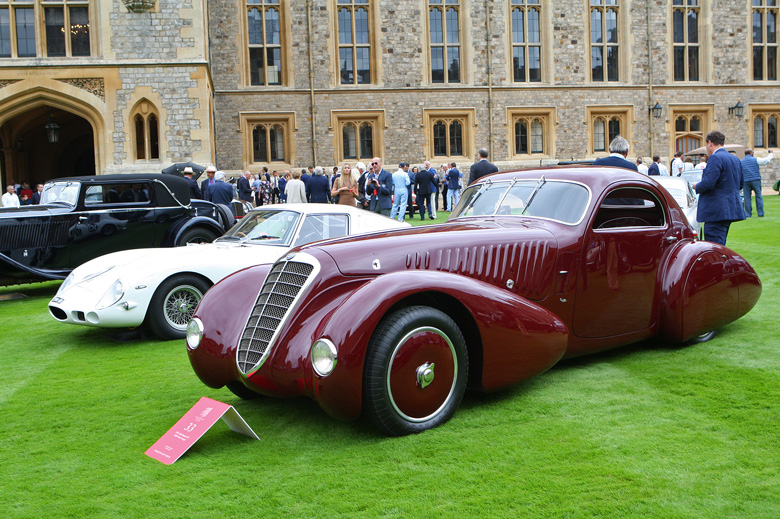
First registered on the 10th June 1933, this Alfa Romeo 8C 2300 was sold to a dealer who was acting on behalf of a Mr. Arthur Fox who had entered the car in the 1933 Le Mans where Brian Lewis drove the car to third place. Unwilling to pay the import duty, the car was sent back to Italy at completion of the race. At some point the original Touring bodywork was replaced with this rather special Viotti coachwork before ending up in Italian Somaliland. Eventually it was sold to a Mrs. Ellis of Nairobi, and Major Owen, a British Army officer persuaded Mrs. Ellis to sell the car to him. Owen proceeded to rebuild the engine and repainted the car from mushy pea green to metallic silver blue. Shortly after the work was completed the shelter in which the car was stored was destroyed by a herd of rampaging elephants. Luckily the only damage to the car was a dented roof and some scratches. The car returned to the UK, still owned by Major Owen who, in 1964, sold the car to Guy Griffiths. In 1995, Guy’s daughter Penny Woodley decided to sell the car. As the wooden frame of the car was by that time completely rotten, the new owner decided to replace the Viotti coachwork with a Touring style body which was to be painted a vivid red. Luckily the car was acquired by the Keller Collection before that fate befell the car.
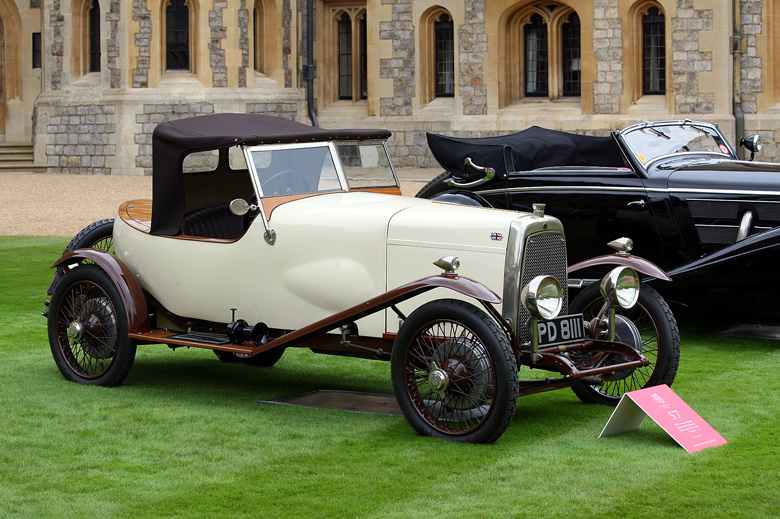
Lionel Martin and Robert Bamford began constructing 1500cc cars in 1914 but didn’t come into their own until after WWI. The cars were named Aston, after the Aston Clinton Hillclimb, and Martin for the owner. This rare Aston was built in 1924 for entry in the JCC Brooklands 200 mile race. However, while towing the newly-bodied car back to the works, Lionel Martin, forgetting the fact that he was towing the car, decided to indulge in a race with another car resulting in an accident with a truck. The chassis was rebuilt but following the bankruptcy of Bamford and Martin in 1924 the chassis was sold to Callard and Bowser confectionery in 1925 and given a cloverleaf style body then lost over the ages. After learning that the original Bamford and Martin team car in fact still existed, the car was purchased after a 10 year search by Stanley Milton White on the condition that the car was restored to her original condition.
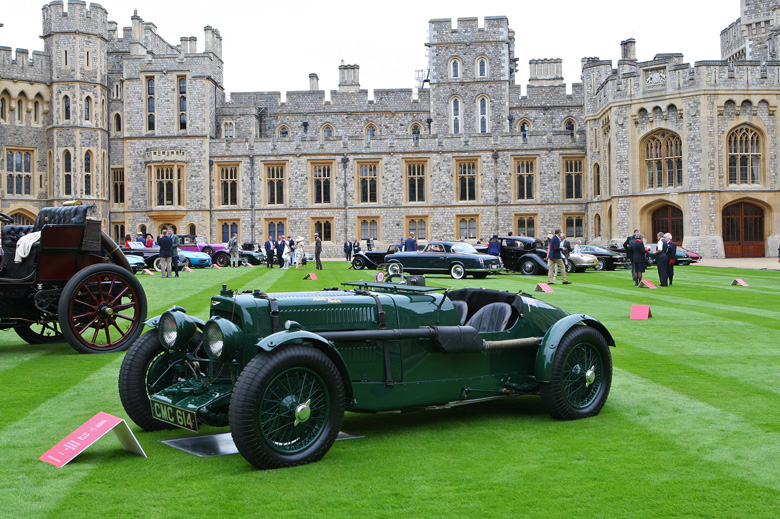
In 1925-26, Aston Martin was reorganized and a new engineer, Italian A.C. Bertelli, was hired to create a new series of small displacement Aston Martins. (Bertelli often painted the cars red, a tribute to his home country.) The car shown here is the only works prepared and supported example of the 21 Aston Martin Ulsters built. It was named the Ulster as a nod to the team prize that Aston Martin won at the 1934 TT race held on the Ards circuit in Ulster. CMC614’s racing debut was the 1935 Mille Miglia. Driven by Edward Ramsden “Eddie” Hall, the Ulster was fighting for a class lead before being forced to retire at Siena with an oil leak. She was then works prepared and supported for that year’s Le Mans in which, driven by Maurice Walker and Tommy Clarke, she finished 8th overall and 2nd in class. A class win followed in the 24 hour Targa Abruzzo. CMC614 has just been restored back to 1935 Le Mans spec by Ecurie Bertelli.
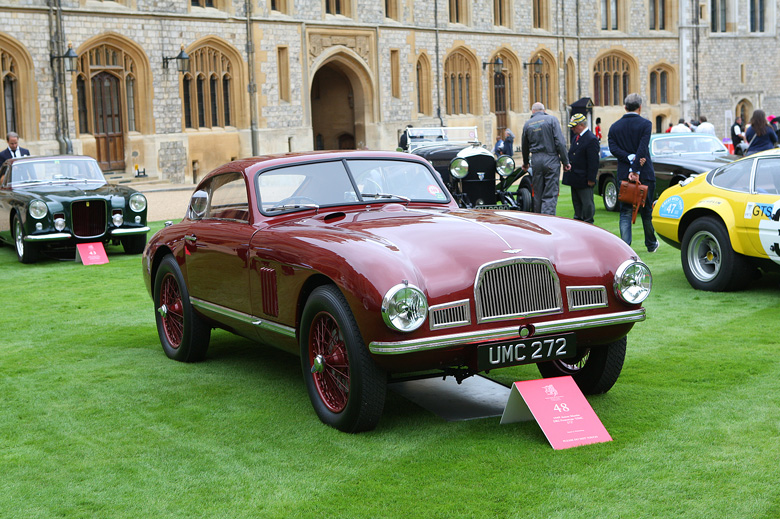
Aston Martin DB2 chassis LML/49/4 was the production prototype of the DB2 road car. UMC272 was the fourth of four chassis built originally for the 1949 Le Mans 24 hour race. It was later built with road car specification and the new 6 cylinder Lagonda engine (the first Aston thus fitted) for the firm’s new owner David Brown. In 1950 Aston Martin sold it to works driver Lance Macklin who took the car to Italy to have Weber carburetors fitted. With factory support he raced with co- driver John Gordon in the 1950 Inter Europa Cup finishing second in class, fourth overall and winning the concours d’ elegance to boot. Later whilst chasing Ascari’s Ferrari, Lance crashed on the Targa Florio. Macklin had already entered the car for the Mille Miglia so it was repaired in Italy. Still, Lance did not quite make the start and by the time they reached Rome on their trip north the race had already been running for over 5 hours. Using the knowledge of the back roads that John had gained whilst serving as a tank commander during WW2, the pair headed across country to finally join the other competitors before turning of at Genoa and driving west to visit Lance’s mother who lived in Monte Carlo. As the car still carried her Targa Florio race numbers, confusion must have ensued at various checkpoints on the Mille Miglia.
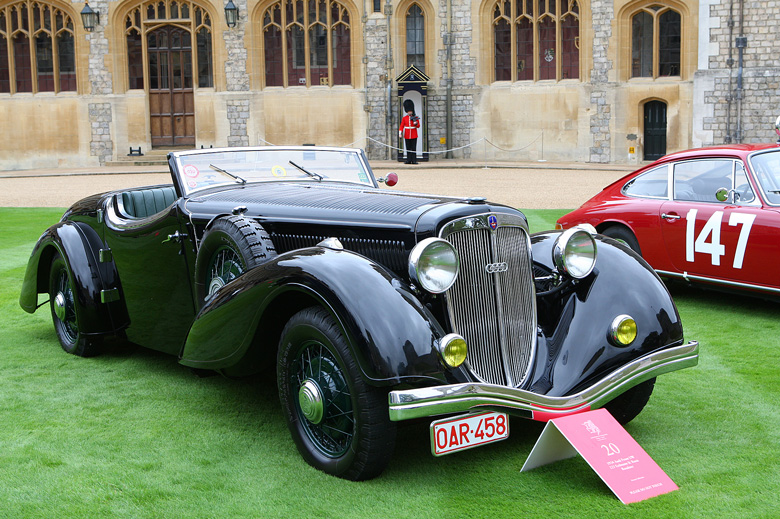
Ordered new by Baron von Jenisch of Bad Oldesloe this 1934 Audi UW 225 is unique in that it is fitted with roaster coachwork by Berlin based coachbuilder Erdmann and Rossi. The car was delivered in 1935, arriving via the Auto Union agent of the area. Later the car fell into a state of disrepair before being found during the 1980s in a garage in Switzerland. In 1988 the D ‘Ieteren Gallery of Brussels obtained the car and using the original order form entrusted the restoration of the car to the craftsman at Atelier De Restauration de Touraine in Sorigny France. Restoration was completed four years later.
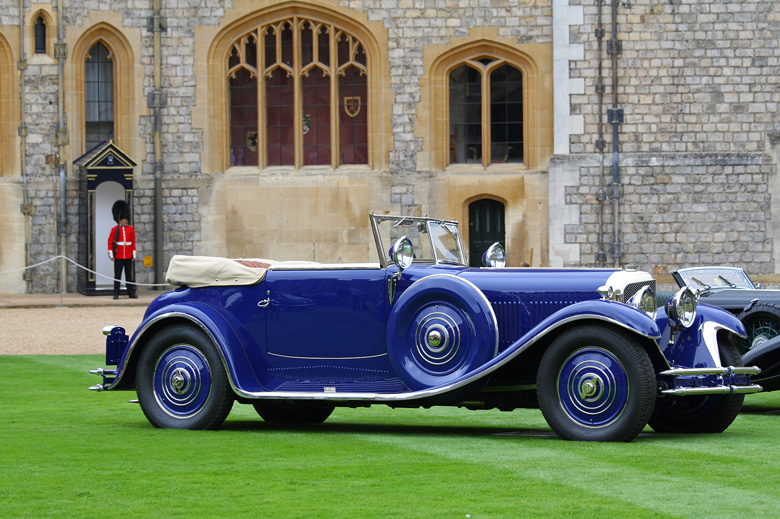
Purchased by William Leib as a present for his bride-to-be this 1929 Bentley Speed Six is one of only two Cricklewood built Bentleys bodied by Saoutchik and is the only one that survives as a complete car. It is one of only 11 Speed Six Bentleys fitted with their original bodies. Using the lessons learned by the factory in constructing Bentley Speed Six old number 1, the 6597cc engine was tuned to produce 180 bhp. John McCaw, her current custodian, acquired the car in 2010. Restoration was entrusted to Bedfordshire based coachbuilder RC Moss. Restoration would not commence until the Moss craftsman had traveled around the world to view other Saoutchik bodied vehicles to ensure every last detail was correct.
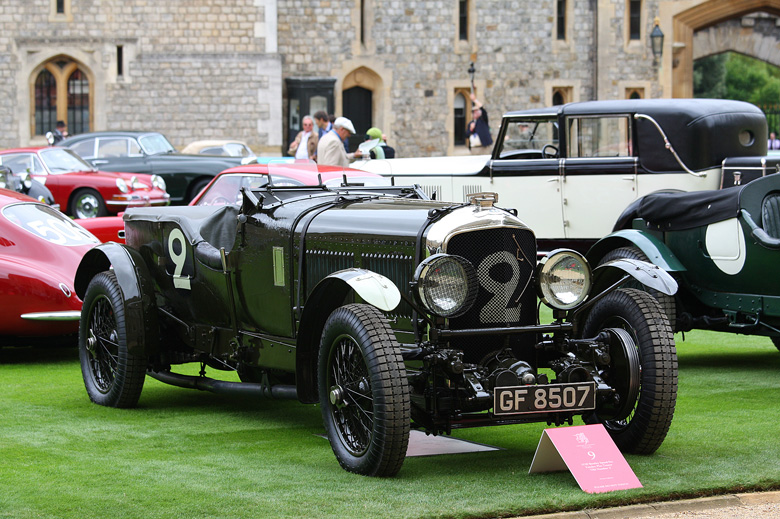
Bentley Speed Six old number 1 debuted as a factory racing car in May 1929 and in June of that year won Le Mans in the hands of Woolfe “Babe” Barnato and Sir Henry “Tim” Birkin. For the 1930 season Bentley produced two more cars known as old number 2 and old number 3 to the same winning design. Old number 2 shown here was driven to victory by Barnato and Frank Clement in the Brooklands Double Twelve covering a distance of 2080 miles at an average speed of 86.68 mph. Later in the year Old number 2 finished second in the hands of Clements and Richard Watney in the Le Mans race having covered a distance of 1760 miles at an average speed of 73.08 mph; the race winner was old number 1 driven by Barnato and Glen Kidston. Careful conservation has insured that old number 2 is exactly as she finished the 24 hours.
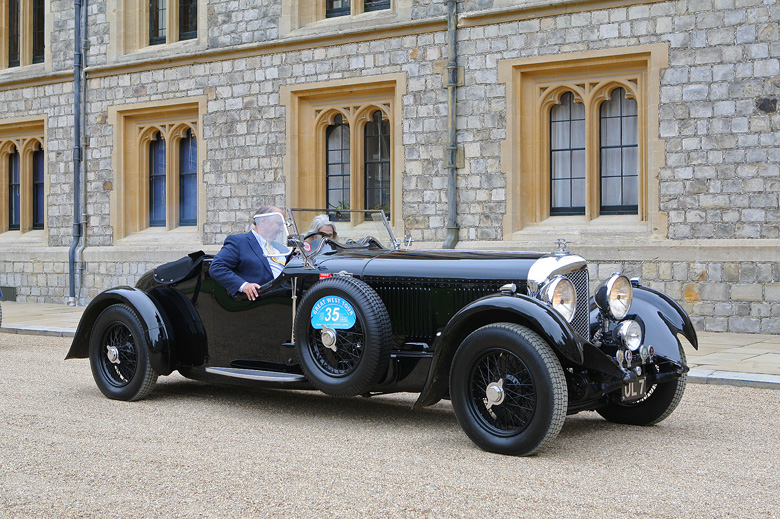
A mere 100 examples of Bentley’s 8 Liter were built before the company was acquired by Rolls Royce. This example from 1931 started life with a Sedanca De Ville body. In 1936 UL7 was purchased by one AC Clark who instructed Bentley specialist Mac McKenzie to make a huge number of specific changes to the car. Part of the change involved removing the old bodywork and replacing it with a four-seater tourer body by Corsica of London. UL7 is one of 3 McKenzie/Corsica 8 Liter Bentleys constructed.
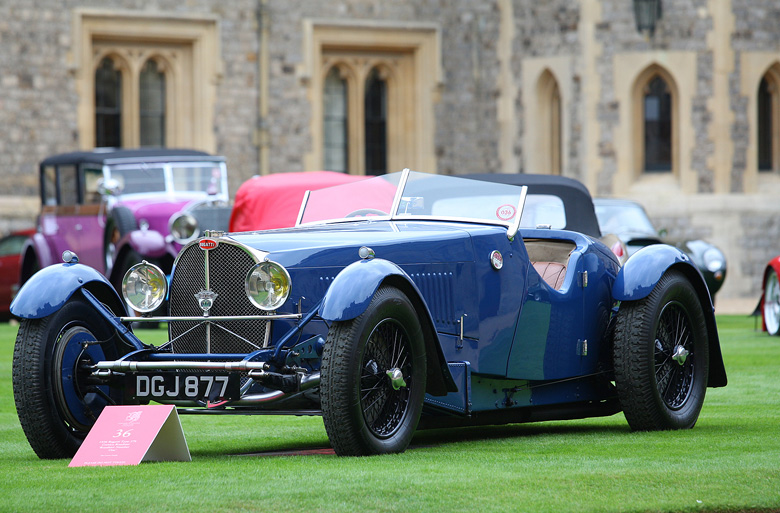
Only 43 Bugatti T57 S (Surbaisse, lowered) models were built of which 8 were bodied by London coachbuilder Corscia. This example chassis 57375 was built for Nicholas Embiricos and was delivered to him on the 1st September 1936. He drove the car in the 1936 Tourist Trophy race held at Ards but retired from the race following a collision. Richard Seaman’s mechanic Giulio Ramponi repaired the car with a view to running her in the following years TT, but due to Richard’s contract with Mercedes at the time the idea came to nothing. In the same year Ronnie Symondson purchased the car and raced her right up until 1981. In 1948 Ronnie won the first sports car race to be held in England following World War Two at Silverstone. The car became a regular entrant at Goodwood and other circuits. As chairman of the Bugatti Owners Club Ronnie ascended the Prescott Hill over 1000 times before ill health forced him to sell the car to Neil Corner.
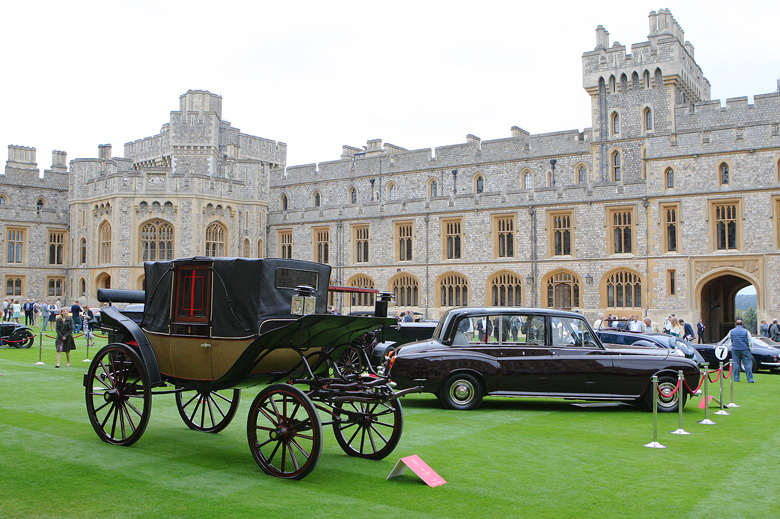
Built in the 1800s by Hoopers, the Ascot Landau is one of five similar carriages kept at the Royal Mews in Windsor Castle. This example, restored in 2010 by the Royal Mews Carriage restoration department, was used by King George V to open the first Northern Ireland Parliament in 1921. The Ascot Landaus are used as part of the Garter service and also during the Royal Meeting at Ascot. Founded as Adams and Hooper in Westminster London in 1805 they have held the Royal Warrant since 1830 supplying elegant horse drawn carriages to King William IV, Queen Victoria and King Edward VII. The first Hooper bodied automobile was a Daimler delivered to the Sandringham Estate on the 28th March 1900. During World War One Hoopers switched to constructing aeroplanes, ultimately producing three Sopwith Camels a day. During World War Two Hoopers produced the fuselages for De Haviland Mosquito’s, Air Speed Oxfords and gliders.
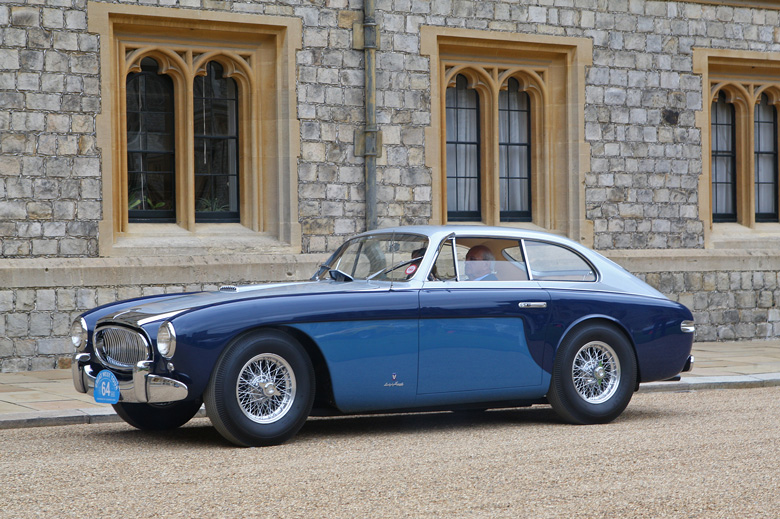
This 1952 Vignale bodied Cunningham C3 originally owned by Alvin R. Jones of Indiana is believed to be the only Vignale bodied coupe used in competition, having been returned to the factory and raced by the Cunningham team in Florida in 1953 and 1954. It also believed to be the only example finished in its tri color scheme. Following display for many years in the Petersen Museum in Los Angeles the car joined the stable of an enthusiast who commission a full restoration back to original specification by RM Restorations.
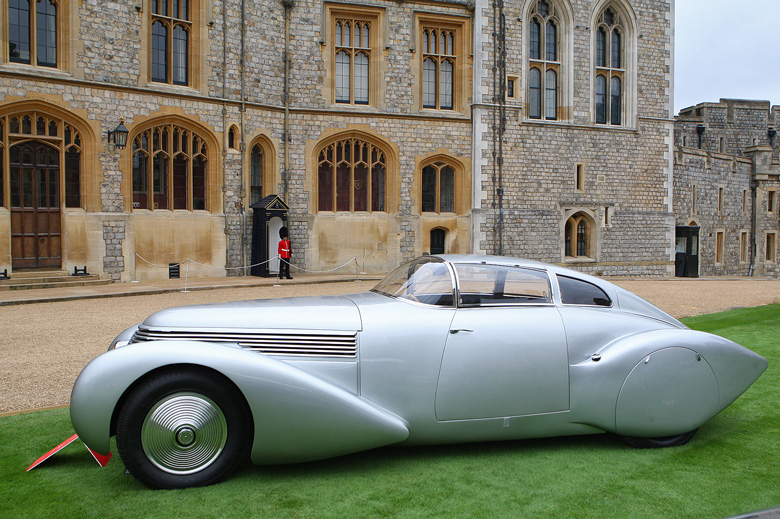
Following the 1936 Paris Auto Salon, inventor, racing driver and WWI flying ace Andre Dubonnet acquired an Hispano Suiza chassis to build a car in which to showcase some of his designs. Named Xenia after his deceased wife Xenia Johnson and with bodywork designed by Jean Andreau, the Xenia was fitted with Dubonnet’s independent coil suspension, a design later taken up by Cadillac, Oldsmobile and Buick, and curved glass and a panoramic windscreen (a design which was not seen again until GM fitted it during the 1950s). The aerodynamic bodywork was built in the workshop of Jacques Saoutchik. Used by Dubonnet as his personal transport the car spent World War two hidden from view. On the 9th June 1946 the car led the parade to celebrate the reopening of the Saint Cloud highway tunnel outside Paris to civilian traffic. The President of the French Hispano Suiza club purchased and restored the car during the 1960s. Since 2003 the Xenia has had pride of place in Peter Mullin’s museum in Oxnard. Xenia was the winner of the Pullman Trophy at the event having been chosen as best in show by the owners of all the cars that were displayed on Her Majesties immaculate lawn.
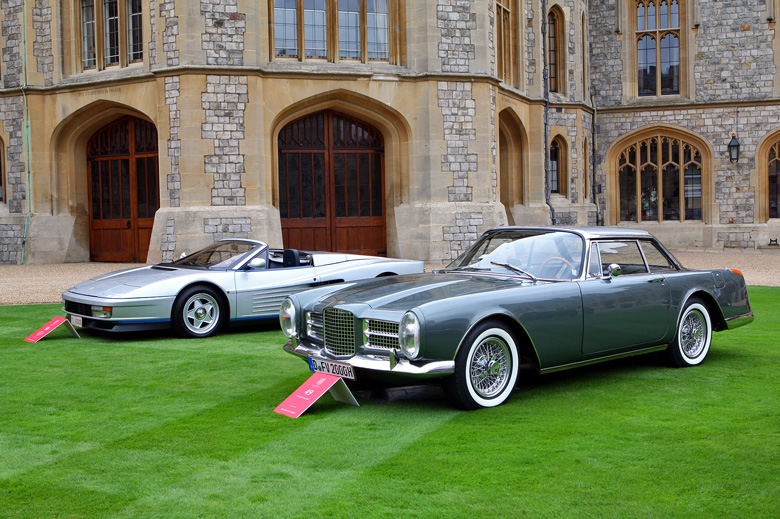
Le Coupe 4 places le plus rapide du Monde, The fastest four seater coupe in the world, so ran the advertisements for the Facel Vega Facel II. Production rang from October 1961 until May 1964. Including the prototype 184 examples were built. The HK500 was the most interesting car but the Facel II was by far the best, so said its creator Jean Daninos. Power came from a 383 c.i. Chrysler V8 producing between 355bhp (automatic) and 390 bhp (manual). Styled by Daninos, engineered by Jacques Brasseur with the chassis developed by Lance Macklin original owners included the King of Morocco, the Shah of Iran Tony Curtis, Debbie Reynolds and Ringo Starr. Hartmut Ibing’s 1962 example shown here is one of just 12 manual gearbox versions constructed.
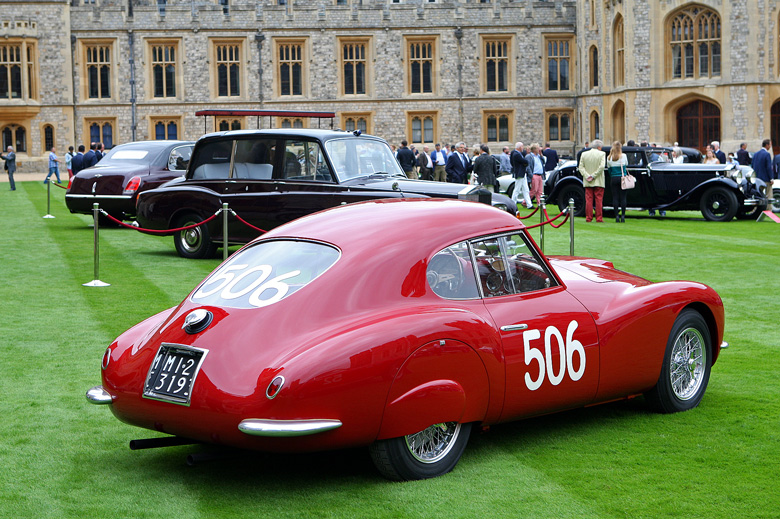
Jan de Reu’s 1953 Fiat 8V Rapi Berlinetta shown here is the only remaining example of just three works competition versions prepared by the Carrozzeria Speciali Fiat racing team. She raced in the 1953 Mille Miglia finishing sixth in the sport 2000cc category and 18th overall. The car continued to be raced in Italy until 1958, sometimes in the hands of Lorenzo Bandini and Ovida Capelli. Later the car was shipped to the U.S.A. by Road and Track magazine founder Bill Brehaut. The car finally made its way to California owned by Jerry Sullivan. She then spent 33 years dry stored in a barn before coming into the care of her current owner in 1994.
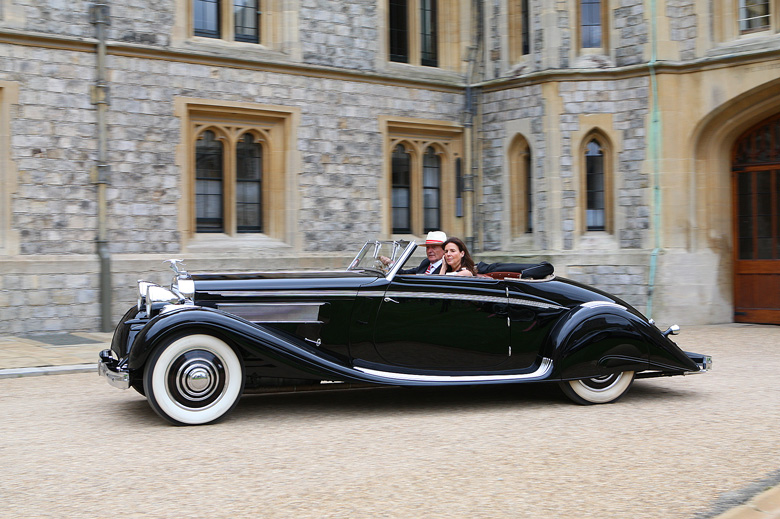
The K6 was to be the final Hispano Suiza model produced. This 1936 example has coachwork by the French sculptor Brandone. It is believed to be the only Brandone bodied example to survive. The car was delivered to a Mrs. Cropley on the 4th May 1936 and later shipped to the U.S.A. where the windscreen, rear deck and top were modified. Whilst still in this condition it was acquired by the Blackhawk collection and then Peter Mullin. The car was then purchased by Sam and Emily Mann who commissioned historian Andre Vaucout to research the history of the car. Over the years the coachwork had been variously attributed to Saoutchik, Figoni, Kellner and Letournet et Marchand. Following his discovery of the original drawings, period documents and original photographs, Sam and Emily were able to commission Stone Barn Restorations in New Jersey to return her to how she appeared in 1935.
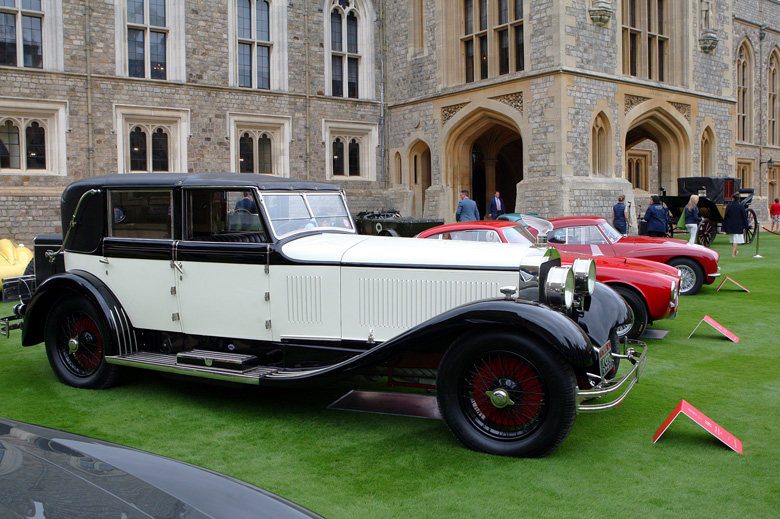
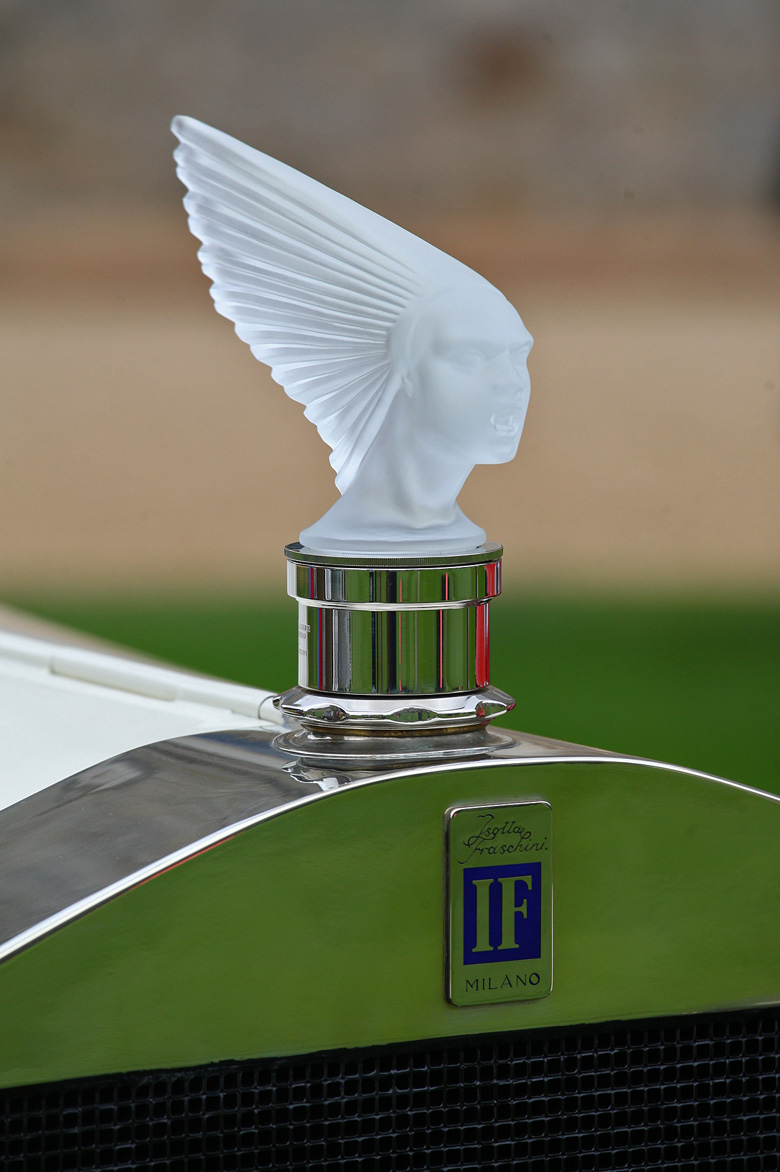
In the 20th October 1931 edition of the Motor magazine appeared an advert for a 1929 Isotta Fraschini Tipo 8A. Painted in two tone art green and with only 4000 miles on the clock, the advertised price was £875. The Sedanca De Ville bodywork was the work of Cesare Sala who was the coachbuilder to the Royal Houses of Austria and Italy. Only two years before, the car was priced at £3400, the dramatic decrease due to the Great Depression. It was purchased by Prince Rajah Sajid Hussain, then a student at Cambridge University. Unfortunately for the Prince students were not allowed to keep cars whilst in their first year at Cambridge. He was finally able to use the car once he had moved to Edinburgh University. In 1934 the Prince returned to India with the car. In the late 1960s Prince Sajid’s son inherited the car which had only covered 12,000 miles He used the car in various vintage rallies in India before auctioning the Isotta in 1974. The winning bid was submitted by the manager of the rock group Led Zepplin, Peter Grant, who the commissioned a thorough restoration. Auctioned again, in 2002 the car became part of the Imperial Palace collection in Las Vegas. The car now forms part of the Intrigue collection at the Colorado Club Auto museum in Denver.
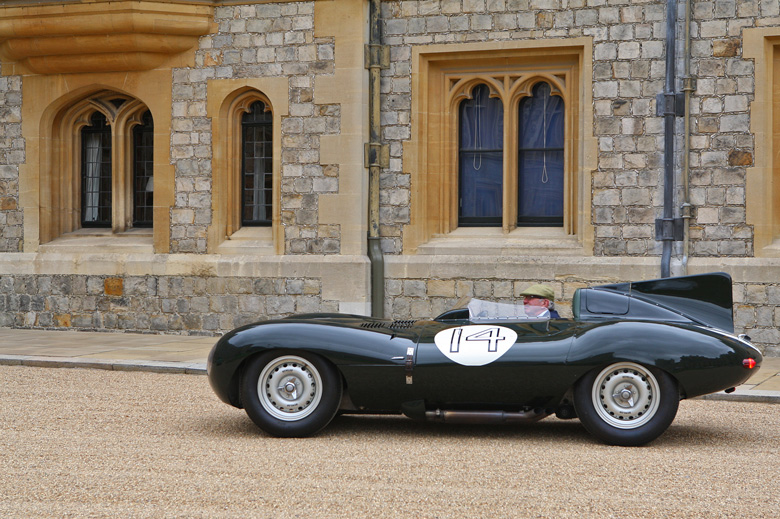
Jaguar D Type OKV1 chassis XKC402 was the first of the works racing cars. The first six Jaguar D Types were designated as XKCs and differed from the later D Types by having their front sub frames welded rather than bolted to the aluminum alloy monocoque chassis. OKV1’s racing career commenced in 1954 with an entry at Le Mans. Driven by Duncan Hamilton and Tony Rolt the Jag was not quite able to catch the winning Ferrari 375 of Jose Gonzalez and Maurice Trintignant. The D Type finishing 135 seconds behind the Ferrari. OKV1 came second again at the Reims 12 hour race. At the end of the 1954 season it was sold to Duncan Hamilton who continued to race the car all over Europe and Africa. In 1955 he sold the car to John Goddard. Goddard converted the car into a two seater which he later claimed was the inspiration for the works XKSS conversions. Following Goddard’s death in 1984 OKV1 was purchased at auction by Robin Davidson and returned to the UK to reside in the National Motor Museum, until being sold in 2000 to her current owner Peter Neumark.
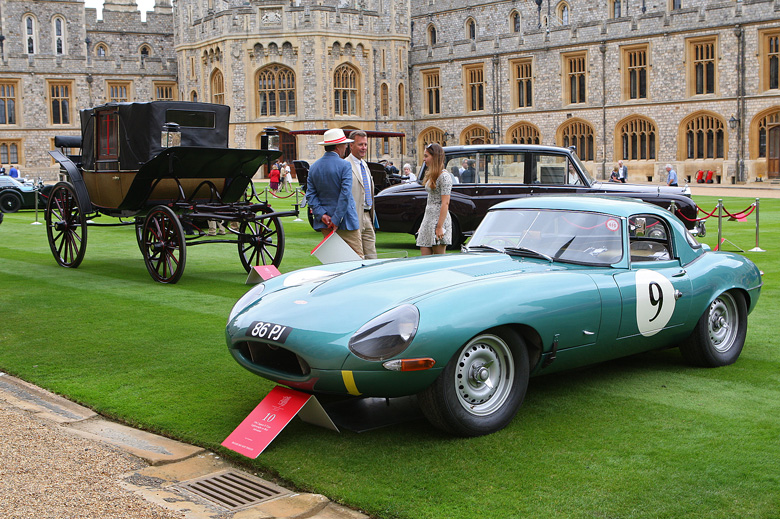
Delivered in April 1963 this Lightweight specification Jaguar E Type was the fourth from a total of just 12 constructed in period. The car was entrusted to Roy Salvadori for the 1963 racing season where it was hoped that the car would have the run on the new Ferrari 250 GTO. Unfortunately this was not the case though Roy did enjoy some success finishing second to Graham Hill in a similar car at Silverstone. 86PJ continued to pick up podium finishes over the next few seasons. In 1966 the car was purchased by Guy Griffiths who bought the car as a Christmas present for his daughter Penny. He even tied a large bow on the bonnet for the big day. Penny drove the car enthusiastically at the Prescott and Shelsey hill climbs and also the Pomeroy Trophy for a few years until being put into hibernation. In 2002 86PJ changed hands becoming the property of Paul Michaels the chairman of Hexagon Classics. Recently preserved rather than restored by Eagle E Types, the car was entered by Ian Livingstone.
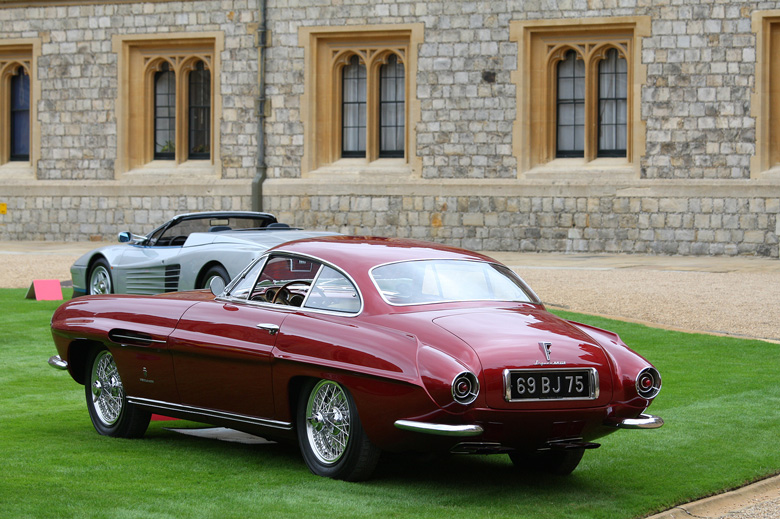
The Ghia Supersonic styled bodywork had first appeared fitted to a Conrero tuned Alfa Romeo 1900 that was entered into the 1953 Mille Miglia. More often seen gracing the chassis of various Fiat 8Vs, this style of bodywork was also fitted to an Aston Martin and three Jaguar XK120s. This 1952 XK120 is believed to have been delivered to the dealer Delecroix of Paris who then shipped the car to Ghia to have the Supersonic body fitted as part of an order for two placed by Monsieur Malpelli. Following completion in 1954 the car was exhibited at the London and Paris Motor show and then entered into Concours events in Montreaux and Cannes. Malpelli however omitted to pay his bill so Delecroix reclaimed the car where it remained until being sold to Phillipe Renault in 1969. Later the car was sold to Roland Urban to join his collection of special bodied Jaguars displayed at Montlhéry. In 1994 the car changed hands again, this time being purchased by a prominent French Jaguar collector who had the car restored by Atelier Sontrop. The current owner William Heinecke acquired the car in 2015 with just 22,000 K on the clock. Only two Ghia Jaguars remain today, both of which were order by Malpelli.
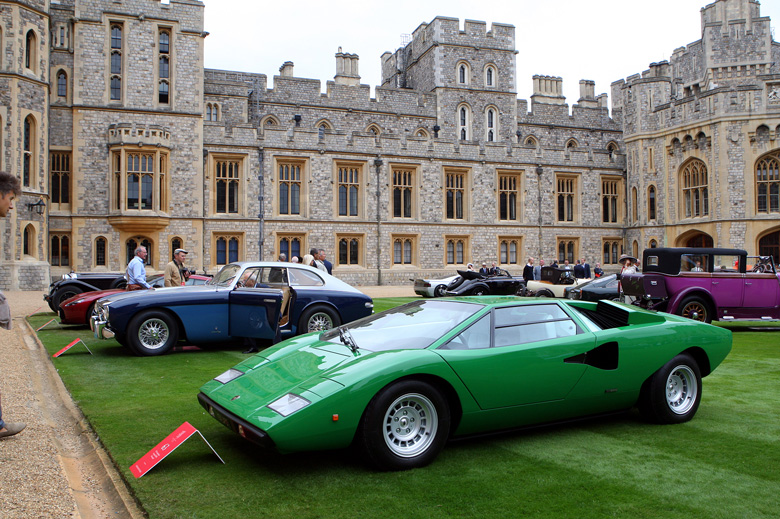
This 1974 Lamborghini Countach LP400 Periscopio entered by Simon Kidston is the fifth example built. The first owner was 22 year-old Gianfranco Innocenti, the heir to the Scooter and Motor car company. He ordered the car to replace his special Miura SV. During her recent restoration many preproduction magnesium components were found to have been fitted to the car. Gianfranco had ordered the car to be finished in red. During the restoration it was discovered that to allow Gianfranco, a VIP customer, to jump the queue, they had taken another client’s green car from the production line and painted it red.
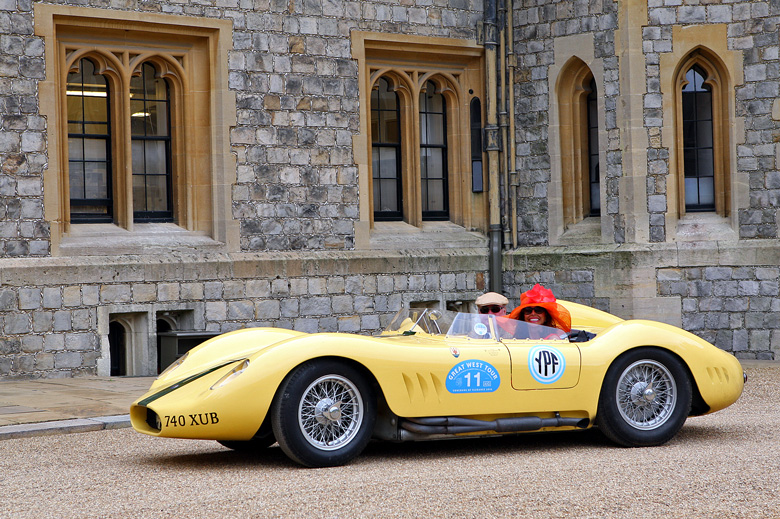
This 1956 Maserati Tipo 200Si chassis 2408 actually started life as a Tipo 150S chassis 1662. Sold to Guido Perella, a sportsman who first raced the car in the 1956 Mille Miglia only to retire but at the Targa Florio he placed in class. Racing continued for Guido during the 1956 season before an accident forced him to return the car to the factory. Whilst the car was at the factory the FIA introduced new rules for sports car racing for the 1957 season. Severino Gomez-Silva was a very rich amateur racing driver from Rio de Janeiro who just happened to be urgently looking for a Maserati 200S. The factory converted Guido’s car into a 200S which was then given the chassis number 2408 and later updated to a 200Si. In Brazil Severino and the 200Si finished 8th in both the Rio de Janeiro and Sao Paolo Grand Prix. For 1958 Severino decided to race a 300S so chassis 2408 was consigned to a museum in Sao Paolo where it remained for many years. Steve Hunt a master Maserati restorer was commissioned by the cars current owner to return the car to its 1957 Buenos Aires 1000km specification.
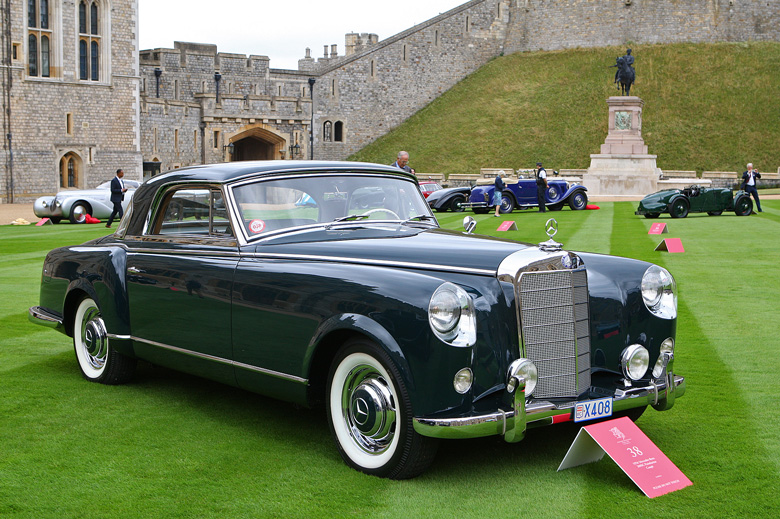
Fred Kriz’s 1956 Mercedes Benz 300SC is one of only two 300 series Mercedes fitted with 4 seater coupe coachwork by Pinin Farina. The car eventually became the property of a Dr. Pastora, who sold it in 1989 to Thomas Taffet. She was driven 1200 miles from Seattle to Van Nuys California to commence a year-long restoration. Whilst under restoration the car was purchased by Fred Kriz who just happened to also own the Pinin Farina bodied 300B.
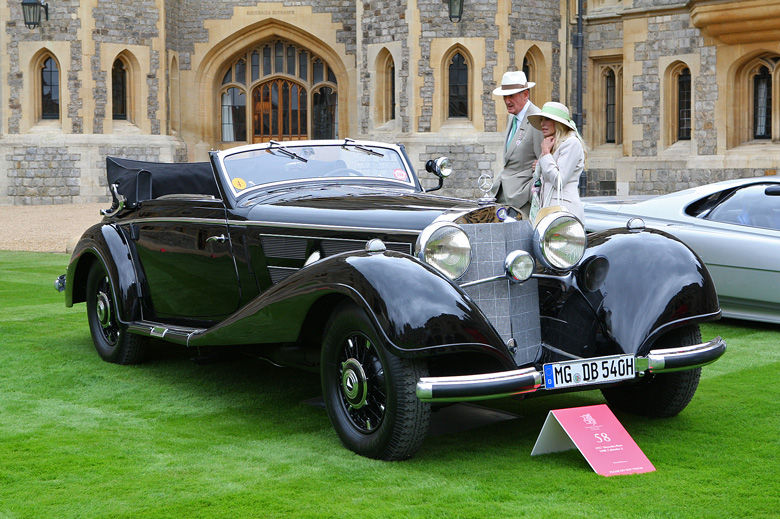
Only 406 examples of the Mercedes-Benz 540K were built in total, of those 145 were built in 1937. This example dates from that year and was first registered to Austrian Count Hubert Deym on the 13th April. Eight years later, the car was stolen by French soldiers and later shipped to the U.S.A. where for 30 years it remained with a collector. The car was then shipped to Switzerland to be restored and then sold. Hubert discovered that the car was in Switzerland so took the matter to court and the car was returned to him. The car now resides in Germany.
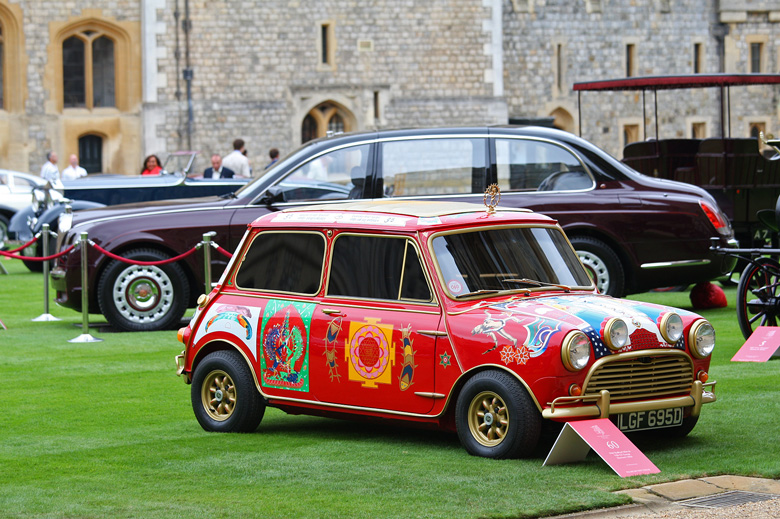
An interesting juxtaposition; the establishment and the anti-establishment. George Harrison’s 1966 Radford Mini De Ville GT (at one time all of the members of the Fab Four owned Radford Minis) as seen in the Beatles Magical Mystery Tour film, started life as an Austin Mini Cooper S registration LGF695D. George then commissioned Radford to convert the car and finish it in metallic black paint. The conversion omitted the trade mark one piece tailgate but came with a full length Webasto sunroof, a custom leather interior, sideways mounted VW Beetle tail lights and rally spec front spot lights. In 1967 George had the Mini repainted in bright red with gold wheels and brightwork and had the body adorned with mystical eastern designs which were inspired by the artwork in Ajit Mookerjee’s book “Tantric Art, Its Philosophy and Physics”. (John Lennon had the same style of artwork applied to his Rolls Royce Phantom V.) Later George gave the car to Eric Clapton who gave the car back to George sometime in the 1970s, by which time the artwork had been removed. The car is still owned by the Harrison family. When it was decided to return the artwork to the car the task proved very difficult as no detailed photographs of the art work existed. The crimson limousine behind is known as Bentley number 1, the 2002 Bentley State saloon by Mulliner which was gifted to her Majesty on the occasion of her Golden Jubilee by Bentley motors. Can a scene be more British; a Beatles Mini and the Queen’s Bentley on the lawn at Windsor Castle?
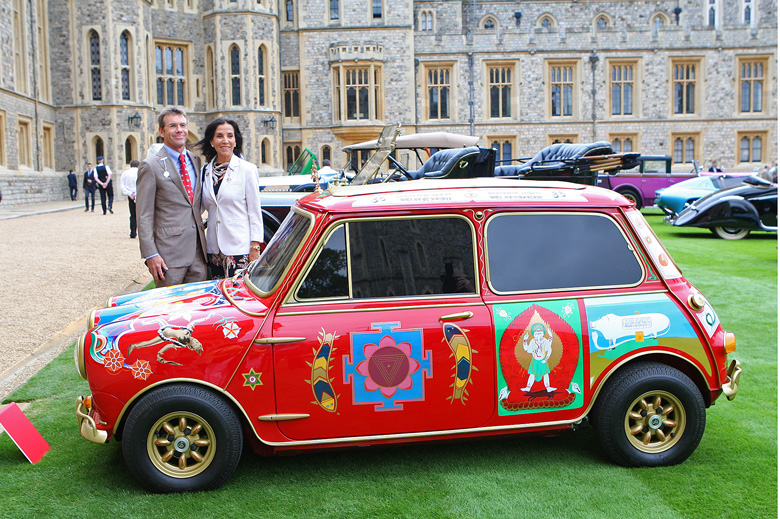
Paul Stewart, the son of Sir Jackie, with Olivia Harrison, George’s widow, gathered for the occasion.
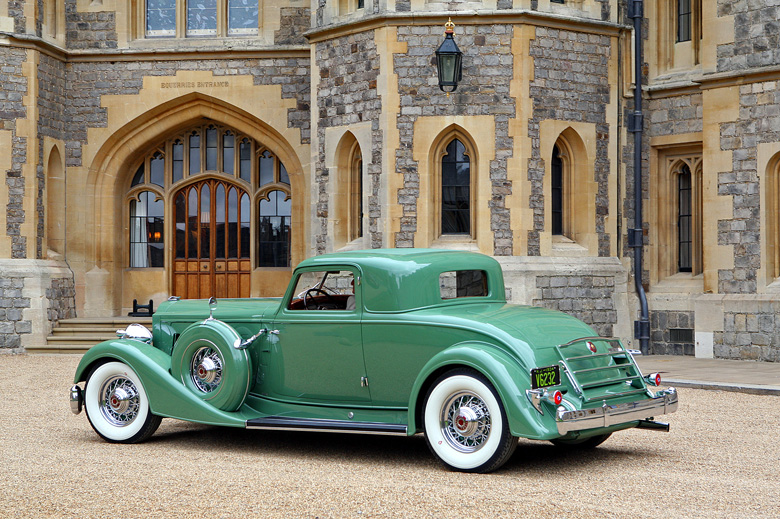
Shown here is a 1934 model Packard Twelve Dietrich Stationary Coupe. It was delivered to the New Jersey Packard agent in Morristown on November the 1st 1933. Since it was sold the next day to a Mrs. A.J. Eken it is believed that the car was especially constructed for her. The car changed hands for the first time in 1957 passing into the care of Charles Earle Theall. He restored the car over a 40 year period behind a bricked up garage to deter theft. Acquired from the Theall estate by Packard expert Ralph Marano her second restoration was carried out by Stone Barn restorations. The car was entered by Samuel Lehman.
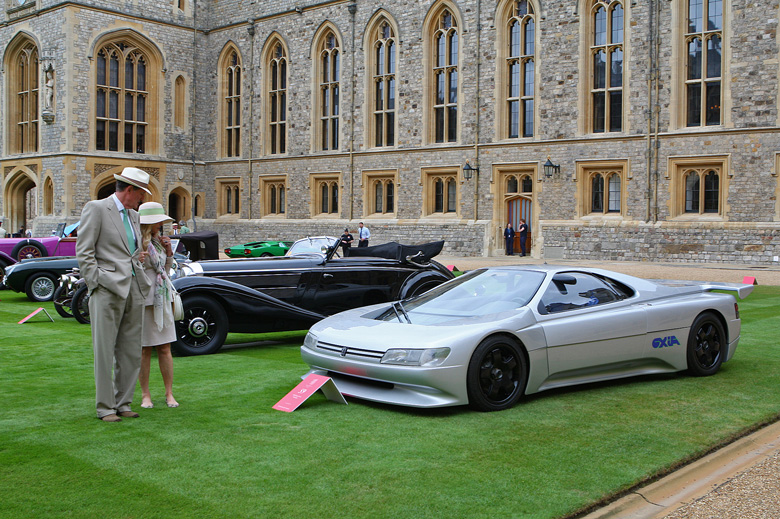
Unlike nearly every other concept car the 1988 Peugeot Oxia prototype was a fully working 217 mph road rocket. This example is one of a pair built by Peugeot reportedly at a cost of eight million Francs. Named after the Oxia Palus region on the planet Mars, the prototype was fitted with an engine based on the WM P88 Le Mans car detuned to a mere 670 bhp, four wheel drive and four wheel steering. Top speed was estimated to be about 187 mph but when Oxia was tested at the Nardo test track a speed of 217 mph was recorded. Now owned by Joan and Bernard Carl.
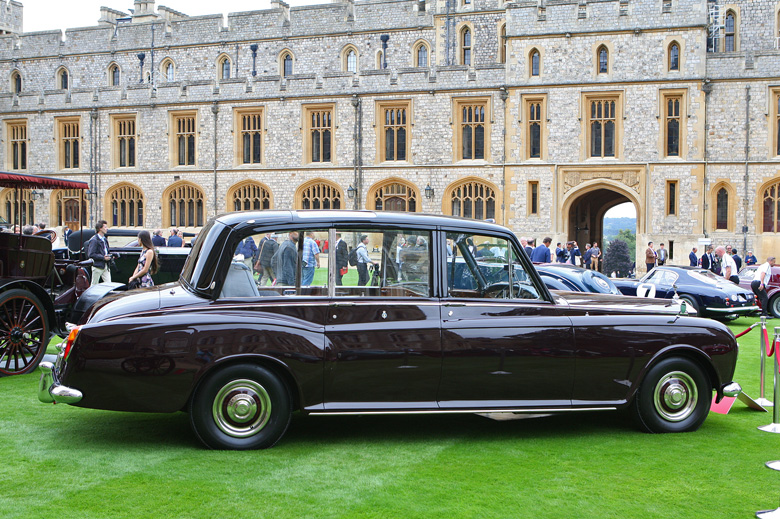
Given by the Society of Motor Manufacturers and Motor Traders to her Majesty the Queen on the occasion of her Silver Jubilee, this 1977 Rolls Royce Phantom VI Mulliner Park Ward is known as Rolls Royce Number 1. Thirty eight years later Rolls Royce Number 1 is still being used for official duties.
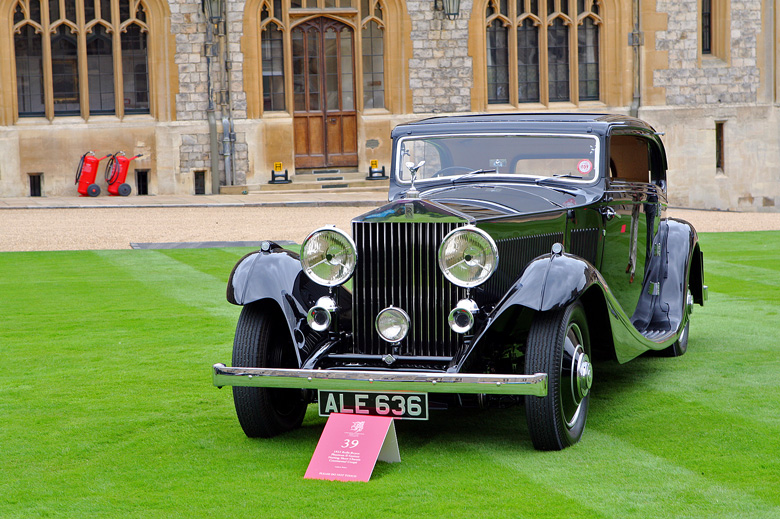
This 1933 Rolls Royce Phantom II Gurney Nutting Short Chassis Continental Coupe was ordered especially for Lady Clarice Dunn, a musical comedy actress whose first husband was Francis Douglas the 11th Marquis of Queensberry, her second husband the Canadian financier and industrialist Sir James Dunn. Of the 1400 Phantom IIs built 278 were Continentals which were designed to be owner rather than chauffeur driven. This is the only example of this particular type extant.
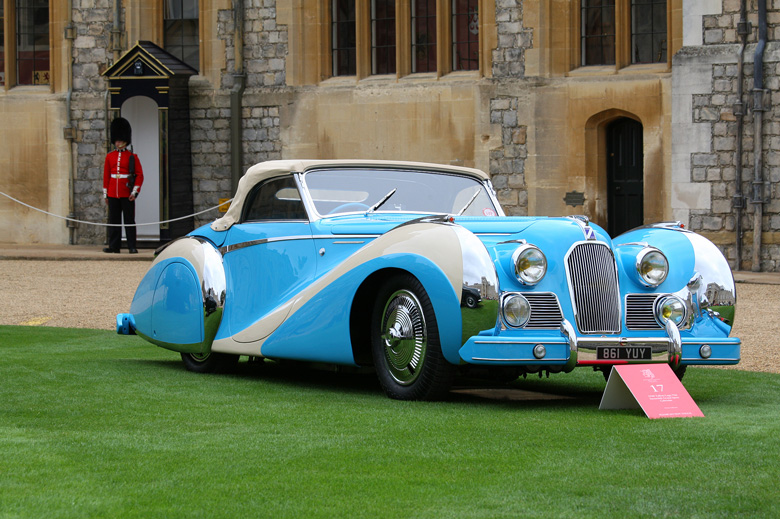
Whilst the bodywork on this 1948 Talbot Lago T26 Grand Sport Cabriolet is a recreation it is believed that the original Saoutchik body still exists, somewhere, as it had been taken off this chassis, number 110110, in 1953 by Earl Wiener upon the instruction of the car’s then owner Walter L Burghard. The original body was then fitted to a Mercury Chassis fitted with a Lincoln V8 engine. Originally shown at the 1949 Geneva Motor show the Talbot Grand Sport was purchased by an American, Louis Ritter, who was a connoisseur of the flamboyant coachwork of Jacques Saoutchik. Once Louis had received the car at his Beverley Hills home he only kept the car for a month, replacing her with Mr. Saoutchik’s next creation. Jerry Sherman bought the chassis from the Earl Wiener’s widow in 1975 and had a new body fitted in the style of the type of body that Lago may have created for an amateur racer in the 1940s. Jerry used the car at various VSCCA events until the car was fire damaged. Following Jerry’s death in 1990 Tony Carroll, the American Talbot expert who had constructed the racing body for Jerry, restored the car again, this time replicating a body by Tunesi of the type fitted to a T26 in period. Then a few years ago the car came into the hands of her present owner who decided to have the original Saoutchik body recreated on the chassis by Patrick Delage. More than 10,000 hours went into the reconstruction of the bodywork.
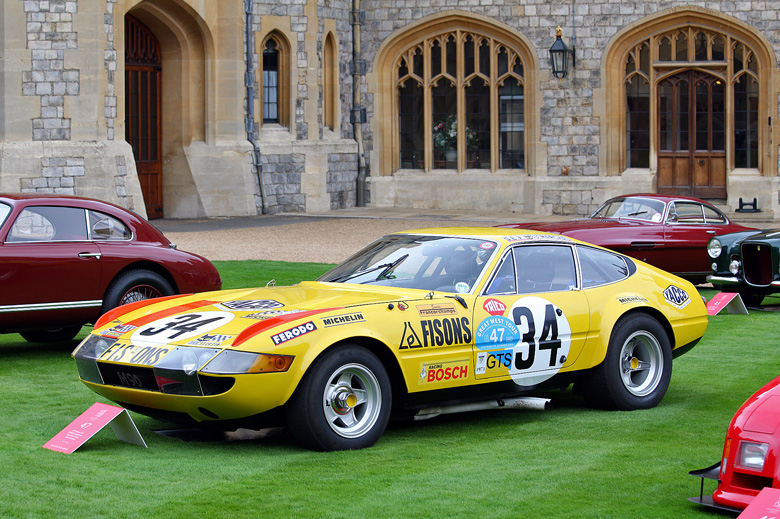
Construction of this series three Ferrari 365GTB/4 Competizione chassis 16425 commenced in 1972. It is the last of the 15 factory built Daytona Competizione models and one of just two right hand drive examples constructed. Completed in February 1973 and supplied to Jacques Swaters Garage Francorchamps, it was entered in the Spa Francorchamps 1000km race that year, finishing 12th. Later at Le Mans, piloted by Teddy Pilette and Richard “Bondini” Bond, the Daytona finished 20th. At the end of the 1973 season the car was returned to the factory for an overhaul before passing into the hands of UK based Robbie Gordon. Robbie raced the car in the UK for a while before selling the car to her next owner who has kept her for 40 years. She was then campaigned again in the UK, usually with Mike Salmon at the wheel. It is believed that this Daytona is the only unrestored road registered from new factory Daytona remaining.
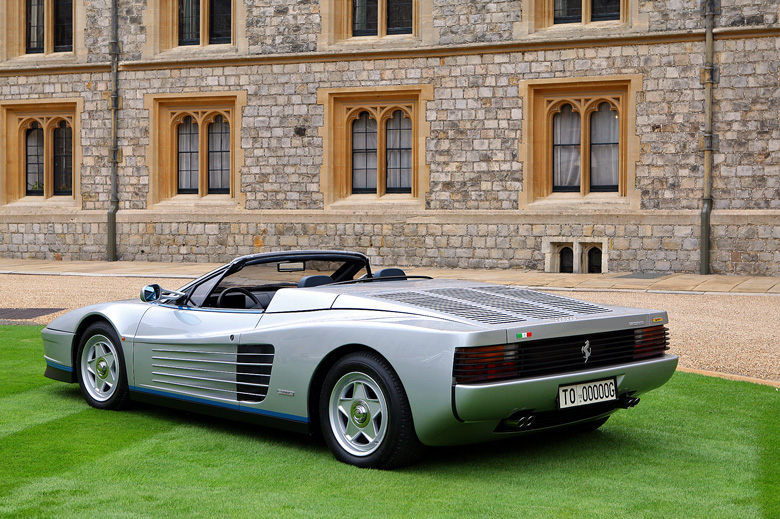
How might one reward your company’s CEO and savior on the occasion of his 20th anniversary at the helm? You build him a one-off Ferrari Testa Rossa Spider. The savior? Gianni Agnelli, who had persuaded Fiat to buy a 50% stake in Ferrari in 1969. In his youth Gianni had been involved in a motor cycle accident which badly damaged his leg so the factory fitted the car with the Valeo system, which allowed him to change gear by pressing a button rather than pressing the clutch. Construction took four months to complete. The color silver was chosen because as Gianni’s initials are AG and the chemical symbol for silver is ag, so it seemed appropriate. At a party in 1991 a family friend admired the car, so Agnelli sold it to him. Gianni had recently received a new F40 from the factory so at least he had something still to drive. When the current owner Ronald Stern acquired the car she had only covered 14292 miles.
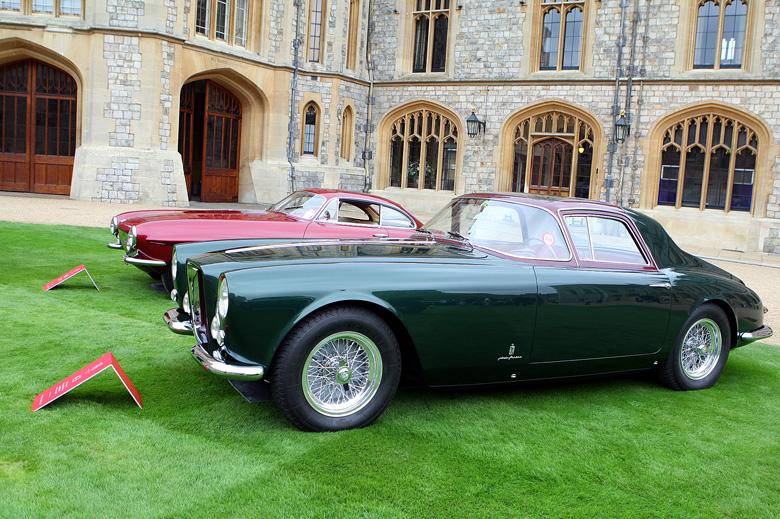
This 1955 Ferrari 375 America Pinin Farina Coupe Speciale is the rarest example of a very rare breed. Only 11 375 Americas were constructed. This example was built especially for Gianni Agnelli, the chairman of Fiat who wanted a Ferrari unlike any other Ferrari produced. First shown at the 1955 Turin Motor show the cars Green and red paint finish is unique as is the flat rear window which partly opens. Now owned by Jack and Debbie Thomas the car has won numerous trophies and is still driven with vigor.
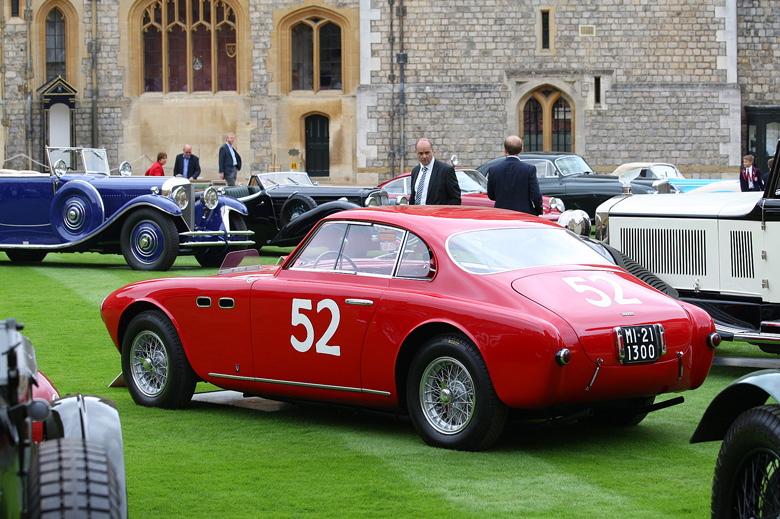
This 1952 Ferrari 212 Export Vignale was originally supplied to the Milan-based Ferrari agent Franco Cornacchia. Franco always wanted to prove the competitiveness of the cars before he sold them, so before passing the car on he raced it. The highlight of a hectic racing career, which included the Mille Miglia, was first place in the first Coppa Intereuropa held at Monza in September 1953. The car then passed through several owners before being shipped to Venezuela in 1956. By 1973 she had found her way to North America where she underwent a restoration. By 1986 she was back in Milan and she enjoyed seven runs in the Mille Miglia retrospective. Roger Wills, who purchased her in 2006, drove her enthusiastically at the Goodwood Revival, the Silverstone Classic and the Monaco Historic Grand Prix meeting. She was also one of the first cars to be awarded with a Ferrari classification certificate. Anthony Best, her current owner saw the car at Retromobile and purchased her in 2013. He has since rebuilt the engine and re profiled the nose back to her original Monza 1953 shape.
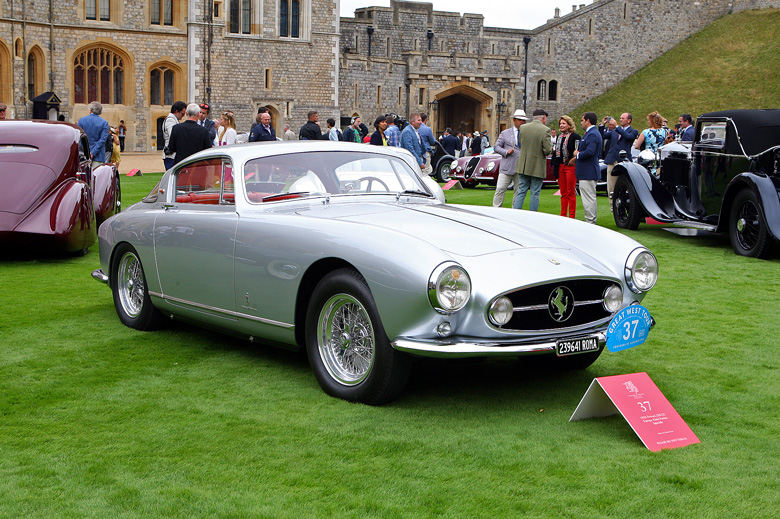
Audrey and Martin Gruss’s 1955 Ferrari 250 GT Europa Pinin Farina is a one off. Number six of eight custom bodied 250 Europa GTs the car carries an elongated and lowered nose, pulled out wheel arches and rather than the normal egg crate grill the nose is graced with a Prancing Horse emblem. On the rear screen are two wipers and the rear lights are different to other GTs by being vertical.
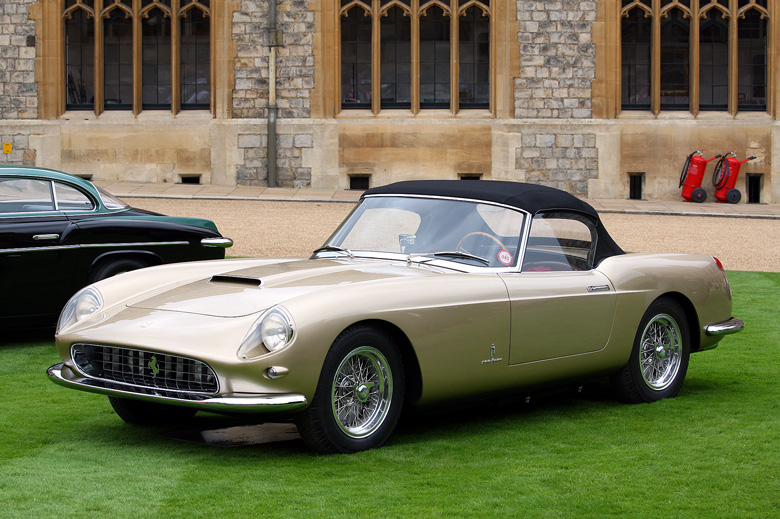
Ferrari 250GT Pinin Farina Special Cabriolet chassis 1075 show here was first shown at the 1958 London Motor show, finished like she is today in gold. Each of the series one Cabriolets was personalized unlike the more standardized series two examples. This example complete with her original boot mounted luggage rack is number 34 or 40 constructed. When new in 1958 a series one Cabriolet had a list price of $14950. The much vaunted California Spyder had a list price of $11600.
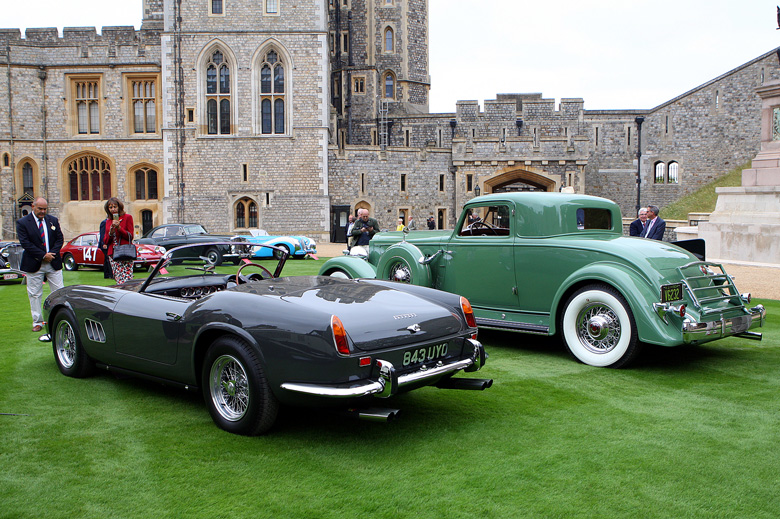
Delivered to Milan in July 1961 this Ferrari 250 GT WB California is unique as it is the only right hand drive example built. Pictured on the front cover of a 1962 issue of Auto Sprint, it seems the car did race but it is believed only once were she finished fifth in the Tropfeo Pacor. She was obviously enjoyed by her owner as upon her return to the factory for a service in October 1963 she had already traveled over 42,000 miles. In 1964 she was sold to Conte Giorgio Guarnieri de Calbo Crotta and by 1967 she had found her way to Ireland and into the care of Denis Ziani De Ferranti. Denis obviously loved his Ferrari as he kept her for over 46 years. Current owner Gerry McManus purchased the car in 2013. Following his purchase he treated her to a high quality restoration which returned her to her original finish of Grigio Scuroa.
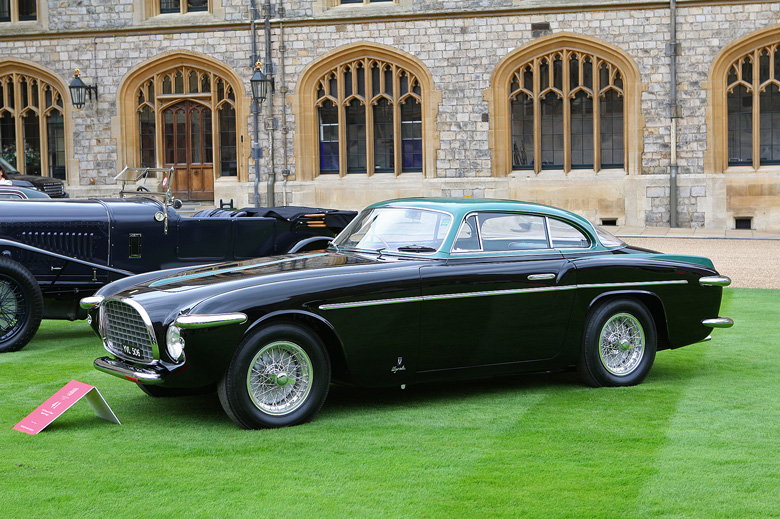
Ferrari 212 chassis 0257EU shown here carries unique Giovanni Michelotti designed Vignale coachwork, built in December 1952, delivered in the spring of 1953 to Turinese Ferrari dealer Fontanella. After the she was displayed at the San Remo Concours in 1954, she was exported to Luigi Chinetti in the U.S.A. and purchased by Mr. Robert C. Wilkie of Milwaukee. Unfortunately Wilkie, who had an impressive collection of flagship Ferrari’s, managed to damage the engine and was forced to purchase a new unit from the factory. The original motor passed through many hands before ended up with Bob Wallace, the famous Lamborghini test and development driver. Wilkie kept the 212 for nine years and then sold her to the actor/film director Pierre Paul Jalbert. Luigi Chinetti acquired it again in 1978 exhibited her at the 1979 New York Motor show. Later that year she passed into the hands of Ennio Gianaroli from Belgium who kept her until at least 2002. By 2009 she had been purchased by Mike Green from Indiana who undertook her well-earned restoration. Meanwhile her original engine had been located by Ferrari expert John Hajduk. Suitable reunited, she went on to win a platinum award at the 2013 Cavalino Classic.
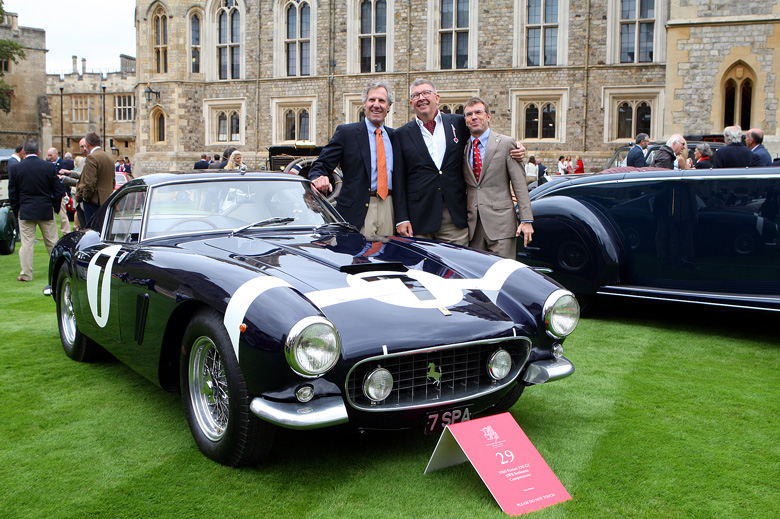
This Ferrari 250GT SWB chassis 2119GT was the car that Stirling Moss won three races in 1960 and Mike Parkes a further three in 1961. Her most famous race victory was probably the August 1960 Goodwood TT race. Moss, who had only just recovered from the injuries he sustained when the Lotus 18 he was driving crashed at Spa in June 1960, was so comfortable leading the race that he was able to listen to Raymond Baxter’s commentary of the race on the cars radio, so as to know how his competitors were doing. At the end of the 1961 racing season the car disappeared for over 30 years before appearing again at the 1993 Goodwood Festival of Speed. Chassis 2119GT is now owned by ex-Ferrari technical director Ross Brawn who is shown in the photo together with Paul Stewart and a friend.
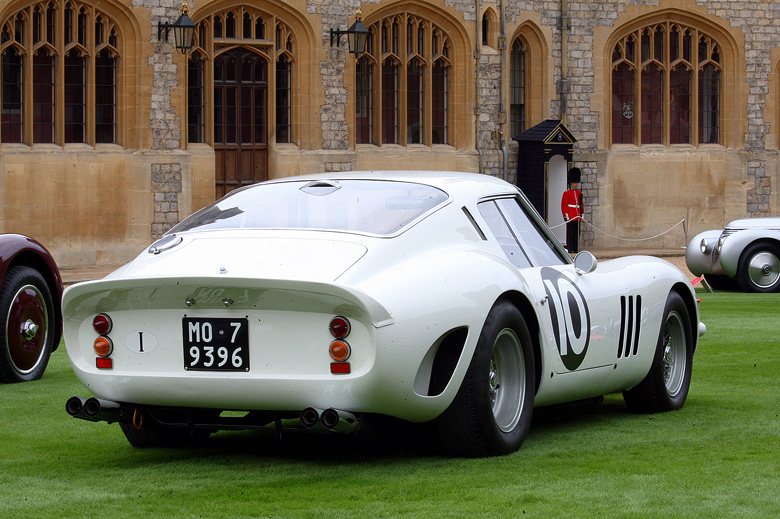
It could be argued that this 1962 ex Graham Hill Ferrari 250 GTO chassis 3729 begat the Jaguar E Type Lightweight. Delivered new to John Coombs in 1962 John used the car as a bludgeon to convince Jaguar to allow him to make modifications to the competition version of the Jaguar E Type. John Coombs as well as being a racer, was also a Jaguar Daimler dealer. Coombs bought the GTO and then told Bill Heynes at Jaguar that if they did not make changes to the E Type he would be forced to race his GTO Instead. Jaguar borrowed the GTO from Coombs and after scrutinizing the car in great detail came up with the lightweight E Type.
Brilliant, informative commentary.
Absolutely stunning automobiles! To be there would have been extraordinary, to own one would be divine.
Call me what you like but of all that exotica, many of which would be unique or priceless, the one I would most like to drive away would be the Facel II.
It is still top of my ‘Lottery Win’ list, just ahead of the Cord 812.
I liked the contrast of the ex-Salvadori Lightweight E-Type next to the Hooper Ascot Landau as much as the Harrison Mini with the royal Bentley.
Of course Paul Stewart and Olivia Harrison are old friends; Jackie had long been a friend of George Harrison who was a keen F1 fan.
That photo reminded me of a curious conversation I had while working for the Stewart Grand Prix team in the late ’90s and when Paul one day found me talking to pattern maker Neil Hayward who was playing a guitar (its ok, it was a lunch break I think) he started to tell us about how he had learned to play a bit with the help of lessons from a friend of his dad; “have you heard of George Harrison?” he asked. I didn’t have the heart to tell him that in a previous life many years ago as a teenager in London, when Paul was still in short pants living in Geneva, I had in fact worked for Apple Records and while I don’t remember that Mini being around (maybe he had already given it to Eric) George used exclusively various Mercedes, including both standard and Grosser versions of the 600.
Small world eh?
As always, a Jonathan Sharp piece is worth the price of subscription all by itself
Great to see Ferrari 1075 – the Series 1 Covertible – but I don’t think it was shown at the 1958 London Motor Show – was this a typo? That Show was significant because it was the first time a Ferrari was offered for sale to the British public and Mike Hawthorn brought two 250PF Coupes to his Tourist Trophy Garage stand at Earls Court. He was killed in a car crash only a few months later, and Ferraris in the UK were subsequently sold by Maranello Concessionaires. I still have 1083, the white one which sold quickly, but has been black for a long time now; the other was 1081 which was re-bodied some time ago.
Adrian Donovan