Back by Popular Demand
We have ordered a new batch of Watkins Glen CDs by Harold Lance. Become a Premium Subscriber and get your copy FREE! (And that includes Shipping and Handling).
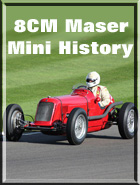
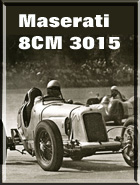
Selected Maserati 8CMs
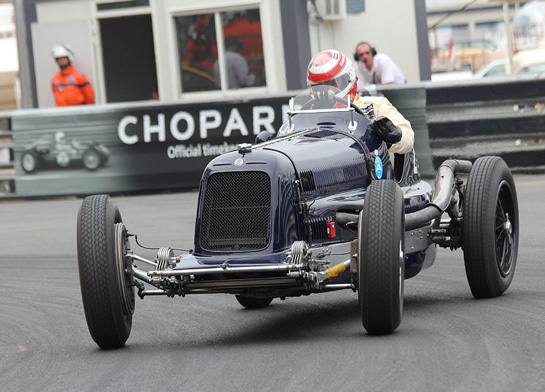
Maserati 8CM 3013 at Monaco.
Story by Pete Vack
Photos of Selected 8CM Maseratis by Hugues Vanhoolandt
Ernesto, Bindo and Ettore were only half of a remarkable set of six sons born to Rudolfo and Carolina Maserati in Voghera, a small town outside of Piacenza. A seventh son, named Alfieri, was also born but died shortly after birth. The remaining six were all gifted, intelligent and industrious.
Mario Maserati was born in 1890, but unlike his brothers, was never interested in automobiles, and eventually became a painter. Carlo, born in 1881, was fascinated by the new internal combustion engine, and set the stage for his younger brothers. As a young man, Carlo worked for both Fiat and Isotta Fraschini. Carlo died when only thirty, but his interest in things mechanical had passed on to Alfieri, (who was given the same name as the baby who had died earlier). Bindo was born in 1883, Ettore came along in 1894 and Ernesto in 1898.
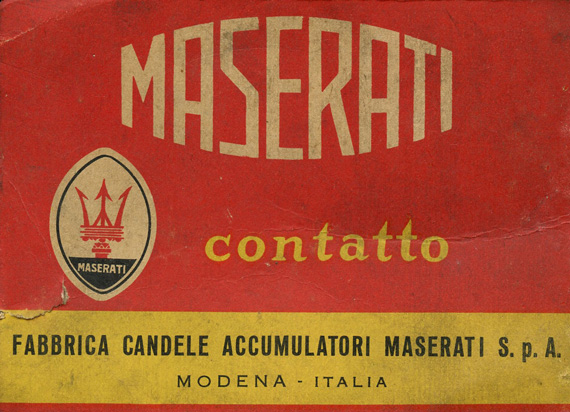
Maserati supported their racing by producing spark plugs and contact points.
Alfieri, Ernesto and Ettore established the Societa Anonima Officine Alfieri Maserati in 1914, and although the initial intent was to prepare Isotta Fraschinis for racing, the timing dictated that they make spark plugs for the war effort. After the hostilities, the brothers returned to the modification of Isottas, which eventually led to the manufacture of a car of their own design and construction. By 1926, the first Maserati, the Tipo 26, was ready for the track. Alfieri, the mainstay and inspiration, died in 1932, and Bindo stepped in to assist his brothers in running the business.
 Pre War Racing Cars
The Tipo 26 was followed by a series of cars with a variety of cylinders and displacements. The 8C 1100, 1500, 2500, and 3000 were similar cars with different displacements. The 4CM (4 cylinders, Monoposto), was built in small numbers with 1100, 1500, and 2500 cc. The Tipo V4 was a four liter 16 cylinder and the Tipo V-5 was a supercharged V-16, of 5 liters. A six cylinder engine, (6CM) was used in 1934. Four V-8 cars were built for the 1935 season.
[Read more…] about Selected Maserati 8CMs
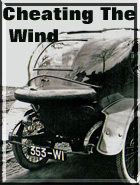
Aerodynamics and Concept Cars: 1888 to 1914
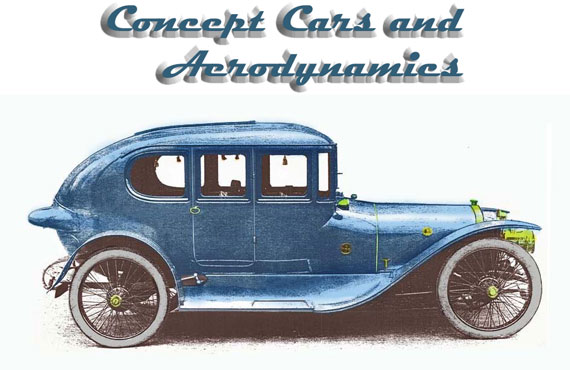
1911 Grégoire with a coachwork by Alin and Liautard, especially designed to reduce the dust cloud created by the aerodynamic turbulences at the rear of a fast driven motor vehicle.
By Gijsbert-Paul Berk
The selection of outstanding aerodynamic designs up to 1930 that I will present to you is by nature, very arbitrary. During those years there were many other very original automotive creations as well.
However, the concepts I have chosen, have at least two things in common:
1. All of them incorporated new ideas that have influenced future automobile designers.
2. Most of them must have disappointed their designers/creators, as not a single one did everything they expected or became a commercial success. The only exception is Jenatzy’s electric record beater, because with that car he realized his dream to go faster than 100 km/h. But he did call his machine ‘Jamais Contente (Never Satisfied).
Jenatzy's electric powered 'Jamais Contente' was very advanced and streamlined. But the heavy Fulmen batteries were housed in a large square box under the chassis, the car measured 1,40 m. above street level. However, Camile Jenztzy’s large torso and head towering over the streamlined body and the rather unsophisticated undercarriage (chassis) must have spoiled its low drag.
Our Features This Week, April 18 2013


Gordini Gallery
By Pete Vack
Photos by Hugues Vanhoolandt
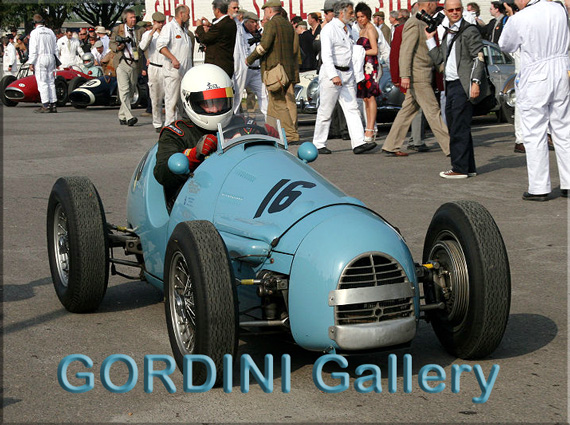
Recently we published two articles about Gordini before WWII., Gauld on Gordini and Gordini Before the Big One. This week, Hugues Vanhoolandt gives us a post war Gordini Gallery, consisting of photos taken all over Europe since 2008.
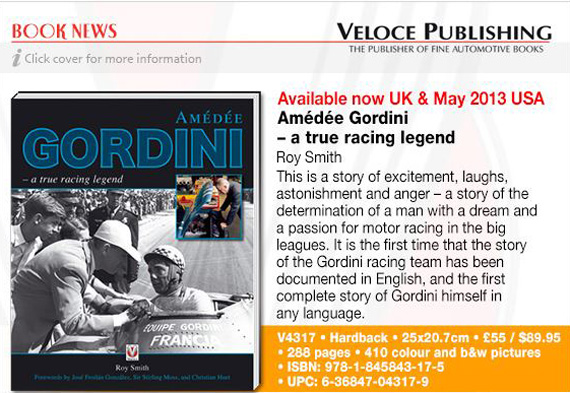
Before VeloceToday contributor Roy Smith wrote his latest book, Gordini, the only source of in depth information about the cars was ChristianHuet’s amazing book, on the subject. Published in 1984 in French, Huet traced the history of Gordini, plus all known cars.
Huet’s task was made a bit easier because there were very few Gordinis ever built; every chassis was a race car so race events and photos provided a field for research. In 1957, when Amedee Gordini retired his cars from racing and went to work with Renault, he wisely sold many of the remaining Gordinis to museums throughout France. The largest recipients of were the Schlumpf brothers, who in 1960 came into the possession of 13 of the 32 post war Gordinis. Other cars were kept by their owners, hidden away until it became affordable to have them restored.
While at the very same time Ferrari blithely went about destroying his old racecars, the Gordini’s enshrined in the museums ensured that his remarkable and beautiful jewels would never die, enhancing his own legacy and history. Since the 1990s, many of the ex-museum cars have come into the hands of those who wish to see them in action once more. Some 56 years after Gordini retired his cars, a few now appear at selected events such as the Monaco Historics and Goodwood. Few, if any, can be seen in the US, although in 2001 one did appear at the Monterey Historics.
Gordini’s cars were a unique combination; French, Italian, exquisite and fast. The rarity and successful race records plus the drivers such as Behra and Fangio, make them as desirable as a mid-fifties classic could possibly be. Information, photos, specs, and tests were sparse and even less well known in the U.S. Fred Wacker was one of the few Americans who actively raced a Gordini, and he did so in Europe. Gordini brought cars to race in the Carrera Panamericana but the cars returned to France. For years, Gordinis remained mysterious and unknown, and since most were in museums, few ventured out to vintage race car events.
As related in our earlier articles, Gordini was supported heavily by the new Simca company prior to the war. This support continued after WWII and the cars were known as Simca Gordinis. Then came the disastrous 1951 Le Mans, when all four 1500cc Gordinis retired. It was too much for Simca’s M. Pigozzi; he pulled his financial support for Gordini and from that point on the cars were known only as Gordinis.
A note about chassis numbers and Types. Postwar, Gordini created an 1100cc formula car much like the Cisitalia D46. These were called T11s. Over the years most T11s were modified and upgraded to T15 which were, for the most part, 1490cc. T15s were often upgraded or changed to sports racers, such as 18s. Each had a unique chassis number, generally in order of initial construction; 02 GCs, 06 GS, 18GC, etc. The letter ‘s’ after the numbers or suffix would mean a sports model. Engines had Types as well, T15 at just under 1500cc being the most common. Almost all chassis had a “immatriculation” number, or license tag. It can get confusing and thankfully in this case there are only 32 chassis to track, and all the work has been done by Huet and recently updated by Roy Smith in his new book on Gordini. (Smith’s book is completely different and takes the Gordini saga right through to the Renault years and beyond.) We’ve asked Roy to check our assumptions below and we thank him for his corrections. However, that does not guarantee that all of the below information is 100 % correct.
Note that Ed McDonough will be featured driving s/n 19GCS coming up in VT, and we’ll take a much closer look at s/n 33 in the near future.
Finally, thanks to our man Hugues Vanhoolandt, we are able to present these Gordinis for this article. I imagine he has been wondering if we’d ever use them!
Gordini Gallery
Chassis number 02GC
Number 15 is a monoposto, original chassis number 02GC, constructed in 1947. It was driven by Gordini himself at the Torino GP in 1946, before he decided to retire from racing. Maurice Trintignant also took part to some races in this particular car. Driven at Monaco in 2008 by Jean-Jacques Bailly (F).
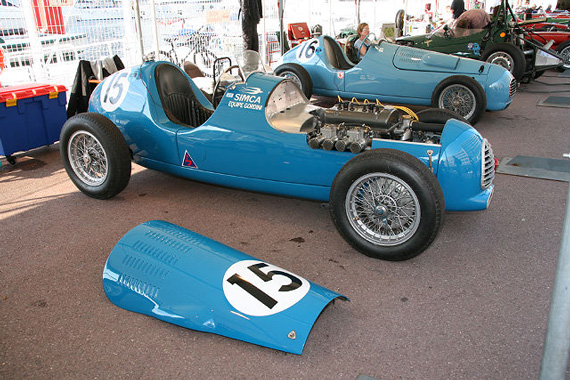
02GC began life as an 1100 cc, but today has a DOHC Gordini head, bigger wheels and tires for the extra power. Almost all Gordinis were upgraded through the years.
Alfa Finds a New Life, Part 3
By Pete Vack
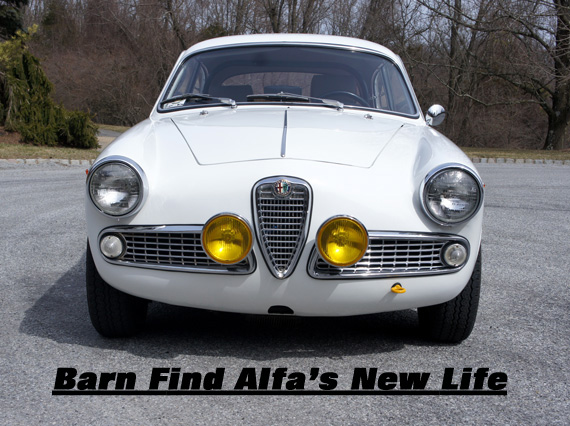
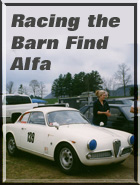
The Editor wraps up the story of the Alfa Find with the help of Brighton Motors, Dr. Peter Fodor, Matt at Re-Originals, and current owner Frank Allocca.
As we have seen, the Alfa found in a horse barn in 1977 passed quickly from the editor to the home of Alfas Unlimited in Norfolk CT., where Keith Goring and Sue Dixon decided to make a vintage race car out of the engineless Alfa. The Sprint Veloce would stay with them until in 2007 when they finally gave up the old workhorse race car and sold it.
Our Features This Week, April 11, 2013
VeloceToday will be emailed out on Thursday April 18; Barn Find Alfa comes home to roost!
PLEASE tell a friend about VeloceToday, and support our efforts and our writers by becoming a Premium Subscriber. Click below to find out how.

Alfa Find Story Part 2: From Horsebarn to Horsepower
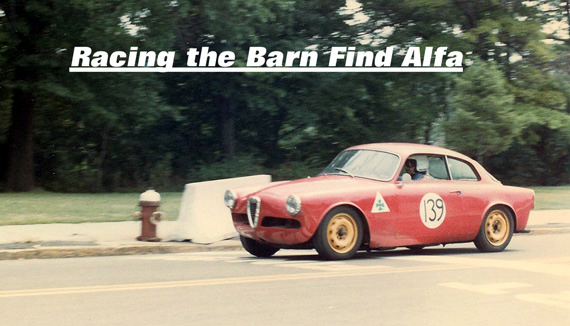
This week we continue our story of the Alfa Find as it is taken from horse barn to horsepower at Alfas Unlimited. Sue Dixon picks up where we left off, telling the tale from her perspective. Then Keith Goring recalls getting it ready to race once again.
The Alfa According to Sue
We had met Pete Vack in the mid-seventies when he and a bunch of his buddies were part of an informal car club in the Virginia Beach area. They had bought the leftovers of an old Alfa dealership and advertised the parts in Hemmings, as it was about the only places to sell anything sportscar related in those days.
[Read more…] about Alfa Find Story Part 2: From Horsebarn to Horsepower
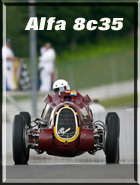
Racing the Alfa Romeo 8c35
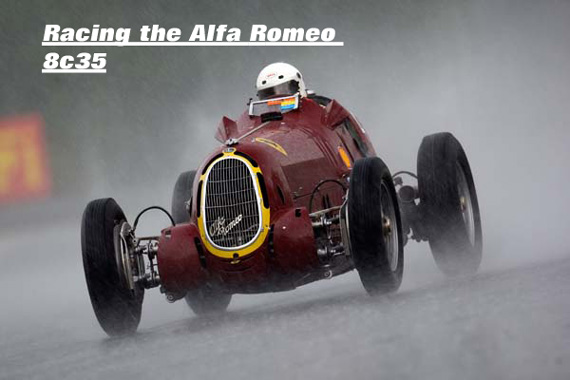
Color photos by www.rprincephoto.com
By Pete Vack
This article originally appeared in VeloceToday on September 10th, 2008. The cars featured here may have changed hands since.
Peter Greenfield is in the enviable position of owning and racing not one, but two pre-war Alfa Romeo Grand Prix cars. Furthermore, chassis 50013 which he acquired from Peter Giddings in 2005, is the only complete, original Tipo 8c35 in the world.
He keeps the crown jewel–50013– for very special events such as the upcoming Laguna Seca event at Monterey where he will have it out for the Shell Ferrari Historics. For the race at Mt. Tremblant and most other vintage races, Peter drives a ‘clone’, which is referred to as 8c35 50015C, the “C” standing for clone. This car was built up from the parts of a vehicle obtained from South America, and uses an engine found by Peter Giddings years ago. Giddings explains: “The clone’s “C” section chassis came out of Argentina, and Paul Grist built a car up around it, using the transaxle out of the dismantled Rex Mays Tipo C (#50012), and fitted with engine #50015, which engine I used to own when it was shoe-horned into a 1932 Alfa Romeo Monza!” Giddings says “shoe-horned” because whilst the 2.3 8c and 3.8 8c engines look similar, the dual supercharged 3.8 is somewhat longer than the single supercharged 2.3.
Apparently the actual 8C35 chassis numbered 50015 has long disappeared, so something useful was done with the engine, based on the fact that Grist had access to 50013 and used it for comparisons. Thus, 50015 “C” was born.
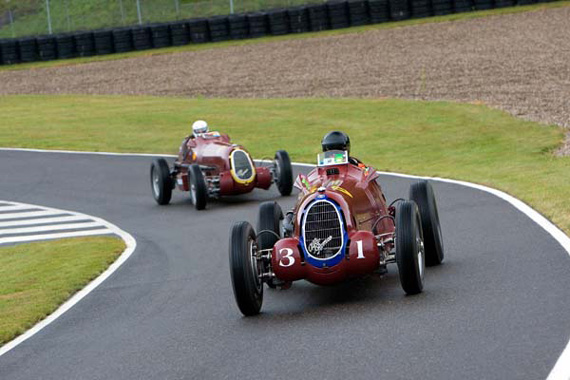
Peter Giddings in the ex Rex Mays car, 50012, leads Greenfield's clone at Tremblant in 2008.
Autobella 2013, Melbourne Australia
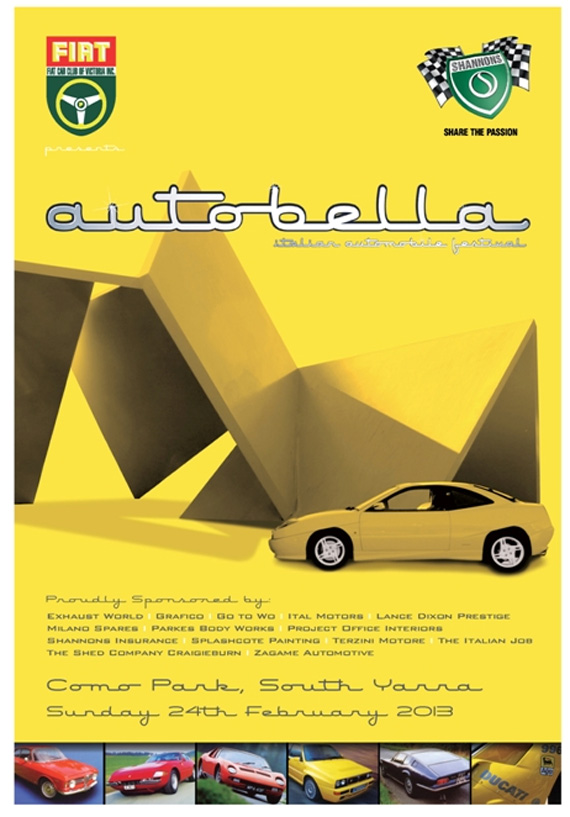
Photos by Peter Bartold and Joe Summut
The other day we received an email from Peter Bartold of the Fiat Car Club of Victoria, who told us about a growing event in Melbourne and attached some photos to illustrate the autobella (apparently lower case) show held on February 24th.
[Read more…] about Autobella 2013, Melbourne Australia
MCarpedi PostCard; No Mystery This Week!
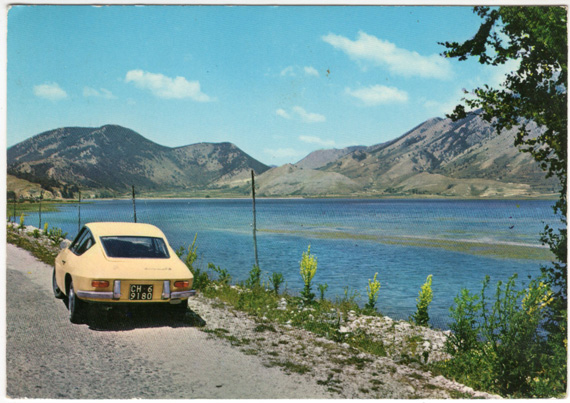
Imagine the pleasure, some 43 years ago to be able to drive a Lancia Fulvia Zagato to Lake Matese, more than 1000 meters above seal level! Only 1898 of the Zagato Fulivas were built and few remain today.