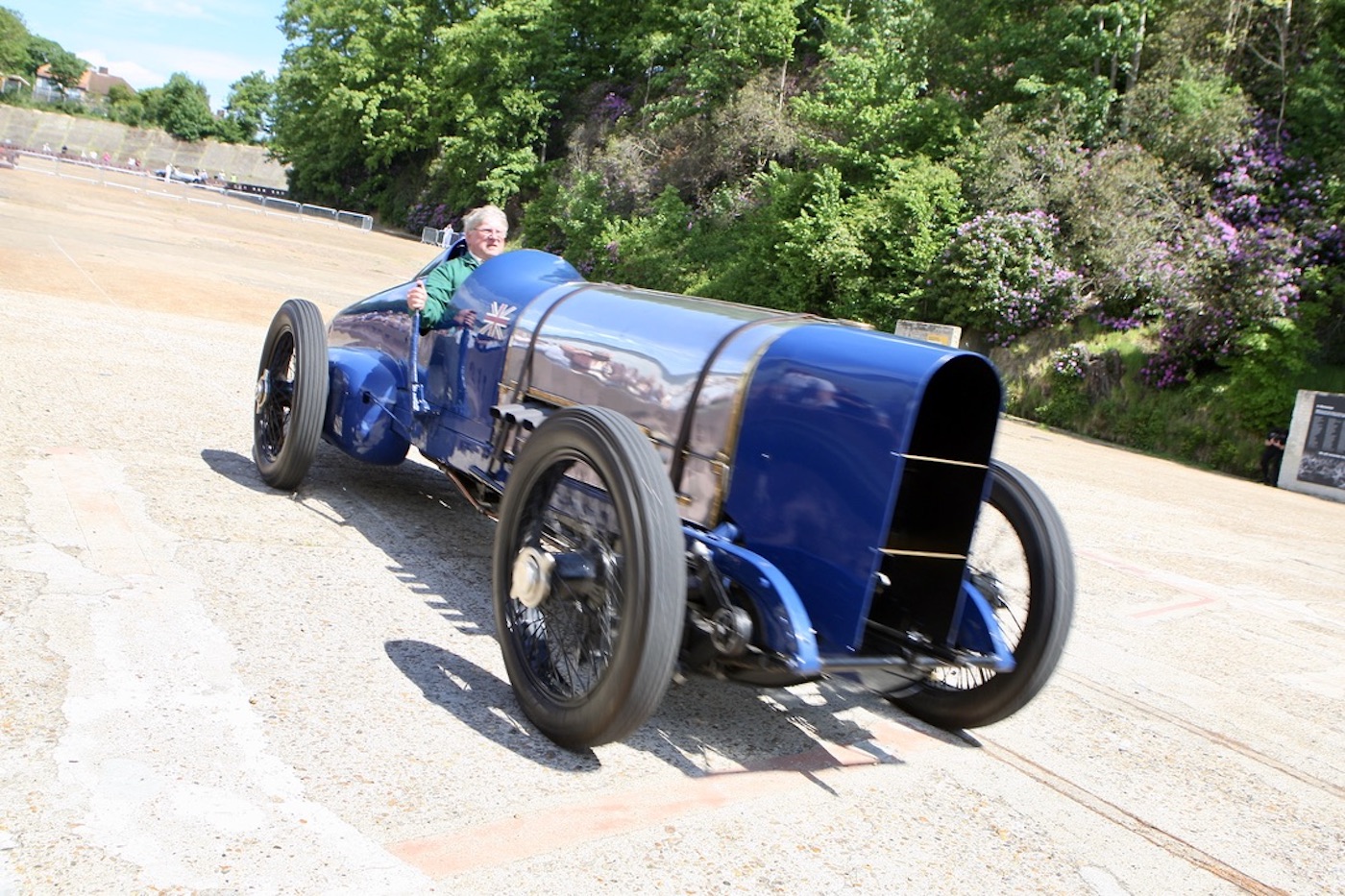
The 350HP Sunbeam at speed.
Story and Photos by Jonathan Sharp
“It felt like being hurled into space in a good armchair…” wrote SCH (Sammy) Davis, Bentley Boy and sports editor of The Autocar in his article on driving the 350HP Sunbeam in the 22nd February 1929 edition of the magazine.
On the 17th May 1922, at around 5pm as the weather during the day had been bad, Kenelm Lee Guinness (of KLG spark plug fame), in the V-12, 18 litre 350 HP Sunbeam, descended off the Brooklands banking and onto the Railway Straight to enter the measured mile for the second time. Just over 27 seconds later he had broken the Land Speed Record. His average speed for the measured kilometre was 133.75 mph, for the mile 129.17 mph, and 136.05 for the half mile This was to be the last time that the Land Speed Record was to be broken on a motor racing circuit; the cars had become much too fast, so record breaking switched to beaches and salt lakes.
100 years to the day, we gathered at Brooklands, to celebrate his achievement.

Staged in homage to the F. Gordon Crosby painting of Kenelm Lee Guinness breaking the Land Speed Record driving the 350 HP Sunbeam at Brooklands on the 17th May 1922. The painting was commissioned by ‘The Autocar’ magazine and appeared in the edition of the 22nd February 1929, seen below. Only the trees have changed.
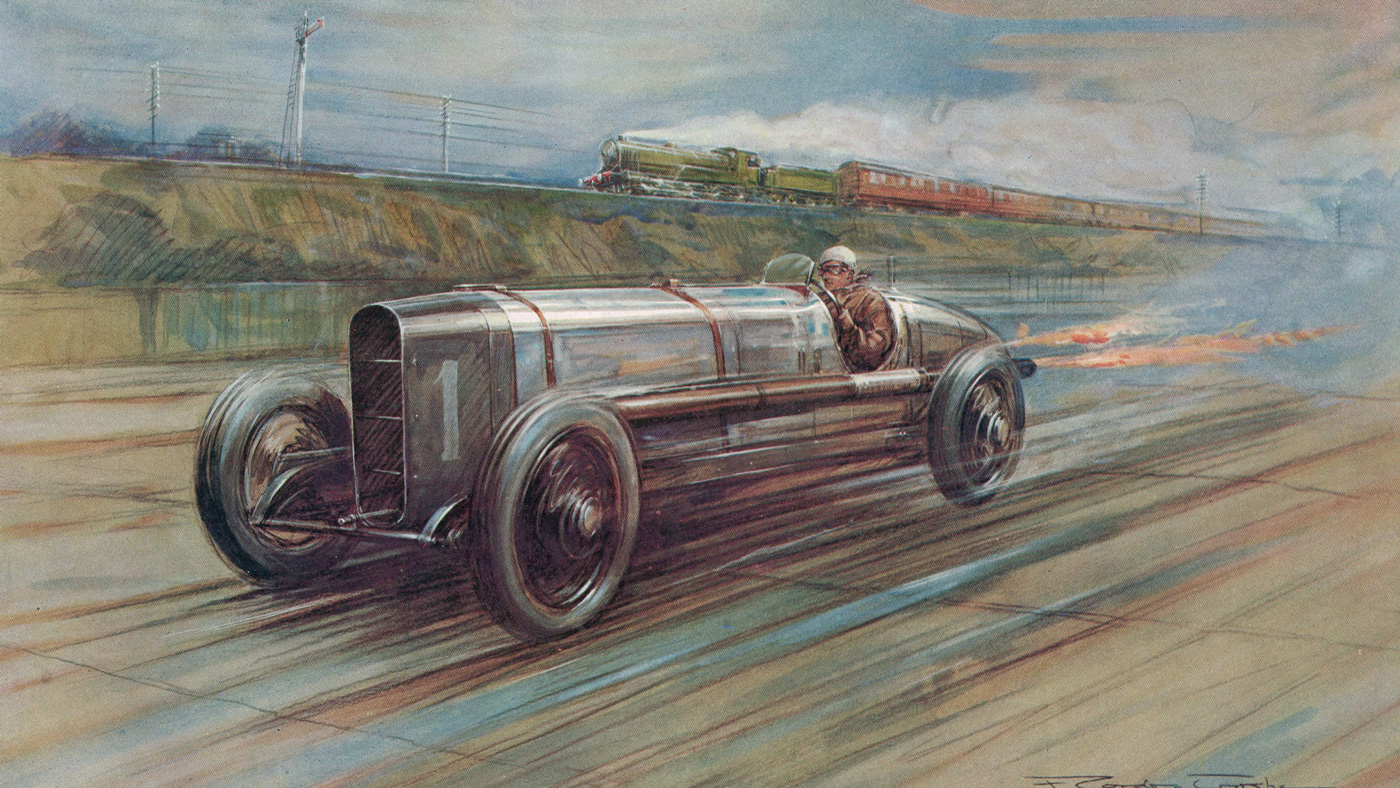
Part one of the day’s activities was to be a photo shoot set up on the Railway Straight to emulate the painting by F. Gordon Crosby that appeared with Sammy Davis’s article in Autocar back in 1929. At approximately 9:42 am, ‘Steam Dreams’ B1 Locomotive Mayflower, one of only two surviving examples, complete with a full complement of passengers out to enjoy a day of steam nostalgia, blew her whistle and slowed after leaving the Weybridge station, before passing through the break in the trees. The Sunbeam was waiting and placed correctly, and the image was captured. Mayflower 61306 was built in 1948 by the North British Locomotive Company of Glasgow for the London and North Eastern railway and was capable of hauling both passengers and freight across most of the rail network at up to 75 mph. She remained in service right up until 1967 and was immediately purchased for preservation.
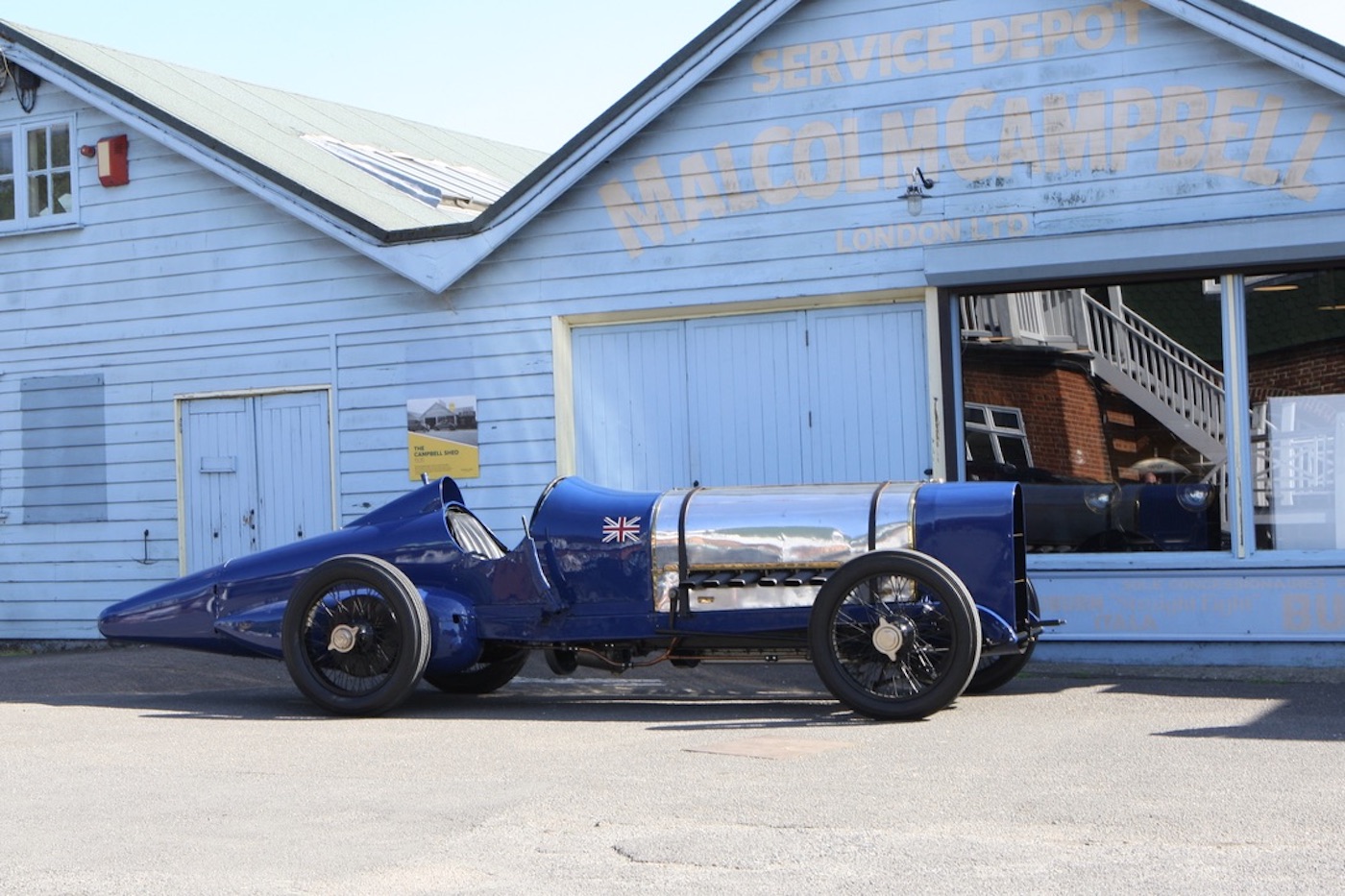
The Sunbeam 350 HP by the Cambell shed.
Once the excitement had died down (we British do like a steam train), and after a few demo runs by the Sunbeam up and down the Railway Straight, it was back to the Brooklands club house for a quick coffee in the Napier Room. Then we were off to the Vickers Suite for a talk about the history of the Sunbeam, where we were both informed and entertained by Louis Coatalen biographer Oliver Heal, Andrea Bishop, director of collections of the National Motor Museum, Doug Hill, chief engineer at the National Motor Museum, Don Wales, the grandson of Captain Sir Malcolm Campbell, and Wing Commander Andy Green OBE, the fastest man on earth.
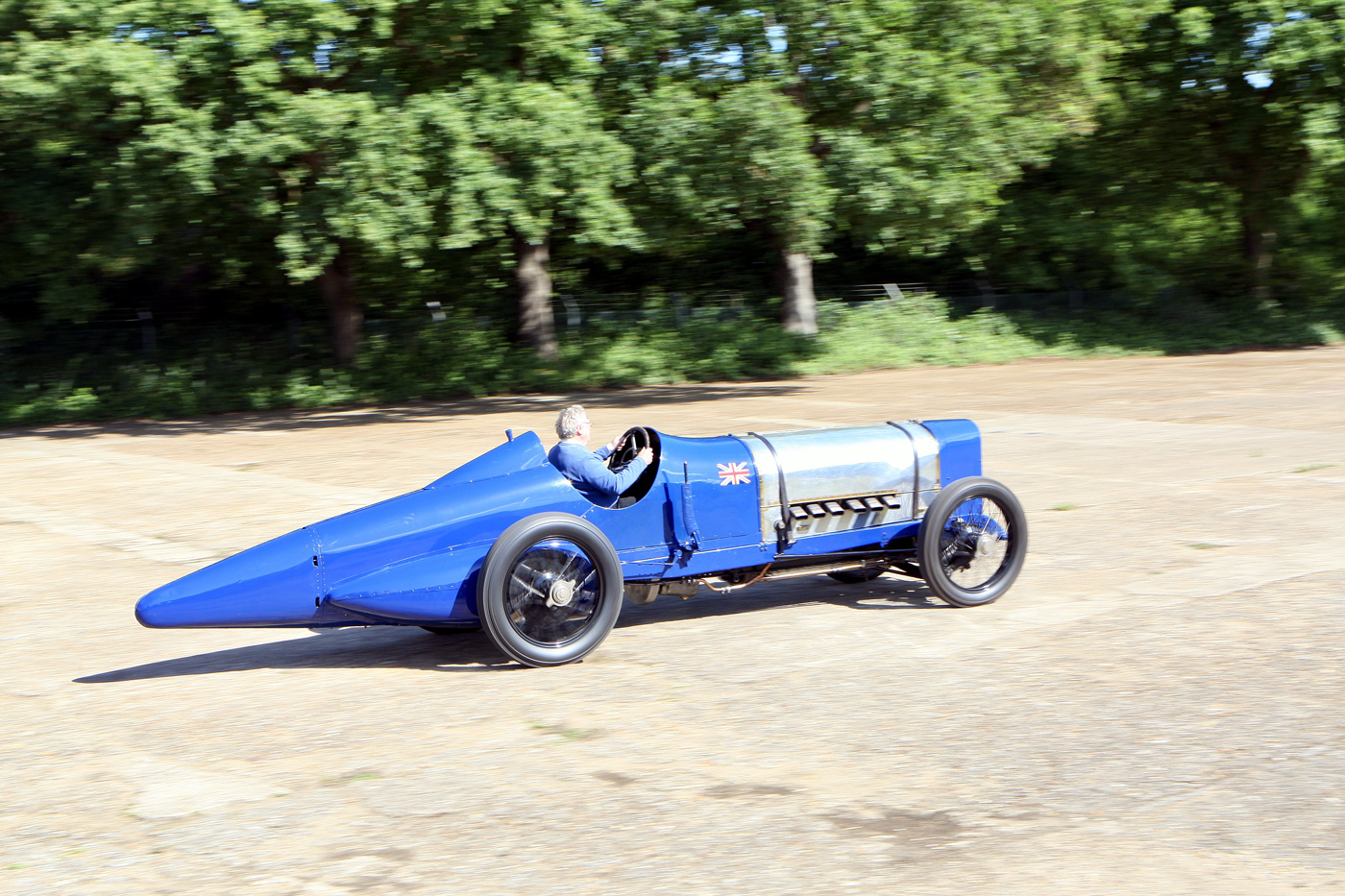
In this shot the car is being demo’d on the Railway straight
The 350HP Sunbeam, designed by Louis Coatalen, was built by the experimental department of Sunbeam at its Moorfield works in Wolverhampton, but its first appearances at Brooklands did not bode well. During practice in June 1920, Australian aviator Harry Hawker had a tyre burst when coming off the Members Hill banking and the car went through the corrugated iron fence on the Railway Straight. On his second appearance he stalled the engine on the start line so did not race. Rene Thomas then drove the Sunbeam at the Gaillon Hillclimb in France on the 10th October 1920, setting a new record for the hill. In December Harry Hawker tried to set some records back at Brooklands but sleet scuppered the attempt.
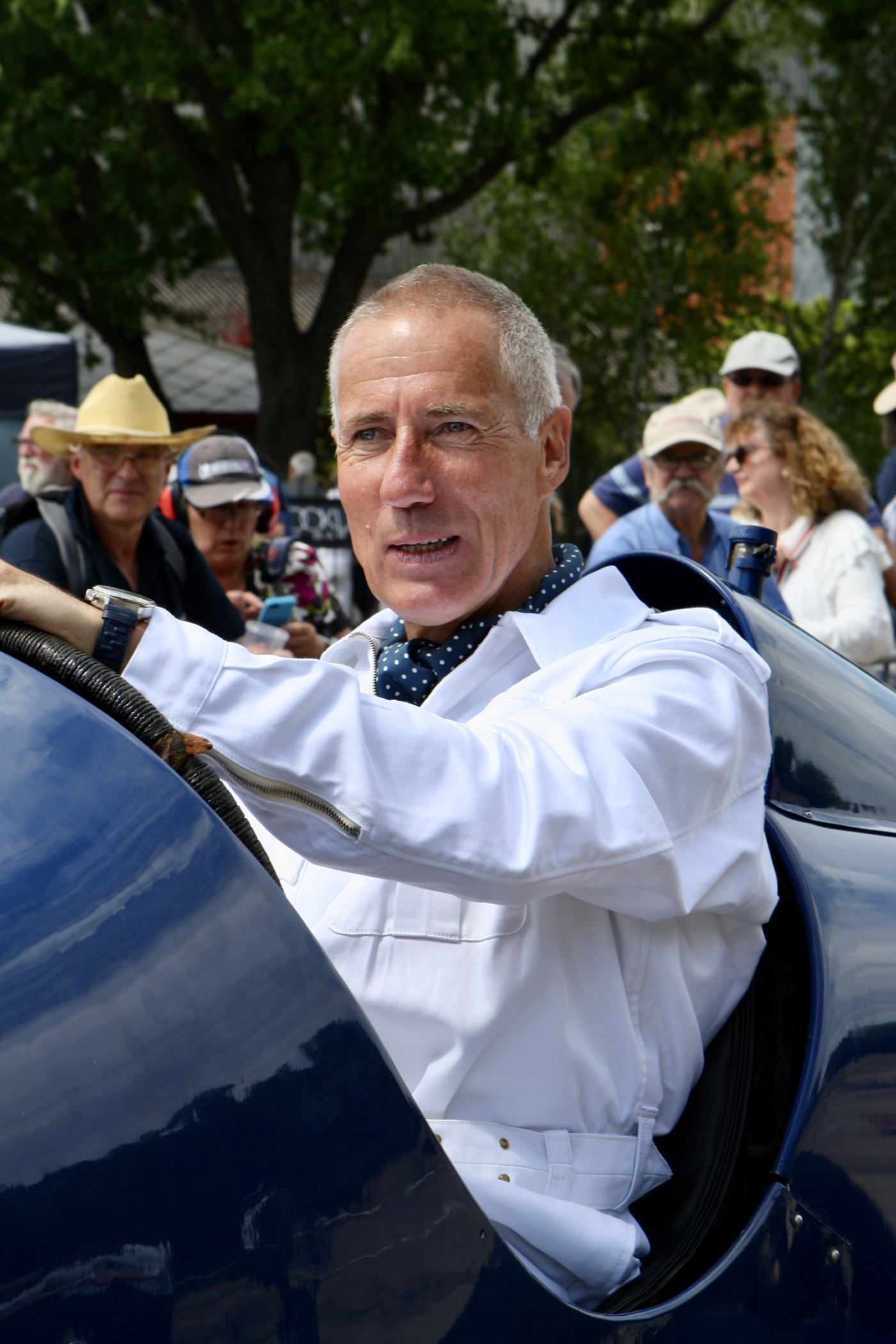
The fastest man on land today in the fastest car of 1922. Wing Commander Andy Green OBE, retired RAF Fighter Pilot is the current holder of the Land Speed Record at 763.035 mph, recorded at the Black Rock Desert, Nevada. A smashing bloke to boot.
Brooklands at Easter 1921: Kenelm Lee Guinness could barely get the car of the line as first and second gears were out of action, but once moving he was timed at over 130 mph for the half mile. At the September meeting he went even better clocking 135 mph during the race. Shortly after this, with the car running well, Sammy Davis drove the car. We’ll quote here from The Autocar: “When the twin exhaust pipes give forth their terrific boom – the war song of the Sunbeam – when the throttle pedal is hard down, there happens something too wonderful for words, possibly there is nothing like it, certainly it is the most inspiring experience any man could have…. the great car is tractable, and, withal, as alive as any animal. On the banking the car has to be held firmly to its position and is lively, struggling as it were for mastery! Only for a few seconds on the straight could the throttle be pressed right down and then, thrust back into the well-cushioned seat, it felt like being hurled into space in a good armchair.”
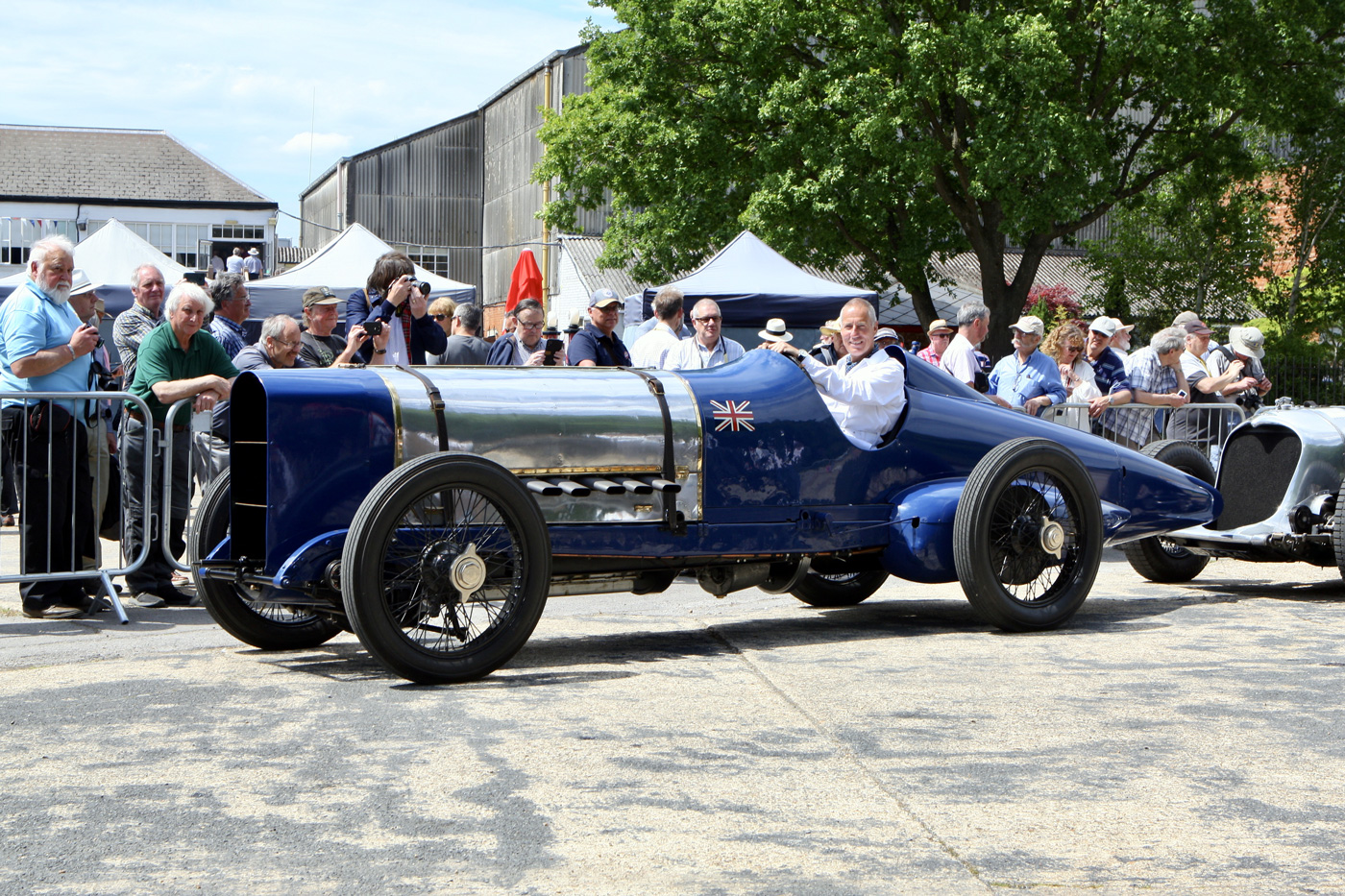
Andy Green behind the wheel.
KLG was entered to drive the Sunbeam in the 1922 May Brooklands meeting but during the second race, whilst travelling at over 120 mph, the front right tyre threw all of its tread which then wrapped itself around the stub axle and hub causing the car to swerve up the banking and then down again, where for a fraction of a second the Sunbeam was in charge, lifting KLG from his seat as he fought the steering. But with a cool nerve and an iron grip he managed to regain control. Just before the tyre burst he had been timed at 134.33 mph.
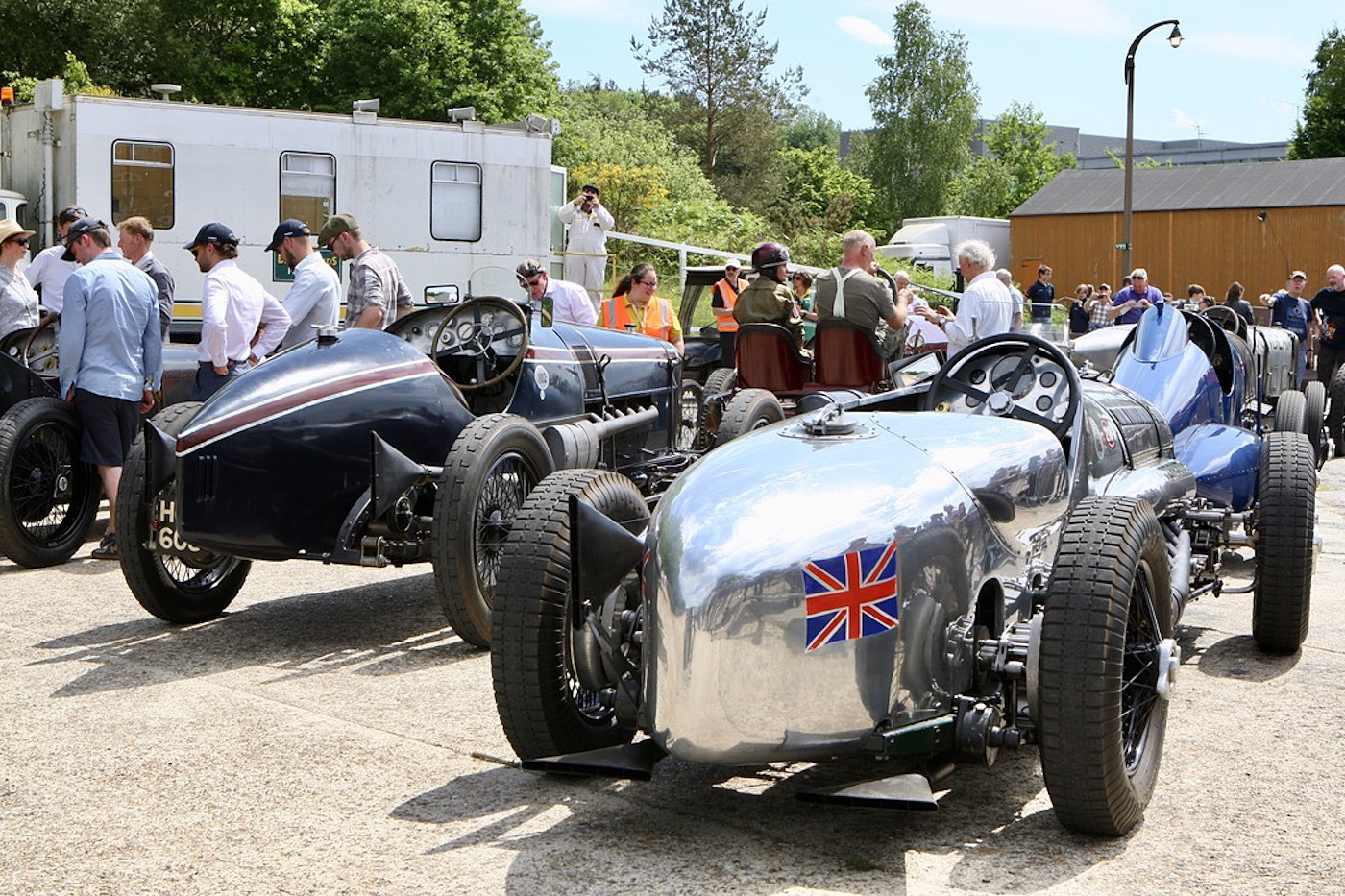
The Monsters gather.
Four days later, on May 17, he was back at the track to break the Land Speed Record. Two timed runs have to be completed in opposite directions with the mean speed of the two being the accepted figure. The Brooklands circuit was designed for the cars to run in an anti clockwise direction so running a car off the banking in a clockwise direction meant that the car had a tendency to want to join the trains on the parallel railway line. KLG was also unable to drive flat out on the banking and had to lift off on the curves. However, on that day the record for the kilometre, held by Hornsted’s Benz at 124.10 mph since 1914, was broken.
In September KLG and the Sunbeam ran its last race at the track winning with a fastest lap of 116 mph. To Captain Malcolm Campbell, it was clear that the Sunbeam had much more potential and he eventually persuaded Louis Coatalen to sell him the car in which, after being modified by Bolton and Paul Engineering, amongst others, he broke the LSR twice on Pendine sands in Wales with an ultimate record in excess of 150 mph.
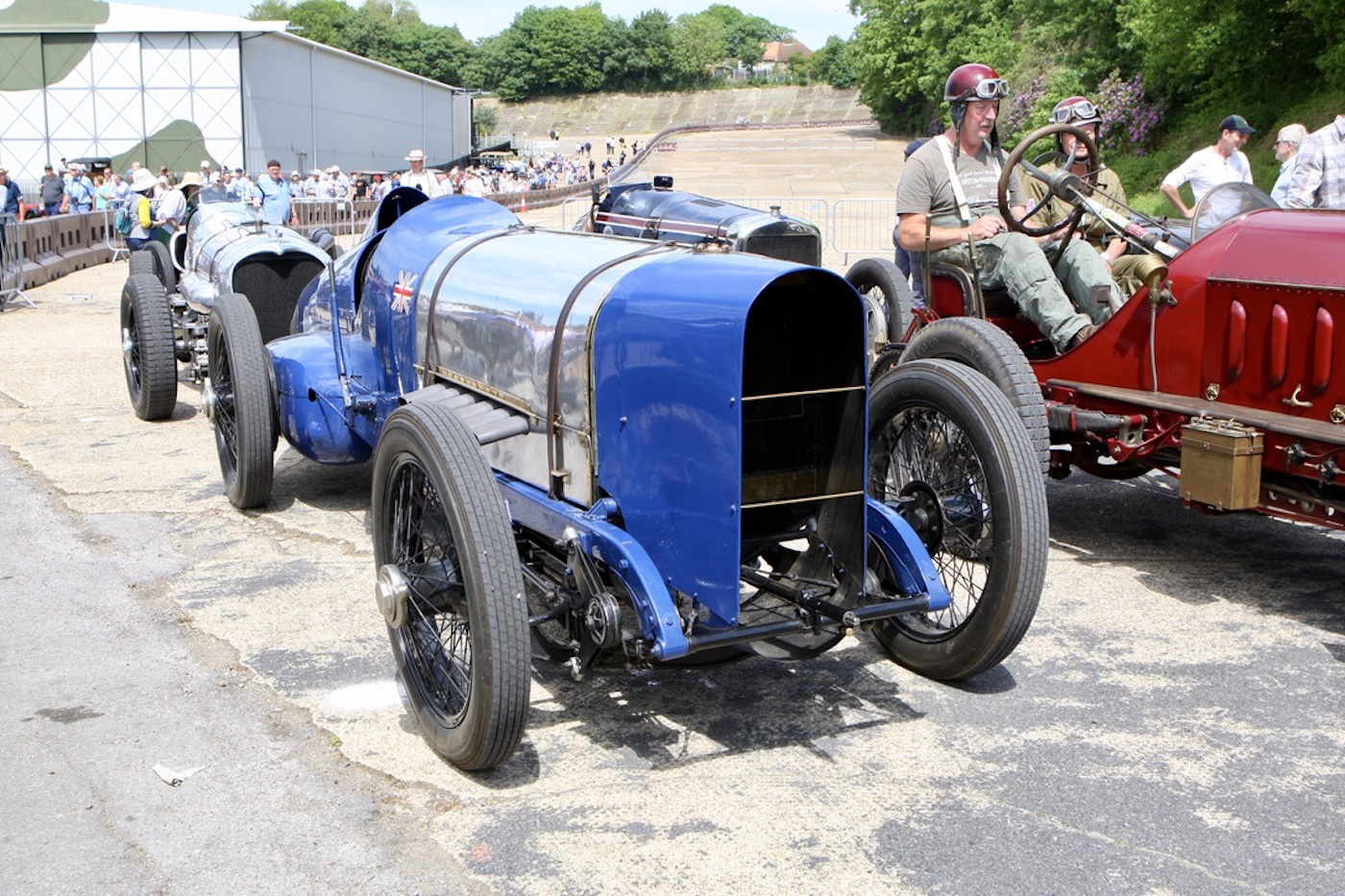
Boy what a line up, The Napier Railton and the V12 Delage with the 350 HP Sunbeam in front, all fresh from demo runs on the start/finishing straight.
After Campbell’s record the Sunbeam passed on to a few drivers who ran the car on Southport Sands. During WW2 the Sunbeam fell into the hands of many a dodgy car dealer before being saved in 1943 by Harold Prately. Eventually he decided that the car was too far gone to ever run again so in 1957 he sold it to Lord Montague. Mr Warne, the head of his Lordship’s workshop, decided otherwise and restored the car to working condition in 1959 with his Lordship even racing the Sunbeam in a VSCC meeting at Oulton Park. The Sunbeam made its last appearance under its own power in 1962 at the BARC Festival of Motoring at Goodwood when his Lordship completed three demo laps and even Donald Campbell did a lap of honour, after which it was confined to the Museum. In 1987 the bodywork was restored to how it appeared during Campbell’s ownership with the extended Bolton and Paul tail. In 1993 the decision was made that the Sunbeam should run at a demonstration parade at Silverstone but during preparation the engine sized and ‘threw a rod’ which punched a hole in the crankcase.
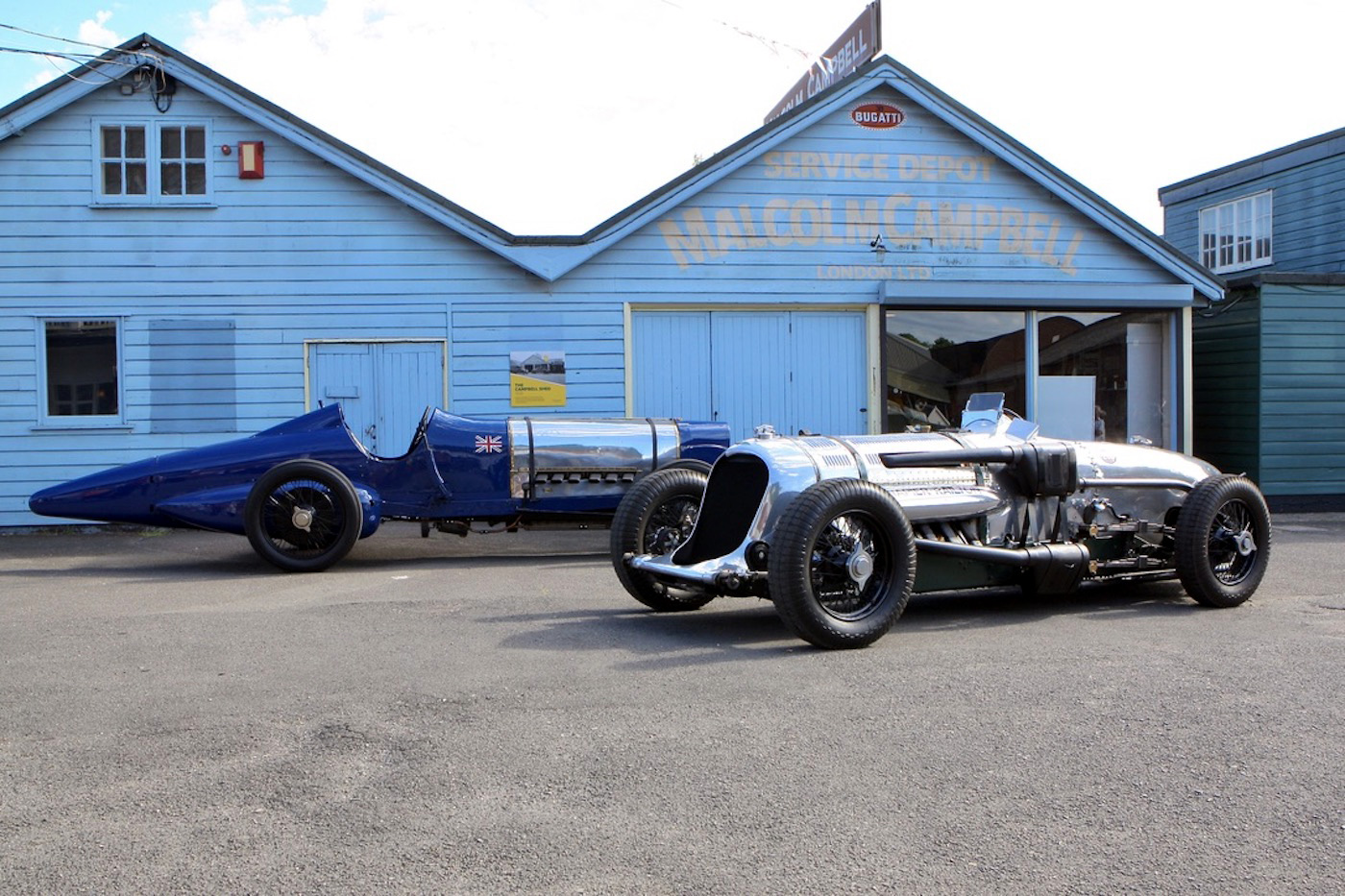
An image not likely to be repeated anytime soon. The 350 HP Sunbeam is joined by the Brooklands Outer Lap record holder, the Napier Railton.
Engine restoration: In 2007 Doug Hill and his team undertook a detailed examination of the engine where it was discovered that solidified Castrol R had blocked an oilway which resulted in big end seizure that twisted a pair of connecting rods, slightly bent the crankshaft and broke pistons and valves.
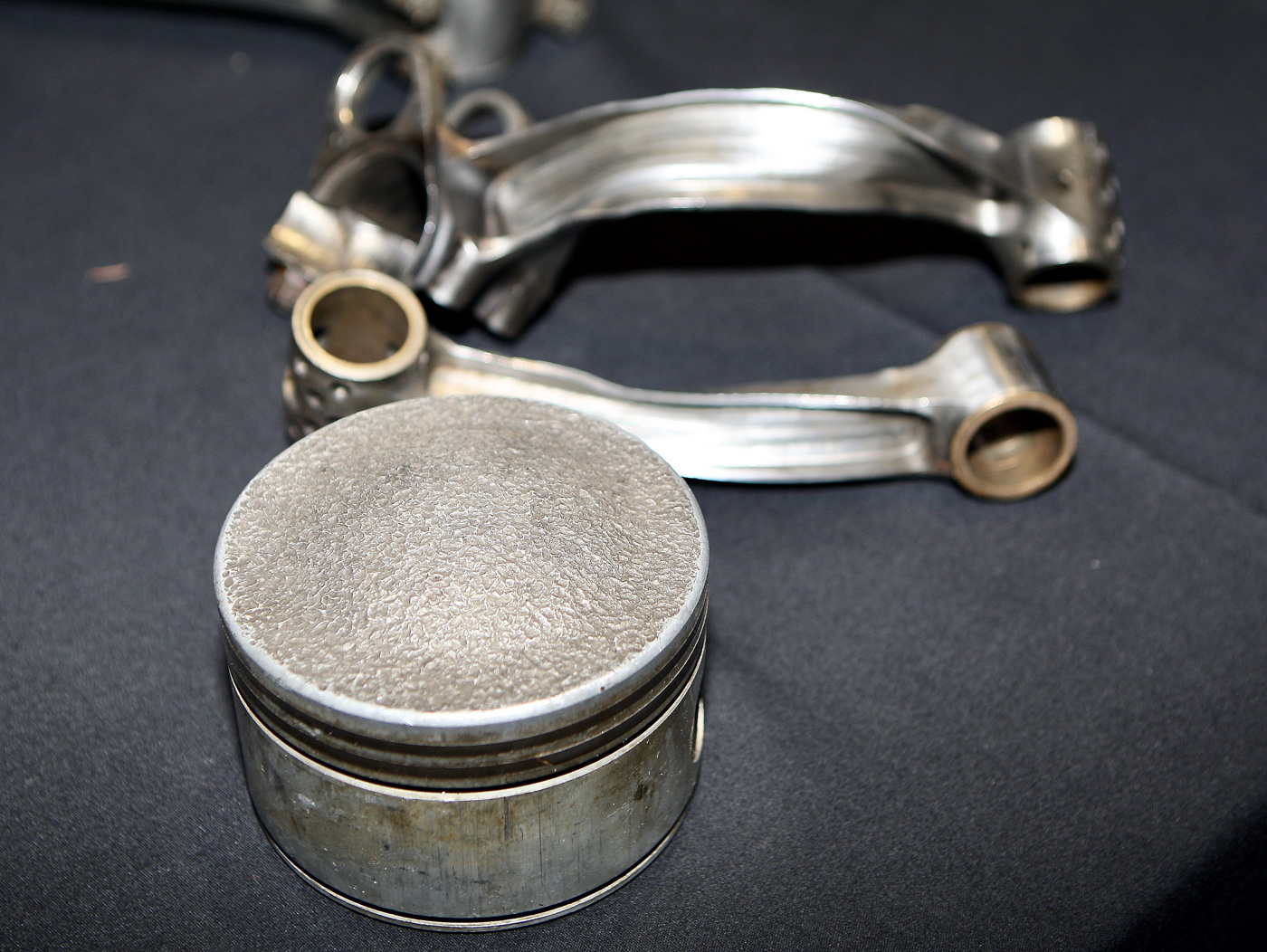
This is what happens when the Castrol R turns solid in the oil passages.
After over 2000 hours of work the engine was started for the first time in January 2014 and in July 2016 the Sunbeam was driven on Pendine Sands to celebrate the 90th anniversary of Campbell’s record. Engine specs below.
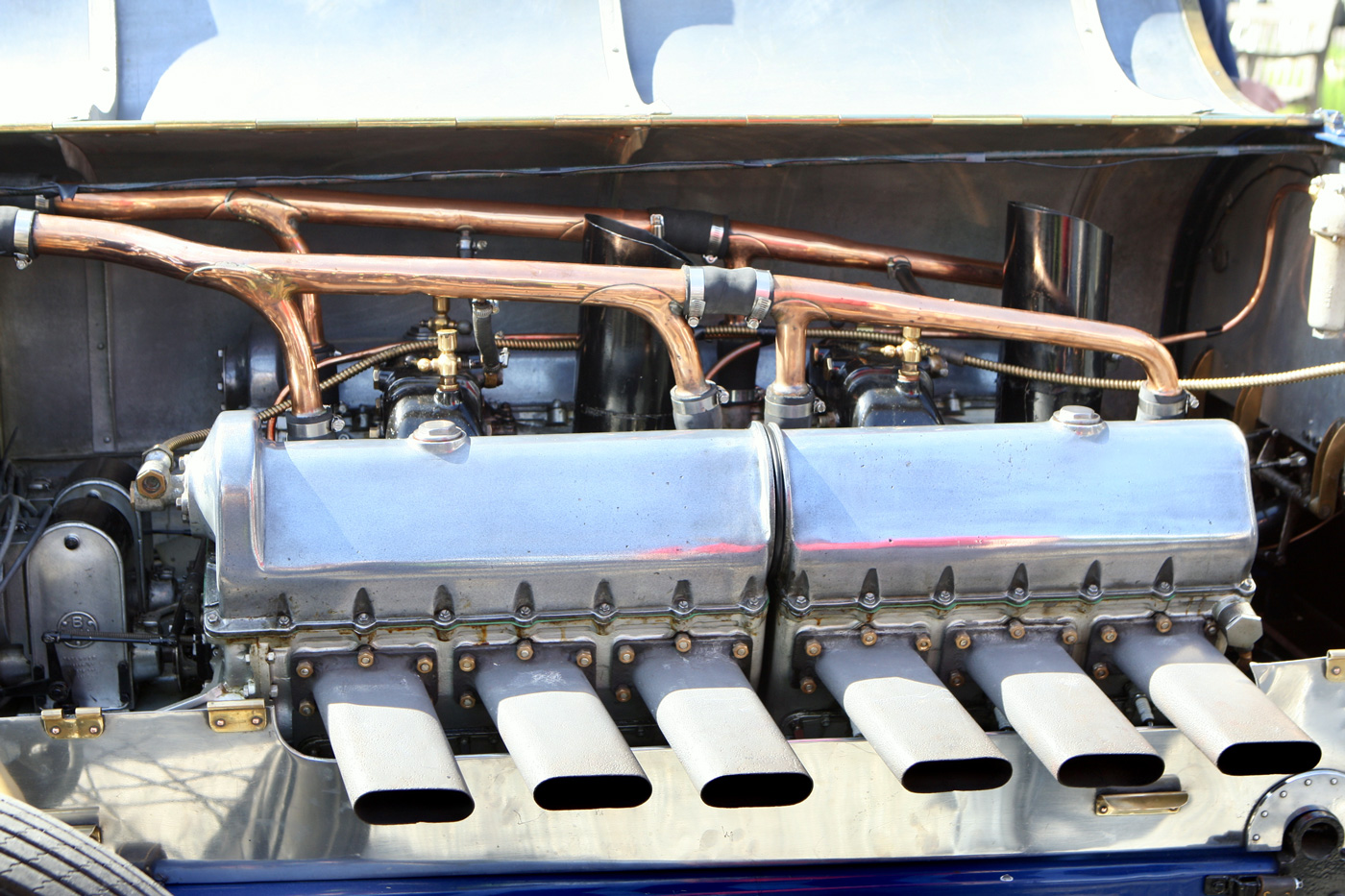
18 litres, V12, SOHC per bank and 350 HP.
Other Great Cars at the Celebration
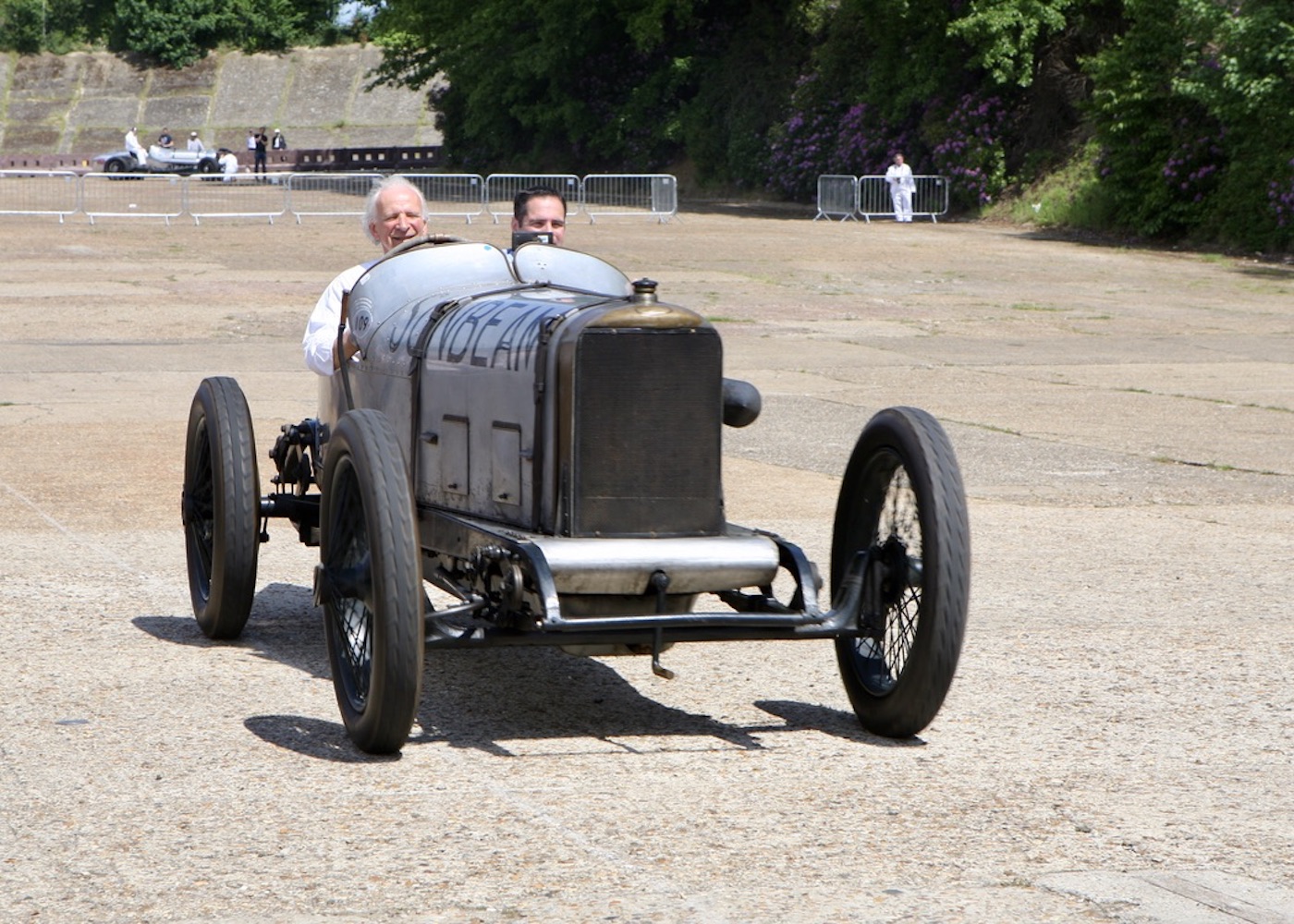
Julian Mazjub’s 1916 4.9 Litre twin cam straight six Sunbeam Indianapolis.
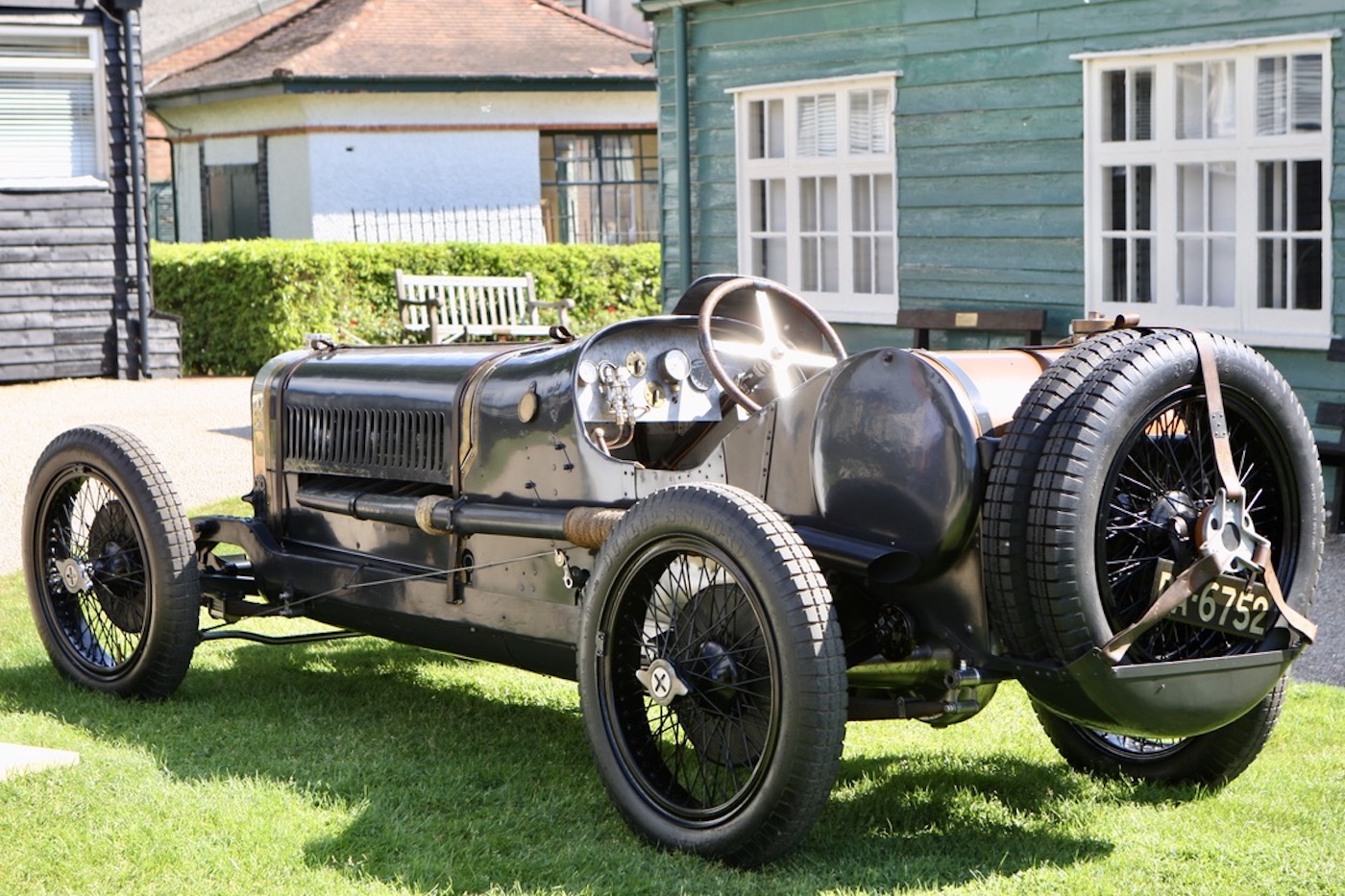
Erez Yardini’s 1921 TT 3 Litre Straight Eight Sunbeam, one of four team cars at the 1921 Grand Prix de I’A.C.F at Le Mans. In 1925 the car was shipped to New Zealand and continued to race with distinction including second place in the 1926 New Zealand Cup.
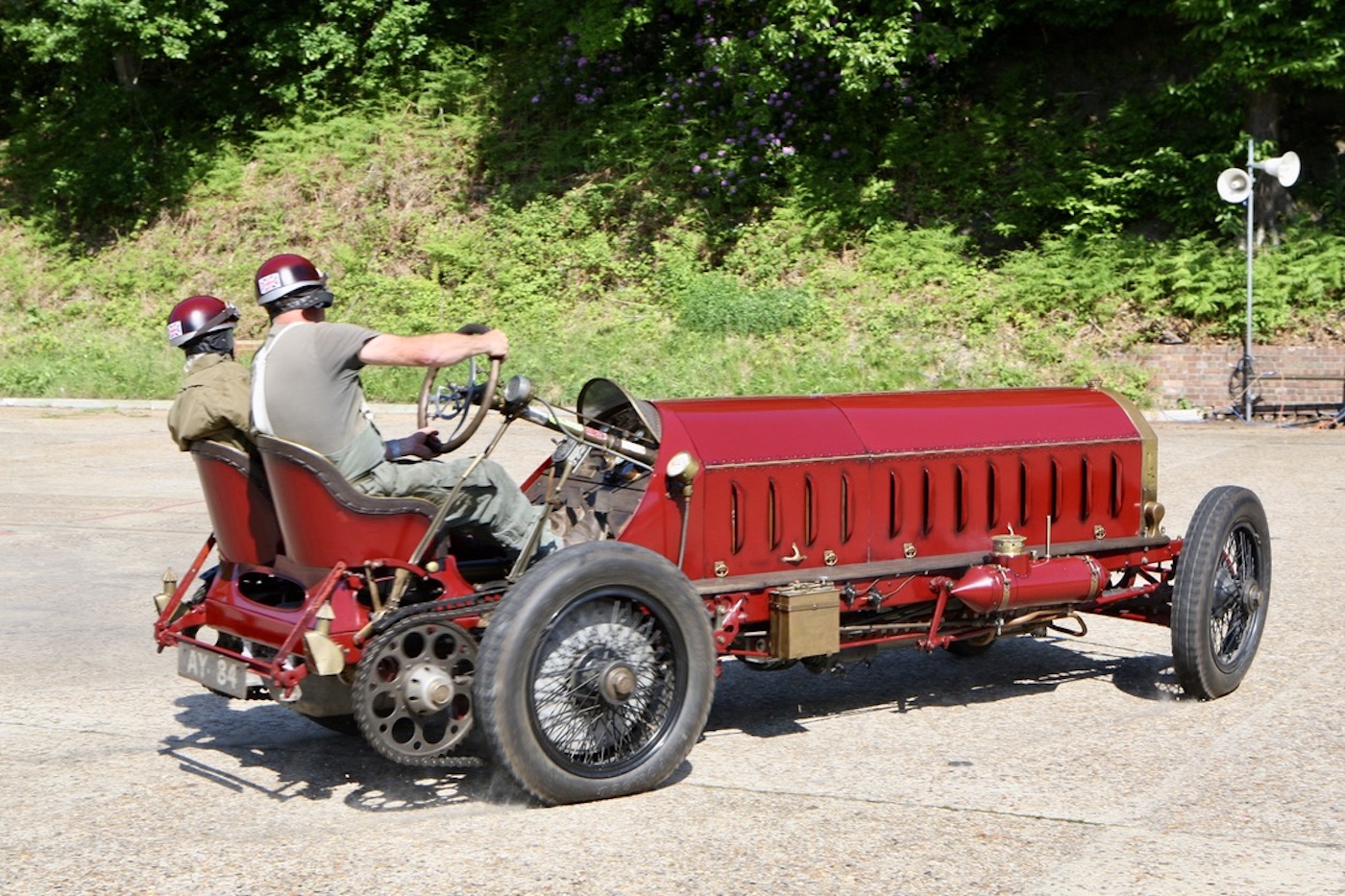
Michael Vardy’s Isotta Fraschini/Fiat, based on a Fiat chassis fitted with a 6 cylinder 16.5 Litre 250 hp, aero engine as fitted to Italian airships, Caproni CA.5 bombers and Machi C.7 fighters.
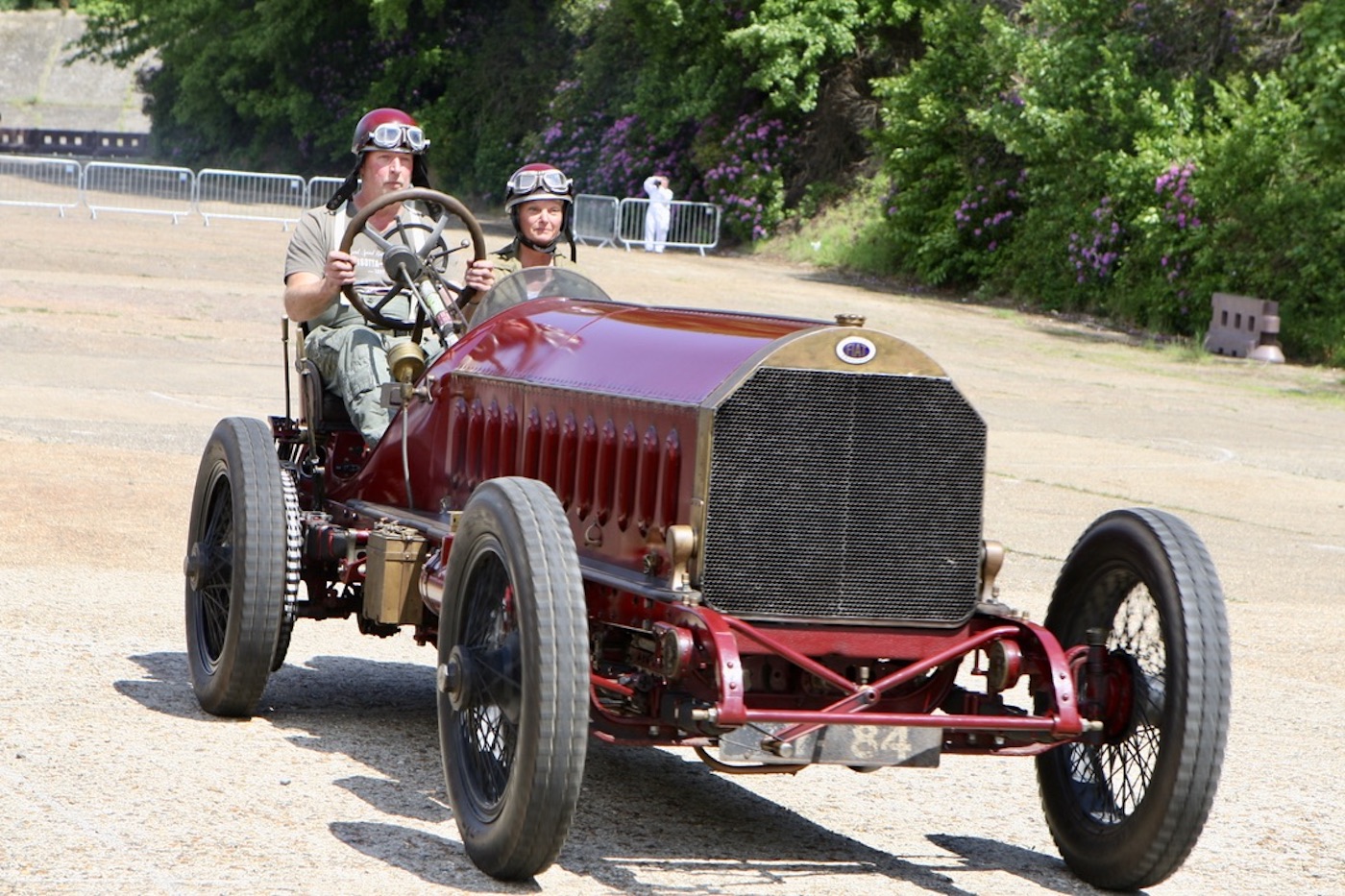
A nice Tuesday drive in the IF Fiat.
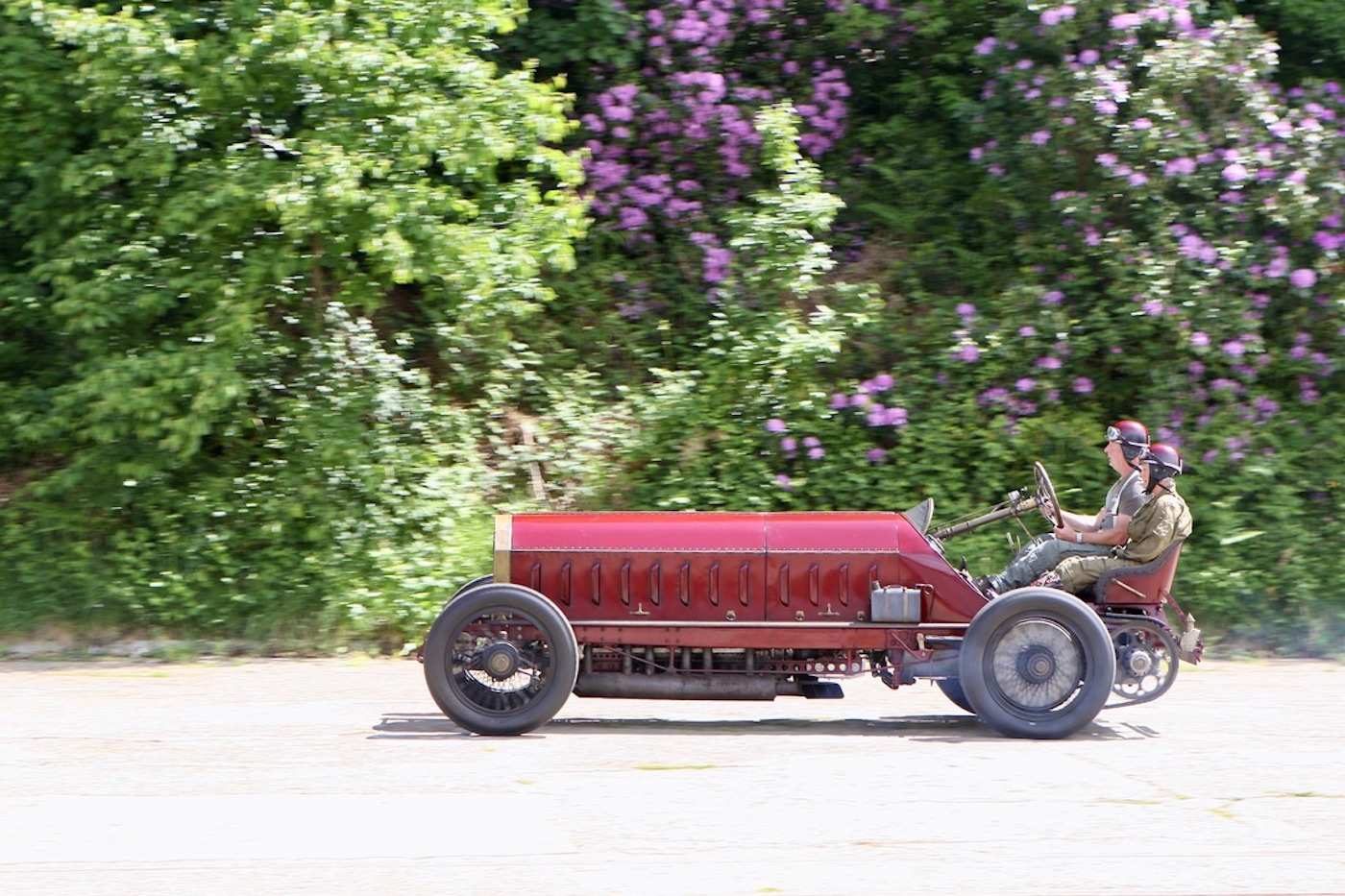
Thank you, Michael, for bringing this treasure.
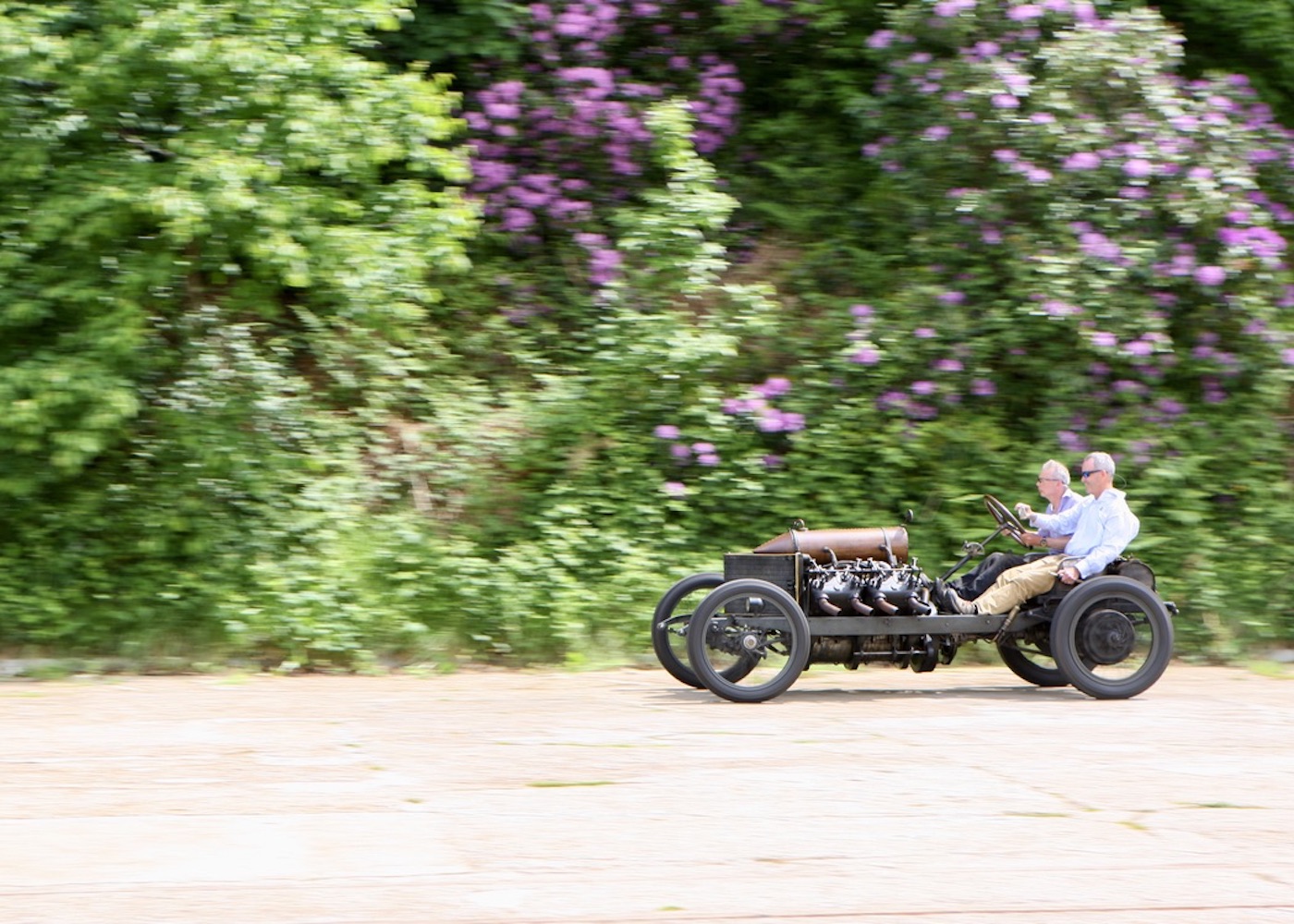
Mark Walker’s excitedly rapid 1905 Land Speed Record holder Darracq 200 HP.
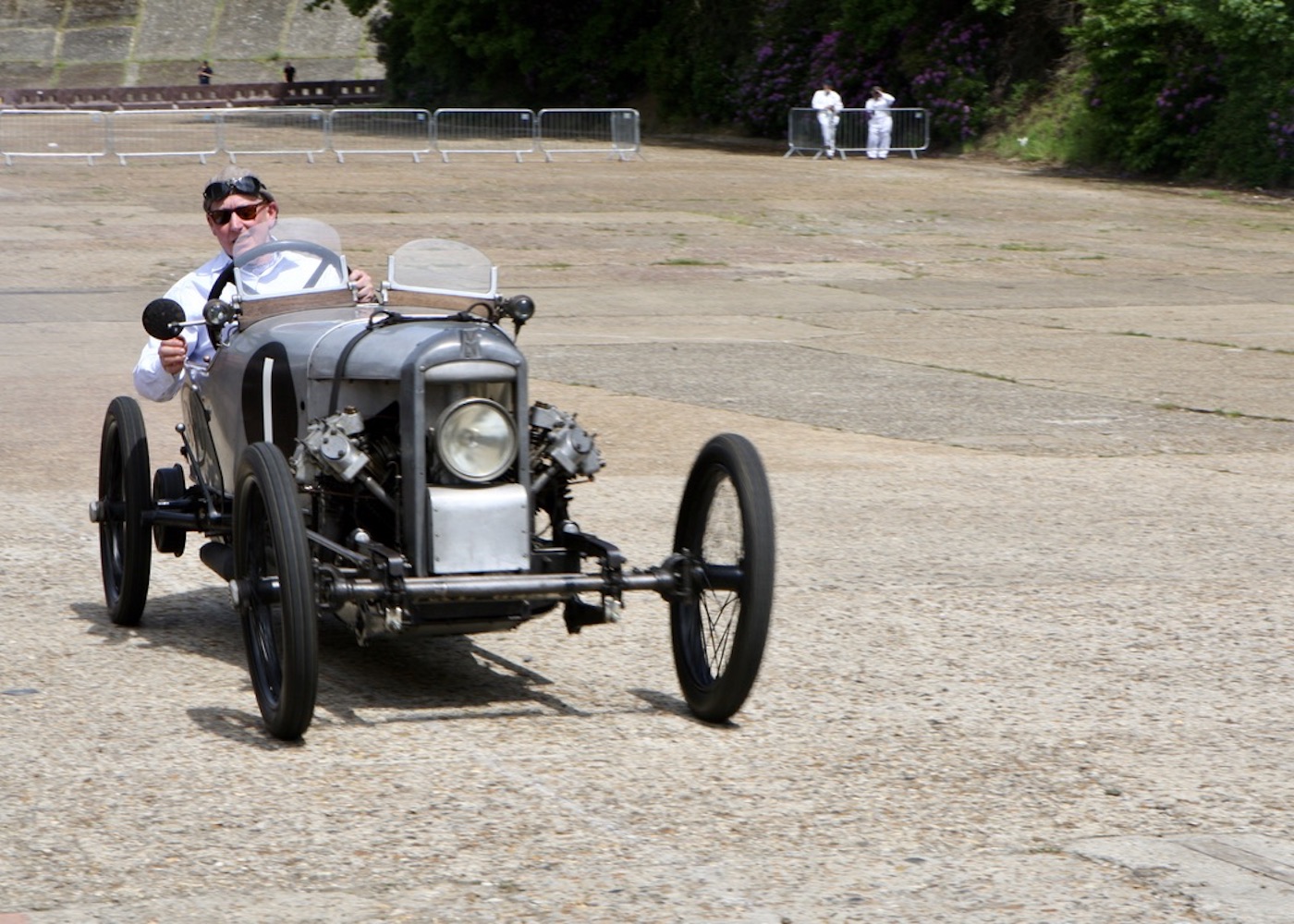
In contrast to the aero engined monsters, Robert Haynes Brown’s 1922 GN 1 ‘Akela’ was part of the winning team of that year’s Junior Car Club 200 mile race.
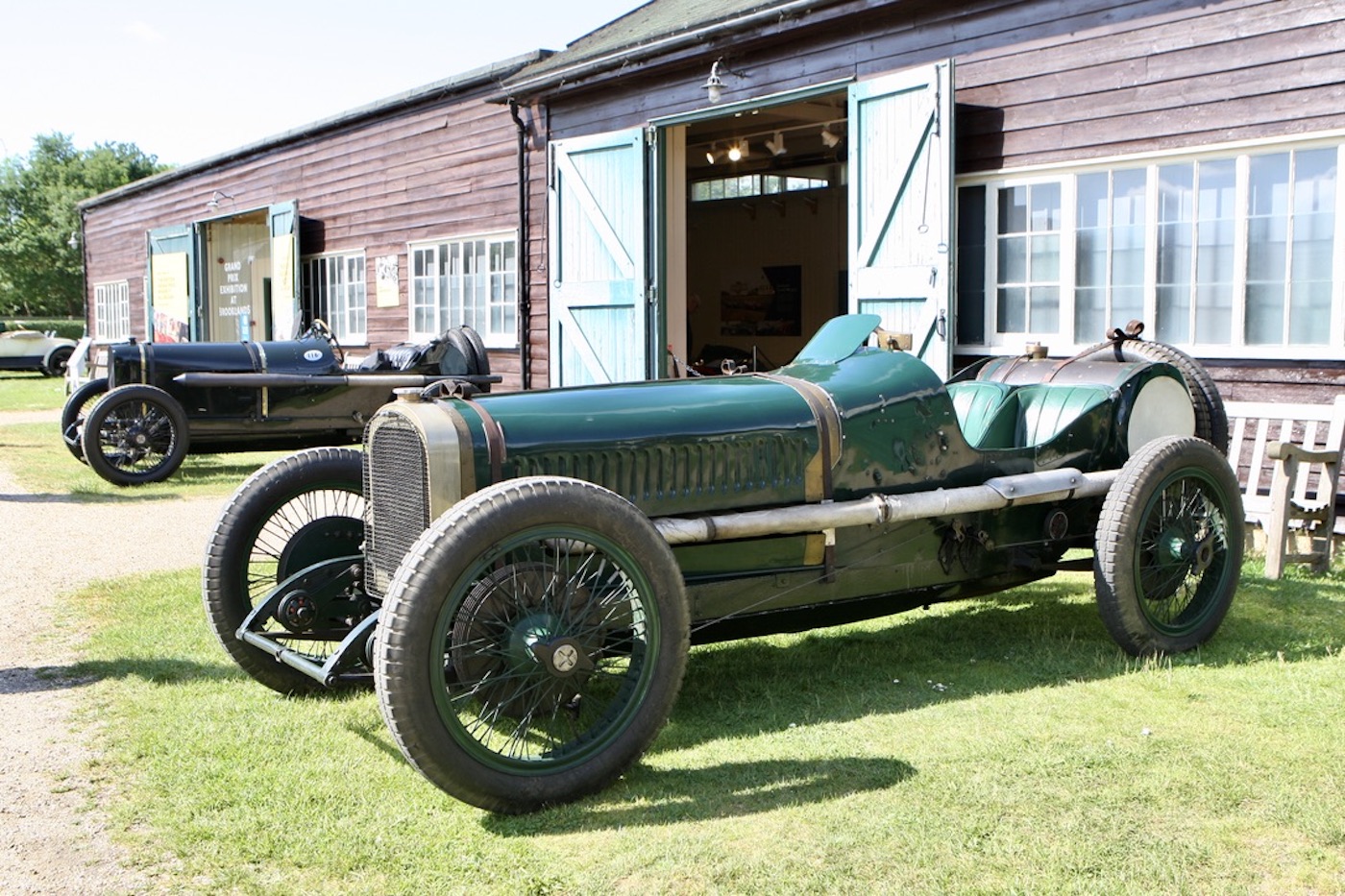
1914 Sunbeam TT, one of three examples that raced at the Tourist Trophy Race on the Isle of Man. Kenelm Lee Guinness won in car No 4. His brother Sir Algernon Guinness held second place until three laps from the end when a universal joint seized.
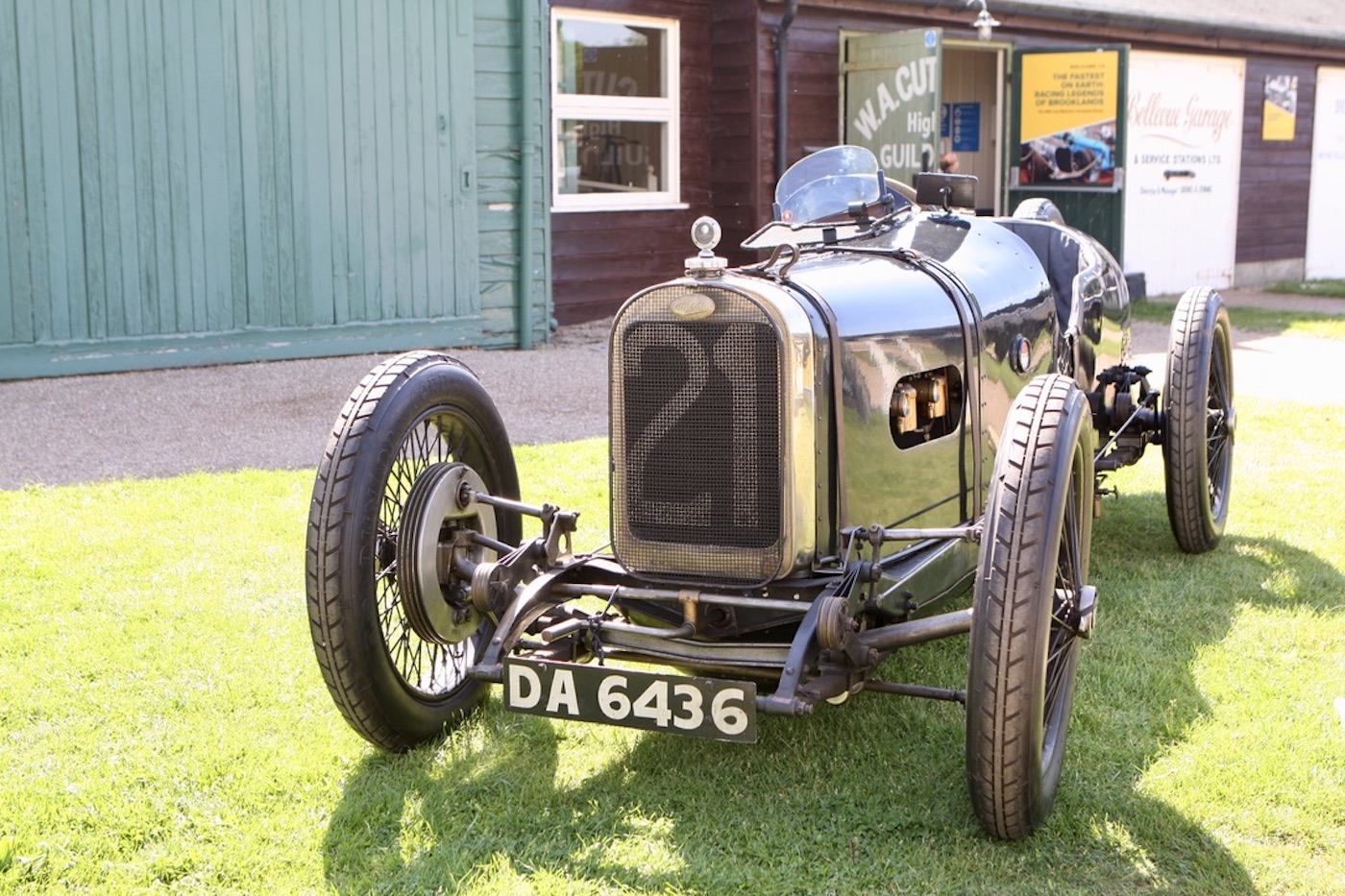
Owned by Andrew Crisford, this 1922 Sunbeam GP Strasbourg is the prototype of one of four cars prepared by the Sunbeam racing department for the 1922 French Grand Prix. The designer of the twin overhead camshaft Peugeot Grand Prix cars before WW1, Ernest Henry was responsible for the Sunbeam GP cars of 1922. Unfortunately all three team cars failed during the race due to rev counter problems which caused the engines to be over rev’d, though the engines later had some success racing at Brooklands.
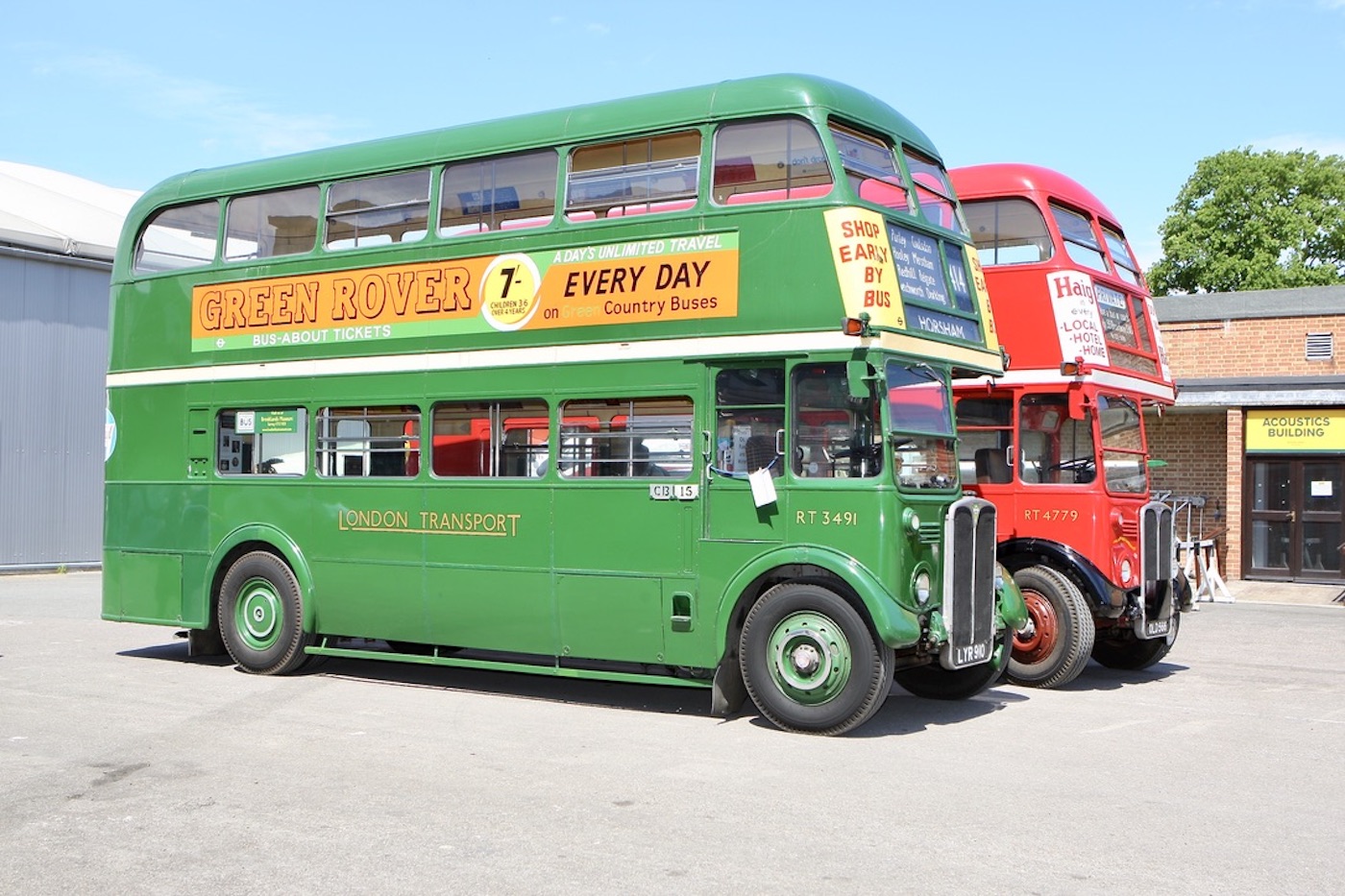
Transport from the Clubhouse to the Railway Straight on the day was courtesy of this pair of iconic London double decker buses, Alas I missed the bus and had to walk, dammed rush hour traffic.
Sunbeam V12 Engine specs
The power unit has often been listed as being a Sunbeam Manitou aero engine, but during the restoration it was discovered that the motor is more likely to be an experimental engine built for testing by the Royal Naval Air Service.
Block: 60 degree 12 cylinders, 4 blocks of 3 cylinders in cast aluminium Bore 120mm x stroke 135mm/142mm (one bank longer that the other) mean capacity 18,322cc
Output :355hp at 2300 rpm
Valve gear: overhead, 1 inlet, 2 exhaust per cylinder. 1 overhead camshaft per bank (the Manitou had two)
Aluminium pistons, articulated con rods, 7 plain main bearings
Ignition: two 12 cylinder BTH magnetos, 2 plugs per cylinder
Carburetter: two Claudel HC7 (twin choke) MK11 42 mm
Chassis
Wheelbase 9ft 10 in, track 4ft 5in
Springs: half elliptic (underslung at the rear)
Wheels/Tyres: originally wooden artillery wheels; the Rudge Whitworth with 880x 120 Palmer Cord tyres
Weight 31cwt
Clutch: multi plate (twenty plates)
Gearbox: 4 speed
Back axel: bevel 1.5 to 1. no differential
Was not the Frederic Gordon-Crosby painting published in B&W in the magazine?
I was lucky enough to know F. G-C’s daughter-in-law, June, who died quite recently; she was married to his younger son Michael after she returned to New Zealand with him after he’d recovered from his war trauma with her nursing help. The family here have a good archive.