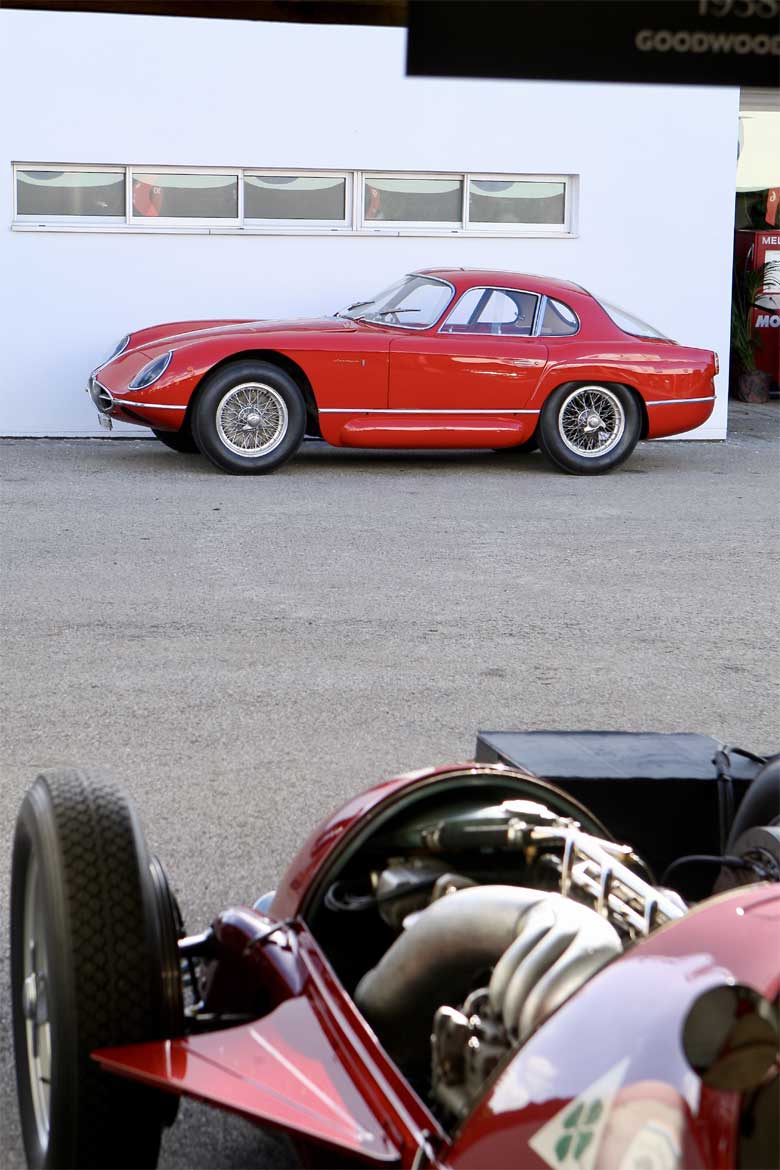
Alfa Sportiva and 158
Story and photos by Jonathan Sharp
‘Turn on, tune in, drop out.’ The entry gate into this year’s Goodwood Revival took us back to the late 60s and to the intersection of Haight and Ashbury in San Francisco and the birth of the hippie movement and the 60s counter-culture.
We waded past the hippie tents and the psychedelic school bus to reach the paddocks, where all the really interesting stuff lay. I have never seen so many VW Type 2 split screen vans in one location, as each morning before the racing commenced, the Type 2s paraded around the circuit to celebrate the model’s 75th anniversary. According to the programme at least 130 were expected and, due to the muddy infield where they had planned to display them, they were parked literally everywhere and whilst I am not a big fan they did make a very impressive sight.
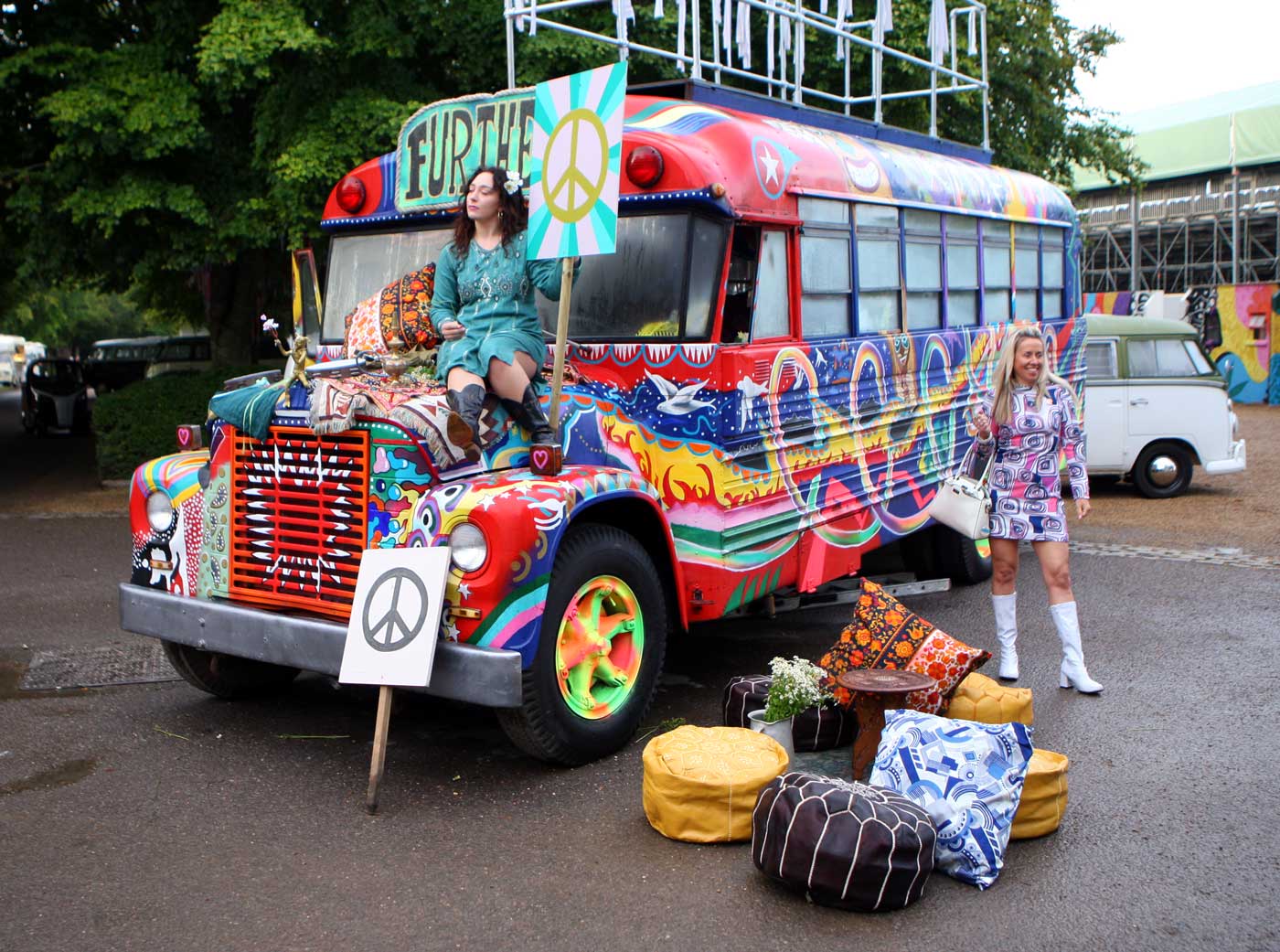
If you’re going to San Francisco…
Whilst talking of parades, in addition to the daily Alfa Romeo parade that Hugues featured last week, each day we enjoyed a celebration of the life of Jim Clark and the 60th anniversary of his 1965 championship season in which he won not only the Formula 1 World Championship, but also the Indy 500, the Tasman series, and the British and French F2 championship. As usual the Goodwood team pulled together an impressive lineup of cars associated with his career which paraded around the circuit each day and on Saturday was joined on the grid by a flock of sheep. Well, he was also a Scottish sheep farmer!
One disappointment for me was this year’s Freddie March Spirit of Aviation Concours. Whilst the entry list held many gems, due to the blooming awful weather before and during the event only five aircraft made it into the aerodrome.
These days the Revival champions the philosophy of the ‘Revive and Thrive’ fashion movement with the dedicated Revive and Thrive village celebrating vintage style where you could, in addition to browsing through a vast amount of vintage fashion retailers, enjoy various workshops and talks around the world of vintage fashion on the Revive and Thrive stage.
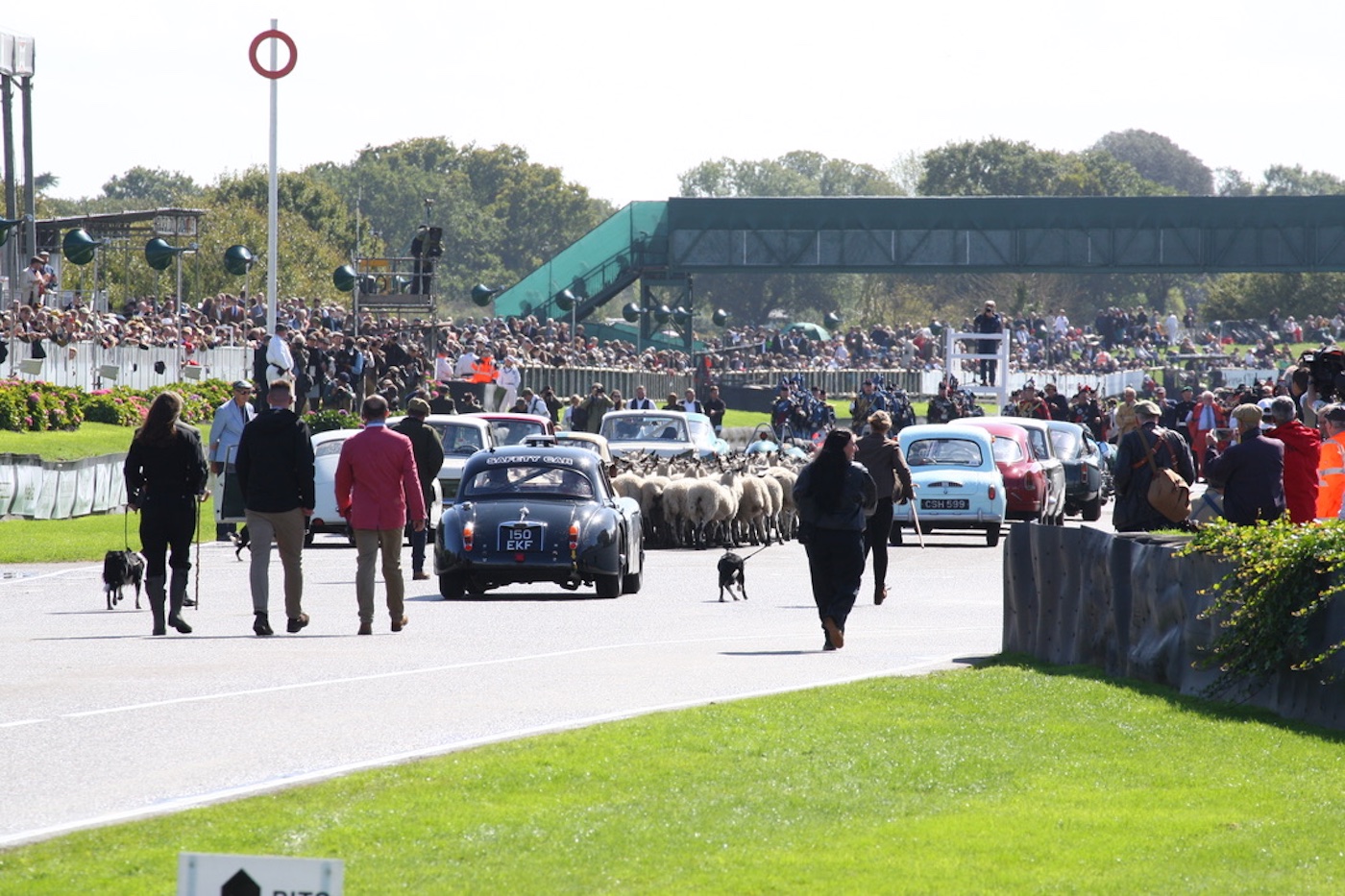
Counting sheep
One thing I did do this year was enjoy some of the music venues scattered around the site, particularly ‘The Cave’ located on Temple Court which was a sort of take on Liverpool’s Cavern club though obviously outdoors. The band I listened to were knocking out the hits of the Kinks and the Who with great gusto and it takes a lot to make me stop and listen to something other than a racing car at Goodwood.
Inside the hanger known as the ‘Earls Court Motor Show’ one could take a look at the products of Alpine, BMW, Mini, and Land/Range Rover, with the middle of the display given out to a display of BMW Art cars. In the area just outside the circuit known as ‘across the road’ you could view/buy at the Bonhams auction or at the many and varied retail opportunities, get a bite to eat at the many street food vendors, get a drink at the various bars, or watch a film at the drive-in cinema. All this plus fantastic racing; what a weekend and who cares about the rain, and boy, did it rain!
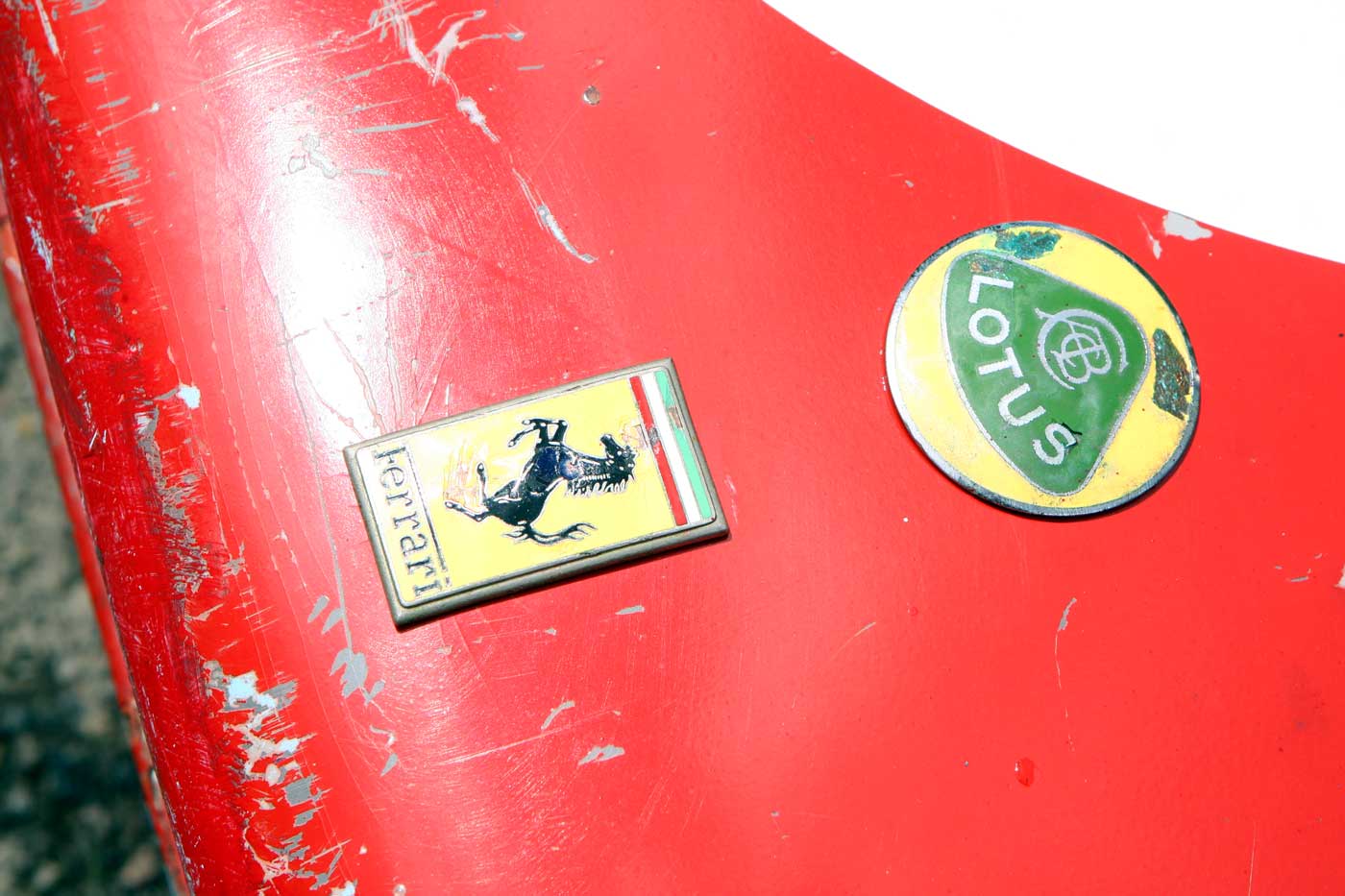
Possibly my favourite car in the Revival, In the Whitsun Trophy, Jakob Viggo Holstein’s 1960 Lotus Ferrari 19 which I understand was at one time gifted to the technical school that also had a 250 GTO at the same time.
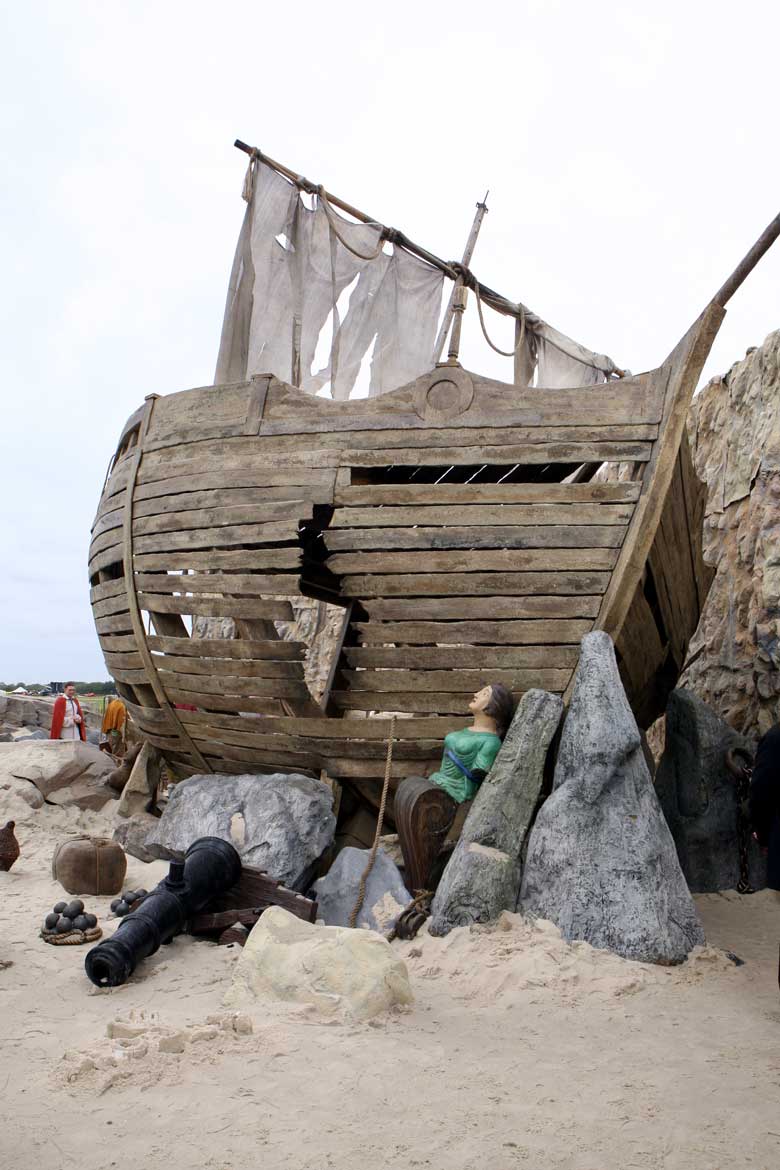
The entrance to the drivers club which this year was designed around Pirates.
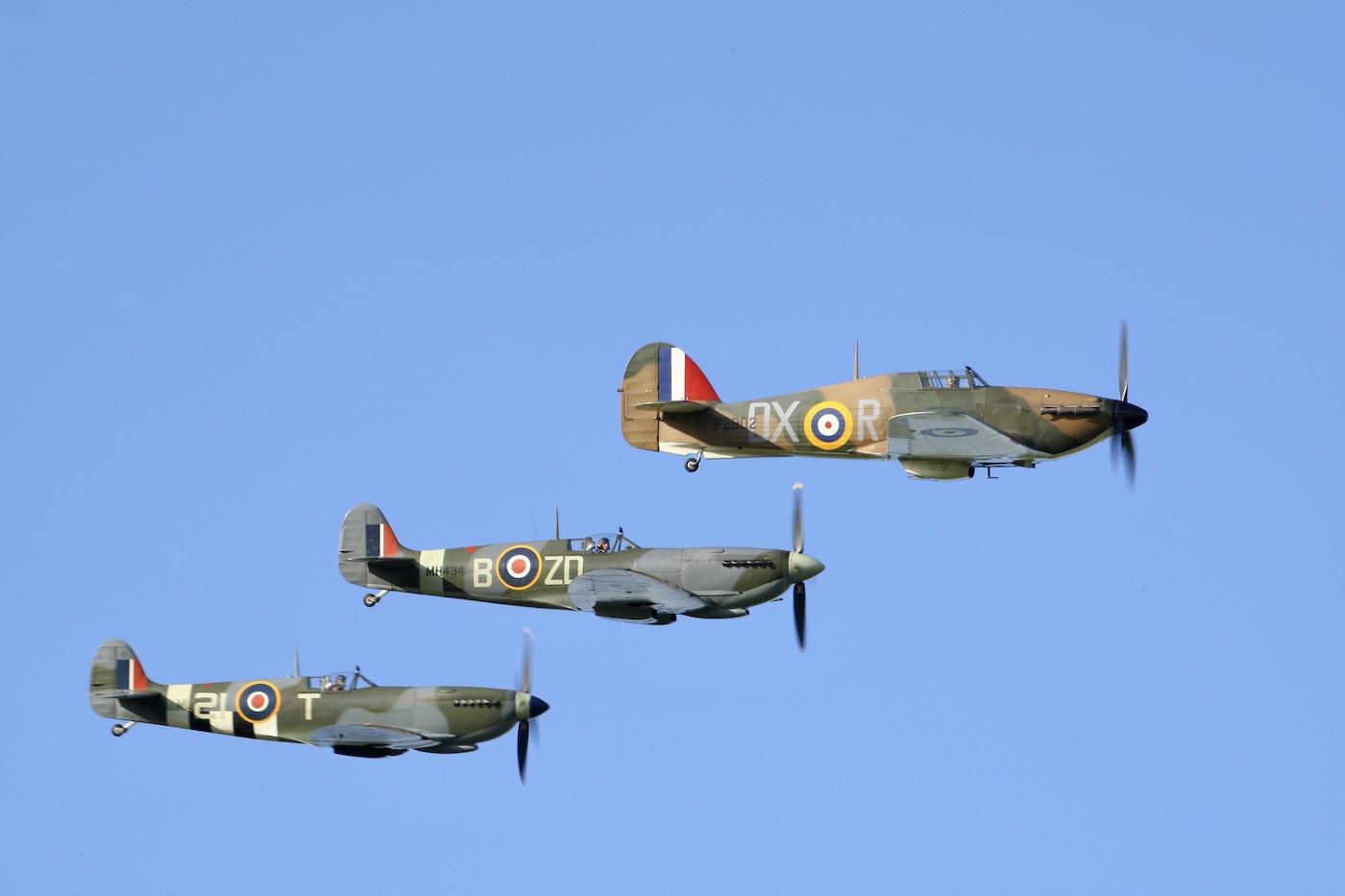
Dawn Patrol
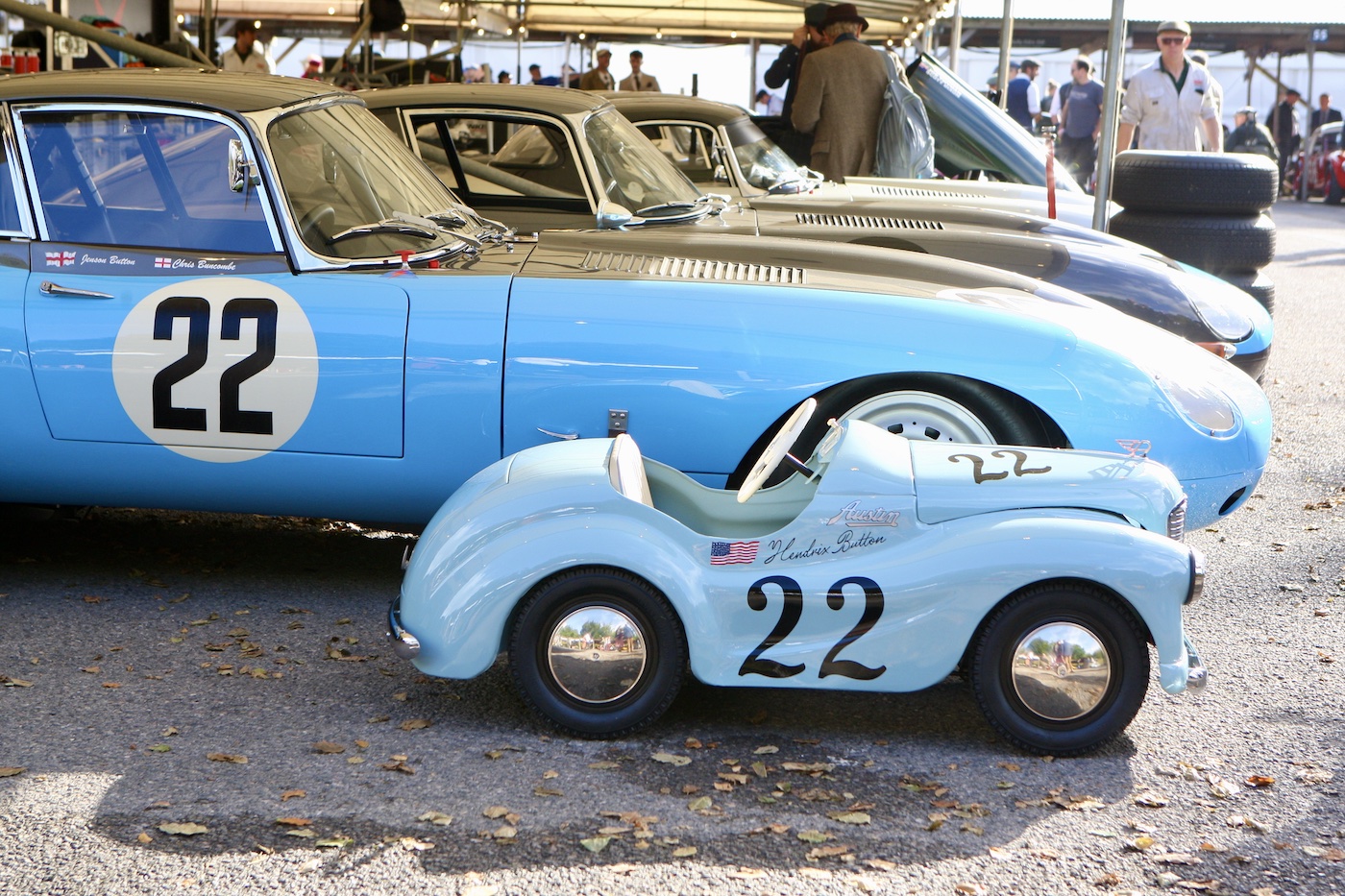
1962 Jaguar E Type ‘CUT8’ as driven by Jenson Button/Alex Buncombe, Austin J40 as pedalled by Hendrix Button.
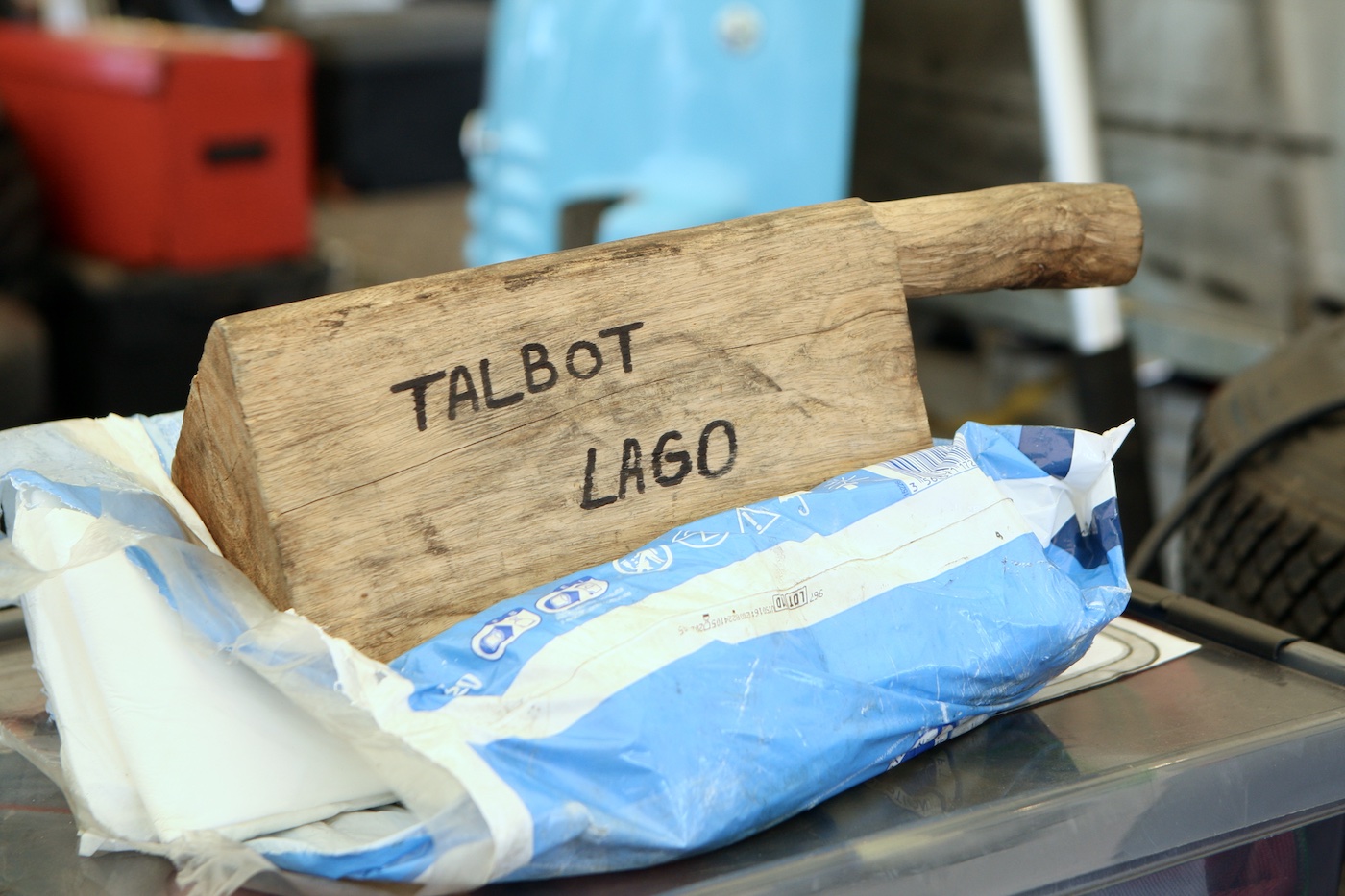
An important block of wood.
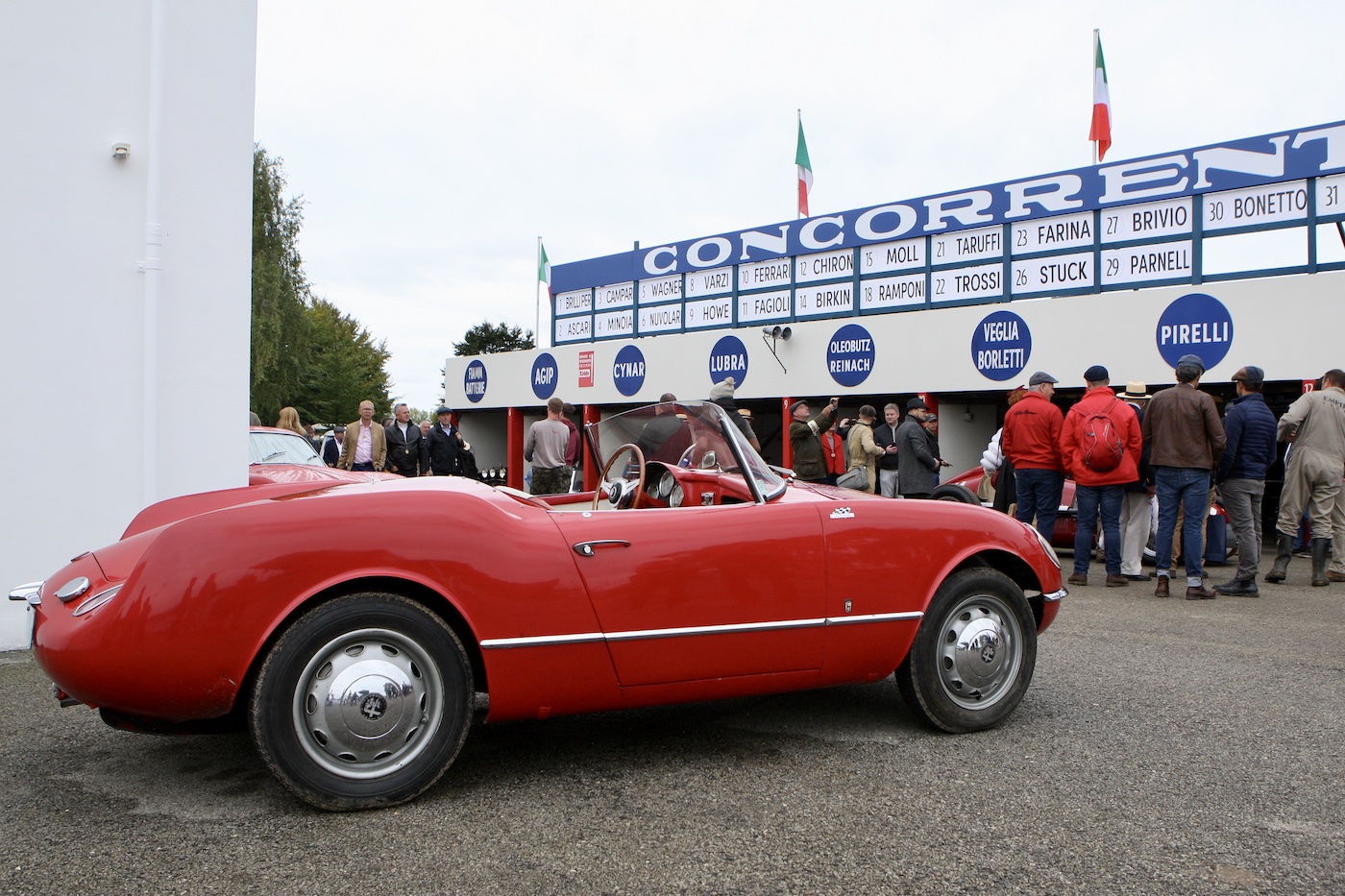
Alfa’s Spyder by Bertone.
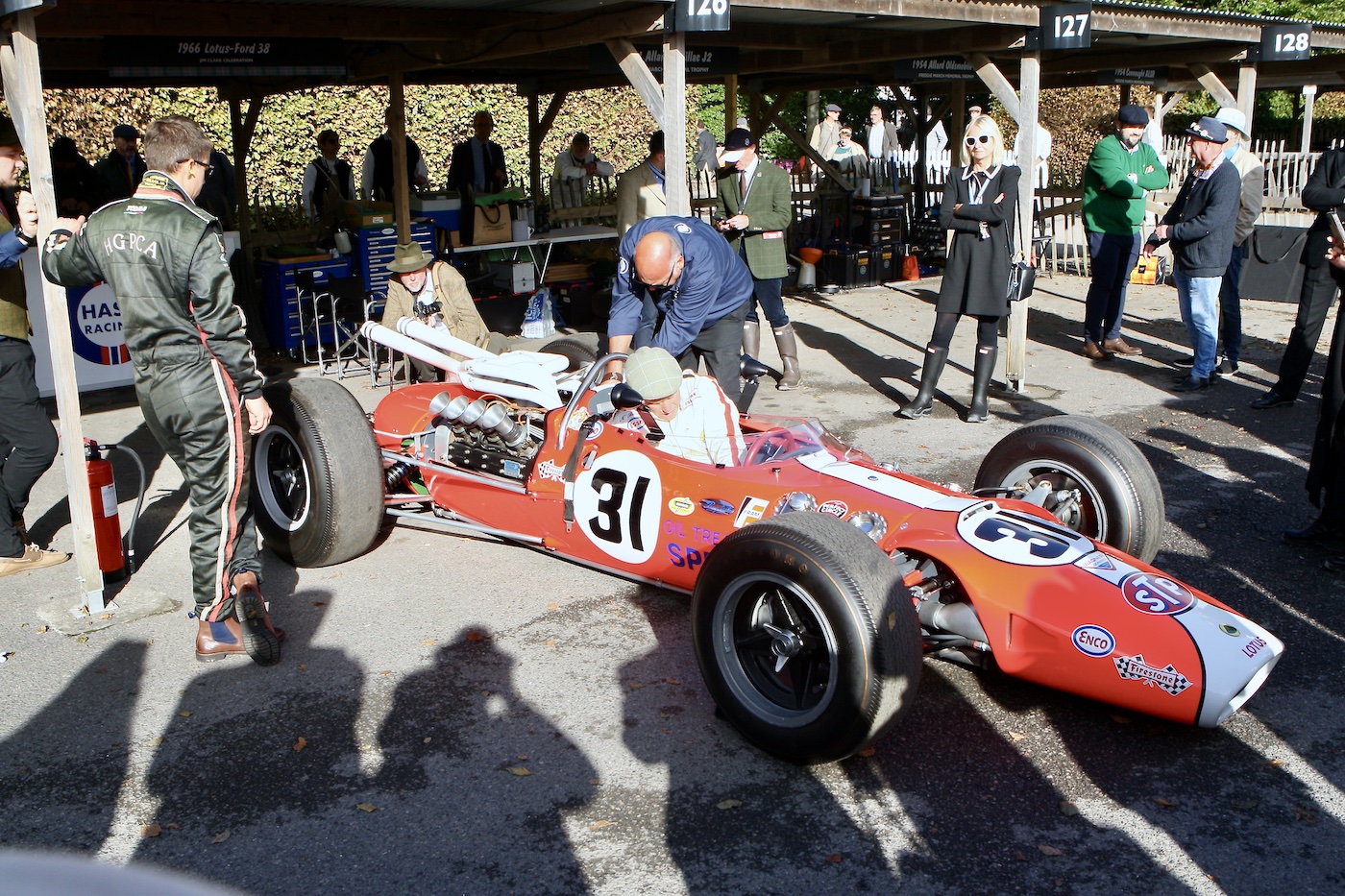
Starting the Lotus Ford 38 that Jim Clark drove in the 1967 Indy 500 but retired.
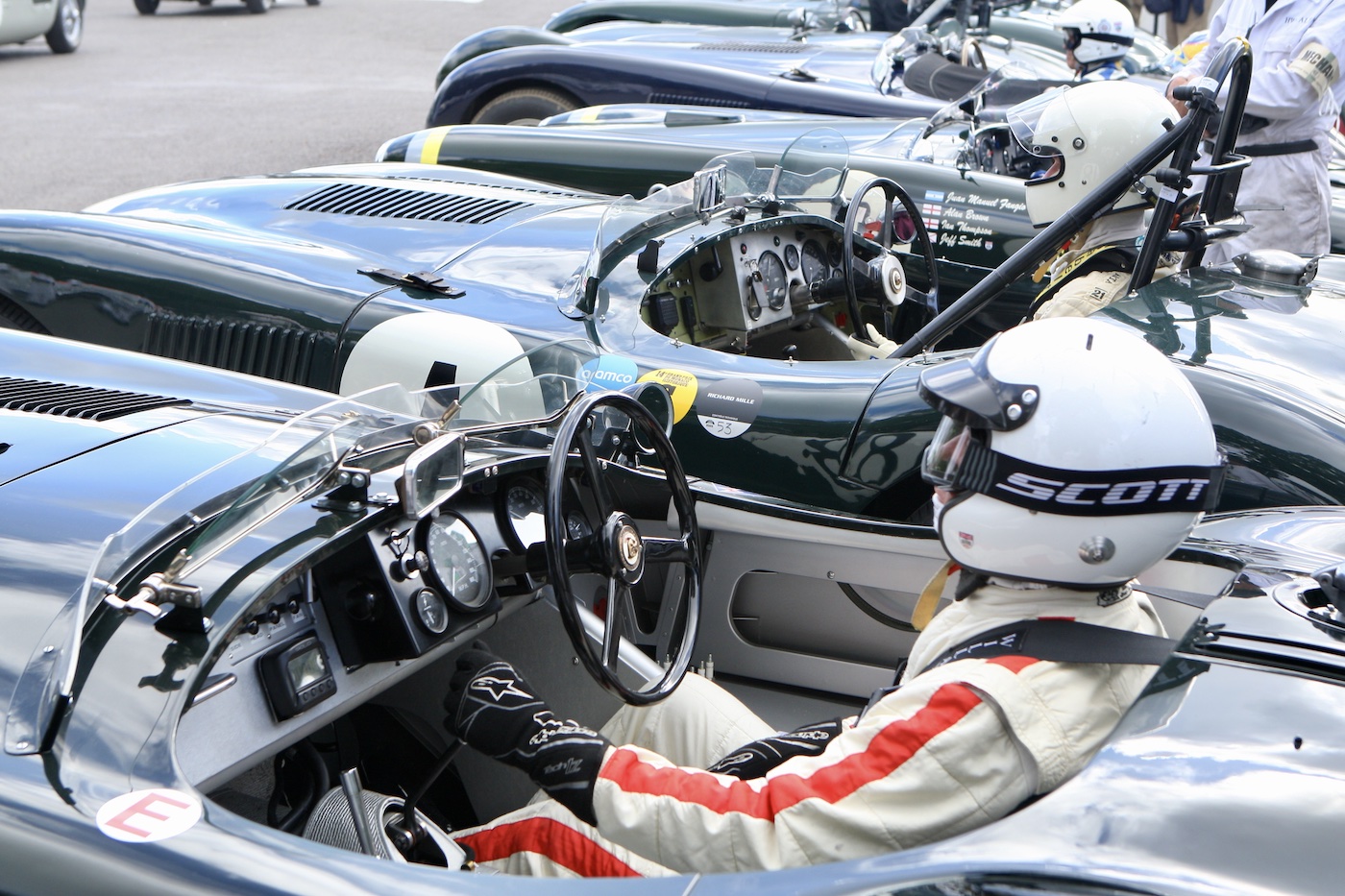
Jaguar C Types, waiting to depart, Freddie March Memorial Trophy in the spirit of the Goodwood Nine Hour race.
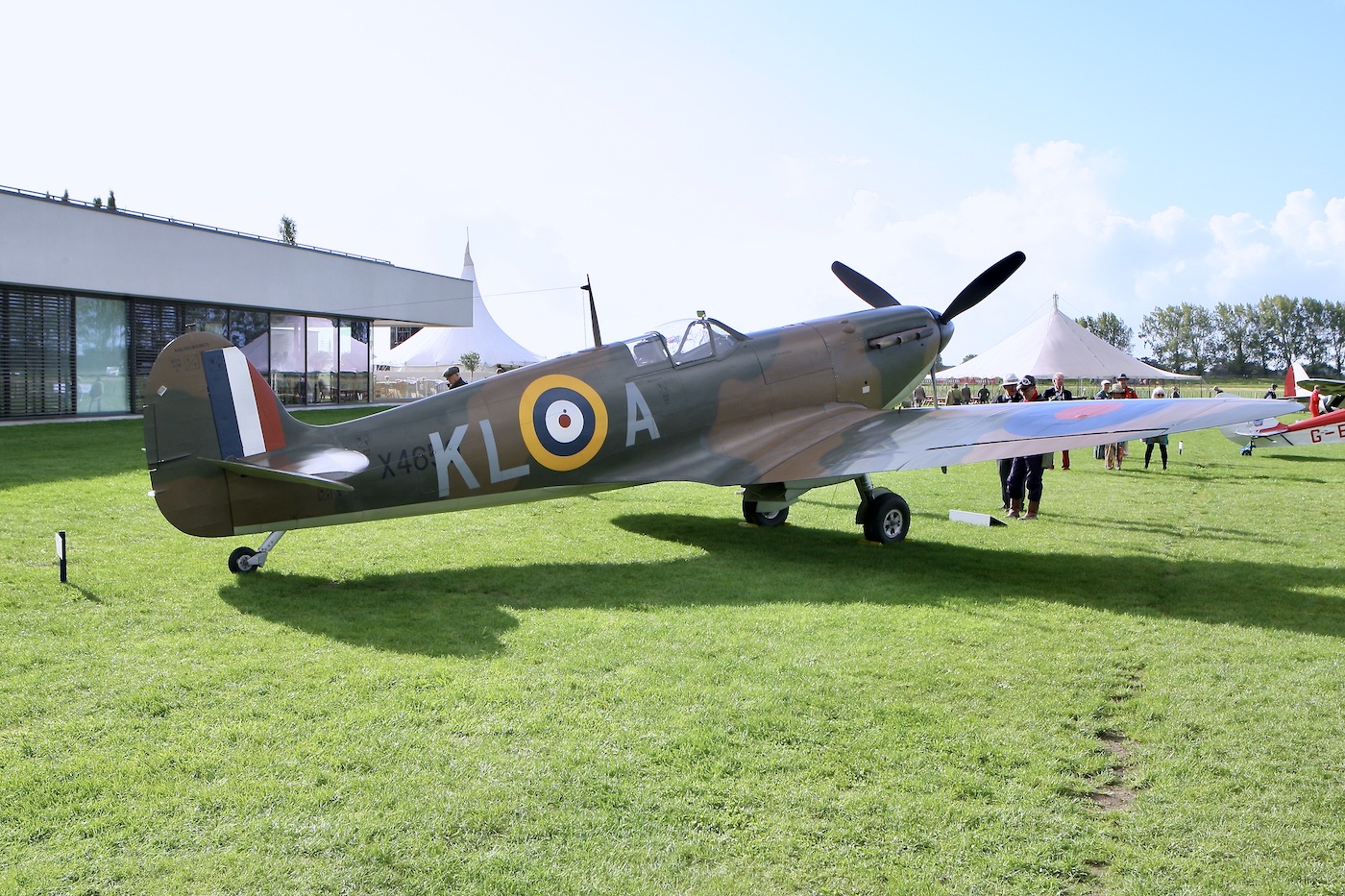
From the collection of Dan Friedkin, Supermarine Spitfire MK 1A X4650 (G-CGUK) was built by Supermarine at Woolston in 1940 and delivered to 54 Maintenance Unit RAF. In December of that year, whilst being flown by a trainee pilot, it was involved in a mid-air collision with another Spitfire. Whilst both pilots survived, X4650 was considered to be ‘not salvageable’ and was dumped in the nearby river Leven. Low water during the scorching summer of 1976 revealed the remains and the aircraft was recovered and then stored until the early 1990s. Restoration took fifteen years and X4650 flew again in 2012 in the airframe’s original 54 Maintenance Unit markings.
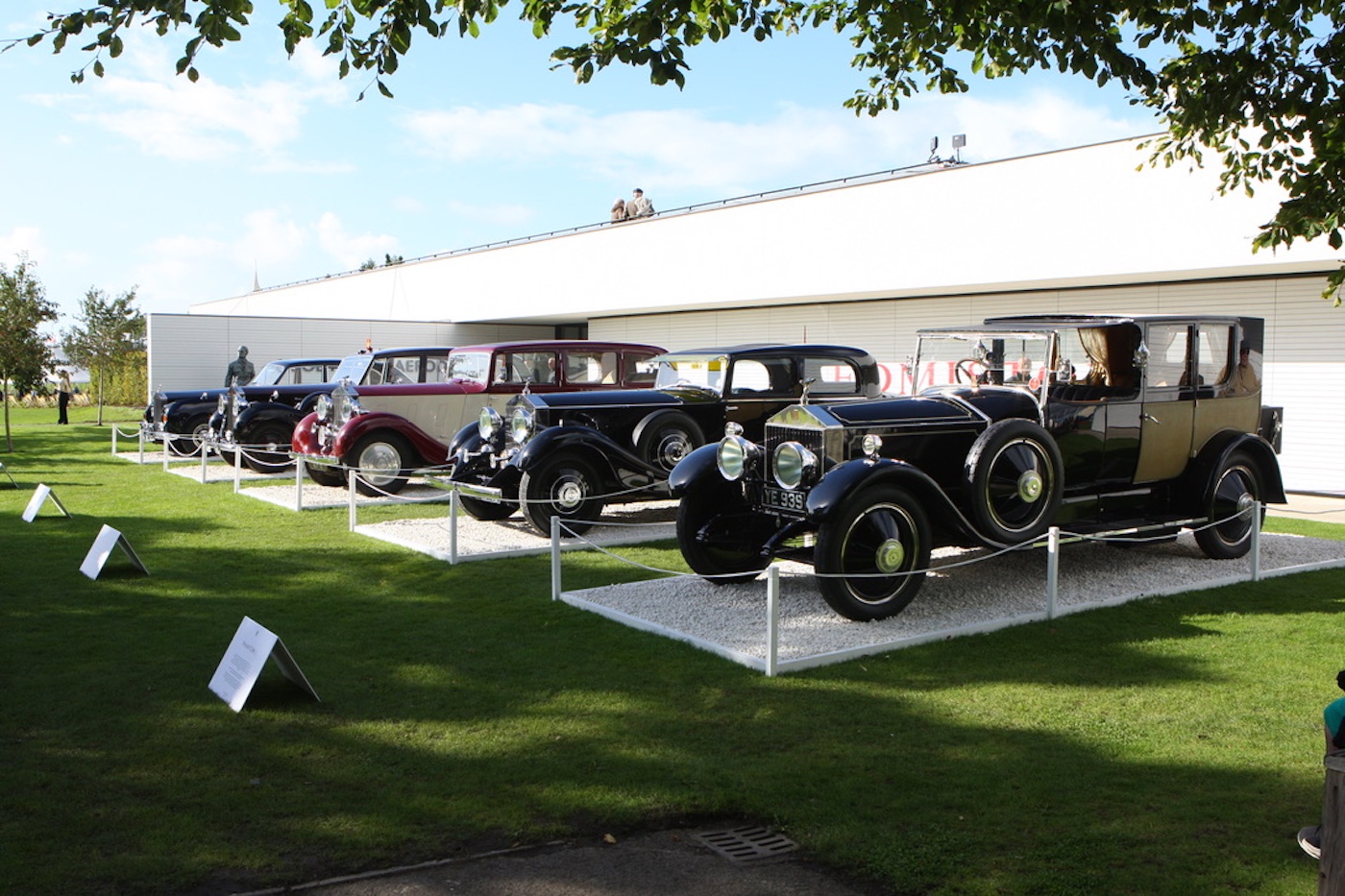
In front of the Aero Club, an impressive line up of Rolls Royce Phantoms in celebration of 100 years of the model.
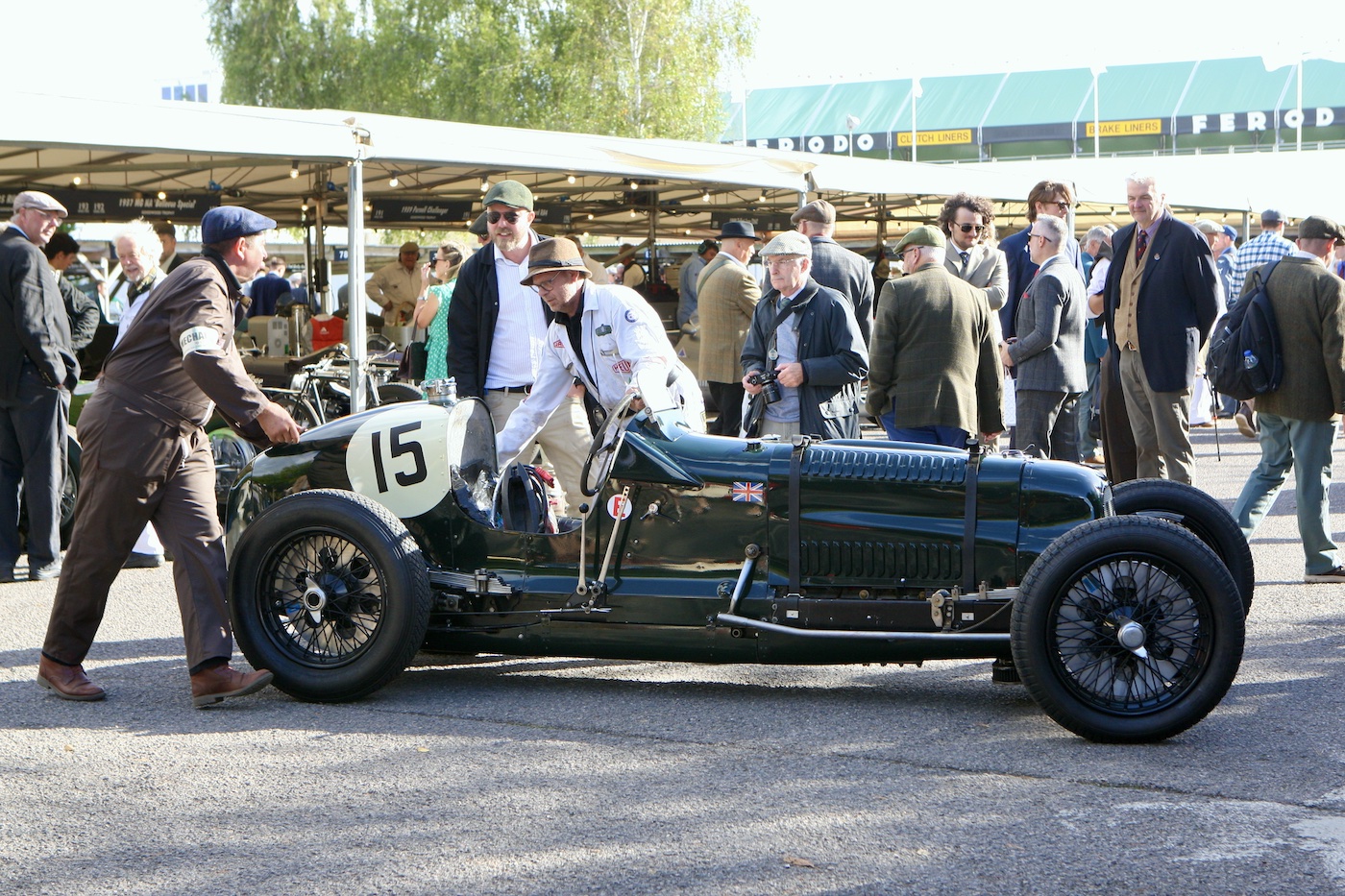
1935 Frazer Nash ‘Fane’ Monoposto, Patrick Blakeney Edwards. Goodwood Trophy for Grand Pix, Voiturette, and historic racing specials that raced between 1930 and 1951.
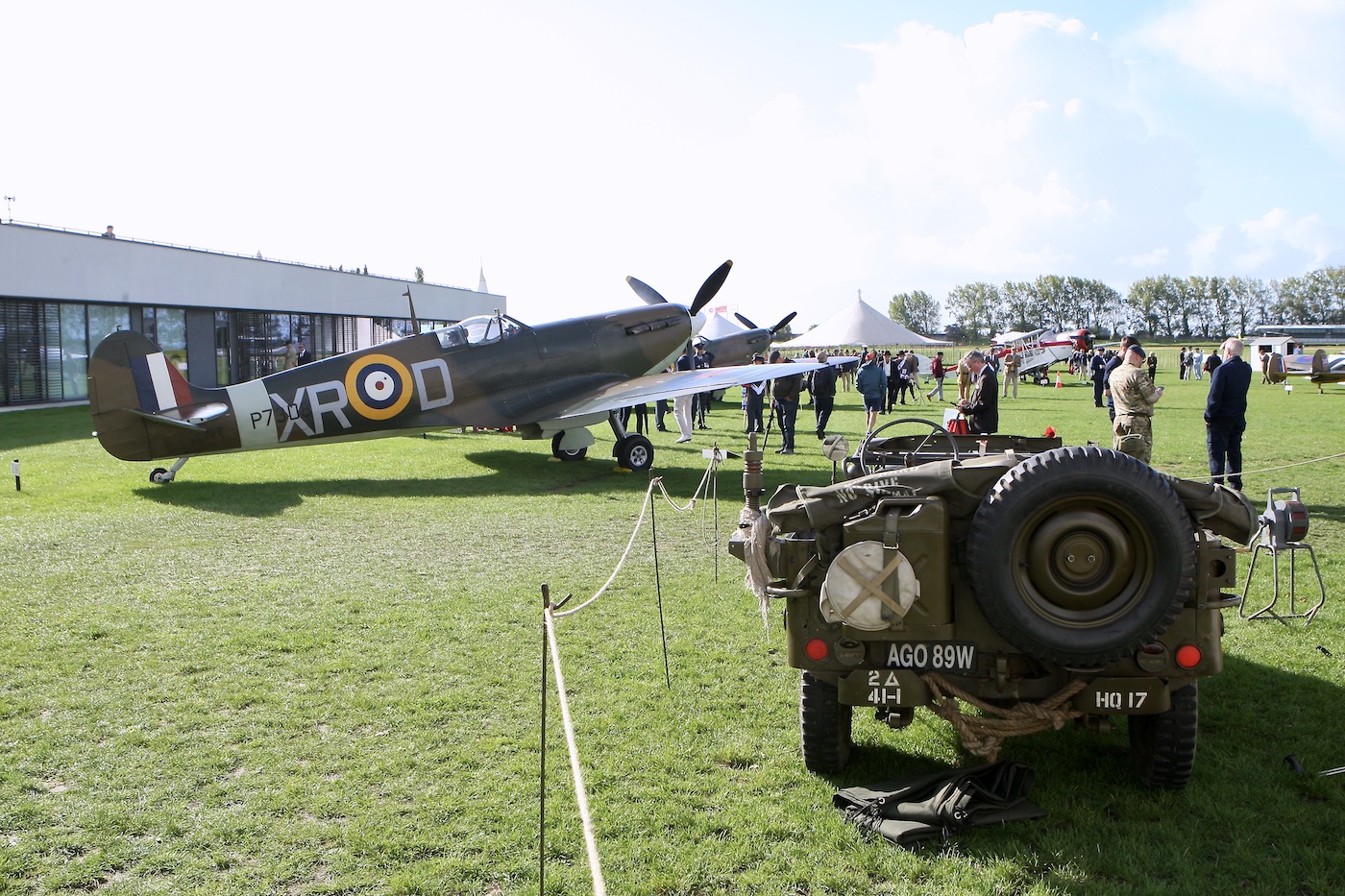
Again courtesy of Dan Friedkin, 1940 Spitfire MK1A AR213 was constructed by Westland at Yeovil in Somerset and delivered to 57 Operational Training Unit (OTU) in 1941 before being transferred to 53 OTU. During its time with 57 OTU, AR213 was flown by Flight Lieutenant James ‘Ginger’ Lacey, one of the RAF’s top scoring aces with 28 confirmed kills. Stored in 1944 and sold in 1946. Registered G-AIST, in 1963 it was loaned to RAF Abingdon for static display. Restored to flying condition at RAF Henlow for the 1968 film The Battle of Britain. After various owners the aircraft was restored in 2007, and in 2011 was purchased by the Friedkin family and painted to represent P7308 of No 71 Eagle Squadron RAF.
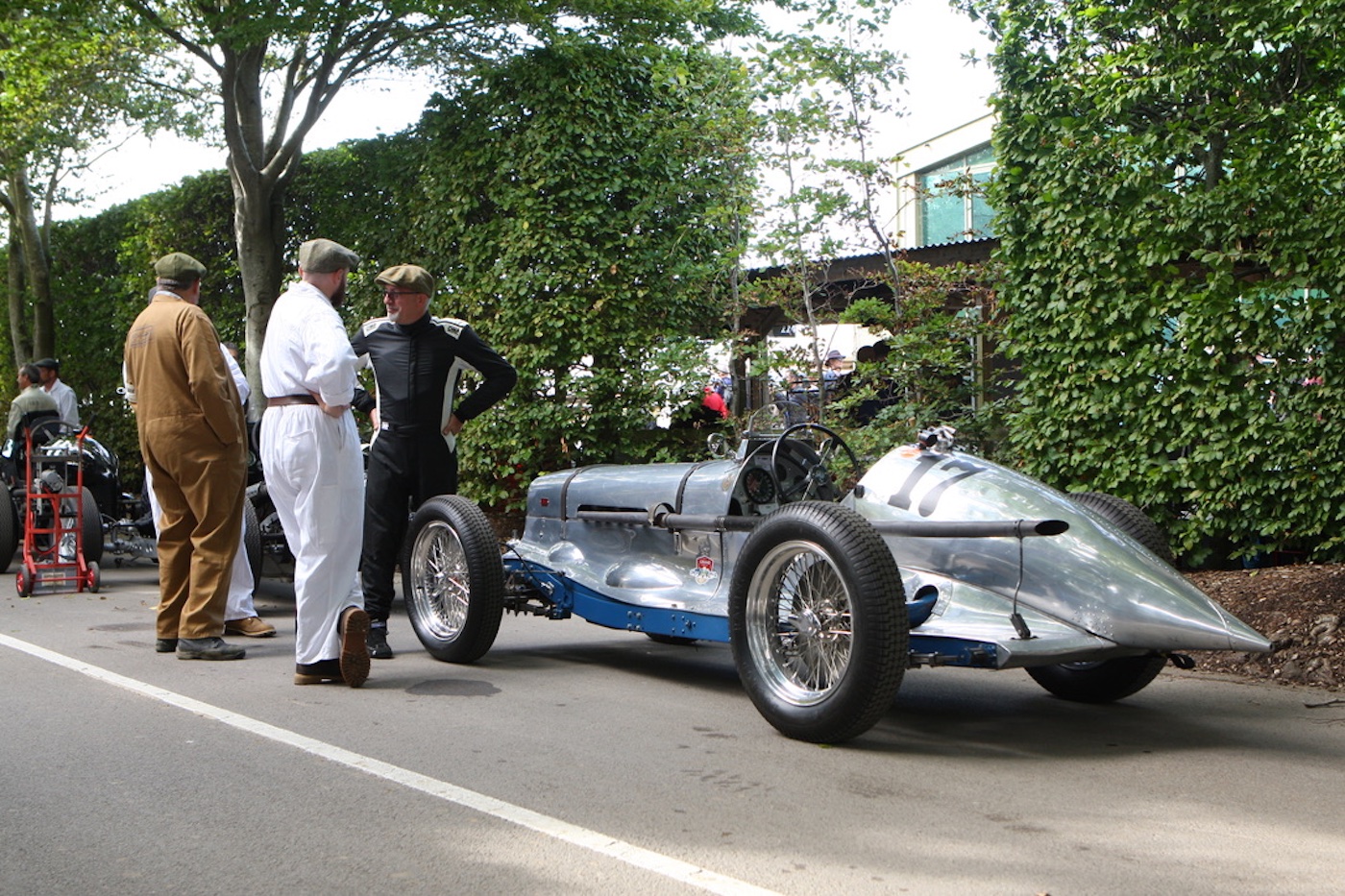
1937 MG NA-KN ‘Bellevue Special,’ Steve McEvoy, Goodwood Trophy.
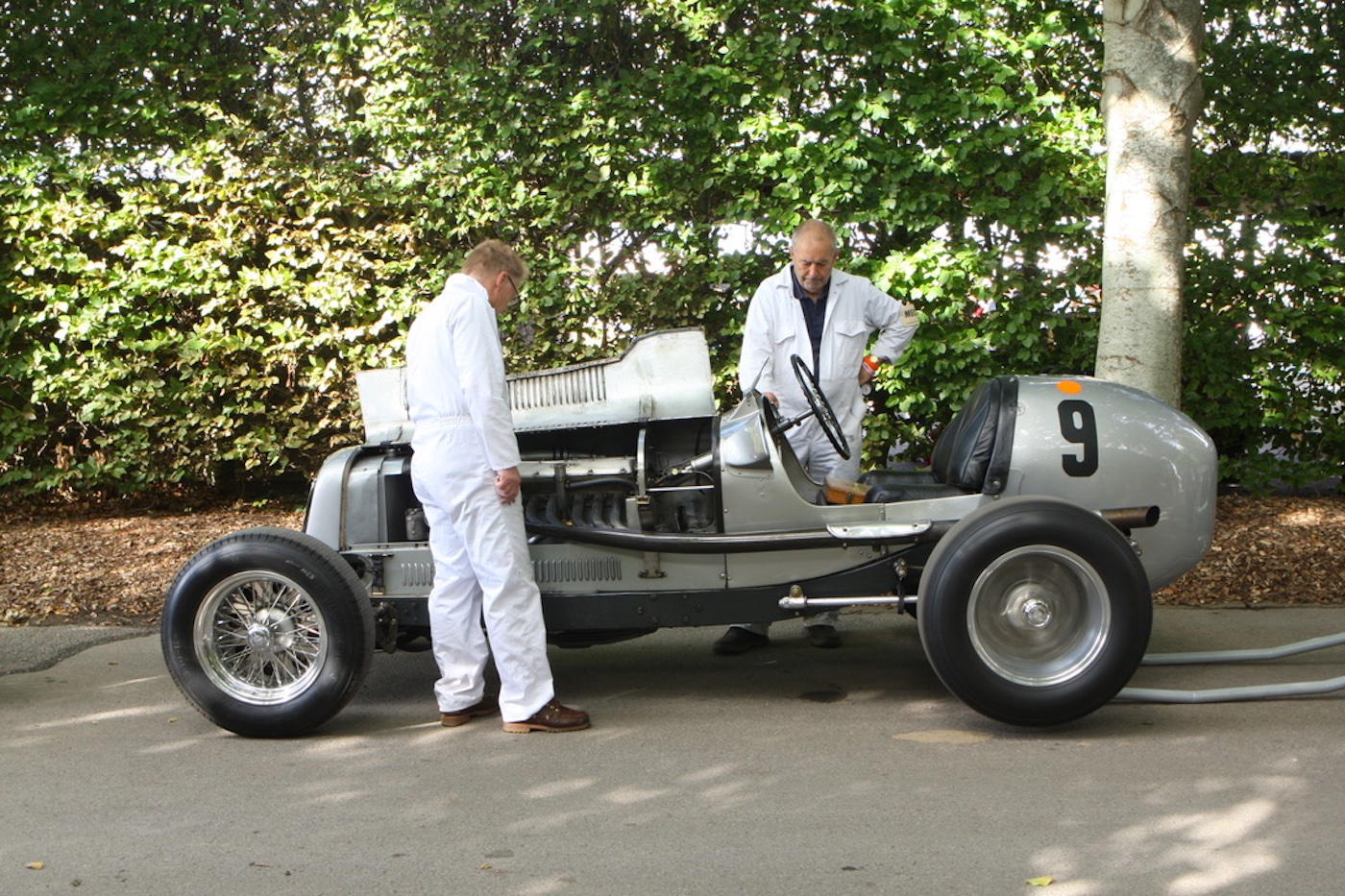
1936 ERA R11B, David Morris, Goodwood Trophy.
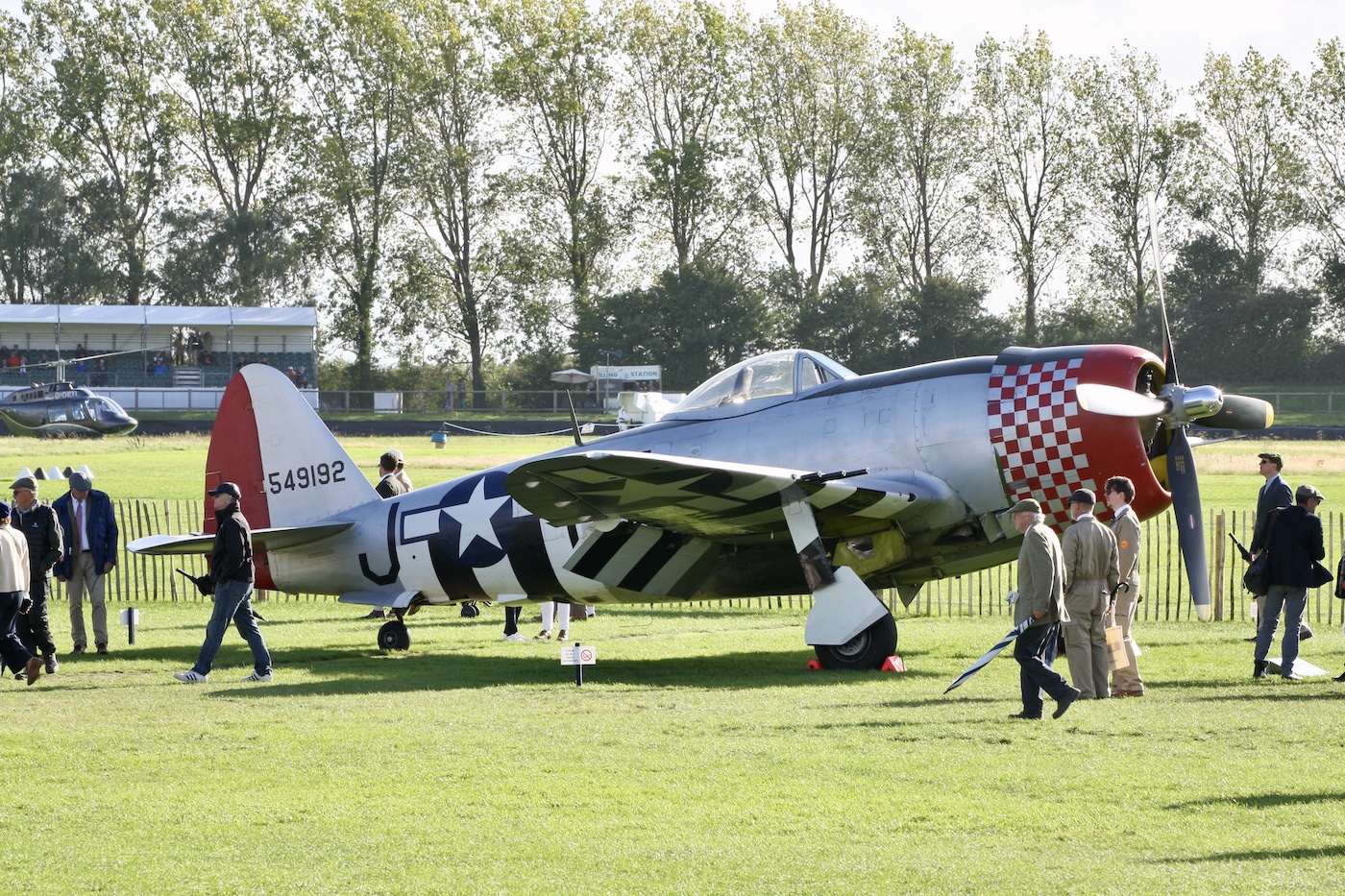
1945 Republic P-47D Reg G-THUN. Constructed at Republic’s Evansville factory in Indiana and then accepted by the USAAF, but other than the airframe served with the Air Service Training Command during the final months of WW2, but no further history is known of its time with the USAAF. Following storage, in 1953 it was supplied to the Peruvian Air Force under the US Military Assistance Programme to serve as a front line fighter and trainer. Returned to the UK in 2018, G-Thun wears the markings of the USAAF 492nd Fighter Squadron.
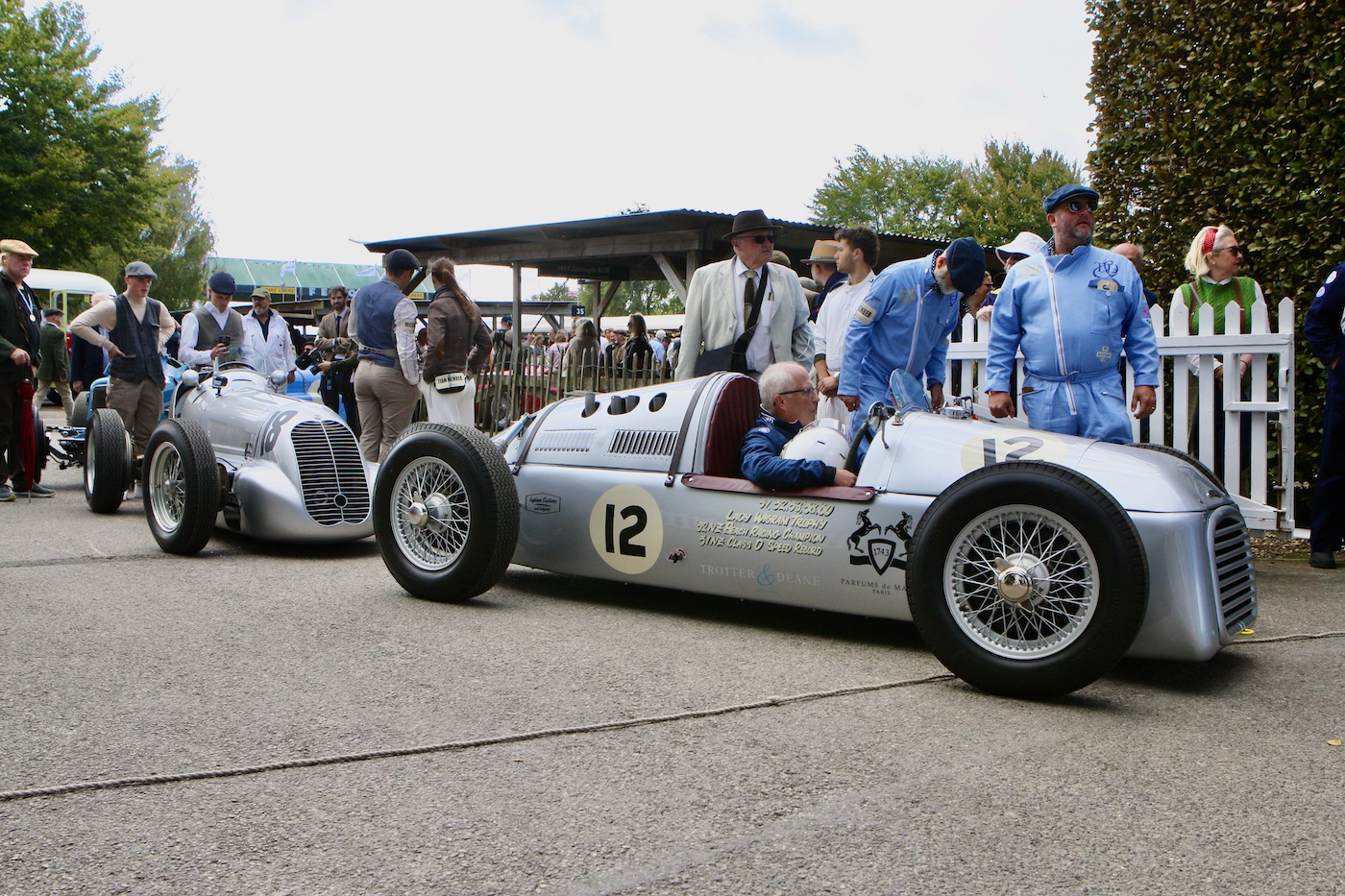
1951 Vanguard RA4, Gareth Burnett.
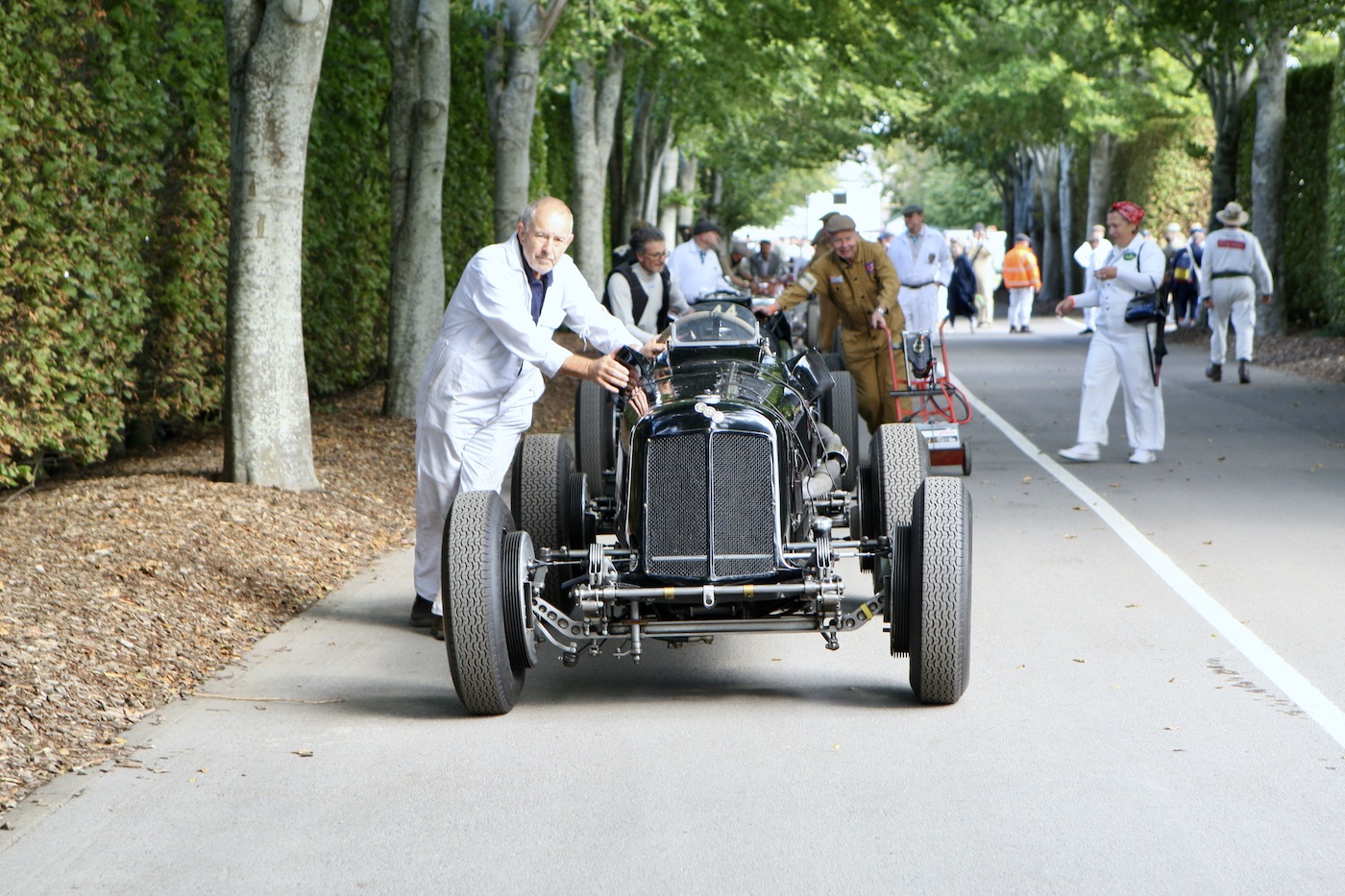
ERA in the tow road
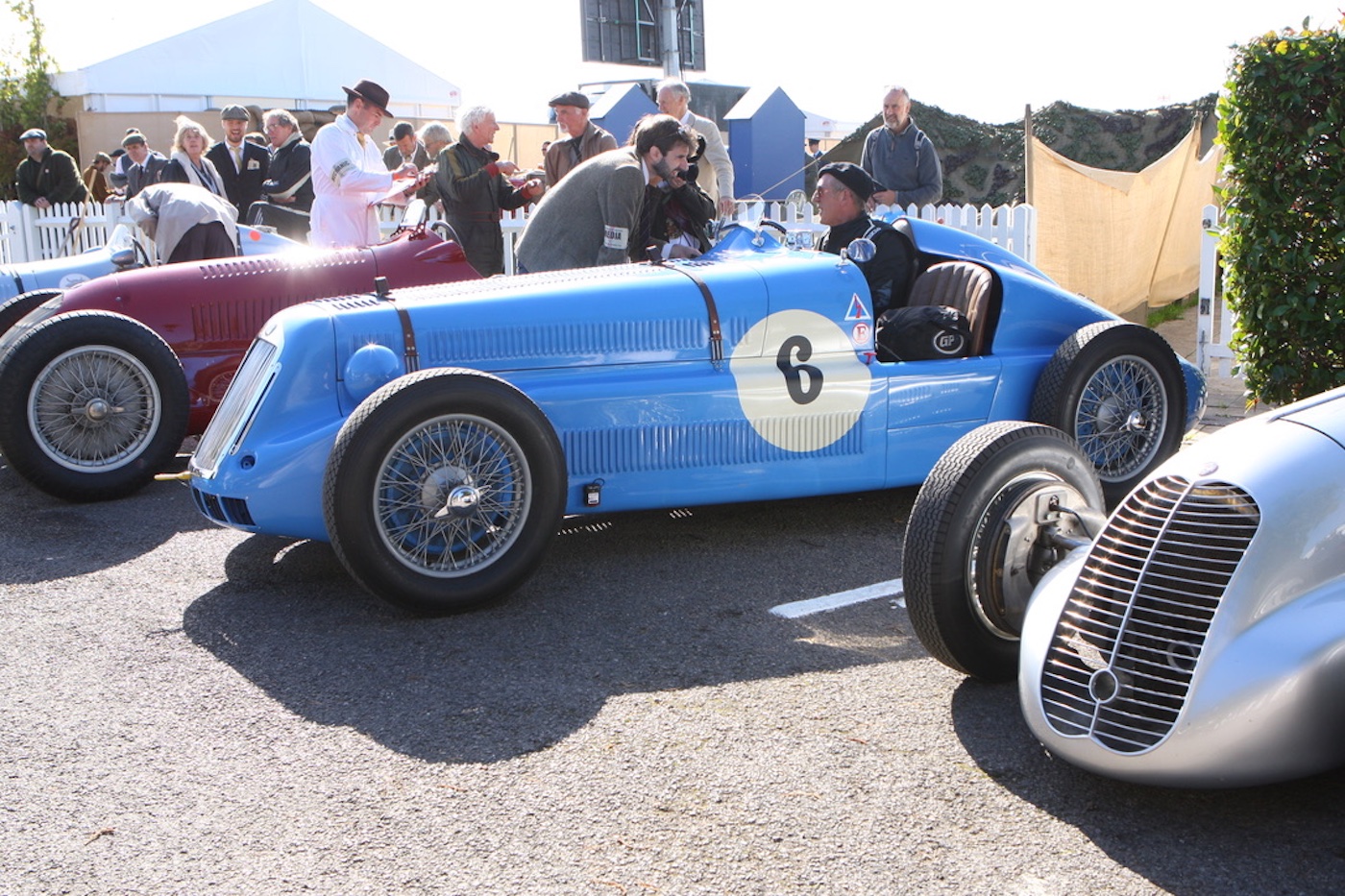
1947 Delage D6-3L, Mark Brett
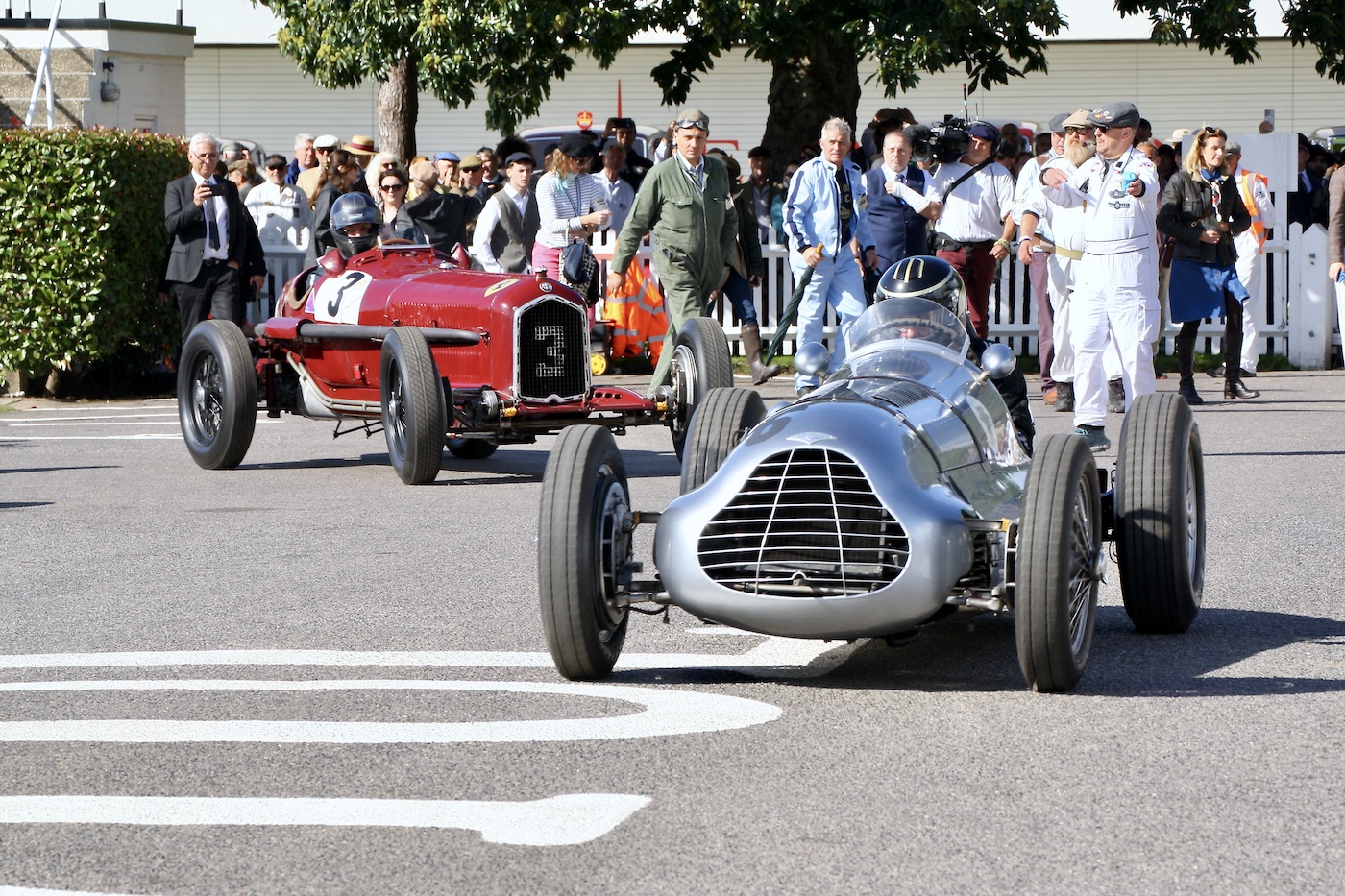
1939 Parnell Challenger ERA, Duncan Ricketts.
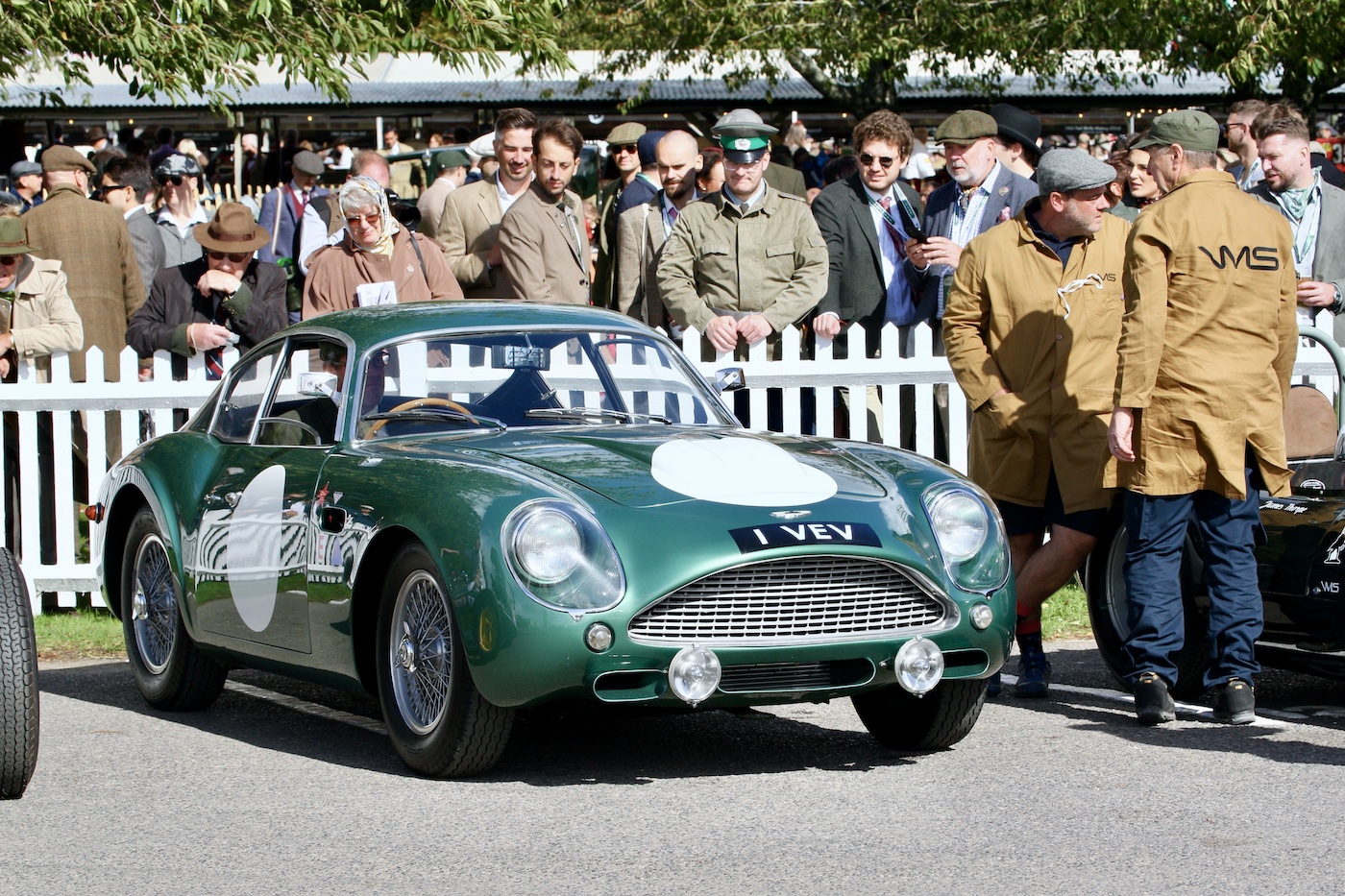
Forming part of the Jim Clark Tribute, Aston Martin DB4GT Zagato ‘1 VEV’.
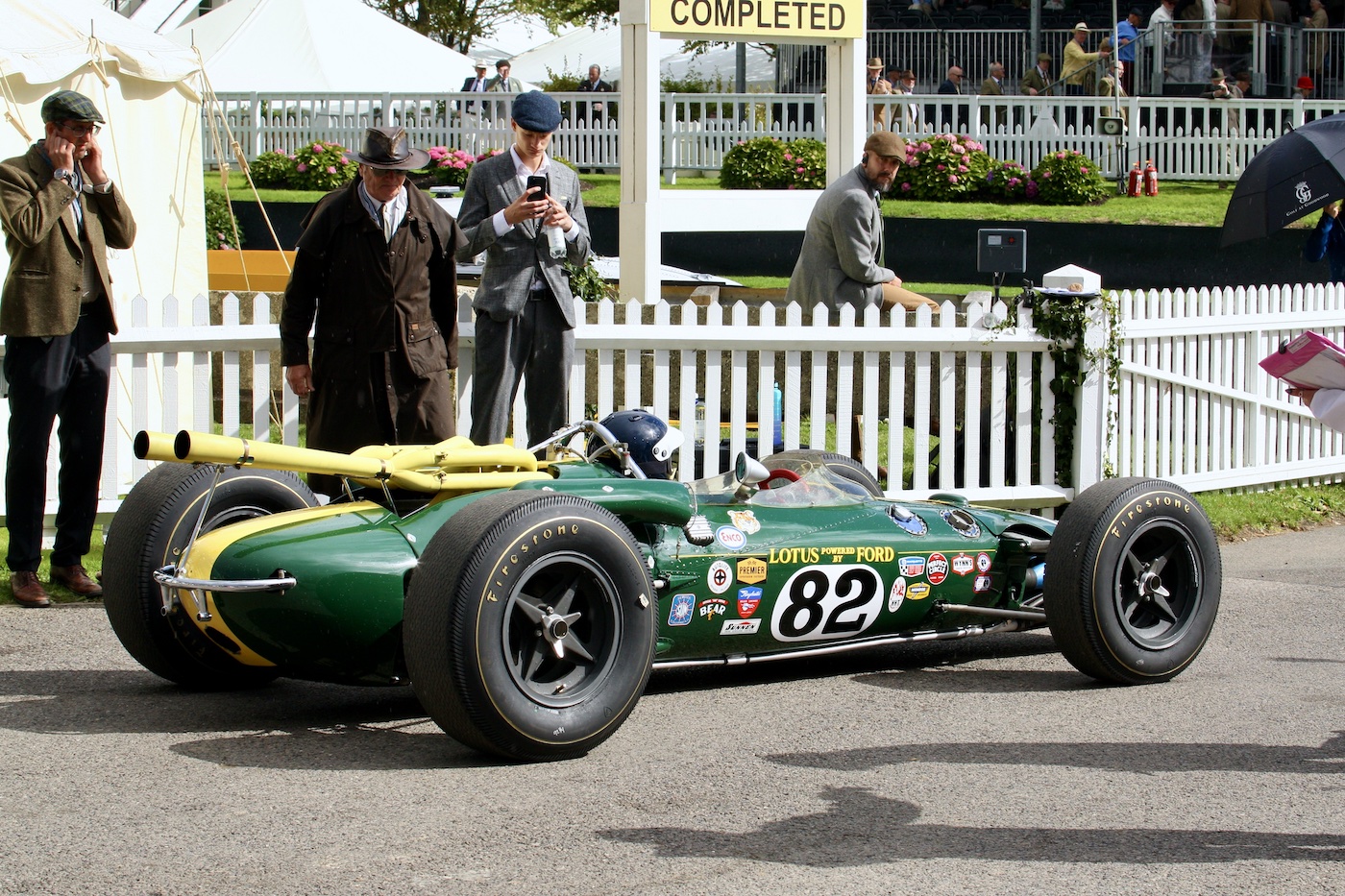
Star of the Jim Clark tribute, and probably the loudest, Lotus Ford 38, Indy 500 winner in 1965
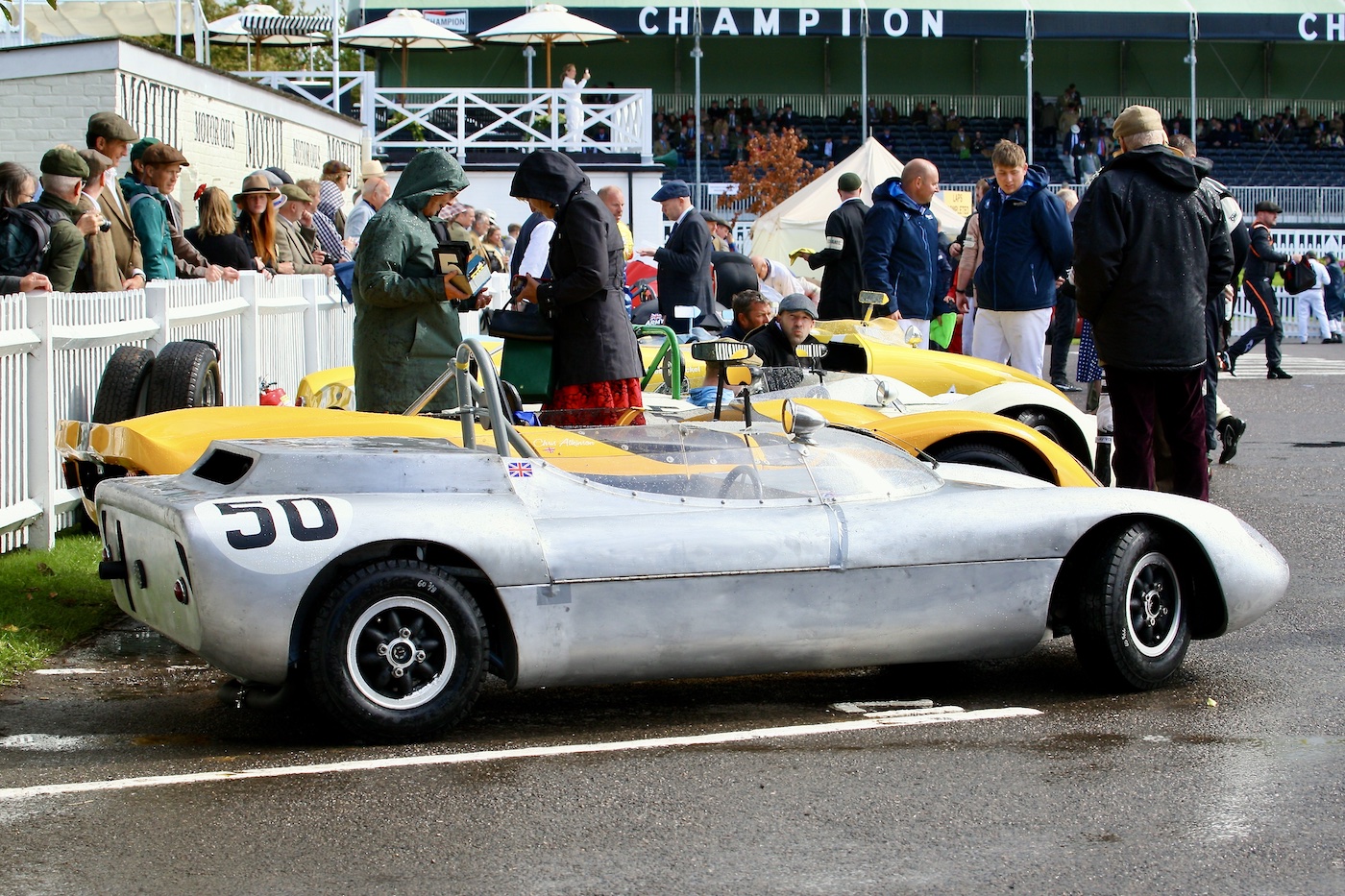
Caption is taken from the Goodwood web site, and written by Gary Axon.
This diminutive mid-engined Aurora last competed here in the Lavant Cup race at the 1965 Goodwood Easter Meeting, driven by former Lotus works driver Trevor Taylor, who finished 16th overall. The race was won by the Lotus 30 of Jim Clark, who crossed the line 20 seconds ahead of Bruce McLaren, at the wheel of his own Elva Mark I Oldsmobile.
Returning to Goodwood — and motor racing as a whole — after many years lost in hibernation, the tiny Aurora-BMC was developed as a reasonably priced BMC Mini-based sports prototype in early 1965 by Aurora Gear (Racing) of Rotherham. Using a centrally mounted 1,150cc A-Series Mini engine, increased in period from its initial 1,131cc motor, a limited production run of the competition car was planned but sadly never came to fruition.
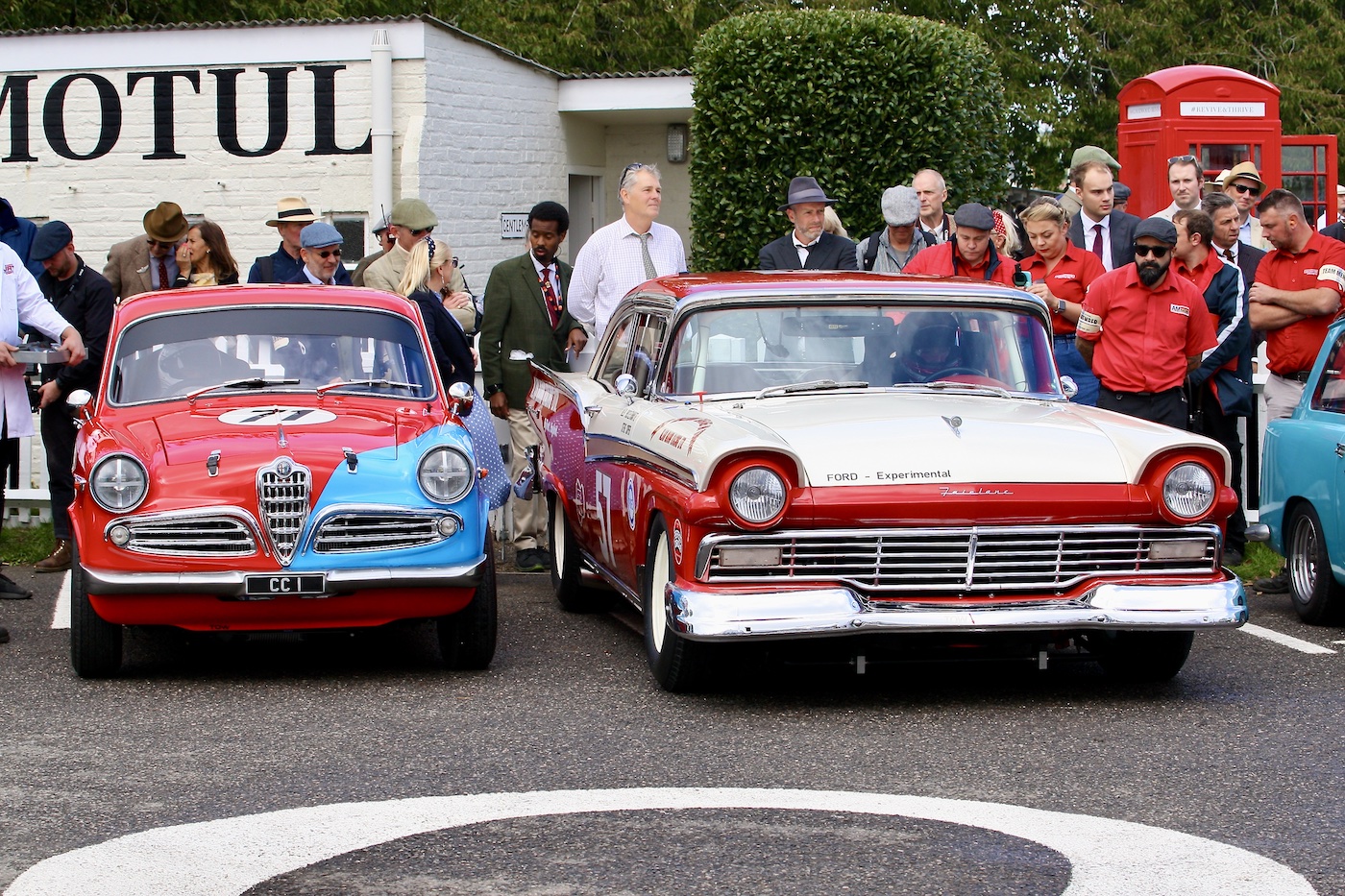
1958 Alfa Romeo Giulietta Ti, Max Hilton/Grahame Chilton. 1957 Ford Fairlane, Steve Soper/Alex Thistlethwayte.
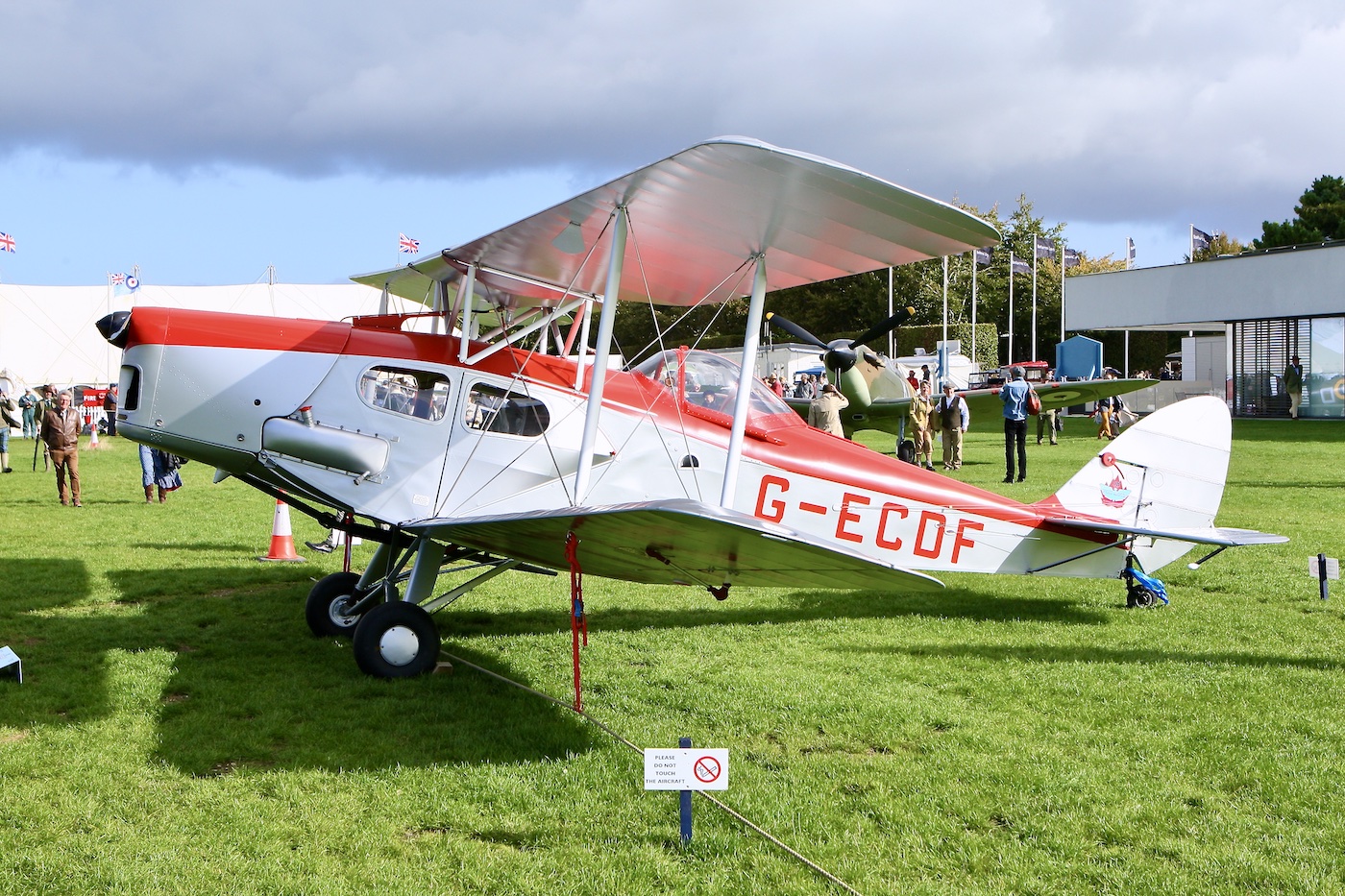
Steve Jones’ 1947 De Havilland DH83C ‘Fox Moth.’ Whilst the De Havilland Moth lineage of aircraft began in 1925, this DH83C is one of 53 examples constructed by De Havilland Canada following the end of WW2. Fitted with the 145 hp Gipsy Major engine, G-ECDF was delivered to New Zealand and was flown for six years around both islands until being damaged on the 27th September 1953 when it overshot the landing strip at Otatu. The remains passed through various owners until the present owner purchased her in 2016. Restored in Southampton, G-ECDF returned to the skies in 2024.
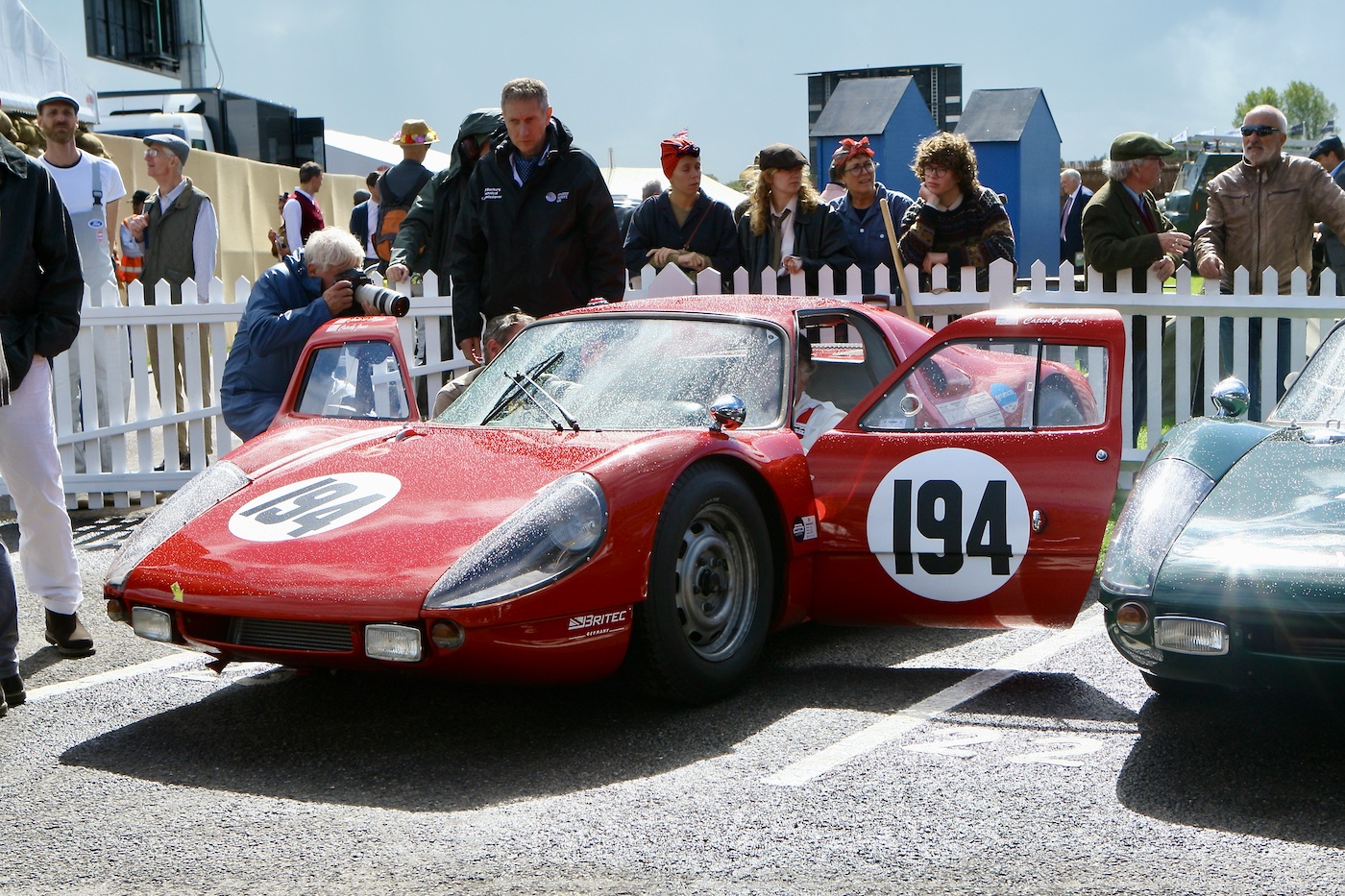
1964 Porsche 904/6 Carrera GTS, Carlos de Quesada.
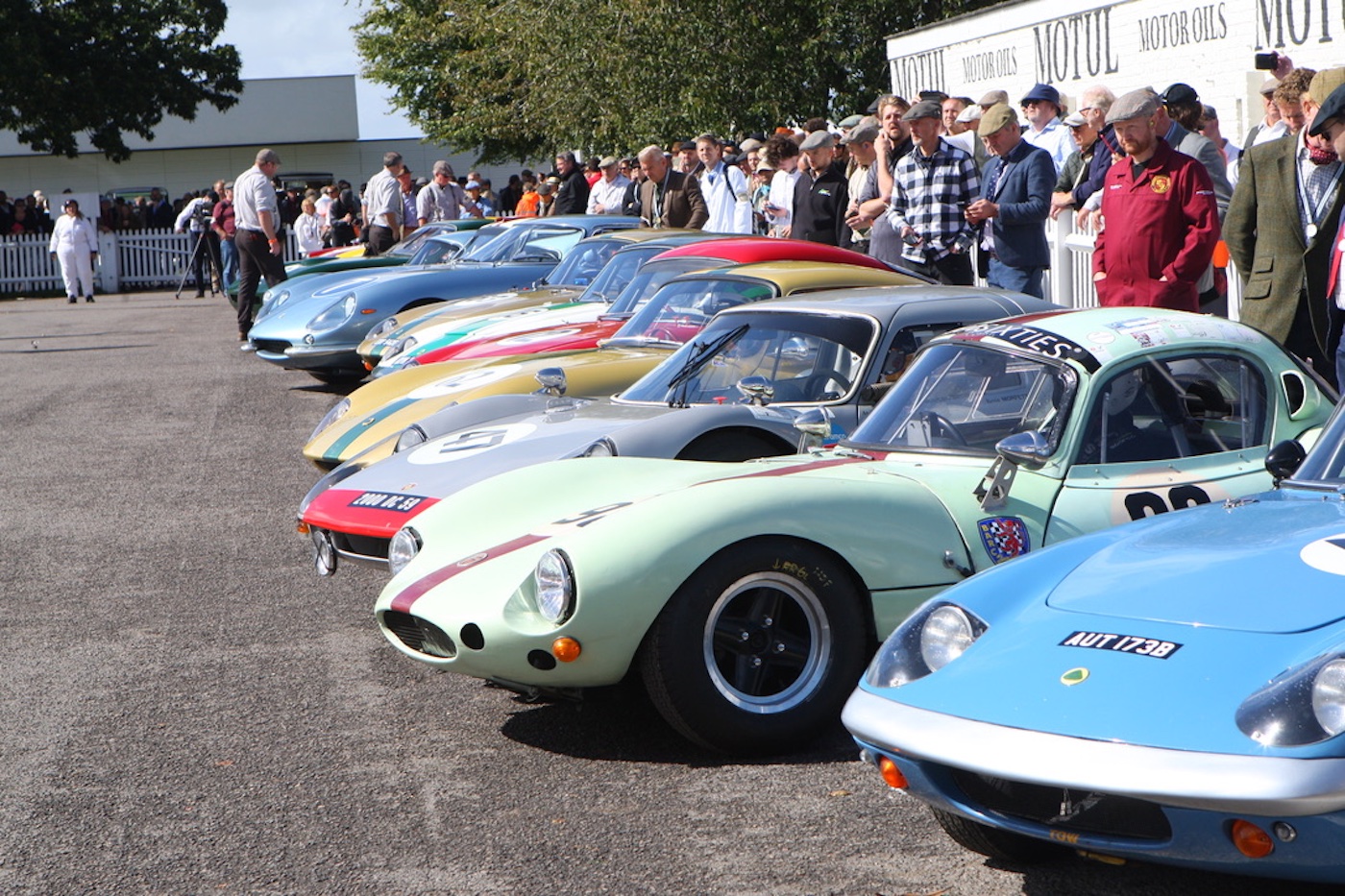
What a line up for the Fordwater Trophy, a race for production sports and GT cars of a type that raced between 1964 and 1966.
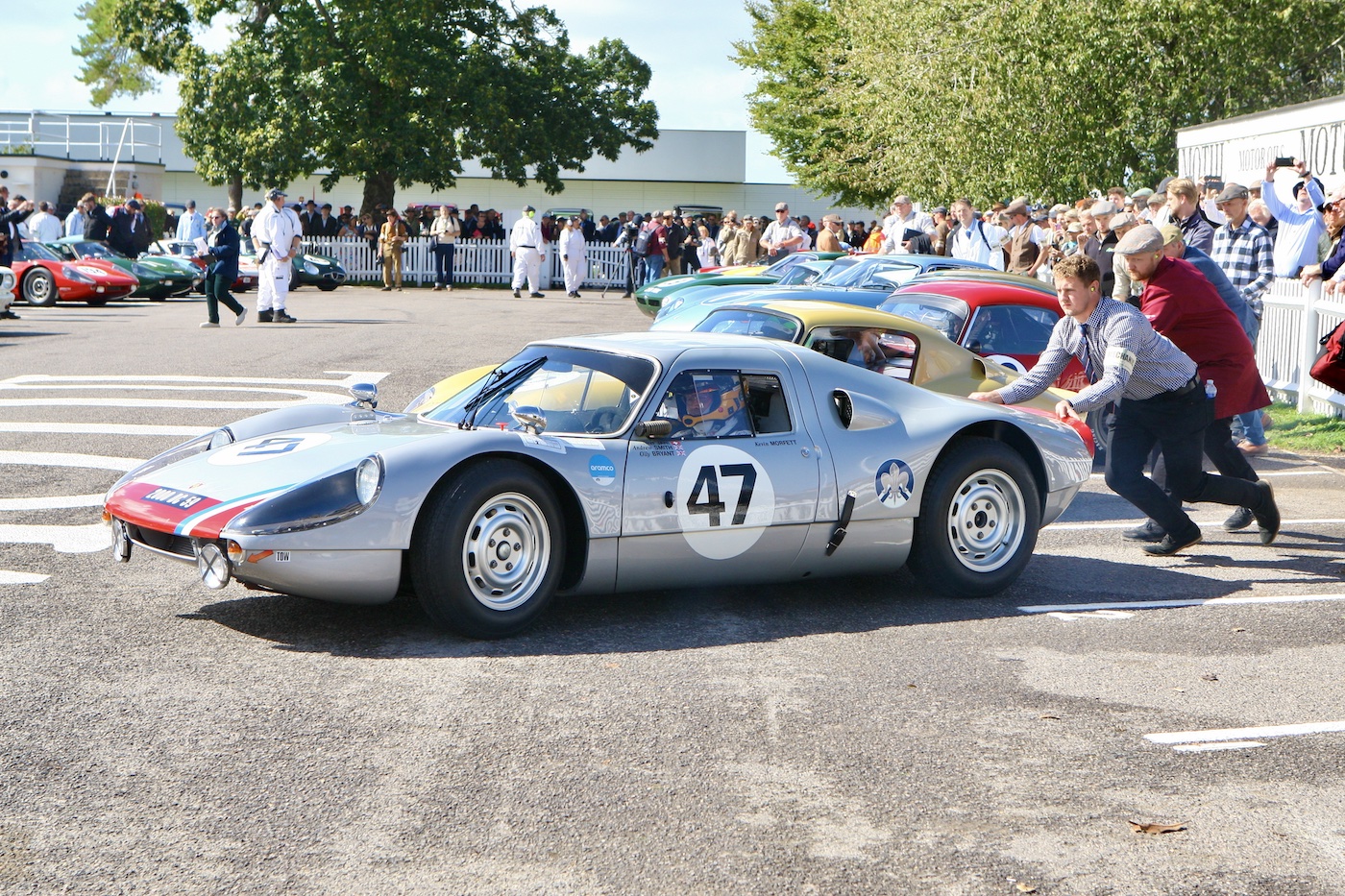
‘Give us a push.’ 1964 Porsche 904/6 Carrera GTS, Andrew Smith
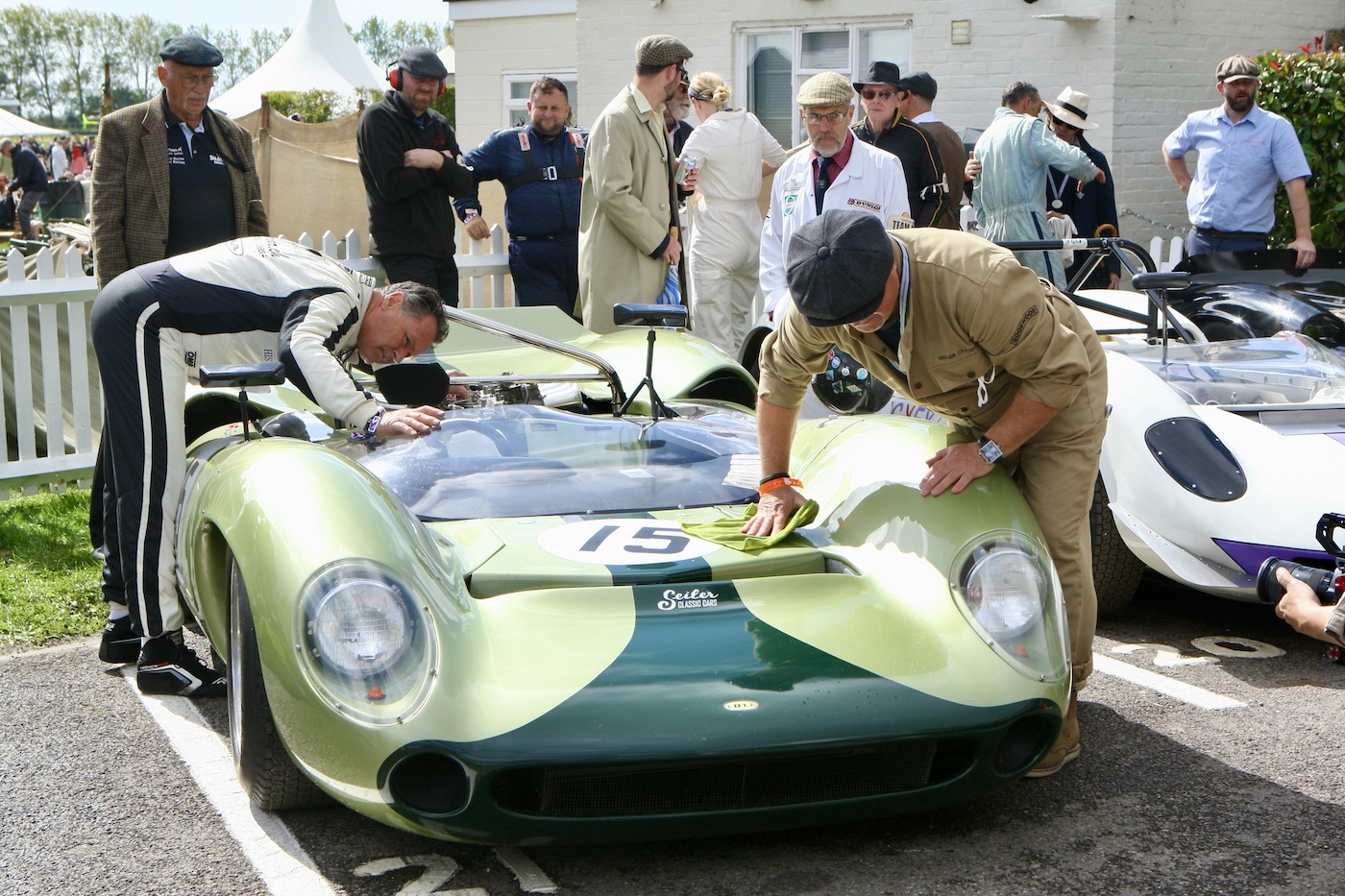
1965 Lola Chevrolet T70, Toni Seiler.
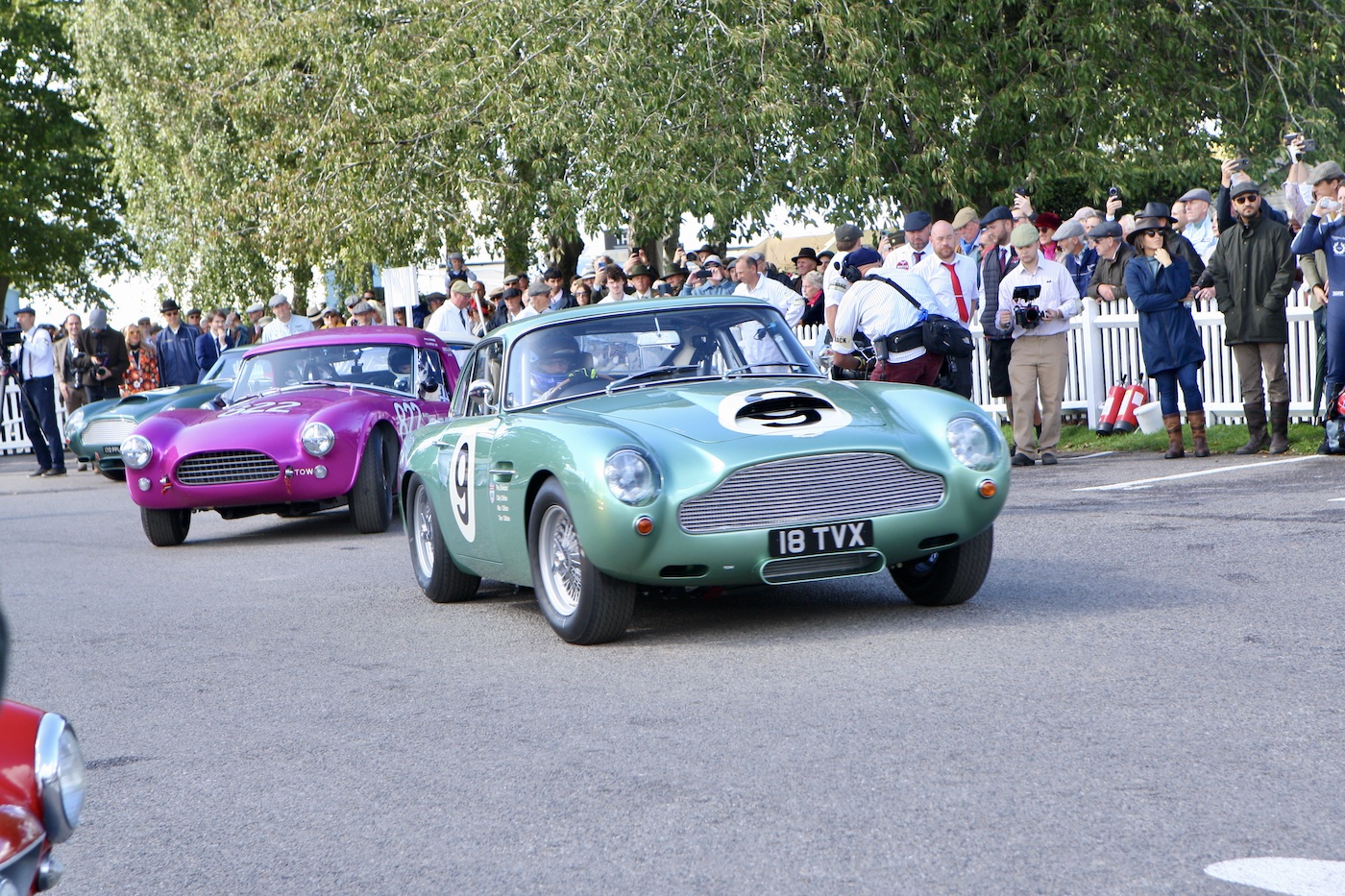
1960 Aston Martin DB4GT, Max & Tom Chilton. 1963 Shelby Cobra ‘Dragonsnake,’ Tom Hartley Jnr/Jimmie Johnson.
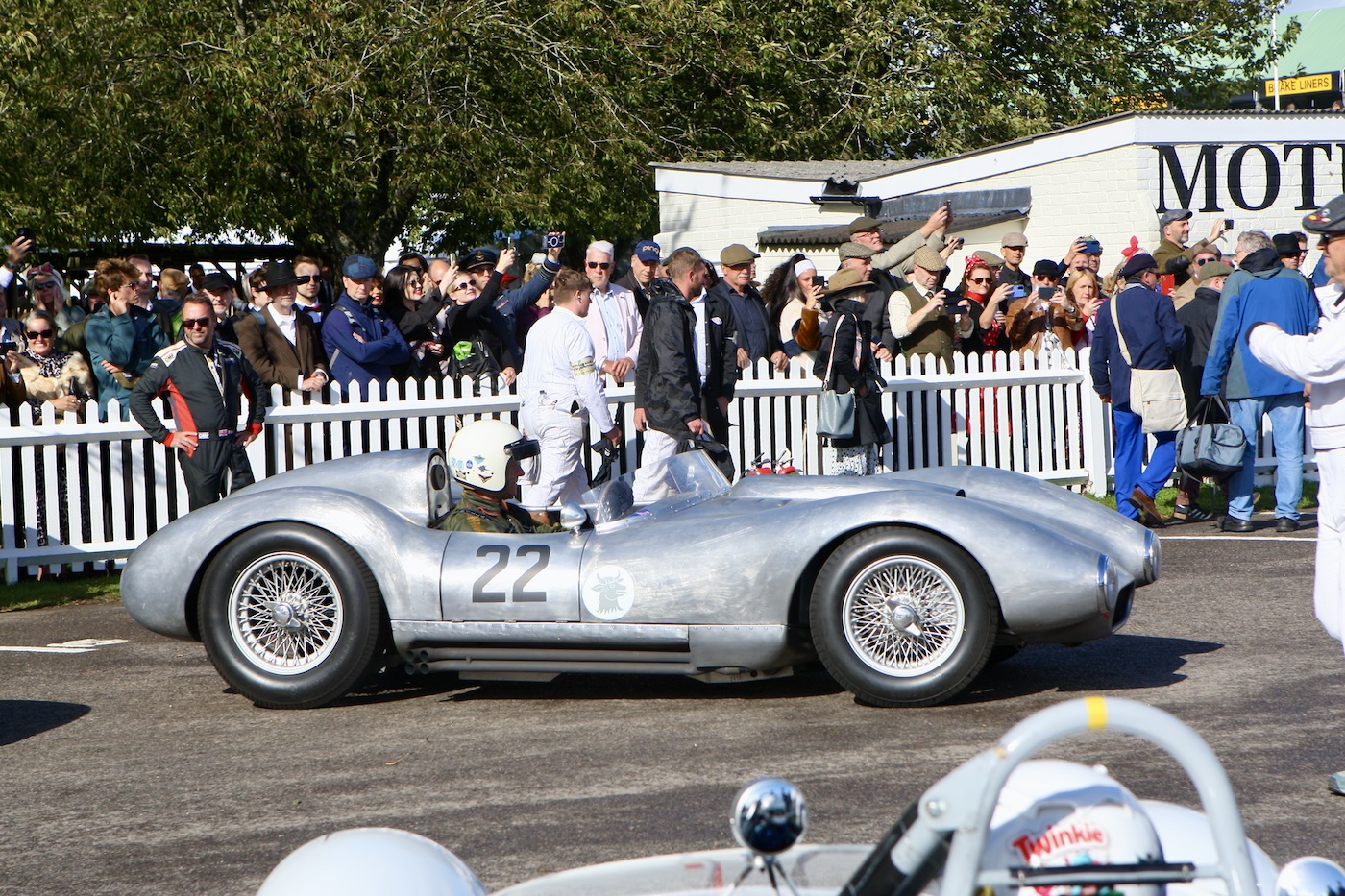
1957 Sadler-Chevrolet MKII, Julian Majzub.
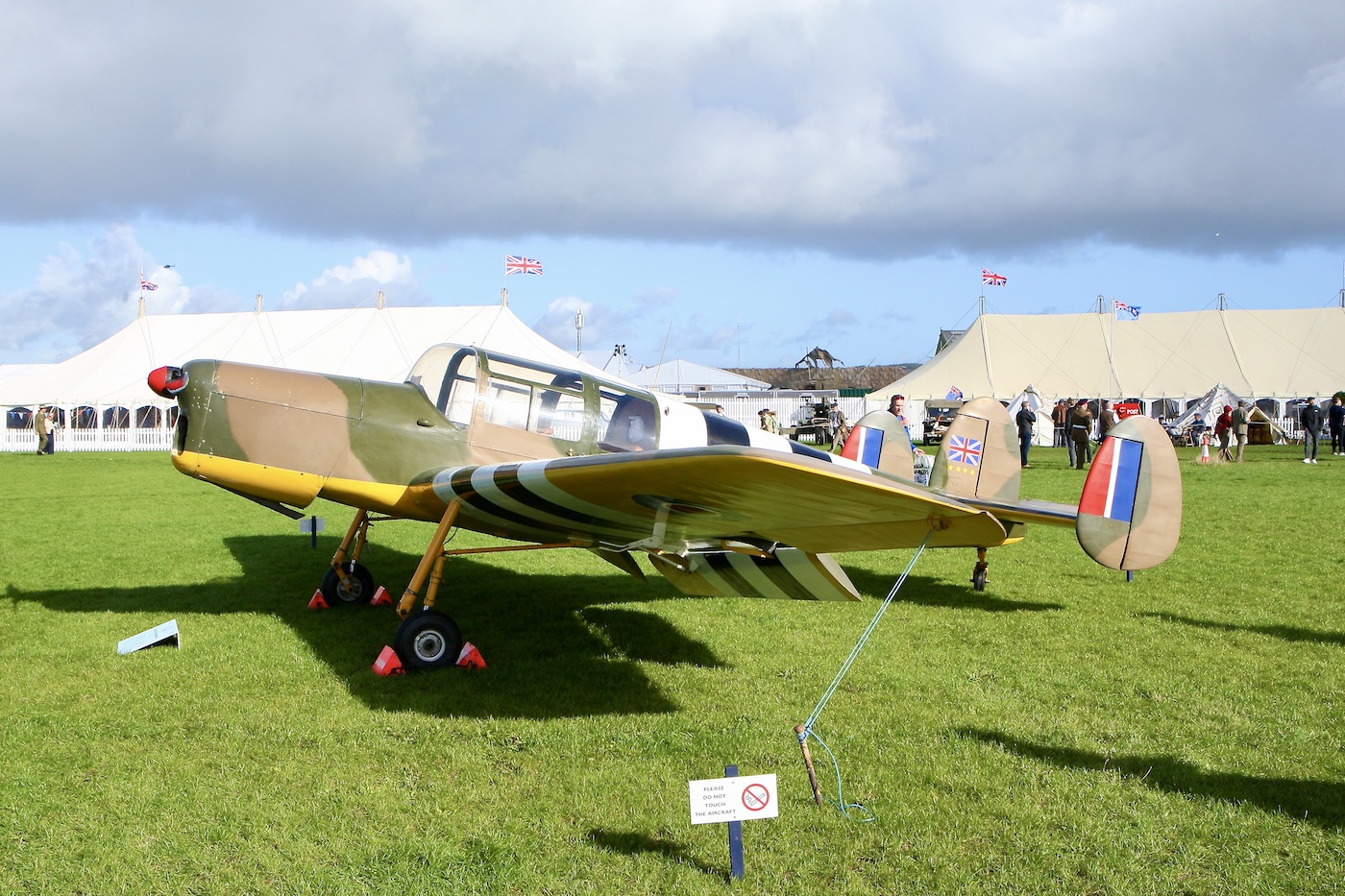
Mark Hale’s 1946 Miles Messenger 2A G-AIEK was built at Miles’ Newtownards factory in Northern Ireland and was one of 65 examples constructed for the civilian market. G-AIEK flew around the UK and Europe until being grounded in 1977. In the mid 1980s it was refurbished and altered to a military specification Messenger MK4 and was reconfigured and painted to represent RG333, one of two Messengers used by Field Marshall Montgomery during the D Day campaign.
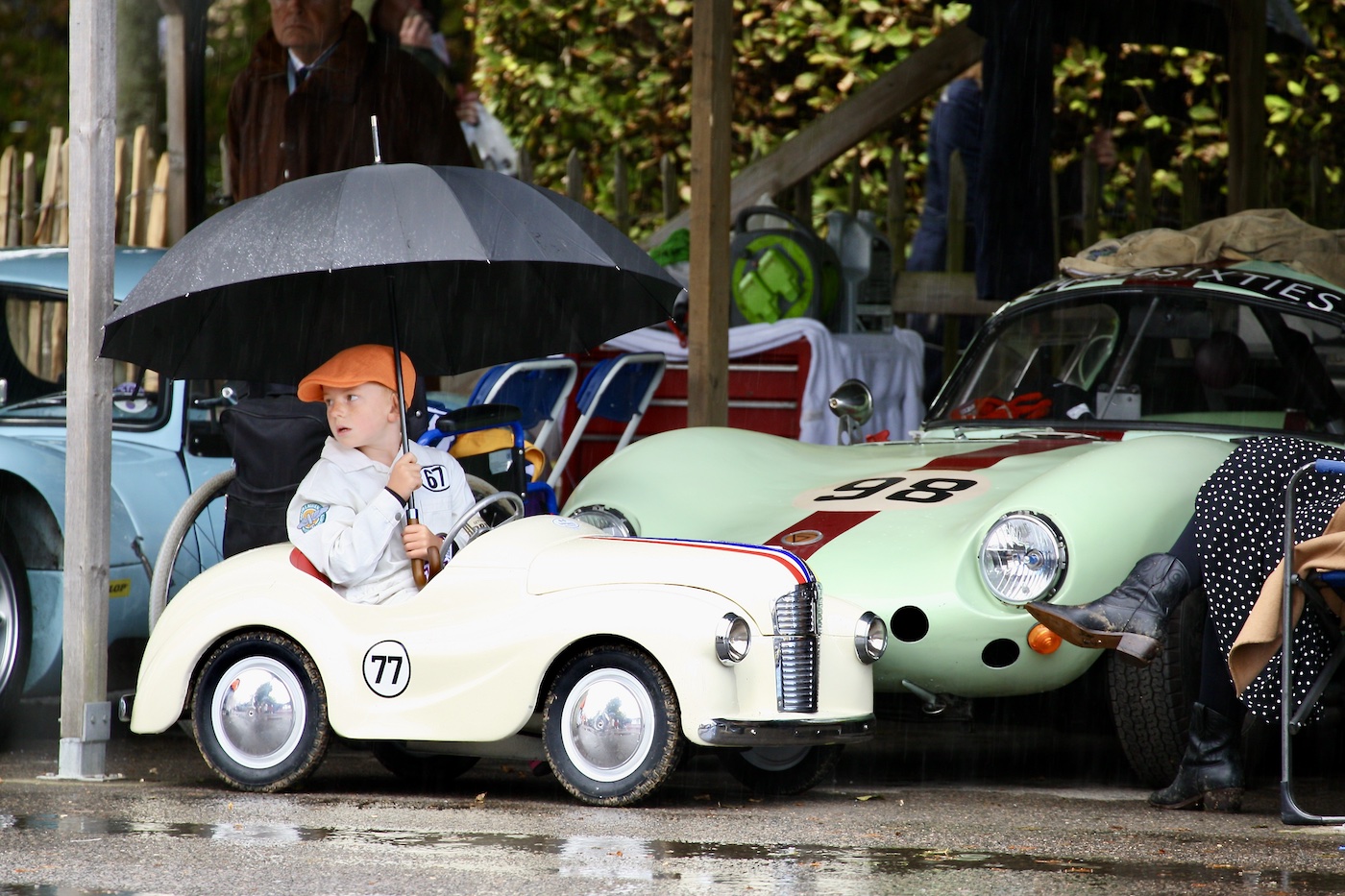
Austin J40, Eddie Rockett, Settrington Cup.
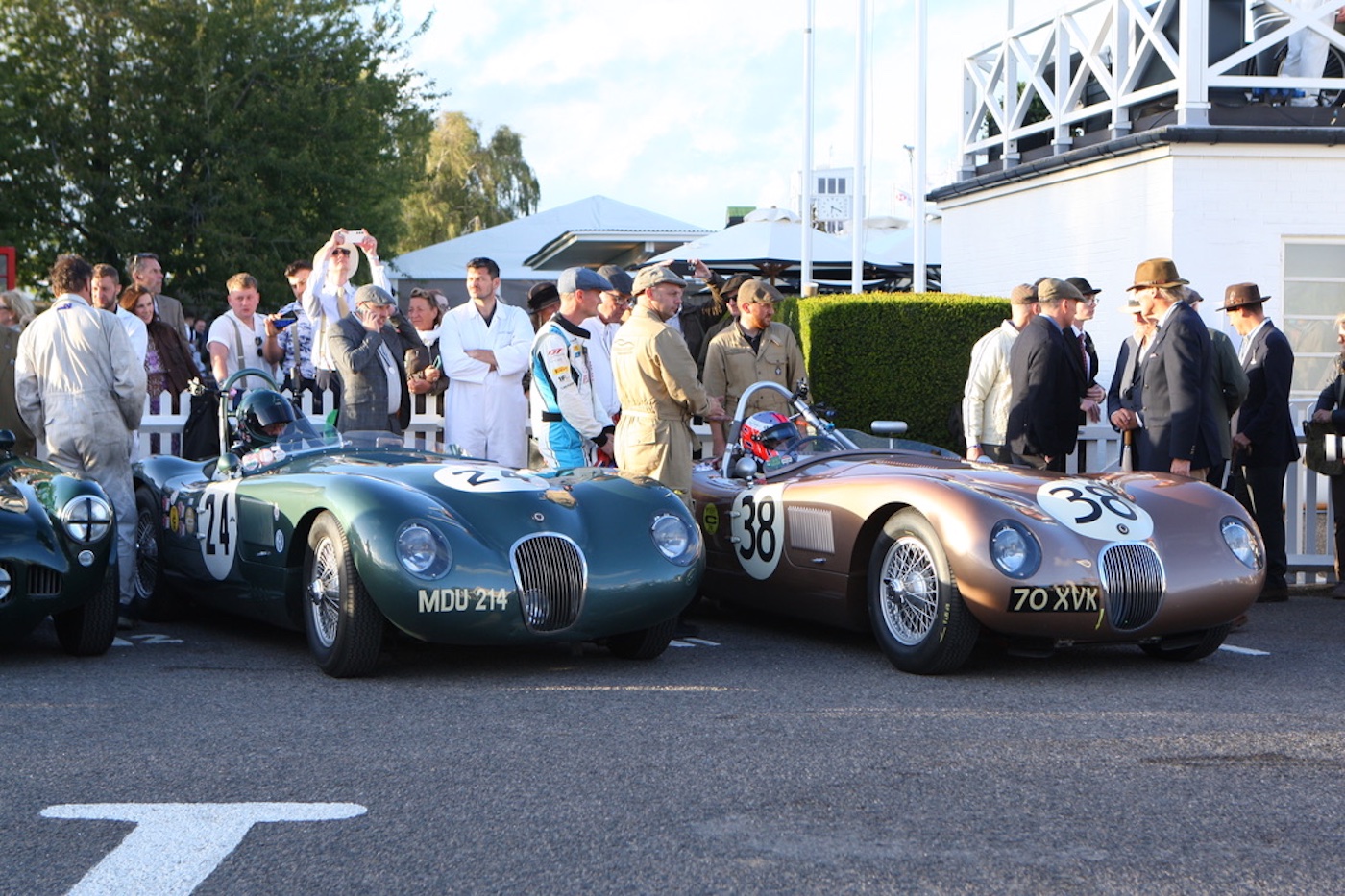
1952 Jaguar C Type, Chris Ward/Nigel Webb., Car 38, 1952 Jaguar C Type, Jenson Button/Alex Buncombe.
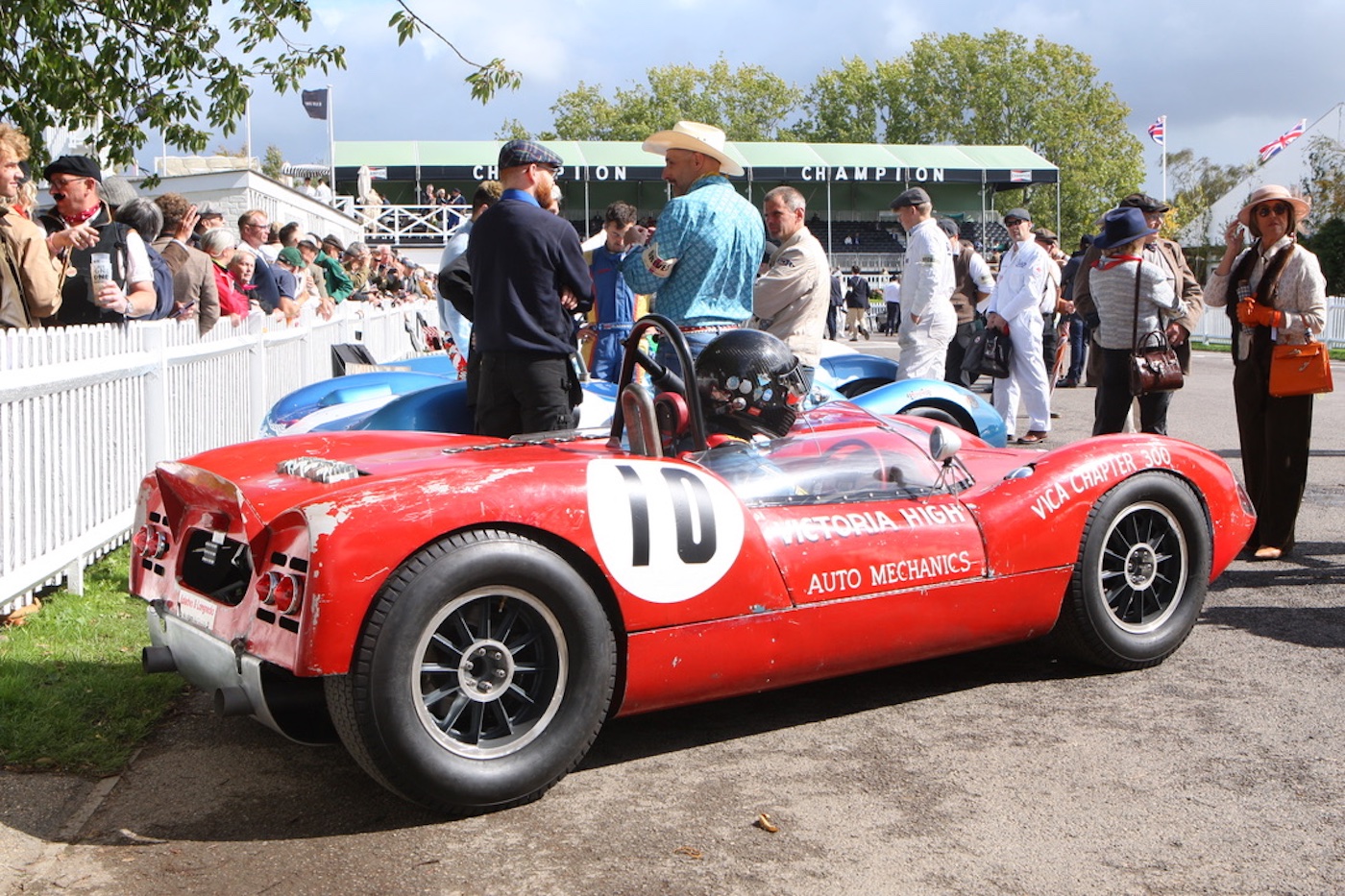
1960 Lotus Ferrari 19, Jakob Viggo Holstein.
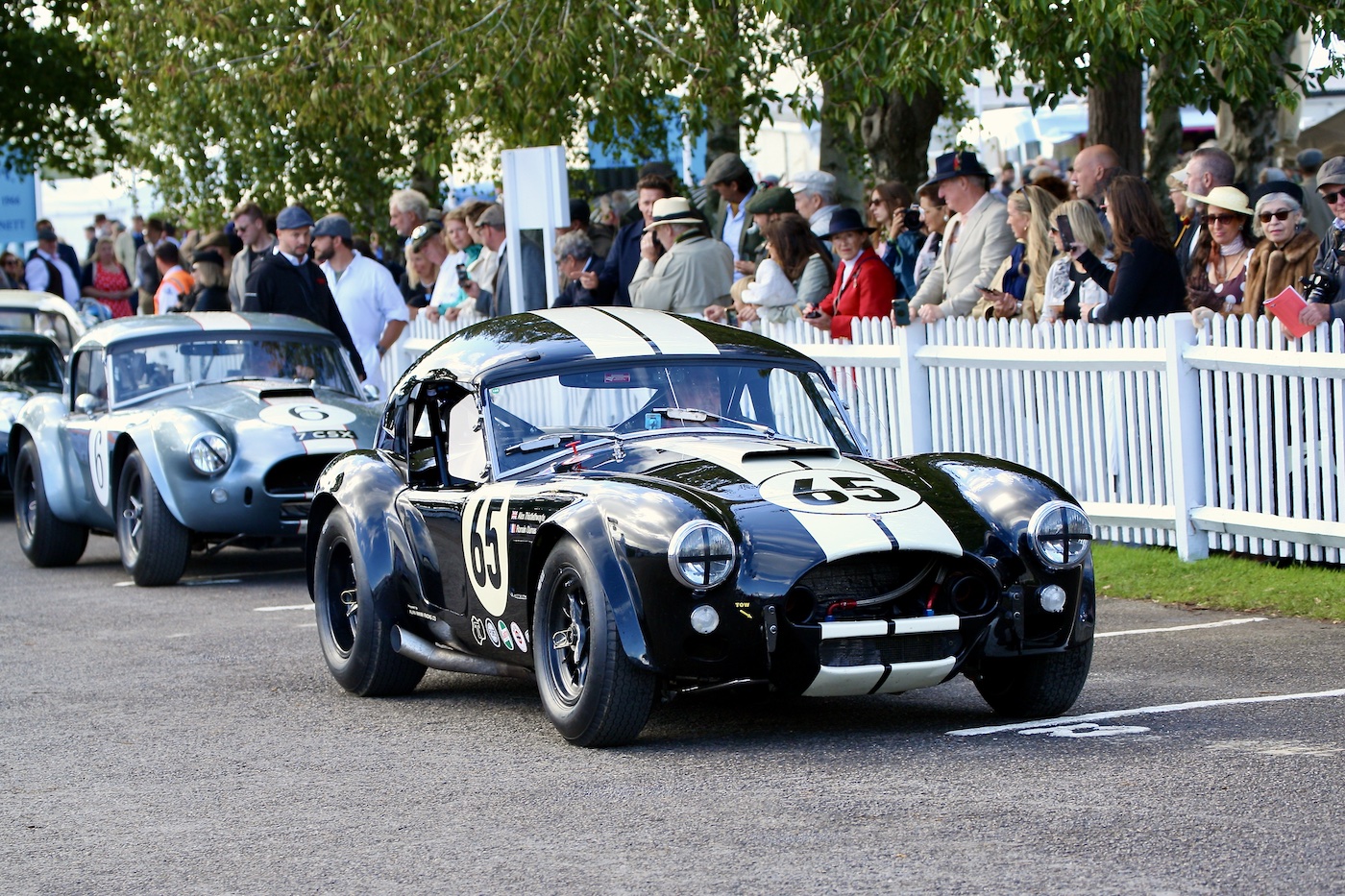
1965 Shelby Cobra, Romain Dumas/Alex Thistlethwayte.
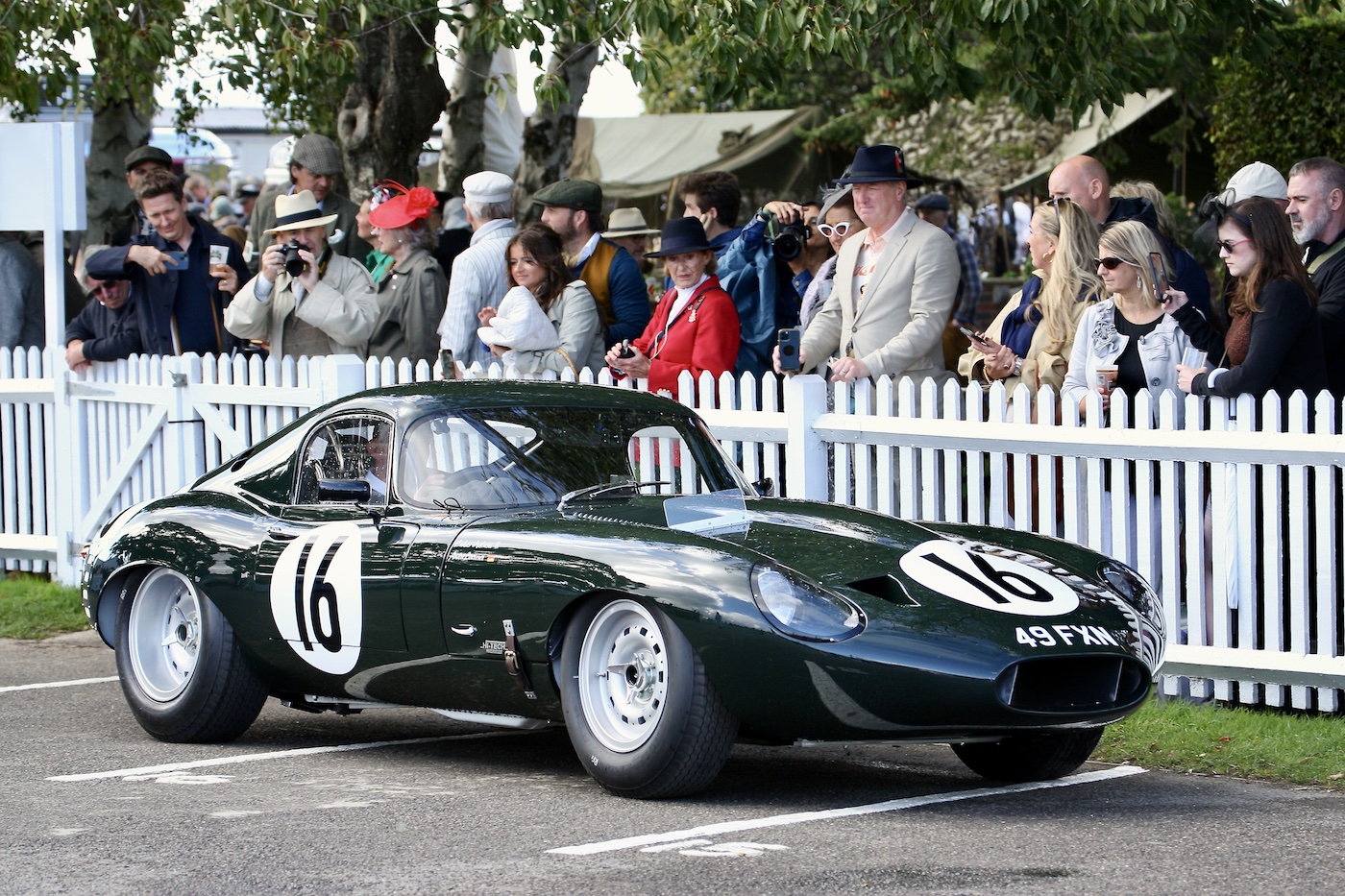
1963 Jaguar E Type ‘Lowdrag Coupe,’ Lukas Halusa/Andre Lotterer.
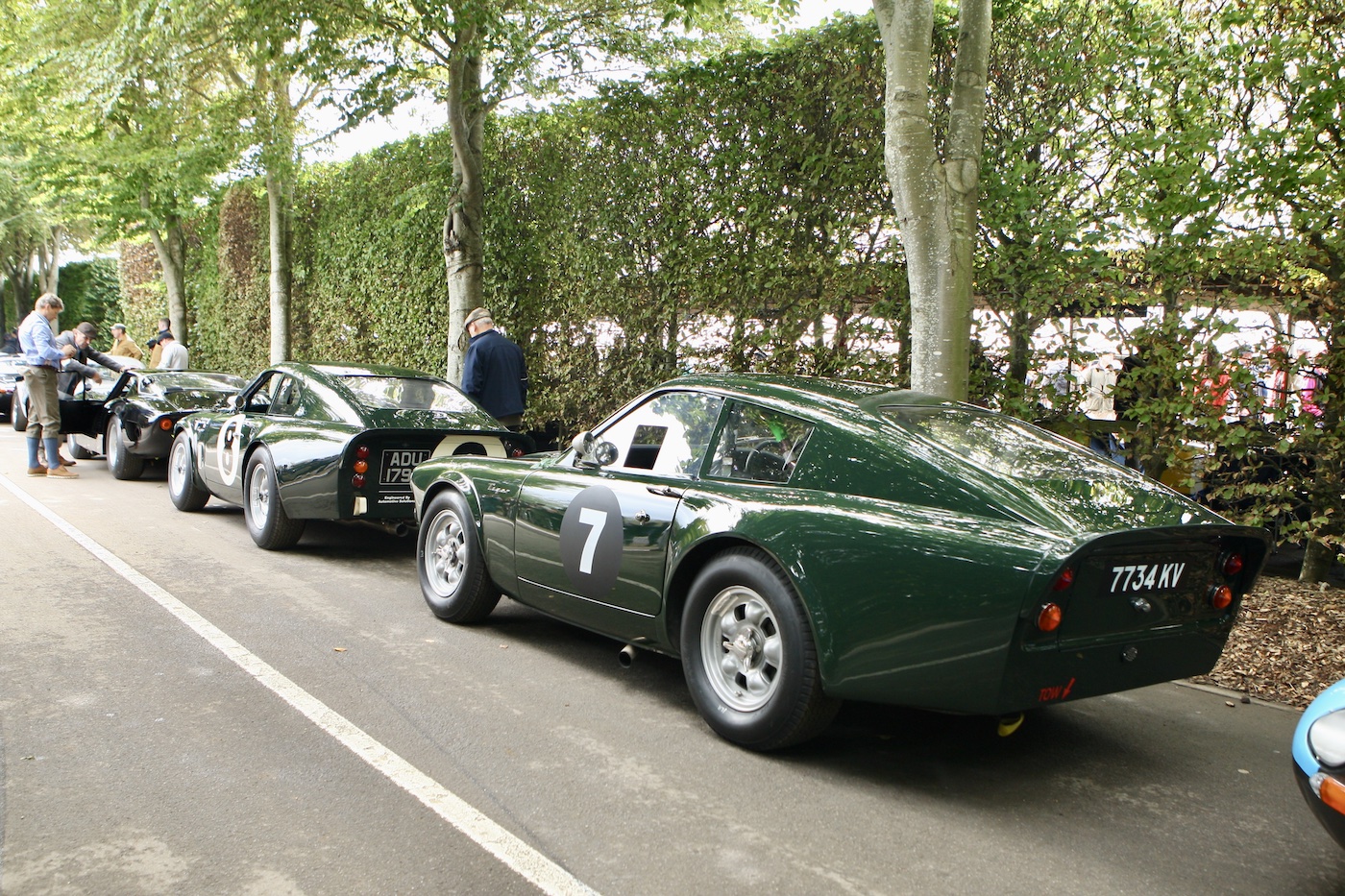
Lister Sunbeams
3 examples were built for Le Mans in 1964, here are two of them!, car 7 Michael Squire/Nigel Greensall, car 8 Matt Neal/Christopher Beighton.
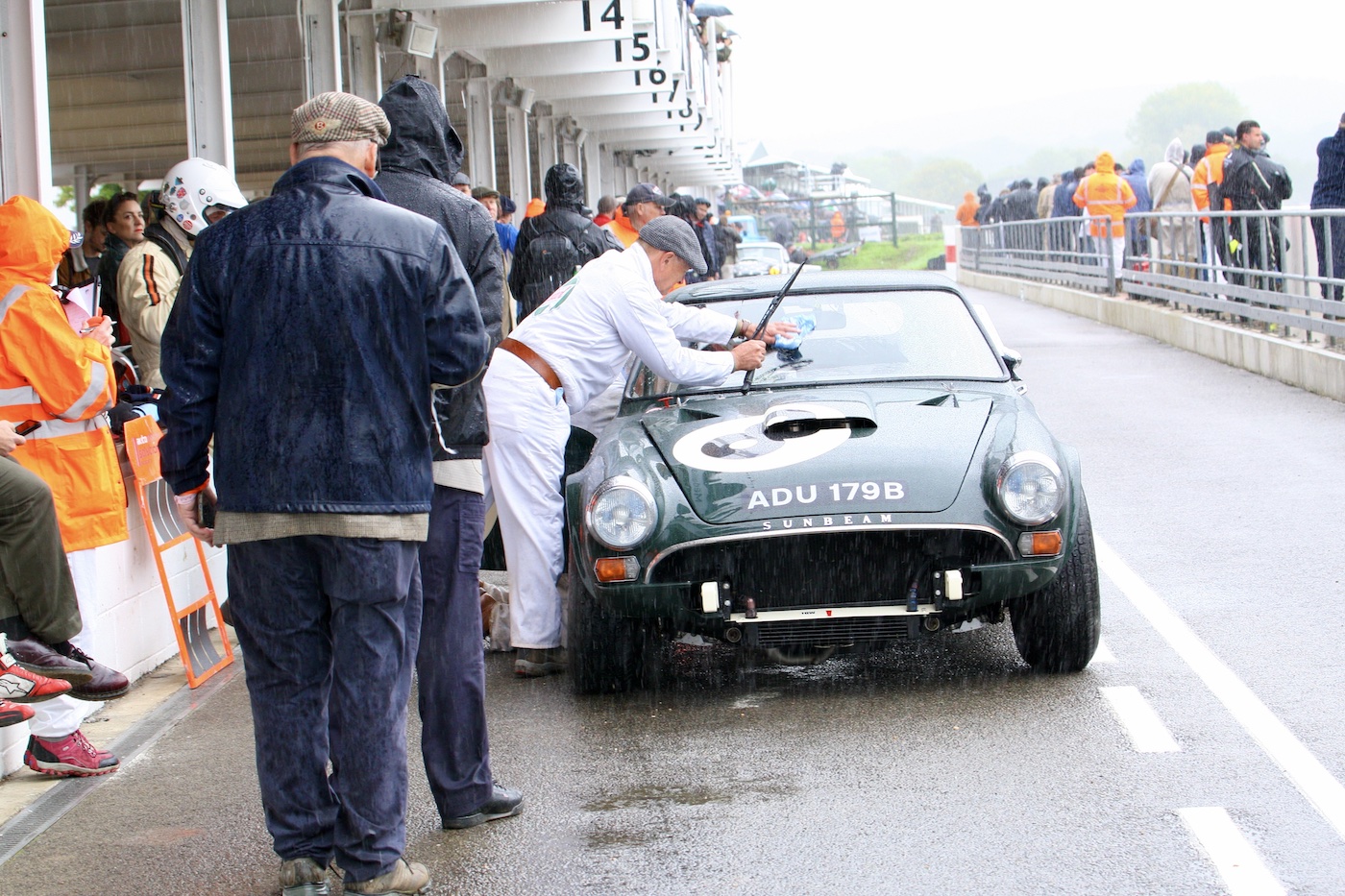
Now you know why there are so many coupes on the grids.
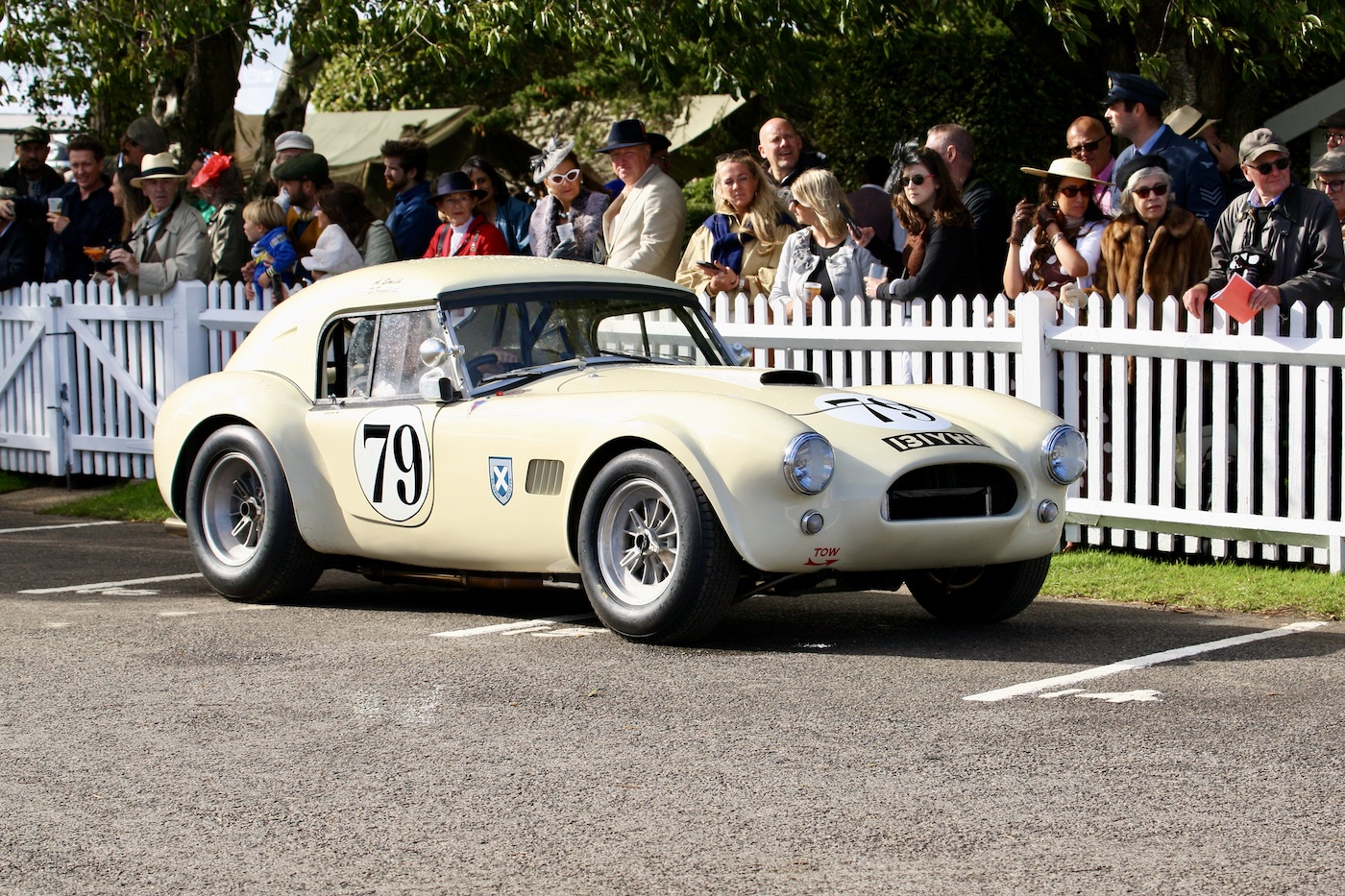
1964 AC Cobra, Dario Franchitti/Andrew Smith.
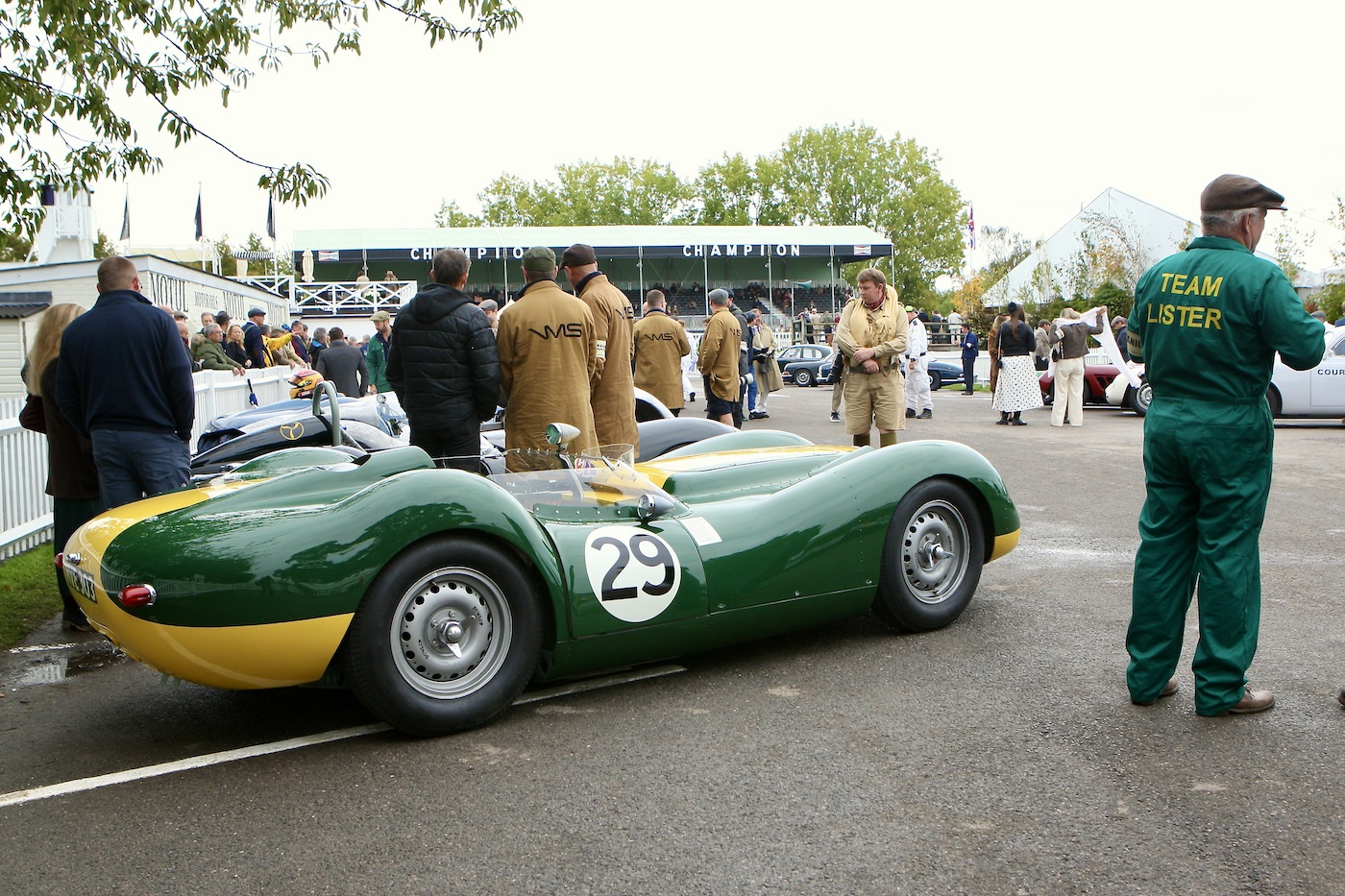
1958 Lister-Jaguar ‘Knobbly,’ Graham Moss
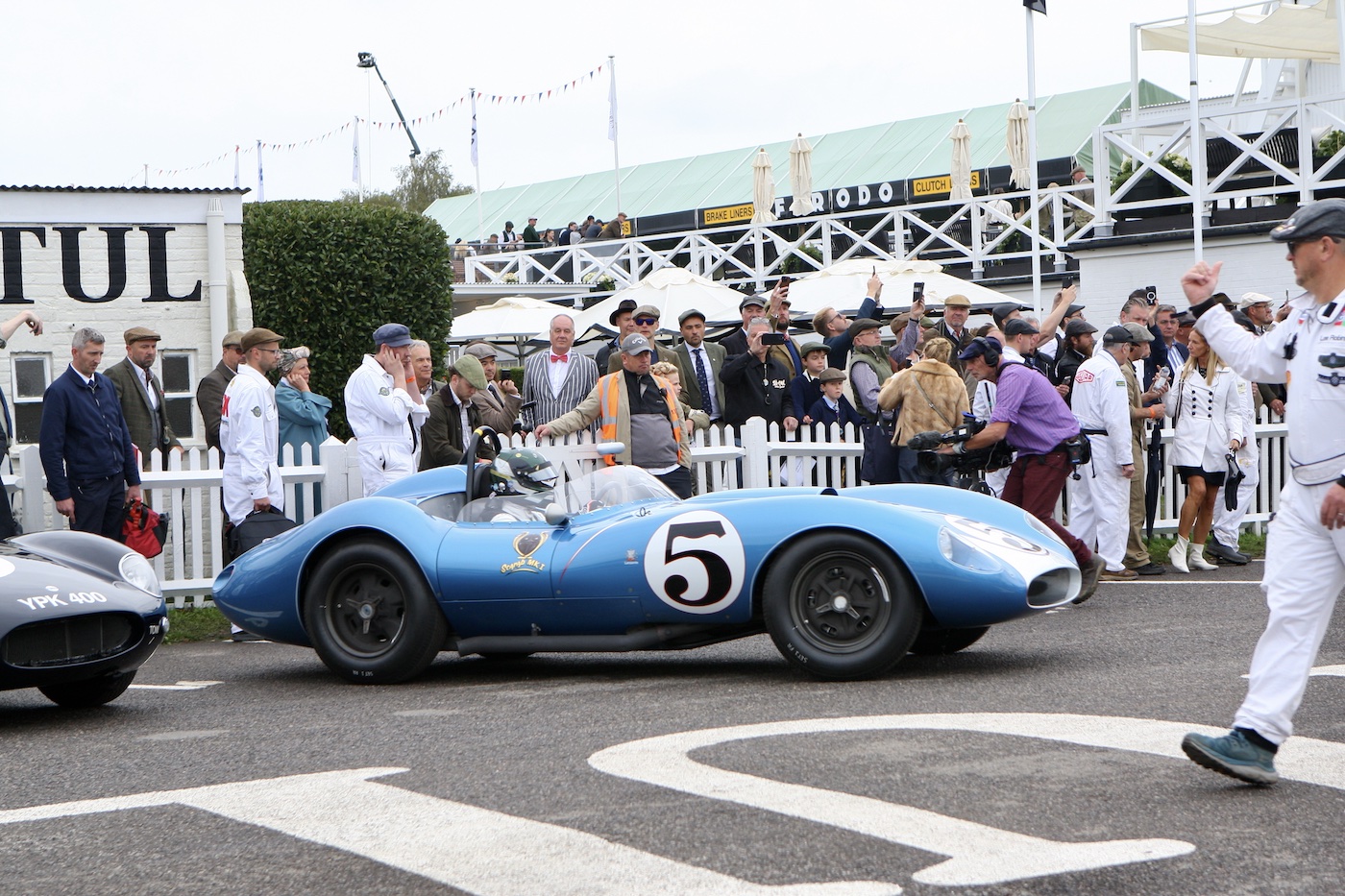
1958 Scarab-Chevrolet, Christian Albrecht
I feel I must correct a grievous spelling error! On the Merry Pranksters bus, the destination sign should read –
“FURTHUR”
I can tell you’re not experienced!
Peace, love and faster cars!
Goodwood! If only my aged bones were up to a trans-Atlantic flight. Oh well.
and Jim Clark: ” (in 1965) he won not only the Formula 1 World Championship, but also the Indy 500, the Tasman series, and the British and French F2 championship.”
Nobody will ever top that collection of titles. Amazing.
For anyone that has not done it, I can wholeheartedly state that this is the most amazing automotive experience on the planet.
My Dad was in the RAF during WW2 in the Far East. He flew Harvards during training and Tempest 2s later in the war, along with Razorback Thunderbolts, but his favourite was the Bubbletop P-47 Thunderbolt like the one shown. I have a photo of this skinny kid (my Dad) with the top slid back, flying his Thunderbolt, taken by a fellow pilot from his own plane. I even have a piston from a P-47 engine. Talk about huge!
Evidently, a design issue with the P-47 was that they needed to not be overfilled as far as fuel. On one occasion, when Dad was flying over an Indian jungle, he realized that the fuel gauge was dropping very quickly due to the tanks being overfilled, and syphoning out of the plane. Back then, RAF pilots were taught all the basics of how to use a parachute, but not required to do a jump.
Dad realized that he had 2 options: either jump or go down with the plane. Fortunately he chose to jump and survived, hence why I exist. His comment was that if he had known how scary parachuting was, he would have likely gone down with the plane. Hence why the RAF had the policy of not forcing pilots to actually jump during training. Dad would have turned 101 years old this coming weekend if he hadn’t smoked for over 60 years!