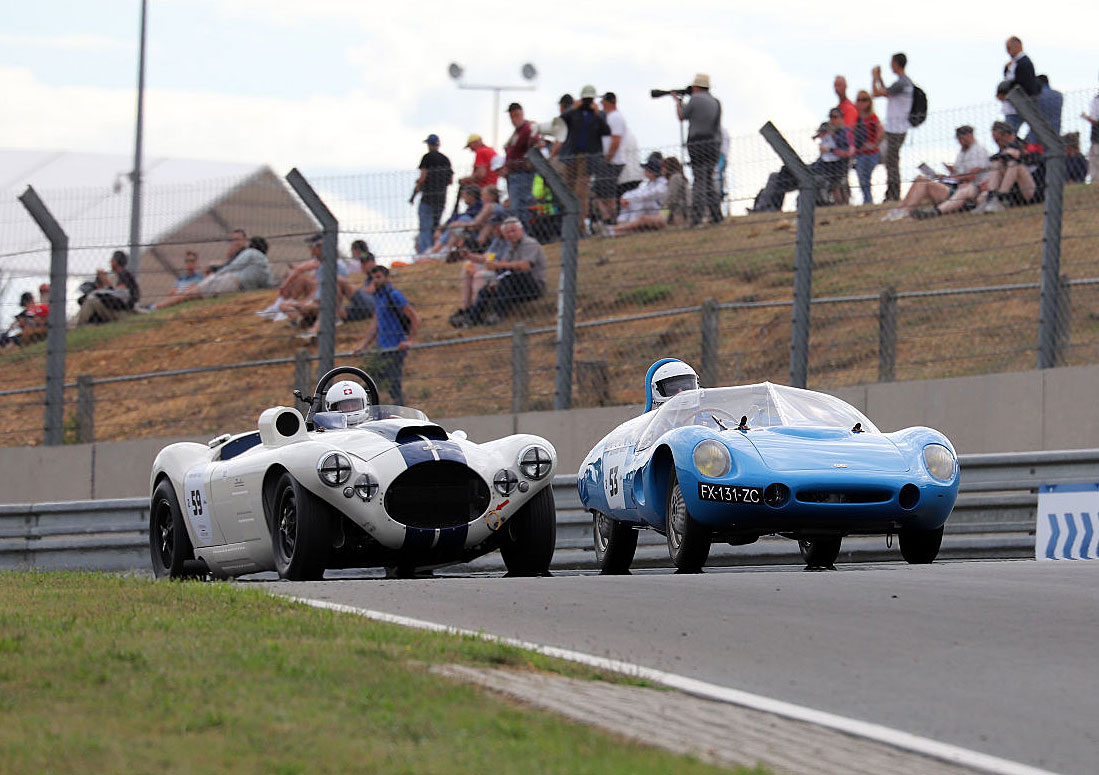
The Classic is back!
Story and Photos by Hugues Vanhoolandt
The last edition of Le Mans Classic, first held twenty years ago, dates from 2018. Canceled in 2020, the tenth edition was finally able to take place this year under a hot summer sun from June 30 to July 3.
The program of the festivities had not changed compared to previous editions, with six grids covering the period 1923 to 1981 to which were added a grid reserved for Group C cars and another grid called Endurance Racing Legends covering the years 1990 and 2000.
Many exhibitions were held in the village as well as the usual sale held by French auction house Artcurial. Let’s start this report with this sale.
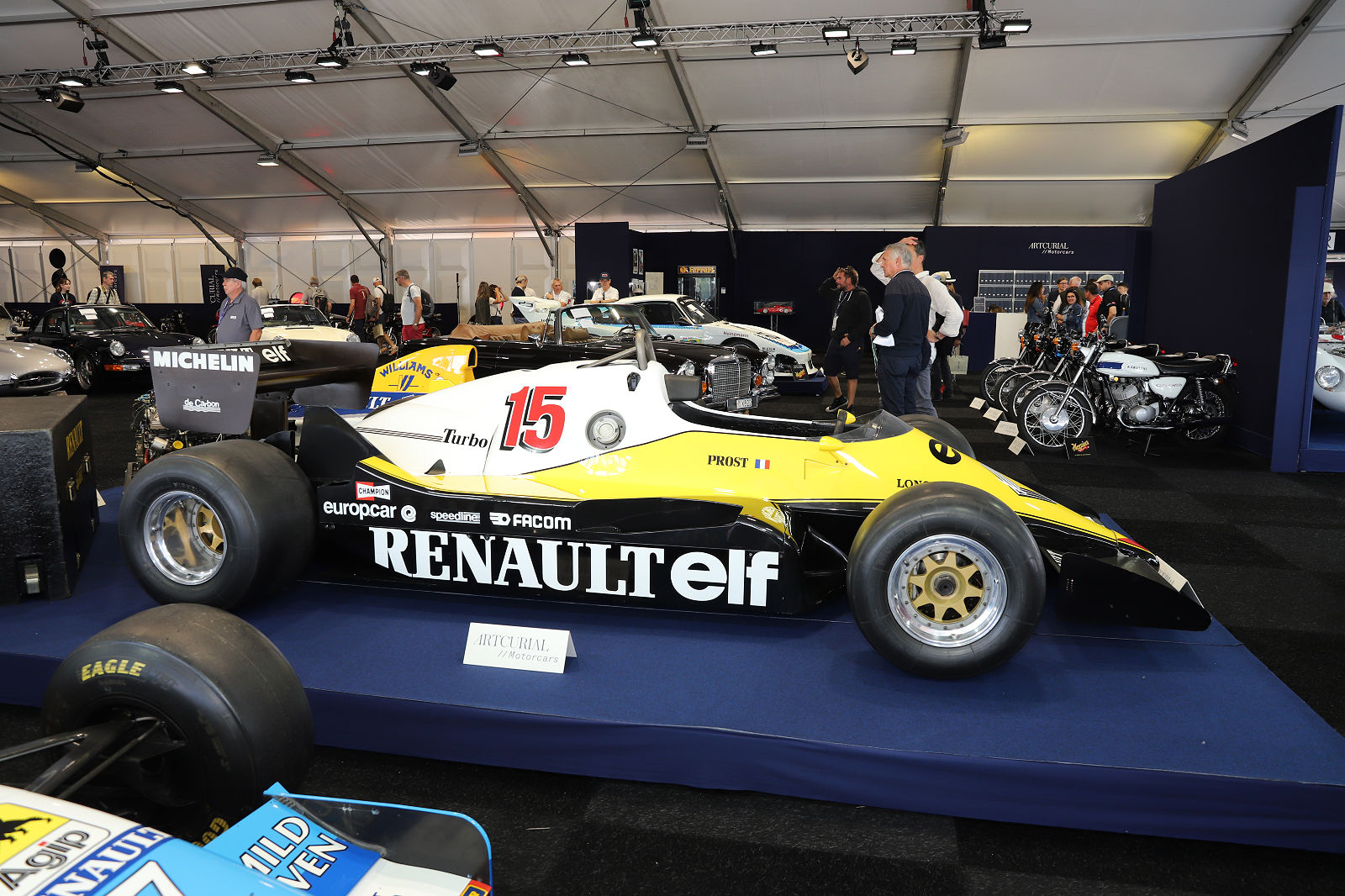
The Renault Collection has decided to collaborate with Artcurial to sell some pieces of its collection. The first step of this collaboration was at Le Mans Classic with the sale, among others, of this Renault RE40 Turbo with which Alain Prost won the 1983 Belgian Grand Prix and took pole position at Monaco. The car did not sell.
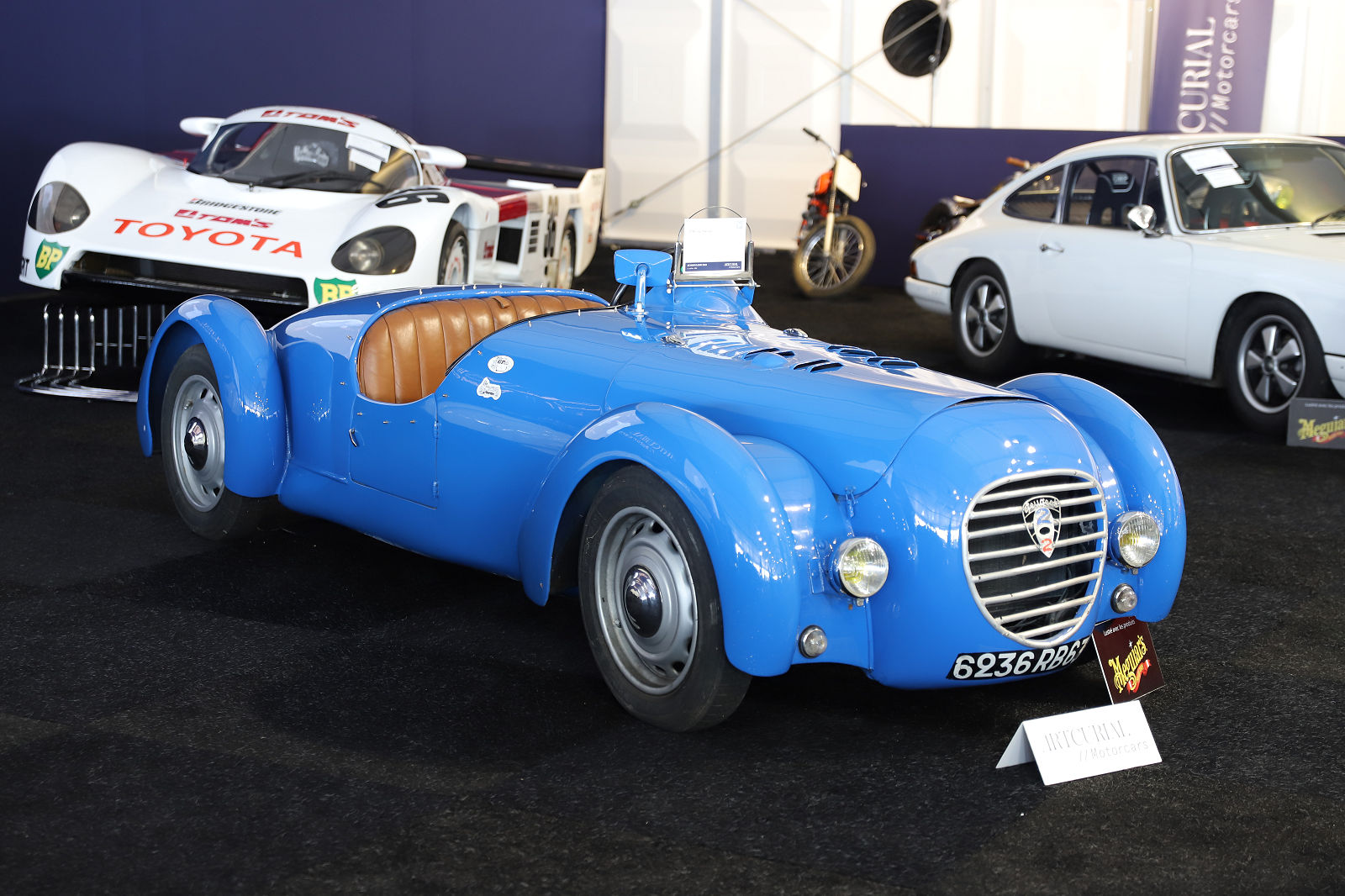
This car, handcrafted in 1946, is a Giai Spéciale. Fitted with a Cotal gearbox, it took part in the Mont Ventoux hill climb in 1947 and 1948. Not sold.
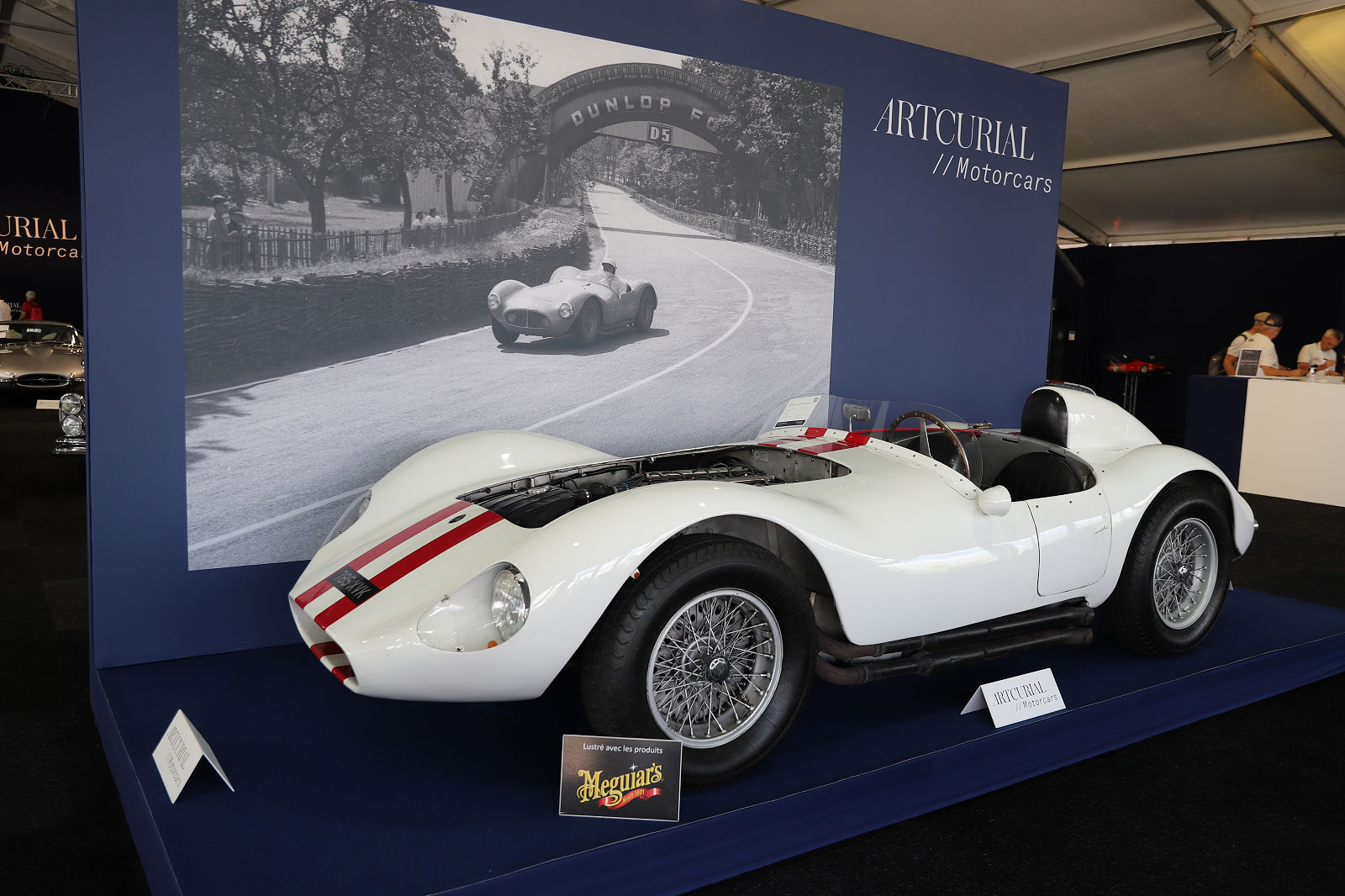
The 1954 Maserati A6 GCS/53 Fiandri Spyder s/n 2071 sold for $3,437,000 including premium. The car will stay in Europe.
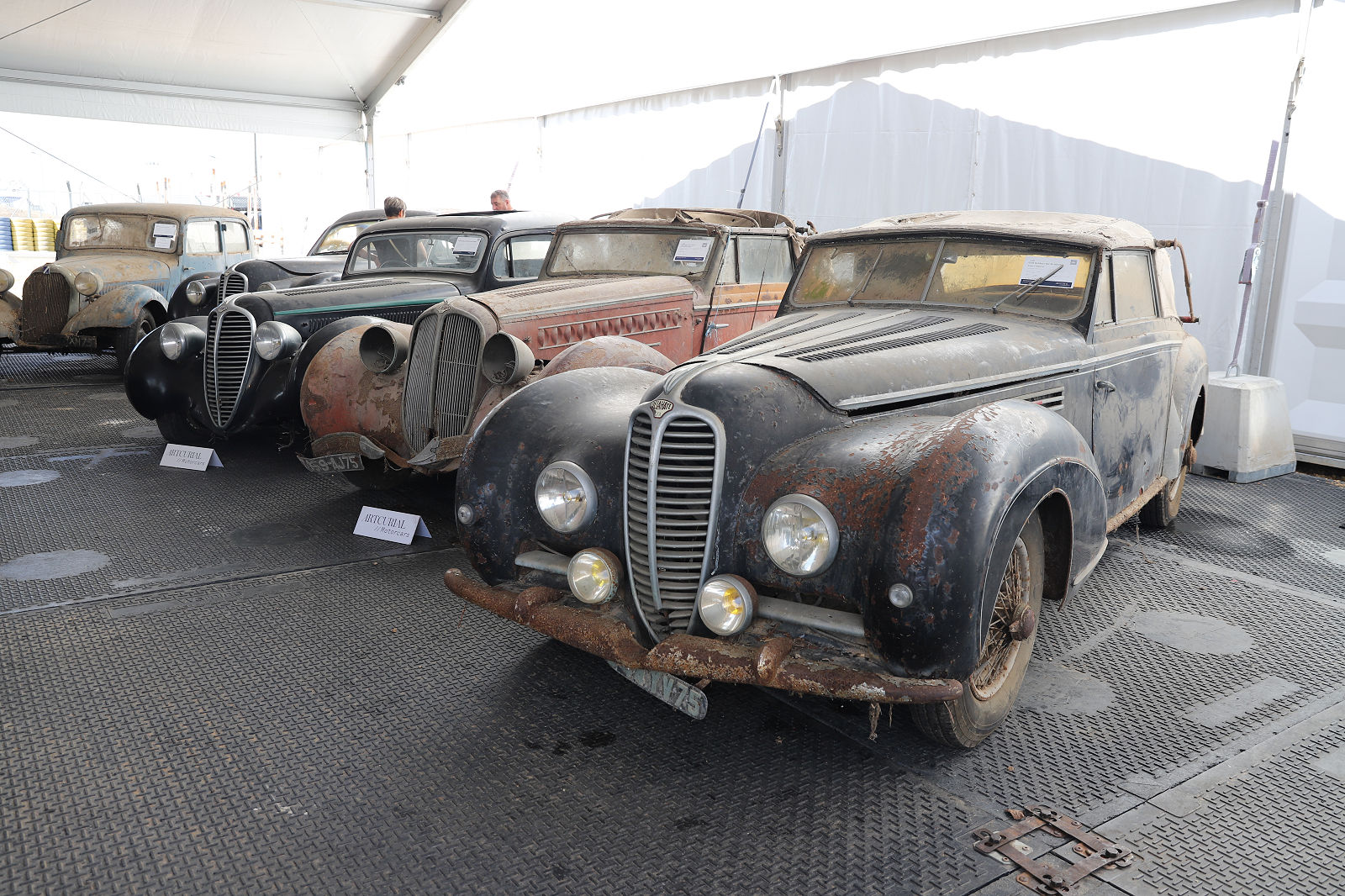
One of the highlights of the sale was the collection of Pierre Héron, who bought many French classics between 1965 and 1973. Many of these cars are in a state of disrepair like these Delahayes. The first of the series is a 1950 135M Chapron cabriolet. Sold for $85,000.
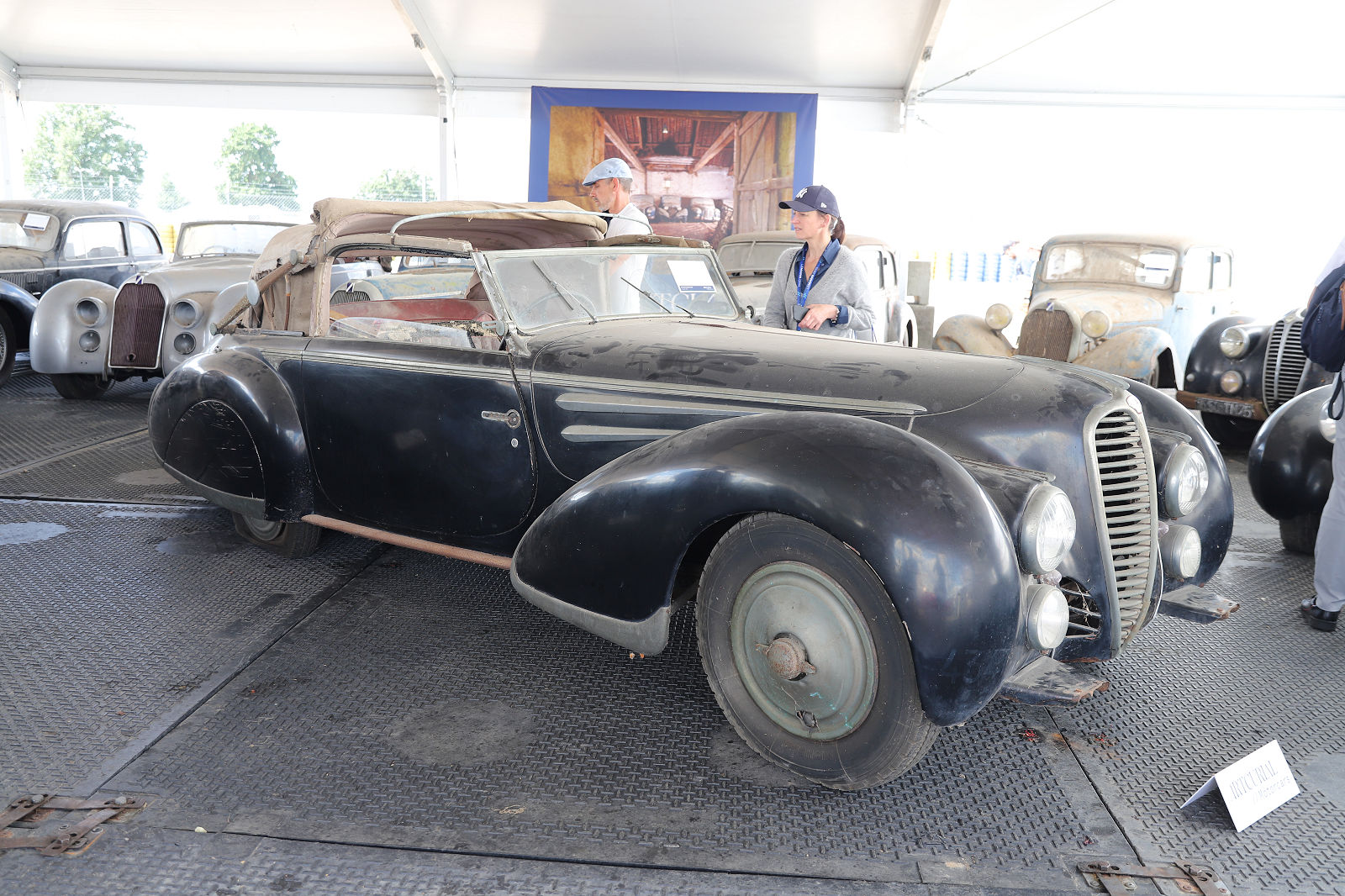
The 1948 Delahaye 135M Figoni & Falaschi cabriolet “El Glaoui” is the car from the 1948 Paris Motor Show and one of 18 “El Glaoui” cabriolets. Sold for $360,000.
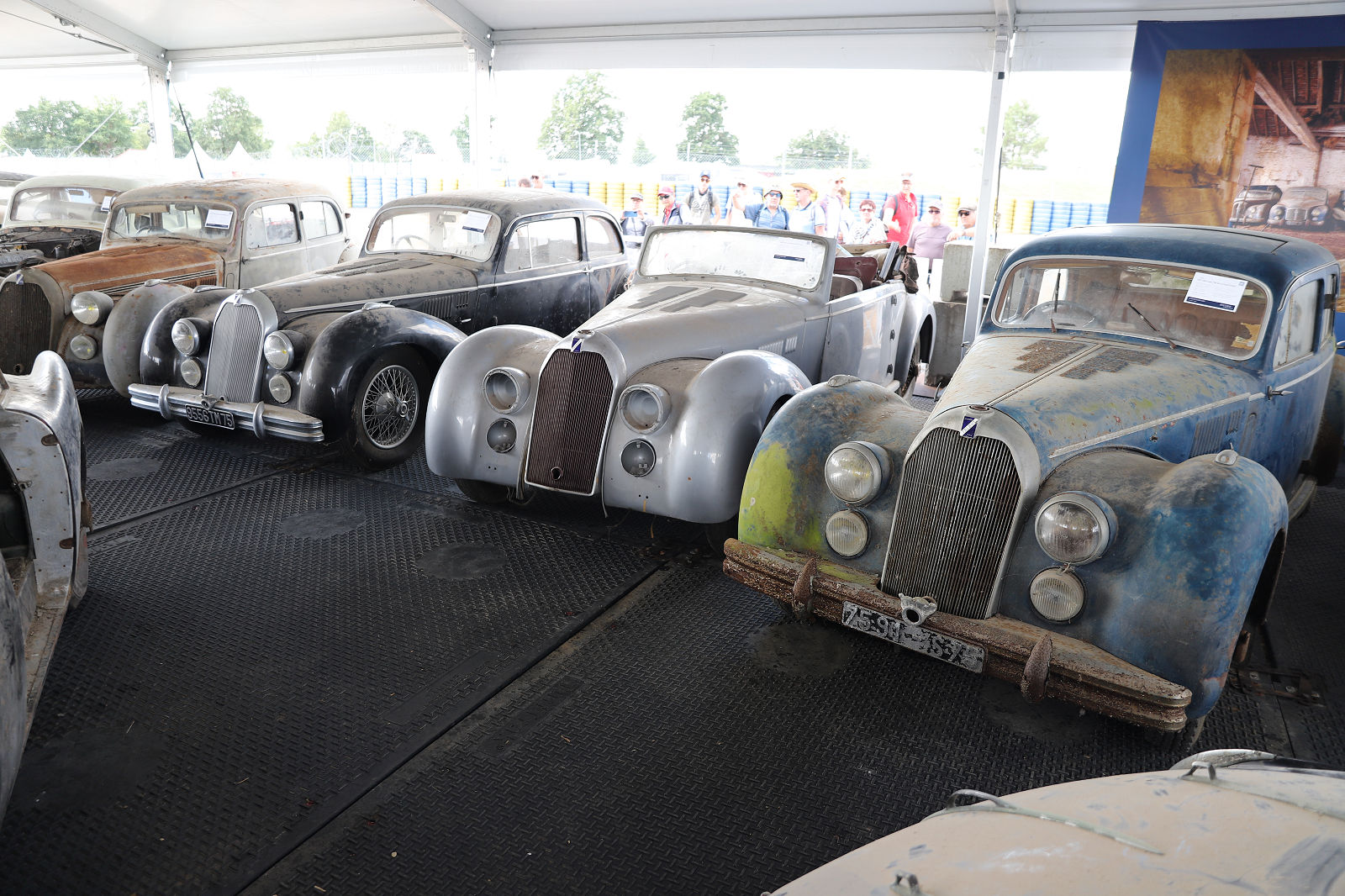
The Héron collection also includes a series of Talbot Lago T26 in all body versions.
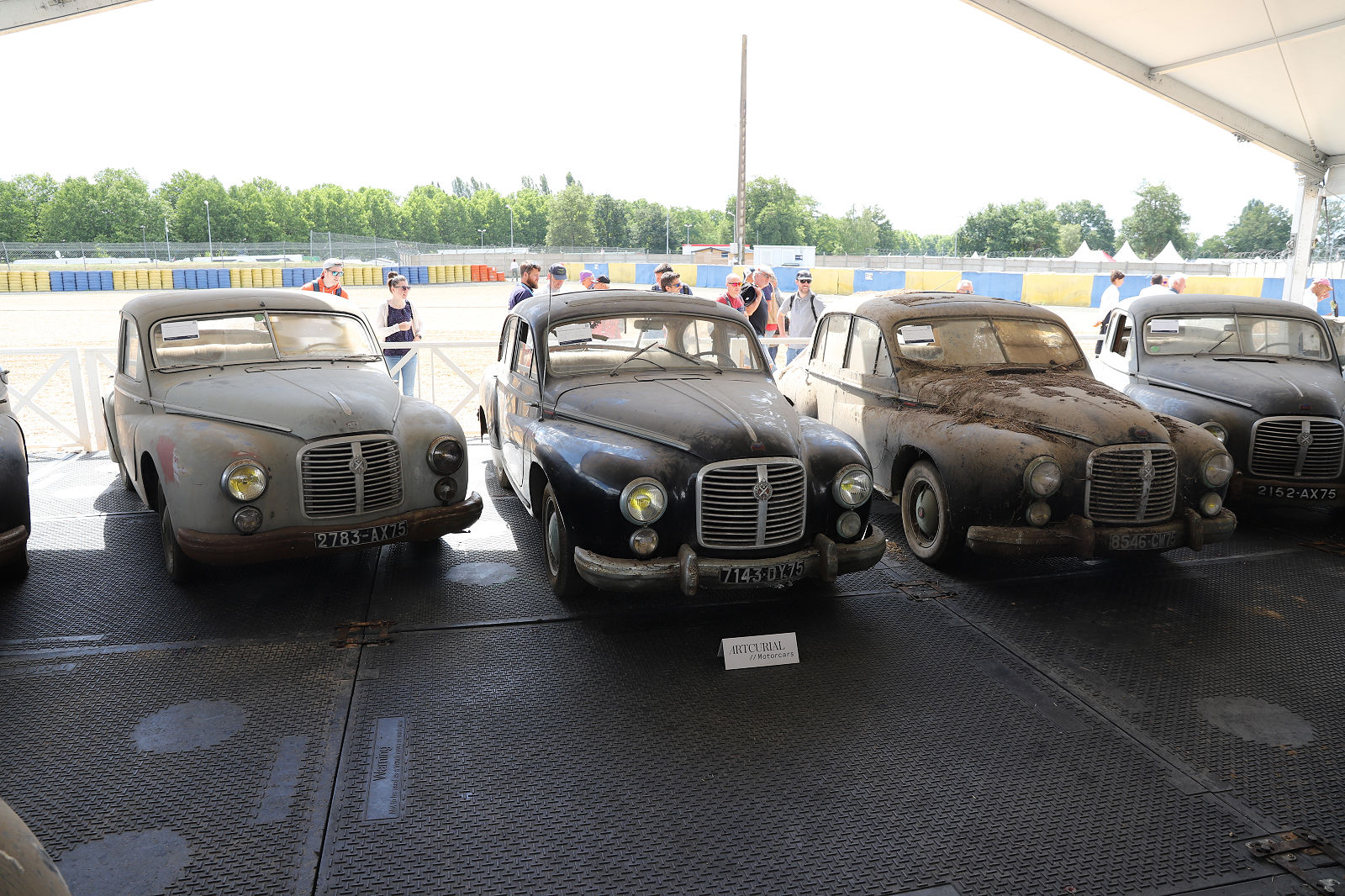
Also in the collection, several Hotchkiss-Grégoire saloon cars, conceived by French engineer Jean-Albert Grégoire.
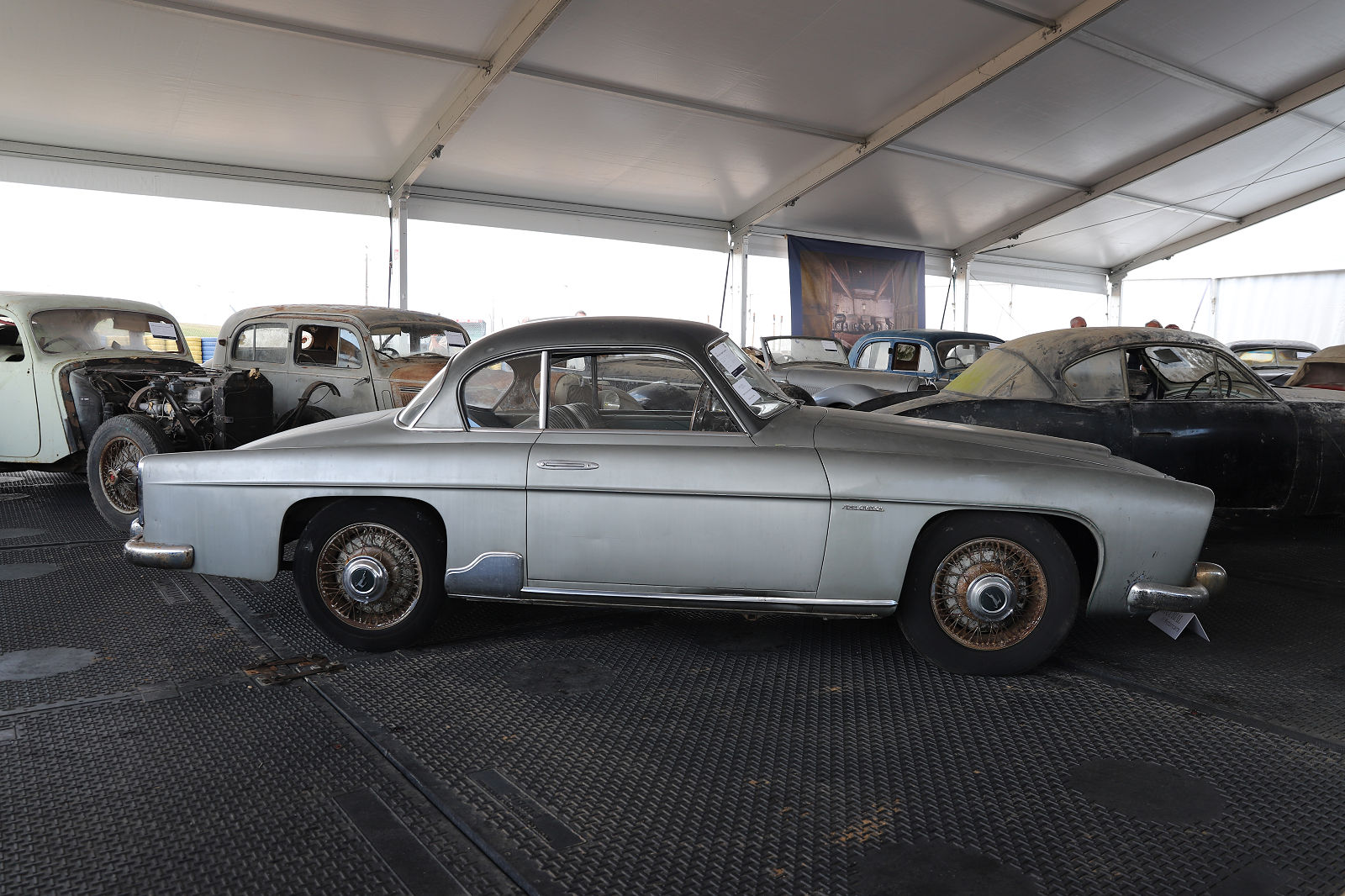
From the same engineer, the 1956 Tracta-Grégoire Coupé Sport. Several cars of this type were bodied in convertible version but only one coupé was built.
The Races
Grid 1 – 1923-1939
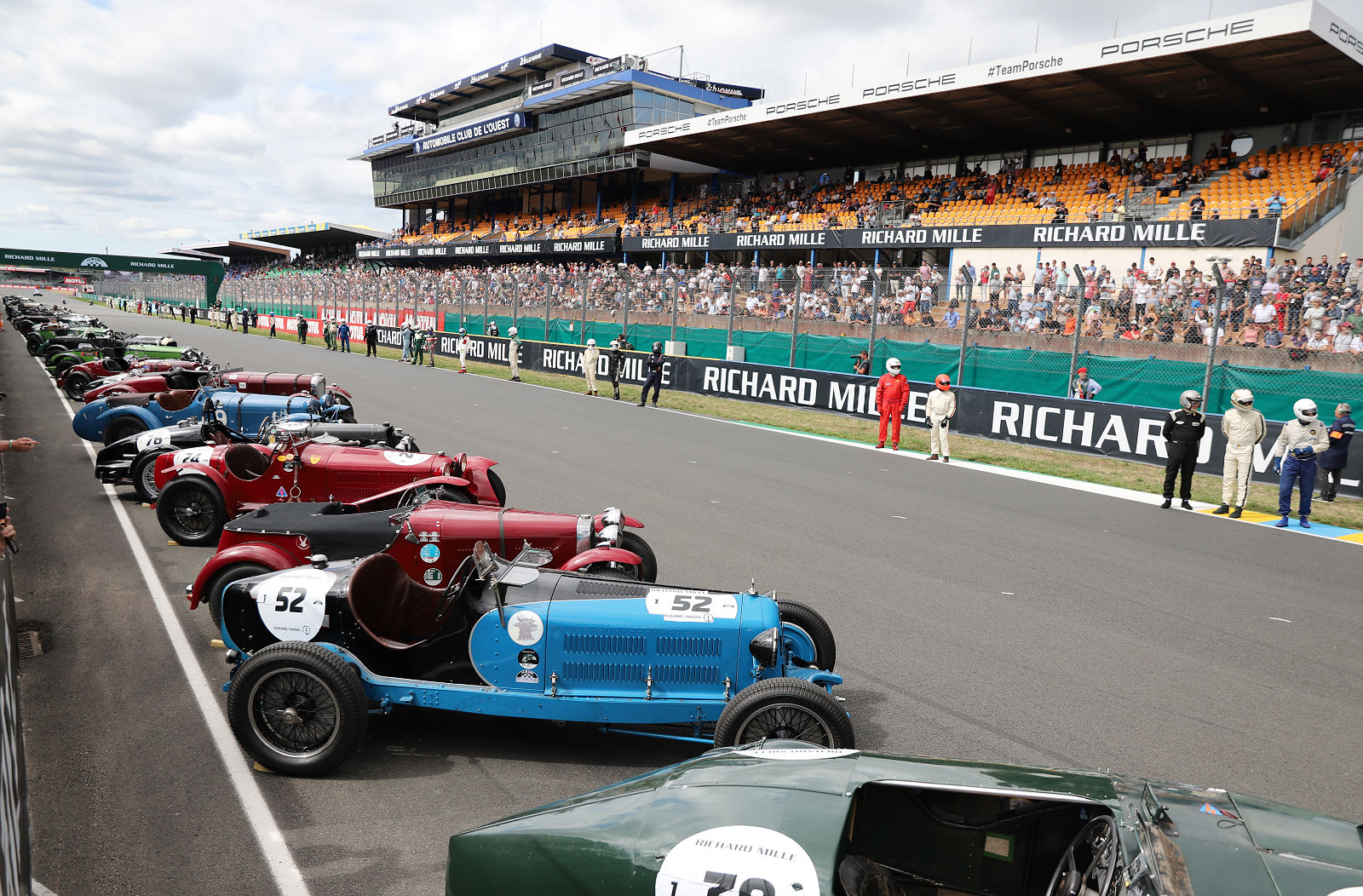
The cars of Grid 1 are lined up in front of the grandstands before their Le Mans-style start. In the foreground is a 1934 Alfa Romeo 8C 2300 Monza.
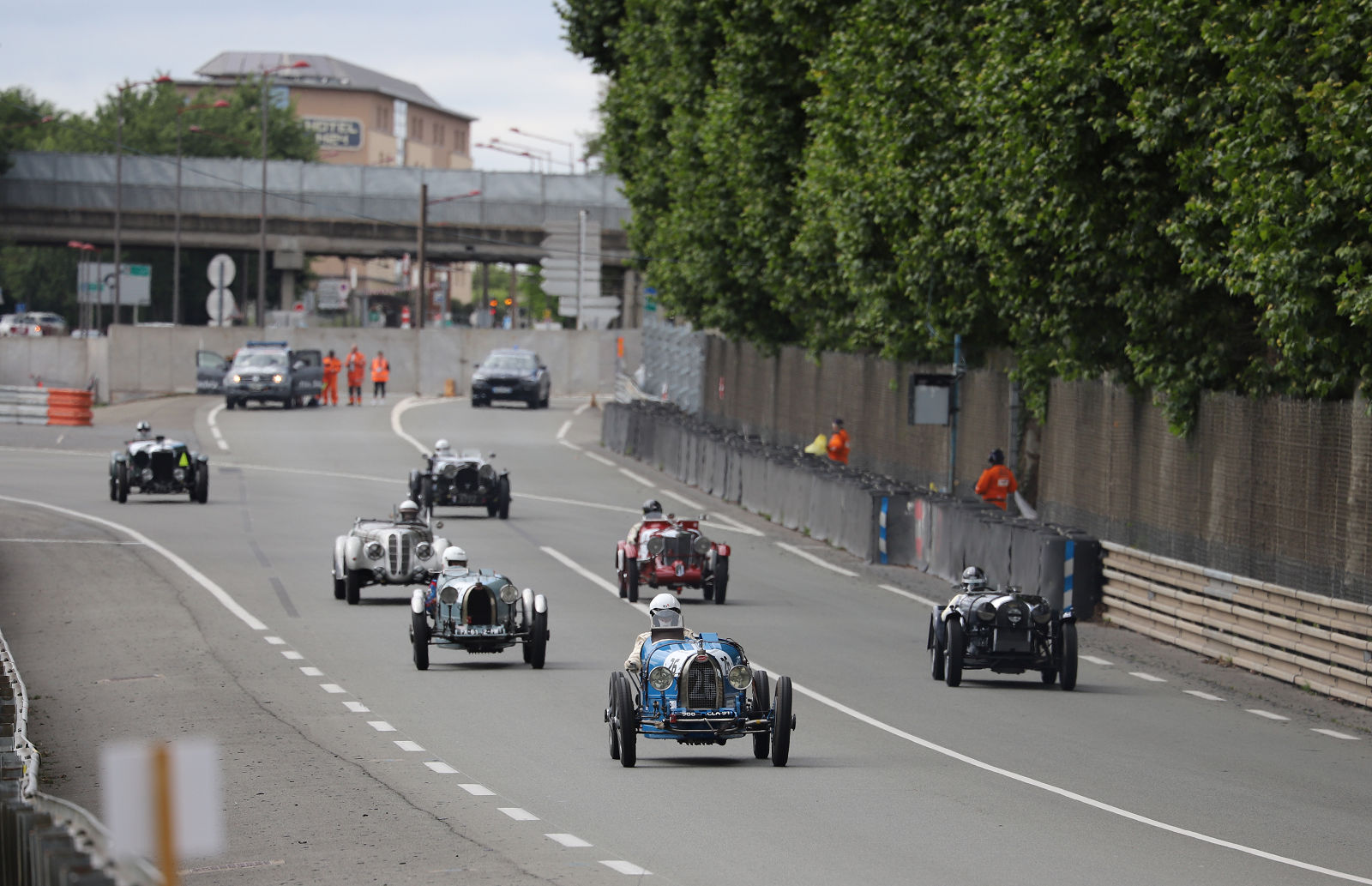
Some Bugattis, BMW, Morgan, MG and more attacking the Mulsanne straight.
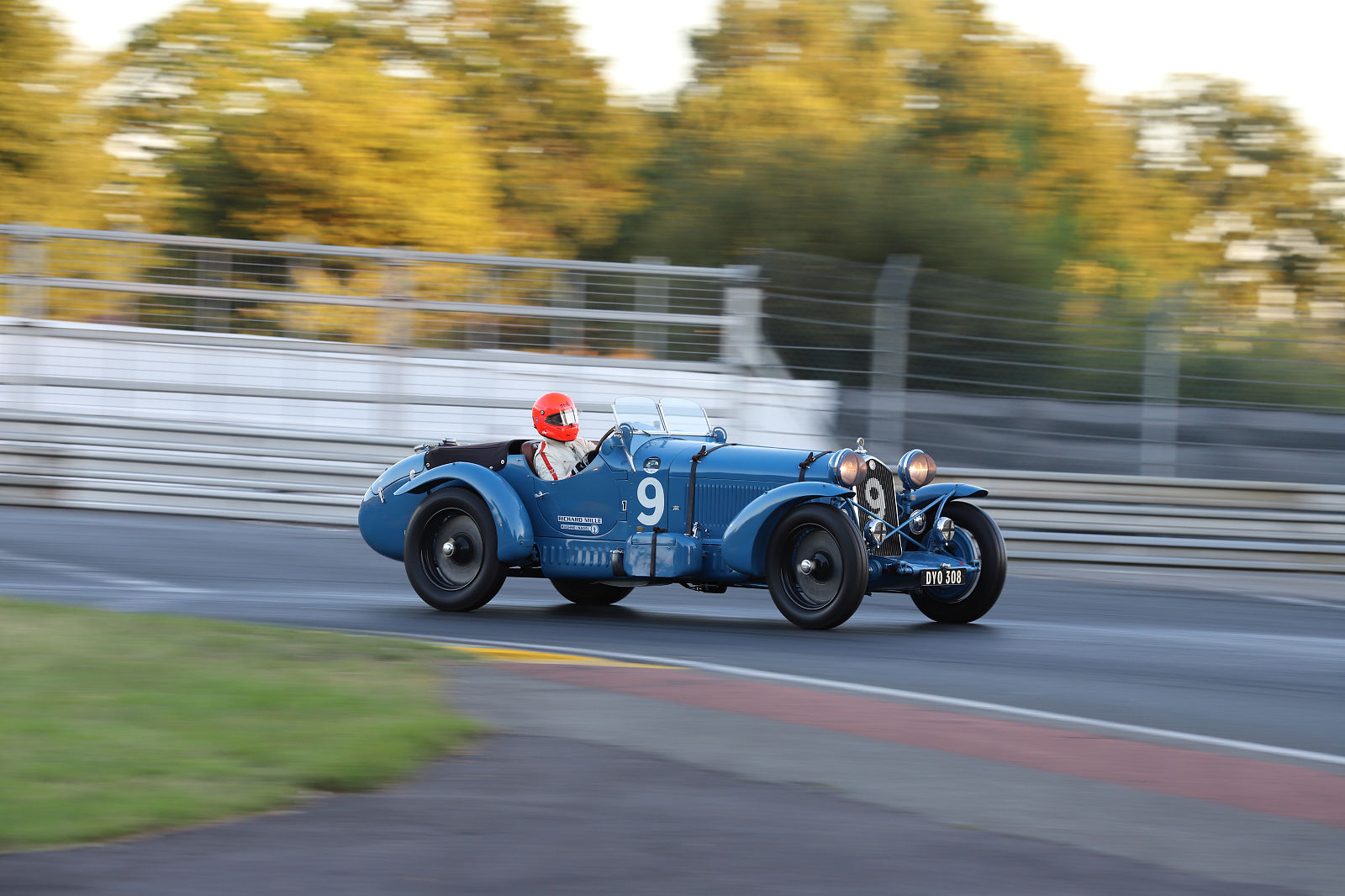
The Alfa Romeo 8C 2300 Corto Le Mans spider by Brianza s/n 2311249, winner of the real race in 1934, driven by US collector Robert Kauffman.
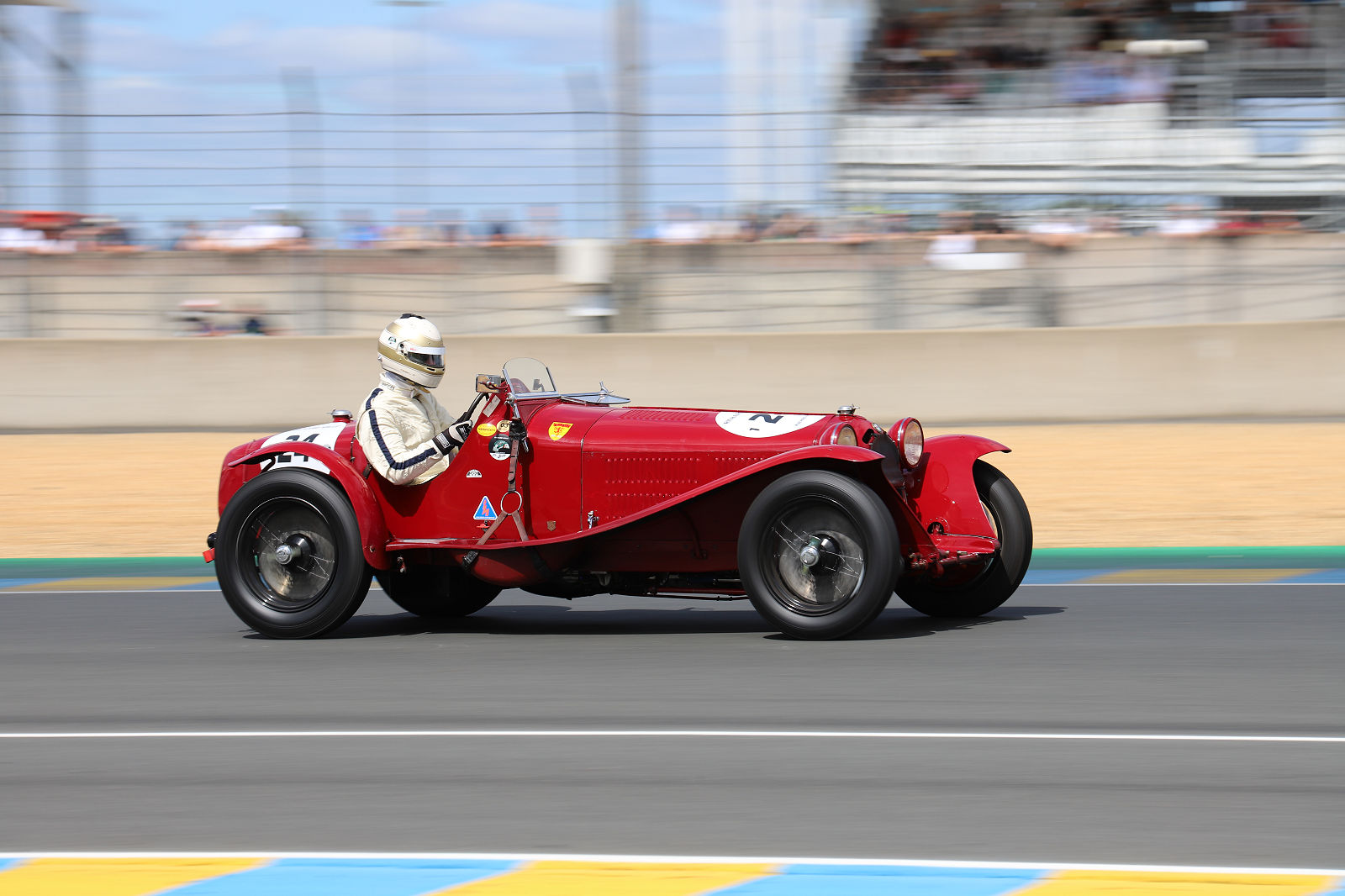
Another 8C 2300 Monza spider Brianza s/n 2111090 of Belgian Nicolas D’Ieteren.
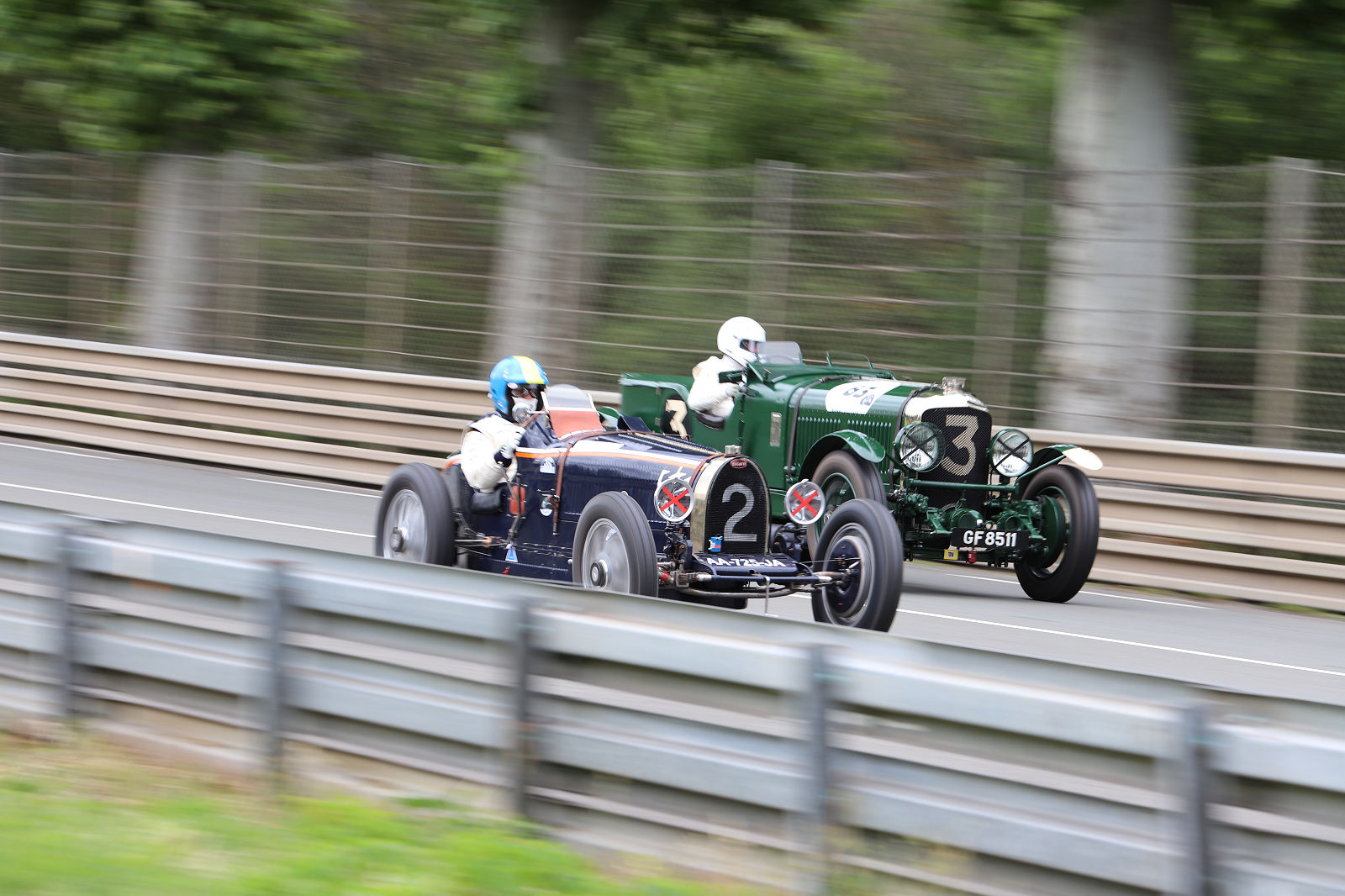
Bugatti vs Bentley, a remake of the great pre-war rivalry.
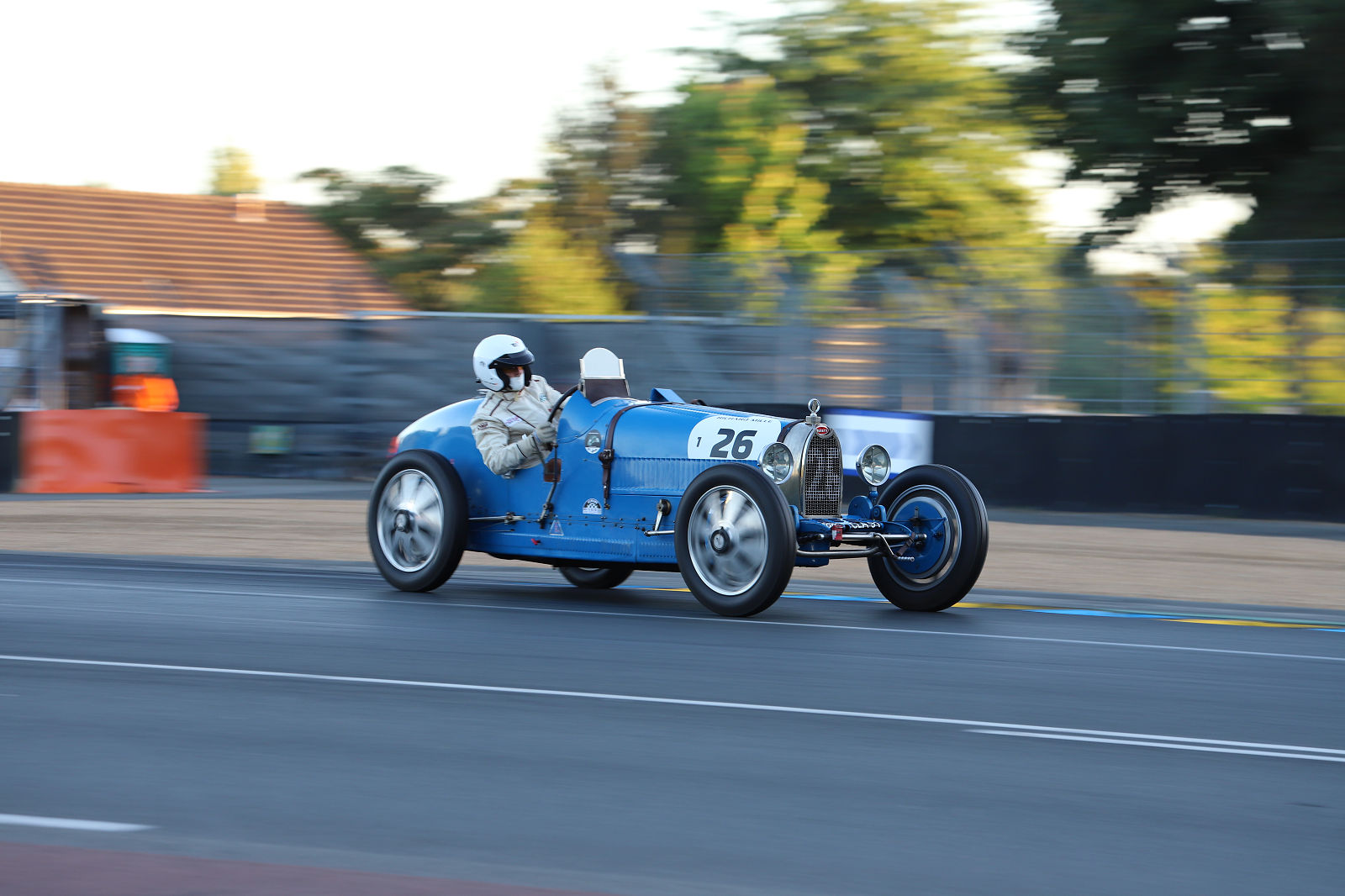
Good car control at Arnage corner for the driver of this 1926 Bugatti Type 37.
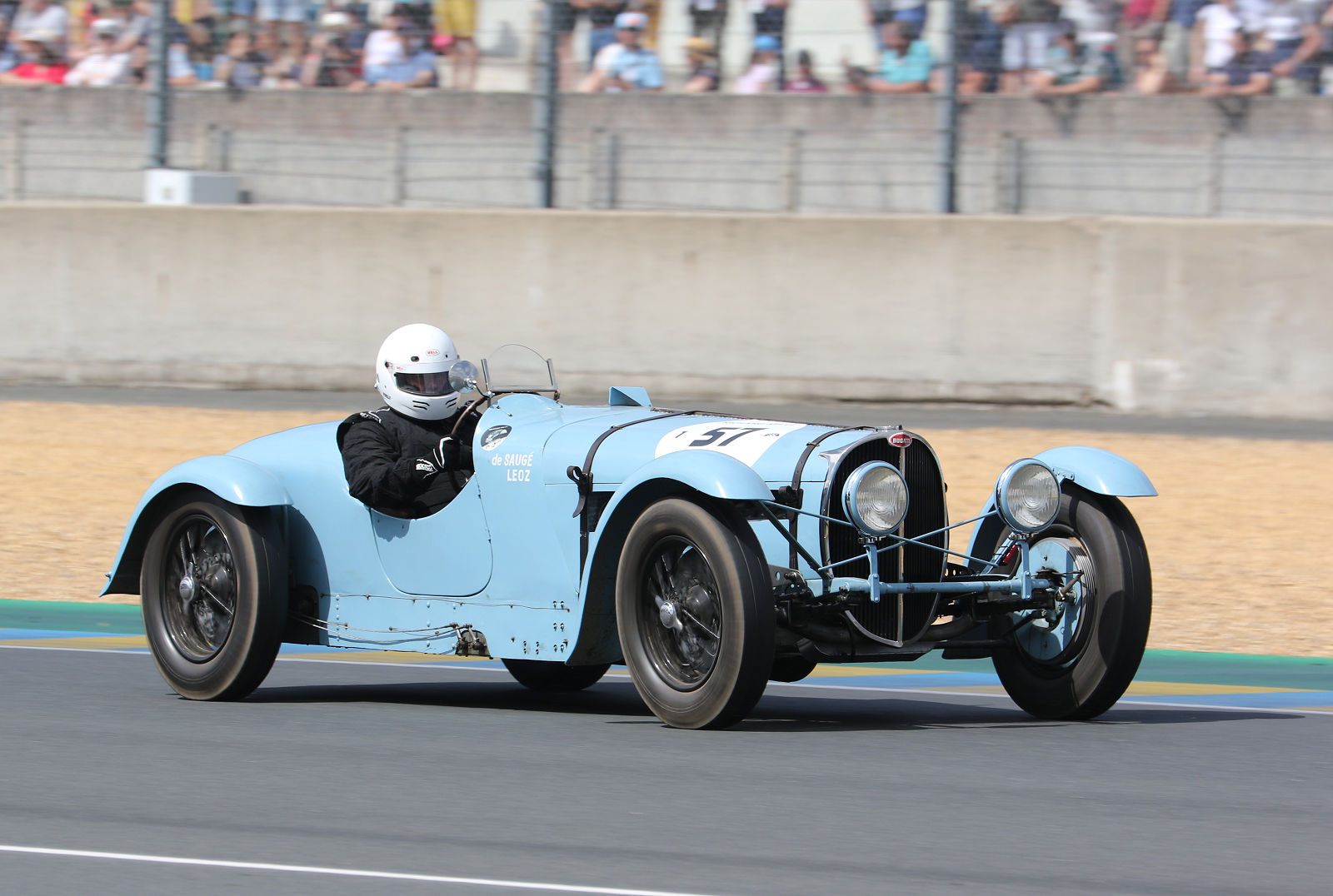
This Bugatti Type 57S s/n 57522 took part in the 24 hours of Le Mans in 1937, driven by de Saugé and Leoz. It failed to finish due to gearbox problems.
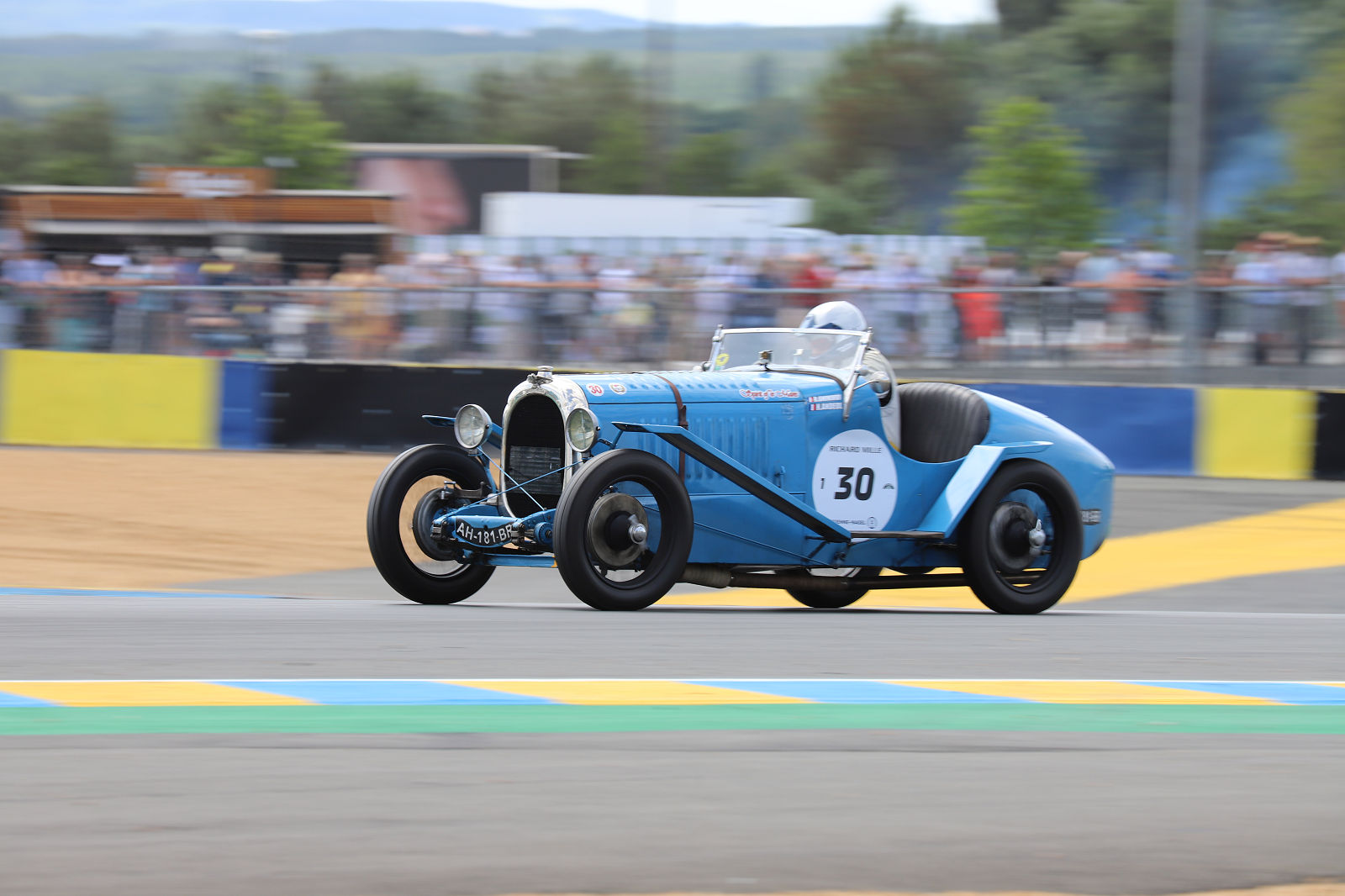
1924 Chenard & Walcker Sport T3.
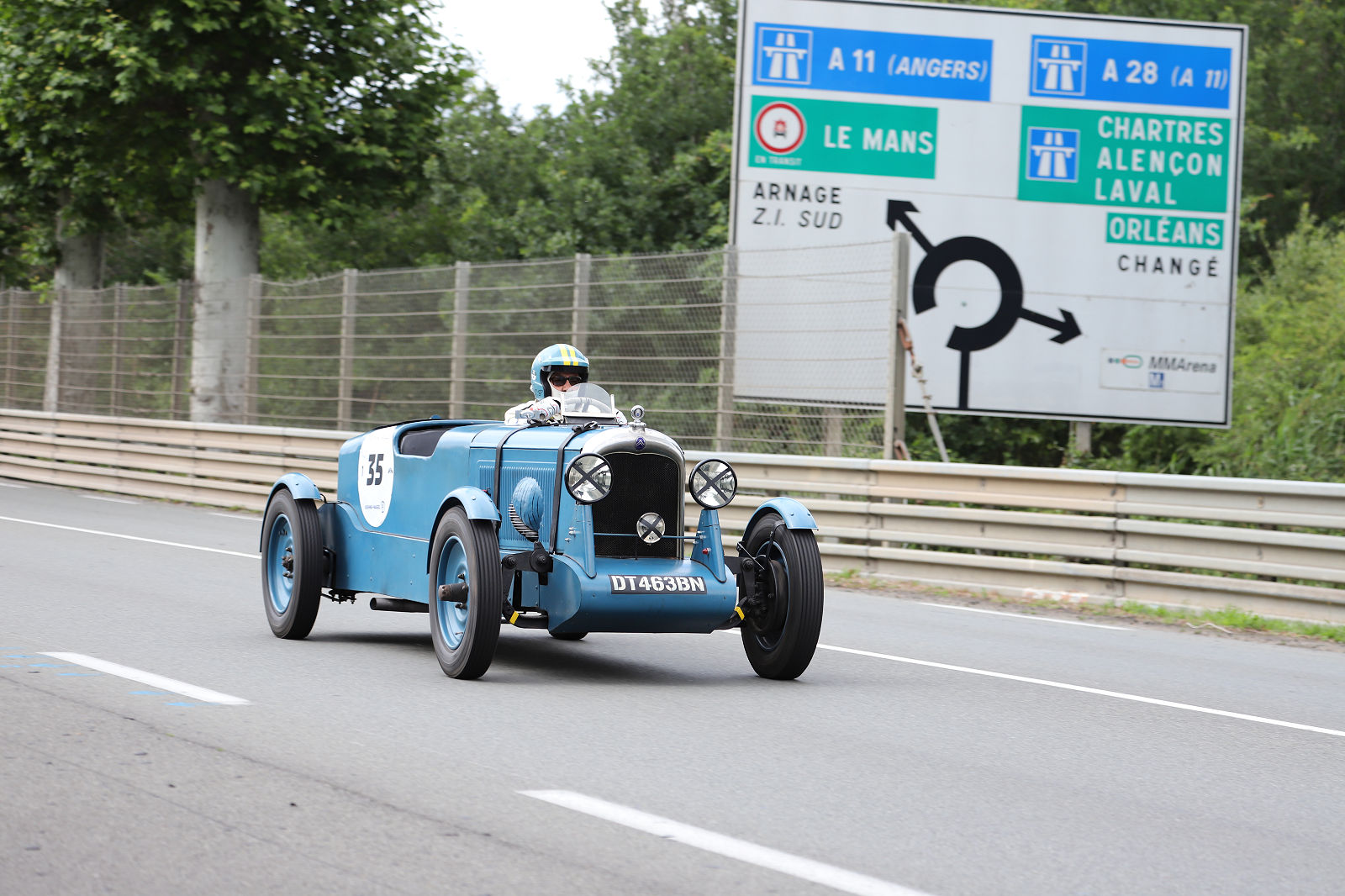
André Citroën was not interested in competition but, in 1932, a Citroën C4 was entered by a customer. It lasted three laps before retirement. Ninety years later, the experience lasted longer.
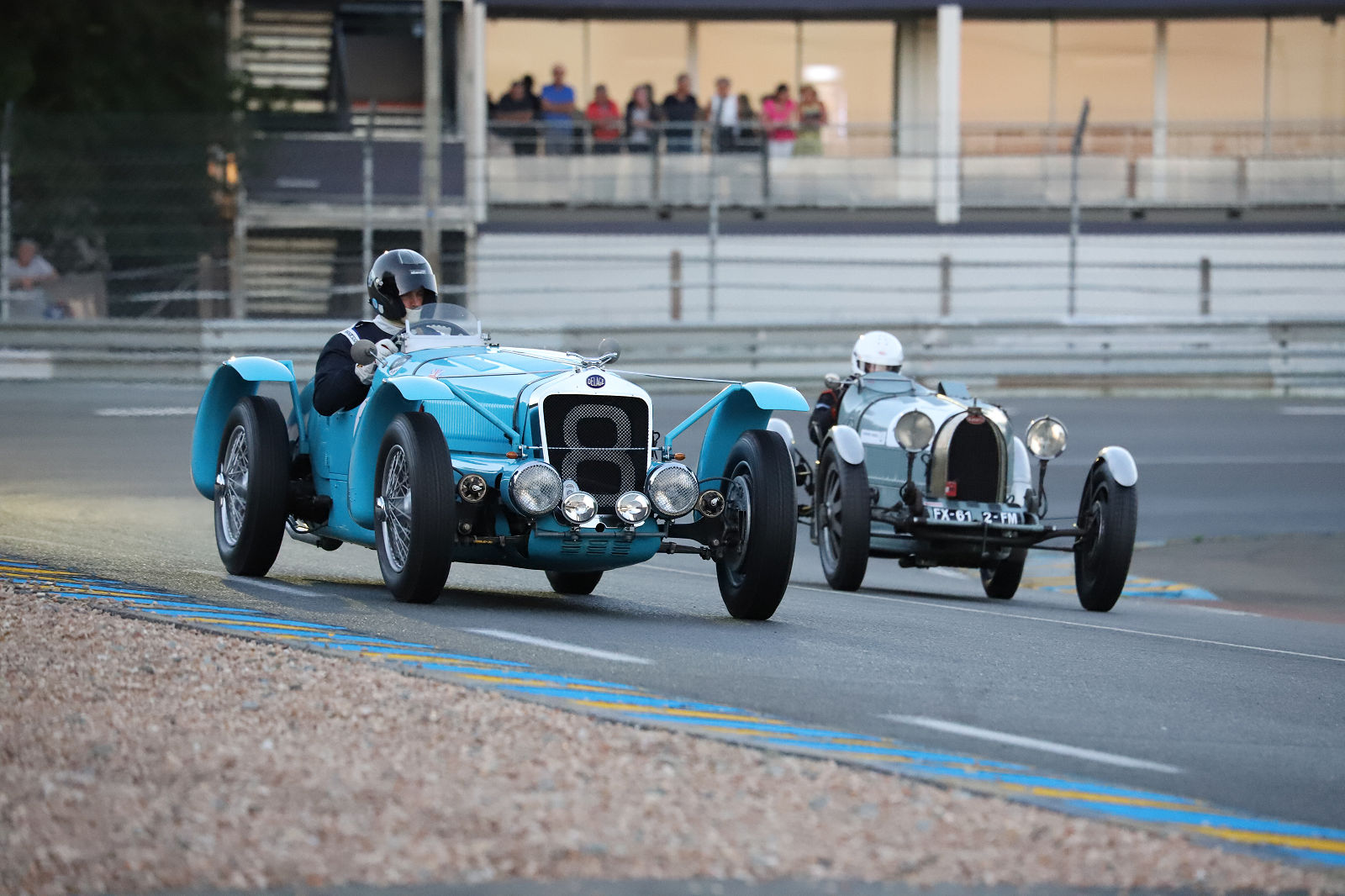
1936 Delage D6-70 Special s/n 50688
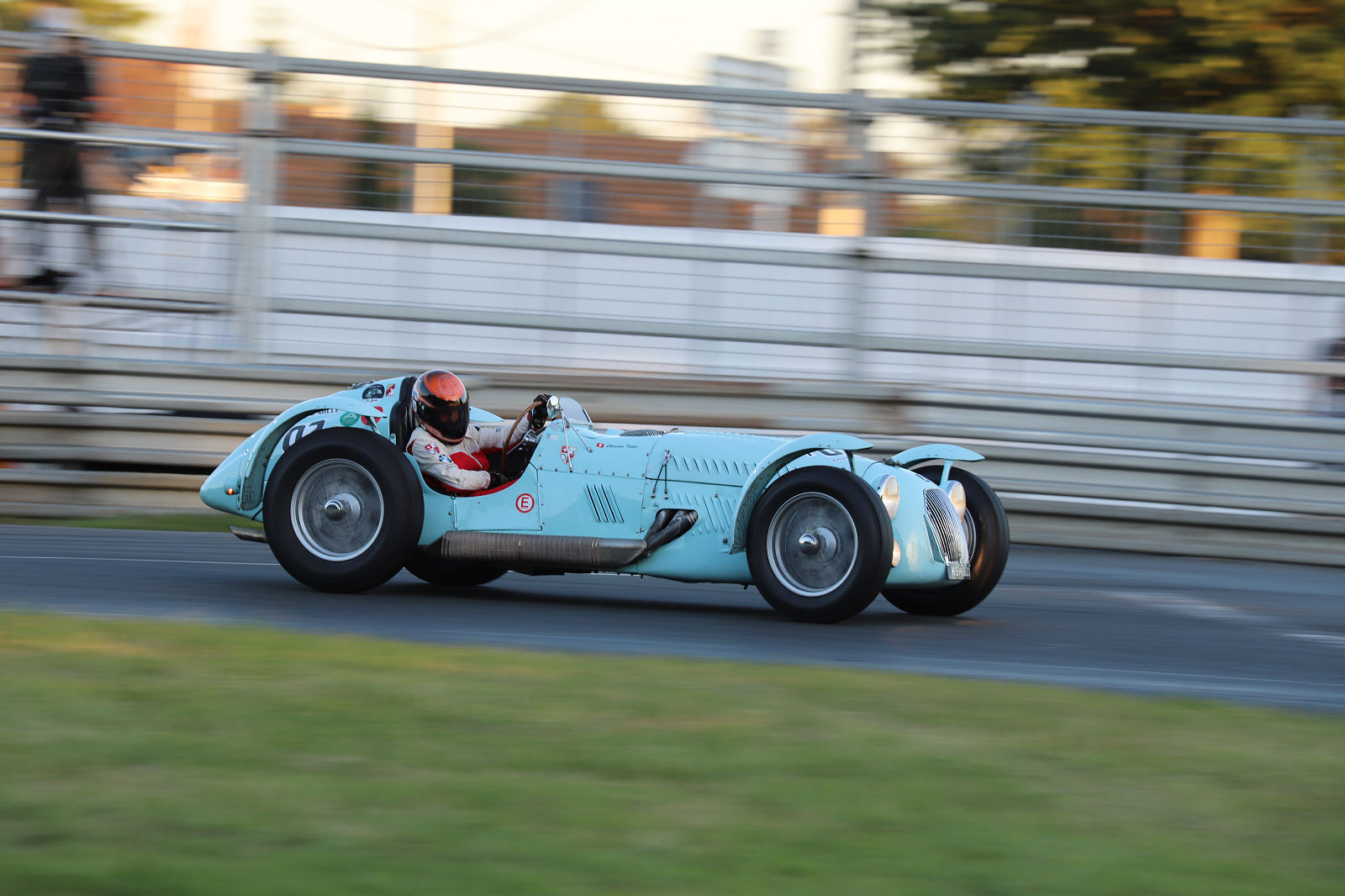
The 1939 Talbot Lago 4 ½ Litre “Monoplace Décalée” s/n 90130 driven by Swiss collector Christian Traber.
Grid 2 – 1949-1956
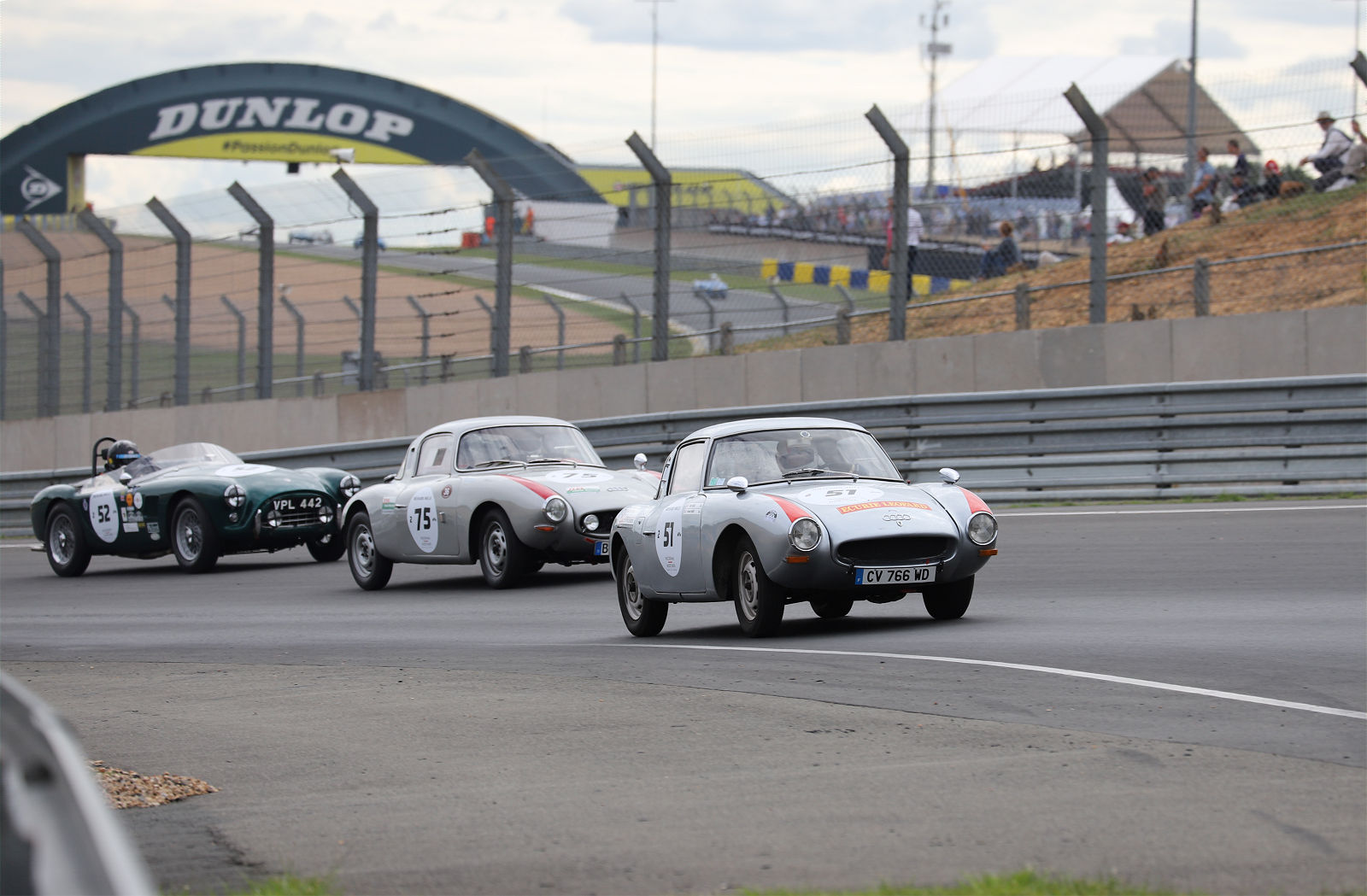
A pair of DKW Monzas exiting the ”Esses de la Forêt” … but there is no forest anymore.
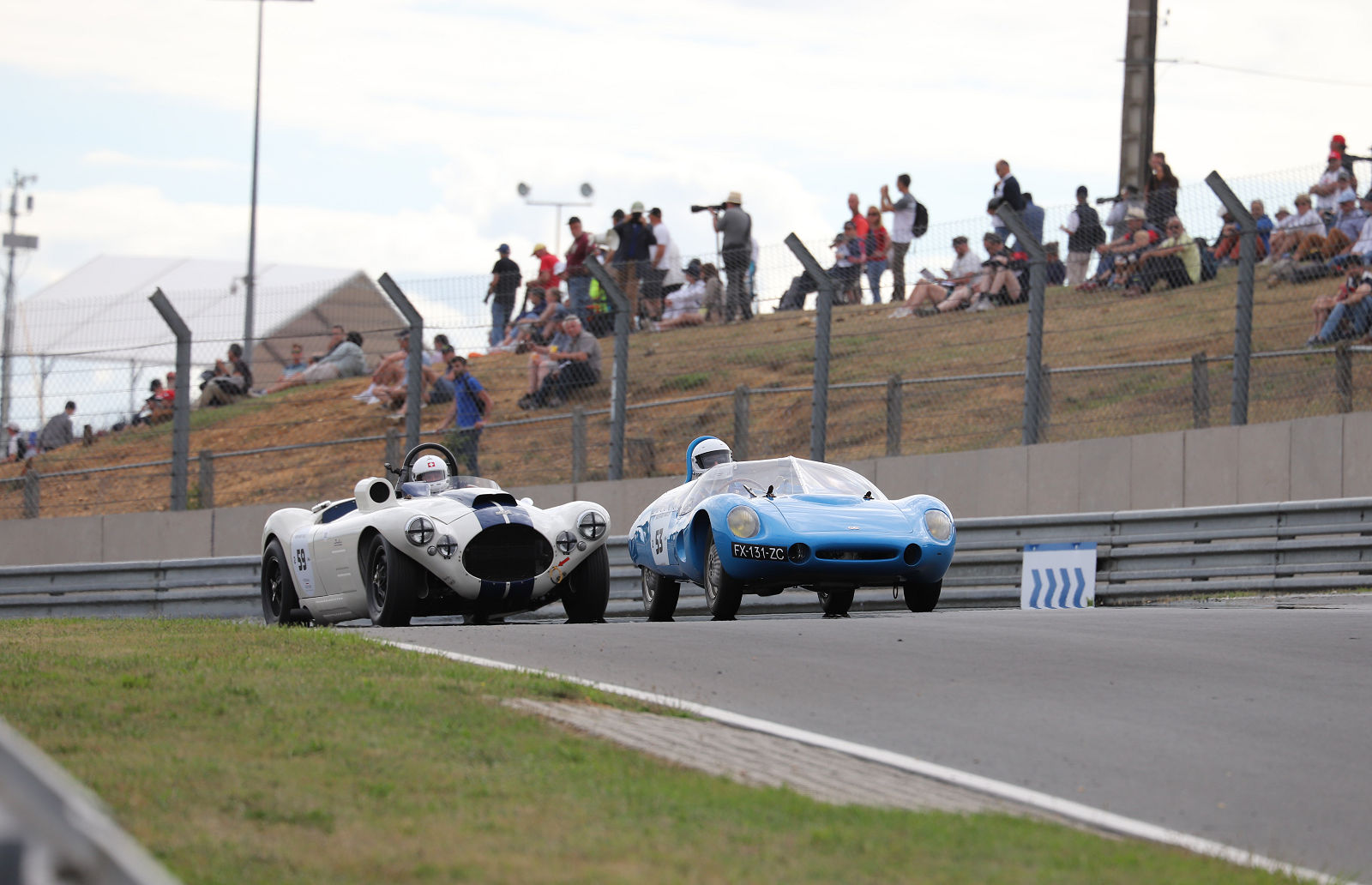
Two different technical approaches for the same race : Cunningham C4-R V8 and the DB HBR flat two.
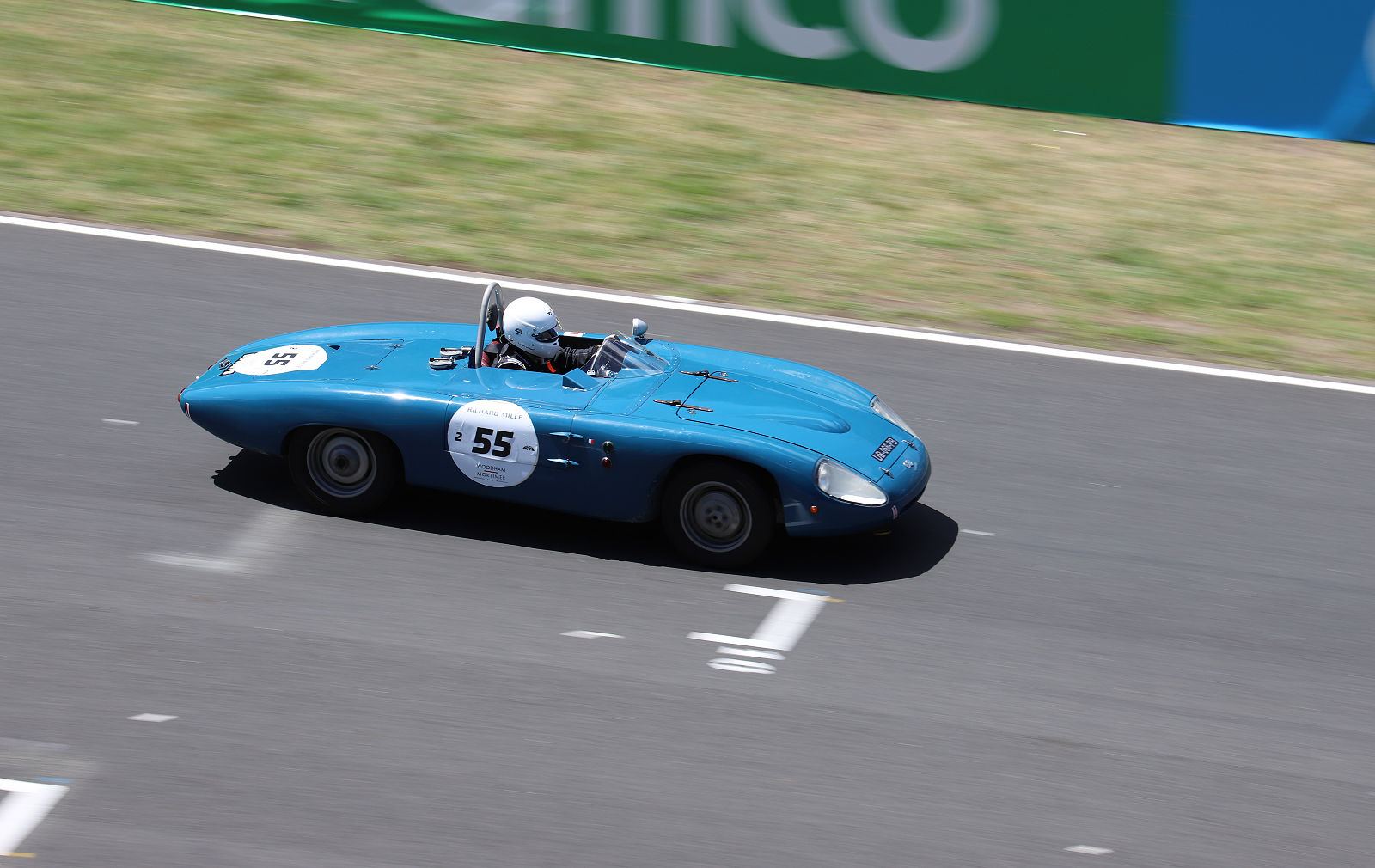
1954 DB HBR 750cc flat two.
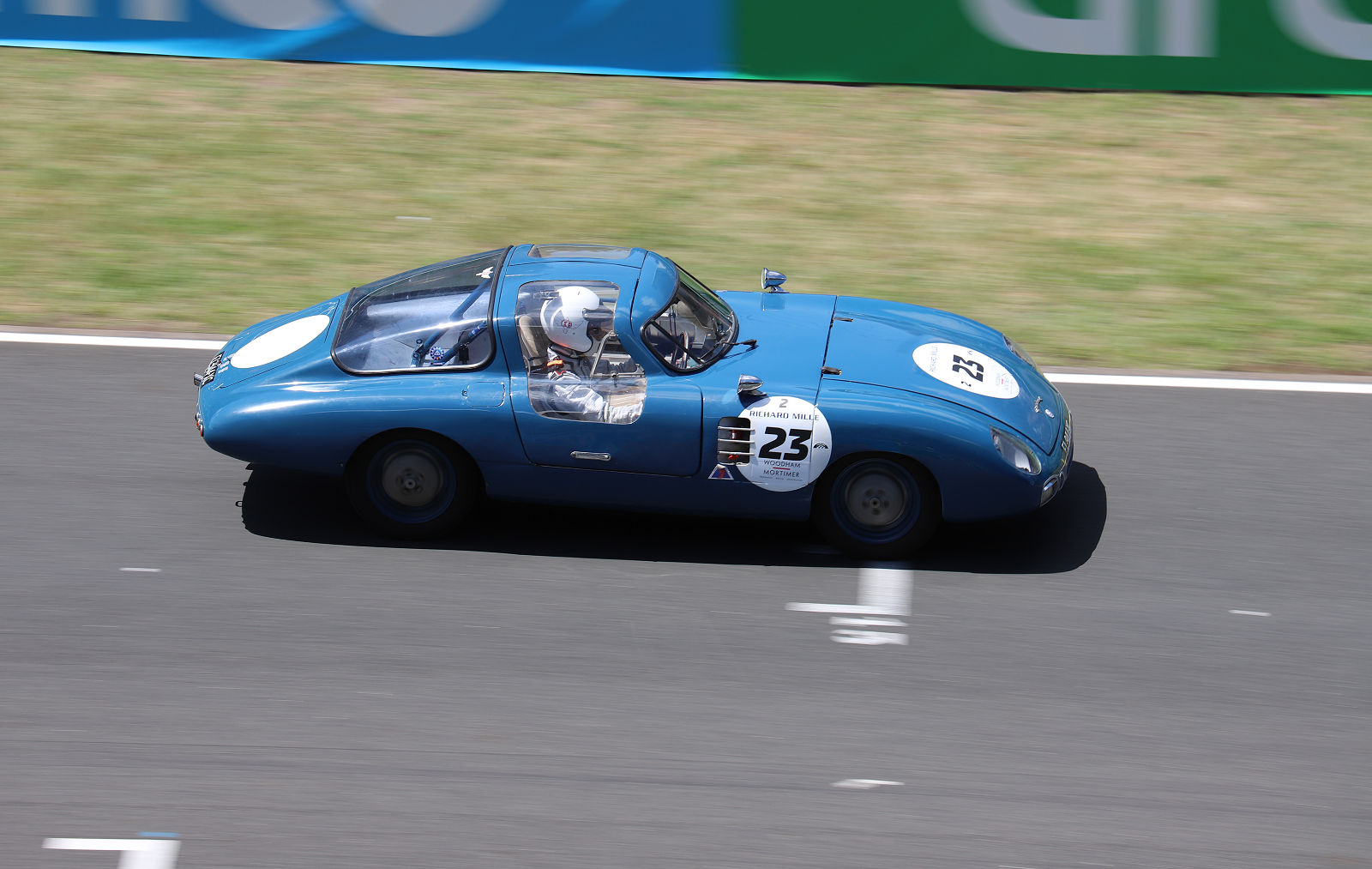
1956 Panhard Monopole X86
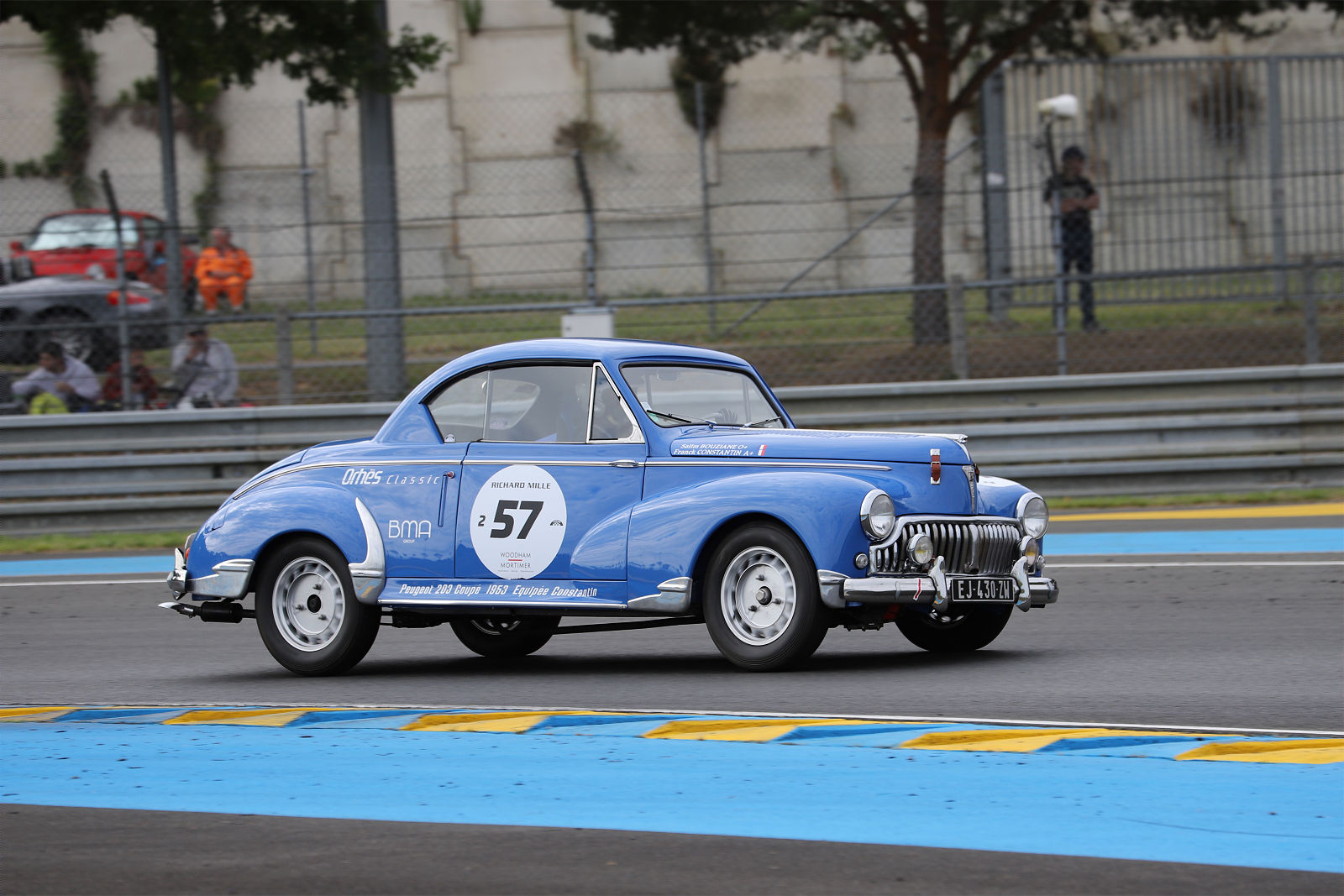
1953 Peugeot 203 coupé with a Constantin compressor
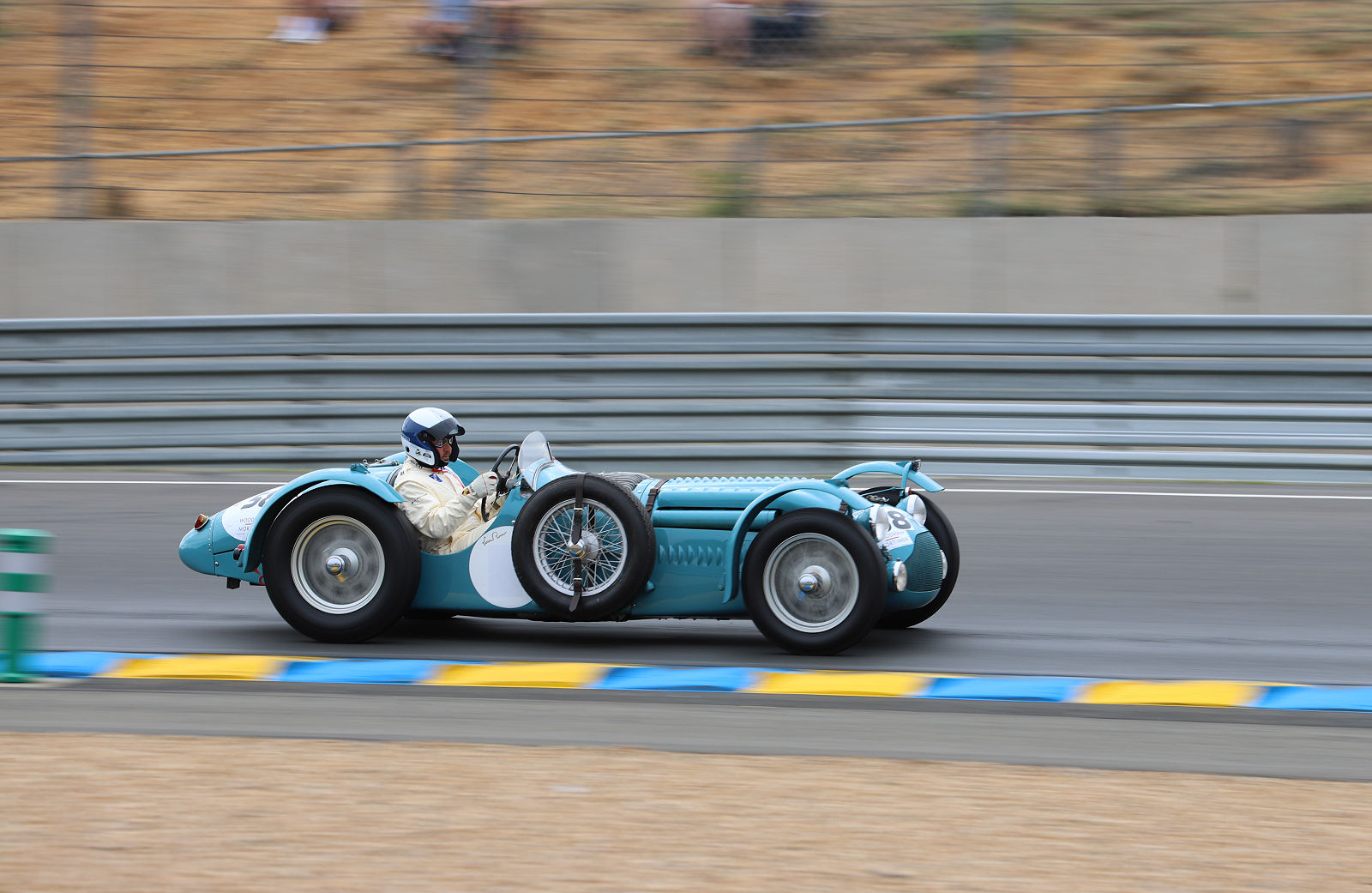
1950 Talbot-Lago T26 GS
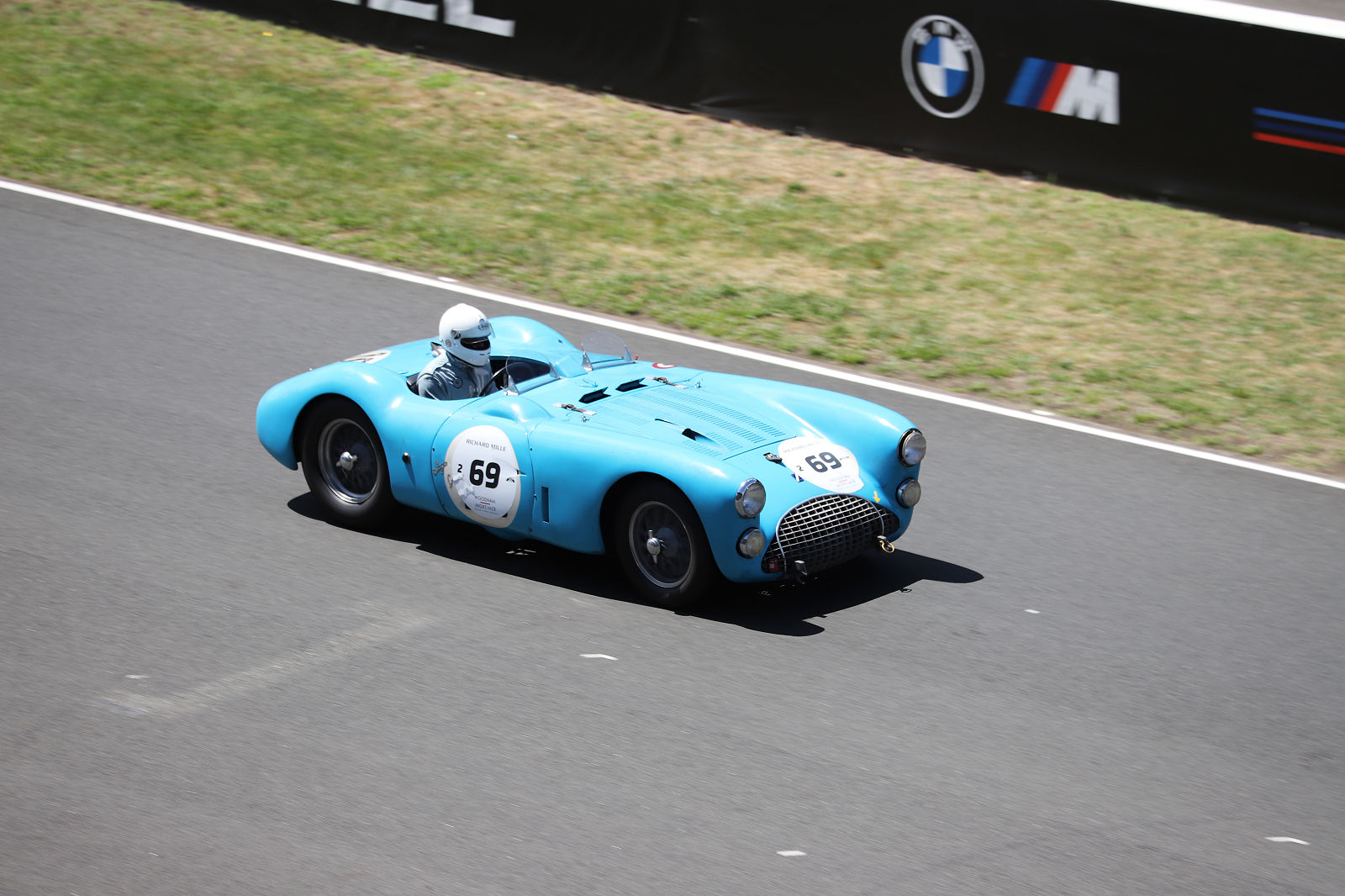
1951 Talbot-Lago T26 GS barquette Dugarreau s/n 110056
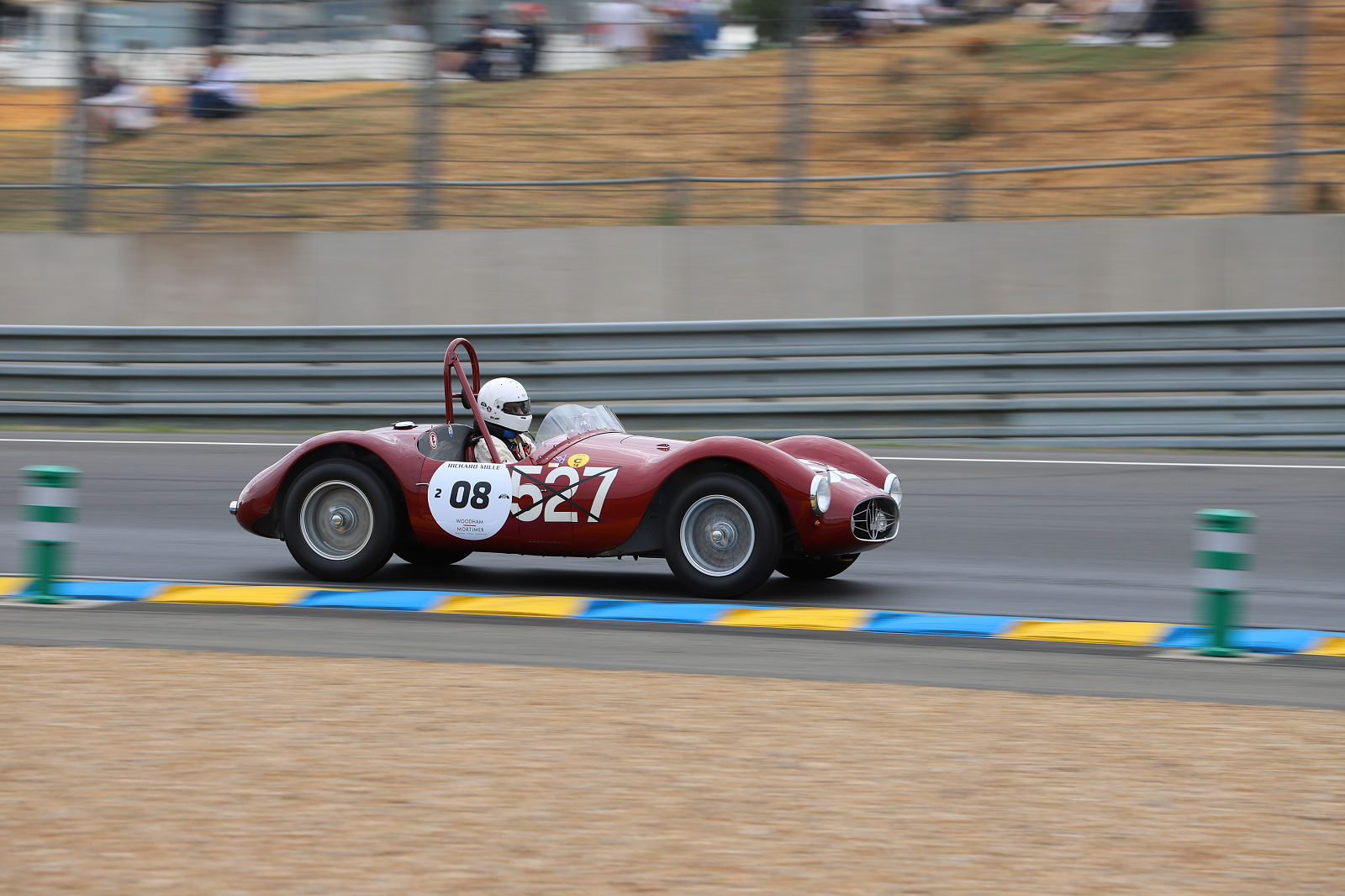
1954 Maserati A6GCS Spider s/n 2066
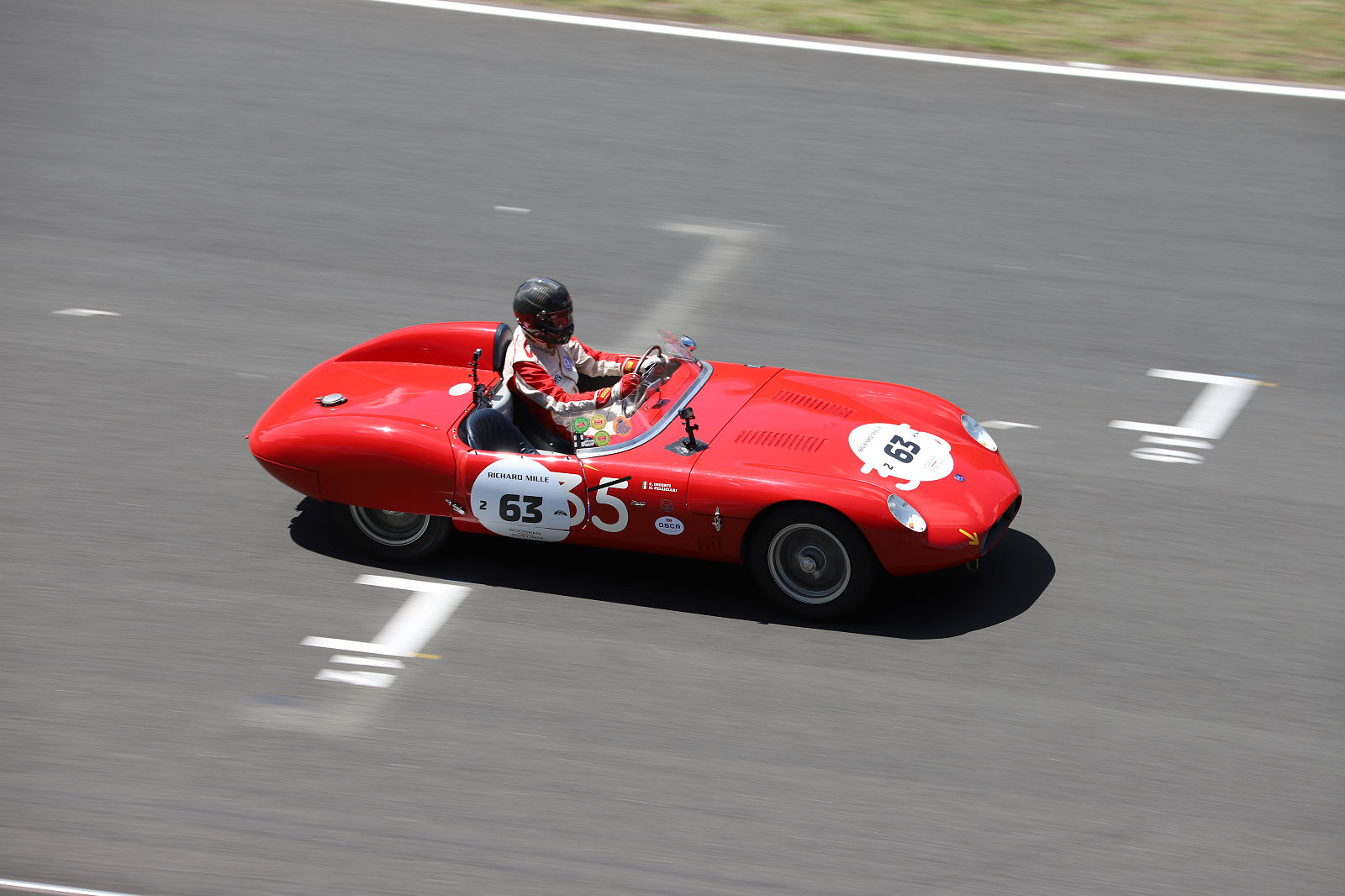
1955 Osca MT4
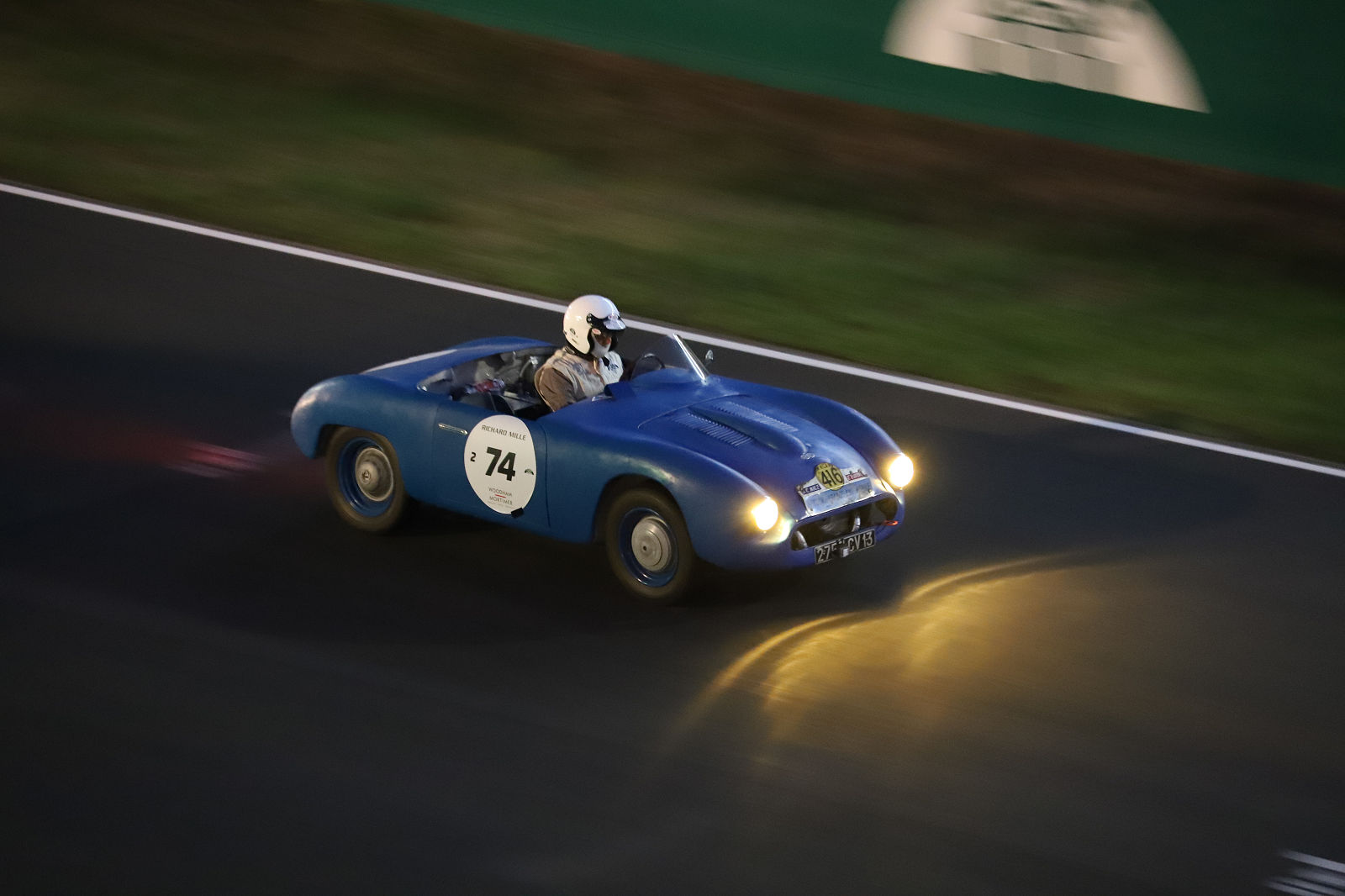
1951 DB HBR
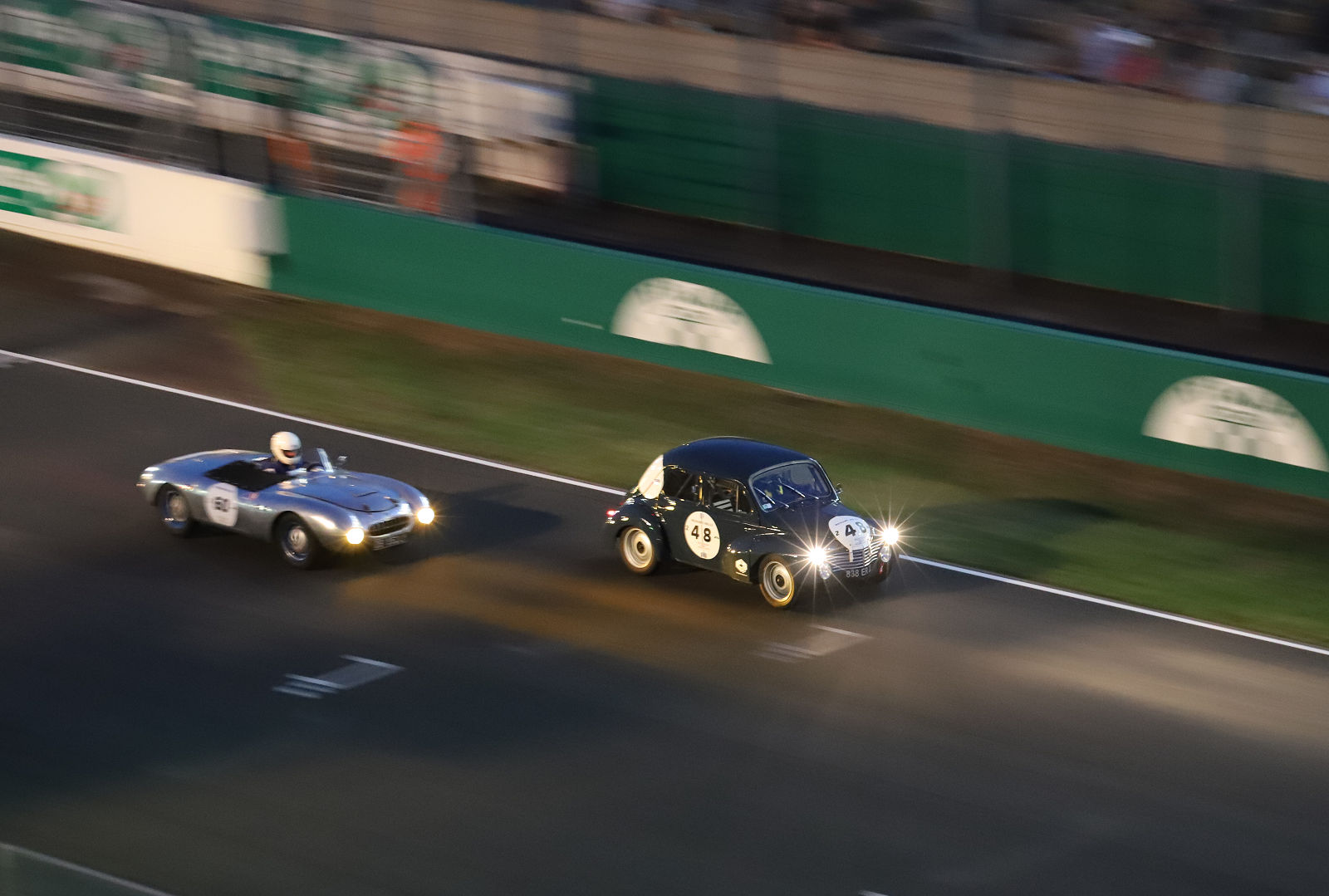
Renault Classic came with a trio of 4CVs, replicas of the cars entered in 1950 and 1951. One of them is followed here by a DB HBR.
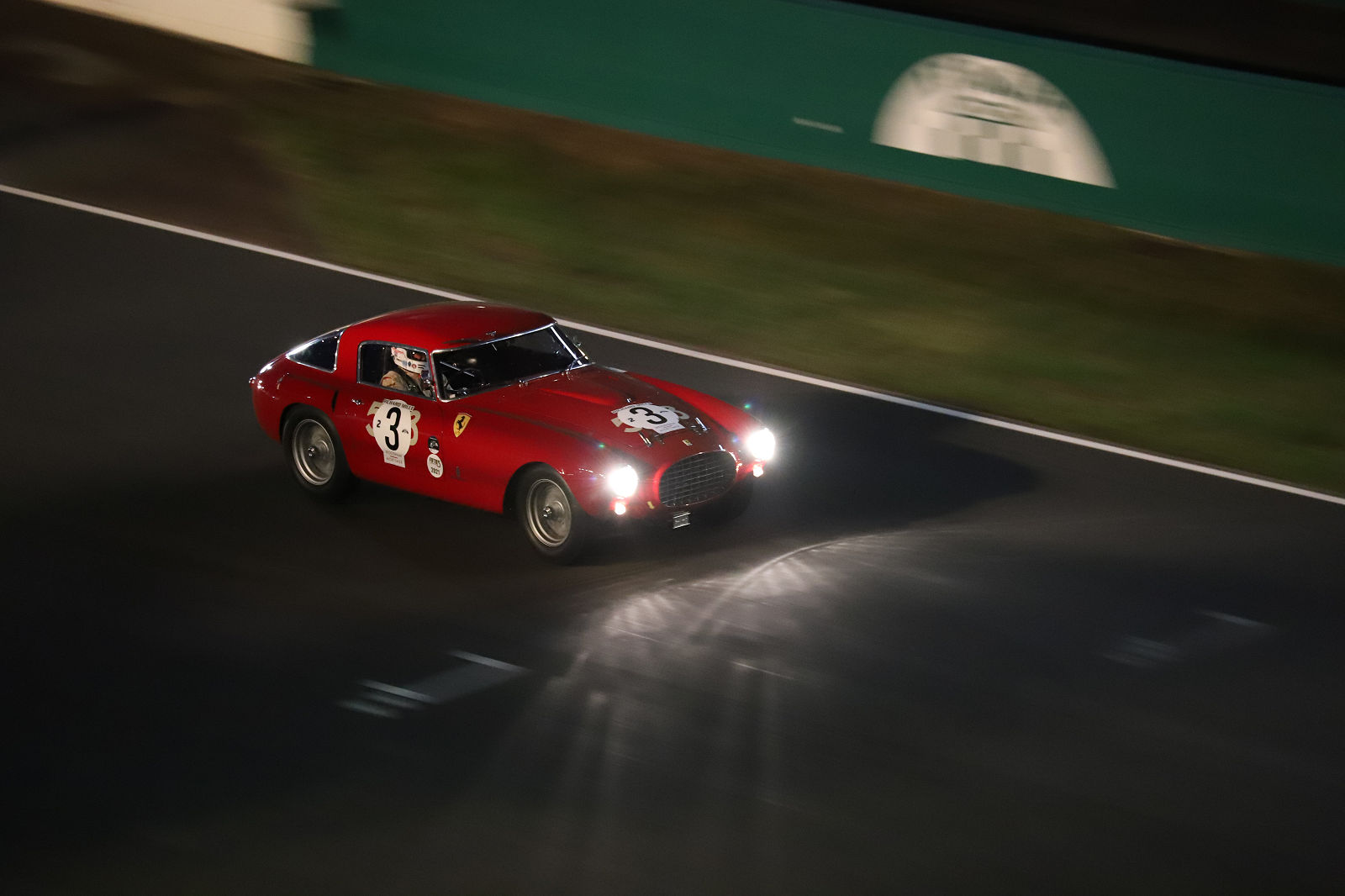
1953 Ferrari 250 MM berlinetta Pinin Farina s/n 0298 MM
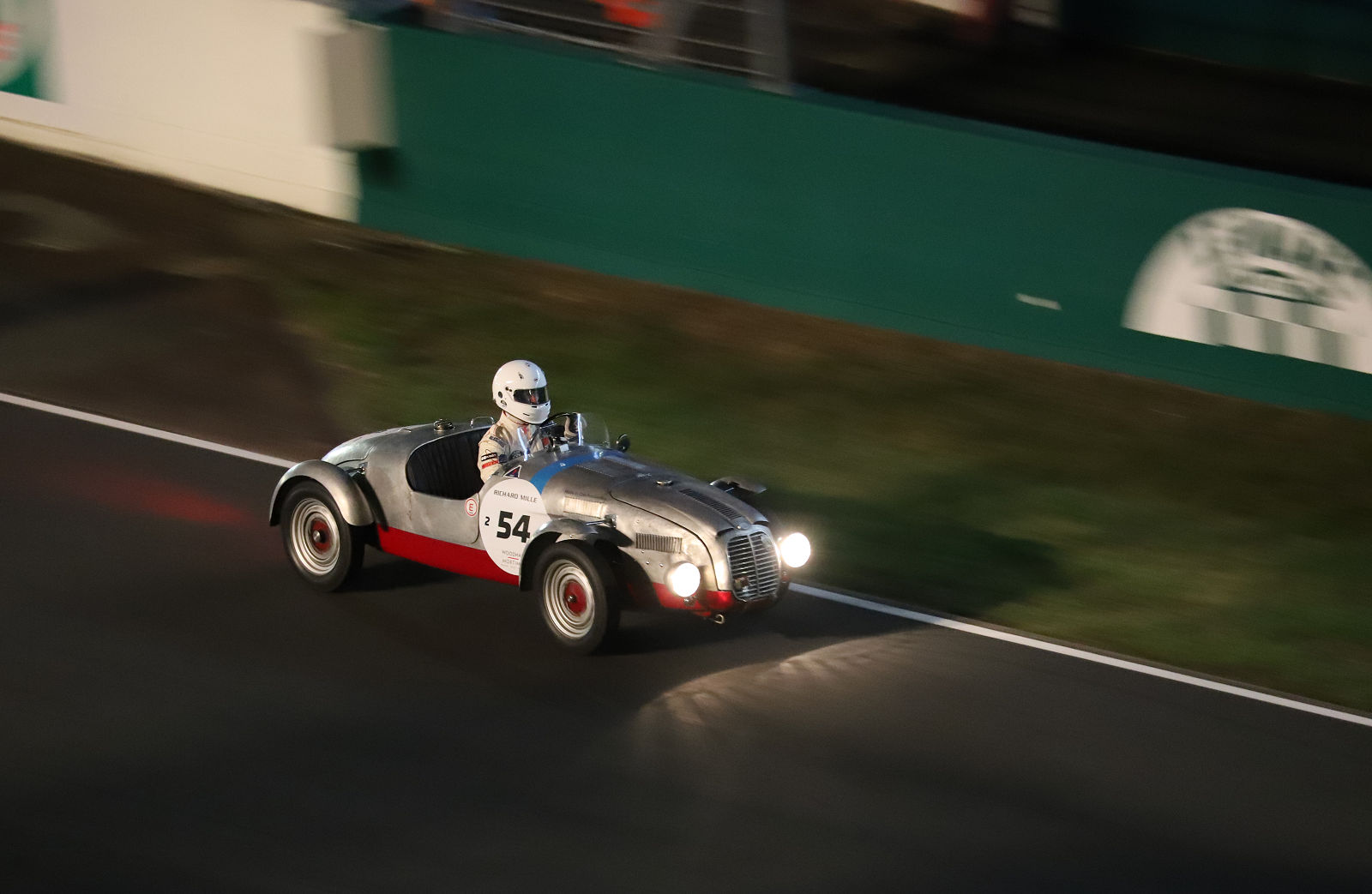
1949 Aero Minor Sport 750
Thank you for these splendid pics!
In comparison to the 2018 edition, it seemed that twice as many fans attended the event.
As a result, the Village was overcrowded and the indications of the different paddocks were subject to interpretation, while the gastronomy lacked the expected French touch.
Along the circuit, the show and the atmosphere were fantastic.
We basic fans owe our thanks to the drivers and car owners who pay to be allowed to entertain us.
And to the professional photographers who keep the atmosphere alive.
Thanks so much for your fine photos and coverage.
Pete,
Thanks for posting these marvelous images. Not only are the cars marvelous (well, some of them) and the photos crisp and sharp, but the reinstatement of great events with hillsides covered in spectators is a sign that we’re returning to pre-COVID “normal”, a reminder that life really is great and experiences and hanging out with friends (or making new friends) is how it is supposed to be.
We have a re-energized Monterey to look forward to in only a month.
Seventy years ago, I saw a Nash Healey on the lawn of the Schuyler County court house, in Watkins Glen, N.Y. Not more than six feet away cars raced their way down Franklin St. in what would be the last race of the Watkins Glen Grand Prix on public roads.
The Nash Healey had just completed the LeMans 24-Hour Race three months earlier. The storyboard that accompanied the car told of its exploits at the famed race but it was all new to me. From that day on, I was absorbed by cars, racing, and a unique place in France where the magic happened.
A few weeks ago, I attended the LeMans Historics with low expectations of ever capturing any of the excitement of what happened there in 1952 but the sight of the Dunlop Bridge erased all of my skepticism. It was a great event and worth the seventy-year wait.
Joe