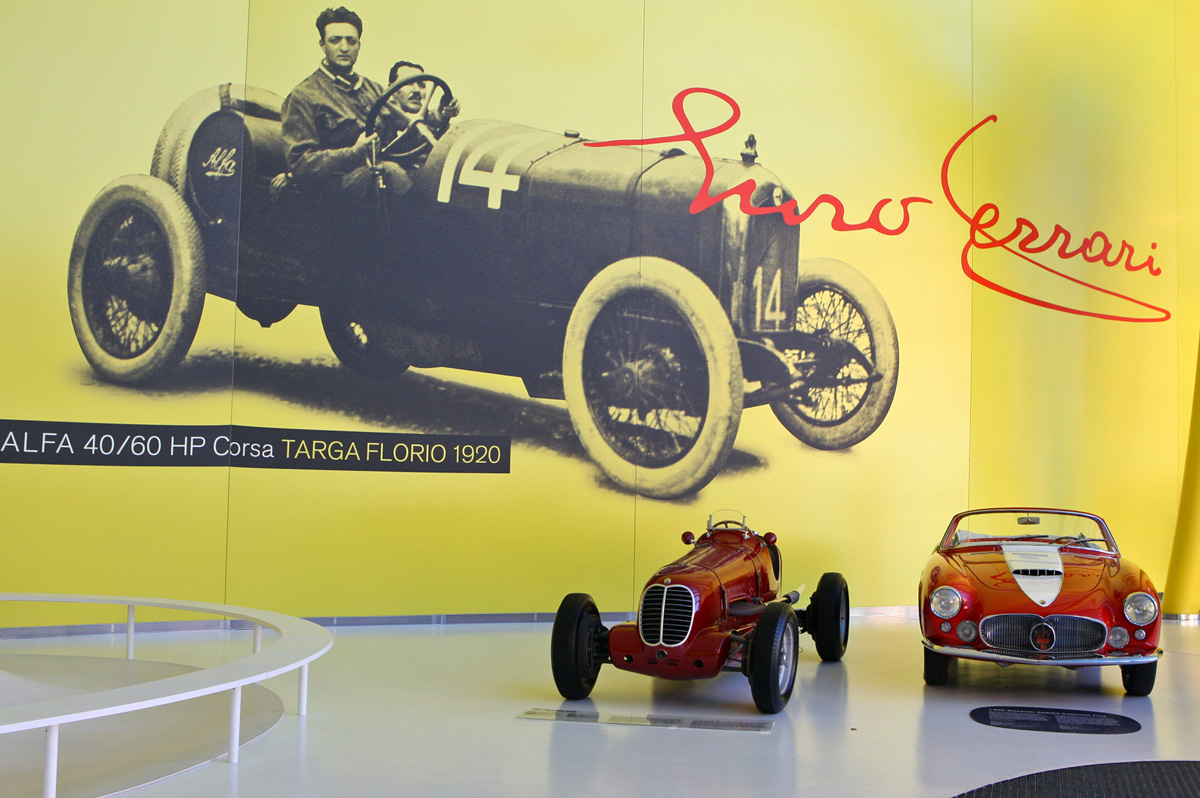
The Enzo Ferrari Museum celebrates Maserati's 100th years.
By Jonathan Sharp
Last winter, VeloceToday correspondent Jonathan Sharp left the British Isles to vacation in Italy and brought back absolutely stunning photo journey through the old Lingotto factory and the new Museo dell’ Automobile in Turin. He has just returned from yet another Italian Interlude, and a visit to the Enzo Ferrari Museum, our first of several features is presented this week. More to follow and CLICK on PHOTOS to ENLARGE!
You cannot have failed to notice that 2014 is being celebrated as the centenary of Maserati. In addition to the Marque being featured at various events around the world the Casa Enzo Ferrari Museum in Modena is holding a Maserati exhibition as a key part of the celebration. This being Italy, style is very much in evidence. The main Exhibition hall covers approximately 2500 sq meters and is completely open plan with not a pillar in sight. The contents of the exhibition are very well chosen to encompass all that we love best about Maserati. All the cars are beautifully lit and displayed. In addition to the cars on show the display cases around the edge of the hall tell the history of car manufacture, both road and racing cars, using photos and some amazing artifacts from around the Modena area. In addition to all this, every half an hour throughout the day, using 19 projectors, two different movies are projected onto all the walls and also the ceiling. One is in celebration of the life of Enzo Ferrari and the other is in celebration of Maserati. The Enzo film was particularly well done with so much being said without a single word being spoken.
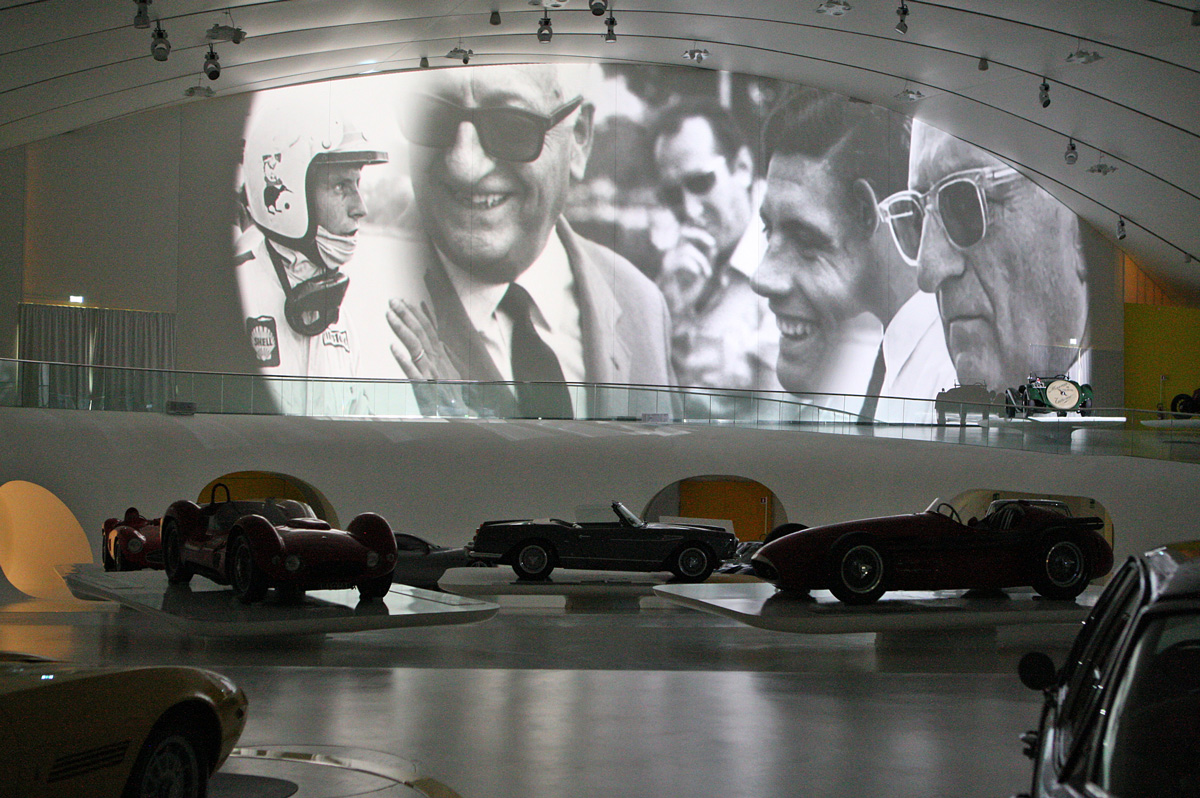
The Enzo Ferrari film can be seen over the Maserati display.
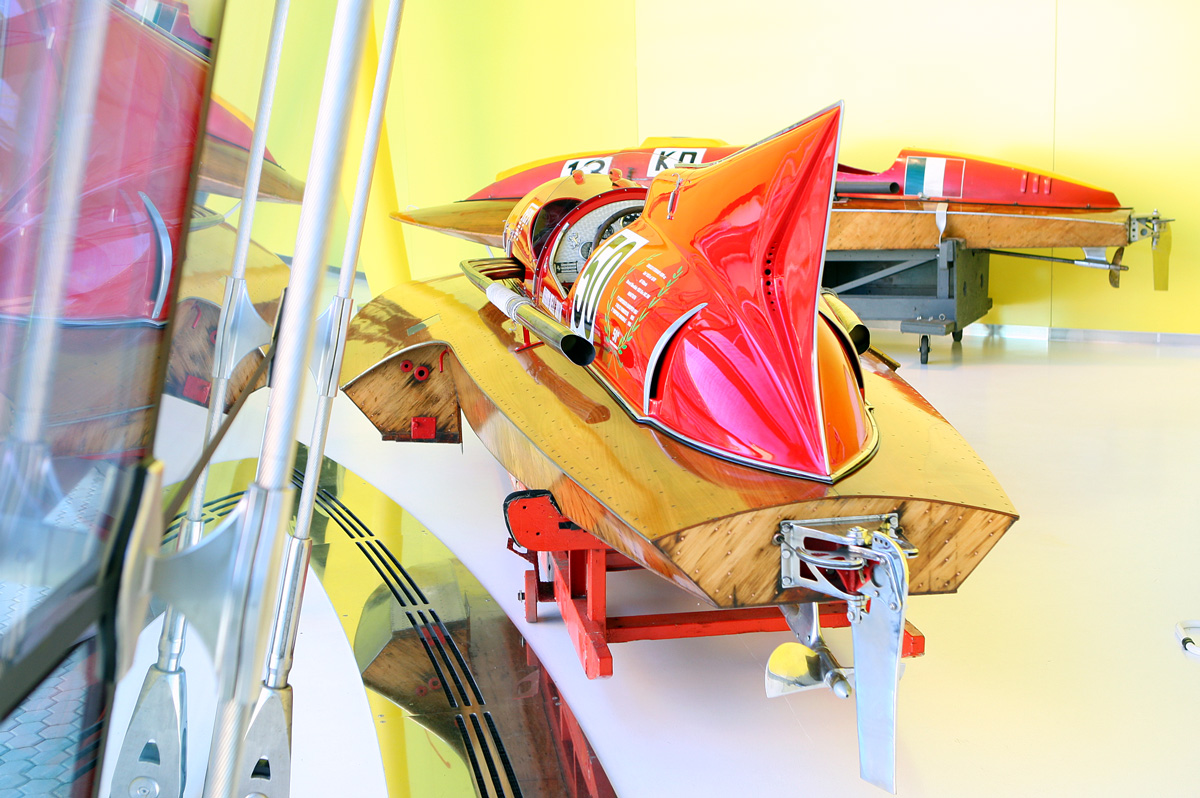
A new display featured both Maserati and Ferrari powered record boats, both built by Timossi.
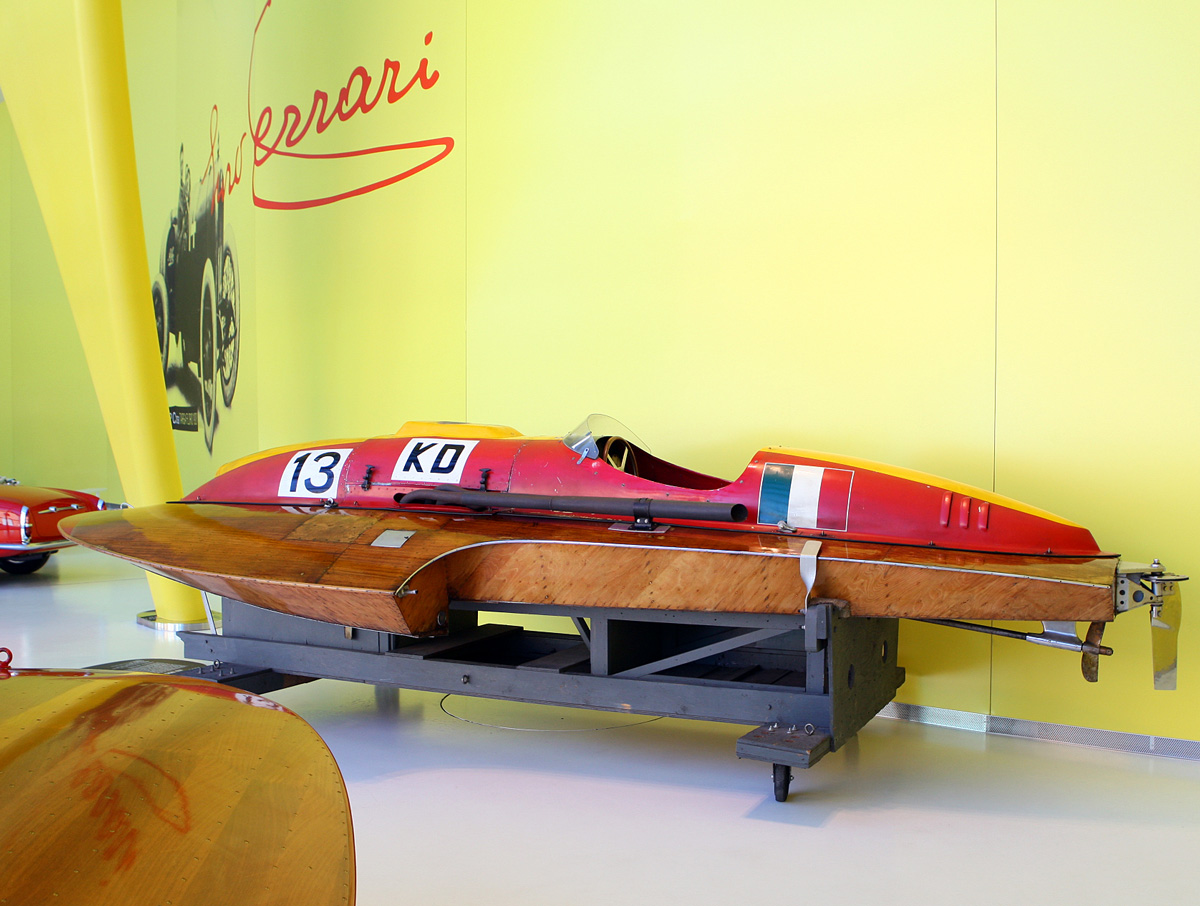
Between 1959 and 1969 Maserati-powered race boats won 11 consecutive World titles in the 800/900 KG category. This example of a Timossi race boat was piloted by Gian Luigi Crivelli to the world championship in 1969. Power comes from the Maserati 5700cc V8 with 480 hp.
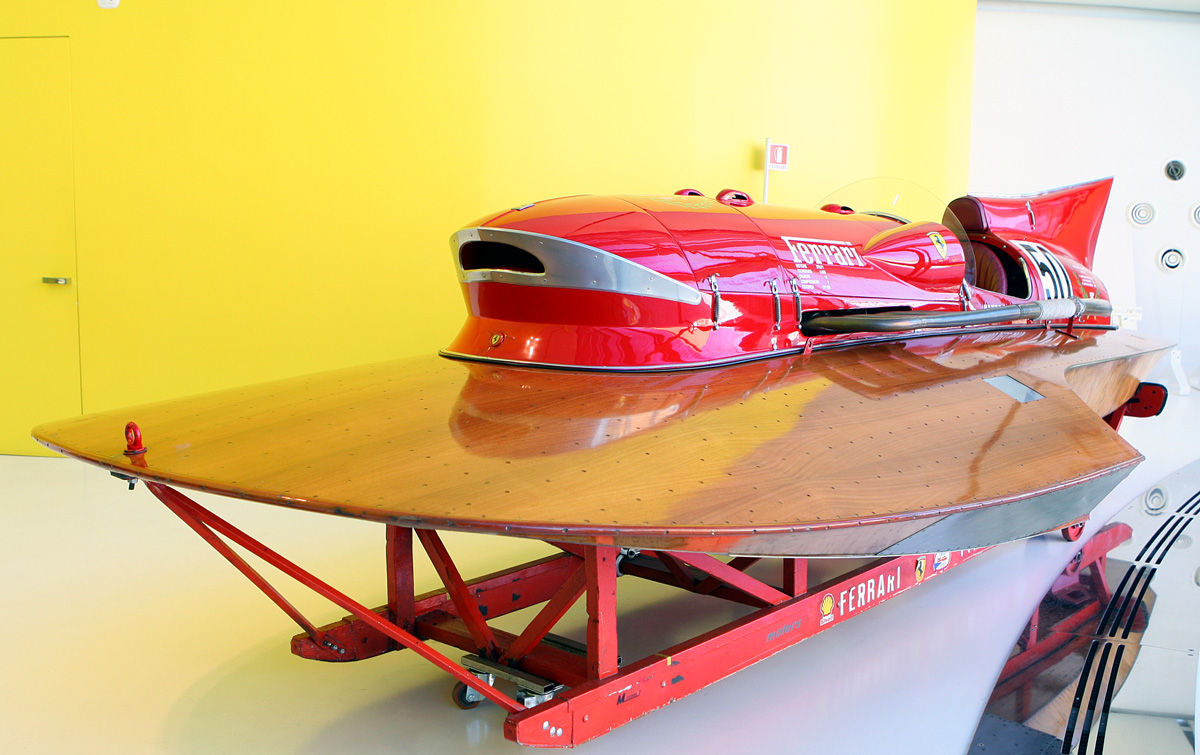
Probably the most famous Italian race boat, this three point hydroplane 800kg class race boat was built by Timossi in 1953. In this boat, on the 15th October 1953, Achielle Castoldi set a new world speed record for the class of 241.708 kph. The power unit is a 4500cc Ferrari V8 which was derived from the World Championship 1951 F1 car. When fitted with twin superchargers the power was increased to 510 hp.
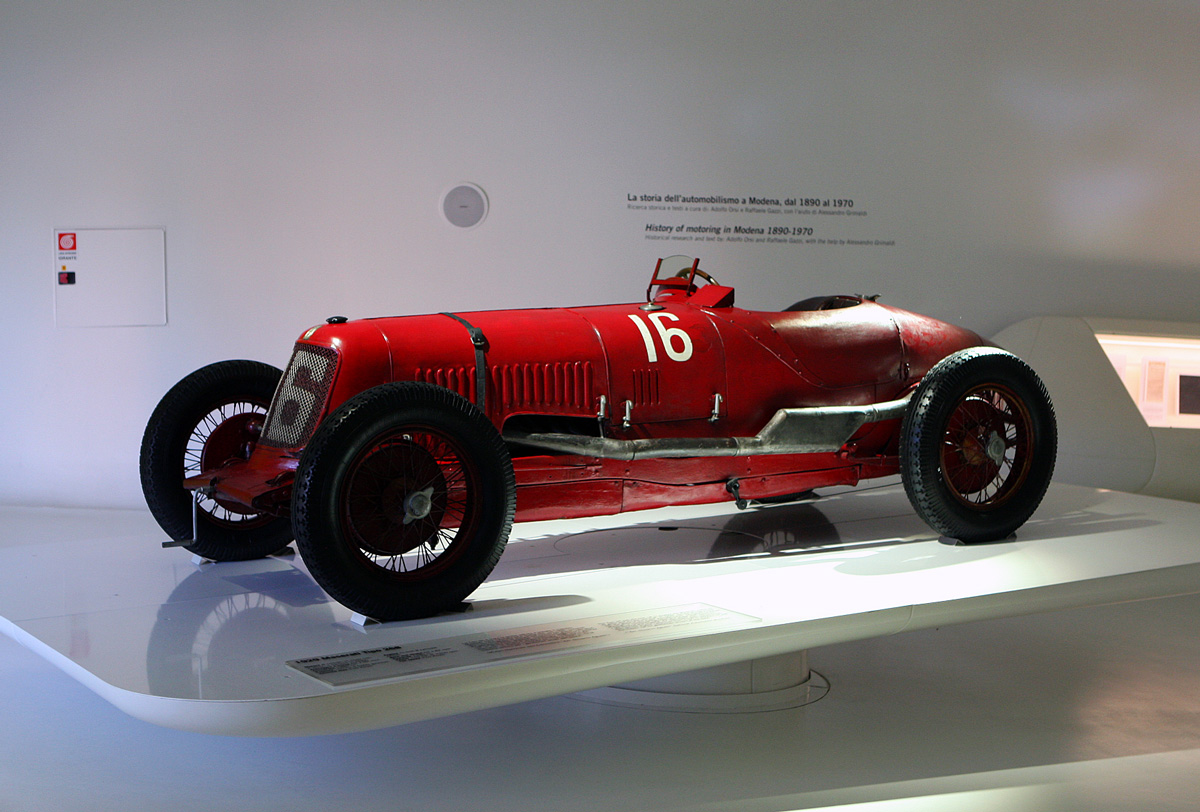
The first car to carry the Maserati name on the grill was the Tipo 26 of 1926. One of 43 examples built and displayed courtesy of Giovanni Agnelli and the National Automobile Museum.
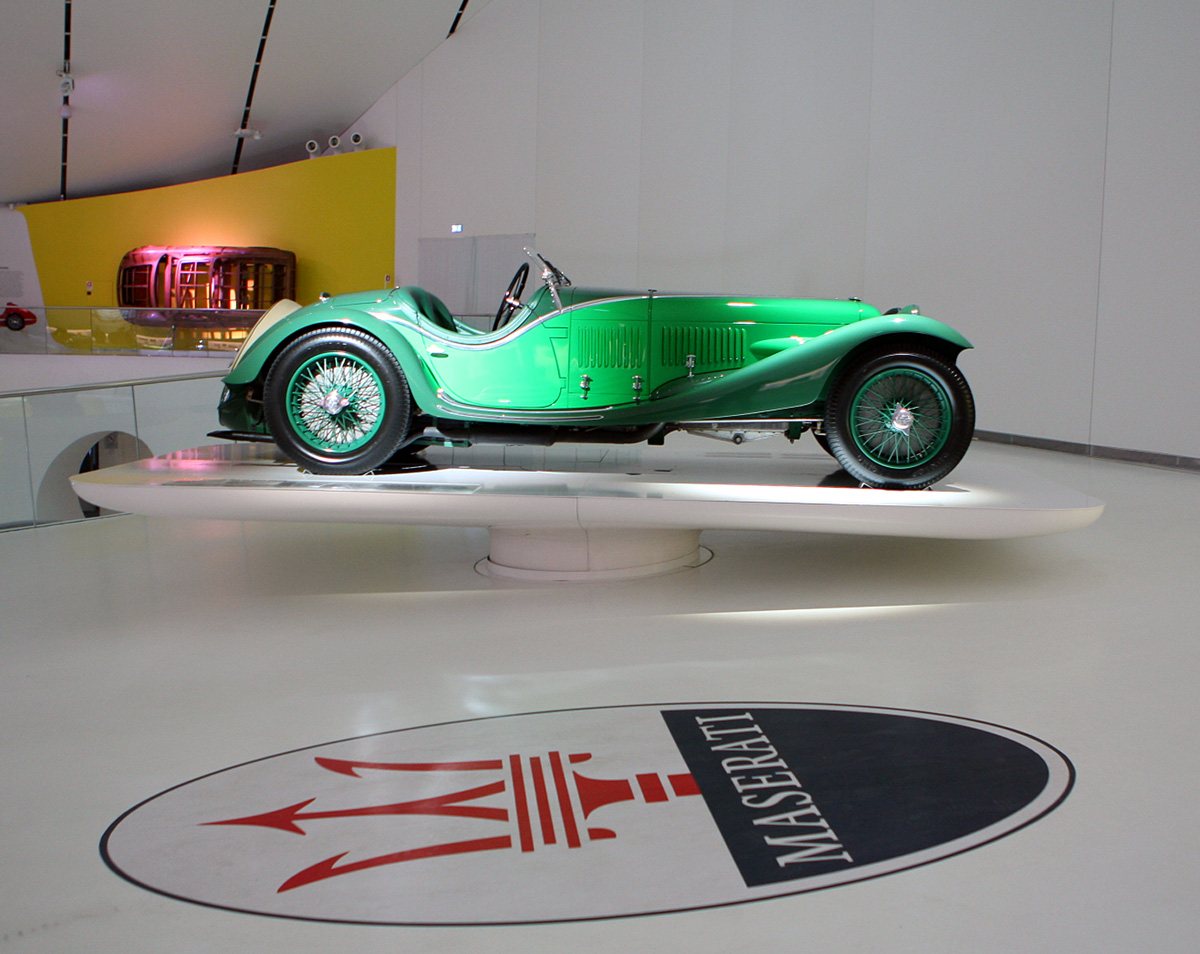
Alfieri combined two straight 8 cylinder 2 litre Tipo 26B engines on a common crankcase with two crankshafts geared together to produce a 16 cylinder engine of up to 305 bhp. In 1929 Baconin Borzacchini racing a V4 Grand Prix example over a 10km course in Cremona broke the world record for class F with a speed of 246km/h. The example in the picture was built in 1932 for the Papal physician Dr Galeazzi who had it rebodied in 1934 by Zagato.
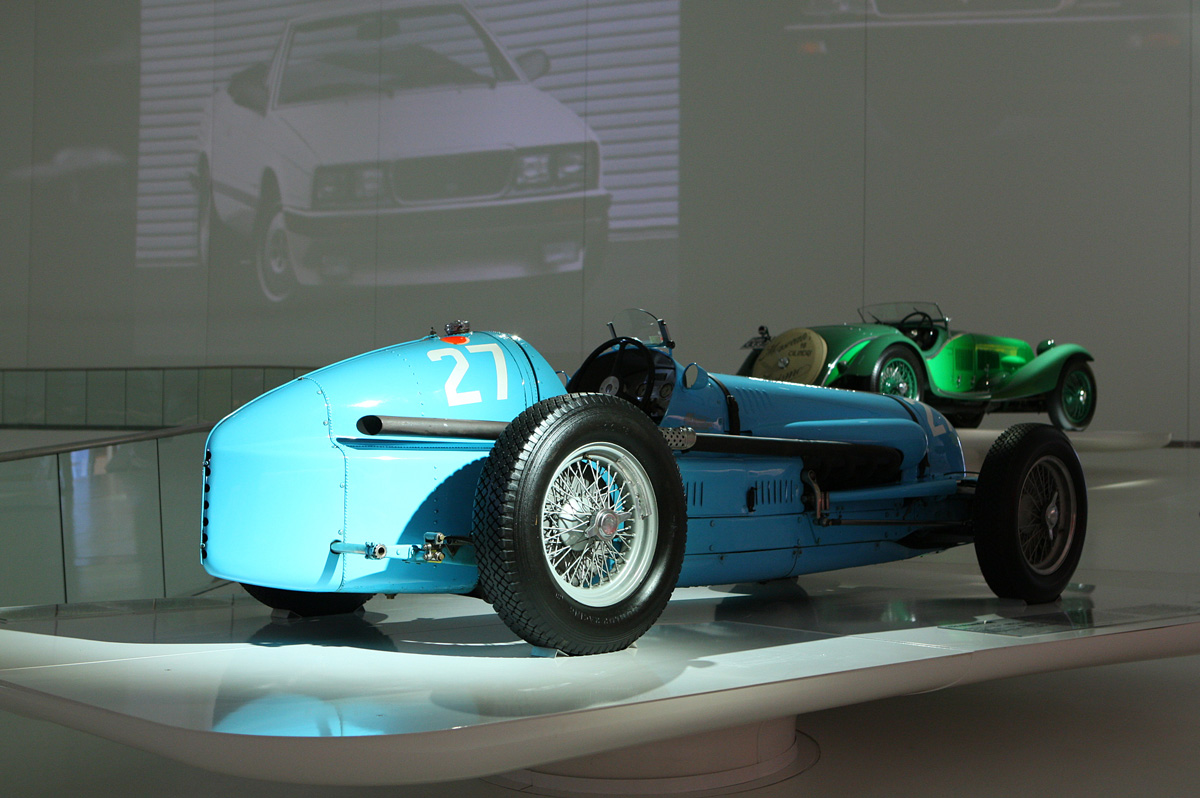
Maserati V8 RI, one of four built. The RI or Ruote Independenti means independent four wheel suspension, and a 4800cc V8 engine, supercharged with 320 bhp. Ernesto Maserati's first Grand Prix (rather than voiturette) car. A lack of finances did not allow further development.
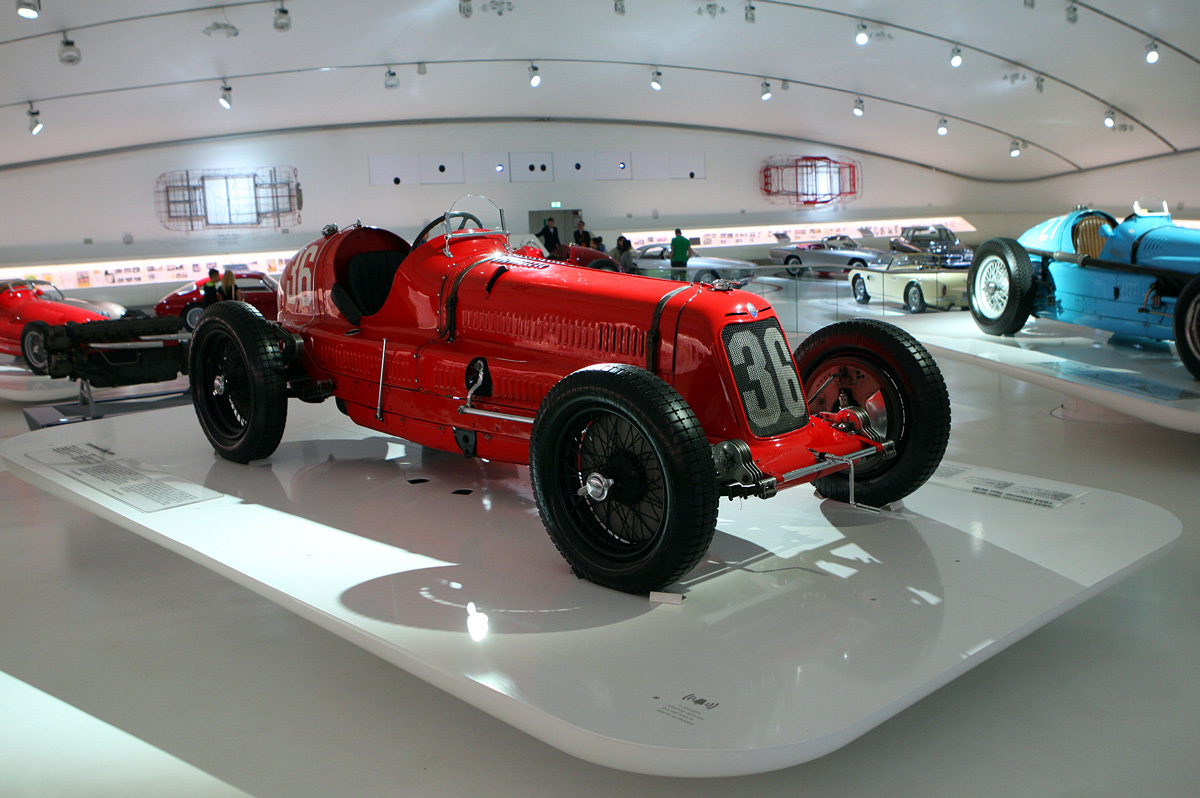
Maserati 8CM: This example was driven in period by Tazio Nuvolari. Its 3000cc engine was the last engine to be designed by Alfieri, who died in 1932, and was designed for a still born front wheel drive single seater.
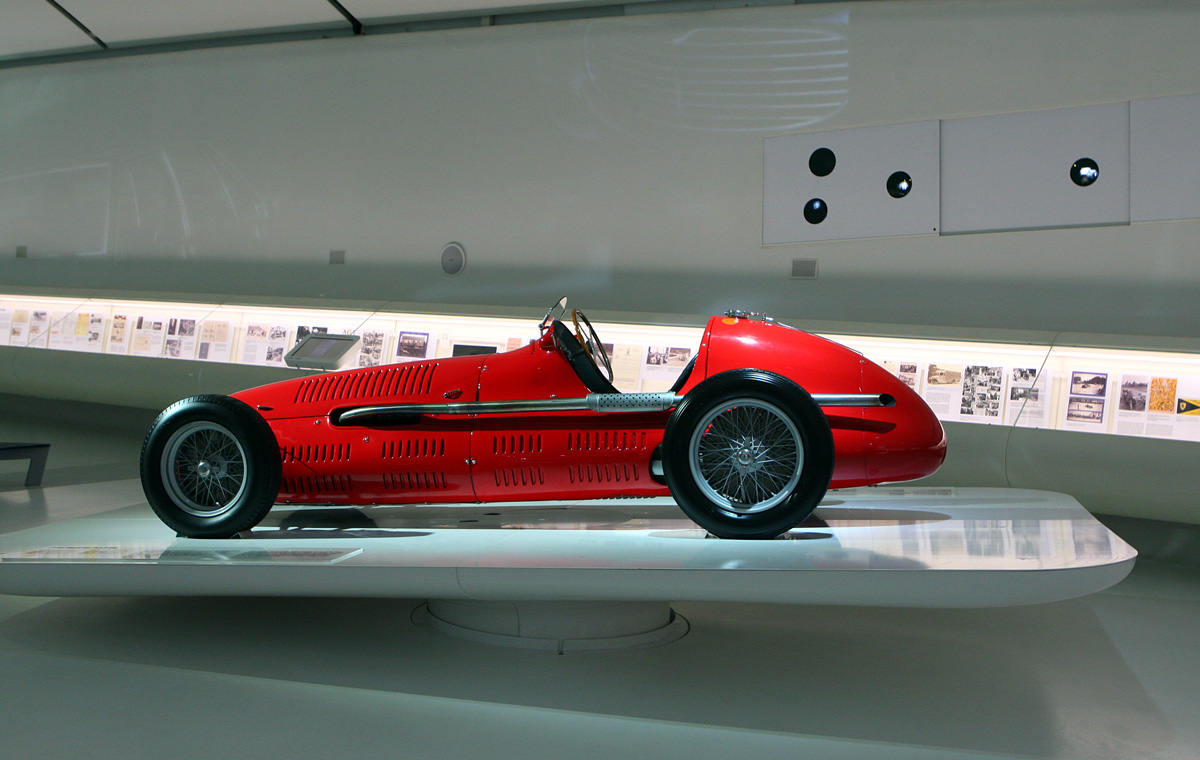
Also known as a San Remo following Alberto Ascari's win of the 1948 San Remo Grand Prix. This example is one of the last developments of the 4CL (and 4CLT) a model which started its race career as a Voiturette in 1939.
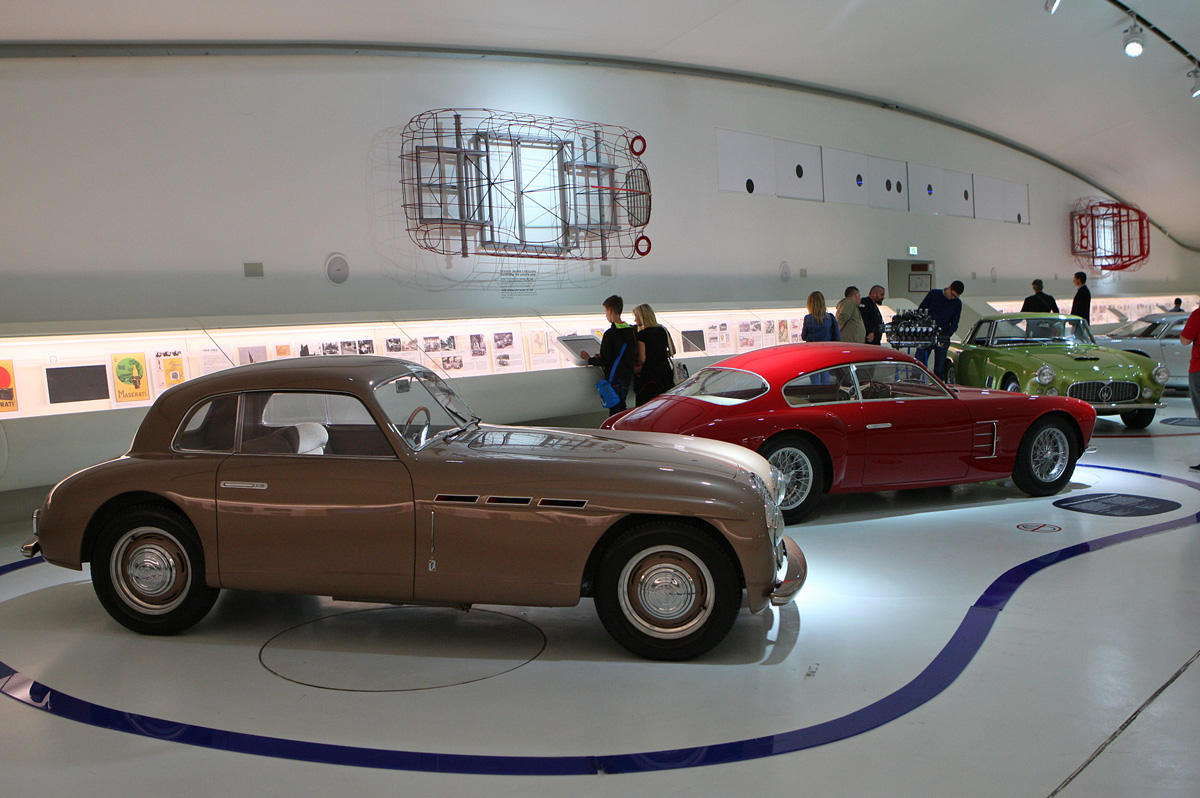
Maserati A6 1500: Between 1947 and 1950 Maserati built 61 examples of this 1500cc straight six powered sporty tourer. Design work was started in 1941 by the Maserati brothers even though the company at that time was owned by Adolfo Orsi. This example was bodied by Pinin Farina.
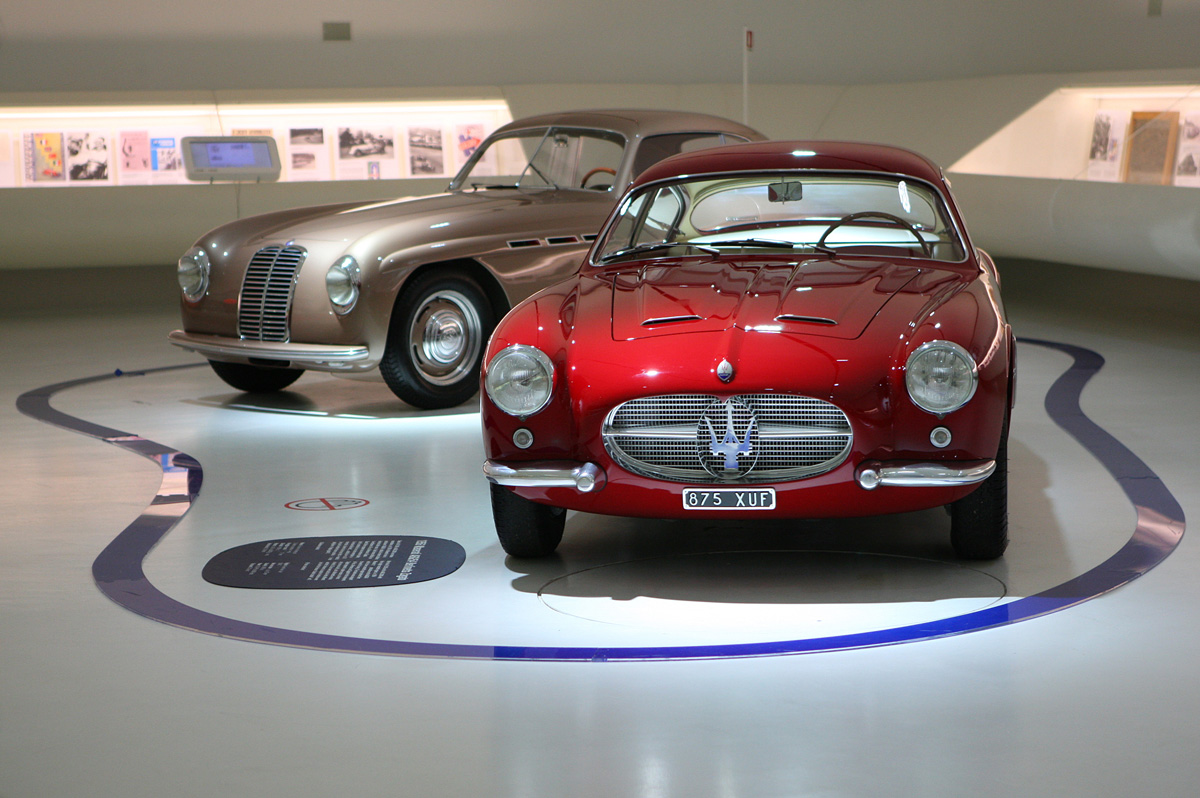
Maserati A6G54: Built in 1956 this one of 20 bodied by Zagato.
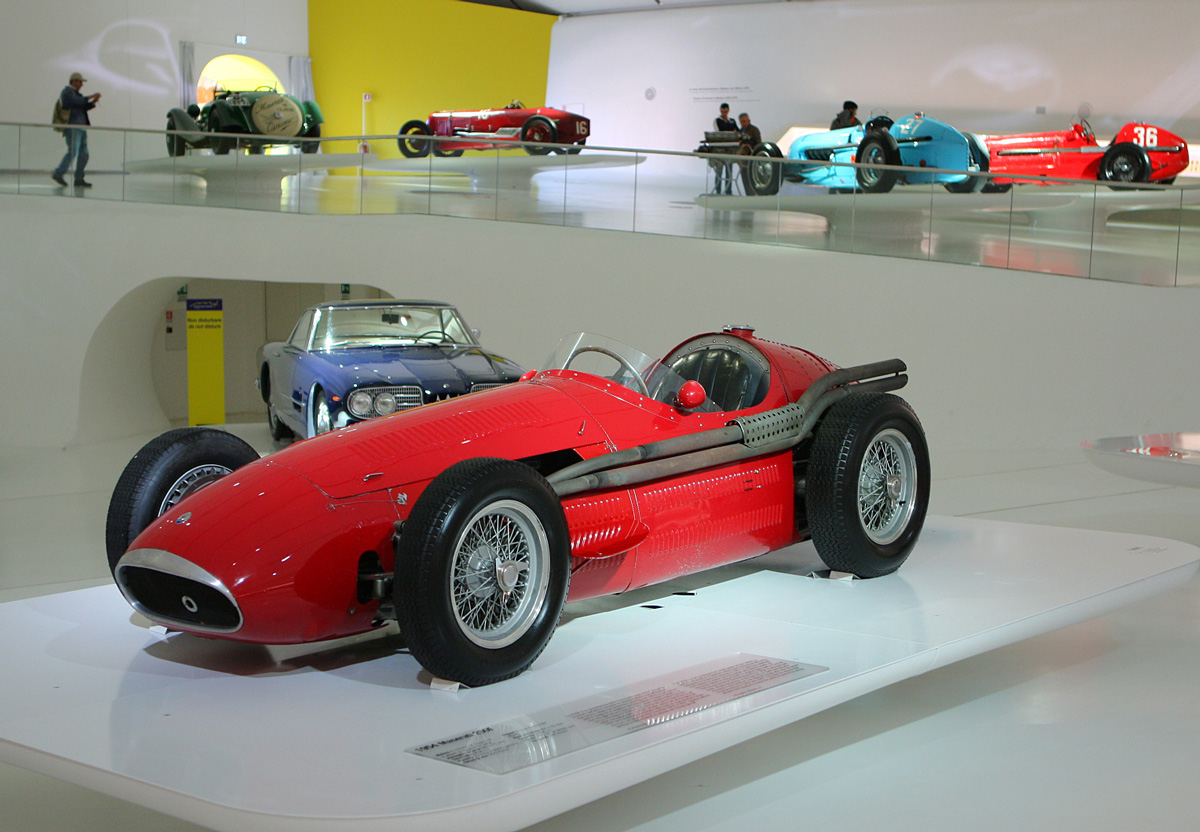
Maserati 250F: You cannot have a Maserati display without a 250F. First raced in 1954 and still being used by private entrants as late as 1960. It was a 250F which allowed Sir Stirling Moss to enter the world of Grand Prix racing.
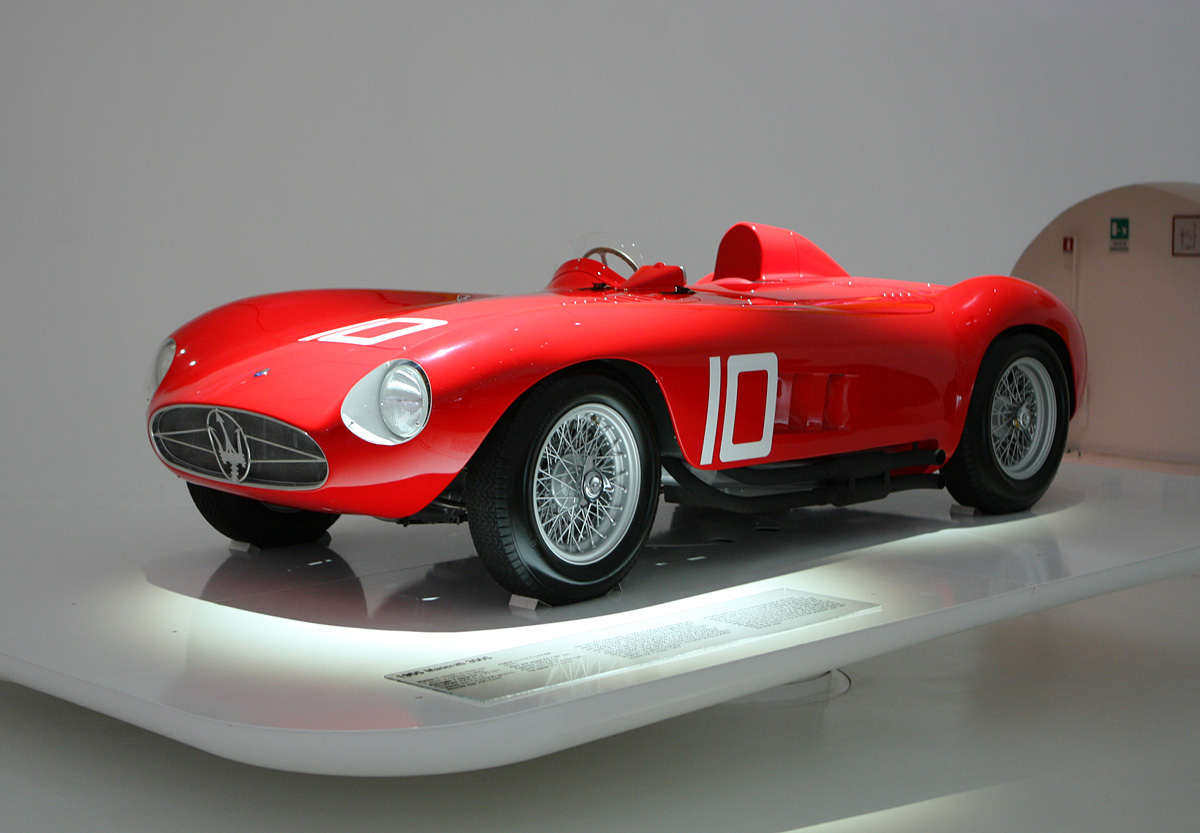
Maserati 300S: If you display a 250F then you need to display also a 300S. This example was built in 1955 and is one of the first produced with a shorter nose than later examples.
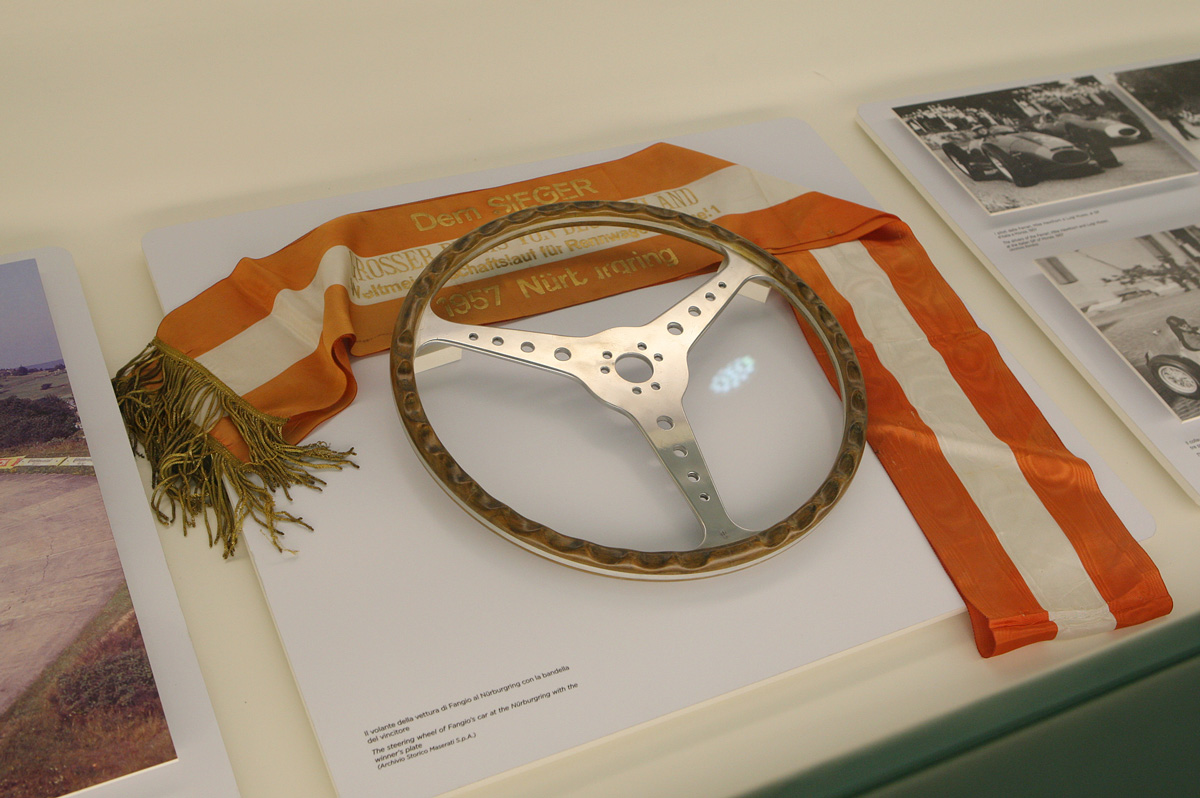
Around the main 2500 square meter display hall are various display cases which tell the story of car production and motor racing around the Modena area. One of the cases displays this, the steering wheel and race winner’s garland from the 1957 German Grand Prix, which was won by Fangio in a 250F.
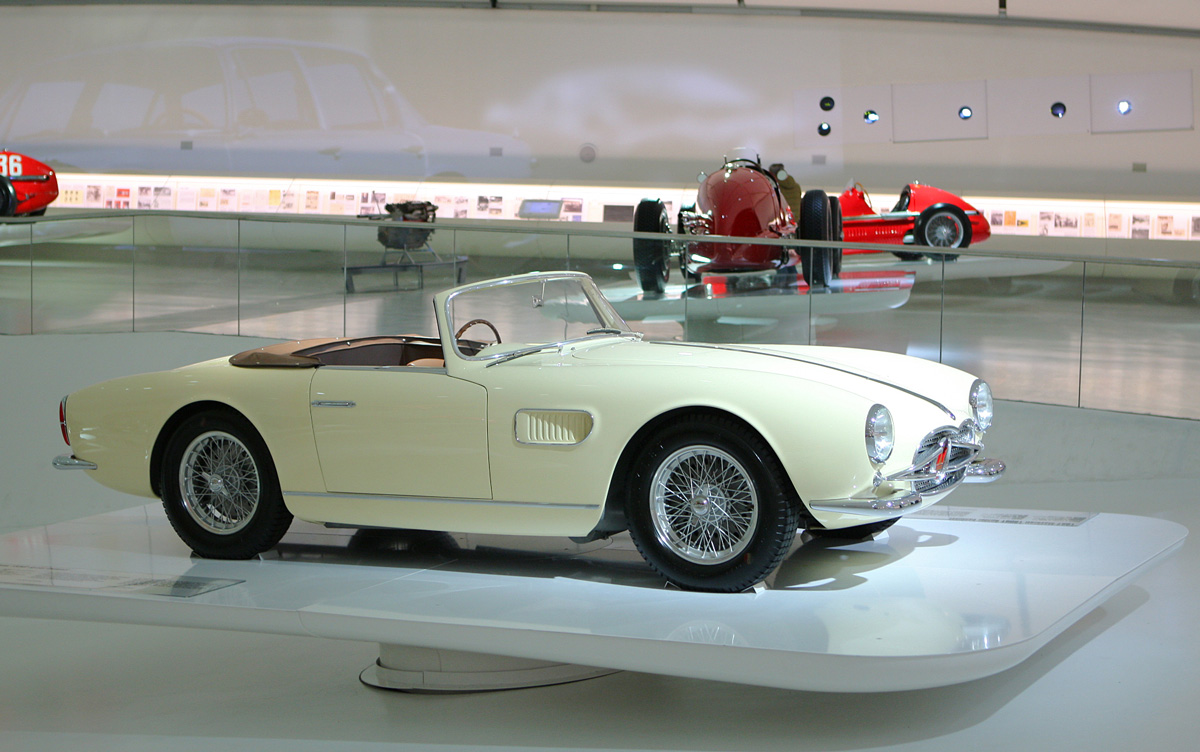
1957 Maserati 150GT Fantuzzi Spider: This prototype was assembled using a racing chassis and a slightly detuned 4 cylinder race engine of 1500cc. The alloy bodywork was constructed by Medardo Fantuzzi as were all the racing Maseratis. This is the only example built.
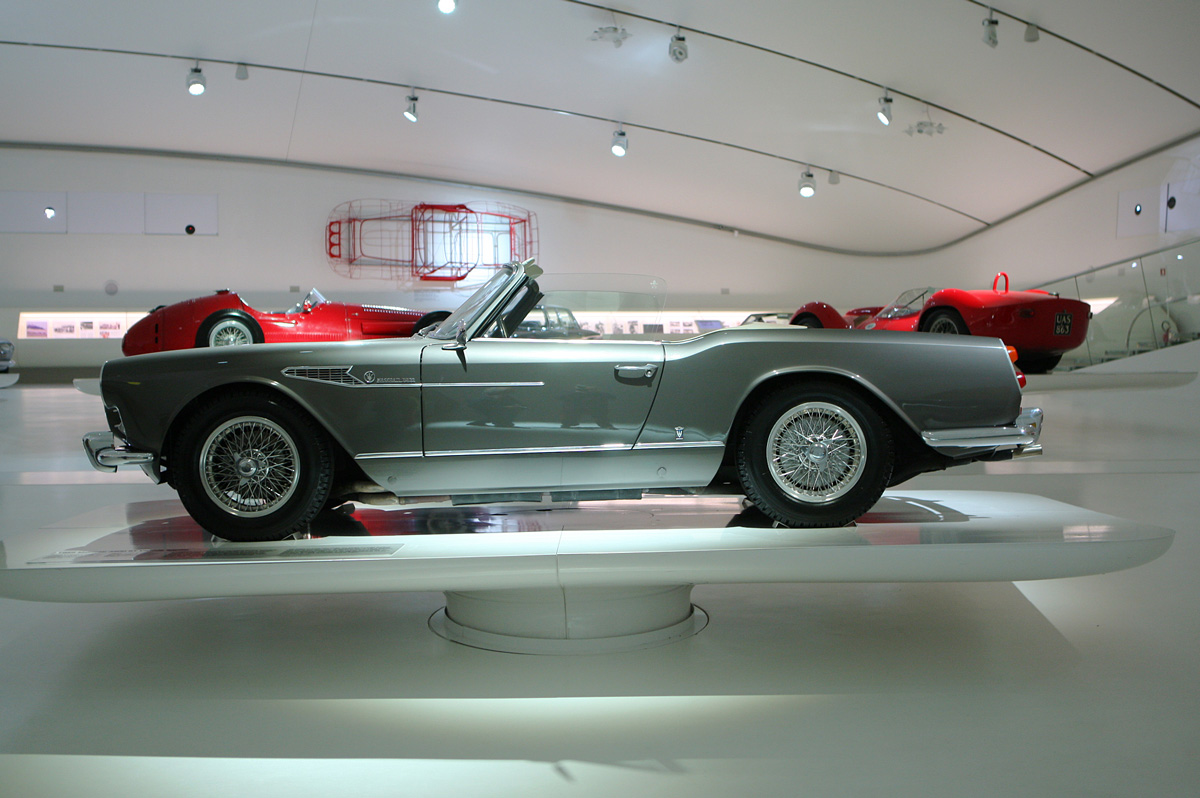
Maserati 3500 Spider: This example is one of two prototypes built by Vignale and designed by Giovanni Michelotti. The car was displayed on the Vignale stand at the Turin Motor show in 1959
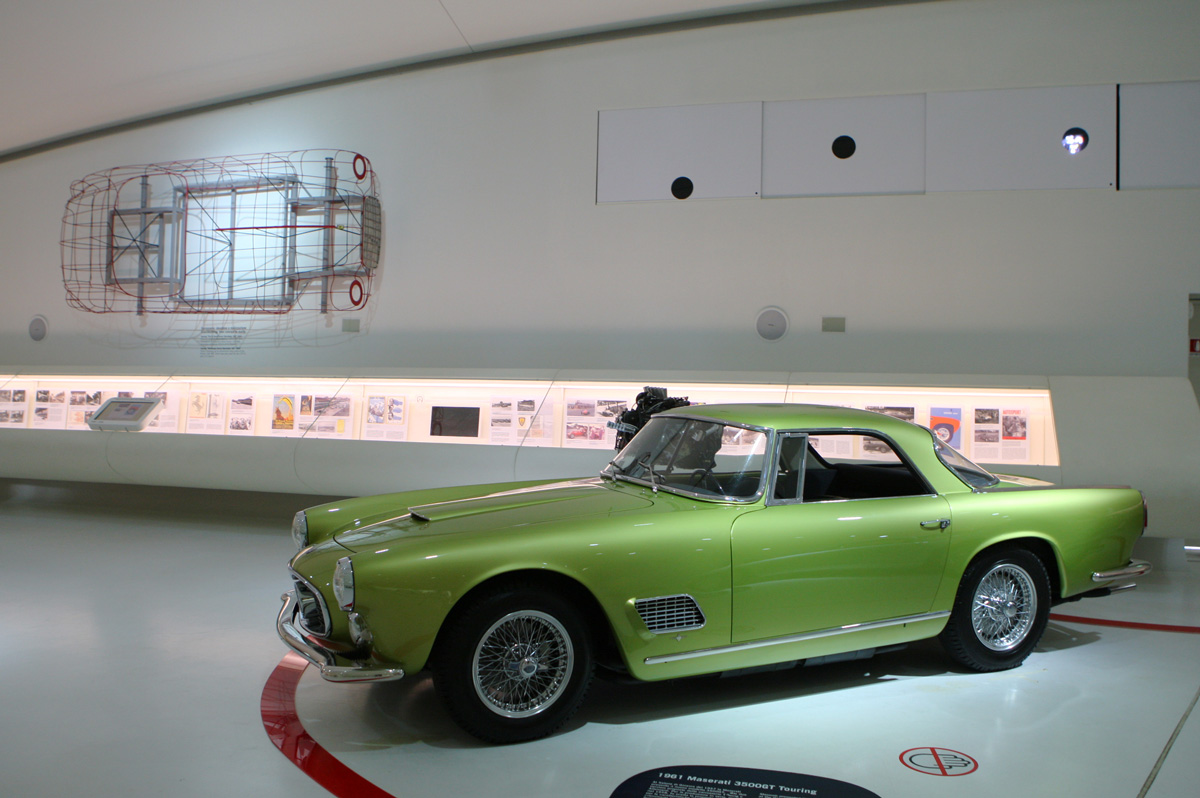
Maserati 1961 3500GT: Two prototypes were first shown at the 1957 Geneva motor show. One bodied by Allemano and one by Touring. The Touring bodied example was chosen for production. Of all the cars in the exhibition this was my wife's favorite.
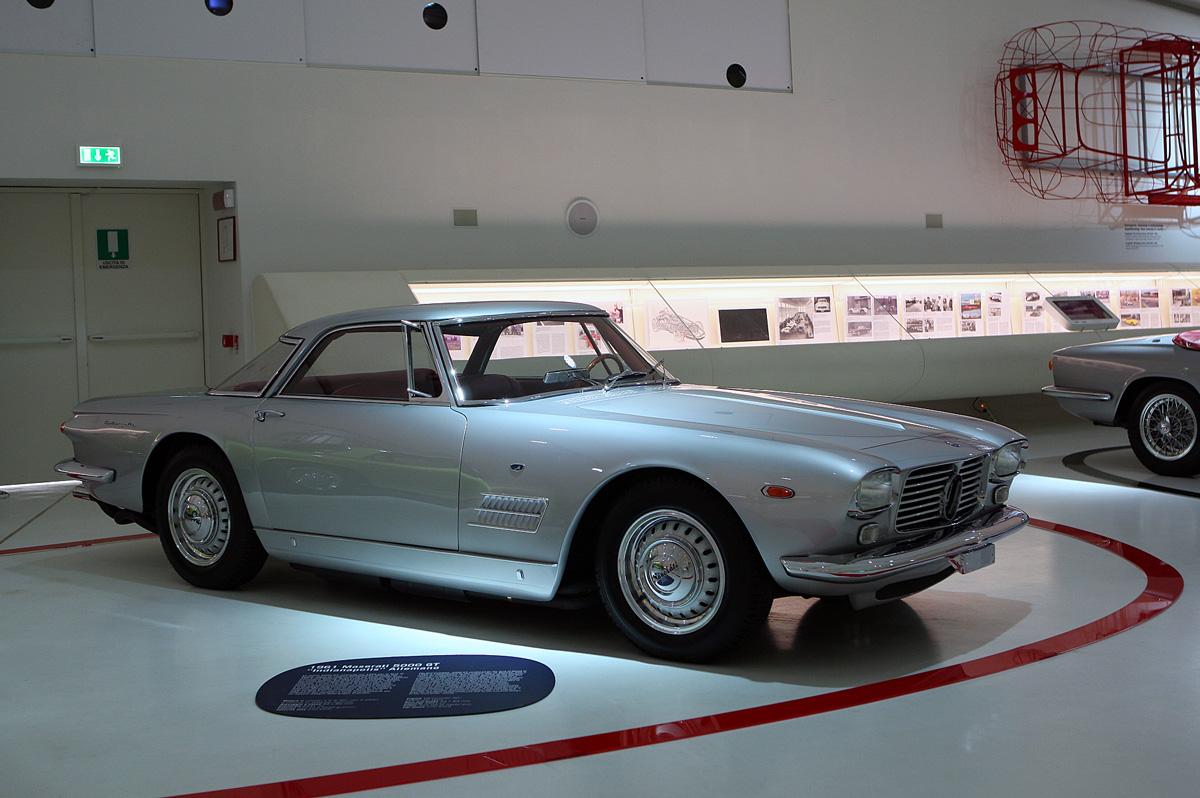
The first Allemano-bodied 5000GT, nicknamed the Indianapolis and sold to American David Brown after the 1961 Turin Auto Show. The name Indianapolis was not applied to the remaining 21 Allemano-bodied 5000GTs.
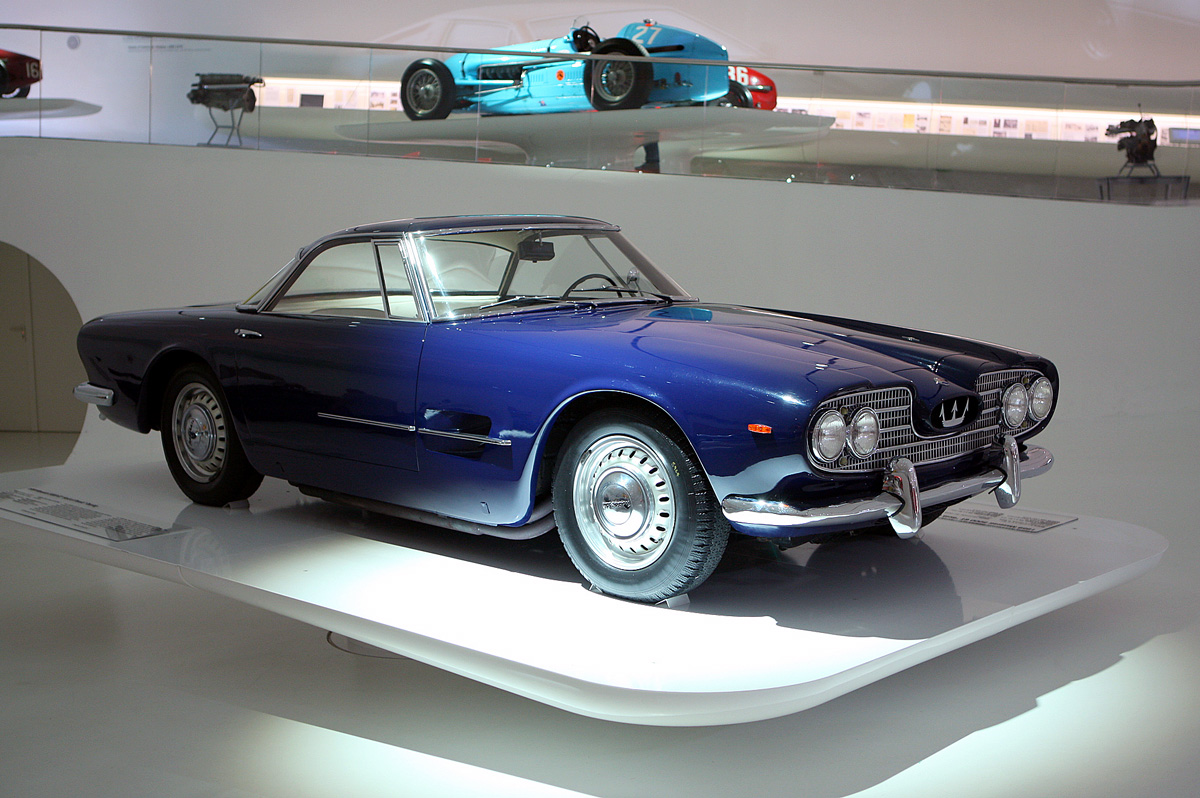
The first 5000GT, S/N 103.002 was built for the Shah of Persia, who in 1958 contacted Maserati and requested that they build him the fastest car in the world.
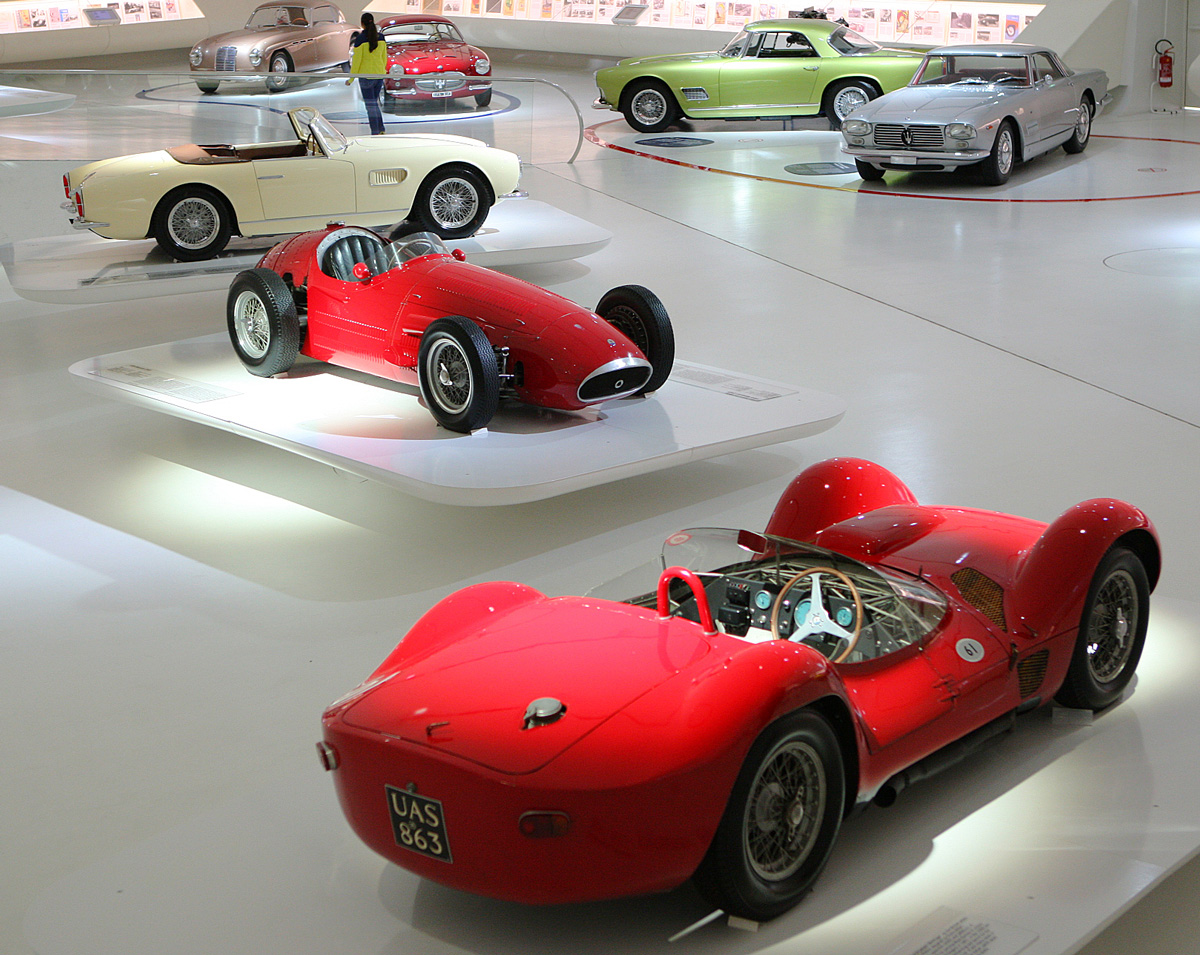
The Birdcage nickname was coined by the British press due to the method of chassis construction. Built with two engines sizes of 2000cc and 2890cc the car proved successful in the hands of Moss and Gurney in 1960, and Casner and Gregory in 1961.
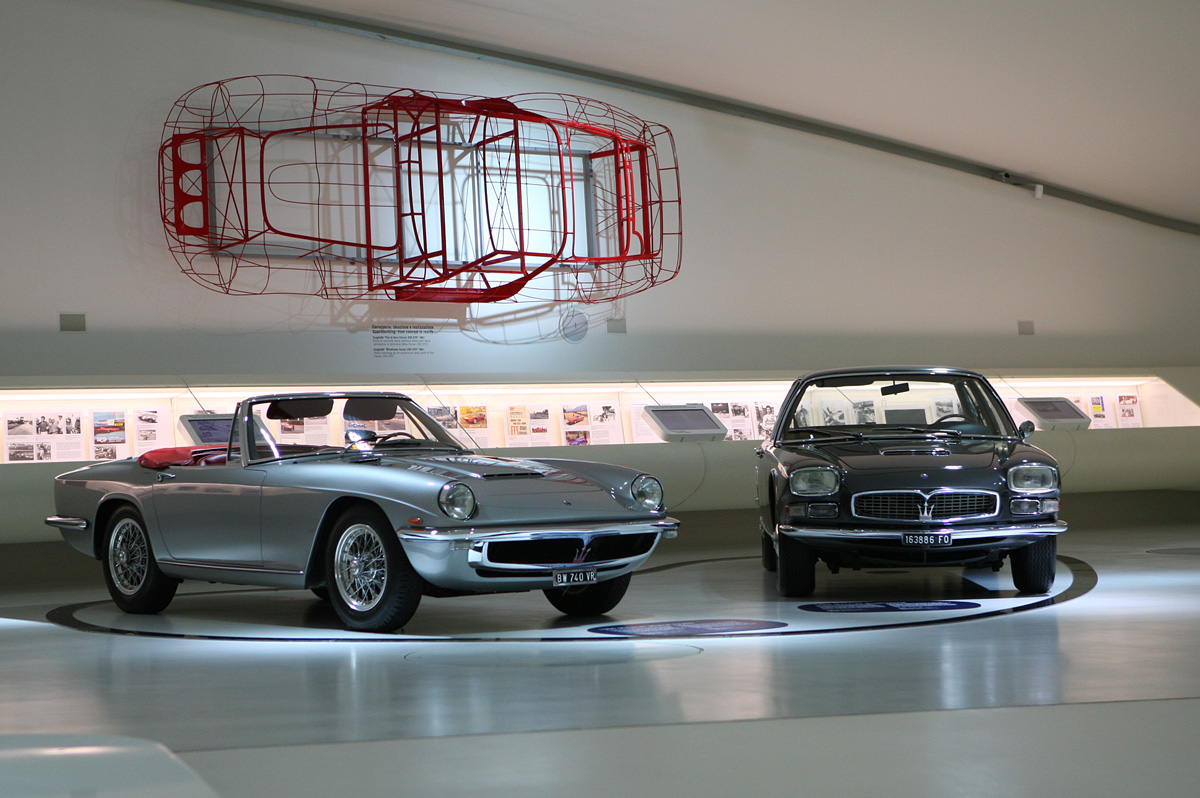
Only 120 Mistral Spyders where built, available with engines from 3500cc to 4000cc. This example is powered by a 3700cc straight six. The Quattroporte featured was originally owned by the Italian actor Marcello Mastroianni.
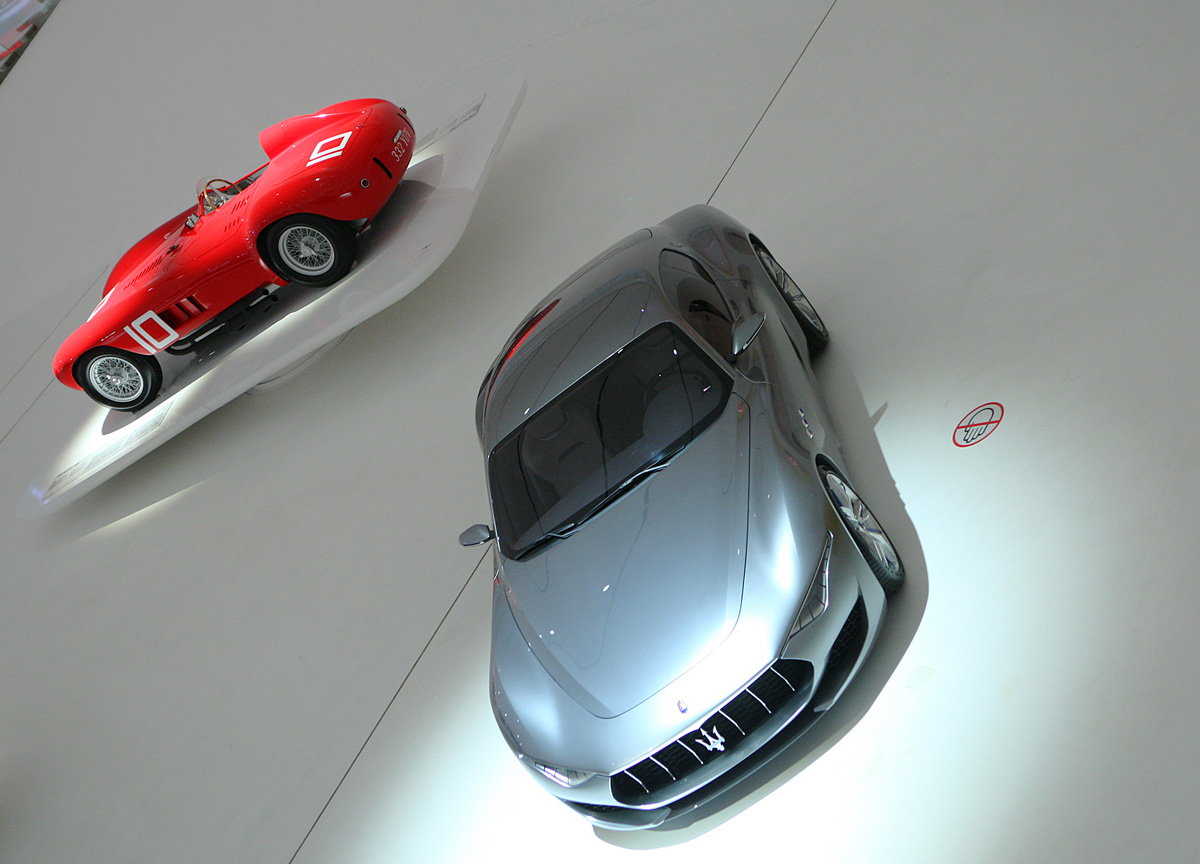
Somewhat ironically, both Ferrari and Maserati, race cars builders to the hilt, have lived on with a continuous history. Amazing and a great credit to Italy's sense of self and accomplishments.
What a magnificent display of Italian automobiles. The museum presentation , floor space car pedestal mounting is excellent. The photos provided are excellent also, making me wish that I could view it in person.
I was there at october. Beatiful exhibition.
Green Maserati 3500 GT is my favorite
I love the 5000 GT that ordered by great the last king of Iran . Reza Pahlavi