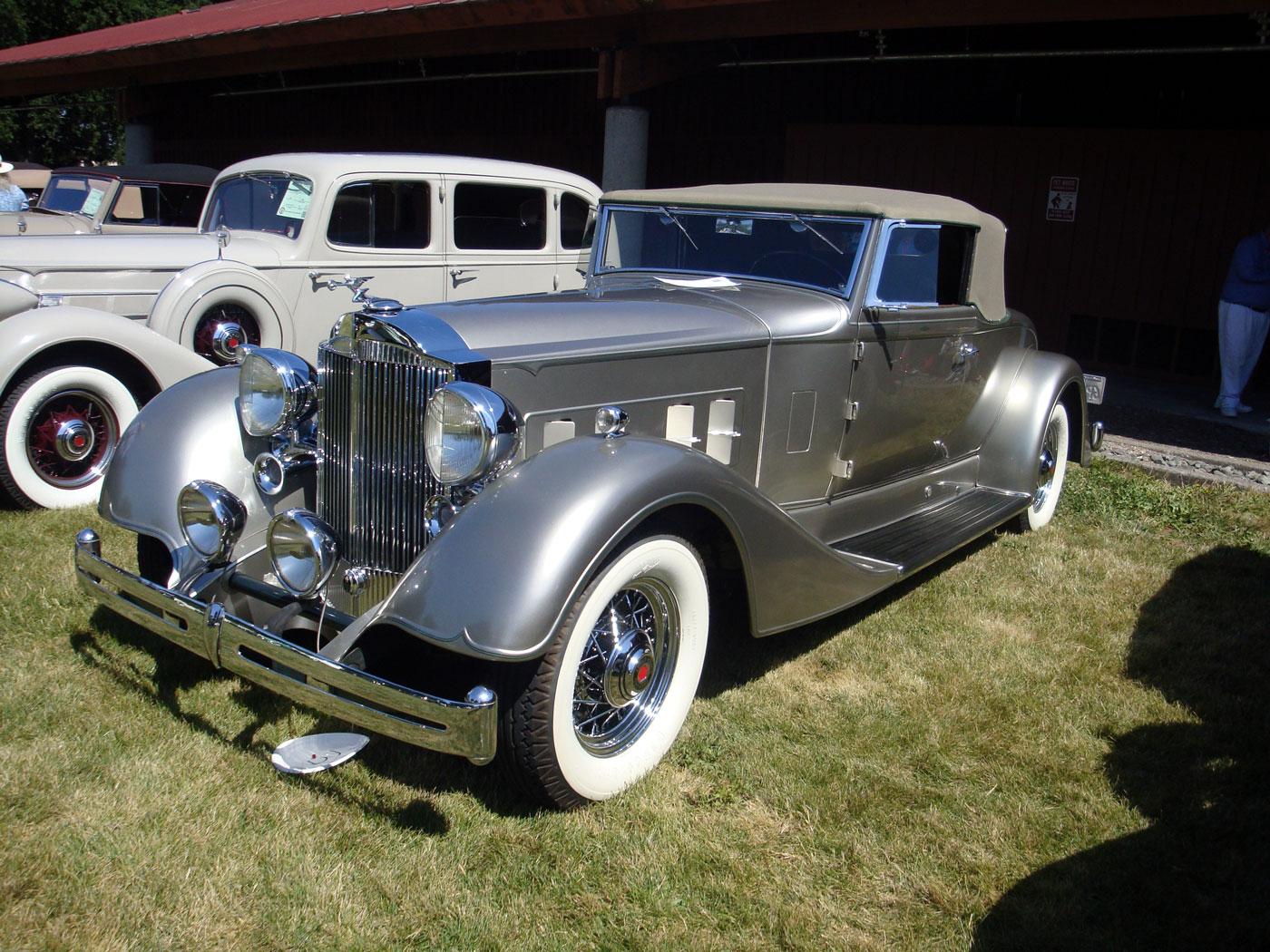
1934 Packard Senior Series
Story and photos by Brandes Elitch
I can remember riding my bicycle to the local Packard dealer in South Orange, NJ, to get a 1956 brochure, which I still have. I also own an original, unrestored 1956 Patrician, the last Packard. I consider Packard to be the greatest American marque, and I had a bit of an epiphany at the show, which I will explain below.
For our many readers who may not be familiar with the marque, here is a brief overview.
Packard started making automobiles in 1899. From 1899-1903 they built 400 cars in Warren, OH. The story is that James Packard bought a Winton car and was unhappy with it. When Packard complained to Alexander Winton, he was told that if he was so smart, he could build his own car, which is what he did. Packard set a Land Speed Record in 1919, when Ralph De Palma’s 12-cylinder car reached 149 mph at Daytona. Packard became the number one producer of luxury automobiles in the US during 1924-1930 and it was also sold abroad, in 61 countries.
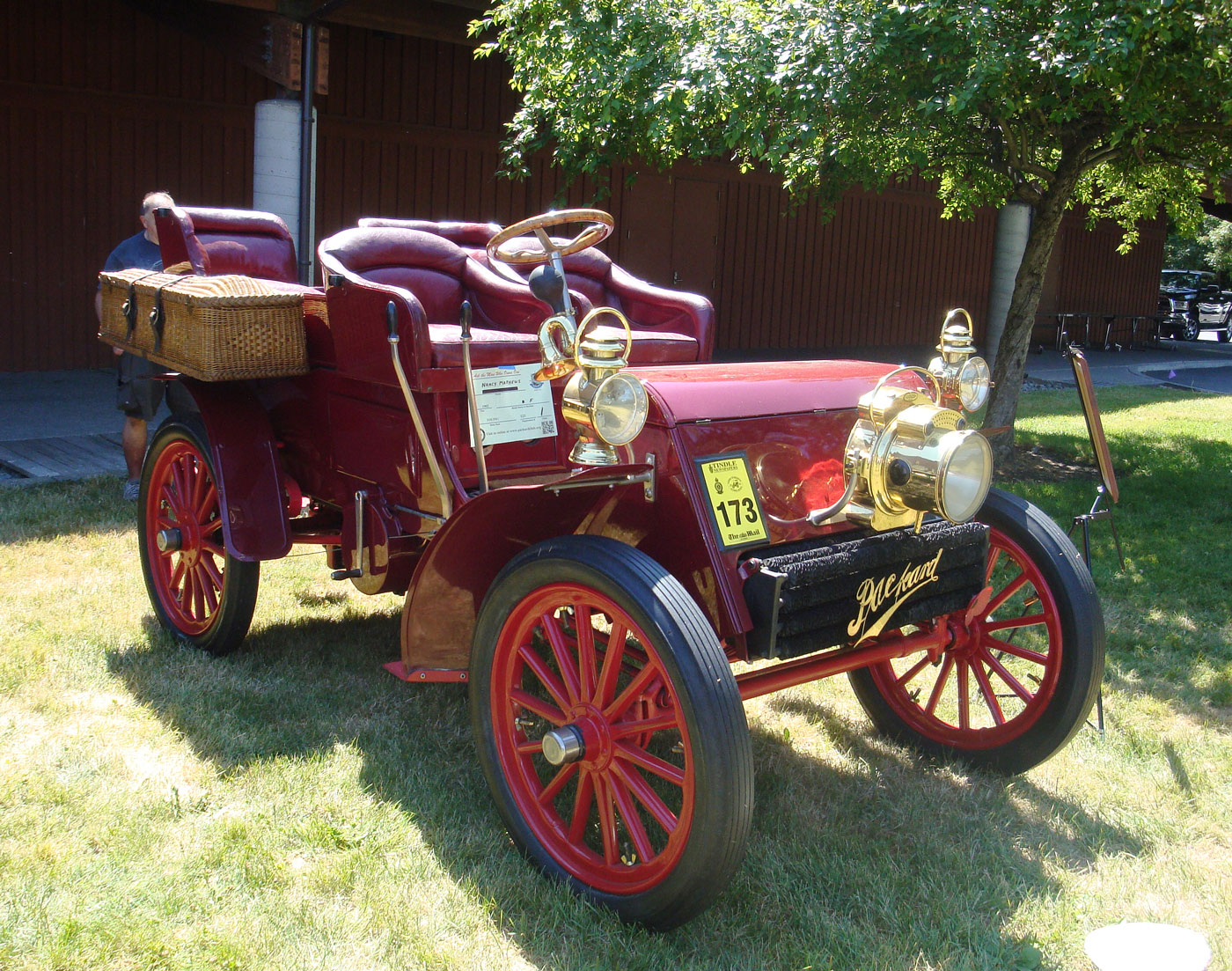
1903 model, ran the London To Brighton meet about ten years ago….
Here is quote from Aaron Severson,” who writes the website Ate Up With Motor.
.
“At the start of the Depression, Packard was the default choice for American luxury car buyers… Packard had an aura of blue-blooded respectability that no other domestic automaker could match… a big Packard was a badge of class status, bolstered by graceful but restrained styling, impeccable quality, and exacting engineering.”
The Depression wiped out many of its competitors and by 1938 Franklin, Marmon, Stutz, Duesenberg, and Pierce-Arrow were no more. People who could afford a Packard were not conspicuous about it when unemployment was 20%. In 1935 the firm introduced a new lower priced model, the 120, built on a modern assembly line, separate from the Senior lines (Twelve, Super Eight, and Eight). At that time the factory built ten Junior series cars for each Senior car. This was a good decision from a manufacturing and sales perspective, and left Packard in decent financial shape after the war, but things started to unravel in the late forties.
What you may not know is that during WW II, when automobile production was suspended, Packard produced over 55,000 Merlin V12 aircraft engines, under contract with Rolls-Royce. Furthermore, they made about 2500 Liberty L-12 V12 motors to power the Navy PT boats. This helped win the war.
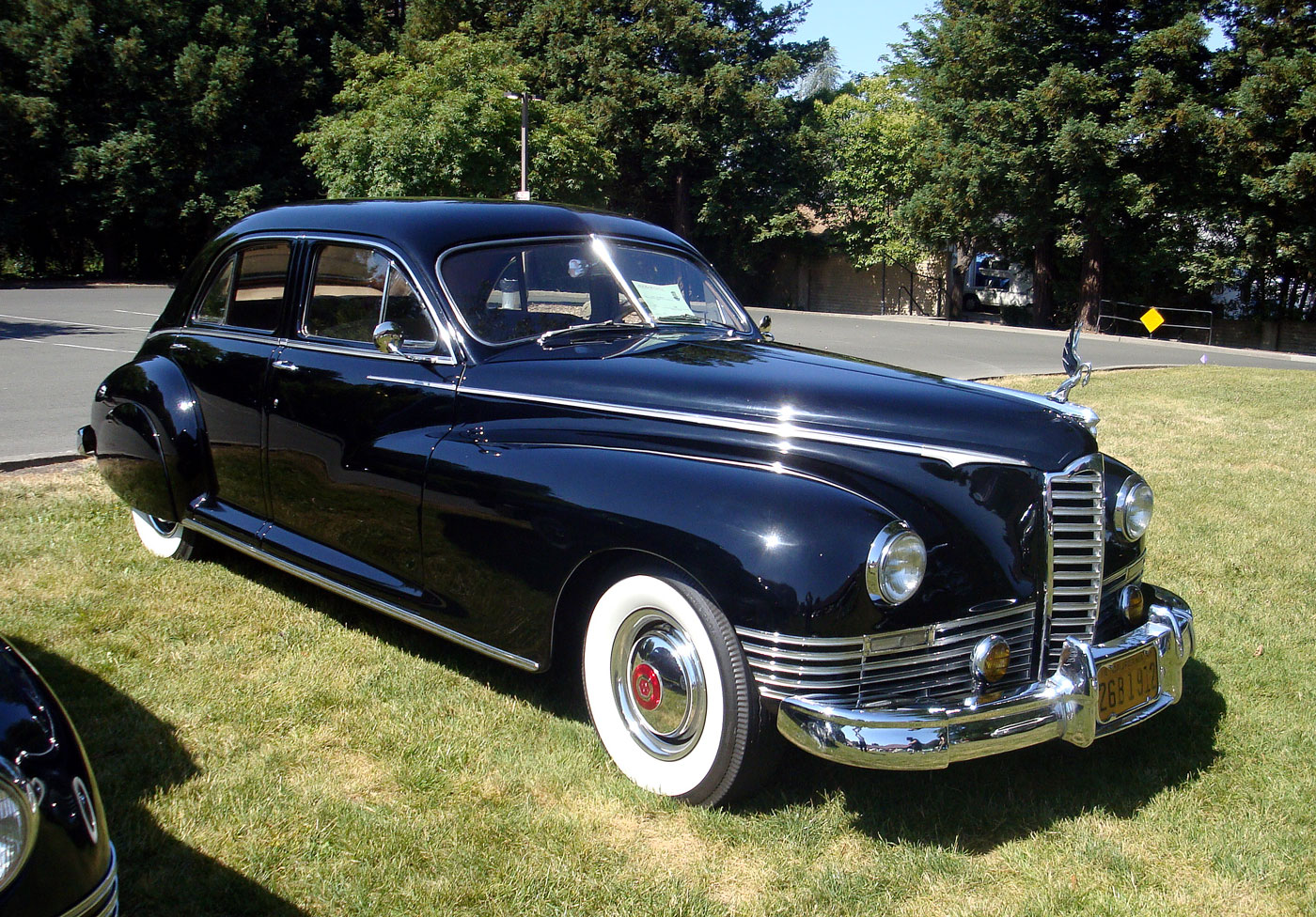
1946 Packard Custom Super Clipper Eight
After the war, Packard discontinued the largely hand-made Senior series. Packard outsold Cadillac until around 1950, but by that time Cadillac had a modern high compression OHV V8, the Hydramatic transmission, and more modern styling. As you may know, Ford precipitated a ruthless price war with Chevrolet in 1954, which resulted in the manufacturers outside of the Big Three losing money and being unable to compete (Ford also poached Packard dealers, which led to a smaller dealer footprint across the country). A great deal has been written about what went wrong at Packard after the war and we do not need to cover that here.
What we can do is to celebrate the history of this glorious marque, and there is plenty to celebrate. I was told, but have not verified, that Packard built around a million cars over its lifetime and there are around 10,000 still extant. I have no way of verifying this.
We know that the scrap drives during WW II took many custom built Packards, and after the war many cars that survived were scrapped because it was hard to get parts and the right size tires and batteries. For people like us, this is hard to believe, but it happened.
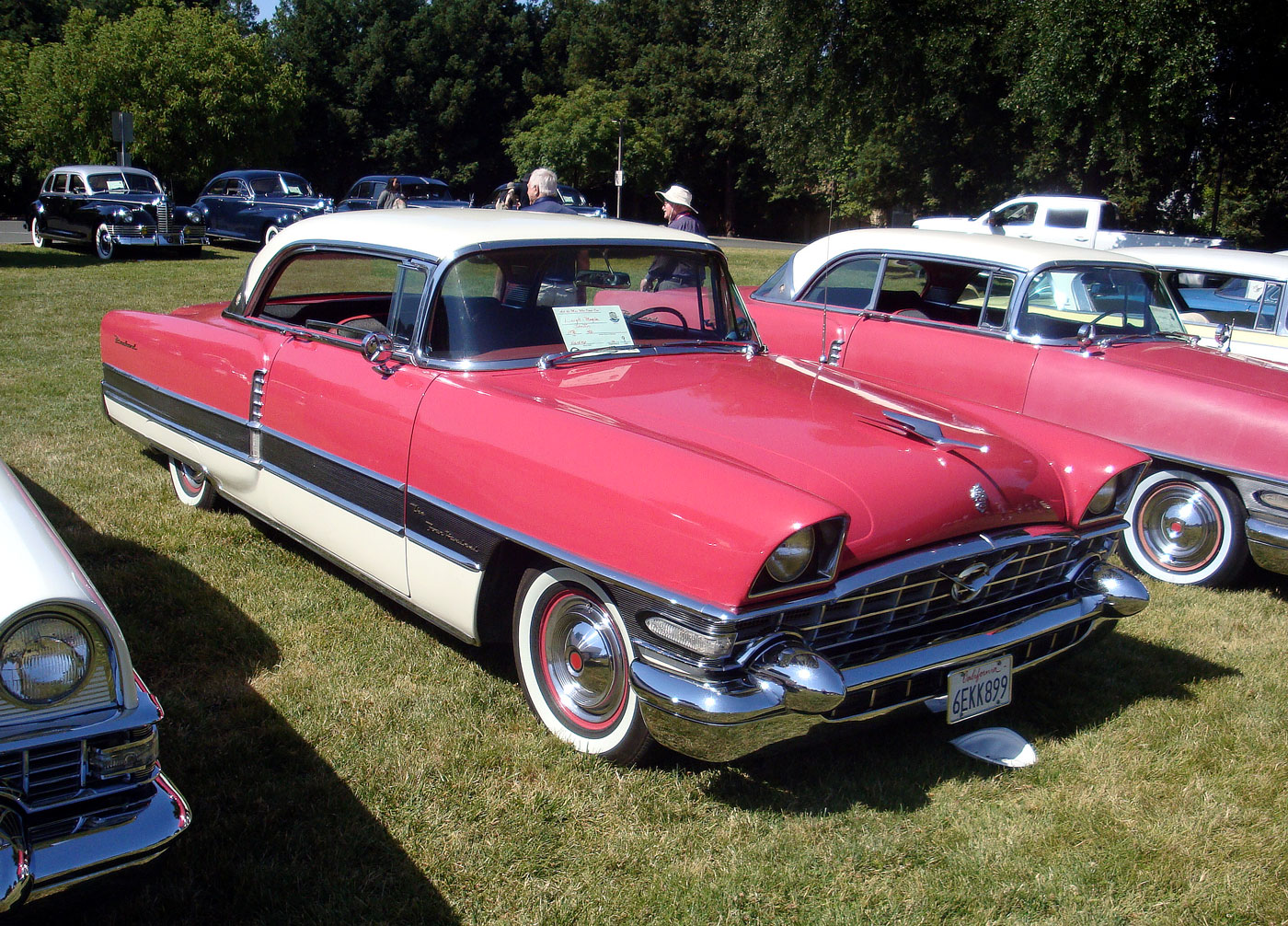
1956 Four Hundred
Most car museums will have at least one Packard. Harrah had one of every year Packard at his museum in Reno, which was subsequently liquidated after his death (without a will) by Holiday Inns, who had purchased the casinos and real estate.
The National Packard Museum is located in Warren, Ohio. It is a 23,000 square foot complex that houses a rotating display of original and restored cars plus original documents, photographs, artifacts, and interpretive materials that chronicle the history of the family and the car company.
As you might expect, there have been many books written about the company, but perhaps the most famous is one that Beverly Rae Kimes created, in 2005, an 828-page book titled Packard: A History of the Motor Car and the Company. Kimes, who left us some time ago, spent ten years of research, documentation, and photography and over three years were spent in writing, checking, rewriting, editing and sorting thousands of rare and unpublished photos.
The Packard Annual National Meet in Rohnert Park
On June 30, 2023, The Packard Club, also known as Packard Automotive Classics, with help from the Northern California Packards region, hosted a car show as part of their Annual National Meet. The NCP region started the year with 162 members and 215 Packards. Founded in 1953, the club publishes a beautiful quarterly magazine, The Cormorant, and a monthly news bulletin. The website is http://www.packardclub.org.
This year the car show was hosted at the Spreckels Performing Arts Center in Rohnert Park, CA, about 50 miles north of San Francisco, in Sonoma County. It is called the gateway to Wine Country, or as we locals say, “Napa is auto parts; Sonoma County is wine!”
The town was originally home to a very large and successful seed farm, the largest prune orchards in the west. Just down the street is Sonoma State University, part of the California State University System, which today is considered a “public Ivy” along with Cal Poly. The crown jewel here is the music center, a $120 million dollar complex, modeled on Tanglewood, and a center of music education nationwide.
In addition to the show, the group got to tour an extensive private collection in Petaluma, the next town south, and also had a private tour of one of the most fabulous car collections in the world, at the Academy of Art in San Francisco. I have written about this twice before here, as well as the auto design course curated by famous designer Tom Matano, but while I have been invited to tour the large storage facility, Covid put paid to that, so that will have to wait for another time.
I had a bit of an epiphany when I walked the show. I did not count the cars but there had to be at least sixty or seventy. Like many readers, I attend many car shows and events. but hardly ever a single-marque show. Normally at a show there will be many different marques and different models and eras represented. Of course, we all have our biases and preferences, and thus we can skip over cars that do not interest us and focus on perhaps a dozen cars that we find mesmerizing (this does not work at Pebble Beach, were almost every car on display is mesmerizing, but that is another subject for another time). When this happens, your mind is constantly shifting, recounting the history of the car in front of you, each one completely different, and your brain is skipping between manufacturers and countries and coachbuilders, trying to make sense of everything. The car show at Hershey is the best example of this, where every car on display is completely different from what is next to it.
But at a single marque show like this you can see the entire timeline of production right in front of you, here starting with a 1903 Packard and going right up to the final year, 1956. Here the cars were arranged in mostly chronological order, so you could see how the factory changed every year or so. In covering the display, you see the whole history right in front of you and it is frankly a bit overwhelming. Sometimes you try to pick out a favorite but that was an exercise in futility here because there were so many favorites, as I hope I have demonstrated in the photos. Of course, the early cars typically had custom bodywork, either full or partial. and no two were completely alike. I could see the whole sweep of fifty plus years of production right before my eyes and see a timeline of how the factory changed with the times. It was a moving experience for many reasons, and it was cohesive, if that is the right word.
I hope that these pictures will inspire you to look for a Packard as you attend car shows this summer, and perhaps talk to the owner. After all, the motto is “Ask the Man Who Owns One.”
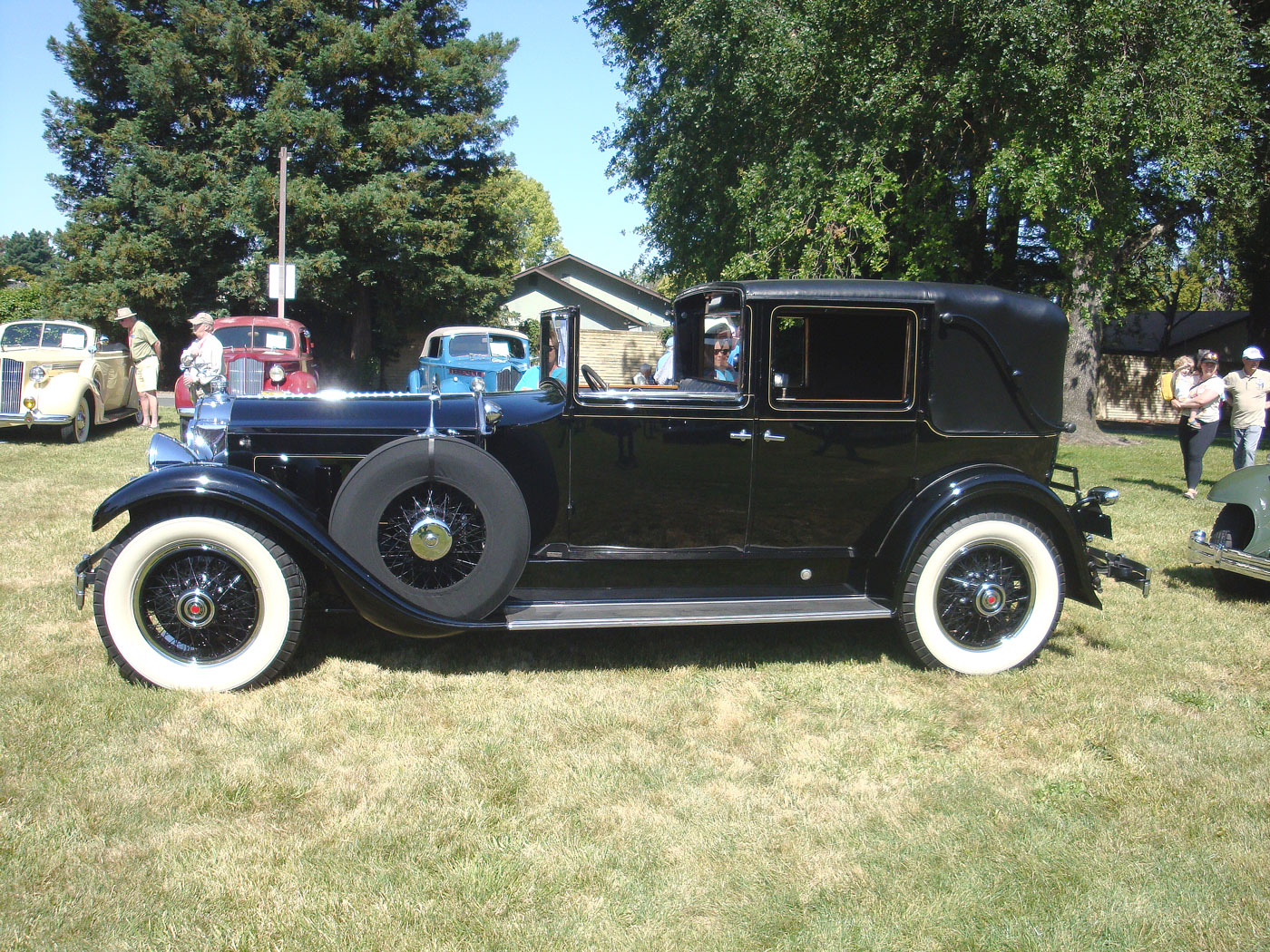
1928 Town Car (Sedanca de Ville)
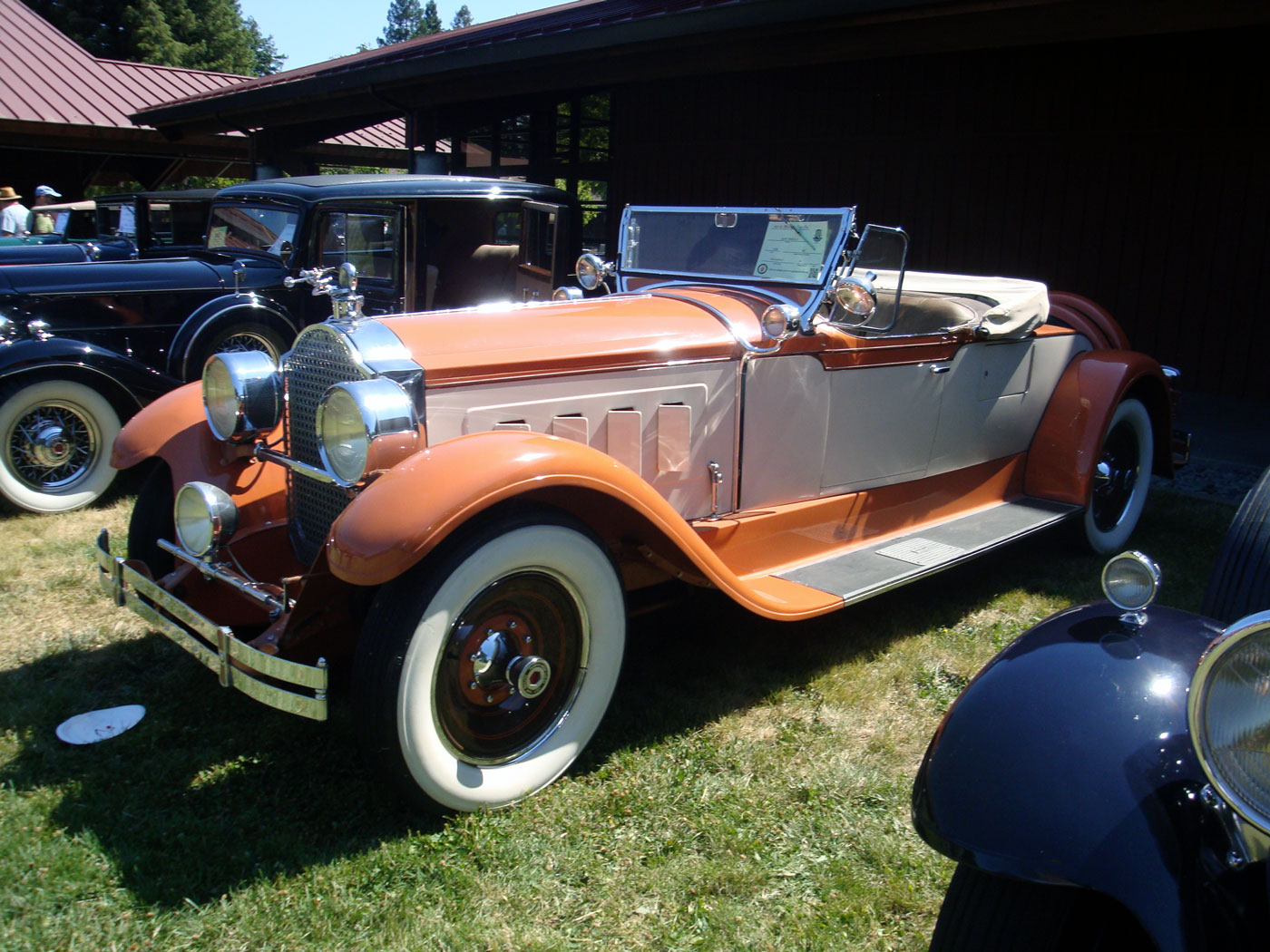
1929 Deluxe Eight roadster
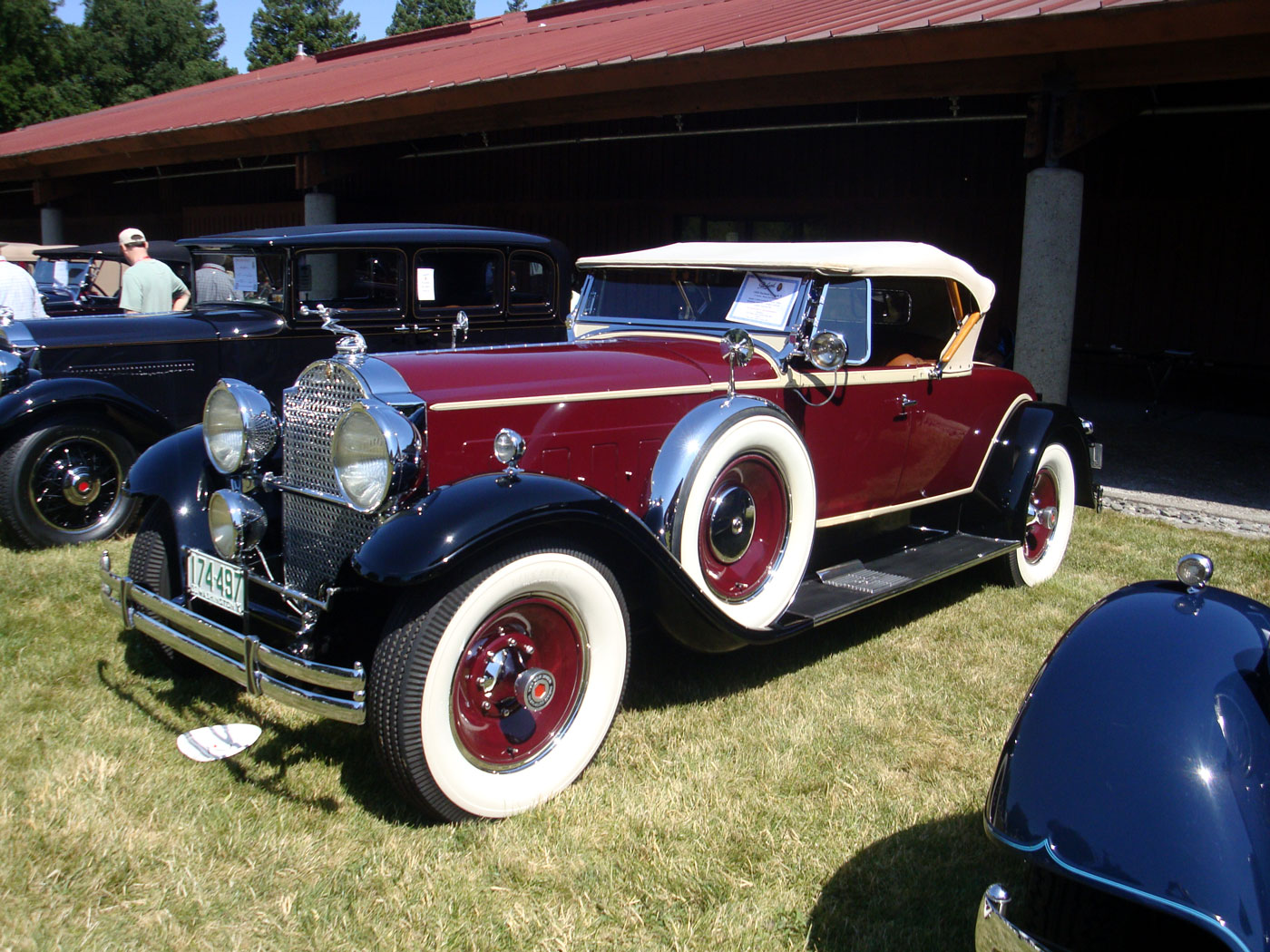
1930 Standard Eight roadster
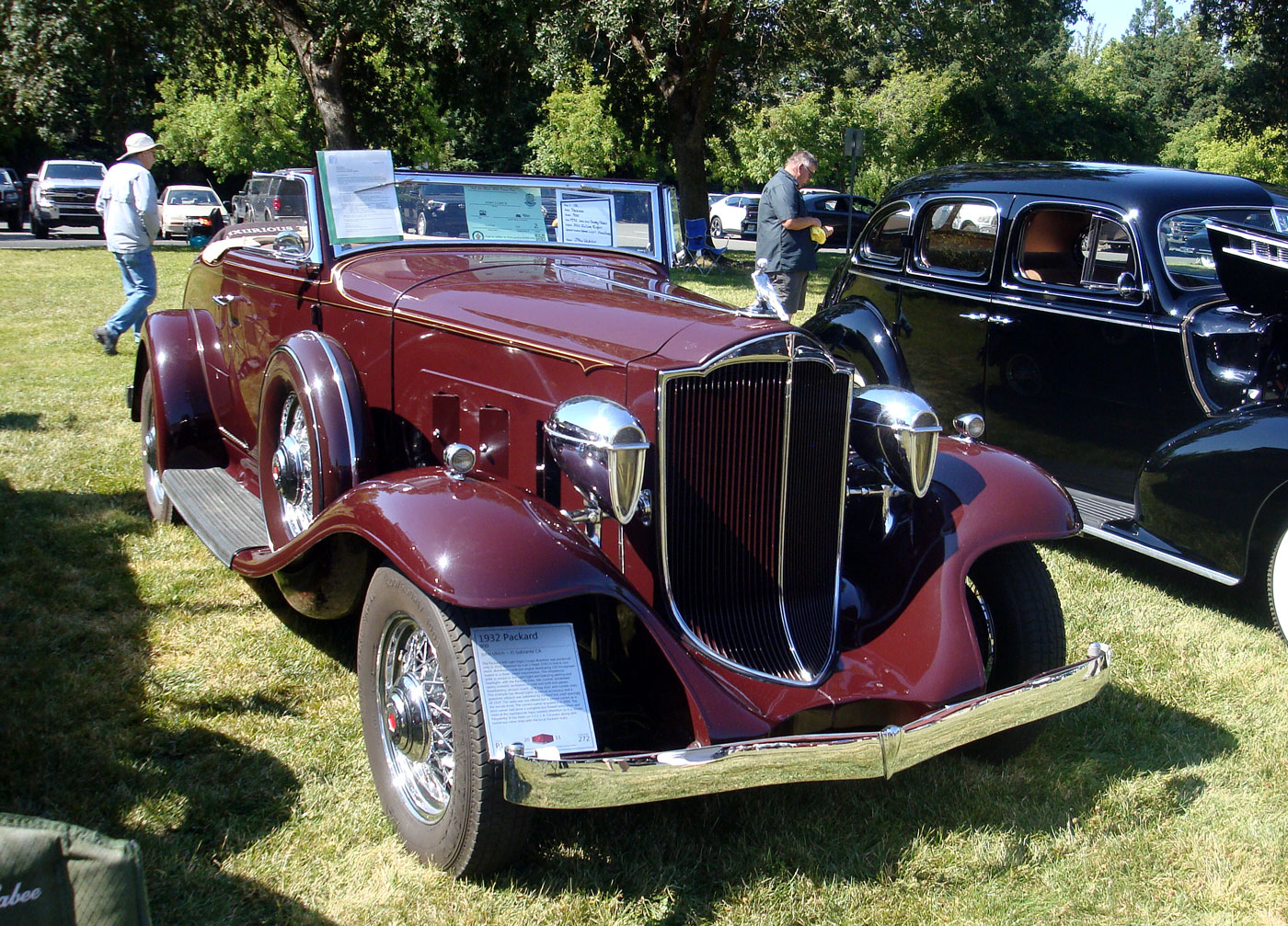
1932 Ninth Series Light Eight
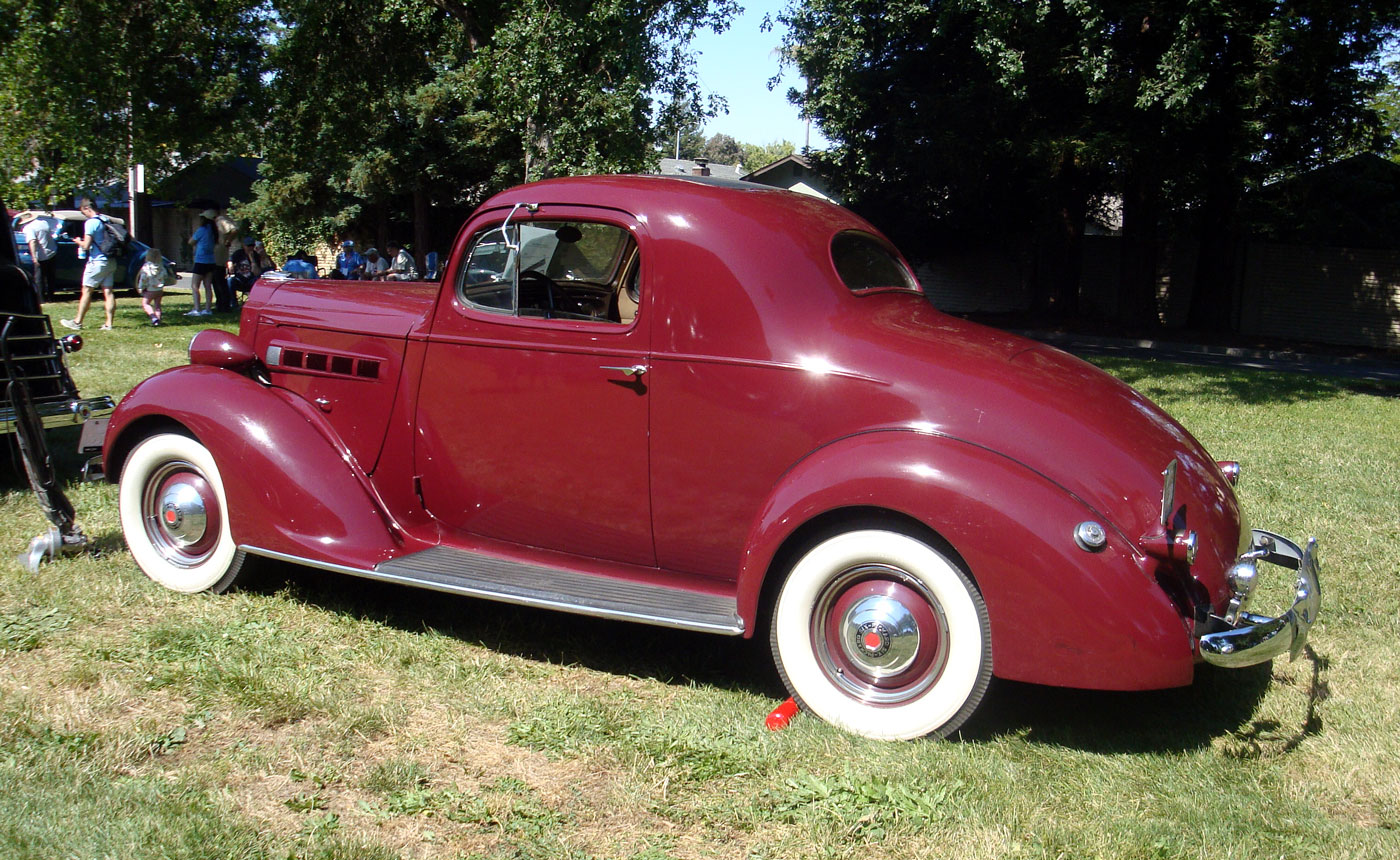
1935 Eight coupe
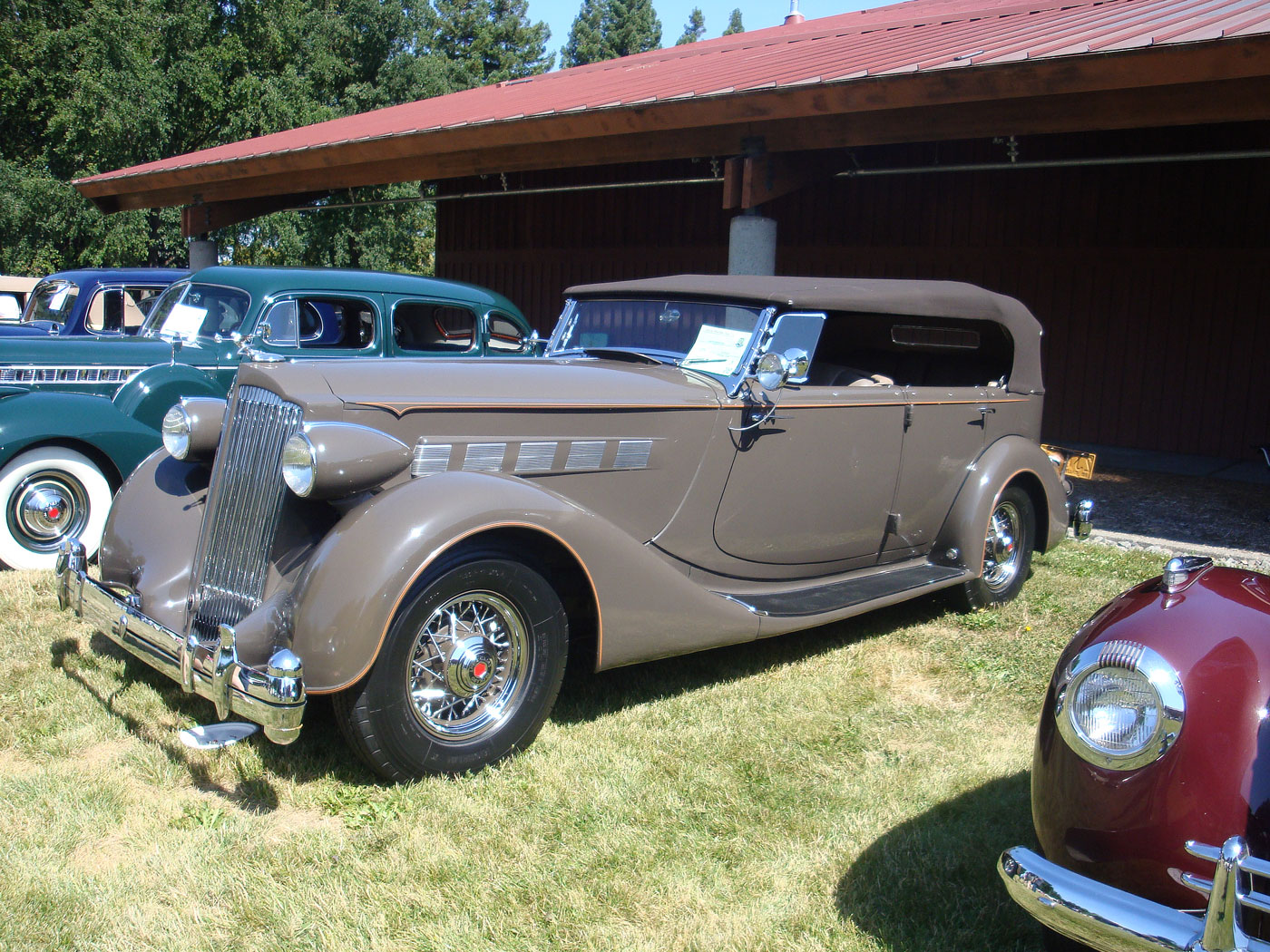
1936 Senior Series
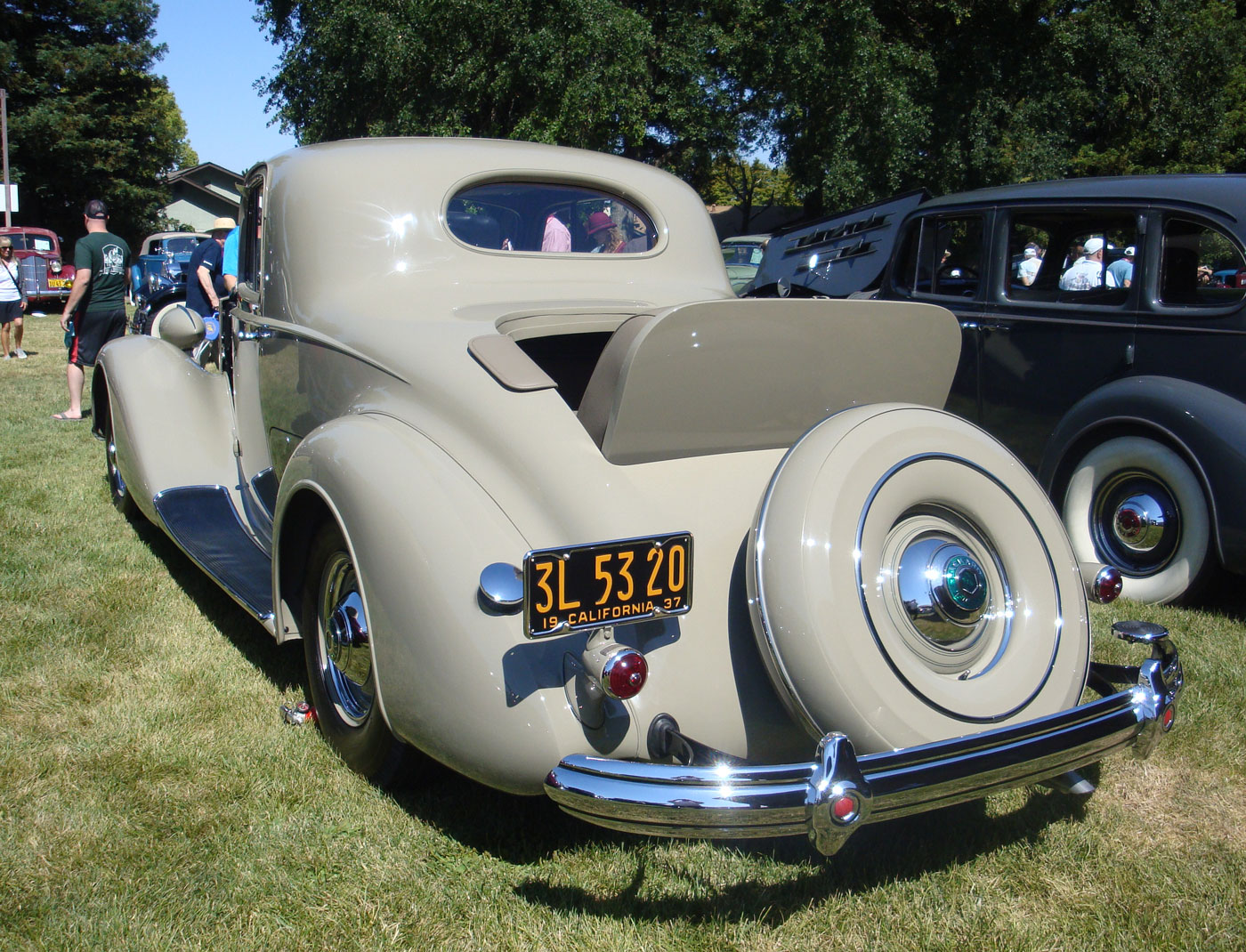
1937 Senior Series
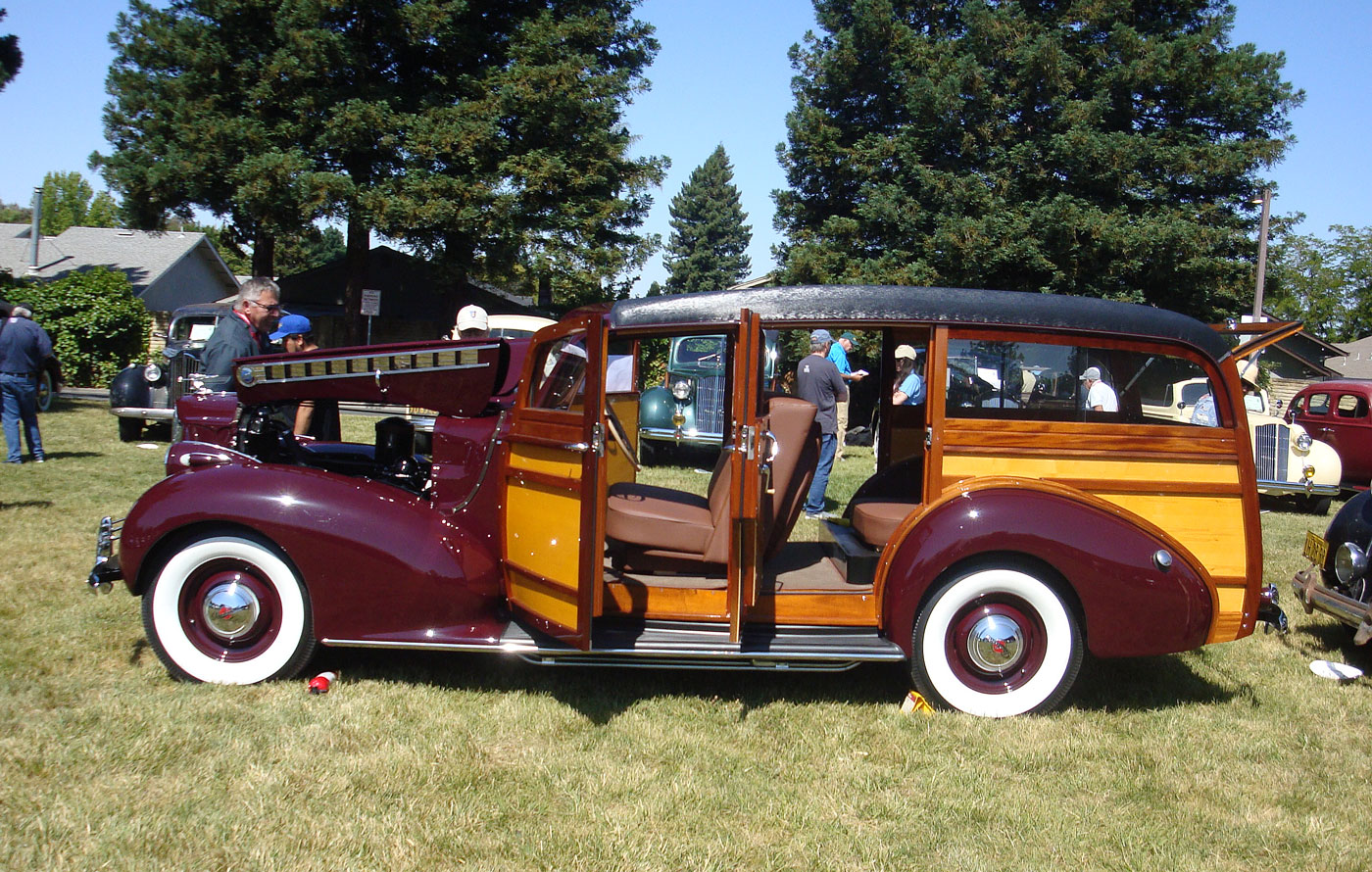
1937 station wagon (woody) custom body on long wheelbase

The magnificent Packard V Twelve motor
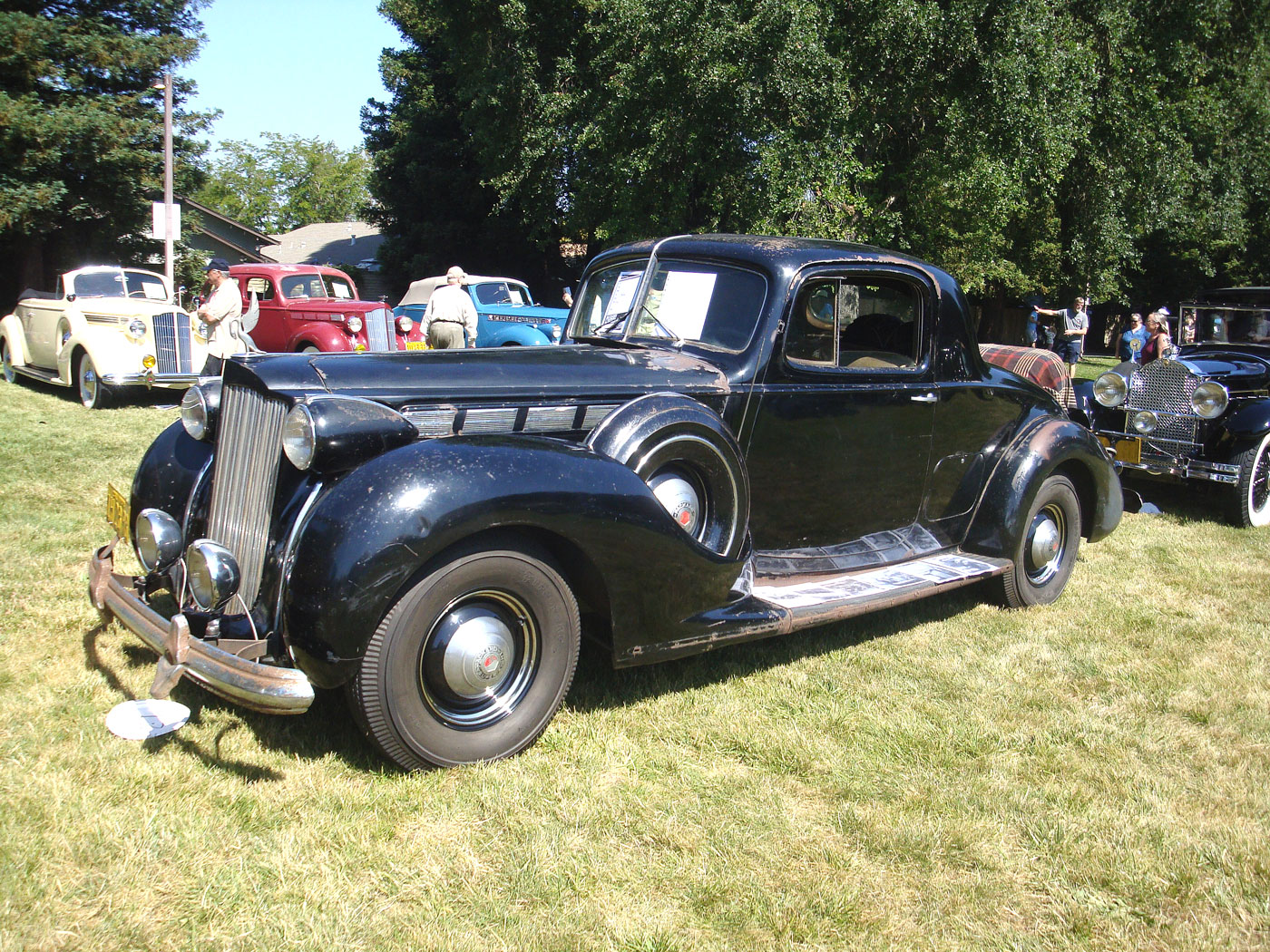
1938 Twelve
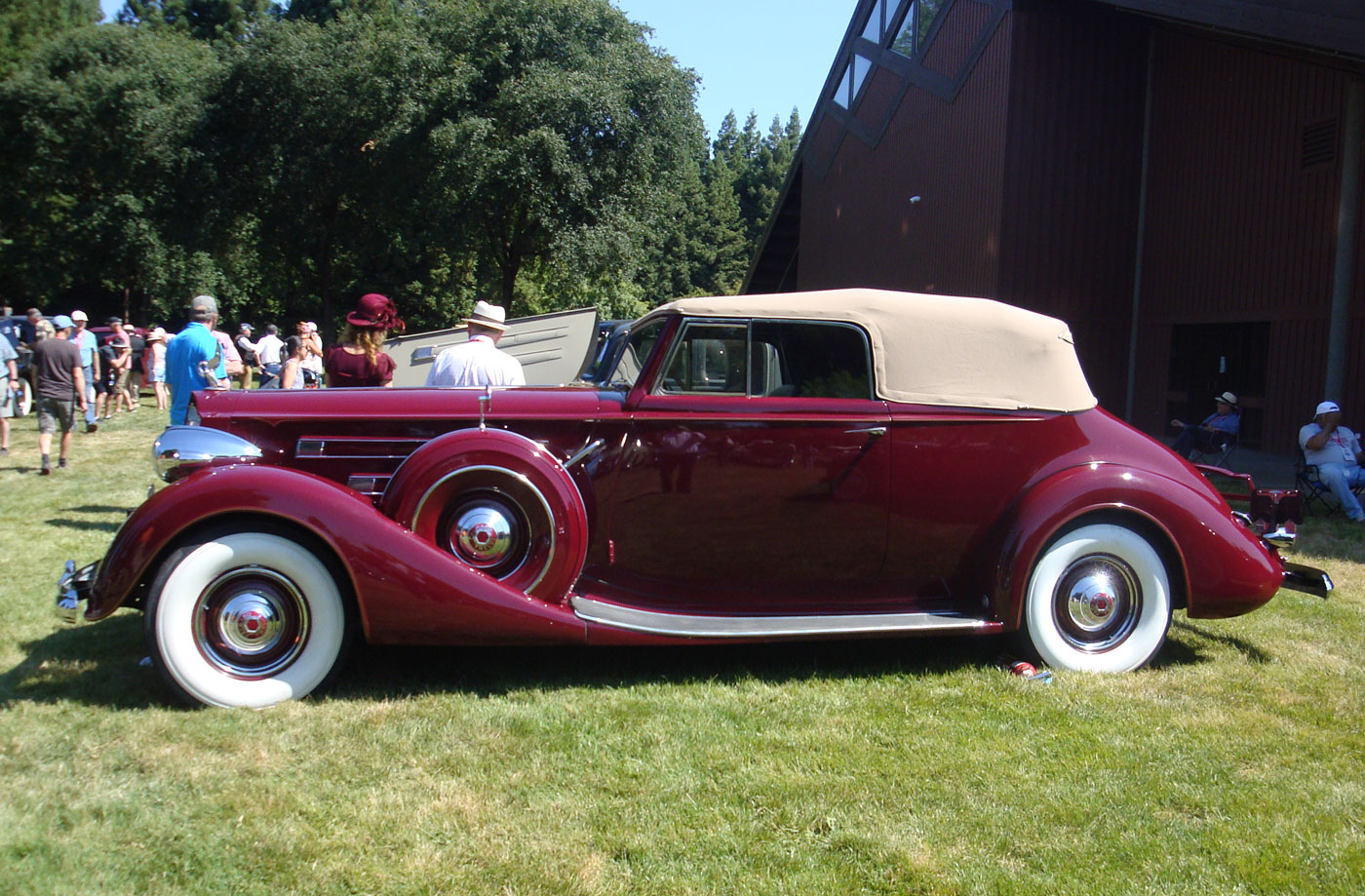
1938 Twelve Senior Series
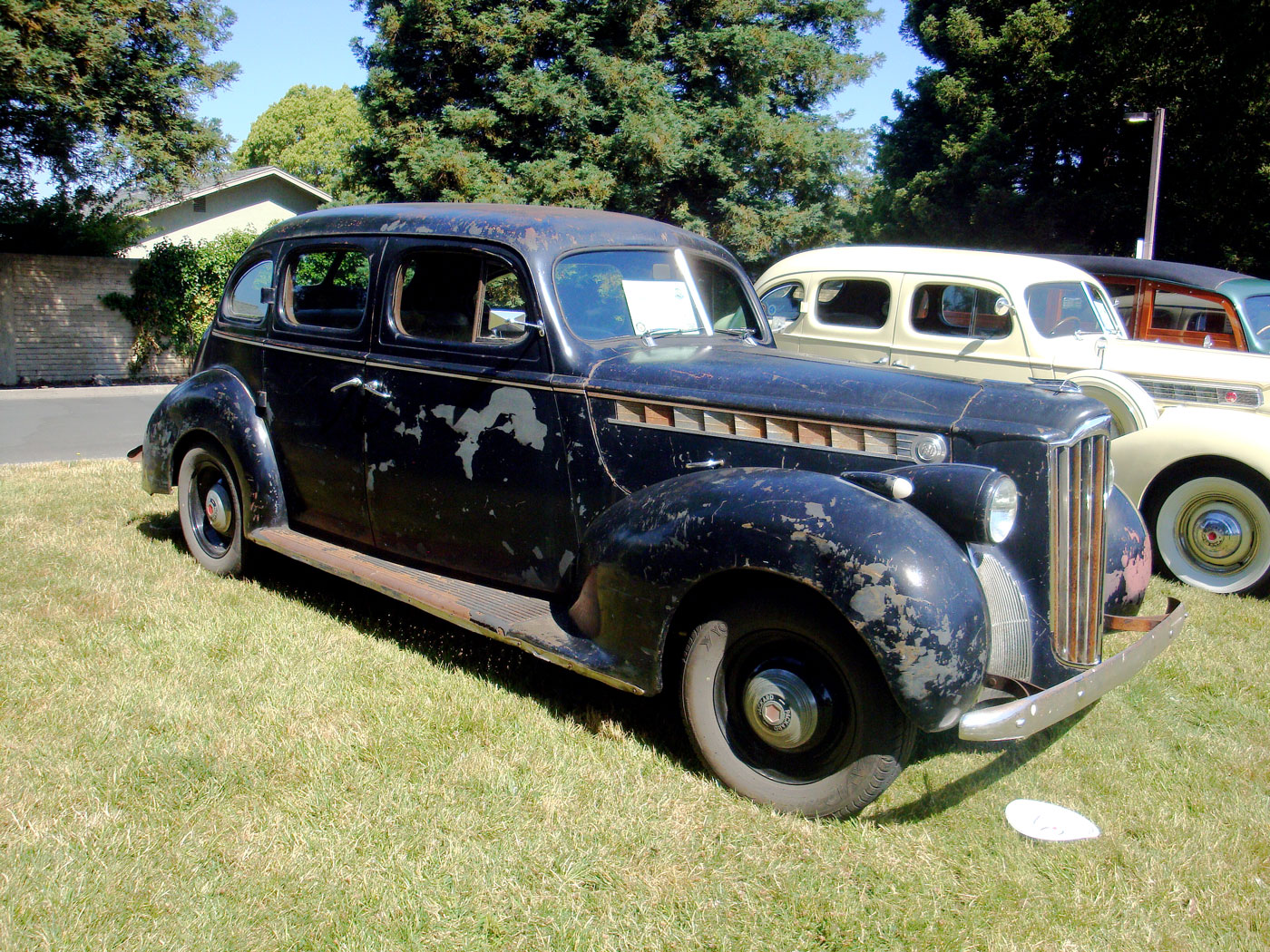
1940 sedan
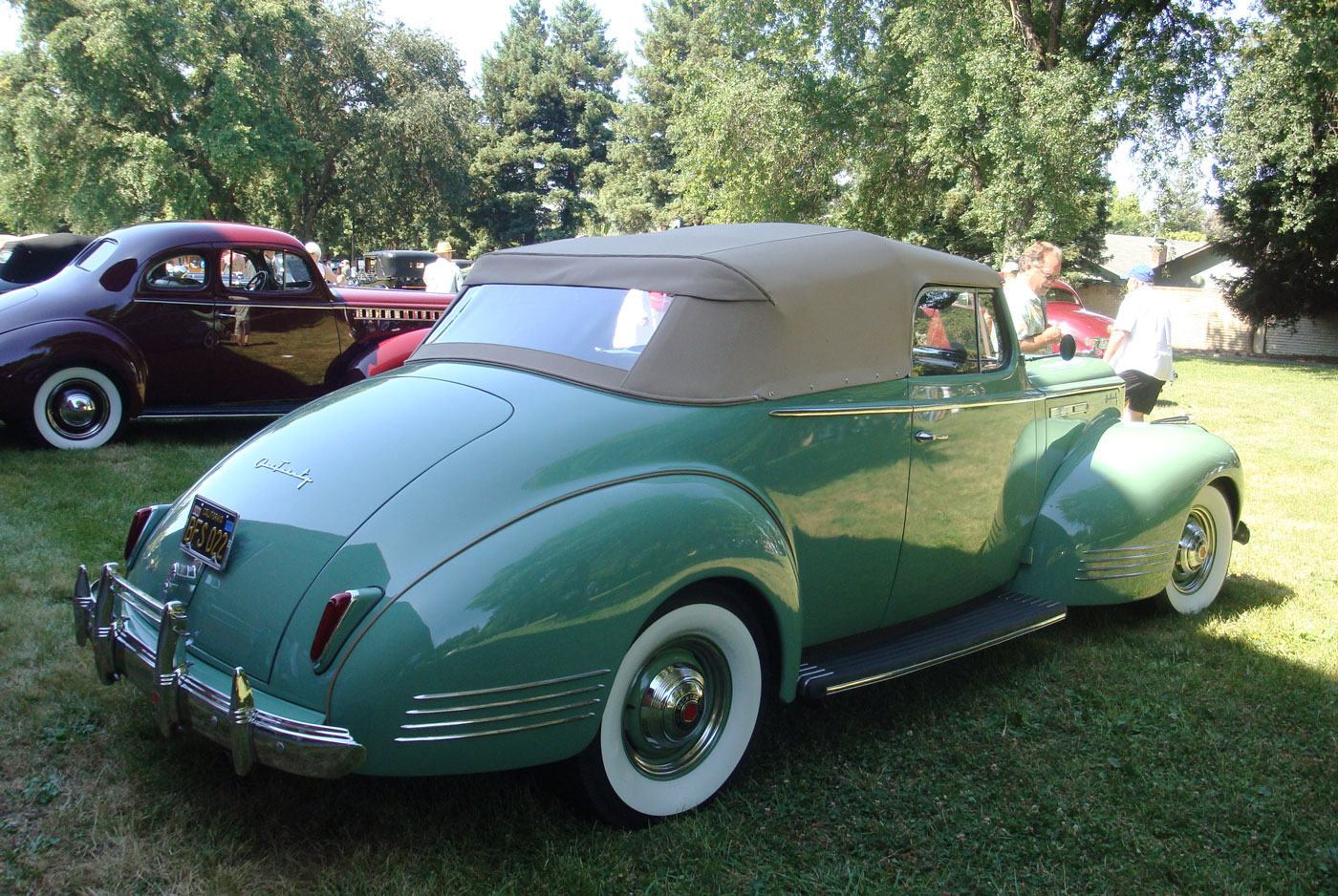
1940 One Sixty convertible
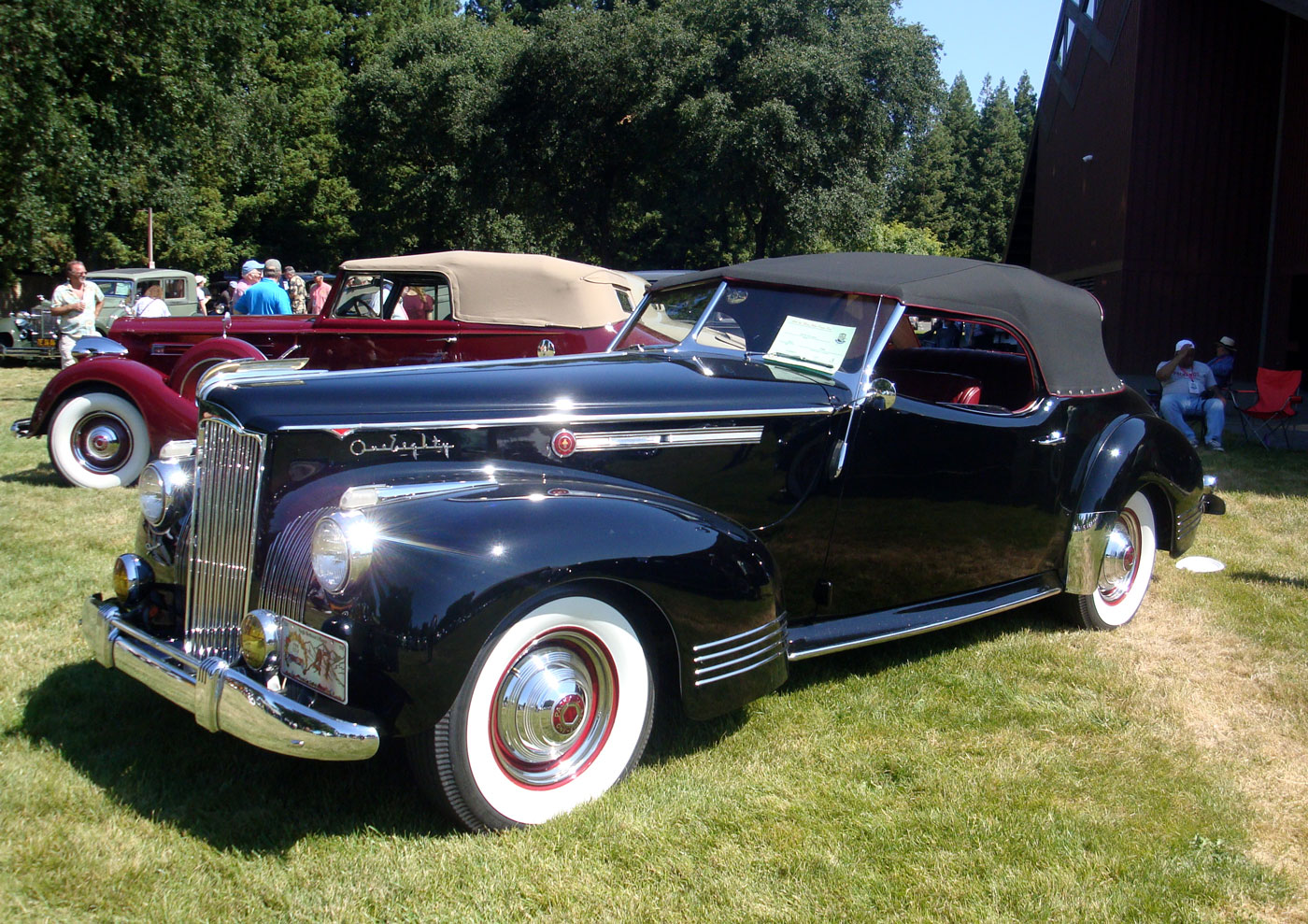
1940 Darrin One Eighty
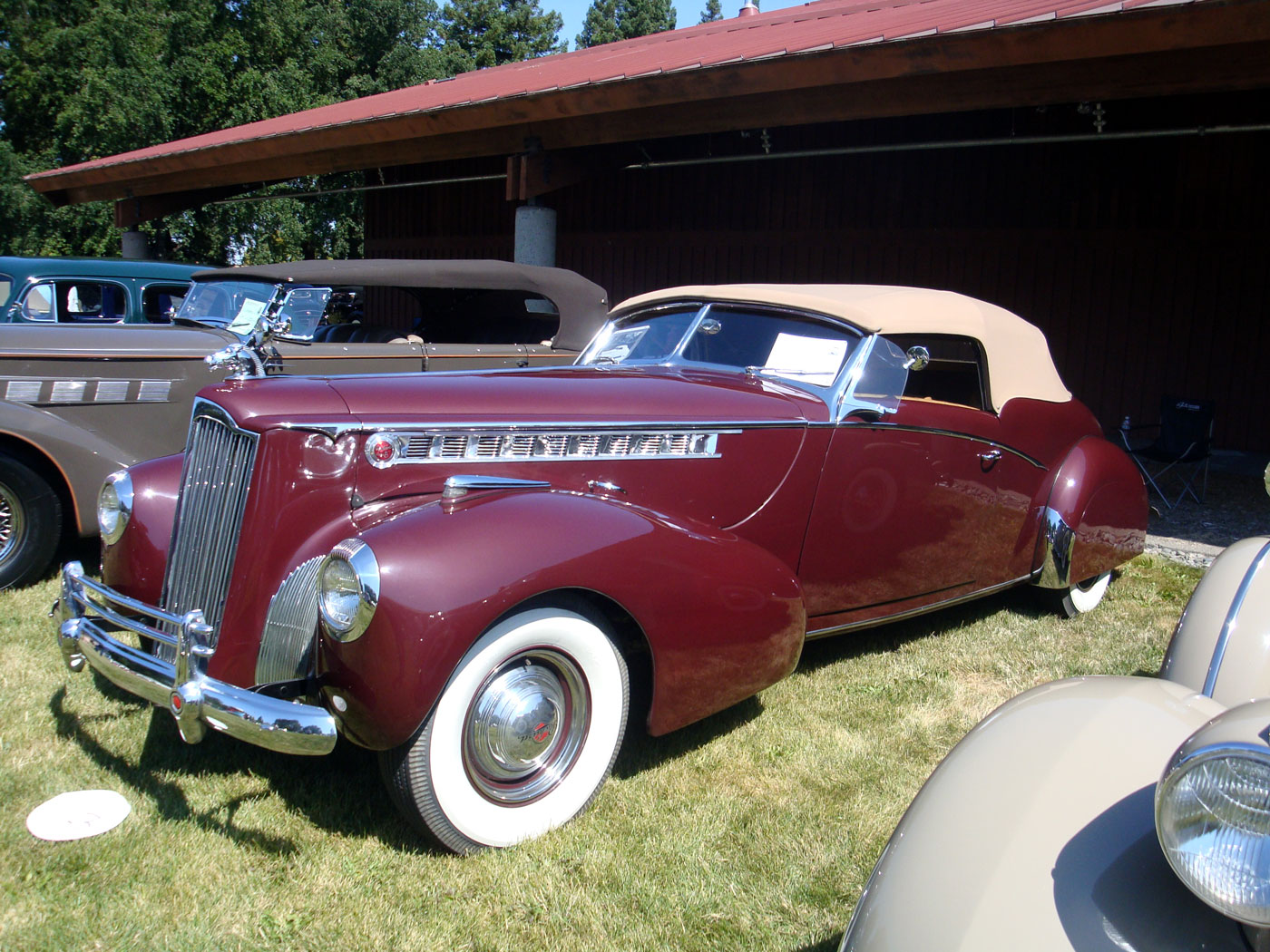
Circa 1940 custom with body by Bohman & Schwartz
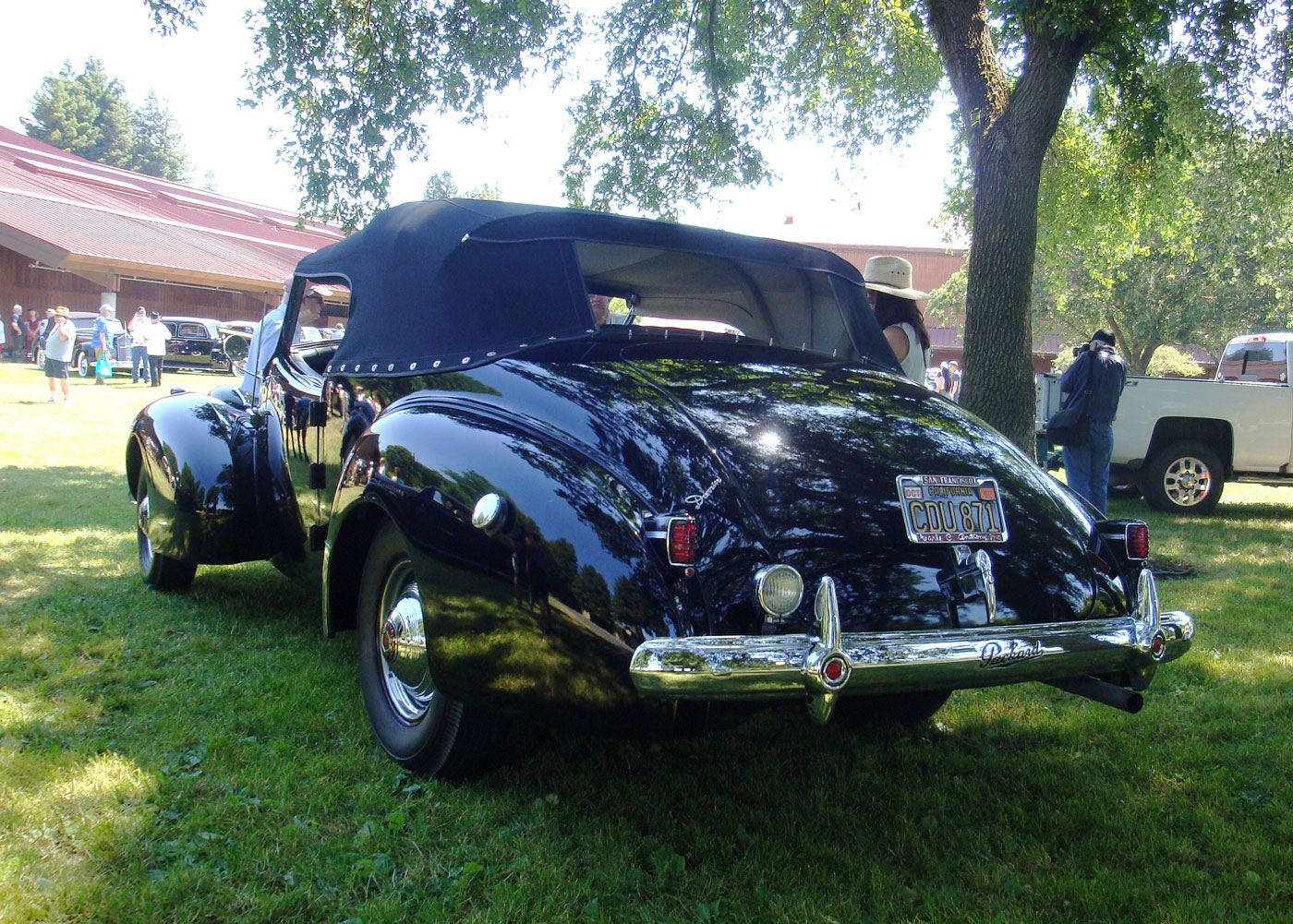
1940 Darrin body
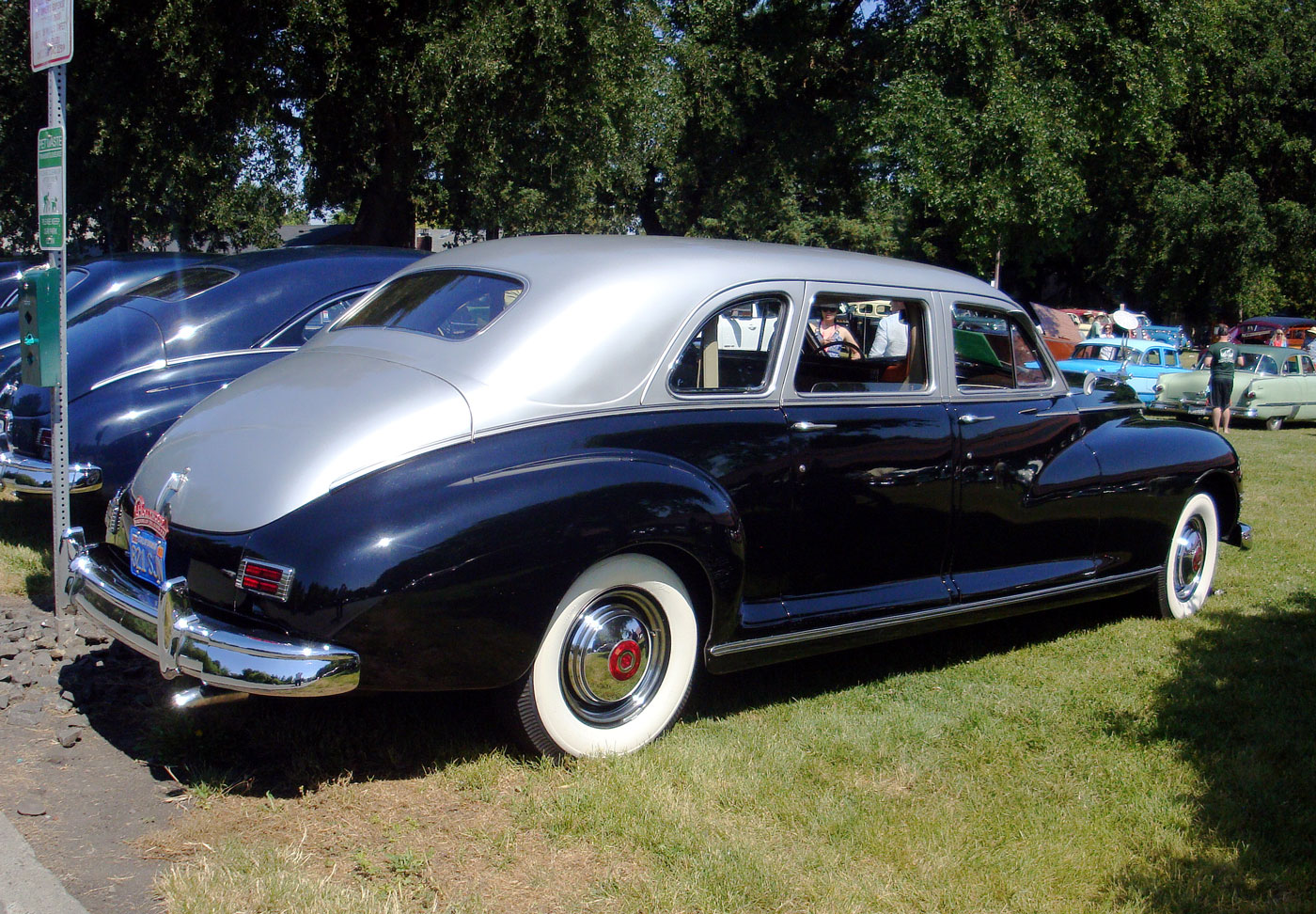
1947 limousine
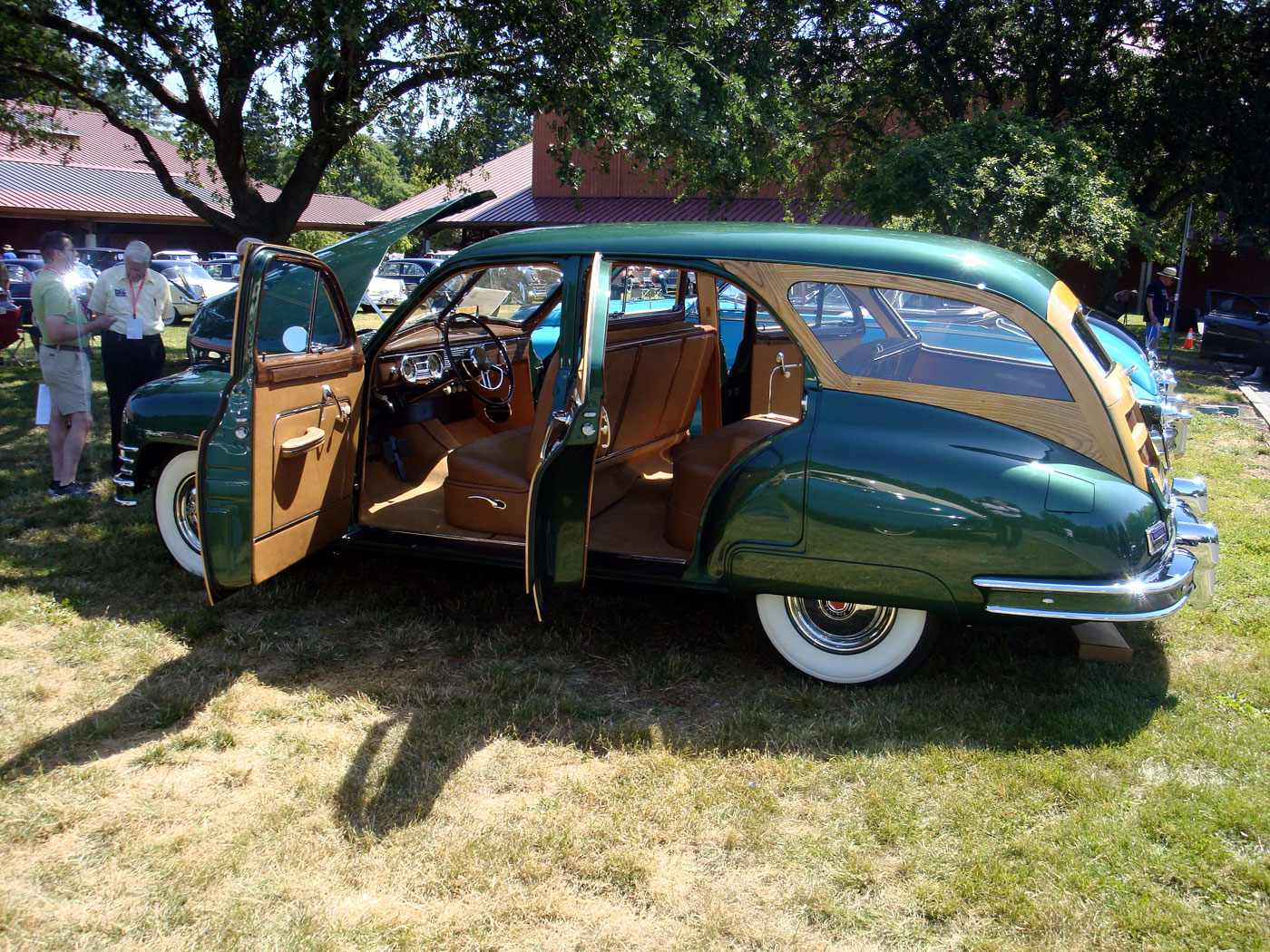
1948 Station Sedan
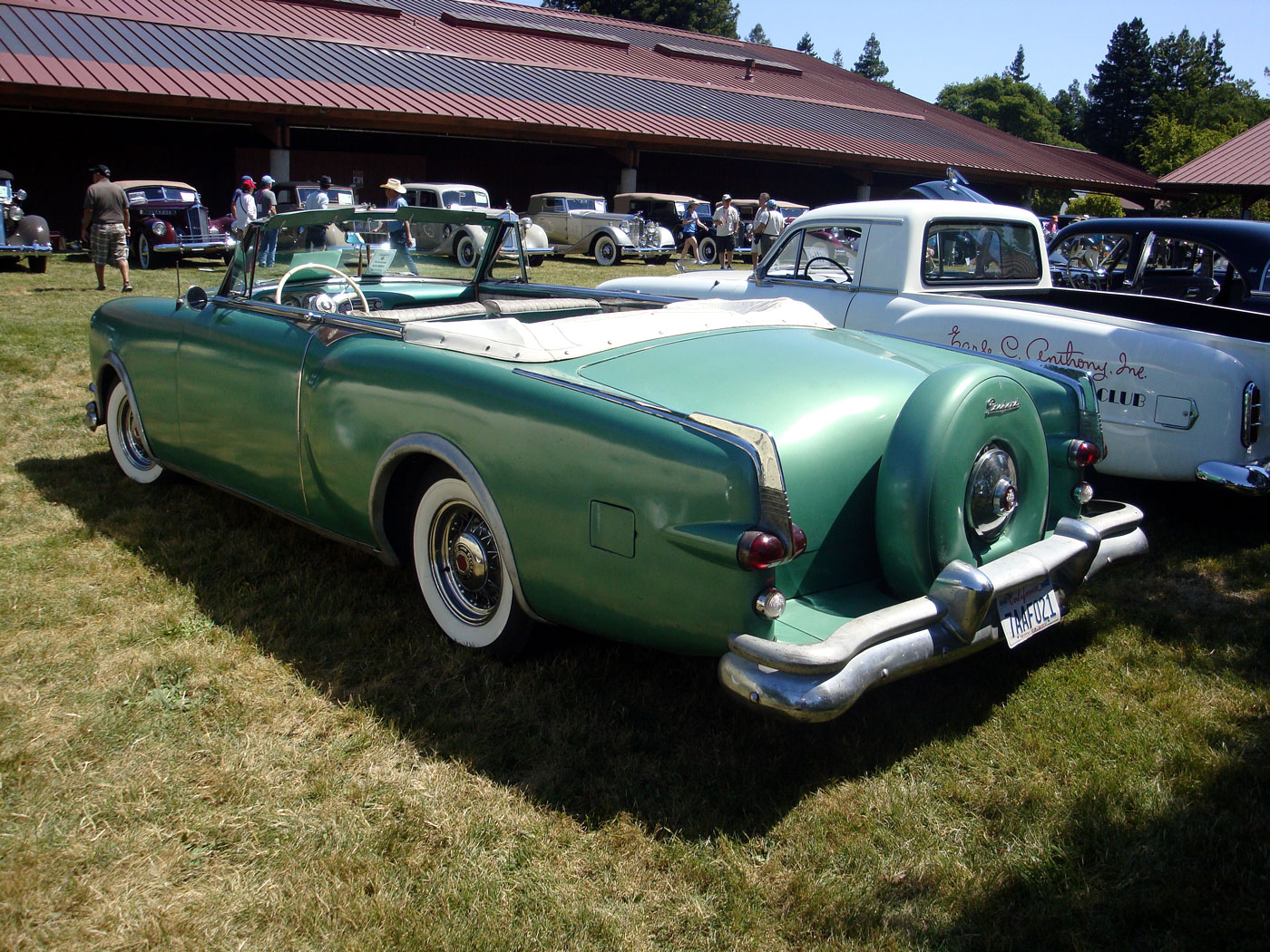
1953 Caribbean
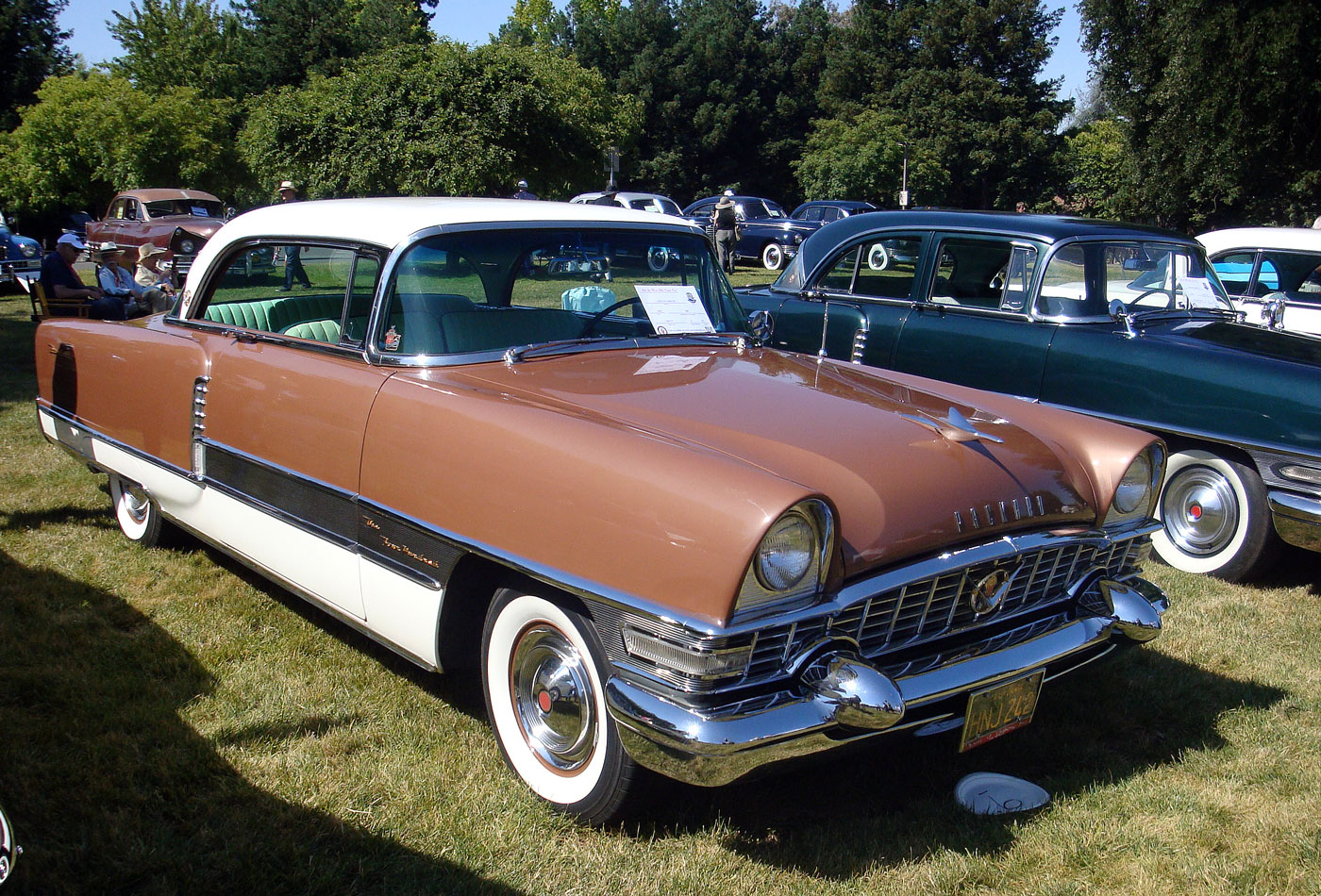
1955 Four Hundred
The pre-war Packards were nothing short of great. Immediate post-WWII not so much. 1949-54 not bad, and the ’55-’56 Patricians were great as well. If you think of the post merger with Studebaker Packards as just great Studys instead of Packards it does make life easier. The Packard Museum is on my “to-do” list within the next year.
A little more detail to go with this tease from Mr. Elitch–
> … during WW II … Packard produced over 55,000 Merlin V12 aircraft engines, under contract with Rolls-Royce.
Maurice Olley, well known chassis/suspension/steering engineer, played a part in this. His version of the story is in our book “Chassis Design” SAE R-206. He had been chief engineer of the Rolls-Royce factory in Springfield MA, but when that failed at the start of the Depression, Olley moved to Cadillac. When WWII started Rolls-Royce asked if he would be their USA representative for making Merlin parts and engines. While it may sound amazing now, at that time GM agreed to this arrangement! At first the Merlin contract was to go to Ford, but after a couple of months the government switched to Packard, with excellent results.
1924 6 cylinder wire wheeled Tourer went to Harrahs from Australia in 1966. Anyone know where it is?
One minor correction to this great story about Packards and the reference to the National Auto Museum in Reno, NV. I am a tour docent here and Bill Harrah, who had the Harrah’s Auto Collection, which had accumulated about 1,450 cars at the time of Mr. Harrah’s death in June of 1978. He did have a will that spelled out how much of his multiple ex-wives and children would receive upon his death. He had been married seven time to six different women. One of his ex-wives he had remarried but he quickly divorced her when he caught her in bed with someone ‘at one of his casinos’. How embarrassing that must have been. But all these women and their children went out and hired some pretty aggressive lawyers who sued Holiday Inn for even more money than was designated in the original will. So H.I. sold off most of the cars in the H.A.C. group, got it down to 175 cars which they graciously (with the pressure of many in the car community) donated to help create our fine museum here. But they received 100 million dollars, which paid off all the women, their children, the lawyers AND the estate taxes and H.I. still had money left over. Not bad considering when H.I. purchased all the hotels, casinos, ranches, etc. the H.A.C. was listed on the balance sheet with ZERO value because the cars had never been appraised. Not bad. So that’s the rest of the story. But thanks again for all the other stories you’ve written. Regards.