• Skip to primary navigation
  • Skip to main content
  • Skip to primary sidebar

VeloceToday.com

The Online Magazine for Italian and French Classic Car Enthusiasts

  • Home
  • Subscribe
  • About
  • Contact
  • Donate
  • As Found

ats

Graham Gauld: Mini Autobiography Part 1

January 16, 2023 By pete

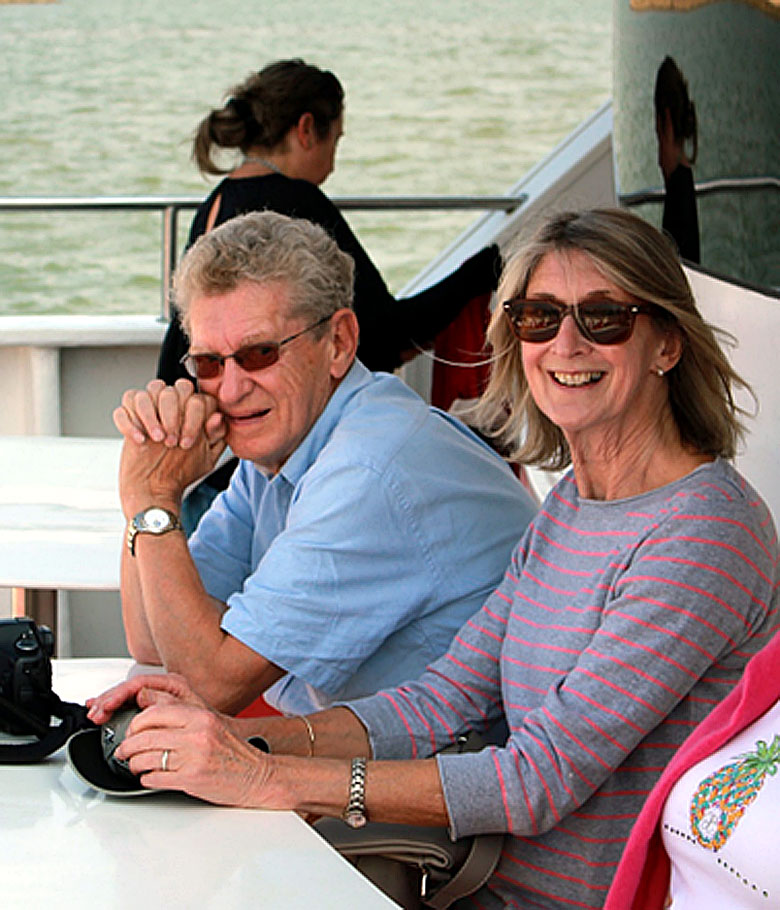
Graham Gauld with his partner Jane Wallis-Hosken at the Portimao historics in Portugal.

Story and photos by Graham Gauld

It is hard to believe, but by the time you read this it will have been seven months since Jane and I turned in the key to the house, got a lift to the Nice airport and flew to London, leaving behind 27 years’ worth of memories of living in the South of France, in easy driving distance from Nice, Cannes, Monaco and Ventimiglia on the Italian border. Four weeks earlier I had celebrated the 70th anniversary of my first work as a motoring journalist at the age of 17.

Why am I telling you all this? Well Editor Pete Vack thought it would be a good idea to explain how it has been settling down in the country of one’s roots, after being away for close on thirty years. My life, so far, can be split into three parts so let’s start with the first part.
This content is for Premium Subscriber members only.
LoginSubscribe

Tagged With: ats, Circolo della Biella, Ferrari, Graham Gauld, jim clark, Maserati factory, phil hill, Tavoni

A Look at Automobili Turismo e Sport

July 15, 2014 By pete

sdfsadf


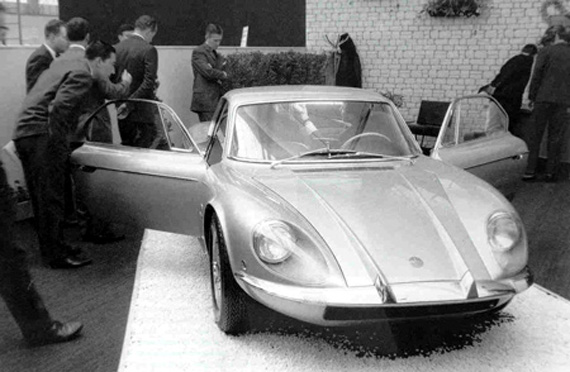
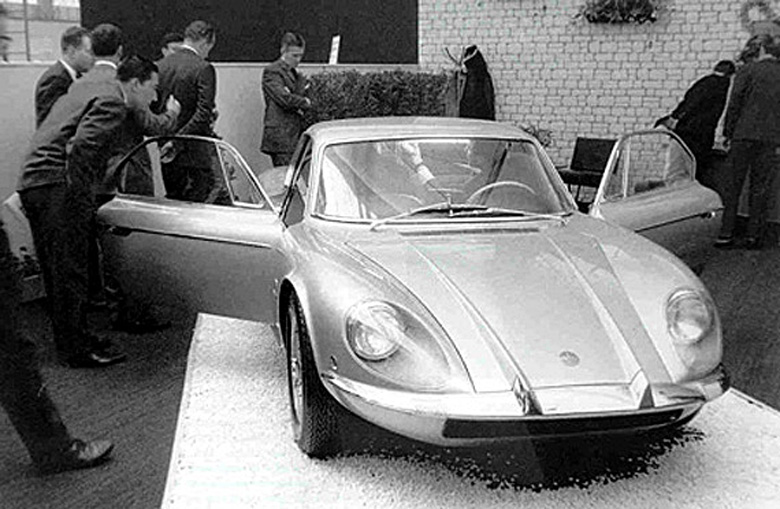
ATS stand at Paris in 1963. Note the hood ridges. Photo by and courtesy of Graham Gauld

Story by Alessanadro Gerelli and Staff
Color Photography by Alessandro Gerelli
Black and White Photographs by Graham Gauld

As a member of the group who walked out of Maranello during the great Palace Revolt in November of 1961, Carlo Chiti left Ferrari for good. “I shut the door behind me, forever!” he said.

Obviously a chief engineer like Chiti would never end up on the dole, so it was merely a matter of time before he would find employment. “It was said that the real reason for my leaving [Ferrari] was connected to the birth of ATS [Automobili Turismo e Sport]. This is not true. When I left Ferrari I had no idea what the future had in store for me.”

ATS was created by Italian and Bolivian industrialists, as well as the Conte Volpi di Misurata of the Italian well known Scuderia Serenissima. At first, there was money to burn. Placing the new factory near the Pontecchio Marconi, a depressed area south of Bologna, the team hoped that the Government would soon subsidize the effort. The road was named Via Pila, Battery Way– and according to Griff Borgeson, “…everything crackles with allusions to Guglielmo Marconi, whose tomb and shrine is only a couple of ampere-minutes away.” ATS hired on Phil Hill, Giancarlo Baghetti, Romolo Tavoni and the star of the operation, Carlo Chiti. According to Baghetti, both he and Hill joined ATS “precisely because of Chiti’s expansive personality.” The firm planned to build an F1 car, a road going mid engined GT car, and a race ready GT called the GTS.

sdfsadf

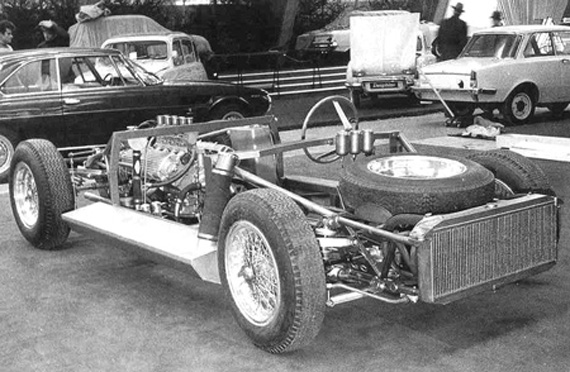
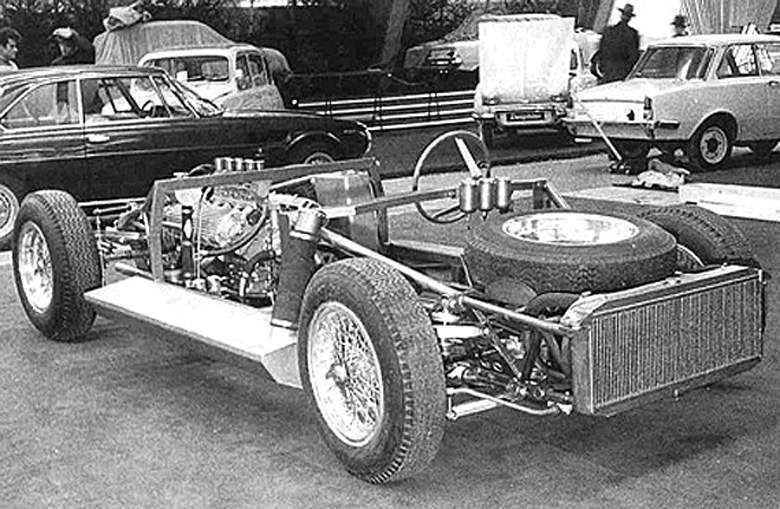
Bare chassis at Paris. The lattice/space frame construction was extremely rigid. Photo by and courtesy of Graham Gauld.

Chiti arrived in ATS and in a very short time was able to design and produce a nice formula one car with a new 90 degree V8 engine, making sure that the design was much different than the 60 degree V6 he had already designed for Ferrari. Chiti told Graham Gauld (writing in his book Modena Racing Memories ) that “…it took five months to design and build the first prototype.” The GT car would boast a 2.5 liter variant of the F1 engine. According to Gauld Chiti stayed under 3 liters because he didn’t want to compete directly with Ferrari in that class.

dfasd

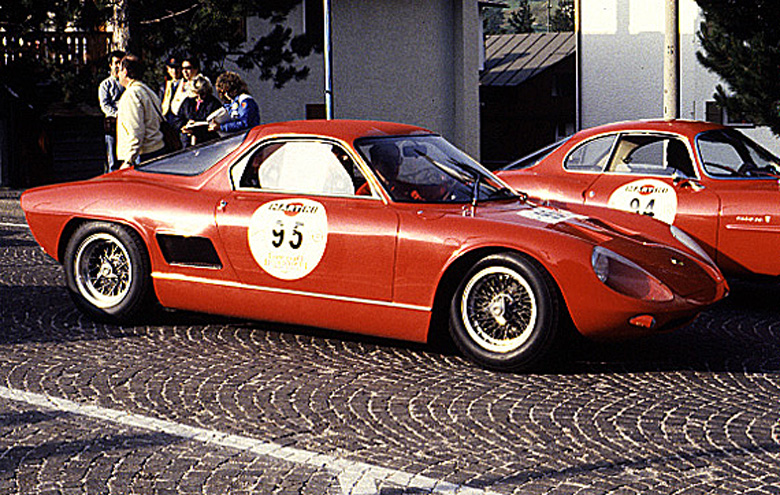
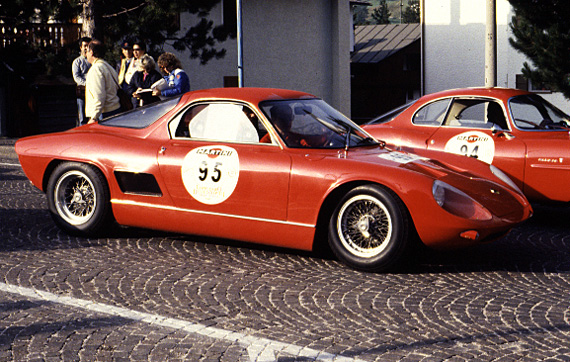
An ATS 2500GTS, during the Coppa d’ Oro delle Dolomiti for historical cars in 1987. Photo Alessandro Gerelli.

If the team’s first season in Formula 1 was while not the success many had hoped for, it was a bad run, either. In 1963 ATS entered nine races, did not start in three and finished only once, when Hill took 11th and Baghetti came in 15th at Monza.

sdfsdaf

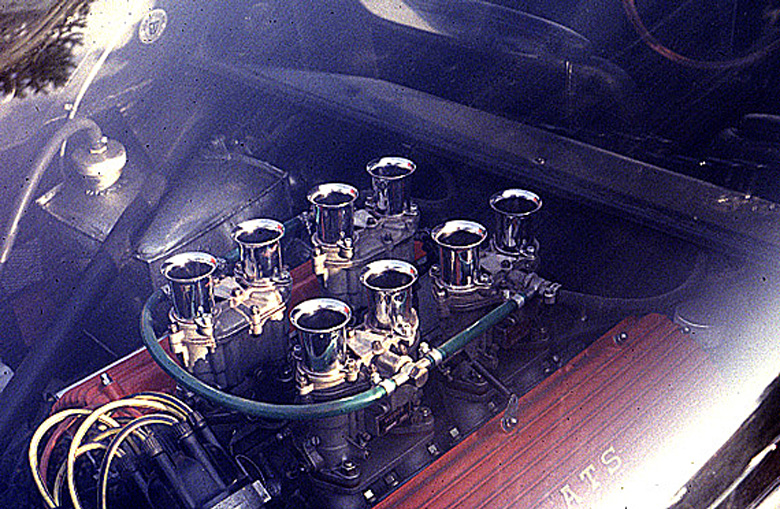
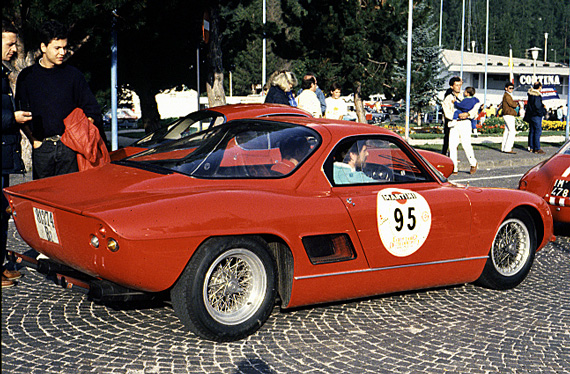
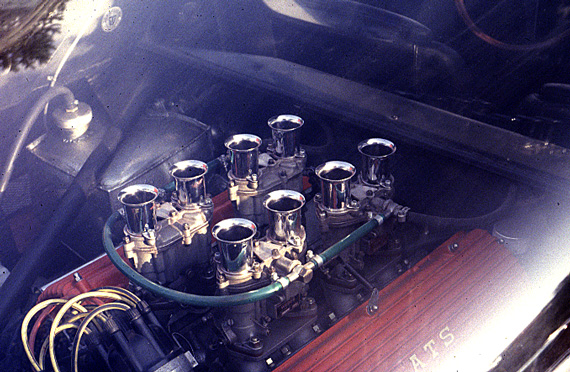
Through the rear window one could gaze at the V8 engine of the ATS, which preceded the 360 Ferrari idea for same by some thirty years. But instead of fuel injection of the 360 Ferrari, the ATS engine had four Webers. Photo Alessandro Gerelli.

ATS in fact had a great future. But the money simply dried up, and did so very quickly for a variety of reasons. By May of 1964, when Griff Borgeson visited the factory, there was still hope, all of it now centered around the 2500GT.

sadfsafs

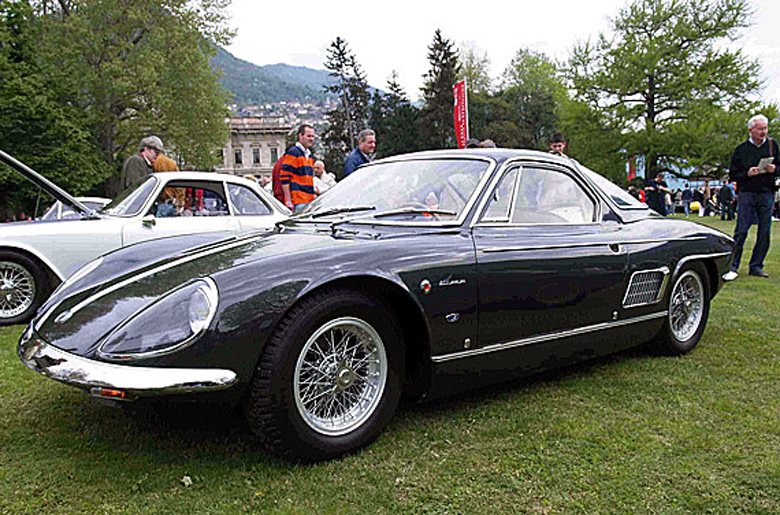
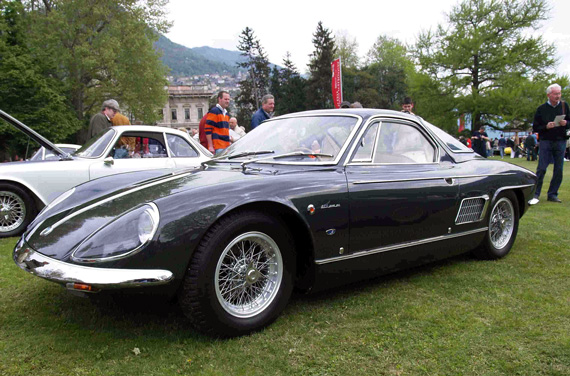
Thomas McGough owned this rare and original ATS, chassis 2003.

The ATS 2500 GT (the racing version was the ATS 2500 GTS) was presented at 1963 Geneva Motor Show. If not radical it was certainly more advanced that most Gran Turismos of the era. The engine was mounted longitudinally just behind the driver’s back, there was a very rigid tubular frame, independent suspension and rear inboard disc brakes.

The engine had a capacity of 2.5 liters; the GT sported two 42mm Webers, the GTS four 42 mm Webers. The GT was rated at about 210 bhp and 250 bhp for the GTS. A ZF all syncro five speed transmission was available on the street car, and a Colotti designed crash box was fitted to the GTS.

dsfsda

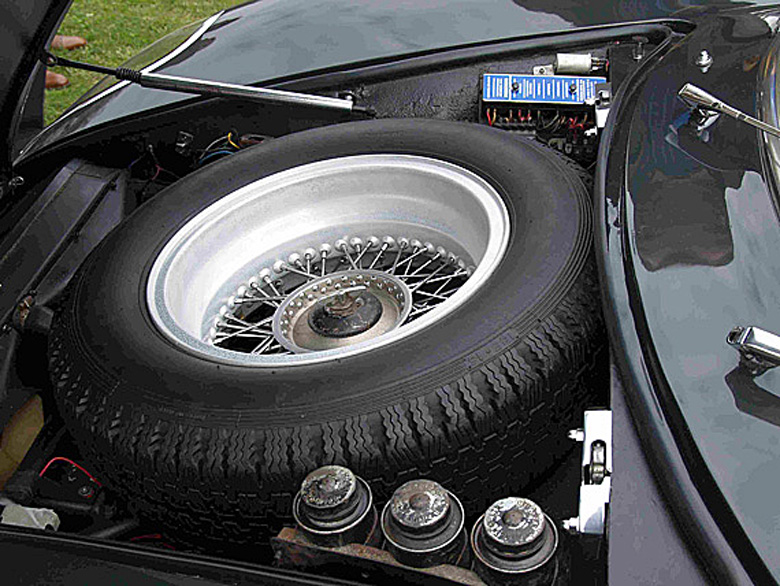
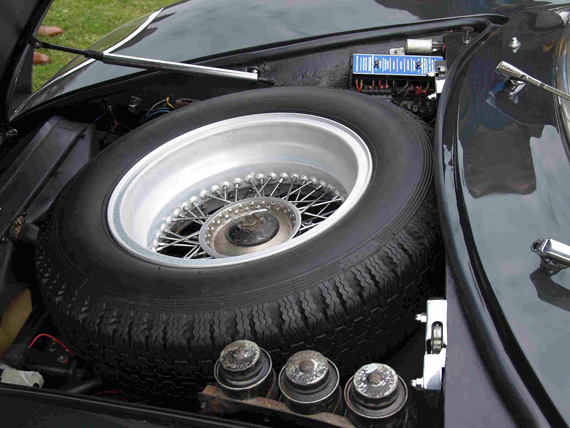
Spare wheel takes up all of the front boot space. Photo Alessandro Gerelli.

In May, Borgeson had been lucky enough to get a ride and a quick drive in a GTS which was shortly to be shipped to Bill Mitchell, head of GM’s styling department. Borgeson’s report appeared in the September 1964 issue of Road & Track.

Teodoro Zeccoli took Borgeson on an electrifying ride down Via Pila and the outskirts of Bologna. “Zeccoli turned in a performance of dazzling skill and virtuosity. Thank to that and to the absolute perfection of the car’s performance in every way, I have never felt safer in a car at high speed nor have I been more impressed.”

A surprisingly large amount of luggage space is available behind the engine. Photo Alessandro Gerelli.

The body, designed by the great Franco Scaglione and built by Allemano was very aerodynamic. The car was very light: 810 kilos for the road version and only 750 for the GTS. The top speed was of 240 km/h and 250 km/h respectively.

sdfasf

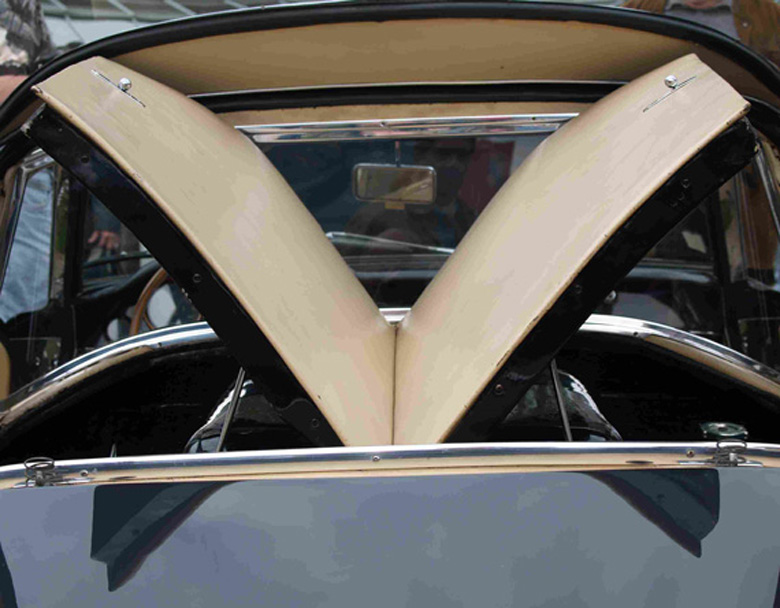
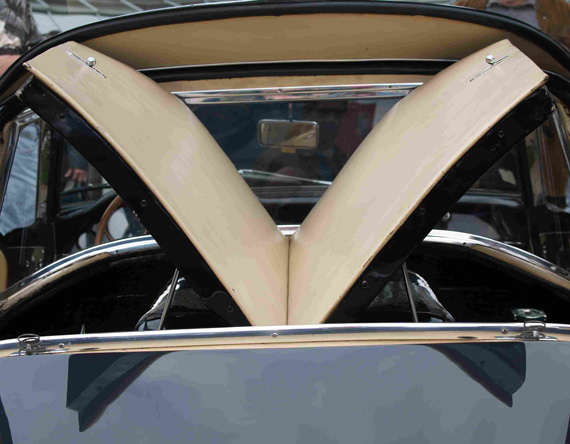
The two covers of the engine bay fold out like the DeTomaso Mangusta. Photo Alessandro Gerelli.

The ATS 2500 GTS appeared in a few endurance races: the debut was in the Targa Florio of 1964 with Baghetti and Frescobaldi and a second car with Zeccoli and Gardi. Plans to enter the car for the 24 Hours of Le Mans were scrapped as the car did not reach the circuit because of custom problems at the border.

fasfdfs

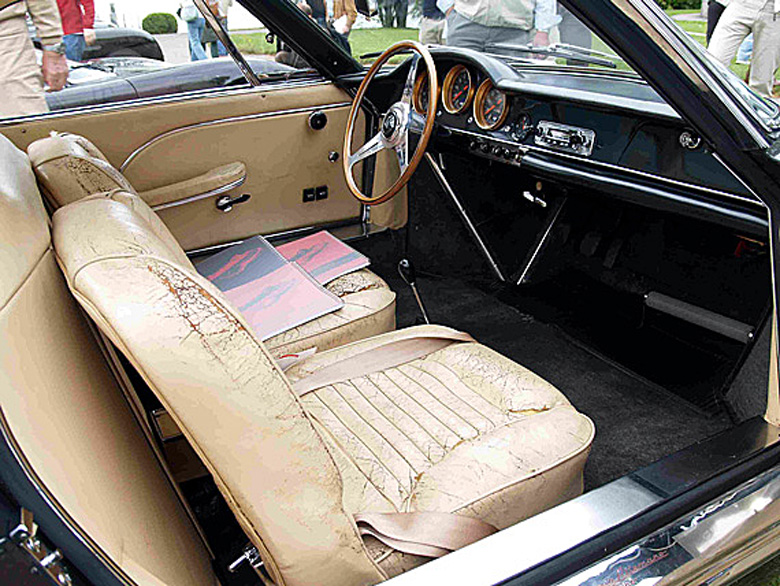
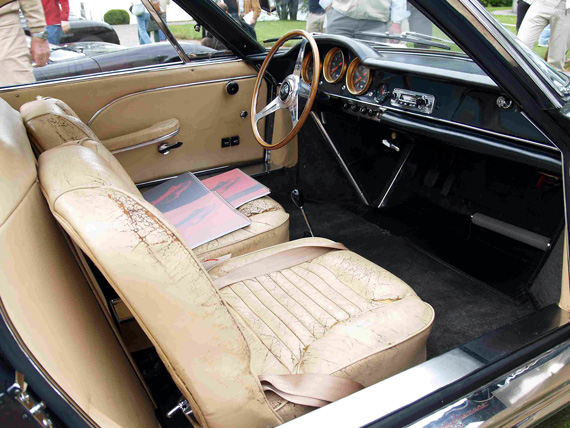
McGough’s car has the original leather upholstery which shows its age. Photo Alessandro Gerelli.

It was also entered in the 12 Hours of Reims with Zeccoli / Cabral, but did not start.

In 1965 there were a few non-official entrances in endurance and hill climb races, without significant results.

The production was very limited: only 16 chassis were built. The number of the cars really produced and delivered was even less. The production stopped in 1964.

This article is from the VeloceToday Archives. Why don’t you see what is in store for you by using “Search this website” in the right column?

Tagged With: ats, ATS history, ATS racing, carlo chiti, Chiti ATS

ALFA TO ZECCOLI Part 2

January 31, 2013 By pete


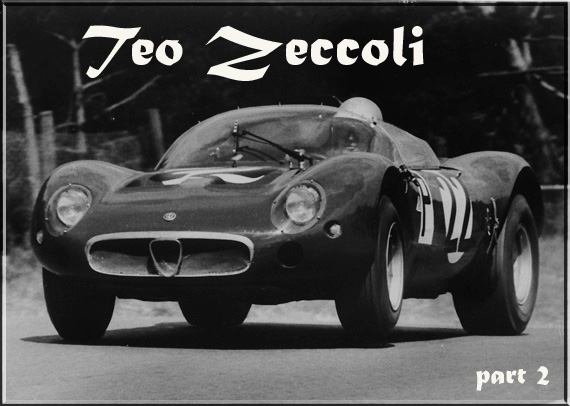
Zeccoli in the ‘Periscopio’ Alfa T33 prototype at the Nurburgring, 1967. (Zeccoli Archives)

Graham Gauld talks to Alfa test driver Teodoro Zeccoli

As we learned in Part 1, ATS was a recipe for disaster. It didn’t take Carlo Chiti long before he had enough. He joined forces with his friend Ludovico Chizzola in his Autosport Company, which prepared touring cars for racing. The company they formed together was Delta Auto, later changed to Autodelta. Chiti recalled the previous approach to ATS from Alfa Romeo and so contacted Giuseppe Luraghi, the Chairman of Alfa Romeo, and was offered the chance to take on the program. Chiti then resigned from ATS and took Teodoro Zeccoli with him as test driver. Zeccoli’s career took another step forward.

The Autodelta years

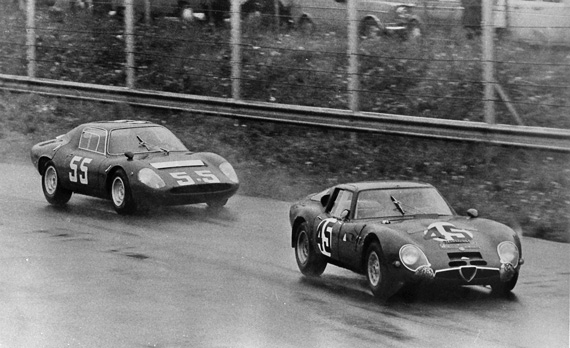
Racing in the wet with the Alfa Romeo TZ 2 at Monza in 1966. Teodoro Zeccoli brakes for the Parabolica. He would win his class with co-driver De Adamich. (Zeccoli Archives, Alfa Romeo)

[Read more…] about ALFA TO ZECCOLI Part 2

Tagged With: alfa test drivers, alfa zeccoli, ats, autodelta, carlo chiit, Graham Gauld, T33 alfa drivers, teodoro zeccoli, zecolli alfa

Automobili Turismo e Sport

May 7, 2008 By Gerelli

ATS stand at Paris in 1963. Note the hood ridges. Photo by and courtesy of Graham Gauld.


Story by Alessandro Gerelli and Staff

As a member of the group who walked out of Maranello during the great Palace Revolt in November of 1961, Carlo Chiti left Ferrari for good. “I shut the door behind me, forever!” he said.

Obviously a chief engineer like Chiti would never end up on the dole, so it was merely a matter of time before he would find employment. “It was said that the real reason for my leaving [Ferrari] was connected to the birth of ATS [Automobili Turismo e Sport]. This is not true. When I left Ferrari I had no idea what the future had in store for me.”

Bare chassis at Paris. The lattice/space frame construction was extremely rigid. Photo by and courtesy of Graham Gauld.


ATS was created by Italian and Bolivian industrialists, as well as the Conte Volpi di Misurata of the Italian well known Scuderia Serenissima. At first, there was money to burn. Placing the new factory near the Pontecchio Marconi, a depressed area south of Bologna, the team hoped that the Government would soon subsidize the effort. The road was named Via Pila, Battery Way– and according to Griff Borgeson, “…everything crackles with allusions to Guglielmo Marconi, whose tomb and shrine is only a couple of ampere-minutes away.” ATS hired on Phil Hill, Giancarlo Baghetti, Romolo Tavoni and the star of the operation, Carlo Chiti. According to Baghetti, both he and Hill joined ATS “precisely because of Chiti’s expansive personality.” The firm planned to build an F1 car, a road going mid engined GT car, and a race ready GT called the GTS.

An ATS 2500GTS, during the Coppa d’ Oro delle Dolomiti for historical cars in 1987. Photo Alessandro Gerelli.

Chiti arrived in ATS and in a very short time was able to design and produce a nice formula one car with a new 90 degree V8 engine, making sure that the design was much different than the 60 degree V6 he had already designed for Ferrari. Chiti told Graham Gauld (writing in his book Modena Racing Memories ) that “…it took five months to design and build the first prototype.” The GT car would boast a 2.5 liter variant of the F1 engine. According to Gauld Chiti stayed under 3 liters because he didn’t want to compete directly with Ferrari in that class.

Through the rear window one could gaze at the V8 engine of the ATS and preceded the 360 Ferrari idea for same by some thirty years. Photo Alessandro Gerelli.

If the team’s first season in Formula 1 was while not the success many had hoped for, it was a bad run, either. In 1963 ATS entered nine races, did not start in three and finished only once, when Hill took 11th and Baghetti came in 15th at Monza.

ATS in fact had a great future. But the money simply dried up, and did so very quickly for a variety of reasons. By May of 1964, when Griff Borgeson visited the factory, there was still hope, all of it now centered around the 2500GT.

But instead of fuel injection of the 360 Ferrari, the ATS engine had four Webers which could be seen through the rear window. Photo Alessandro Gerelli.

The ATS 2500 GT (the racing version was the ATS 2500 GTS) was presented at 1963 Geneva Motor Show. If not radical it was certainly more advanced that most Gran Turismos of the era. The engine was mounted longitudinally just behind the driver’s back, there was a very rigid tubular frame, independent suspension and rear inboard disc brakes.

Thomas McGough owns this rare and original ATS, chassis 2003.

The engine had a capacity of 2.5 liters; the GT sported two 42mm Webers, the GTS four 42 mm Webers. The GT was rated at about 210 bhp and 250 bhp for the GTS. A ZF five speed transmission was available on the street car, and a Colotti designed crash box was fitted to the GTS.

Spare wheel takes up all of the front boot space. Photo Alessandro Gerelli.

In May, Borgeson had been lucky enough to get a ride and a quick drive in a GTS which was shortly to be shipped to Bill Mitchell, head of GM;s styling department. Borgeson’s report appeared in the September 1964 issue of Road & Track.

McGough’s car has the original leather upholstery which shows its age of forty five years. Photo Alessandro Gerelli.

Teodoro Zeccoli took Borgeson on an electrifying ride down Via Pila and the outskirts of Bologna. “Zeccoli turned in a performance of dazzling skill and virtuosity. Thank to that and to the absolute perfection of the car’s performance in every way, I have never felt safer in a car at high speed nor have I been more impressed.”

The two covers of the engine bay fold out like the DeTomaso Mangusta. Photo Alessandro Gerelli.

The body, designed by the great Franco Scaglione and built by Allemano was very aerodynamic. The car was very light: 810 kilos for the road version and only 750 for the GTS. The top speed was of 240 km/h and 250 km/h respectively.

The ATS 2500 GTS appeared in a few endurance races: the debut was in the Targa Florio of 1964 with Baghetti and Frescobaldi and a second car with Zeccoli and Gardi. Plans to enter the car for the 24 Hours of Le Mans were scrapped as the car did not reach the circuit because of custom problems at the border.

It was also entered in the 12 Hours of Reims with Zeccoli / Cabral, but did not start.

In 1965 there were a few non-official entrances in endurance and hill climb races, without significant results.

The production was very limited: only 16 chassis were built. The number of the cars really produced and delivered was even less. The production stopped in 1964.

Tagged With: ats, ats gts, cars, Ferrari, history of ats. ats gt

Primary Sidebar

     SIGN UP BELOW TO RECEIVE VELOCETODAY EVERY WEEK FOR FREE


       EXCLUSIVE ARTICLES ABOUT 

    EXTRAORDINARY AUTOMOBILES

PositiveSSL

Recent Posts

  • VeloceToday for March 3, 2026
  • Sports Car Racing at Midland, TX 1960-62
  • Smith’s Alfa Vintage Racing Chronicles
  • Squarebacks to Love
  • The Final Word on Squarebacks!
  • Sports Car Racing at Midland, TX, 1959
  • Tripoli 1939: Italian Job That Mis-fired
  • Gauld Checks Out the Ferrari Estate Car
  • Juan Manuel Fangio Tribute
  • Sports Car Racing at Midland, TX, 1958-59
  • Behind the PBS SOCAL Story: My Extra 5 Minutes of Fame
  • Sharp’s Retro Part 4: French Classics
  • Sharp’s Retro Part 5: Interesting Others
  • Sharp’s Retro Part 6: Art and Neat Stuff
  • Sharp’s Retro Part 1: Ferrari
  • Sharp’s Retro Part 2: Alfa and Lancia
  • Sharp’s Retro Part 3: Fiat and Others
  • Amore mio Ardea
  • Bill Warner finds the Don Vitale Nardi
  • Thornley Kelham, the home of the Lancia Bandit
  • The Legends of Bob Gerard
  • Retromobile 2026, First Report
  • Graham Gauld on Nardi
  • Gauld and the Auburn Douze
  • The Races of Life, a Review
  • The Selected Works of Aldo Zana
  • Aldo Zana at the Monaco Grand Prix, 1968
  • Wilson’s 6C 2500: Will it Fit?
  • Panning for Gold Part 2
  • Robert F. Pauley explores the SCCA parking lots

Copyright © 2026 · VeloceToday.com · Privacy · Sitemap

MENU
  • Home
  • Subscribe
  • About
  • Contact
  • Donate
  • As Found