• Skip to primary navigation
  • Skip to main content
  • Skip to primary sidebar

VeloceToday.com

The Online Magazine for Italian and French Classic Car Enthusiasts

  • Home
  • Subscribe
  • About
  • Contact
  • Donate
  • As Found

carlo chiti

Jeff Allison: Head Shots Part 1

March 24, 2025 By pete

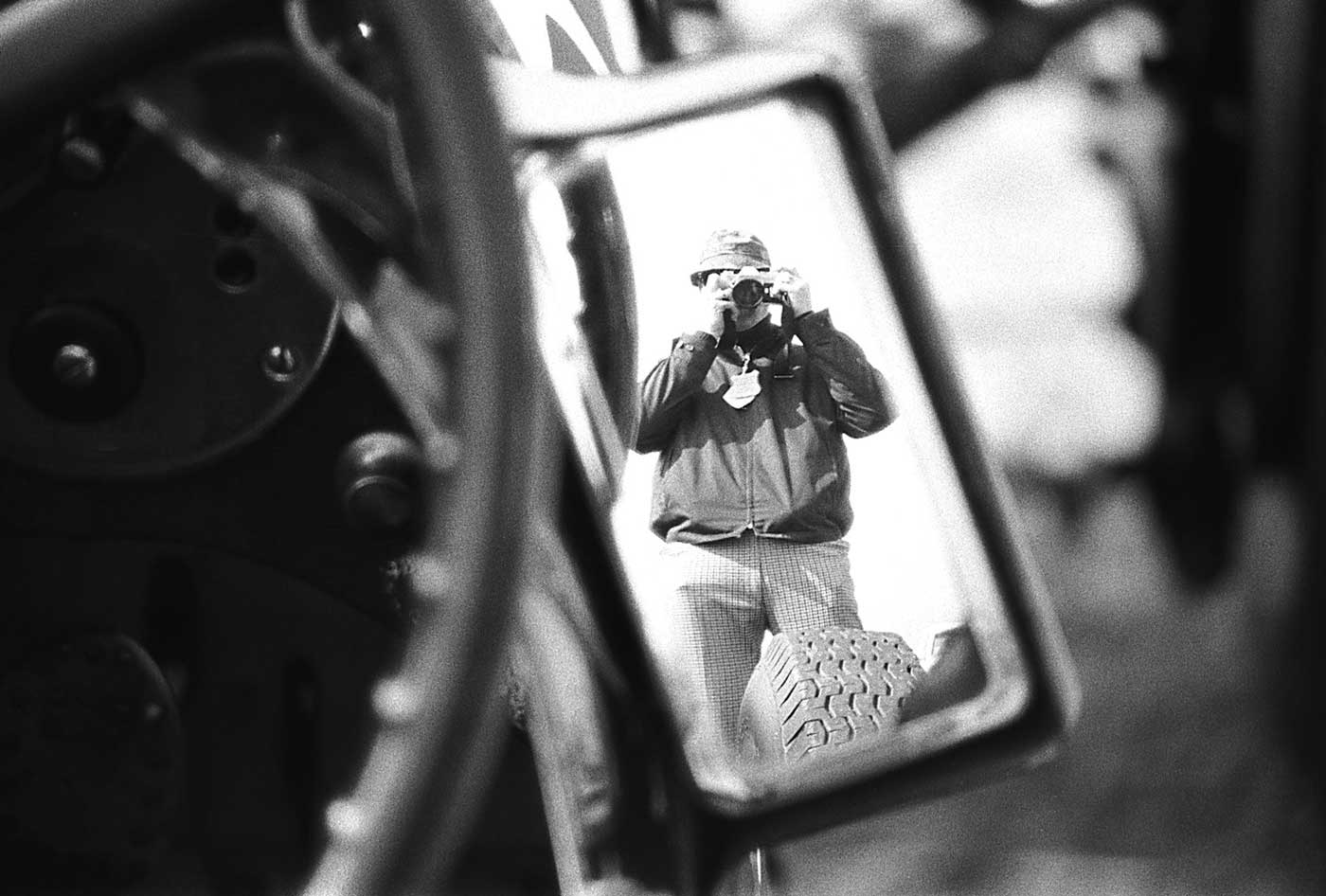
The author getting fancy with a self-portrait using the mirror of an open-wheel vintage racer at the Daily Express International Trophy at Silverstone, England on April 7, 1974.

Story and photos by Jeff Allison

I recently finished a project to put my “head shots” of drivers in one place and thought maybe the readers of VeloceToday might enjoy seeing some. I began photographing races in 1959 with my last “real” race, i.e., not vintage, in 1997. I didn’t take many “head shots” in my early years as I thought it was an affront to the drivers. However, as time went on, I loosened up (a telephoto lens helped) and began to photograph drivers as well as cars. Most were photos of opportunity while wandering the paddock and pits when I wasn’t out on the track.

Here are some of my favorites…
This content is for Premium Subscriber members only.
LoginSubscribe

Tagged With: carlo chiti, derek bell, jacky ickx, Jacky Oliver, jeff allison, Jo Siffert, mario andretti, Pedro Rodriquez, Race driver photos, roger penske

Alfa Romeo 33/2 Coupé Special Pininfarina

January 17, 2022 By pete

Roeberto Motta photo

From the VeloceToday Archives, March, 2018

Story by Roberto Motta

Alfa Romeo 33/2 Coupé special by Pininfarina

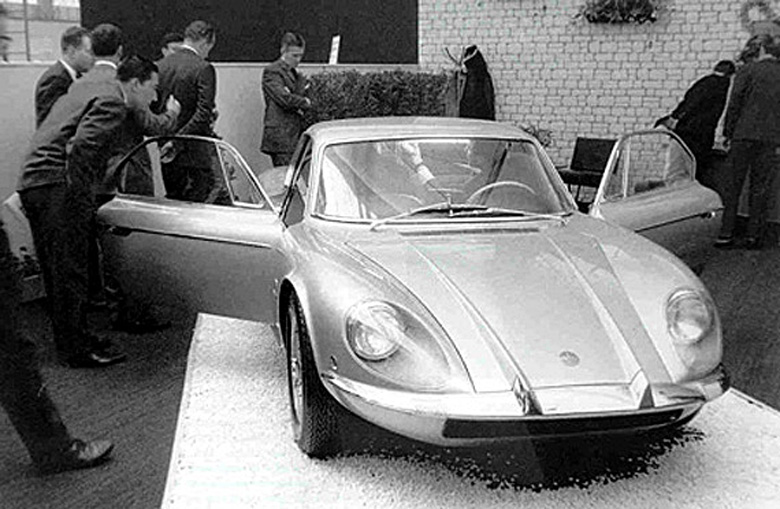
Looking at the 33/2 Coupé Special, take the time to savor the moment, and let your eyes explore the details of a very special car that has the flavor of an artistic creation, enhanced by the yellow color of the sensual lines of the body.

In the late sixties, Ferrari commissioned Pininfarina to do a study of new car with advanced aerodynamics. To design the car, Pininfarina chose Ing. Leonardo Fioravanti, because he was young, had ideas, and even more, had a mechanical engineering education at the Politecnico di Milano where his studies were focused on aerodynamics and car body design.

This content is for Premium Subscriber members only.
LoginSubscribe

Tagged With: 33/2 coupe speciale, alfa t33, Alfa T33 stradale, carlo chiti, enzo ferrari, Ferrari 250 P5, Fioravanti, Leonardo Fioravanti, Pininfarina T33, road going t33

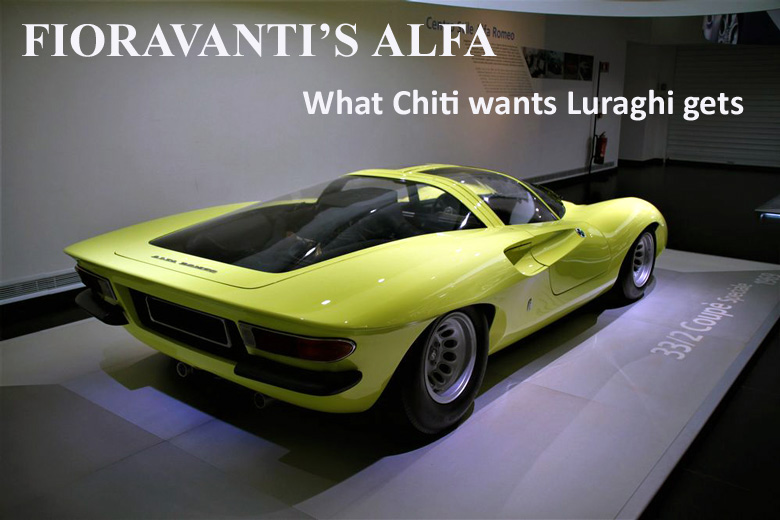
Fioravanti’s Alfa

March 6, 2018 By pete

Roeberto Motta photo

Story by Roberto Motta

Alfa Romeo 33/2 Coupé special by Pininfarina

Looking at the 33/2 Coupé Special, take the time to savor the moment and let your eyes to explore the details of a very special car that has the flavor of an artistic creation, enhanced by the yellow color to the sensual lines of the body.

In the late sixties, Ferrari commissioned Pininfarina to do a study of new car with advanced aerodynamics. To design the car, Pininfarina chosen the young Ing. Leonardo Fioravanti, because he was young, had ideas, and even more had a mechanical engineering education at the Politecnico di Milano where his studies were focused on aerodynamics and car body design. [Read more…] about Fioravanti’s Alfa

Tagged With: 33/2 coupe speciale, alfa t33, Alfa T33 stradale, carlo chiti, enzo ferrari, Ferrari 250 P5, Fioravanti, Leonardo Fioravanti, Pininfarina T33, road going t33

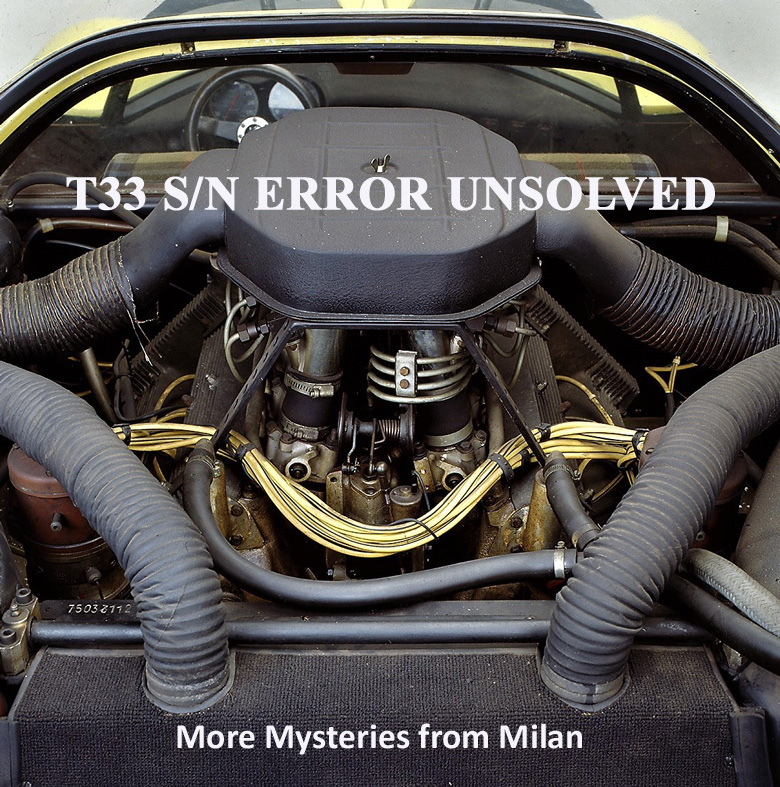
And How! The Mystery of the T33 S/N

March 6, 2018 By pete

And How! features open and innovative formats for notices, articles and posts

Roberto Motta photo

Readers who are familiar with the history of the T33 Alfas (and VeloceToday seems to harbor most of them!) are even more fascinated with the series of T33 Stradales that were destined to have fantastic, special bodies built on the chassis. They are some of Alfa Romeo’s most treasured and beautiful showcars. Roberto Motta recent revealed the story of how chassis s/n 75033112 was designed by Fioravanti based on a previous effort called the Ferrari 250 P5. But, we all asked, wasn’t the Alfa s/n 75033115?

This content is for Premium Subscriber members only.
LoginSubscribe

Tagged With: 33/2 coupe speciale, alfa t33, Alfa T33 stradale, carlo chiti, enzo ferrari, Ferrari 250 P5, Fioravanti, Leonardo Fioravanti, Pininfarina T33, road going t33

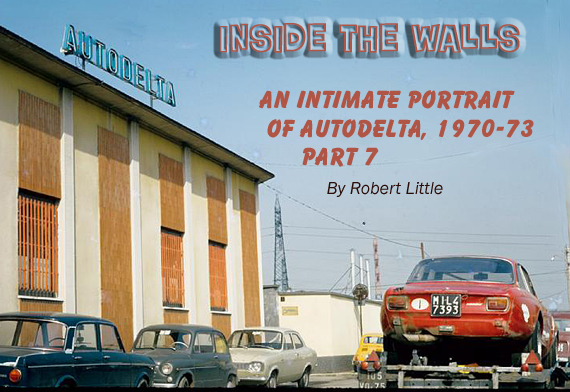
Inside the Walls of Autodelta Part 7: Le Mans, 1972

February 24, 2015 By pete

Story and photos by Robert Little
All images copyright Robert Little

(Read Part 1)
(Read Part 2)
(Read Part 3)
(Read Part 4)
(Read Part 5)
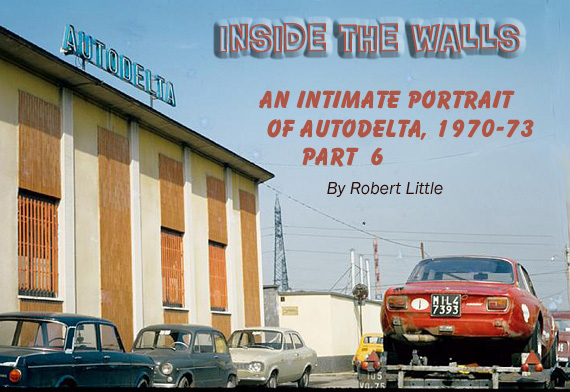
(Read Part 6)

Following the absolutely heart-breaking loss to a Ferrari 312P driven by Sandro Munari and Arturo Merzario by only a mere 17 seconds over the course of nearly 500 miles of the Sicilian countryside in the Targa Florio only weeks before, Ing. Chiti was even more determined to break the domination of the 312Ps and to take on all challengers to the 1972 World Championship for Makes title.

Unfortunately, a high stakes game of ‘cat and mouse’ ensued where Ferrari withdrew from Le Mans, Porsche did not enter a factory team, and Alfa Romeo Autodelta was facing 12 cylinder Matras, Cosworth-powered Lolas, Ligiers, a variety of French Ferrari dealer racing teams sporting Daytonas, the BF Goodrich Team of Chevrolet Corvettes, a couple DeTomaso Panteras and a vast plethora of privately-entered 908s, 911s.

The Autodelta team, sponsored by Alitalia, Shell, Goodyear and Koni brought three V-8 cars to the circuit along with a full and complete racing caravan of spare parts, a large Alfa Romeo autobus machining operation and a full staff…including the writer who was once again in charge of keeping the cars absolutely spotless, keeping the local Le Mans Alfa Romeo garage clean and guarding the assets of the company during off hours.

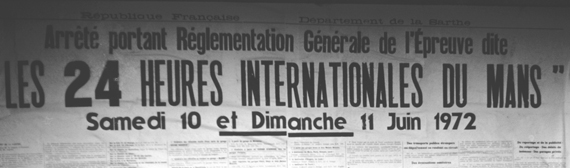
The FIA formula for the World Championship for Makes competition and this 1972 Twenty Four Hours of LeMans race specified that prototypes run with three-liter engines. The era of the magnificent 4.5-litre 917 in Le Mans was over, but a 908 long tail privately entered by Reinhold Joest turned heads. Joest, Mario Casoni and Michael Weber shared the car owned by Jo Siffert and scored third overall behind two factory entered Matra-Simca 670’s and a single Matra-Simca 660. The 908 benefited mainly from its sophisticated long-tail aerodynamics and low weight. Despite its substantially lower engine output compared to the works Matra-Simcas, the Porsche reached an identical top speed on the Mulsanne straight.

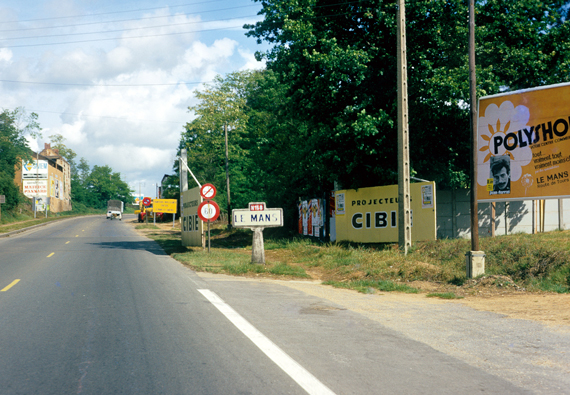
We enter the town of Le Mans...

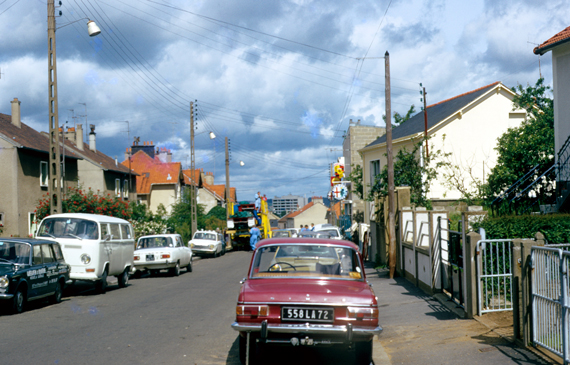
The local Alfa Romeo authorized service facility in Le Mans kindly offered the use of its entire facilities to the Autodelta team. Note the Alfa sign on the building at right. Also peer closely on the left for a glimpse of the Alfa Romeo transporter in the process of unloading our three T-33 cars.

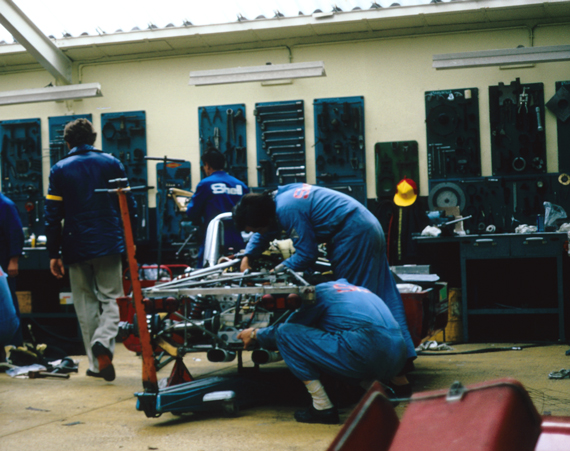
Combined with the Alfa Romeo machine-shop-autobus parked outside, this shop had every possible convenience required by the team to prepare the cars. Clean, well-lit, spacious enough to fit everything and relatively private. In the unlikely event that an emergency part or sub-assembly became necessary, the ride from Settimo Milanese to Le Mans was a relative short transit of perhaps six hours or so.

barn-find--f

This content is for Premium Subscriber members only.
LoginSubscribe

Tagged With: 33TT Targa Florio, Alfa 33TT12, Alfa at Le Mans, Alfa GTA autodelta, alfa racing, alfa romeo and autodelta, autodelta, Autodelta at Le Mans, Autodelta factory, carlo chiti, GTA alfa romeo, Helmut Marko, Inside Autodelta, le mans 1972, Robert Little, Targa Florio, what is an autodelta alfa, what is autodelta

Inside the Walls of Autodelta Part 6: At the Targa Florio

February 16, 2015 By pete

Story and Photos by Robert Little

(Read Part 1)
(Read Part 2)
(Read Part 3)
(Read Part 4)
(Read Part 5)

Dear Readers: I am pleased to open the door of history a tiny bit wider through the exposition of these images taken about 43 years ago. Please however remember the following:

The images themselves were captured on Kodak color slide film using a fine quality 35mm camera for the period. However, the pictures cannot be compared with the resolution quality found with today’s photographic equipment.

Secondly I hope you understand that as a worker for Ing. Chiti I had almost no opportunity to take photographs while “on duty” so many of the photographic opportunities during the many races I attended were lost to the fact that I was there to serve and not to photograph. My number of interesting images was restricted by this commitment. I hope you will enjoy the images I was able to capture and seek the true ‘atmospheric’ shots where they are to be found in commercially available books and magazines on the subject.

Meeting the Autodelta Team in Sicily for the Targa Florio

After arriving in Sicily (Read Part 5), I met up with the Autodelta team, who had rented garage space from the Motel Aurim in Cerda. As the lowest member of the Autodelta ‘totem pole’, I was responsible for keeping all of the cars in spotless condition during the season, so that history would record every Autodelta car looking its absolute fastest and shiny best at the track appearances and in all future photographs.

For the actual race I was stationed somewhere along the course in the mountains. equipped with front and rear spare tires, fuel, a few tools, gasoline, coolant and a large Alfa Romeo sign board to represent an assistance point for drivers.

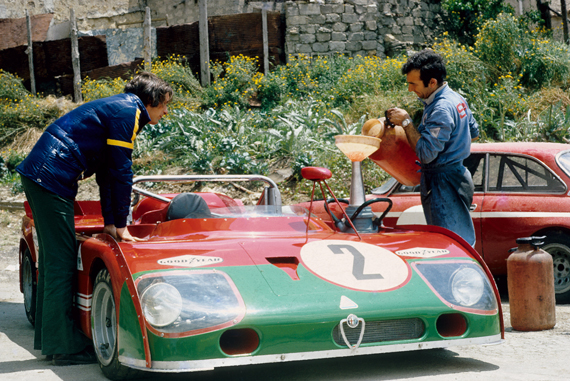
Evocative; a scene which could only be from the Targa Florio. This is the Vic Elford/Van Lennep Alfa being fueled up.

One of Carlo Chiti’s Darkest Moments: The 1972 Targa Florio

Autodelta had made a major concerted effort to win here and threw the entire weight and prestige of the parent company behind this effort, under the assumption that Ferrari would not bother to enter the race, having a good lead in the World Manufacturer’s Championship. However, at the last minute, Ferrari entered a 312P to be driven by Arturo Merzario and Sandro Munari. Still with four cars entered for Vaccarella/Stommelen, Elford/Van Lennep, de Adamich/ Hezemans and Nanni Galli/Helmut Marko, Chiti was confident of a win.

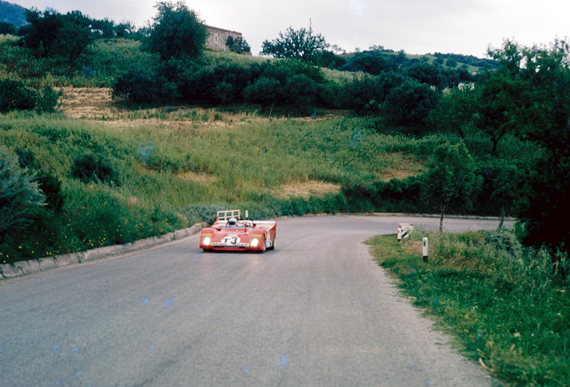
I had been driving the circuit fairly quickly in my Giulia 1600 with my camera on the passenger seat...it was all I could do to avoid clipping this Ferrari 312P coming toward me at full speed while at the same moment capturing this image. The one car entry took Autodelta by surprise.

barn-find--f

This content is for Premium Subscriber members only.
LoginSubscribe

Tagged With: 33TT Targa Florio, Alfa 33TT12, Alfa GTA autodelta, alfa racing, alfa romeo and autodelta, autodelta, Autodelta factory, carlo chiti, GTA alfa romeo, Helmut Marko, Inside Autodelta, Robert Little, Targa Florio, what is an autodelta alfa, what is autodelta

Inside Autodelta Part 5

February 10, 2015 By pete

Story and photos by Robert Little

(Read Part 1)
(Read Part 2)
(Read Part 3)
(Read Part 4)
(Read Part 6)
(Read Part 7)

Treasures in the Dumpsters and on to the Targa

“Welcome back to “Inside the Walls” Part Five. I hope you have been enjoying it as much as I have delighted in sharing it with all of you. Now it is starting to get even more interesting.

The year 1972 became the most exciting period of my entire automobile racing life…travelling to Autodelta and a short time later witnessing and participating in several of the great moments in modern day Alfa Romeo racing history; the Targa Florio – where we lost by a mere 17 seconds over about 490 miles of twisting, circuitous Sicilian countryside; the epic struggle to capture the 24 Hours of Le Mans; the secret preparation of the new 33TT12 at Balocco; the 12 Hours of Sebring, the Six Hours of Daytona and the 500 Kilometers of Imola at the Circuit Dino Ferrari. Whew! What a year!

But for now, let’s take a short and final look at another area of Autodelta…the customer vehicle area and prepare ourselves for the long drive from Milano to the shores of Sicily where the Autodelta team had already established itself in the tiny village of Cerda for early testing.

And next week you will be given a front row seat for the Targa Florio and Le Mans.”

“Alfa Romeo. Racing Since 1911”.

Andiamo!

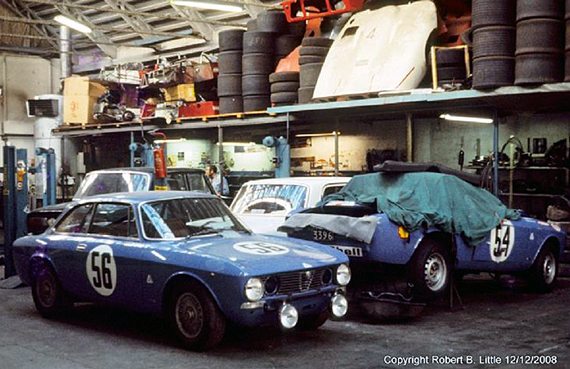
Archive parts storage area and customer GTA and GTV Rally preparation area. Chiti's white Berlina and Ing. Garbarino's Berlina are pictured in this area where new vehicles were delivered from Arese for disassembly, all non-essential parts being removed here. Lots of interesting items in rafter storage - including sets of Firestone tires made outmoded by new Goodyear contractual obligations - but retained for eventual historical reconstitution of early cars at some later date. Some early T-33 chassis are seen stored away in the upper left corner of the photograph.

barn-find--f

This content is for Premium Subscriber members only.
LoginSubscribe

Tagged With: Alfa 33TT12, Alfa GTA autodelta, alfa racing, alfa romeo and autodelta, autodelta, Autodelta factory, carlo chiti, GTA alfa romeo, Robert Little, what is an autodelta alfa, what is autodelta

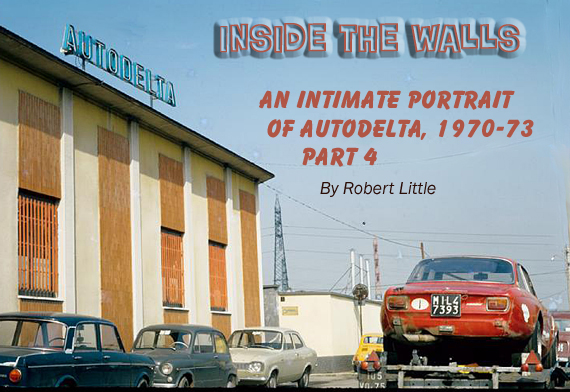
Inside the Walls of Autodelta Part 4

February 3, 2015 By pete

Story and photos by Robert Little

(Read Part 1)
(Read Part 2)
(Read Part 3)

Constructing the World Famous 33TT12 Chassis and body

“Descendants of the Italian Renaissance”

The very heart of race car fabrication are the artisans who mold and shape raw materials with their bare hands …transforming metal into valuable and highly unique works of art; all in a day’s work for these exceptionally skilled individuals.

This segment of “Inside the Walls” goes to the very core of Autodelta – featuring those men I choose to term “the true Descendants of the Italian Renaissance” – creating some of the most emotionally captivating and fastest moving pieces of art we as mere mortals have ever seen.

The photographs you are about to see are among my most highly treasured, recapturing the hours, days and weeks spent on the shop floor with these men, who were entrusted by Ing. Chiti to execute his aspirations to perfection.

And that they did.

In fact this entire website series “Inside the Walls” has been dedicated to those men and their legacy.

Beginning the process of constructing the T-33 is the physical transfer of the tubular chassis fabricated by next door neighbor Aletti and parting a leather curtain between the wall of the two adjoining firms and carrying the chassis through the wall to the Autodelta carrozzeria area. I had only seen it done once and was not in a position at that moment to get my camera and record the actual birth of the 105.33 chassis…much like, perhaps the fumbling that goes on in advance of the birth of a child.

I simply wasn’t ready. I missed it.

Everything else you will see was captured exactly as it occurred 43 years ago.

barn-find--f

This content is for Premium Subscriber members only.
LoginSubscribe

Tagged With: Alfa 33TT12, Alfa GTA autodelta, alfa racing, alfa romeo and autodelta, autodelta, Autodelta factory, carlo chiti, GTA alfa romeo, Robert Little, what is an autodelta alfa, what is autodelta

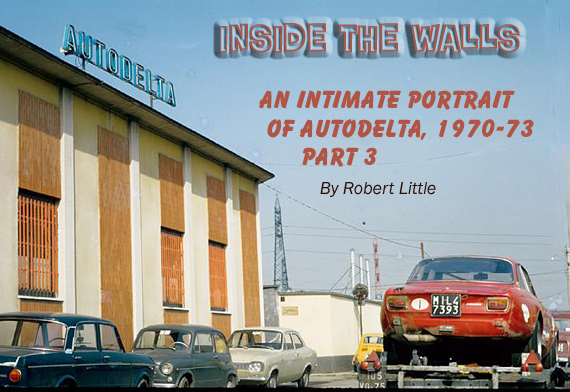
Inside Autodelta Part 3

January 27, 2015 By pete

By Robert Little
(Read Part 1)
(Read Part 2)

Settling in at Autodelta

After a short time, I settled into my new duties at Autodelta. I became the resident “Americano” who walked around learning the construction and assembly processes while becoming a friend to the mechanics. I also served as a type of exchange student to some of their families, who would invite me over to their homes for dinner.

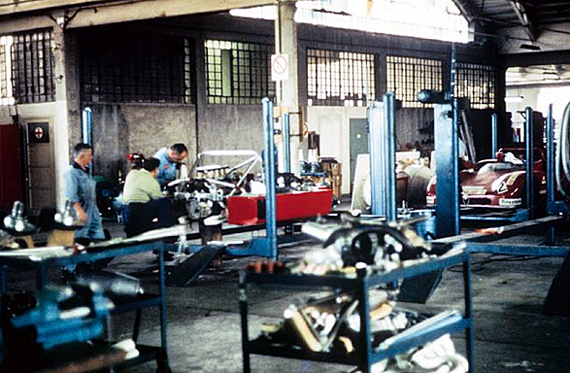
That small door on the left side of the image with the circle and cross on it was known to others as the ‘Infirmaria’ but was known to me as my 'bedroom' for a short period of time in 1972. Photo copyright Robert Little

I arrived at a time of intense work and increased growth as well as competition, and Chiti needed to put his best foot forward. I believe Ing. Chiti came to recognize that team managers such as Roger Penske and Luca di Montezemolo of Ferrari were transforming the image of international racing, and raising the bar of meticulous appearance of the cars in much the same way that they had lifted the bar in their approach to the mechanical preparation of their cars.

barn-find--f

This content is for Premium Subscriber members only.
LoginSubscribe

Tagged With: Alfa 33TT12, Alfa GTA autodelta, alfa racing, alfa romeo and autodelta, autodelta, Autodelta factory, carlo chiti, GTA alfa romeo, Robert Little, what is an autodelta alfa, what is autodelta

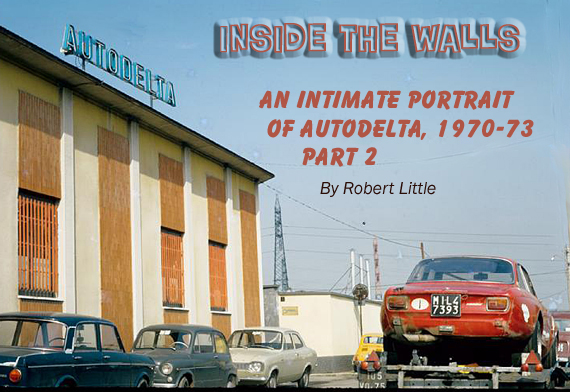
Inside the Walls of Autodelta, Part 2

January 20, 2015 By pete

(Read Part 1)

By Robert Little

The photographs you are about to see are the only images known to privately or publicly exist of the inside of Autodelta taken since 1967. Not even the factory, nor the Alfa Romeo Museo Storico has any images inside the high walls of the Autodelta factory, nor has any Alfa Romeo S.p.A. employee ever seen these images…until now. All materials are under the copyright protection of the Bern Convention. All Rights Reserved.

Via Enrico Fermi 7, Settimo Milanese

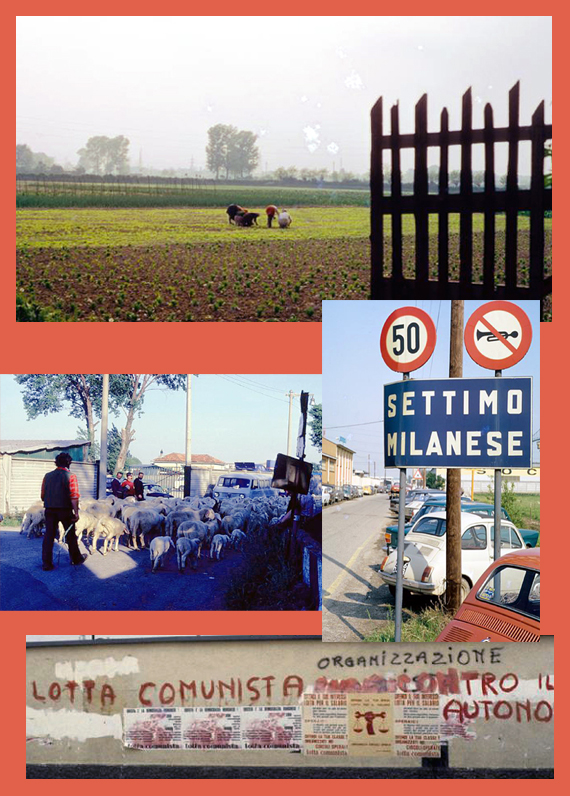
As related in the Introduction, in 1972 I abruptly left Michigan State in my senior year and hopped a Milan-bound British Overseas Airlines flight. After a long and fairly expensive taxi drive, I finally reached the tiny farming hamlet of Settimo Milanese, the rural area chosen by Alfa Romeo S.p.A. for its walled compound, located in what was at the time a rural farming community in a distant suburb of Milano.


Above: The agrarian surroundings of Settimo Milanese as taken from the neighboring village of Baggio; Via Enrico Fermi served as a busy passageway for local farmers tending their flocks while passing the employee parking lot of Autodelta in the 1960s and 1970s. Years of political struggle in Italy between the Communist Party, Socialists, Democratic Libertarians and the strong labor union movement caused labor strife throughout the country, but did not seem to affect the production of Autodelta and it’s relatively highly-paid workers…who would see freshly painted political slogans and ‘manifesti’ on the outer walls.

Autodelta complex

The Autodelta compound is shown to the right side of the small tubular fabrication shop 'Aletti' visible on the extreme left.

barn-find--f

This content is for Premium Subscriber members only.
LoginSubscribe

Tagged With: Alfa 33TT12, Alfa GTA autodelta, alfa racing, alfa romeo and autodelta, autodelta, Autodelta factory, carlo chiti, GTA alfa romeo, Robert Little, what is an autodelta alfa, what is autodelta

Inside the Walls of Autodelta, Part 1

January 13, 2015 By pete

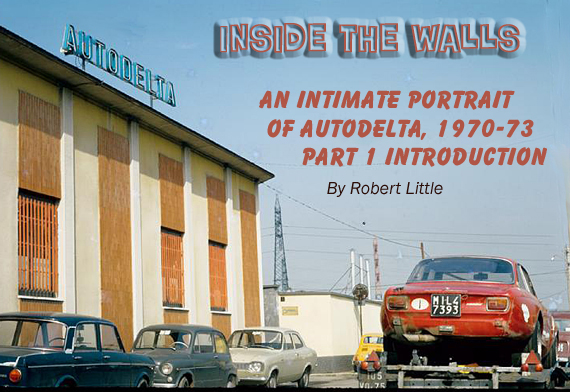
Robert Little contacted VeloceToday recently and asked if we’d be interested in re-publishing his historic photos and descriptions of Autodelta, taken in the early 1970s, which had previously appeared in the “Alfa Owner” and now on his own website, of which he says “The new name is www.AutodeltaGoldenYears.com and I will continue to use www.RobertLittle.US at the same time for the next few years.”

We jumped at the opportunity; the photos and his story are unique and of great interest and value. “It’s actually quite an amazing and true story – one that has not been known to have been repeated in the history of Italian motor racing. Looking back one finds it difficult to believe it actually happened as it did…” wrote Mr. Little. This Introduction explains how his magical sojourn came about; the rest of the chapters will concentrate on his amazing photographic record of Autodelta at its prime.

By Robert Little

(Read Part 2)
(Read Part 3)
(Read Part 4)
(Read Part 5)
(Read Part 6)
(Read Part 7)

A native Detroiter and son of a Chrysler Corporation engineer, I grew up helping my father in the garage. We built five Soap Box Derby cars for the annual Detroit races and together we restored a 1922 Model T Ford coupe.

My interests eventually diverged with the acquisition of my Michigan driver’s license, and spent weekends as a volunteer at the Waterford Hills (Michigan) race track. There, it was obvious that small nimble lightweight automobiles could run circles around heavier, over-powered/under braked “Detroit Iron”…and found that Alfa Romeo vehicles came factory-equipped with superior handling and braking characteristics.

Entering college in the fall of 1968, I co-founded the Michigan State University Sports Car Club (which incidentally grew to become the second largest such college car club among American universities behind the UCLA club), and after four years and some intensely-Alfa Romeo summers, graduated with a B.A. in Mass Communication and Marketing.

I joined the Alfa Romeo Owner’s Club and met Tom Tann and Joe Benson (author of the still famous Illustrated Alfa Romeo Buyer’s Guide). At the time, they co-owned a blue Alfa Romeo TZ-1. In 1970 Tom and I decided to drive it to Sebring, Florida in a 24 hour non-stop run. I had been invited to be a Pit Marshal for Alec Ulmann’s organization, assigned to the Autodelta team pit area, of course! There, we met members of the Autodelta team and acquaintances developed.

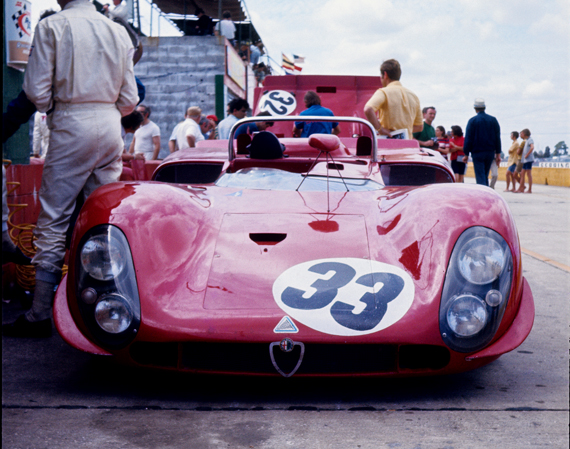
In the pits with the Autodelta T33 at Sebring in 1970. Photo copyright Robert Little.

With one Sebring 12 Hours under my belt and watching Steve McQueen, Jackie Ickx, Vic Elford and other world-class masters grind it out for the Twelve Hours, I became hooked on the thought of someday becoming a part of the World Championship-of-Makes level of competition – in my opinion, the most exciting and thrilling world-class level of automobile competition. In those days it was the national prestige of the entire Italian nation battling Germany, France, and England for honor and world domination…without the visual clutter of unnecessarily high levels of commercialization. And in the case of Italy, it was purely Ferrari versus Alfa Romeo….Enzo Ferrari versus Carlo Chiti. [Read more…] about Inside the Walls of Autodelta, Part 1

Tagged With: Alfa 33TT12, Alfa GTA autodelta, alfa racing, alfa romeo and autodelta, autodelta, Autodelta factory, carlo chiti, GTA alfa romeo, Robert Little, what is an autodelta alfa, what is autodelta

A Look at Automobili Turismo e Sport

July 15, 2014 By pete

sdfsadf


ATS stand at Paris in 1963. Note the hood ridges. Photo by and courtesy of Graham Gauld

Story by Alessanadro Gerelli and Staff
Color Photography by Alessandro Gerelli
Black and White Photographs by Graham Gauld

As a member of the group who walked out of Maranello during the great Palace Revolt in November of 1961, Carlo Chiti left Ferrari for good. “I shut the door behind me, forever!” he said.

Obviously a chief engineer like Chiti would never end up on the dole, so it was merely a matter of time before he would find employment. “It was said that the real reason for my leaving [Ferrari] was connected to the birth of ATS [Automobili Turismo e Sport]. This is not true. When I left Ferrari I had no idea what the future had in store for me.”

ATS was created by Italian and Bolivian industrialists, as well as the Conte Volpi di Misurata of the Italian well known Scuderia Serenissima. At first, there was money to burn. Placing the new factory near the Pontecchio Marconi, a depressed area south of Bologna, the team hoped that the Government would soon subsidize the effort. The road was named Via Pila, Battery Way– and according to Griff Borgeson, “…everything crackles with allusions to Guglielmo Marconi, whose tomb and shrine is only a couple of ampere-minutes away.” ATS hired on Phil Hill, Giancarlo Baghetti, Romolo Tavoni and the star of the operation, Carlo Chiti. According to Baghetti, both he and Hill joined ATS “precisely because of Chiti’s expansive personality.” The firm planned to build an F1 car, a road going mid engined GT car, and a race ready GT called the GTS.

sdfsadf

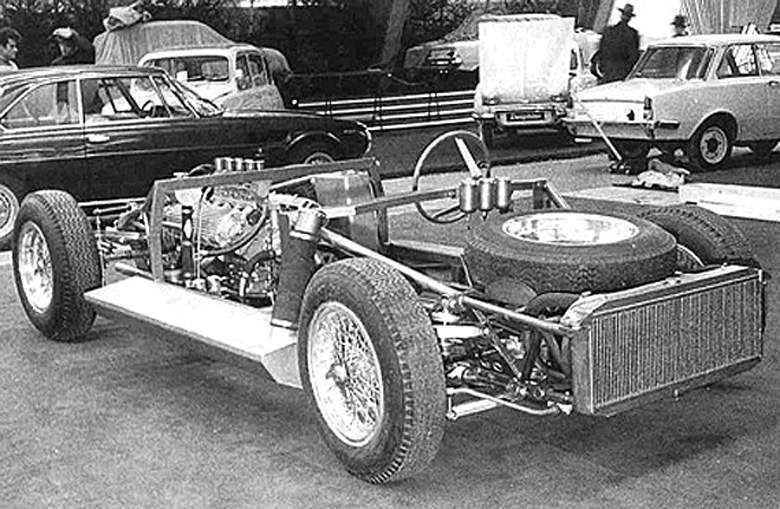
Bare chassis at Paris. The lattice/space frame construction was extremely rigid. Photo by and courtesy of Graham Gauld.

Chiti arrived in ATS and in a very short time was able to design and produce a nice formula one car with a new 90 degree V8 engine, making sure that the design was much different than the 60 degree V6 he had already designed for Ferrari. Chiti told Graham Gauld (writing in his book Modena Racing Memories ) that “…it took five months to design and build the first prototype.” The GT car would boast a 2.5 liter variant of the F1 engine. According to Gauld Chiti stayed under 3 liters because he didn’t want to compete directly with Ferrari in that class.

dfasd

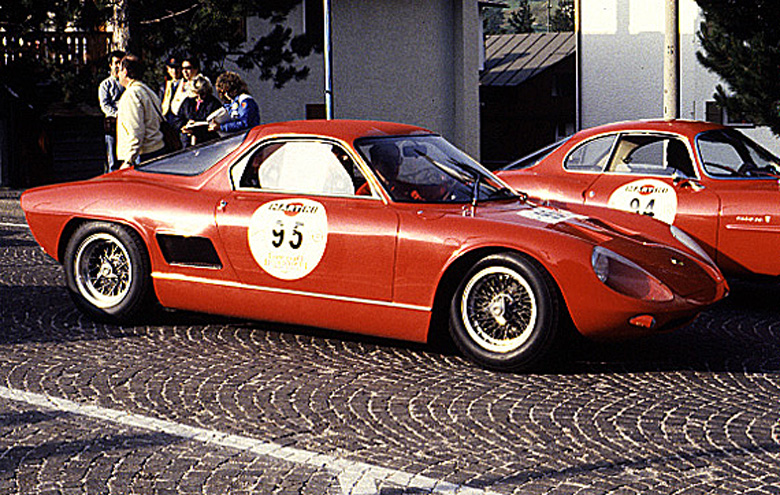
An ATS 2500GTS, during the Coppa d’ Oro delle Dolomiti for historical cars in 1987. Photo Alessandro Gerelli.

If the team’s first season in Formula 1 was while not the success many had hoped for, it was a bad run, either. In 1963 ATS entered nine races, did not start in three and finished only once, when Hill took 11th and Baghetti came in 15th at Monza.

sdfsdaf

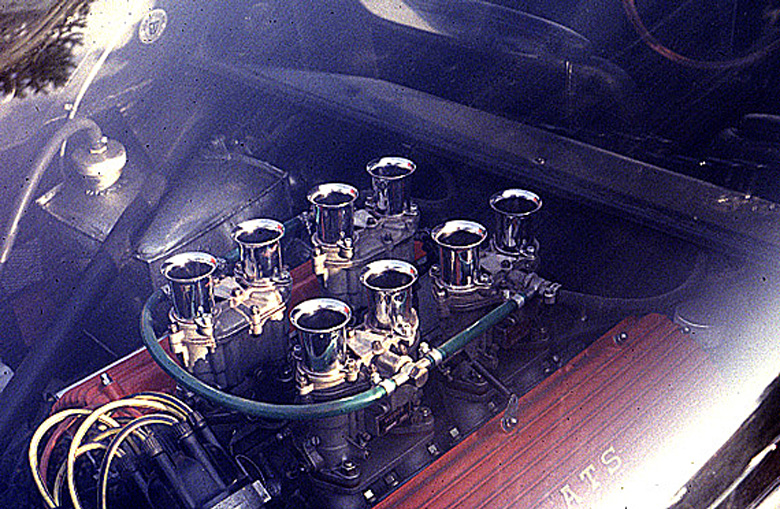
Through the rear window one could gaze at the V8 engine of the ATS, which preceded the 360 Ferrari idea for same by some thirty years. But instead of fuel injection of the 360 Ferrari, the ATS engine had four Webers. Photo Alessandro Gerelli.

ATS in fact had a great future. But the money simply dried up, and did so very quickly for a variety of reasons. By May of 1964, when Griff Borgeson visited the factory, there was still hope, all of it now centered around the 2500GT.

sadfsafs

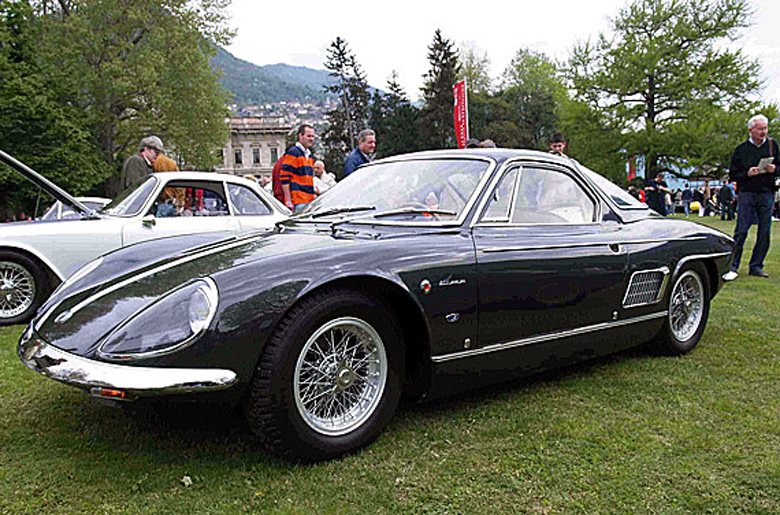
Thomas McGough owned this rare and original ATS, chassis 2003.

The ATS 2500 GT (the racing version was the ATS 2500 GTS) was presented at 1963 Geneva Motor Show. If not radical it was certainly more advanced that most Gran Turismos of the era. The engine was mounted longitudinally just behind the driver’s back, there was a very rigid tubular frame, independent suspension and rear inboard disc brakes.

The engine had a capacity of 2.5 liters; the GT sported two 42mm Webers, the GTS four 42 mm Webers. The GT was rated at about 210 bhp and 250 bhp for the GTS. A ZF all syncro five speed transmission was available on the street car, and a Colotti designed crash box was fitted to the GTS.

dsfsda

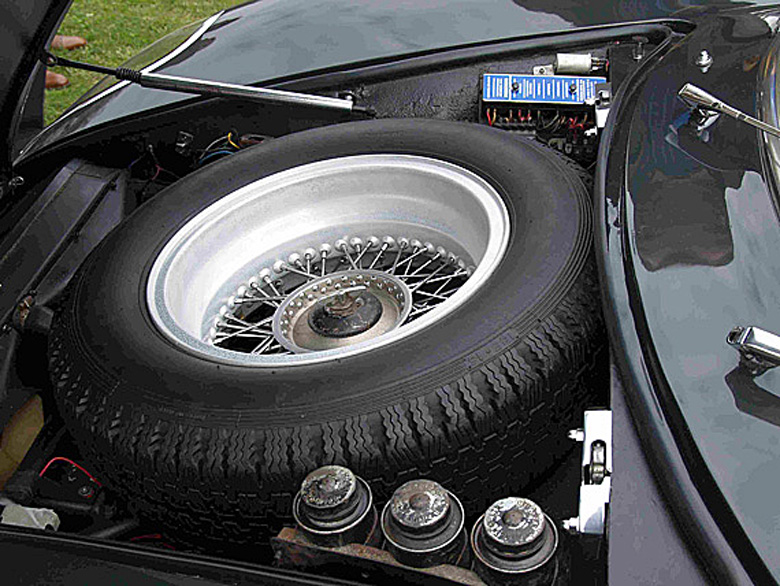
Spare wheel takes up all of the front boot space. Photo Alessandro Gerelli.

In May, Borgeson had been lucky enough to get a ride and a quick drive in a GTS which was shortly to be shipped to Bill Mitchell, head of GM’s styling department. Borgeson’s report appeared in the September 1964 issue of Road & Track.

Teodoro Zeccoli took Borgeson on an electrifying ride down Via Pila and the outskirts of Bologna. “Zeccoli turned in a performance of dazzling skill and virtuosity. Thank to that and to the absolute perfection of the car’s performance in every way, I have never felt safer in a car at high speed nor have I been more impressed.”

A surprisingly large amount of luggage space is available behind the engine. Photo Alessandro Gerelli.

The body, designed by the great Franco Scaglione and built by Allemano was very aerodynamic. The car was very light: 810 kilos for the road version and only 750 for the GTS. The top speed was of 240 km/h and 250 km/h respectively.

sdfasf

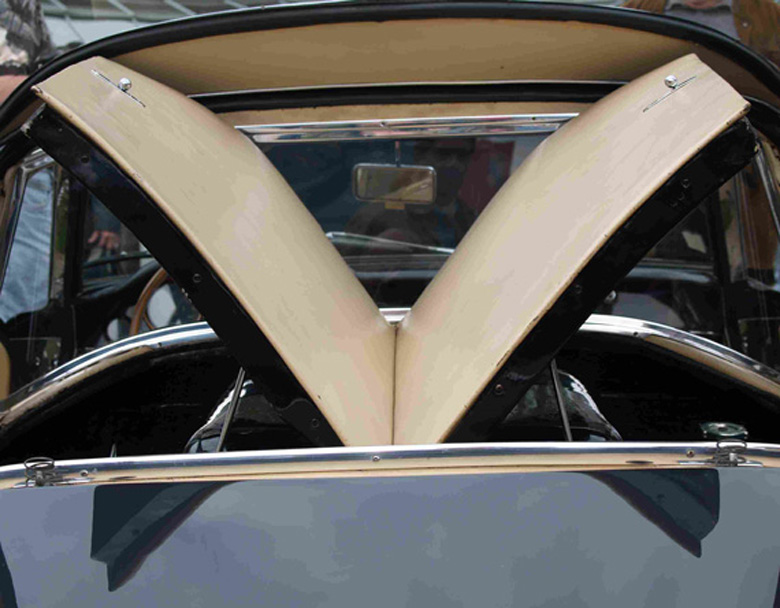
The two covers of the engine bay fold out like the DeTomaso Mangusta. Photo Alessandro Gerelli.

The ATS 2500 GTS appeared in a few endurance races: the debut was in the Targa Florio of 1964 with Baghetti and Frescobaldi and a second car with Zeccoli and Gardi. Plans to enter the car for the 24 Hours of Le Mans were scrapped as the car did not reach the circuit because of custom problems at the border.

fasfdfs

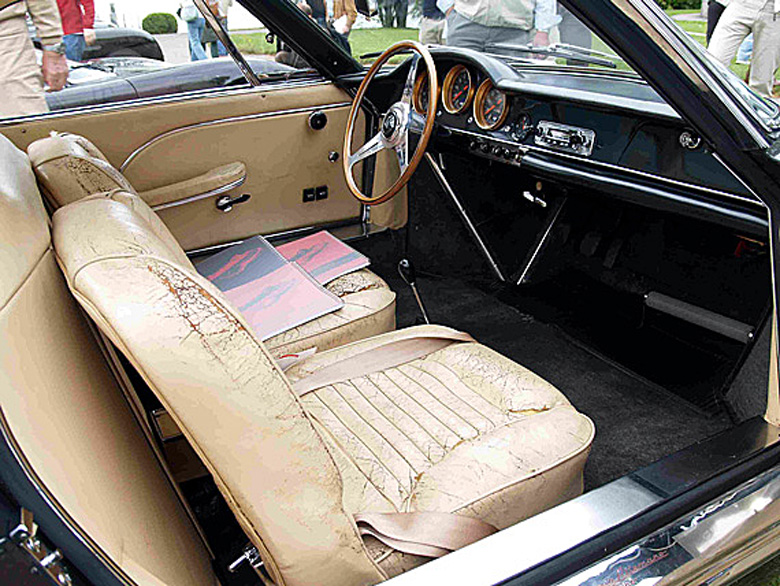
McGough’s car has the original leather upholstery which shows its age. Photo Alessandro Gerelli.

It was also entered in the 12 Hours of Reims with Zeccoli / Cabral, but did not start.

In 1965 there were a few non-official entrances in endurance and hill climb races, without significant results.

The production was very limited: only 16 chassis were built. The number of the cars really produced and delivered was even less. The production stopped in 1964.

This article is from the VeloceToday Archives. Why don’t you see what is in store for you by using “Search this website” in the right column?

Tagged With: ats, ATS history, ATS racing, carlo chiti, Chiti ATS

  • Go to page 1
  • Go to page 2
  • Go to Next Page »

Primary Sidebar

     SIGN UP BELOW TO RECEIVE VELOCETODAY EVERY WEEK FOR FREE


       EXCLUSIVE ARTICLES ABOUT 

    EXTRAORDINARY AUTOMOBILES

PositiveSSL

Recent Posts

  • VeloceToday for March 3, 2026
  • Sports Car Racing at Midland, TX 1960-62
  • Smith’s Alfa Vintage Racing Chronicles
  • Squarebacks to Love
  • The Final Word on Squarebacks!
  • Sports Car Racing at Midland, TX, 1959
  • Tripoli 1939: Italian Job That Mis-fired
  • Gauld Checks Out the Ferrari Estate Car
  • Juan Manuel Fangio Tribute
  • Sports Car Racing at Midland, TX, 1958-59
  • Behind the PBS SOCAL Story: My Extra 5 Minutes of Fame
  • Sharp’s Retro Part 4: French Classics
  • Sharp’s Retro Part 5: Interesting Others
  • Sharp’s Retro Part 6: Art and Neat Stuff
  • Sharp’s Retro Part 1: Ferrari
  • Sharp’s Retro Part 2: Alfa and Lancia
  • Sharp’s Retro Part 3: Fiat and Others
  • Amore mio Ardea
  • Bill Warner finds the Don Vitale Nardi
  • Thornley Kelham, the home of the Lancia Bandit
  • The Legends of Bob Gerard
  • Retromobile 2026, First Report
  • Graham Gauld on Nardi
  • Gauld and the Auburn Douze
  • The Races of Life, a Review
  • The Selected Works of Aldo Zana
  • Aldo Zana at the Monaco Grand Prix, 1968
  • Wilson’s 6C 2500: Will it Fit?
  • Panning for Gold Part 2
  • Robert F. Pauley explores the SCCA parking lots

Copyright © 2026 · VeloceToday.com · Privacy · Sitemap

MENU
  • Home
  • Subscribe
  • About
  • Contact
  • Donate
  • As Found