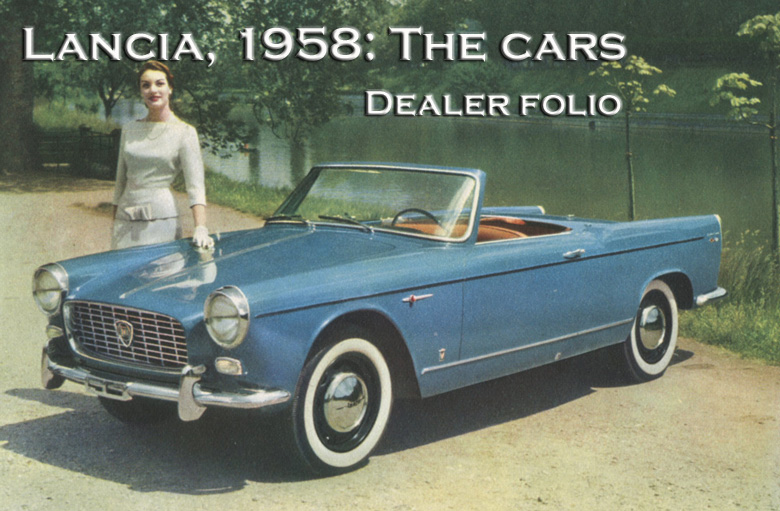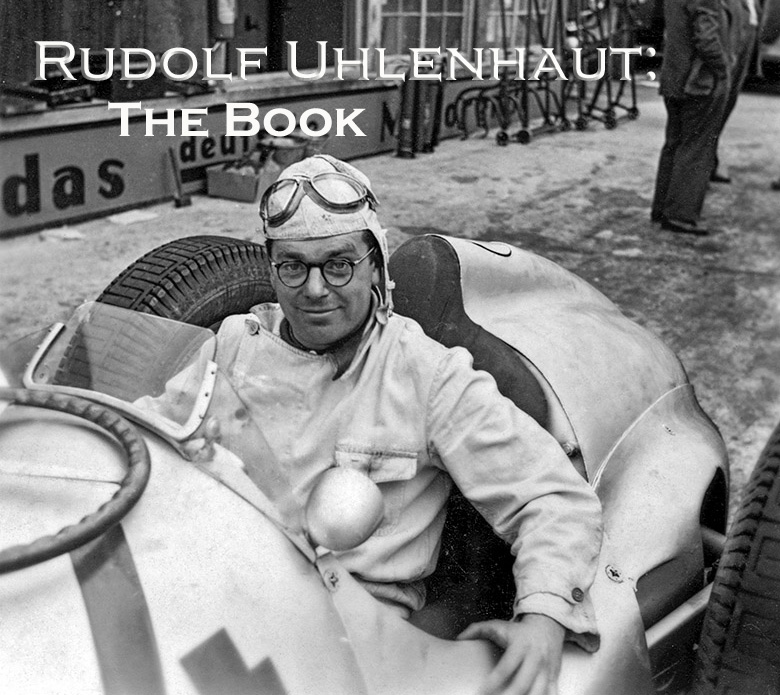


In one of his finest short stories, Graham Gauld tells us about the strange fate of Jean Behra; Roberto Motta writes on the Portello Awards at the Alfa Museum; a rare Lancia dealer folio that connects VeloceToday correspondents; a new book about Rudolph Uhlenhaut reveals the man and his career. All here, for you.

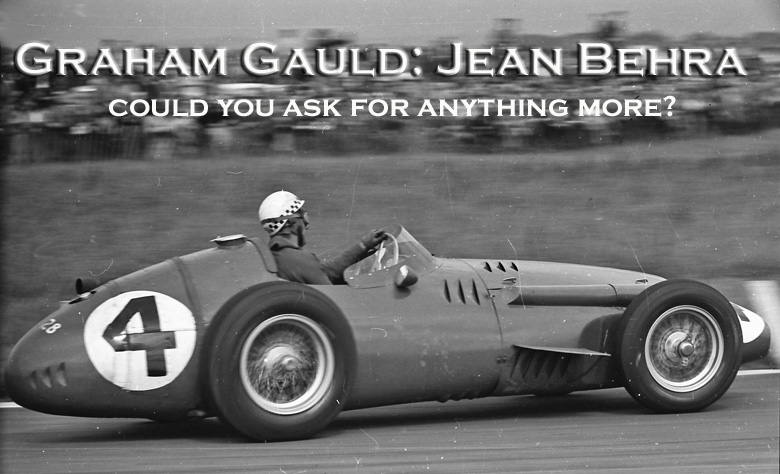
Jean Behra and the Fatal Insult

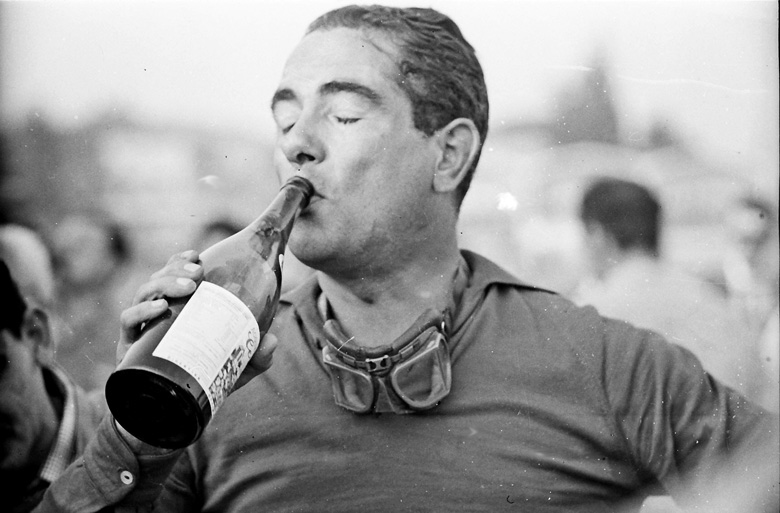
Jean Behra celebrates after winning the Modena Grand Prix 1957 – his penultimate Grand Prix for Maserati.
Story and photos by Graham Gauld
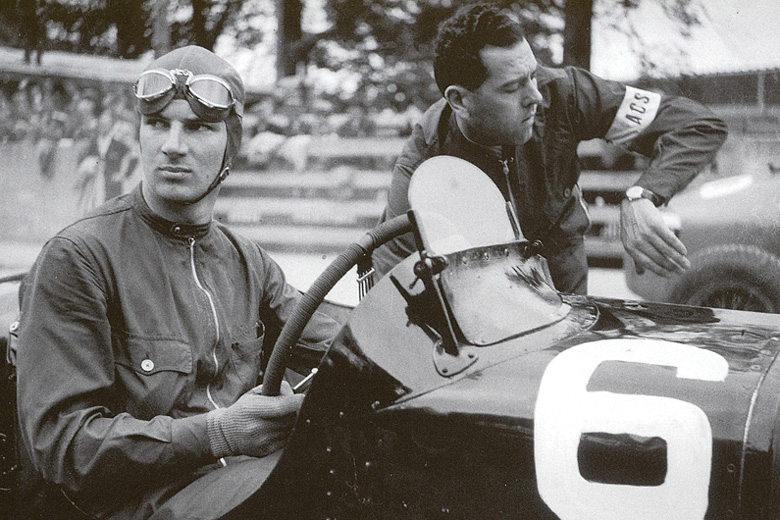
Had he lived, the great French driver Jean Behra would have been 96 last month (February). I say, “had he lived” because Behra was a hard, tough racing driver who had started out racing on motorcycles and had survived a number of accidents. He repeated this in his car racing career until that sad day when he was due to race his own Formula car, the Behra Porsche, for the first time in a World Championship Grand Prix.
Behra told me, ‘You are a stupid man!’ and slapped me on the face.
It was not to be, for a few hours earlier he chose to compete in a sports car race on the same high-speed banked Avus track in Germany in a Porsche RSK. He slithered on the banking in the wet and hit a pole at the top of the banking and was killed outright. [Read more…] about Jean Behra and the Fatal Insult
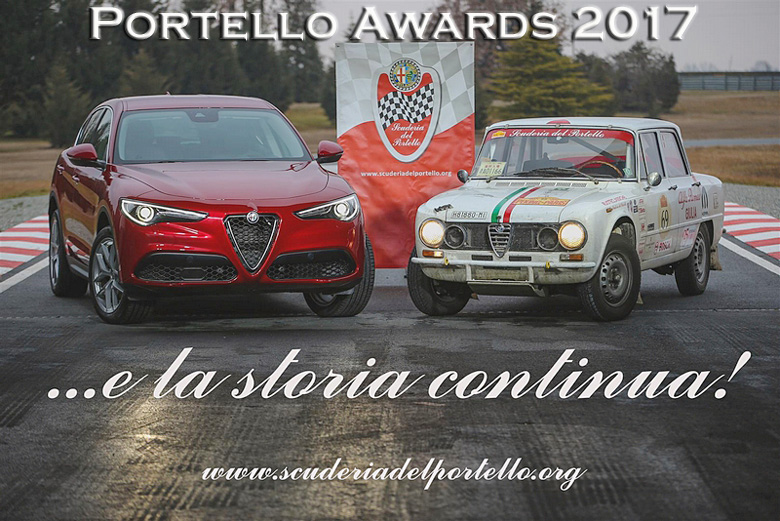
La Scuderia del Portello Awards
Story by Roberto Motta
Photos by Roberto Motta and Scuderia del Portello
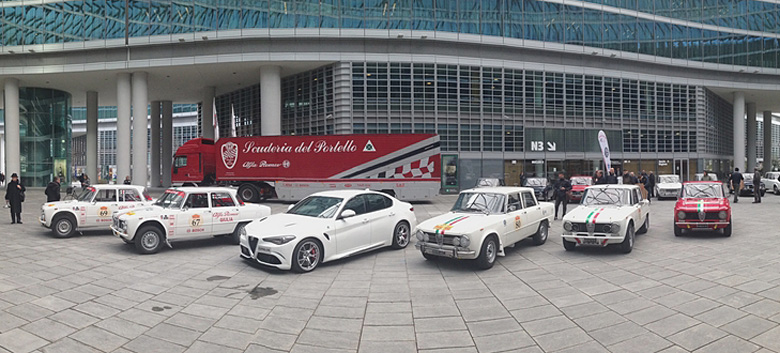
On February 25, as it does every year since 1993, the Scuderia del Portello opened the new season with the “Alfa Romeo Award of Champions” for the drivers who have excelled in competitions and official events of the past season, driving both historical and modern Alfa Romeo cars.
The event was held at the historic Alfa Romeo Museum in Arese and also celebrated 35 years of the Scuderia del Portello. Present during the ceremony were President of the Lombardy Region, Roberto Maroni; the President of the Lombardy Regional Committee CONI Oreste Perri; President ACI Milano, Ivan Capelli, and the director general Arexpo Marco Carabelli. Representing FCA was Roberta Zerbi (Business Center Italian Alfa Romeo and Jeep Country Manager). [Read more…] about La Scuderia del Portello Awards
VeloceToday for February 28, 2017
VeloceToday sent four correspondents to Retromobile. Last week we presented the reports of Hugues Vanhoolandt and Graham Gauld; this week Jonathan Sharp photographs his favorites, whatever the country; for your convenience, all three of Alessandro Gerelli’s auction reports feature only French and Italian cars.
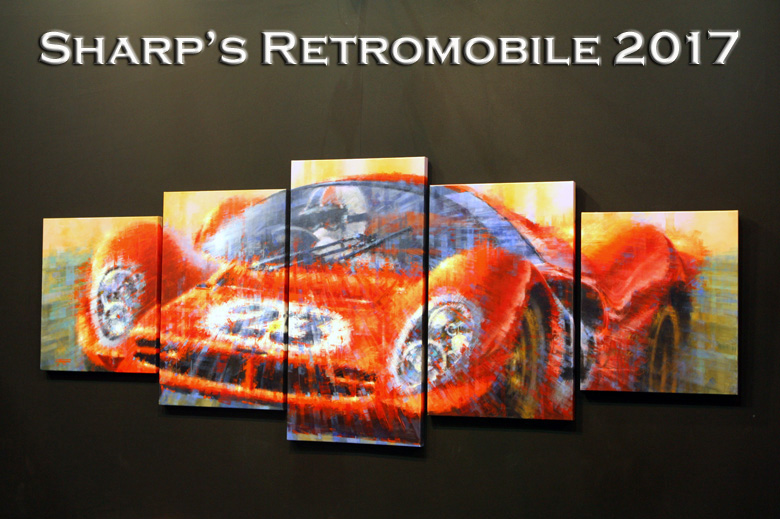
Jonathan Sharp’s Retromobile 2017
Story and photos by Jonathan Sharp
This year the Editor asked me to just submit everything that peaked my interest at Retro. Fat chance, for to truly be able to show you all the cars that peaked my interest would take several editions of VeloceToday.
I’ve been to Retro many times now, and still the language barrier for me was sometimes an issue but the cars on display were superb, as was the food; there are not many shows were one can enjoy oysters and a glass of champagne from a vendors stall.
The Editor and I wish to apologize for the huge number of photos below…something on the order of 43 but we lose count. And that is just a fraction which resided in my camera data card when I returned home. However, we broke up the subject matter thusly:
Art, Etcetera
French cars
British/German/Spanish
Italian
And looking back, even though myself, Graham Gauld, Hugues Vanhoolandt and Alessandro Gerelli all attended Retro and turned in reports to VeloceToday, there are few if any images of exactly the same car.
That gives one an idea of how immense and diverse Retromobile is. And it gets bigger every year.
Finally, if there are factual errors, the information for the most part is taken from the individual placards. In several cases we eliminated photos due to questionable statements. Spelling errors, if any (heavens forbid)can be blamed on us.
Art Etcetera

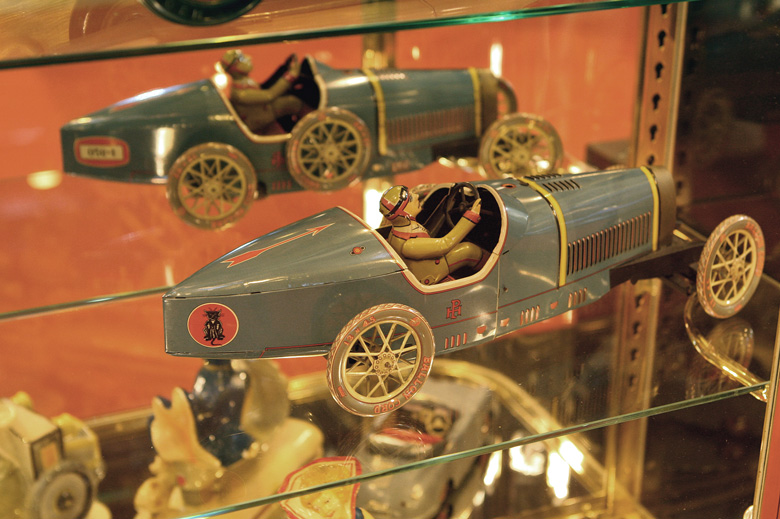
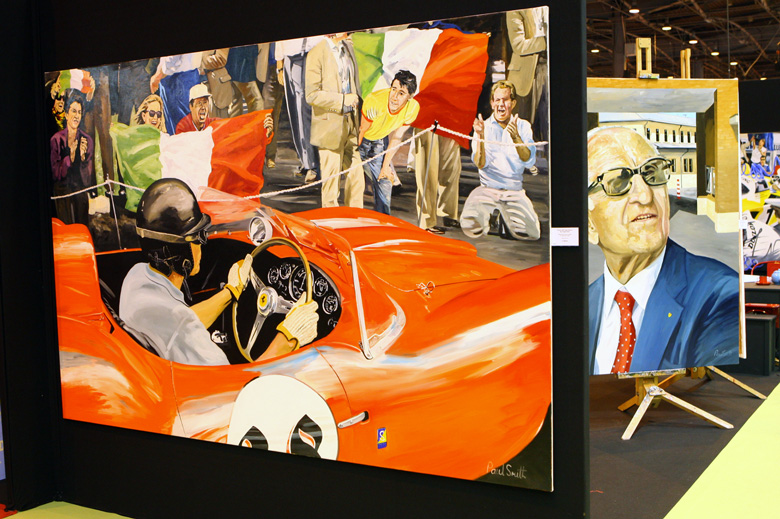
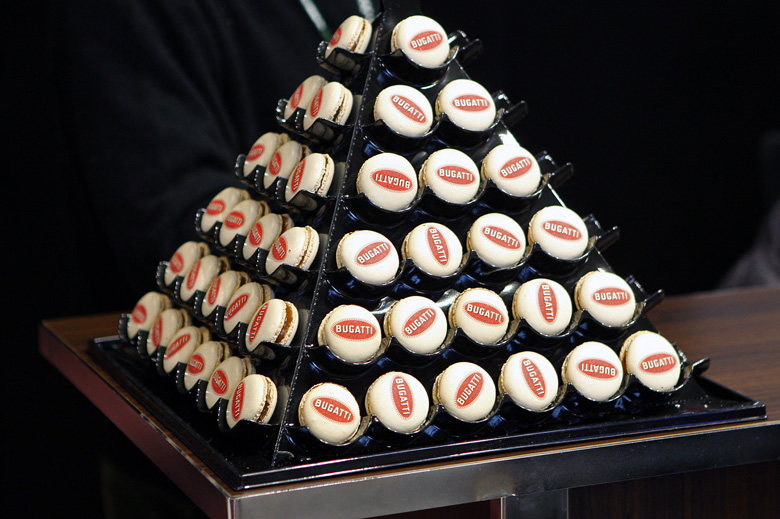
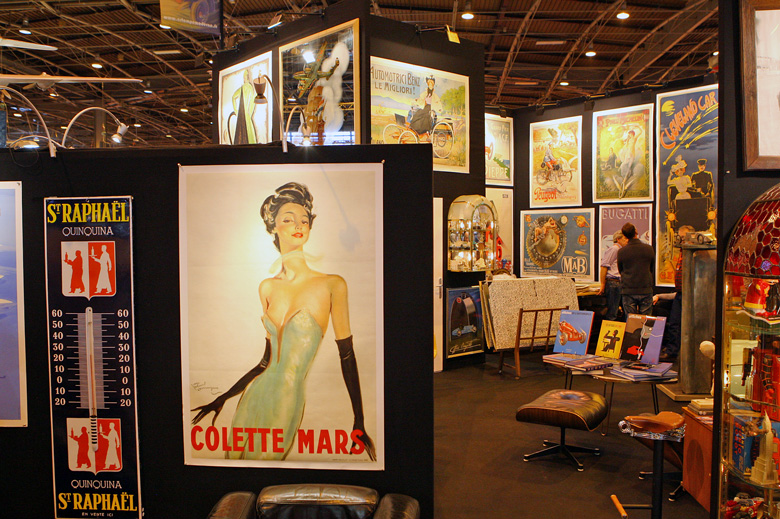
I was very taken by this tin plate Bugatti model as it just seemed to capture the times and subject so well.

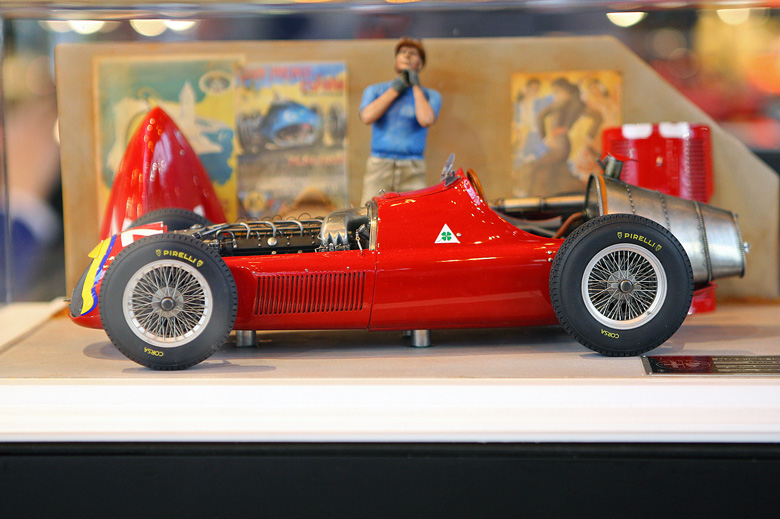
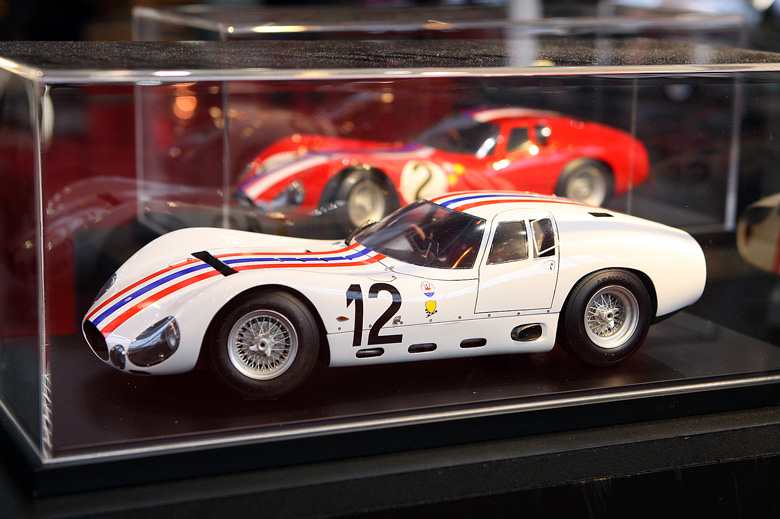
Alfa Romeo Alfetta model: If you crouch down to look closely at the models on sale at the show you could almost swear they were real cars.
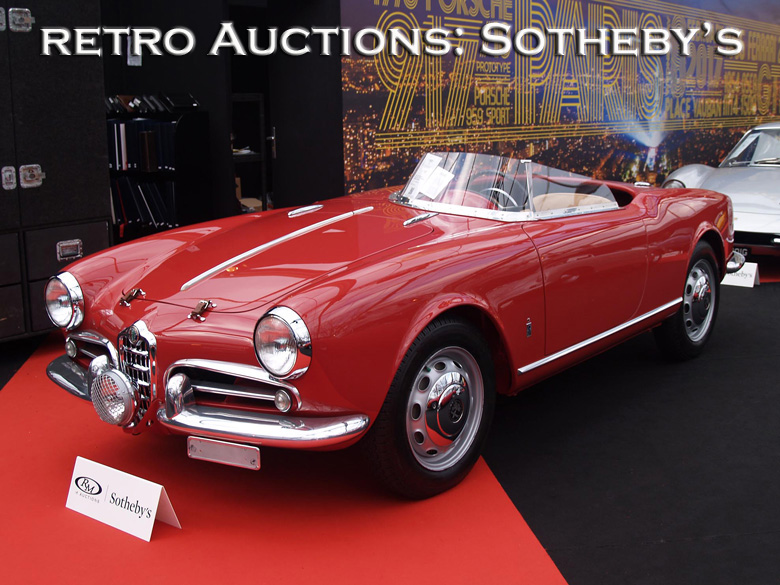
Retro Auctions: RM Sotheby’s, February 8
Photos and captions by Alessandro Gerelli
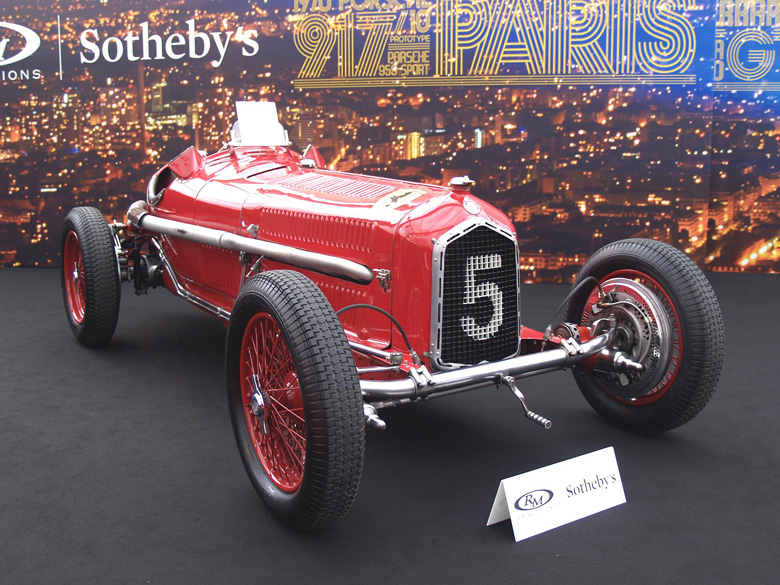
The first Retro related auction was the RM Sotheby’s held at the Place Vauban on Wednesday, February 8, 2017. The 1934 Alfa Romeo Tipo B P3, chassis 50006, sold for €3,920,000 and was the highest sale price of the day. Thirteen Porsches from one collection sold well and was a major feature of the RM auction. Below, Gerelli presents the Italian and French cars: an Alfa Montreal, and a Lancia B20 GT coupe and a Giulietta Spider that sold for 476000 euros, plus much more.
Exchange rate, 2-28-2017: 1 US Dollar=.94 Euro
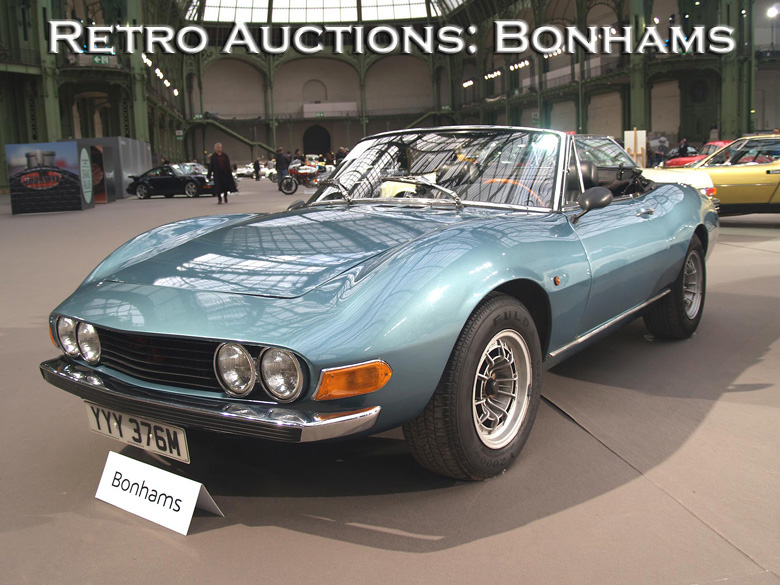
Retro Auctions: Bonhams, February 9
Photos and captions by Alessandro Gerelli
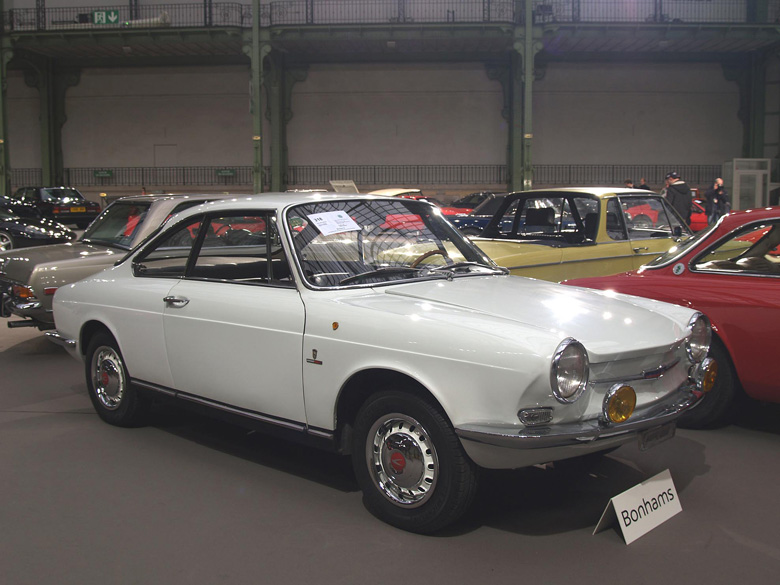
The Bonhams Retromobile event took place at the Grand Palais on Thursday, February 9. Many of the Italian/French items did not sell, but this is not an indication of the overall sales percentage.
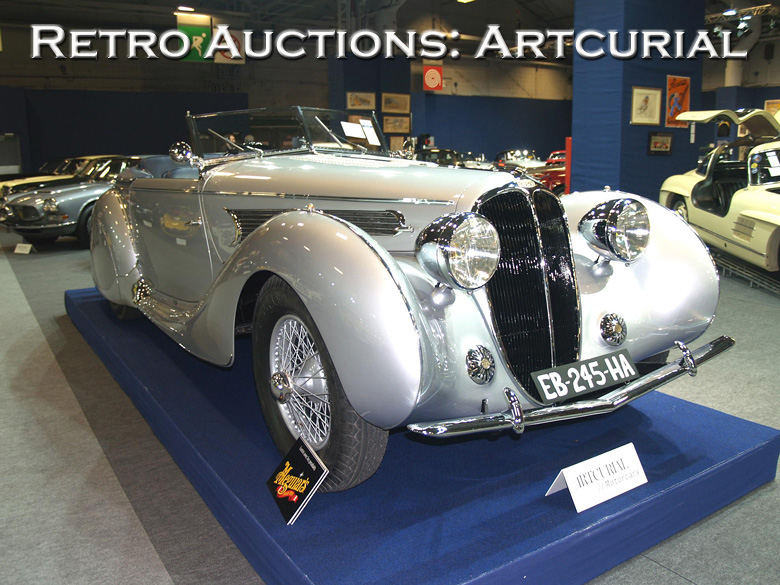
Retro Auctions: Artcurial, February 10
Photos and captions by Alessandro Gerelli
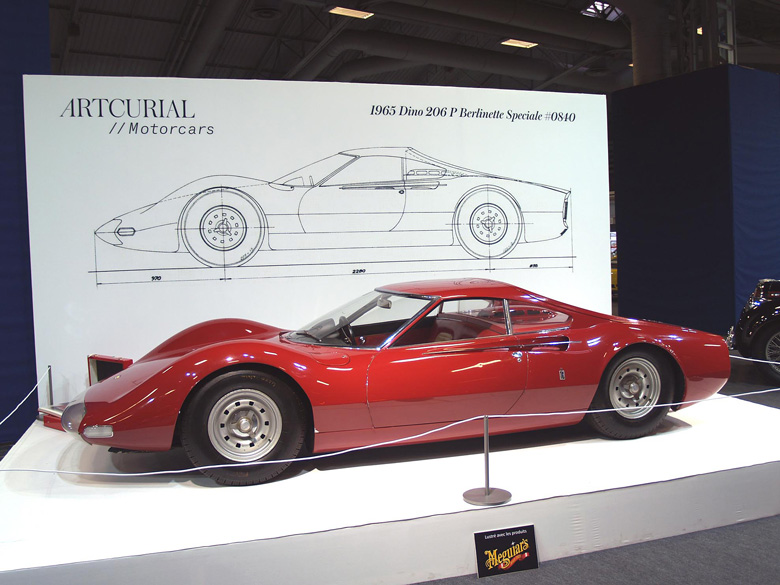
This year Alessandro Gerelli covered all three auctions held at or around Retromobile. The Artcurial Auction below was held last, on Friday on the same complex as Retromobile. This auction resulted in the highest price paid for a car during the auctions at Retro – the unique Dino 206 P berlinetta speciale of 1965 by Pininfarina sold for about 4.4 million euros against an estimate from 4 to 8 million euros and no reserve!
VeloceToday for February 21, 2017
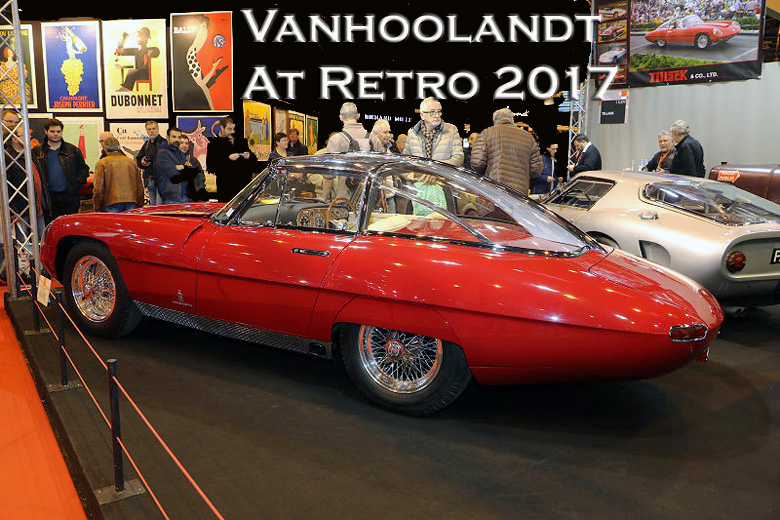
Hugues Vanhoolandt at Retromobile, 2017
Story and photos by Hugues Vanhoolandt
Rétromobile, Paris February 7-11
Once again, the latest edition of Rétromobile has raised the bar to the highest standards and it won’t be easy for its British, German or Italian counterparts to reach the same level.
Next to the many dealers showing their best offers, there are plenty of car clubs and associations exhibiting small treasuries, as well as many displays celebrating some anniversaries or putting the light on some unknown stories.
This year, these exhibitions were, among others, the “70 years of Ferrari”, “Bugatti meets Bentley”, the “Four-wheel drive and six-wheel F1 cars” , “30 years of Group B rally cars”, the “1927 Delage Grand Prix cars”, the “Renault Turbo years”, and many others.
On the French Side…

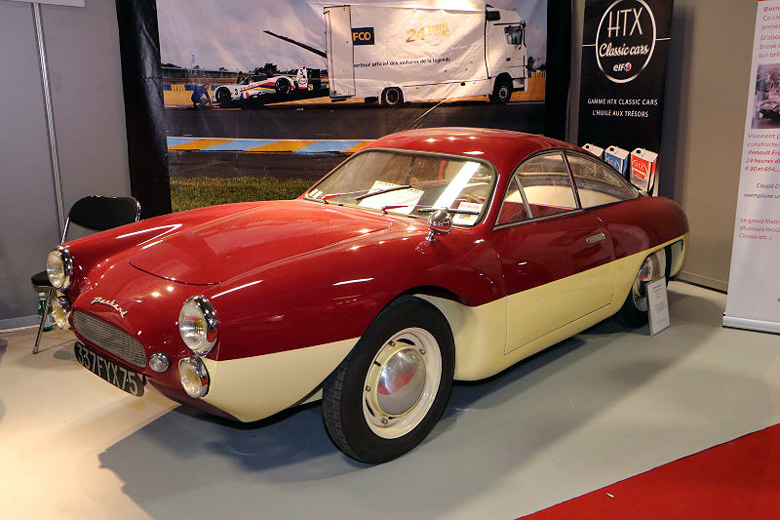
Bernard Pichon and André Parat created their own company, Pichon-Parat, in 1952. With Chapron, they were among the last French coachbuilders present at the Paris Motor Show at the end of the 50s. One of their creations is the Panhard Dolomite which was entered in many competitions, like this one in the 1956 Tour de France. Raymond Loewy also designed some cars that were built by Pichon-Parat like a BMW 507 and a Jaguar E-Type.

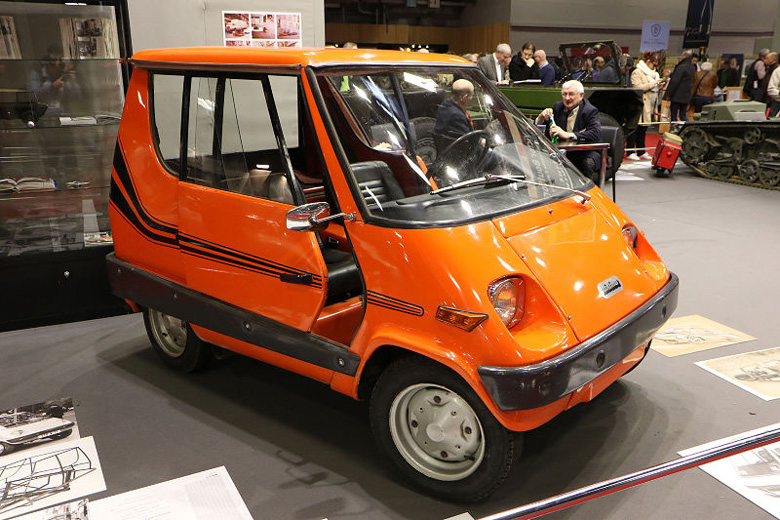
One of the exhibitions was about the cars created by Victor Bouffort, a forward-thinking man. Here is the ‘Minima’, a small car conceived in 1968, for city dwellers. There were plans to mass-produce these small cars and to make them freely available in dedicated areas where they would be parked opposite pavements. Of course, Bouffort was a bit ahead of its time, but fifty years later, the idea of a freely available car comes back to light as an urban transport solution.

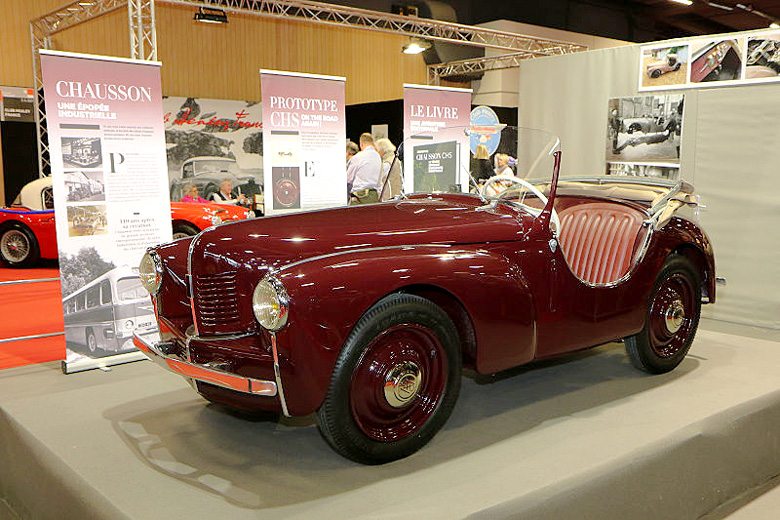
This Chausson microcar prototype was rediscovered in an auction at Silverstone in 2012. In the early years of the 20th century, Chausson was a leading radiator manufacturer for the car and aircraft industries. In the 30s, Chausson took over Chenard & Walcker. During WWII, some Chausson engineers began to develop this microcar prototype. But the economic situation in France after WWII did not permit to make it into production and it remained the sole example built.

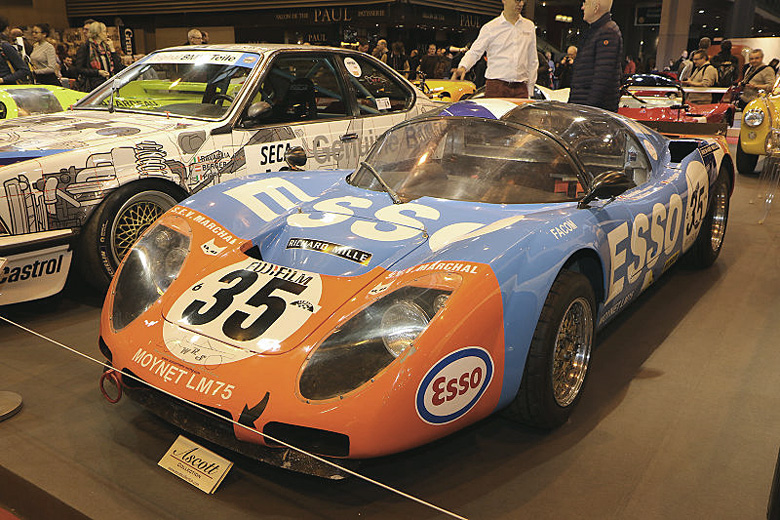
This small car is the Moynet LM75, built by André Moynet, an ex-fighter pilot during WWII who became Colonel in the French Air Force. After two unsuccessful attempts at Le Mans, Moynet entered the LM75 in the 1975 edition with an all-female team, Dacremont, Hoepfner and Mouton. Against all expectations and despite the small Chrysler Simca engine developing 190 HP, they went on to win the under two-liter class.

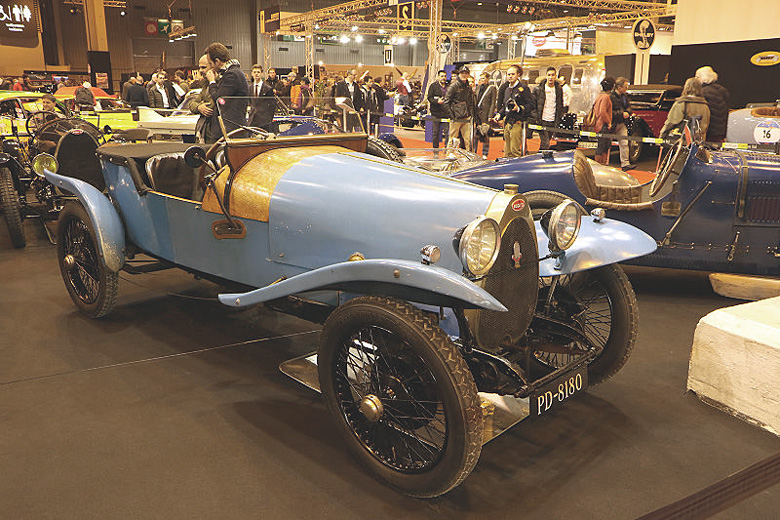
In 1921, Crossley Motors, based in Manchester, England reached an agreement with Bugatti to produce under license the Bugatti ‘Brescia’. About 25 cars were built and this example, a Type 23, is believed to be the only complete example still in existence.

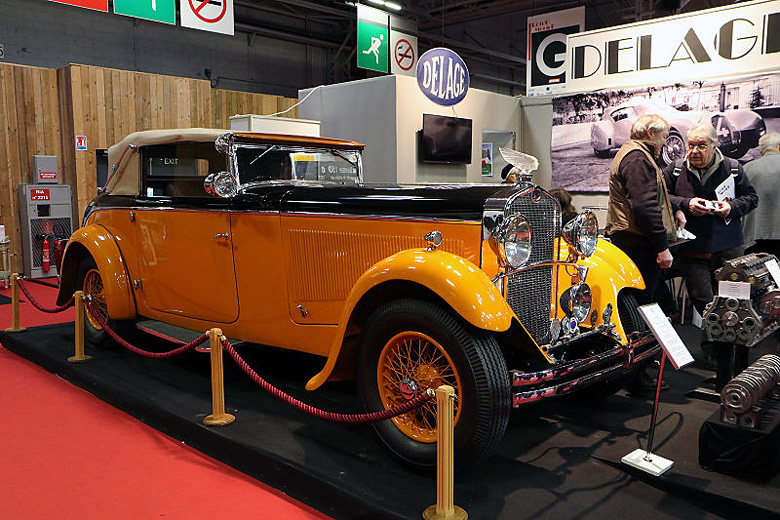
Joseph Figoni exercised his talent for the most prestigious French car manufacturers of the time. One of them was of course Delage. On the booth of ‘Les Amis de Delage’, the French Delage enthusiasts club, was displayed this 1930 D8S cabriolet built for Maharajah of Holkar.

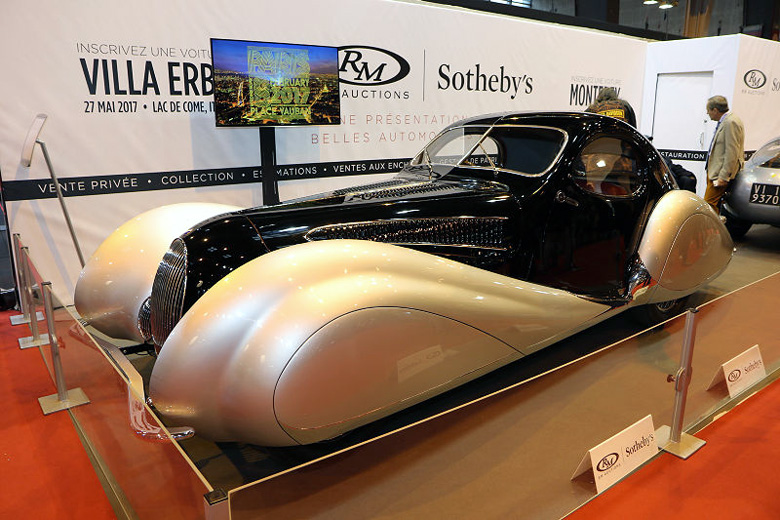
This 1938 Talbot-Lago T150-C-SS s/n 90110 illustrates the “Teardrop” body style that made Figoni so famous, although the original body of this car has been lost and recreated by a well-known artisan in 2003. This car will go on sale at the RM Sotheby’s auction on Lake Como this May.

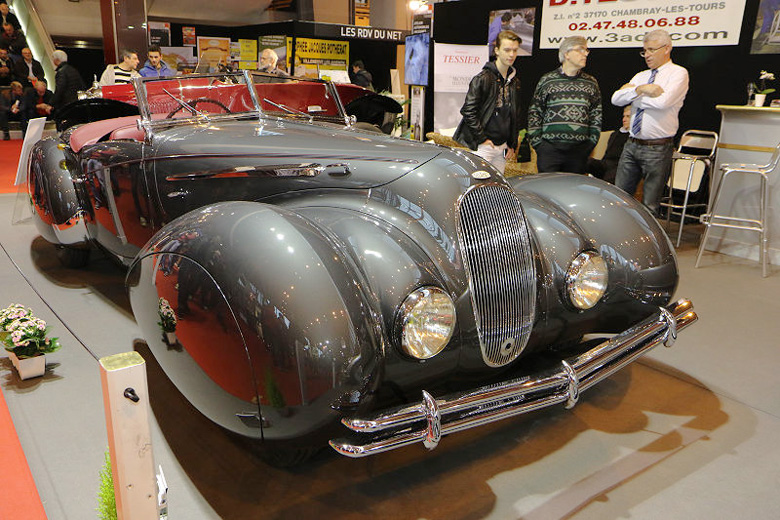
Begun in 1939, completed in 1947, the Delahaye 135 M roadster by Figoni s/n 47420 was displayed in some of the Concours of Elegance that were popular in France in the postwar years. After being dismantled, the chassis has been converted into a farm trailer. Now it has been rebuilt to its former glory by another French specialized workshop.
On the Italian side…

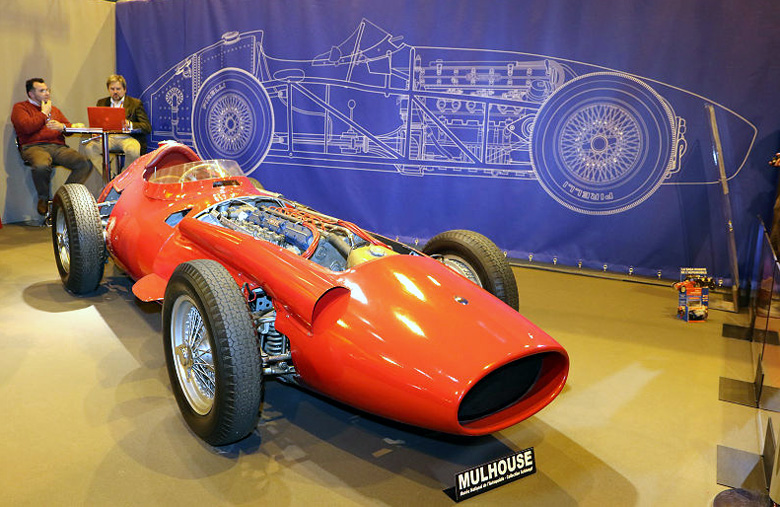
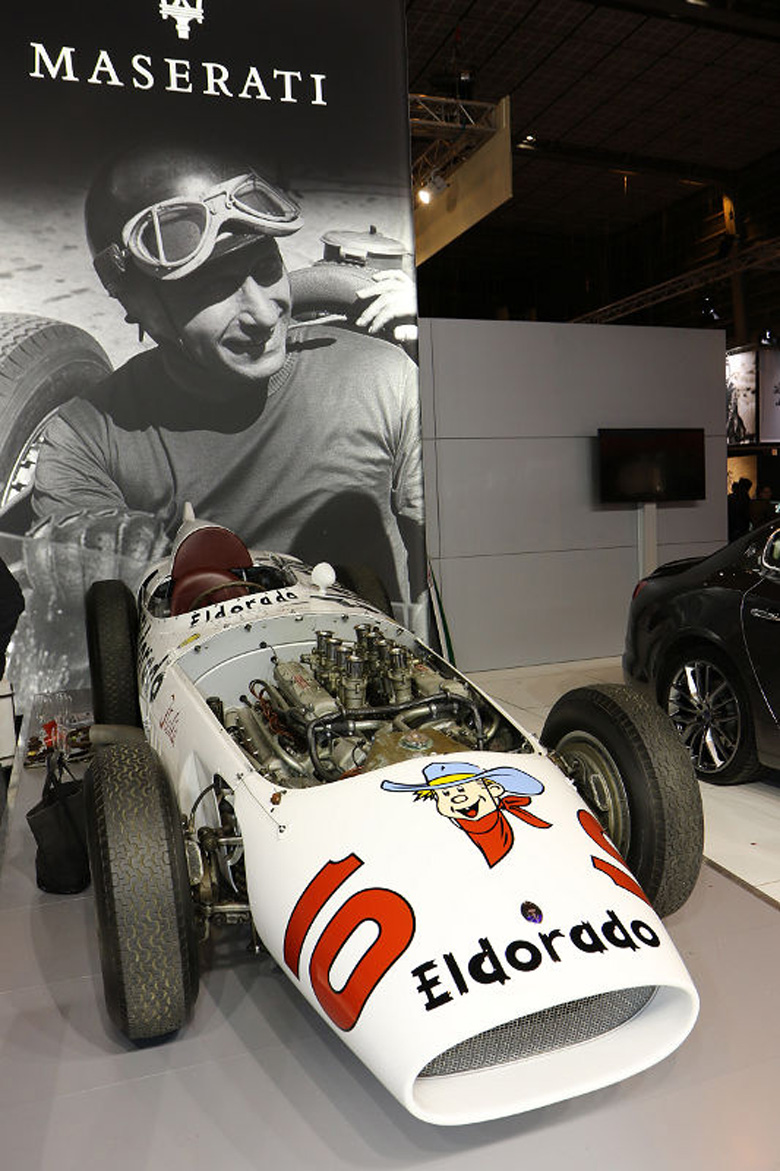
Although sharing some similarities with the 250 F, the 420/M/58 ‘Eldorado’ was a racing car built specifically for the 1958 500 Miles of Monza, opposing the best Indy roadsters of the time and a selection of European single seaters. Contrary to what one might think, it was not Fangio who drove this car but Stirling Moss, classified 7th after three heats. It was displayed by the Maserati Club de France.
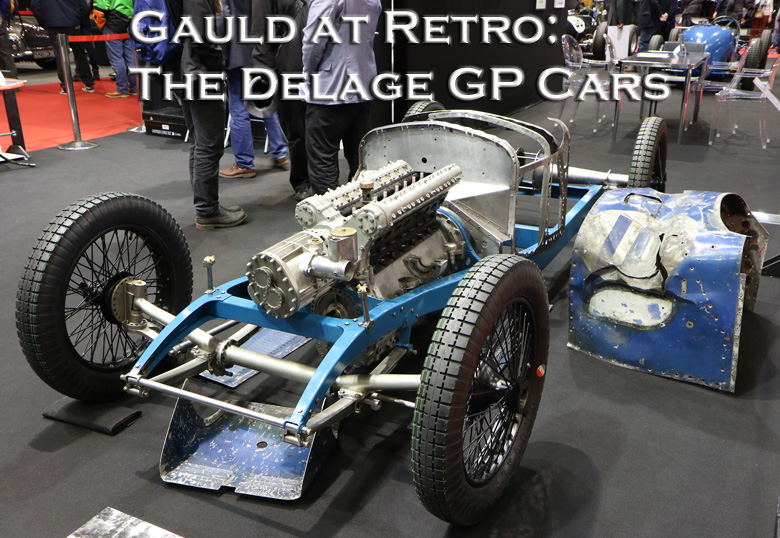
Gauld and the Six Delage Grand Prix Cars
Story by Graham Gauld
Color images by Hugues Vanhoolandt unless otherwise noted.
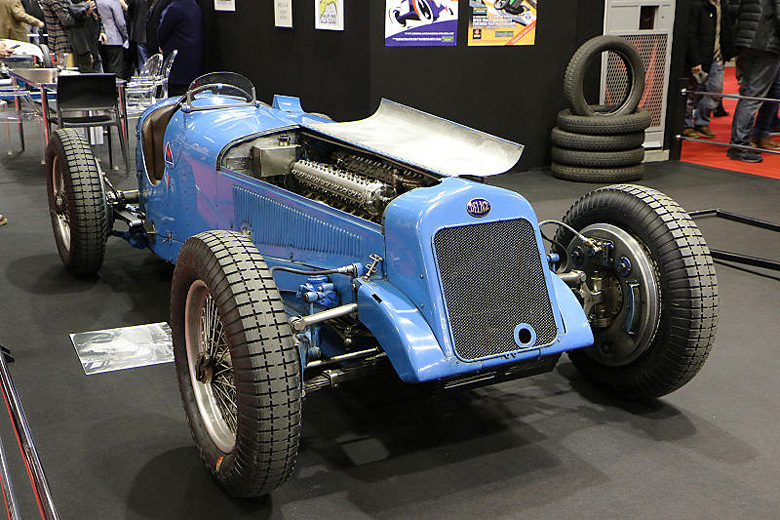
Every year tends to mark the anniversary of something significant in the automobile world and 2017 is important for one car in particular, the Delage 15S8. It was one of the most successful Grand Prix cars of all time and it was born ninety years ago this year.
It was fitting that Retromobile in Paris reserved a special area upstairs and in the smaller hall for a remarkable display that featured five of the six original cars built ninety years ago! It was a tremendous feat to gather them all together in one place for the first time thanks to a group of dedicated Delage enthusiasts including my old friend Christophe Pund.
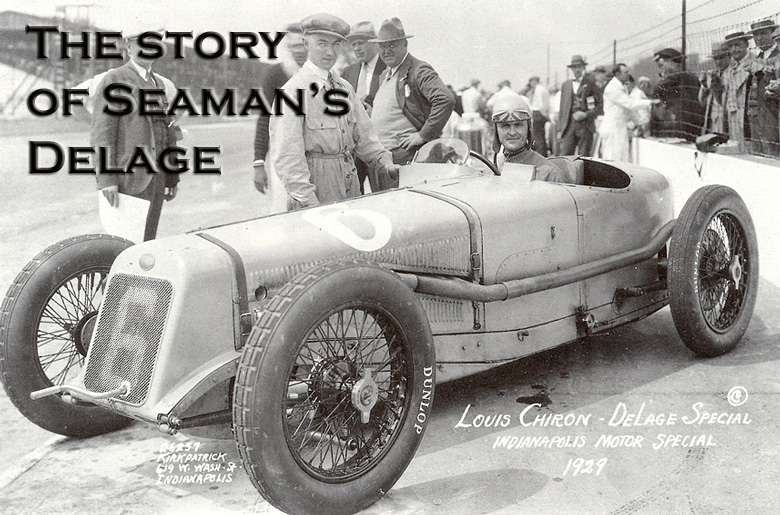
Seaman, Chiron and the Grand Prix Delage

Richard Seaman was perhaps the greatest British interwar driver. Giulio Ramponi gets a time check before a race, while Seaman sits in the Delage. Courtesy RM Auctions.
Story by Nicholas Lancaster
[While doing research for this article,originally published in VeloceToday in October of 2007, Mr. Lancaster began a search to find the current location of the ex-Ramponi/Seaman Delage. He found it in the hands of Mr. Abraham Kogan, who had consigned it to the RM Auction in London. It then passed into the hands of Peter Giddings. Our thanks to RM Auctions for providing the illustrations used in this article.Ed.]
Louis Delage had been active in Grand Prix racing since before the First World War with a series of first-rate designs that had achieved numerous successes, culminating in victory in the Indianapolis 500 in 1914. In the mid-1920’s Delage returned to front line motor sport with the introduction of the 1923 2 liter V12 engined Grand Prix car, designed by Charles Planchon, and refined by his protégé Albert Lory.
Whilst the V12 eventually came good, winning the Grand Prix of Spain in 1925, the design had suffered from numerous initial teething problems, and this cost Planchon his job. For 1926, a change of formula required the use of 1.5 liter engines and Lory — who had eventually developed the V12 into a winner — took a different approach with the new car, designing a jewel-like supercharged straight-eight engine capable of 170 bhp at 8000 rpm.