

The Online Magazine for Italian and French Classic Car Enthusiasts
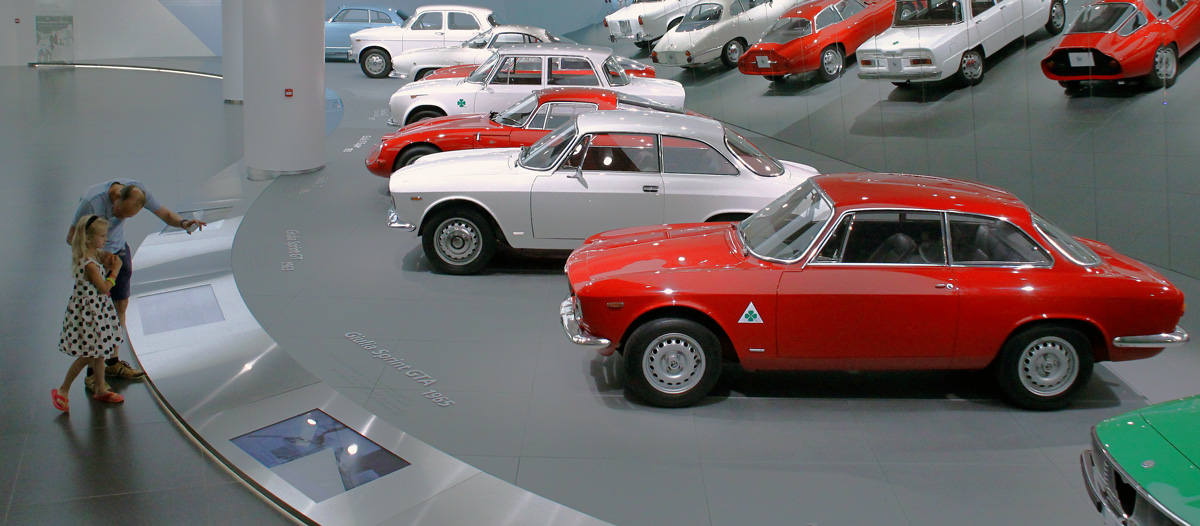
A new generation sees the old Alfas in a new light.
All photos by Roberto Motta
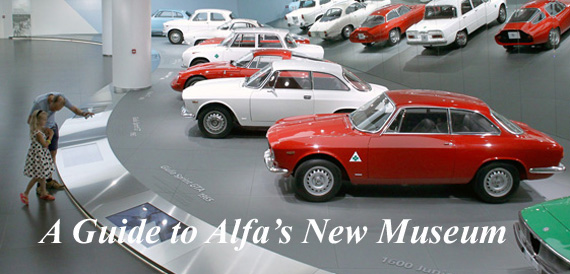
Roberto Motta has been to the Alfa Museum hundreds of times; here he discusses the impressive new museum and the differences between the old and the new. Alfa Road cars are featured, click here to see the Alfa Race Cars. Text in Italian below the photos. Ed.
On June 24, with the launch of the new Alfa Romeo Giulia and to celebrate its 105 years, Alfa Romeo inaugurated its new Museum.
Renamed “The Time Machine – Alfa Romeo Historical Museum”, it is the heart of the Alfa Romeo brand and opened its doors to the public June 30, 2015. [Read more…] about A Guide to the New Alfa Museum
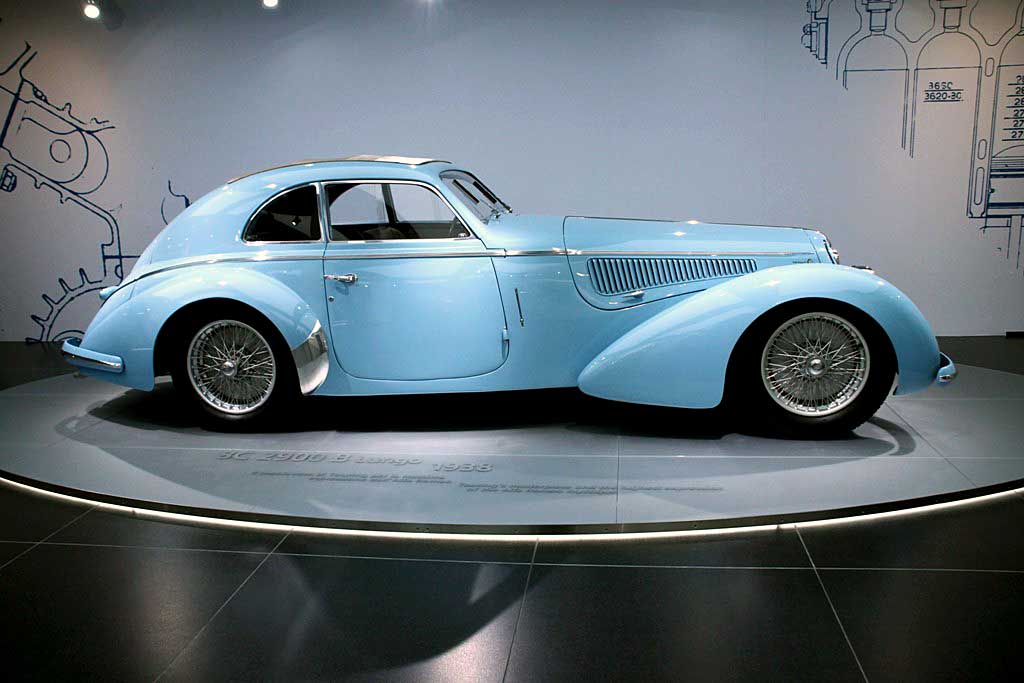
8C 2900 B Lungo is just one of the Alfas now on display. See below for more.
All photos by Roberto Motta
Click on each to Enlarge
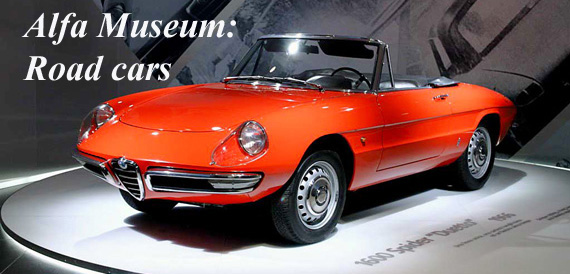
Roberto Motta shows us a few of the road cars displayed at “The Time Machine – Alfa Romeo Historical Museum”. For Museum details, click on “A Guide to the New Alfa Museum”; to see the race cars, click “New Alfa Museum: Race Cars”.
Fifty years and a toolbox separate the new from the old Giulia sedans
By Pete Vack
The master of the universe who will purchase a 2015 510 hp Alfa Giulia Sedan will be missing one important element that past and current owners of classic Giulias often cherish; the intimate relationship an owner develops with his automobile by doing the tuning, maintaining, and repairing oneself. It is doubtful that new Giulia owners will ever have a need to get down and dirty with a spanner or socket wrench in hand, much less do it for fun. Nor will they ever have to carry a box full of tools and spare parts. [Read more…] about New Giulia Sedan Lacks Toolbox
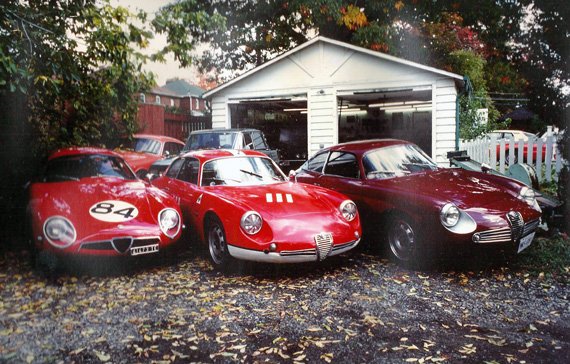
Richard Stafferton’s TZ1 S/N 084 and John Winter’s Coda Tronca s/n 00195 and Oliver Collin’s round tail, s/n 00147, taken in Richard’s driveway in Toronto, 1978. See how many Alfas you can identify in Richard’s yard. Photo Oliver Collins collection.
By Pete Vack *
As early as the late 1960s, the Alfa enthusiast instinctively knew that of all the post war Alfas semi production cars, the Zagatos were the most desirable. Alfa Zagatos exemplified the era of the relatively inexpensive, coachbuilt GT car, as did the special bodied Ferraris, Maseratis, and Lancias.
They were also, for most part, aluminum, which beat the ever present rust problem associated with steel bodied cars of the era. Unlike the competition, Alfas were more numerous, less expensive and in general more reliable. They had mechanicals that could be understood, repaired and there were ample parts available. Another part of the lure of Alfas was that the 1300/1600 cars were a joy to drive; some, yes, underpowered, but all were fun and easy to drive. They were small, light, responsive and eager. Many were raced successfully at Le Mans, Sebring, and the Targa Florio.