

Previously unpublished photos of the Cisitalia 202 at MOMA; you won’t believe your eyes! Jonathan Sharp’s look at the cars and drivers at Goodwood; Is the Citroën TA really the first modern mass produced car in Europe? You be the judge.
The Online Magazine for Italian and French Classic Car Enthusiasts
Previously unpublished photos of the Cisitalia 202 at MOMA; you won’t believe your eyes! Jonathan Sharp’s look at the cars and drivers at Goodwood; Is the Citroën TA really the first modern mass produced car in Europe? You be the judge.
And How! features open and innovative formats for notices, articles and posts.
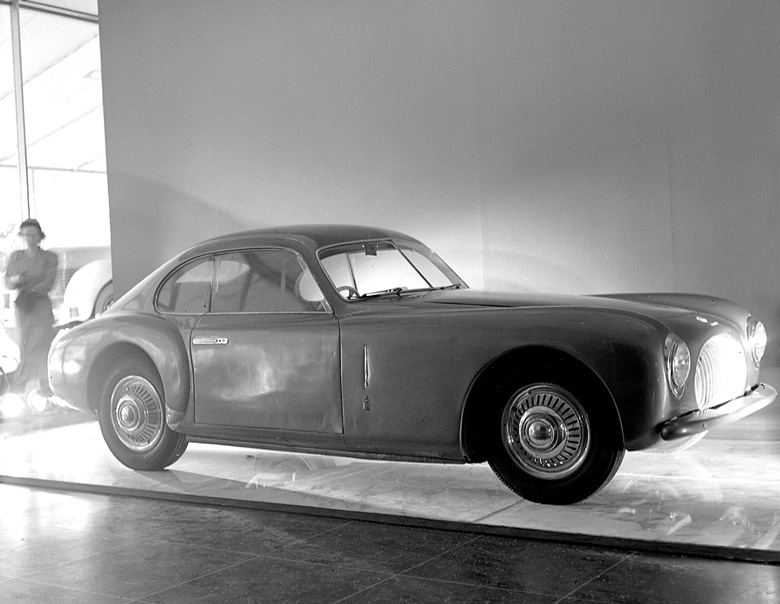
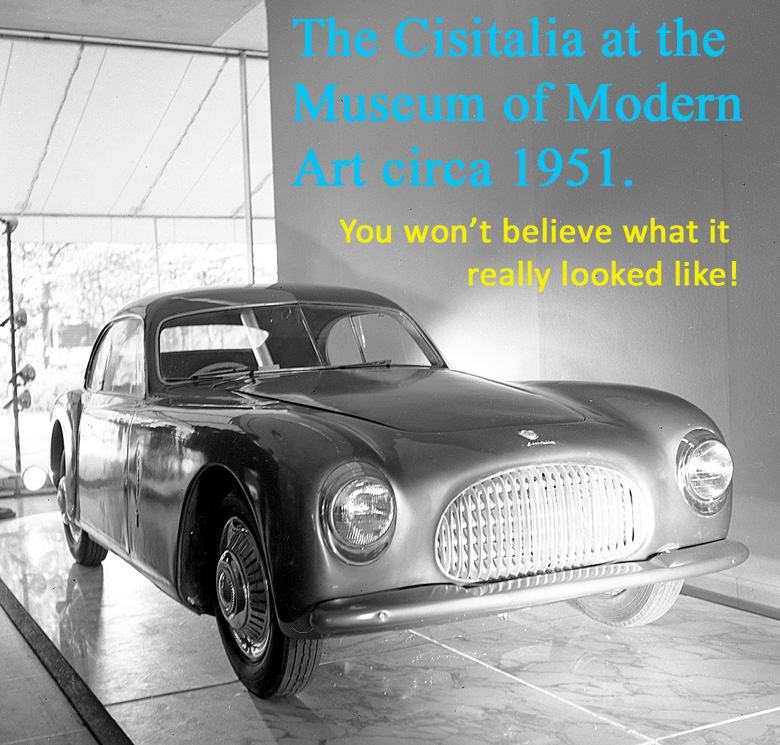
The Cisitalia number 042 at the MOMA exhibition in 1951. It had just come out of the body shop where “…most dents were removed before the body was sprayed a light metallic blue…”. We might submit that they missed a few here and there!
Could this really be the MOMA Cisitalia?
Story by Pete Vack
Photos by Jerry Lehrer
Over the years there has been a great deal of press concerning the “8 Automobiles” show at the Museum Of Modern Art held from August 29th to November 11, 1951 in New York. It was, after all, the “first exhibit anywhere of dealing with the aesthetics of automobile design.” The star of the show was the Cisitalia 202, and we have heard much about that as well. In fact, next week we’ll publish Gijsbert-Paul Berk’s chapter on the Fiat 1100, Dante Giacosa and the now-immortal Cisitalia so this is an opportune time to comment on the big show itself.
But, does anyone remember seeing what the fabled and famous Cisitalia looked like as it appeared at the automotive exhibition of the century? Fortunately, photographer Jerry Lehrer was there, and took these amazing and previously unpublished photos of the Cisitalia as it was being set up in the Museum of Modern Art.
When we first saw the photos, we couldn’t believe our eyes. [Read more…] about And How! Cisitalia at the MOMA
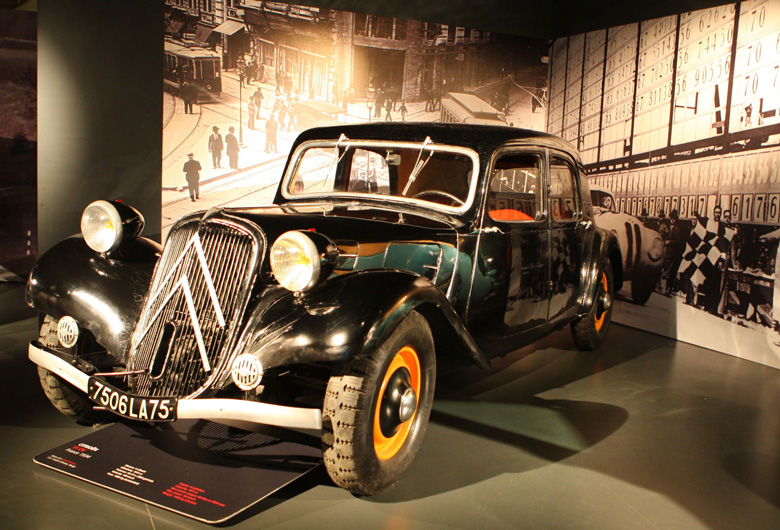
Photo by Jonathan Sharp
The Remarkable Story and Saga of André Citroën and his
Breakthrough Traction-Avant
By Philippe H. Defechereux © 2017
Traction-Avant-Guarde!
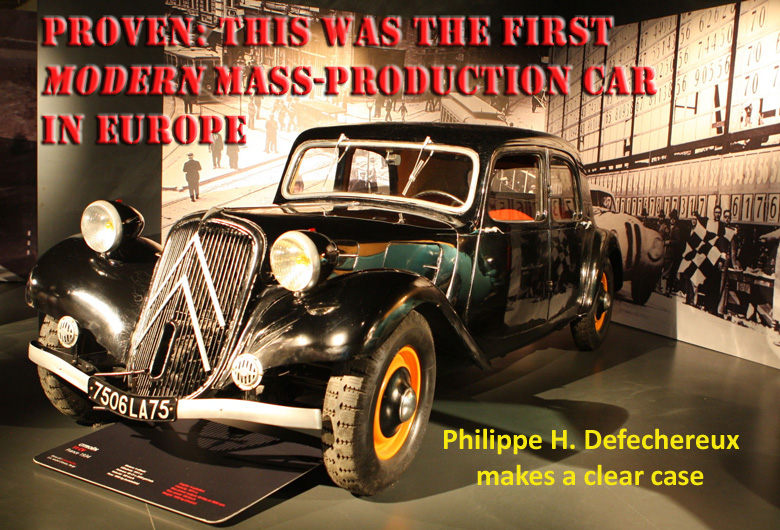
Following our introductory piece about André Citroën and the first two years of his remarkable Traction-Avant (1934-1935), now is the perfect time to examine and wonder at the car’s thoroughly revolutionary character. In this article, we’ll list all the existing or innovative technologies Citroën and his team brilliantly and harmoniously brought together in order to create what can only be called “the first modern mass-produced automobile.”
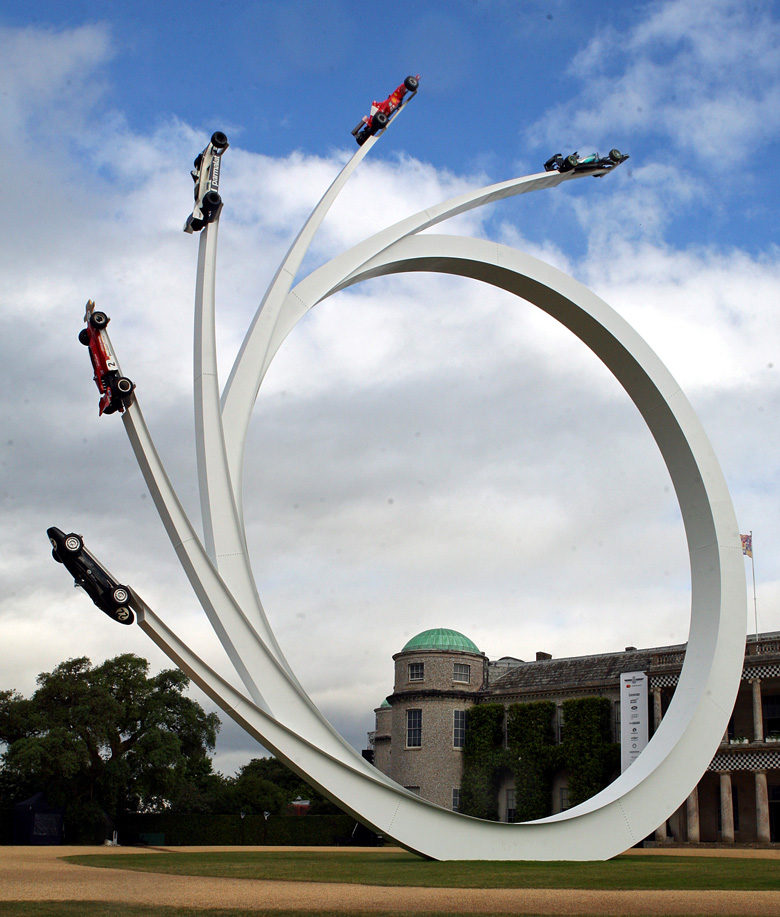
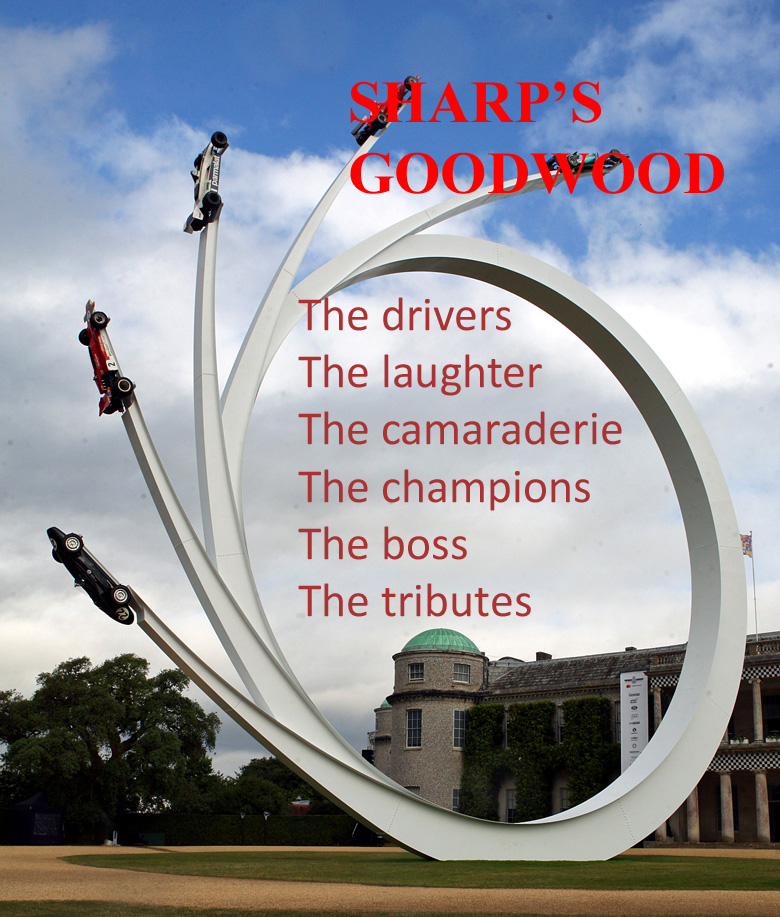
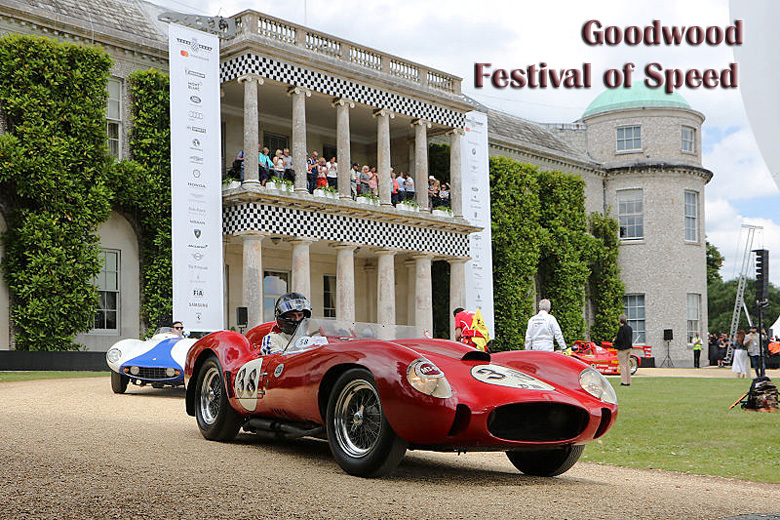
Cars in the life of Bernie Ecclestone.To celebrate the five ages of Bernie, 70 tons of steel, 600 bolts, 400 liters of undercoat/ primer and 100 liters of top coat. Gerry Judah’s central feature this year contained a Connaught to mark Bernie’s days as a driver, Jochan Rindt’s Lotus 72 as a manager, a Brabham BT49 as a team owner, a Ferrari F2001 for his time as a deal maker, and Nico Rosberg’s 2016 Mercedes W07 to mark the legend that is Bernie.
Story and photos by Jonathan Sharp
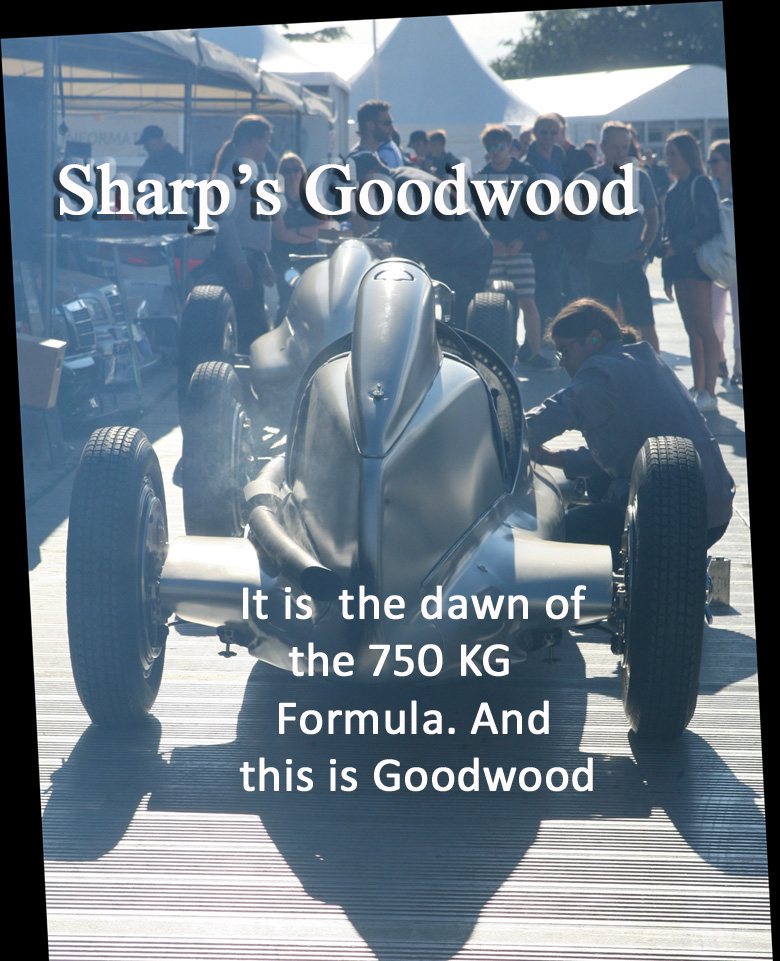
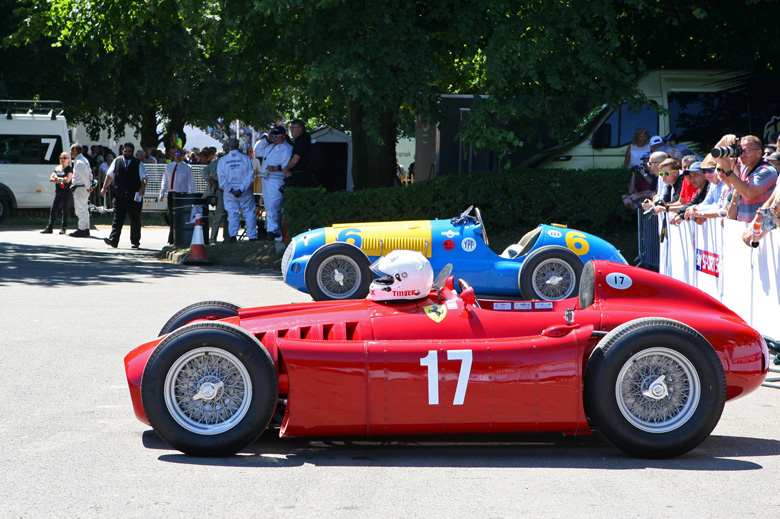
At the Goodwood Festival of Speed, I spend a lot of time in the assembly area as it has such a nice atmosphere. The drivers tend to greet each other as old friends. You will usually catch one or two of them taking photos of the cars, or selfies for themselves. You do need eyes in the back of your head though, as whilst you are using your pointy elbows to get a shot of a driver at one end of the paddock another star will have arrived at the other end, but it’s all good exercise for me. [Read more…] about Jonathan Sharp’s Goodwood: The Drivers
Story and photos by Jonathan Sharp
I have been going to the Festival of Speed for at least the past 15 years if not more, and the event still manages to surprise me with the cars they are able to entice out of the woodwork. Each year there will be cars and items I have seen before, many of them will be old favorites, some that maybe you have not have seen for a few years. But lurking in a pit garage or arriving in the assembly area will always be something you have not seen before.
The organizers also try harder. Take, for example, the selection of DFV powered cars chosen to celebrate the 50th Anniversary of the Double Four Valve. Not just a selection of Lotus, Williams, McLaren etc., but at least 5 Lotus 49s as well as the Eifelland Coswoth E21 and the unique 1972 Connew PC1, which was built by Peter Connew in his single car garage next to his house. The Maranello’s Masterpiece Class of Ferrari 250s in the Cartier Style et Luxe concours contained a GTO and a SWB, but also the Bertone-bodied 250 known as the Shark nose. In the Aston Martin class was the Bertone Jet and the Ogle Sotherby’s special. For the cheeky Cinquecento clas,s the Zagato Zanzara, a Ghia Jolly and a Necker Weinsberg Coupe. They just don’t quit. Below are these and many more. [Read more…] about Jonathan Sharp’s Goodwood: The Cars
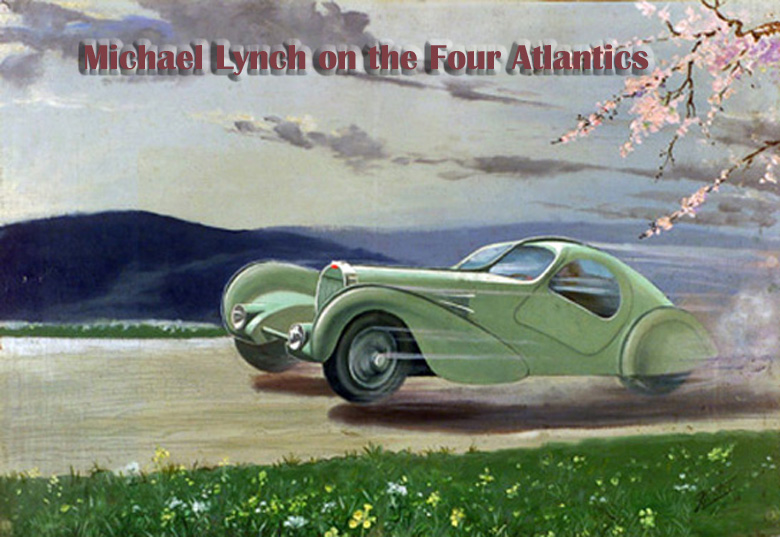
Ultra-rare photos of the Bugatti Atlantic by Strother MacMinn with commentary by Jim Sitz; Michael Lynch defines the four Atlantics, Vanhoolandt at Goodwood and the Fiat 1100 by Gijsbert-Paul Berk. Don’t forget to subscribe!
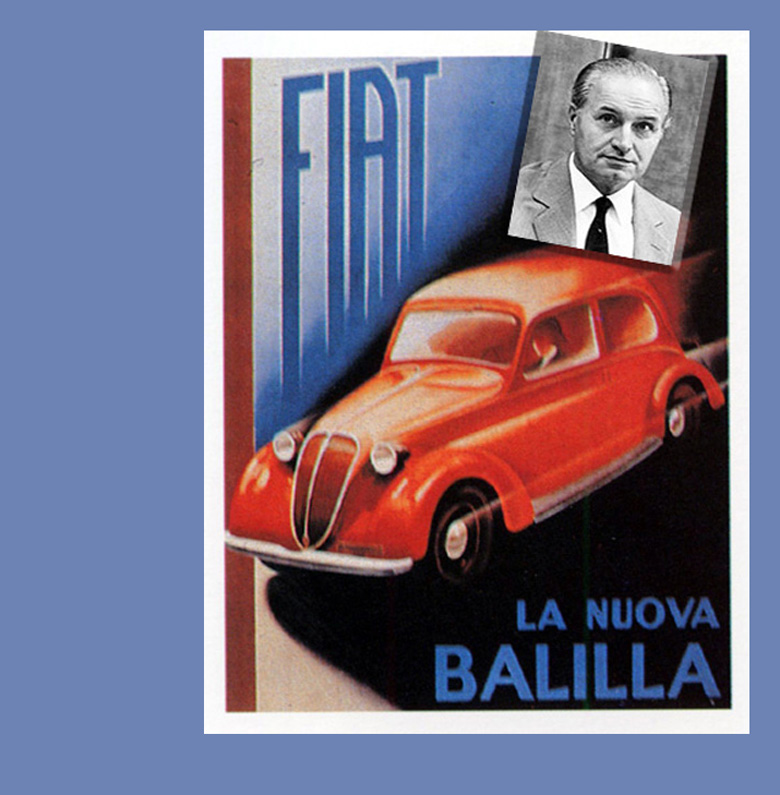
First called the Nuova Balilla, the new Fiat quickly became the 1100, or Millecento as the Italians called it. Inset: A 30-year-old engineer named Dante Giacosa was responsible.
Eighty years ago, in November 1937, Fiat introduced its first 1100 cc four-cylinder engine with overhead valves. This small, mass-produced engine not only powered a great number of Fiat’s bread and butter automobiles, but also became the heart of many exciting Italian and French specialist sports and racing cars. This article covers the years 1937 – 1940.
Story by Gijsbert-Paul Berk
In 1935 Italy was in the middle of a controversial colonial war in Abyssinia. In Turin that same year, Antonio Fessia, the manager of Fiat’s engineering department, asked the thirty-year-old engineer, Dante Giacosa, to develop a successor to the popular Balilla model. Giacosa had earned the respect of the Fiat management for his brilliantly designed 500 model, nicknamed Topolino (little mouse). Fessia explained that the new car should fill the gap between the small 500 and the recently introduced flagship of the Fiat range, the modern six-cylinder 1500 model.
A new challenge
As Giacosa describes in his autobiography Forty Years of Design with Fiat, Fessia wanted him to design simultaneously two engines: a four-cylinder and a six-cylinder, both with the same cubic capacity.
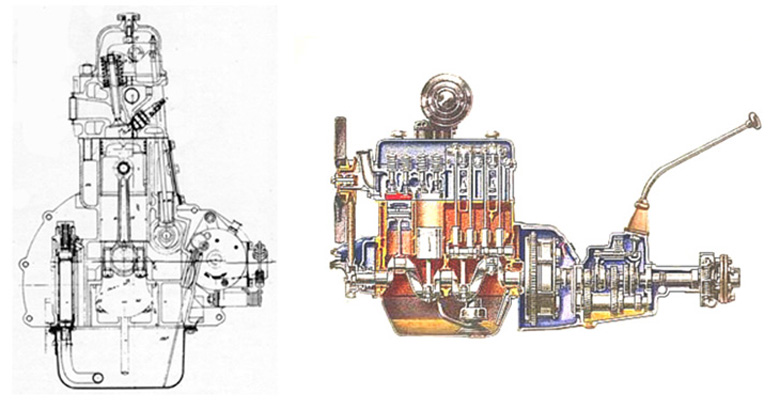
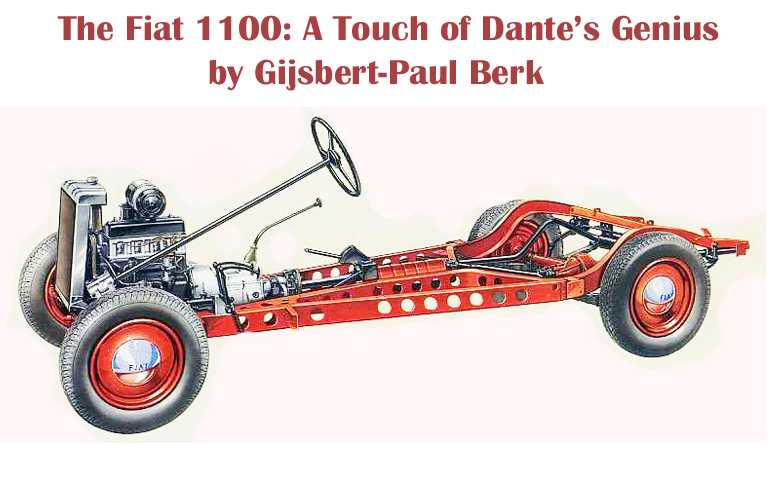
Cross sections of the 1937 Fiat 1100 engine and drive train. The new four-cylinder OHV engine was a very straightforward design. It had a three main bearing crankshaft and two valves per cylinder, which were operated by pushrods and a single chain driven camshaft in the cylinder block. Basically, the bottom half of this new engine was so similar to that of its side valve predecessor that it could be produced with practically the same molds and machine tools. But the new designed light metal cylinder head with overhead valves and the increase in cubic capacity (from 995cc to 1089 cc) made all the difference: 33% more power! (Illustration courtesy Fiat)
Aided by a team of about fifty draftsmen, he started on his task. “Our reference for the new engine was the ohv version of the 995 cc/508CS engine which was fitted in the Balilla Sport,” explains Giacosa. For an outsider, this replacement seems somewhat surprising – the 1492 cc six-cylinder of the Fiat 1500, which had been in production since 1935, already had overhead valves. But the engineers had to bear in mind that Fiat’s factories were equipped with the machines and tools to manufacture the 4 cylinder Balilla side valve engine. Since 1932 Fiat had produced 132,130 of these units.
“Therefore the choice makes economic sense.” Giacosa continues. “We increased the diameter of the cylinders (bore) to 68 mm. In the design, special attention was given to the shape and size of the combustion chambers, and to the position of the spark plugs. Our objective was to achieve a rapid progressive combustion.” In addition, the head was cast in aluminum.
“In accordance with my instructions,” wrote Giacosa, “we designed at the same time a six-cylinder. Being lower it permitted a lower bonnet and better streamlined front of the car, but being longer it needed a larger chassis. This engine was also substantially more expensive to manufacture; the four-cylinder configuration won the day.”
And How! features open and innovative formats for notices, articles and posts.
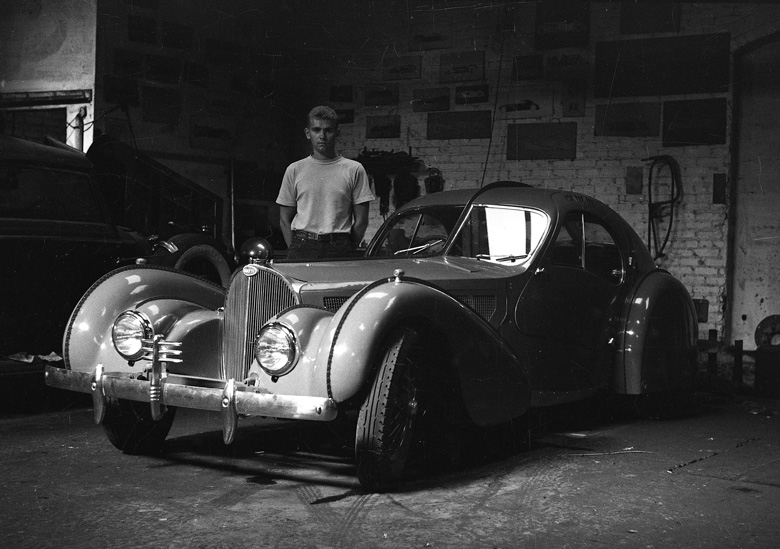
Young Man With Bugatti
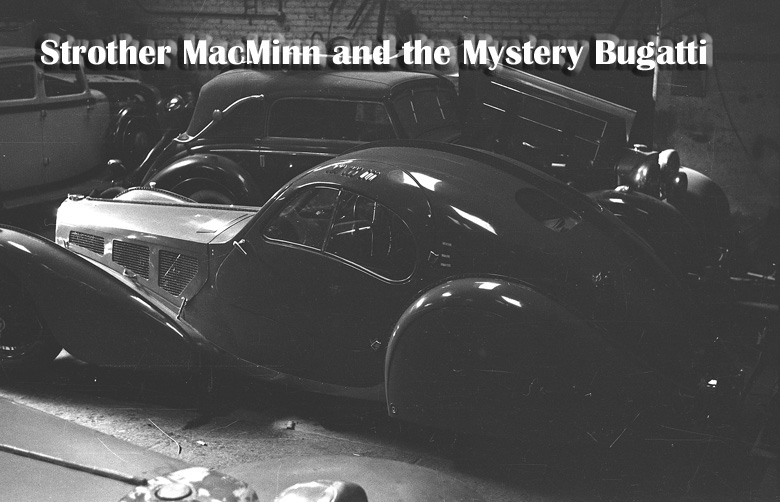
We couldn’t identify the young man but the Bugatti is the Atlantic S/N 57374. But only Jim Sitz could come up with a location and date of the photo. Read on.
In 1949 Strother MacMinn took these photos of the Bugatti Atlantic/Aérolithe (S/N 57374) when owned by Bob Oliver. The photos were supplied by Dale LaFollette at Vintage Motorphoto and published here with the permission of Bob Ames. Below, comments from Jim Sitz. [Read more…] about Strother MacMinn and the Bugatti Atlantic
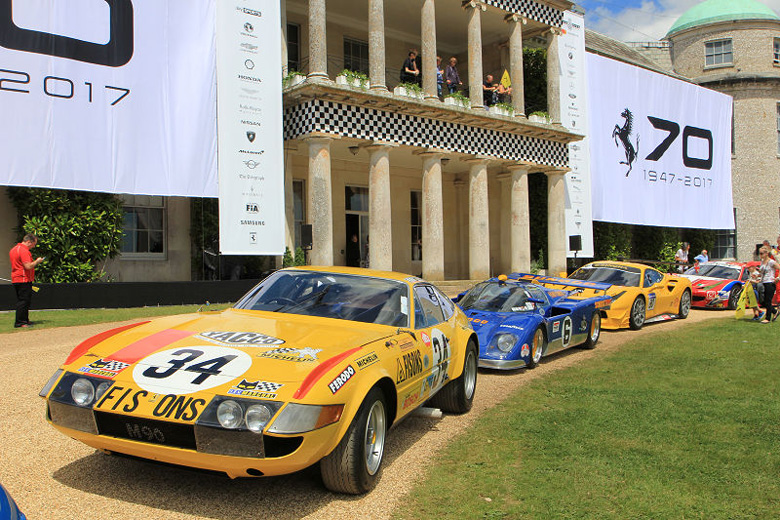
The Ferrari 365 GTB/4 Daytona Competizione, # 16425, entered in 1973 by Ecurie Francorchamps at the 1000 km of Spa and 24 hours of Le Mans.
Story and photos by Hugues Vanhoolandt
Every year, the Goodwood Festival of Speed develops several themes on which the entry list is based.
This year, one of the themes was ‘Peaks of Performance – Motorsport’s Game-Changers’ that celebrated the cars that were too dominant, too powerful or too dangerous so that the rules had to be changed. [Read more…] about Vanhoolandt at the Goodwood Festival of Speed
This week, rare photos by the late Strother MacMinn captioned by Jim Sitz; Brandes Elitch gets a tour of a very unusual museum hosted by a very unusual man, a must read; A very busy Jonathan Sharp brings us the latest from Brooklands. Don’t forget to subscribe, we need your support!
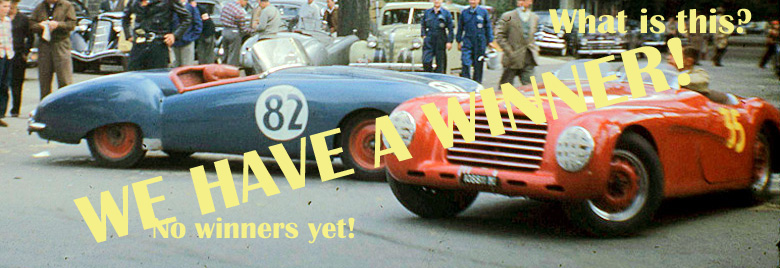
The BMW 328 chassis with an Alfa 6C2500 engine and Castagna coachwork was correctly identified by Tobias Ubbens of the Netherlands. Thanks Tobias!
And How! features open and innovative formats for notices, articles and posts.
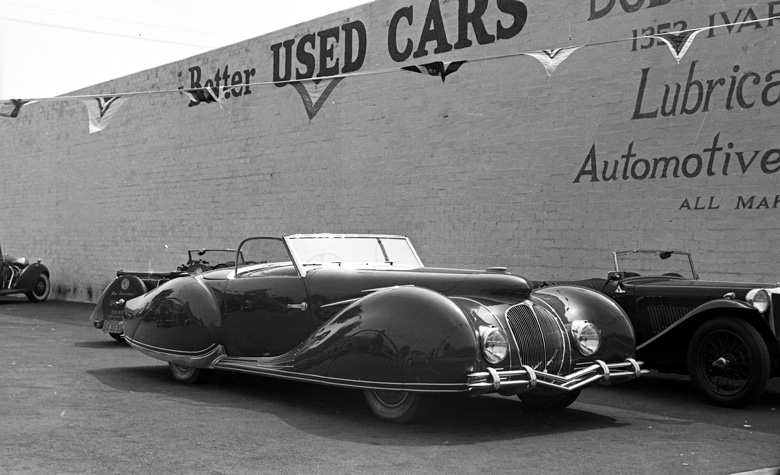
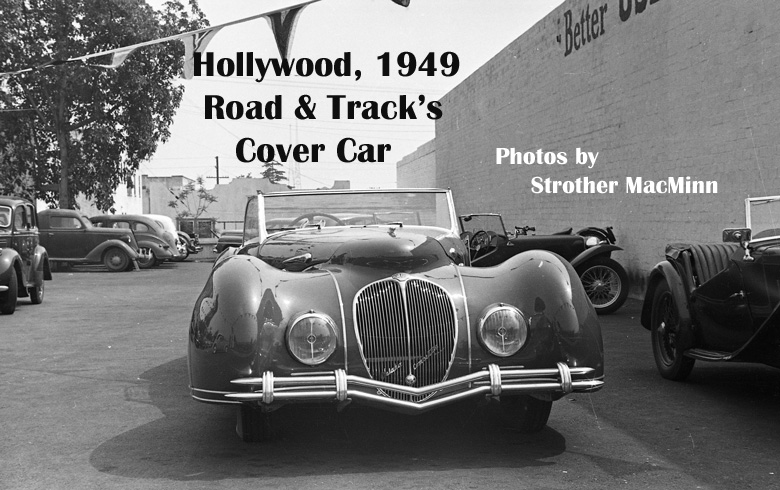
The Delahaye was on cover of the February 1949 edition of Road & Track. The photograph was taken in front of the famous Ciros Nightclub. This is the same car which was photographed later that year by Strother MacMinn.
Strother MacMinn photos from the collection of Robert Ames
Courtesy VintageMotorphoto
Text by Jim Sitz
Strother MacMinn was one of my closest and dearest friends. I met him in 1951. He was a real gay blade and man about town, the Cary Grant of automotive circles. [Read more…] about And How! Strother MacMinn and the Delahaye

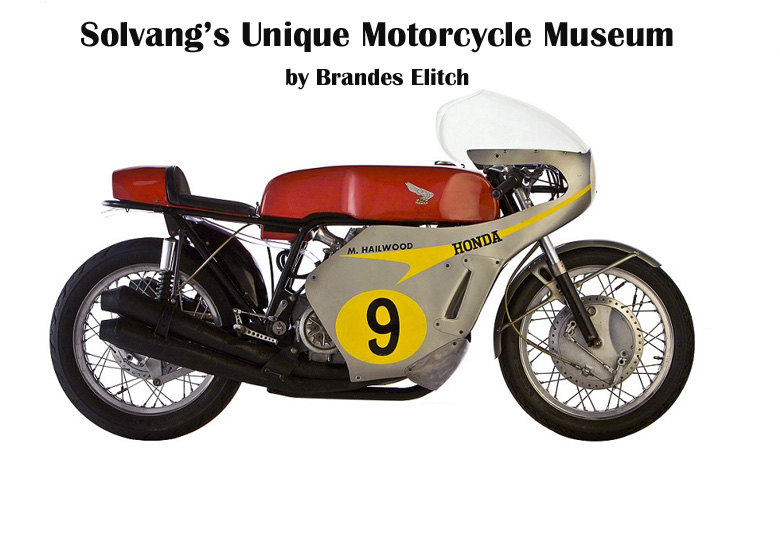
Story by Brandes Elitch
Photos courtesy Solvang Motorcycle Museum
Solvang is a small town of about 5000 people, located in the Santa Ynez Valley of Santa Barbara County, about 140 miles north of Los Angeles. The name means “Sunny Fields” in Danish. It was founded in 1911 by Danish-American educators to preserve their Danish cultural heritage, and had a dedicated Lutheran church and Danish “folk school.” During the period 1850-1930 the Danish economy contracted, so about one in ten Danes emigrated, mostly to the U.S. In 1912, Solvang’s pastor traveled to Iowa to recruit more Danes, and was successful in getting enough of them to move so that the town’s future was assured. Today, it is a tourist destination that attracts a million visitors a year, on the strength of its uniquely Danish architecture, food, attractions, and museums.
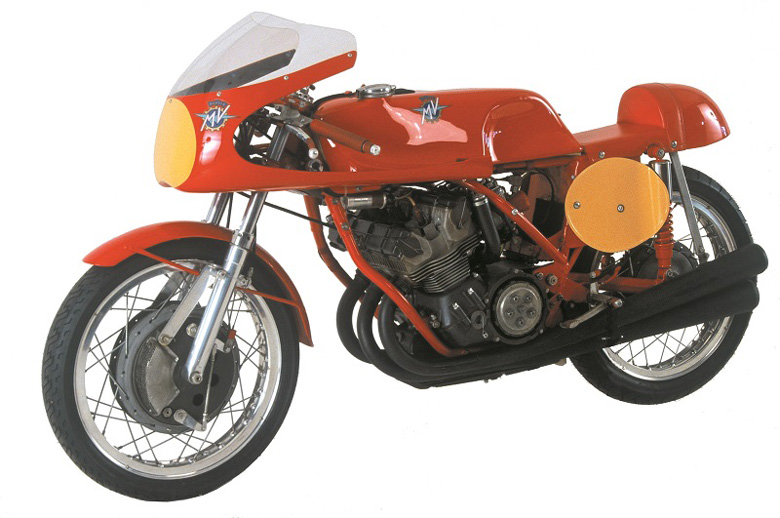
1965 MV Agusta 3 cylinder. At the Quail gathering in May of 2016, this bike won the ‘Spirit of the Show’ award – top honors from a prestigious event.