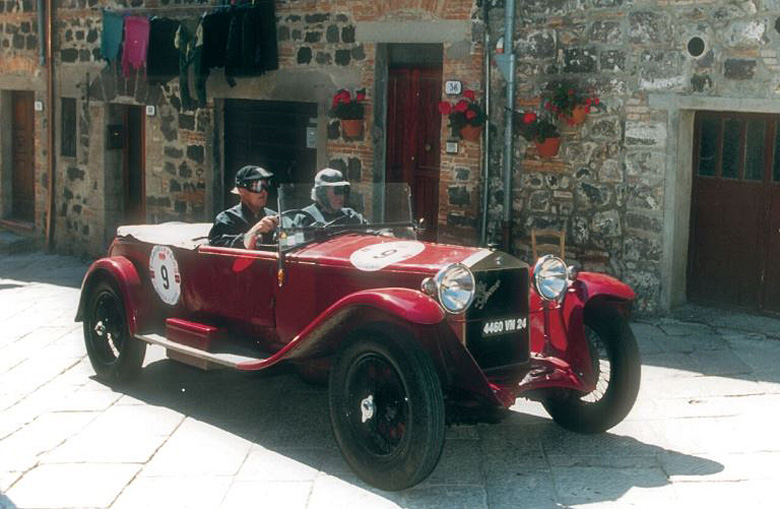
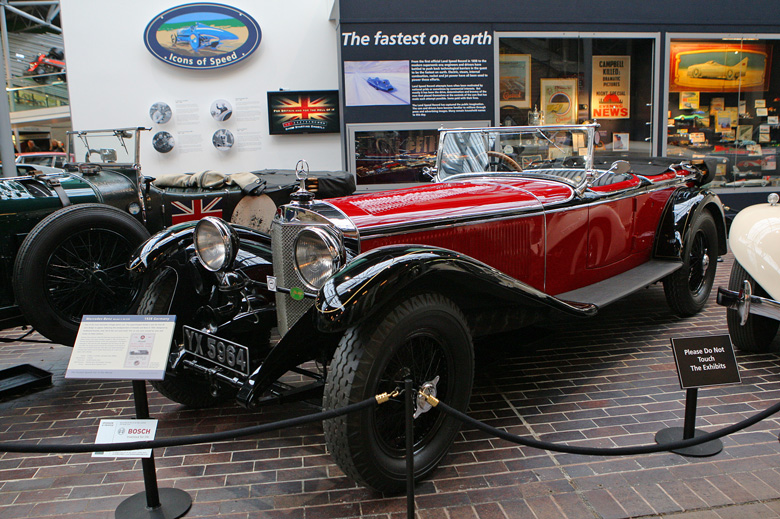
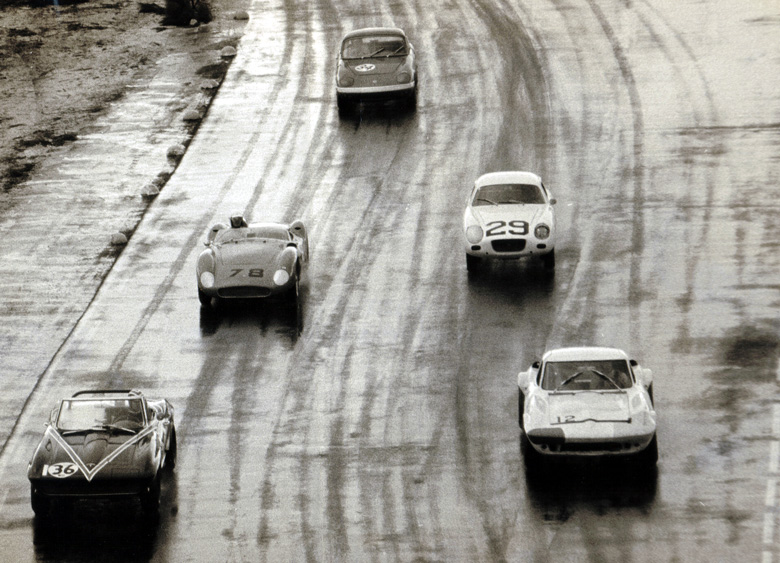
This week, Roberto Motta notes the debut of the new Abarth 124 Rally; we track the Alfa 8C35 serial numbers; Eric Davison concludes the Dale Powers story and Jonathan Sharp begins a series of articles on the UK’s National Motor Museum.
Alfa Romeo 8C35 Grand Prix Cars
The Editor Tracks the three 8C35 Alfas
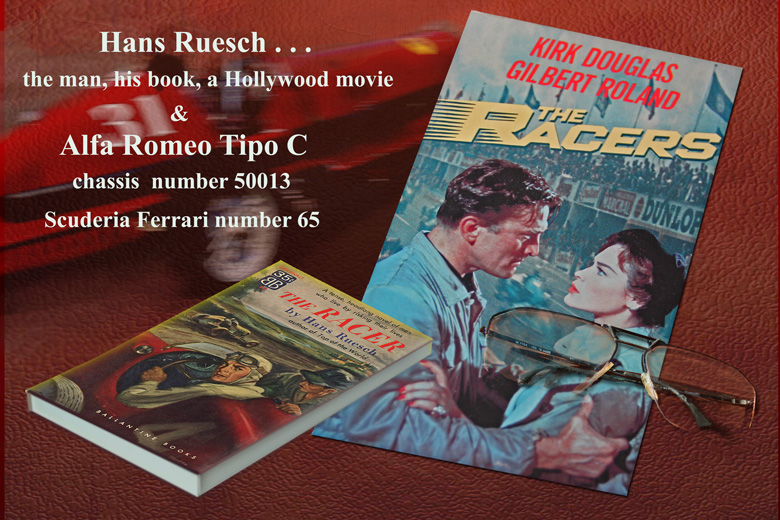
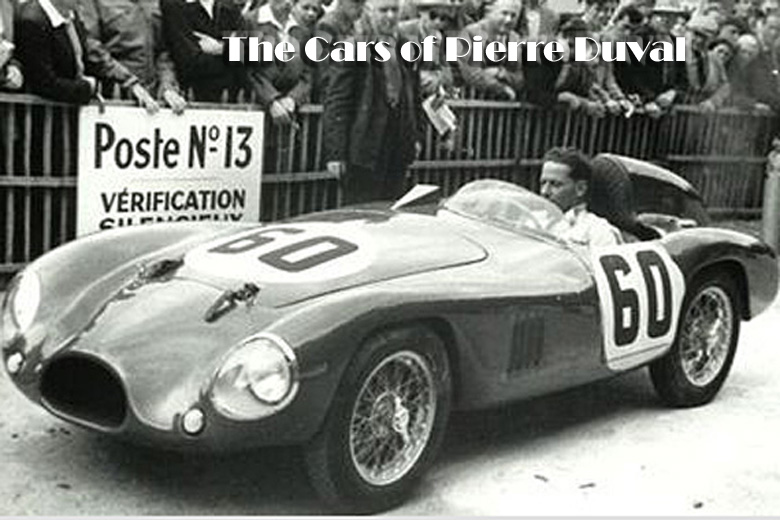
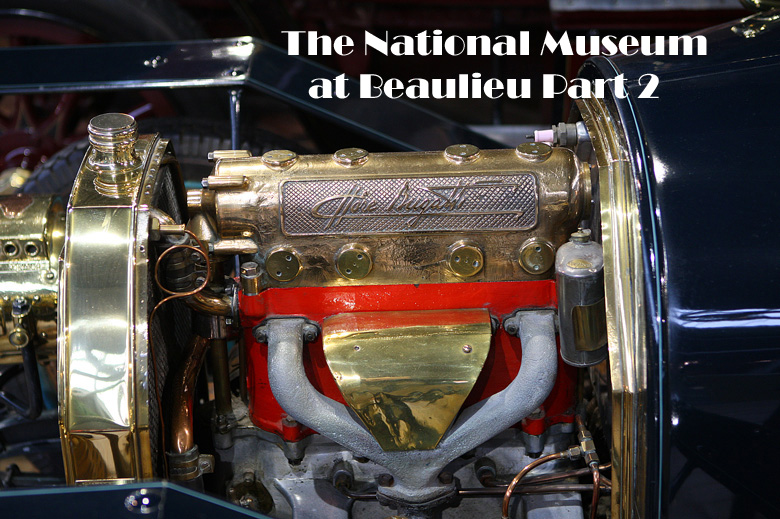
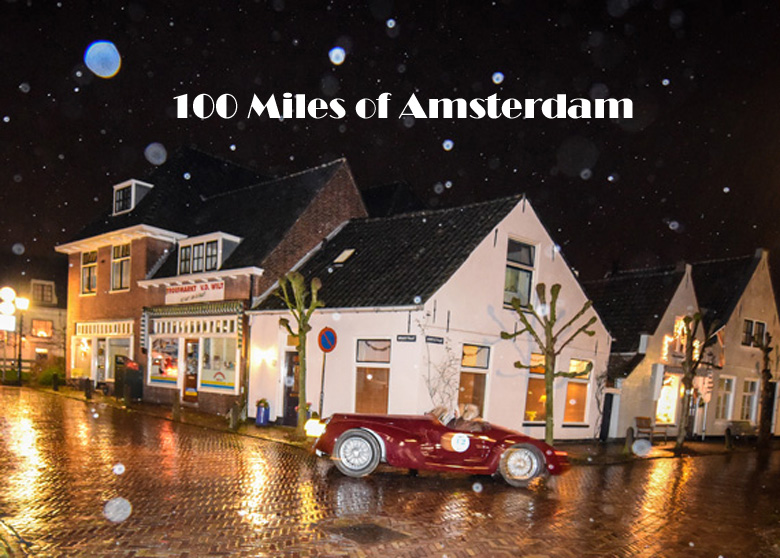
Montage above by Peter Darnall
One might wonder why we are so interested in the Alfa 8C35 cars. An old saying goes that history is written by the survivors; and indeed, this is the case for the 8C35. But in addition to being survivors, the various and sundry 8C35s running today are examples of the only Grand Prix car to give the combined Silver Arrows a real run for the money. Given the might of the Mercedes and Auto-Union teams, the Alfa Romeo 8C35 had a brief but reasonably successful two seasons in Europe. Designed to be fitted with either a V12 engine, or an 8 cylinder, the 8C35 used a longer version of the famous Alfa 8C 2.3 engine, running almost concurrently with the initially unreliable V12 (12C36) while it was being developed. In 1936 Tazio Nuvolari drove the 8C35 to great victories at Coppa Ciano and the Hungarian GP. In our humble opinion, although Vittorio Jano’s V12 (actually designed by Bruno Trevisan) may have led to his downfall in October of 1937, the 8C and 12 C are underrated and much more successful contenders than results might render. And speaking of results, at the bottom of this article we’ve reproduced the Alfa racing results from the years 1935 to 1937 for your perusal.
As VeloceToday is currently publishing a series of short articles that often include these cars, (read A Most Unusual Meeting) we thought this an opportune time to provide a brief history of the 8C35 chassis known today.
Of the six 8C35s listed by Fusi, three can be determined to still exist in some form: [Read more…] about Alfa Romeo 8C35 Grand Prix Cars
The National Motor Museum at Beaulieu Part 1
Story and Photos by Jonathan Sharp
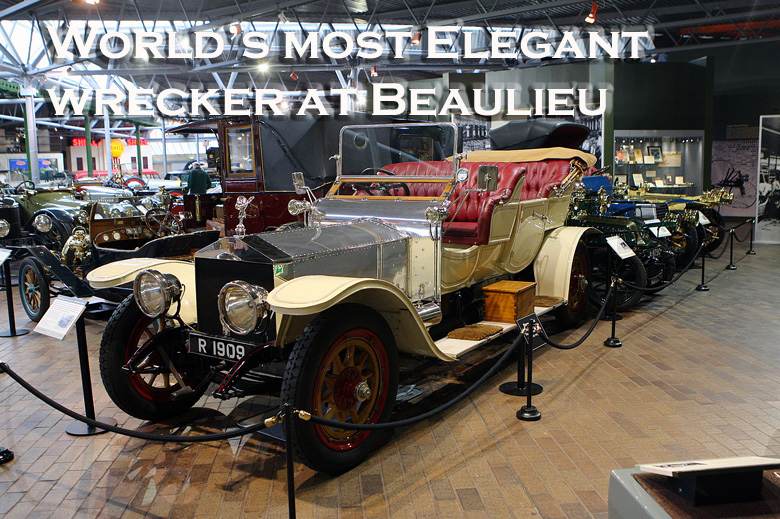
It’s funny; I have driven, and flown hundreds and sometimes thousands of miles to visit various car museums, shows and race meetings around the world, and yet I had not visited the National Motor Museum (also known as the Beaulieu) less than two hours west of my home on England South Coast, for nearly 20 years.
The National Motor Museum is located in Beaulieu Hampshire deep in heart of the New Forest. The museum was founded by Lord Montagu of Beaulieu in 1952; I will tell you a little bit more about Lord Montagu in part two. I have dim memories of visiting Beaulieu with my parents during the late 1960s before holidaying on the nearby Isle of Wight. Those memories are rather less about the cars then on display and more of the monorail built around the grounds and the replica veteran London bus that one could take a ride on, both of which are still part of the Museum today. [Read more…] about The National Motor Museum at Beaulieu Part 1
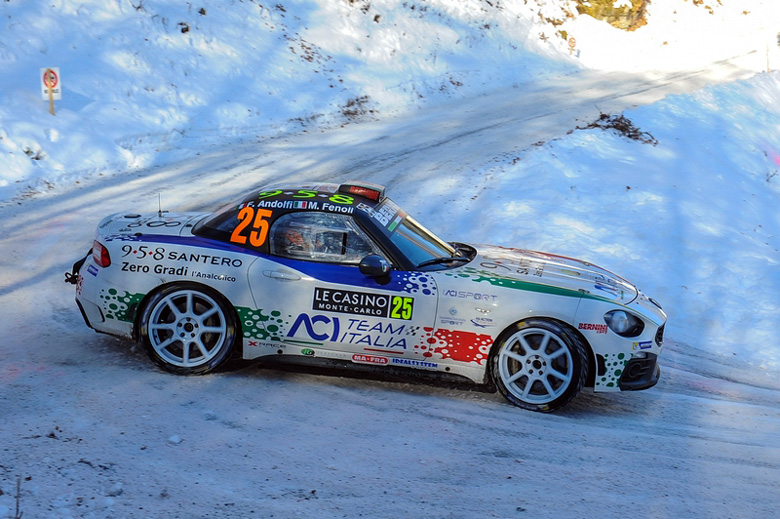
Abarth 124 Rally Debuts at the Monte Carlo Rally
Story by Roberto Motta and Pete Vack
Photos courtesy of FCA
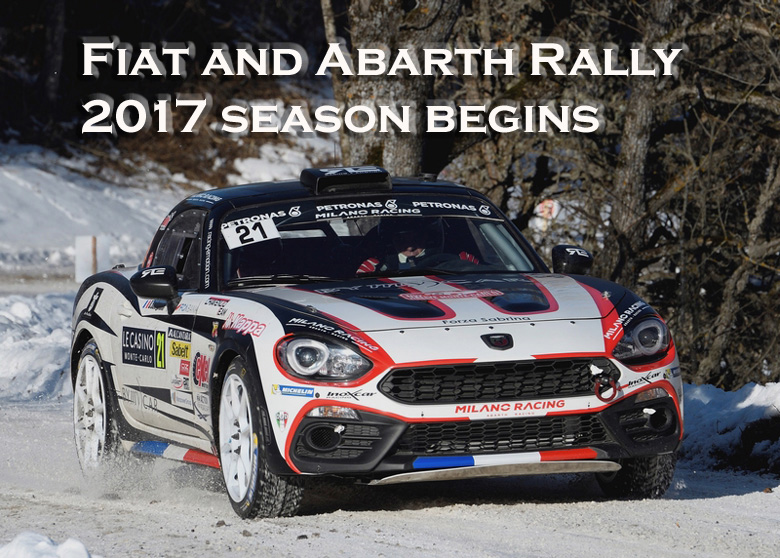
The new Abarth 124 Rally to debut in the 85th Monte Carlo Rally
The racing career of the new Abarth 124 Rally will start with the debut in the 85th Monte Carlo Rally, the first race of the 2017 Rally World Championship to be staged this weekend, from January 19 to 22. And as the lead photo indicates, Abarth will try to recreate the success of the original Fiat Abarth 124 Rally. And of course therein lies a story we can sink our teeth into.
We hit the reference books for information; in this case, our own Abarth Buyer’s Guide, from which we quote here liberally. Seems that Carlo Abarth wasn’t too keen on rally cars and only prepared two models in the early 1960s for rally events. In 1962 a team of Fiat 1500S Rally Berlinas was readied for the Trieste Rally but as they did not fare well, Abarth lost interest. In 1963 Abarth entered the Monte Carlo Rally with 850 and 1000 TC Berlinas, but it was the day of the front drive Minis and Saabs; Abarth & C. did not pursue. [Read more…] about Abarth 124 Rally Debuts at the Monte Carlo Rally
VeloceToday for January 10, 2017
Here’s a great way to start to the New Year! Peter Darnall weaves a story about Professor Porsche and the development of the 8C35 Alfa Grand Prix car; Roberto Motta at the 40th Anniversary of the Alfa Museo Storico; Part 3 of the cars of Dale Powers and from the archives, Graham Gauld writes about Mike Sparken.
A Most Unusual Meeting
The Tipo C monoposto was a breakthrough design for Alfa Romeo. Giovanni Guidotti, a long-time employee of Alfa Romeo, remembered the initial test of the prototype and the bizarre events which followed. He originally told the story to a prominent member of the “Alfisti” more than thirty years ago. The story was recently passed on to me. Although possibly an apocryphal tale, this is Guidotti’s story.
Story and montage by Peter Darnall
Alfa Romeo was a major force in European racing during the early 1930s. Vittorio Jano’s innovative designs had made Alfas the cars to beat in both sports car and Grand Prix venues. However, the economic hardships of the Great Depression and the years which followed brought government control to Alfa Romeo with ever-increasing pressure to produce materiel for Mussolini’s military ambitions. Racing activities had been turned over to Scuderia Ferrari with an arrangement which allowed the Portello factory to design and build the cars while the Scuderia campaigned them.
The AIACR (Association Internationale des Automobile Clubs Reconnus), which was the governing body for international motor racing, had decreed that beginning with the 1934 Grand Prix season, race cars would not weigh more than 750 kilograms (about 1650 pounds), minus the weight of tires, fluids and driver. Although Vittorio Jano’s masterpiece, the P3 monoposto, met the weight requirements of the new formula, the vintage Alfa racer could not expect to compete with the technologically superior German Mercedes Benz and Auto Union machines.
[Read more…] about A Most Unusual MeetingHoods Up at the Museo Storico Alfa Romeo
Story and photos by Roberto Motta
It’s Hoods Up at the Museo Storico Alfa Romeo for the 40th Anniversary
Wander through the many automobile museums of the world (or just follow VeloceToday!) and you will quickly note that they all have one thing in common; the hoods are usually closed and if not, one can’t get close enough to study the mechanicals. This is unfortunate, for unlike today’s plastic-covered engines, many powerplants of the 20th century were hi tech engineering, awesome to look at, art in and of themselves, and designed to be easy to work on. Yet they are so often hidden under the hoods of museum pieces. Not so in Milan however!
Alfa Romeo, who has been creating technologically advanced engines for race cars and production cars since 1910, is one of the few firms left with a lengthy and glorious history of designing advanced engines. Engines are the essence of Alfa Romeo, and at the Museo Storico Alfa Romeo, they are not afraid to show it. On December 18 2016, the Museum in Arese celebrated its first 40 Year Anniversary with a special exhibition in which the hoods were open on about 300 cars for everyone to see and touch. And why not; engines are the sporting heart of Alfa Romeo; for years Alfa created only the chassis and engine, while the coachwork was completed by others such as Pininfarina, Zagato, and Bertone. Therefore, the ‘real essence’ of historic Alfas often lies beneath the coachwork.
Did we say “Forty years?” True, and it’s hard to believe that the Museo Storico Alfa Romeo first opened on December 18th 1976, born to commemorate and preserve the history of the Milanese brand.
Orazio Satta Puliga, head of design projects since the end of the Second World War, was a prime motivator for the construction of the Museum, and fortunately Satta found a great ally in President Giuseppe Luraghi. Subsequently, it was up to famous historian and engineer Luigi Fusi to assemble the collection and organize the exhibition in a new building.
In recent years, the museum was closed to the public for a complex renovation project by architect Benedetto Camerana. The museum re-opened its doors on 24 June 2015. Named ‘The Time Machine’ it is a modern structure that in its first year attracted more than 100 thousand visitors thanks to a fascinating exhibition that tells the history of Alfa Romeo. As such, the Museum is not only for the ‘Alfisti’, but also caters to a wider audience that includes the new generations. Still, the forty year celebration in December included a special event for the ‘Alfisti’… Alfa enthusiasts who drove an Alfa Romeo built during the ’76 model year participated in the parade on the test track next to the museum.
The museum is in Arese (Milan), Viale Alfa Romeo.
Opening Time: Open daily from 10 am to 18 pm. Closed on Tuesday.
For info: website www.museoalfaromeo.com Tel .: 02 4442 5511
Below, note that there are links in the captions to related articles.

Alfa Romeo GP Tipo P2 engine, 1925 (1987cc 155hp at 5500rpm) Read More
Alfa Romeo Museo Storico Annivesary in Italia
Testo e foto di Roberto Motta
Il Museo Alfa Romeo di Arese ha compiuto i suoi primi 40 anni e per festeggiare ha esibito le proprie vetture con i ‘cofani aperti’ per consentire al pubblico di ammirare il suo “cuore sportivo”
Se passeggiate tra le stanze dei numerosi musei di automobili di tutto il mondo (o più semplicemente seguite VeloceToday!) avrete notato che tutti hanno una cosa in comune; tutte le auto hanno i cofani chiusi, e non ci si può avvicinare alle vetture per studiarne la meccanica. Questo è un peccato perché, a differenza dei motori di oggi, interamente ricoperti di plastica, molti propulsori del 20° secolo sono un vero concentrato di ingegneria hi tech, e sono delle vere opere d’arte.
Ma, purtroppo, sono spesso nascosti sotto il cofano delle auto esposte nel museo.
L’Alfa Romeo, ha sempre creato motori per auto da corsa e per vetture di produzione fin dal 1910, ed è quindi una delle poche aziende che può vantare una lunga e gloriosa storia nella progettazione di motori tecnicamente avanzati. [Read more…] about Alfa Romeo Museo Storico Annivesary in Italia
VeloceToday for January 3, 2017
VeloceToday for December 20, 2016
A VeloceToday Design Forum
VeloceToday recently completed a two-part book review on the work of Marcello Gandini authored by Gautam Sen. We are also reviewing a book about the De Tomaso Mangusta, by ex-GM designer Dick Ruzzin. In October, author and collector Paul Wilson allowed us to spend some time with his Lamborghini Miura. The three are uniquely qualified, if not over-qualified (read bios at end of the article).
Also, we are offering FREE to VeloceToday readers, a PDF of the first 52 pages of “Gandini, Maestro of Design” (read review). This gives you, our readers, a chance to join in on the discussion and read the complete fascinating story of Gandini and Miura. Click here for details.
While discussing the Gandini book (in which he was quoted), Ruzzin offered some thoughts about the nature of the Miura design. “When an artist sits down to do his work, all of his lifetime experiences and values come to bear on what he is trying to create. This is inevitable and cannot be prevented, as art is a reflection of the essence of the artist’s intellect in the form of sculpture, music, painting, or car design.” Although no one is challenging Gandini’s role as the designer of the Miura, the images that Ruzzin sent along were nevertheless thought-provoking.
In short, Ruzzin presented this argument:
Free PDF: Marcello Gandini: Maestro of Design
Receive the first 52 pages of Gautam Sen’s fanastic two volume set about Marcello Gandini. In this PDF you’ll read about Gandini’s youth growing up in Turin; meeting Nuccio Bertone; going to work at Bertone just as Giorgetto Giugiaro was leaving; designing the Miura, which was his first project at Bertone; the controversy surrounding who actually designed the fabulous Miura; The one off Bertone Porsche and the strange Jaguar FT.
Then read what the author, ex-GM designer Dick Ruzzin and author/collector/owner Paul Wilson have to say about the design of the Miura and outside influences. And we’d like to hear your comments and opinions on the subject!
Finally, take advantage of Dalton Watson’s new payment program, which can be applied to Gautam Sen’s definitive work on Gandini.
The PDF can be obtained by clicking on the Subscribe button below; Offer for Premium Subscribers ONLY!