To top it off…
Story and photos by Paul Wilson
Photos courtesy the author
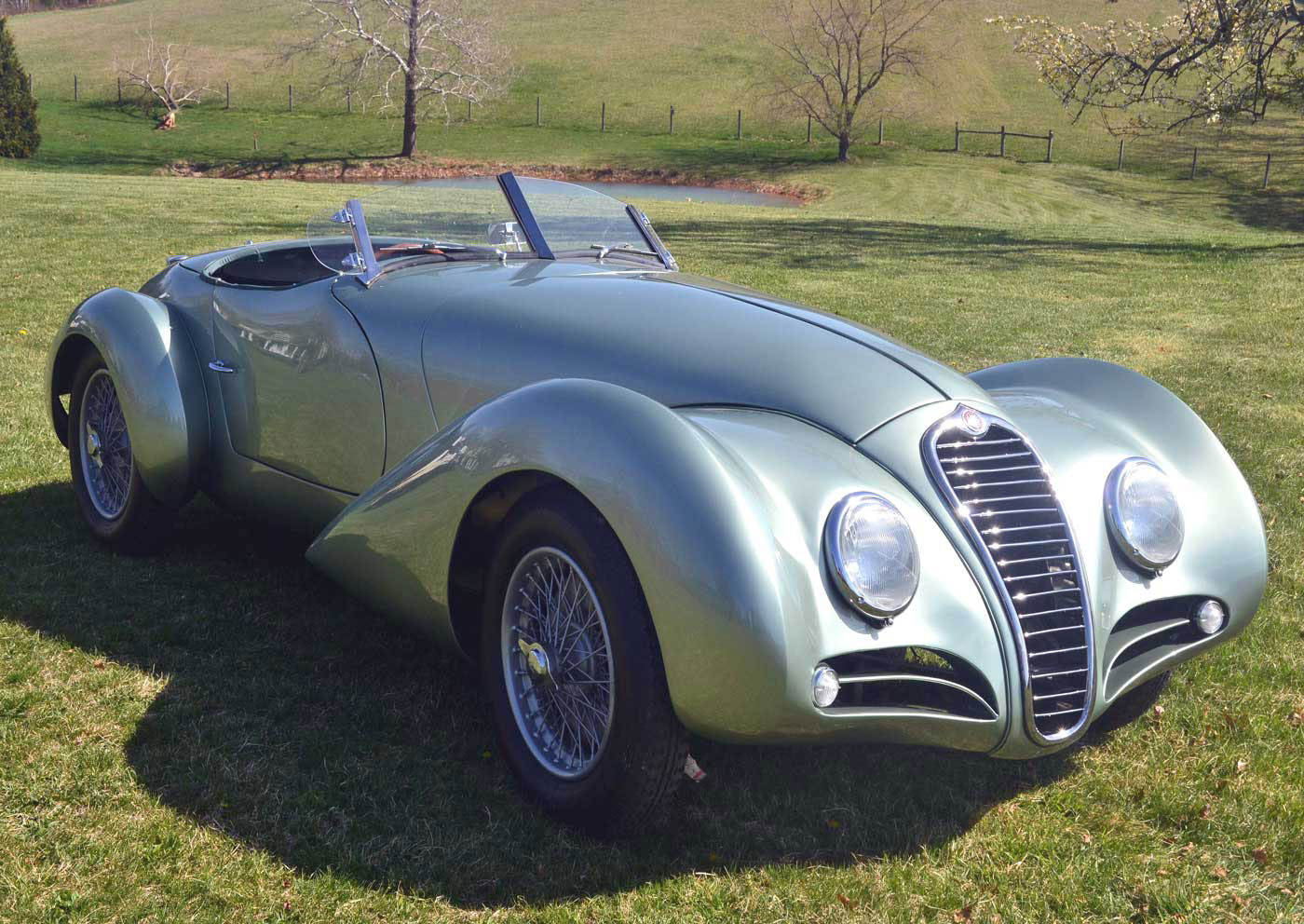
My Alfa 6C roadster still awaits its engine, but I found a few more jobs I could do on what’s here. The biggest one was the top.
Some decisions I had to make as the body was constructed. First, was a top really needed? For a race car, probably not. But I wanted it to be a fully-equipped sports car for the road. So it had to have one. Another thing: it had to be out of sight when down. A stack of folded cloth looks OK on a classic roadster like an SS100 or MGTC, but not on a streamlined shape. In period, a do-it-yourself kit with plug-in bows and a top attached with clips and buttons, carried in a bag in the trunk, sufficed for the AC Ace and a few others, but I wanted something more civilized.
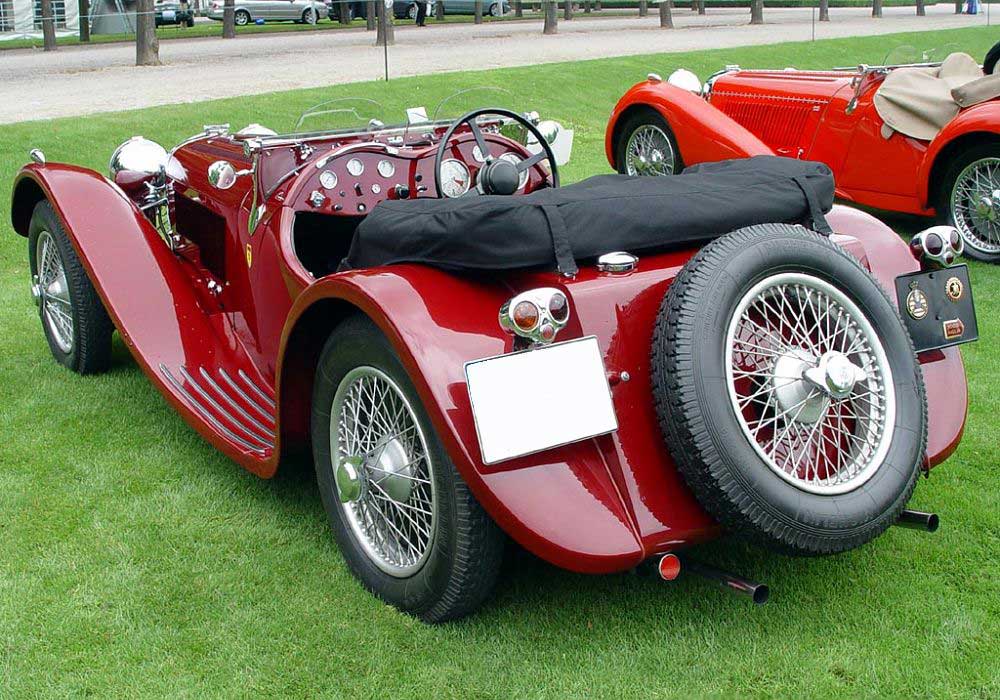
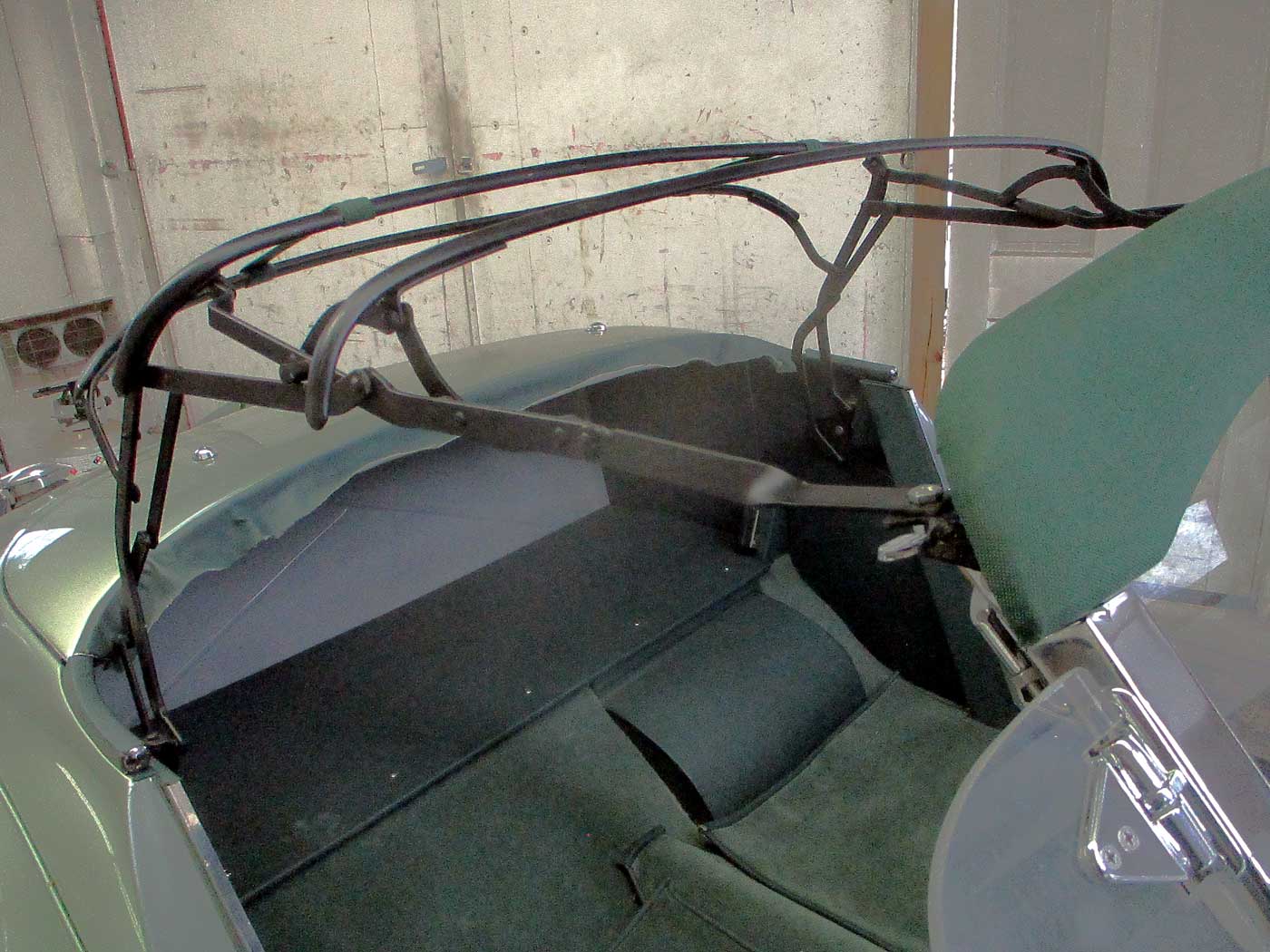
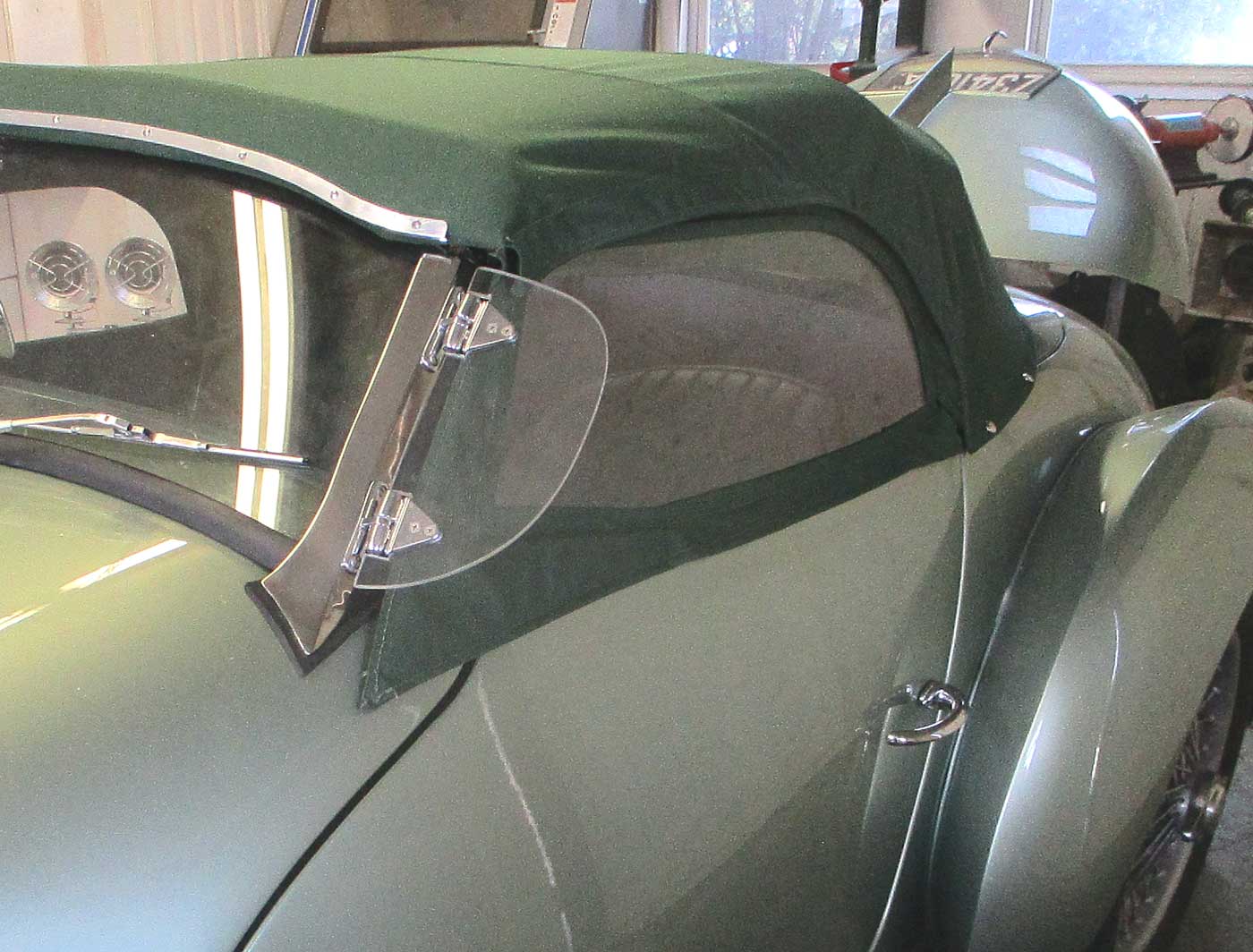
Some of the Touring 2.9 roadsters have a flip-up lid behind the cockpit to hide the folded top, a sensible solution I decided to copy. As usual, aesthetic and practical problems arose. The top frame itself was relatively easy. A friend donated one from his MGB parts pile, which worked fine once the bows were narrowed and the side legs were extended.
The aesthetic dilemma was more difficult. A wide windshield looks better than a narrow one. Corsica’s gorgeous Bugatti Type 57SC proves that.
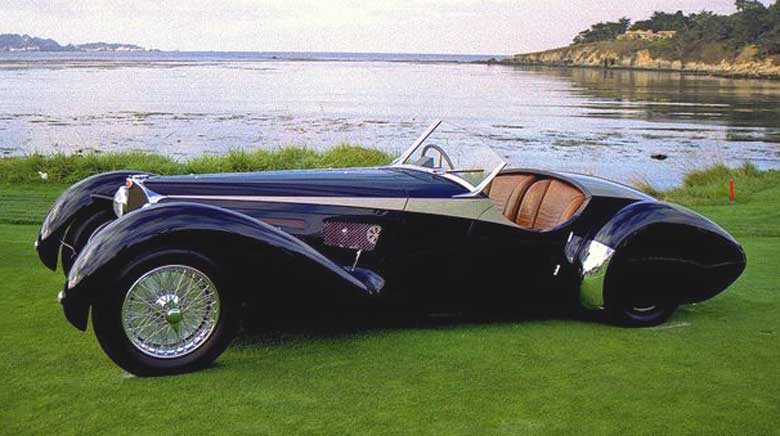
But the top header must fit the windshield, and only a narrow one will fit inside the body behind the seats. So what’s the solution? Wind wings. They cause problems of their own, which I’ll get to, but they give the windshield a wider sweep, greatly improving its appearance.
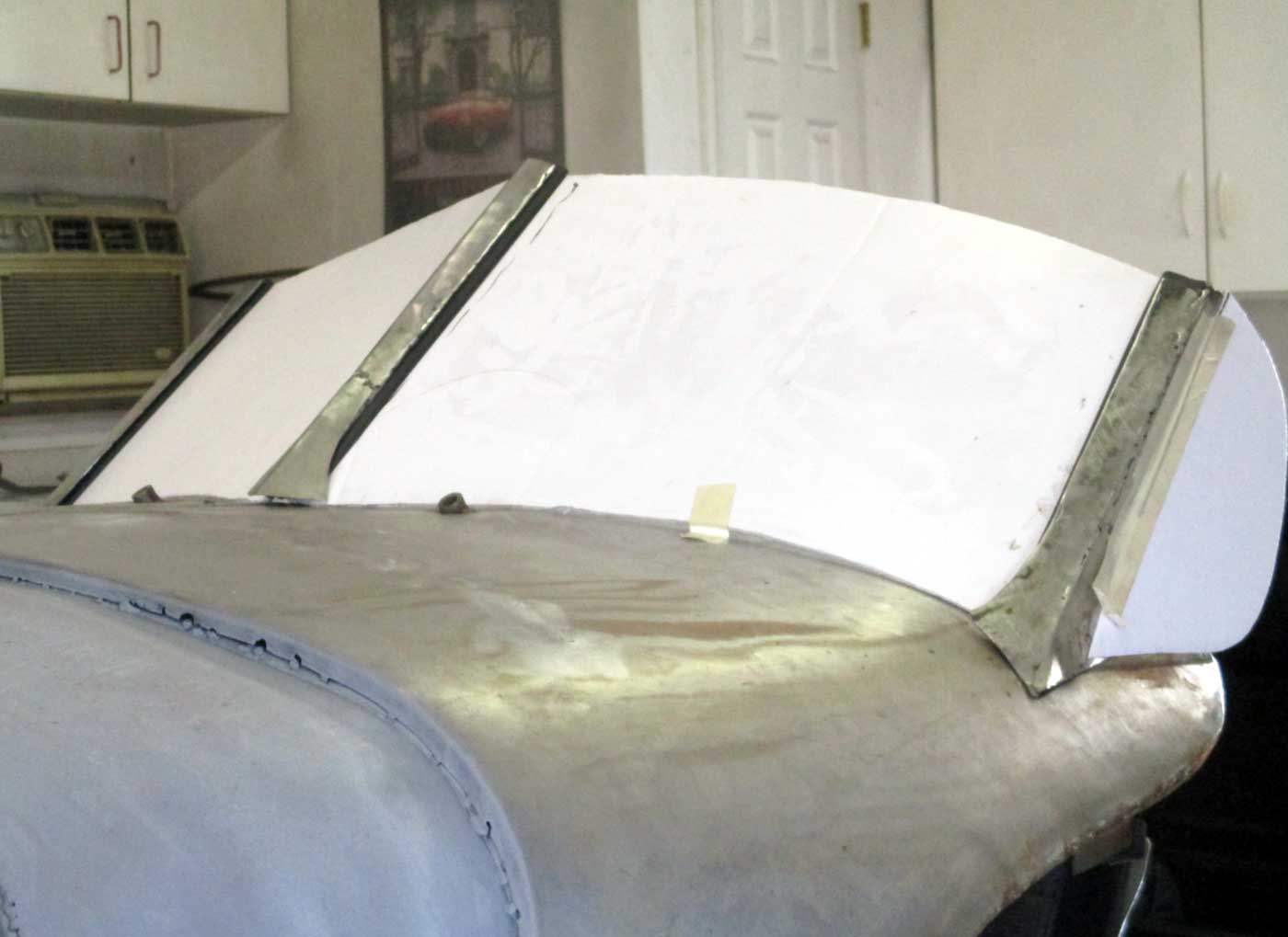
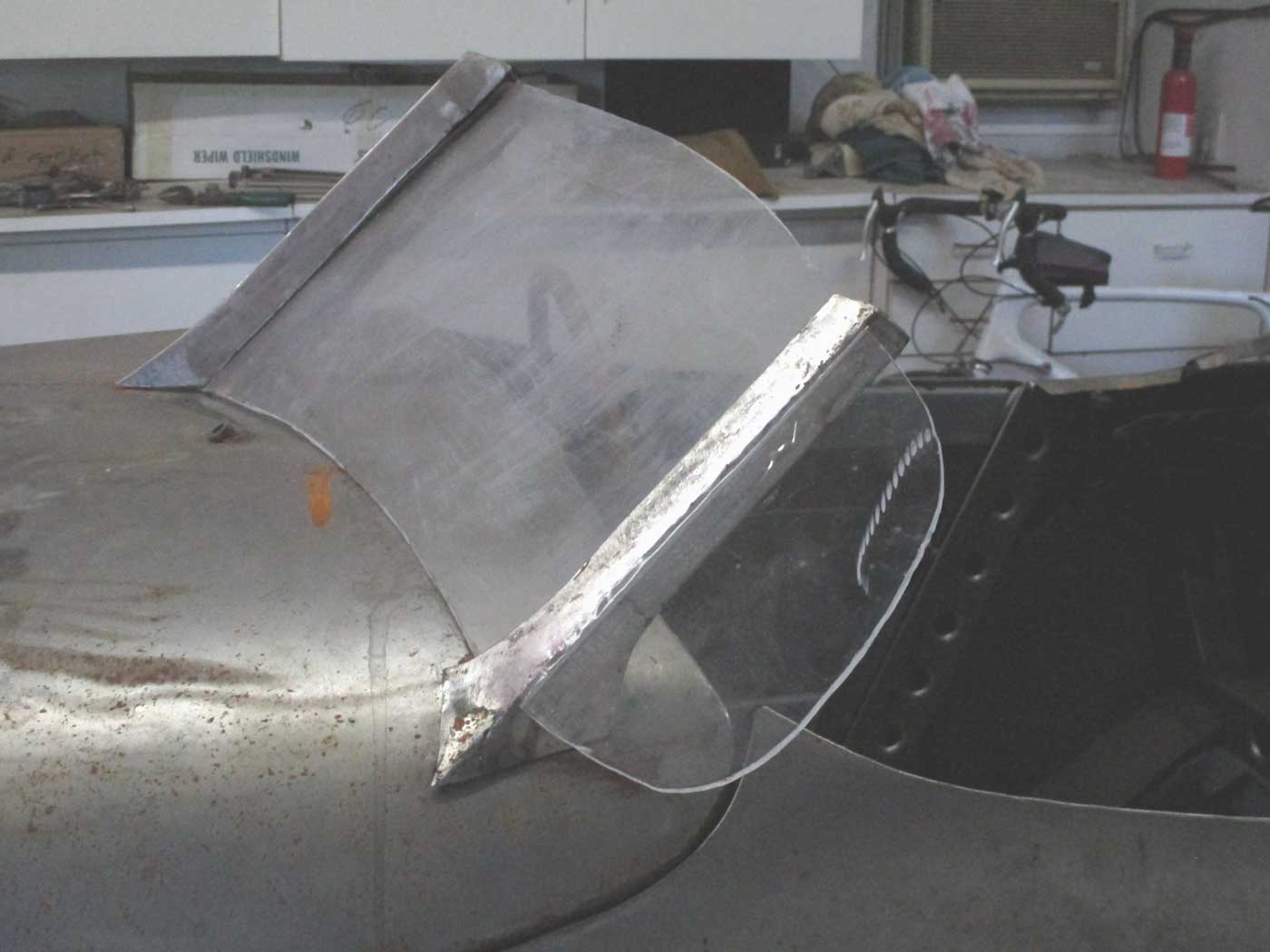
The flip-up lid also presented unexpected problems. One that I did anticipate was the hinge design. A simple hinge, like those on a house door, only works if the door and opening are perfectly straight. My car’s rear deck is arched. So to clear, the lid had to come up and back when it opened. For this, hinges with long curved arms are needed.
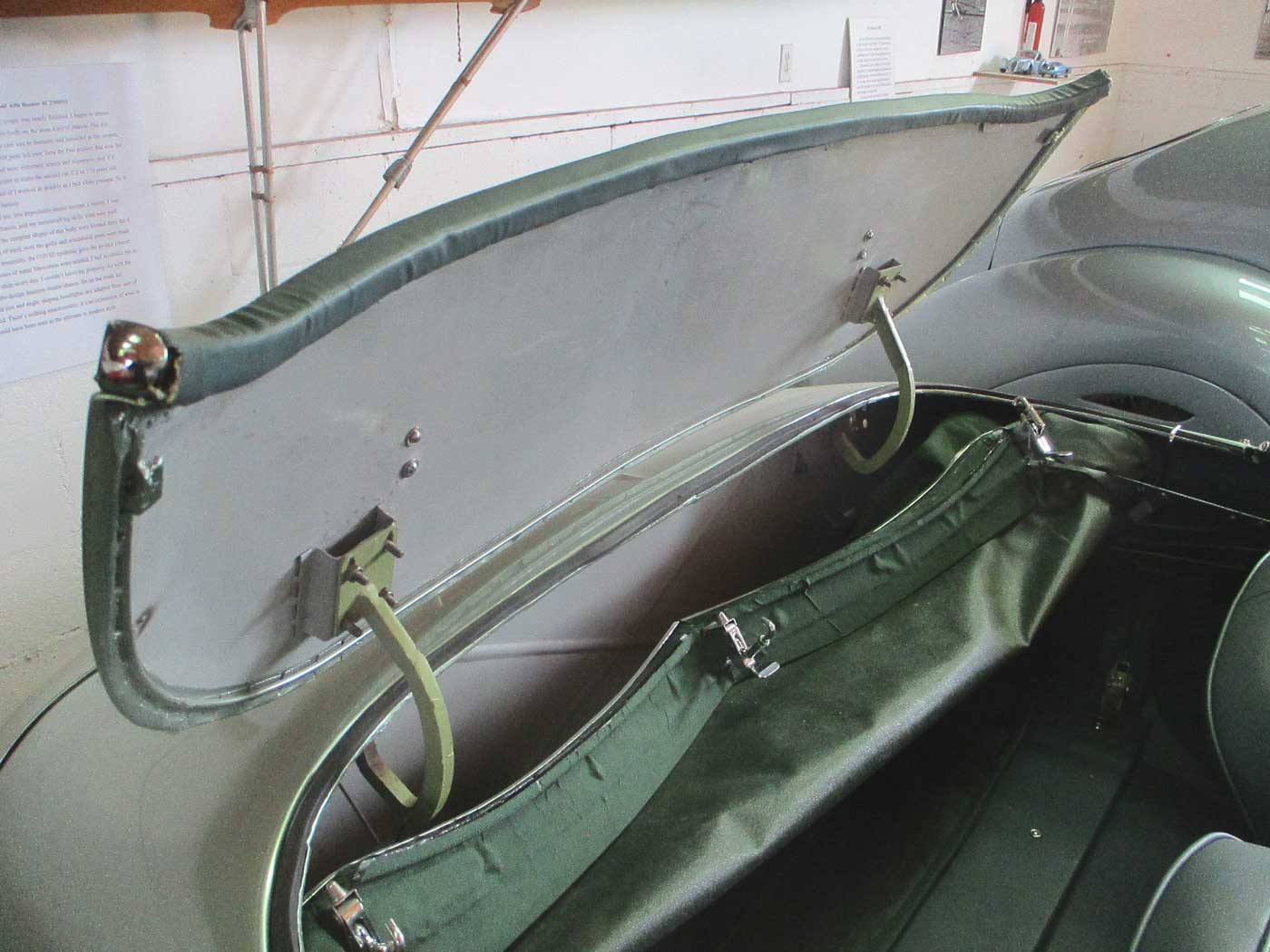
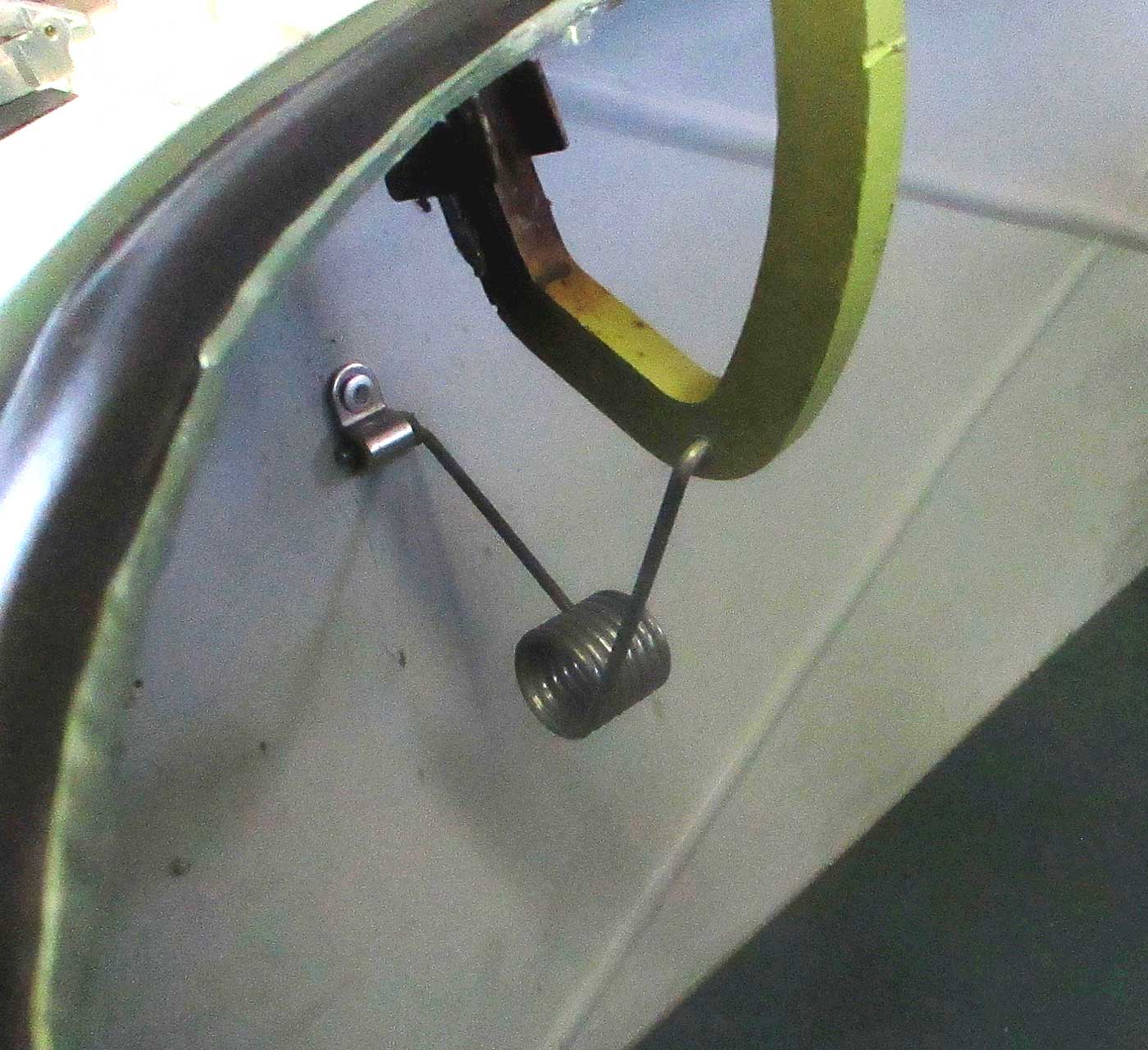
I got a pair. So far, so good. But when putting up the top, you won’t have an extra hand to hold the lid up. And there’s no room for a simple prop–the top fills the opening. Springs just strong enough to keep the lid open would be ideal. But what kind of spring? In what position? And how do you describe a spring? Their tension and travel vary continuously. I went to spring catalogs, and found a huge variety–compression, extension, rotor, strip, torsion, linear wave, garter. And for the expert, all the data was there–wire diameter, spring l.g. @ max. torque, max. torque, in. -lbs. But what did all of this mean? What did I really need? The solution was a simple-looking torsion spring, giving no hint of the effort it cost me.
The top itself I thought would be easy. Buddy’s Auto Upholstery and Top had a good reputation; no doubt they could make me one. But when I went there and asked, they looked at me as if I were crazy. Make a top? No way. They just install them. Nobody makes tops except specialists. Give them the make and model, and they’ll make one from factory specs. A one-off 1948 Alfa? You’re joking.
The only way I could get a top for my car was to make one. I was totally unqualified for the job, but it had to be done. I had one break: a friend loaned me an excellent heavy-duty sewing machine he’d used for sails. I spent some time puzzling over the instruction book, learning how to run the thread and make a seam. Then it didn’t work right–it needed a new tensioner. Finally, after watching some how-to videos online, I began on my top.
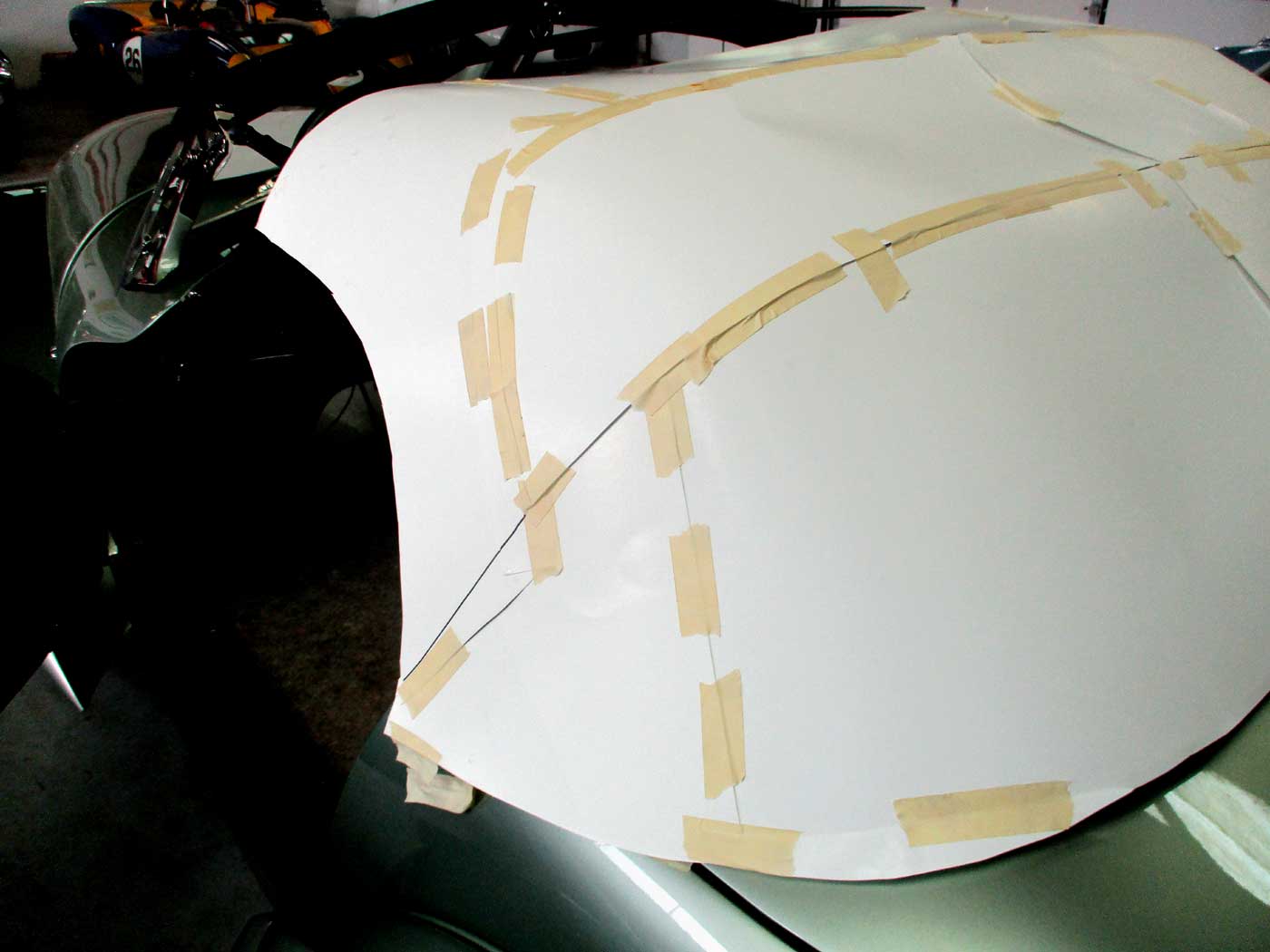
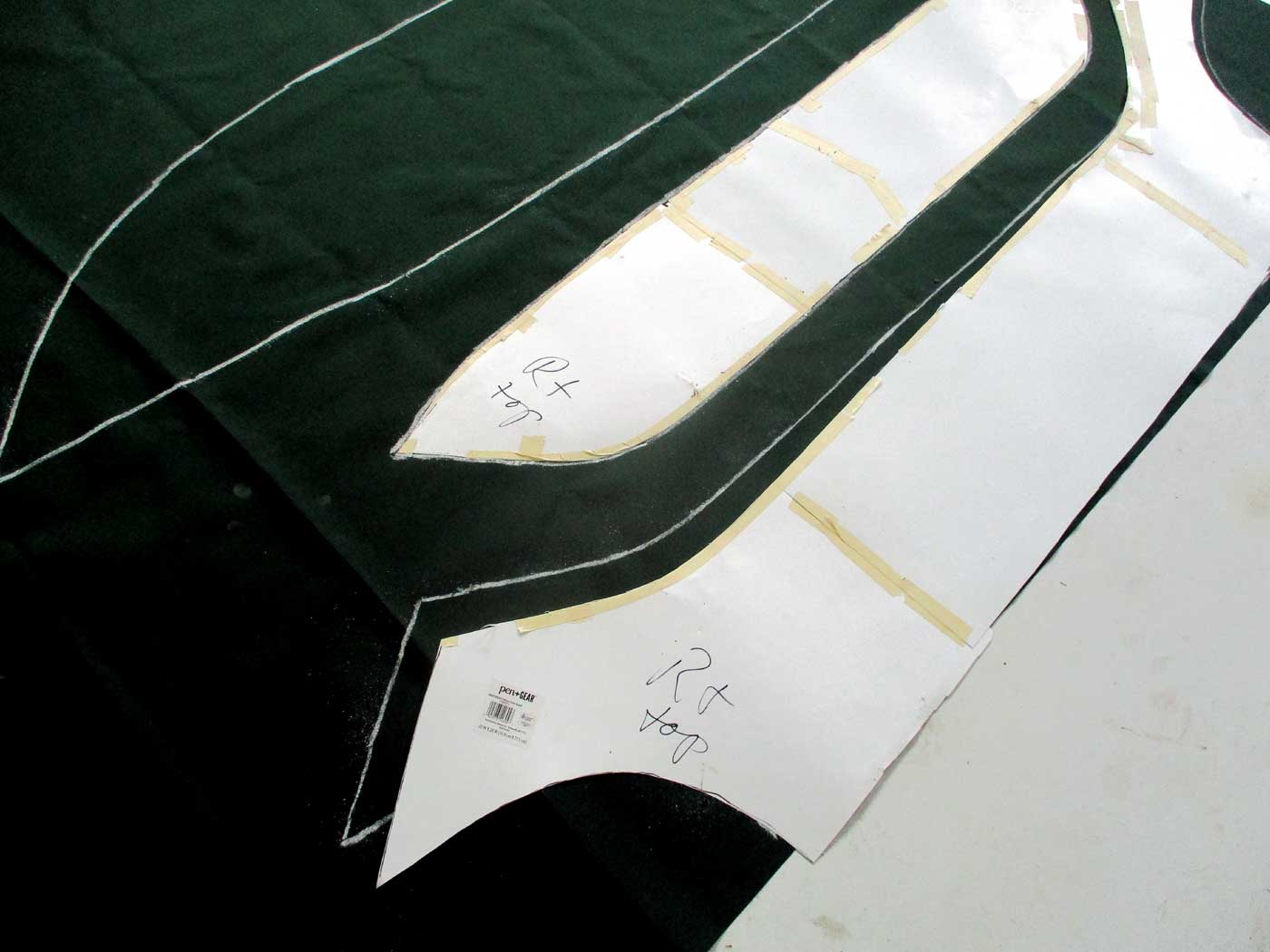
I started from first principles. A wrinkle-free top has exactly the right amount of material from one bow to the next. Construction paper doesn’t stretch. So a taped-together paper top would, in theory, provide accurate patterns. I made one, cut out cloth sections to match the paper outlines, and carefully sewed them together with the double-up seams I saw in the online videos. I put in the rear window just as the video instructed me to, with no problems. After inspecting another roadster’s top, I added side panels to cover side curtains.
Then came the big test: what would it look like when I finally put it on? It wasn’t bad, but was not as good as I’d hoped. The main panels were tight and smooth. But there’s no tension on the sides. To keep them wrinkle-free, experienced top makers sew on a stiff backing that is still flexible enough to fold when the top is down. I still don’t know what this stuff is, but my top is readily removable, so sometime in the future it can have this modification.
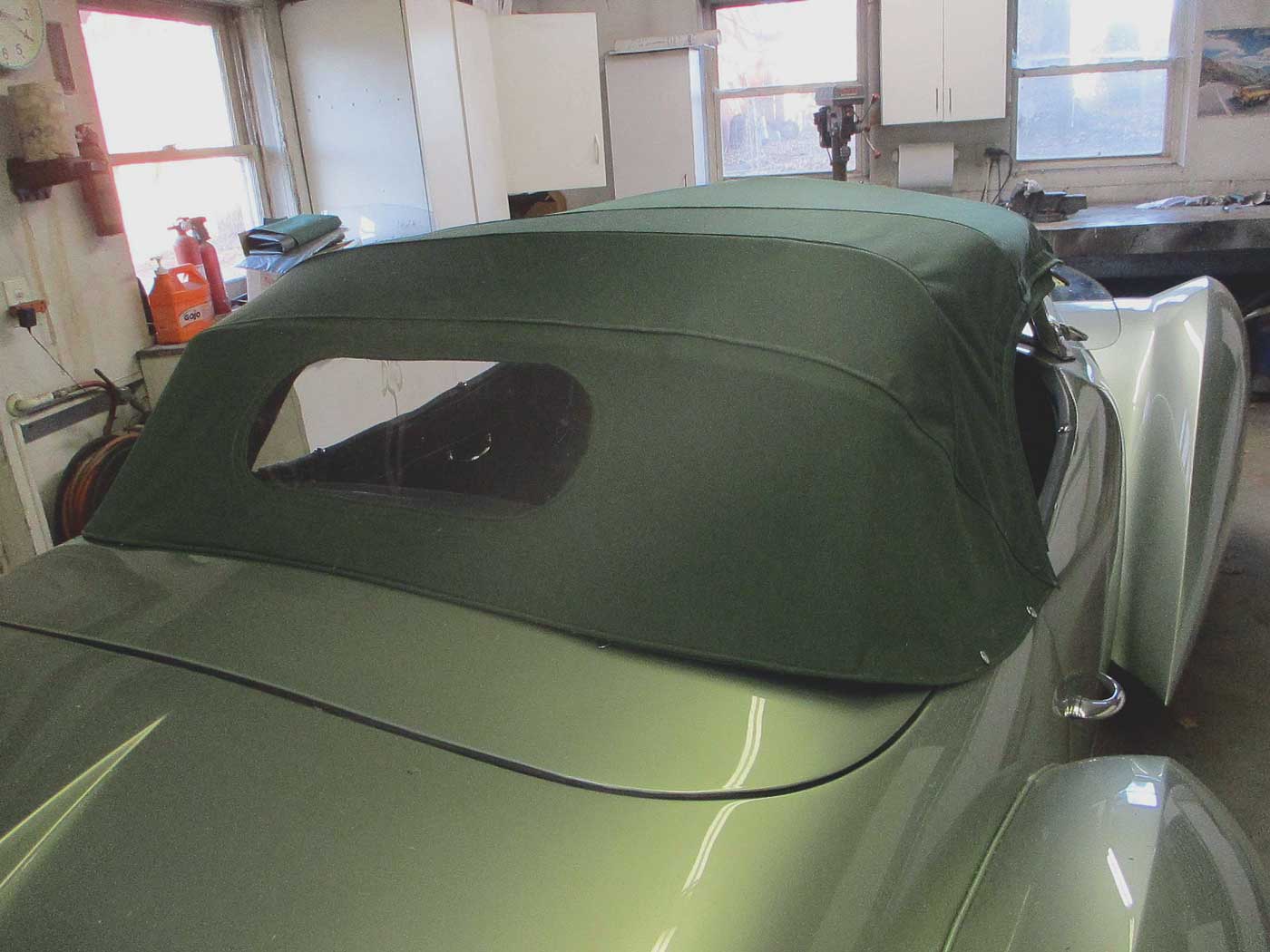
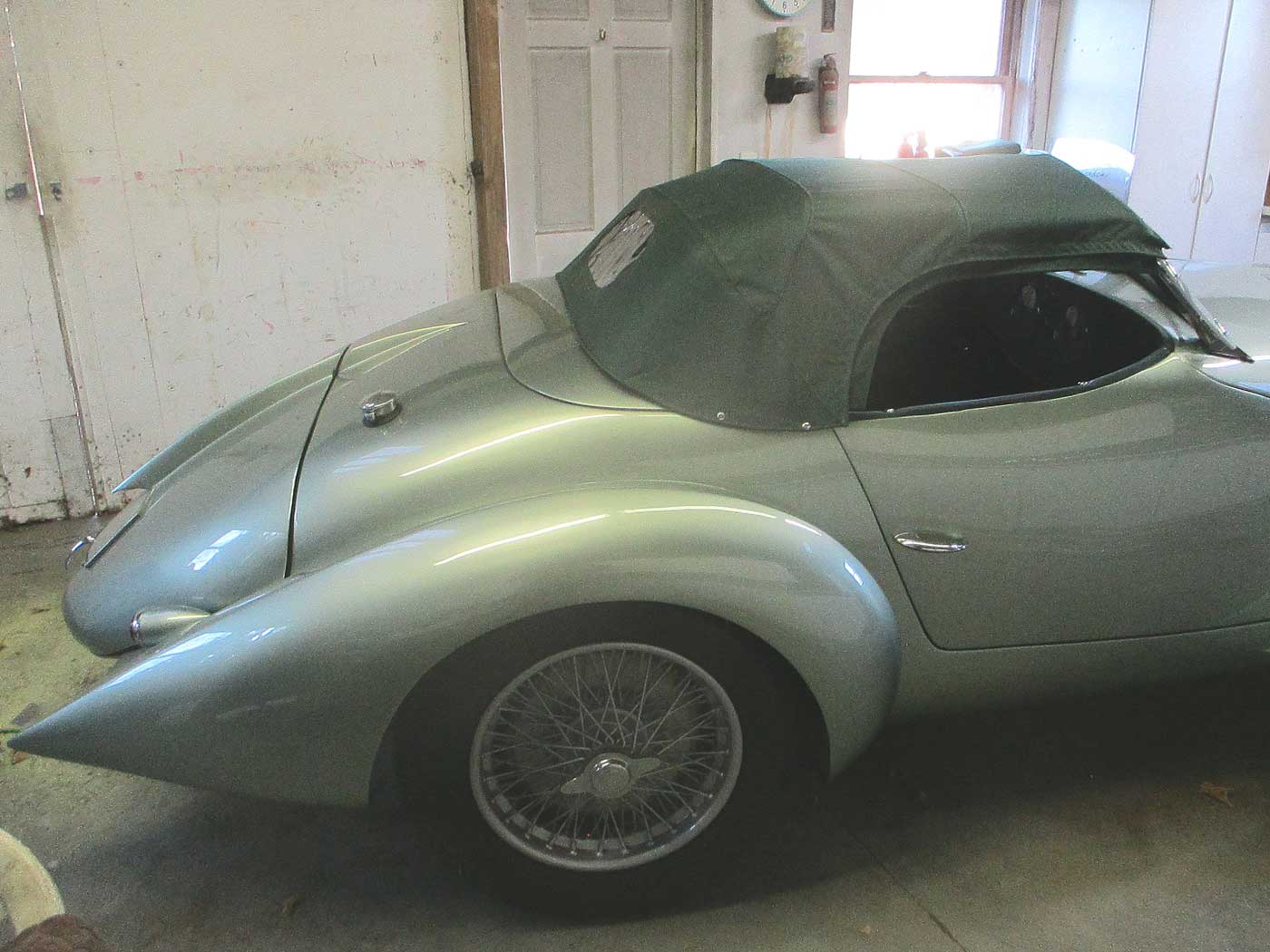
I even made a pair of side curtains. Even though they fit nicely underneath the edges of the top, and extend forward to the windshield, when put to the test of a serious rainstorm they would undoubtedly leak–but all side curtains leak, in my experience with them. A more serious problem is that they interfere with the wind wings when the door closes, unless the wings are spread wide. How did period coachbuilders solve this problem? Simple answer: they didn’t. Very few of the cars that inspired my roadster had side curtains–or wind wings.
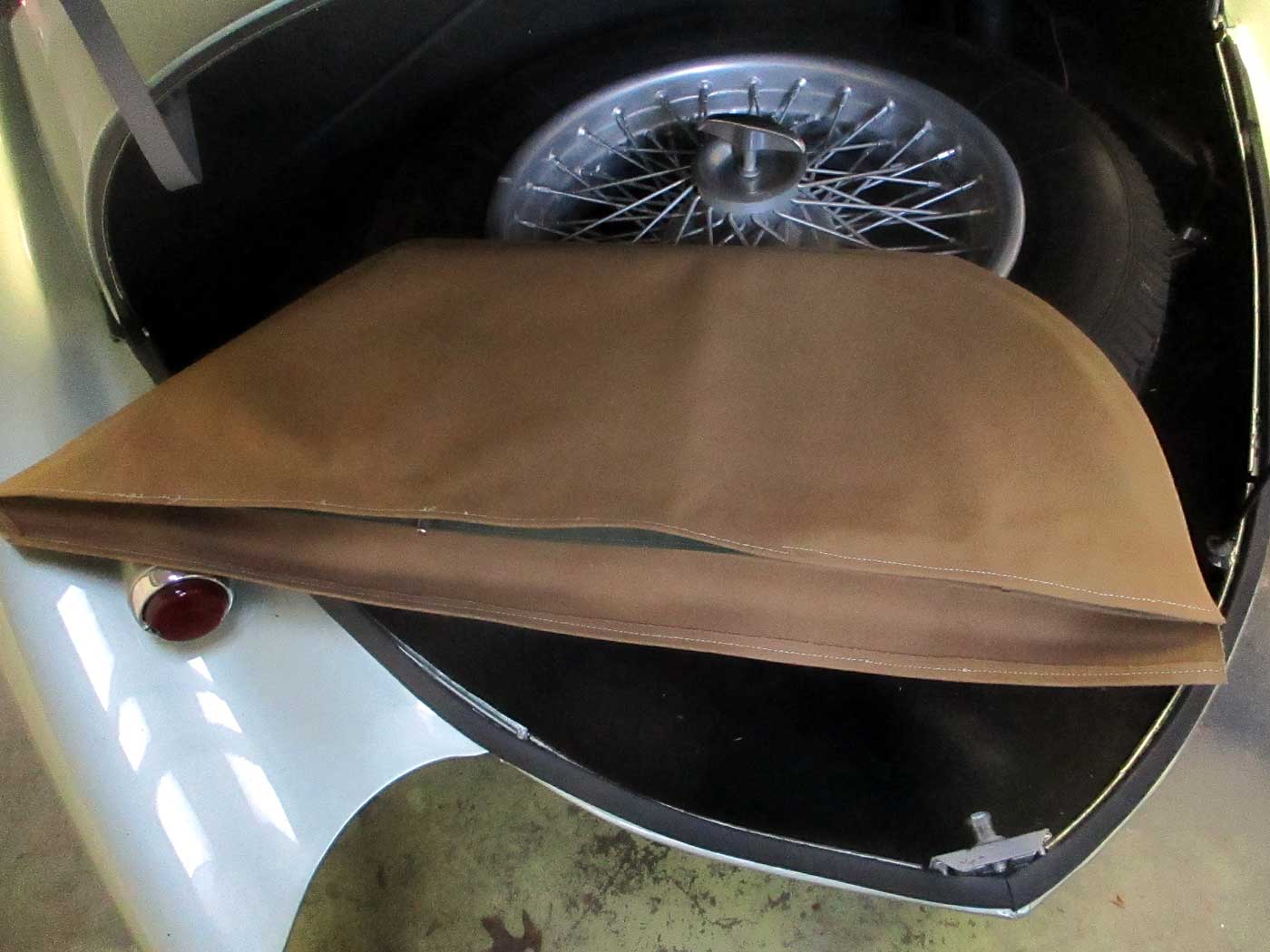
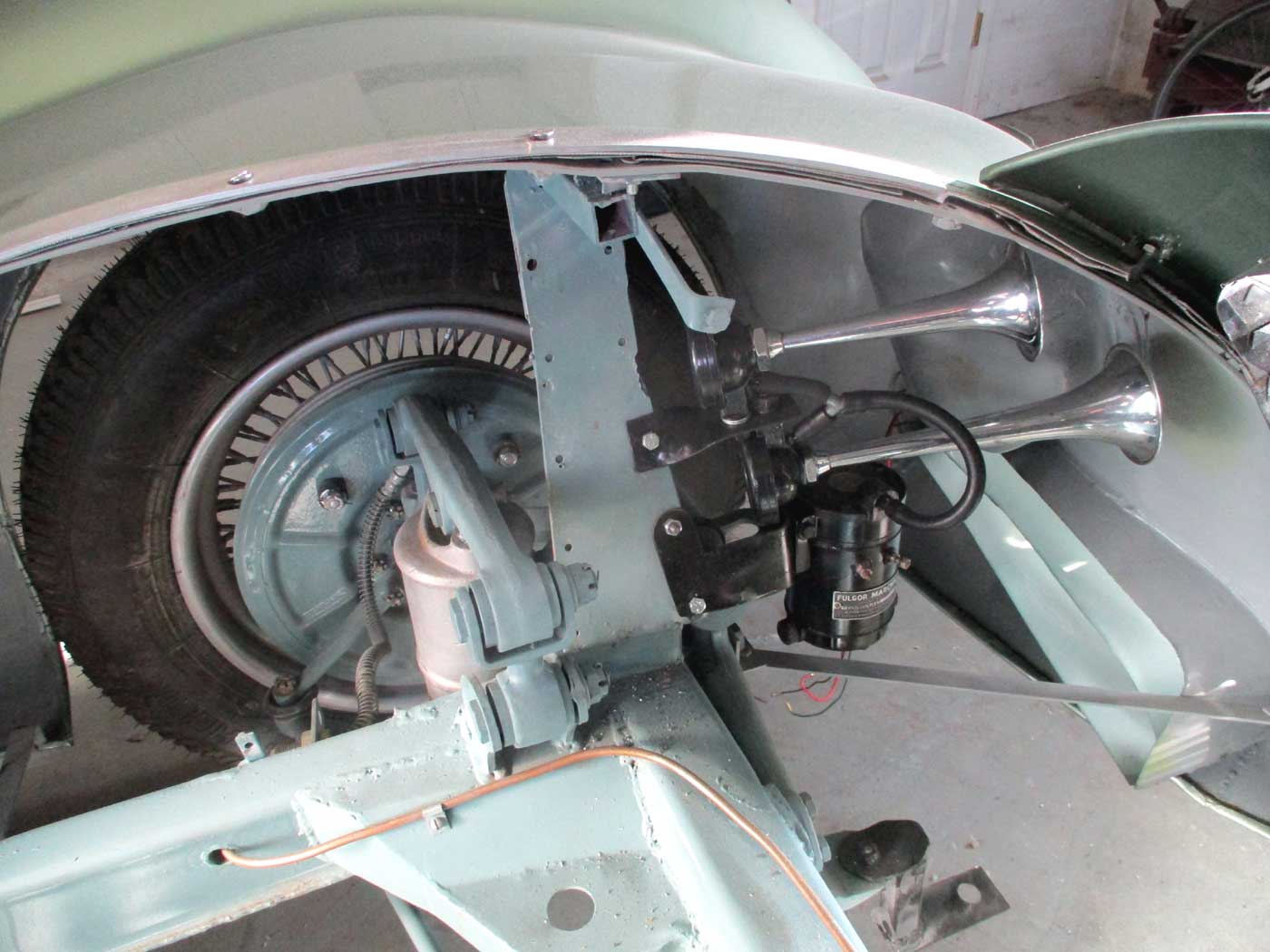
Months went by. My engine was promised no later than Thanksgiving (late November). It’s now April. No engine yet. So I’m adding items to the to-do list that I might have postponed or never even thought of. I made a Haartz cloth storage bag for the side curtains. I found period Marchal air horns that are sexier looking and sounding than stock Bosch horns. I cleaned them, adjusted them, put them on.
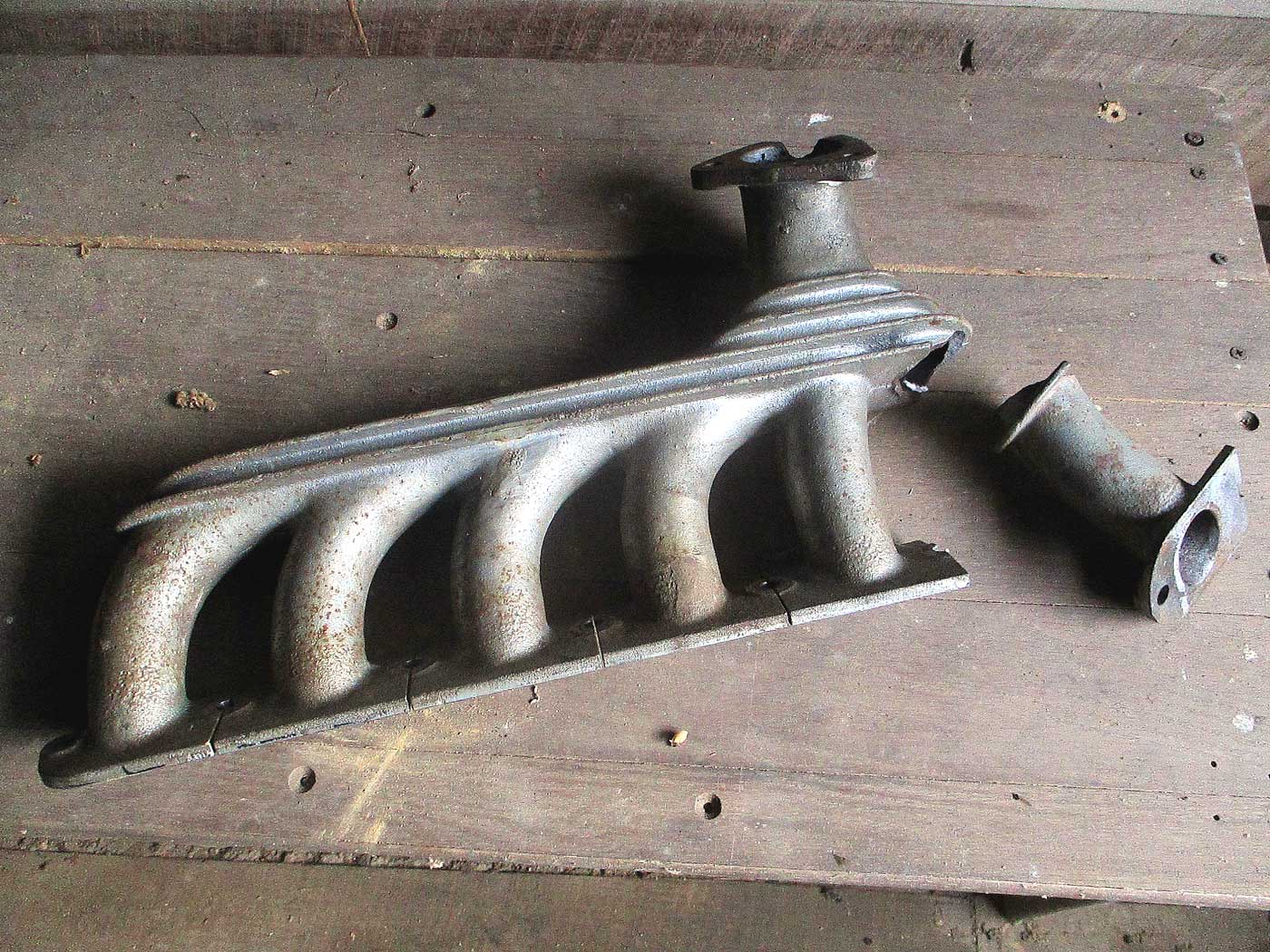
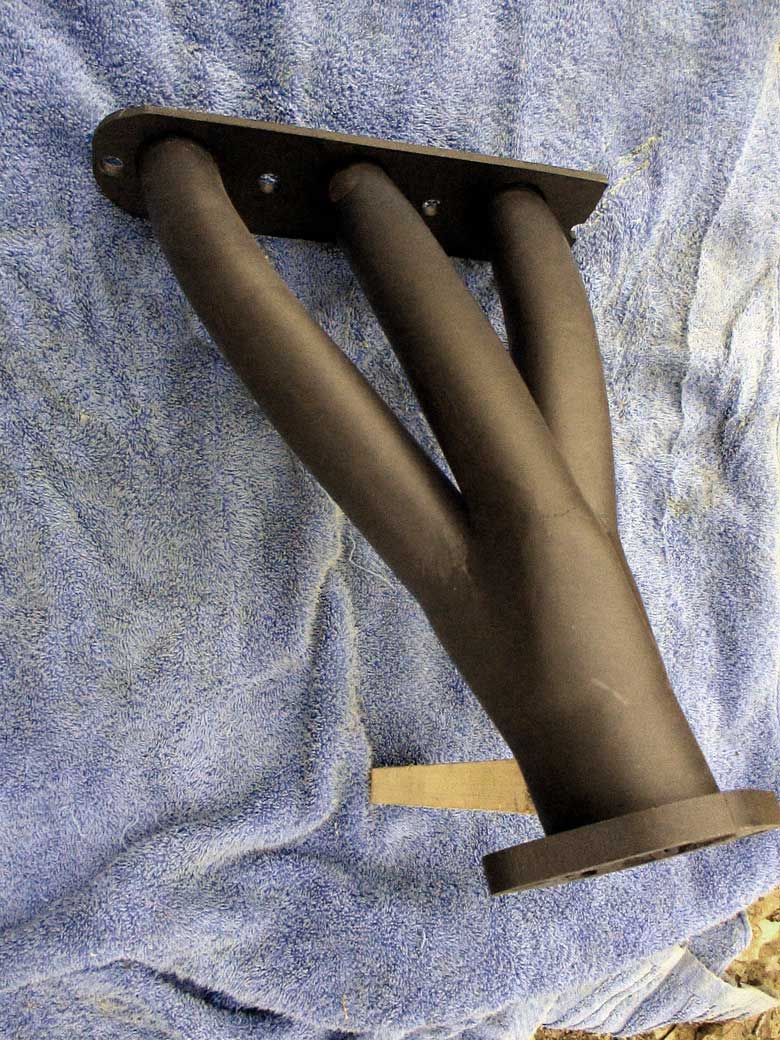
I knew that I had only a broken exhaust manifold. Probably it could be fixed, but I was told that free-flowing headers make a big difference on these engines. How do you make a header? Muffler shop benders put kinks in pipes. To do it right you need to fill them with sand, then heat them–a complex process. But I had some time, so got to work. The result was better than expected.
Until the engine arrives, this story can have no ending. But it’s promised “soon.” No doubt I’ll have further adventures putting it in and sorting out all the related puzzles, but the next chapter should be the last one. If I’m lucky, it will be short. But let’s not get out the champagne yet.
The best line I’ve ever heard “The solution was a simple-looking torsion spring, giving no hint of the effort it cost me”! How I can relate – framing houses with ancient barn beams and hand-forming the new wooden under-dash framing for a 1939 BMW 327 Cabriolet! My hat is off to you.
Simply mind boggling the talent Mr Wilson possesses ! Congratulations on a job well done
I certainly hope you will write a book
Paul – You remind me of my Dad (Tony Wilson) as far as the lack of extent as far as your skills. You hit something you haven’t done before, and you then learn some more and accomplish what you want to do. He restored 3 cars when I was a child, the last being his ’46 Triumph 1800. He needed a place for his shop, so he built a garage. He wanted to go sailing, so he built a sailboat. With the Triumph, he re-upholstered the interior from scratch, and then the soft-top. He was an architect, but was also a professional as far as building models whether from scratch or modifications of existing models. I wish that I had realized this all when I was a teenager! My oldest is also Paul Wilson, because of the Beatles. LOL
Thank you, Charles Meschter, for encouraging me to put these stories into a book. I’m at the tipping point, on whether to do it. There’s an up-front cost I’ll probably never get back. The potential audience is tiny. But I’ve worked so hard and long on the cars, that a book telling what they are and how they were made would complete the project. It’s a logical last step. Expenses: 20-gauge steel, welding gas, paint, printing costs, paper . . .