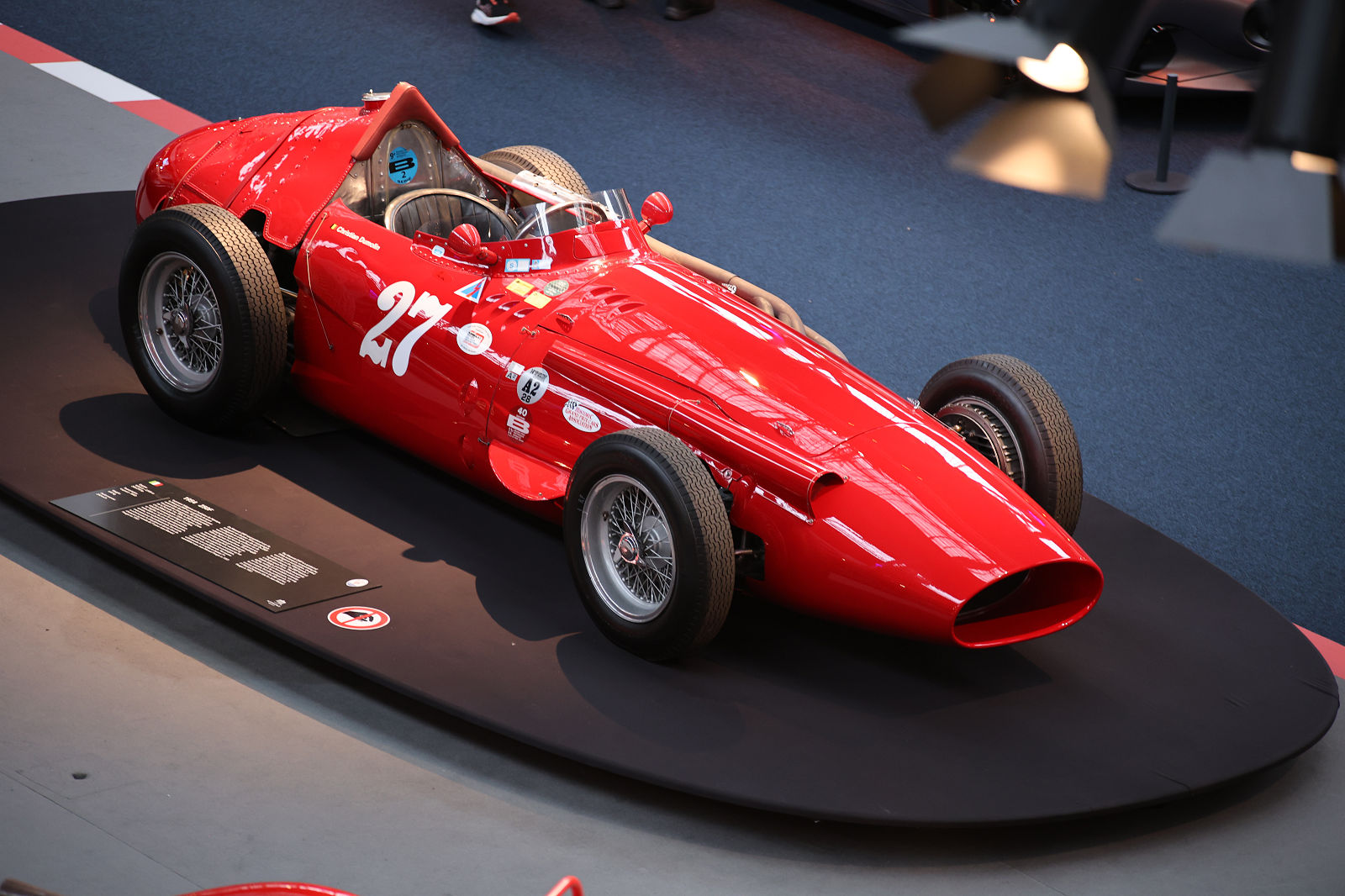
Appearing in 1954 with the new Formula 1 regulations increasing the engine capacity to 2.5 liters, the Maserati 250F has a tubular chassis. With its simplicity and elegant line, it symbolizes motorsport in the 50s. Its track record will culminate with the world champion title of Juan Manuel Fangio in 1957. Photo by Hugues Vanhoolandt
Text by the Editor
We shall not bemoan progress nor ignore change nor think that things were better in the past.
But wasn’t the Maserati 250F the greatest car of the greatest period in Grand Prix racing?
We think so. With 37 Grand Prix victories* credited to the 250 F (37 to Ferrari as well but with three different models), raced by every champion and would be champion, the 250 F was at once primitive, perilous, passionate, powerful, prolific, and praiseworthy, not to mention beautiful.
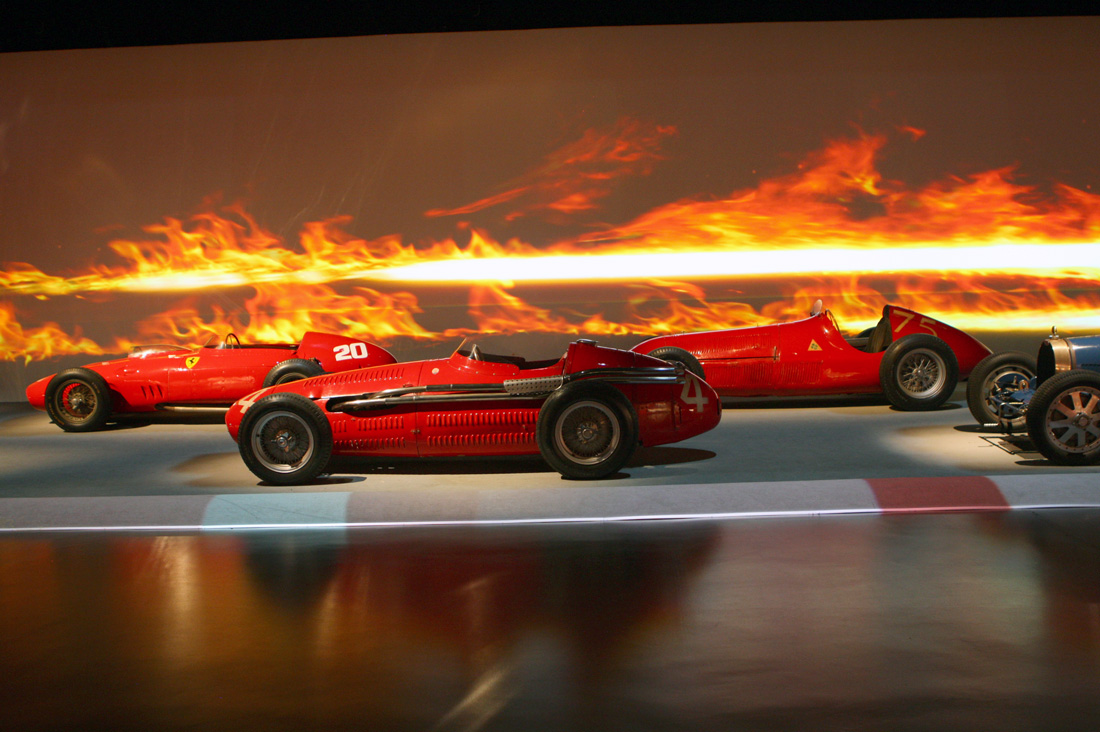
Photo by Jonathan Sharp
(Since this is part of a series on this subject, it would be nice to know if readers agree or disagree with our opinion, and send a quick email to that effect to pete@velocetoday.com.)
On the shoulders of giants
The 250 F is surely worthy of the magnum opus accorded to it by authors Walter Bäumer and François Blachette. Upfront and throughout the two volume set, the authors credit the ones who paved the way; Denis Jenkinson, Anthony Pritchard, David McKinney and above all, Barrie Hobkirk.
Order here
Walter Bäumer explains his connection with the late Barrie Hobkirk (who died in 2019) in a post in the Autosport Forum https://forums.autosport.com/topic/229740-maserati-tipo-250f/
“Barrie was very interested in the 300S, and we exchanged a lot of information about the 250F and the 300S. In 2012, Barrie expressed great interest in collaborating on a new book about the 250F, as he found the visual aspect of the David McKinney book too outdated (referring to the book Maserati 250F published in 2003). Unfortunately, this didn’t come to fruition due to Barrie’s worsening illness. In 2014, Barrie sent me all his documents and research results on the 250F. When Jeff Blachette and I were planning the 250F book, we knew that the vast majority would be based on the work of Barrie and David. However, since David’s book, there were also some new details and aspects that we incorporated into our new book. For example, an old photograph of the missing #2519, which even Barrie didn’t have.”
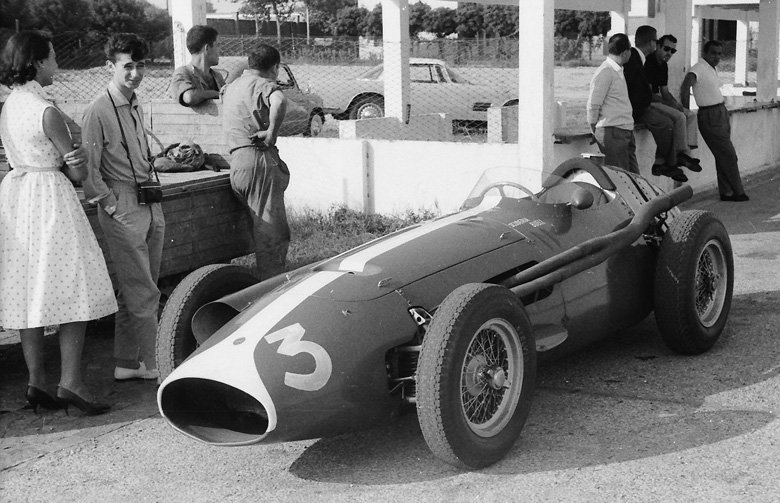
Temple Buell was a great enthusiast who wanted to compete in Grand Prix racing. Swiss journalist and fixer Hans Tanner helped him to buy two Maserati 250Fs from the factory. This is one of them (Chassis 2534) photographed at the Modena Autodrome in its new blue and white livery.
Barrie was widely respected as a historian, and was on hand to help Graham Gauld track the confusing past of the Temple Buell 250F in 2014 for a piece in VeloceToday. Writes Gauld:
“In 1958, I saw this Maserati for the first time at the Modena Autodrome. By that time Maserati were in real financial trouble. They had ditched the factory racing team at the end of the previous season and so when American enthusiast Temple Buell arrived in Modena in 1958 looking for a couple of cars to race Maserati were more than willing to sell them to him.
“When I originally drafted this piece I decided to check out my photos with the man I consider the world expert on 250F Maseratis, Barrie Hobkirk in Canada. Believe it or not, I found that had confused the two Buell cars even back in 1958, part of the reason being that apart from Denis Jenkinson, few journalists ever looked for chassis numbers. Hobkirk has made an exhaustive study of these cars and supplied a lot of information to the late David McKinney who wrote the so-far definitive book on the 250F. Thank goodness I did, because he was able to sort out which car was which and not end up in the do-do.”
A word about the 2.5 Liter Formula: The glorious and romantic era of the 2.5 Liter Formula began with the 250 F and ended in a sudden revolution that changed simply everything (aside from the driver’s talent and bravery) about the sport….
On January 14, 1954, just days into the new 2.5 Liter Formula, Stirling Moss purchased Maserati 250 F sn 2508, with which he won 10 Grand Prix* races including a Monza drive which got him a chance to join the Mercedes Benz team for 1955.
On January 19, 1958, exactly four years and 5 days later, Moss brilliantly drove the rear engined Rob Walker Cooper T39 to victory at the Argentina Grand Prix. It was the first time a Cooper had won a Grand Prix, and the first time a rear engined car had won a Grand Prix since 1939. The revolution had begun and the days of the classic front engined race cars were numbered.
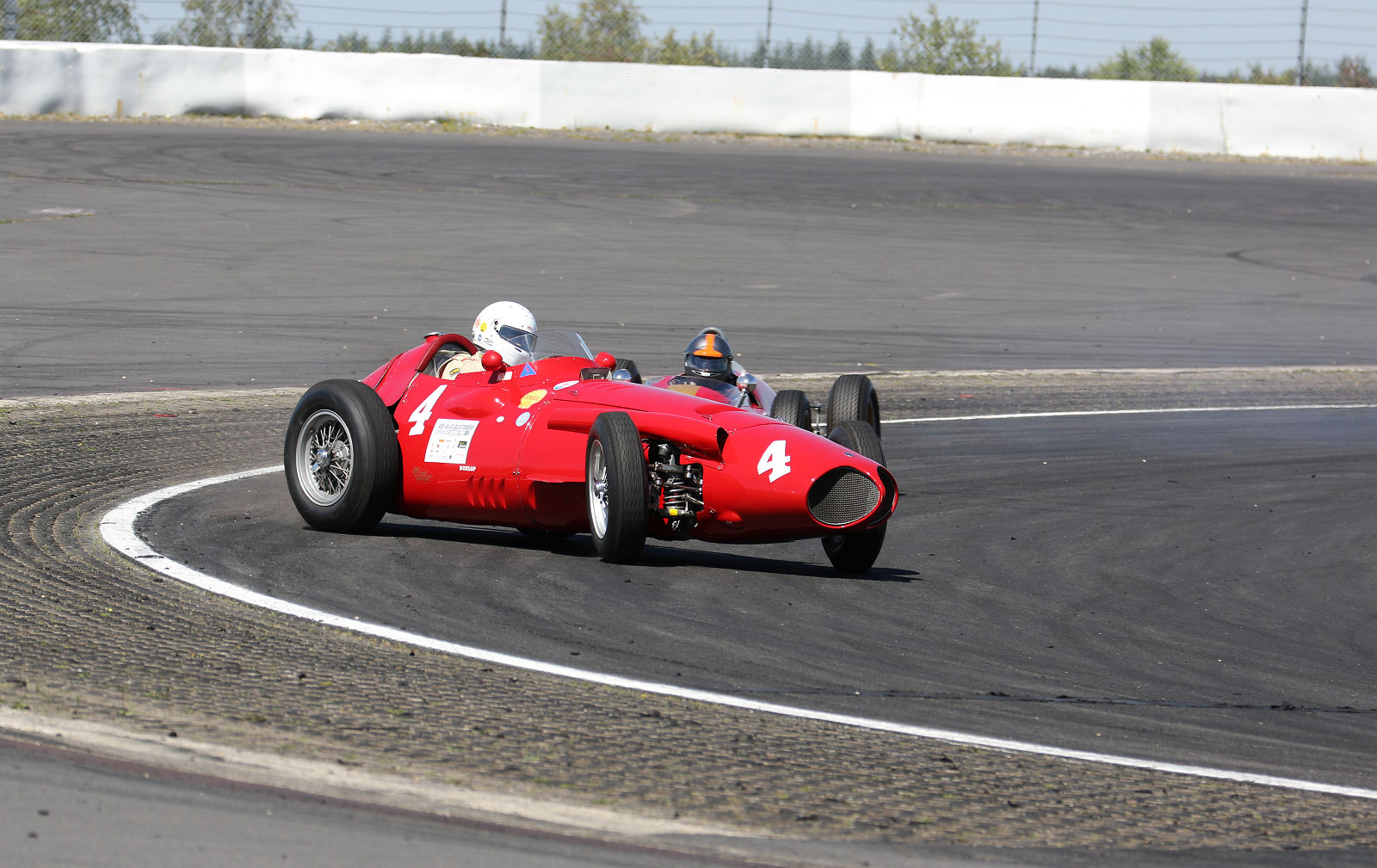
And what is that sneaking up on the Maserati? Photo by Hugues Vanhoolandt
All photos courtesy Hugues Vanhoolandt, Jonathan Sharp and Alessandro Gerelli and do not appear in the book
*Grand Prix victories list by the late Clyde P. Berryman in “QPRS F1 Grand Prix Racing by the Numbers” and include the much fewer in number grand épreuves,(great challenge) counting toward the world championship
David McKinney was a good friend and I had a number of exchanges/ interactions/ whatever with Barrie Hobkirk over time. When the McKinney/Hobkirk Tipo 250 book was published in 2003, Barrie sent me a treasure trove of spreadsheets and other material he had put together from his research. Along with my many discussions with David and his sharing of material, I now had a rather significant amount of material to add to my own research on the 250F series. Denis Jenkinson and Tony Pritchard more or less led the way, but it was Barrie and David who did the skullduggery that sorted out the pieces and provided the many “AHA!”moments from the book and spreadsheets.
But, I was still curious about the various puzzles that I could not solve or resolve or sort out during my research. While my research led me to coming close — but not necessarily THAT close — to what David and Barrie had unearthed in their research efforts, I was reasonably well-informed on the 250’s (and the A6GCM’s) exploits. As a historian, I was simply curious as to what I had missed and why.
It took a bit before it finally dawned on me that Barrie provided what was to me A Blinding Flash of The Obvious to Even The Untrained Eye: the engines. It was not that obvious at first, of course, but once I sat down and put together a database that was based in what engine was in what chassis at that moment, a pattern began to appear that took me a bit to actually comprehend. Part of that hesitancy was that the accepted criteria of assigning an identity to a car is by its chassis — which is exactly what David, Barrie, Jenkinson, Pritchard, me, and everyone else had done with the 250F cars.
But, what if identity for the 250F by those at the factory was being conferred by the engine rather than the chassis? That simply did not compute, as they say: Identity = Chassis. Yet, there it was. Once I aligned the engines with the assigned identities it just fell into place. Heresy of the worst sort of course. Blasphemy. That it also aligned with the A6GCM data from 1953 that Barrie provided didn’t help of course. Heretic on the loose.
I was unaware that Barrie had provided Walter with access to his research material in 2014. Partly thanks to David’s death that year, of course, and partly due to knowing that Barrie was having health issues. So I was surprised when Walter contacted me as to whether or not I had any of Barrie’s materials several years ago. Which I provided to him, naturally.
Someone who needs to be mentioned is Trevor Lister of New Zealand. He looked, independently, at the same materials that I had and realized that the paradigm that I suggested regarding the engines seemed to work quite well when it came to the issue of identity. Nice to have a fellow heretic and blasphemer…
My copy of this Tipo 250F book will join the other similar books of mine very soon at Belmont Abbey College (Belmont, North Carolina) as part of its Motor Sport Special Collection.
Thanks very much for your input!
Pete
our best man, charles lucas–titan cars–had a 250f. i had a small horizontal-format book on the cars. charles looked up his serial number–it wasn’t in the book! who knows???