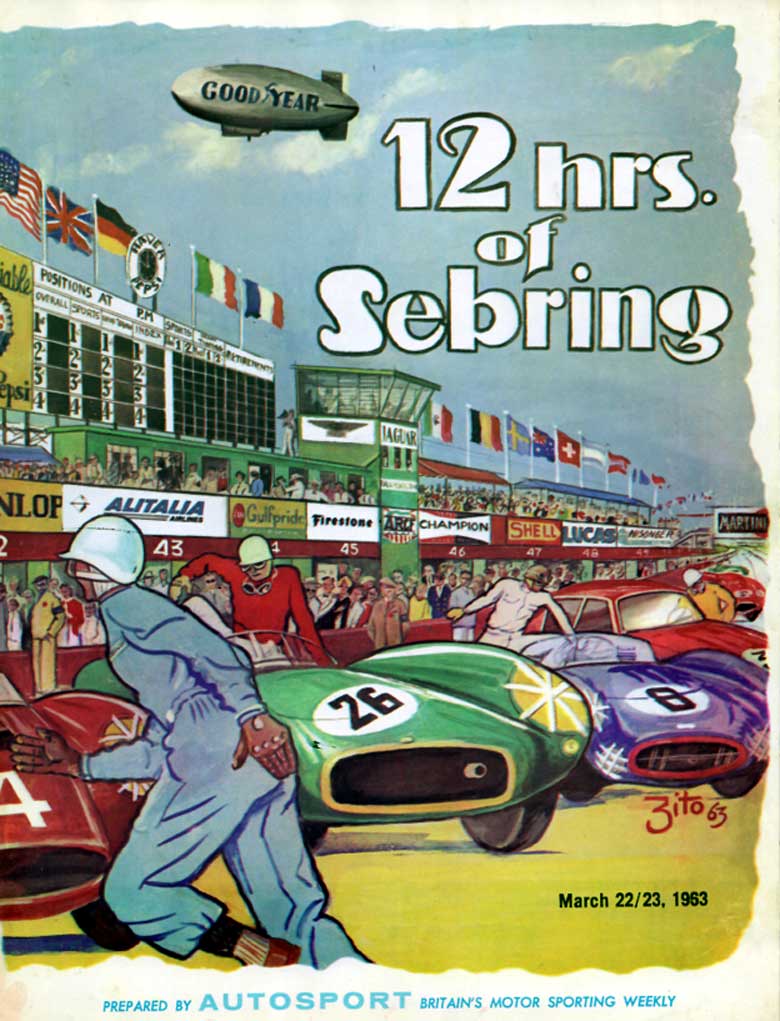
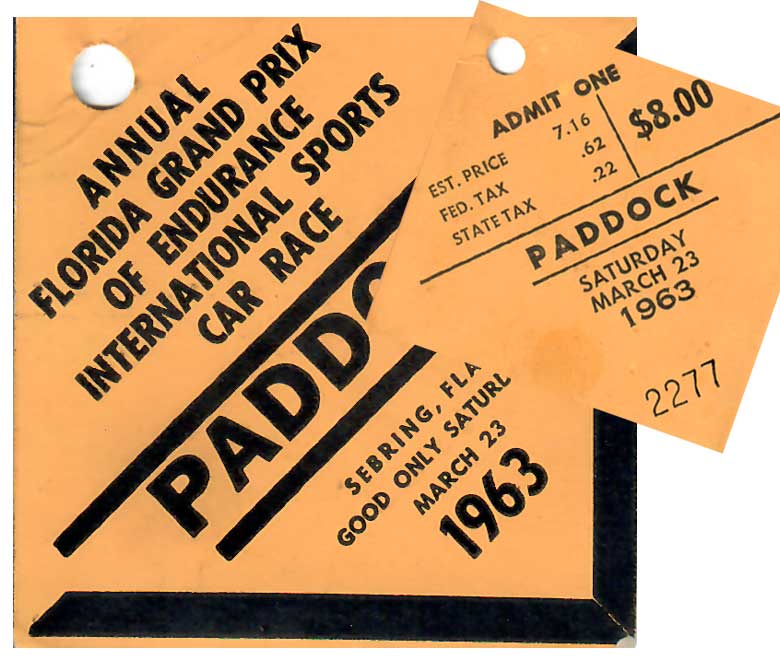
Twelve Hours of Sebring at the Sebring, Florida Airport on March 22-23, 1963
Story and photos by Jeff Allison
Jeff Allison continues the series looking at Ferraris he’s photographed – this time in 1963.
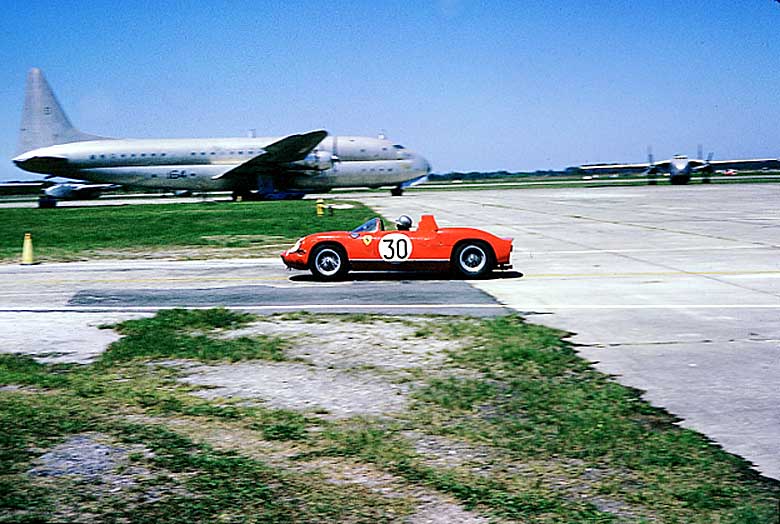
Ferrari 250 P (Chassis 0812), Sebring 12 Hours, March 22-23, 1963-jeff-allison
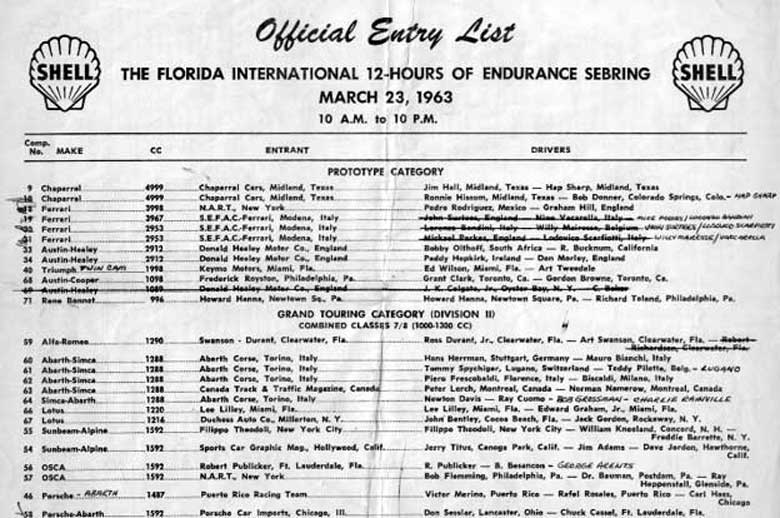
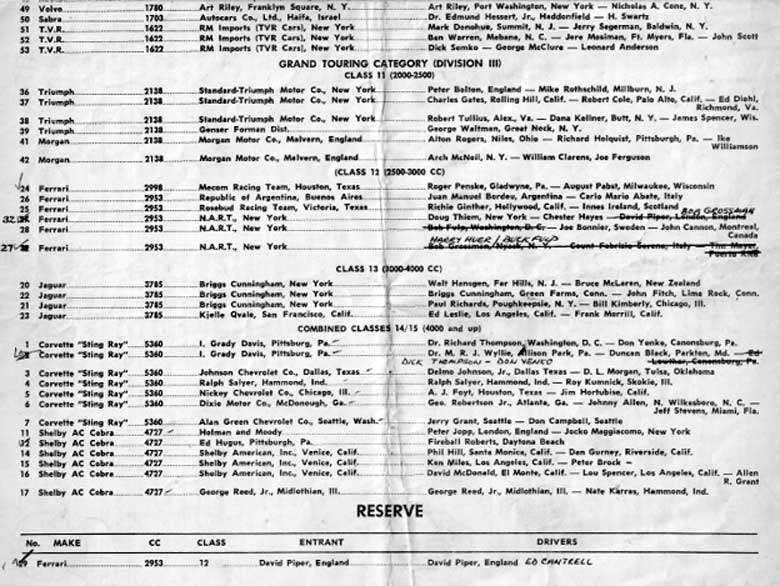
By 1963, the Ferrari factory was only racing rear-engine cars as in this works 2953CC V12 Ferrari 250 P for Englishman John Surtees (his first sports car race for Ferrari) and Italian Ludovico Scarfiotti to race in the Prototype GT 3000 class. Pininfarina designed a slab-sided body with a rear spoiler and a roll-over-hoop behind the cockpit. Some said the hoop acted as an air foil and provided an aerodynamic advantage! After stopping at the pits with a misfiring engine early in the race, Surtees set the fastest race lap moving to the front. Despite being hampered by fumes in the cockpit, the pair completed 209 laps and won over their sister works 250 P by one lap. Some sources believed the engine fumes in the cockpit were caused by the roll-over-hoop. In addition, the Ferrari won the Index of Performance and led an amazing Ferrari 1-2-3-4-5-6 finish.
Sebring impresario Alec Ulmann’s business (other than the Sebring 12 hours) was selling surplus military equipment, including aircraft, and he used the Sebring Airport to store them. In the background are two surplus aircraft: a ginormous Lockheed R6V Constitution (originally designated R6O) Constitution – one of only two of the double-decker transports built for the U.S. Navy in 1940 – and a Fairchild C-82 Packet used by the US Air Force as a cargo and troop transport aircraft after WW II.
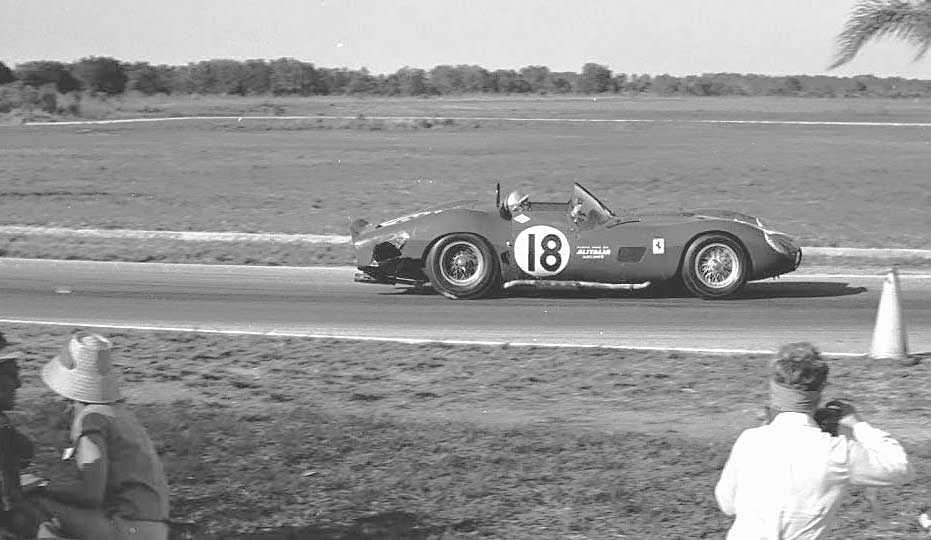
Ferrari 330 TRI/LM (Chassis 0808), Sebring 12 Hours, March 22-23, 1963-jeff-allison
Mexican Pedro Rodríguez (pictured) and Englishman Graham Hill drove the North American Racing Team’s one-off Ferrari 330 TRI/LM, which won the 1962 Le Mans as a works car. It passed to NART and Rodríguez raced it at Bridgehampton (won) and Mosport (second) and Masten Gregory at the Bahamas Speed Weeks (fourth in Nassau Trophy) in 1962. At Sebring, the car led seven of the first eight hours, but it wasn’t easy. According to several contemporary race reports, Rodríguez spun in the first hour, the tachometer quit, the right side exhaust manifold split, the right rear tire blew out at speed, (note the damage shown in the photo) a headlight burnt out, the generator went kaput, the engine overheated and the oil pressure was dropping. Somehow, it completed 207 laps and finished two laps behind the winner and was first in the Prototype GT +3000 class.
The white lettering just in front of the number roundel reads, “Flown Here by Alitalia.” Could this be one of the first examples of commercial advertising on a world sports car championship racing car? Also, notice the people behind the spectator fence, in danger if a car were to spin out of control.
Sebring 1963 was the last race of the venerable front-engine Testa Rossa racing cars and their variants that competed in the world sports car championship. The 330 TRI/LM achieved its purpose by winning the 1962 24 Hours of Le Mans, and it was the last front-engine car to win at Le Mans. The next generation, rear-engine Ferrari sport racing cars would carry the works Ferrari flag in the future.
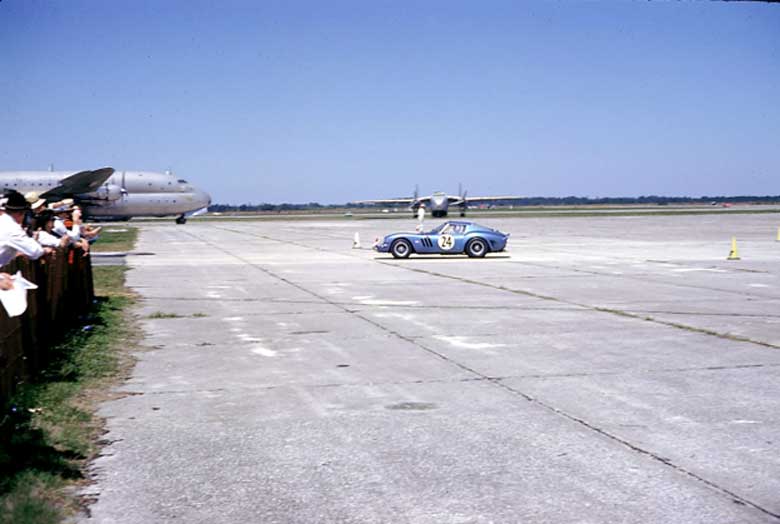
Ferrari 250 GTO (Chassis 3987GT), Sebring 12 Hours, March 22-23, 1963-jeff-allison
Leaving the concrete sections of the Sebring Airport and transitioning to the asphalt and concrete airport access roads is the Mecom Racing Team 2953CC V12 Ferrari 250 GTO driven by American drivers Augie Pabst and Roger Penske. The GTO was built in 1962 and was first raced by the North American Racing Team of Luigi Chinetti, which won the 1000KM of Paris at Montlhéry with the Rodríguez brothers. Then it went to the Mecom Racing Team, where it was raced at the 1962 Bahamas Speed Weeks winning every race it entered and later Penske drove it to a second overall at the 1963 Daytona Continental before Sebring.
The car ran in fourth overall most of the race, completing 203 laps and finishing first in the GT 3000 class – a whopping seven laps ahead of the second-place GT 3000 car, which was another 250 GTO. It was also the highest-placed of the six GTOs (which all finished).
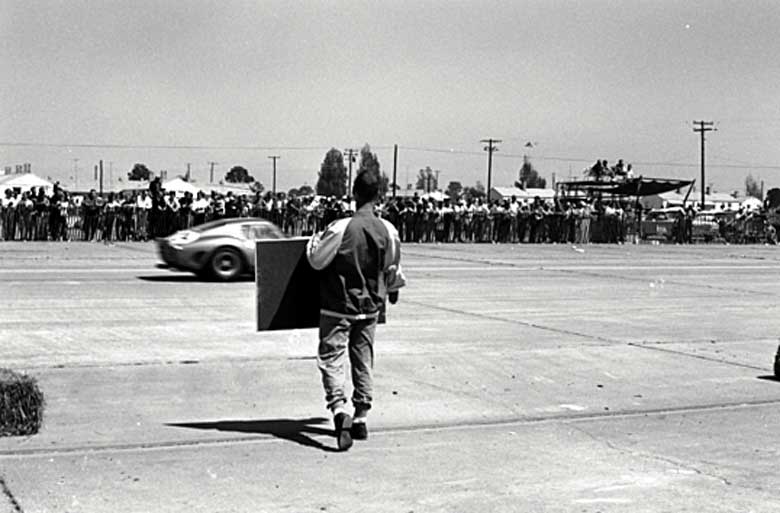
Augie Pabst, Ferrari 250 GTO (Chassis 3987GT), Sebring 12 Hours, March 22-23, 1963-jeff-allison
I befriended American Augie Pabst many years later, and, when I showed him this photo, he told me he was trying to have a bit of fun with his serious, straight-laced co-driver Roger Penske. The instructions on the pretend pit board were made up, risqué, misleading and incorrect, but Penske never bit and kept on driving, claiming not to have seen it. Yes, Augie’s grandfather was August Pabst of Pabst Blue Ribbon Beer.
Leave a Reply