Story and Photos by Alessandro Gerelli
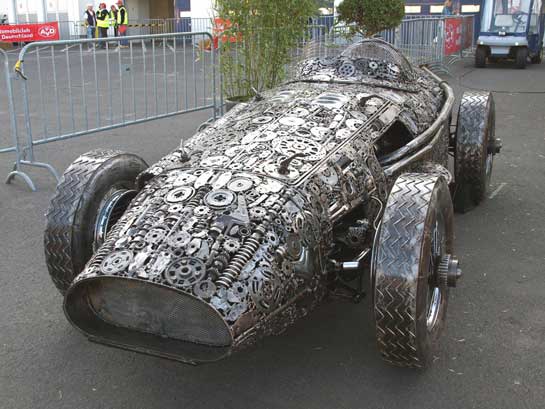
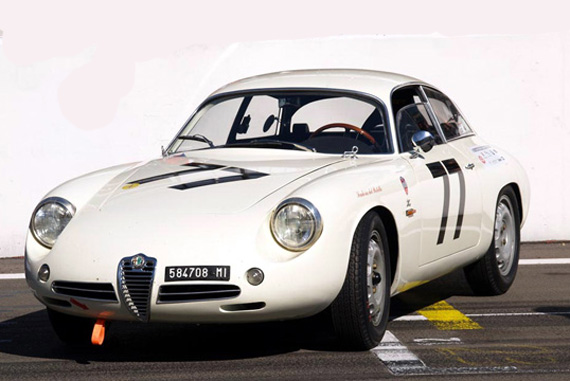
This year’s Oldtimer’s Grand Prix, held last weekend August 10-11 at the Nurburgring, was short on Ferraris but long on Maseratis. Alessandro Gerelli brings you the cars in two parts.
The Online Magazine for Italian and French Classic Car Enthusiasts
By pete
Story and Photos by Alessandro Gerelli
This year’s Oldtimer’s Grand Prix, held last weekend August 10-11 at the Nurburgring, was short on Ferraris but long on Maseratis. Alessandro Gerelli brings you the cars in two parts.
By pete
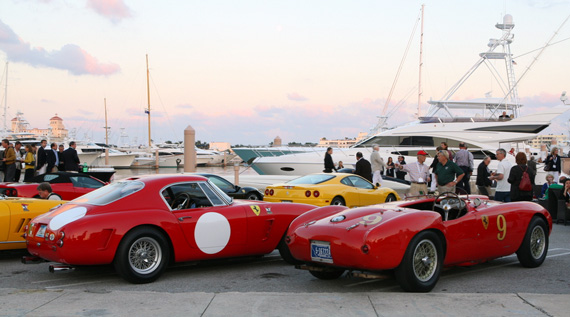
In January, VeloceToday correspondent Jonathan Sharp left the comforts of home in Great Britain to enjoy the warm temperatures and blue skies of Palm Beach. He reports about what he found at and on the way to Cavallino. His notebook begins with Wednesday through Friday below, and continues with Saturday and Sunday in a further article. Please note the lack of owner’s names in all three articles; this intentional and by their request.
Story and photos by Jonathan Sharp
Wednesday 23rd January, Palm Beach
Hi Peter, well we made it – amazing, given the recent snow fall at home in England. We seem to have grabbed the only snow-free day to fly out. I am told that nothing is moving in my home town today and it is impossible to get to the end of my road due to the snow, but then England does not do snow very well. The weather here in Palm Beach is amazing, temperature in the mid-70s, sun and blue sky. My brain is struggling to cope with the fact that it’s January. The atmosphere is building in the town with plenty of Ferraris to be seen.
By pete
By Pete Vack
Photos courtesy and copyright Ferrari Media
Time Enough
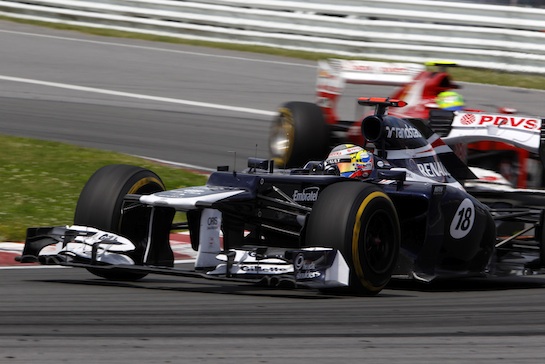
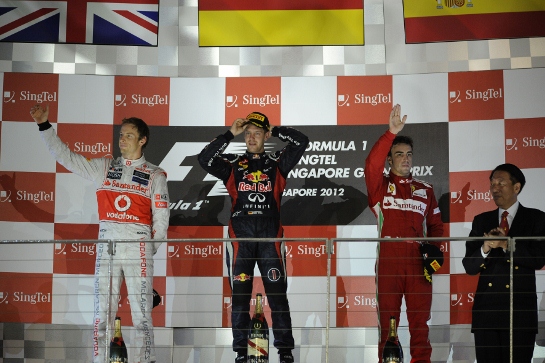
If there is one thing we will remember about Singapore 2012, it will not be the great drive by Massa, not the winning excellence of Vettel, not the intelligent drive by Alonso for third, nor the sudden race-changing retirements of both Hamilton and Maldonado, nor that the race was foreshortened by the clock. [Read more…] about Grand Prix of Singapore
By Gerelli
Photos and Captions by Alessandro Gerelli
Since we are celebrating our tenth anniversary this year, we thought it might be nice to list all the articles about the Nurburgring Oldtimer event filed by Alessandro Gerelli in the past decade. It’s an interesting walk through the famous paddock and one can get a sense of how much or how little vintage racing, European style, has changed over the years. Above and below, Gerelli’s photos from this year’s Oldtimer Grand Prix. [Read more…] about Oldtimer Grand Prix, 2012
By pete
Story and Photos by Graham Gauld
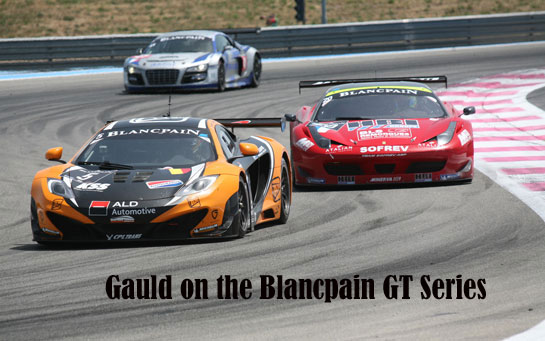
I took myself off to the Paul Ricard circuit in the South of France last weekend for the round of the Blancpain Endurance Series which brought together an enormous 56 car entry of top quality GT cars. The rise in GT racing has been steady over the past two or three years and it is now not only attracting some top drivers but also some of the leading manufacturers like BMW, Mercedes-Benz, Ferrari, McLaren, Audi etc. [Read more…] about Gauld at the Blancpain GT Endurance
By vack
By Pete Vack
All photos courtesy and copyright Ferrari unless otherwise noted.
Tiresome and trite, tire degradation issues are degrading our sport.
Alonso’s loss at the Canadian Grand Prix is not just a loss for the Spaniard, but a loss for the Scuderia, the engineers, the designers, the sponsors, Fiat and Formula One. His loss is also our loss, for we are all held hostage to the same idiotic tire game that is dominating, and we think, ruining the sport. [Read more…] about Canadian Grand Prix 2012
By pete
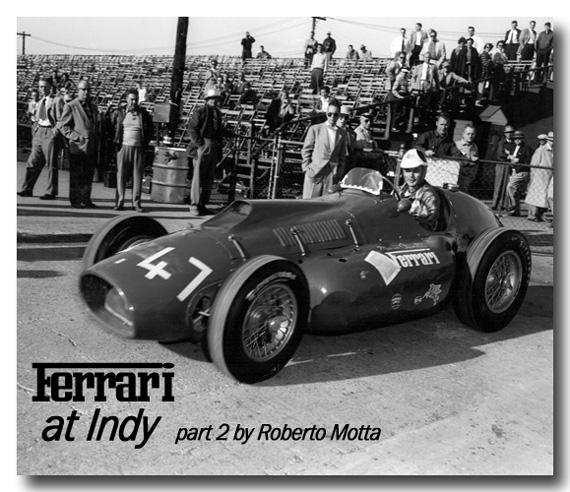
In the lead photo, Freddy Agabashian takes the Marion Chinetti Ferrari out for a test drive during the 1954 time trials. It failed to qualify.Credit: IMS Museum
1953
Ferrari was undeterred by the results of the 1952 Indy, for plans were made to compete in the 1953 Indy 500, and an initial entry for Ascari was given the number of 97. In addition, two of the 375s sold to American customers planned a comeback; Howard Keck’s car was entered as number 45, with no driver listed, and Johnny Mauro entered with his 375 and given the number 47.
[Read more…] about Ferrari at Indy, Part 2
By pete
By Pete Vack
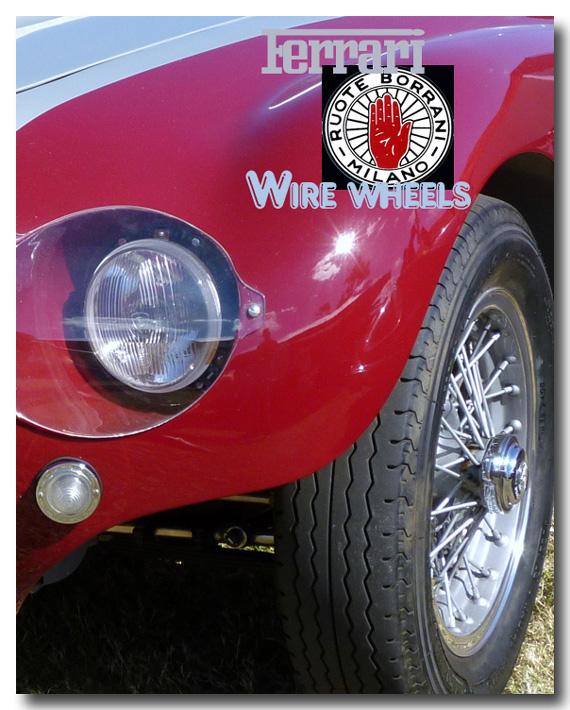
For over fifty years the cars Enzo Ferrari drove, prepared and later constructed were equipped with the beautiful, functional and strong wire wheels made by Carlo Borrani’s company in Milan. From Grand Prix cars to Le Mans endurance racers to cars for kings, Borrani wheels were a highly visible part of the overall design. Wheels are one of the rare components of a car that must be constructed with beauty, function, safety and performance; Borrani did it best.
Ferrari was a faithful Borrani customer; according to Borrani the alliance began in 1924 when Enzo Ferrari won the Acerbo Cup in Pescara with an Alfa Romeo RL TF equipped with Rudge-Whitworth Milano wheels. Although Ferrrari began racing in 1918, Borrani, founded in only 1922, was probably not the wheel of choice for Alfa Romeo until 1924.
We can be fairly certain that Ferrari won two events of some significance, both with Giulio Ramponi as a co driver. The first was at the Circuito del Savio on June 17th 1923, at Ravenna. It was here that as Ferrari recalls, he met Count Enrico Baracca, the father of the WWI ace. The meeting led to the use of the Baracca shield on his Scuderia cars.
The other victory as mentioned by Borrani, came a year later at the Coppa Acerbo, again with an RL TF. Hull and Slater have the car listed as an RLSS, but Ramponi himself listed it as an RL TF as does Valerio Moretti’s “Enzo Ferrari Pilota”. (What’s it like to drive an RL Alfa? Find out here.)
Most of the races in the early and mid twenties were on rough, dirt roads, while the cars employed stiff cart like suspension. Yet wire wheel failures were relatively rare. The overall reliability and ease of repair of the wire wheel may be a prime reason why the Bugatti cast aluminum wheel failed to catch on when introduced in 1924.
Borrani Historical Stampings
By vanhoolandt
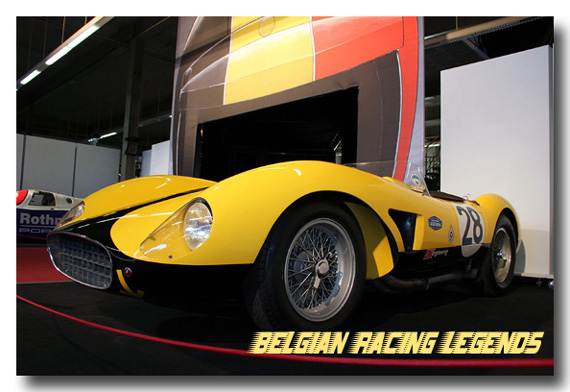
Above: Ferrari 500 TRC s/n 0682 MD TR was entered by Ecurie Nationale Belge at Le Mans in 1957, and placed 7th overall with the team of Bianchi/Harris.
Photos and text by Hugues Vanhoolandt
When one thinks of Belgian race drivers, the name of Olivier Gendebien, Paul Frere and Jacky Ickx (whose daughter, Vanina, is also a race driver) naturally come to mind.
By pete
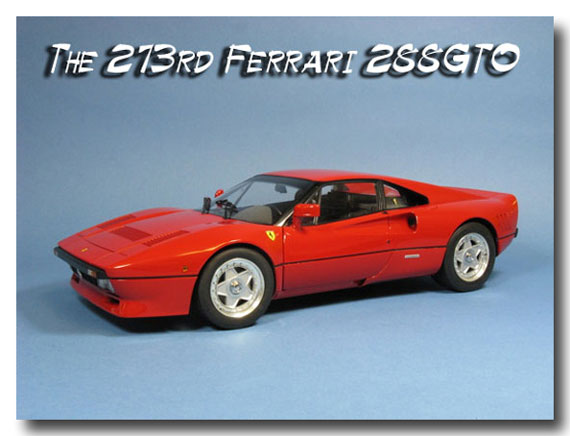
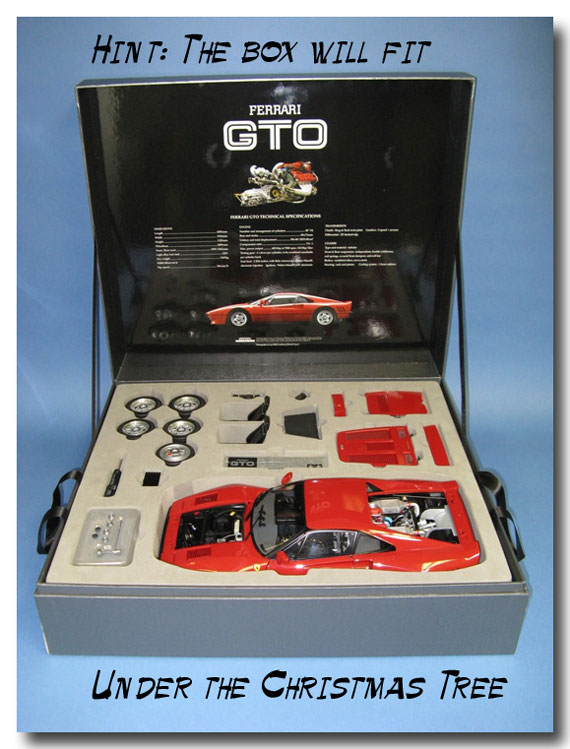
Ferrari built 272 examples of the real thing. Tamiya built this one…
Review and photos by Marshall Buck
To my eye, the 1984-86 Ferrari 288 GTO is one of the most beautiful modern sports car designs ever penned. Though it was based on another great design, the new for ’84 GTO was once again perfection from the house of Pininfarina.
I am more of vintage car guy; my main interest is sports and classic cars from the 1930’s through about 1970, but this one rings every bell for me, as does the beautiful 1:12 scale model.
The 288 GTO was designed and built specifically to compete in a new Group B racing series. At that time the requirements for this particular series were that a manufacturer must produce a minimum of 200 cars for homologation.
“Best laid plans…….” Unfortunately the new Group B series was abandoned before it ever got on the track since only Ferrari and Porsche built cars for the series. None of the 272 cars which Ferrari built were ever raced; they all remained road cars…… very fast and scary road cars at that. Most were sold in Europe as they were not certified for sale in the USA, though there were many that were imported and federalized by specialists such as Amerispec.
Scary fast…… The 288 had the power to back up its looks. The heart in each one was a mid mounted V-8 with twin IHI turbochargers. Top speed in Europe was an eye watering 189 mph. Here in the US the top end was reduced to somewhere around a mere 175 mph.
By pete
By Carl Goodwin
Photos by Chuck Hazle
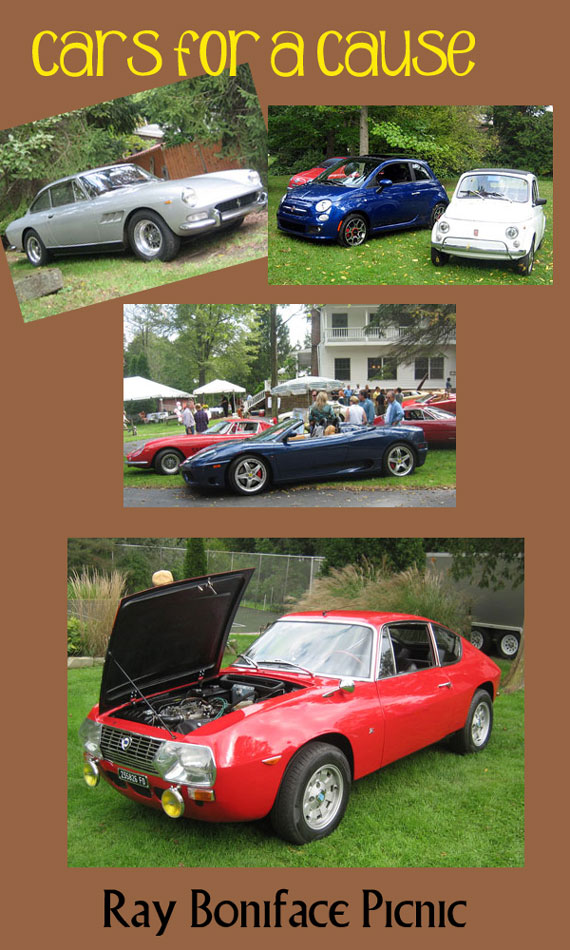
The Annual Ray Boniface Picnic is more than a car show. It’s a way to make free breast cancer exams available to women in eastern Ohio who could not otherwise afford one. The Picnic raises money for and schedules two yearly programs providing free mammograms for women in the Warren and Youngstown area of Ohio.
[Read more…] about Boniface Picnic Benefits St. Elizabeth Health Center
By pete
By Graham Gauld
I had a birthday recently. If I had put candles on the cake I would have burned the house down. However one of the advantages of having lived through perhaps the most eventful sixty years of motoring and motor sport is that you have experienced these changes as they have happened and hopefully can put them into some kind of perspective. Another advantage of ageing is that you not only have many memories but many experiences and meetings that will never come around again and, if they have not been written down, will be lost forever. Now your Editor, Peter Vack has offered me the chance to roll out stories that have been triggered by events over the past sixty years and to share some of these moments. Trivial, though they might sometimes appear at first glance, they are nonetheless dropped threads in the fabric of a motoring journalistic life that started out a long time ago. So where do we start?
The BBC and the Machine Gun
It was odd how it came about, really. I was at the Paul Ricard circuit here in the South of France about twelve years ago. I was in the midst of writing my book “Modena Racing Memories” and one of the things that had been nagging me was the reason why Enzo Ferrari put a badge showing a machine gun on the nose of a prototype sedan, called the Ferrarina, launched at his annual press conference in December 1959.
I had not really thought about it before and then I saw an article in Volume XXI/3 of Automobile Quarterly written by Lowell Paddock concerning the Ferrarina – which was later to become the ASA Mille – where he hinted that it was there because of the possible interest by an arms manufacturer to take over the project and build the car.
You see Enzo Ferrari had no intention of building this square little two-door saloon car but it was designed as a package to be sold off and the proceeds to be added to the Ferrari racing budget. However, as we then knew, the Ferrarina prototype did not have the Italian motor industry rushing to beat down the door. Then at some point the machine gun badge disappeared from the grille of the car and a white star was put in its place. Why ?
As my old friend Jackie Stewart used Beretta shotguns for the shooting school he ran in Scotland it provided me with a conversational opener and we had an amusing chatabout shot guns and Jackie Stewart before I then slipped in the vital question. “ Did you have any link with Enzo Ferrari and the Ferrarina”? He smiled and said “ No, not me, but my uncle, Piero Beretta who was President of Beretta at the time. I was not long in the business and he came to me one day and said he had received a strange note from Enzo Ferrari asking him to come to Maranello as he had something surprising to show him. He said he was going down and would I go with him”.
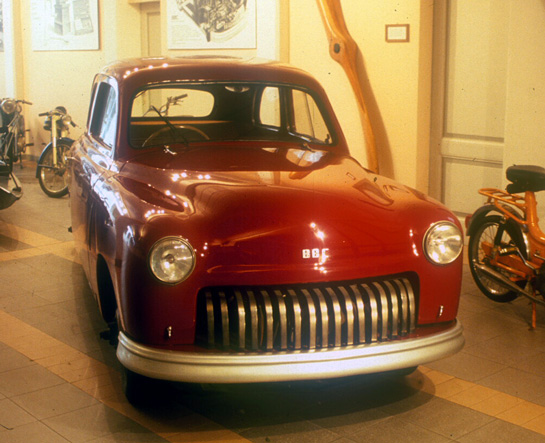
Ugo then went on to tell me that his uncle had always wanted to build a small car. Back in 1948 he, with his friends Count Luigi Castelbarco, a well known racing driver of the day, and Guiseppe Benelli, the boss of the Benelli motorcycle company decided they would build three prototypes of a small capacity car and perhaps put it on the market. It was to be called the BBC for Beretta, Benelli and Castelbarco. The three prototypes were built, all with their own 750cc air-cooled V-twin engine with a steel block and aluminium heads. Remember, this was 1948 and Italy was still in a terrible state after the ravages of war. It became clear that they would not be able to put the car on the market due to the short supply of steel which was being swallowed up in the rebuilding of Italy. The three partners abandoned the project and each of them kept a prototype.
Now, here was Enzo Ferrari, who obviously knew of Piero Beretta’s fascination with building a small car, inviting him to Maranello. When they arrived Ugo explained that Enzo Ferrari, ever the showman, whipped a cover off the Ferrarina and let them see the prototype. “ I turned to my uncle and said that’s a model of our new machine gun on the grille”. After a conversation Piero Beretta said that he really was no longer interested in building a car and so walked away from the deal. Clearly miffed, Enzo Ferrari had the machine gun badge taken off the grille and replaced with a white star. A couple of years later he sold the project to the De Nora brothers who punched the 850cc engine out to 1000ccs, clothed it in a neat little coupe body and renamed it the ASA Mille. Pretty though it was it was far too expensive to be a commercial success and the company eventually folded.
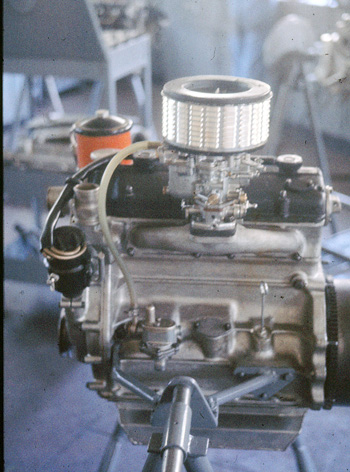
What also made the story interesting to me was that on my visit to Maranello in 1960 Mr Ferrari showed me a GT version of the 850cc engine on a stand in the racing department and it was complete with the black crackle enamel on the heads and 854 ( 850cc ,4 cylinder stamped on it).
I remember later telling the Beretta story to Mauro Forghieri who explained that the engine was in fact based on a Fiat 1100cc block to which a twin cam head had been designed and built at Ferrari. Gianni Agnelli at Fiat had approved the changes to his engine and two engines were built each with a different configuration. One was almost square, 65mm x 64mm and the other 67mm x 69mm. The first engine, the 850cc was in fact more powerful than the larger 973cc engine and was the one in the photograph.
To me the ASA story was tragic, really, because it was truly a pretty little car but thankfully this has been recognised and they are now collectable provided you can find one. The late Fabrizio Violatti has one in his Maranello Rosso collection in San Marino and my last sighting of one came about four years ago in strange circumstances. Luigi Chinetti and I took the train from Retromobile in Paris to Modena as he wanted to go round some of the small establishments in the Modena area where he had various cars being fettled. One afternoon we called in to see one of his favourite engine men who worked out of a small unit on an industrial estate outside Modena. Whilst Luigi talked about an engine rebuild I wandered around looking at the variety of odd cars that were lying about and there, to my surprise, was not only an ASA Mille but an ASA Mille that Luigi’s father had imported into the USA and was fitted out with NART stickers. What a coincidence, and as you can see throughout this convoluted tale, coincidences are my stock in trade. Somehow I seem to gather them around me like a security blanket and I never tire of such chance meetings and their outcome.
* * * *
Cabrio Dauphine
Living in the South of France means that you get dragged into the motor sport milieu at grass roots level as well as the major events. I must admit I don’t go to many of the big events any more because there are too many people there and I prefer to go to smaller events. Let me give you an idea of the kind of thing. A local owner of a vineyard near here is Jean-Louis Vial who produces a very drinkable Cote de Provence red wine but is also a motor sport enthusiast. His father organised the Grand Prix of Brignoles, his local town, back in 1931 and this is a subject I will come back to in a later column.

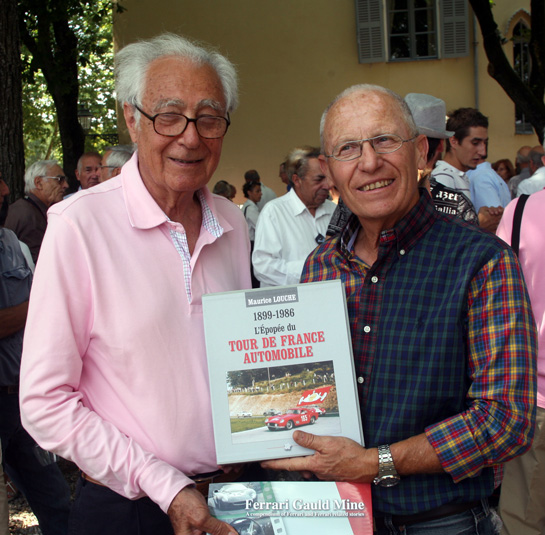
One of the visitors to the Viale vineyard was Ferrari driver Jean Guichet, left, with French automotive author Maurice Louche.
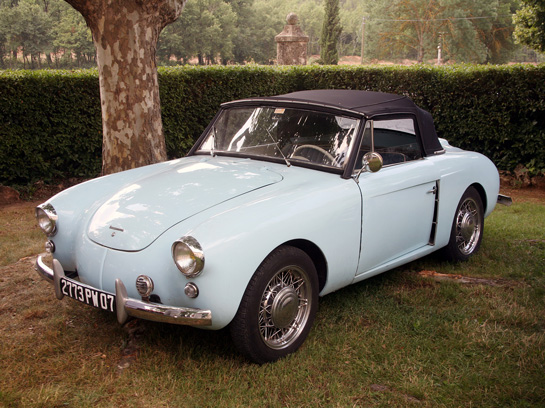
However, all the vineyards in the area choose one weekend in the year for what is called “Vin et Art” so most of them invite along an artist to show his work and perhaps to sell a canvas or two. It attracts visitors, they have a wine tasting and everyone is happy. Jean-Louis, however, gets all his motor sport pals together for his “do” and to keep in fashion he invites artist, sculptor and racer Francois Chevalier to show his work and author Maurice Louche to bring along copies of his books on the Tour De France, Ferrari etc. It is a great day out and this year Jean Guichet, former Le Mans winner and Ferrari driver, turned up to buy a copy of Maurice’s book on the Tour de France rally as Guichet was a winner of that too. However I spied an interesting little powder blue car an enthusiast brought along and it was the first of its type I had ever seen.
The car was a Brissonneau. Beautifully built, it was a cabriolet built on the subframe of the Renault Dauphine sedan. Yves Brissonneau was a member of a family that specialised in building railway engines since the middle of the 19th century. Yves was 23, wanted to do something different and was not all that keen on railway engines so he and French racing driver Louis Rosier decided to build this small cabriolet based on the Dauphine. Unfortunately Rosier was killed in a racing accident at Montlhery just before the car was first shown and so it was young Yves who launched the car in 1957. Around 200 of them were built but this stopped when Brissonneau were given the contract to build the Renault Floride and later the Caravelle road cars. As you can see it was a pretty little car and pity it didn’t catch on.
Portions of this article appeared in Graham Gauld’s book Modena Racing Memories