By Jackie Jouret
Photos courtesy The BMW Archive
gv edit 12/1
When BMW introduced its first postwar automobile, the 501 sedan, at the 1951 Frankfurt auto show, the company was announcing its resurrection as an automaker following the near-total destruction of its factories during World War II. BMW had also lost its automobile plant in Eisenach to the postwar division of Germany: Eisenach fell within the Soviet sector, and the BMW plant was appropriated as a spoil of war.
We looked at the 501/502 sedan in the previous installment of this series, as well as a prototype from Pinin Farina that was rejected by the BMW board in favor of a rather old-fashioned design penned in-house by production engineer Peter Szymanowski. Read Part 4
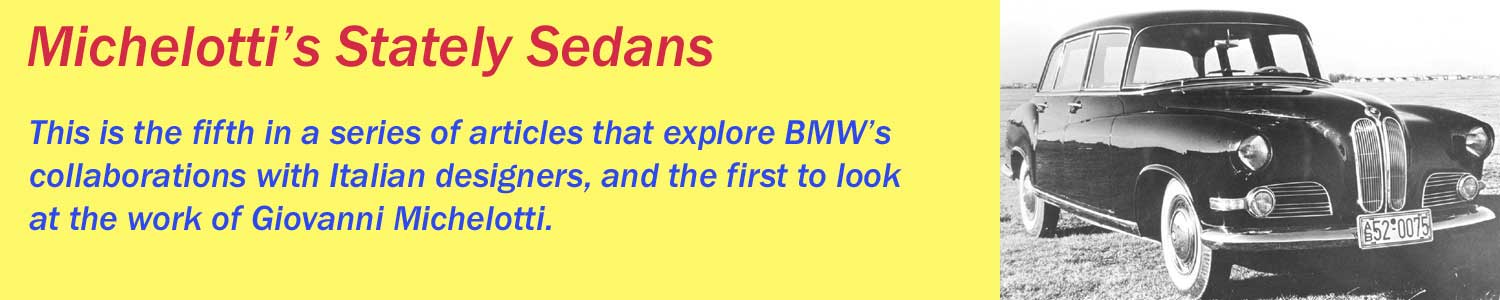
BMW must have realized fairly quickly that it should have taken a more modern design direction, and that an Italian designer might have made the car more alluring. In 1955, when the company decided to build an extended-wheelbase version of the 502 aimed at heads of state, CEOs, and other Very Important Persons, it contracted with Ghia-Aigle rather than create the car in-house.
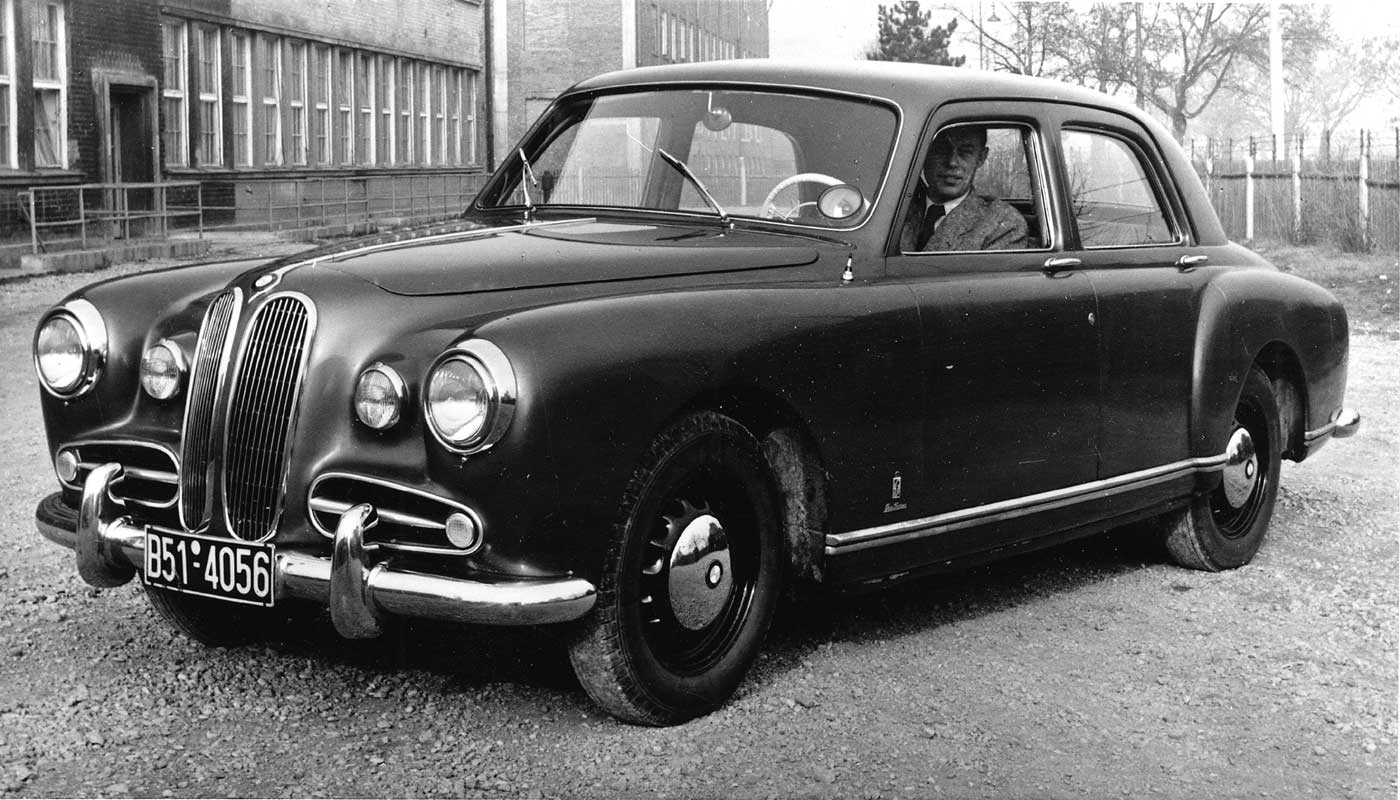
BMW executives commissioned a full-size, running prototype of Pinin Farina’s proposal for a postwar BMW sedan. Alas, the car was rejected in favor of a design produced in-house at BMW.
Established in 1948 as a subsidiary of the Turin-based Ghia coachbuilding firm and named for the town in Switzerland in which it was located, Ghia-Aigle had become independent in 1953. From 1951 to 1957, Ghia-Aigle’s cars were designed by Giovanni Michelotti, who’d pen BMW’s new limousine along with dozens of other cars bodied by the firm during that period.
Born in 1921, Michelotti had started working for Stabilmenti Farina in 1936, first as an assistant but soon as lead designer. In 1946, after the interruption of World War II, Michelotti opened his own design studio in Turin, working primarily but not exclusively for Alfredo Vignale’s coachbuilding firm. He also worked for Triumph in England, and for Vignale’s fellow Italian coachbuilders Bertone and Ghia. Although historian Horst Mönnich claims that Michelotti penned a proposal for the 501 in early 1951, it’s far more likely that his first contact with BMW came through Ghia-Aigle. That’s what the evidence within the BMW Design Archive suggests, and it’s further confirmed by Edgardo Michelotti (Giovanni’s son) and Giancarlo Cavallini in their exhaustive biography, Giovanni Michelotti, a free stylist, published in 2019.
By the time BMW came calling, Michelotti was already one of the world’s top car designers, having penned exquisite Ferraris, Alfas, and other cars for coachbuilders Farina and Vignale.
We don’t know exactly when BMW commissioned Ghia-Aigle to build a prototype of the car it initially called the 505 Diplomat, but BMW had been planning such a car since at least 17 April 1953. That’s the date of the earliest 505 sketch in the BMW Design Archive, which is signed “E. Palm.” Little is known about Erich Palm at this point even within BMW, but the sketch itself is nearly identical to the prototype 505 shown at Frankfurt in 1955. That car has been definitively attributed to Giovanni Michelotti, and BMW Design’s David Carp—who created and maintains the BMW Design Archive—believes the Palm drawing is most likely a rendering of work done by Michelotti.
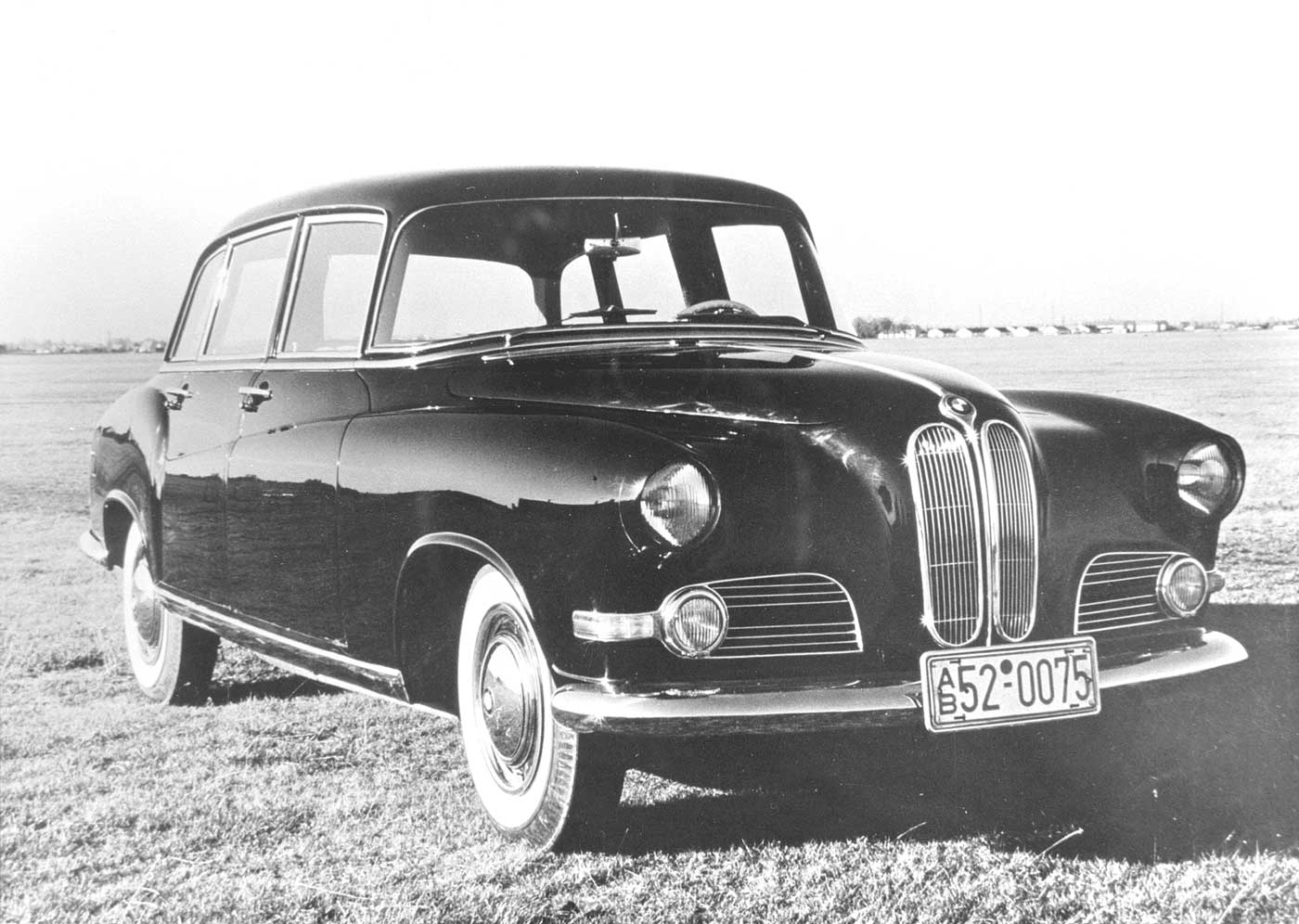
Ghia-Aigle’s prototype of the Michelotti-designed BMW 505 limousine debuted at the Turin auto show in September, garnering favorable reviews.
In the spring of 1955, BMW sent Ghia-Aigle a 502 rolling chassis reportedly bearing number 59034, and equipped with the top-of-the-line V8 engine that delivered 120 horsepower from 3,168cc. The process of turning that rolling chassis into a complete car was somewhat convoluted, perhaps because Ghia-Aigle was then in the process of relocating to Lugano. In any case, documents within the BMW Archive show that the bodywork was crafted by Martelleria Maggiora in Turin, which may have been chosen for its proximity to Michelotti’s design studio and its reputation for quality craftsmanship. In July 1955, the body-in-white was reviewed at Martelleria Maggiora by Michelotti, BMW sales manager Oskar Kolk, and BMW head of bodywork development Kurt Bredschneider (who’d just replaced Szymanowski in that role). From Turin, Carp says, “the car was sent to Ghia in Lugano on 25 July, after which it would get sent to BMW in Munich for final work including the electrical wiring.”
The 501/502 sedan on which the 505 was based had limited rear-seat headroom thanks to a coupe-like roof that sloped gracefully toward a downward-curving trunk. The chassis sent to Turin had its wheelbase lengthened from 111.7 inches to 122.0 inches, and most of that extra space would be allocated to the rear passenger compartment in this chauffeur-driven limousine. To further enhance rear passenger space while easing ingress and egress, Michelotti made the 505’s roof some four inches taller and much squarer at the rear.
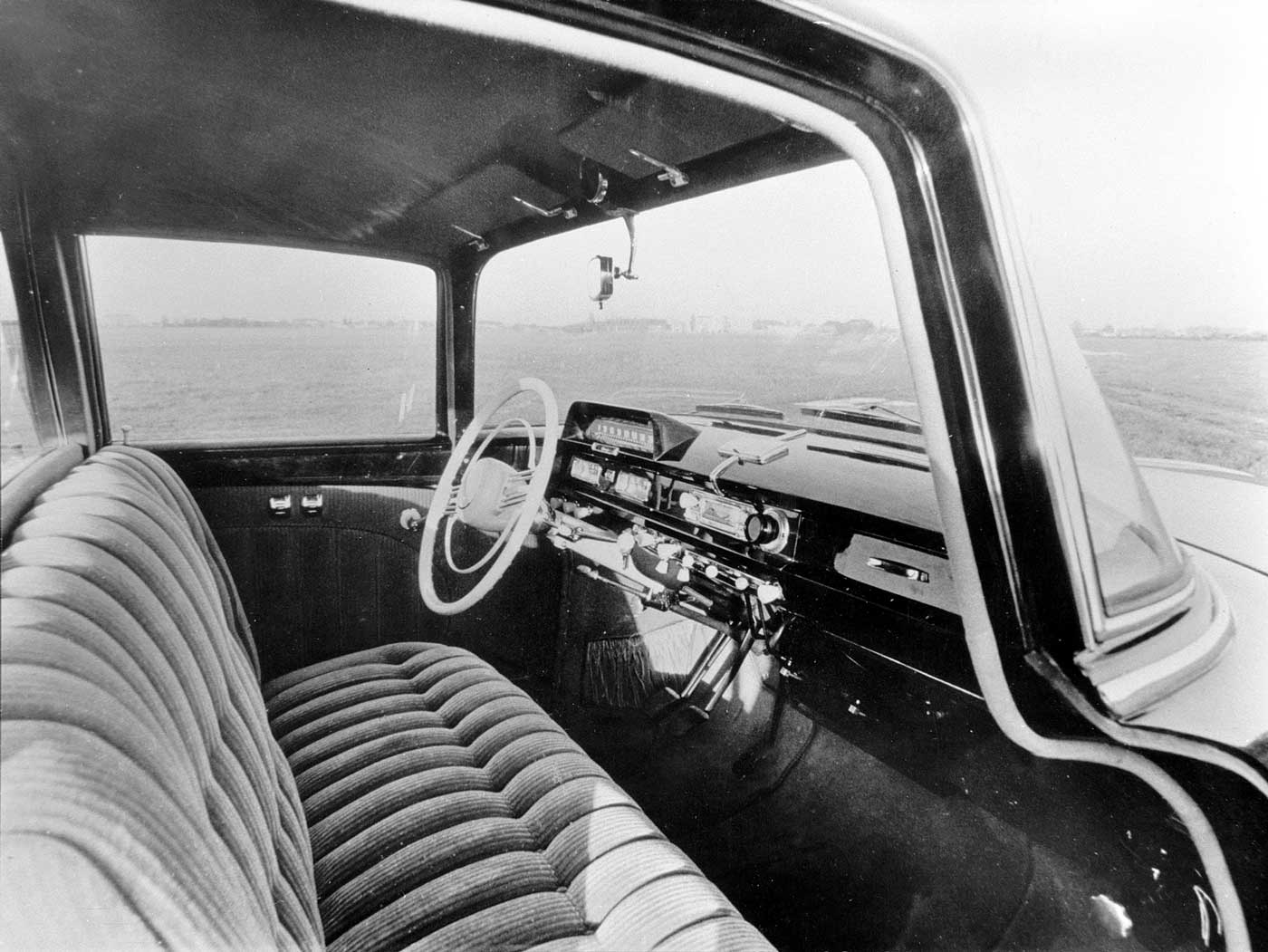
Intended for diplomats and other VIPs, the 505 would be primarily chauffeur-driven. For discretion, its front seating area could be separated from the rear by a sliding glass window.
Even beyond that significant change, Michelotti’s styling bore only a passing resemblance to Szymanowski’s swoopy Baroque Angel. It looked more like the cars he’d designed for Lancia, with front fenders that integrated cleanly with the rest of the body and considerably more volume over the engine bay. Where the 501 placed its headlights on either side of the double-kidney grille, close to the center of the car, Michelotti placed them on the fenders to give the 505 a more contemporary appearance while also providing better illumination of the road. The nose was less prominent, with a smaller version of BMW’s trademark double-kidney grille flanked by chrome air inlets. A more upright rear window was followed by a slightly smaller and much squarer trunk, with vertically-oriented and significantly larger taillights in place of the tiny yellow-red orbs that served the 501 as both turn signals and brake lights.
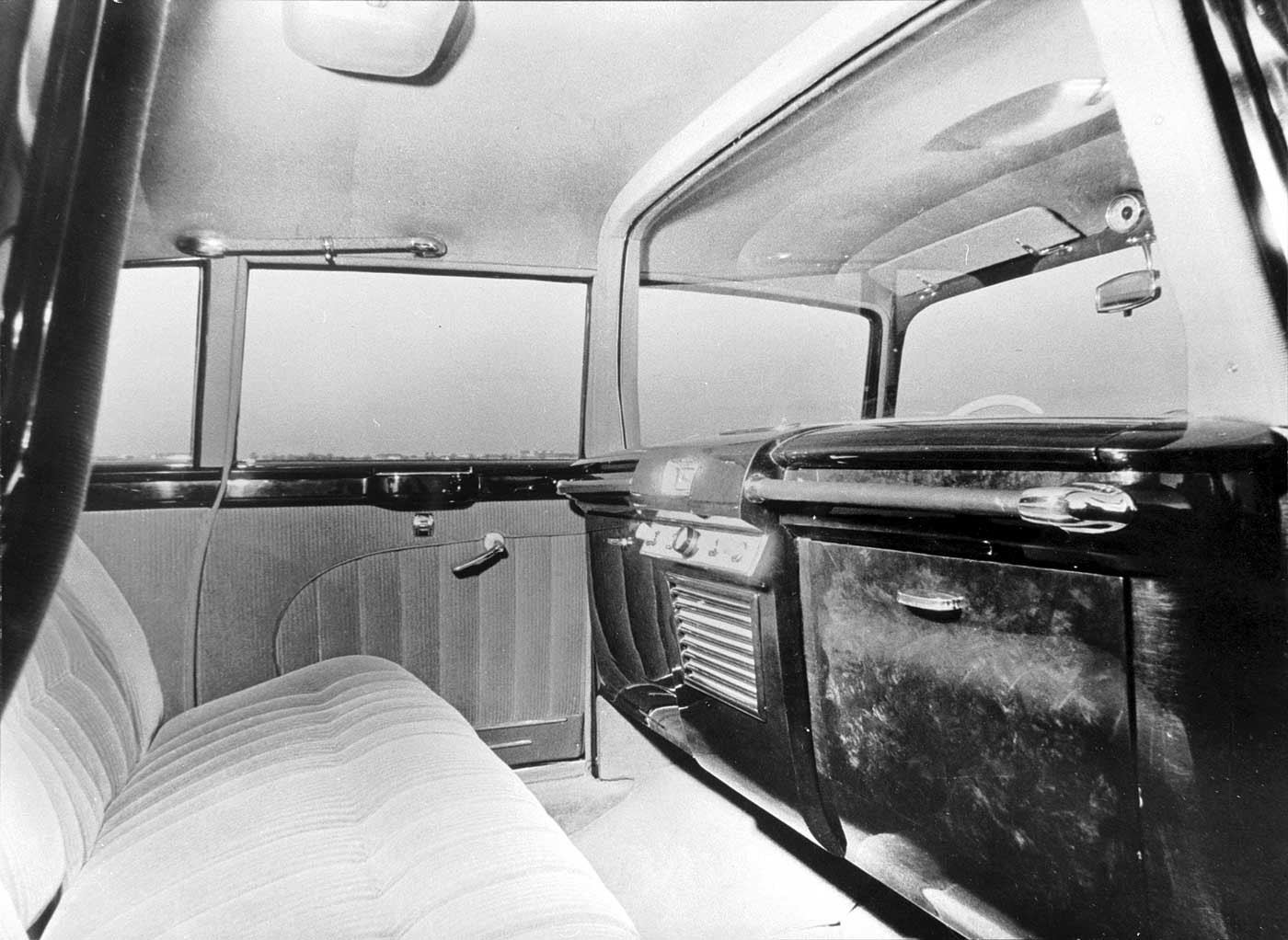
The 505 used an extended 502 chassis whose longer wheelbase allowed Michelotti to design a spacious rear compartment, which Ghia kitted out with mohair upholstery, “high-quality domestic and foreign precious wood” trim, and a well-stocked bar.
Inside, the rear portion of the cabin could be separated from the driver’s compartment up front via a power-operated glass partition—the other windows were also power-operated—with communication remaining available via intercom. Ghia trimmed the cabin with “the highest quality domestic and foreign precious wood” throughout, and upholstered the seats in “high-quality mohair fabric.” The rear passenger compartment was equipped with storage compartments, tables, reading lamps, its own heating and ventilation system, and the well-stocked bar deemed essential to diplomacy in the 1950s.
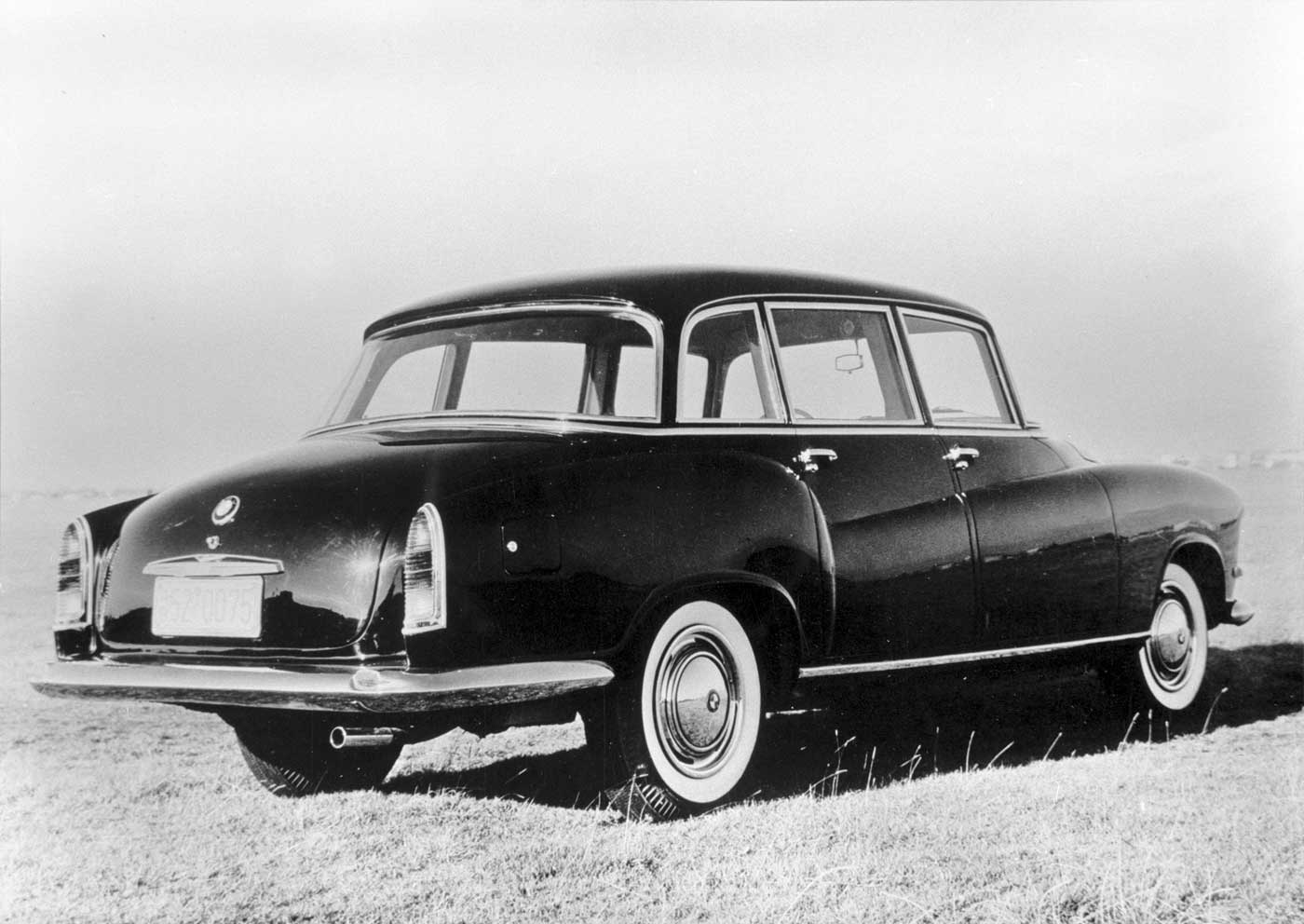
The longer wheelbase allowed Michelotti to extend the roof section at the rear, and to give the 505 a square-ish trunk with vertically-oriented taillights.
BMW was justifiably proud of its 505 sedan, which was presented to the public at the Frankfurt auto show in September 1955. By this point, it was being called the 505 Pullman rather than the 505 Diplomat—a clear echo of Mercedes’ name for its own long-wheelbase 600, whose customers BMW hoped to lure from Stuttgart to Munich.
The car was favorably reviewed by Zurich’s Die Tat newspaper, which praised its styling as well as its purpose. “With the BMW 505 we can speak of true luxury.” That view was echoed by another Swiss publication, Automobil-Revue: “This time BMW has no sporting pretensions. This official limousine on an extended BMW 505 chassis has the outer lines of a Ghia, and internally the discreet luxury of top-of-the-range German cars.”
Legend has it that the 505 was pitched to German chancellor Konrad Adenauer, who declined to replace his official Mercedes following a ride in the BMW that ended with his hat being knocked off by the 505’s roof as he exited the vehicle. No photographic evidence of this event exists, making me skeptical that Adenauer—a longtime Mercedes loyalist—ever rode in the 505.
Even if Adenauer remained uninterested, plenty of other customers indicated an intention to buy this new limousine—if BMW could get it built. Doing so profitably would have meant building the car in Germany, since export duties on cars bodied in Switzerland or Italy would have made it prohibitively expensive, even for upscale customers. BMW sales chief Hanns Grewenig requested the engineering drawings from Ghia in October 1955 even though BMW’s Munich factory had no further capacity to build “special vehicles” beyond what it had already committed to the sportier 503 and 507. Absent that, Grewenig solicited bids from German coachbuilders (presumably Baur and Karmann) in October 1955, but none bore fruit.
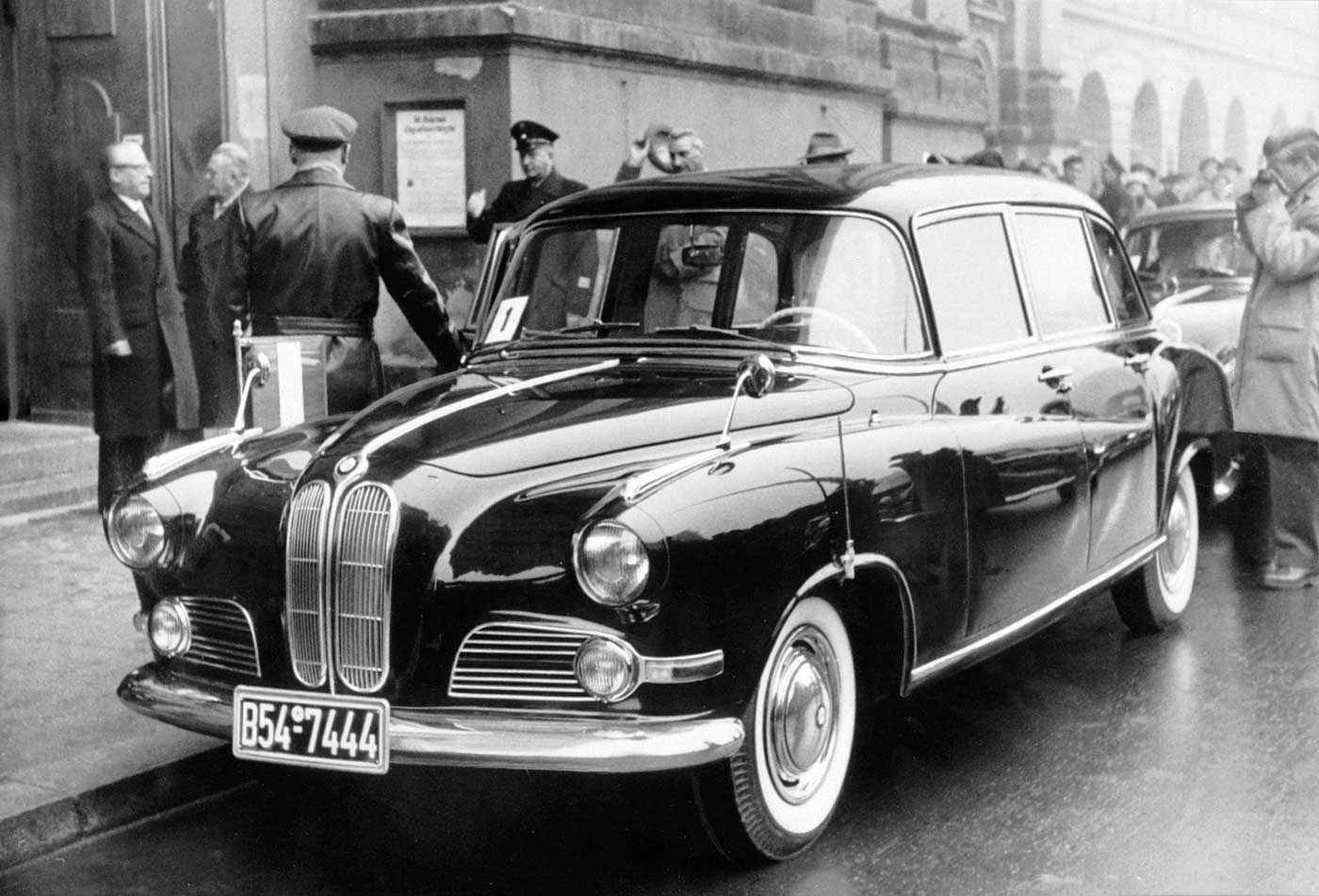
The 505 wouldn’t replace Chancellor Adenauer’s Mercedes, but it did see diplomatic use in Bavaria. Here, Italian president Giovanni Gronchi (in glasses) prepares to enter the car during a visit to Munich in 1956.
In the end, only one 505 Pullman was built: Michelotti’s prototype. That’s the car seen in the photos that accompany this article, including the one taken in Munich in 1956 in which a leather-jacketed chauffeur stands ready to open the rear door for Italian president Giovanni Gronchi.
Gronchi held that post from May 1955 through May 1962, when he was succeeded by Antonio Segni, who’d been Italy’s prime minister from July 1955 to May 1957. Before leaving the prime minister’s office, Segni signed the Treaty of Rome, which created the European Economic Community (precursor to today’s European Union). Had that free-trade zone been created a few years earlier, the 505 could have been built in Italy or Switzerland for tax-free export to Germany.
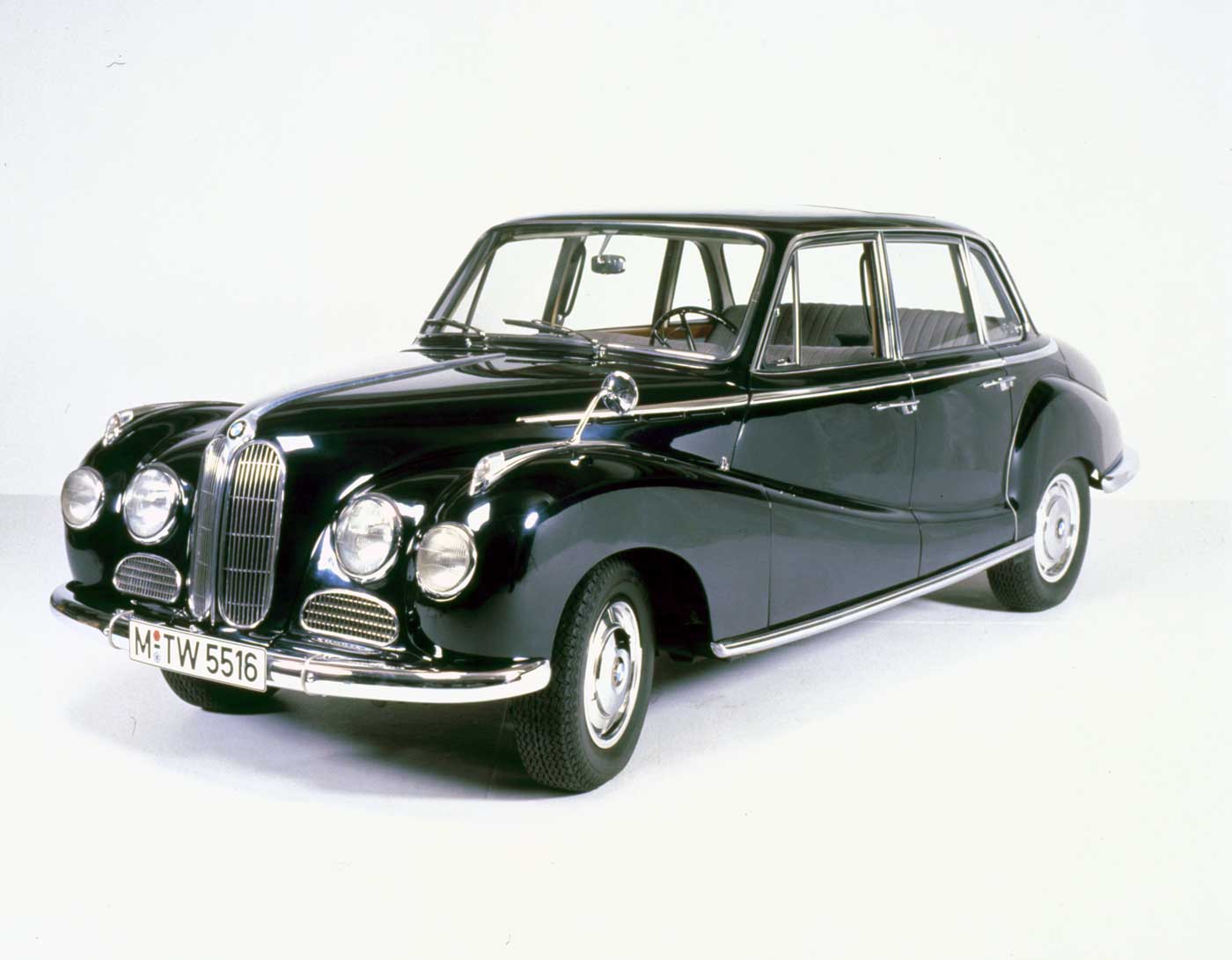
In 1963, BMW decided to build a second long-wheelbase limousine, again using a stretched version of the 502 chassis. The project’s limited budget gave Michelotti less design freedom, and the car looked like a standard 3200 (as the 502 had been renamed) when seen from the front.
Despite the fate of the 505, BMW decided to build another long-wheelbase limousine in 1962, when the Baroque Angel sedans were heading into their final year of production. Again, the company turned to Michelotti, who by then had designed the 700 and 1500 for BMW and had also submitted proposals for other vehicles. In the case of this new limousine, the majority of the car would remain as designed by Szymanowski, limiting Michelotti to a redesign of the roof and rear end to convert the Baroque Angel into a proper “Staatslimousine,” or State Limousine.
Michelotti drafted the car with a longer roof, a squared-off trunk, slightly larger taillights, and new chrome trim. Under its hood, the car was powered by a 160-horsepower version of the 3,168cc V8, which was indicated by its 3200S model designation.
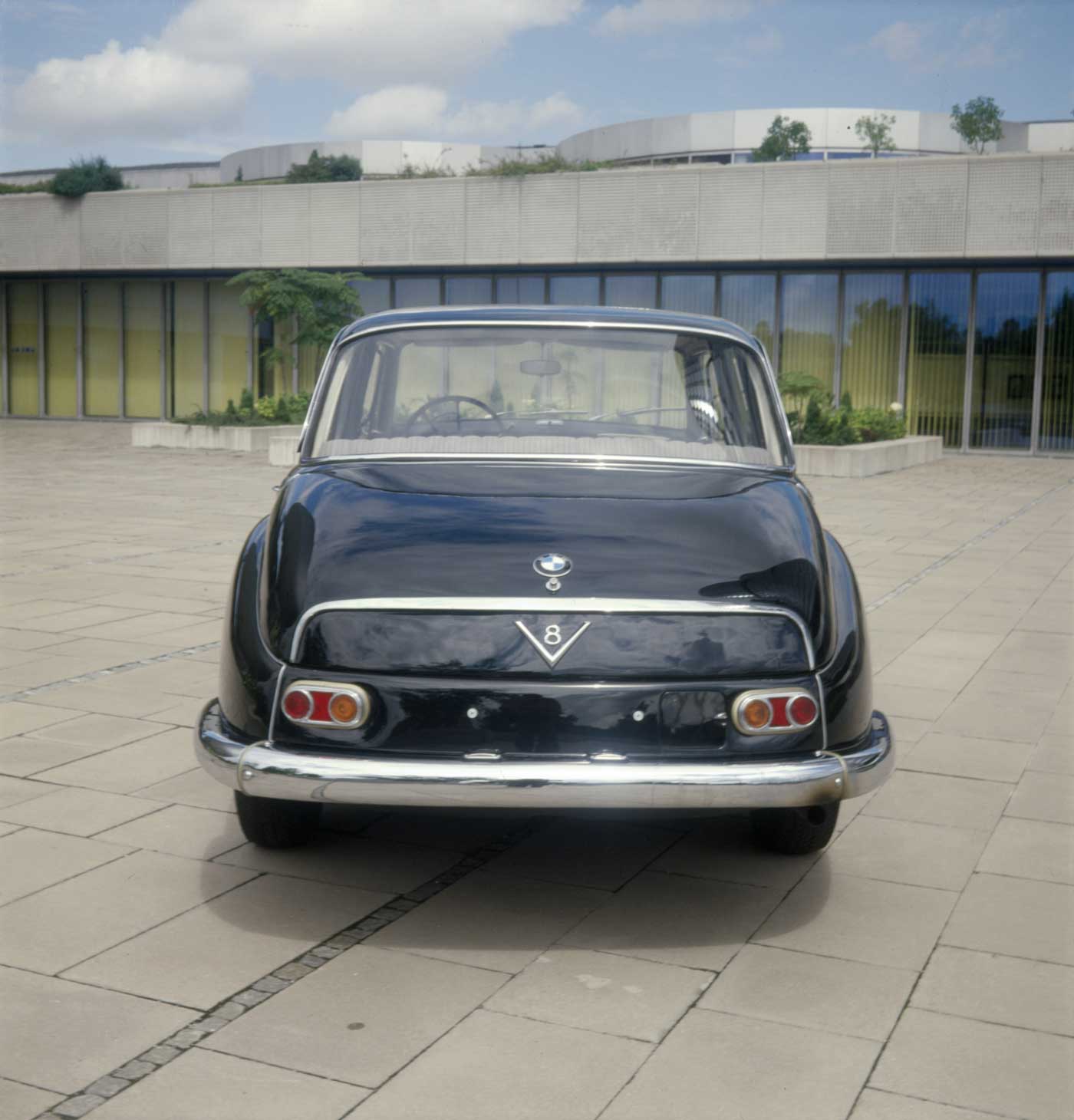
At the rear, Michelotti used the car’s extra length to create a taller, airier greenhouse, as well as a redesigned trunk lid with new chrome trim. Archive-Michelotti
As for its role as a State Limousine, we know for sure that the 3200S carried German chancellor Konrad Adenauer at least once. The BMW Archive contains several photographs of that occasion, as well as others in which Bavarian minister-president Alfons Goppel rode in the car with the king of Afghanistan, Mohammad Zahir. How any of these officials regarded the car was not recorded, but Adenauer again stuck with his Mercedes. The 3200S Staatslimousine remained a one-off, just like its 505 predecessor. Both cars have survived, and they’re owned today by BMW Classic.