By Gijsbert-Paul Berk and friends
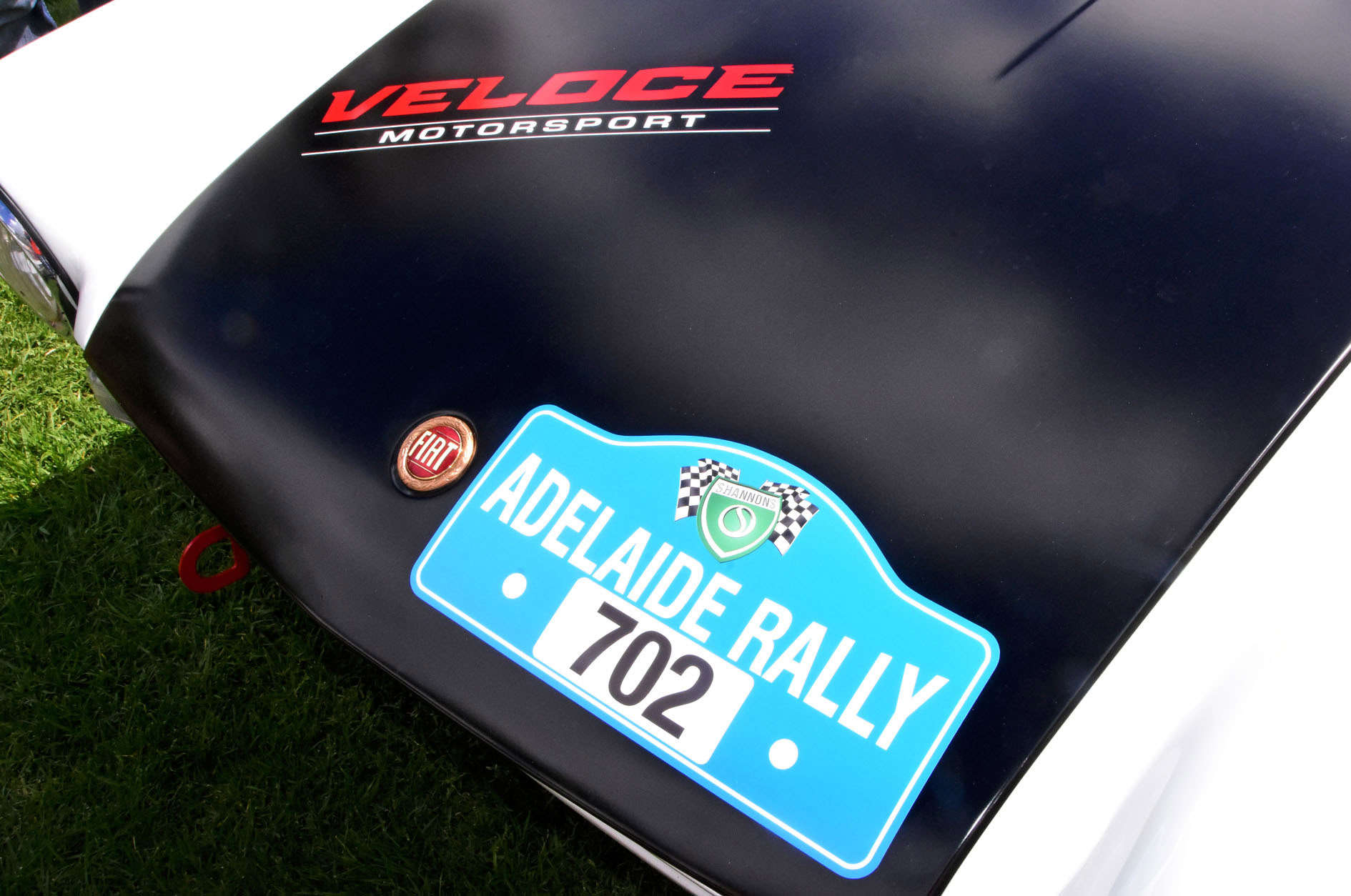
The text of the lead photo is a bit too small to see clearly, but it is worth reading:
The Online Magazine for Italian and French Classic Car Enthusiasts
By pete
By pete

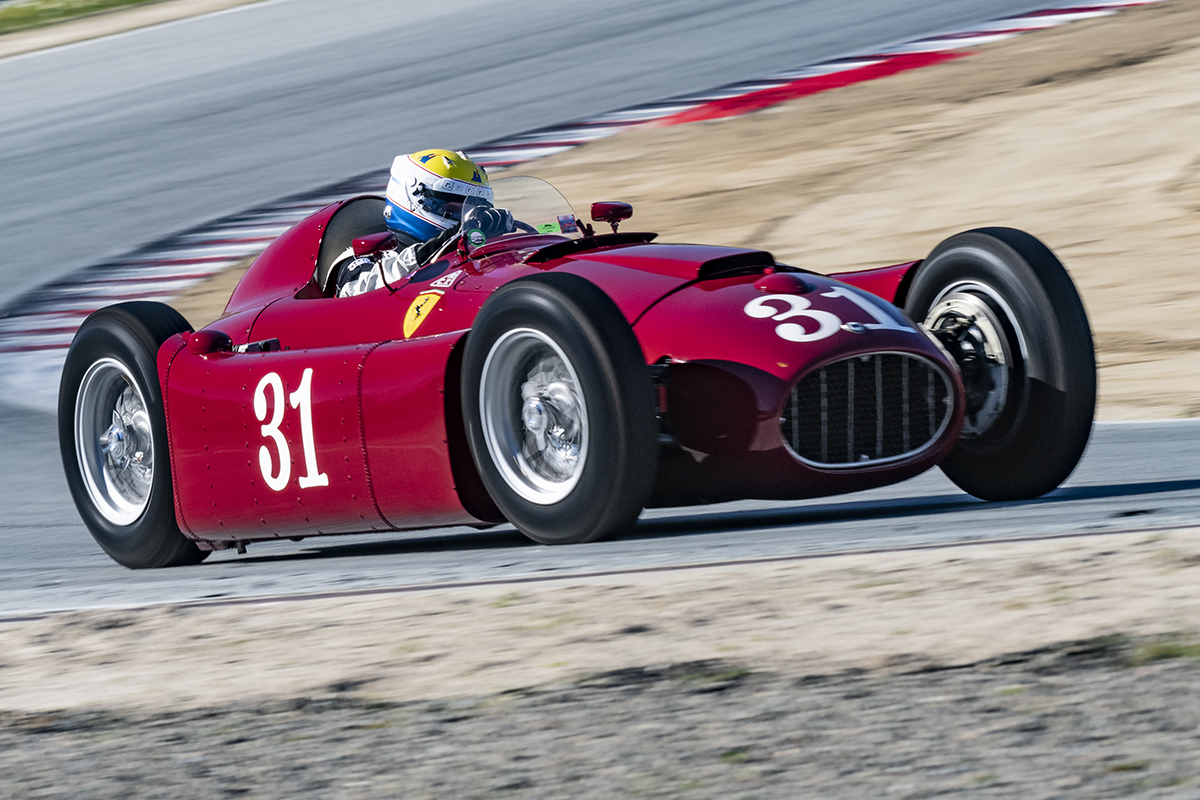
A photo that says volumes about Grand Prix racing in the 1950s. Fred Wacker on the grid at Monza in 1954, where he will place sixth overall with a truly outclassed Gordini. Photo by Bernard Cahier
By S. Scott Callan
Photos by Bernard Cahier published with permissions
What could be more appropriate for VeloceToday than an American racing French Gordinis in Europe? Author S.Scott Callan allowed us to publish part of his full length interview with the late Fred Wacker, below. Stay tuned as next week we’ll review the new biography of Fred Wacker authored by his son and Bob Birmingham.
Fred was a friend of my Dad’s. He and Fred and Jim Kimberly spent a lot of time together in the early days of Midwestern racing.
After my Dad passed away Fred and I got into the habit of talking in the spring, when he was heading back to Chicago after wintering at the Palm Springs house, and in the autumn when he had just arrived. Fred would regale me his stories of getting started in racing with his black Cad-Allard, the eight ball. Racing at Sebring, around the roads of Elkhart Lake before they built Road America, at Watkins Glen, and down Argentine way.
By pete
Story and photos by Paul Wilson
After seeing what fun Brandes Elitch and Sean Smith have had with their Top Ten stories, I can’t resist giving my own version. I had the good luck to live when most of the ‘50s and ‘60s sports cars were affordable, and so I’ve owned all of the cars on my list. Yes, those fuzzy, amateur pictures you’ll see are my cars. And some of my opinions have an antique flavor, too. When I had them, these were just cars, not Sacred Classics, so if they had flaws, it wasn’t blasphemy to point them out.
By pete
Story and photos by Adrian Donovan
Seeing someone else drive your car can be a tricky experience – but when that someone is a seven-year-old grandson driving a small car you have just completed, that experience becomes positively nerve-wracking.
Max had driven my little Lancia only once before, in a deserted pub car park, but now he was in front of quite a large crowd, driving around an ornamental lake, which just happened to be in the Hampton Court Palace gardens.
By pete

Meico Koudstaal owned this OSCA Formula Junior car several years and participated it in many races on European circuits. Photos courtesy Coys Classic Auto Auctions
Story by Gijsbert-Paul Berk
The Formula Junior was the brain child of Giovanni “Johnny’ Lurani, an Italian nobleman, engineer, racing driver, speed record holder, author, publisher and the Italian representative in the CSI (International Sporting Commission) of the FIA, the governing body for automobile sports. Like Piero Dusio before him, he saw the need for a new formula for affordable single-seater racing cars, allowing a new generation of drivers to gain experience. True or not, at the time some thought and even wrote that Lurani promoted his Formula Junior idea to compensate for the lack of success of Italian cars and drivers in the British dominated 500 cc. Formula 3. However, in October 1958 the FIA officially recognized the International Formula Junior.
By pete
By Peter Darnall
Déjà vu: a feeling that one has seen or heard something before . . .
I came across an old friend at Thunderhill recently. I had not seen her in more than fifty years—and she had not changed a bit. She was drawing quite a bit of attention in the paddock, which was just the way I remembered our last meeting in the Del Monte Forest in the spring of 1956. [Read more…] about Déjà vu, Italian Style
By pete
Story and photos by Sean Smith
This time Sean Smith didn’t wait to see Brandes Elitch’s top ten prewar sports car list before he eagerly jumped into the fray with his idea of the greatest prewar sports cars. Will it ever end? Well, guess what. It ain’t over yet!
By pete
By Gijsbert-Paul Berk and friends
With over 30 color photos by Hugues Vanhoolandt
Previously in a series of four installments, Gijsbert-Paul Berk covered the prewar beginnings of the Fiat 1100 in 1937 up to the introduction of the Nuovo 103 and the final Italian version, the 1100R which ceased production in 1969. A long and glorious history, to be sure.
But there is always more to this interesting story of one of Italy’s greatest cars. Initially, for this episode, we planned to show just a few of the special-bodied 1100s that graced the auto shows in the 1950s, such as the gorgeous Allemano, below. Then Hugues Vanhoolandt sent along a huge selection of Fiat 1100-based cars that also included many of the sports-racers which used 1100 components. The result is below. And bear with us, the story of a Touch of Dante’s Genius is not done yet!
By pete
By Pete Vack
In 2012, Dennis Shoff and Dave Rex found a 1952 road race special named the “Comet” in the back of a race shop at Virginia International Raceway, and purchased it from fellow vintage racer Larry Narcus, who had restored the car and gathered some of the car’s history including contact information for the car’s ex-owner and driver, Glen Glendenning. [Read more…] about Glen Glendenning, Photographer
By pete
Story by Brandes Elitch
Photos by Hugues Vanhoolandt unless otherwise noted
A few weeks ago, Brandes Elitch started a good deal of controversy with his list of Top Ten Sports Cars, which concentrated on post WWII makes. Sean Smith then countered with his own list and Elitch then came up with his idea of the Top Ten Pre War Sports Cars, below.
The Sports Car was born in France
By pete
Story by Ernst Luthi
Photos: Ernst Luthi and Stef Brayley
After 240 days of closure, the West Australian border finally opened up to Victorians on 8 December 2020. The West Australian Alpine and Renault owners had been teasing us out East with their Classic Cars & Coffee displays ever since the rest of Australia went into lockdown. So with a window of opportunity opening up over Christmas/New Year, a trip to Perth was booked to check out the CC&C display on 27 December in Perth and catch up with a few friends.
By pete

The three versions of their Nuovo 1100: The Berlina, the Familiare and the more sporting TV (Turismo Veloce), recognizable by the extra lamp mounted in center of the radiator grill. Photo courtesy Fiat.
Story by Gijsbert-Paul Berk and friends
In the continuing saga of the Fiat 1100, Gijsbert-Paul Berk presents the line of 1089 cc Fiats from the 1953 Nuovo 103 to the final variant, the 1969 1100 R.
The postwar European economic boom created demand for workers in the industrialized triangle between the cities of Milan, Turin and Genoa. Around 9 million Italians moved from poor rural and mainly agricultural areas to find employment there. During those years, the Italian GPD grew with an average of 5.8% per year, very close to the German growth rate; the purchasing power of the population rose accordingly.