Story and photos by Jonathan Sharp
At the end of January 2024, should you have been in the lucky position to be wanting to buy an old Ferrari, then Retromobile Hall One, where the dealers can be found, was the place to be.
The Online Magazine for Italian and French Classic Car Enthusiasts
By pete
Story and photos by Jonathan Sharp
At the end of January 2024, should you have been in the lucky position to be wanting to buy an old Ferrari, then Retromobile Hall One, where the dealers can be found, was the place to be.
By pete

This Bugatti Type 35C is one of four cars entered by Bugatti in the 1927 Targa Florio. Its two-liter 8-cylinder, supercharged by a compressor, delivers 150 hp and allows it to reach a top speed of 225 km/h. During her rich career, she held the record for the Mont Ventoux hill climb for 4 years from 1928.
Story and photos by Hugues Vanhoolandt
At Retromobile, it is often the Italian stars such as Ferrari, Maserati, Lancia or Lamborghini that generally occupy the most spectacular stands, which are those of major British dealers such as Fiskens, Girardo or Kidston. French cars are often less in the spotlight even if Bugattis or certain Delahayes can also reach unreasonable prices. But it is sometimes on small stands of brand clubs that less emblematic but perhaps more authentic cars are found. Let’s see here what Rétromobile offered us, on the French side. [Read more…] about Retromobile on the French Side
By pete
Story and photos by Hugues Vanhoolandt
From the VeloceToday Archives, May, 2018
The Cité de l’Automobile National Museum-Schlumpf Collection is a fascinating institution. But have you ever wondered if the Schlumpf is allowed to sell any of their cars? Do they purchase new additions for the collection? If so, what are their standards? What cars are chosen for restoration? What are the criteria for restoration? Do they restore cars for others? What cars are in the reserve collection? Now, Hugues Vanhoolandt interviews Richard Keller, chief curator of the collection, who answers those questions while giving Vanhoolandt an exclusive look into the 200-car reserve collection. Ed.
In 1977, the Schlumpf collection consisted of almost 500 cars stocked in a woolen mill (which is today the museum) and some 80 others that were garaged on the Schlumpf’s private property. After the death of Fritz Schlumpf, these 80 cars were in the ownership of his widow, Arlette, until her passing in 2008 when most were then purchased by U.S. collector Peter Mullin.
By pete

Germain Lambert is one of those French craftsmen who distinguished themselves until the beginning of the post-war period by building sophisticated cars for the time. He built around 60 cars including this 1951 Cabriolet Sport with Ruby engine at the wheel of which Lambert himself won the 1100 Sport category at the 1953 Bol d’Or.
Story and photos by Hugues Vanhoolandt
The Linas-Montlhéry Autodrome, near Paris, celebrates its centenary at Rétromobile, 2024.
At the end of the First World War, the question arose as to where and when France would have its first permanent automobile circuit. The answer came in 1924 when an industrialist named Alexandre Lamblin began building a speedway in Montlhéry, south of Paris, which had one astonishing characteristic: in places, its banking was too steep to stand upright on. A 12 kilometer road circuit was quickly added to the speed ring, which would become a favorite with French manufacturers and drivers.
By pete
Story and photos by Jonathan Sharp
With train strikes (again!) at home in the U.K., I was beginning to think that I would not make it to Paris this year. Then the French farmers decided to blockade the roads around Paris it was looking likely that if I did get Retromobile, I would find the exhibition halls empty, with all the delectable cars I had come to see stuck behind the farmer’s straw bale barriers.
By pete
Story by Roberto Motta
Photos Centro Documentazione Storica Ferrari e Archivio Automobile Club Milano
From the VeloceToday Archives, January 2019
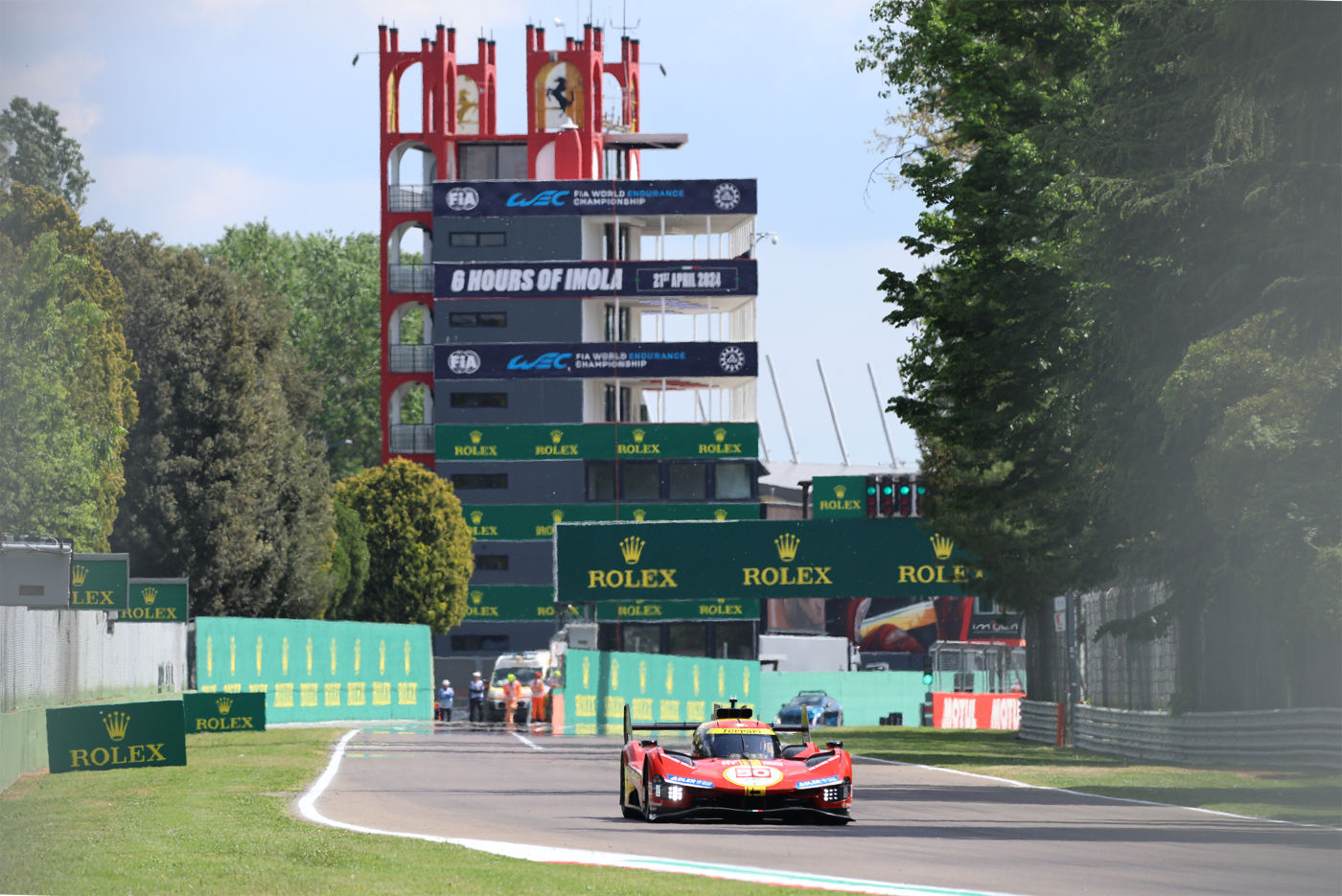
The 312 P powered by the V12 engine is a beautiful but unfortunate car, and never won a victory during its brief racing career. However, it is one of the most aesthetically satisfying cars ever made in the Ferrari workshops, and is the last prototype made before the agreement the agreement between the ‘prancing horse’ brand and FIAT.
The story begins when, after boycotting sports car racing in 1968 season to protest a rule change that banned their 4-litre 330 P4, Ferrari built a 3000cc prototype for the 1969 season, based on the existing F1 Ferrari 312 with a 60 degree V12. It was presented to the press on December 14th 1968 at the Fini Hotel in Modena. During the meeting, Enzo Ferrari announced his intention to participate in the 1969 Manufacturers World Championship with the car, called the 312 P for prototype. [Read more…] about Ferrari 312 P V12: Much Praise, No Wins
By pete

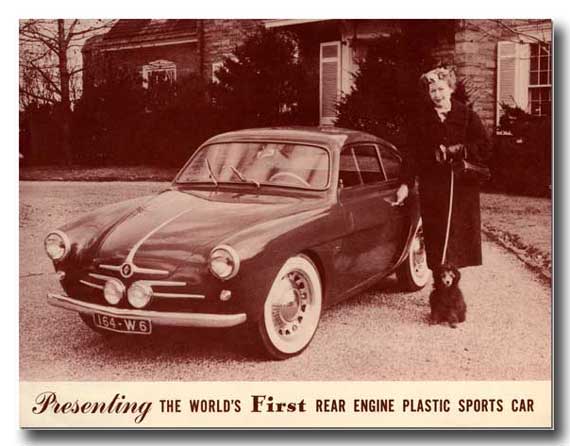
Not exactly what one expects from Fiat. When I first saw it I thought it was one of those later Chrysler Ghias. The resemblance is not accidental as this was designed by Ghia. RM auctions, 2014
Photos by Charley Seavey
There is always something about Charley Seavey’s photos that sparks one’s interest, opens the eyes, surprises, delights, fascinates. He sees and photographs things that most, or at least, I, would not notice or simply ignore, like the baggie disc brake or the door at the ACD Museum. Even a simple shot of a well-known make or model like the Alfa SS and Arnolt Bristol catches the light in a more dramatic way that we normally see it. His comments too, originate from a different point of view, often with less knowledge than one might assume but with charm it adds rather than detracts from the composition. And he often does so with a humor we can all recognize. So we make no apologies when we present the work of Charley Seavey. Enjoy.
By pete
Story and photos by Bernhard Linck
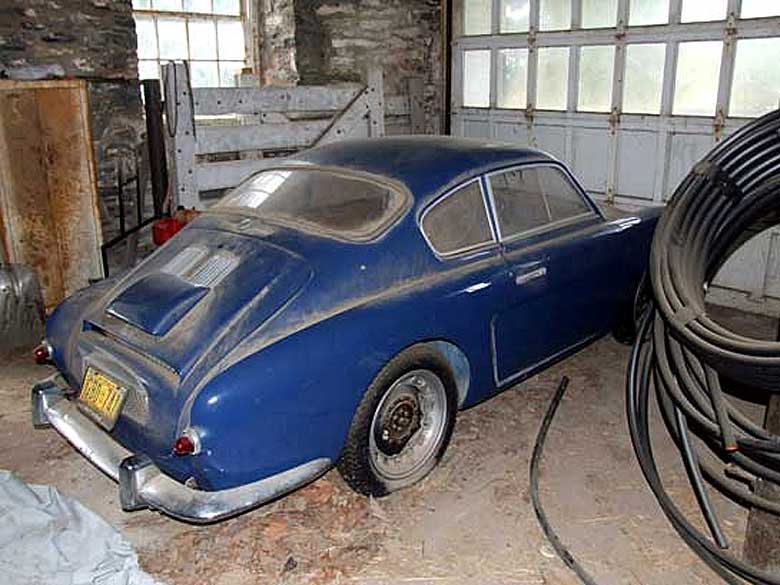
Bernhard Linck is a custom furniture maker in Munich, Germany, and for his own pleasure restores cars and actually uses them on the road. Therefore he is not concerned about Pebble Beach standards, and has his own idea of how an old classic should be repurposed. Linck, an avid reader of VeloceToday, thought we might be interested in a short story about the rehabilitation of a rare Healey Tickford Saloon. Loved the idea as the Tickfords are truly rare and unusual cars, with dashing aluminum bodies powered by a healthy 2.5 liter Riley engine. Although some of the following article has also appeared on other classic car sites, here Bernhard takes us in a bit more depth with many additional photos. About Bernhard Linck
After I restored my 1962 Austin Healey, I needed a coupe for the cooler days, and so I went looking for something suitable. I found this very British 1954 Healey Tickford Sports Saloon offered on Ebay from a Turkish used-Porsche dealer in the north of Germany.
By pete
By Sean Smith
Santo knew the PBX he purchased from Orrie Simko was tired and needed some love. So he stripped it down to a roller and sent it off to have any imperfections massaged out and a new coat of paint applied. Researching historical pictures, Santo found the little experimental car had gone through several color changes, but there was one that seemed to suit it best. Samples were looked at and a shade was chosen. The PBX is now resplendent in a bitchin shade of green.
By pete
Story by Willem Oosthoek
All photos by Jim LaTourrette [Willem Oosthoek Collection], unless stated otherwise.
In 1965 the long-distance racing scene for the World Championship began at Daytona in February where, after 2,000 KM, Ferrari was trounced by the Carroll Shelby’s team of Ford GT-40s and Cobra Daytonas. The next challenge came at Sebring in March, where the Automobile Racing Club of Florida would be hosting its 12 Hours race. The difference with Daytona was that at Sebring the organizers created an open class for sportsracers, cars not meeting the FIA’s Appendix J standards. This meant that Appendix C cars of unlimited engine capacity were allowed to enter, and these cars were likely to be lighter, more powerful and faster than the prototypes that contested the Championship. Whether they would last the full 12 hours to finish was another question, but Enzo Ferrari did not like the idea of facing another category of strong competitors that might interfere with overall victory.
By pete

The Lambda was the first in a long line of narrow angle V4 Lancias. Did the V4 generate more vibration than the standard four? And how were they balanced? Geoff Goldberg wanted to know. Photo by Jonathan Sharp
By Pete Vack with Geoff Goldberg and Jonathan Sharp
From the VeloceToday Archives, August 2021
NOTE: To order either of Geoff Goldberg’s books and avoid confusion, go directly to the author at gg@g2a2.com. He will provide the method best for you and apply the VeloceToday discount.
The display of Lancia Lambdas at the London Classic was a wonderful outing for this rare Lancia. In a serendipitous moment, while ace photographer Jonathan Sharp was snapping at every Lambda he could, back in Chicago Geoffrey Goldberg emailed and asked if we would like a copy of his latest publication, a booklet entitled Balancing the Lancia V4. Since the Lambda was the first production V4, a good opportunity.
By pete