
By David Beare
The name Pegaso isn’t familiar to many people other than a post-1945 generation of Spanish truck and bus drivers, plus some classic car enthusiasts who may have heard of (but probably never seen) that almost mythical sports-car, the Pegaso Z-102. The Pegaso company was named after another mythical beast, Pegasus, the winged horse, except the Spanish company logo lacked wings – Mobil Oil in the US had trademarked a Pegasus with wings in the early 1920s.
Pegaso horse: Look ma, no wings!, thanks to the Mobil Oil.
Spain was a ruined country after the catastrophe of the 1936-39 Spanish civil war, and while the rest of Europe was at war 1939-1945 Spain had to somehow rebuild everything. Most civilian trucks had been commandeered either by the Republicans or Generalissimo Franco’s Nationalist military, with the result that so few trucks remained roadworthy after Franco’s victory that the lack of road transport for food was gradually starving city populations. Mechanized farming was non-existent; the standard agricultural power-unit of the period was a mule or donkey, or for higher outputs, two mules.
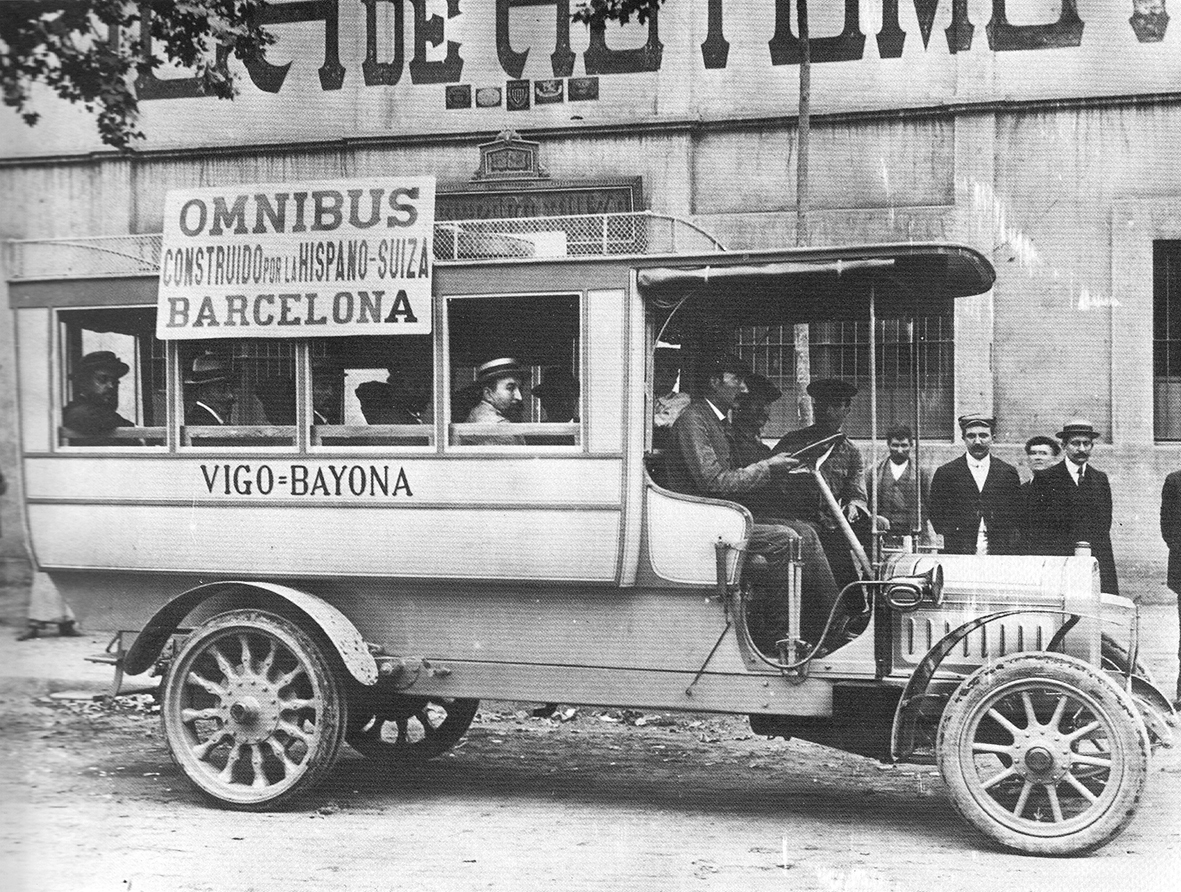
1908 Spanish Hispano-Suiza Vigo-to-Bayonne-passenger bus.
Franco’s regime had to do something, and quickly. A new department was created, INI, the National Institute for Industry, which oversaw the creation of other departments restoring Spain’s infrastructure – electrical generation, roads and railways, and two new organizations, CETA and ENASA, destined to create mass-production truck and bus industries from scratch. Spain had never had its own large-scale vehicle-building industry; most cars or trucks were imports and only the original Hispano-Suiza company in Barcelona had the skills and factory machinery to make industrial vehicles, but only on a small scale.
As is well-known, the French Hispano-Suiza company was renowned for aero-engine and exotic car manufacturing under the guidance of Swiss-born engineer Marc Birkigt, who founded the Barcelona company in 1904 and the French offshoot at Levallois-Perret near Paris in 1911. Barcelona started building passenger buses and trucks in 1908, something the French company never did, and almost single-handedly created a Spanish national bus service. After separation of the two companies in 1923 Barcelona pursued different goals, building smaller, more practical cars and from 1918 large trucks for the Spanish Army at a satellite factory in Guadalajara near Madrid.

1914 Hispano-Suiza-40-50hp army trucks.
Hispano-Suiza in Barcelona continued making high-quality vehicles on a small scale almost by hand until 1941, being untouched by the mass-production methods introduced by Henry Ford with the 1908 Model T in America. Franco’s 1941 plan for creating a new truck and bus manufacturing industry in Spain centered around Hispano-Suiza in Barcelona, despite his ingrained prejudices towards Catalonia, which was a deeply Socialist Republican stronghold during the war and fought fiercely against Franco’s troops with Hispano-based armored cars. The Hispano company was obliged to sell itself to the Spanish state in the form of ENASA (National Autotruck Company Ltd.) in 1946, and conveniently the deal included a nice new forward-control 7-ton truck, the Tipo 66G, first drawn up in 1942.
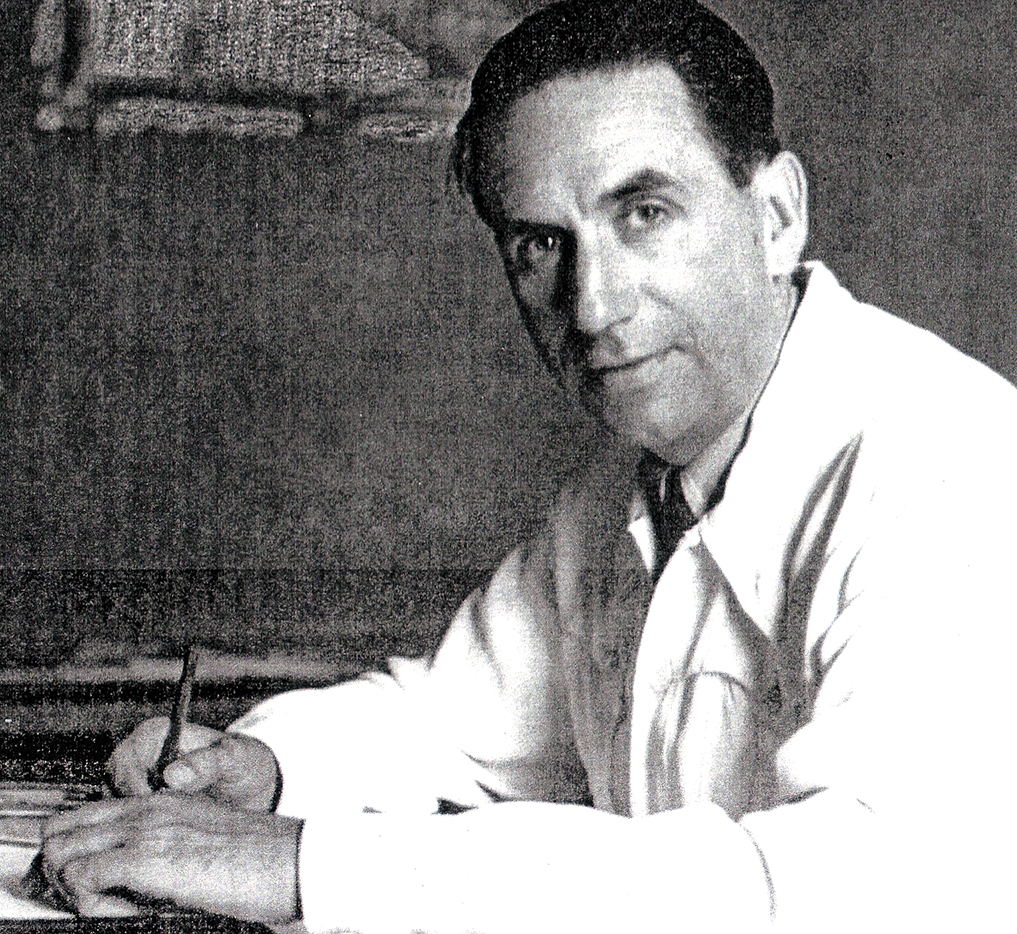
Wifredo Ricart
At this point a key figure in the Pegaso story appears – Wifredo Ricart, a talented Catalan engineer who had built his own sports and racing cars in Spain before the war and then spent nearly ten years working for Alfa Romeo in Italy on racing-car and aero-engine designs. His creations included the Tipo 162 V16 front-engined car and the Tipo 512 mid-engined, supercharged 1,490cc, 338bhp Auto-Union-beater, neither of which saw combat on tracks before World War II closed everything down. Ricart was at Alfa while Enzo Ferrari was also there and it was not a friction-free relationship, Ricart and Ferrari were like chalk and cheese and Ferrari later blamed Ricart for his “firing” from Alfa Romeo.
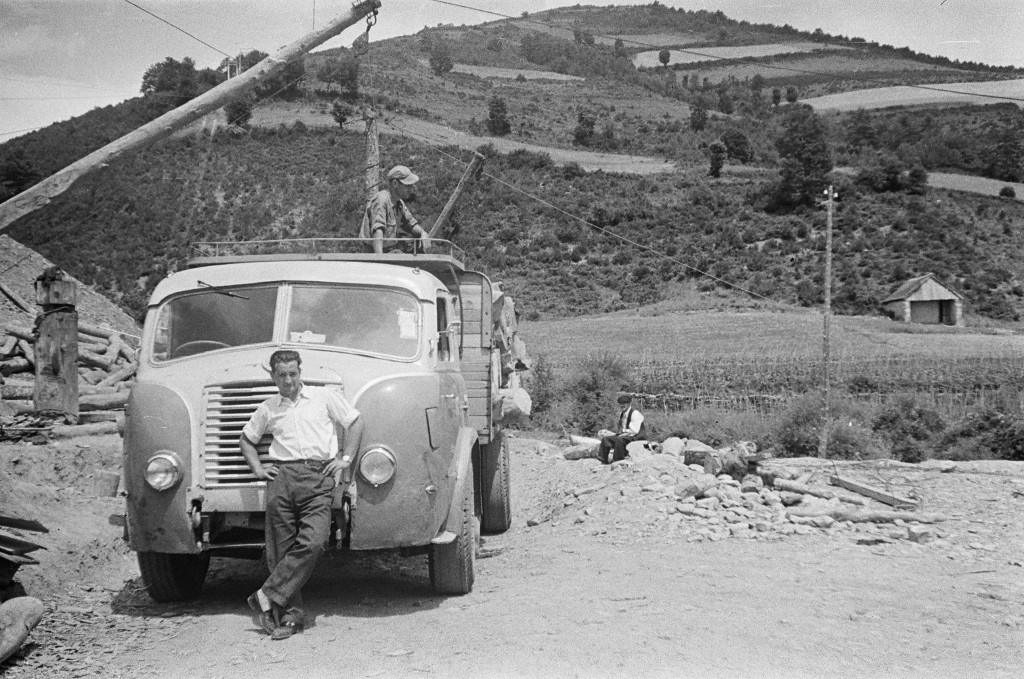
1944 Pegaso-1-type-Z203 truck was identical to the Hispano-66G.
In the chaotic aftermath of WWII and near-civil war in Italy, Ricart escaped back to Barcelona, where he stopped off en-route preparatory to taking a position at Studebaker in South Bend, Indiana. He was intercepted by Juan Antonio Suanzes of INI and persuaded to take charge of the new ENASA truck company, which then took the Pegaso name. Ricart was also given control of CETA, a research and training facility in Madrid which aimed to be a seminary for scientific and industrial research in which a new generation of young technicians would be trained by Ricart and his team of specialist collaborators in a wide range of skills and applications. “Titanic would be a good description of Ricart’s task of reorganizing, planning and retooling ENASA’s installations in Barcelona and planning and building a new factory at Barajas in Madrid, made even more difficult by the immediate post-war conditions.” (Ricart-Pegaso,Coma-Cros/Mosquera)
Many of Ricart’s old colleagues at Alfa Romeo saw no future in remaining in Italy and took little persuading to join their old boss for a new job in Barcelona, where the group of around thirty Italians began designing a new generation of truck and bus chassis. The Hispano-Suiza Tipo 66G was renamed the Pegaso 1 type Z203, the team then embarking on daring new schemes to develop a new monocoque (Monocasco) Z203 bus and the all-new Z207 V6 aluminum-engined truck.
Ricart soon realized there was a desperate need to train a new generation of designers, engineers and mechanics to create a viable motor industry in Spain- men who would measure in hundredths of a millimetre with micrometers, who did not belong to the traditional “blacksmith” school of engineers. Men who would be familiar with new casting techniques, manipulation of exotic new alloys, fine machining, new welding technologies and mechanics able to handle servicing, tuning and repairs of high-performance diesel truck and bus engines.
What better than to give them hands-on training on building an all-new state of the art high-performance sportscar? So this is how the Pegaso Z102 was born, as if Mack Trucks or Leyland in the UK out of the blue came up with a superb sports-racer, largely designed by ex-Alfa Romeo Italian engineers.
David Beare is the author of Hispano-Suiza and Pegaso, and Pegaso and Ricart From Hispano-Suiza to Pegaso: trucks, busses and sportscars. This is his first article for VeloceToday.com.
Hard as it is to understand the problems faced by most European countries after the devastation of World War 2, the reconstruction of a country that was still seething with resentment after a bitter civil war (and had managed to stay out of the worldwide conflict) seemed like a better opportunity than staying in Italy and rebuilding an automotive company from the rubble of Allied bombing. Orazio Satta Puliga was still able to pull it off, and Alfa Romeo came back to life with the 1900 series. Wifredo Ricart was the victim of a vicious smear campaign by Enzo Ferrari, but I would maintain that it seemed a more safe and more sane decision to escape the partisan reprisals of post-war Italy. Ugo Gobbato chose to stay with Alfa Romeo, and despite exoneration by two partisan tribunals, he was murdered because he remained loyal to Alfa and to Italy. His contributions are overshadowed by those who preceded him and those who followed, but his guidance during the difficult years of the war set the stage for Alfa Romeo’s rebirth.
There is no question that Wifredo Ricart was a genius, and was able to accomplish an almost insurmountable task by creating an automotive and truck manufacturing firm in a country that was still in disarray following a bitter civil war. With regard to automotive infrastructure, Spain had started from a baseline several notches below Italy. The fact that several Alfa Romeo engineers viewed the opportunity in Spain to be better than the option in Italy suggests just how bad things were in Italy in the aftermath of the second world war. Despite this, Orazio Satta Puliga was able to resurrect Alfa Romeo with the introduction of the 1900 series. Ugo Gobbato had hired both Ricart and Puliga. After the war, Ricart chose to return to his native country, at least in part to avoid the fate of Gobbato. The latter’s reward for saving Alfa Romeo was to be murdered by partisans, after exoneration for charges of collaboration. Jano and Puliga are respectively credited with the pre- and postwar achievements of Alfa Romeo, but the contributions of Gobbato are unrecognized.
Great story, filling in many details previously murky to me. This is why we enjoy this website!
Great and interesting article. To be continue?
Only two corrections:
1. “Generalísimo” instead of “Generalissimo” (Italian?).
2. “Baiona” or “Bayona” (Galicia, Spain) instead of “Bayonne” (France).
Thanks for the photo, I’m from Vigo and
I have lived in Baiona.
Best regards