
Credit Ludvigsen Parters, courtesy REVS
By Pete Vack
All photos by Karl Ludvigsen, Credit Ludvigsen Parters, courtesy REVS
Recently we ran an article with photos of Pegasos taken at the New York City Auto Shows in 1953. This inspired a comment from Karl Ludvigsen. “I enjoyed the photos of the Pegasos on display in New York,” he wrote. “The father of a friend of mine ran Brewster Motor on Long Island. I too took photos of these cars, at two venues. One show was at Hartford Connecticut – these are the fuzzy shots in the sequence – obviously not NYC. The others were taken at the Second Annual Motor Sports Show at Grand Central Palace, New York City.”
Not only that but Karl began his automotive writing career – one which is still going strong – by writing an article about the Pegaso. “The first car article I ever wrote was about Pegaso in MIT’s Tech Engineering News, around the time of the Pegaso’s American launch.”
That American launch was a PR blockbuster for Pegaso and Brewster Motors run by Luis Maresca. The cars, the models, the venues, the demonstrations at Bridgehampton, all served to bring attention to the new Spanish marque, designed to better Ferrari in every way possible. Karl also recalled that the Pegaso made a hit on the highway as well. “For the East Coast shows their star driver Joaquin Palacio came over for demonstrations. When he hit the Merritt Parkway he said ‘Vamos!’ and let the glass-back coupe out fully. When the police finally flagged him down they spoke of triple-figure speeds that were echoed by the local papers, complete with pictures. It was a sensation!”
At the same time, another, lesser-known attraction, chained to a stand to keep it from going anywhere, was the construction and display of chassis 0-0123, made of Plexiglas or Perspex…both trademark names for a plastic to be used in place of glass. that too, was a sensation. But was it Perspex or Plexiglas?
Mario Laguna, author of Pegaso Spain’s Dream Car* offered us some insight about the chassis material: “For Pegaso #0123, I would say it was fitted with a Plexiglas body (not Perpex), because there was a “Plexi” factory in Valencia. Many years ago they had a really big photo of that particular body in the lobby, welcoming visitors, so I’m relatively sure they made it. The old Plexi factory is long gone, but when I was writing my book I went to the new factory, but neither the director (nor anyone else) knew anything about Pegaso. They all are young, no one of them remember the old factory (even less the photo I was looking for).”
Pegaso was not the first to think in terms of a Plexiglas “see through” showcar. In 1939 at the New York World’s Fair Highways and Horizons exhibit by General Motors, people witnessed the display of a 1939 Pontiac Deluxe Six Plexiglas car, constructed of acrylic plastic. And of course since then, there have been many such plasticized diversions, and today one can even buy a clear plexiglas hood for your own car, although there is nothing to see aside from, well, more plastic.
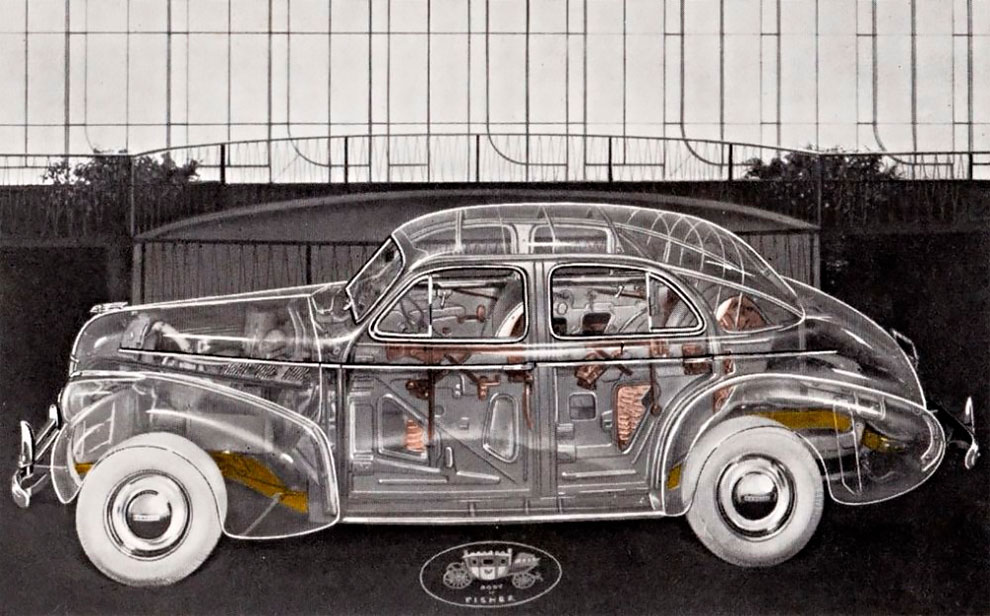
Visitors to the 1939 New York World’s Fair Highways and Horizons exhibit by General Motors saw this display of a one-of-a-kind 1939 Pontiac Deluxe Six Plexiglas car. This specially fabricated see through vehicle was constructed of acrylic plastic (quite an advancement at the time.)
As interesting as the Pontiac might have been, it was not a Pegaso, equipped with a DOHC V8, five speed transaxle with de Dion rear suspension. Not even Ferrari offered such an advanced chassis, and it pre-dated the Mercedes Benz 300SL. To see this fantastic chassis with a Plexiglas frame must have been astounding.
Not only that but it had a running, or at least movable drive train. That the wheels were circulating was obvious in some of the photos Karl snapped while at the New York show. We had known about the chassis before but did not realize that the drivetrain was in motion. Or were our eyes deceiving us?
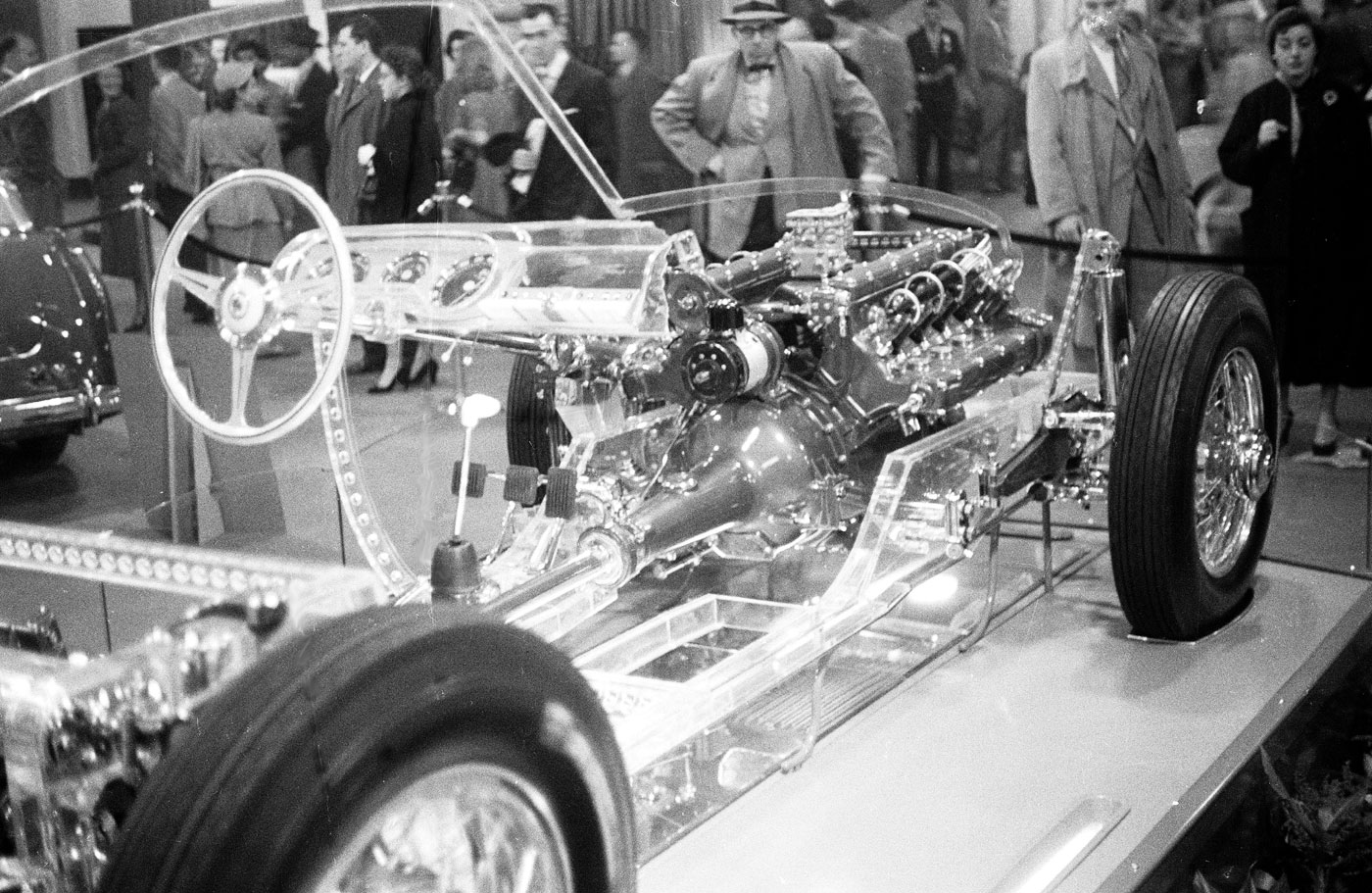
The plastic outline of a body can be seen in this photo. A full see through body would be shown later at the 1954 Paris show. Apparently all the mechanicals were actual components.
So, we consulted Pegaso: Ricart’s Passion for the Car, by Enrique Coma-Cros and Carlos Mosquera. Unfortunately, it is all in Spanish, but with Google’s help we managed to find a few references to the plastic Pegaso. As with so many books, it was not the translation that was a problem, it was finding the references to the subject, buried deep in the hefty tome, with no index to guide us. But it’s a lovely book to walk through in any event. So what about 0123?
The plastic chassis was first displayed at the Paris Auto Show in 1952, at which time it had a plastic ‘profile’ that delineated the shape of the body and can be seen clearly in Karl’s photos. The same month it was shown at the London Auto Show. In early 1953, chassis 0123 was shipped to the U.S. where it appeared on February 21st at the World Motor Sports Show Madison Square Garden, New York. Next up was the Hartford International Motorcar show in March, where two Pegasos were shown but according to the book, the chassis 0123 was a no-show. However, back in New York later that month at the Second Annual Motor Sports Show at Grand Central Palace, the chassis made its last U.S. appearance, and that’s where it was photographed by Ludvigsen.
And we were able to confirm that those wheels were indeed spinning…the authors described the chassis:
“The stand was a complete mechanical group, number 0123, with the engine and the cutaway shift-differential assembly to allow examination of its operation. Through an electric motor movement was driven to the transmission and engine.”
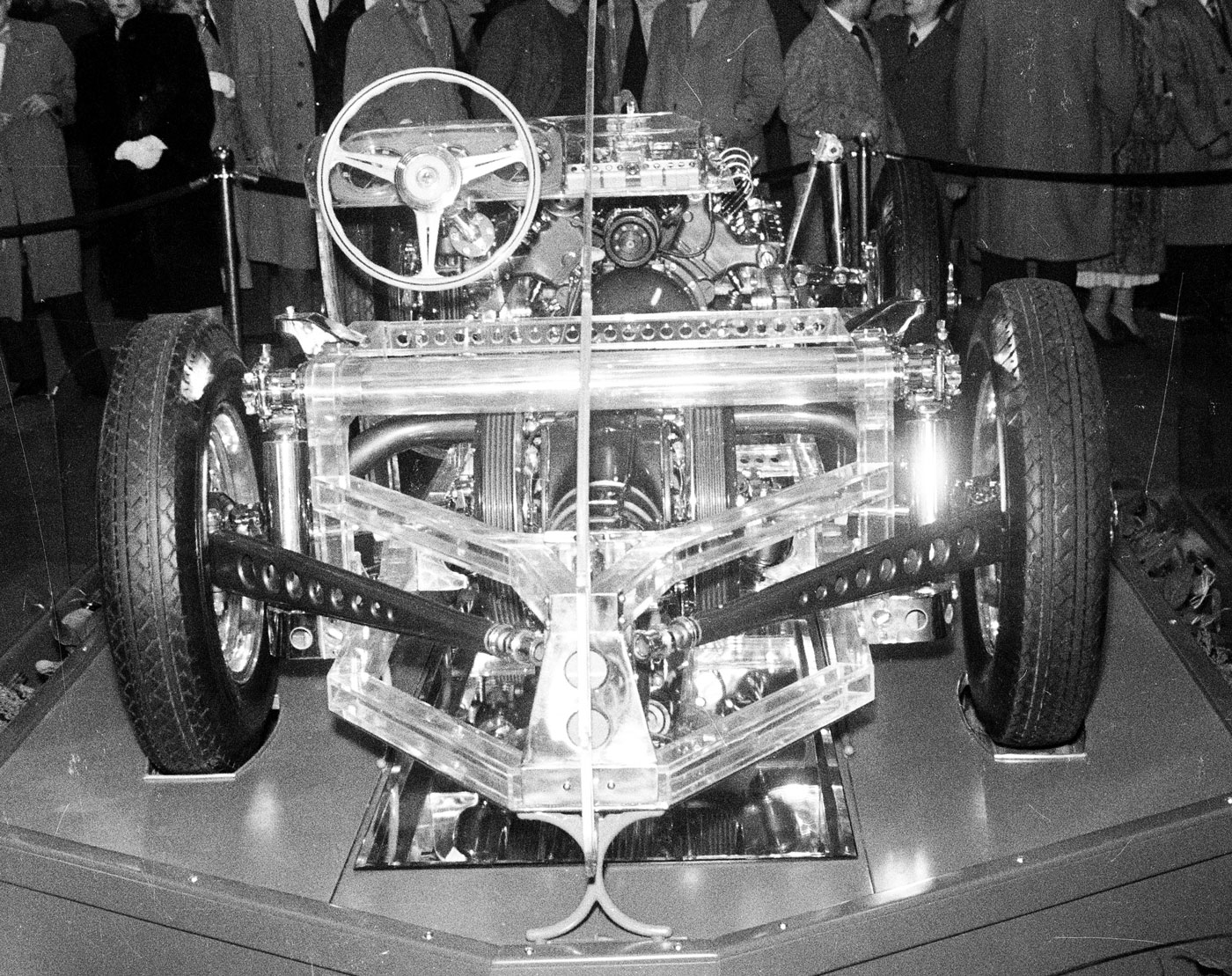
The de Dion suspension with inboard drum brakes can be seen in this photo. There appears to be a mirror under the rear end. But we are not sure where the electric motor resided.
The displays then moved back to London and Paris for the fall auto shows. But there was one more last stand, even more intriguing…by October of 1954, and ready for the Paris show, the plastic Pegaso received a new ghostly body as well. According to the author, it was “…modified by incorporating a complete transparent Perspex body of a [Pegaso] BT1.” The fantastic plastic Pegaso had bested the 1939 Pontiac, but it had taken fifteen years.
According to information in the Croma-Cross Pegaso book, the plastic chassis survived and was in a museum in Spain. But Laguna doesn’t concur. “I don’t think so. The chassis, or working parts of it were more likely used to build brand new cars.”
Nice to know there are still a few mysteries. Laguna also told us there was a great period film of the plastic chassis in action and if he can find a link to it he’ll let us know. Now that would be interesting!
Below are a few more Pegaso photos, these from the Hartford, CT show. By the way Karl has started a periodic column on Substack which will be of interest to our readers. You can find it at https://karlludvigsen.substack.com/
Already some stories of interest to Italian and French car lovers! We have already subscribed (free!!) and highly recommend it.
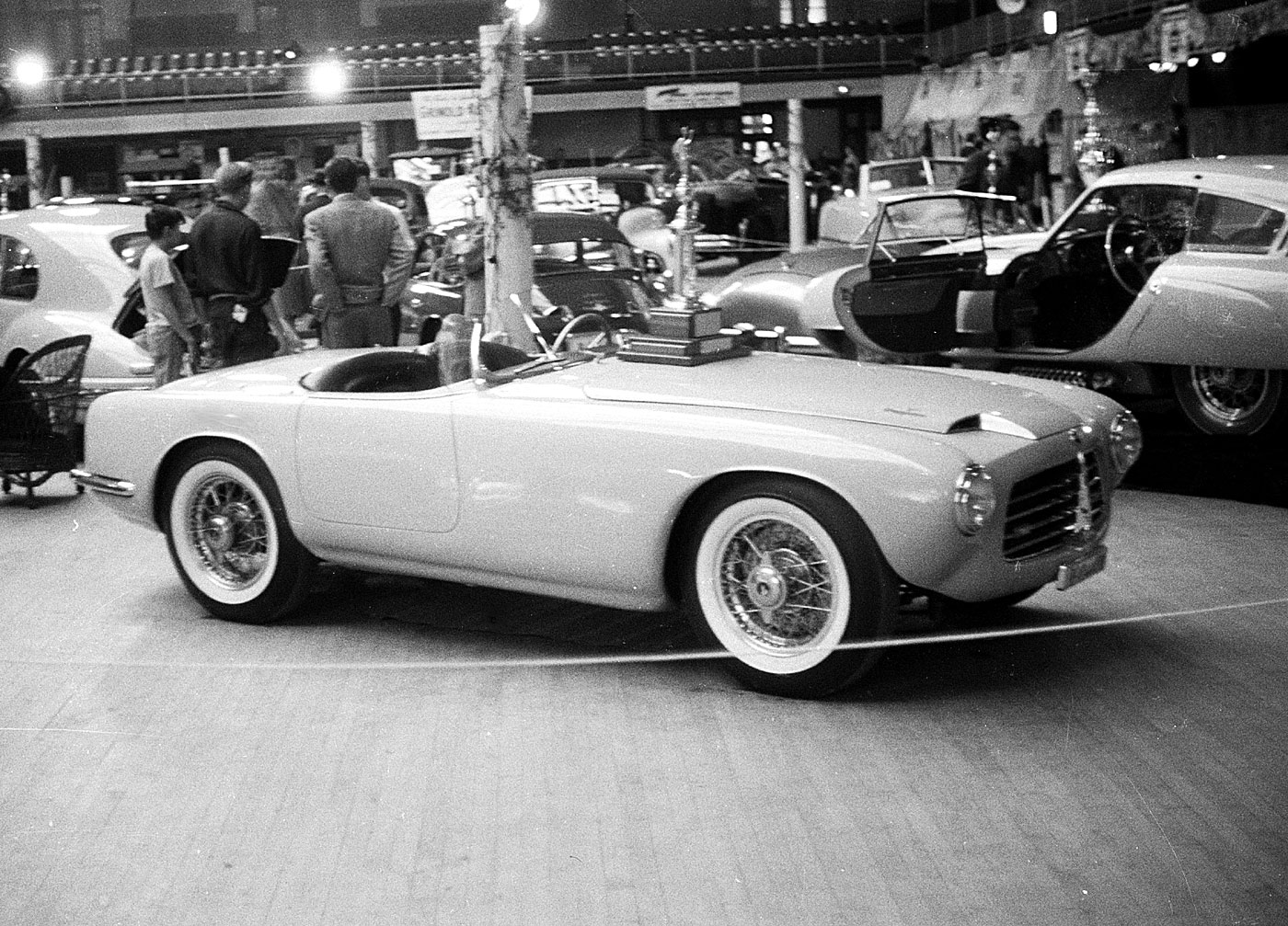
The Pegaso Spyder Touring ‘Tibidabo’, chassis 0118 at Hartford.
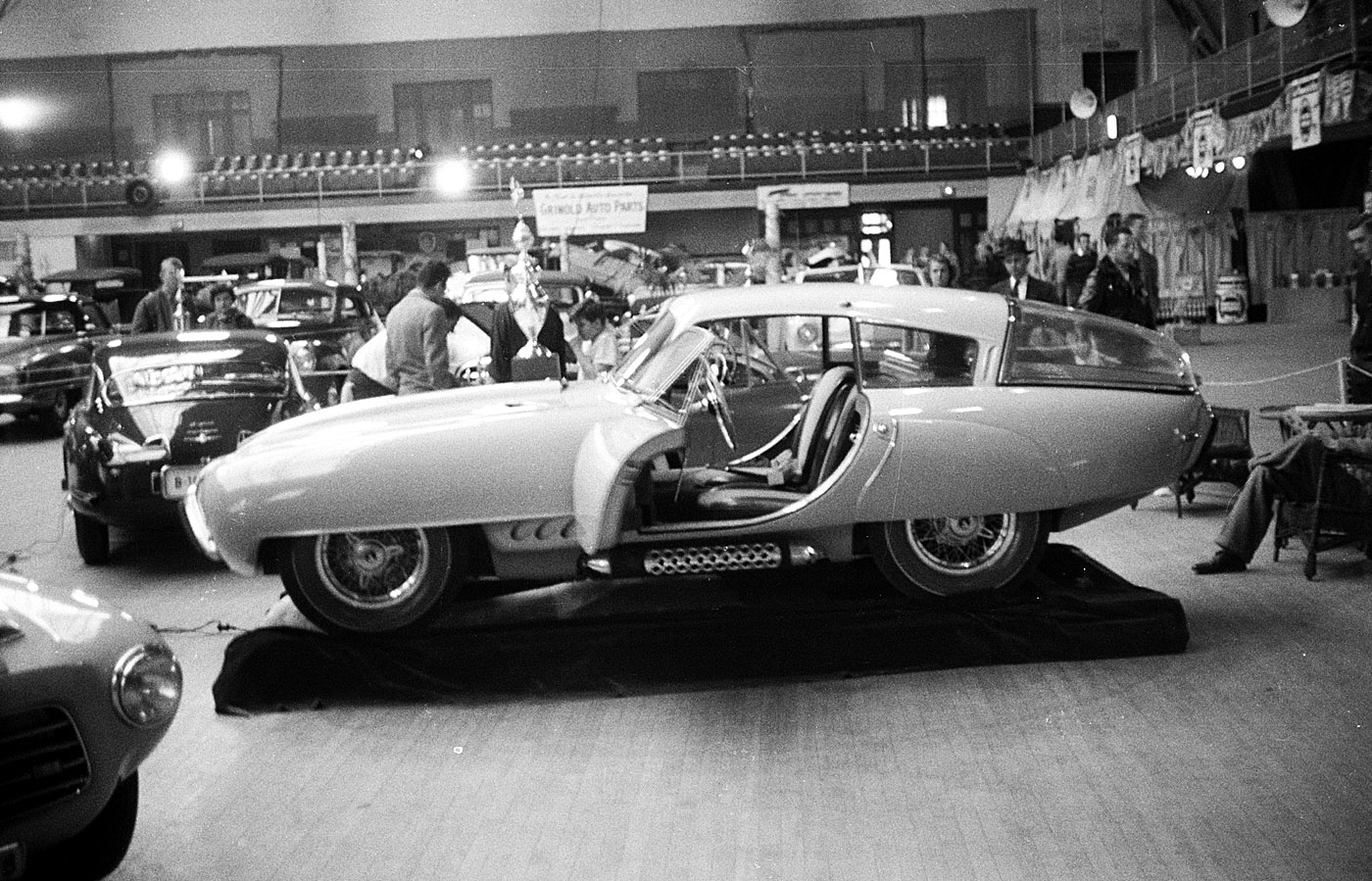
The ENASA Cúpula (Spanish for dome), chassis 0121, sold to Trujillo, at Hartford. Note also Spider “Tibidabo” #0118, left, and Touring Berlineta prototype #0119, background, left.
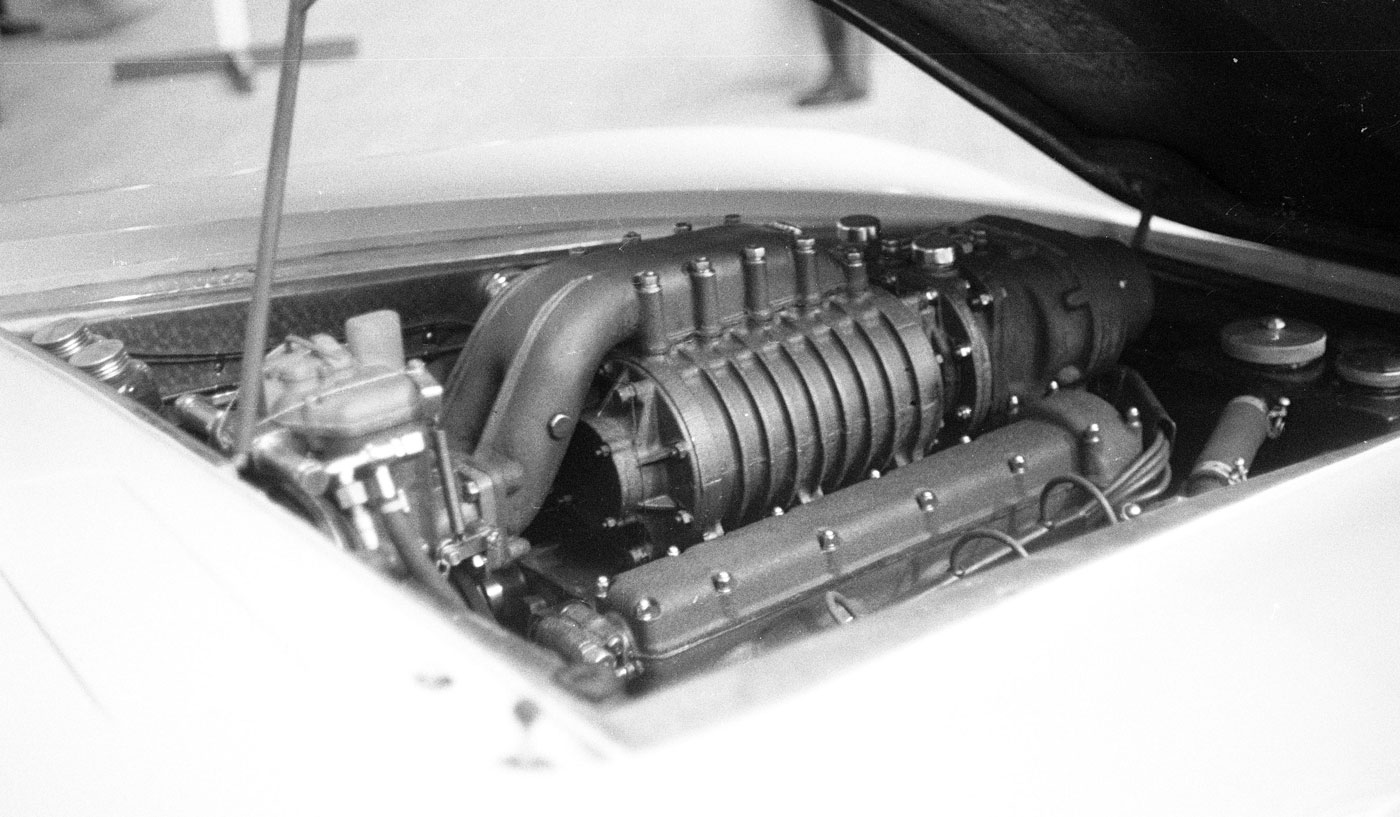
Chassis 0121 supercharged V8 engine, Hartford.
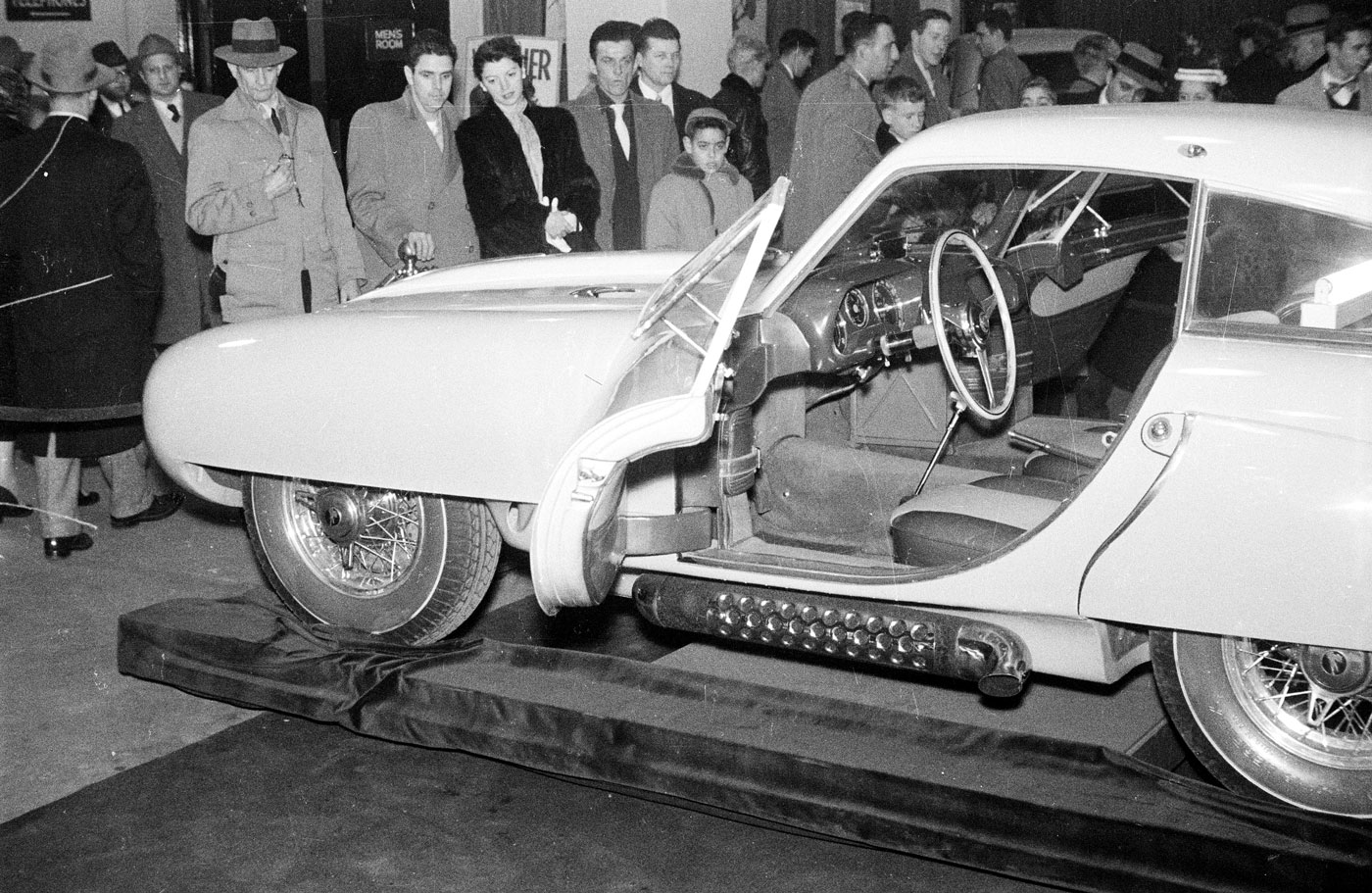
Interior of the Trujillo coupe, Hartford.
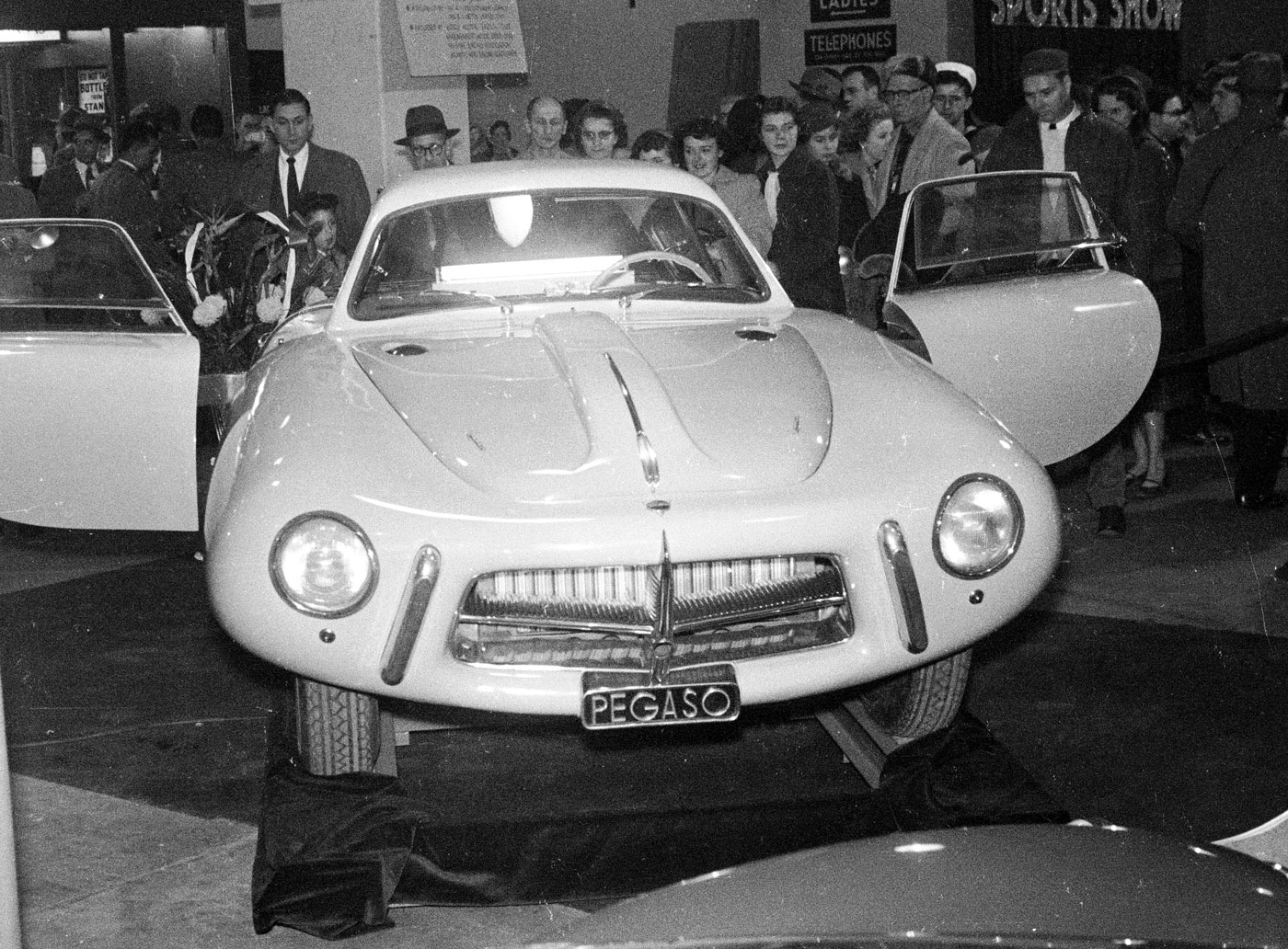
The ENASA Cúpula was also known as the ‘Tea Rose’ because of the color and “El Dominicano” named after its first owner, Rafael Trujillo, president of the Dominican Republic.
Wow, they were breathtaking. I think the Cupola is what caught my fascination as a kid. I’ve always loved aerodynamic and streamlined cars. The Citroen SM was nice but that Cupola was unique and outside of this world.
about 45 years ago a youngish man drove into our honda dealership with an alloy pegaso spider on a trailer, missing only its 4v weber carbs and one side curtain. $2500…so why not? he promised to send us the carbs from his mother’s house somewhere in the midwest but they never arrived. i wrote pegaso and they sent me a reproduction copy of the owner/service manual and several glossy publicity photos of various models. i sold the car to alf francis along with the serenissima he’d almost finished building for himself at serenissima before ugolini fired him; it was the chassis of the original lola gt eric broadley had given alf out of his back garden with the remaining massimino-designed f1 engine that mclaren hadn’t blown up. i let alf have that for $2500 too-what it cost me in italy, not including shipping. wonderful memories of relaxed and delightful times!
p.s. i saw a jerry sloniger mention in this issue; i’ve tried to track him down without success. is he still with us? bill pryor and i had a nice dinner with him, his lovely czech wife, and the world’s smartest dog, their black standard french poodle