By Pete Vack
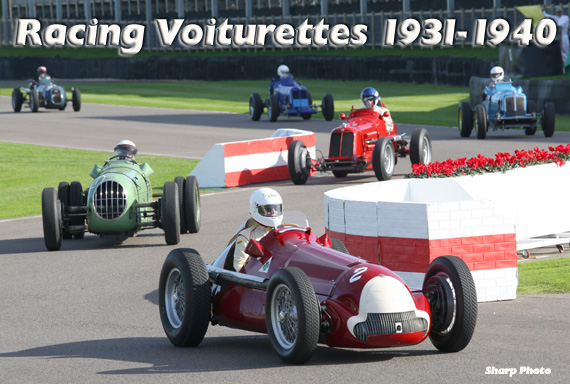
The voiturette (750cc, 1100 cc and 1500cc) races which took place between 1931 and 1940 were magic; technically interesting cars, around the house race venues, truly international with multi-make participation, a cast of characters from a Siamese Prince to Enzo Ferrari, Dick Seaman’s drives with the ERA, MG and Delage, and a devastating secret weapon unleashed by Mercedes Benz which defeated and demoralized the opposition. There was never a dull moment on or off the track. The venues were largely ‘around the houses’ circuits such as Pau and San Remo, the drivers were semi-professional or talented amateurs, and interestingly, there were no points or championships for manufacturers or drivers. In fact the formula was so good it became the official Grand Prix class in 1945, which lasted until 1952.
Below, we present the first six of twelve short stories about the primary voiturette racers of the 1930s, covering Alfa, Alta, Amilcar, Austin, Bugatti and Delage. Part 2 will cover ERA, Maserati, Mercedes Benz, MG, Salmson and Talbot.
Alfa Romeo (S.A. Alfa Romeo, Milan, Italy)
Competitive years: 1938-1940 Horsepower Range: 195-225
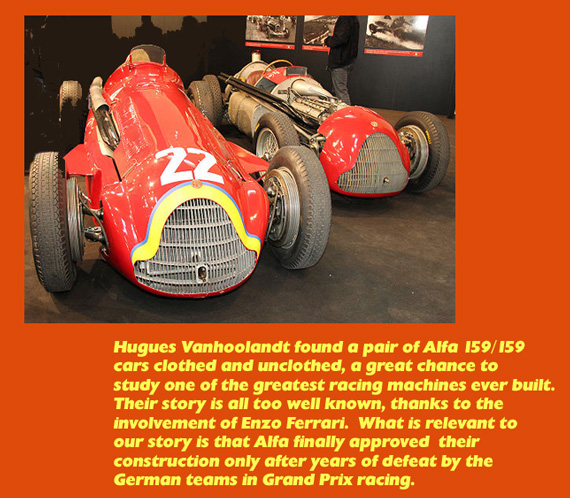
The voiturette class was eventually dominated by the 158 Alfetta in 1939 and 1940. However, it is not clear why Alfa did not choose to participate in the voiturette races of the early 1930s. Many of their customers, such as Count Gianni Lurani however, did so using the 6C 1750 reduced to 1500cc and equipped with a lightweight open-wheeled body. They won class victories at the Nurburgring in 1932 and a third place in the 1500cc in the 1933 Czech Grand Prix.
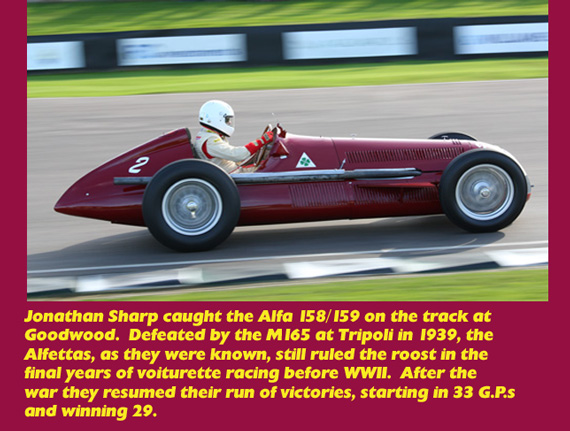
It took the annoying might of the German teams and the 750kg Grand Prix formula to incite Alfa Romeo and Enzo Ferrari to create a voiturette. In doing so, he and designer Gioacchino Colombo created an almost perfect race machine that in its various guises, ruled both pre-war voiturette racing in its closing years and Grand Prix racing from 1946 to 1951. The 158 Alfetta used a straight-eight with a Roots blower and produced a reliable 225 hp before the war. After a period of teething troubles, the cars were unbeatable but for one infamous (for them) event, the Grand Prix of Tripoli in 1939.
Alta (Alta Car and Engineering Co., Tolworth, Surrey U.K.)
Competitive years: 1935-1939 Horsepower Range: 140-180
Color images by Jonathan Sharp
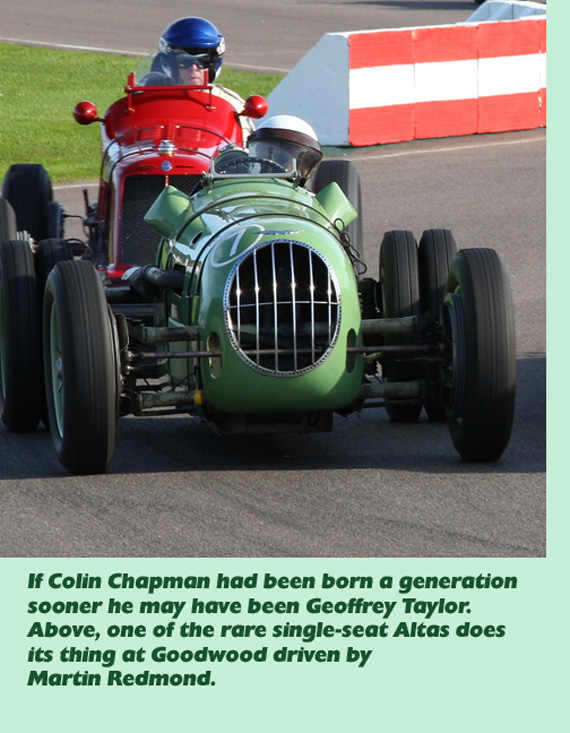
Geoffrey Taylor was the Colin Chapman of the 1930s but with a difference; he not only created his own chassis, suspensions and coachwork, but the engine as well. From scratch. His first effort in 1929 was a DOHC 1100cc sports racer which was developed into a very rapid voiturette contender. Rapid, yes, reliable no. That takes time and money and while Taylor had the brains, he sorely lacked the resources to make his cars last the distance. Therefore they did best in short events like sprints and hillclimbs, and the cars rarely raced outside of the British Isles.
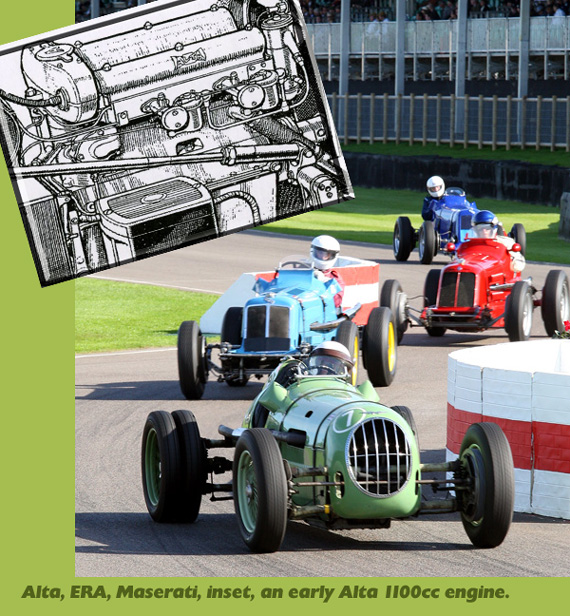
By 1936 Taylor had produced several ‘offset’ race cars with the propshaft to the left of the driver and updated to 1500cc and supercharged via a Roots blower. In 1937 a single seater version with independent suspension and coil springs was offered, all with his roller chain driven twin cam head.
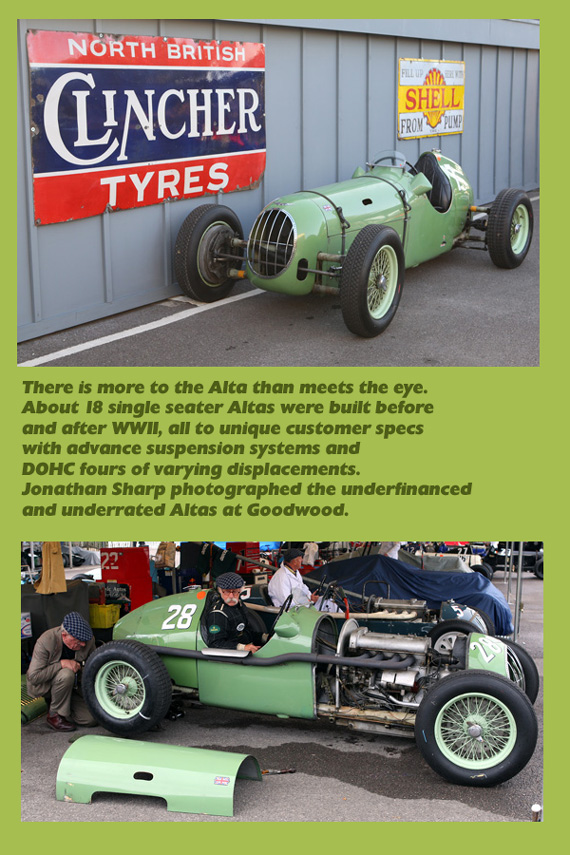
Altas continued to race after the war, but had to wait until 1955 for a victory, when Tony Brooks won the Grand Prix of Syracuse with the 2.5 liter Alta-engined Connaught.
Amilcar (Société Nouvelle pour l’Automobile Amilcar, St. Denis)
Competitive years: 1928-1939 Horsepower Range: 62-107
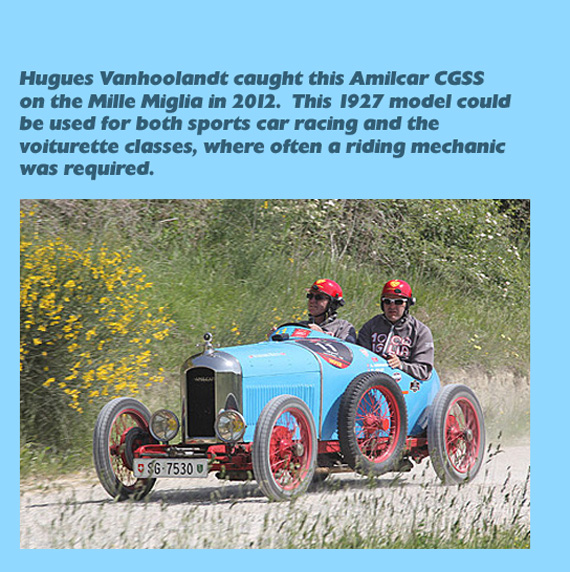
Another successful 1100 race car which had its beginning in the 1920s was the Amilcar. Like Salmson, Amilcar produced cyclecars in the 1920s, and later, a four cylinder sidevalve model competed against the DOHC Salmson with some futility. But in 1925, Amilcar’s chief engineer Edmond Moyet came up with a DOHC straight six with a Roots type supercharger, using many of the same features as the 2 liter V12 Delage of 1924.
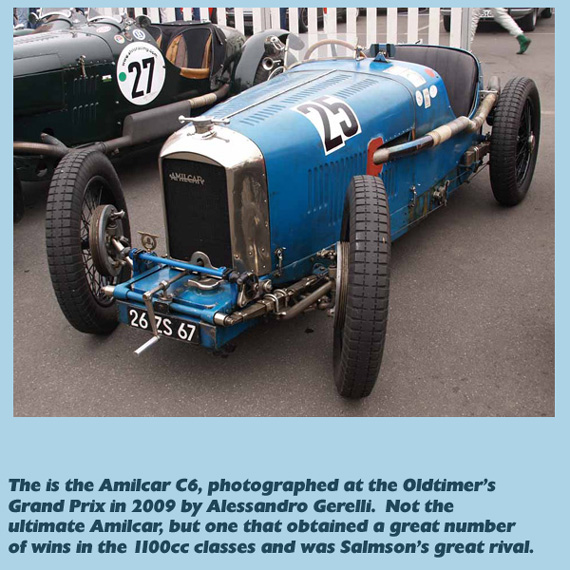
These six cylinder engines provided Amilcar with a significant weapon against Salmson. In 1931, an MC0 model was campaigned with factory support by José Scaron and was invincible in the 1100cc class, defeating not only the Salmsons, but bored out to 1286cc, won victories in the 1500cc classes as well, facing off with the Bugatti T37A, Howe’s Delage, and the Maserati T26.
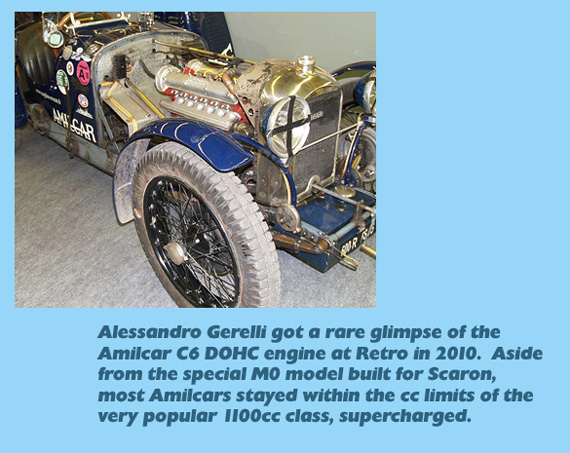
The 1100cc class wins continued until the class eventually faded away in 1934.
Austin 750 DOHC (Austin Motor Car Company, Longbridge, U.K.)
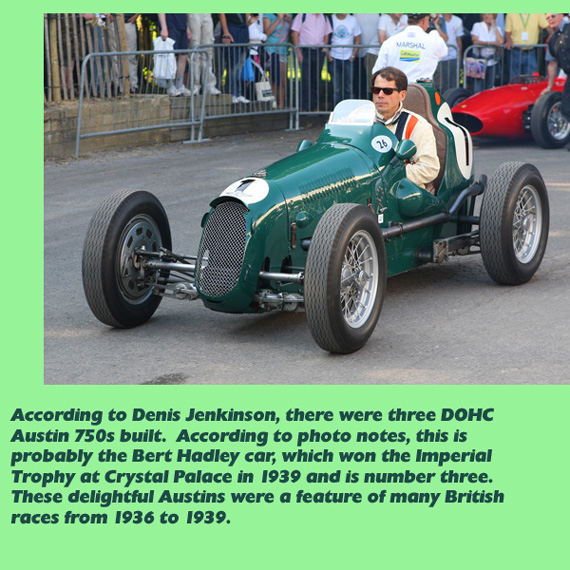
Competitive years: 1936-1939 Horsepower Range: 90-116
Color images by Jonathan Sharp
Everyone loves to include the Austin DOHC 750 in the discussion of voiturettes, simply because it is such a jewel, an interesting case of what could have been, and designed by Murray Jamieson on the request of Lord Austin regardless of cost. It is a Grand Prix car in miniature, at only 750cc, begging to be upgraded to a full 1500cc and uphold the British honor in voiturette racing.
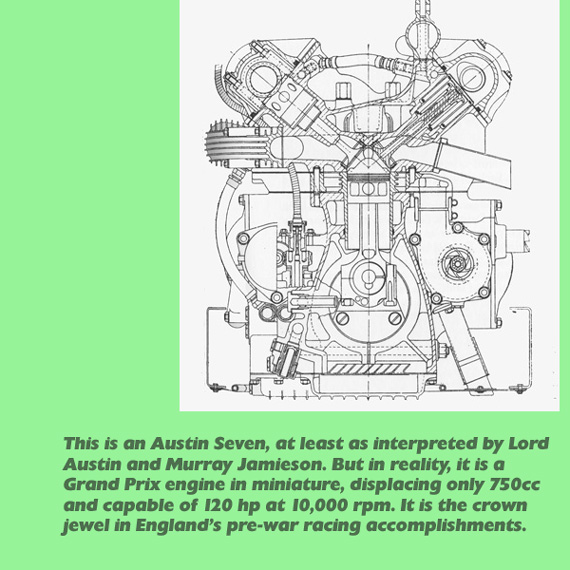
Earlier versions had used the Austin side valve engine in supercharged form with some success. Jamieson’s job was to create a new aluminum block and twin cam head, driven by gears at the rear of the engine that produced 116 hp to propel the 1000 lb. chassis. In 1936, Charles Dodson was running with the 1500cc cars in fourth at the Isle of Man races, and Walter Baumer took one to Germany to finish fifth at the Eifelennen and sixth at Berne.
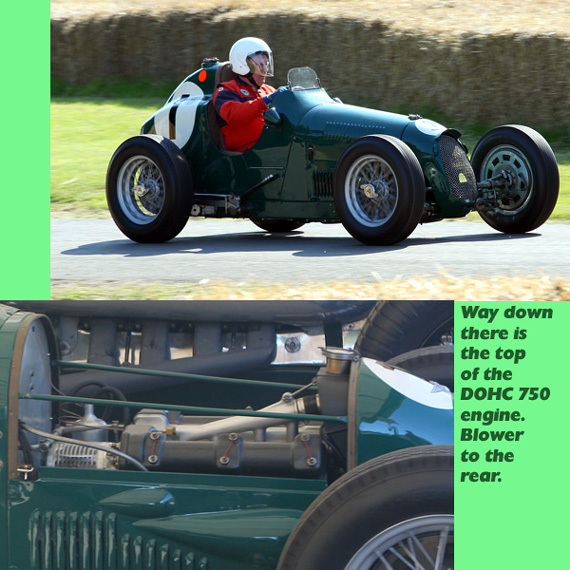
But Lord Austin had made his point, sold more Austin Sevens, and lost interest despite the obvious potential of the DOHC engine. It was back to bread and butter for Austin and unfortunately Jamieson lost his life in spectating at Brooklands in 1938. Three of the twin cam Austins were built, and two remain today.
Bugatti (Ettore Bugatti, Molsheim, Bas-Rhim)
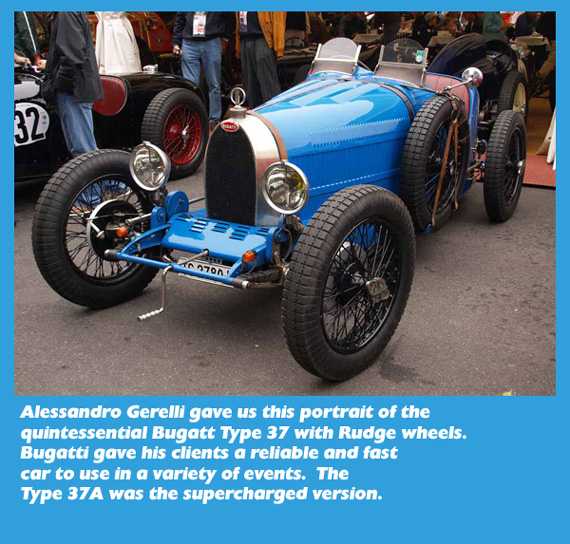
Competitive years: 1928-1938 Horsepower Range: 60-150
The mainstay of both Grand Prix and voiturette racing from 1924 to 1934, Bugatti offered a lot of race car for its growing number of clients. The SOHC 1496cc T37, introduced in 1927, was a T35 with four instead of eight cylinders and produced 60 hp; the T37A was supercharged and good for 90 hp. 209 Type 37s and 78 T37As were built and used both Rudge wire wheels and cast alloy Bugatti wheels.
The T37 and T37A filled the grids and won a lot of races. It was showing its age and by 1932 the new DOHC head from the T51 was adopted to a short stroked eight for the 1500cc class. In the hands of Pierre Veyron, the T51a was extremely successful between 1932 and 1934. The new Bugatti was driven by Mme Itier to good effect as well.
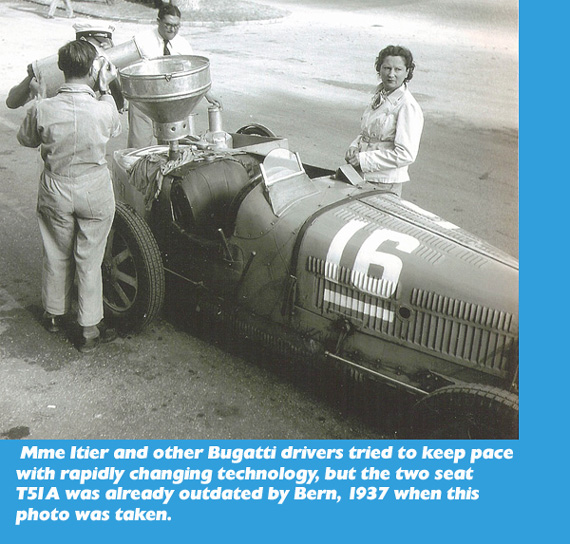
A new design was called for by 1935, but none was forthcoming from Molsheim, and the T51A fell behind the new cars from Maserati and ERA, although privateers continued to race all their Bugattis in voiturette events until the onset of WWII.
Delage (Automobiles Delage, Courbevoie-sur-Seine)
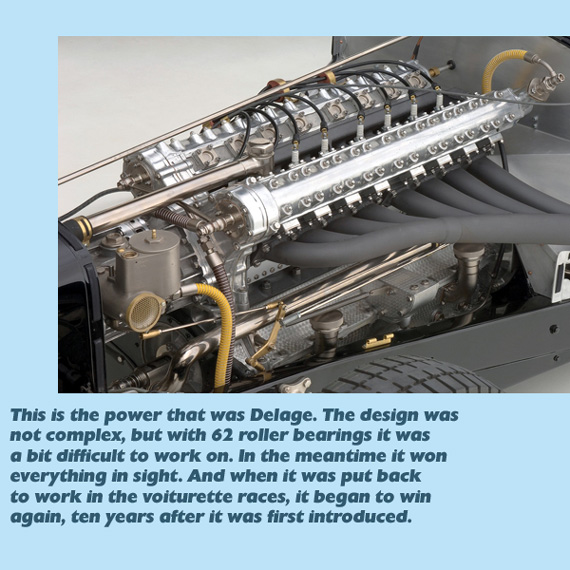
Competitive years: 1931-1936 Horsepower Range: 170-195
It seems natural that the new cars built for the 1500cc supercharged Grand Prix formula of 1926-27 would surely be immediately successful in the 1931 voiturette races calling for the same displacement. But it didn’t work out that way. Consider the Delage, with 62 roller bearings that enabled it to crank out as much as 10,000 rpm without damage. The straight eight was simple enough, but you might image the cost of maintaining the breed. After soundly defeating the Grand Prix opposition in 1927, the four Delages were sold to private individuals.
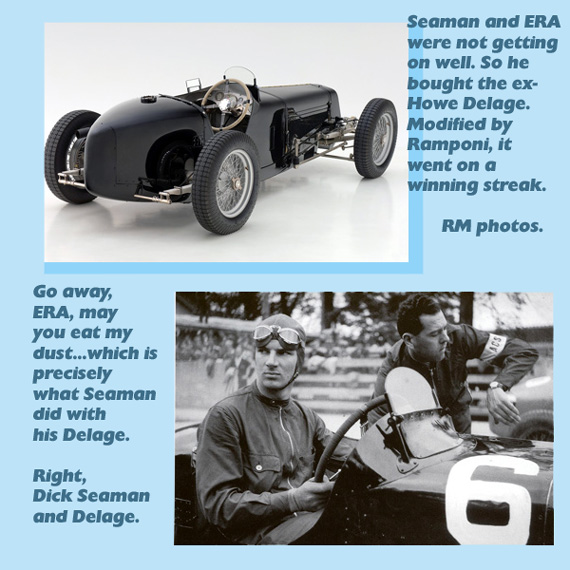
Two ended up with Lord Howe, who campaigned one very effectively from 1931 to 1935, when it was purchased by Dick Seaman. With the help of Giulio Ramponi, in the hands of the talented Seaman won four races in 1936, proving the worth of the design, Ramponi’s modifications that helped boost the horsepower to almost 200, and Seaman’s own driving. This car ended up with the Siamese Prince Bira but never again achieved the same level of success.