ERA (English Racing Automobiles Limited, Bourne, U.K.)
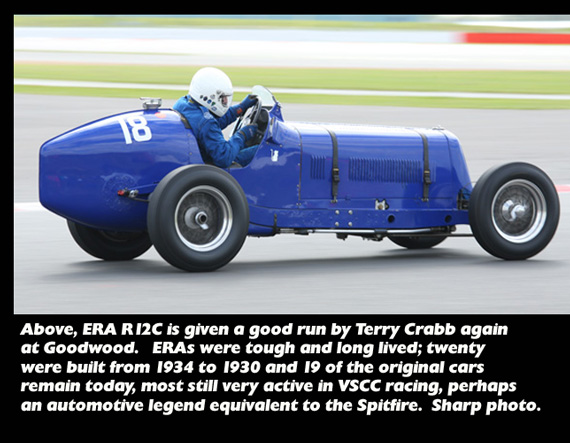
Competitive years: 1934-1938 Horsepower Range: 180-225
While the MG, Alta, Riley and Austin 750 did remarkably well for Great Britain, the Raymond Mays/Peter Berthon ERA combined a production based supercharged Riley engine with a solid conventional chassis and to launch the best known British upright of all time. It was fast, mostly reliable, and attracted top notch drivers from the U.K. and one from Thailand. Prince B. Bira (for short) was a grandson of King Mongkut, the hero of the book and musical, “The King and I”.
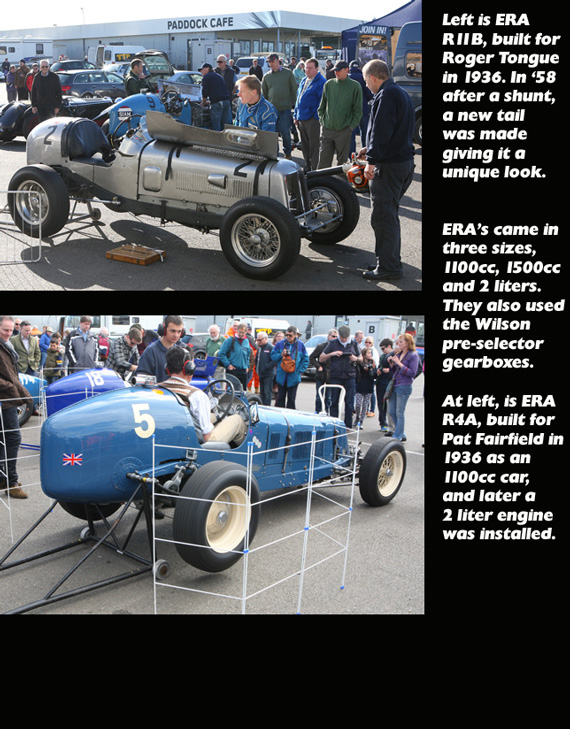
Bira was encouraged and financed by his cousin, Prince Chula Chakrabongse, and the pair bought three ERAs, naming them Romulus, Remus and Hanuman under the White Mouse Stable.
ERAs first appeared in 1934 and production of the B-Type cars began along with sales to clients. The engine design was similar to that of the BMW 328, with two camshafts high in the head and operating short pushrods to affect a hemispherical combustion chamber.
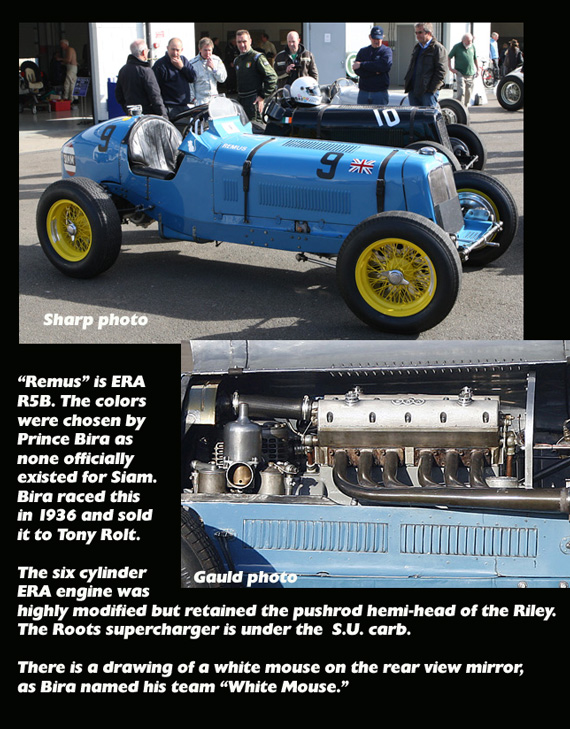
The C Type was the factory model, derived from B Types. Equipped with a huge Zoller supercharger, some were able to develop 225 hp, and in 1937 ERAs completely dominated the 1500cc classes outside of Italy (where Maseratis always outnumbered the competition and usually won).
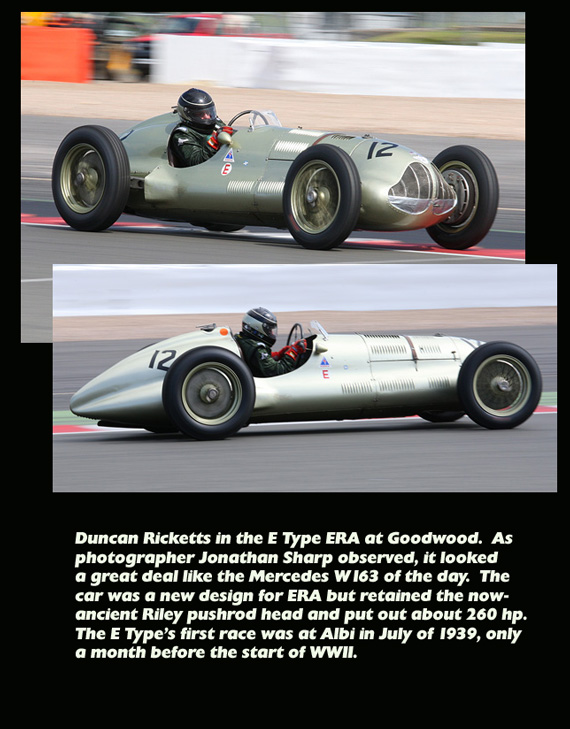
The last ERA was the E Type, but the Riley based engine was no longer sufficient, and the arrival of the Alfetta sealed its fate. After the war, Mays and Berthon established B.R.M.
Maserati (Officine Alfieri Maserati, Sp.A. Bologna, Italy)
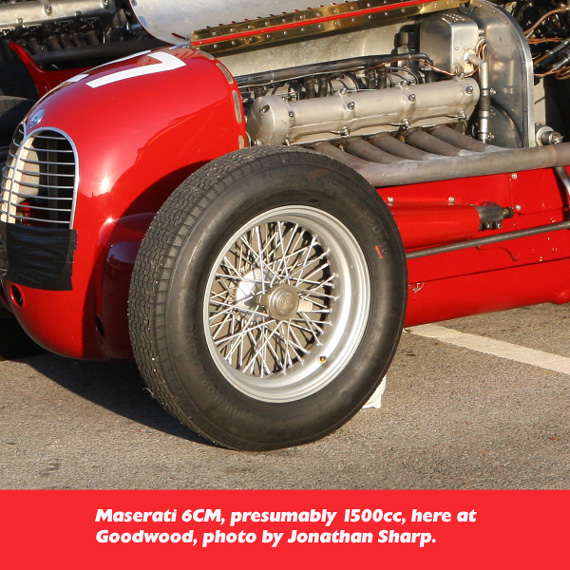
Competitive years: 1926-1940 Horsepower Range: 105-220
Color Images by Jonathan Sharp
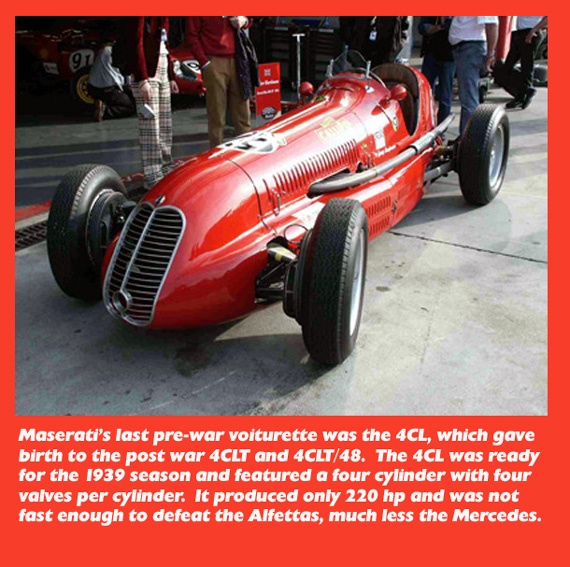
By the 1940s, the big Maseratis, in the guise of the 8CLT, finally found success but in the unlikely arena of Indianapolis Speedway. But from 1931 to 1940, the vast majority of successes for Maserati racing automobiles were gained via the voiturette races for 1100 and 1500cc cars. But there they did very well indeed, particularly in Italy where there were at least 53 voiturettes races between 1931 and 1940. Maserati won most, but on occasion rudely interrupted by MGs, Delages, Alfettas, ERAs and the occasional Amilcar.
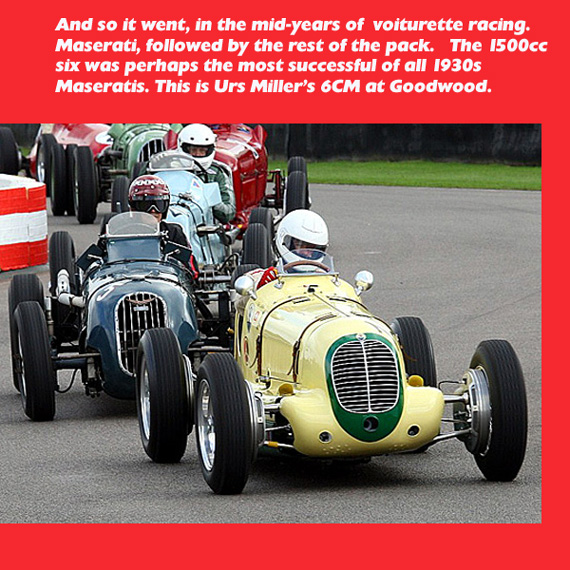
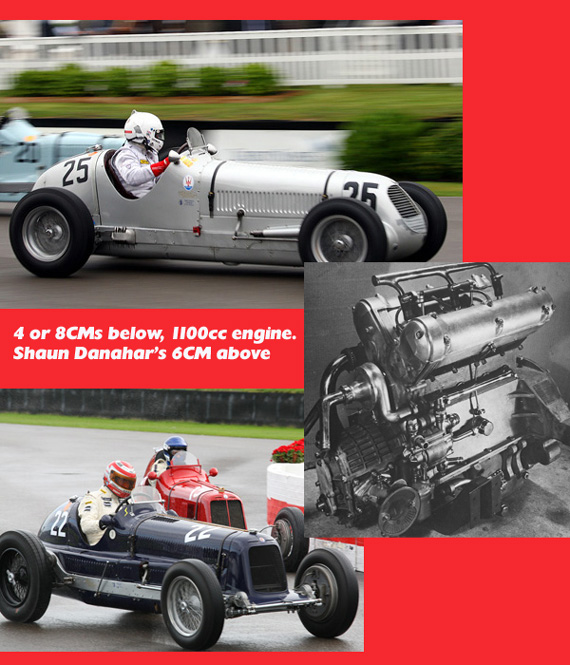
And the cars they made, the 4 C (cylinder) M (monoposto) 1100, 1500 and the 6CM 1500 and 4 CL were diamonds and like the gem tough, too; one could last a season without any mechanical worries or major overhauls. From the 6CM on they had independent front suspensions and were easy to handle. In a word, perfect cars for the independent amateur.
 Mercedes-Benz (Daimler-Benz A-G, Unterturkheim, Stuttgart)
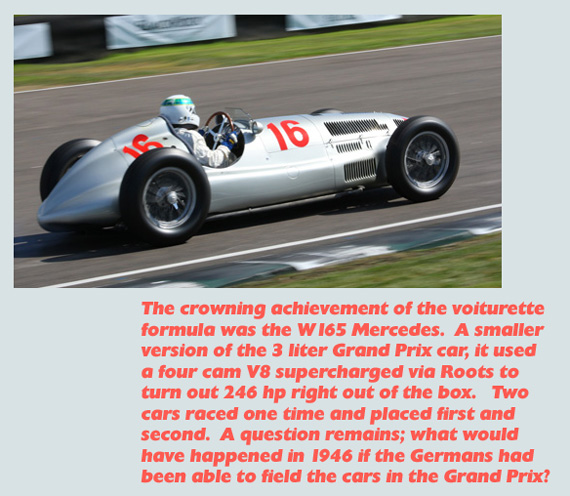
Competitive years: 1939 Horsepower Range: 246
Color images by Jonathan Sharp
They came, they saw, they conquered, then left, never again to use their victorious voiturettes that were created solely to disappoint their Italian rivals.
If, as some felt, Mercedes Benz (and Auto Union) had ruined the Grand Prix by dominating races with their superb and technologically advanced racing cars, clearly, they could also do the same in the increasingly popular voiturette racing class – ironically popular in large part because of the lack of German racing cars. But they couldn’t very well help themselves, could they, particularly when the organizers of the Tripoli Grand Prix announced that the 1939 event would be run for the voiturette formula of 1500cc rather than the standard 3 liter Grand Prix formula.
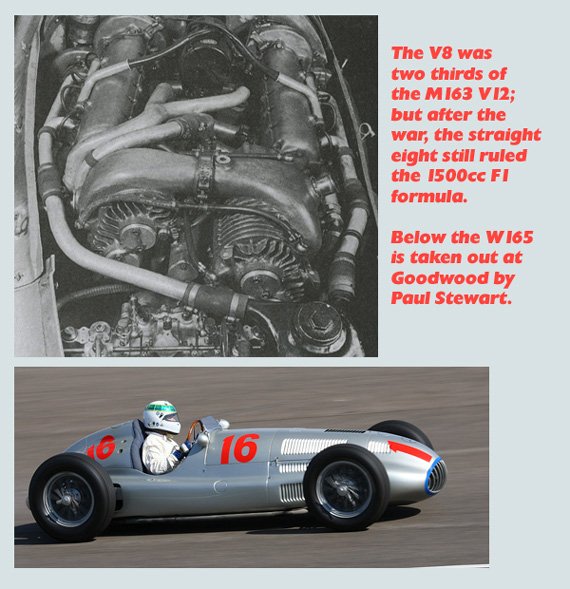
In six months, the Benz engineers, Wagner and Hess under Max Sailer secretly constructed a supercharged DOHC V8 with 246 hp and a weight of only 1582 lbs. They built two of these W165 voiturettes; one for first and one for second, which is how they placed. The Italians didn’t stand a chance. It was a grandstand show of Teutonic superiority in the shadows of war. After the race, the cars were put away, and never run again in anger.
MG (MG Car Co. Abingdon, U.K.)
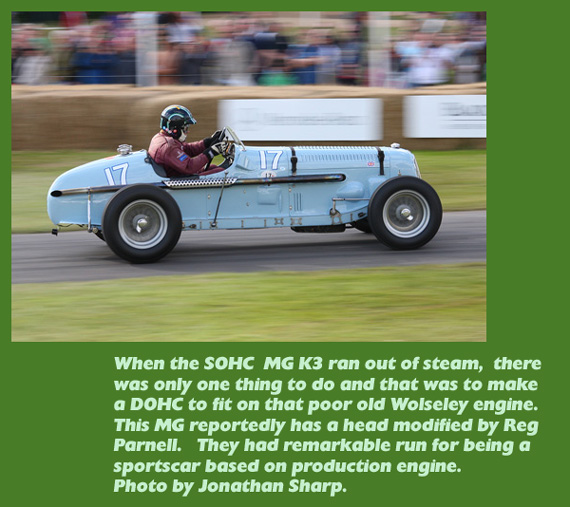
Competitive years: 1931-1936 Horsepower Range: 52-120
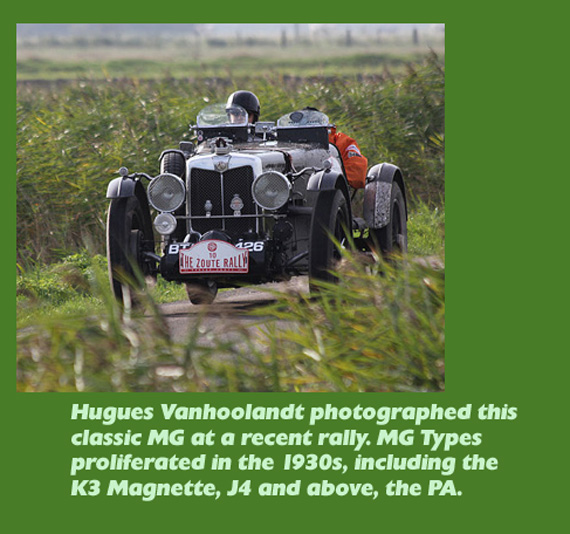
Long before the MG became famous in the United States, the cars from the Morris Garage were winning international events with a series of outstanding small displacement sports cars and record breakers. In the late 1920s, MGs used the Morris Minor SOHC engine with a sporting body and lightened chassis and found a ready market. The M Type and C type were 750cc versions and were quite successful in the 750 and 800cc classes, and soon a 6 cylinder 1271cc engine was available it became the basis of the F type Magna and the 1087cc K-Type Magnet, or K3. Supercharged, the K3 was an immediate international class winner as a sport car.
In 1934, converted to single seaters and driven by the likes of Hugh Hamilton and Dick Seaman, the MG K3 was capable of competing with the T51A Bugatti and 4CM Maserati. In 1935 the factory backed out of racing and the MG K3 quickly became an also-ran, despite the attempts of others like Reg Parnell to keep the car competitive with a DOHC head.
Salmson (Société des Moteurs Salmson, Billancourt,France)
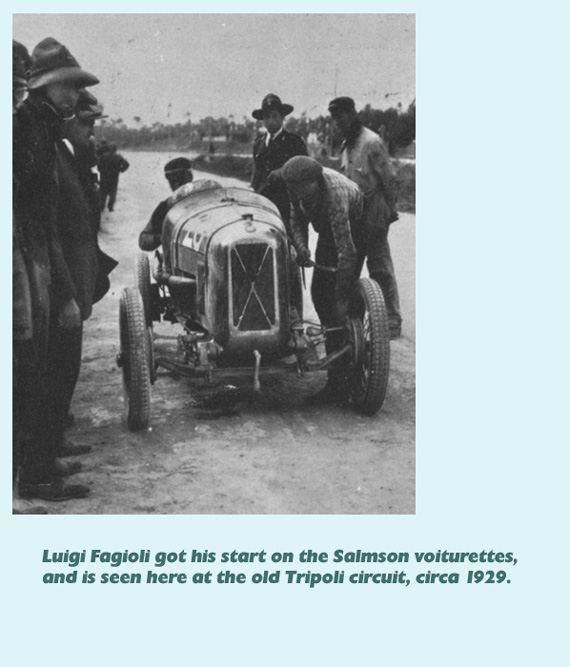
Competitive years: 1928-1934 Horsepower Range: 64-140
A Salmson straight eight 1100cc twin cam with semi desmodromic valves (mechanically operated) was going to finally defeat the pesky MC0 Amilcar. And it almost did.
After WWI, Salmson or turned from airplane engines to cars by building the English GN Light car under license in France. They also hired a brilliant designer, Emile Petit, who created a very modern DOHC four of 1100cc. A “Grand Prix” variant with a Cozette supercharger was successful in voiturette classes in the late 1920s and the cars continued to win in their class up to 1934. These cars were able to defeat the Amilcars until the advent of the MC0 six.
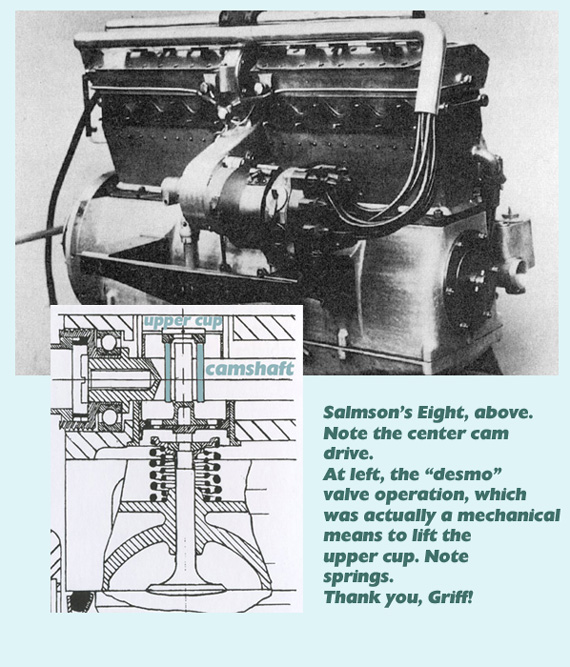
So Petit went a step further and designed a straight eight twin cam often thought to have desmodromic valves. (It didn’t, see photo). It did have a center cam drive which pre-dated the Jano 8C 2300 though. However, only two were built, and it being the Depression, Salmson gave up racing, and the cars passed into the hands of Armand Girod, who won the 1100cc class at Montlhery in 1934.
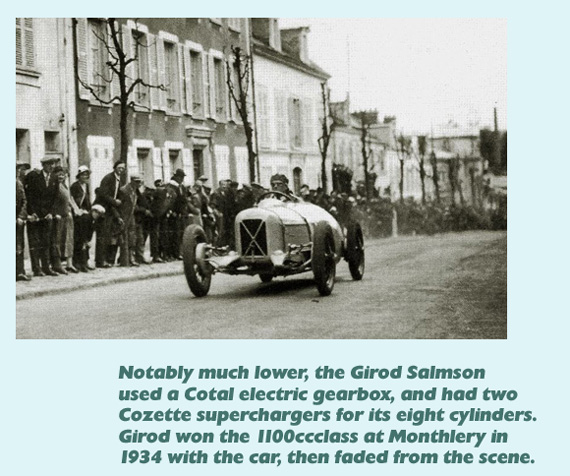
The great days of the Amilcar and Salmson racing rivalry were coming to a close by 1934. Salmson continued to produce a line of sports cars and sedans until 1957.
Talbot (Automobiles Talbot, Suresnes, France)
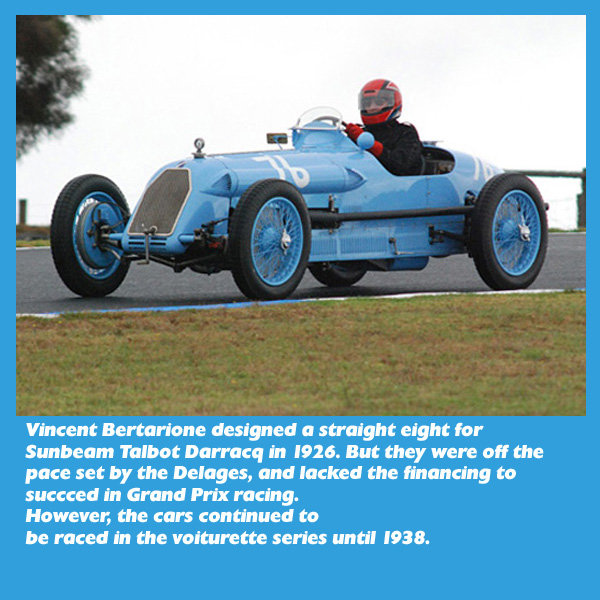
Competitive years: 1928-1938 Horsepower Range: 160
The Talbot 8C 1500 was one of the two significant cars built for the 1926-27 1500cc Grand Prix formula, the other being the Delage. The block and head were integral and made of welded steel in block of four, and employed a Roots supercharger. As a Grand Prix car, time and money was short for the STD team and no matter how fast, the Talbots could not keep the Delages from winning. At the end of 1927, reportedly four cars were sold to Emilio Materassi, who continued to campaign and develop the cars in voiturette events until his death at Monza in 1928, but Scuderia Materassi continued to run the cars with limited success.
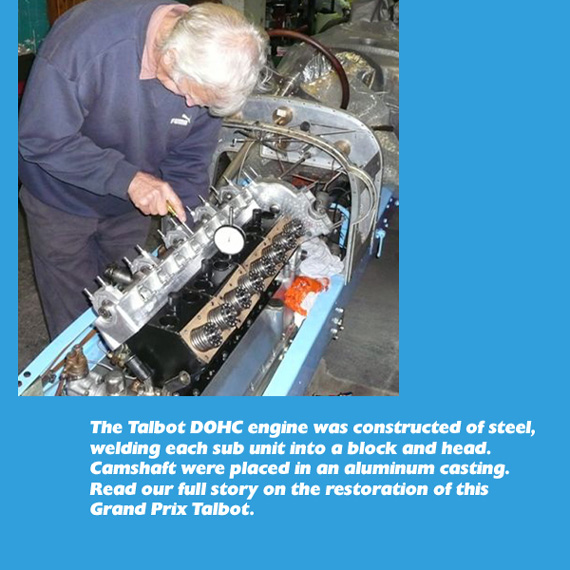
Enrico Platé then bought two cars from the Scuderia and from 1931 to 1938 he and several other drivers (one named Ferrari but not Enzo) entered voiturette races primarily in Italy, usually finishing mid-field and helped fill the grids. The Talbot might have been a proven race winner for the 1500cc voiturette classes, but never lived up to its potential.
I can’t let this series go without a comment so, Many Thanks for This! As a subscriber to MotorSport from the mid-’60s I was aware of all this, but it wasn’t until the early ’70s when I was living in Abingdon and attending VSCC races at Silverstone, that I became aware of how competitive the ERAs were with post-WWII racers
And thanks for the nice comment Dave. Although many of the cars are well known, the Austin and MG are fascinating as is the entire voiturette era, so often overshadowed by the Auto Unions and MBs that dominated the larger formulas.
Pete