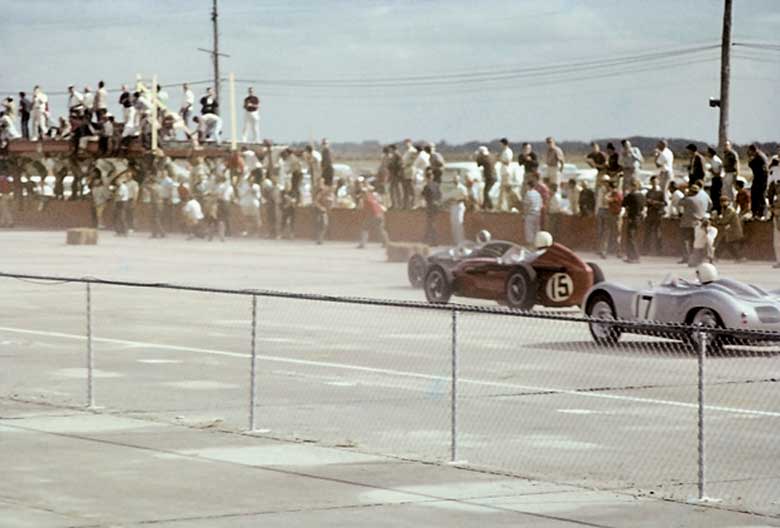
Tec-Mec (2535) (#15) Fritz d’Orey (center), Cooper T45-Climax (#16), George Constantine, Porsche RSK (#17), Harry Blanchard, United States Grand Prix, Sebring, Florida, December 12, 1959-jeff-allison
Story and photos by Jeff Allison
The Editor and Jeff Allison thought it might be a nice idea to publish a few of those old racing photos that often collect in shoe boxes. Jeff had a bundle, as he began taking racing and pit photos at the age of 17 in 1959. So here are a few of his, and perhaps our readers might want to contribute some of their old photos, and memories in future editions of VeloceToday.
Apparently I’m the first volunteer, so here goes. I’m not a photographer par excellence like Jesse Alexander, Geoff Goddard or Louis Klemantaski. I was not Bob Jackson, Allen Kuhn or others seen in Veloce Today articles either. I began as a 17-year old over-the-top fan of motor racing, who happened to have a camera – “Behind the Fences”.
I grew up in Orlando, Florida and attended races in the 1950s-1960s at Bartow, Cocoa-Titusville, Daytona, Dunnellon, Geneva, Pensacola and Sebring as a teenager. Probably what kindled my interest more than anything was my first race at the international 12-Hour race at Sebring in 1958. A mere stone’s throw at some 90 miles from Orlando unless you’re traveling with my sports car buddy and his dad in a little English Austin. You know, the one with the script “Austin of England” on the back of an awkward-looking body that only an owner could love! The one with the trafficators for turn signals, which were probably the car’s most defining feature. I think a stone would’ve gotten to Sebring faster than the Austin! Pent up with anticipation, I didn’t think we’d ever get there?
My journey has taken me to many venues around the U.S., France, Monaco and England. For 38 years, from 1959 to 1997, I watched and photographed World Sports Car Championship, Can-Am, Formula 1, Formula 2, IMSA, Interserie, IROC, SCCA, Trans-Am, and many lesser events. Concurrently, I photographed vintage and historic racing events from 1980 to 1999 but that’s another story.
I hope you enjoy the photos as much as I enjoyed being there and taking them!
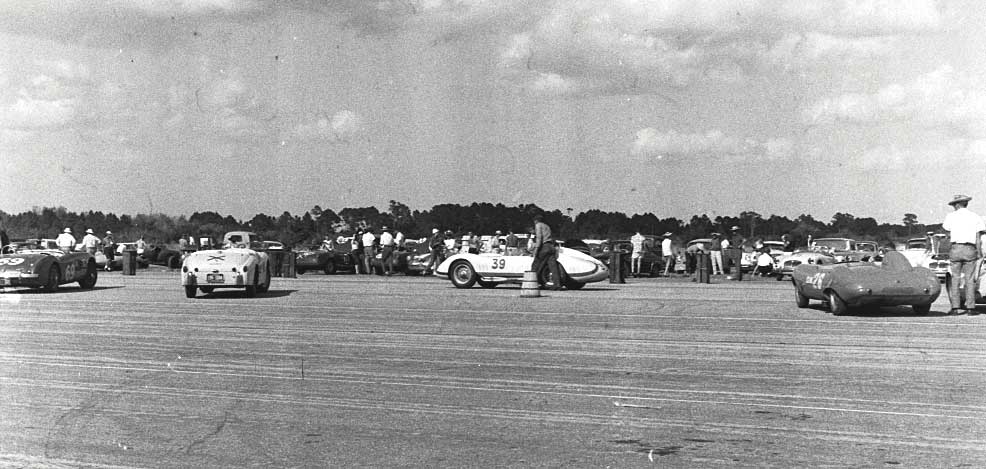
1957 Maserati 200SI Fantuzzi Spyder (2405) SCCA Regional, Cocoa-Titusville Airport, February 14-15, 1959-jeff-allison
Okay, give me a break. I’m 17, and I had to sneak into the race because it was a non-spectator event. Also, I had a Rolleiflex twin-lens reflex camera (120 film with just 6 or 12 exposures on a roll) that I was unfamiliar with and it was the first time I’d photographed a race. As you can see, I was way “behind the fences” with a standard lens – a long way away to photograph moving cars on a track. The photo shows a typical scene at an SCCA regional race on an airport course – a temporary track on the taxiways, runways and support roads defined by upside down fruit baskets, hay or straw bales or rubber cones and the race cars and the participant’s cars and support vehicles mixed together along a long straight nominally defined as the pits. Note there’s nothing to protect the pits from a speeding, out-of-control car! In the center, Fort Lauderdale surgeon Dr. David Lane’s 1998CC 200SI (chassis 2405) is positioned on the grid. He finished second overall and first in the E Modified class in the 30-lap, 105-mile feature race. Lane is the second owner after Lance Reventlow, the Scarab guru.
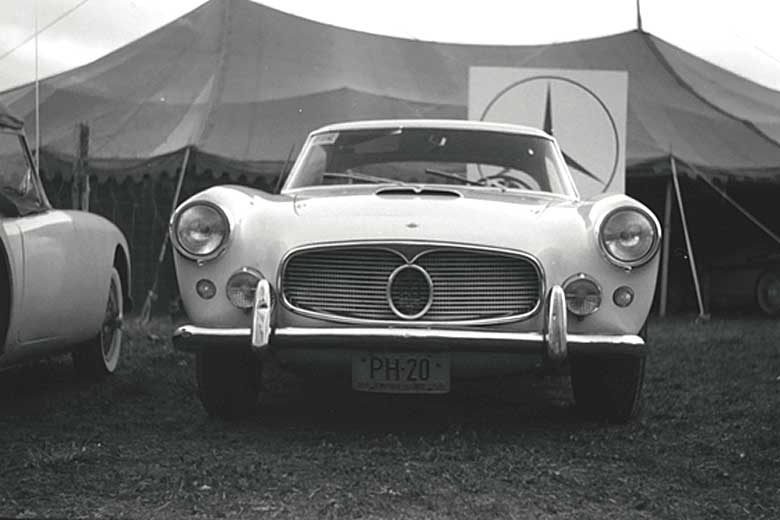
Maserati 3500GT Touring Coupe, Sebring 12 Hours, March 20-21, 1959-jeff-allison
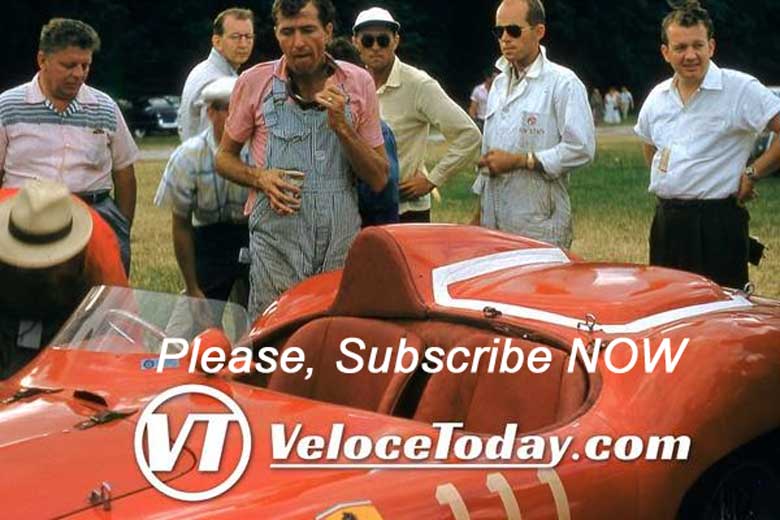
I was still 17 a month later at Sebring but was now equipped with a Konica 35MM camera that I borrowed from my dad, but he didn’t know it yet. It was much more suitable for photographing a race. My sports car buddy Jack Leete and I had driven down to Sebring from Orlando in Jack’s MG TD after school in time for night practice. We were literally two kids in the candy store after sneaking into the pits! There was always exotica to be seen scattered around the paddock, including this aluminum-bodied, two-door Maserati coupe styled by Touring of Milan. The 3500 designation comes from the 3.5-liter, in-line, six-cylinder, four-cam 220HP engine.
Maserati 300S (3060), Sebring 12 Hours, March 20-21, 1959-jeff-allison
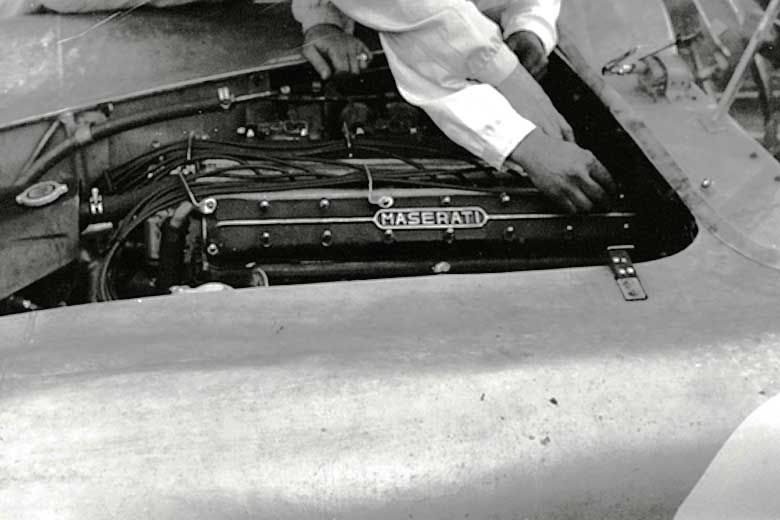
How many Rallye Motors mechanics does it take to change the 12 spark plugs of the six-cylinder, 2992.5cc (182.6ci) 250BHP Maserati motor? The Rallye Motors crew is all-in to get the unpainted Maserati ready for night practice. However, shortly after this photo was taken, 30-year old Detroit automobile salesman and weekend driver Edwin P. Lawrence crashed during practice at the Hairpin Turn and died. Chassis 3060 was first raced by Maserati at the 1956 Twelve Hours of Sebring, but it was involved in an accident and didn’t finish. Showing bad luck, the wrecked car was damaged even more when its trailer was hit by a truck. Repaired by Maserati of America, John Edgar bought it and Carroll Shelby scored two wins in SCCA events before the car went to Bob Bucher and then Rallye Motors, an exotic car dealer, including Maserati, of Glen Cove, New York.
Maserati 200 SI Fantuzzi Spyder (Chassis 2418), Sebring 12 Hours, March 20-21, 1959-jeff-allison
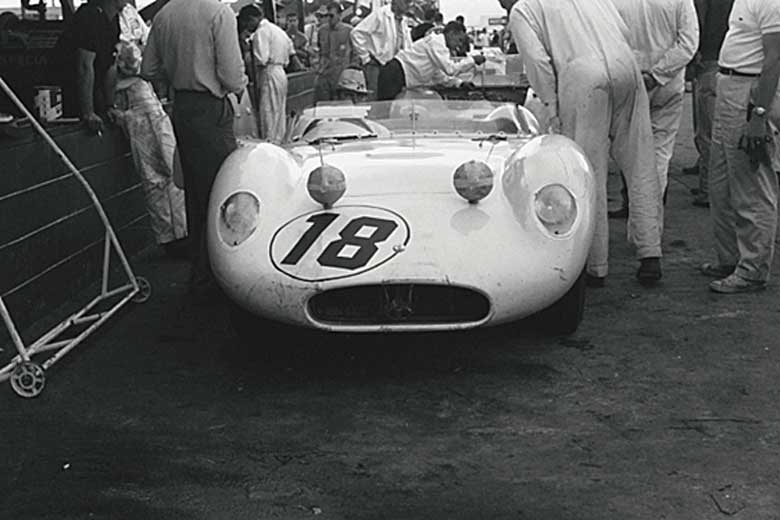
The sun is setting and there’s a flurry of activity in the pits as crews ready the cars for night practice. Equipped with additional lights for the night, the car was owned by Hap Sharp but entered at Sebring by Carroll Shelby Sport Cars Inc. of Dallas, Texas. Pit crew member Frank Lance (in car) and fellow mechanics Red Byron and Bob Schroeder had a busy race tending to electrical problems, a broken half shaft and other maladies that guaranteed a poor finish for drivers Jim Hall and Hap Sharp. In 1958, 2418 was raced by Harry Schell in Cuba and later offered for sale via his brother Philip Schell in Miami. Carroll Shelby Sport Cars Inc. bought the car for Hap Sharp, who raced it extensively.
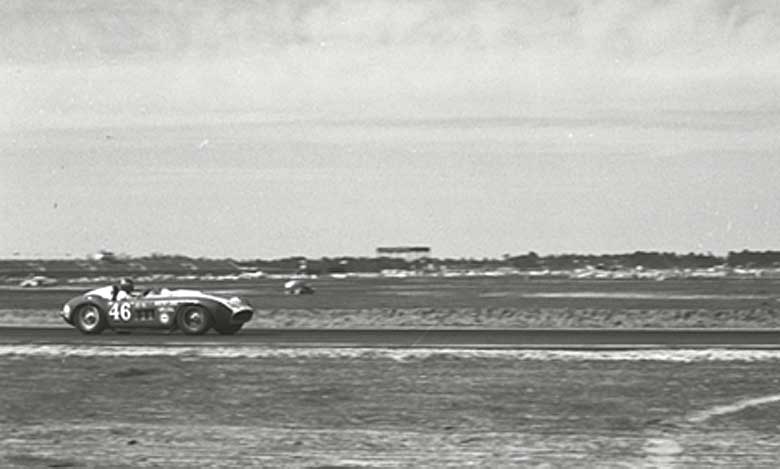
Maserati 300S-Chevrolet V8 (Chassis 3052), 1000 Kilometer USAC/FIA International Sports Car Race, Daytona International Speedway, April 5, 1959-jeff-allison
When I drove through the tunnel and into the vast Daytona International Speedway for the first time, I was awestruck by its immensity and the stark emptiness of the flat, featureless 200-acre infield. It was the first professional and international race for sports cars at the then new (February 1959) Daytona track. Sanctioned by the United States Auto Club, it was listed on the Federation International de l’Automobile’s International Racing Calendar, which helped attract international entries and drivers. The race offered prize money of $20,000. I was way, way “behind the fences” on the 3.81-mile course of 2.5 miles of 31-degree banked oval and 1.31 miles of flat infield road racing course! Jesse E. “Ebb” Rose entered his “Micro Lube Special” (manufacturer of oil and fuel additives in Dallas, Texas) Maserati 300S, powered by a Chevrolet V8, for Carroll Shelby. A broken driveshaft after 98 laps compared to the winner’s 147 laps stopped Shelby’s run in the car. Notice the now iconic scoreboard way off in the distance in the center of the photo, for an idea of the distances and size of the 200-acre track. Sportsman and driver Briggs Cunningham was the original owner of chassis 3052, and it passed to Philip Stewart and then Jack Hinkle before becoming a part of Rose’s Micro-Lube Racing team.
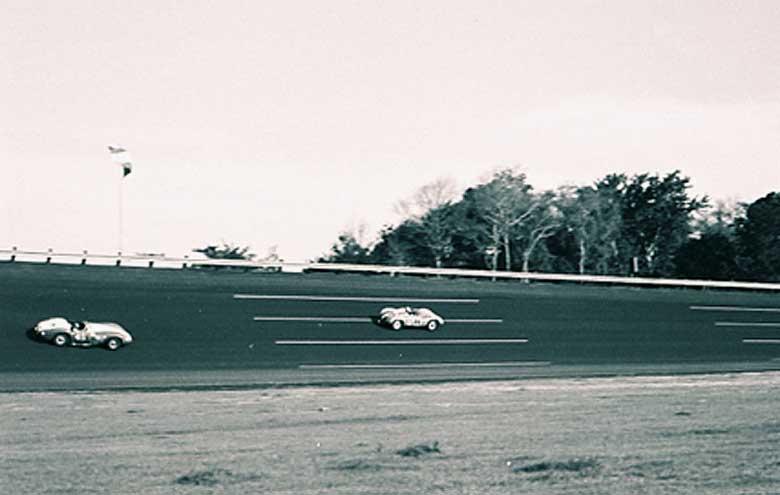
Maserati 450S (Chassis 4509), 1000 Kilometer USAC/FIA International Sports Car Race, Daytona International Speedway, April 5, 1959-jeff-allison
The cars looked small on the 31-degree oval at Daytona for the United States Auto Club Sports Car Championship race. Powered by a bellowing 4477CC, (273 ci), 400BHP Maserati V8, Lloyd Ruby’s “Micro Lube Special” drops down the banking to pass the Antonio von Dory and Roberto Mieres 1498CC Porsche RSK. Ruby had the race well in hand with a lap advantage until a broken oil line caused his and the car’s retirement after 110 laps of the 147-lap race even though Bill Krause and Carroll Shelby took futile shots, despite a deteriorating clutch and the oil leak, at continuing in the car. The little Porsche benefitted from the retirements of the bigger, faster cars and sped to the overall win as approaching darkness curtailed the race at six hours after 901.2KM or 560.01 miles. Rose was the original owner of chassis 4509, taking delivery in 1958 and racing it in SCCA and USAC events into 1960 with Lloyd Ruby after Daytona.
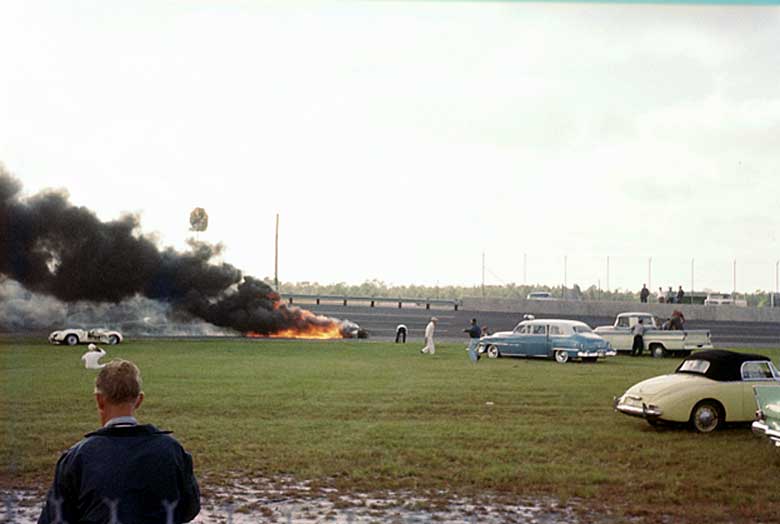
Maserati Type 61 (Chassis 61.2453), E.D. Martin (center), Porsche RSK, Don Sesslar (left), SCCA National, Daytona International Speedway, November 14-15, 1959-jeff-allison
What’s left of the 3.0-liter “Birdcage” Maserati of amateur owner and driver E. D. (Edwin Dennis) Martin after it came to rest in flames after crashing into the Armco at the top of the Daytona banking and spinning wildly down the transition to the infield course. Don Sesslar’s 1.5-liter 1959 Porsche RSK hit the spinning Maserati, rupturing its fuel tank. That’s Sesslar sitting on the grass with the Porsche in the background! Martin got out of the car on his own, ran into the infield and collapsed. He was in hospital for three months with second-degree burns to his face, neck, arms and legs and never raced again.
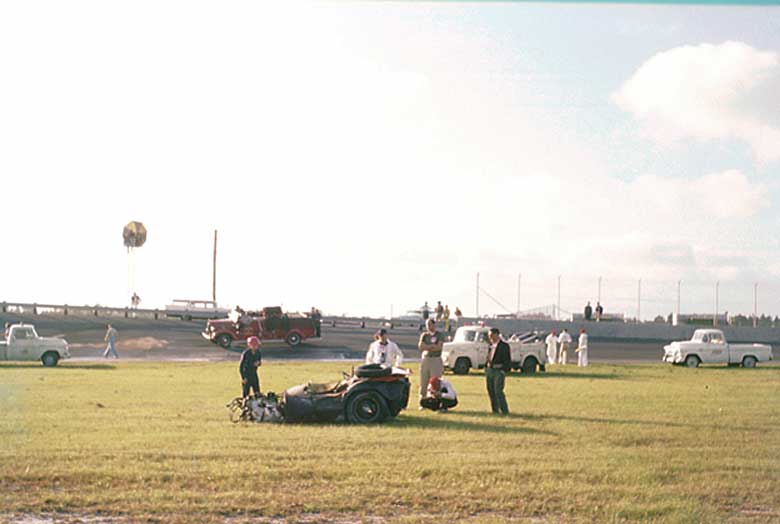
Maserati Type 61 (61.2453), E.D. Martin, SCCA National, Daytona International Speedway, November 14-15, 1959-jeff-allison
Ironically, chassis 61.2453 was the first “Birdcage” in the U.S., and this was only its second race. The front section and suspension were ripped away and remarkably the engine remained in the car albeit badly damaged. Serviceable bits of the frame, body section and some components were salvaged from the wreck and sold and re-sold several times. Imagine my surprise when I saw an ad in a magazine for chassis 61.2453 in 1994. It was “reconstructed” in the U. K. and was raced in vintage events in Europe. Does anyone know what’s just on the outside of the Armco behind someone with one foot on the Armco and to the left of a white station wagon – looks like an umbrella on a long pole?
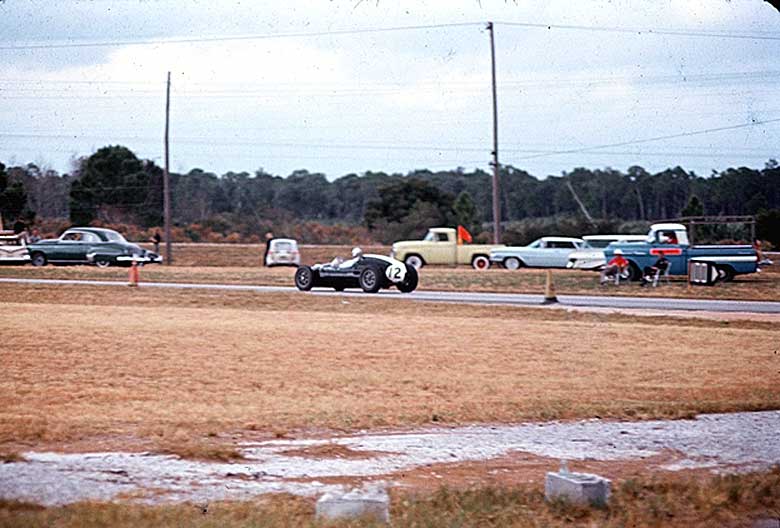
Cooper T45-Maserati, Roy Salvadori, United States Grand Prix, December 12, 1959-jeff-allison
The British media deservedly trashed the 5.2-mile Sebring track as a grand prix circuit, calling Sebring and the track “…a place as dull as ditchwater,” and the entry “…the moteliest collection of also rans that ever graced a grand prix circuit.” It was an ugly track in 1959 – a nightmare for photographers and spectators. In the foreground are the remnants of a crumbling building and in the background are marshals’ vehicles unsafely scattered randomly inside the Hairpin. Roy Salvadori’s Cooper T45 (chassis number unknown) was entered by privateer Tommy Atkins’ High Efficiency Motors and was powered by a 2489CC, (152CI), in-line, four-cylinder Maserati engine of some 240HP. Never a threat, he retired the private entry with a broken transmission on the 24th lap of the 42-lap race.
See lead photo: When Maserati withdrew from racing in 1958, Valerio Colotti, Maserati’s chassis and transmission engineer, completed an unfinished 250F in his shop, Studio Tecnica Meccanica. It would have been chassis 2535 if it had been assigned a 250F chassis number. Colotti produced the Type F415 Tec-Mec, fitted with a 2.5-liter, 265hp Maserati 250F engine in a short, lightweight chassis. It weighed about 240lb less than a 250F. With little testing and development, owner American Gordon Pennington, Jr. bought and entered the car at Sebring with Lucky Casner’s CAMORADI team preparing it and providing race support. Little known Brazilian, wait for it, Frédérico José Carlos Themudo d’Orey, was the driver. After practice, d’Orey suggested (SUNSHINE, SPEED AND A SURPRISE, 2006), “…the best thing to do with the car was to sell it for scrap.” The Tec-Mec lasted but seven laps when d’Orey retired in a cloud of smoke from oil leaks. At the start, the Tec-Mec (#15) is flanked by the Cooper T45-Climax of George Constantine (#16) and the center-seat Formula 2 Porsche RSK (#17) of Harry Blanchard.
The author attended these races and photographed the cars. His personal knowledge and memory of the events was greatly assisted and reinforced by the following books by Maserati historian Willem Oosthoek: his seminal three-book SPORTS CAR RACING IN THE SOUTH – TEXAS TO FLORIDA 1957-1958 (2011), 1959-1960 (2013), 1961-1962, (2014), THE MAGNIFICENT FRONT-ENGINED BIRDCAGES (2009), BIRDCAGE TO SUPERCAGE (2004) and MASERATI 450S – THE FASTEST SPORTS CAR OF THE 50’S (2005).
Thanks for the nice photos and great stories.
Jeff, you and I were “burdened” with twin lens reflexes back then. You were wealthy with a Rollie, but I had a cheap Yashica D. I remember E.D. Martin’s crash vividly. He was lucky to survive. No fuel cells then, and the driver’s suits were cotton dipped in Borax. Dangerous days.
Keep the cards and letters coming in.
Really enjoyed the stories and pictures Jeff. You can almost hear the engines.
I attended Sebring every year from 64 until 89. Very difficult track for photos unlike Daytona. BUT it offered an atmosphere unlike any other . It must be contributed to the orange blossom fragment wafting in the air. Thanks Jeff for the memories. Sent you a photo oh Lances 200Si.
Although Gordon Pennington appears to have been the original money man behind the Tec-Mec, this is what Fred Gamble of CAMORADI had to say in an interview in 1996.
” We took this car to Sebring for Jim Rathmann to drive in the U.S. Grand Prix in December 1959. Lee Lilley and I towed the car through the paddock, trying to get it started. The ground was rough, and the chassis was so flexible that it felt like spaghetti. We couldn’t get it started, so Lee pulled the plugs and found both water and rust inside. Being a good used car salesman, Lucky sold the car to a South American just before the start. The new owner raced the car for a few laps, and it blew up!”
No mention of Pennington as the owner, but then Gamble may not have known the full story. It was more likely to be a rent-a-car deal between Pennington and Casner. Later on, Pennington tried to claim the sizeable check offered by Bill France of NASCAR to set a certain lap record at Daytona, but again the Tec-Mec, now driven by Paul O’Shea, failed miserably.
Hey Jeff is the answer to your question a head on of the Goodyear Blimp or similar one? Did the sports cars race clockwise in 1959? When did that change? Thanks for the great pics and article.
Further to Willem Oosthoek’s remarks about the Tec-Mec, knowing that one has to tippy-toe around the contentious history of the car as there is so much that’s confusing or unknown. Fred Gamble was quoted as saying, “Being a good used car salesman, Lucky sold the car to a South American just before the start. The new owner raced the car for a few laps, and it blew up!” That implies that the South American that Casner sold the car to and the new owner that raced the car were one in the same – Brazilian Fritz d’Orey. Pennington advertised the Tec-Mec for sale in the June 25, 1960 issue of COMPETITION PRESS. So, who knows!
Here’s my personal experience with the Tec-Mec. My sports car buddy and I used to play outdoor handball in Winter Park, Florida near the duplexes where Gordon Pennington Jr. lived. After playing, we always drove around to 1153 Washington Street to gaze (make that gawk) at Pennington’s burgundy 1959 Ferrari 250 GT SWB Berlinetta, which he parked uncovered out in the open under tall oak trees alongside his duplex! We also noticed a couple of car-like shapes under tarps on the side of the duplex. We never got the courage to go to the door to talk to Pennington nor did we ever sneak up and look under the tarps. I can tell you the cars were under the tarps there after the United States Grand Prix at Sebring on December 12, 1959 because my sports car buddy and I saw the shapes there at Christmas break and later at spring break from college.
After the U. S. Grand Prix at Sebring, Pennington took the car to the Daytona Speedway for an attempt at a 180-mph lap to cash in on Bill France’s promise to pay $10,000 to the first car to lap the Speedway at 180-mph – publicity for being the fastest track around! During the 1960 Daytona Speedweeks, the Tec-Mec was driven by Pedro Rodriguez, who was there to drive a Volvo in a compact car race. The attempt failed when the car didn’t work or a con-rod broke. As Willem mentions, Chuck Daigh also took a shot at the record with the Tec-Mec. There is photographic evidence (Tom Burnside) that both drove the Tec-Mec at Daytona on the REVS Institute website.
One day into 1960, we went by the Pennington duplex, and the Ferrari and the cars under the tarps were gone. It wasn’t until years later that my friend, former amateur race driver and lunch buddy Larry Perkins, a friend of Pennington, told me that the cars under the tarps were the Tec-Mec and an Alfa roadster. According to Perkins, Pennington moved to the Miami area and took the cars with him. According to Colin Crabbe’s THE THRILL OF THE CHASE (2016), Ed Jurist, a classic car dealer and owner of the well-known Vintage Car Store in Nyack, New York, brokered the car to Colin Crabbe, who sold it to English enthusiast Tom Wheatcroft. It was displayed at Wheatcroft’s Donington Collection in England for a number of years before it was sold on to current vintage racers in England.
All sports car races at Daytona in 1960 [four of them] and 1961 [two] were held clockwise. Even the SCCA National in early 1962 was held that way. The first sports car event held counterclockwise was the 1962 Daytona Continental, one week after the National.
There was another owner of the Tec-Mec after Gordon Pennington. The entry list for the March 1962 Pipeline 200 at Bossier City, Louisiana, a USAC Formule Libre event, had Newt Davis and the Tex-Mec on the entry list. The entry never showed, but I remember a photo of Newt racing the car at least once in the Northeast in 1962 [Lime Rock perhaps?].
Glad that Jeff brought up the attempt during the January 1960 Speed Week Road Races, sanctioned by Bill France. Yes, both Rodriguez and Paul O’Shea [not Chuck Daigh] tried their best for the $10,000 award, but the best the Tec-Mec could do was 136 mph, a far cry from the 180 mph.
As for which of the two Rodriguez brothers tried out the Tec-Mec for that $10,000 prize, both were there. Pedro drove a Volvo in the compact car race, while Ricardo drove a Chevy Corvair. O’Shea raced a Chrysler Valiant, so all were present. Jeff mentions that Pedro tried out the Tec-Mec, but I have Ricardo as the driver. Can’t say who is right without going back into my old dusty files. Incidentally, Elmer George also tried in one of the Indy roadsters but decided that the weather conditions [strong wind gusts] were not right for a record attempt. No record was set that weekend, until the Mad Dog Call roadster of Art Malone finally nailed the 180-mph record at daytona much later.
Denton,
Thank you for your compliments and glad you enjoyed the photos. If you have some photos yourself, please consider submitting them for a “Behind the Fences” article.
Regarding the question about the 1000 Kilometer USAC/FIA International Sports Car Race at Daytona International Speedway on April 5, 1959: “Does anyone know what’s just on the outside of the Armco behind someone with one foot on the Armco and to the left of a white station wagon – looks like an umbrella on a long pole?” I sent a query to the Daytona International Speedway some time ago and asked them what it was but never received a reply. Could it have been “station” where SCCA workers could see cars coming down and off the banking and transitioning onto the infield. Look closely at the photo as there’s a person sitting atop the pole, and apparently an umbrella to shade those sitting up there. Anybody else have a guess?