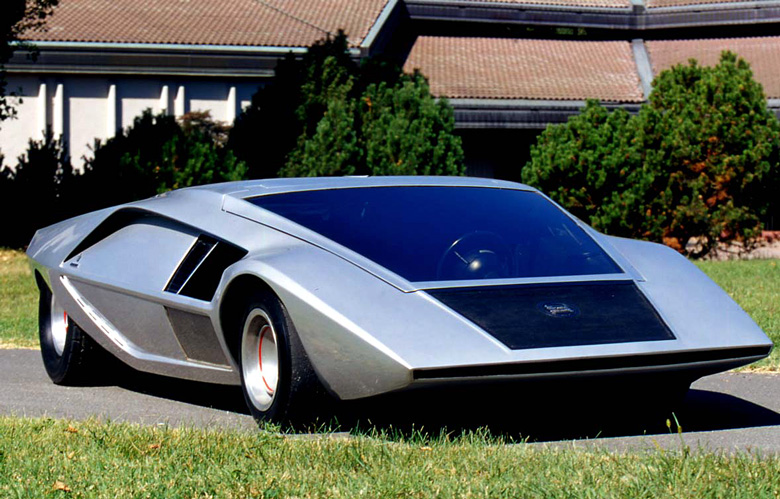
Striking in 1971, and no less effective today. Driving it was unworldly.
Story and Photos by Roberto Motta
[Fourteen years ago, in 2008, our Italian correspondent Roberto Motta had a chance to drive the Stratos Zero. It is doubtful the same opportunities will be offered again. Below is his report on driving the magnificent show car, which we republished in 2016, eight years after the original version. In light of the recent activity accorded the Zero, we think it appropriate to present Motta’s engaging article once again. In an earlier article, Motta also explains how the Zero came to the attention of the powers that be at Lancia: Italian UFOs and the Stratos Ed.]
In February 1971, Beppe Panicco drove the Stratos Zero through the streets of Milan and stopped on the square of the “Duomo”, the cathedral of Milan. Panicco had to stop as there were so many people crowding around the car to get a glimpse of that strange object. Many thought there was a UFO in Milan! The Stratos tied up traffic in every direction, the police arrived, and Panicco finally succeeded in driving between the legs of the onlookers.
Would it be half as fun for us, more than 35 years later?
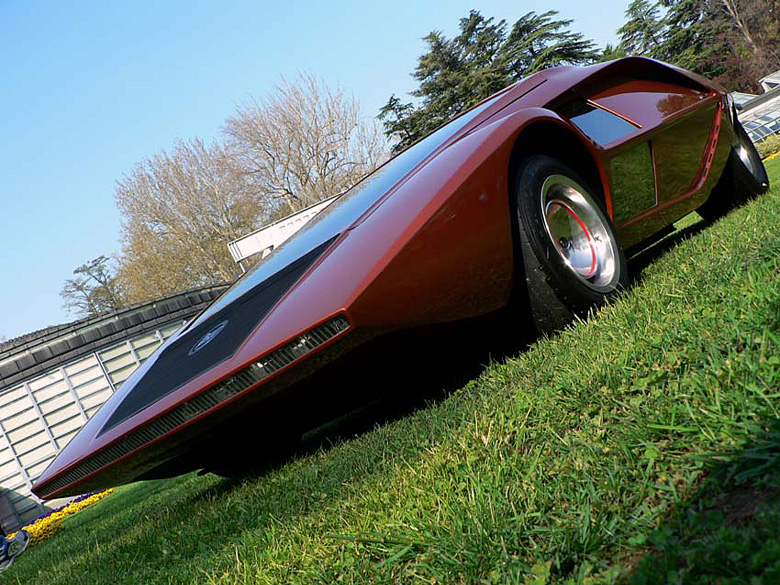
At another show, the Zero was seen in a beautiful copper color that captured the lines more effectively.
Fortunately, despite the fact that the Stratos Zero is now 38 years old, aside from a few paint jobs, the car remains unmodified and is essentially the same as it appeared in 1970. The car still is tremendously striking and beautiful.
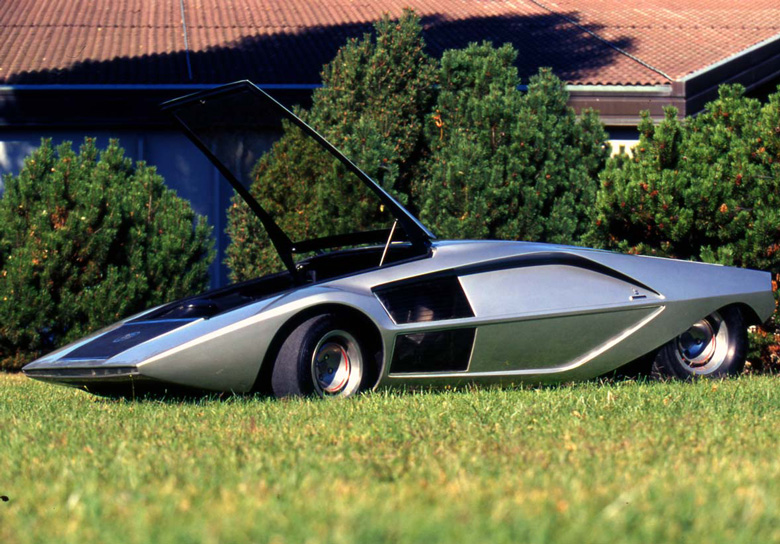
Access to the Zero is gained directly from the front and not easy.
To drive this car is an unforgettable and emotional experience which can’t be repeated or easily described. Entry into the cockpit is in tune with the extreme character of the car; it is necessary to lift the single windshield which hinges at the rear, and at the same time a hydraulic mechanism lifts the steering wheel out of the way so that one might climb in.
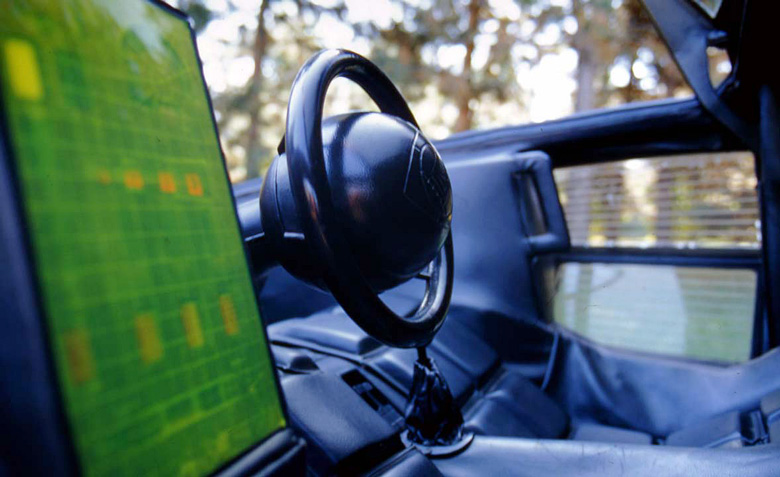
Seen through the side window, the cockpit appears almost conventional.
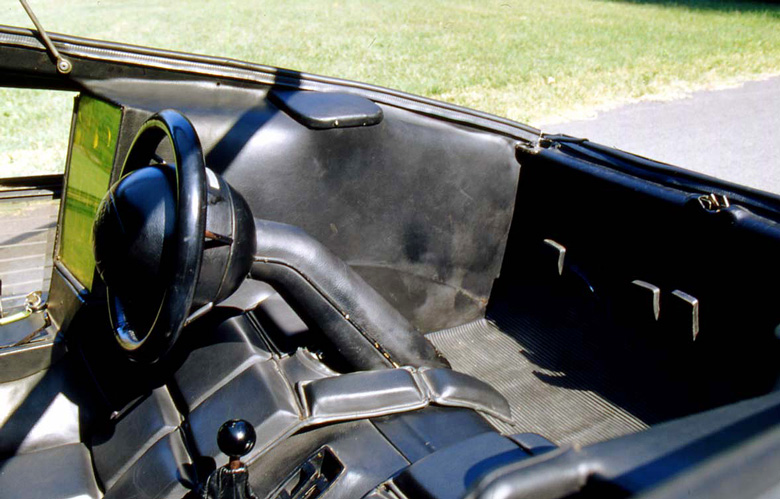
But then look at the interior from another angle and suddenly it becomes a very interesting exercise in ergonomics and physics.
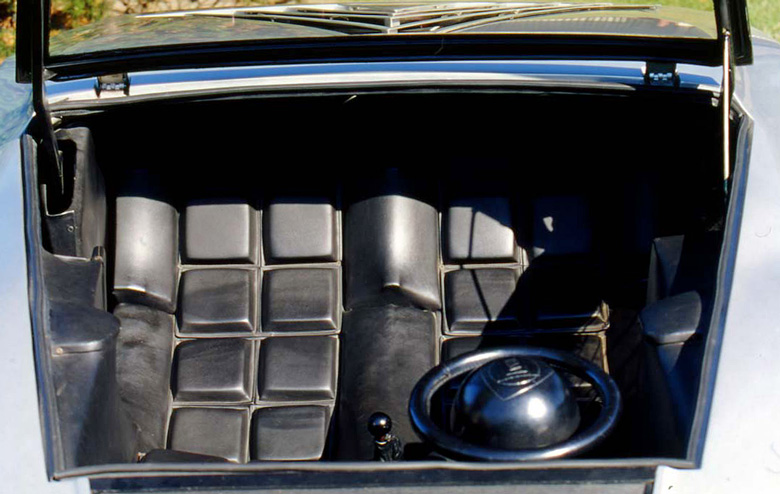
Strange and daunting – just put your foot on the one and only Stratos Zero, go ahead!
This operation is made possible by putting a foot on the rubber zone on the front of the car, which provides an unbreakable step. When the door is opened, it stays open by two shafts and linkages that are operated by hydraulics mechanisms.
To enter in the cockpit one finds that it is very difficult to find a resting spot while attempting to twist the body into the bench seat. One must be somewhat of a contortionist. To close the windshield, one pulls back on the steering wheel.
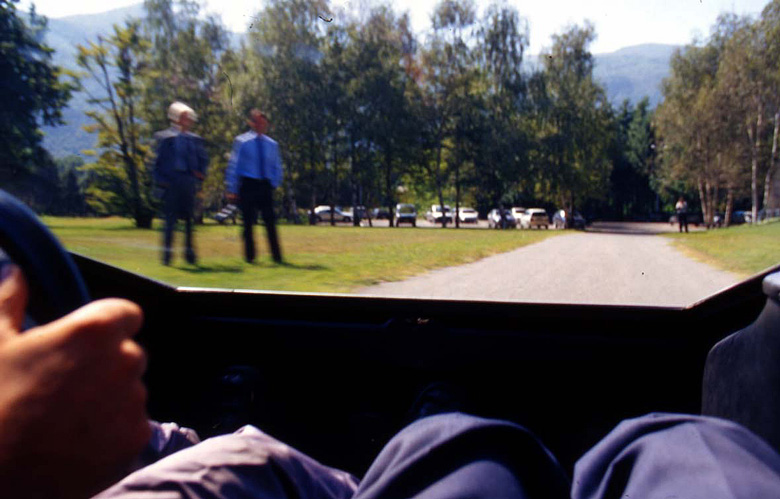
There is probably no similar view from any land-borne vehicle. The view of the road from the Stratos Zero is totally unique.
Once in the cockpit, we find that it is like flying a plane, with the stalk of the steering wheel between the legs as if it was joystick.
After we start up the engine, we must accustom ourselves to the driving position, the position of the steering wheel, and the very noisy exhaust, which all contribute to the transmission of an exalted sense.
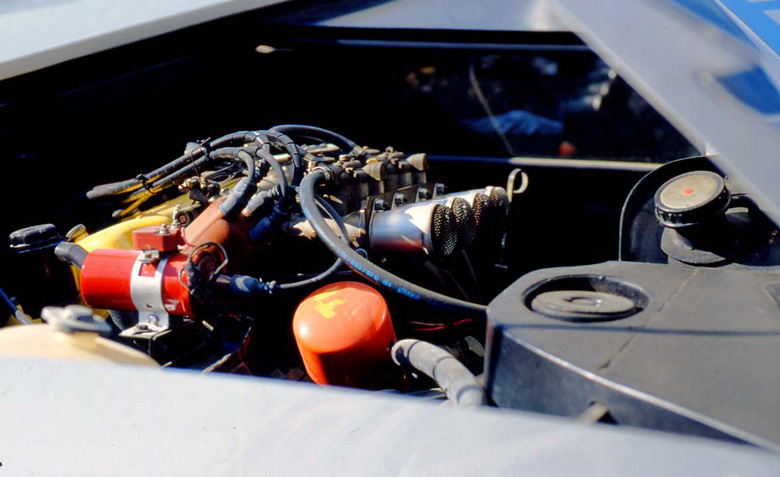
Gandini used the V4 Lancia HF engine as the Dino V6 was not available at the time, but it got the job done.
Despite access difficulties, driving the car is very easy and intuitive thanks to the neutral shape and the prompt answer of the Lancia engine. The steering is much like that of a race car, light and direct. The noise–yes, it’s still very noisy–belies the science fiction aspect of the car. Its still-advanced design begs to be powered by hydrogen, or atomic energy.
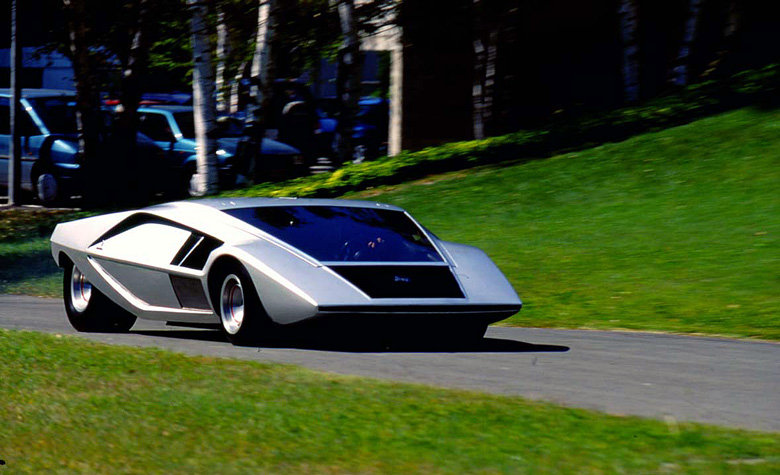
On the road now, and there are two people inside, one of which is our intrepid reporter Roberto Motta.
While the side and forward visibility is fine, to the rear it is restricted and one must depend on the use of the rear vision mirrors set in the mudguards (fenders) since the visibility is so poor through the small rear opening in the cockpit. There is practically no room behind the driver and space is obstructed by the engine and the radiator.
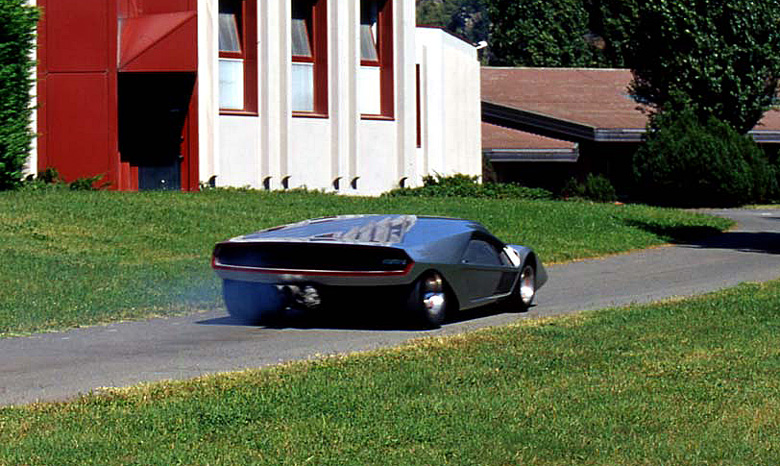
And how can we tell it’s actually moving? You figure.
Almost forty years from its shake-down, thanks to its singular and futuristic lines but, above all the fact that it remains a working car, the “Stratos Zero” provokes a great deal of interest wherever it appears, exactly as Bertone had desired when he created the Lancia UFO.
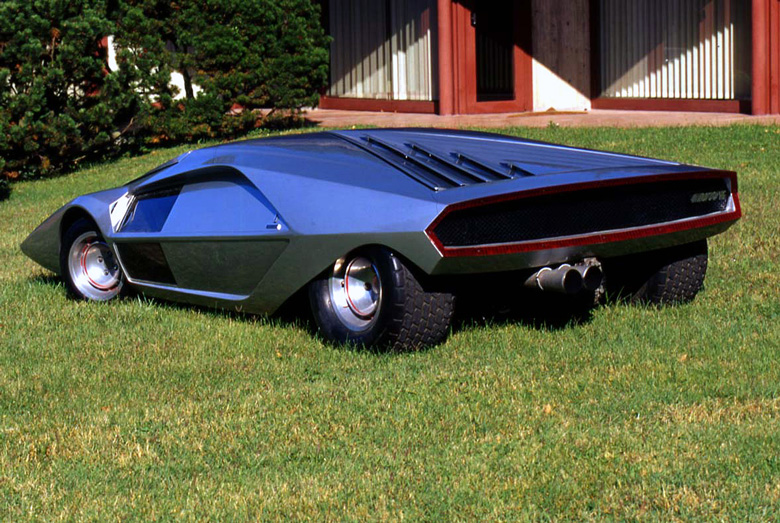
Same car, same color, different light. The magic of Gandini we might suspect.
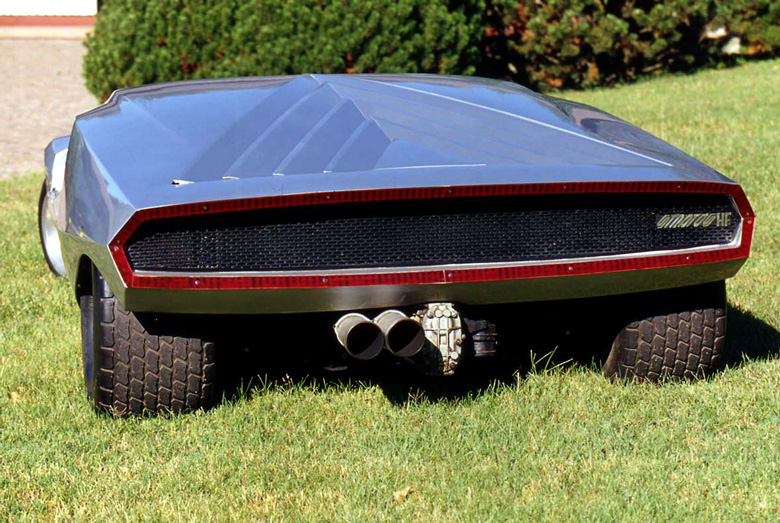
The transmission hangs out for everyone to see.
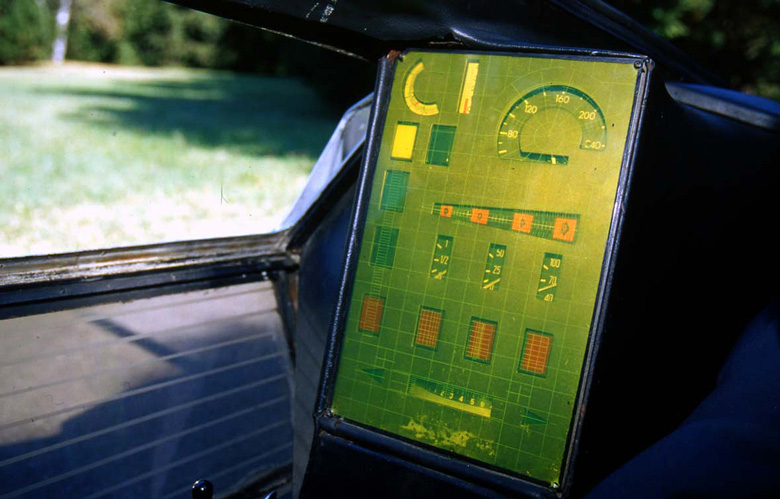
Gandini’s interiors and instrument panels were almost as interesting the exteriors. With the Zero he encapsulated the essentials into a rectangular box off the the left of the steering wheel.
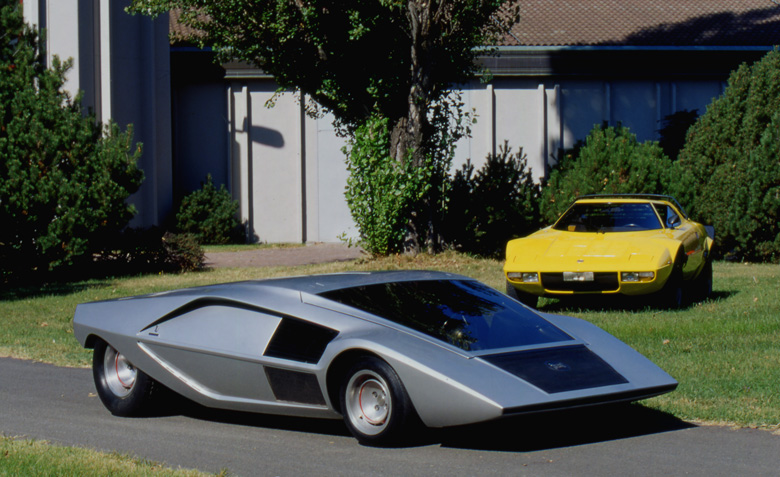
The Zero poses with a a suddenly sedate looking Stratos Rallye HF.
Read more about Gandini in this review of Marcello Gandini, Maestro of Design