Ultra-rare photos of the Bugatti Atlantic by Strother MacMinn with commentary by Jim Sitz; Michael Lynch defines the four Atlantics, Vanhoolandt at Goodwood and the Fiat 1100 by Gijsbert-Paul Berk. Don’t forget to subscribe!
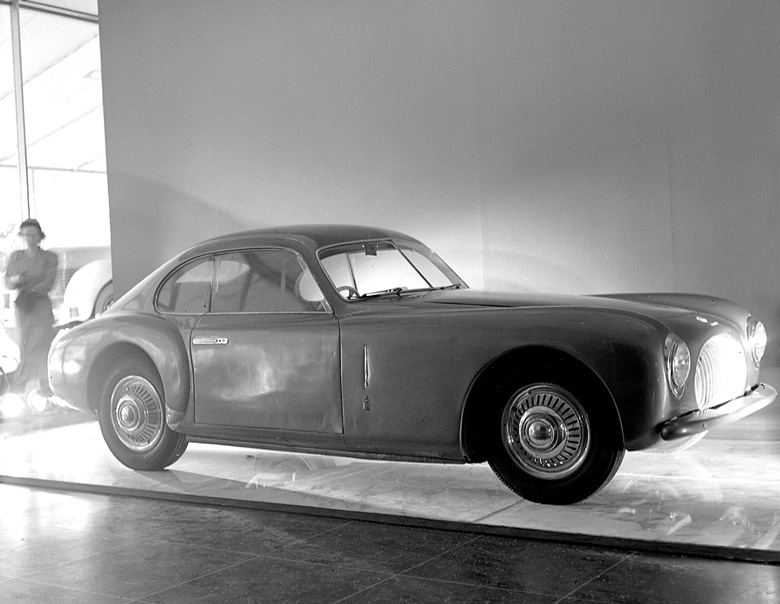
The Fiat 1100: A Touch of Dante’s Genius

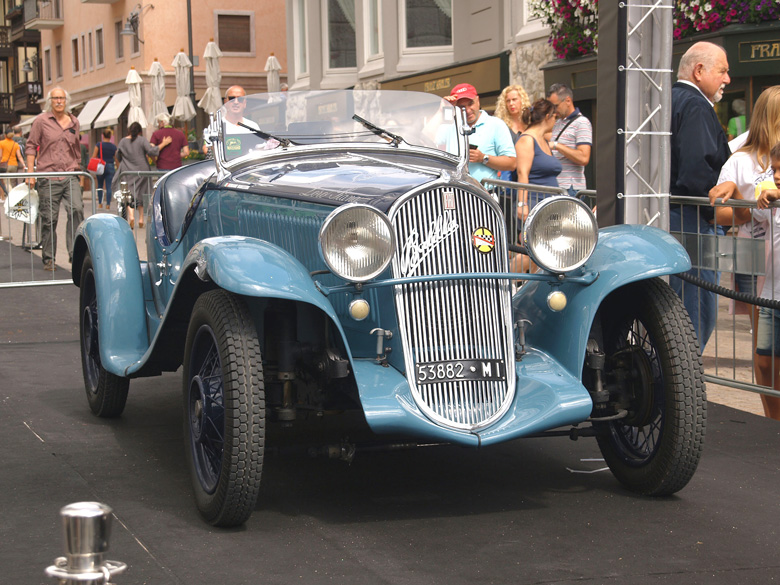
First called the Nuova Balilla, the new Fiat quickly became the 1100, or Millecento as the Italians called it. Inset: A 30-year-old engineer named Dante Giacosa was responsible.
Eighty years ago, in November 1937, Fiat introduced its first 1100 cc four-cylinder engine with overhead valves. This small, mass-produced engine not only powered a great number of Fiat’s bread and butter automobiles, but also became the heart of many exciting Italian and French specialist sports and racing cars. This article covers the years 1937 – 1940.
Story by Gijsbert-Paul Berk
In 1935 Italy was in the middle of a controversial colonial war in Abyssinia. In Turin that same year, Antonio Fessia, the manager of Fiat’s engineering department, asked the thirty-year-old engineer, Dante Giacosa, to develop a successor to the popular Balilla model. Giacosa had earned the respect of the Fiat management for his brilliantly designed 500 model, nicknamed Topolino (little mouse). Fessia explained that the new car should fill the gap between the small 500 and the recently introduced flagship of the Fiat range, the modern six-cylinder 1500 model.
A new challenge
As Giacosa describes in his autobiography Forty Years of Design with Fiat, Fessia wanted him to design simultaneously two engines: a four-cylinder and a six-cylinder, both with the same cubic capacity.

Cross sections of the 1937 Fiat 1100 engine and drive train. The new four-cylinder OHV engine was a very straightforward design. It had a three main bearing crankshaft and two valves per cylinder, which were operated by pushrods and a single chain driven camshaft in the cylinder block. Basically, the bottom half of this new engine was so similar to that of its side valve predecessor that it could be produced with practically the same molds and machine tools. But the new designed light metal cylinder head with overhead valves and the increase in cubic capacity (from 995cc to 1089 cc) made all the difference: 33% more power! (Illustration courtesy Fiat)
Aided by a team of about fifty draftsmen, he started on his task. “Our reference for the new engine was the ohv version of the 995 cc/508CS engine which was fitted in the Balilla Sport,” explains Giacosa. For an outsider, this replacement seems somewhat surprising – the 1492 cc six-cylinder of the Fiat 1500, which had been in production since 1935, already had overhead valves. But the engineers had to bear in mind that Fiat’s factories were equipped with the machines and tools to manufacture the 4 cylinder Balilla side valve engine. Since 1932 Fiat had produced 132,130 of these units.
“Therefore the choice makes economic sense.” Giacosa continues. “We increased the diameter of the cylinders (bore) to 68 mm. In the design, special attention was given to the shape and size of the combustion chambers, and to the position of the spark plugs. Our objective was to achieve a rapid progressive combustion.” In addition, the head was cast in aluminum.
“In accordance with my instructions,” wrote Giacosa, “we designed at the same time a six-cylinder. Being lower it permitted a lower bonnet and better streamlined front of the car, but being longer it needed a larger chassis. This engine was also substantially more expensive to manufacture; the four-cylinder configuration won the day.”
Strother MacMinn and the Bugatti Atlantic
And How! features open and innovative formats for notices, articles and posts.

Young Man With Bugatti
We couldn’t identify the young man but the Bugatti is the Atlantic S/N 57374. But only Jim Sitz could come up with a location and date of the photo. Read on.
In 1949 Strother MacMinn took these photos of the Bugatti Atlantic/Aérolithe (S/N 57374) when owned by Bob Oliver. The photos were supplied by Dale LaFollette at Vintage Motorphoto and published here with the permission of Bob Ames. Below, comments from Jim Sitz. [Read more…] about Strother MacMinn and the Bugatti Atlantic
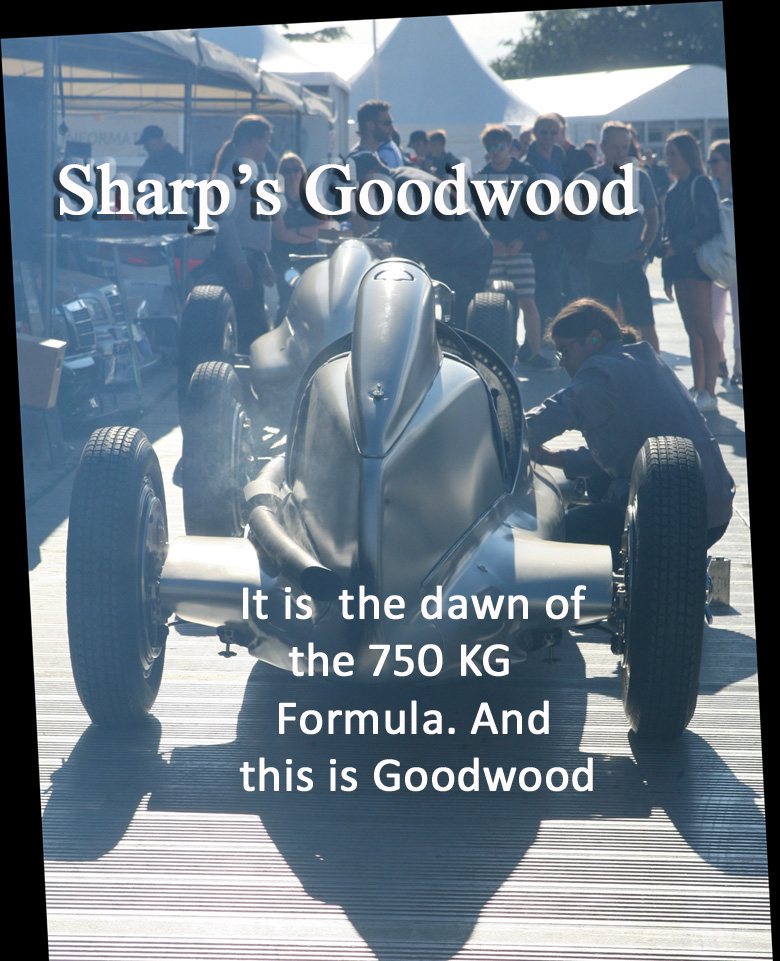
Vanhoolandt at the Goodwood Festival of Speed

The Ferrari 365 GTB/4 Daytona Competizione, # 16425, entered in 1973 by Ecurie Francorchamps at the 1000 km of Spa and 24 hours of Le Mans.
Story and photos by Hugues Vanhoolandt
Every year, the Goodwood Festival of Speed develops several themes on which the entry list is based.
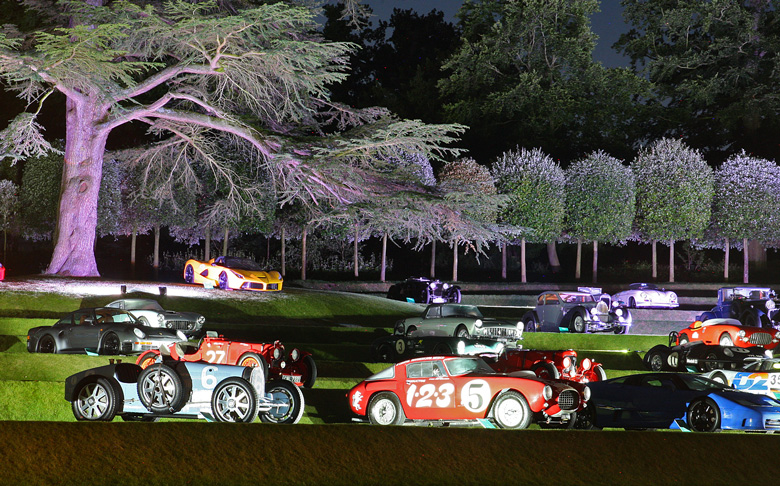
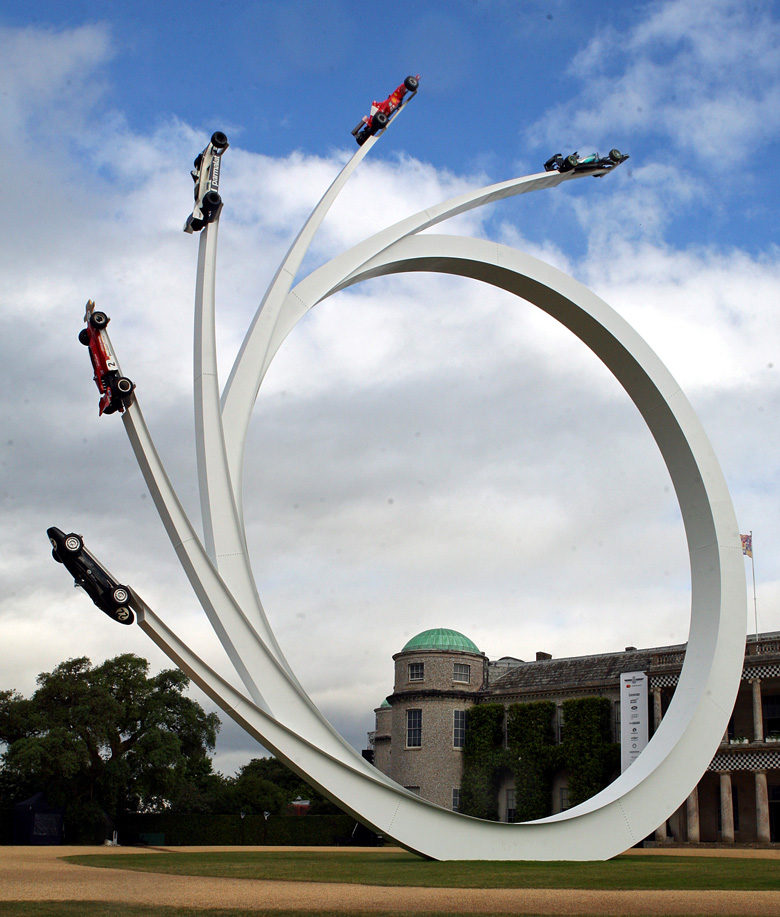
This year, one of the themes was ‘Peaks of Performance – Motorsport’s Game-Changers’ that celebrated the cars that were too dominant, too powerful or too dangerous so that the rules had to be changed. [Read more…] about Vanhoolandt at the Goodwood Festival of Speed
VeloceToday for July 4, 2017
And How! Strother MacMinn and the Delahaye
And How! features open and innovative formats for notices, articles and posts.

The Delahaye was on cover of the February 1949 edition of Road & Track. The photograph was taken in front of the famous Ciros Nightclub. This is the same car which was photographed later that year by Strother MacMinn.
Strother MacMinn photos from the collection of Robert Ames
Courtesy VintageMotorphoto
Text by Jim Sitz
Strother MacMinn was one of my closest and dearest friends. I met him in 1951. He was a real gay blade and man about town, the Cary Grant of automotive circles. [Read more…] about And How! Strother MacMinn and the Delahaye
Solvang’s Motorcycle Museum
Story by Brandes Elitch
Photos courtesy Solvang Motorcycle Museum
Solvang is a small town of about 5000 people, located in the Santa Ynez Valley of Santa Barbara County, about 140 miles north of Los Angeles. The name means “Sunny Fields” in Danish. It was founded in 1911 by Danish-American educators to preserve their Danish cultural heritage, and had a dedicated Lutheran church and Danish “folk school.” During the period 1850-1930 the Danish economy contracted, so about one in ten Danes emigrated, mostly to the U.S. In 1912, Solvang’s pastor traveled to Iowa to recruit more Danes, and was successful in getting enough of them to move so that the town’s future was assured. Today, it is a tourist destination that attracts a million visitors a year, on the strength of its uniquely Danish architecture, food, attractions, and museums.

1965 MV Agusta 3 cylinder. At the Quail gathering in May of 2016, this bike won the ‘Spirit of the Show’ award – top honors from a prestigious event.
Brooklands Museum Double Twelve Trackside
Photos by Jonathan Sharp
Jonathan Sharp again hit the road on June 17th for the VSCC/Brooklands Museum Double Twelve Motorsport Festival. And this time it was truly a special event as it was the 110th anniversary of the opening of the famous track in 1907. In addition, Lord March cut the ribbon to open the restored Main Straight, previously blocked by WWII structure. The re-enactment of the opening parade of 17th June 1907 was led by David Ayre’s 40HP Itala – the same model as was used by Ethel Locke King to lead the original parade.
Brooklands Double Twelve: In the Paddock
Story and photos by Jonathan Sharp
VSCC/Brooklands Double Twelve programme took place the weekend of June 17-18 2017. Everyone is familiar with the Le Mans 24 hour race, first run in 1923. Less well-known is the British equivalent, the Brooklands Double Twelve race. Vintage Alfa Romeo fans may recall the event, however, as the first running of the Double Twelve was in 1929, the winner being Giulio Ramponi driving a 1500cc Alfa Romeo at an average speed of 76 mph.
So why was it called the Double Twelve, rather than the Brooklands 24 hour race? In an effort to appease the local residents of nearby Weybridge, nighttime racing was banned at Brooklands, so the race was run in two 12 hour heats on consecutive days. [Read more…] about Brooklands Double Twelve: In the Paddock
VeloceToday for June 27, 2017

Click here for free sample chapter of Eric Davison’s Watkins Glen Memoirs
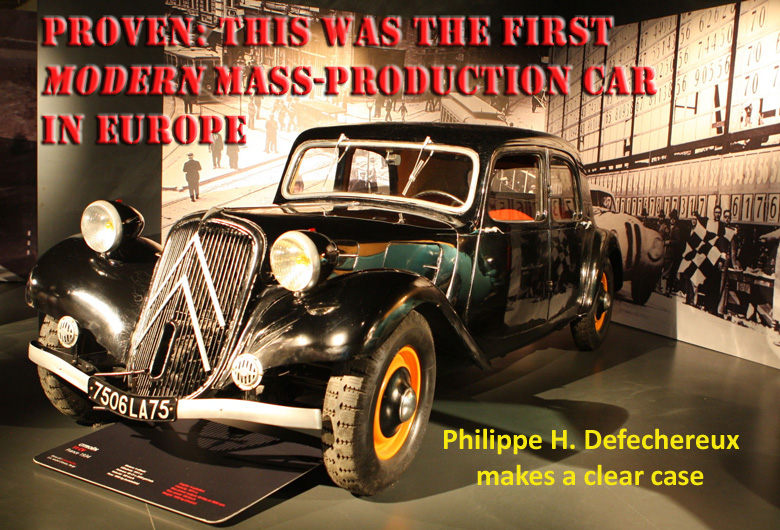
Philippe Defechereux, author of “Watkins Glen, the Street Years, 1948-1952” begins an exclusive series about the Citroën Traction Avant; Graham Gauld comes back from Italy with two stories; rare race cars at Riccione and the charming organizer and his cars; the Editor reviews a delicious new book from Dalton Watson.
The Saga of the Revolutionary Citroën T/A
Traction Forward!
By Philippe H. Defechereux
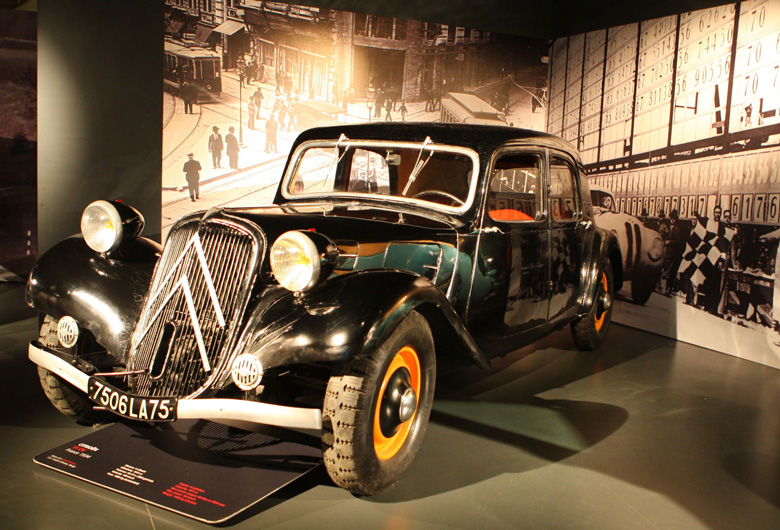
The year 1934 was to be André Citroën’s finest yet, the highest summit in a vast range of accomplishments already marked by several impressive peaks in his two preceding decades. And the year 1934 did start well for great French industrialist. After turning 56 on February 5, in mid-April he witnessed his life’s two grandest industrial creations come to life together, for they were entwined from conception: His new and thoroughly revolutionary Traction-Avant sedan began to come out fully formed and by the hundreds daily. This from his just-completed car production plant in Paris by the Seine, then by far the biggest, most modern and integrated mass-production automobile facility in Europe.
Discovering Race Cars in Riccione
Story and photos by Graham Gauld
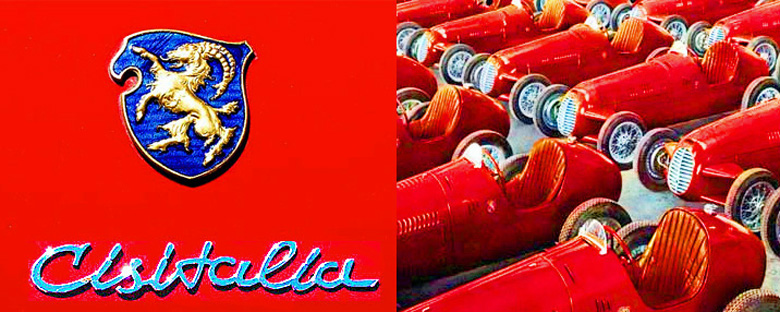
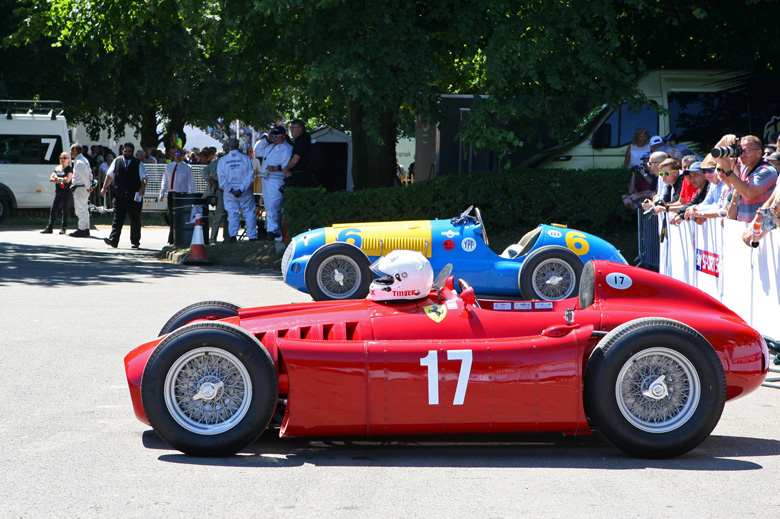
It does not seem like a year since the last Annual Assembly of the Grand Prix Drivers Club was held in Maranello, but this year’s Assembly, held in the Adriatic seaside town of Riccione, was another occasion to be presented with some remarkable old race cars, some of which were familiar and others certainly not.
The host of this year’s event was Gabriele Fabbri, the owner of the Hotel Promenade, a former racing driver, and friend of the Grand Prix Drivers Club.
So let’s talk about cars. [Read more…] about Discovering Race Cars in Riccione