A remarkable experience that lasts to this day.
Story and photos by Mark Duder
In 1972 my new wife Margaret and I decided to have a year in Europe for our honeymoon. In those days a line voyage (A line voyage was a simple liner going from Australia to the UK as quick as it could, (21 days), as against a cruise.) from Perth in Western Australia around the bottom of Africa was the way to go.
As was normal in those days for Australians we bought a second hand van in London that had obviously been around Europe a few times and set off.
As a member of the Renault car club of West Australia, I had participated in the West Australian Rally Championships in the 60s and early 70s in a modified Renault R8. Hence, due to my interest in all things Renault and Alpine, I managed to get an invite to the Renault factory in Paris and the Alpine factory in Dieppe. However, upon arrival in Paris, we went to the Renault factory in Billancourt for a tour but when we got there, there were workers protesting at the gate, and we were told by police not to go further.
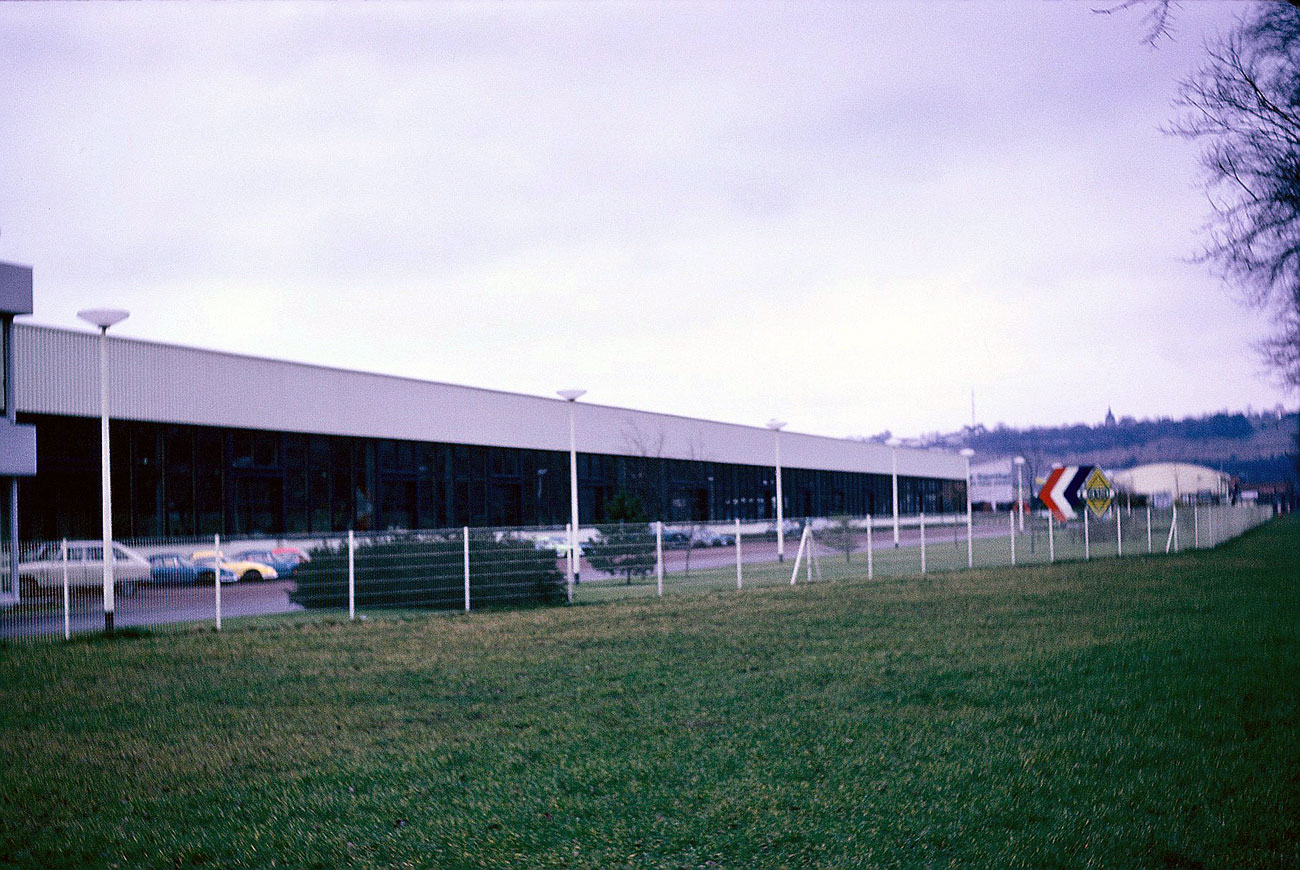
The Alpine factory, circa 1972.
So, the next day we headed to Dieppe instead, and upon presenting ourselves were taken on a guided tour. In the foyer was the 1969 A210 that Alain Serpaggi took to a 12th overall and fourth on the Index of Performance at Le Mans that year. The Alpine engineer who took us through the factory made sure we went to every department, which obviously included the production line of the A110 and the 4-cylinder A310 which had just begun production in 1971.
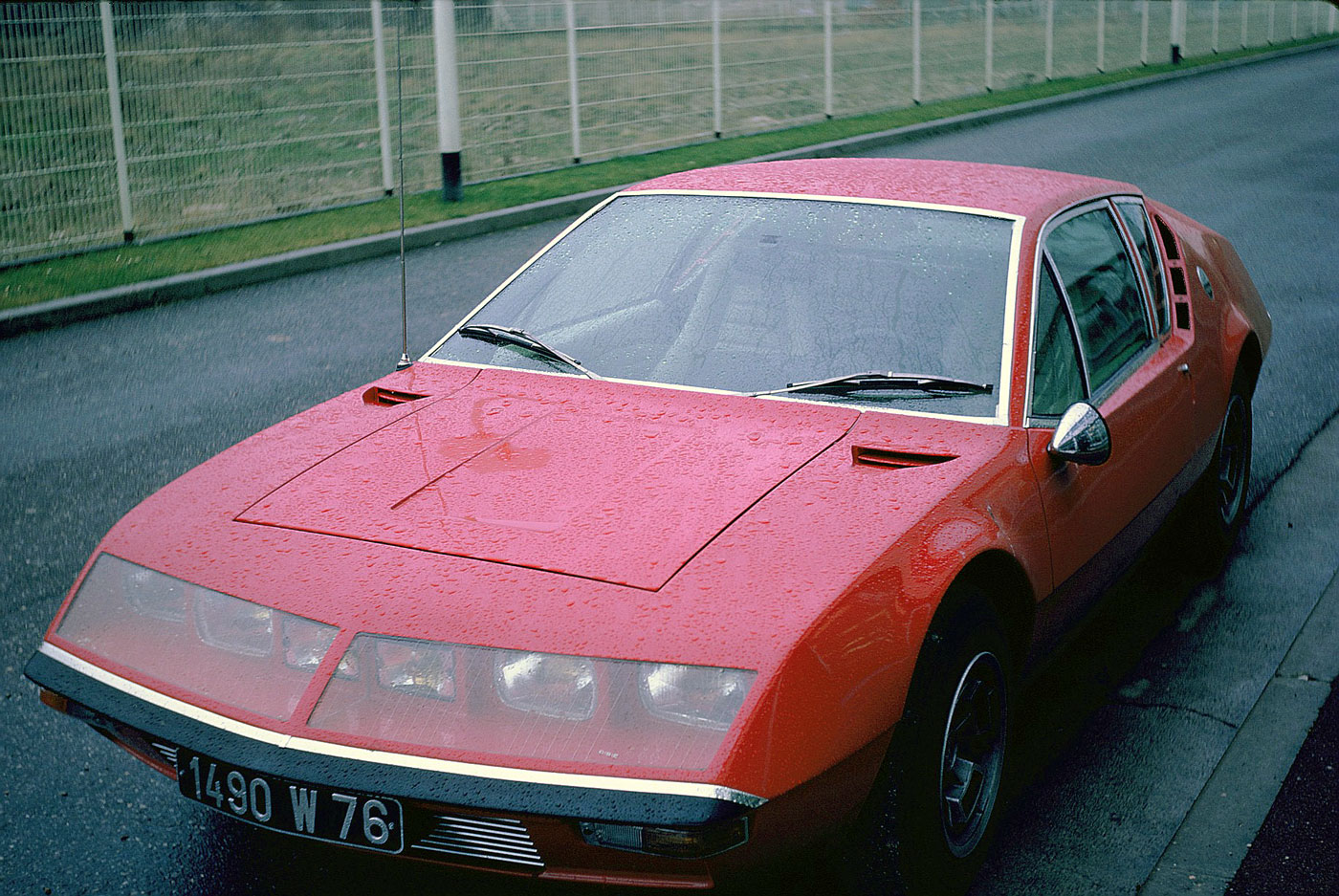
This Alpine A310 was one of the first built and was the Alpine director Etienne Desjardin’s personal car.
The Alpine factory really had a family feeling because everything was handmade. Cars did not come off the line every few seconds like today. I think they were lucky to do a couple per day. Obviously, the laying of the fiberglass body, doors and bonnets took time.
In a small part of the factory, they were testing a Renault 16 engine with a turbo attached and it was running at a high speed with the exhaust manifold running hot. This set up was for the two prototypes which we also saw, 3429 GY 76 and 7087 HE 76, which were used in events like the Criterium Cevennes. The engine had 1951cc, 200hp and turbo lag! It was the early days of Alpine Renault’s involvement with this style of forced induction and was used very successfully in later R5 Turbo, Le Mans and F1 cars.
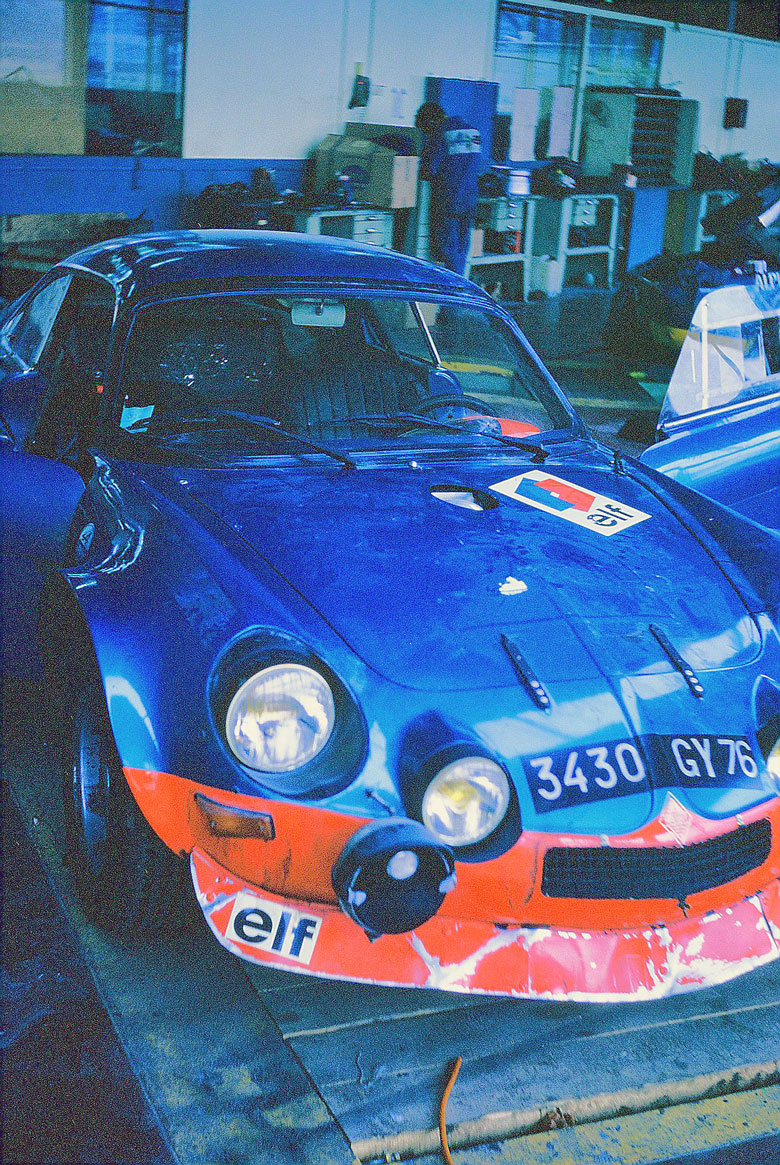
3430GY76-prototype
Another area was where they pulled down and rebuilt the works rally and Le Mans engines and gearboxes. In yet another section, rally cars were being finished for clients who rallied them. There was a long list of accessories that were made for this purpose, from roll cages to under body protections, extra lights to bucket seats and heated windscreens etc.
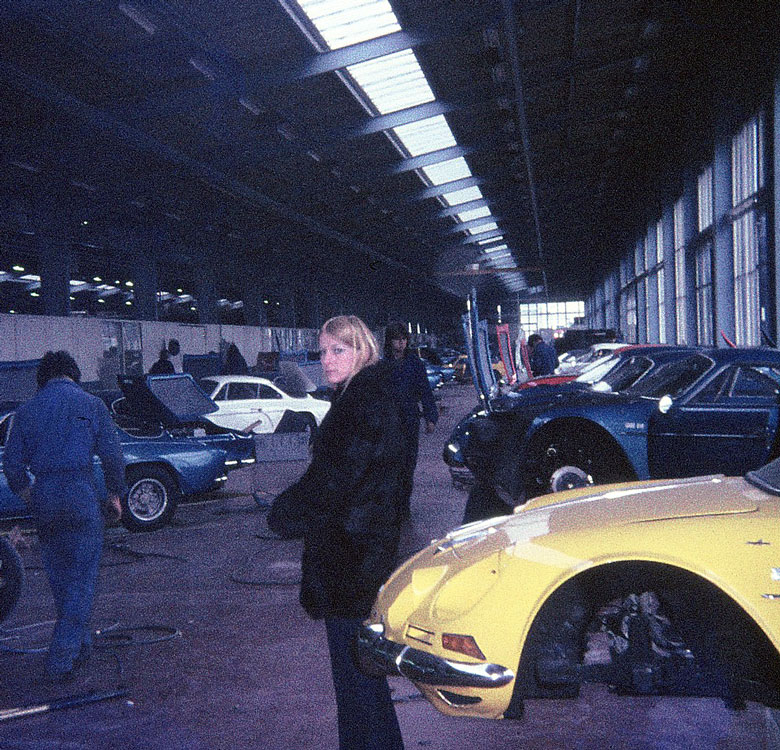
My new bride in the client-workshop.
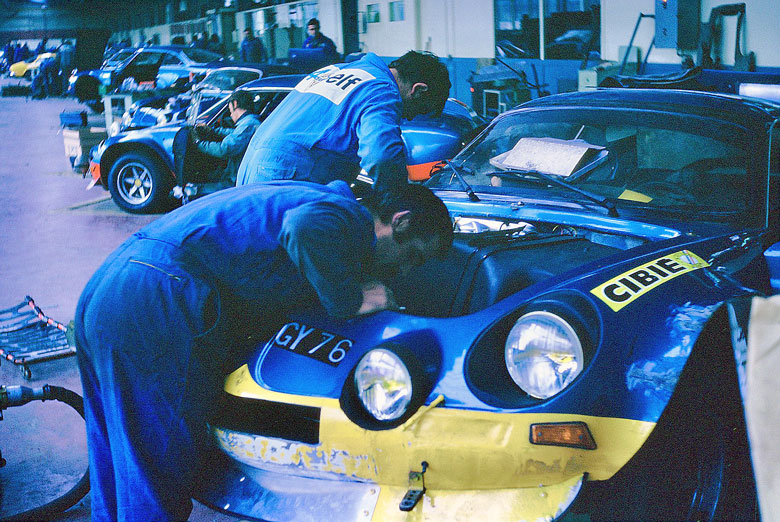
The highlight for me was seeing the Works cars that had just returned from the Monte Carlo Rally. Unfortunately, they had gear box problems which put them out of the running that year. For me though, just to sit in the driver’s seat of Bernard Darniche’s Alpine and imagine driving over the Col de Turini in the snow was more than enough.
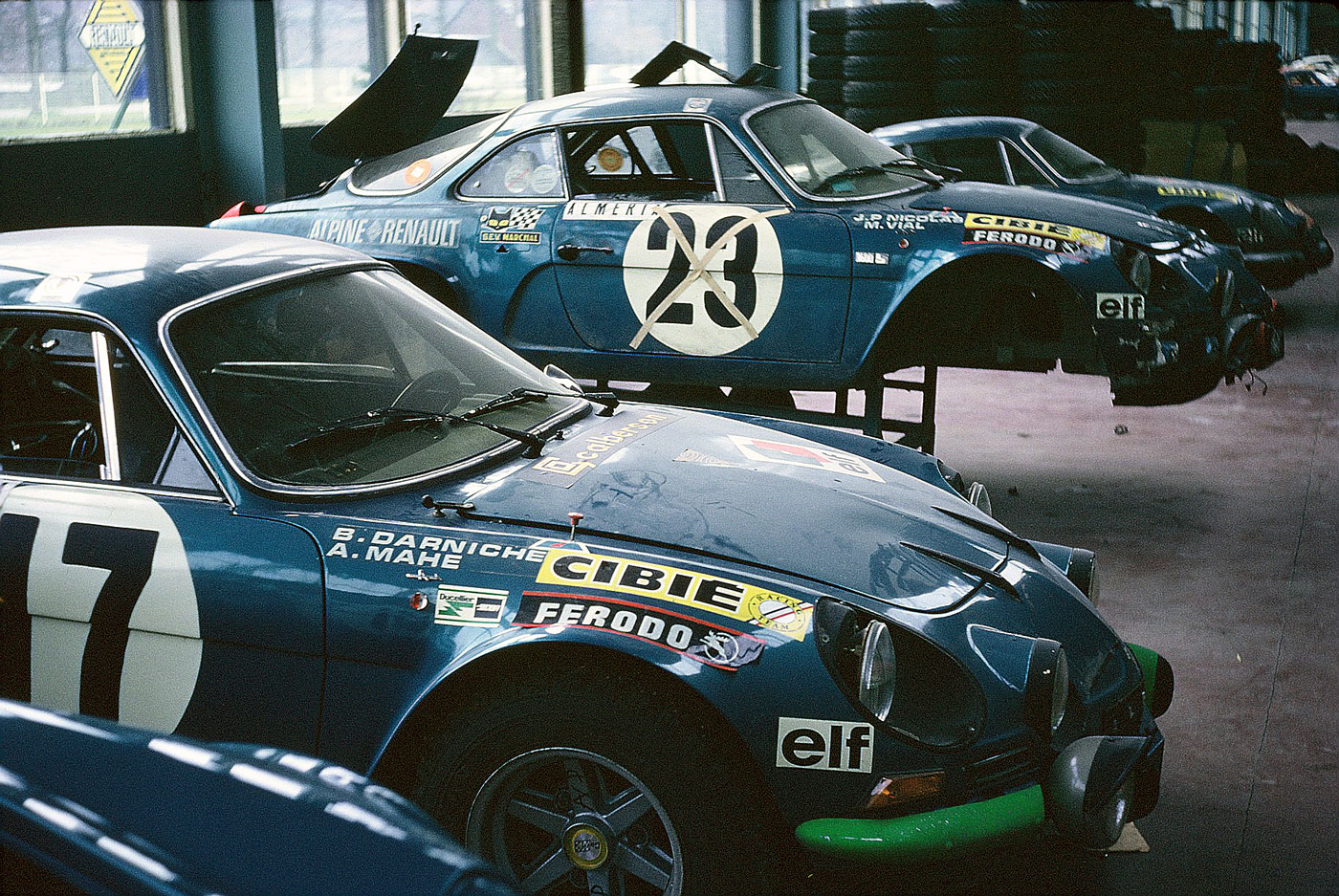
Back from the Monte Carlo Rally.
Despite the retirements in 1972, the Alpines were incredibly successful in the Monte. The finished 1,2,3,5 and 9th in the 1971 Monte Carlo Rally, and 1,2,3,5,6,10, and 14th in 1973, the year they won the Manufacturer’s Championship. I still have the poster celebrating that win.
The hospitality at the Alpine factory was wonderful and it was a day never to forget. I would be reminded of it in an amazing manner 32 years later and revealed in Part 2.
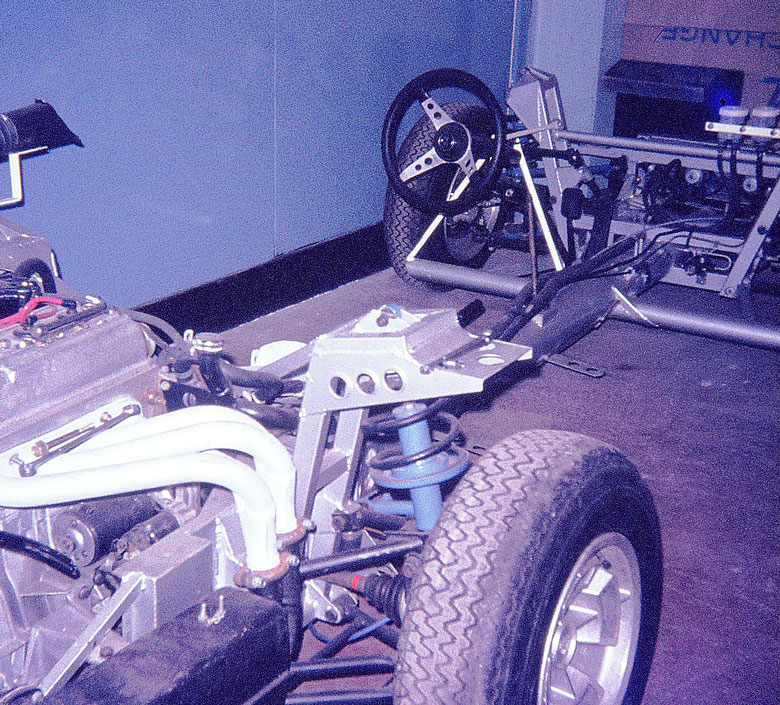
Under construction, the 1600-310-chassis.
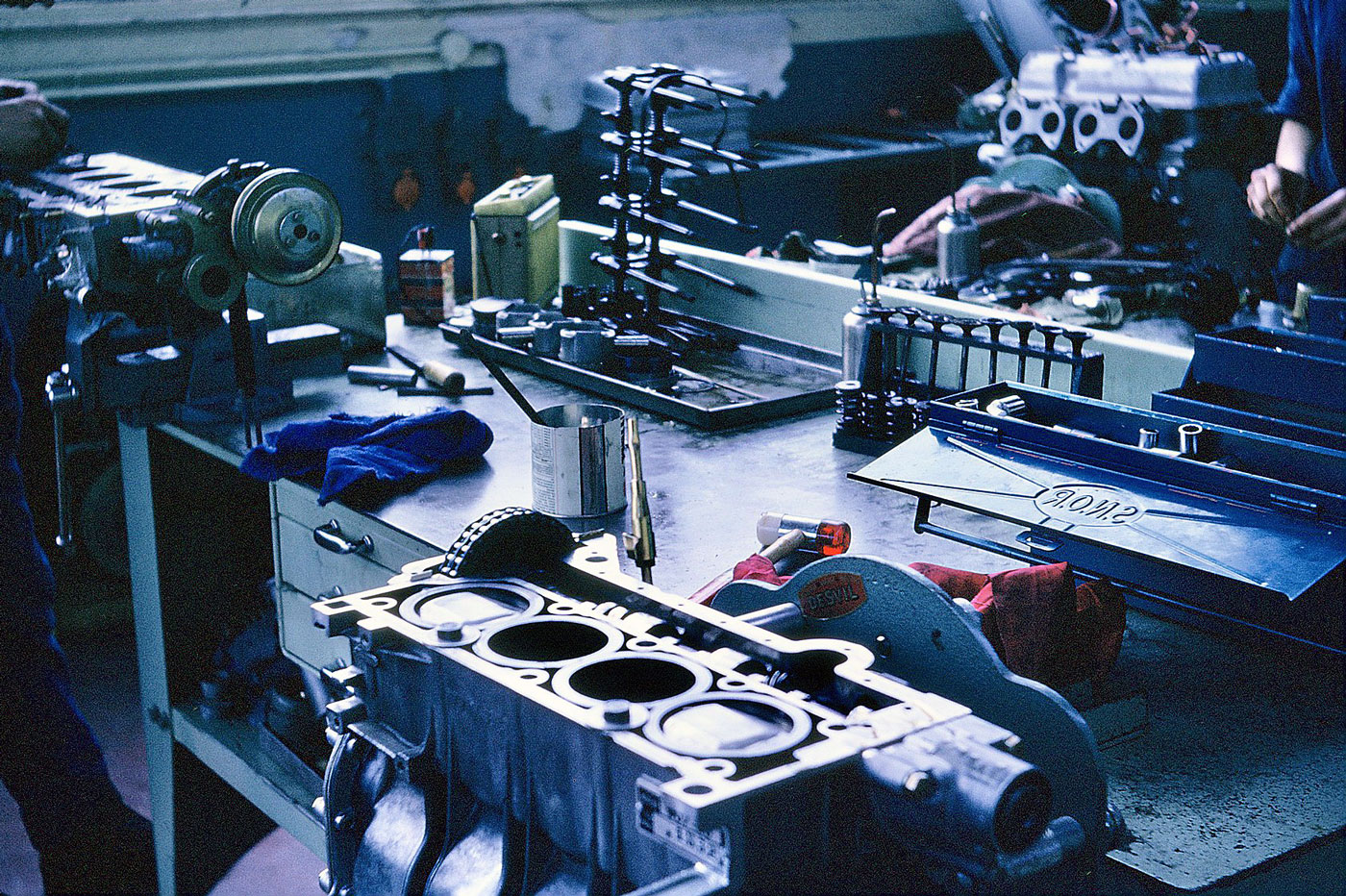
Alpine engines being assembled. Certain engines were developed using Amedee Gordini & Marc Mignotet derived engine options for the hotter versions.
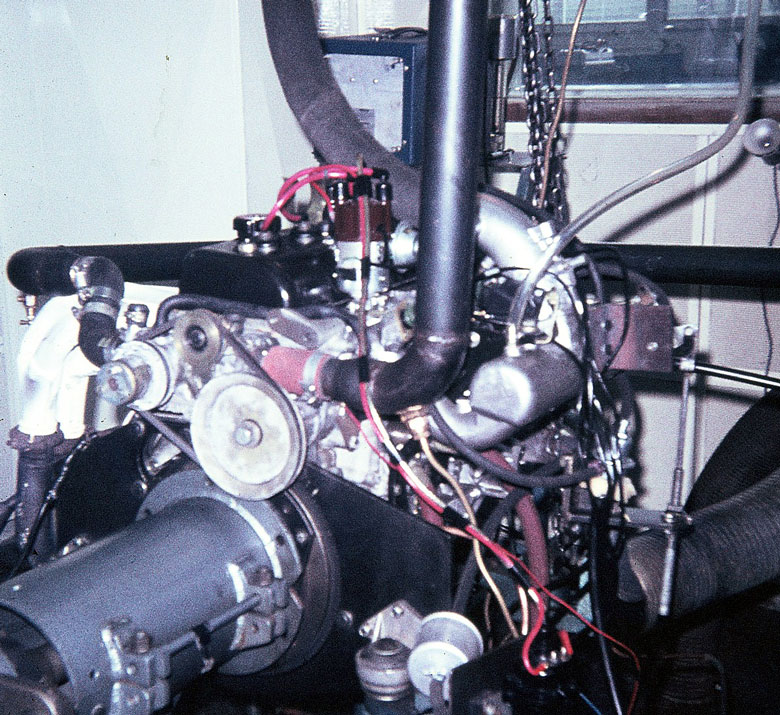
Competition-engine-testing. The final 1798 cc works rally versions had great power to weight ratio with 180 hp and weighing only 650kg.
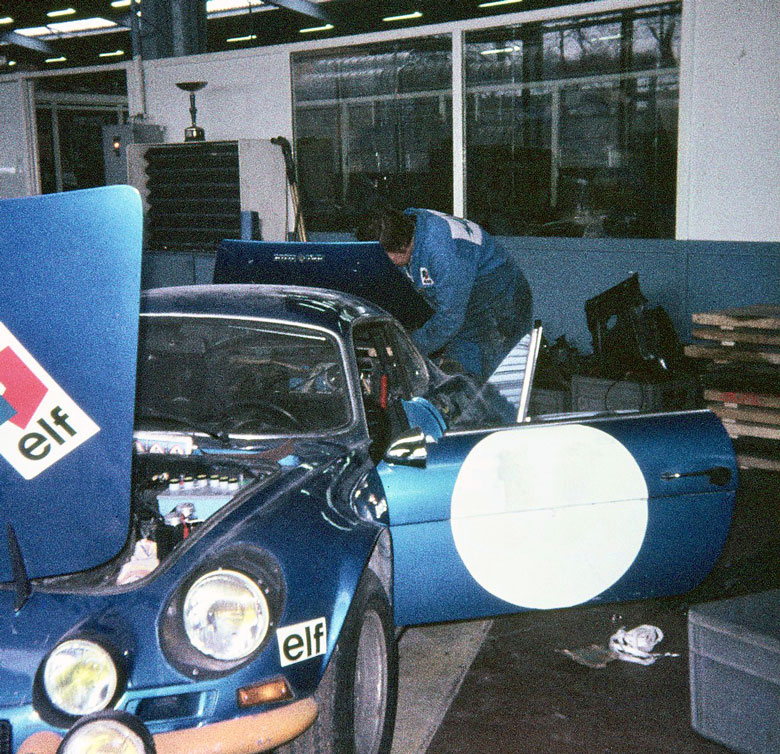
Works cars were built according to what rally they were contesting. There were lightweight fiberglass shells for tarmac and thicker for gravel events, combined with substantial undertrays to protect the suspension and mechanical components. The lightweight ones were so thin they were translucent and you could press all the body panels in with your finger.
Wonderful story! We visited there in 1974 and picked up rally parts for my 1300.
Well done Mark, i well remember your help when i did the Alpine books and when you and your good lady came over and dropped by a few years ago, nice to see your trip revisited, things have changed a bit now!! good memories.
Great article! All good but I loved the thought of the translucent body panels.
I’ll observe that my standard 1951 Renault 4cv (the progenitor of the first Alpine model) weighs 640 kg with fuel and spare parts for a trip but has 21 bhp instead of 180 bhp.