By Paul Wilson
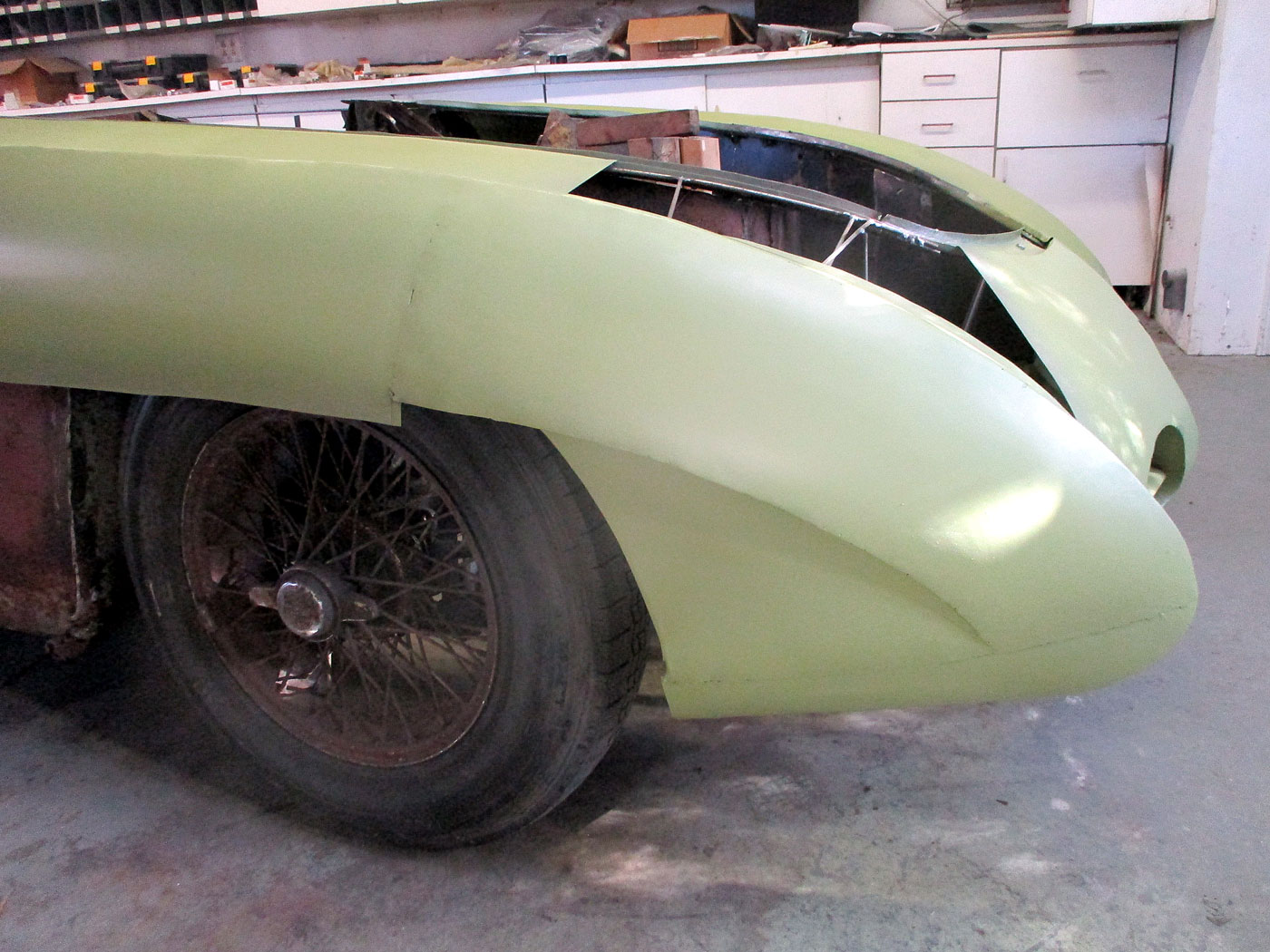
Enclosed wheels, fins, and teardrop shapes, the defining elements of the BATs, were the height of fashion in the early ‘50s. Even then, all were controversial, and no other cars took them to such extremes. We need to look at this design environment to appreciate how the BATs expressed their times.
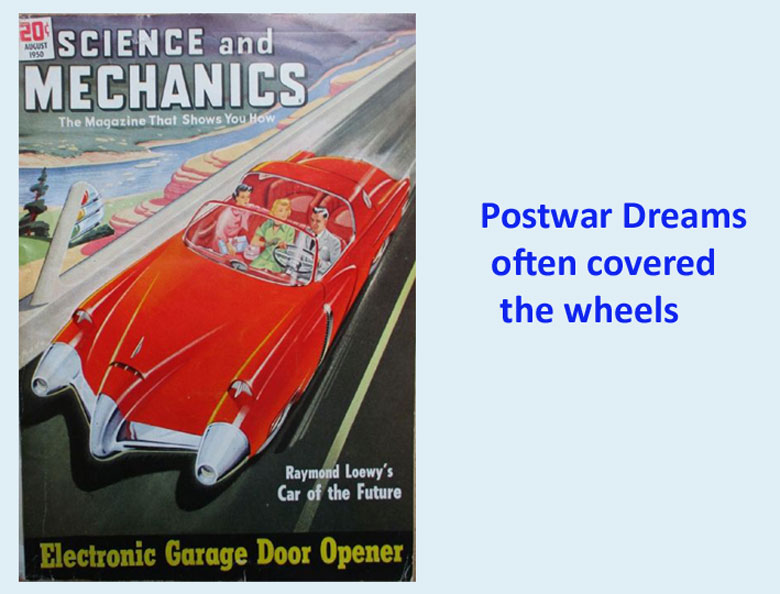
Let’s start with the wheels. In the self-consciously modern postwar world, a car that simply rolled on wheels, like ancient chariots and oxcarts, seemed hopelessly backward. This was the dawn of the jet age. Cars should whoosh along as if in flight, propelled by turbines gulping in air at the front and blasting hot exhaust out the back. Fins, not tires, steadied this headlong rush.
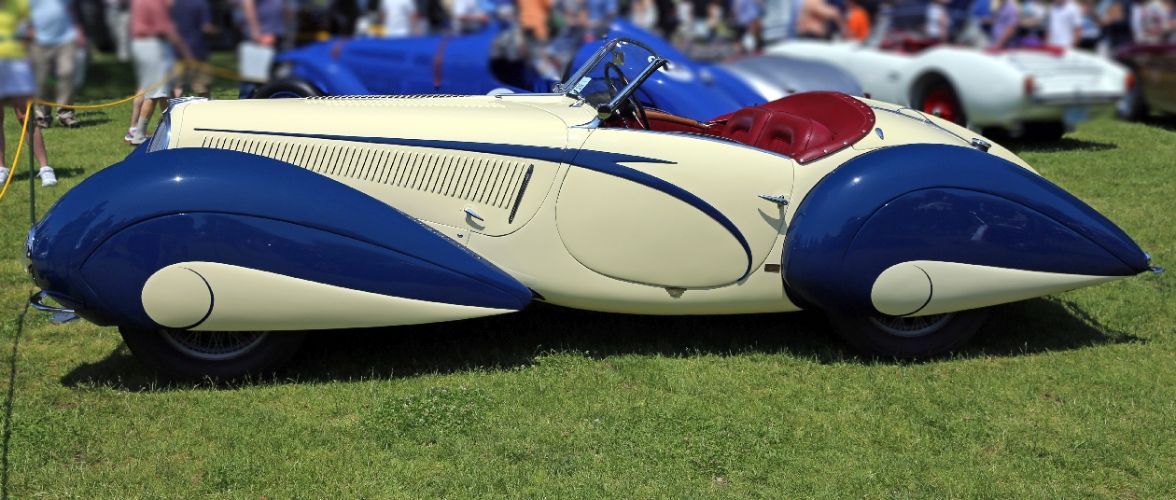
If wheels interfered with this flight fantasy, why not hide them? Even in the ‘30s, a few futuristic French cars had enclosed front wheels. Figoni & Falaschi put front wheel spats on one or two of their teardrop Talbot-Lago 150SS coupes, and many Delahaye 135 and 165 roadsters.
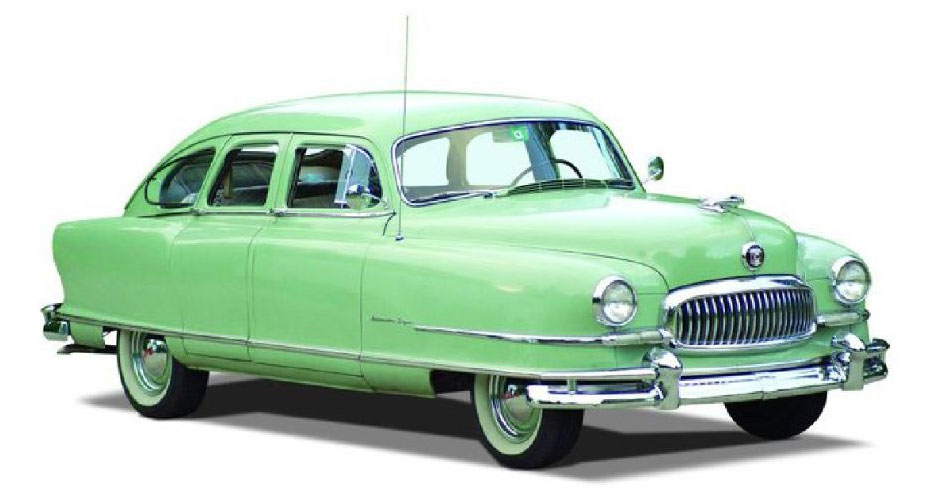
DeMola’s Alfa roadster, in its original form, hid its wheels. After the war, this fashion extended to mass-produced cars like the ‘49-51 Nash Airflyte, which sold well. But there were skeptics, including Tom McCahill, the outspoken road tester at Popular Mechanix, who wrote, “Nash, one of the oldest automakers in America, has gone overboard for the newest fad in automotive designs and come up with two hot candidates for Miss Upside-Down Bathtub of 1949.”
Covered wheels also had aerodynamic advantages. From the beginning, Porsche’s low-drag shape was its most conspicuous feature, and a few of its early race cars had front-wheel spats, though they were never put on a production car. Both the name and the shape of the Alfa Disco Volante (Flying Saucer) of 1952 describe an airborne vehicle, for which wheels weren’t needed. Ads for the Bathtub Nash claim that its enclosed wheels gave significantly improved gas mileage, due to less drag. The D-Type Jaguar was one of many sports-racers of the period that tucked its wheels inside restricted openings.
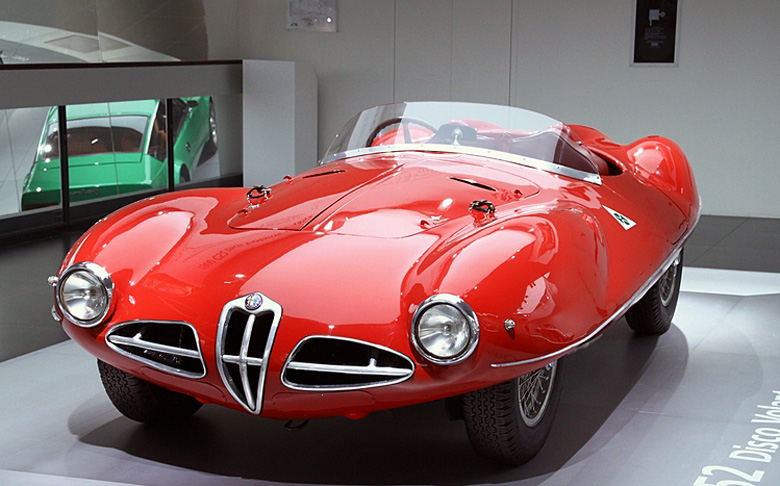
Photo by Roberto Motta
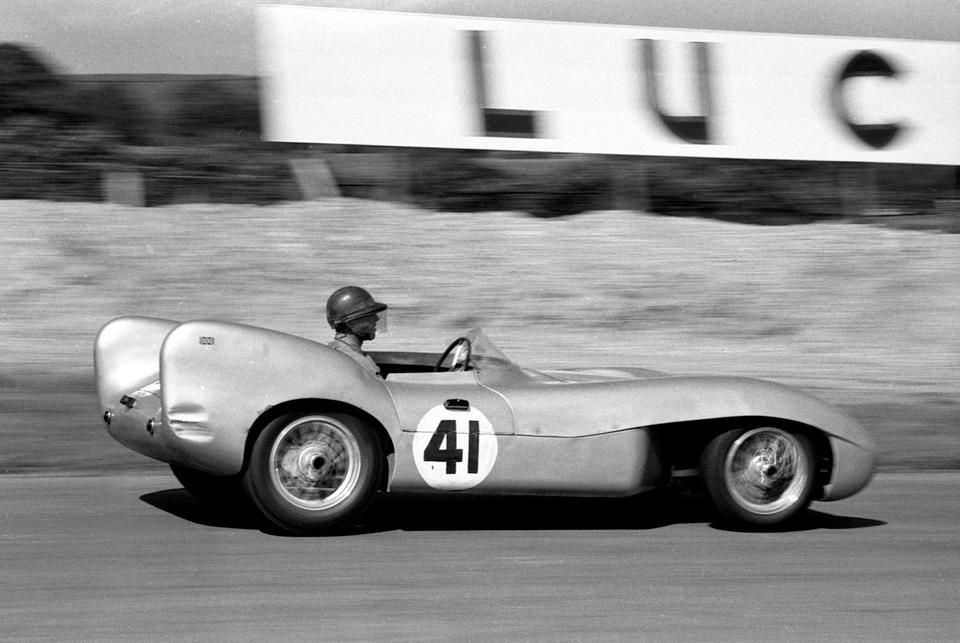
Starting with the Mark 9 of 1955, Lotus lowered the front wheel opening to cover the tire. With the Eleven of 1956, all four wheels were fully enclosed. Even with road cars, wheel openings were an obsession. The Balbo Siata 208S coupe had chrome bars across the rear tire tops (a small blunder in an otherwise superb design). A year later, in 1954, Mercedes put streamlined moldings above the wheels of its 300SL.
Lotus IX courtesy Bonhams.
Enclosed front wheels had obvious practical drawbacks, however. Unlike at the rear, where close-fitting bodywork had a long history, front wheels have to turn. So either the body had to be wider, or it needed bulges for clearance. And some solutions are even worse. The tiny Lotus Eleven, because of limited steering lock, has a gigantic turning circle. The high and clumsy Bathtub Nash was never going to have nimble handling, but reducing the front track by five inches, so the tires wouldn’t scrape at full lock, made a bad situation truly awful.
And what about aesthetics? How many people really liked cars that hid their wheels? Was it really the Look of the Future, or a passing fad? Most evidence suggests the latter. The Bathtub Nash had no imitators, among major carmakers. In 1949, when it appeared, a car-starved public would buy almost anything, so healthy sales don’t prove that its look was widely popular. Hidden wheels require a relatively narrow track and wide body overhang, resulting in tippy baby-carriage proportions at odds with the low, wide stance needed for high speed stability–and good looks. Pontiac had huge success with its Wide Track ‘59 model, which moved the wheels five inches further apart.
Bristol Photo by Jonathan Sharp
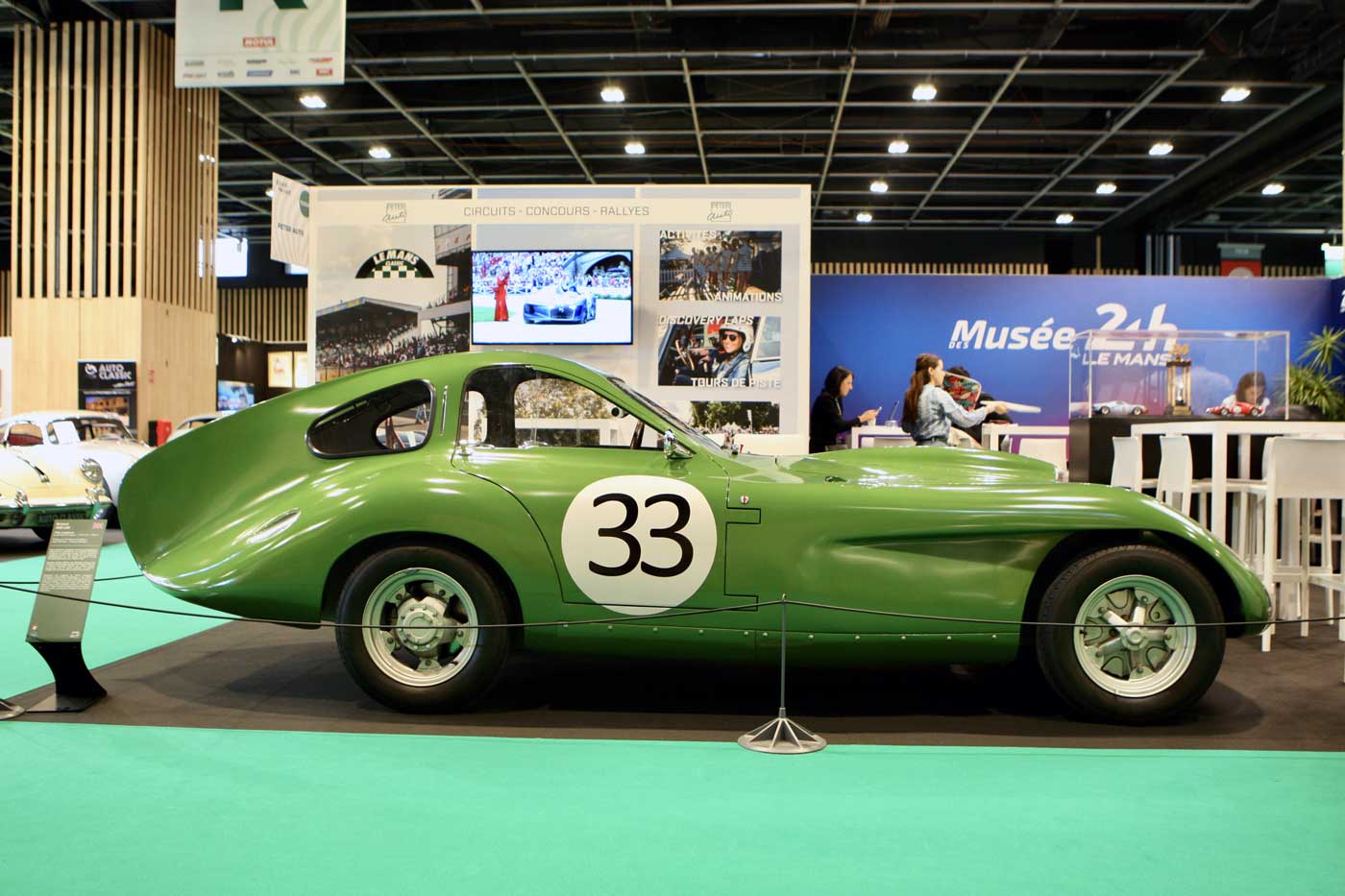
The “A” in the BAT’s name stands for “Aerodynamica,” and all elements of the design contribute to this theme. But in that period, air flow considerations inspired other variations in front wheel openings, not just enclosure. Before disc brakes, the limiting factor in brake effectiveness was the amount of cool air moving past the drums. Opening the rear of the wheel well could, in theory, increase the flow. For this purpose the Aston-Martin DB3S of 1953 had curved cutouts behind the wheels, the Bristol 450 of 1954 indentations in the body sides. Jim Kimberly had his 1954 Ferrari 375 (0364AM) modified to ease air flow past the wheels. The pontoon-fender Ferrari 250TR of 1958 was the most dramatic example of this feature.
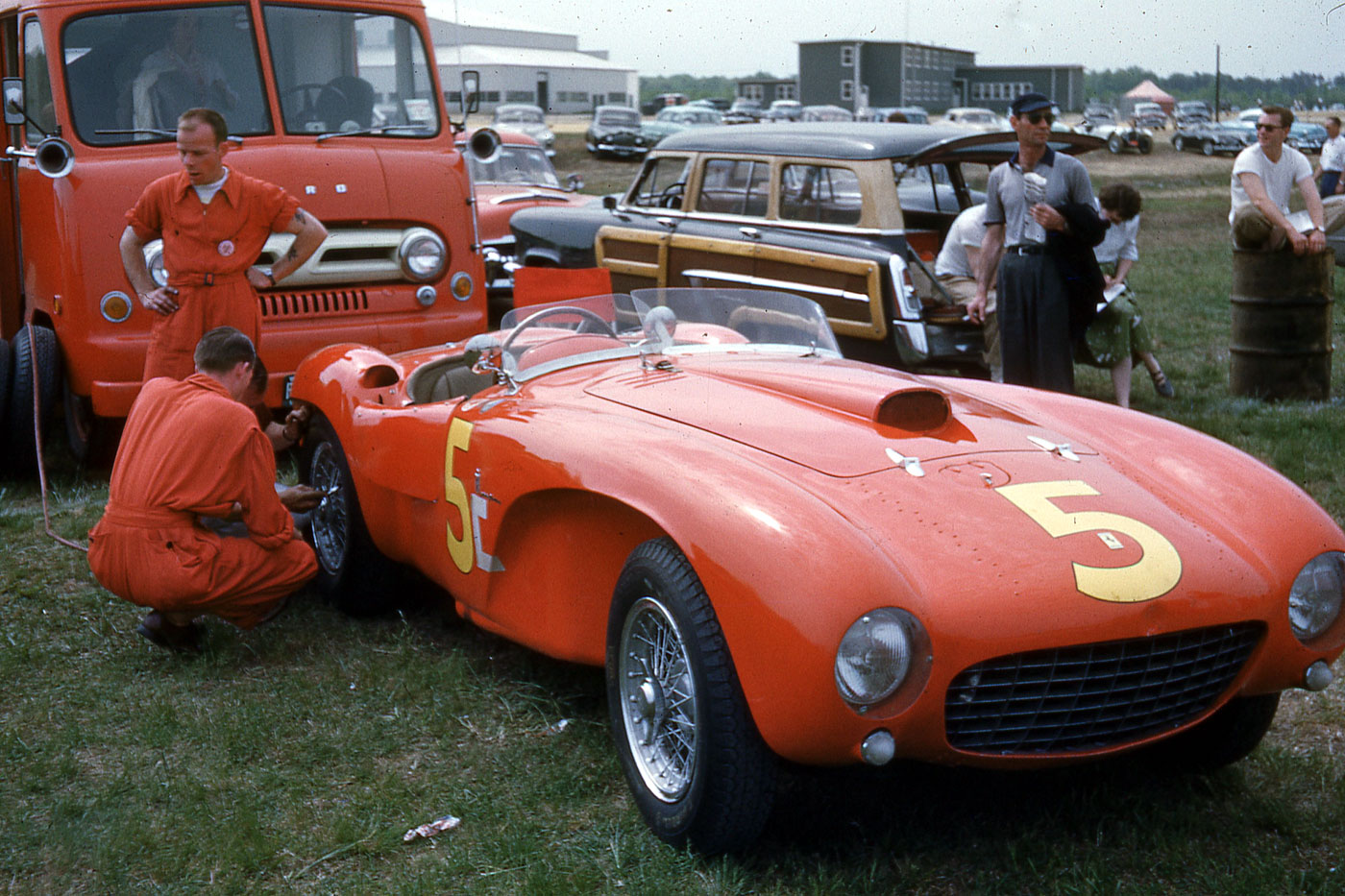
Photo by Robert Pauley
Whether or not these wheel cutouts cooled the brakes is doubtful. Even on race cars it was a short-lived fashion. Phil Hill won Le Mans in 1958 with a Ferrari team car that had enclosed sides, not pontoon fenders. And air circulation became less critical when disc brakes became universal at the end of the ‘50s. For road cars, large wheel cutouts had obvious problems. Road grime made the exposed area dirty, and stones chipped the paint.
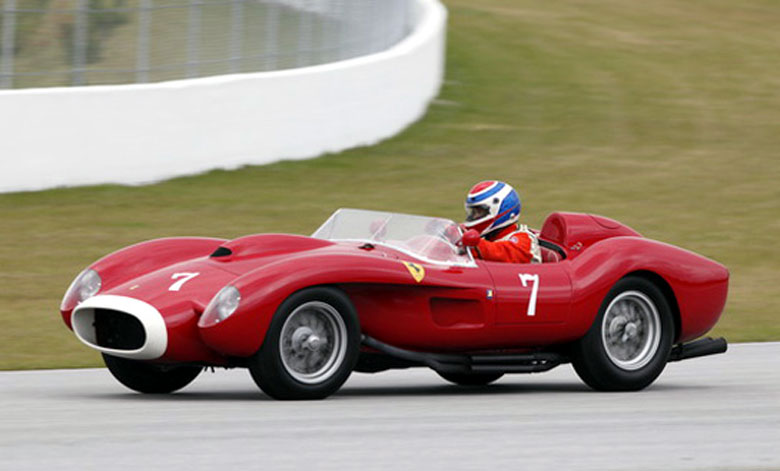
Photo by Juha
But as visual expressions of air flow, the best of these designs were highly evocative. That lovely line streaming back from the top of the front tire is surely one reason why the Ferrari 250 TR is now one of the most valuable cars in the world. And rather than hiding the wheels, like the spaceship-inspired cars did, these cutouts emphasized them. What could be a more satisfying visual feast than a sparkling Borrani?
These, then, were the fashions that influenced designers at Bertone when, from 1953 to 1955, they were pushing the boundaries with the BATs. For sure, such a car couldn’t have simple round front wheel openings. The aerodynamic theme gave them a lot of promising ideas to develop. But did they draw on the best of contemporary design to create a car that was not only state-of-the-art, but also beautiful?
I think they missed an opportunity. My BAT will show what they could have done.
Two examples from either philosophy are the 1959 Lancia Flaminia by Raymond Loewy and the 1953 Abarth 1100 Sport Ghia. The latter has my personal preference. Beautiful design and one which is extra special because it makes a very small car look big.
I am fascinated to see where this goes. I am also seriously jealous of someone who has already completed cars of this complexity. I have only one complete design that has been produced, and due to its competition purpose it is far simpler. Also I only drew it, I have not shaped the materials, glass fiber in the case of my design for EVSR. I also find the Lotus IX an attractive design, I see where the nose is going and I am optimistic for the overall outcome.
Saab’s post-war prototype Ursaab had front wheel spats which in Sweden would inevitably fill with snow with catastrophic consequences. That’s what you get from a company that until then had only built aircraft. (Beautiful car however.)
Abbreviated spats are still with us on the Honda Clarity hybrid, a descendent of the fully-spatted Insight.
Can’t wait to see how this turns out.
Although the BAT cars from Stile Bertone had very low drag numbers I do not think there are any test results that show the drag with and without the spats. It would be very nice to know the overall impact of the design on the final drag of the vehicle. An especially important part of the BAT development was the work done in restricting engine cooling area that resulted in lower drag.
The cited Saab was designed by the illustrator of the monthly SAAB magazine. As the only artist in the company he was asked to design the first car as they had no design department. The covered wheels proved as stated to be very impractical but the car looked quite good especially for one designed by a magazine illustrator who had never done a car before. On that car the plan view of the body, as dictated by the covered front wheels is driven very wide to accomodate the covered wheels, thereby increasing the frontal area by a large amount. I have a scale model of that car that was sold in the SAAB Museum Shop. A quick look at an XKE shows the impact on the body shape by the partially covered wheels.
In the GM Design Windtunnel we never wasted the time testing a car in the windtunnel with covered wheels because it had been clearly proved by then that it was totally impractical and not worth the negative impact on the overall vehicle. On a list of automobile development criteria the improvement from covered front wheels would not be worth the effort. There is no doubt that it was a styling fad. In designing a car there is a battle between the width of the front tread and the position of the front wheel opening that has to accomodate the wheel travel through it’s entirety, up and down and in all it’s radial positions. The wheel envelope criteria and it’s location defines the front of a cars width. A covered wheel would be secondary in importance to a wide tread that offers so much to a vehicle in terms of it’s dynamicmic performance. See where Porsche has gone.
First to consider when evaluating aerodynamic drag is
the frontal area of the vehicle, reducing that in any way usually brings guaranteed results. A bus can have a very low drag but the large frontal area comes into play in evaluating it’s true efficiency in traveling through the air. A car with a much higher drag number can be much more efficient than the bus due to it’s significantly smaller frontal area.
CO-EFFICIENT of DRAG >TIMES< the MEASURED FRONTAL AREA is the true value of a vehicles aerodynamic efficiency.
I am also very interested seeing where this article is going.
Dick Ruzzin
The subject that I neglected to mention was the aesthetic in the duplicating or re-creating of an automotive design. The design character included in the original BAT cars is consistent. The aesthetic solutions of the three are different but bear the signature of the original designer in the form of aesthetic character. That is the way that he did things. The only way that he could do any kind of art work. It was him.
That is not about the practical criteria, the science of the shapes that had to be accommodated but about the surface development and it’s artistic quality. The form language. The consistancy of character of the individual surfaces as well as in their total expression. That is very difficult and likely cannot be accomplished.