Text and photos by Aldo Zana
Salzburg, Austria, is a town immersed in music and culture, permeated with old Europe’s spirit. The Northeastern environs, the Salzkammergut, the beauty of gentle hills, perfectly cared-for meadows and yards, small villages dominated by church clock towers topped with onion-shaped domes and romantic lakes like the Mattsee are magically nostalgic.
True to the understatement of its founding family and the Austrian low-key approach to past glories, a new car museum opened on the Mattsee shore, focused on Austro Daimler and Steyr cars.
These brands share the Austrian nationality and the chief designer and company head: Professor Ferdinand Porsche (1875-1951). While Steyr is still active, the Austro Daimler name faded away in 1934, when it was dissolved as a consequence of the merger into Steyr.
The museum is creatively named “Fahr(T)raum”: the addition of the bracketed “T” elevates its meaning to a poetic “The Dream of Voyage” from the more mundane “Space of Travel”. It was established and funded by Ernst Piëch (born 1929), grandson of professor Porsche and son of daughter Louise (1904-1999), who married Anton Piëch (1894-1952). The two families have also been closely linked by common business interests.
It is located inside an unassuming, business-like building at the north end of the quaint and pleasant village of Mattsee: no concession to architectural extravagance, rather a rational display making the visit rewarding and comfortable.
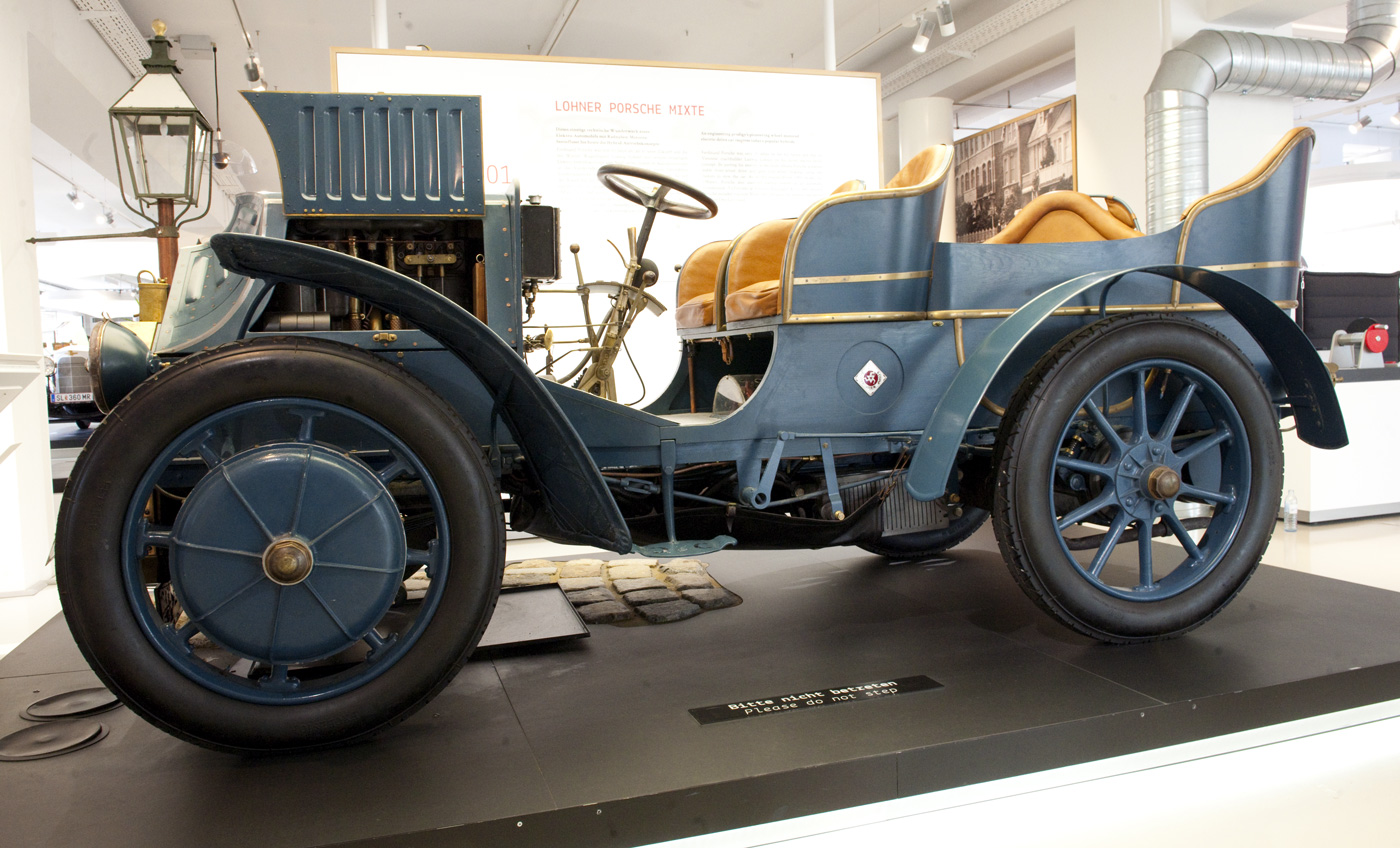
1901 Lohner Mixte
Austro Daimler cars represent the core of the exhibits, even though the entrance hall is devoted to the 1901 Lohner “Mixte”, built in Vienna. It is the world’s first quasi-hybrid car, designed by Ferdinand Porsche: electric motors are mounted directly on the hubs of the wheels and electricity is supplied by a generator driven by a four-cylinder Austro Daimler 5.5 liters, 25 HP petrol engine. The onboard battery pack starts the engine without the then commonplace hand crank. The car was a huge commercial failure, with only a few dozens sold until it was discontinued in 1915; yet, it marks the origin of a series of petrol-electric commercial vehicles and powerful artillery tractors used by the Austro-Hungarian Army in the Great War.
Ferdinand Porsche joined Austro Daimler in Wiener Neustadt, in the outskirts of Vienna, in 1906 and soon positioned the brand at the top of quality and performance.
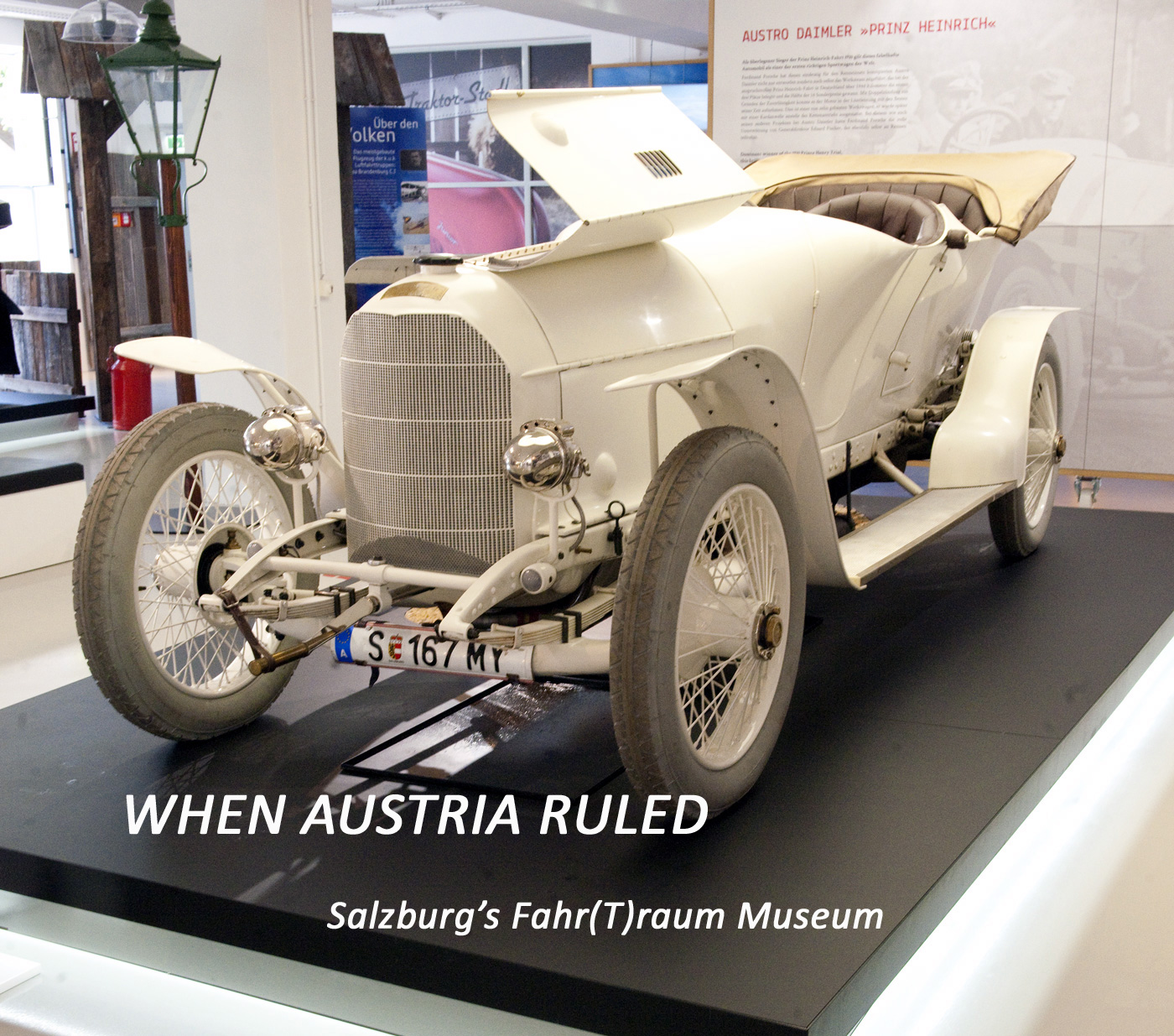
The museum presents, among other exhibits, a perfectly restored sample of the 22/86 “Prinz Einrich” open tourer car, developed in 1911 from the model of the previous year, the winner of the Prinz-Heinrich-Fahrt, then a well-known and heavily promoted 2,000 km endurance race across Germany. The car is on a stand equipped with stereo loudspeakers to deliver the roar of the engine when hidden sensors detect the presence of visitors.
Another uncommon vehicle is the 28/32 saloon car delivered in 1912 to the Imperial Court in Vienna. It was used as the official car of the Emperor and King Franz Joseph, who demanded an unusual height of the door and interior to be able to enter standing upright. His rationale: “The Emperor bows in front of God only”.

Austro Daimler 28/32 “Kaiserwagen” 1912 built for the Emperor Franz Joseph. A tall order for the emperor…
A unique item is the so-called Louise-Wagen, a 1920-built Double Phaeton 35 HP Austro Daimler presented by Ferdinand Porsche to his daughter Louise when she turned 16 and earned her driving license. Quite an uncommon and expensive present to a girl, but certainly possible when your father is the head of a car company.
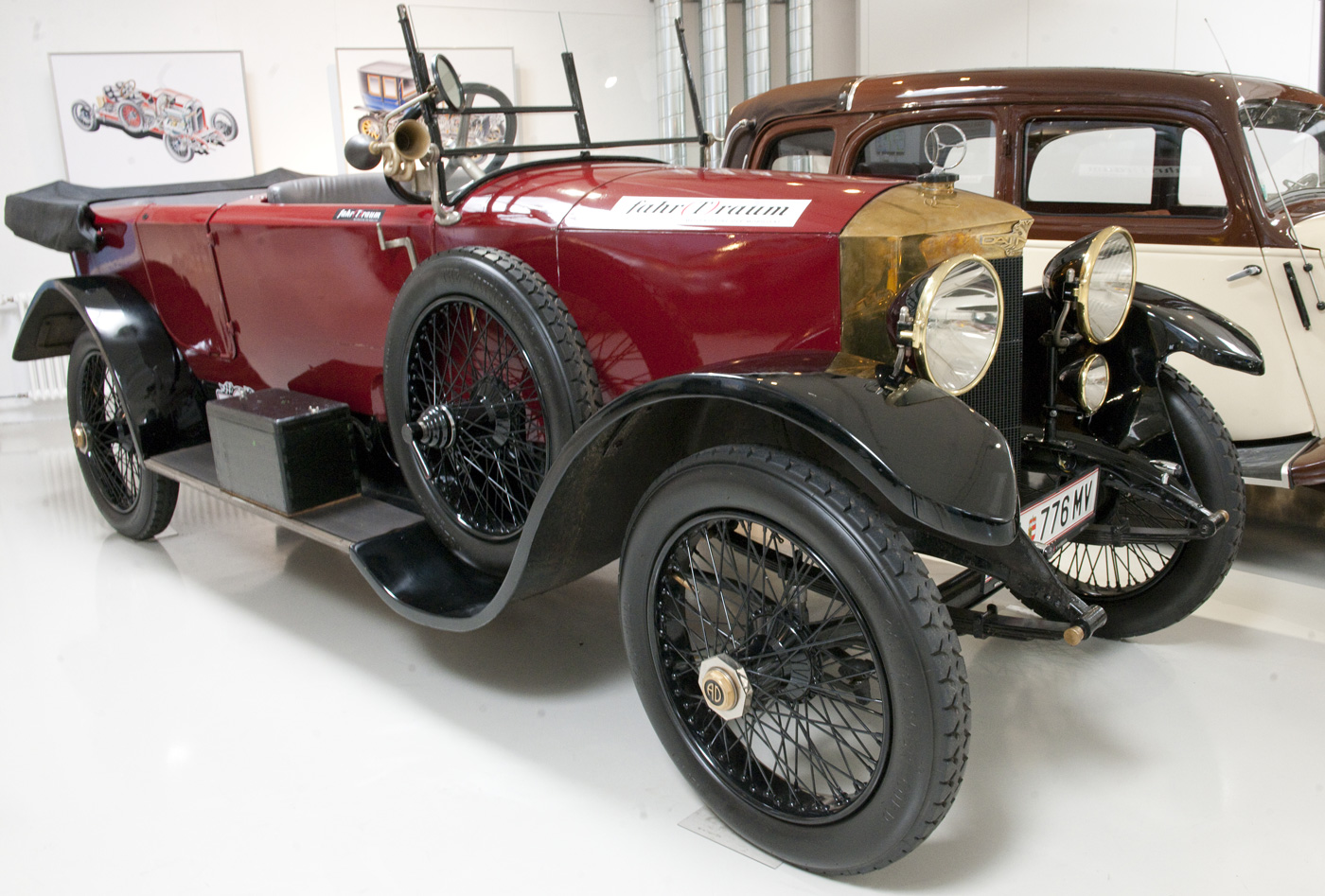
Austro Daimler 25 HP 1920 “Louise Wagen”.
The section devoted to the Steyr cars is separated by a room displaying the museum’s collection of German-made vehicles: a 1938 KDF (Volkswagen Beetle) saloon and a pair of 1941 Kubelwagen and Schwimmwagen, the Army reconnaissance and amphibian vehicles built at the Volkswagen factory in the war years during Ferdinand Porsche’s tenure.
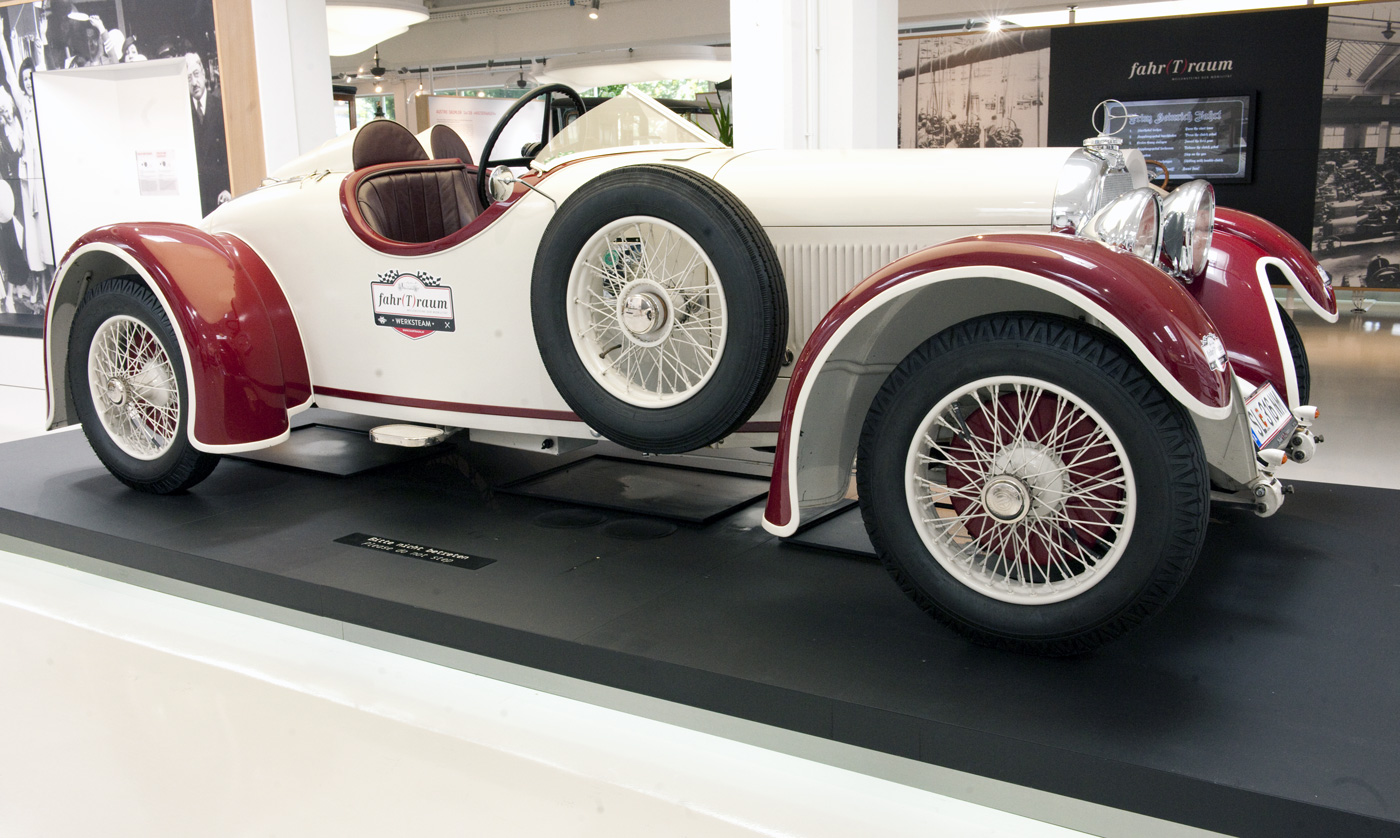
Austro Daimler 1926 three liter six cylinders 100 HP maximum speed 150 km/h.
Professor Porsche became head of Steyr in 1929 and remained in this position for two years, after he was fired by Daimler-Benz due to the ongoing troubled times. Following Steyr’s tenure, he then established his own design company in Stuttgart, Germany.
The Steyr cars do not embody the same charm as the older Austro Daimlers, yet they are a worthwhile addition to the preservation of historical and technical achievements of the past. They are either fully restored or in good original conditions, displayed with plenty of space in between and very good lighting.
Professor Porsche’s office space at Austro Daimler is also on display. Period desk and furniture are no-nonsense, sturdy enough to last while still confortable but with very few elements denoting image and authority.
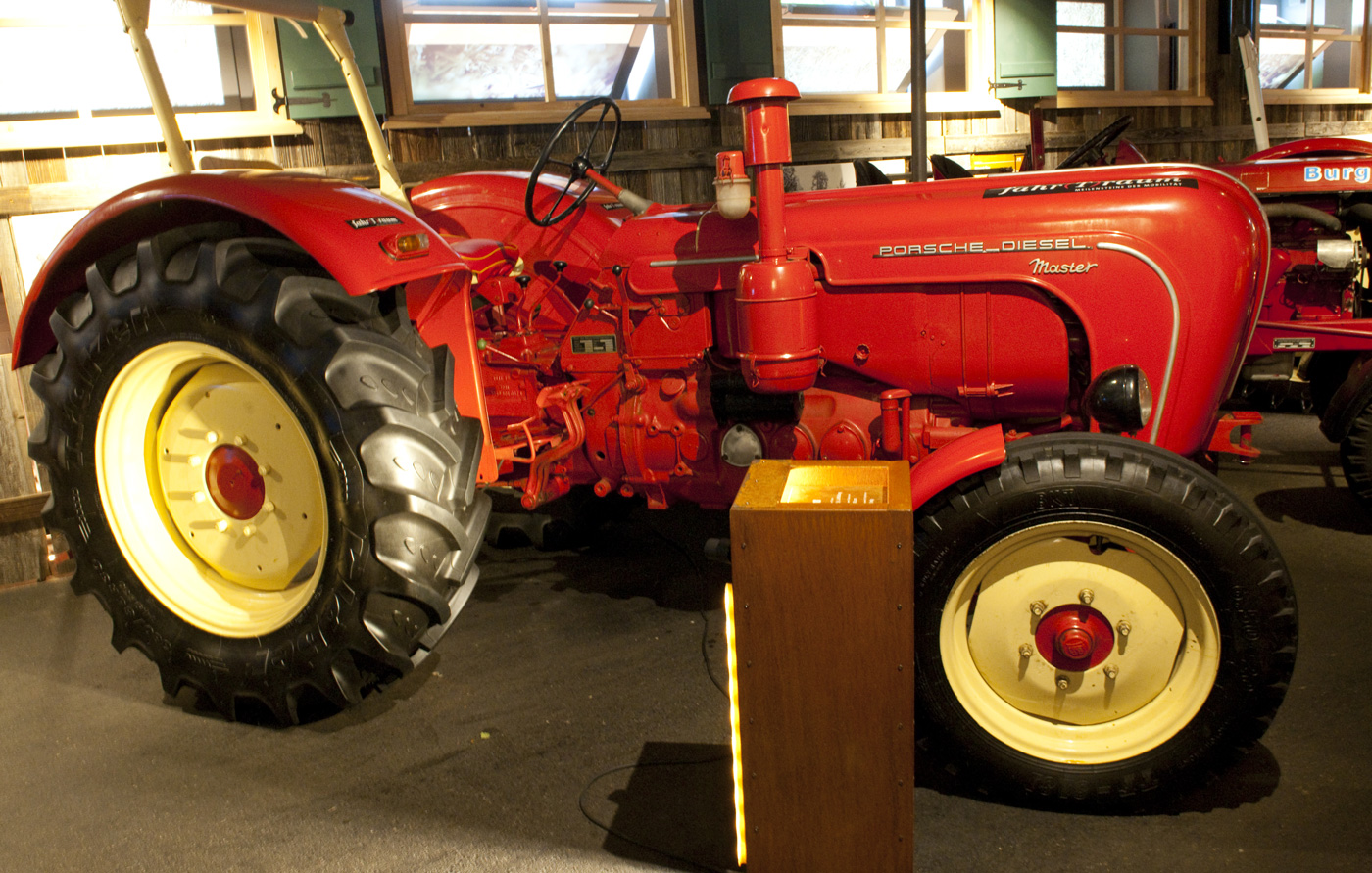
Allgaier-made tractor on Porsche design.
The cellar of the building hosts a significant collection of agricultural tractors developed from the original Porsche design of the 1937-1943 period, whose license was later given to an Austrian company and the German group Allgaier. The latter produced some 125,000 units of the System-Porsche model in the Fifties till 1963: it was highly successful thanks to its small size and weight, low consumption, reliability, high performance and easy use.
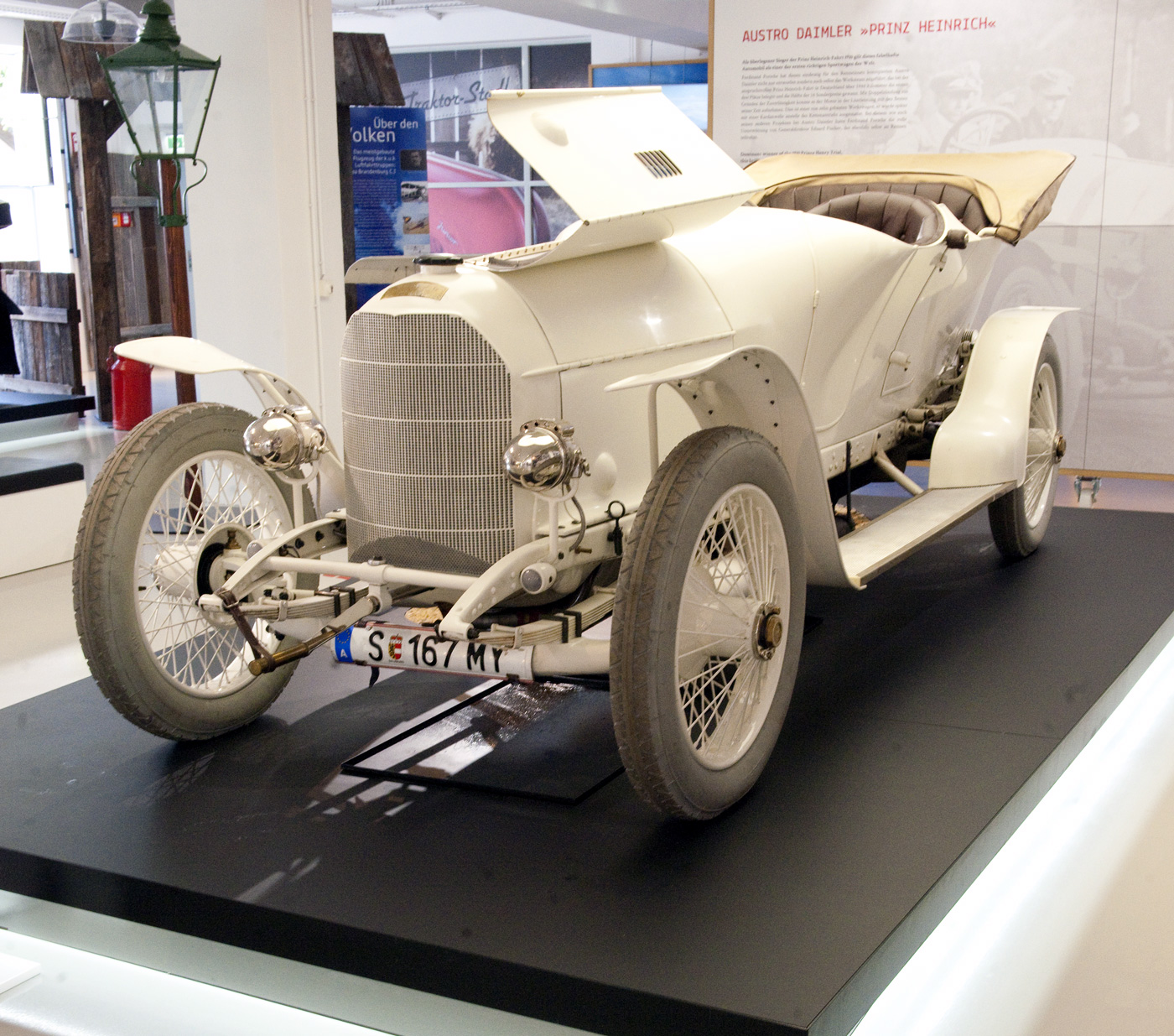
The Prinz Heinrich Austro Daimler from 1911.
Museum Website:
THE FAHR(T)RAUM CAR MUSEUM NEAR SALZBURG
Aldo Zana is the author of Monzanapolis, The endless American-Europe challenge
Read Review:
This is a nice story about a wonderful collection.
Not mentioned is that it is entirely the inspiration of Ernst Piëch, Ferdinand Porsche’s oldest grandson, and his wife Elisabeth, daughter of Heinz Nordhoff. They have created a fine tribute to the life and work of Ferdinand Porsche.
Anyone finding errors in the various descriptions should let me know because I wrote them.