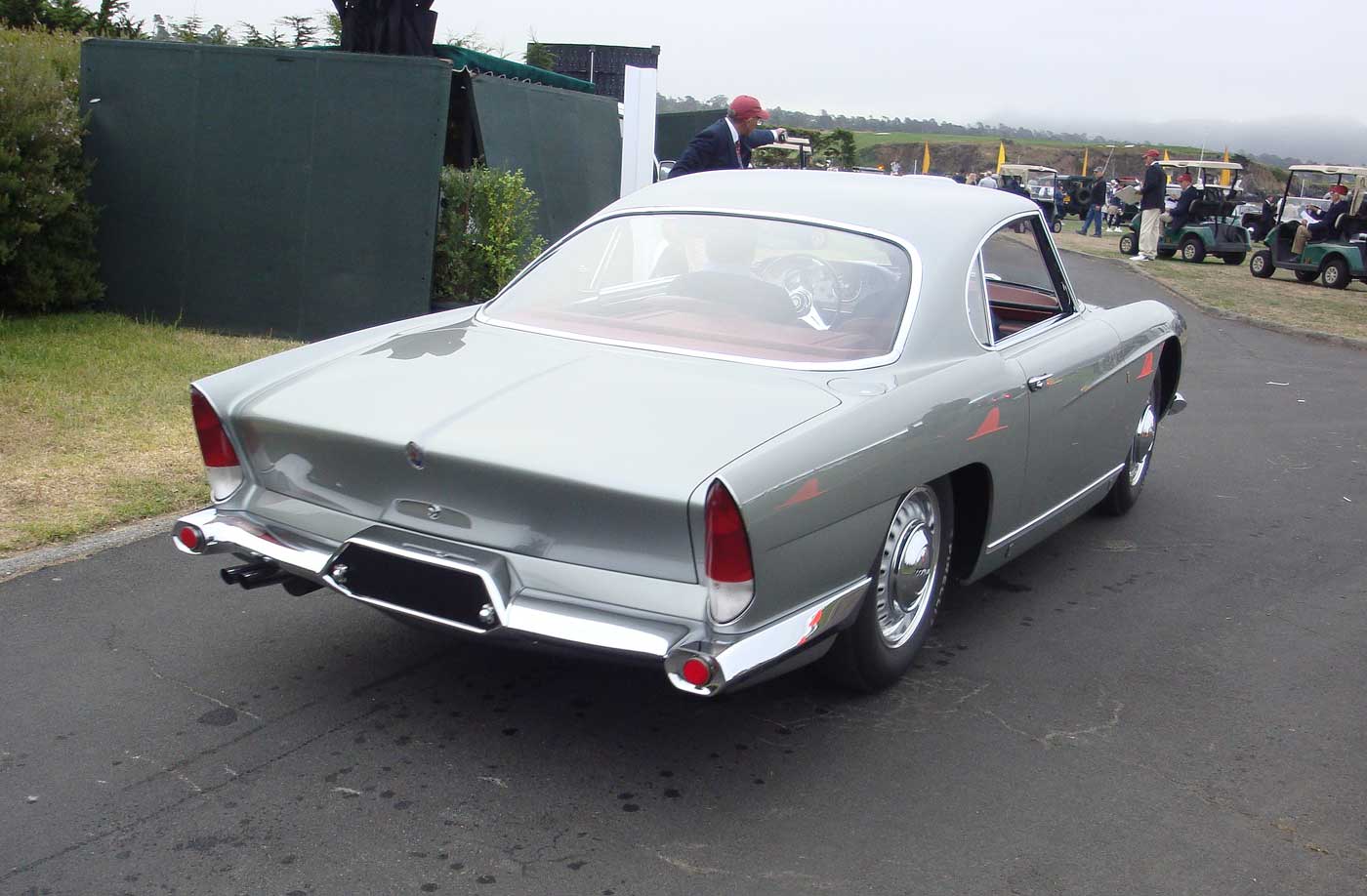
Rear shot of the 3500 GT Bertone
Story and photos by Brandes Elitch
This year, at the Pebble Beach Concours d ‘Elegance held on August 18, Maserati was a featured class. Just imagine for a moment that you have somehow found yourself on the Selection Committee, and you are tasked with choosing which Maseratis will be accepted and on the field on show day. Historically, the ratio of applicants to cars actually accepted is somewhere around 10:1. You can get better odds at Vegas.
However, that somewhat tenuous statistic is for all cars, about 200 on display. I would argue that all Maseratis are desirable and collectible and worthy of admiration (full disclosure: I have had a Quattroporte and a Citroen SM here in the garage for twenty years now). You can imagine my astonishment in seeing 27 cars on the field. They were in 3 classes: Race Cars, Road Cars, and Frua-bodied cars, with 9 entrants in each category.
There were two sets of judges: one for the road and race cars, and another for the Frua-bodied cars. Each of the two judging groups had a Chief Class Judge and six Team Judges, fourteen in all, and a pretty impressive lot they were, as you would expect.
The race cars included the famous Indy winner, the Boyle Special (1938 8CTF) driven by Wilbur Shaw. In addition, there was a 1954 A6GCS spyder, a 1955 150S spyder, a 1956 250F (certainly one of the greatest racecars ever), a 1956 300S, a 200SI, a 450S, a 450S Zagato Berlinetta (quite breathtaking), and of course a 1960 Birdcage, which is instantly recognizable.
The road cars included 1951 A6G 2000 PF, a ‘55 A6G 2000 Zagato spyder, a ‘56 A6G Zagato berlinetta, a ‘59 3500 Bertone coupe, a ‘64 3500 Vignale spyder, a ‘65 Sebring Vignale coupe, a ‘71 Ghibli spyder, a Ghibli Ghia coupe, and a Khamsin Bertone coupe.
I must admit that I am more familiar with Touring, Pininfarina, Michelotti, Ghia, Bertone, etc., than with the Carrozzeria Frua. The Concours program has an excellent 6-page article by Peter M. Larsen and Stefan Dierkes on Frua. They say, “Frua was not just part of the golden age of creativity in Italian car design and coachbuilding – his work defined it…His sureness of line and deftness of touch was never prosaic, never commonplace. Frua was a master of mid-century modern.”
These cars included a A6G spyder, a A6GCS spyder, a A6G berlinetta, a A6G prototype spyder, a 3500 spyder, a Mistral coupe and Mistral spyder, a Mistral alloy coupe, and a 1967 Frua Coupe speciale.
The program, always very collectible by itself, has an 8-page article on Maserati by Angus Mackenzie. He says, “Maserati has had a turbulent, often troubled history. But as the Italians say, ‘tutto passa,’ everything passes, and Maserati’s resilient, romantic spirit has over the years helped it overcome some truly formidable obstacles to build some truly glorious cars.”
Some readers might not be familiar with the history of Maserati, so here is a bit of an overview.
The first car, the tipo 26, was made in 1926, almost a hundred years ago! Of course, they raced at the Targa Florio and the Mille Miglia. Maserati won Indy twice. The greatest racing success was in 1957 when it won the Formula One World Championship.
The first road car, the A6, came out in 1947. In 1968, Maserati was bought by Citroen, but the Arab Oil Crisis of 1973 crushed both companies. In 1975 it was jointly acquired by the Italian government and Alejandro de Tomaso. In 1993 Maserati was bought by FIAT (which also owned Ferrari). In 2005, Maserati was split from Ferrari and attached to another FIAT owned brand: Alfa Romeo. FIAT merged with Chrysler in 2014 and in 2021 it joined with the French PSA group (which owned Peugeot and Citroen) to form Stellantis. Confusing, isn’t it?
It is a fool’s errand to pick the most interesting cars, but here is a stab at it:
The race cars:
-the 4 CLT (1948-1951).
-the 250F (1954-1960) only 26 made
-the A6GCS/53 (1947-1953)
-the type 61 Birdcage (1959-1961) only 16 made
The owner-operator cars:
-the 3500 GT (1957-1964)
-the 5000 GT (1959-1965) only 34 made
-the Ghibli (1967-1973)
-the Khamsin (1974-1982)
-the Merak (1972) and the Bora (1971)
-the Quattroporte. The first car, with a Frua body, the Series I, was made from 1963-1966 (230 examples) and the Series II (1966-1969), about 500 cars made. I actually had one, many years ago, but it had serious rust, and I ended up selling it to Kyle Fleming, who was at that time the primary parts source for older cars in the US. It was a bit tragic, but I sold it so other cars might live.
The Quattroporte II was basically a stretched Citroen SM, designed by Gandini, and only a dozen cars were made. I have seen one at Retromobile but they are very rare.
The Quattroporte III was made from 1979-1990. The exterior was designed by Giugiaro. Total production was 2155 cars. It has the big four cam, four two-barrel Weber motor, derived from the 250F, with Campagnolo wheels and 7 hides of leather.
I am quite partial to the Quattroporte IV (1994-2001) but it was never sold in the US, although with the 25-year rule, I suppose you could import one.
That takes us to the Quattroporte V, made from 2003-2012, and the Q-porte VI (2013-present). A total of 4264 cars were made in this series.
The selection committee must be complimented for their work. This was a magnificent retrospective of Maserati, certainly not destined to be replicated any time soon.
And for those unclear on the concept, ALL Maseratis are collectible and desirable, no matter what year or which model.
Thanks to everyone who participated in this. It was a magnificent display.
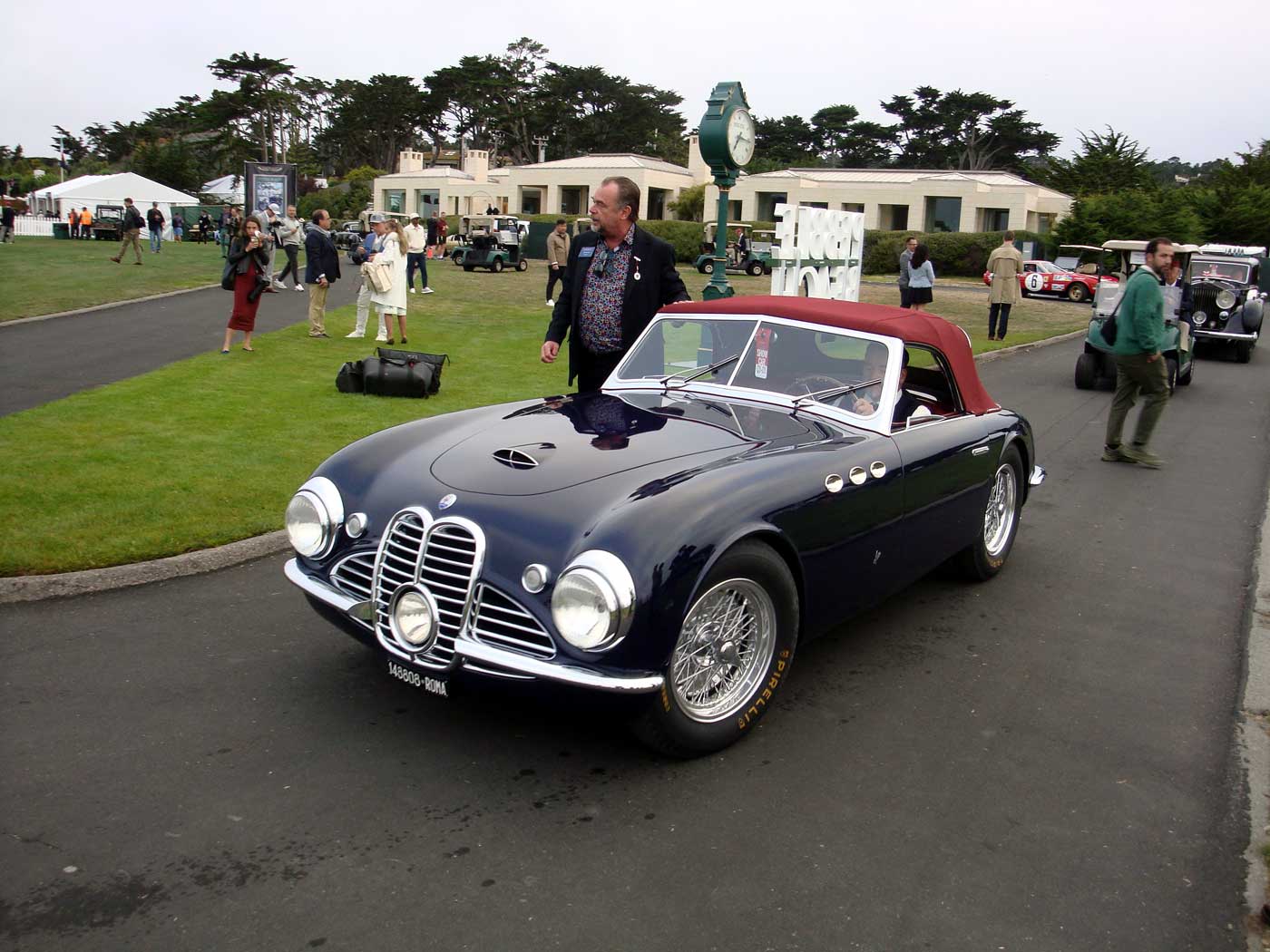
1951 Maserati A6G 2000 Frua Spyder, Henrik Jorst/Cool Classics International, Reno, Nevada
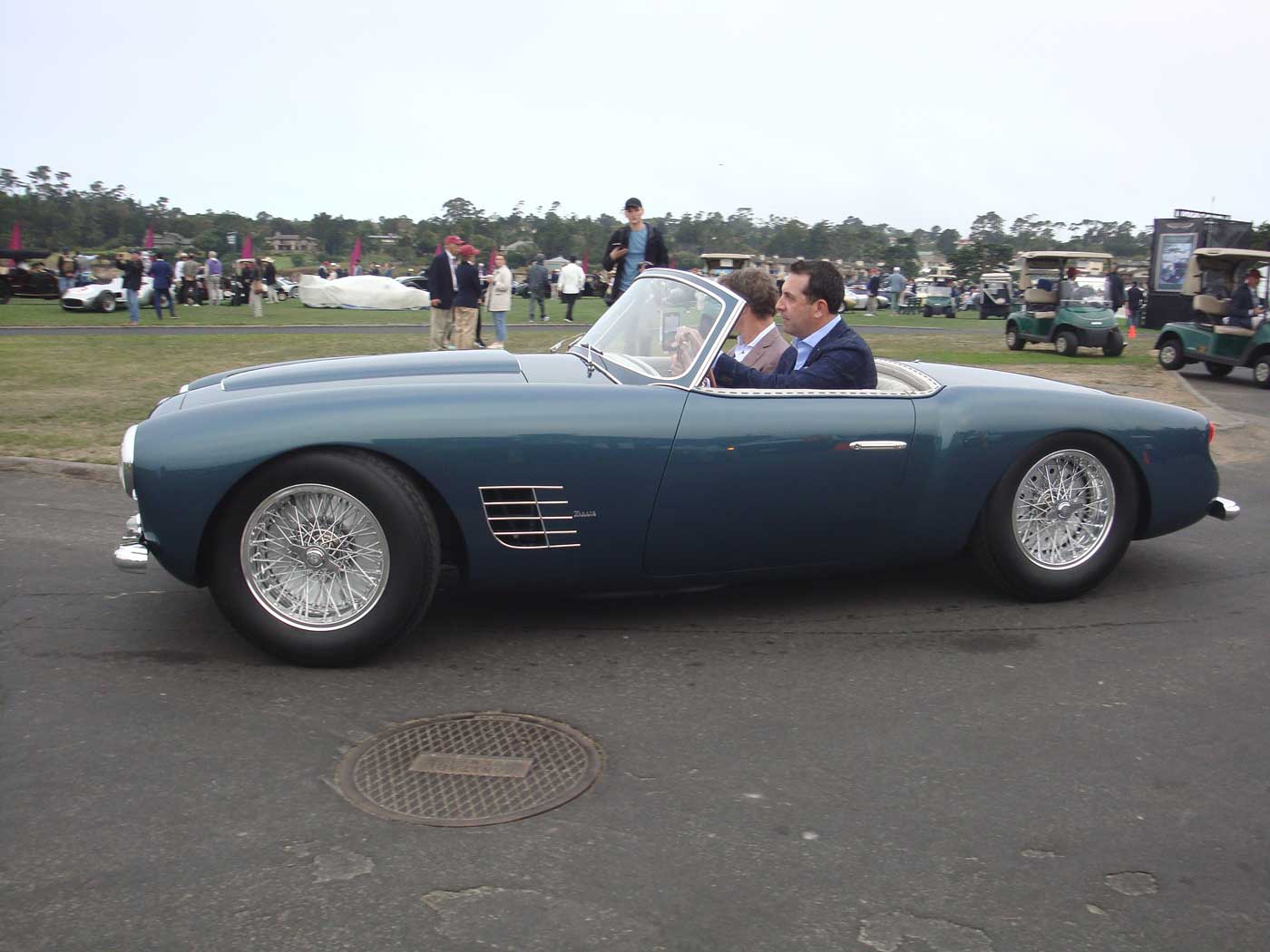
1955 Maserati A6G/54 2000 Zagato Spyder, Chris Shane, Manhattan Beach
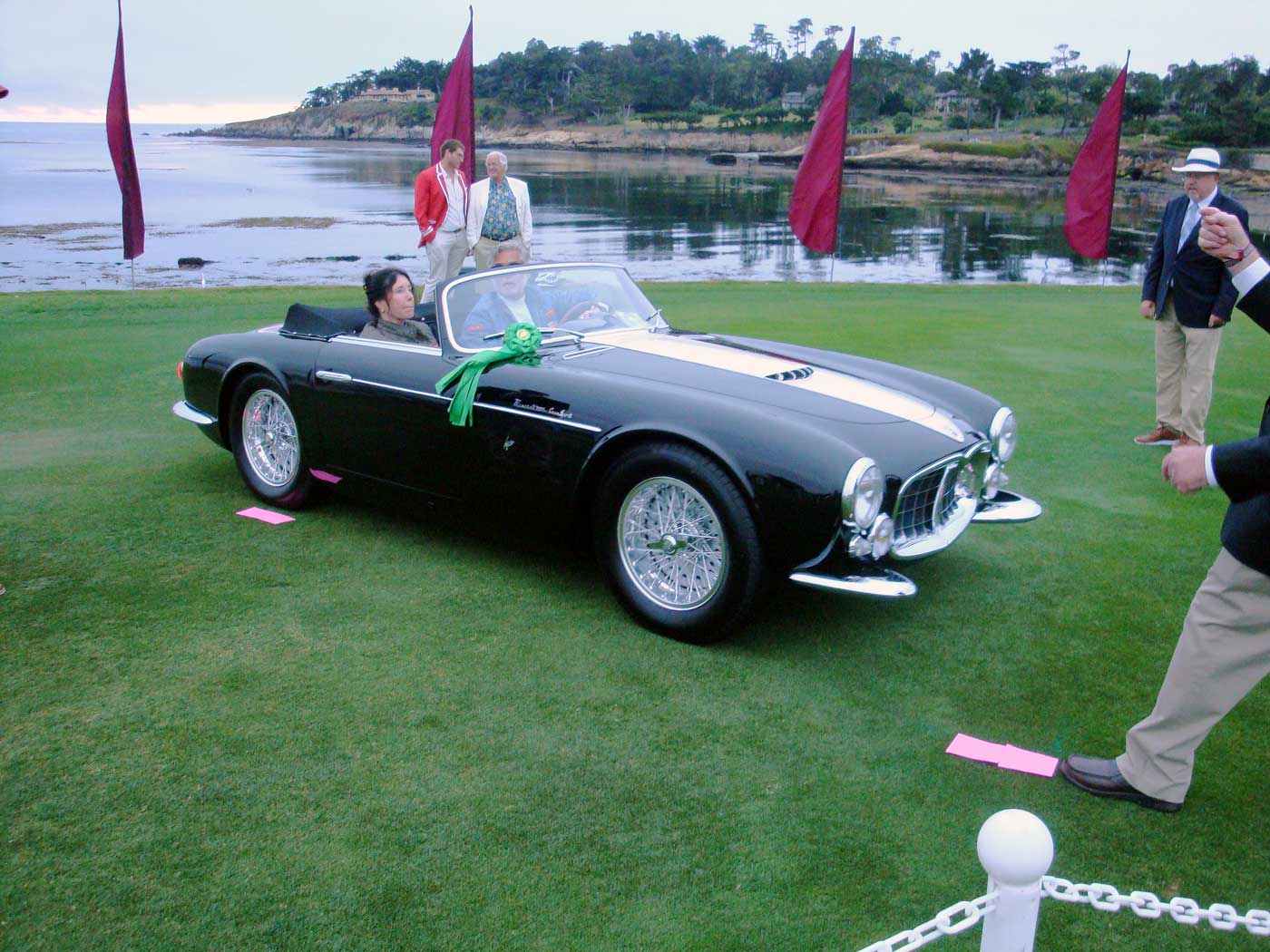
1955 Maserati A6GCS Frua Spyder, Jonathan & Wendy Segal, San Diego, California
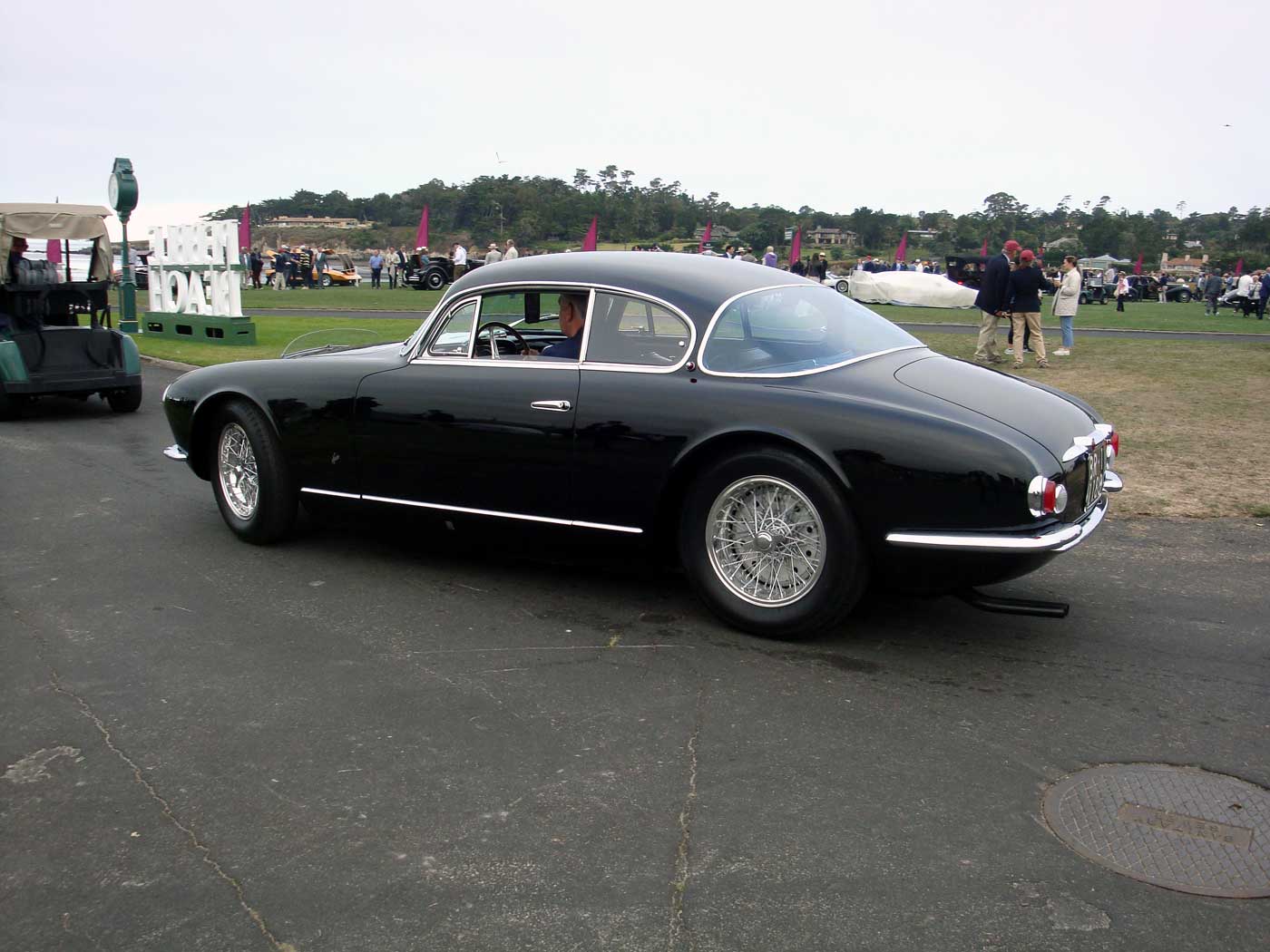
1955 Maserati A6G/54 Frua Berlinetta, Lawrence Auriana, Greenwich, Connecticut
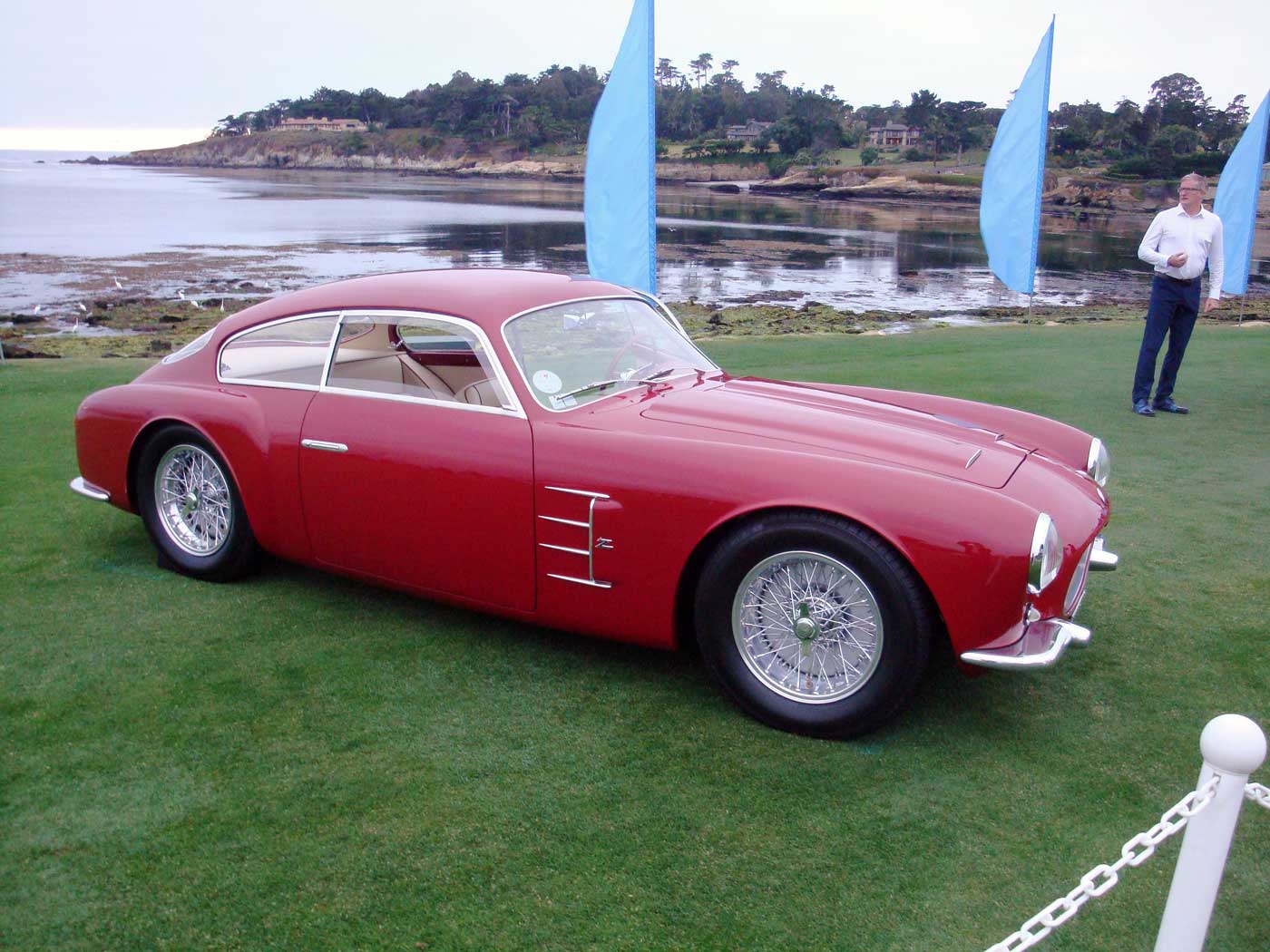
1956 Maserati A6G Zagato Berlinetta, Jonathan & Wendy Segal, San Diego, California
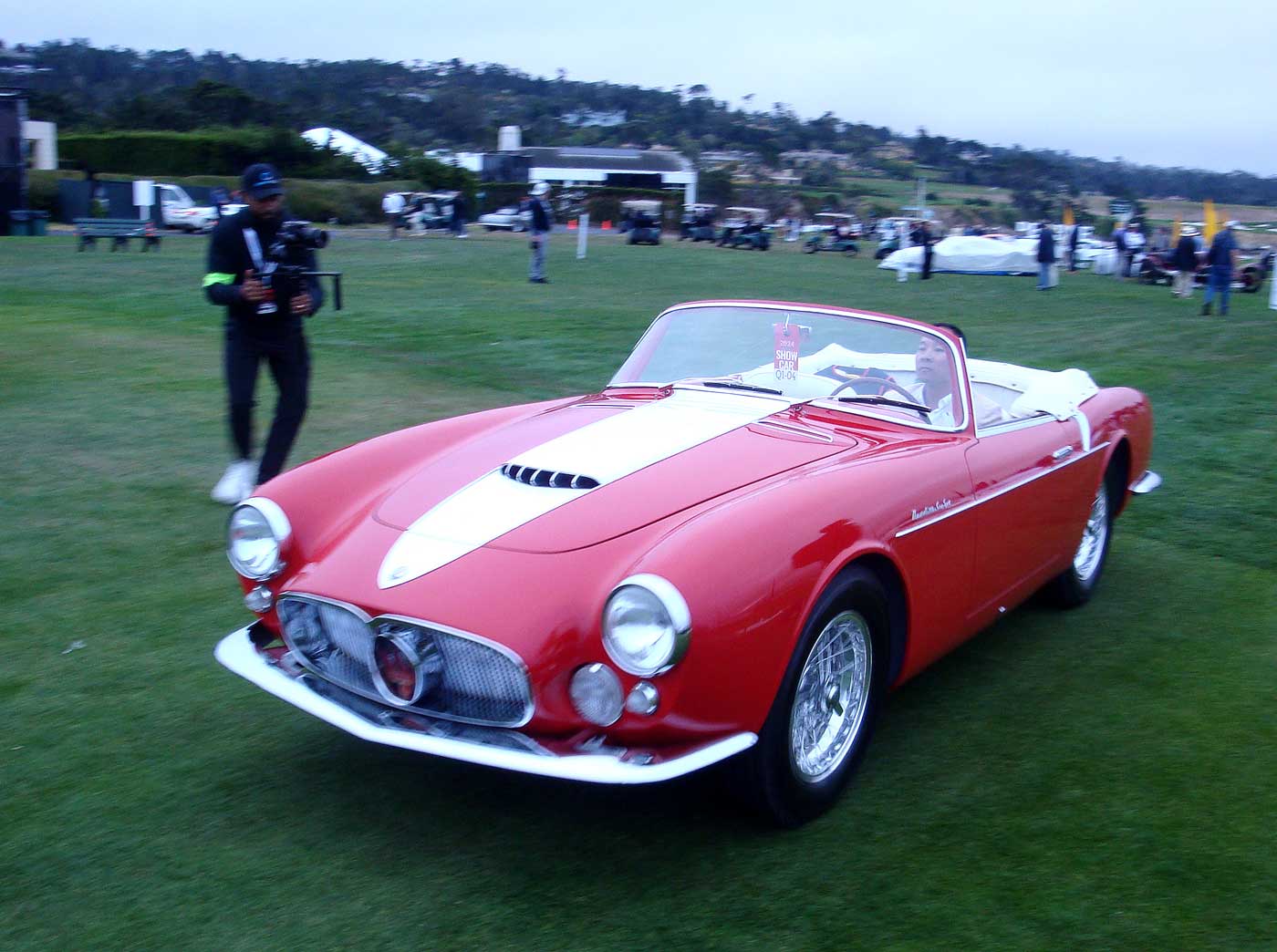
1956 Maserati A6G/54 Frua Prototype Spyder, Brendan & Rebecca Gallaher, Jackson, Wyoming
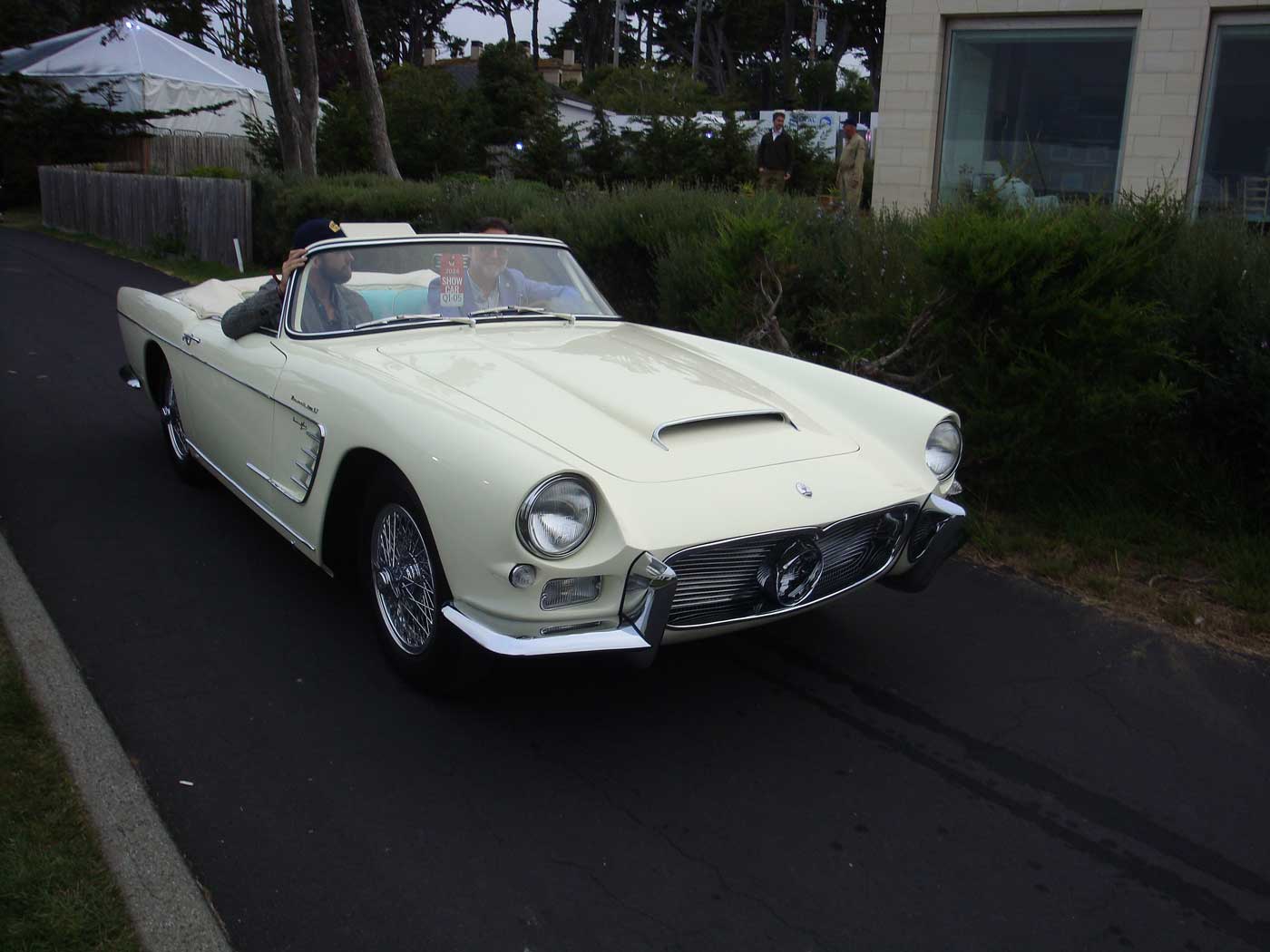
1959 Maserati 3500 GT Frua Spyder, Ocean Roads/Fast Cars Ltd., Redondo Beach, California
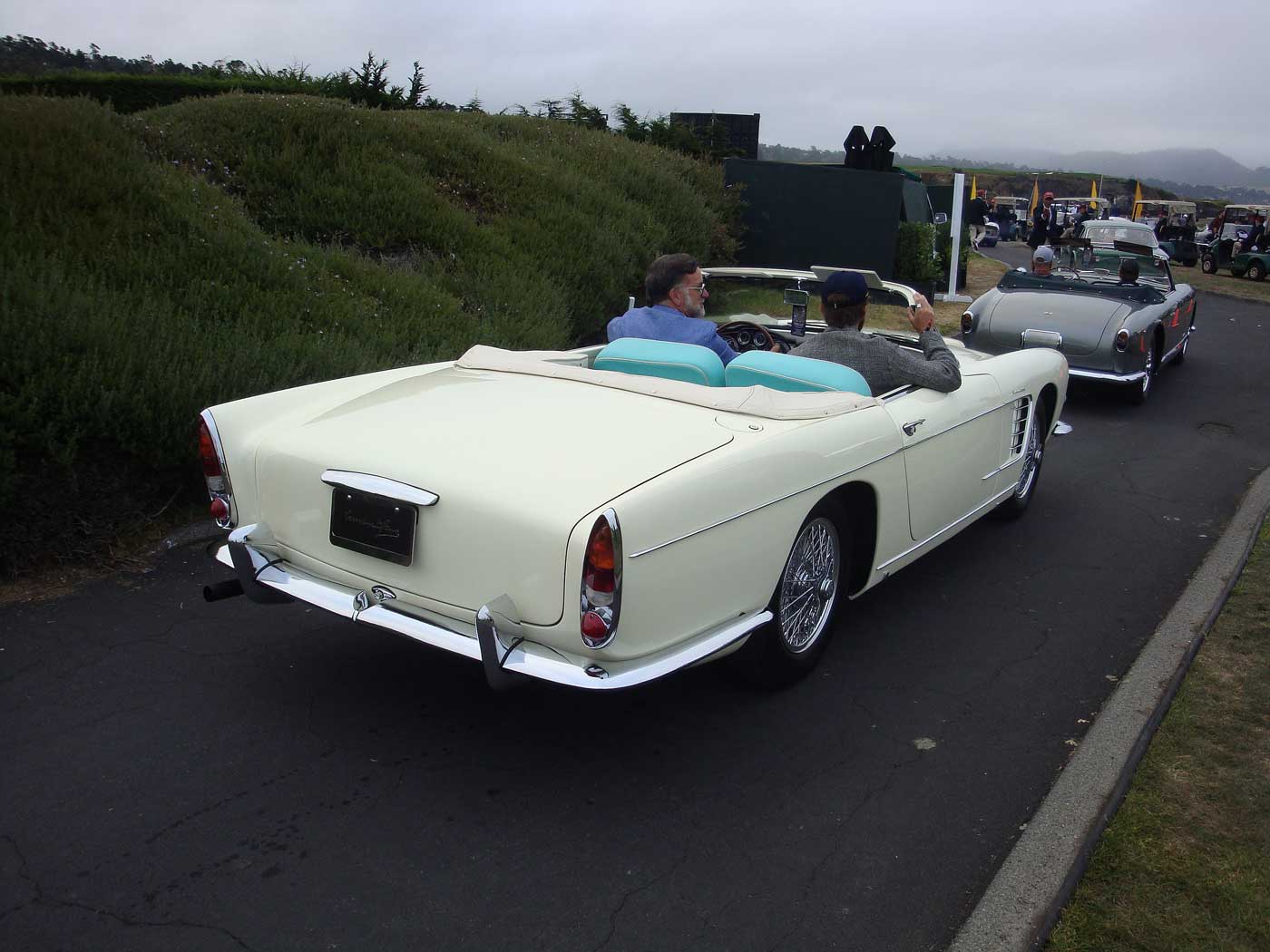
Rear shot of the 1959 GT Frua spyder.
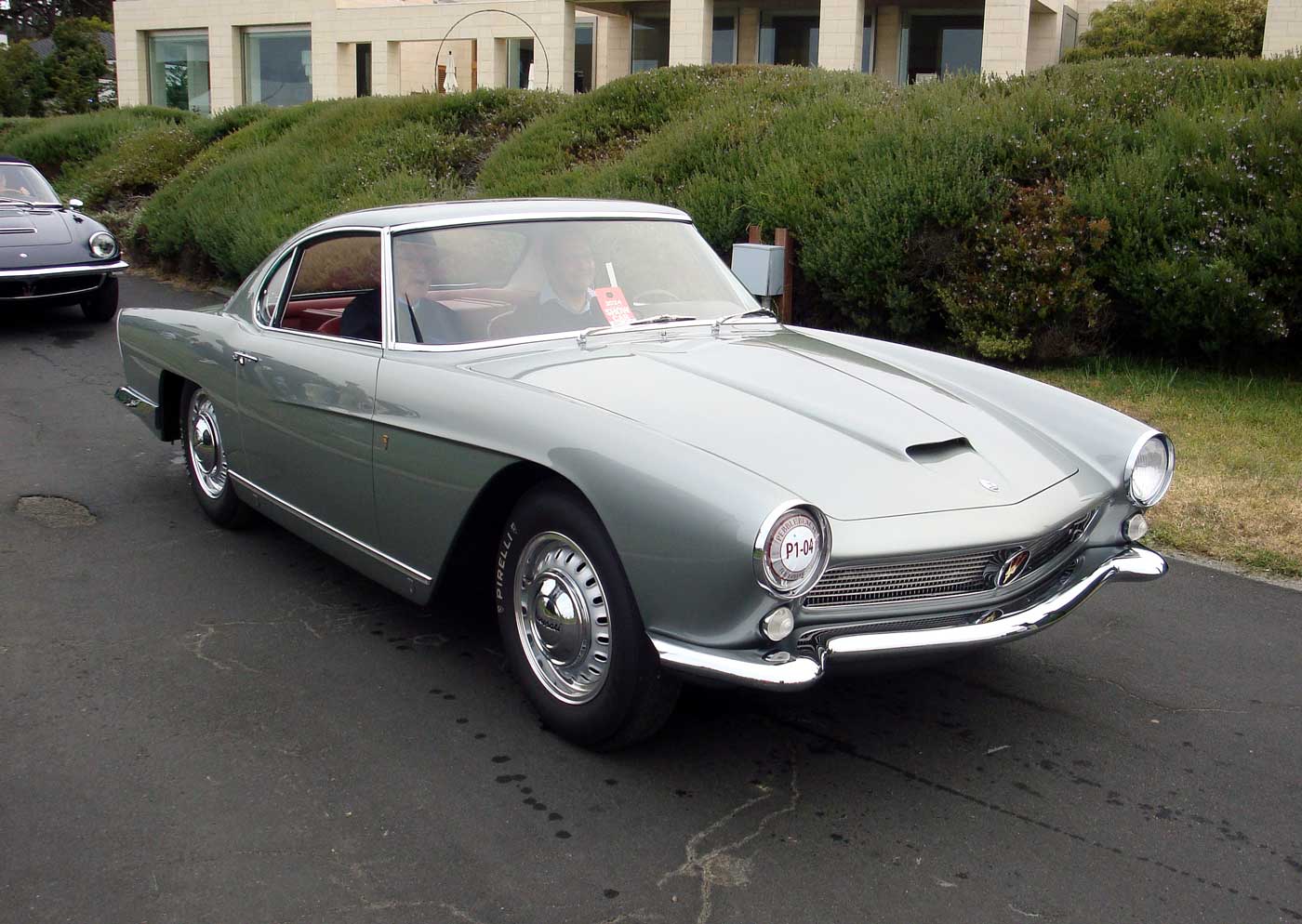
1959 Maserati 3500 GT Bertone Coupé, Jim Utaski, Skillman, New Jersey
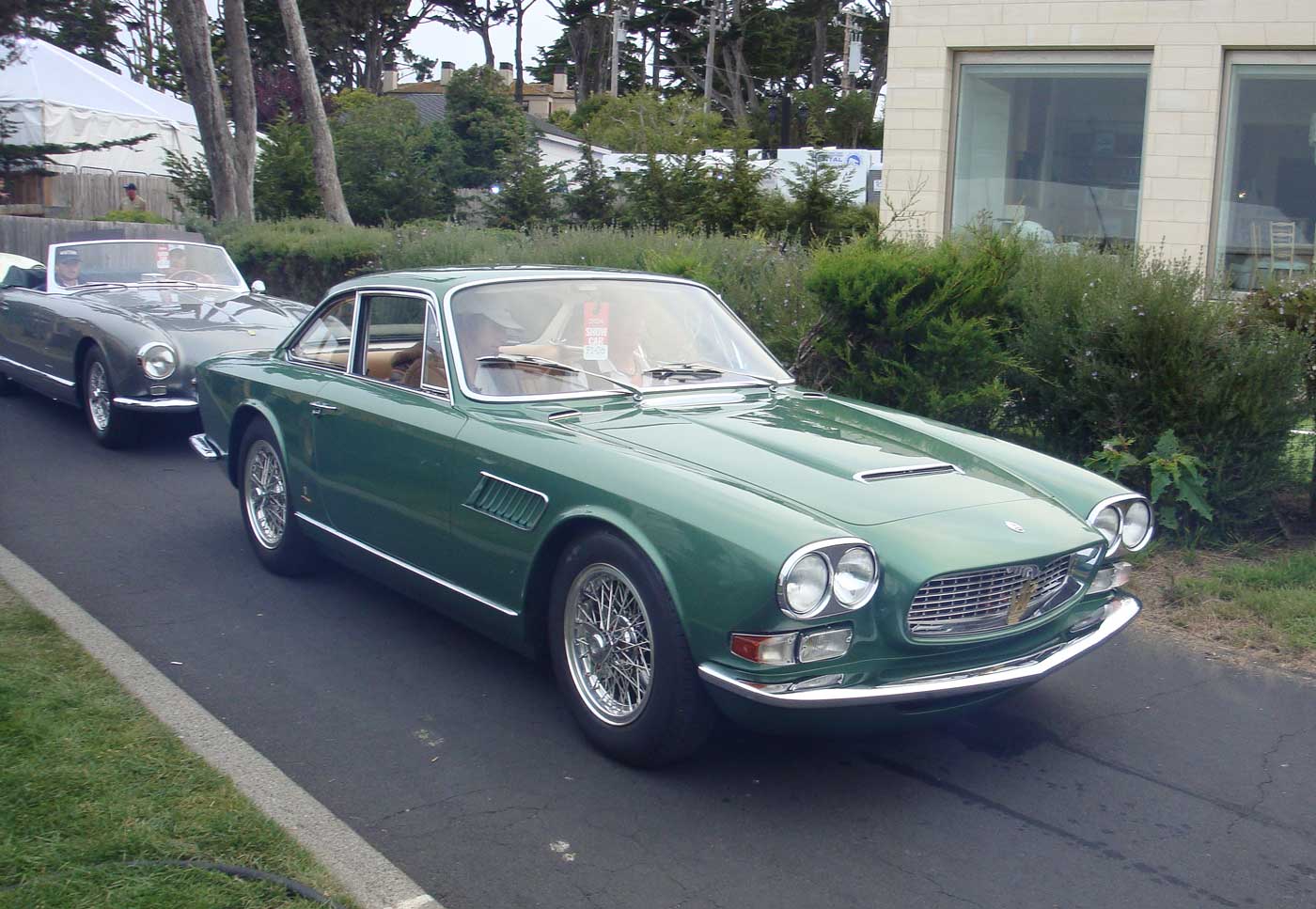
1965 Maserati Sebring II Vignale Coupé, John Clark & Gayle Pirie, Berkeley, California
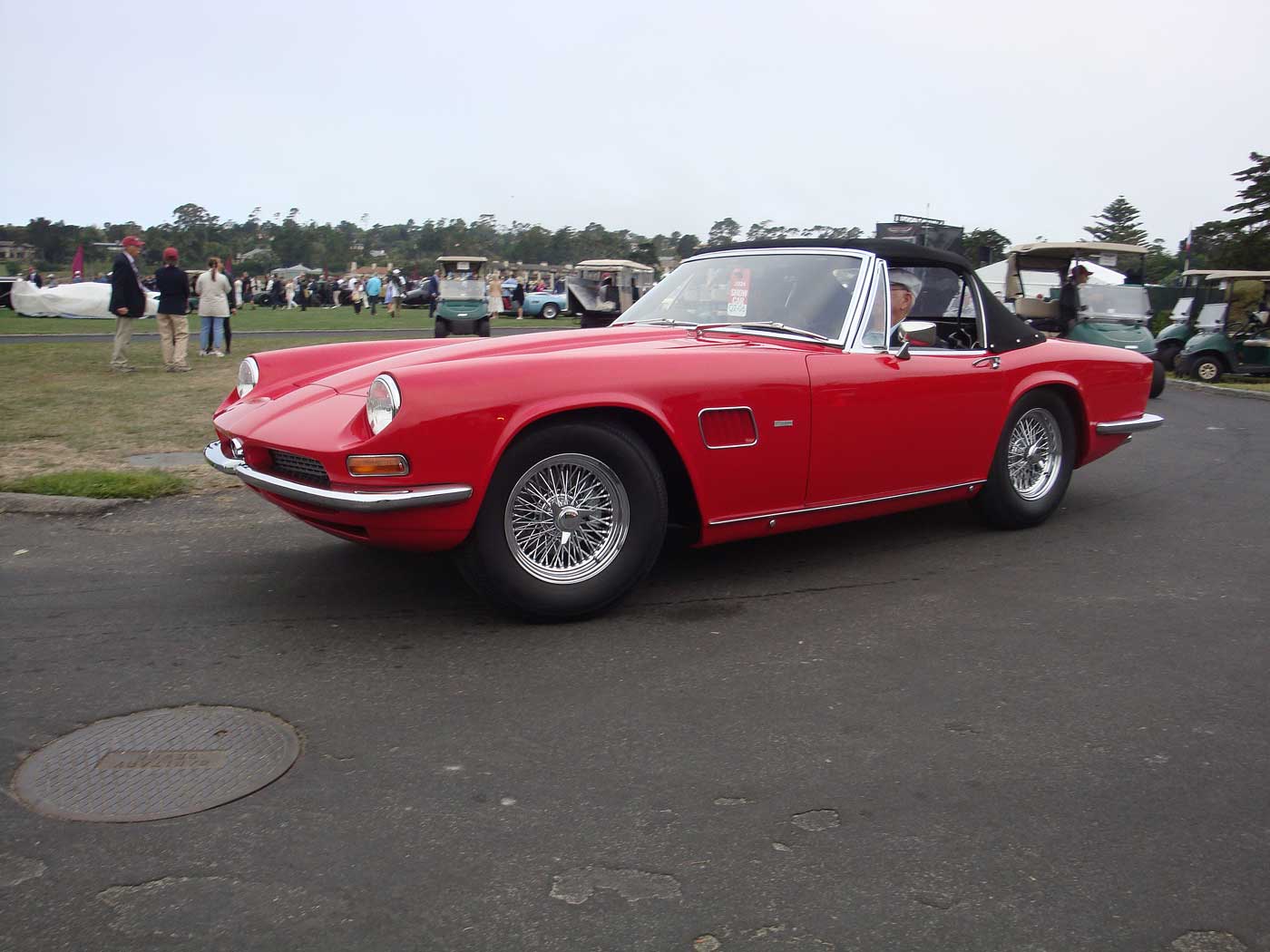
This is a 1968 AC 428 Frua Spyder, David & Carole Gaunt, Naples, Florida, not a 1965 Maserati Mistral Frua Spyder, George Andreini, Portola Valley, California. We have some smart readers!
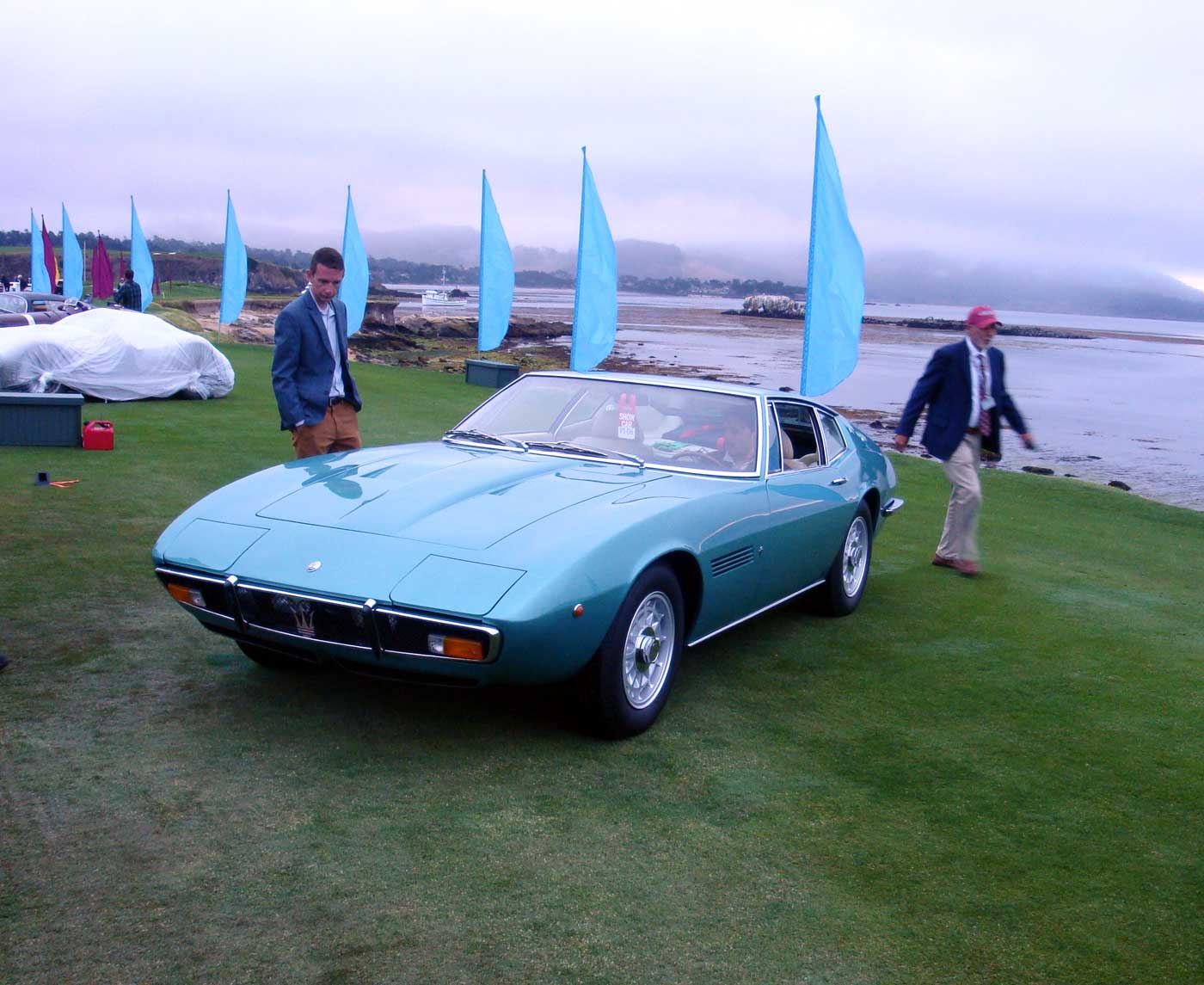
1972 Maserati Ghibli 4.9 SS Ghia Coupé, Peter Wilde, Brookline, Massachusetts
Race Cars
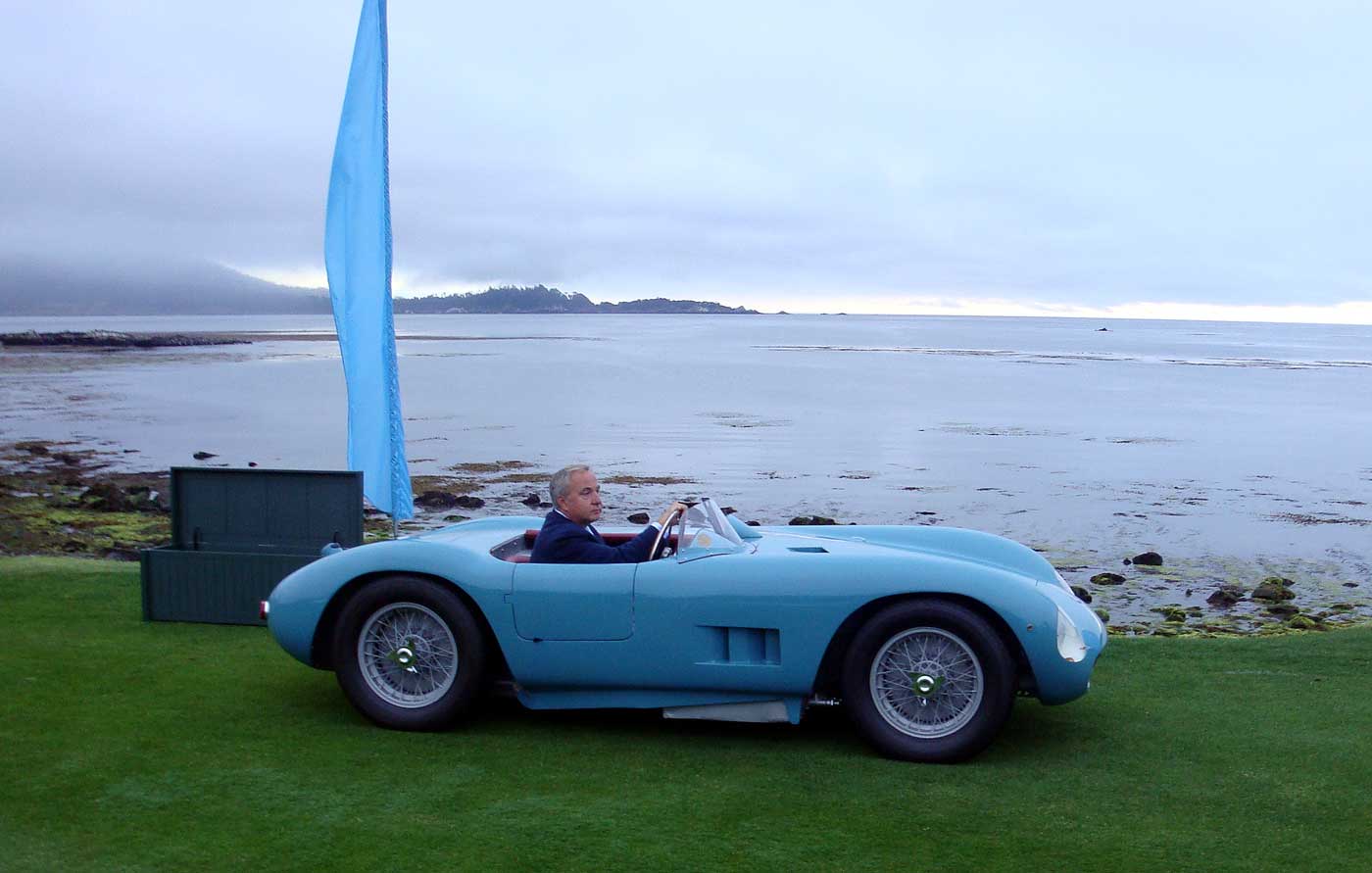
1955 Maserati 150S Spyder, Private Collector, New York
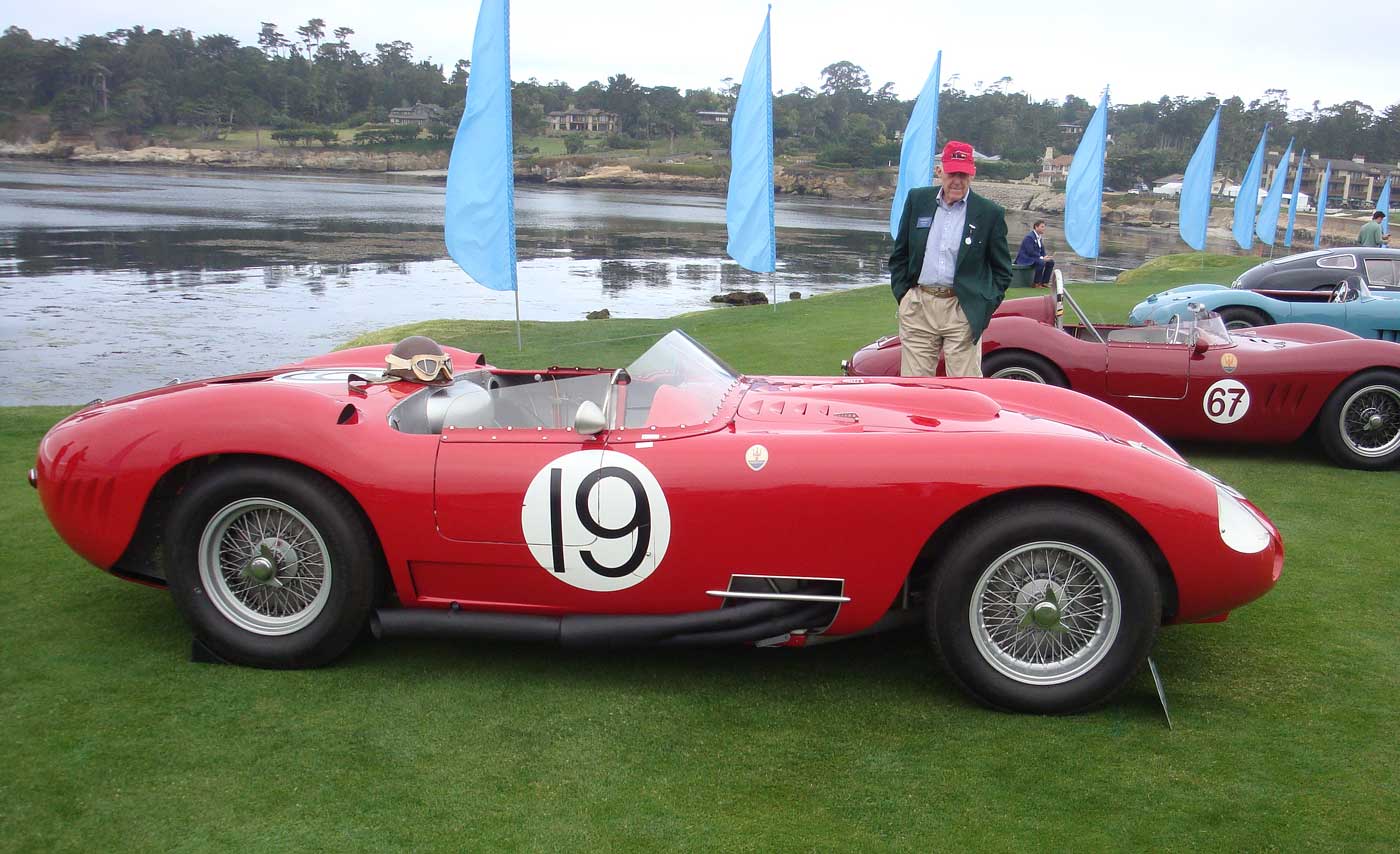
1957 Maserati 450S Spyder Fastwelve, Redmond, Washington
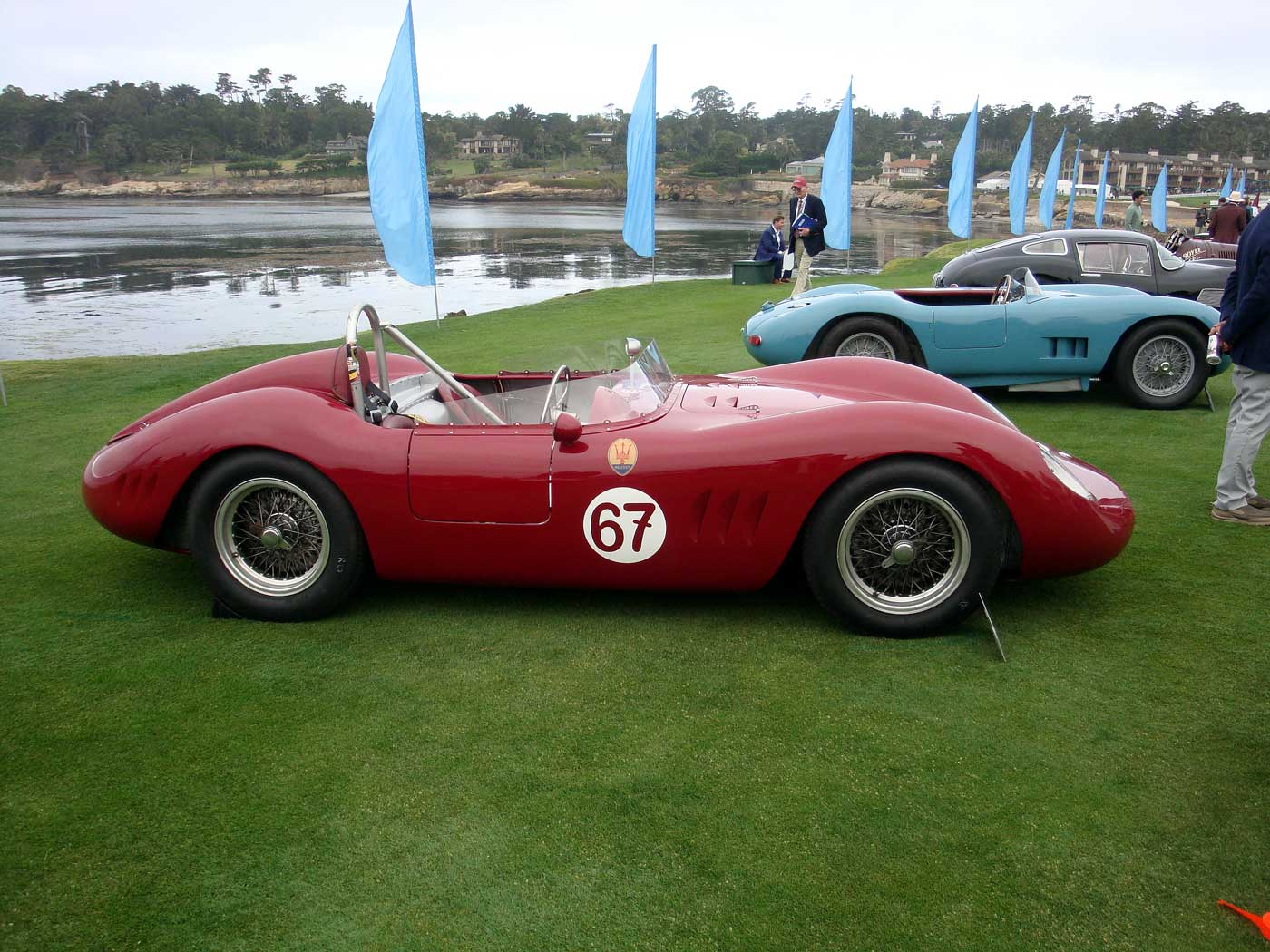
1957 Maserati 200 SI Spyder, Ned Spieker, Atherton, California
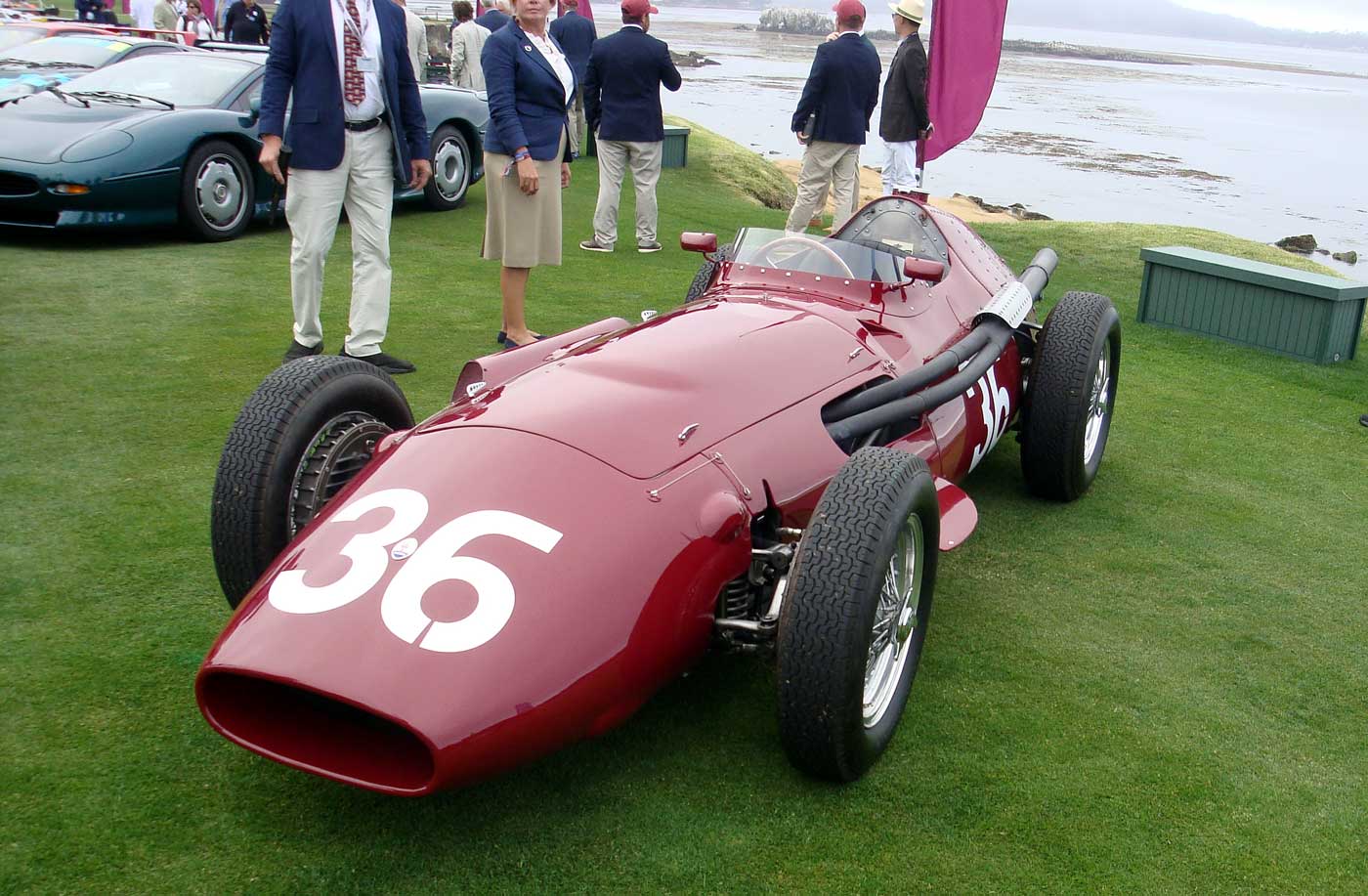
1956 Maserati 250F Open Wheel Race Car, Lawrence Auriana, Greenwich, Connecticut
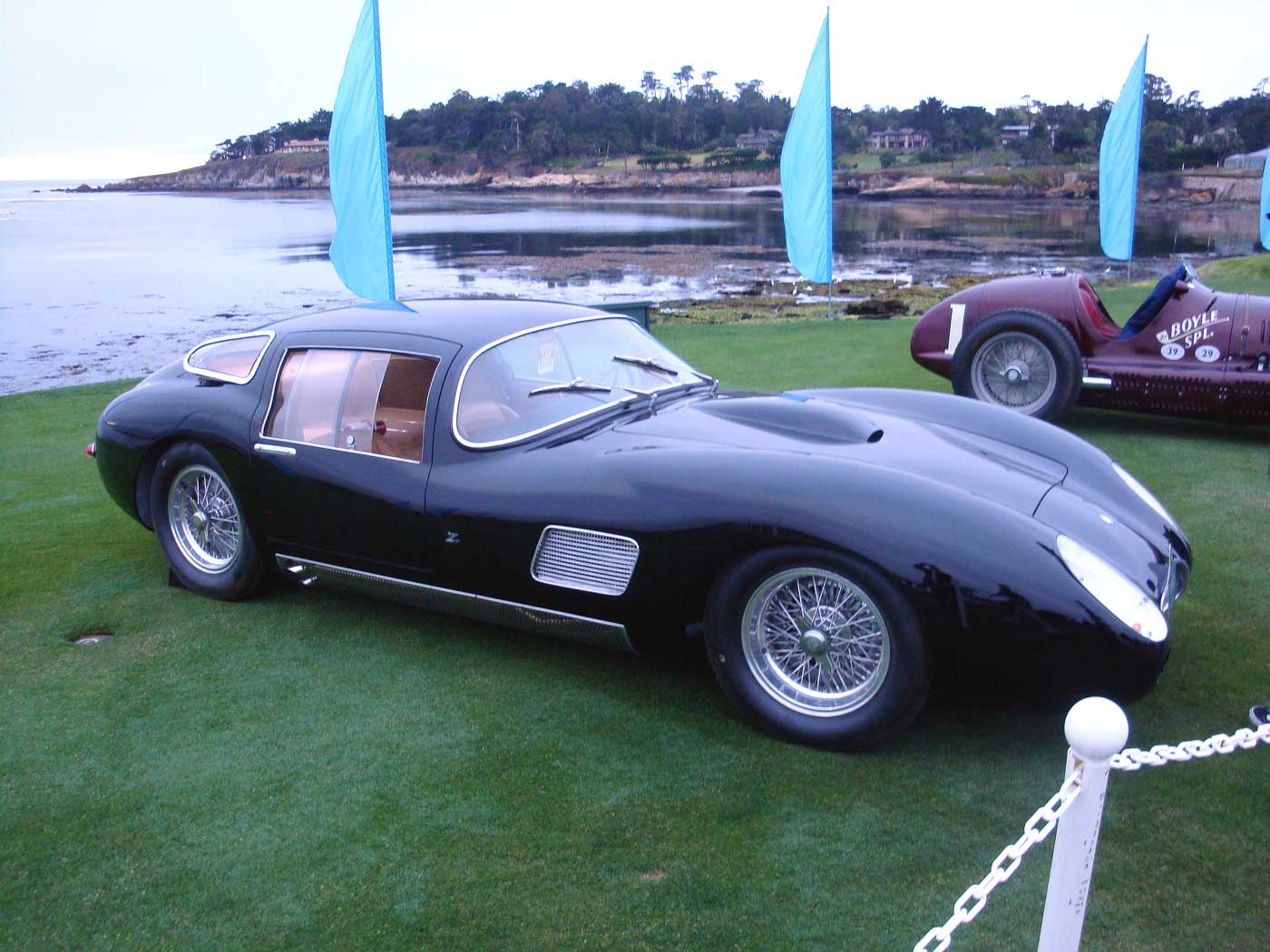
1957 Maserati 450S Zagato Berlinetta, Rob Walton, Scottsdale, Arizona
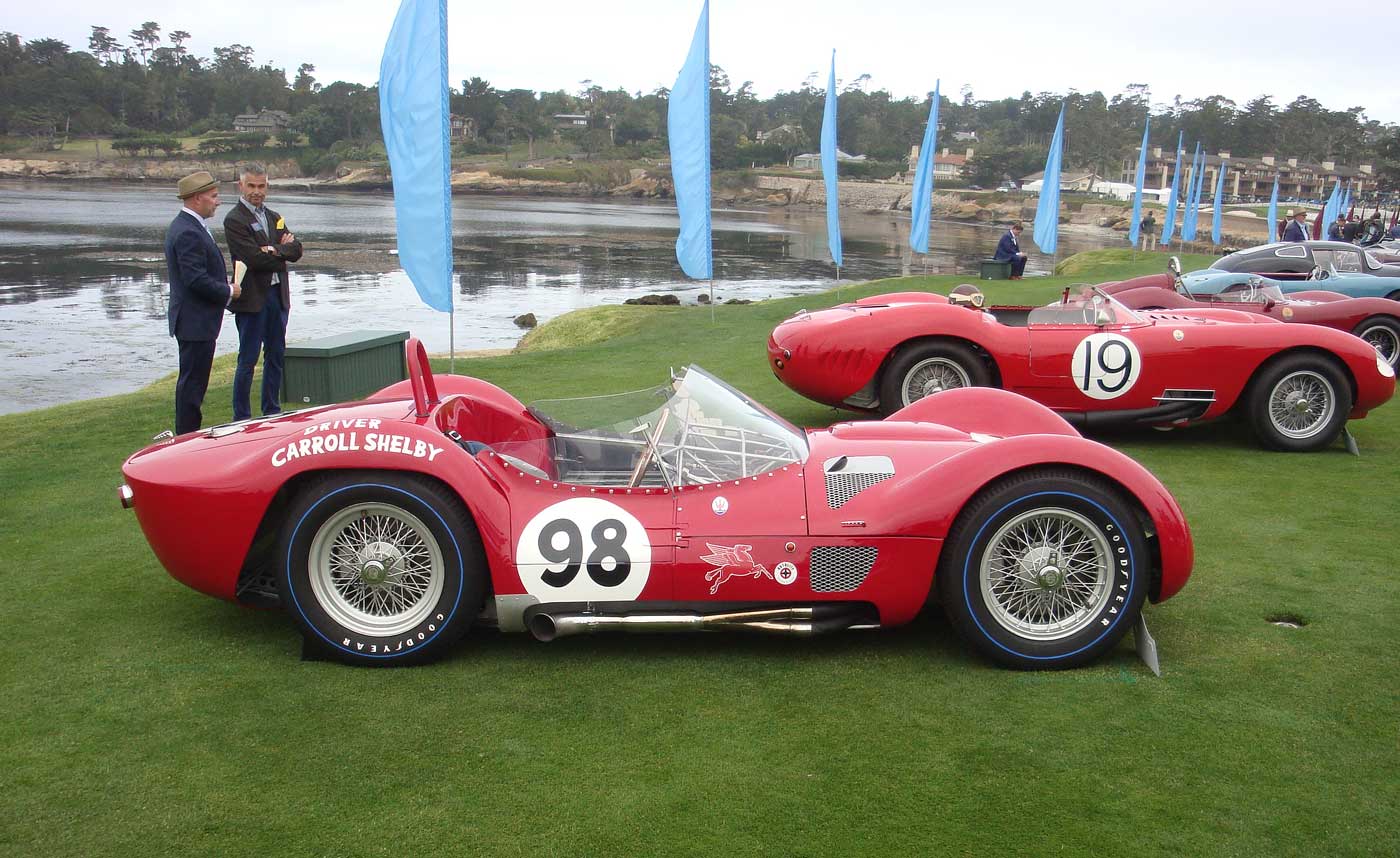
1960 Maserati Tipo 61 Birdcage, Thomas Mittler, Santa Fe, New Mexico
QPIII had a V8 engine that didn’t come from the 250F.
The 25oF had a 6 cylinder engine, a derivative of which was used in the 3500GT, Sebring and Mistral. There was also a V12 250F – that engine was only used for racing, and not as successfully as the 25oF 6 cylinder (Fangio didn’t like it)
The V8 in the QPIII is the same engine as used in the Mexico, Ghibli, Indy, Bora, Khamsin…it is a 4 cam single plug per cylinder unit.
This motor is often erroneously described as coming from the 450S racing car – it didn’t.
The only road car to have the 450S V8 engine (2 plugs/cylinder) was the 5000 GT Shah of Persia.
Thank you for the wonderful review. My favorite is the 1957 Maserati 450S Zagato Berlinetta. Must have been amazing to see in person. Such bold, uncompromising style and perfect color combination for an Italian super car of it’s day.
oh and the Costin Zagato Coupe……it was a remodelled 450S
Can anyone explain to me why the Sebring gets no love or respect. I have a 1967 Series 2 (Webers) and it is a wonderful driving machine!
You think the Sebring gets no love. Try owning a Mexico!
Visually, I think the problem with the Vignale-designed Sebring model is its short wheelbase of 2,500 cm, the same as the 3500GT convertible that Vignale penned as well. The Sebring body is, or looks, relatively high, almost English. The name TVR comes to mind. Luckily you have the Weber version of the 3.5-liter engine, since the fuel injected version have caused many a Sebring owner severe headaches. Its predecessor, the 3500GT Coupe by Touring featured a 2,600 cm wheelbase and looks sleeker, although I prefer the second series of that particular model. The first series used too much chrome, such as that nose lip and those two useless chrome strips on its rear fenders. For me, the ideal combination is a tidied-up Touring series two 3500GT with Webers rather than a fuel injected version [although the latter became pretty standard]. As for the short-wheelbase 3500GT convertible by Vignale, it always reminds me of an Alfa Romeo, not a Maserati. I wonder why this model fetches much higher prices than both Touring coupe versions. But then beauty is in the eye of the beholder.
As for that #19 of Robert Davis in New York, described as a 1956 Maserati 300S Fantuzzi Spyder, it looks more as though it is a V8-engined 450S. No 300S had any exhaust pipes on the driver’s side, since it featured a six-cylinder engine.
We’ll check on that….
Willem, you are correct, as usual! It is now corrected…
Pete
For David Greer. If I didn’t have a late series 3500GT, my preferred Maserati would be the Mexico model. Gorgeous lines, moderate prize, what is there not to like. Sometimes you have to follow your instincts [taste?] rather than the silly marketplace and its silly rampant dollars.
Ahh, a Citroen SM in the garage. I have long had one of them on my automotive lust object list. Which, sadly, is as close as I will get to one…or any Maserati for that matter.
The Maserati historian in me suddenly woke up. The red #98 Birdcage, as presented, was obviously Shelby’s last ride in 1960, chassis 2467, while the car was still owned by Frank Harrison of Chattanooga. From there, it was sold to Donnie Skogmo, who raced it with Scotty Beckett, in white and powered by Ford. During that period its body was substantially modified, which leaves me to believe this car has received a new body since then.
Then the #19 450S, which seems to suggest by its race number and the brown Cromwell helmet on display, that it was Fangio’s car, winning at Sebring in 1957 with Behra. That would have been chassis 4503, but is it really that car?
I am also curious about the chassis number of the 200SI on display. Did the program list any chassis numbers?
Willem,
No, chassis numbers seemed to have disappeared from concours event programs.
Pete
Good afternoon Pete, I really enjoyed the article on the Maserati classes. The Maserati 150S was my favorite. Hoping the Maserati enthusiasts can tell me the coachbuilder, the history and chassis number. The car certainly checked every box in my car world.
Willem, chassis numbers are listed in the Car Guide, avaiable online here – https://issuu.com/pebblebeachconcours
Dmitry,
Many thanks for guiding us to the Maserati chassis number information. So, the 450S was indeed the Sebring winning car, chassis 4503. And the 200SI was 2425, raced by Jim Hall, Bob Kuhn and Otto Klein.
The car identified as 1965 Maserati Mistral Frua Spyder, is it not anAC – post Cobra, also styled by Frua? Because of the divided air entry below bumper…
Sharp eyes, Angel. I compared the image with a few Mistral photos of the model in period and their hood/bonnet is flat, not extended in the middle as in this image. Also, the type of air vents on the side seem to indicate a Frua-bodied AC Cobra.
Angel,
A very sharp eye indeed! Yes, it appears that it is a Frua AC. Thanks! Corrections made.
Pete
A little Love for the second place Mistral? Beautiful car…
With the exception of that silly chrome logo, that was carried by some of the Mistrals on the side of the front fenders. Not even going with the airflow.