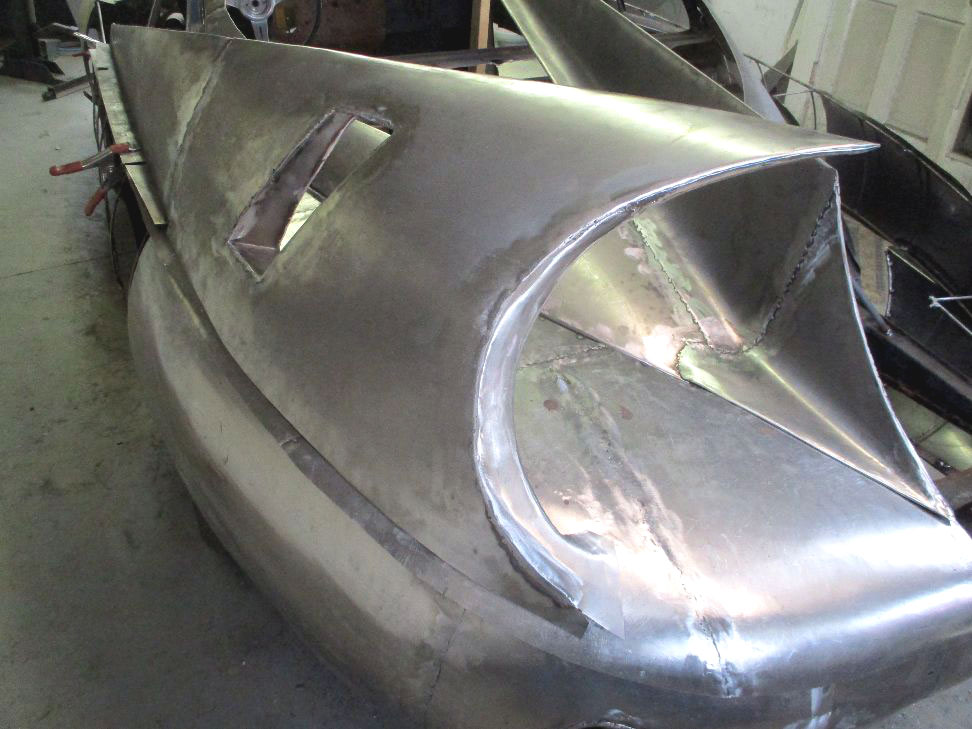
Story by Paul Wilson
I’ve decided to build an Alfa BAT. Yes, I know it’s a crazy idea. The Men in White Coats, always worried about my sanity, will come for me if they find out. I hope they don’t read VeloceToday.
We’re all familiar with BAT 5, BAT 7, and BAT 9, experimental cars built on Alfa 1900 chassis in the ‘50s. Of course they were presented as studies in aerodynamics; the air flow theme dominates the designs. But this was just an excuse for making the wildest, most extravagant sculpture ever put on four wheels. It’s their function as expressive forms, not their drag reduction features, that gives them their status today.
Everybody agrees that they’re exciting, original, and eye-catching. But are they beautiful?
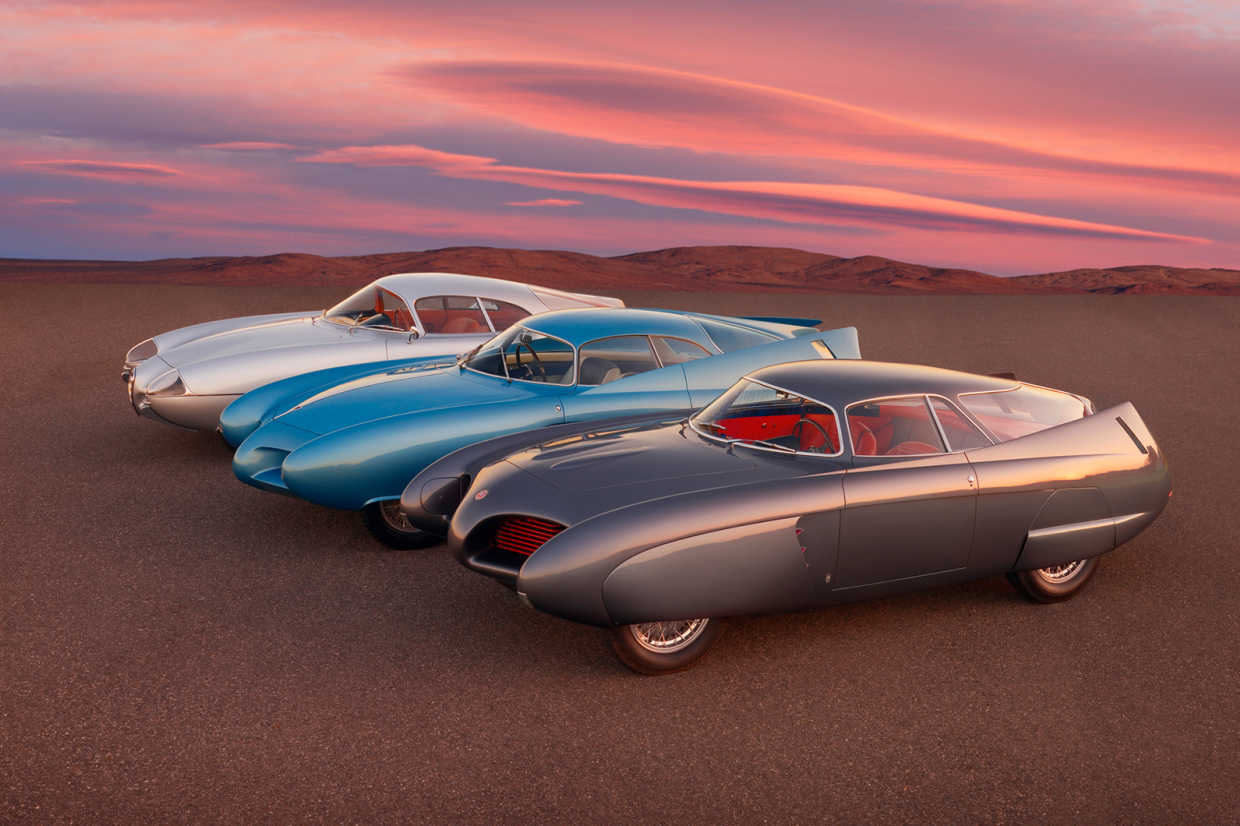
Credit Centro Documentazione Alfa-Romeo
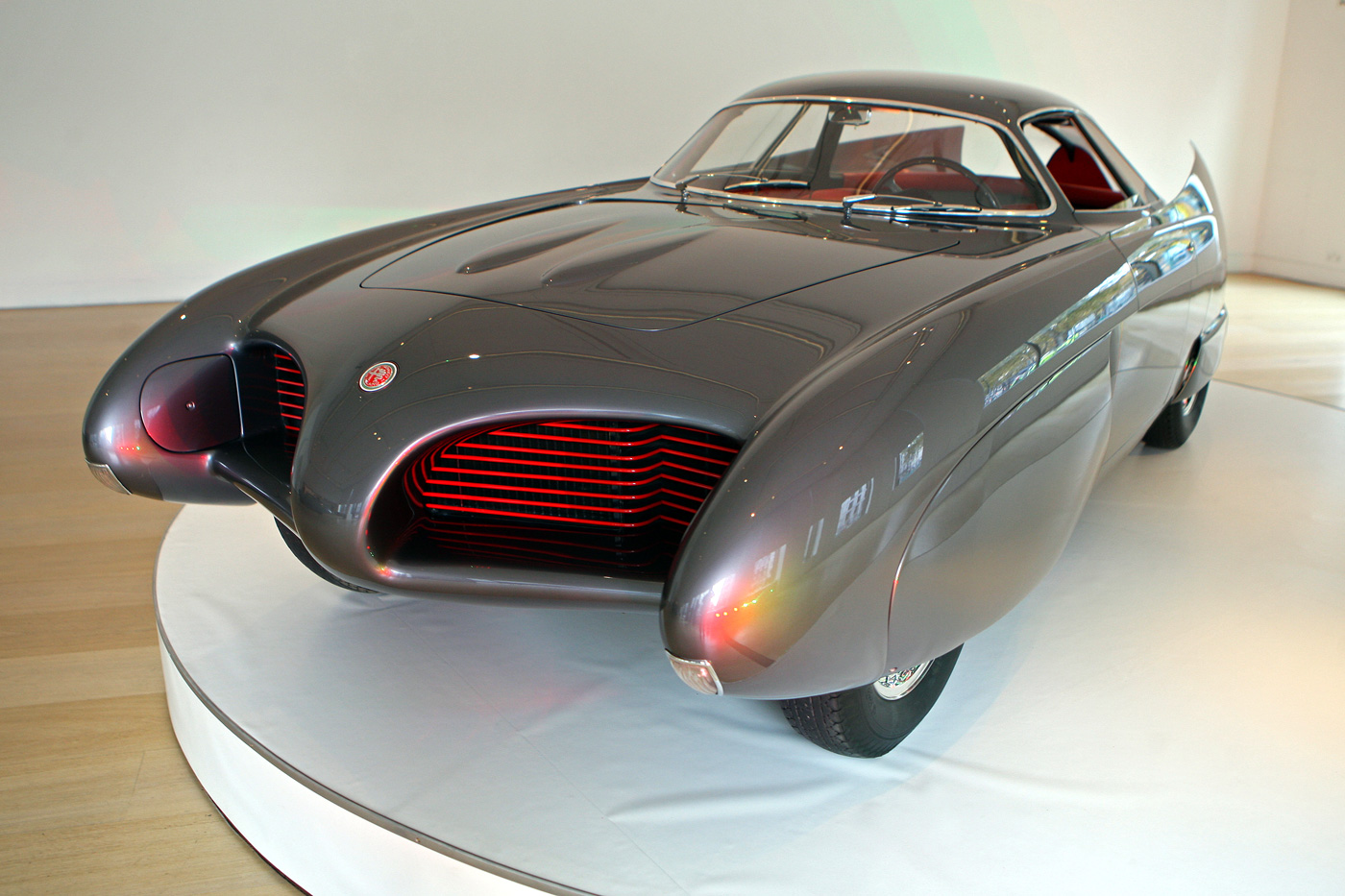
Jonathan Sharp photo.
Opinions are decidedly mixed. When I mentioned this project to a friend, he asked “Why do all that work to make something ugly?” In my view, only some features are ugly. Others are gorgeous.
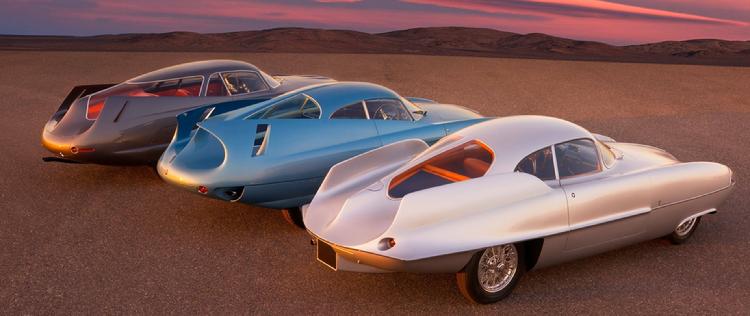
Credit Centro Documentazione Alfa-Romeo
If only they’d selected the best parts, and combined them so they worked together instead of being so haphazard, the result would be altogether wonderful.
That’s what I hope to do with my version.
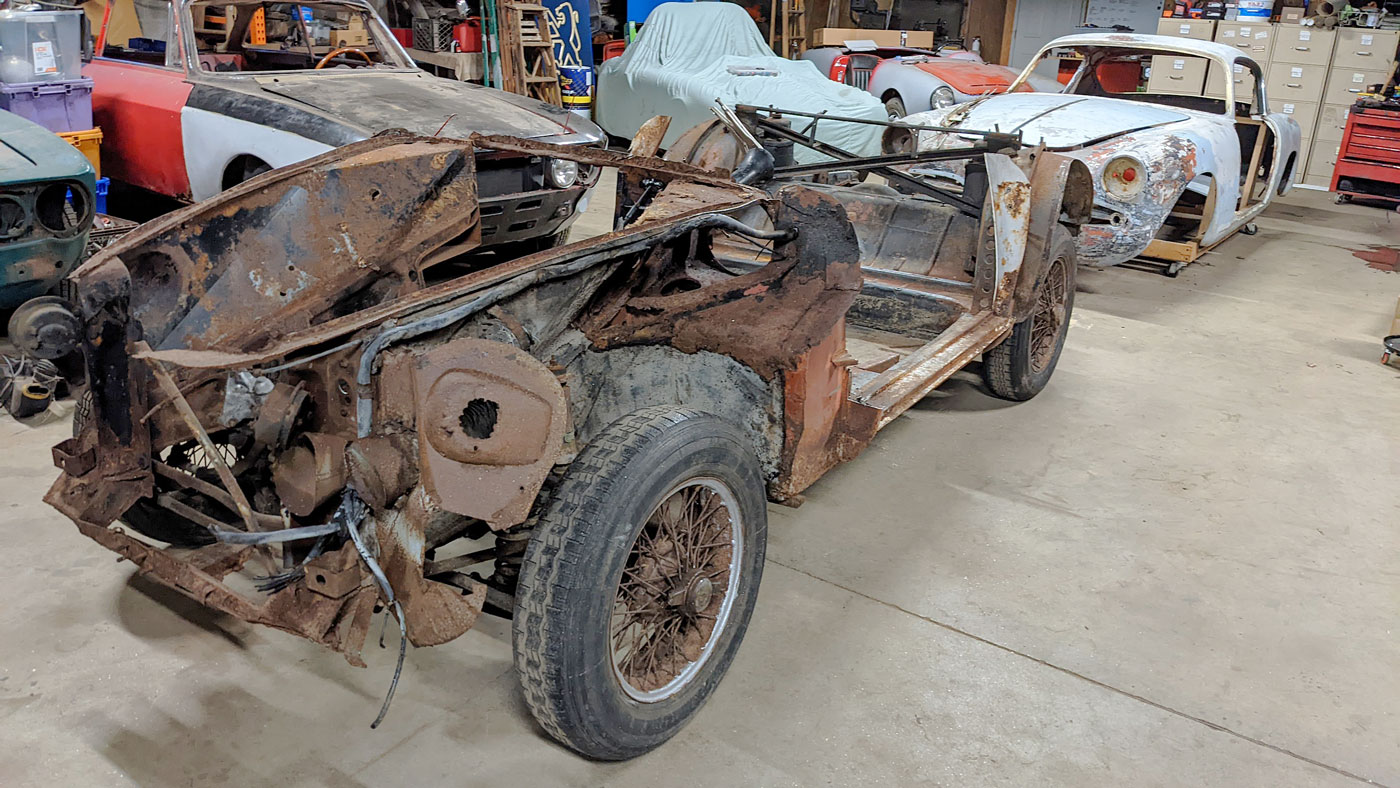
I’m not going to claim that my project is sensible, but it’s less unrealistic than it seems. The BATs were built on Alfa 1900 chassis. Years ago, when a friend and I were both restoring cars of this type, we bought a parts car together. He contributed $1000, I put in $500. I needed a door and grille eyebrows, he needed an engine and much else.
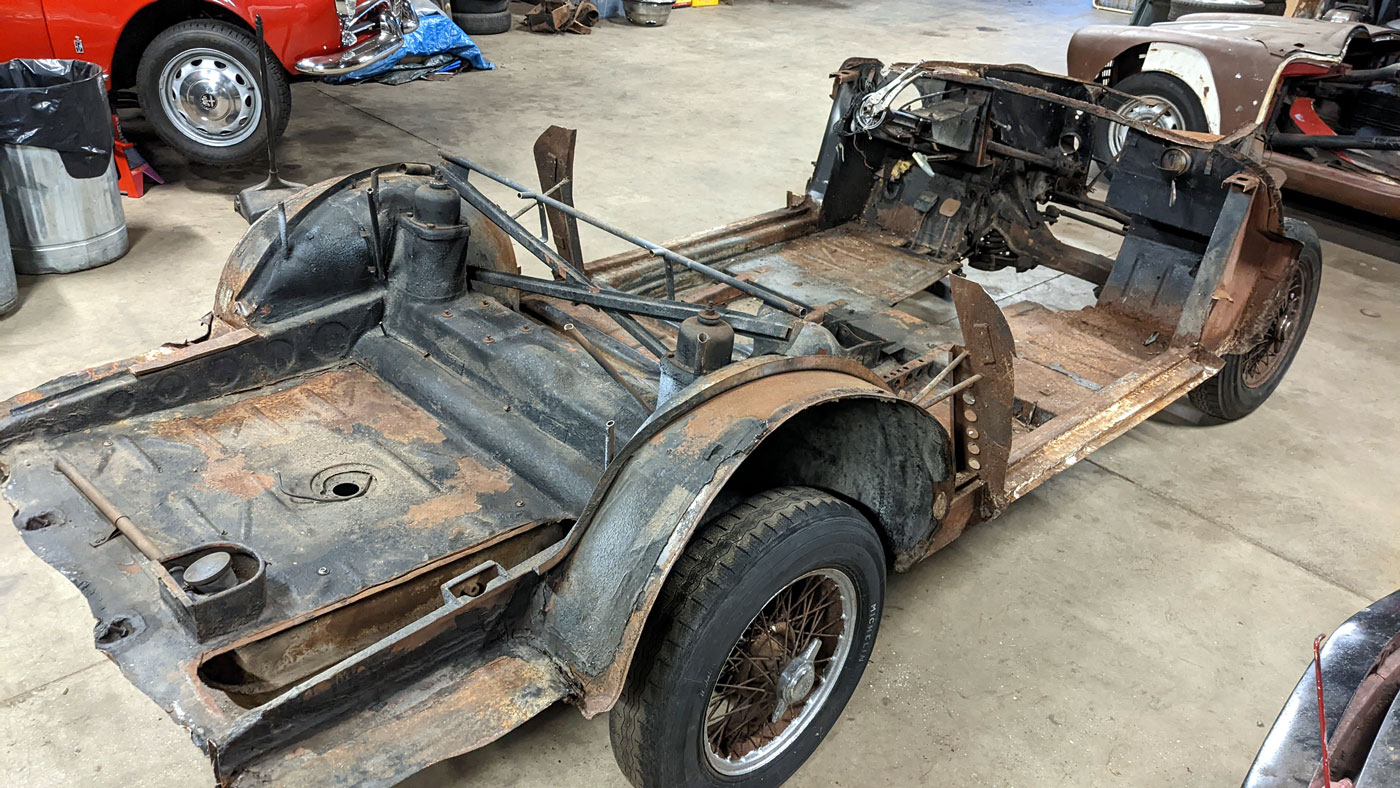
All usable parts were removed. The only thing left was the rolling chassis I needed for a BAT, except for the stripped body shell, visible in the background, which went to a happy buyer for $1900. My friend donated an engine (very similar to the 1900) and gearbox from a c. 1960 Tipo 102 Spider. I bought a few sheets of 20-gauge steel, and some steel rods. So, financially at least, the project wasn’t extravagant. I was starting in the black.
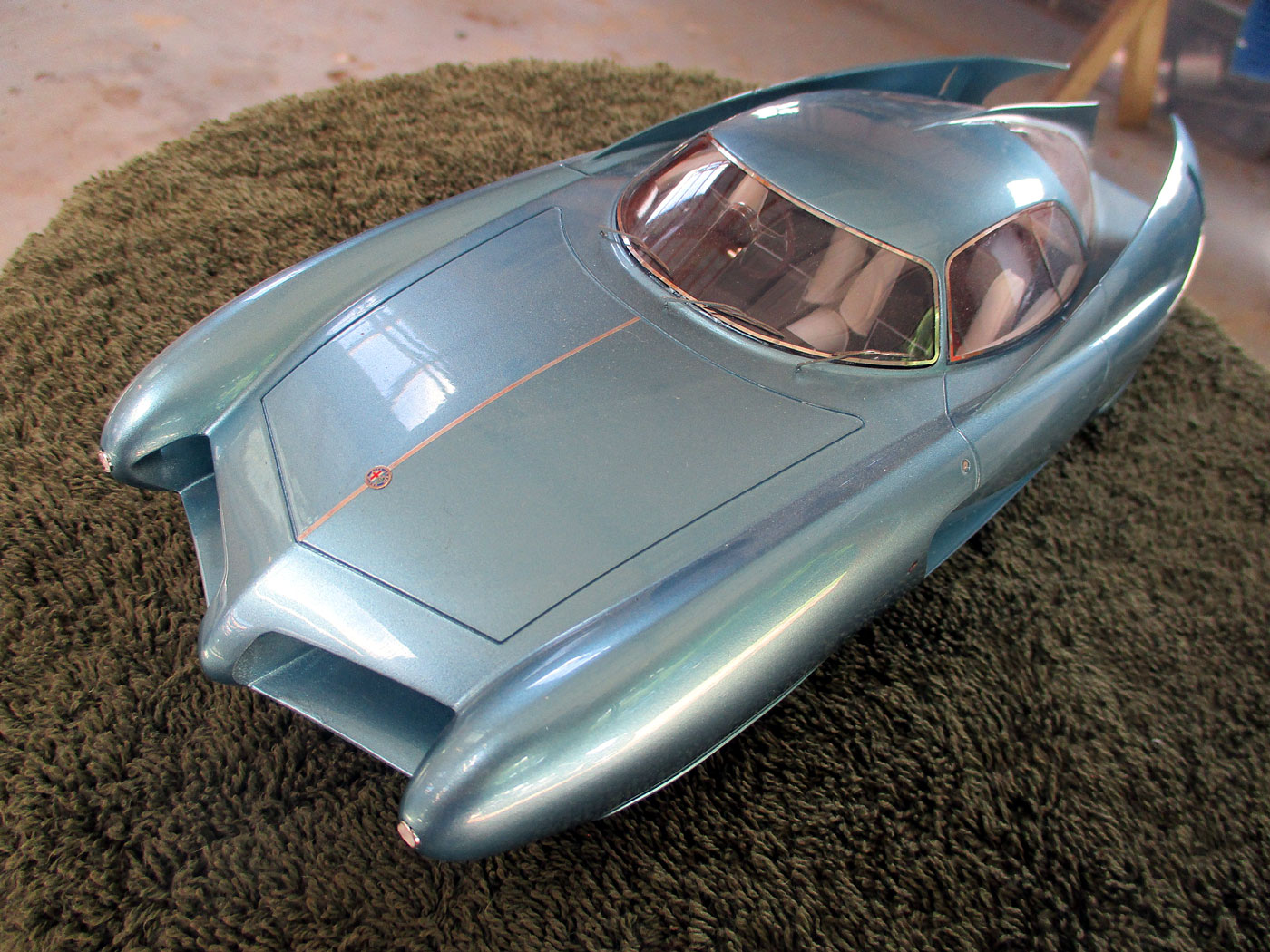
Matrix model
Everything depends on the design. I had the chassis, I have the skills to make the body. But is it possible, using not just the materials and methods available in the early ‘50s, but the fashions and aesthetic norms Bertone designer Franco Scaglione worked with, to create a car just as dramatic as the original BATs, but also beautiful? That’s my idea. Critically, I got superb models of them, made by Matrix in the Netherlands, which allowed me to study their shapes from every angle.
Alphonse Mucha design
I’m going to give strong opinions on features of the BATs, but you don’t have to agree with them. I’m not the Martha Stewart of car design, a pompous arbiter of Good Taste. Some of my friends think that my enthusiasm for the BATs, by itself, disqualifies me for that role. I also love Hector Guimard’s Metro entrances, Borromini’s churches, Mucha’s graphics, Belter furniture, and Gaudi’s undulating surfaces and extravagant metalwork. These aren’t mainstream preferences.
Hugues Vanhoolandt photo.
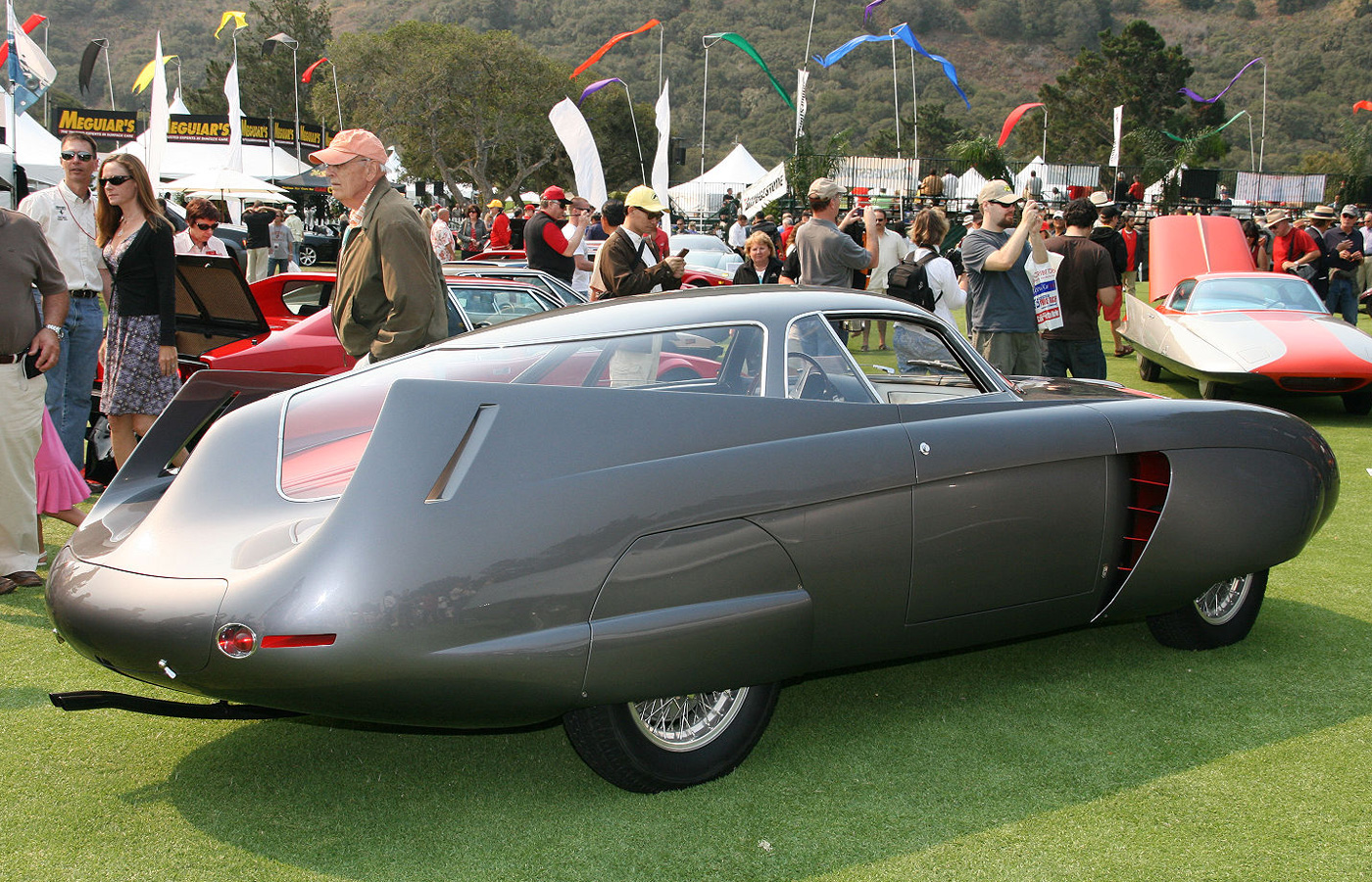
BAT 5 announced the agenda: it was a bullet-shaped projectile, inspired by the fighter plane ideal. Parabolic shapes pierced the air, fins kept it straight. Wheels, not needed in flight and creating drag when exposed, were kept out of sight. Practicality was an afterthought.
Jonathan Sharp photo.
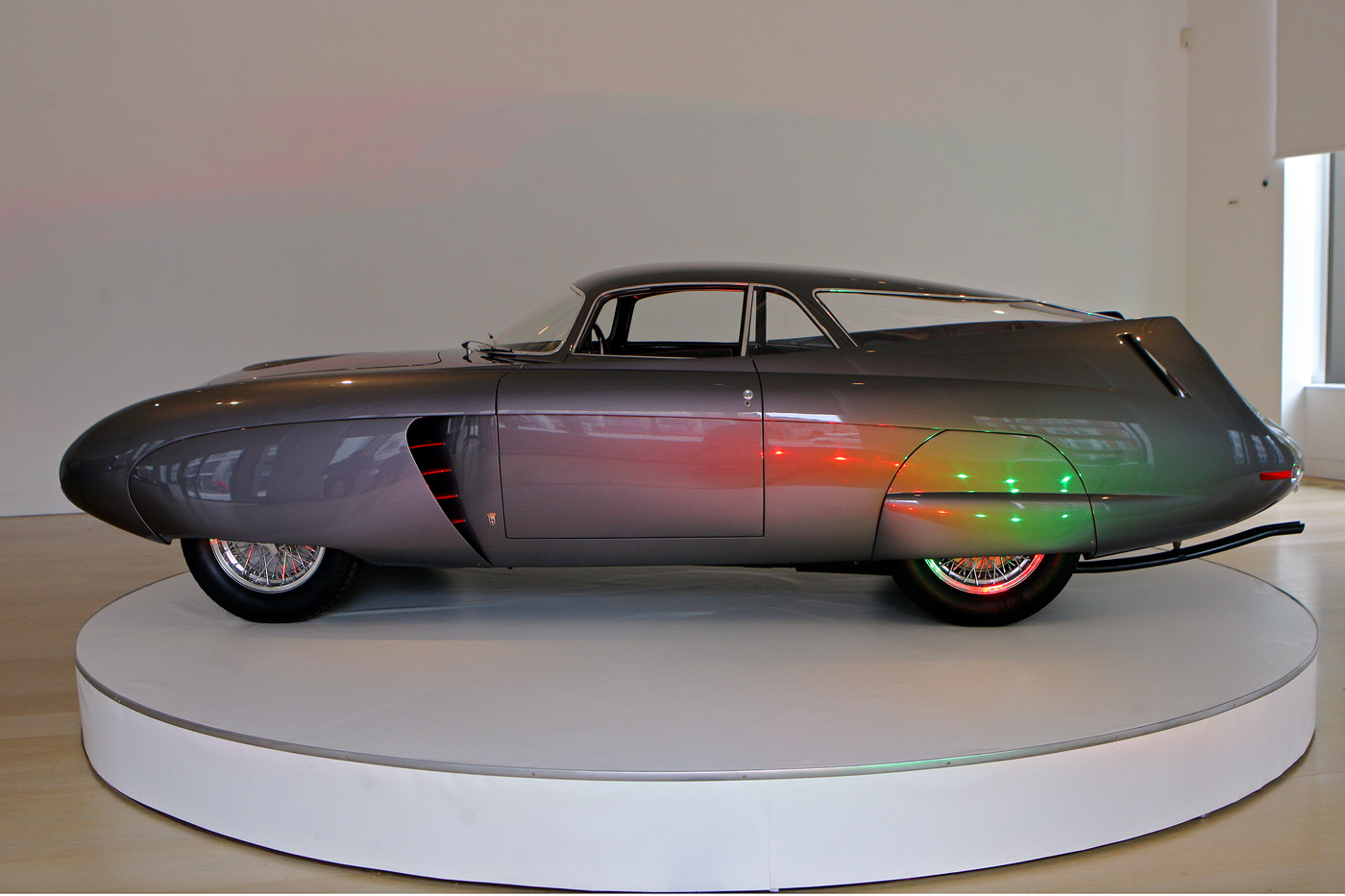
It was aerodynamic, but was it pretty? Some parts were. From the side, a gorgeous fender line sweeps backwards the full length of the car from the probing nose. A matching curve below it links the wheel areas, and a low roof profile continues the theme. Towards the back, graceful fins rise as the side creases drift downward. From the rear, the fins gather inward, enclosing a roof that tapers to a point.
Hugues Vanhoolandt photo.
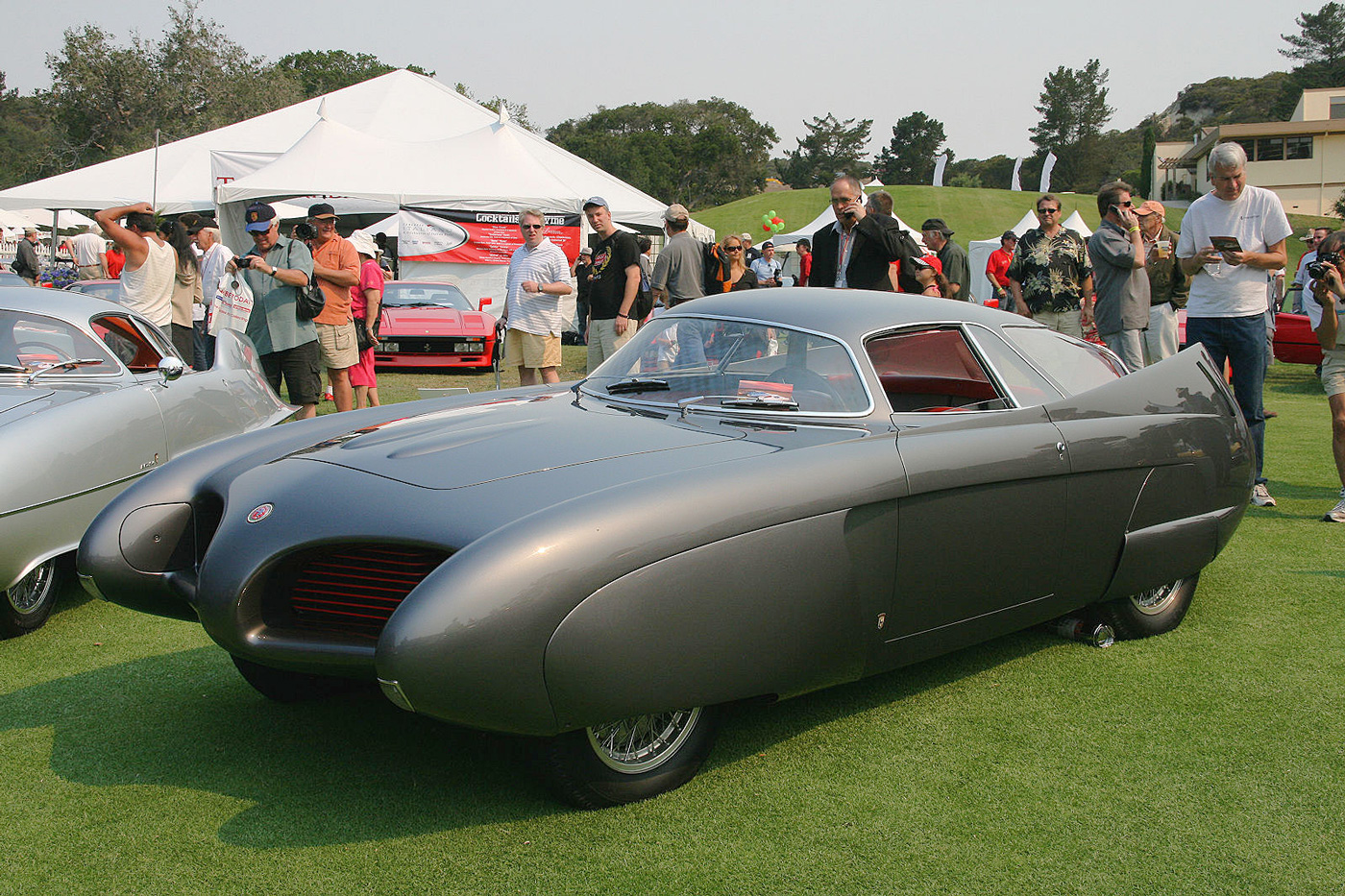
It was a good start, but then they blew it. Enclosed wheels, a contemporary fashion I’ll say more about later, don’t make sense to me. Instead of sloping downward, a rising side window line leads to huge, awkwardly-shaped rear windows. A clumsy bulge was added to clear the rear wheel knockoffs. Gunmetal gray is a dreary color for a dramatic car. In the front, the big flat red grilles seem to block the airflow, not slip through.
Hugues Vanhoolandt photo.
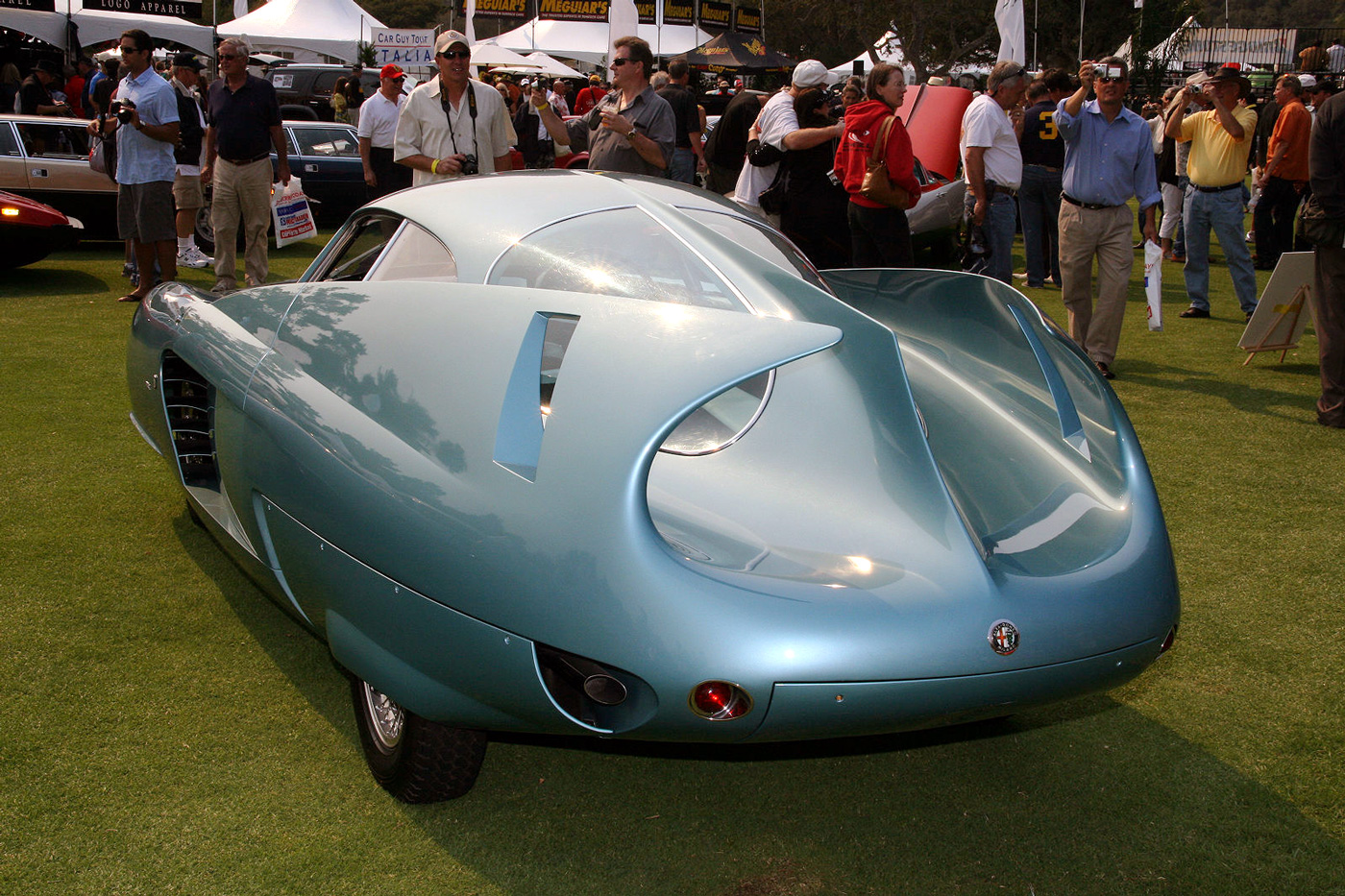
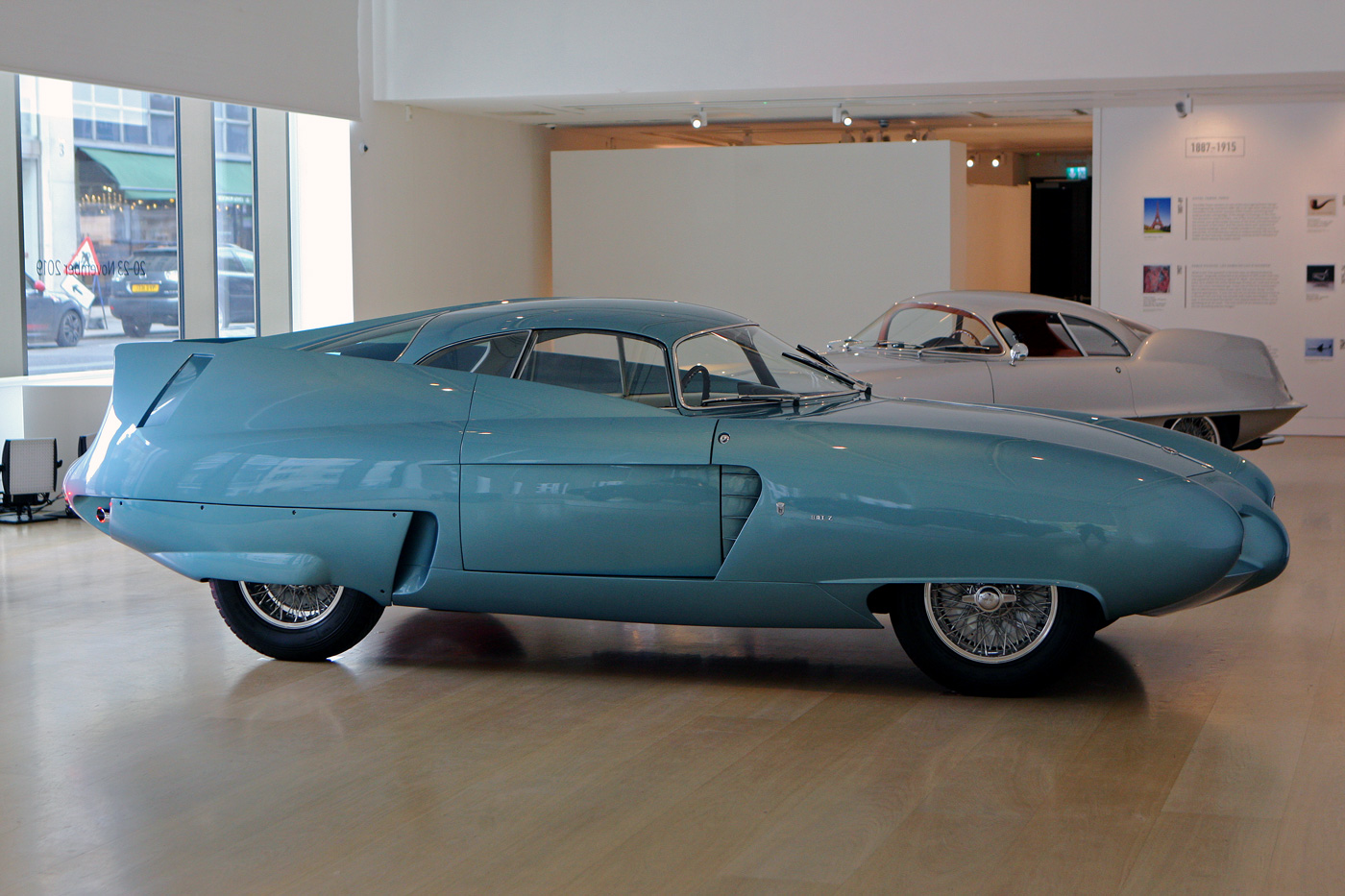
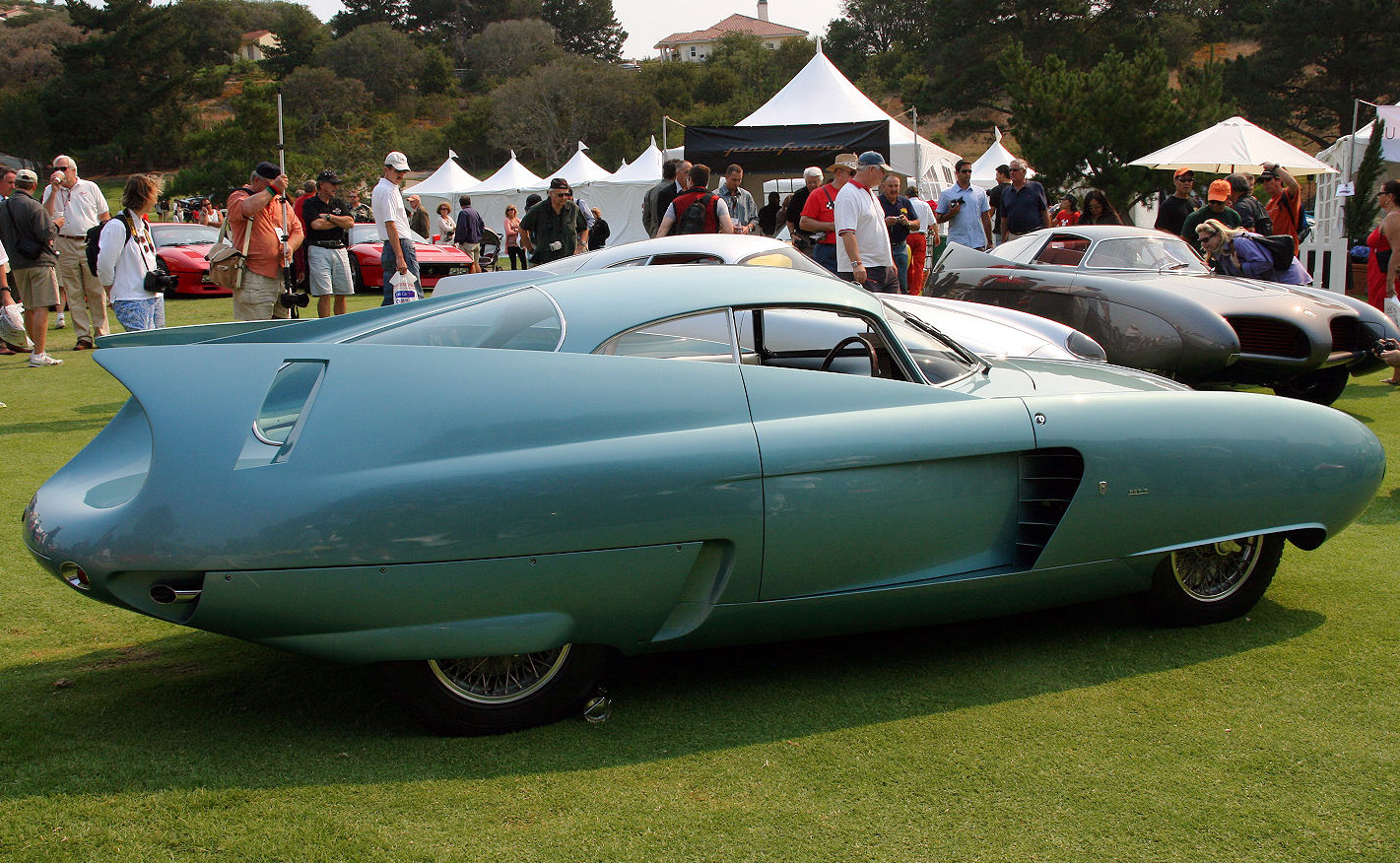
BAT 7 is both wilder and more harmonious than BAT 5. Even bigger fins curve inward like breaking waves; their height is exaggerated by a graceful downward-sloping roof line. They enclose tunnels that shape the air flow. A pair of long rear windows flank a dramatic dorsal fin. BAT 5’s menacing front becomes a smooth tripartite design, with a central beak that matches the fenders.
Jonathan Sharp photo.
But the sides are a mess. A huge air vent, attractive in itself, exaggerates the bland panel covering the front wheels. A vent in front of the rear wheels, and a bulge over their hubs, have no visual link with anything else; their shapes and placement seem random.
Hugues Vanhoolandt photo.
Twin exhausts blow soot onto awkward openings. This clutter of last-minute ideas isn’t the only problem. By rising across the side windows, the fins not only block side vision but give the effect of someone so fat her eyes shut when she smiles, an ugly squeezed-tight look.
Jonathan Sharp photo.
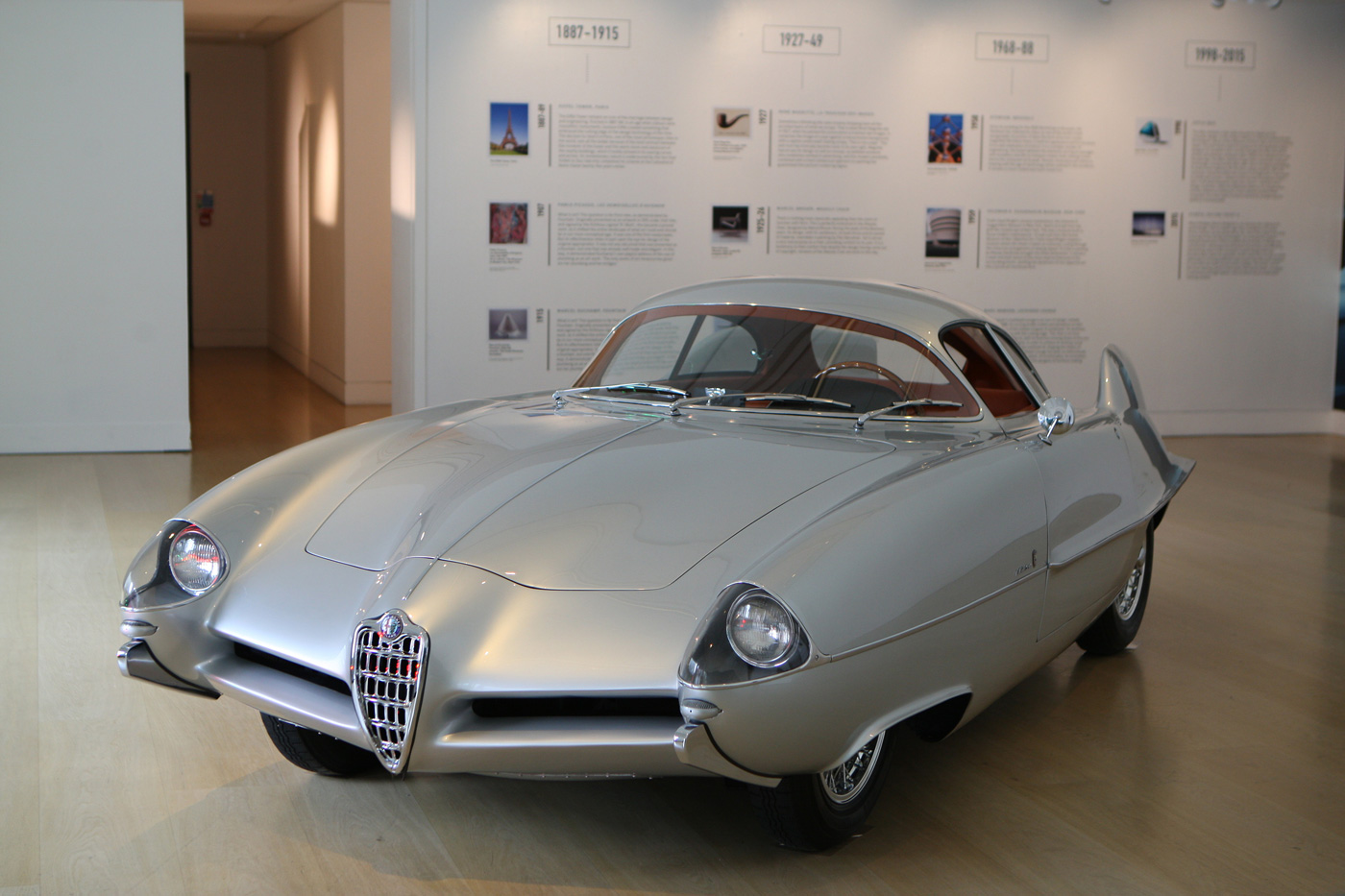
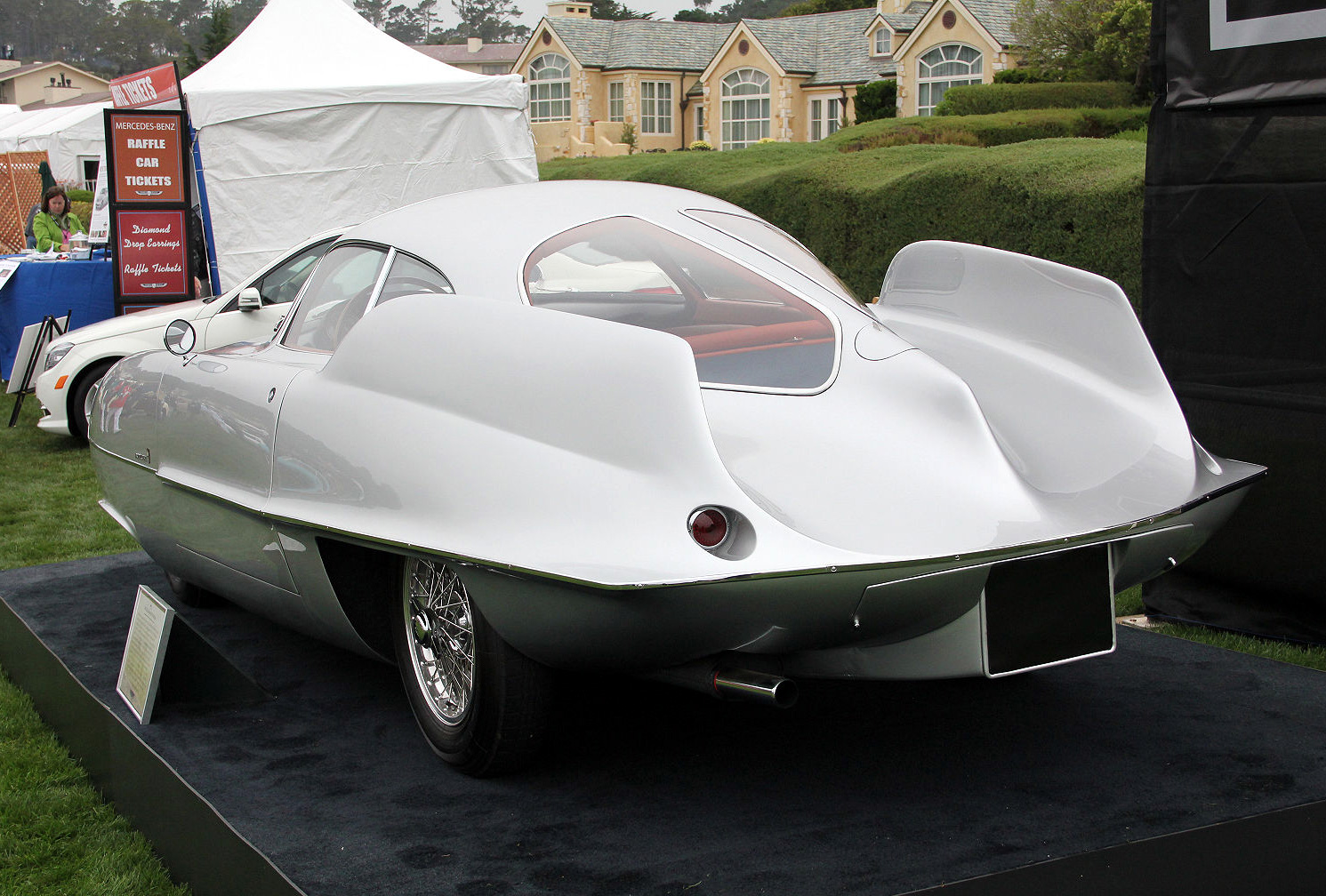
With BAT 9, the Practicality Police intervened. Reshaped fins restored side vision. Side scoops and vents were eliminated. As on race cars, headlights sat under aerodynamic covers. A Giulietta grille fronted a raised hood center. Tiny bumperettes gave a symbolic suggestion of parking protection. The rear wheels, but not the fronts, were finally revealed.
Was it an improvement? I like the horizontal line that continues the side rub rail across the back. Except for the square box for the license plate, the rear view is exciting and attractive.
Hugues Vanhoolandt photo.
In front, at last we see a recognizable Alfa Romeo face, though the upright grille and square side openings aren’t consistent with the flowing aerodynamic theme. But there’s still too little coordination between the front and the rear, and the smooth sides reveal a troubling feature of all the BATs, their width.
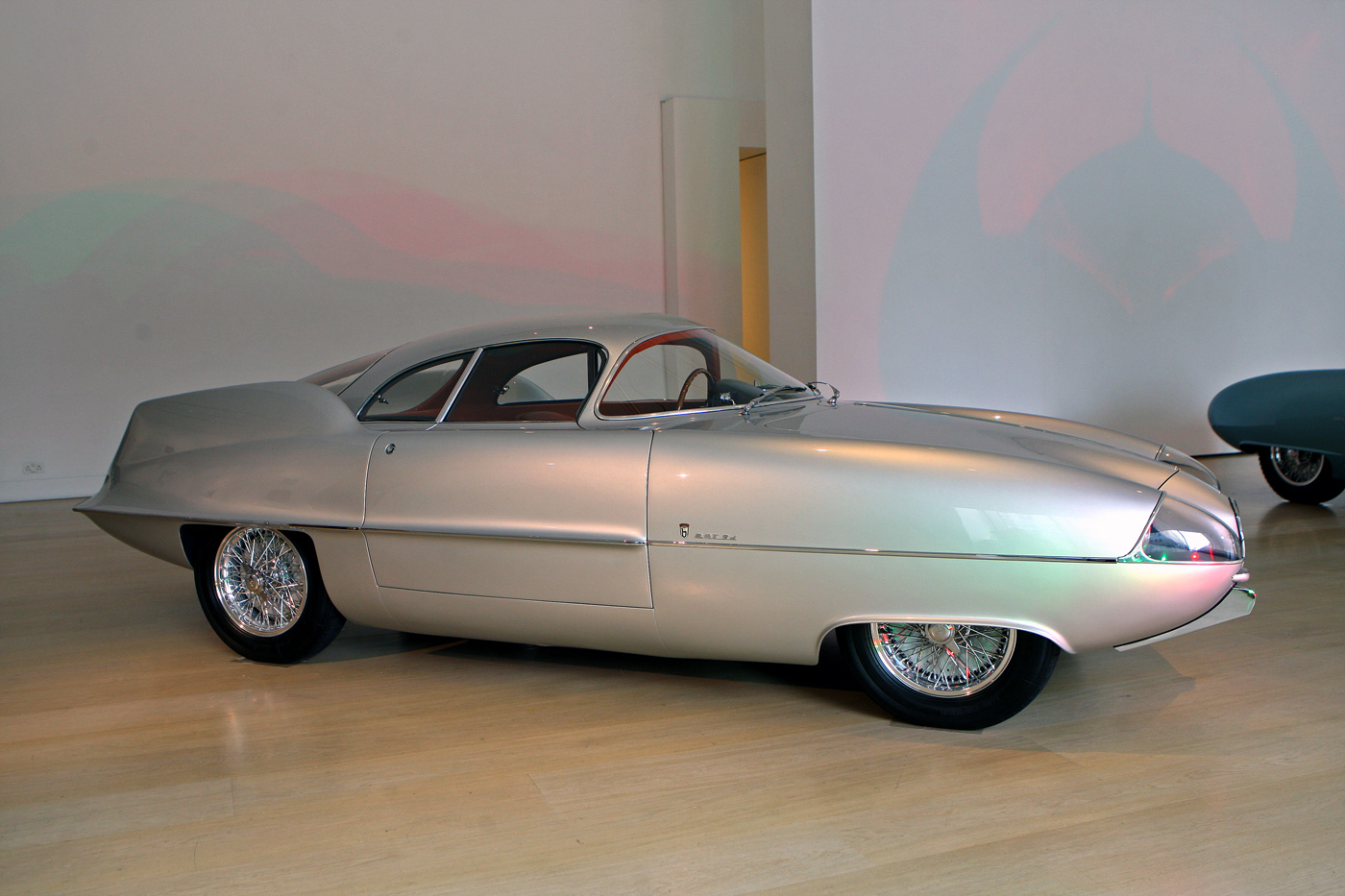
Jonathan Sharp photo.
In plan, they’re all slightly teardrop-shaped–wide in front, even wider in the middle, tapering toward the rear. This, of course, is the most fundamental Shape of Speed. But is it attractive? Mostly not, I think. The overhang puts the front wheels too far in to look–or be–stable. Inward-sloping side windows emphasize the thick-waisted middle of the car. If it had conventional wheel openings, the body could be much narrower. But would a slimline BAT be a real BAT? Is its basic shape essential to its character? I’m not sure.
My vision of an improved BAT isn’t yet clear, but I know where to start. With a few minor changes, the fins and rear design of BAT 7 will do just fine. The side view must carry a strong theme from front to rear. In front, BAT 7’s downsloping hood creates contours ideal for a classic Alfa tripartite grille. Everything must express the aerodynamic theme, the Alfa identity, and state-of-the-art 1954 design fashions. And also, of course, it must be beautiful. Is all of this possible? We’ll see.
Wilson’s last project, building the 6C 2500 Roadster, can be found below:
Read Part 1
Read Part 2
Read Part 3
Read Part 4
Read Part 5
Read Part 6
Read Part 7
Along with I am sure many, many others I look forward to updates on your project!
Love the project and its premise. I could suggest that the B.A.T. cars were continued in the Superflows I through IV by Aldo Brovarone at Pininfarina which led to the Duetto. You might look for additional design cues there, especially the Perspex roof. Can’t wait to see the final design. BTW, where are the B.A.T. cars now?
Very exited to see where this goes!
I can just imagine the comments when the first design renderings appeared on paper.