By Gijbsert-Paul Berk
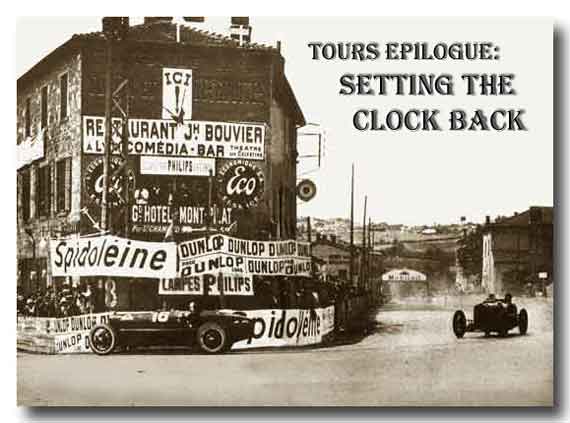
Established in 1899 and based in Wolverhampton UK, Sunbeam was known for its sturdy but unexciting line of cars. Things changed in 1909 when Louis Hervé Coatalen (1879 -1962) became chief engineer. [Read more…] about 1923 Grand Prix of Tours Part 5: Sunbeam and VoisinOur Features This Week, August 15 2012

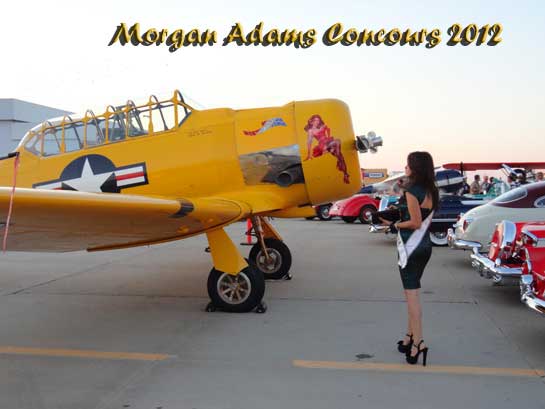
One of our favorite charity events combines a show of vintage cars and aircraft. Held in Englewood CO, we'll send the ex-Matra team USA principal (see below story) Al Axelrod over to cover the action. Click the pic for RVSP and more info.
Passings
William F. Milliken died July 28 at home in Buffalo, NY. He was 101 years of age. VeloceToday was honored to have fully reviewed his extraordinary life with the kind help of his son Douglas. Our deepest sympathies go out to all of his family. More about Bill Milliken and his cars and aircraft can be read here:
Bill Milliken and Equations of Motion
The Milliken Bugatti T35A
Lucie Bedford Warren, age 104, died July 17 at her home in Westport, CT. She was a large part of her husband Briggs Cunningham’s successful racing team that set the standard in American road racing in the 1940s and ’50s and into the 1960s. She was the mother of their children, Briggs Cunningham III, Lucie Cunningham McKinney and Cythlen Cunningham Maddock. Lucie was the granddaughter of Edward Thomas Bedford, who was a director of Standard Oil Co. with the Rockefeller family. (Credit IMRRC)
The Grand Prix of Tours Part 4: Fiat and Rolland-Pilain
By Gijsbert-Paul Berk
From the moment Giovanni Agnelli (1866 –1945) and his business associates founded the company in 1899, it grew within a few decades to be one of the leading industries in Italy. It even had its own branches in the USA and Russia. In 1916 Fiat began building a completely new car factory at the outskirts of Turin. When it was completed in 1922, the Lingotto plant was the largest and most modern in Europe. Its assembly lines were spread over five floors and the finished cars were driven on a test track constructed on the roof of the entire building.
During WWI Fiat produced weapons, aircraft and vehicles for the allied armies and in the postwar period, Italy was confronted with serious social unrest. Fiat also suffered, as workers of the Italian Socialist Party briefly occupied its factories. However, by 1923 Fiat was again showing signs of healthy growth on both the national and international markets.
All the Features this Year
Our Features This Week, August 8th 2012

Photographer Jonathan Sharp exhibits select photos from Prescott. Click on the Bugatti in the rain above to see a preview of what we have coming up in Prescott, the Climb, the Cars.
_________________
We have not been publishing all the comments about the Ferrari mystery car. Suffice to say, Ferrari historians Lynch, Seielstad, Seibert, Goosens, Massini et al figure this is the 335S Ferrari s/n 0674 when owned by Chinetti sometime in 1958. But no one has been able to definitely nail down the exact date and place…either the Ford Museum in Dearborn or the Franklin Hotel in NYC yet. Back to you.
_________________
All Star issue: This week we are proud to welcome Denise McCluggage to VeloceToday. She joins Michael T. Lynch, Graham Gauld and Gijsbert-Paul Berk for our features this week. In additon, Roberto Motta’s Finish Rally report and Jonathan Sharp’s Prescott gallery help create a very special edition. Don’t forget, we need your dollars to continue to bring you articles such as these.If you enjoy VeloceToday, Donate or become a premium subscriber; only your support will keep these articles coming to your inbox every week
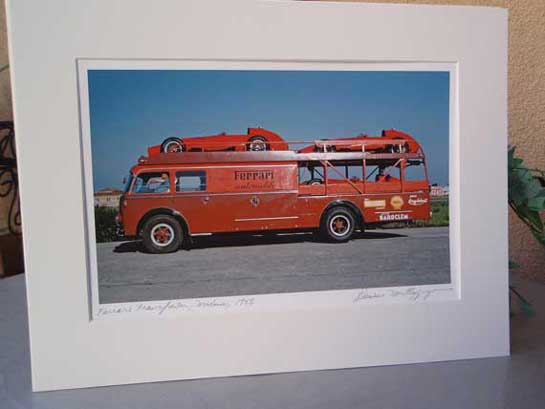
Denise McCluggage: Ferrari Makes a Point
I don’t know when Enzo Ferrari decided not to go to races in which his cars ran but to attend practice days instead, but such was his habit when I was covering the Grand Prix circuit. More often than not he was at Monza, sort of the home ball park, for the late summer Formula 1 races. And so as you see in this photograph shot at practice for the 1958 Grand Prix of Italy is “il Commendatore”, as he was usually referred to then, performing for my camera.
[Read more…] about Denise McCluggage: Ferrari Makes a Point
Gauld: Martinengo Memories and Gentlemen Drivers
Regular readers may remember my May 2012 article about the Monaco Historics in which I mentioned meeting Cesare Martinengo, whose father Franco was a typical Italian “Gentleman Driver” throughout the 1940s and ’50s. This sounded interesting and I had to find out more. Cesare then brought his scrapbooks to me in the South of France and I spent a fascinating day going back in time when people raced for the fun of it and enjoyed racing with their friends.
Cesare Martinengo, however, did some racing himself, mainly with small Italian sports cars. It was no surprise that thanks to his father’s long-time friendship with Elio Zagato, Cesare raced a double bubble Fiat 750 Zagato. (In the lead photo, Elio, left, with Franco Martinengo stand next to their Fiat 1100 Zagatos.)
1923 French Grand Prix Part 3: Bugatti and Delage
By Gijsbert-Paul Berk
In 1913 Ettore Bugatti (1881 -1947) began working on the design of an eight-cylinder engine at the suggestion of his friend, the pilot Roland Garros. Early in 1914 he sent his collaborator Ernest Friderich to the US with a four-cylinder car of 5.655 liters capacity to participate in the Indianapolis 500. When later that year WWI started, Ettore had to leave his factory in Molsheim, situated in the German occupied Alsace.
First he moved to Milan and later to Paris, where he began designing aircraft engines. In 1919 Bugatti returned to Molsheim and resumed the development of his cars. At the first postwar motor shows in Paris and London, he presented his new three-liter eight-in-line engine. The Type 29/30 engine had three valves per cylinder, operated by one single overhead camshaft.Type 30
When the European auto sport authority CSI announced that for the 1922 to 1924 seasons, the cubic capacity of Grand Prix engines would be limited to just two liters, Bugatti constructed a smaller engine to comply with these regulations. A team of four cars was entered in the 1922 French Grand Prix de Vitesse at Strasbourg. With its long and tapered aerodynamic body, the new Bugatti was nicknamed ‘Le Cigare’ in the French Motoring journals. But it had a successful debut with the three cars finishing second, third and fourth behind the winning Fiat.
Prescott by Jonathan Sharp
A selection of outstanding photos from Prescott by Jonathan Sharp. We’ll have a complete story about Prescott, “The Climb and the Cars” coming up in a future edition of VeloceToday.
[Read more…] about Prescott by Jonathan Sharp
Our Features This Week, August 1st 2012

From the collection of Robert F. Pauley: A Ferrari on display somewhere, sometime, by someone. Can you help solve the mystery? The sign reads 'Franklin Hotel Stables'. That's all we know.
This week we feature Brandes Elitch and his Constant Search Part 3; Stephen Mitchell tells all about the Ettinger Shell collection; Gijsbert-Paul Berk continues the Tours saga. Our F1 report finds Ferraris are too slow on Sundays, and read a brief interview with a starving artist. Also, our thanks to those who either donated money or became premium subscribers!
Please Donate or subscribe to VeloceToday; only your support will keep these articles coming to your inbox every week!
Shell Game

By Stephen Mitchell
Photos by Jeanetta Dumouchel
Matthew Ettinger’s long time game of cat-and-mouse with Shell Oil memorabilia
I’ve known Matthew Ettinger since I was in my late teens. When I first met him, he was a nightclub owner and, like me, a Ferrari owner. As our friendship developed and we really got to know each other, we had both moved on to Ferraris that were even more exotic, choosing racing cars as our daily transportation. I had moved on to a GTO while Matthew had acquired the famous Ferrari Breadvan. Matthew was also a serious collector. He loved going through antique shops and knew many of the dealers in Los Angeles personally. His home was filled with original art and rare objects of one sort or another and it would take several visits to get a sense of all that he had.
By Shell obsessed
One of the more obvious pieces one saw upon entering Matthew’s house was an Art Deco Shell Oil gas pump. It was imposing, topped by its white globe with red letters (referred to as the lollipop) proclaiming Shell. This was not Matthew’s first gas pump. He previously had a 1947 Union 76 pump that he had put on display in his Sunshine Meat & Liquor Company, a restaurant/nightclub that he owned. However, Matthew fell in love with the Shell pump when he visited the home of the infamous Gas Pump Ronnie who, according to Matthew, could spray on paint that looked like porcelain. He wanted that Shell pump and traded his Union 76 pump to get it.
More fun than eBay
The Shell pump was significant because it set Matthew on a quest for Shell products, signs, promotional toys and memorabilia. No other brand interested him from that point forth. In those days, there was no Internet to facilitate networking or scavenging. One had to look in the back of magazines and attend flea markets–or jumbles as they are called in the UK.
Ferrari and Shell memorabilia together are a natural.
1923 French Grand Prix Part 2: Press and Regulations
By Gijsbert-Paul Berk
The race generated an immense amount of advance publicity. Numerous articles in the national and local newspapers and the sporting magazines created a great deal of curiosity and even greater expectations.
The Press
One of the reasons was that the editors of these publications were well aware of the growing interest of the French public in motorcars and motor racing. They properly reasoned that giving support to this great event would increase their circulations and advertising revenues.