Story and photos (except as noted) by Paul Wilson
When designing and building my BAT, I started with the front fenders. I liked BAT 7’s fender profile, but not the enclosed wheels. So, what would it look like with full wheel openings? Starting with a photo of the original, I got to work with Photoshop. The result was an improvement, I thought, but a bit bland. A BAT should be radical. How about borrowing the Lotus Mark 9’s sweeping line, with an air exit behind the wheel for brake cooling?
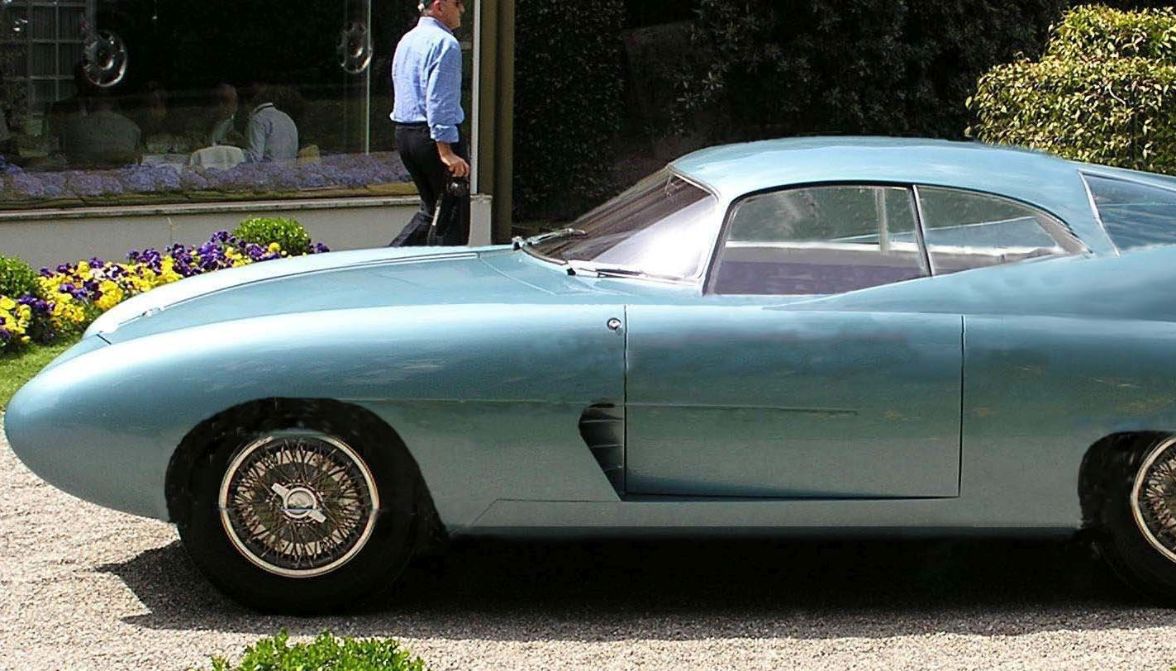
From a photo by Jan ter Hedde.
My plan is to make the body first, before any other restoration. Not only is this more fun than removing rust (at my age I start with dessert, not the broccoli), but if the chassis would be restored later, I could make a mess of it without any worries. I could weld rods supporting the body anywhere I needed them, then cut them off once they’d served their purpose. This plan did mean that all the body sections (fenders, roof, doors, etc.) had to be bolt-on units that could be attached after painting, without disturbing the finish. Figuring out how they would all fit together would be a complex challenge.
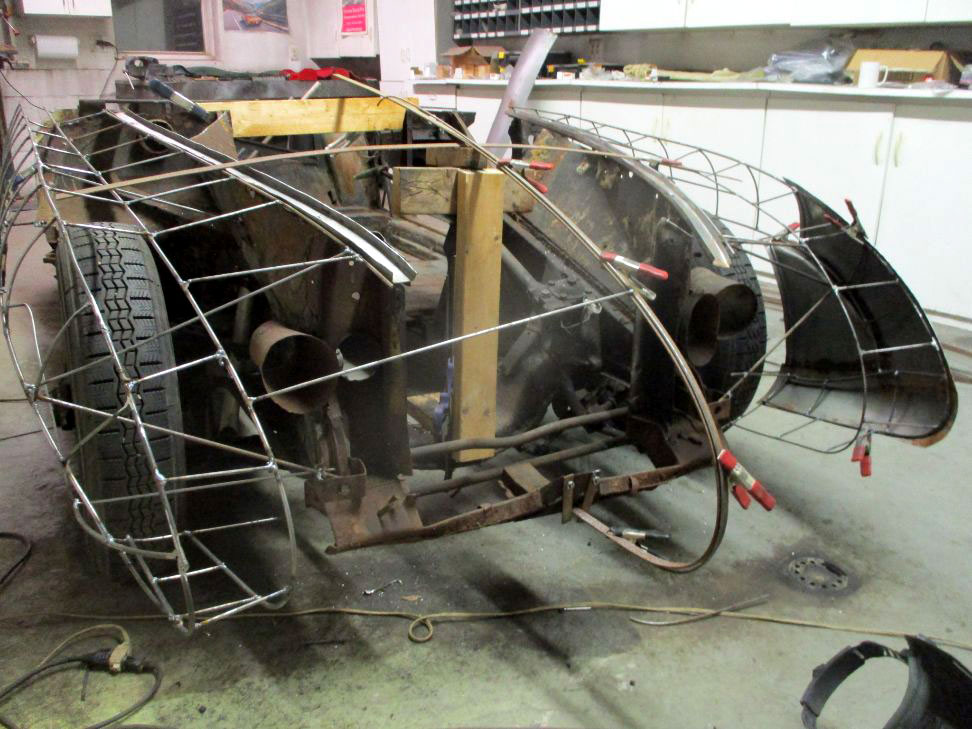
With this thought in mind, I went out to the garage, bent some rods into appropriate curves, and welded them into position. What, a full-size sketch with steel? Why not do drawings first? One answer is that I’m a terrible artist. But it’s more than that. A drawing is just one view.
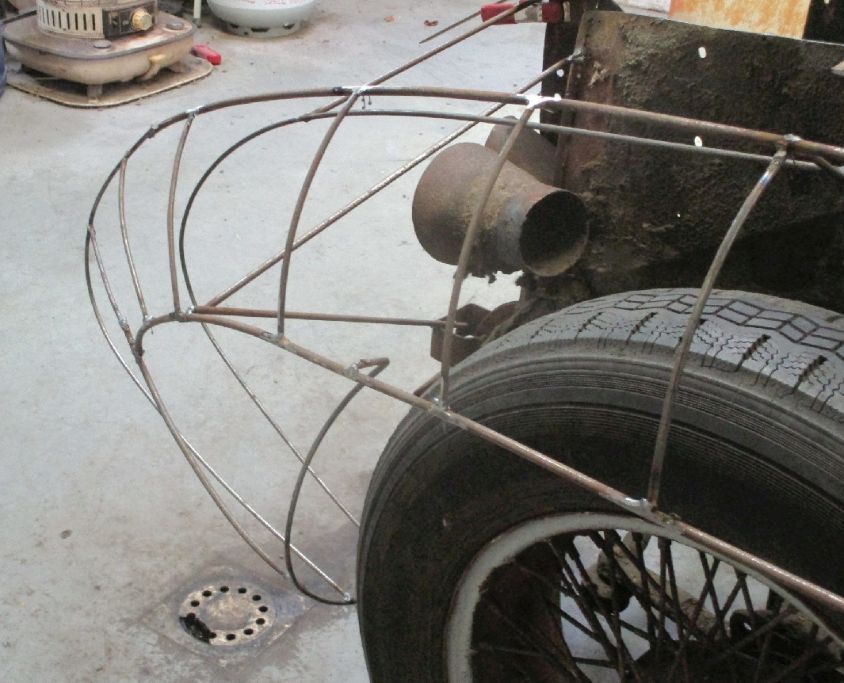
With a ghost fender in steel rods, I could walk around and see it from all angles. And even a 3D CAD image is just a small picture on a screen; things look different when they’re big. Also, with the wire form I could be sure the body would fit what’s underneath. The hood had to clear the engine, for example. And a structural box limited the shape of any cutout behind the wheels. Steel rods cost almost nothing, and many shapes could be tried with minimal time or effort.
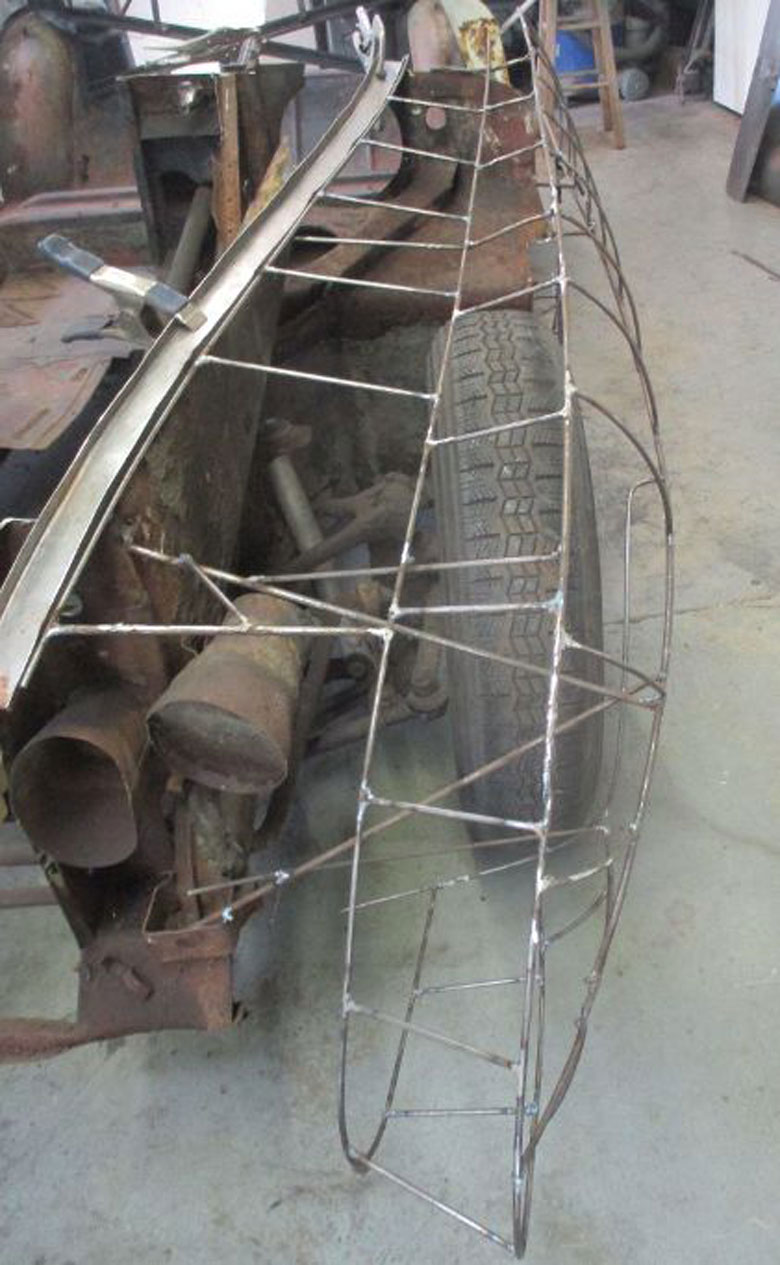
The wire form determines the final shape, so it needs to be made very carefully. In just a day or so, I made a form for the basic fender shape. But then I spent much longer than that studying it, adjusting contours, making sure everything lined up. And that was just for the first fender.
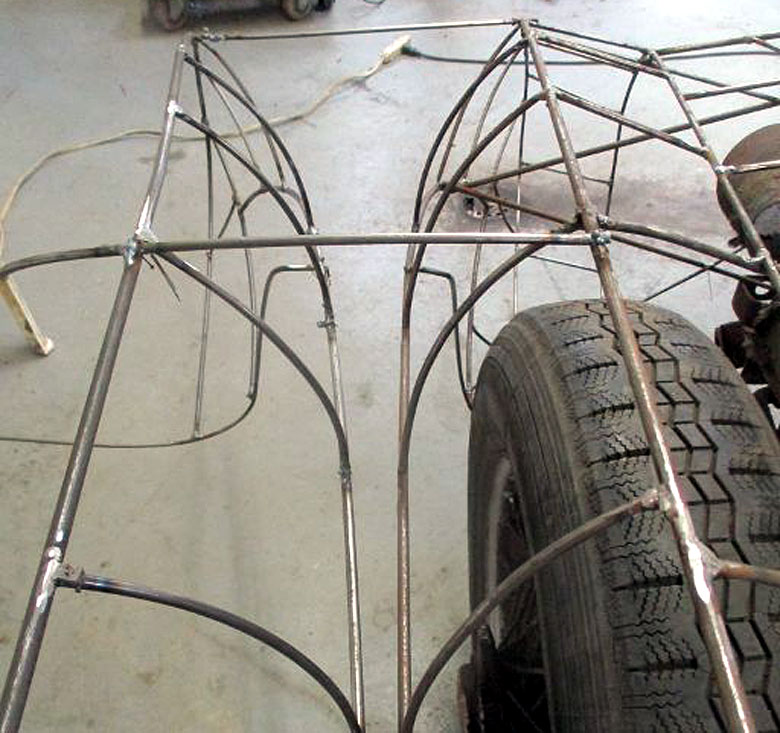
Making a precise, mirror-image copy for the second one, done by welding the two forms side by side, was a lengthy process. And when I mounted it, I spent at least two days simply taking measurements to ensure that their height, position, and curvature were exactly the same.
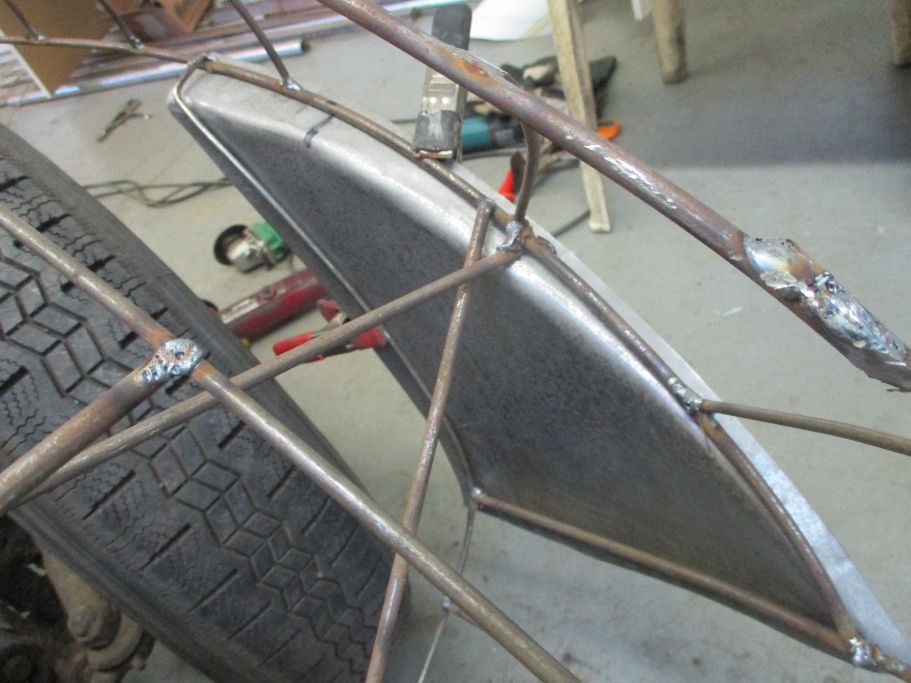
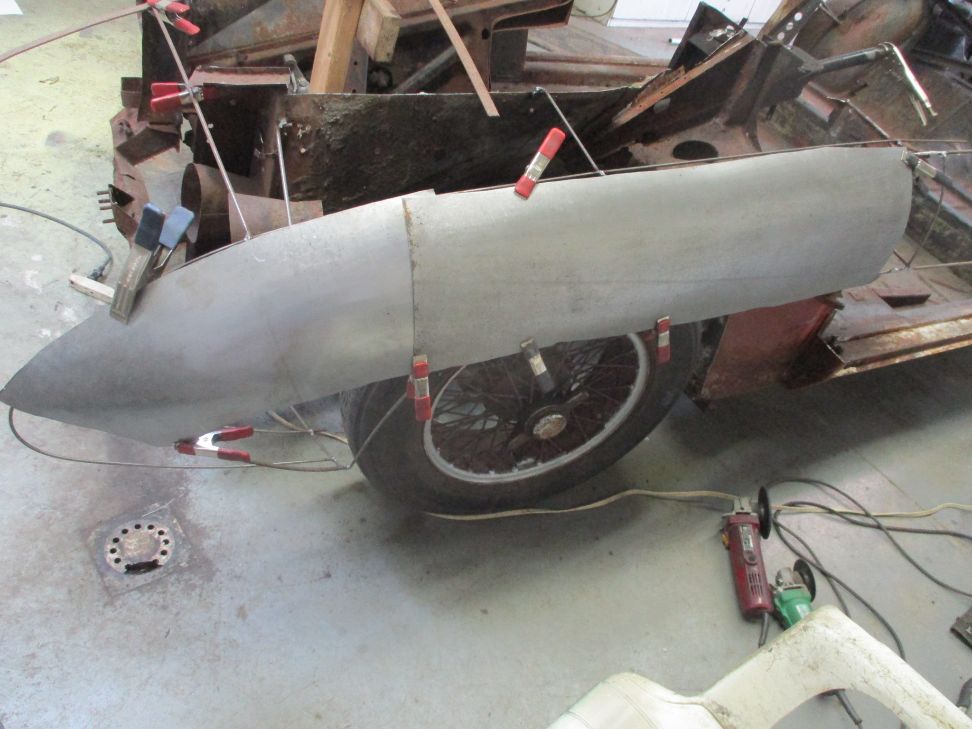
Once the ghost form defined the fender contours, I started on the sheet metal. First I made a paper pattern that covered a convenient-sized area, then cut a metal piece to that outline. If it’s much too big, that can waste time when it’s formed.
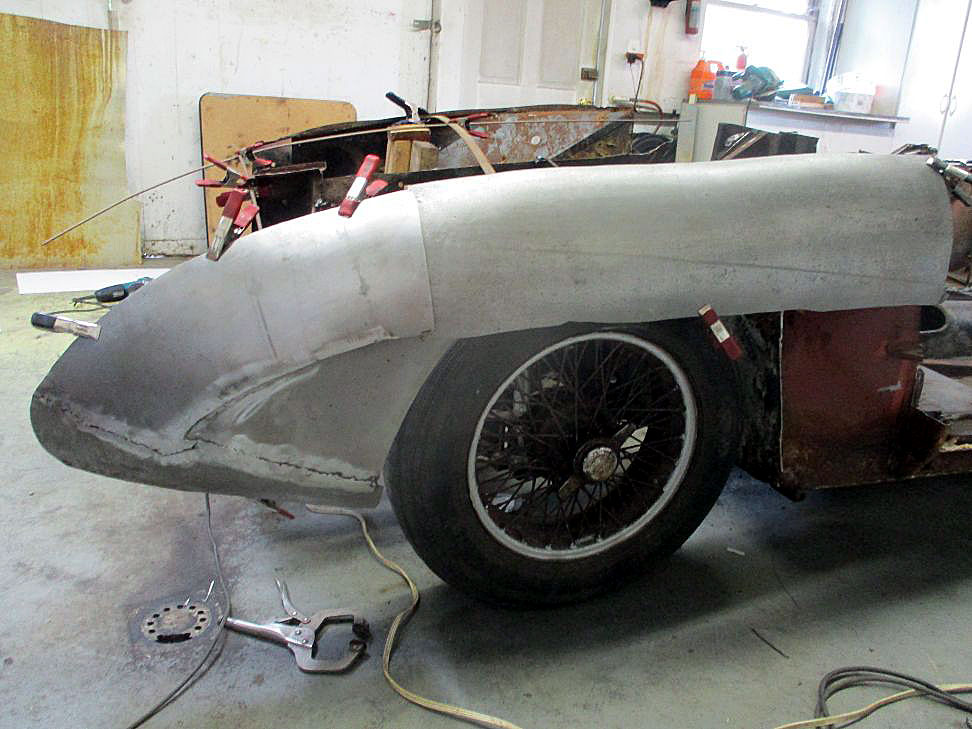
But it must not be too small: adding extra metal later on inevitably makes a mess. The critical area always “walks” a bit as the piece is made: the bulge doesn’t appear exactly where it’s expected. So the margin is essential. As the fit gets closer and closer, I cautiously trim the edges. Matching the metal to the wire form, I realize that I’m assuming the form is just right: no corrections are made at the sheet metal stage.
The time needed for sheet metal jobs is hard to predict. A rough approximation comes quickly, making the piece fit perfectly takes much longer. Take, for example, the top front piece of the front fender.
J
Making the paper pattern, cutting out the metal, and doing the basic shrinking and stretching might take me a couple of hours. A few places would closely fit the form, others would miss by an inch or two. Getting it right, so the piece touches the form everywhere, with no bending or clamping pressure, can take hours longer. And then when two pieces are placed together for welding, further adjustments are always needed. It can take almost as long to weld the pieces together as to make them.
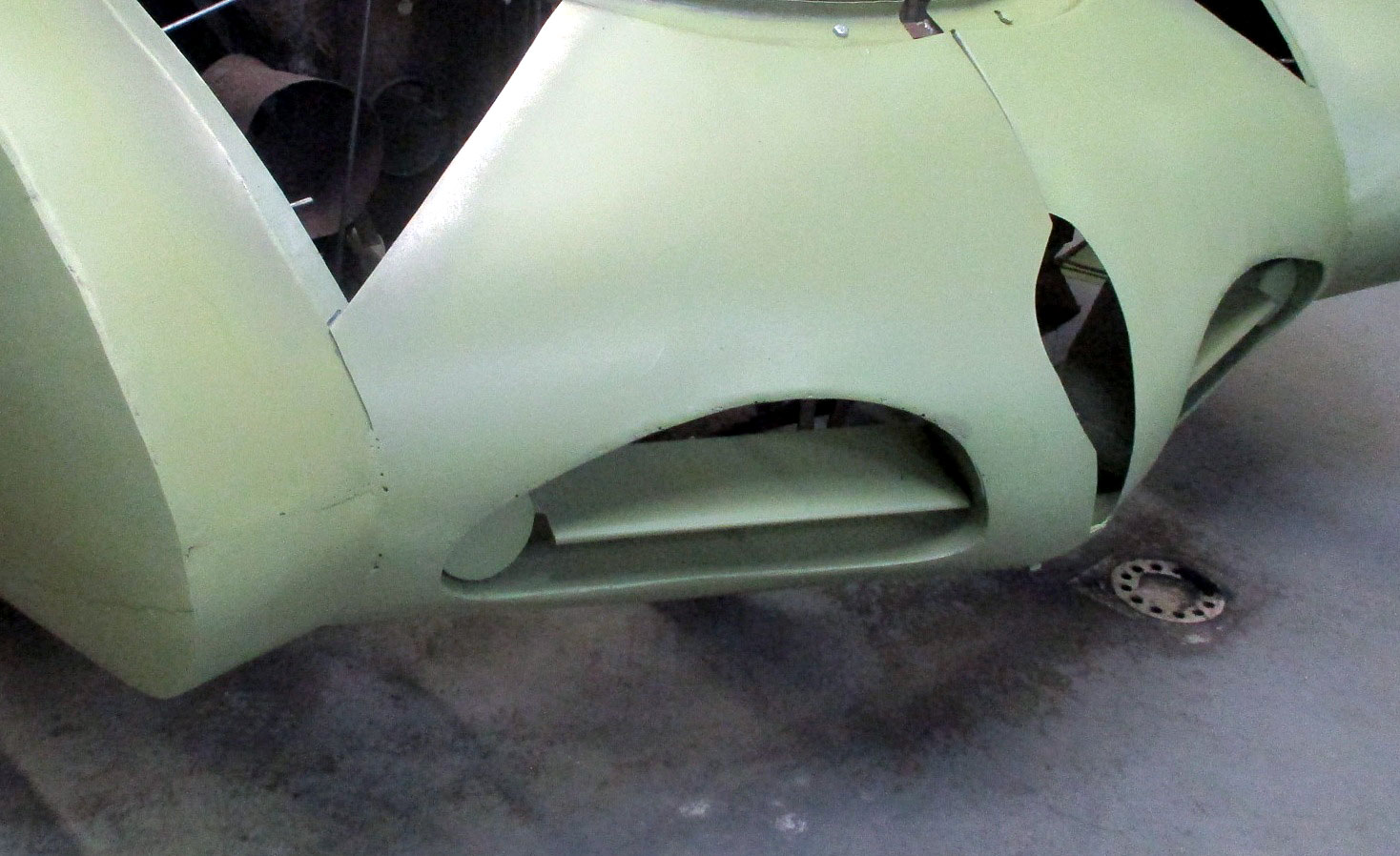
The front contours of the Alfa Disco Volante (1953) and BAT 7 (1954) are similar, and I like the Disco Volante better. An Alfa should have the trademark tripartite grille. But the concealed headlights of BAT 5 and BAT 7 help give them that sleek aero look. So I wanted them too. With these thoughts in mind, I began to make the front of my car. A firm steel bar established the profile of the center, and a few rods held it in place. With a piece of paper, I found that little if any metal shaping would be needed: a flat sheet could be bent to fit the space.
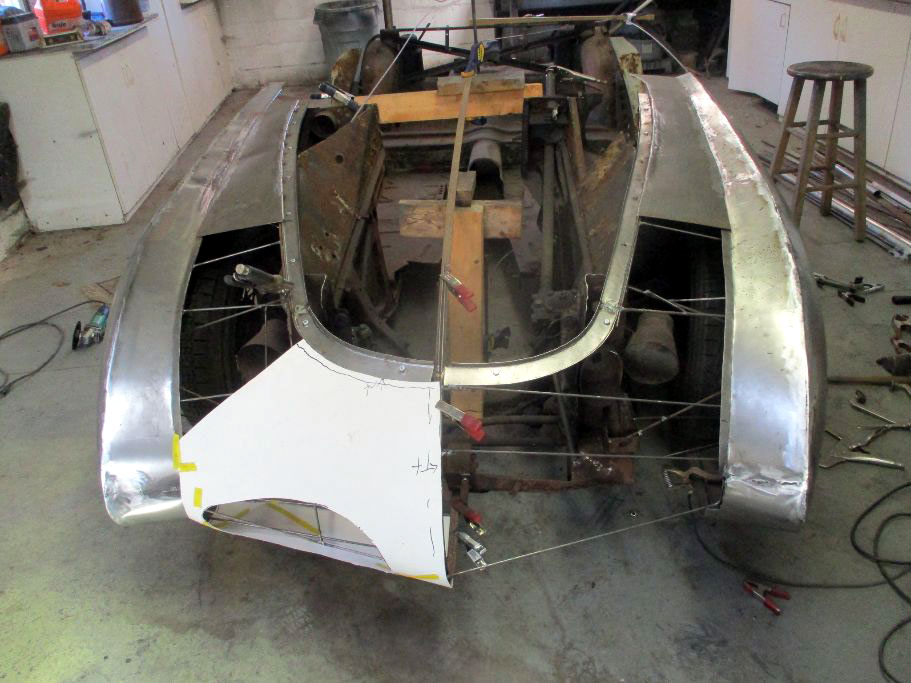
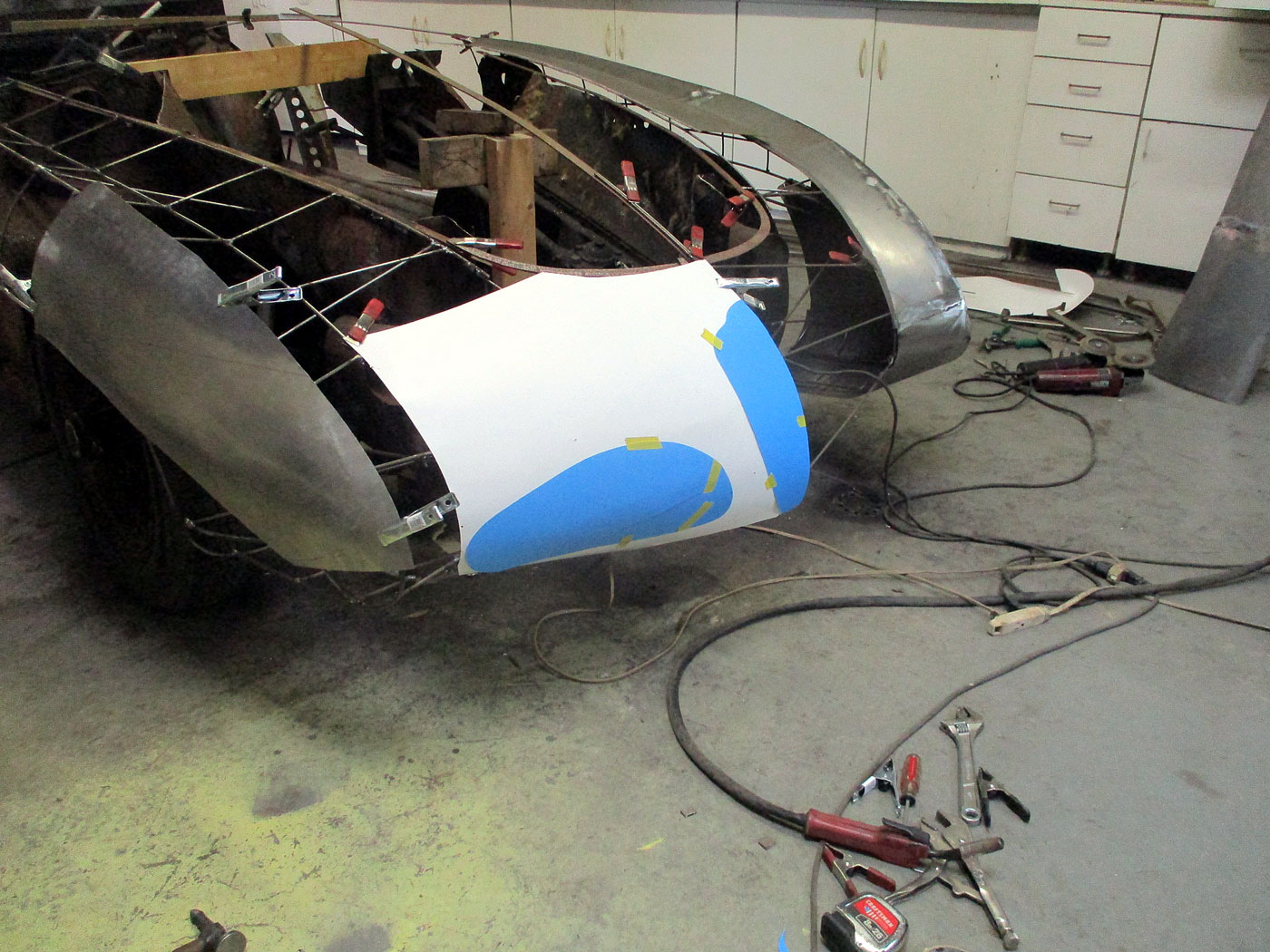
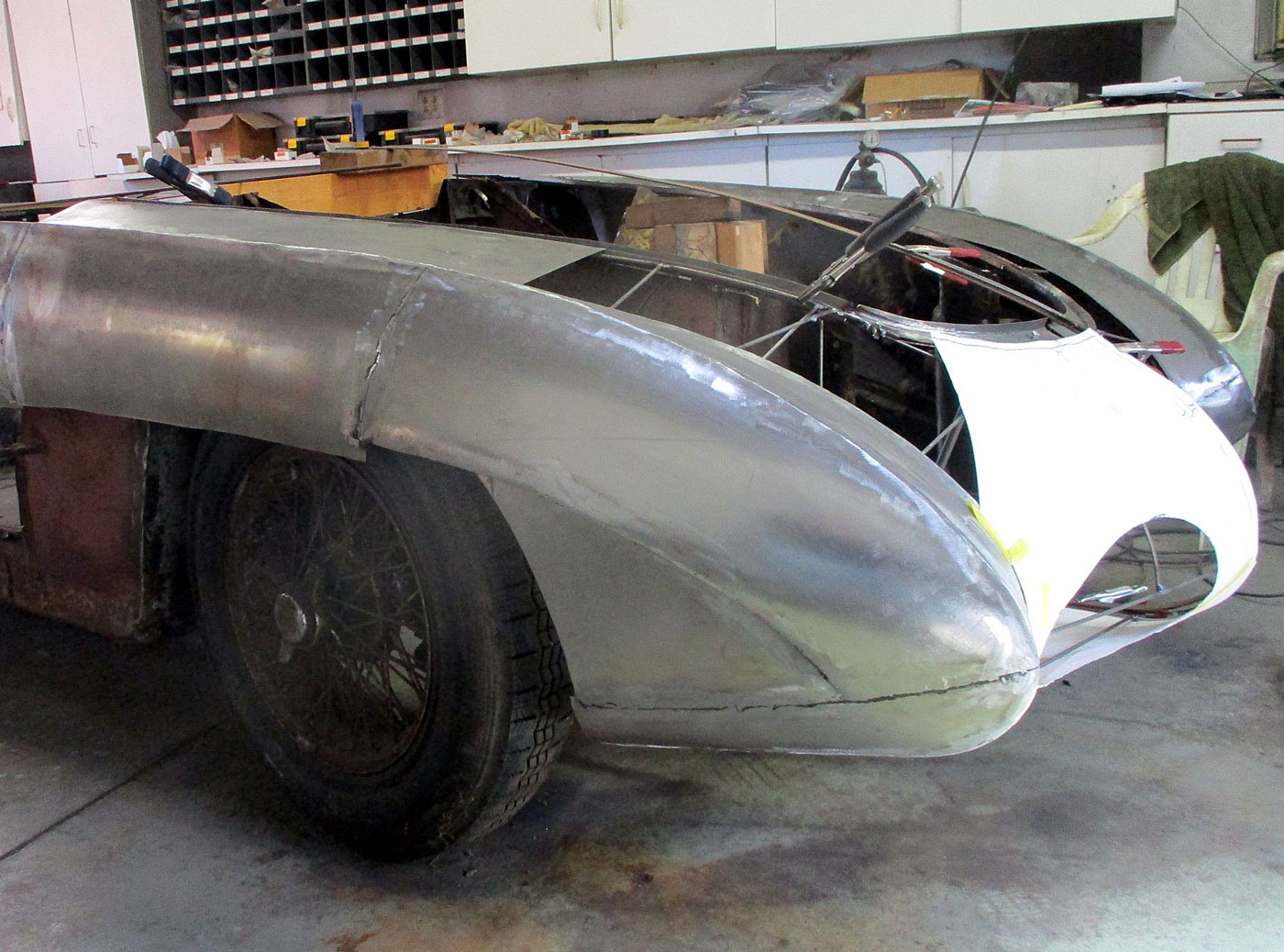
For the grille openings, I studied lots of different sizes and outlines. A curve that’s attractive from one angle looks awkward from another, so I carefully considered the front view, the side view, the view from above. Then I replaced the paper patterns with sheet metal.
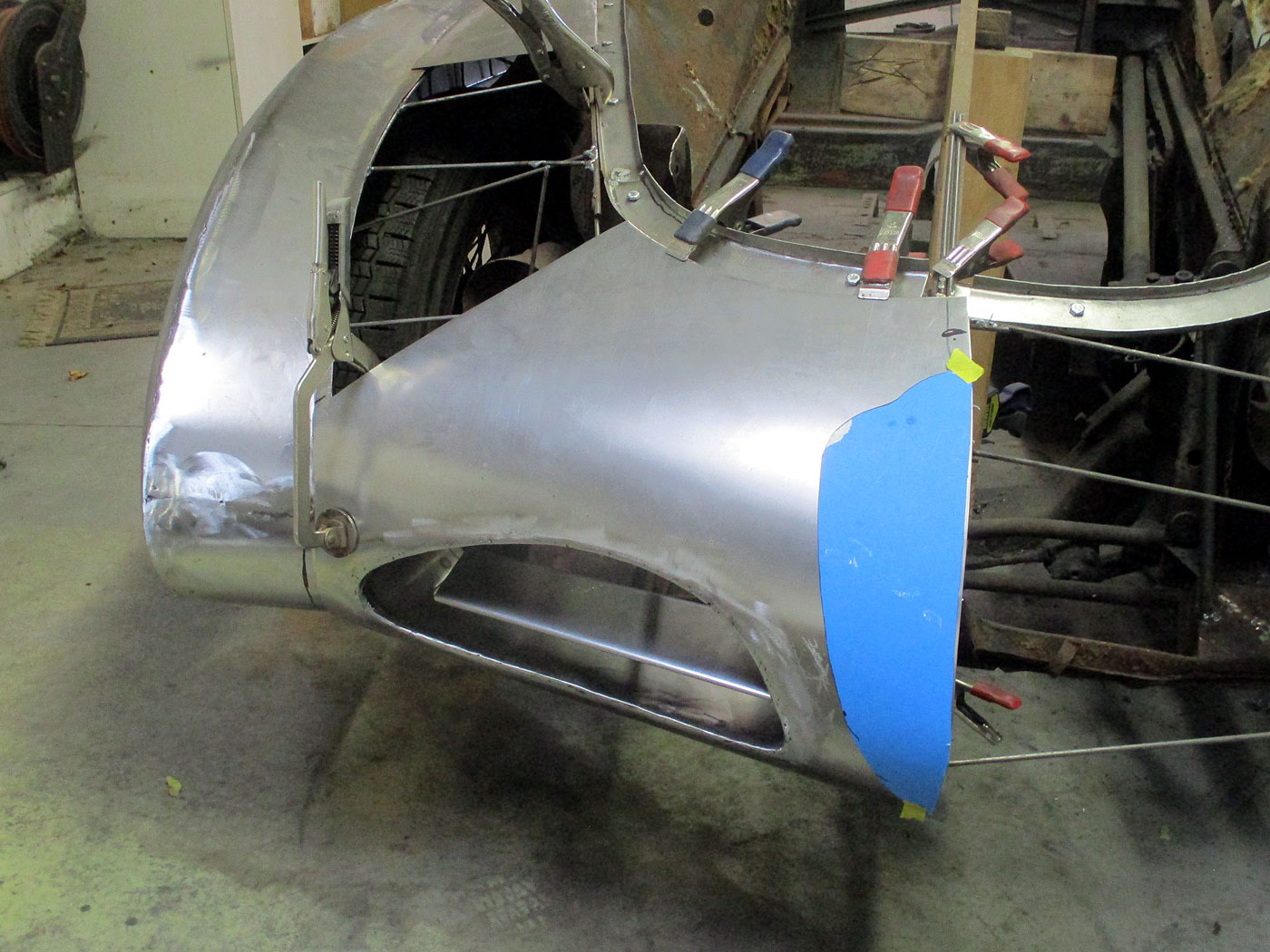
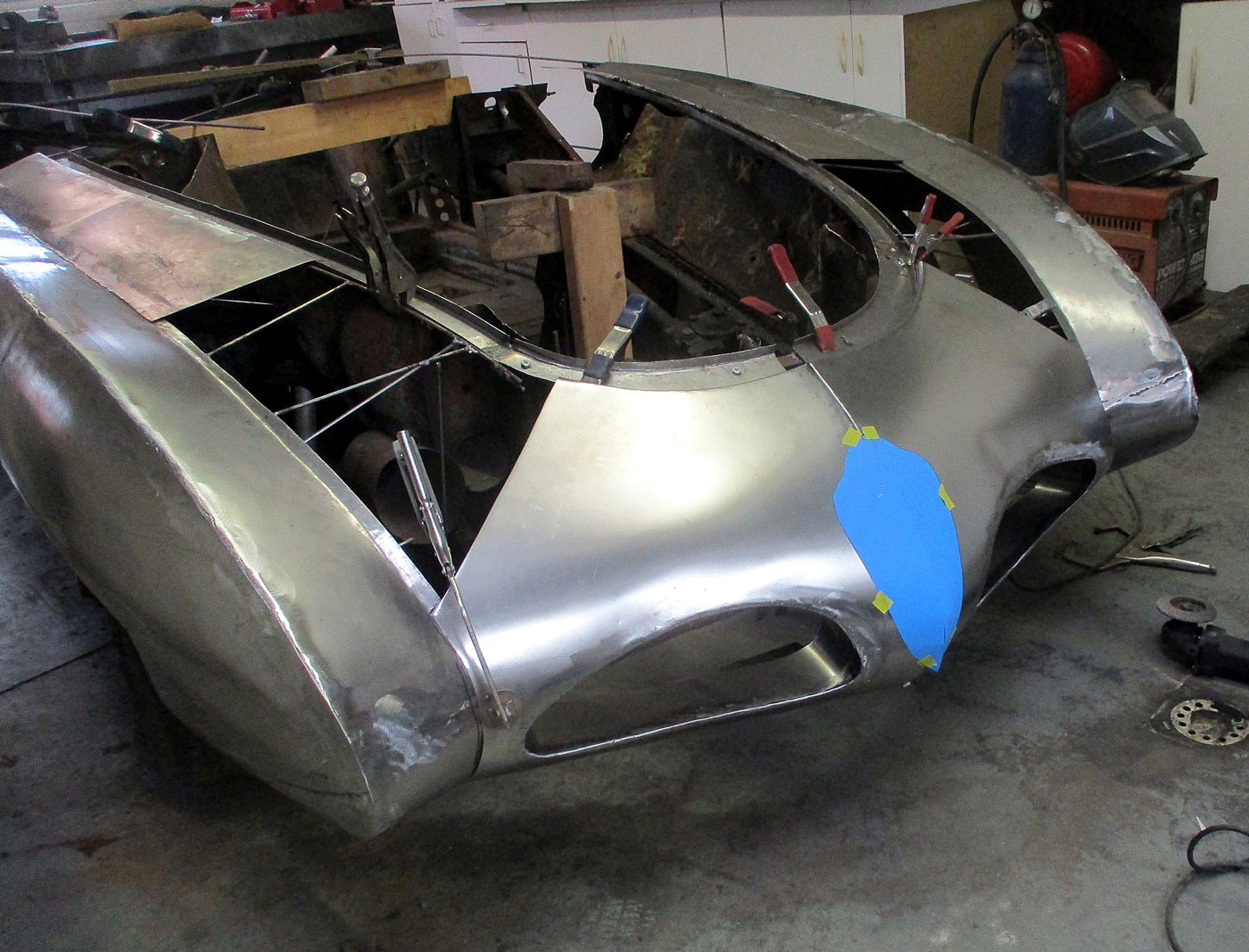
I’d had the foresight to lay in a pair of period-correct Carello parking lights, which the outer curve of the side grilles was made to fit. I finished the fenders just in time to take advantage of the last warm day of the year, so they could be cleaned, thoroughly dried, and given a coat of self-etching primer in my “paintbooth” (my yard).
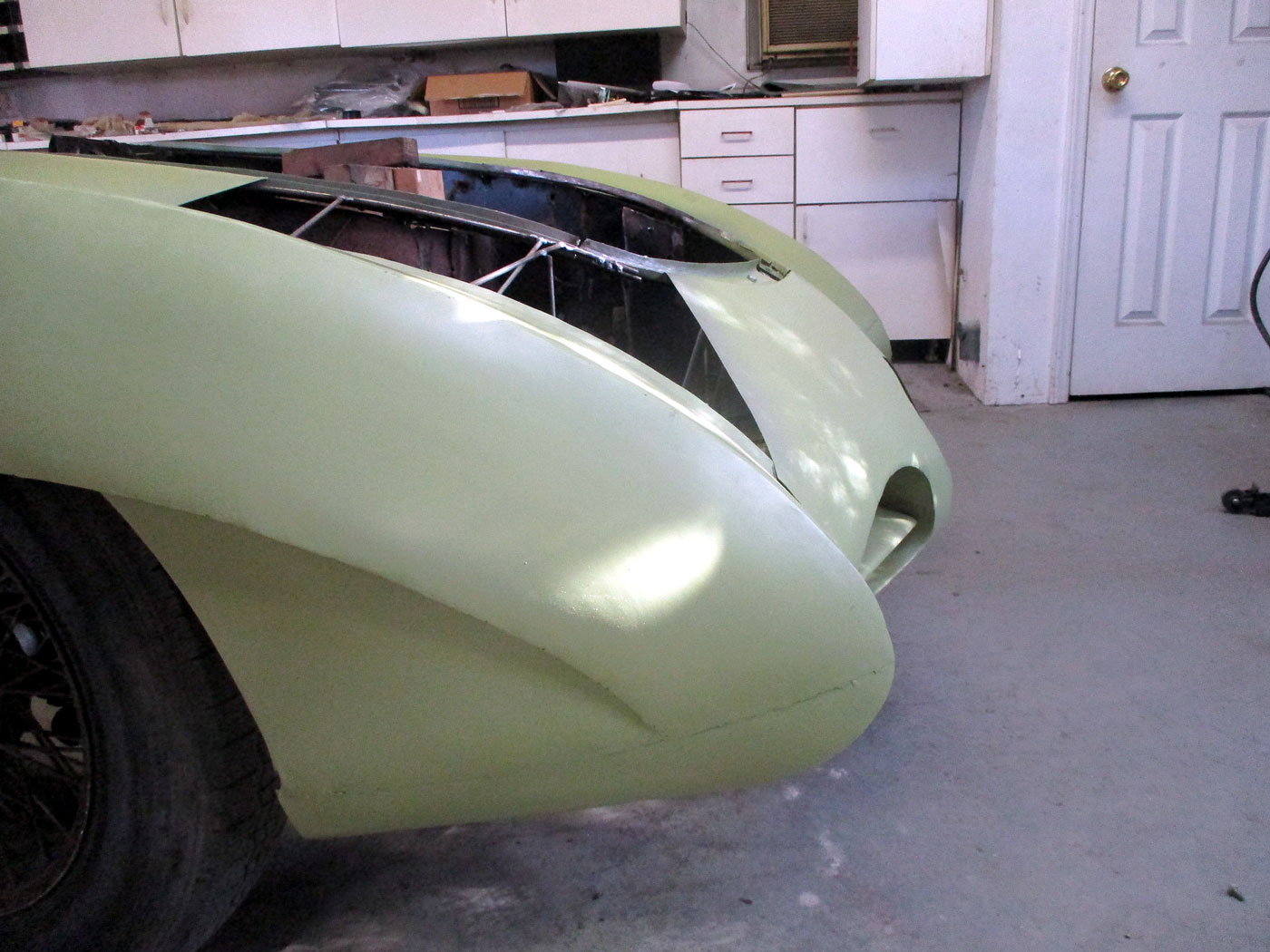
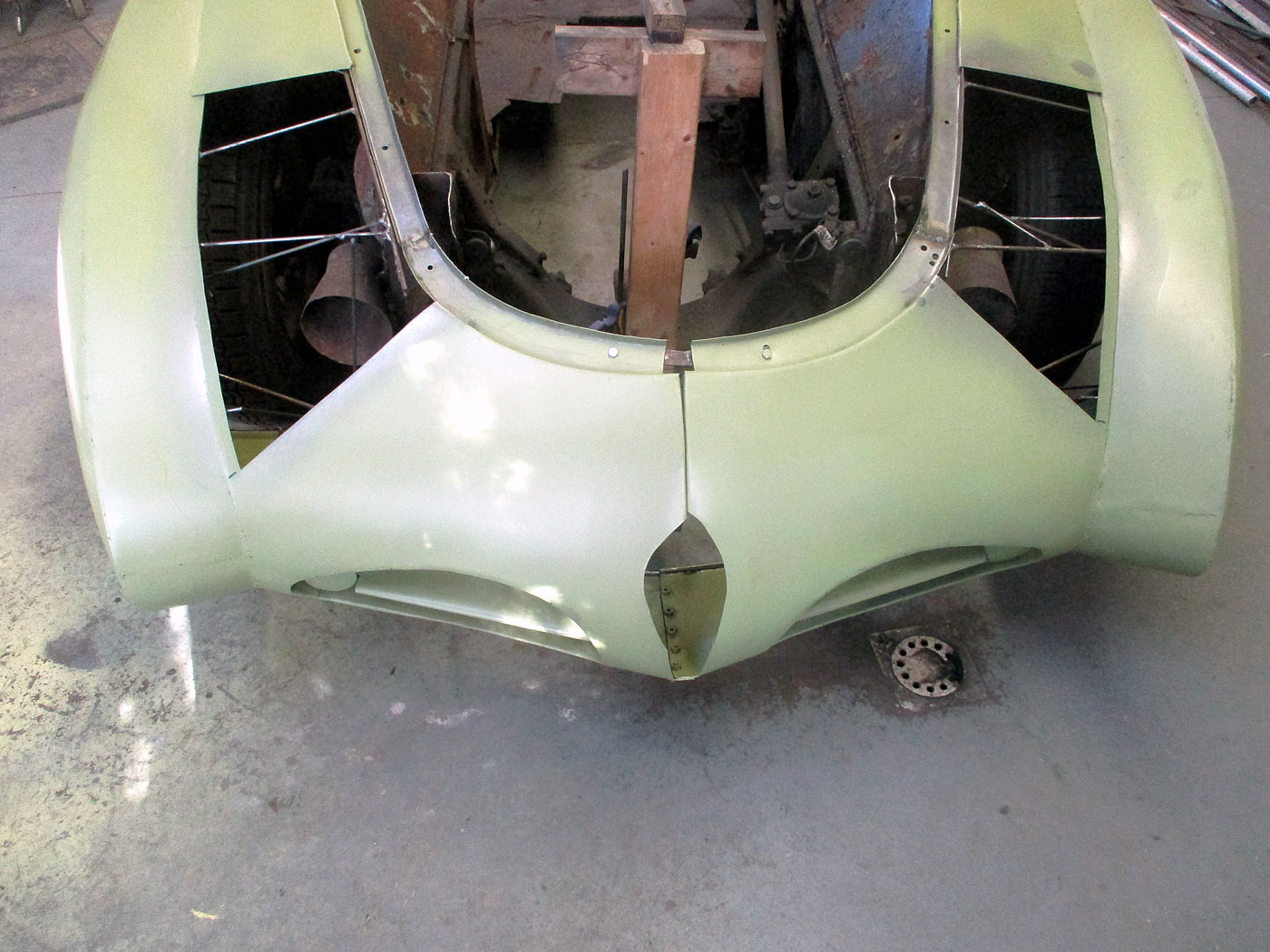
What about the grille, and those concealed headlights? Well, I guess I have to make them. How? I’m not sure. I needed a break, anyway. So I moved on to the back of the car. More on that next time.
This is, as Pete says, a really fascinating series. Thank you so much for making this available. Another point – oh to have such metal fabrication skills!
Once again, Paul Wilson manages to stun me with his work creating a magnificent new body that is period correct but is not a copy of an original.
Curious how this will turn out in the end.
By the way, the Dutch Alfa Romeo Owners Club has translated and issued and the first series of articles on Paul’s 6C 2500 project. Great to see it also in print in their famous Klaverblaadje (cloverleaf) quarterly magazine.