By Robert Birmingham
Poet Laureate and Wisconsin’s 1960 Top Borgward Salesman
Photos by Glen Glendenning
Glen Glendenning photo
Road America Circa 1958, Modifieds
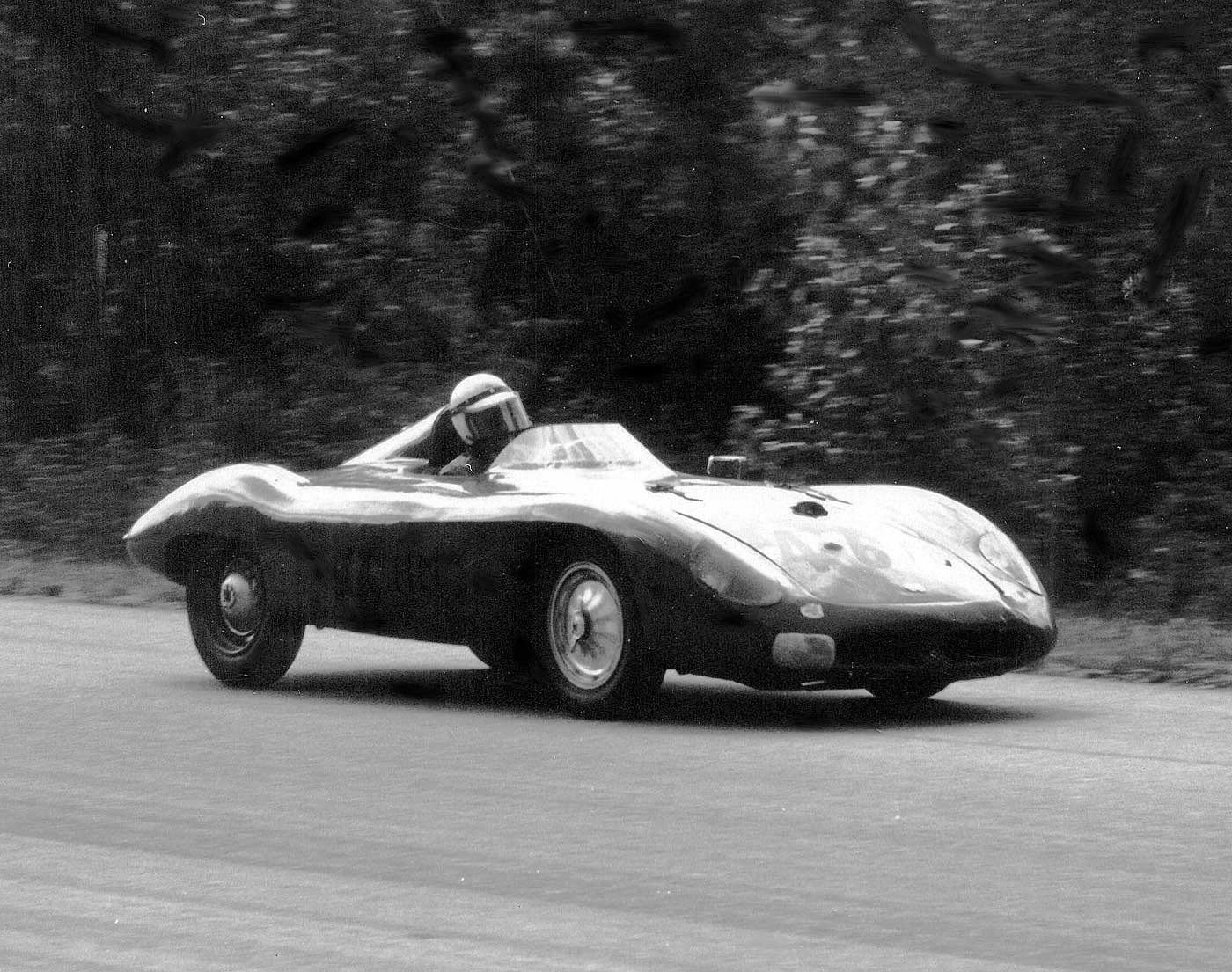
John Mull, DB Panhard
Text by Robert Birmingham
Photos by Glen Glendenning
Read Road America 1958, Production classes
In 1958 crowds for both June and September proved to be highly profitable for both SCCA and Road America and the future looked bright. With four years of racing at Road America in the books, profits soared for the corporation led by Tufte and for area merchants as well whose revenues surpassed their wildest dreams.
Road America, Circa 1958
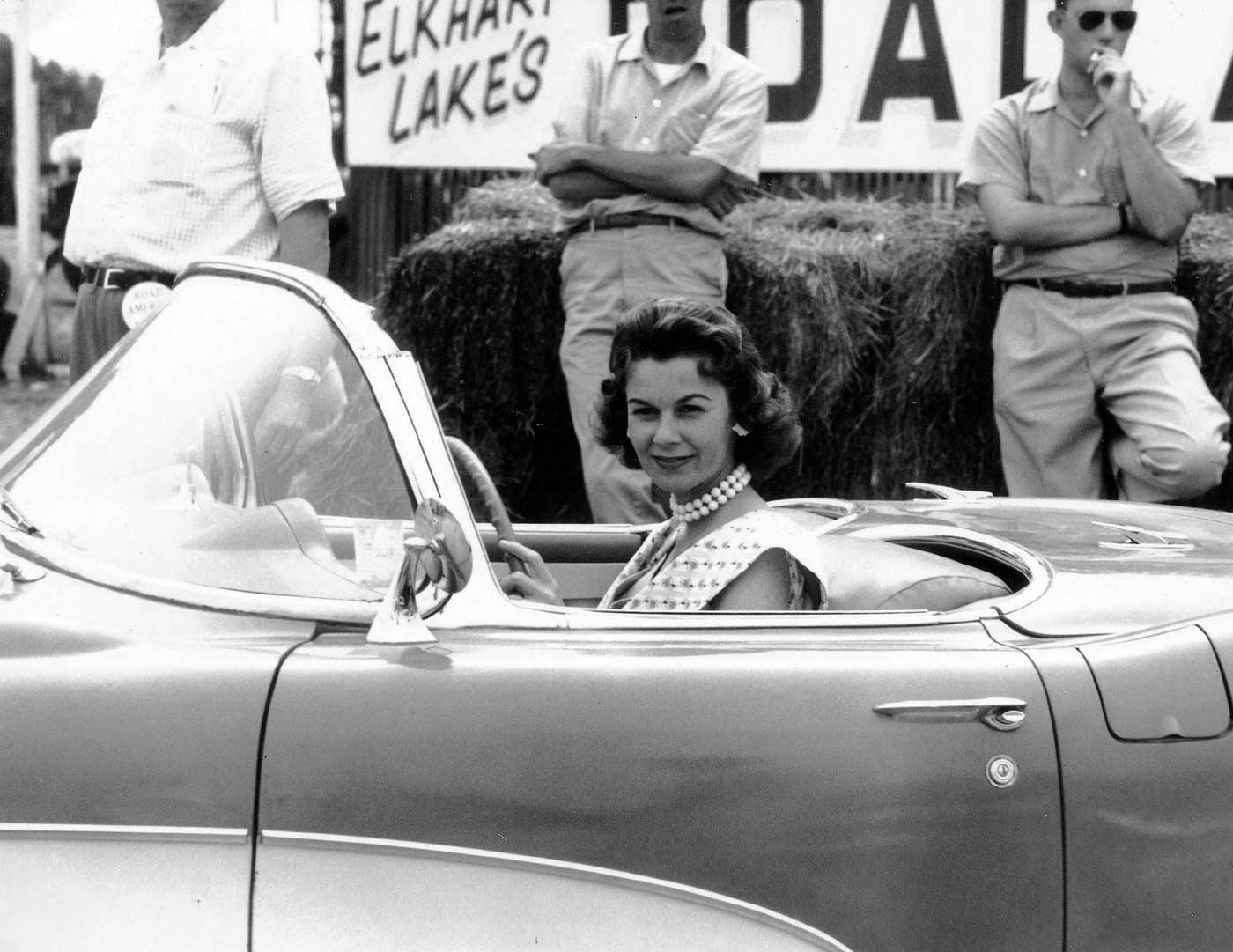
A free year’s subscription to the first who can correctly identify this lovely lady.
Text by Robert Birmingham
Photos by Glen Glendenning
The 1957 NASCAR race weekend attracted a less than hoped for crowd and rightfully so. To put it bluntly, the two-race program was too short, and the large American cars were not interesting. Therefore in 1958 Road America returned to what by now had become known as the June Sprints and three months later, the Road America 500.
Road America, Circa 1957

Jerome C. Earl from Grosse Pointe, Michigan, in the Corvette SR2. Earl would later sell the SR2 to Jim Jeffords.
Words by Bob Birmingham
Photos by Glen Glendenning
A return to two SCCA race weekends made up Road America’s calendar for 1957, the first in June followed by early September. June offered four events, three on Saturday and a 38-lap feature on Sunday. All told the weekend was best described as fun-to-watch club racing.
1957 June Sprints, June 23
1957 SCCA Nationals September 7 (Saturday)
1957 Road America 500, September 8 (Sunday)
Road America, 1956 June Sprints

Jim Kimberly in the OSCA coming down the hill into turn five.
Text by Robert Birmingham
Photos by Glen Glendenning
Road America June Sprints, 23-24, 1956
After an exuberant late 1955, an abbreviated time to sit back and smell the roses was shortened even more when the Chicago Region SCCA received approval to hold two race weekends at Road America, the first on June 23 – 24, 1956 and another on September 8 – 9. If that wasn’t ambitious enough, the National Association for Stock Car Racing’s (NASCAR) Grand National Series secured a race date in August. Clearly all involved, Clif Tufte and his extended team, local merchants and SCCA officials, had their winter hours spoken for to assure competing drivers and their respective teams, area merchants and attending fans from across the Midwest and beyond had safe, enjoyable and profitable summer. [Read more…] about Road America, 1956 June Sprints
Road America 1956 NASCAR and SCCA events

Paul Goldsmith took the Jag MK VII to victory in the under 3.5 liter race. Photo courtesy of Bernie Silverberg Collection,
Story by Bob Birmingham
Photos by Glen Glendenning unless otherwise noted
NASCAR at Road America
On the weekend of August 11-12, 1956 a NASCAR group of mostly good ‘ol southern boys took to Road America in two events. On Saturday a 100 mile race for European and American cars under 3.5 liters and Sunday the 250 mile feature for American made stock cars. Saturday’s grid had a mixture of small European sedans, an American Studebaker and one Jaguar VII Saloon, the latter driven to victory by NASCAR’s Paul Goldsmith.
The Birth of Road America, 1955
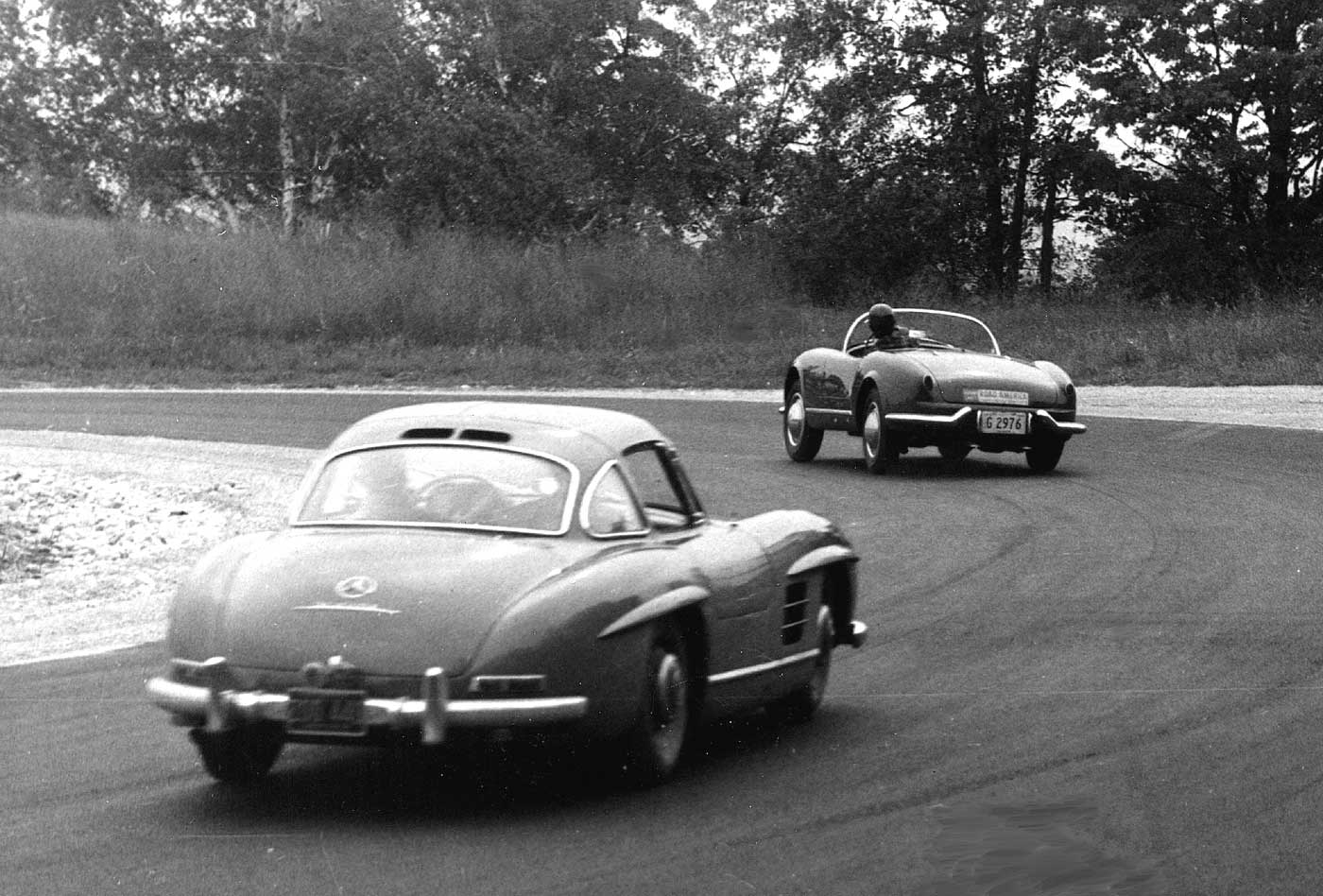
Glen Glendenning captured the first cars on the new track, probably in June of 1955.
Robert Birmingham tells us about Road America’s first event
With photos by Glen Glendenning unless otherwise noted
During the late 1800s, and decades beyond, was a small, calm pastoral village in Sheboygan County, Wisconsin serving the farming community. Times were good, America was entering an industrial period and the village became a popular vacation destination. Available via the Chicago, Milwaukee, St. Paul and Pacific Railroad (Milwaukee Road) the village served many wealthy Chicago and Milwaukee families who sought to enjoy what was offered.
Quality resorts served visitors, the Schwartz Hotel, Siebkins, Pine Point, Sharps and Osthoffs, each overlooking a deep, blue lake where stately trees lined the shore. Business ebbed during World War I, picked up after but during the mid-thirties Great Depression returned to hard times. World War II continued the demise until signs of recovery in the late forties. To put it bluntly the town was not growing, business continued to laze and then something changed. The town was Elkhart Lake, Wisconsin.