Story and photos by Paul Wilson
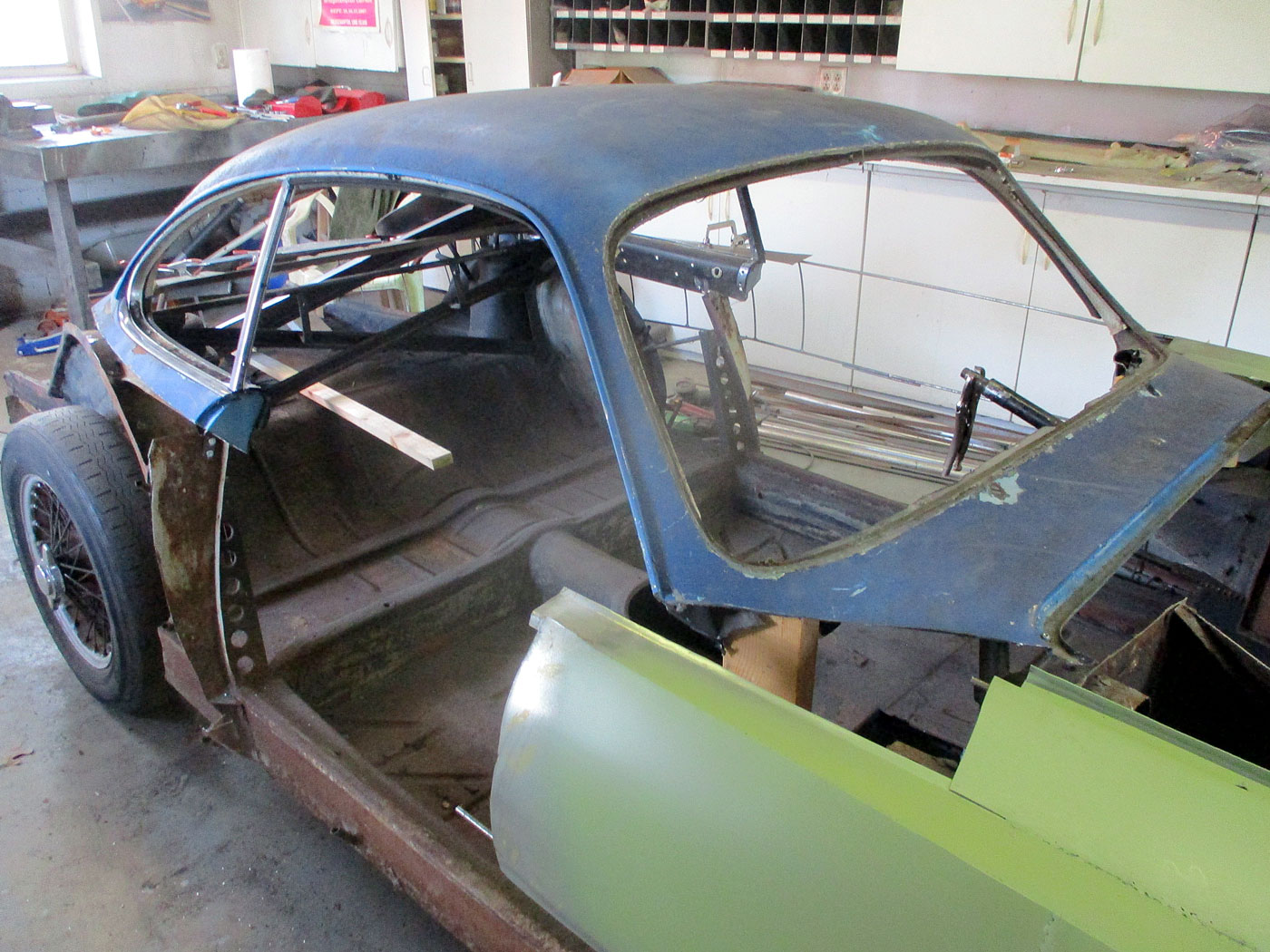
To have any hope of finishing my BAT, I needed to take as many shortcuts as possible. An obvious one was to use parts from other cars if they were near-duplicates of the vision in my mind. The roof of a VW Karmann-Ghia, for example, was all but perfect. I couldn’t improve on the side window profile, and it was the right height and width. A windshield with more slope, and a rounded base at the cowl, would have been ideal. But making a custom roof, getting glass to fit, finding seals, just for minor improvements? It didn’t make sense. I got a K-G roof, which looks just fine.
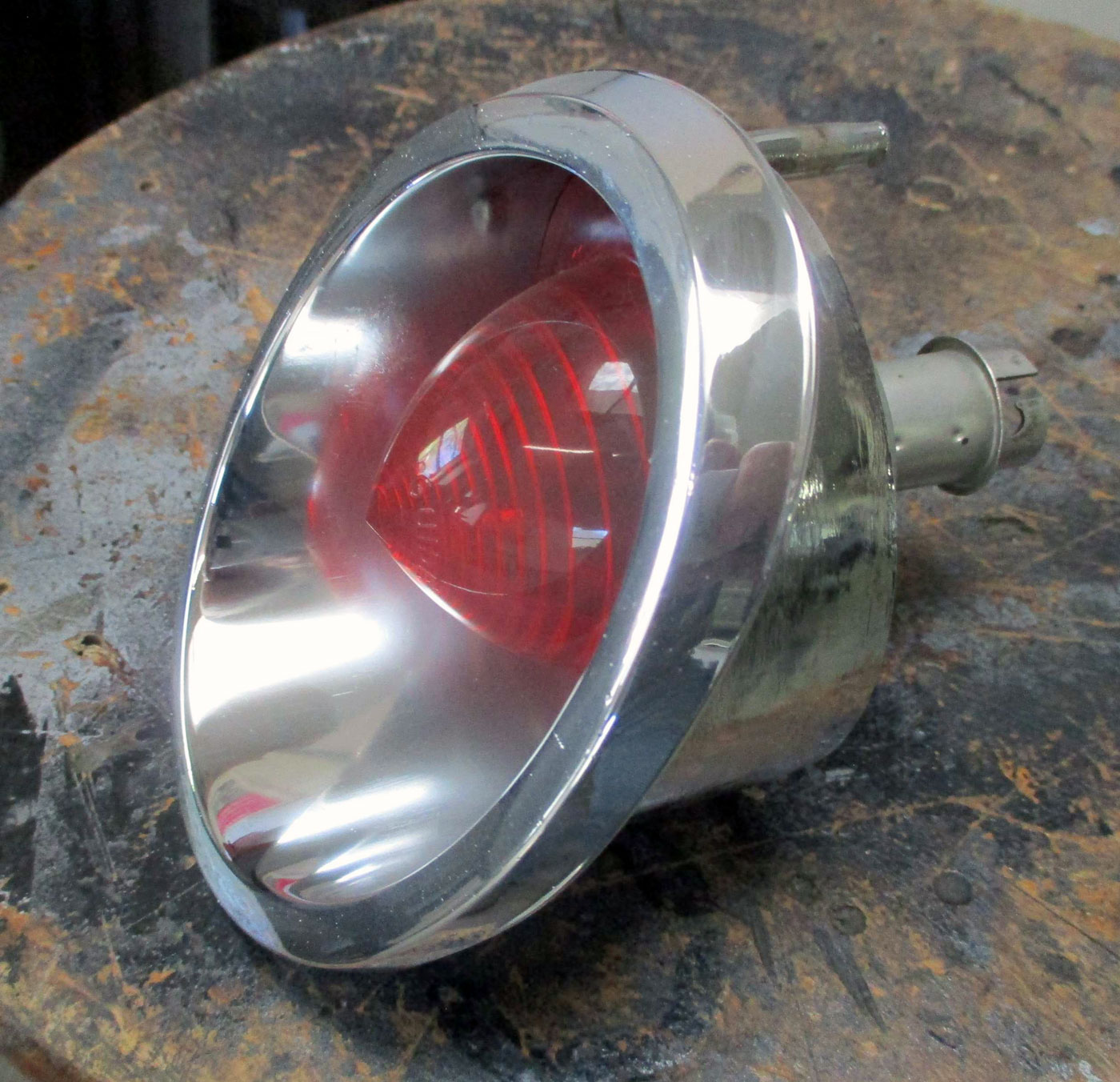
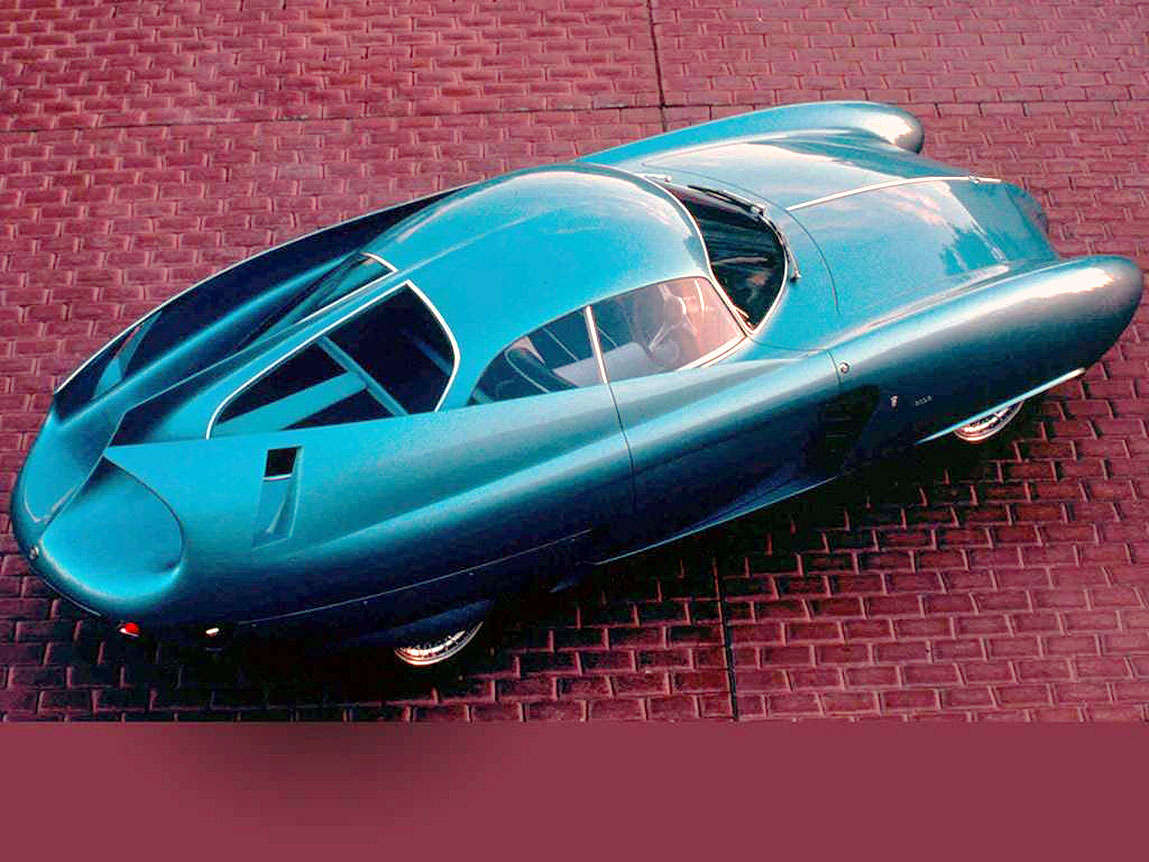
I looked for a similar solution for the taillights. BAT 5 and BAT 7 have round taillights in chrome housings that are countersunk in the tapered tail. They look great. But did I really need to make my own? It’s a simple idea. Surely there’s some car out there that has just what I want. There is. I got a pair–new, beautiful, not expensive. From what car? As school textbooks sometimes say, “The solution is left to the student.” Many readers will have the answer.
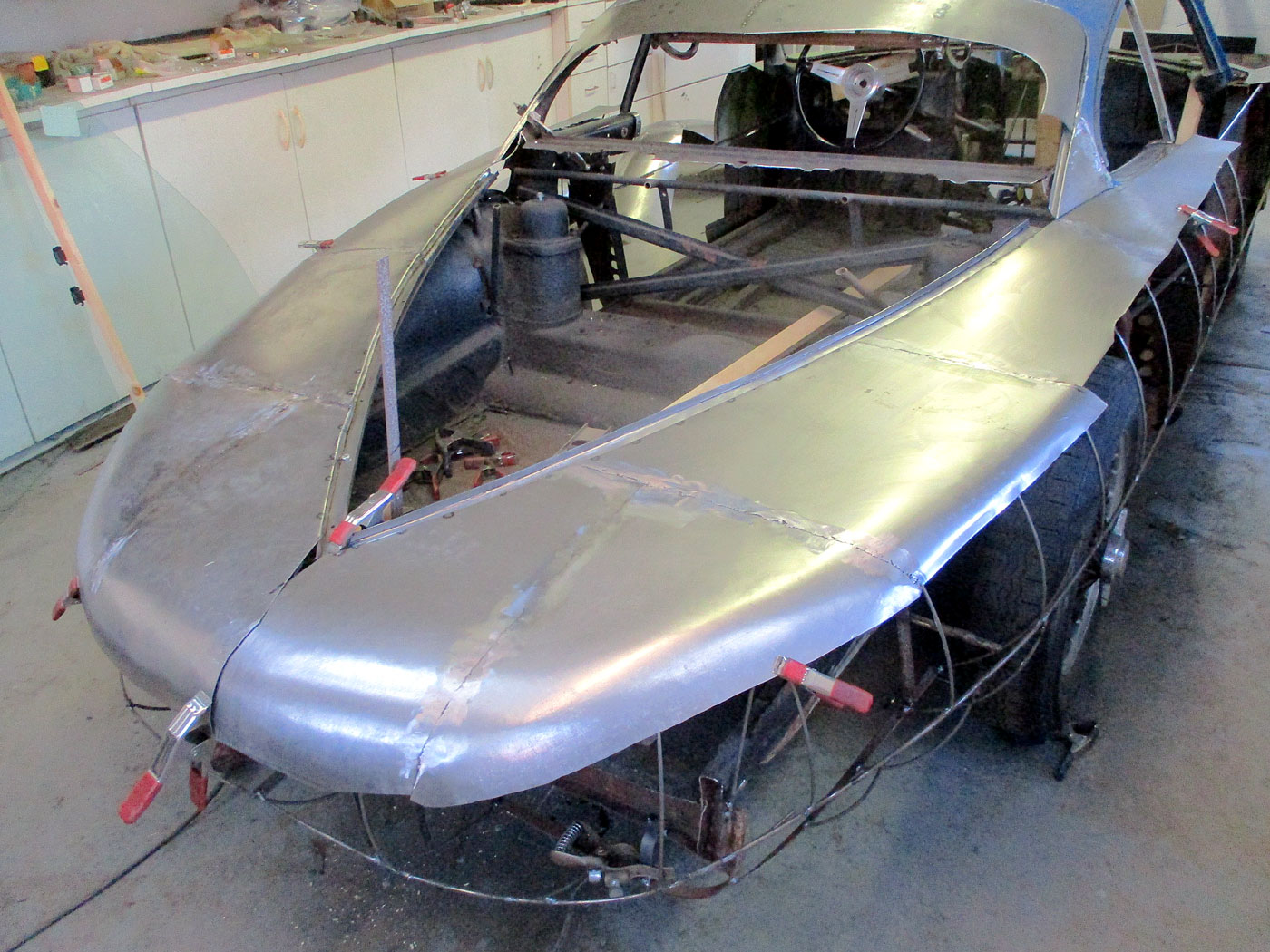
In designing the rear, I spent a lot of time puzzling over pictures and my BAT models. What, exactly, was I looking at? Those wild fins and the elongated roof dominate the view. So many curves and lines intersect that space that what’s underneath is not immediately recognizable.
The basic shape, I finally realized, is of a typical ‘50s sports-racer, sloping gradually down and in from the sides to a rounded rear. I decided to build this first, then add the roof and fins.
I set to work as I had with the front. The basic lines were defined by heavier 1/4″ rods; intermediate shapes were outlined by 3/16″ stock. Then, piece by piece, sheet metal was formed and welded into place. A suitable structure had to support these fender units. The design was a compromise between strength and weight, with a bolt-on system to allow for easy removal of the sheet metal for painting at a later stage.
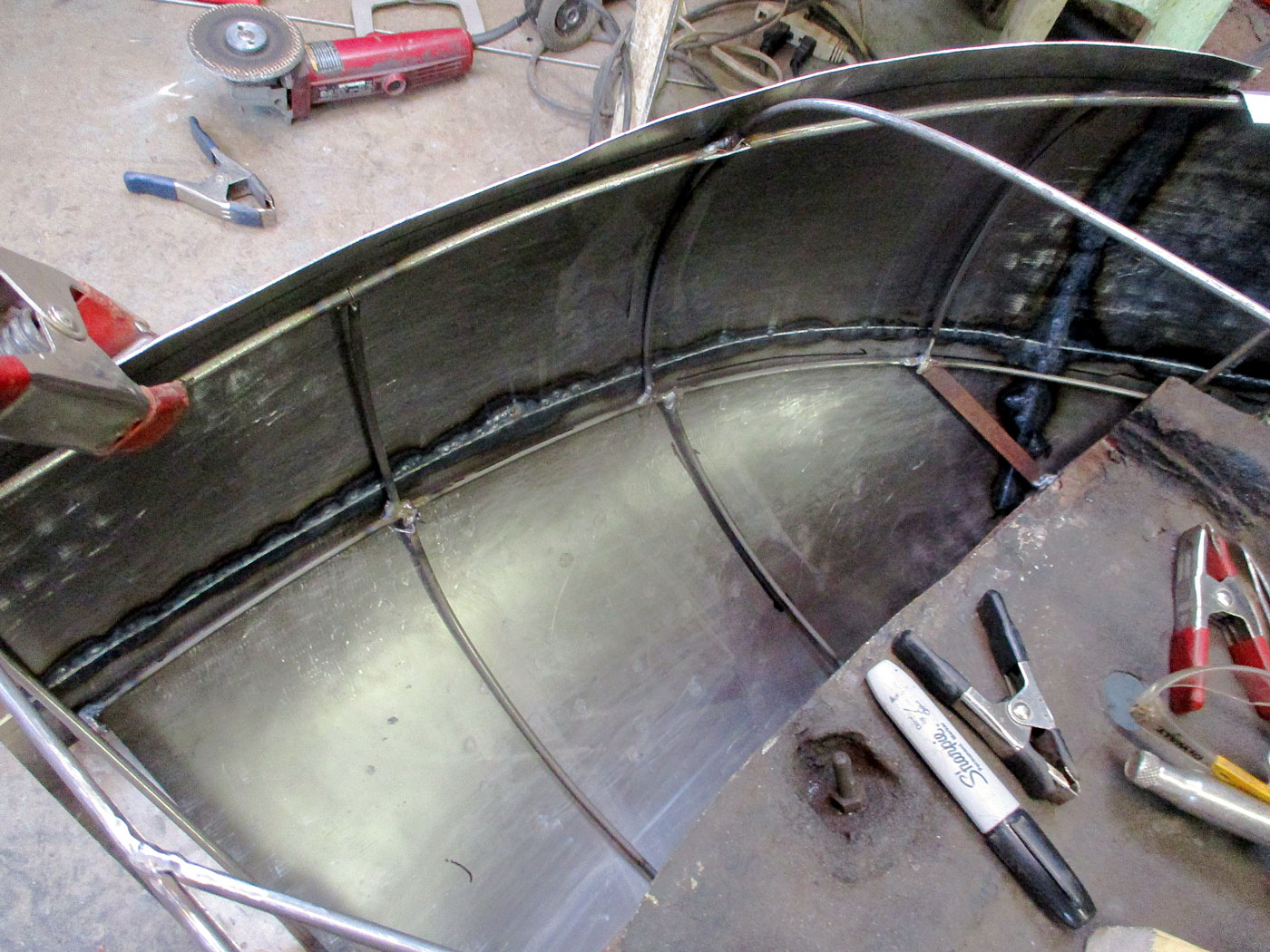
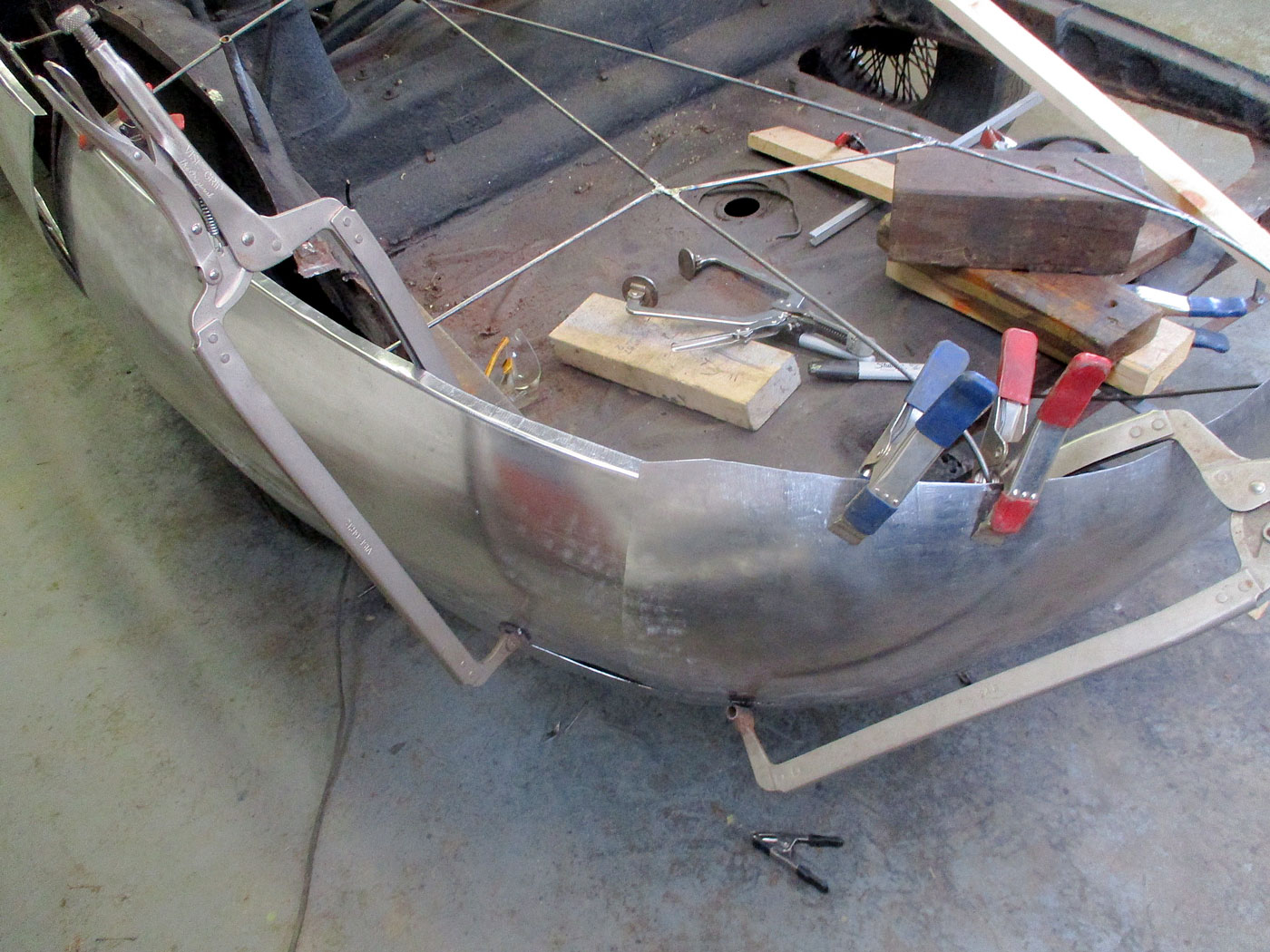
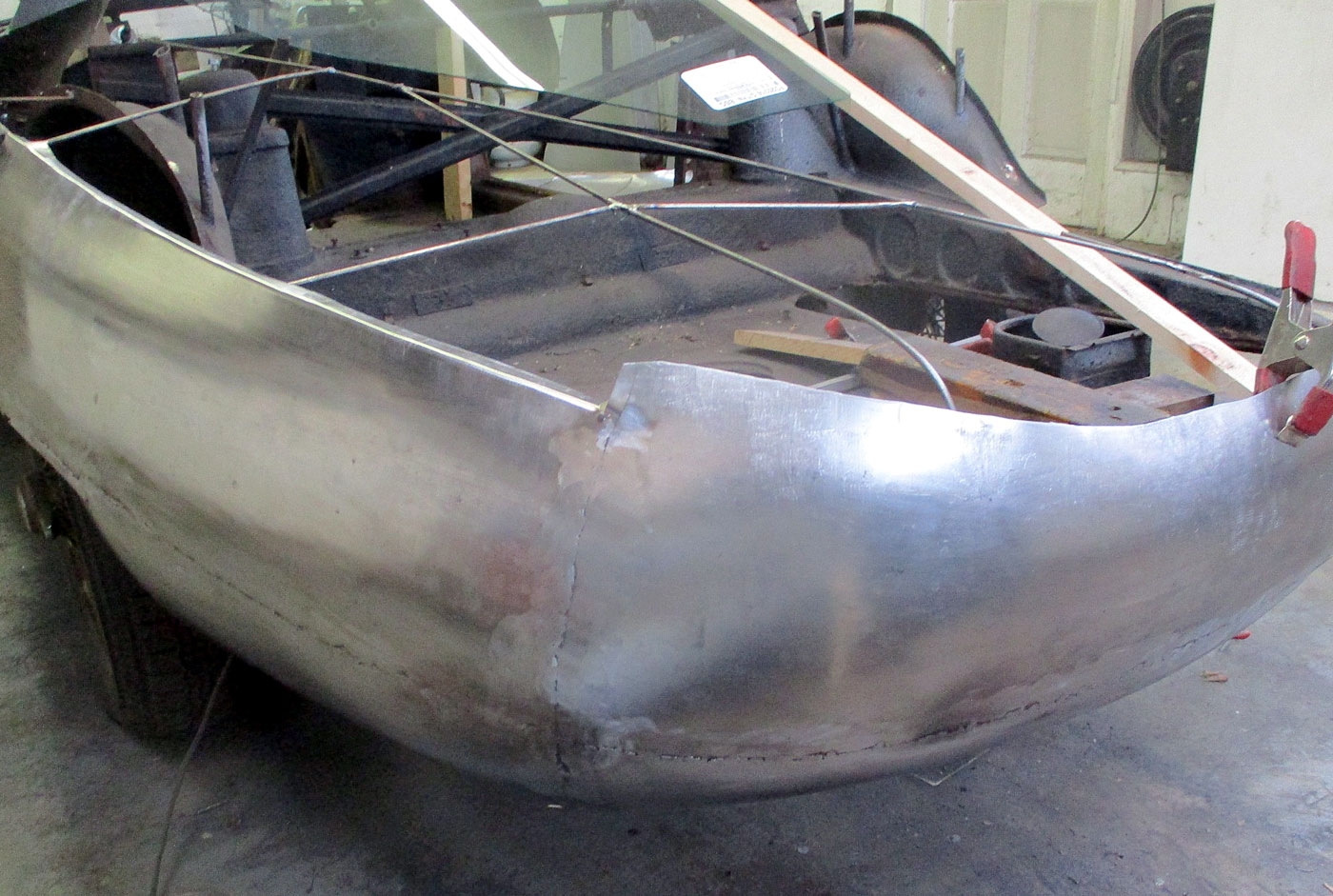
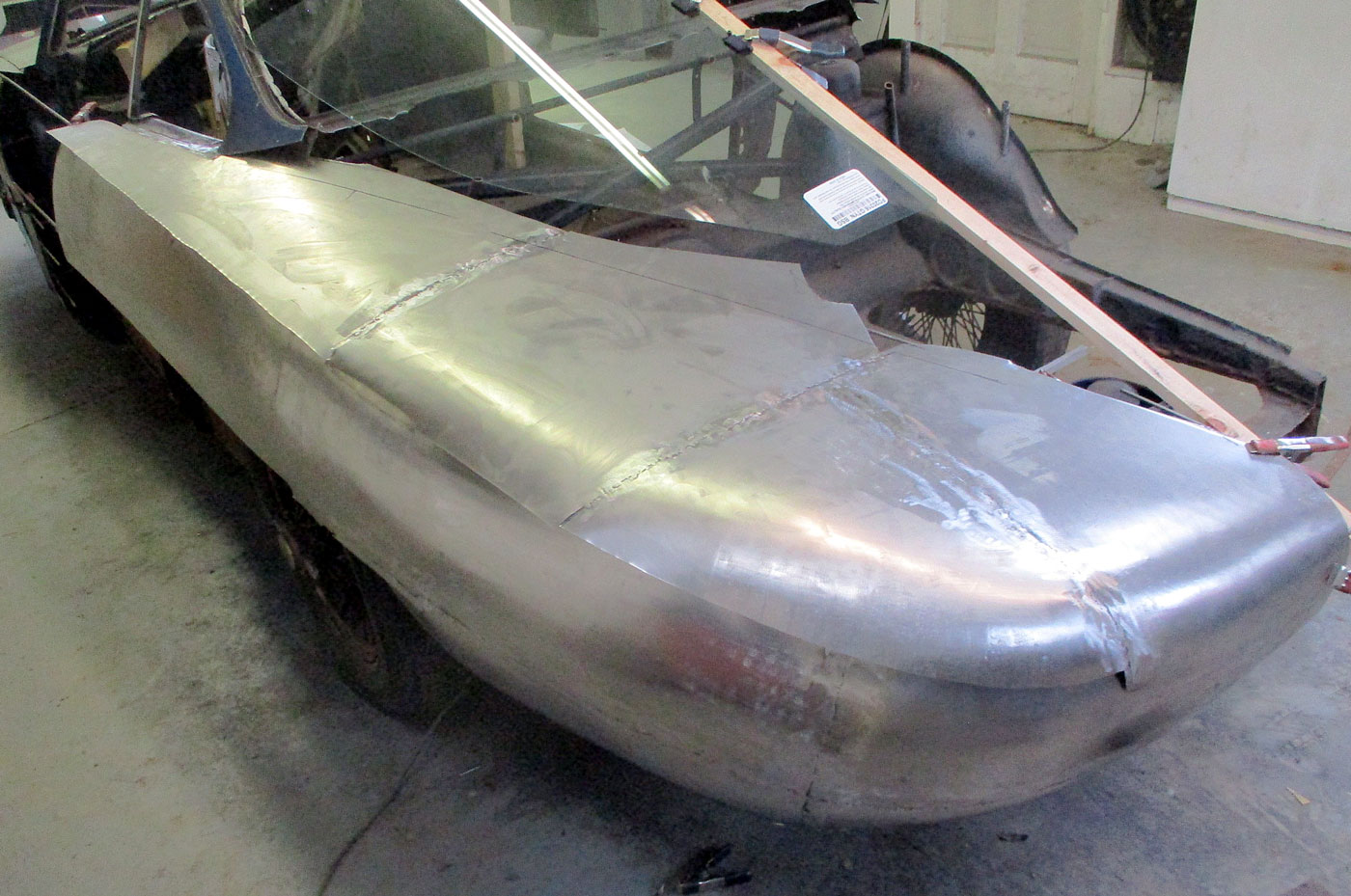
The tapered roof was a much bigger challenge. The original BATs had a major practical problem that I didn’t want to copy: no access to the rear. No shut lines mar the smooth valleys inside the fins of BAT 7. In theory you could crawl through from the passenger area, but that is blocked by a structural X-brace. OK, maybe luggage capacity isn’t important. But retrieving a spare wheel would be impossible. And what if some rodent died back there? Some kind of outside access was needed. Two options came to mind. A hinge under the center fin, allowing the sides to lift? But then the side fins would block the opening. A huge hatchback, hinged from the roof, was the other option. But it would be heavy, with a long, flexible, inevitably leaky perimeter. Clearing the fins when it opened would be hard to calculate in advance. Bad as it was, it looked like the only solution.
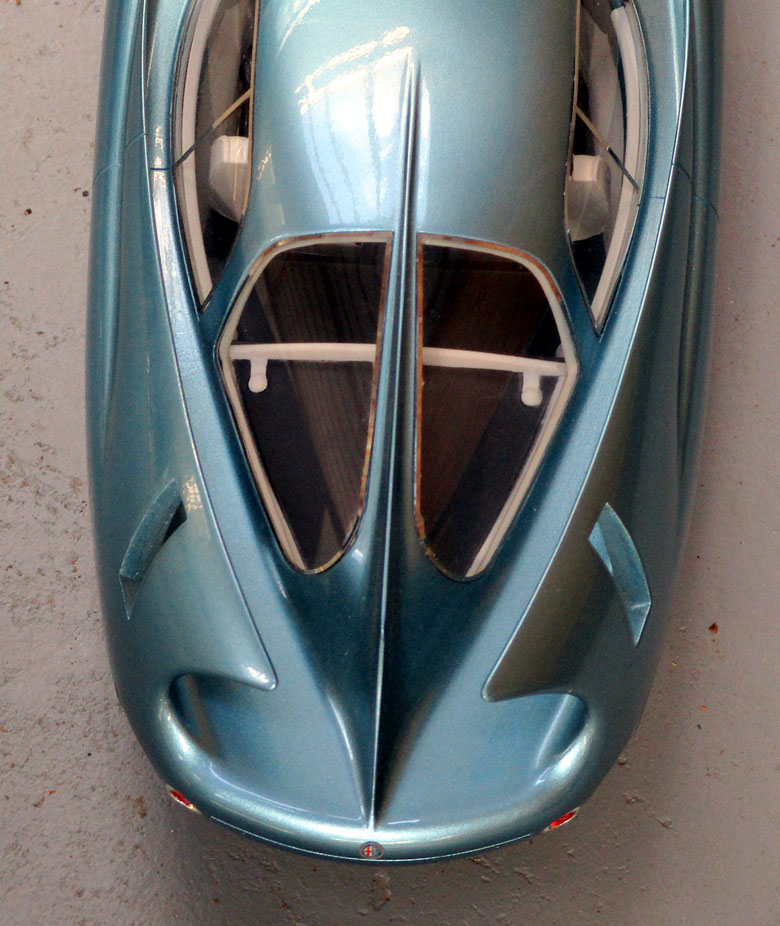
I like BAT 7’s pair of rear windows split by a dorsal fin, and wanted something similar. But I immediately faced an even bigger problem than the obvious structural challenges: where would I get glass in those shapes? Easy, you think. Just go to a glass place with a pattern, have them cut the pieces, stick them in. The windows I wanted were curved, but all cars have curved side glass, and my mine could be cut out of larger pieces. Wrong. All those side windows are made of tempered glass, which shatters if you try to cut it. OK, maybe I can find an existing window that’s already the right size and shape. But how? Thousands of windows are available, but they’re only listed by make and model, not shape.
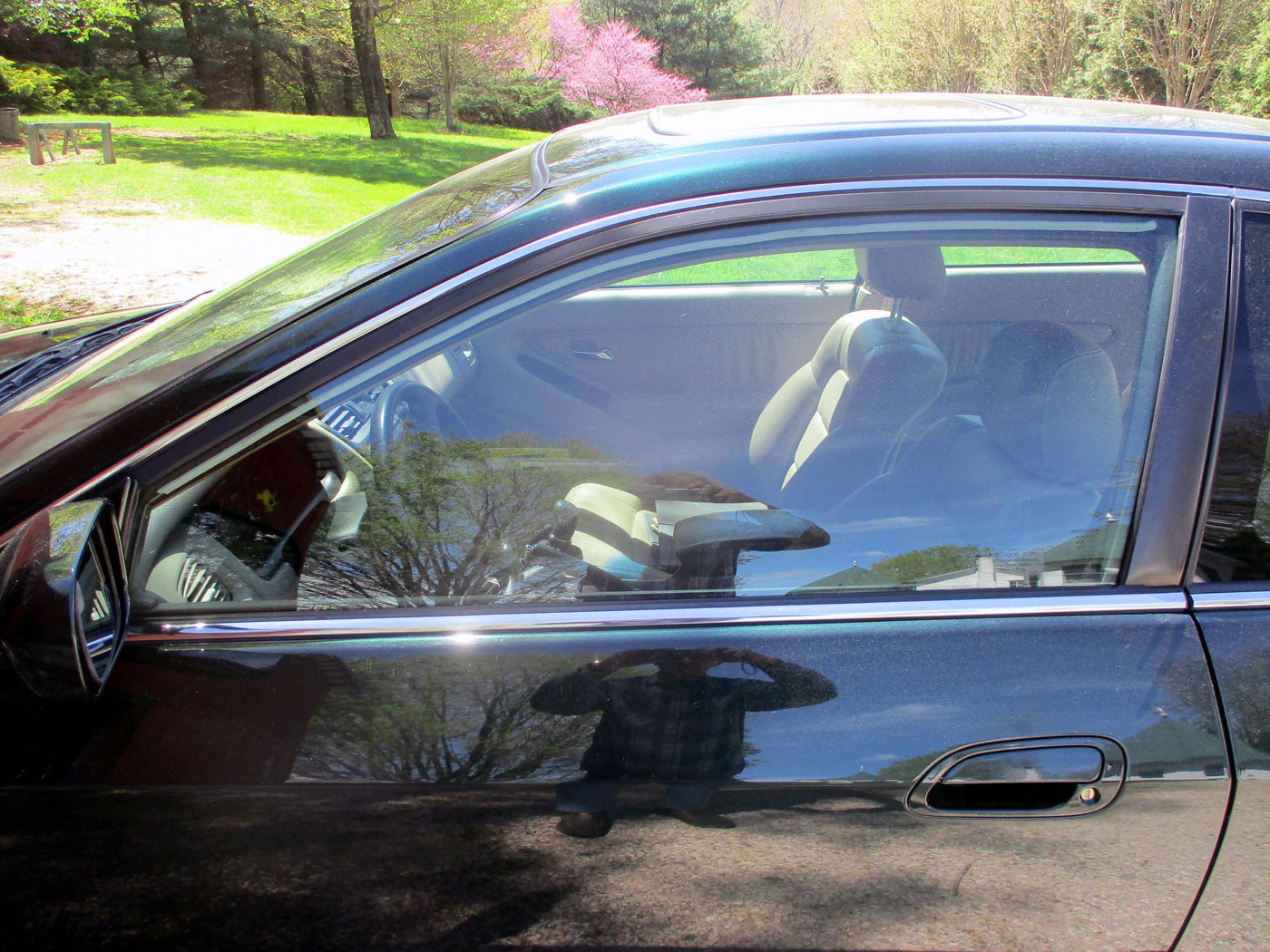
I spent a lot of time looking at car windows. The variations are nearly infinite, and with door windows, the lower part is out of sight, so the size is impossible to determine. But then I got lucky. The front door windows in my wife’s 1999 Honda looked like a possibility, so I ordered one. The outline wasn’t perfect, but I could get closer to what I wanted by overlapping the glass with more sheet metal. The glass wasn’t expensive, only about $75 including shipping. And it’s tough: I could force it to into channels without breaking it. It survives even being dropped on a hard surface. How do I know this? Don’t ask.
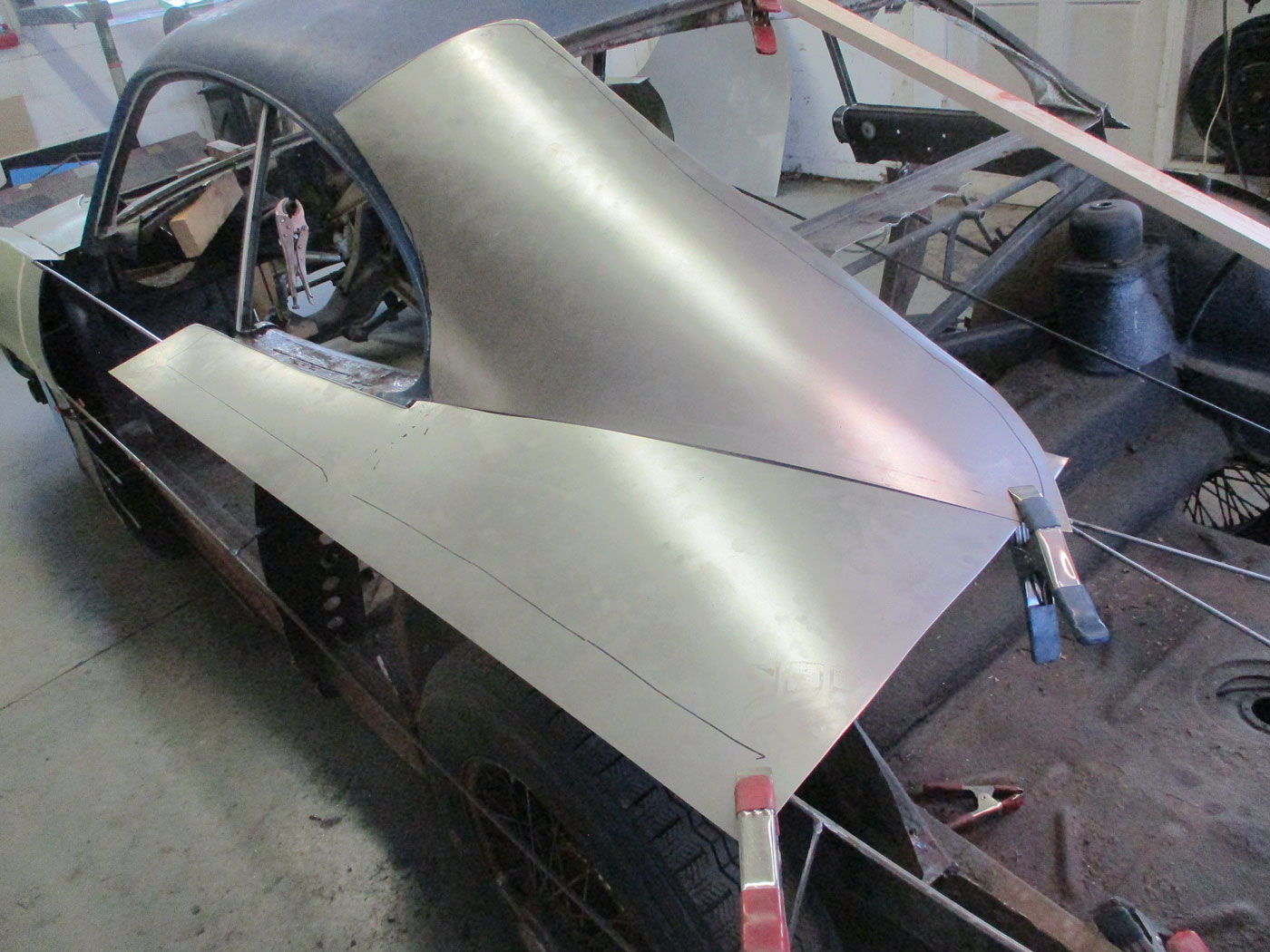
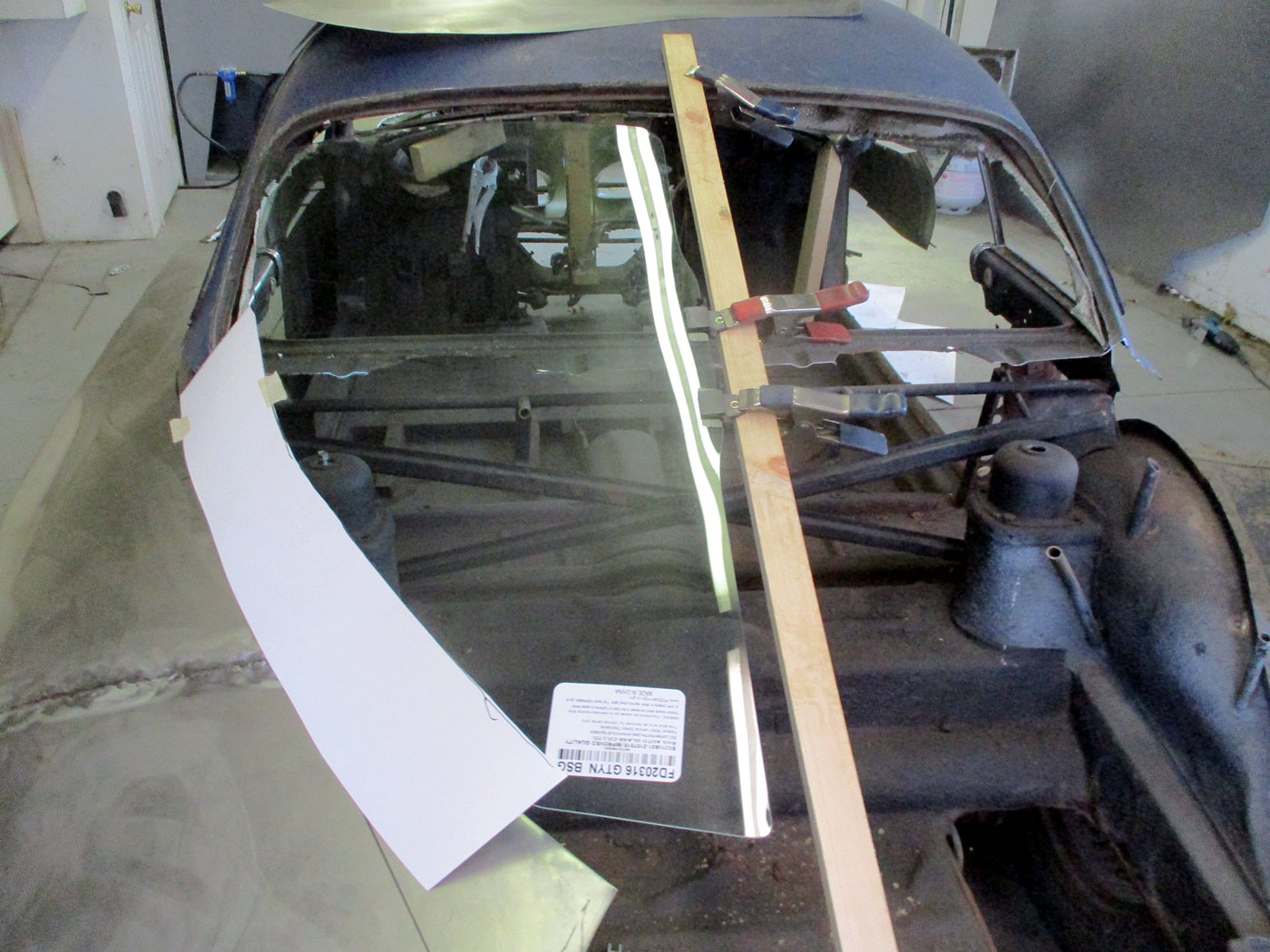
To extend the Karmann-Ghia roof with this long hatchback I had to make some strong hinges, and then do some careful planning of how the contours would fit together. With a few test pieces of metal I could see that the basic concept would work: I could get a reasonable approximation without any compound curves. I centered a stiff wooden stick on the rear deck, clamped glass on both sides, and taped construction paper to the outside areas. It looked encouraging. But just like the metal sections in the fenders, making something that at first glance looks OK is easy. Getting a perfect fit is a different matter. Yes, rubber seals are flexible, and I could use extra goo if there were gaps. And whatever mess I made would be behind the fins, so not too visible. But an even gap at the edges of the glass, and a close seal at the base of the hatchback, were going to be hard to achieve.
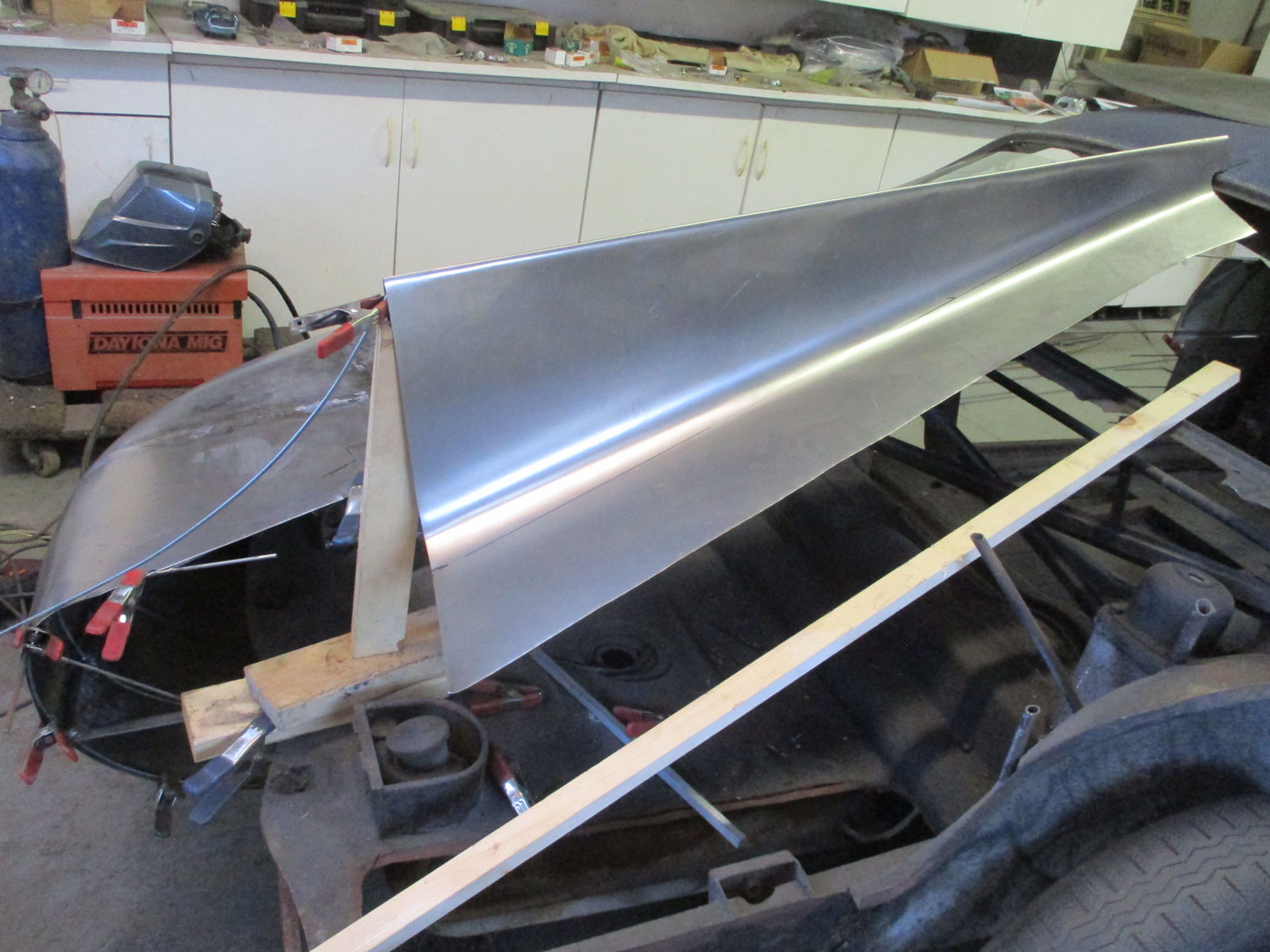
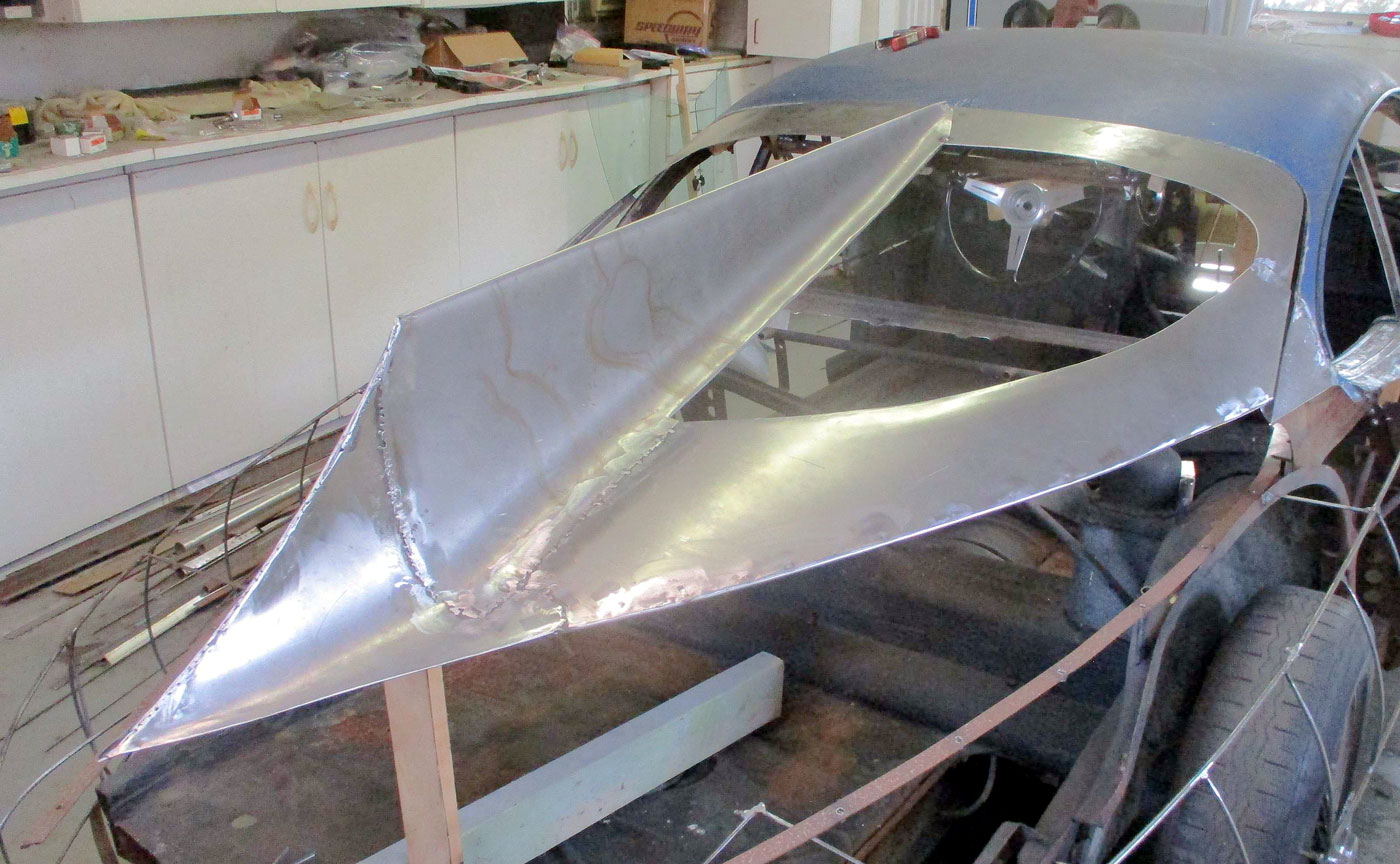
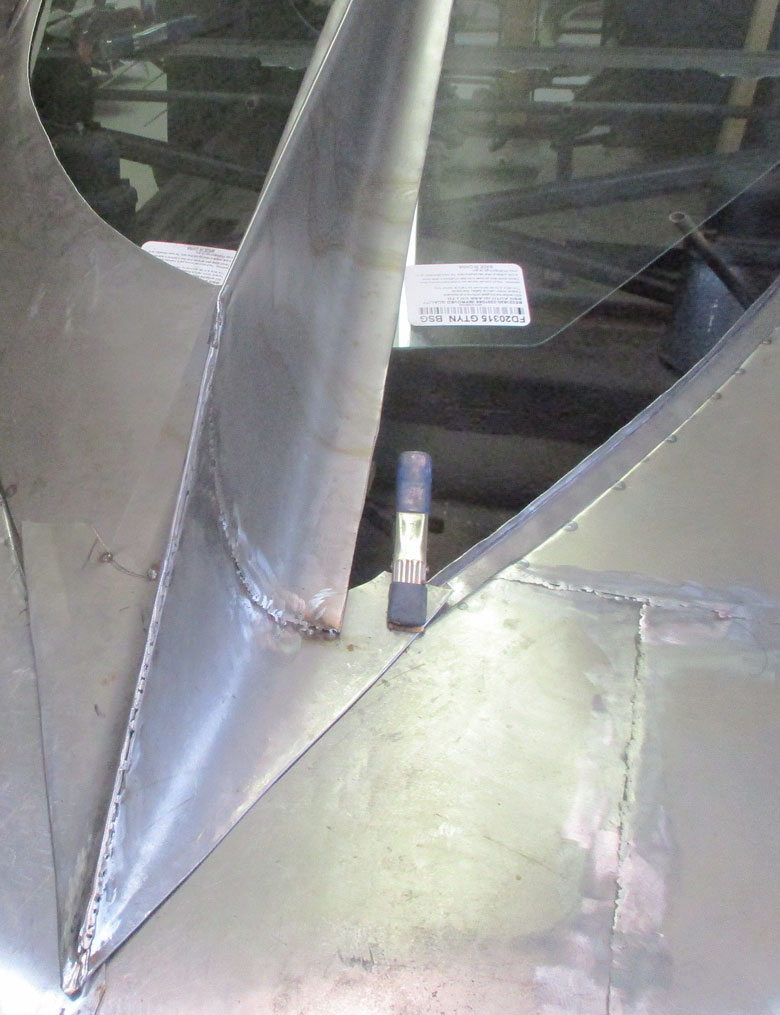
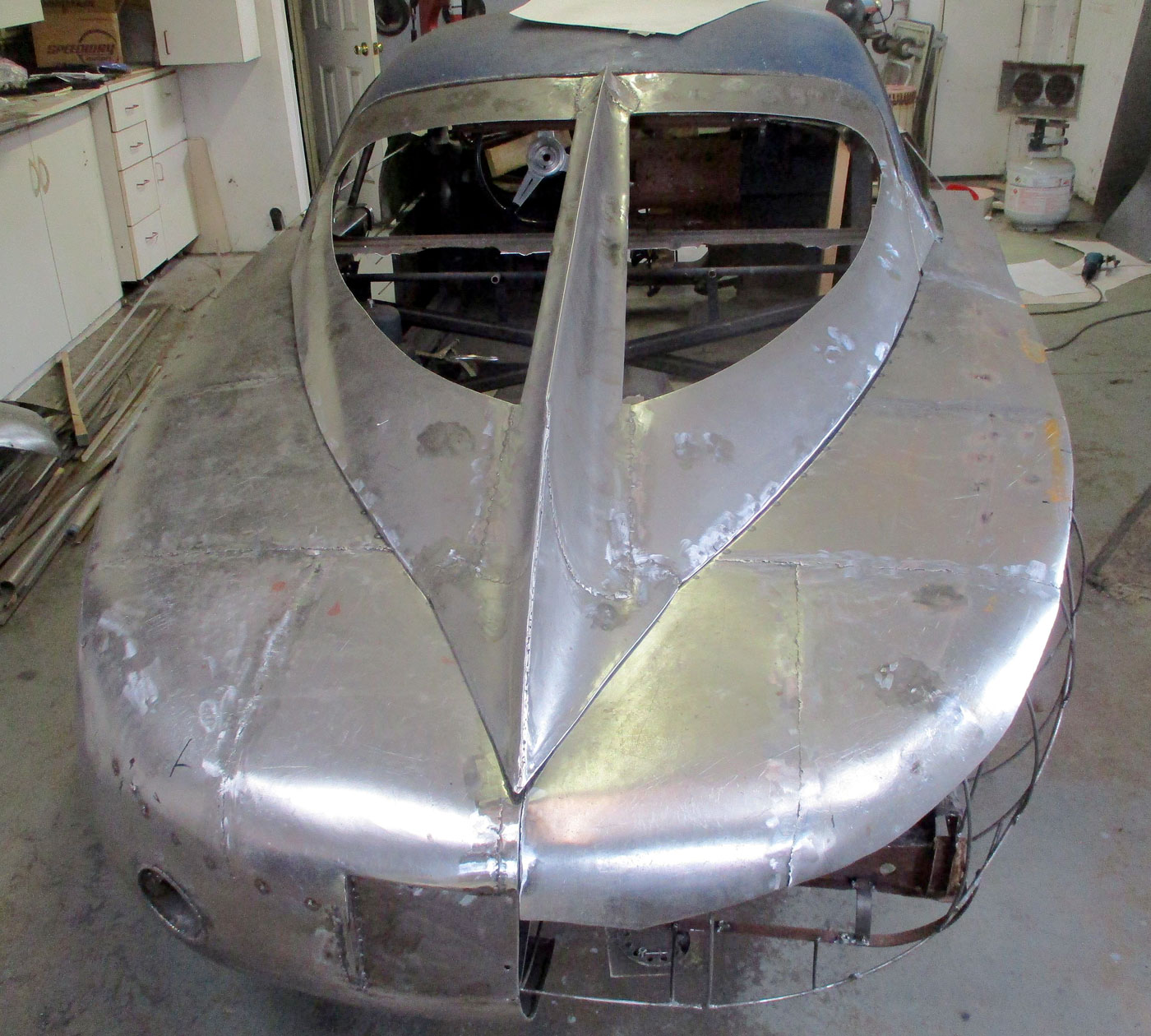
The shape of the dorsal fin, a tall beam, helps to make the hatchback stiff, and the glass is strong and rigid. So the floppiness I worried about is not a problem. Getting a good fit all around, on top at the hinges, and on those long sides, is a bigger concern. The fenders are held by a series of bolts at the base of long channels, into which I’ll fit rubber seals. When I take the car to a high-pressure car wash, will these be leak-free? That would be a miracle. But, practical concerns aside, I think it has the right look. The lower curve of the windows, at this stage, just looks arbitrary and weird. But I think it will make sense when the fins are added, contributing to the inward sweep of those wonderful breaking waves.
Next time: those spectacular fins.
So, I’m a lover of the Bat Lore & see this as very wicked. I am a bit perplexed you didn’t go Perspex for the hatchback. I get the added strength of glass but there’s a weight penalty too. There are a # of companies serving the motorcycle w0rld who do one offs. Anyways the car seems superb as does yer design. Ciao, Pj
Tail lights — 1960 Impala?
https://www.picfair.com/pics/07305280-vintage-1960-chevrolet-impala-tail-lights
Tail lamps from a plastic Chevrolet. Yup they’ll work. A previous owner had put a pair of them on an Elve Courier I used to own. Their angle is amazingly adaptable.