Story and photos by Paul Wilson
I have put off writing this chapter of my BAT project because I keep thinking of that classic of all-time worst opening lines: “This is the meticulous record of a life in which absolutely nothing of interest happened.” Repairing and cleaning aren’t as exciting as designing and fabricating. But I had a few adventures and challenges, not just tedious work, and some experiences were new to me, and maybe to you who are reading this.
The body was made in bolt-on sections, which were easily removed. Next came disassembly of everything attached to the chassis. Off came the front suspension, steering, rear axle, and gas tank. Every little piece had to be removed. The chemicals used in the dip-strip process dissolve paint and rust, but also aluminum. Alfa used aluminum spacers inside some steel box sections. Unless these were found and taken off, they would disappear.
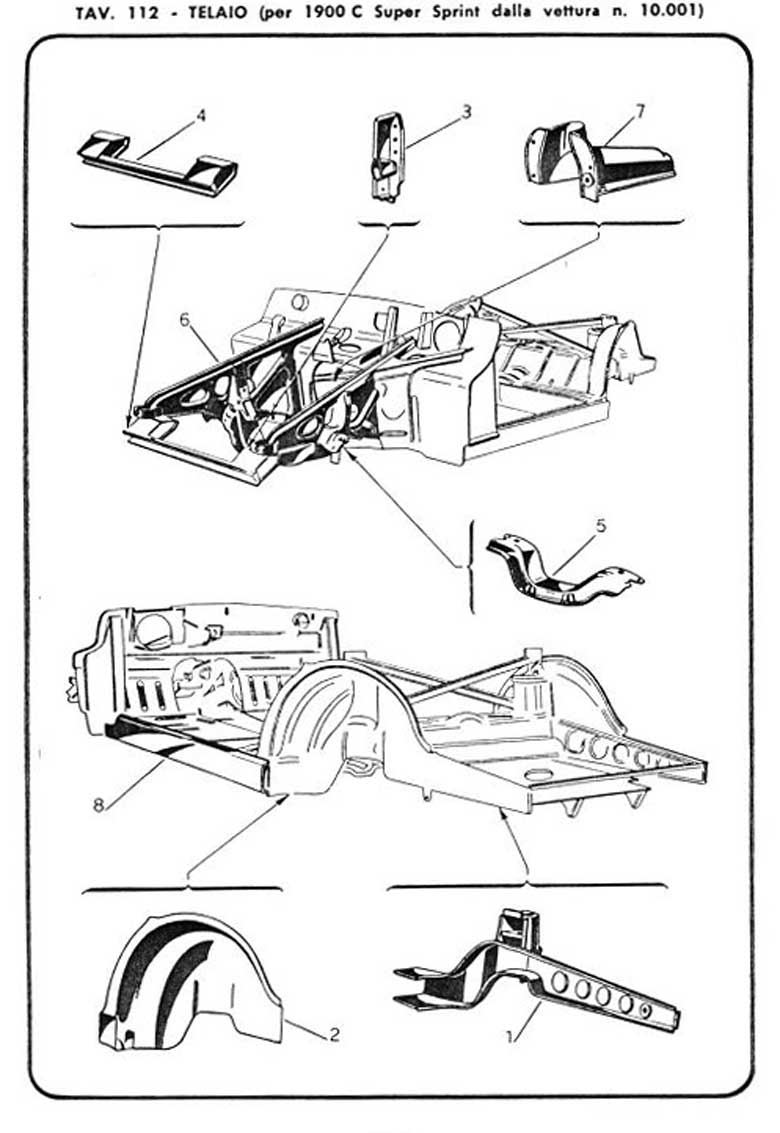
The chassis is a complex assembly of sheet metal stampings.
Before too long, the bare chassis sat on sawhorses. Then what? Not only is it heavy (and I work by myself), but it’s a sheet metal structure with weak extensions (body support strips, sheet metal edges) on the top, bottom, and sides, so unlike the usual beam chassis, it needs to be supported by frames attached to strong central points. I built legs for it to sit on, somehow heaved it into my trailer, and set forth for the dip-strip place, 255 miles (408 km) away. Halfway there a blizzard began. Snow built up fast. Miraculously, I arrived safely, and left off the trailer with the chassis in it. My two-wheel-drive truck barely reached a nearby motel, where I got the last available room. This wasn’t an adventure I’m eager to repeat.
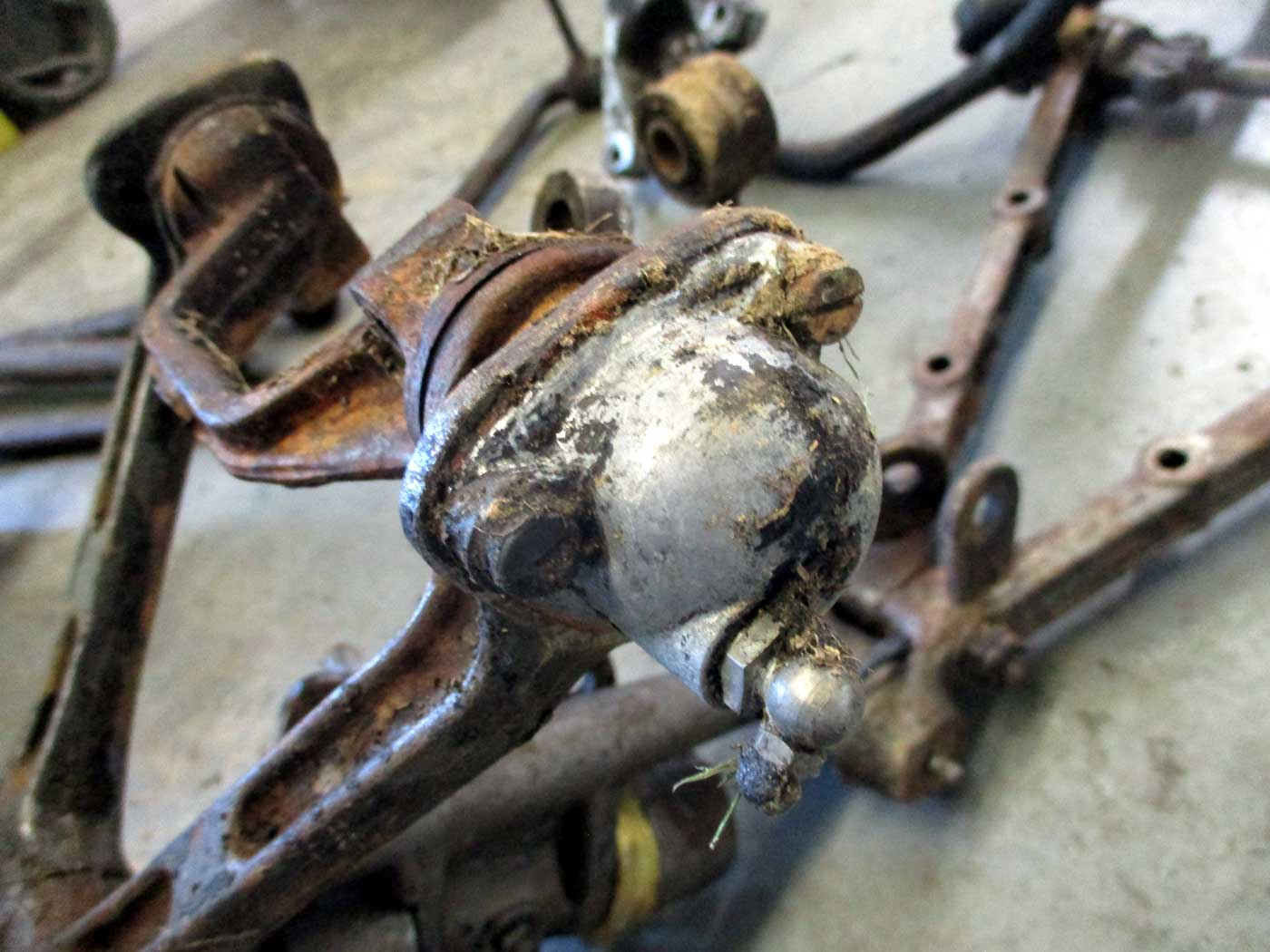
Upper suspension arms, before.
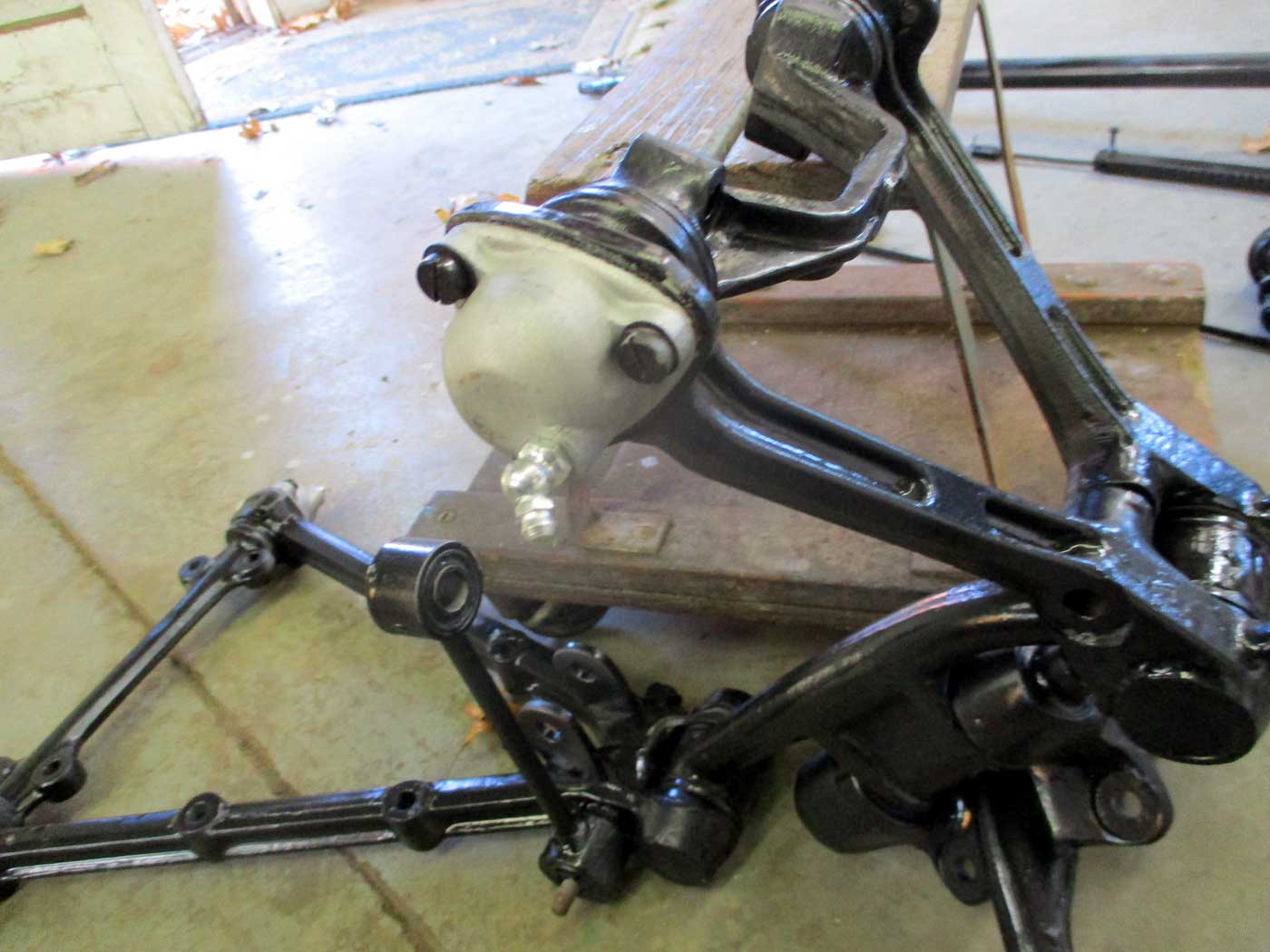
Upper suspension arms, after.
While the chassis was gone (the process takes about two months) I restored all the parts I had taken off. There wasn’t much wear in the steering joints or suspension bushings, but of course everything looked ugly. I took it all apart, sandblasted it, primed and painted it, and reassembled what I could. I got new rubbers for the steering joints, and bright new grease fittings.
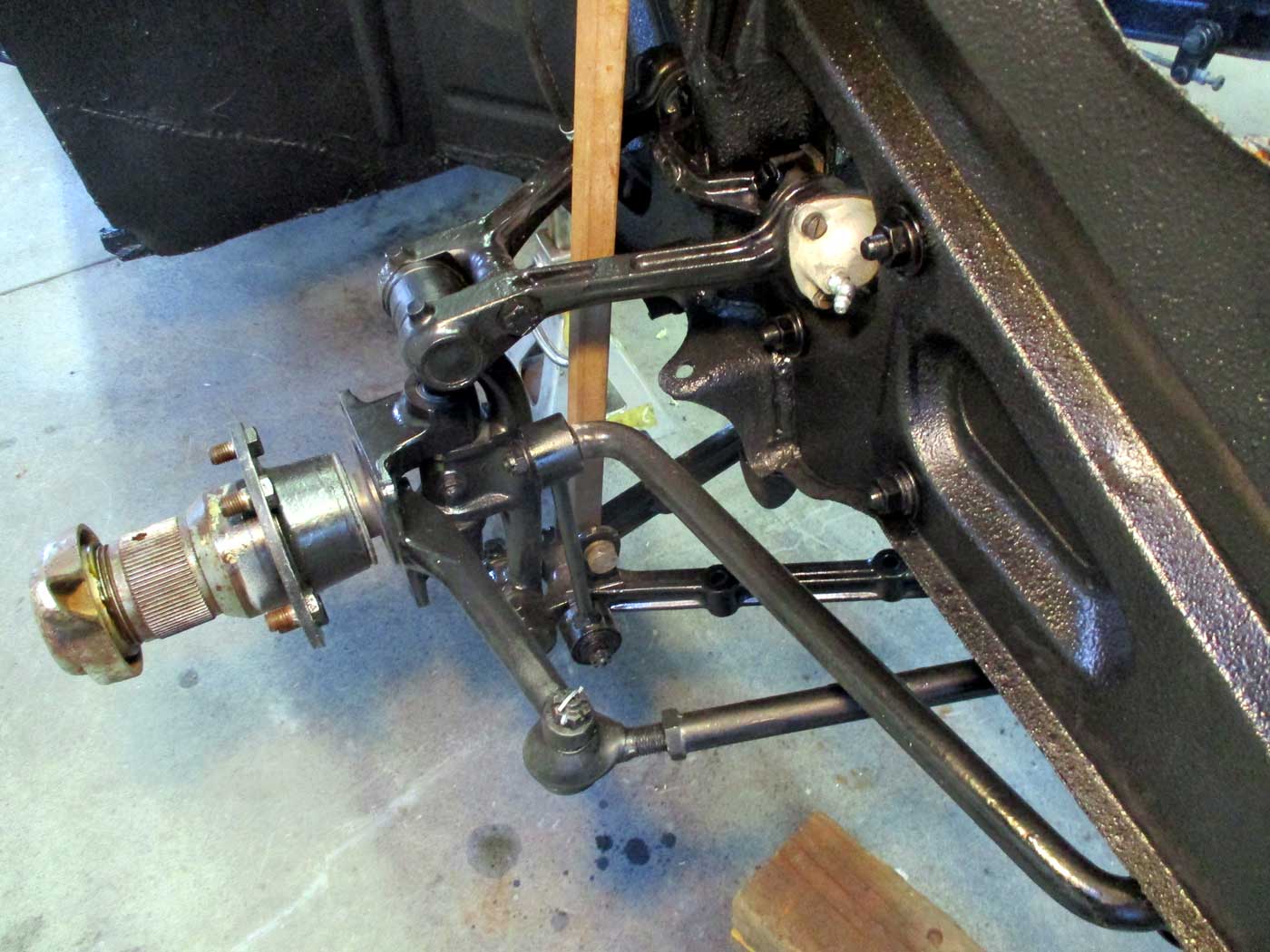
Temporary bar supports car.
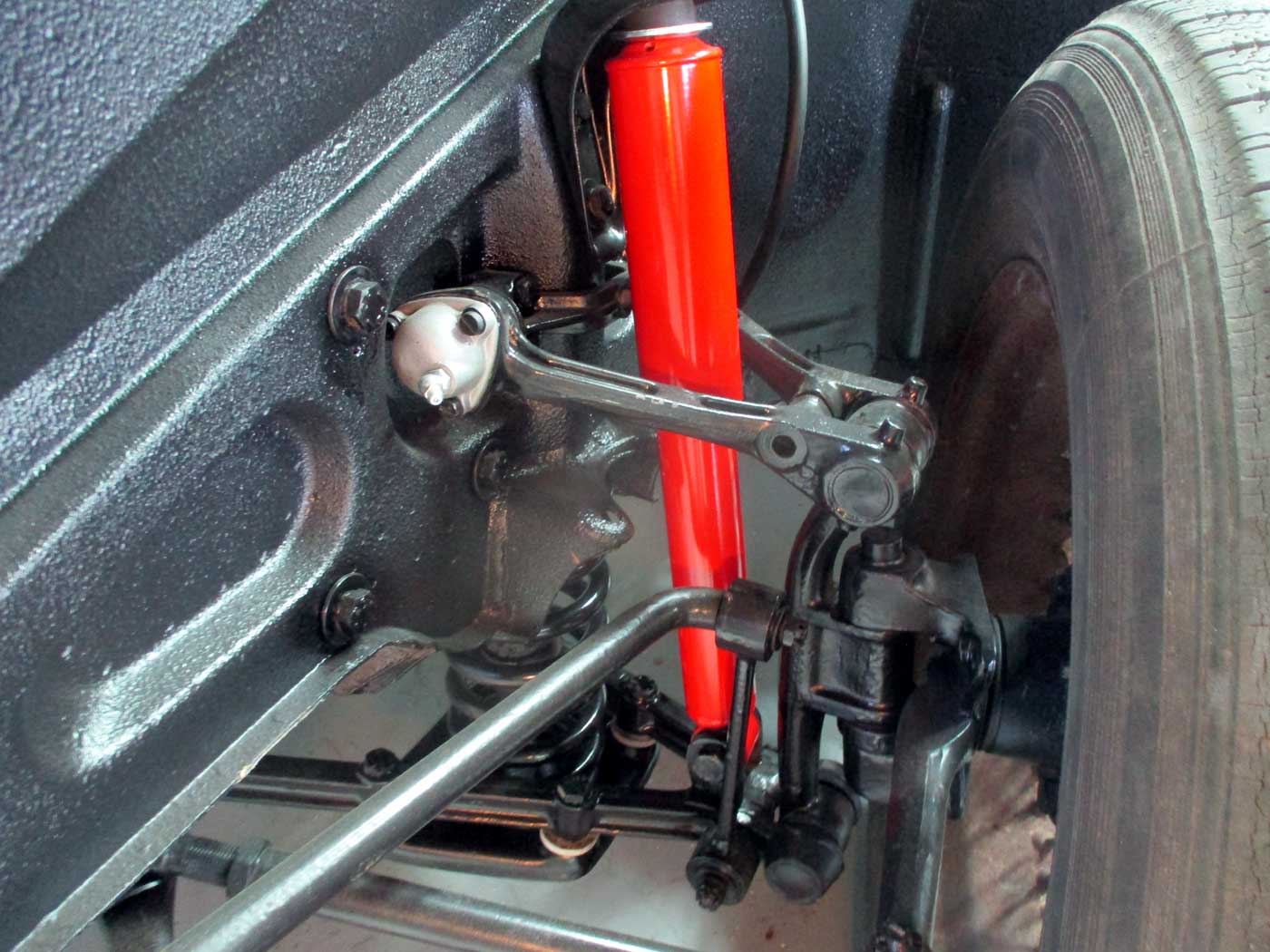
With spring and shock in place.
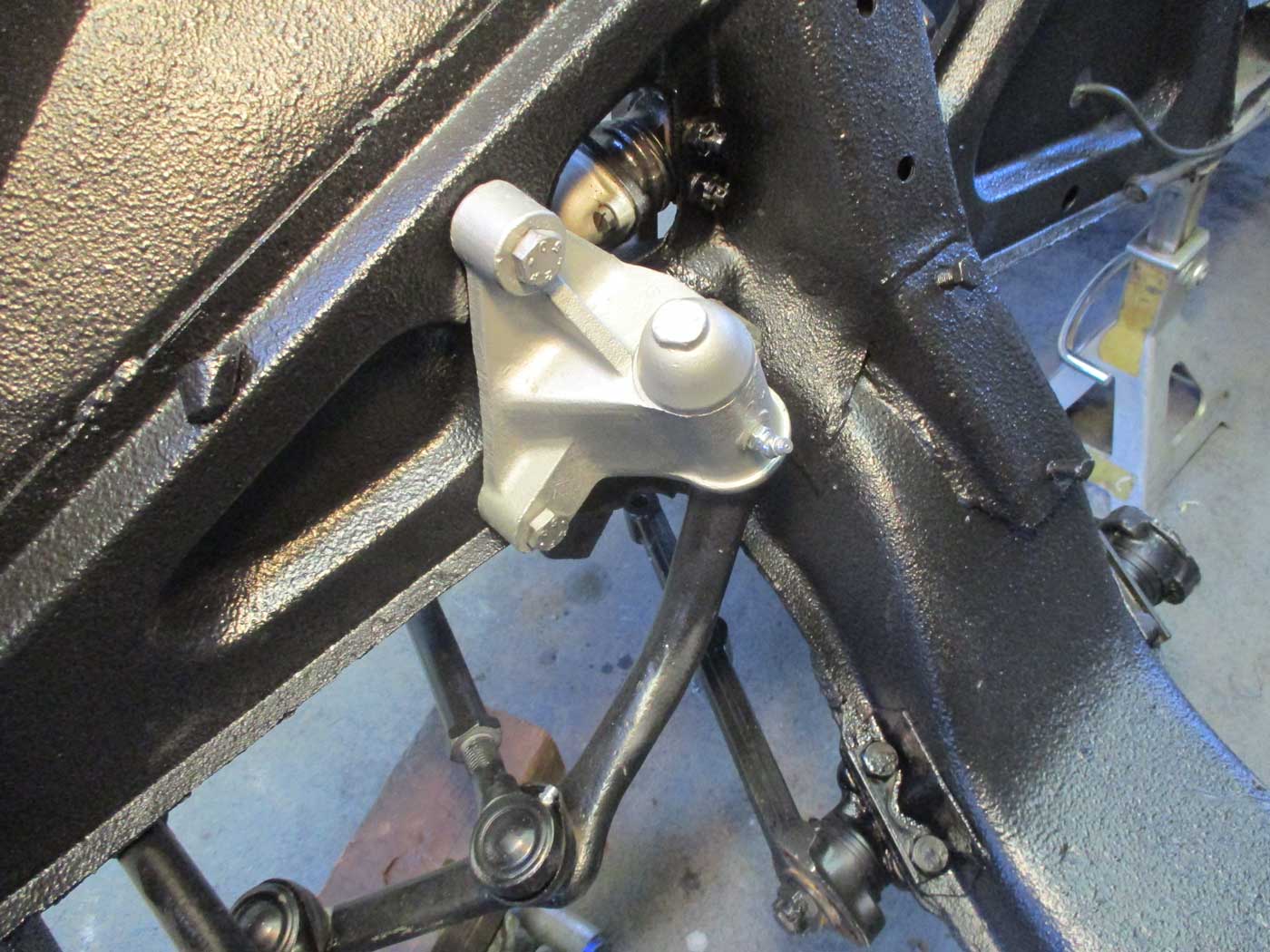
Steering idler
I had no previous experience with dip-stripping. It seemed sensible for a structure built from lots of sheet-metal stampings, and unlike sandblasting, would reach every little corner or hollow. It cost about $2K. I was disappointed that instead of bright new metal, a temporary protective coating gave it a sooty look. And a few patches remained of that stubborn undercoating Alfa used in this period. But as I began my repairs, starting with the underside with the chassis upside-down, I began to appreciate it better. Rusty areas were easy to see, no paint or rust spoiled clean welds, and with the coating washed off, primer paint stuck tightly to the surface–no worries about future flaking or peeling.
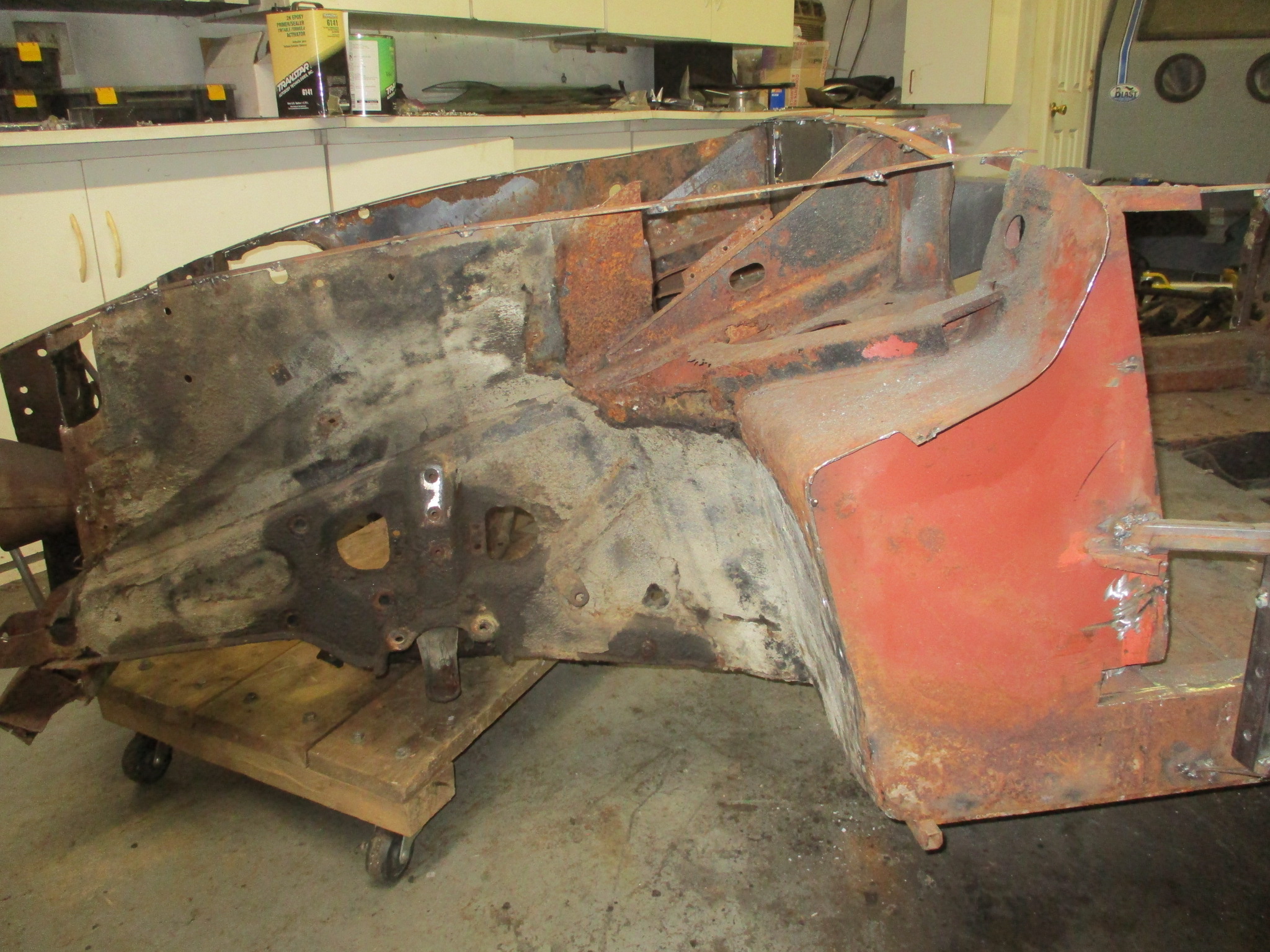
Paint, grease, rust, dirt!
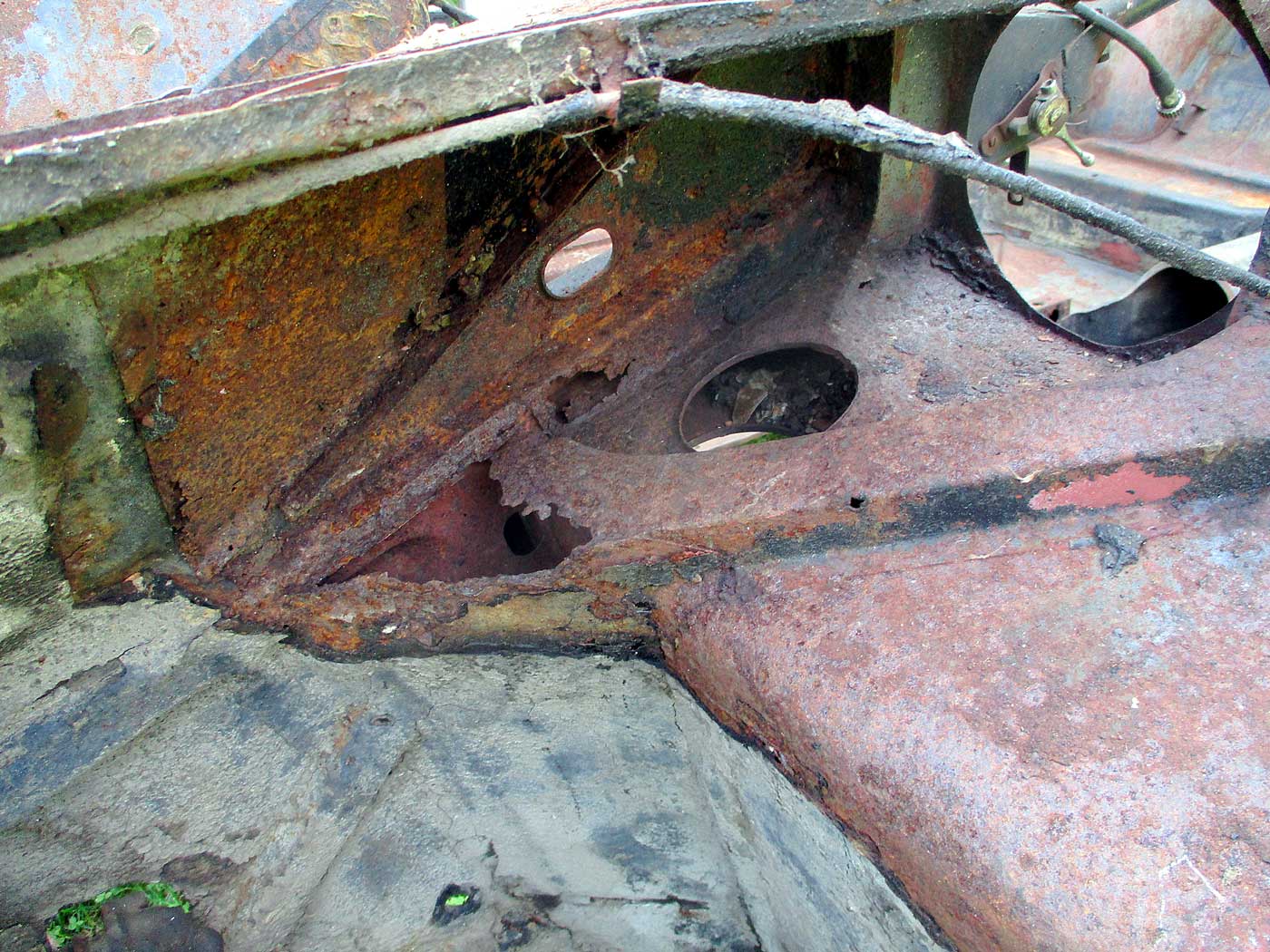
Before stripping, rust in front structure.
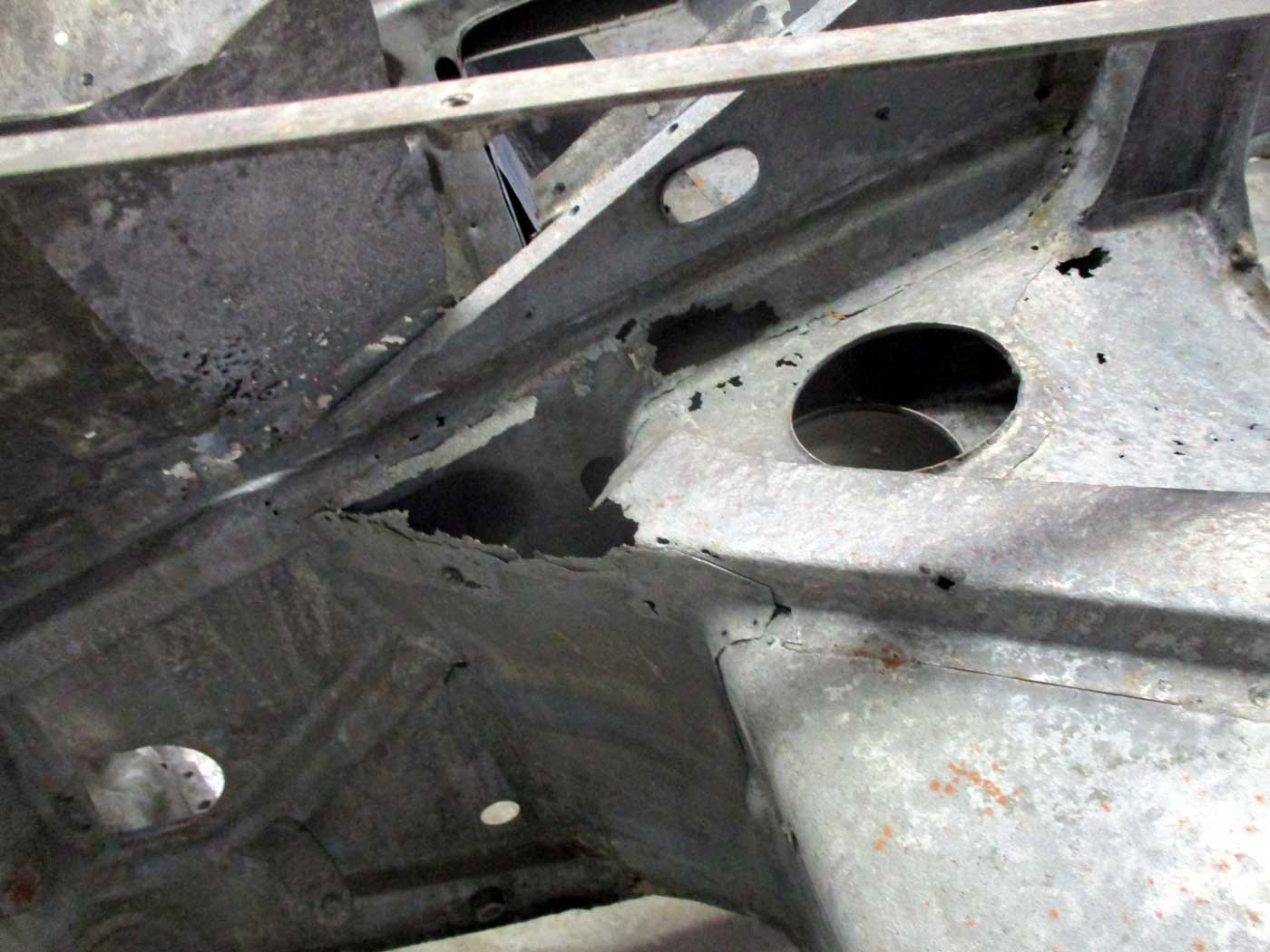
Stripping clarifies situation.
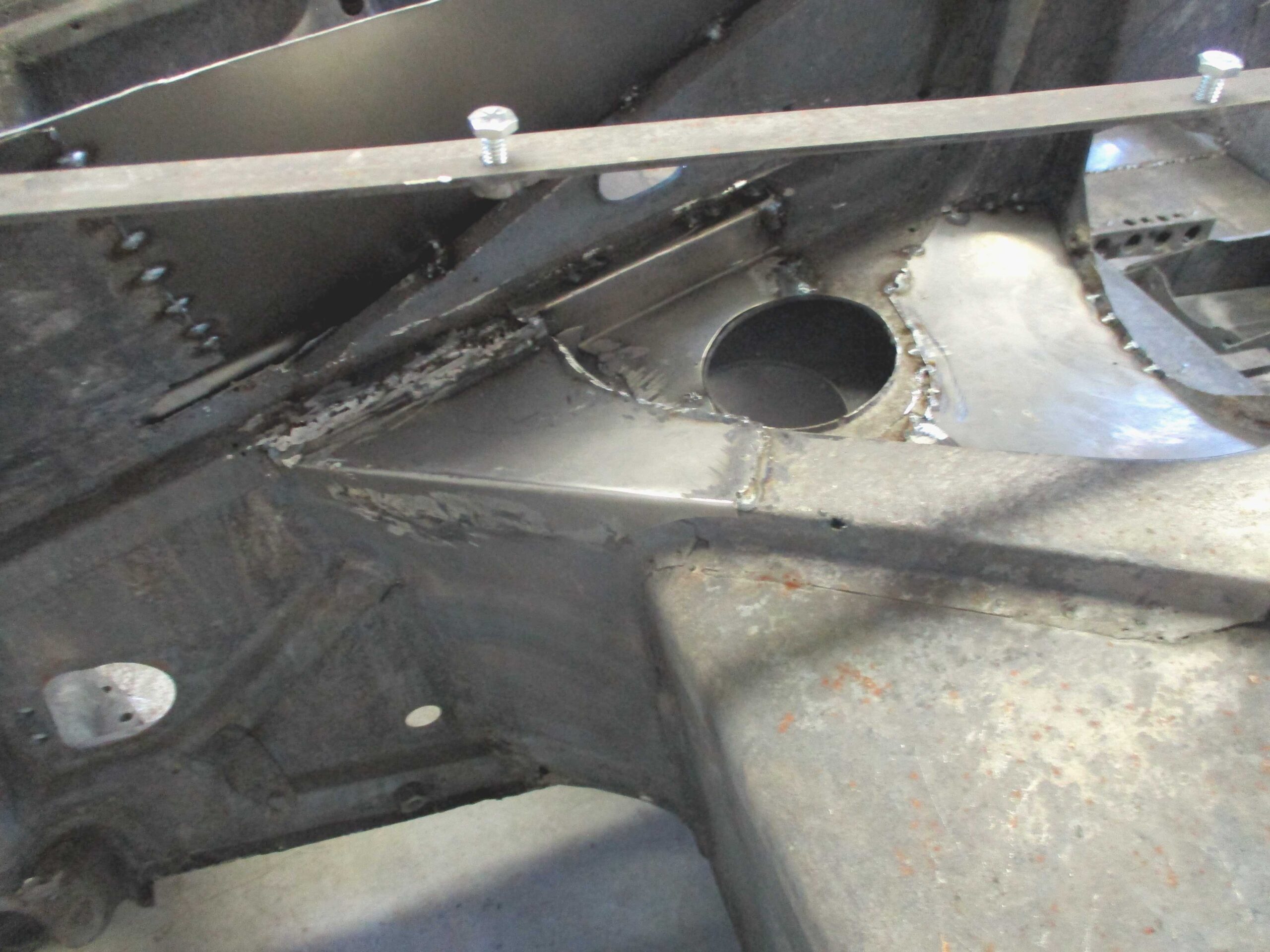
Patches duplicate original metal.
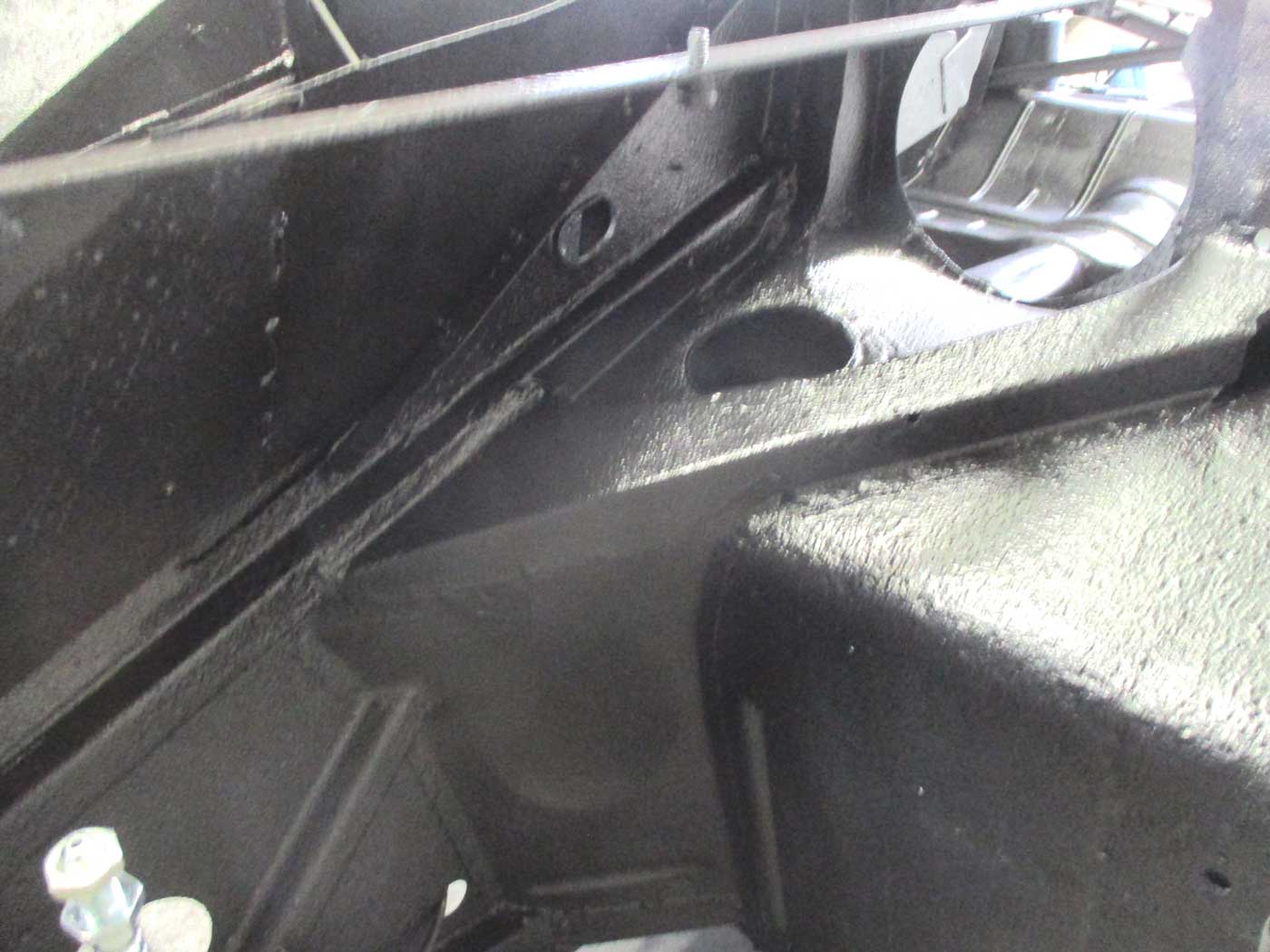
Rough finish hides welds.
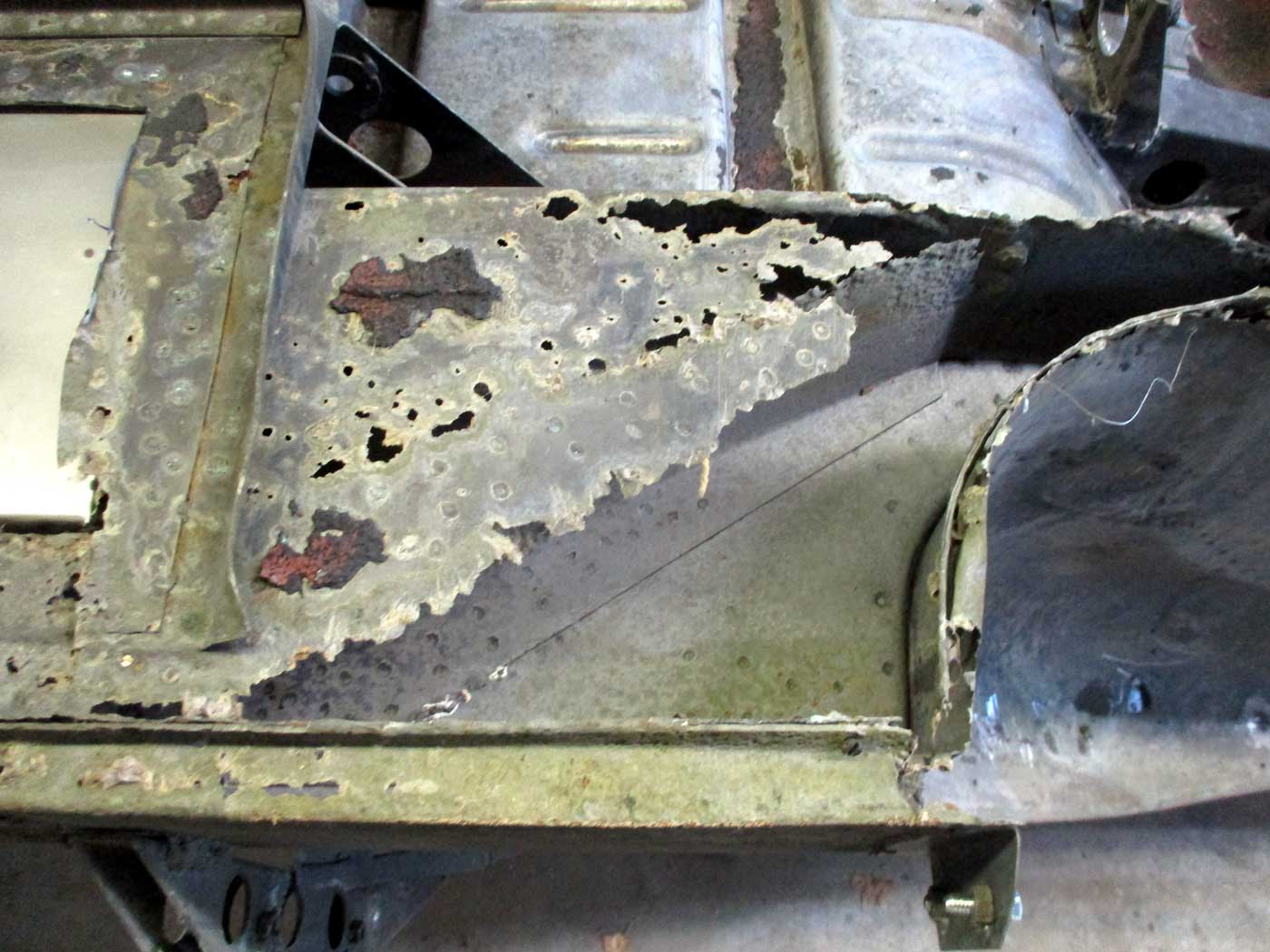
Not much left here.
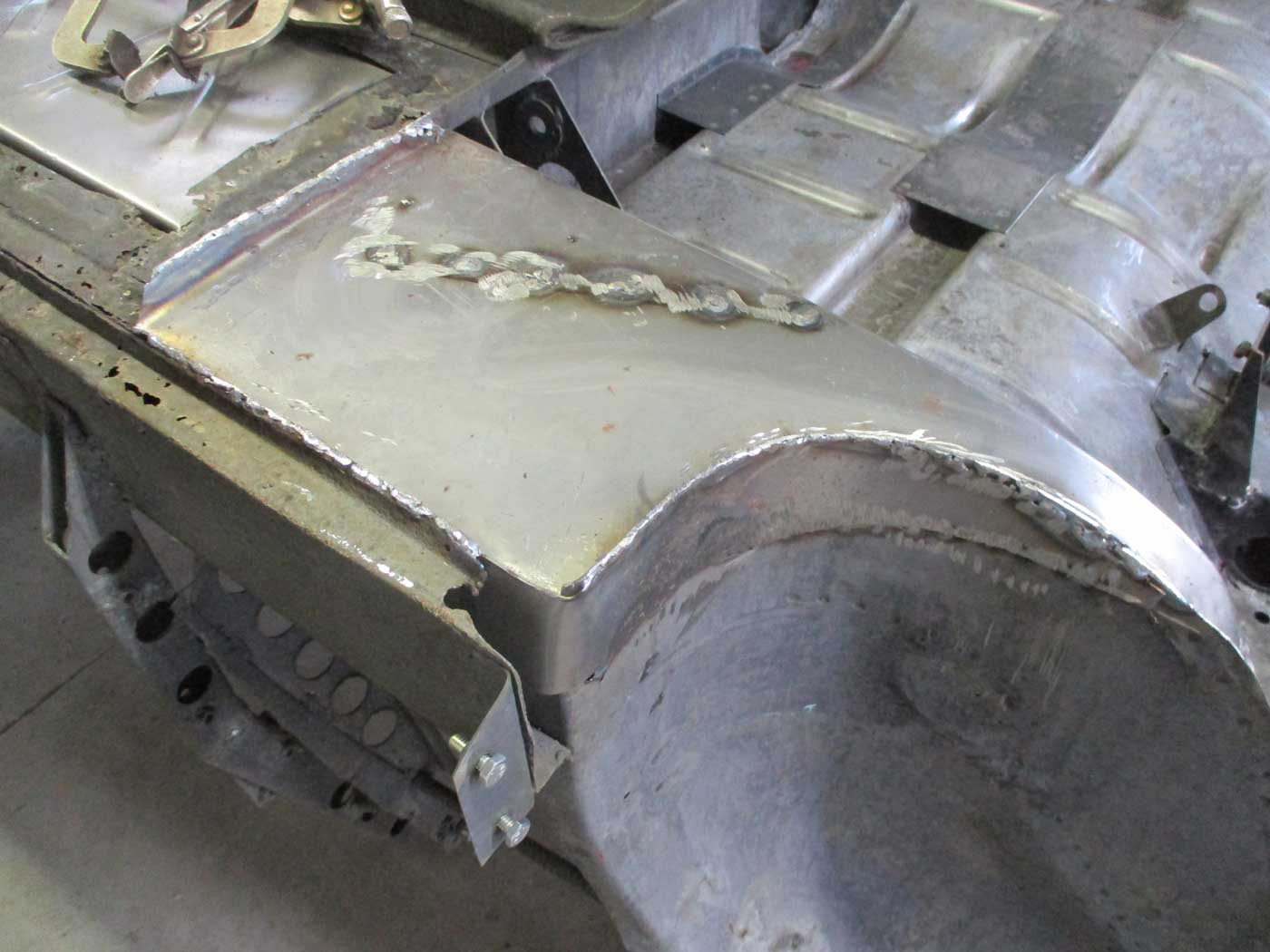
New inside and outside.
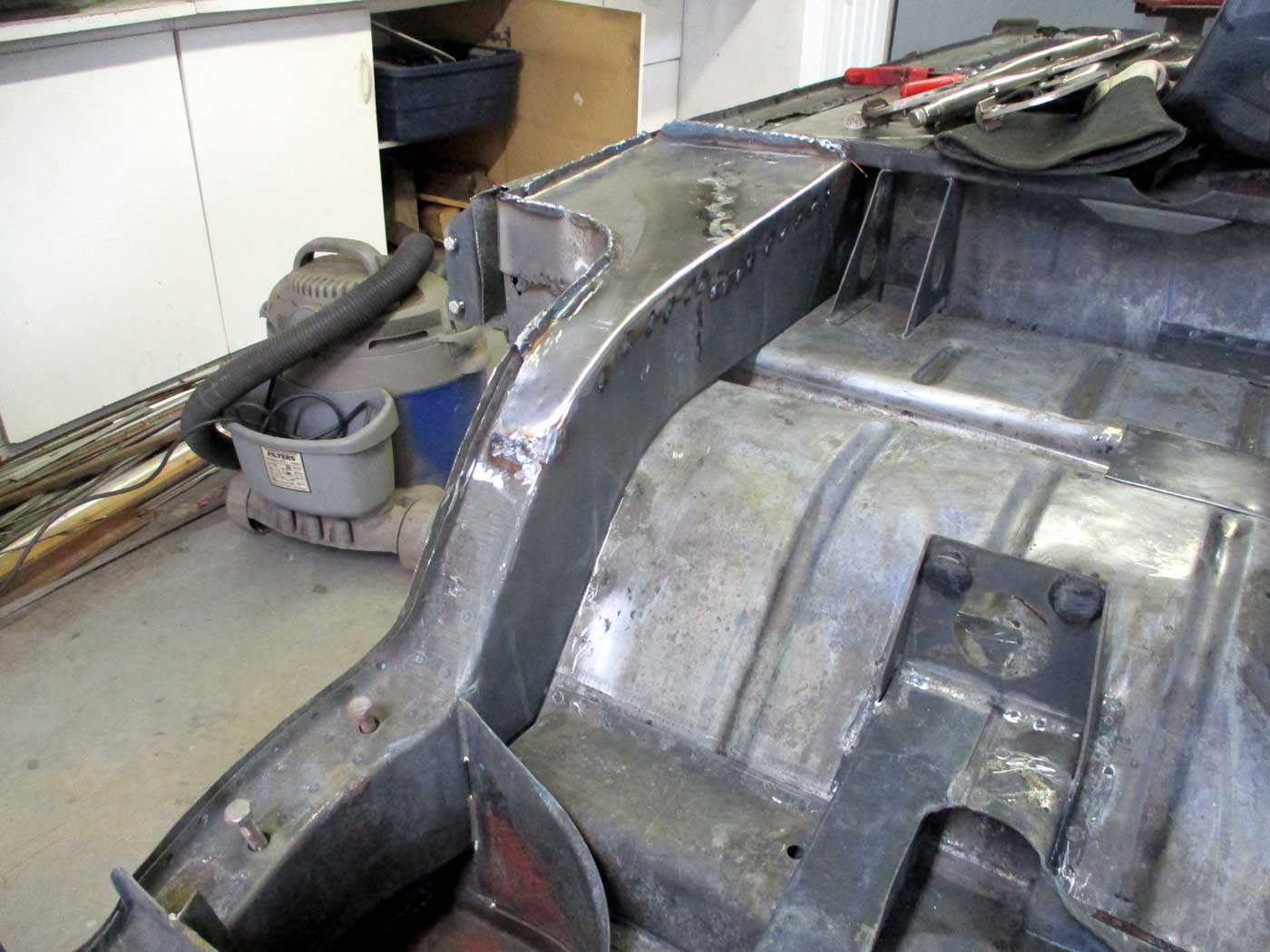
Repairs visible in bare metal.
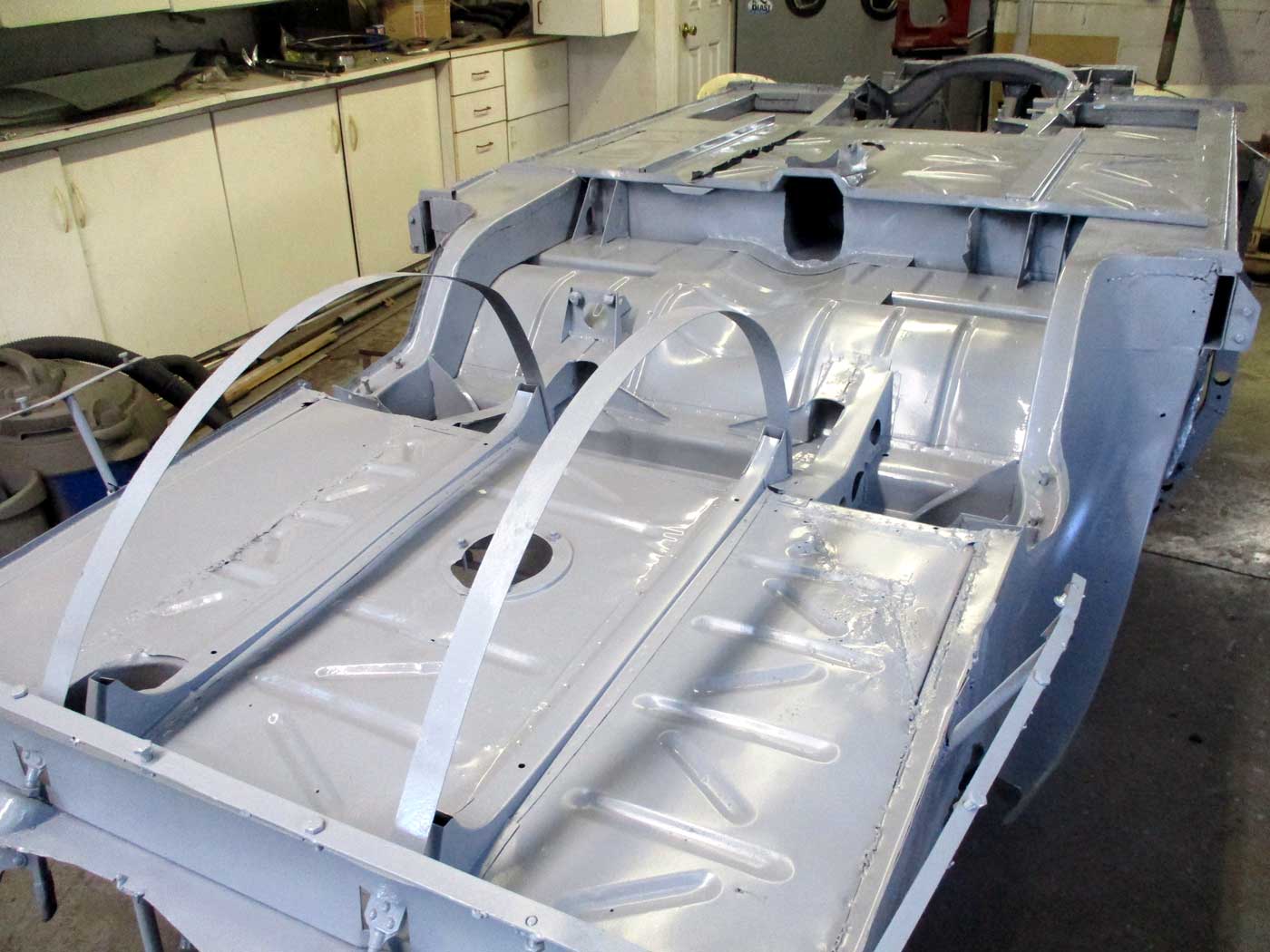
Straps for gas tank.
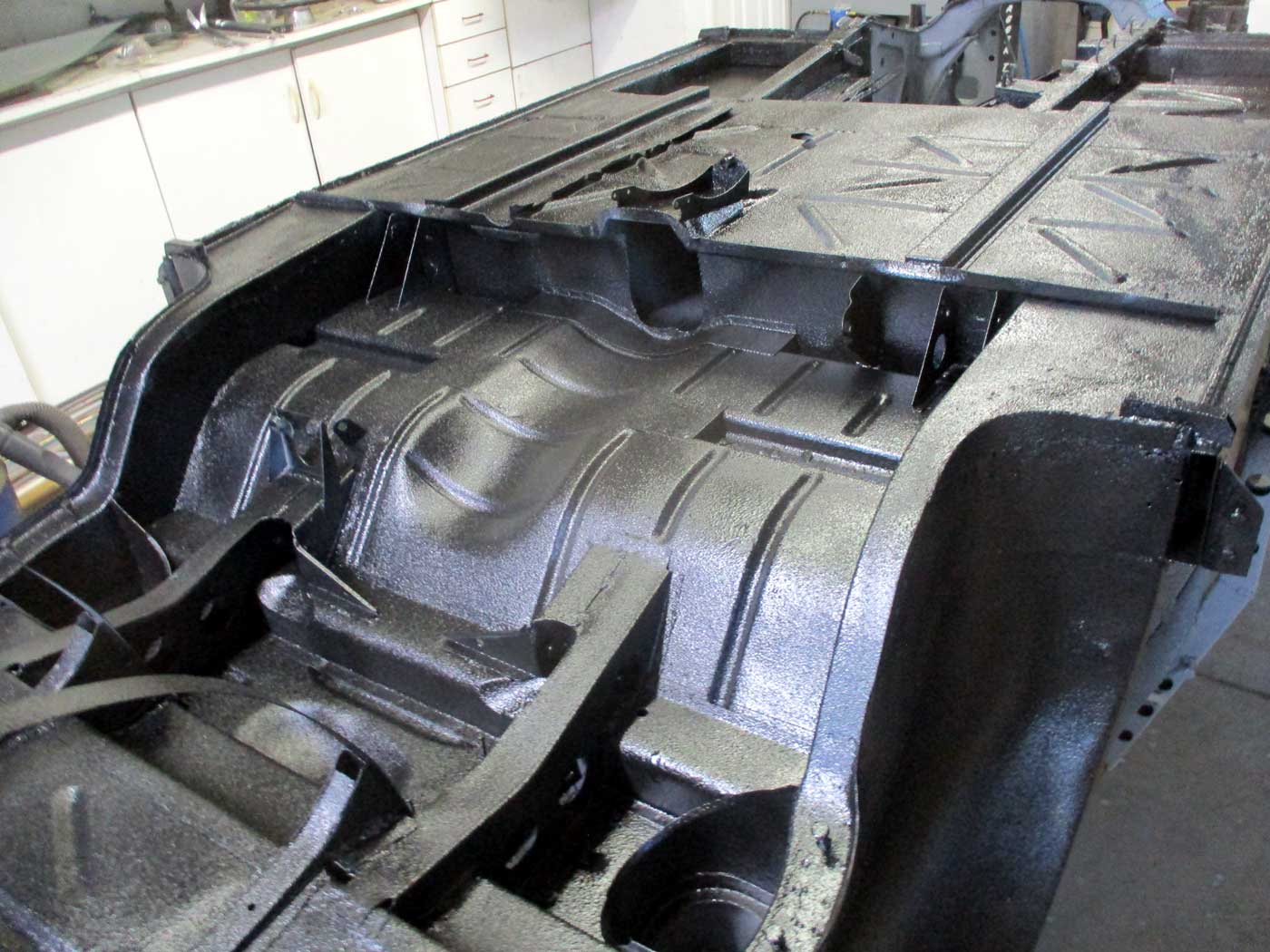
Black finish copies original.
The strip process revealed exactly how the original metal pieces were made and joined, so fabricating replacements for the bad areas wasn’t too hard. And overall, the chassis was in better shape than I expected after seeing it at its worst. I took a few shortcuts, not duplicating all the ribs in the original floors, for example, but structurally it’s as strong as it was when new. I filled all the welds and cracks with seam sealer, then applied a coat of primer.
With help from my Alfa-enthusiast friends I discovered Raptor Truck Bed Coating, which exactly duplicates Alfa’s pebble-finish undercoating. Besides appearance, for me it has special benefits. It makes my ugly welds disappear. And it’s tougher than any other finish I’ve used. Later on, when installing the master cylinder, I spilled a pool of brake fluid on it. Two days later I mopped it up, and the finish was completely unaffected. Brake fluid damages most kinds of paint.
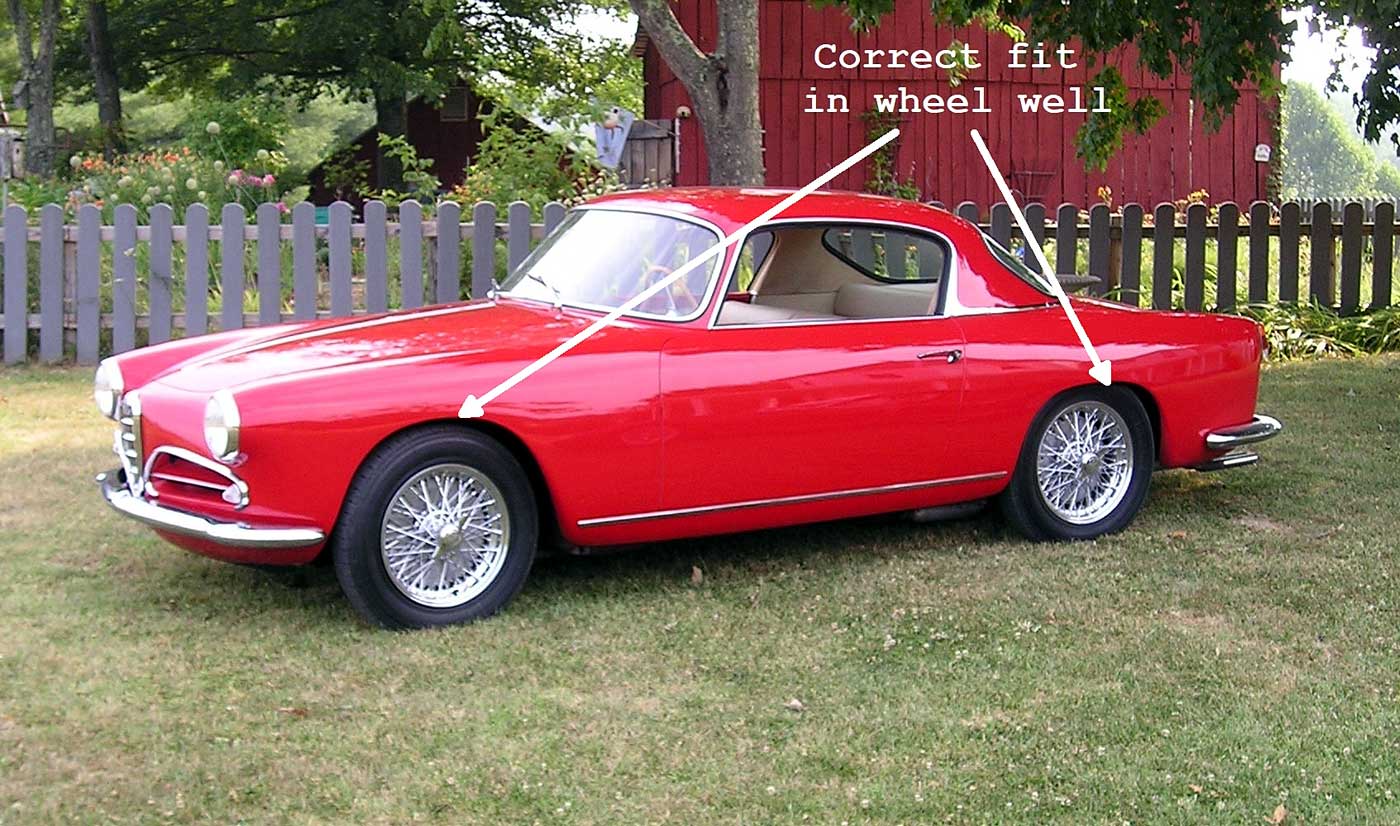
The biggest puzzle when putting the suspension back on I also faced when restoring my Alfa 1900 (same chassis) many years ago: ride height. For some unexplained reason, many of these cars sit on tiptoe, several inches higher than they do in period pictures. I’ve never had a good explanation for this, even from my Alfa-specialist friends. Do the springs grow? Maybe a reader has the answer. Anyway, my solution was crude but effective: I just cut the springs shorter and shorter until the ride height looked right, and the lower front A-arms and rear trailing arms were nearly level. This is surely where they should be. Shortening a coil spring stiffens it, adding another variable. But the ride and handling of my 1900 are excellent. So I chopped the BAT’s springs too, before putting them back on.
With the BAT sitting again on its wheels, and the body loosely attached, it’s ready for paint–when I can find a good painter who can do it before next year. But with the body still in primer I needed to make a grille. This was a big challenge. The problem is that the grille surround needs to fit the extreme curve of the nose. The upper half doesn’t bend that much but the bottom curves right under the car. I found that my techniques for making body parts like fenders didn’t work–a conclusion that only became clear after many hours of struggle. The breakthrough came when another metalworker told me I had to hold the metal sheet in that extreme curve when I put it through the bead roller for the frame contour. Rolling the frame outline into a flat sheet, then trying to bend it around the nose of the car, was impossible. Even with his advice, the job wasn’t easy, but in the end the grille came out well. The picture doesn’t show the Alfa badge at the top, which I’m told is in the mail.
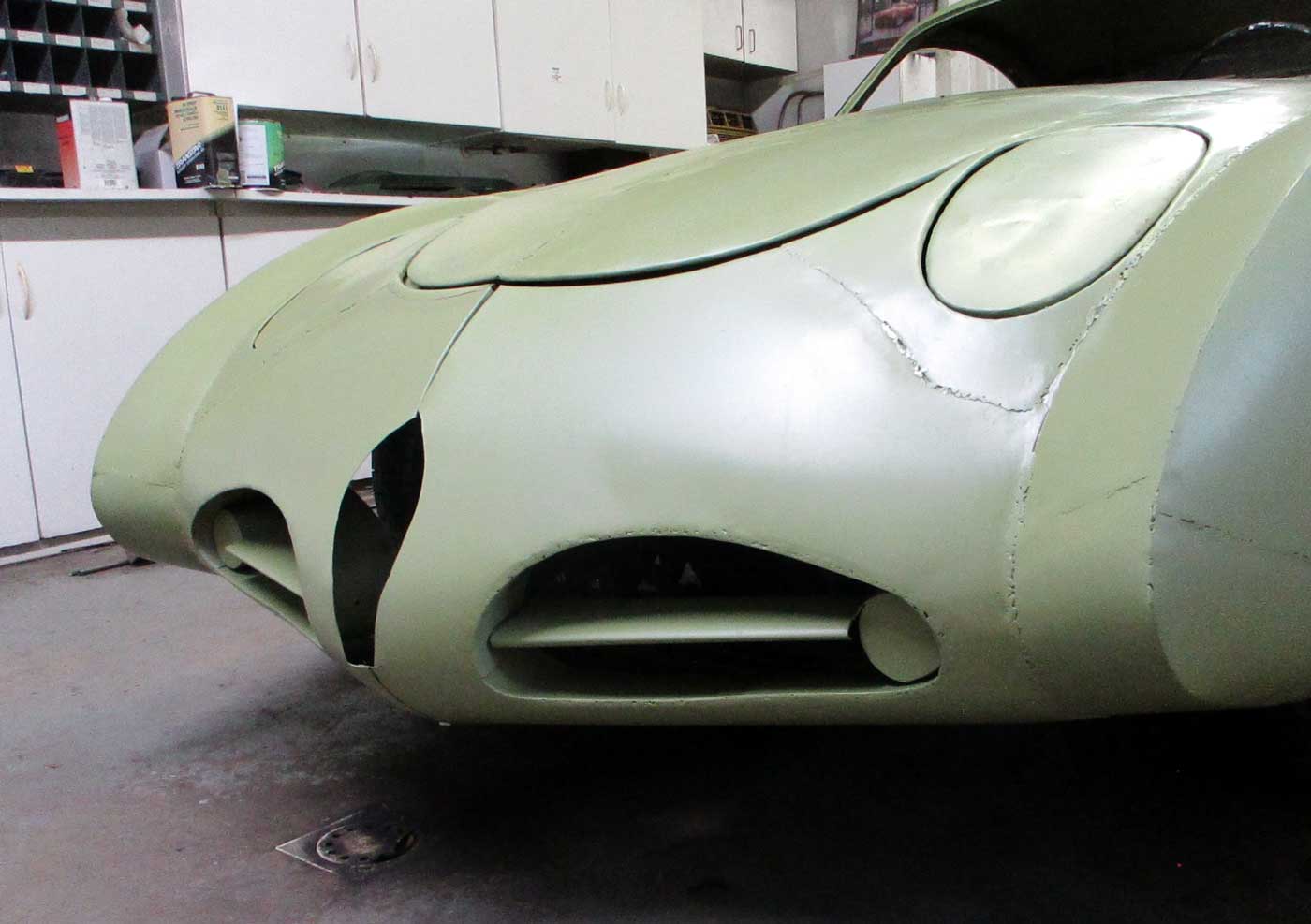
Hard to fit round nose.
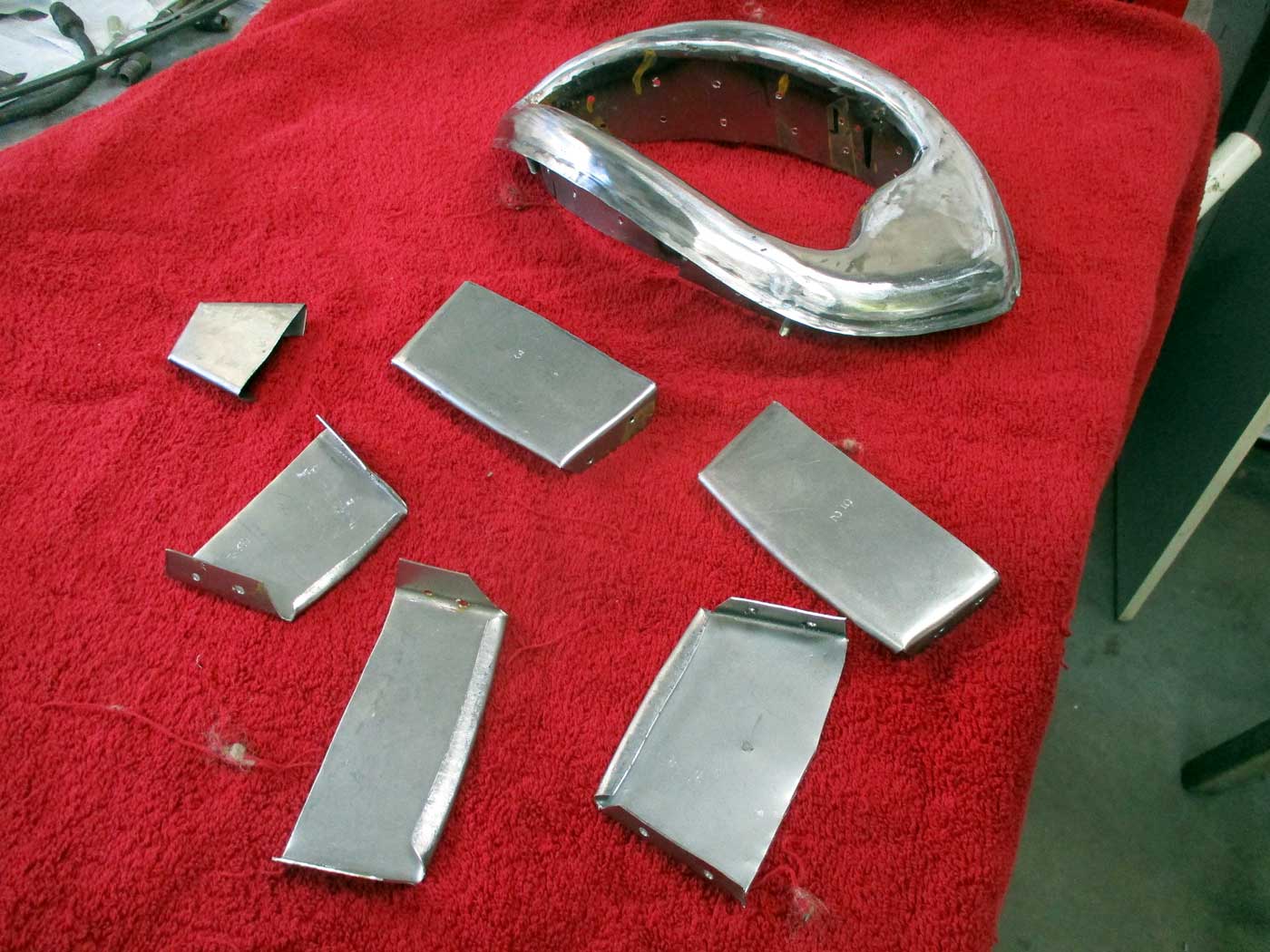
Vanes plated separately.
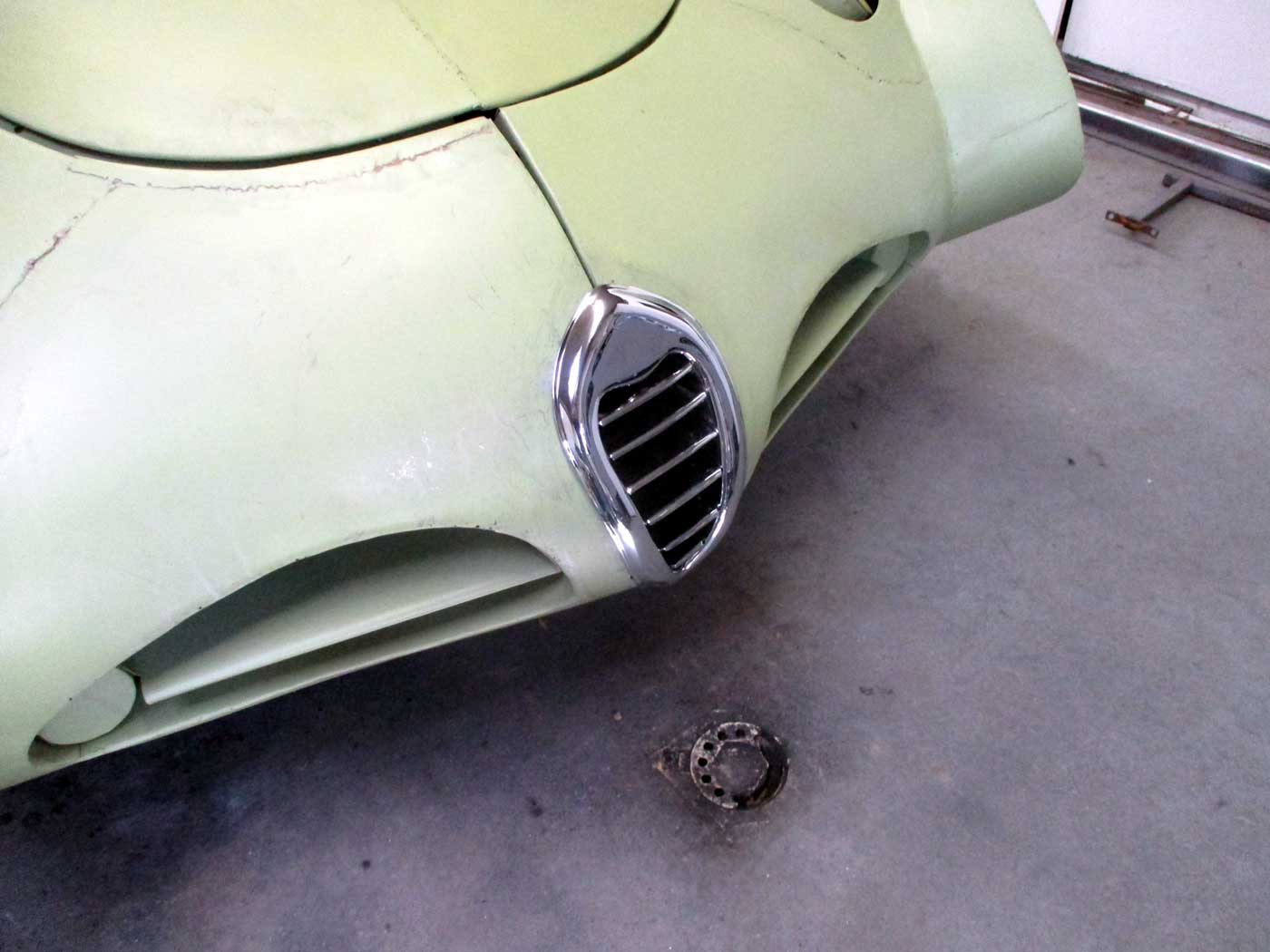
Round Alfa badge goes on top.
With my limited time and energy, my BAT’s body, chassis, and interior were more than enough to do myself. So I asked Dan Allen, a lifelong Alfa specialist in California, to build an engine for me while he restored a 1900 engine for a friend. Both engines were done and tested by last summer, but Dan’s plan to deliver them with a cross-country trip with his son didn’t work out. So he crated them for shipment.
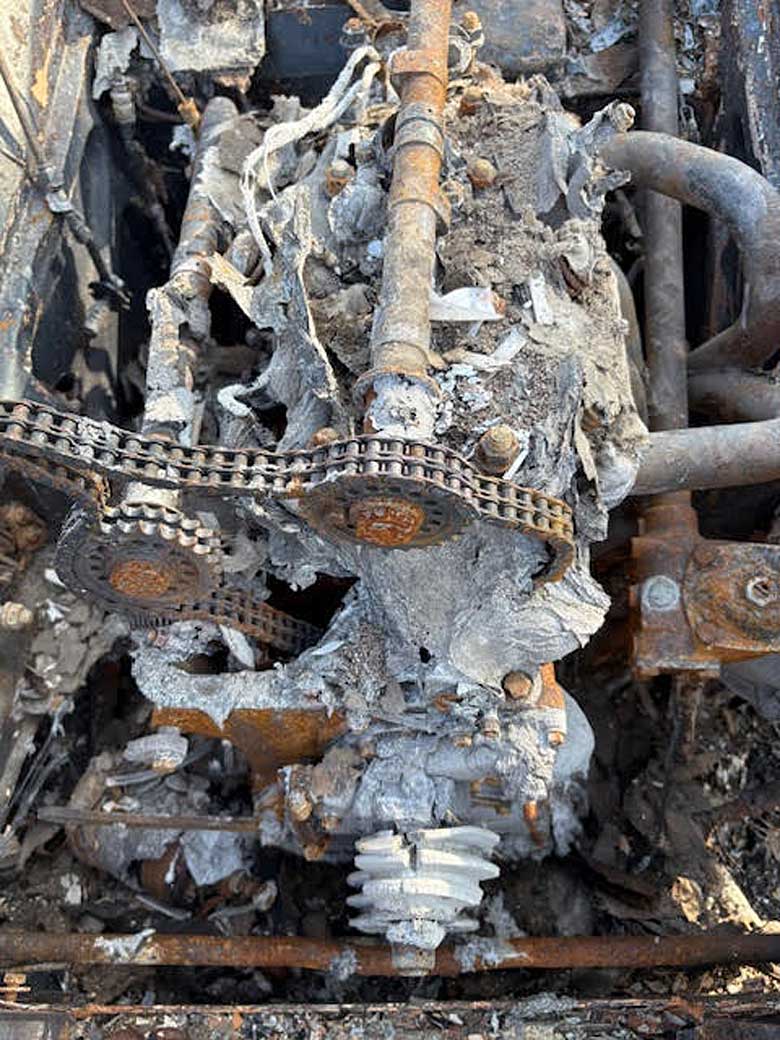
Not much left here either.
Dan’s address is (was) Pacific Palisades. . . His house, cars, shop, and his whole neighborhood were utterly destroyed in the fire. Luckily, he and his son were safe on their boat when the fires started. In a residential area with well-spaced houses and not many trees, how badly can a metal lump like an engine be damaged? Look at the picture. After an exhausting few months doing cleanup, Dan is bravely starting to gather parts for another two engines. And I’ll keep working on the rest. It’s still a tossup who will finish first.
I find this fascinating, even though I will never do likewise. Thanks for the look into a seldom-covered aspect of restoration.
I recently subscribed to Crankshaft magazine and was delighted to see an article written about Mr Wilson. Quite the craftsman and collector of fine automobiles.
Paul,
I have quite a few mechanical parts for the CI 2000 series, some of which might be interchangeable with the 1900 series.
(Engines, trannys, differentials, ect.
Let me know if I can be of assistance.
Delmas Greene, AROC/Alfa Romeo LLC Liaison
Clearwater FL
alfagreene@yahoo.com
727-439-2019 cell
(I still own the 1960 Vignale Bodied Coupe (green/white w/red interior that won an award at Amelia Island Concourse)